Winter hair colors become easier to compare when depth and intensity are treated as separate choices rather than a single scale from dark to light. Deep brown and red-brown can feel restrained or saturated, copper can move from soft warmth to vivid orange-red, and pale blonde, jewel tones, and icy shades shift the visual emphasis again through brightness, coolness, and contrast.
Placement changes the effect just as much as the shade itself. A nearly uniform color reads differently from subtle ribbons, brighter face-framing sections, a dark-root-to-light-length transition, or a sharp two-tone division, while short hair can concentrate color into a compact shape and long hair gives gradients and repeated ribbons more room to register. That range makes the collection useful as 2025-2026 inspiration without treating any one direction as a forecast.
Soft Bronze Dimension Through Deep Brunette Waves
For winter hair colors for brunettes, this is a useful example of how a dark palette can show dimension without relying on a dramatic light-dark split. The hair reads deep brunette first, while restrained warm brown-to-bronze pieces become more apparent through sections of the mid-lengths and ends, especially where the loose waves catch enough light to separate those tones from the darker surrounding color.
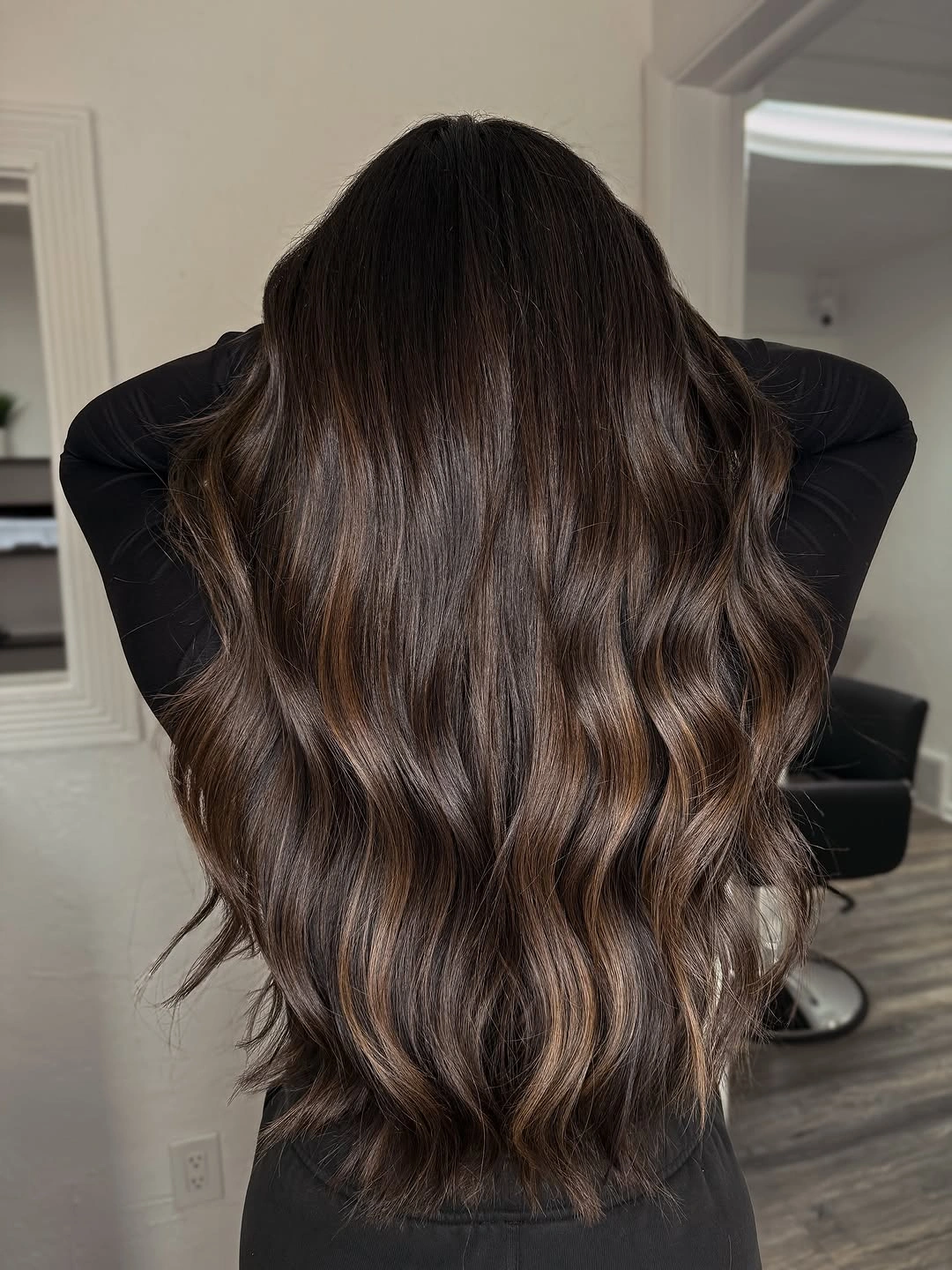
The important distinction is contrast: the lighter warmth stays close enough to the main brunette depth that the result remains cohesive rather than striped. Instead of creating a bright frame or sharply defined bands, the bronze notes surface intermittently along the wave pattern, so the color changes are visible at a second glance and become part of the overall brown range.
This makes the color especially useful for comparing soft winter hair colors for brown hair with more obvious ribboned looks. The visual interest comes from small value shifts inside a narrow brunette spectrum, not from pale sections set against a dark field. The long wave pattern also reveals how placement can seem to move as the hair bends. Warmer brown appears along some raised curves and lower pieces, while deeper brown remains dominant through the crown and broad central areas. From a distance, the impression is still dark brunette. Up close, the bronze-brown dimension prevents that darkness from reading as completely flat, giving the color a quiet, low-contrast identity rather than a bright or sharply divided one.
Deep Reddish Brown With a Near-Solid Finish
This brunette direction shifts the emphasis away from visible ribbons and toward an almost continuous red-brown field. Across the crown and large smooth waves, the hair reads as a deep reddish brown with a consistent overall depth, while reflected light makes the red-brown cast easier to see without breaking the surface into separate light sections.
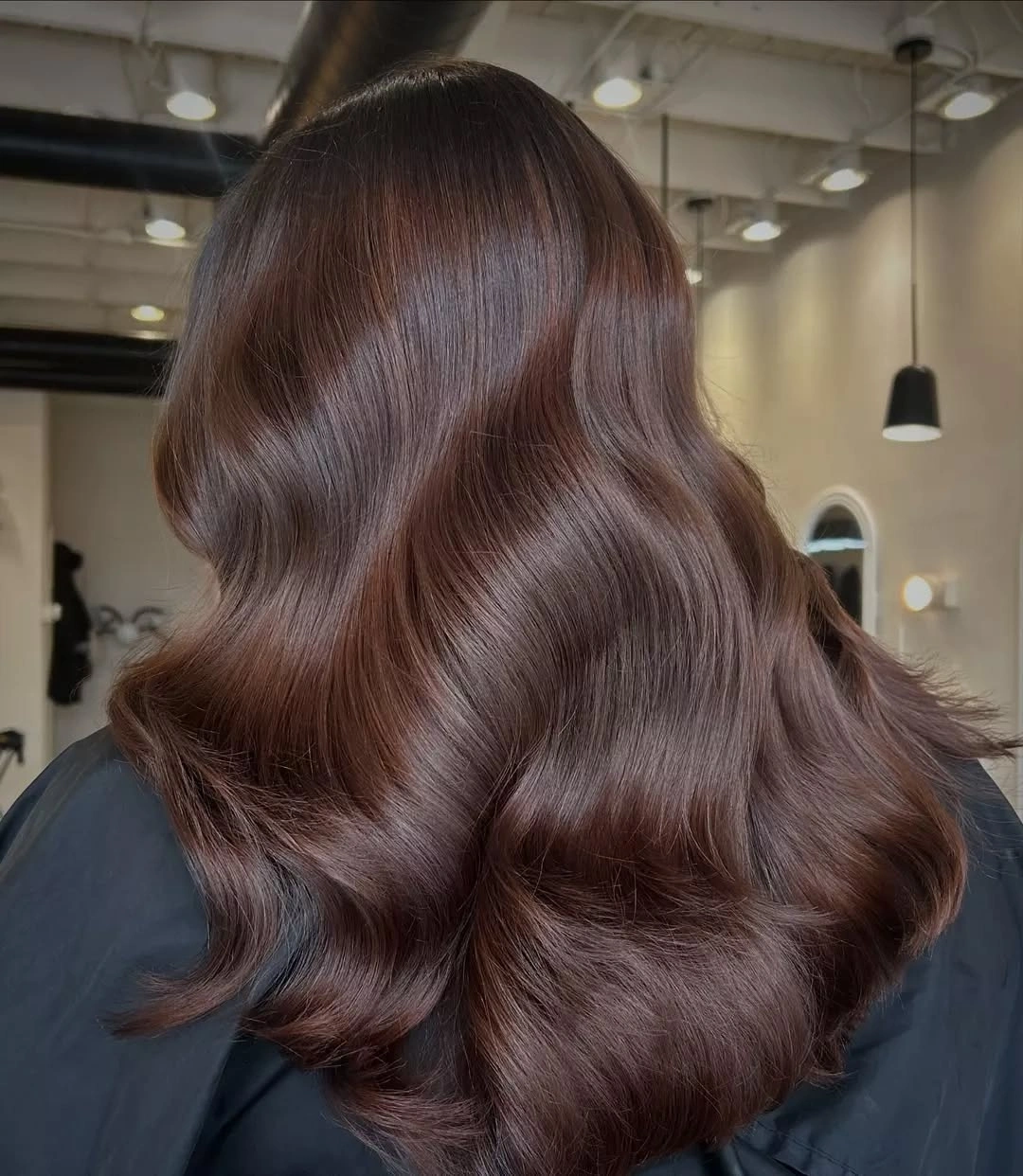
Compared with a brunette look built from softer bronze variation, this color feels more saturated because the red-brown character extends across broad areas of the hair instead of appearing mainly as intermittent lighter pieces. The large waves create bands of shine, but those brighter bands look like reflection on the same color family rather than visibly separate contrasting ribbons.
This is a strong dark option within winter hair colors for brunettes when the comparison is about hue rather than placement. The defining feature is the reddish cast inside the brown, not a major jump in lightness from root area to ends. That near-solid appearance gives the color a dense visual weight. Even where the waves turn toward the light, the hair remains recognizably deep red-brown, so the palette stays concentrated rather than opening into caramel, blonde, or copper bands. The result sits between neutral-looking dark brown and a clearly brighter red direction. It shows how a subtle shift in undertone can change the entire impression of dark hair while preserving a comparatively uniform color field.
Warm Caramel Ribbons Brighten a Dark Brunette Base
Here, the brunette foundation is easier to distinguish from the lighter warm sections. Deep brown remains visible through the upper and inner areas, while caramel-to-golden ribbons become prominent around the front and continue through portions of the lower lengths, creating a clearer value difference than subtle bronze movement on a similarly dark base.
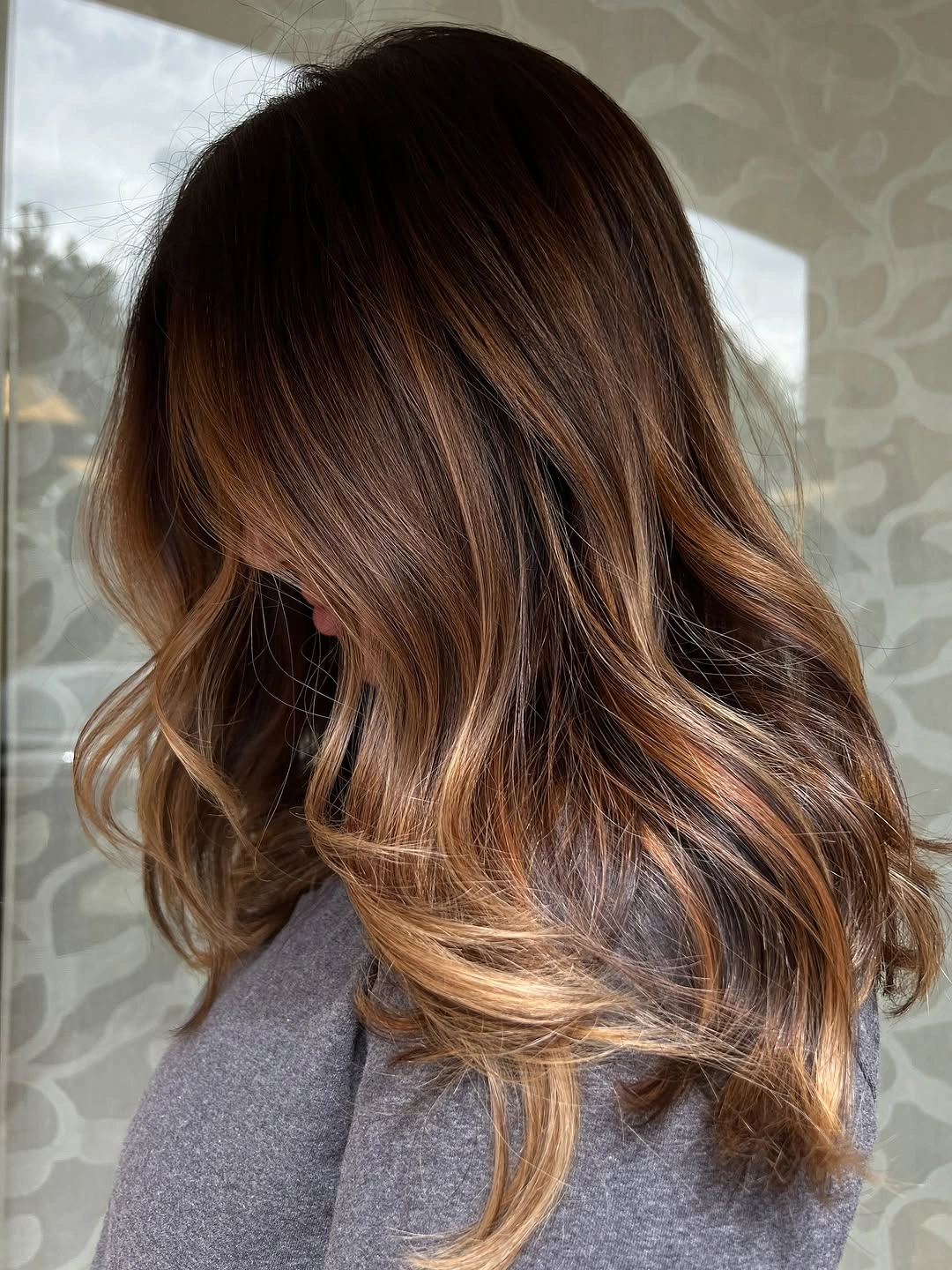
For readers collecting ideas for brunettes or winter hair colors for brown hair, the useful feature is where that warmth appears rather than simply how light it is. The brighter pieces are not evenly scattered at the same strength everywhere: they gather noticeably around the front and reappear along the lower waves, so the eye moves between the darker interior and the warmer outer curves.
The golden-caramel sections are broad enough to read as clear visual bands, yet dark brown still occupies enough of the hair to remain the dominant depth. That balance makes the color feel dimensional instead of turning the entire length into a light brown or blonde impression. Wave texture helps separate the tones because neighboring curves expose different proportions of dark and warm color. Some bends show concentrated caramel, while others return almost completely to brunette, which creates a repeated dark-light rhythm through the lower half. The result therefore represents a higher-contrast brown hair direction without moving into a two-tone split. The visual focus lies in warm placement: brighter ribbons pull attention forward and downward, while the deep brown areas keep the overall palette grounded.
Short Copper Waves With Bright Red-Orange Depth
The palette changes sharply here: instead of dark brown carrying lighter warm accents, the visible hair is saturated copper-red across most of the short wavy shape. Brighter orange-copper areas become especially noticeable around the front and toward the ends, so the color reads bright and warm even though deeper red-copper sections still give it internal variation.
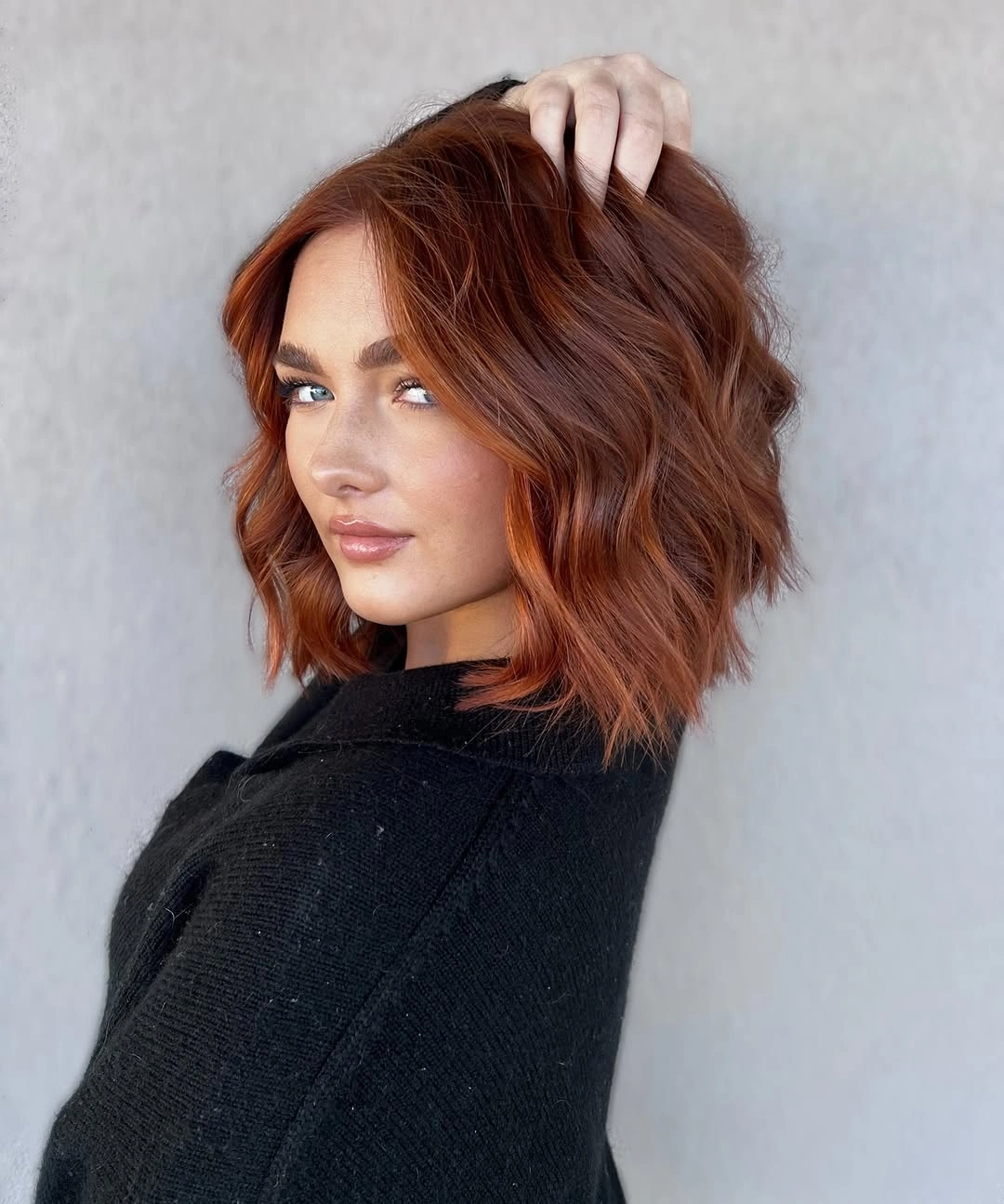
The shorter length concentrates the color changes into a compact area rather than stretching them across long waves. The deeper copper-red and brighter orange notes sit close together, making saturation the main story; there is no need for pale blonde contrast or a dark brunette foundation to create separation, because the visible variation already comes from different intensities inside the same warm family.
The strongest visible distinction is between red depth and orange brightness within the same warm family. That keeps the look cohesive even as the front pieces and ends appear more luminous than the darker copper-red areas nearer the crown and interior. Because the hair is softly wavy, the brighter sections appear in short repeated flashes rather than in long vertical bands. Curves around the front expose orange-copper edges, while other sections turn back toward richer red, giving the color a compact but varied surface. For anyone comparing bright winter hair colors, this is a useful counterpoint to both near-solid brunette and subtle bronze dimension. It shows how intensity alone can create a pronounced color shift when the visible palette stays within closely related copper, red, and orange tones.
Deep Espresso Brown Keeps the Look Nearly Monochrome
At the deepest end of brown, this color resets the comparison through tonal density rather than obvious contrast. The very long loose waves read as chocolate-to-espresso brunette from crown through most of the length, with minimal obvious light sections, so the immediate impression comes from darkness and richness rather than ribbons, face-framing contrast, or a visible gradient.
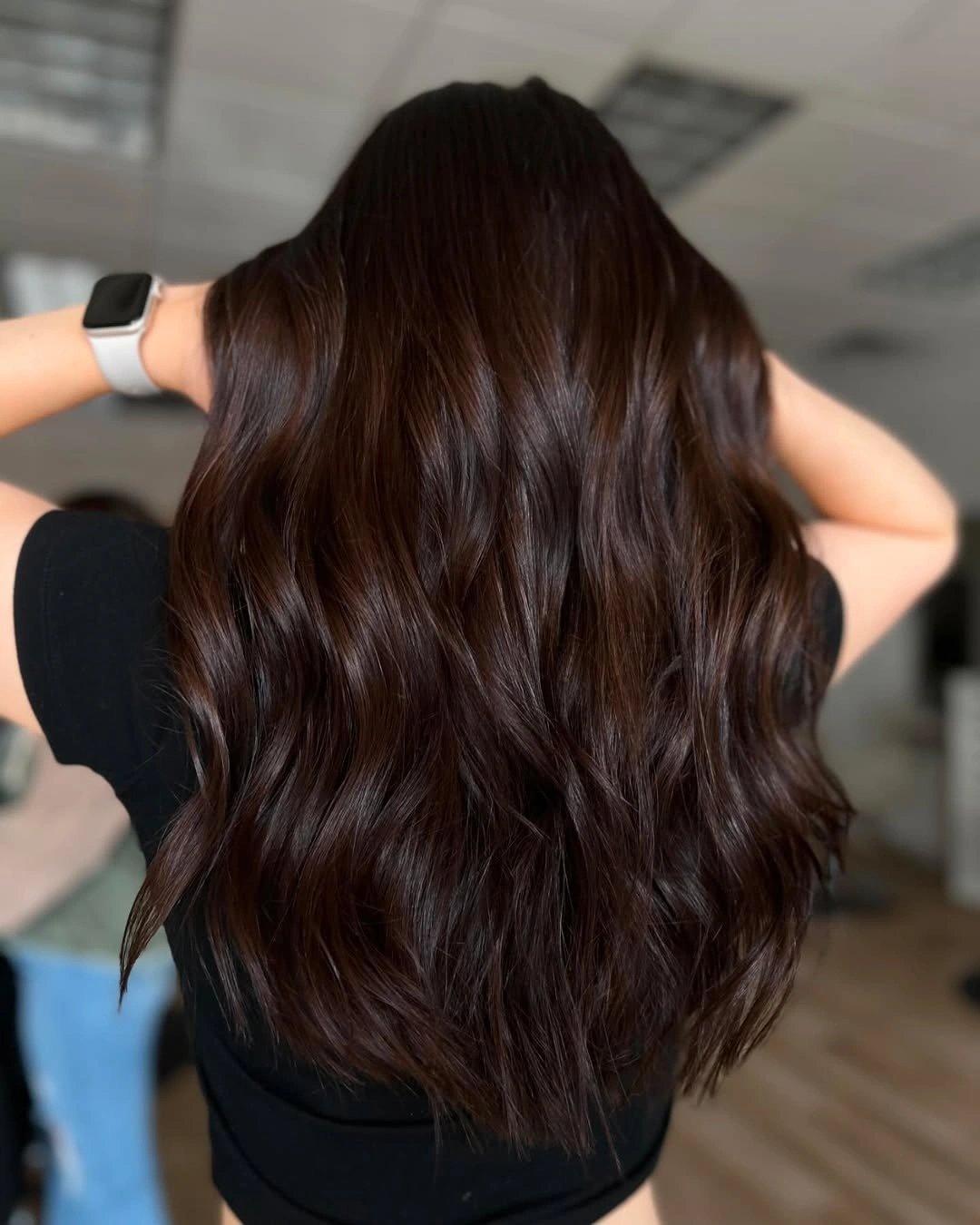
The surface is not visually blank: bends in the waves catch light and reveal slight warm brown variation, but those changes stay close to the same deep brunette family. That distinction matters because reflected sheen can make individual curves look lighter without turning them into separate caramel or blonde pieces, preserving an almost monochrome effect across the hair.
Among dark winter hair colors for brunettes, this is a clear reference for low contrast at a very deep value. The crown, mid-lengths, and ends remain closely connected in color, so no single lighter area takes over as the focal point. The long wave pattern adds movement to the surface while leaving the palette visually concentrated. Dark chocolate and espresso-like brown shift subtly with the light, but the overall field remains deeper and more uniform than a palette built from bronze or caramel ribbons. That near-monochrome quality makes depth itself the distinguishing feature. Rather than using conspicuous placement to create dimension, the visible effect depends on the small tonal changes that appear within a broad expanse of dark brown.
Deep Auburn Waves With Brighter Copper Ribbons
Deep auburn sets the foundation here, but the color does not stay at one intensity from crown to ends. Brighter copper sections become increasingly visible around the front and through the long center-parted waves, creating a warm internal contrast that remains entirely within related red and copper territory rather than introducing pale blonde or beige against the darker base.
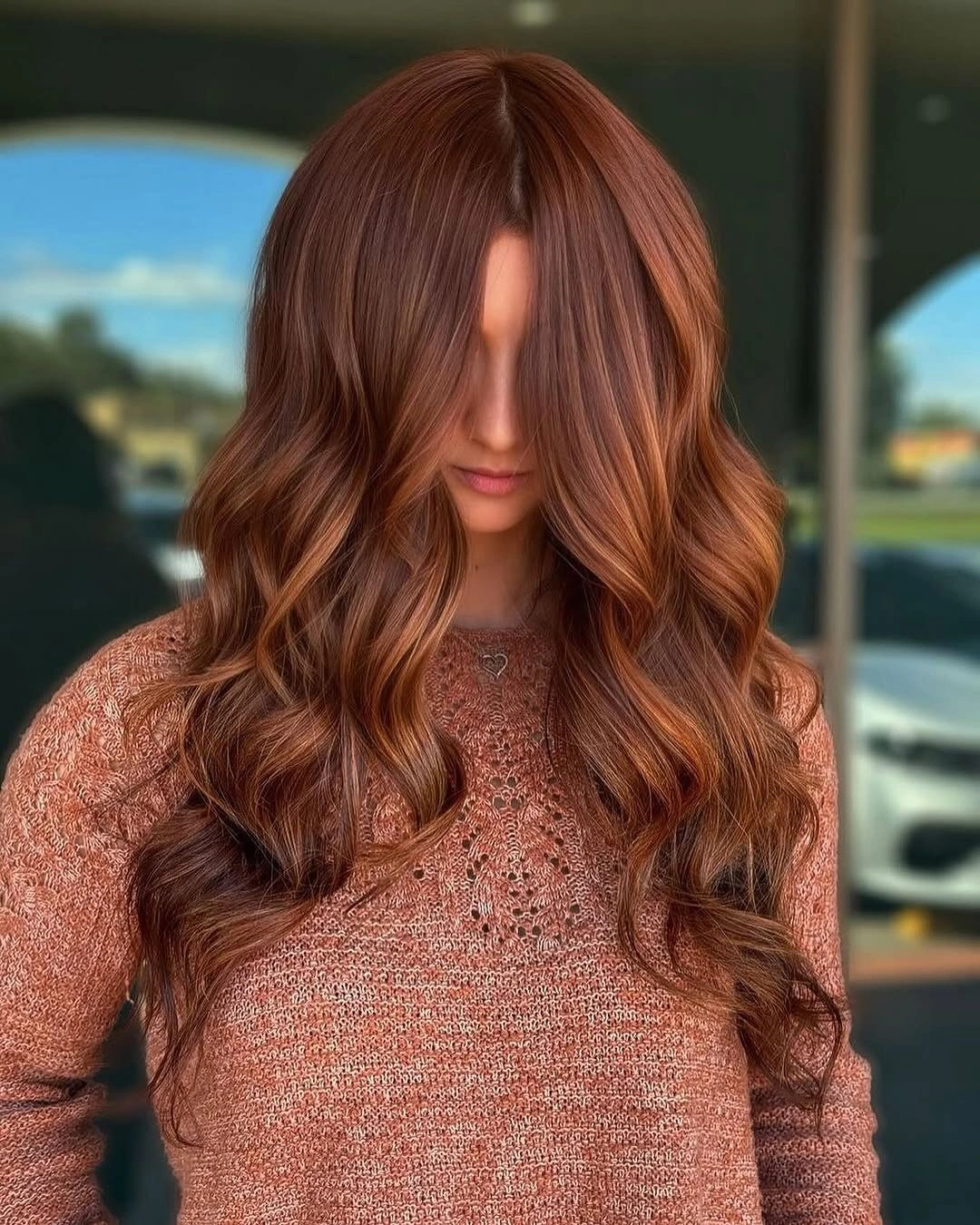
That relationship between auburn and copper makes the variation feel tonal rather than sharply divided. The deeper red-brown areas give the hair weight through the upper and inner sections, while brighter copper catches along the face-framing curves and repeated bends below, so the eye reads shifts in warmth and brightness without losing the underlying auburn identity.
The lighter areas intensify the same warm family rather than introducing a separate golden or blonde value. That keeps the contrast chromatic and tonal: copper looks brighter beside auburn, but both remain closely connected by their red warmth. Around the center part, copper becomes especially noticeable along the front curves before recurring farther down the waves. Deeper auburn remains visible between those brighter passages, preventing the long lengths from reading as one continuous orange-copper field. From farther away, the overall impression is still rich auburn-red. Closer inspection reveals the brighter copper ribbons as the detail that gives the color movement, making this a useful example of variation created inside neighboring warm shades rather than through a pale contrast color.
Half Blonde, Half Brunette Creates Graphic Contrast
This color arrangement is built around division rather than blending. One side of the shoulder-skimming hair is conspicuously light blonde while the opposite side remains dark brunette, producing a clear light-versus-dark split that reads immediately across the front instead of dissolving into ribbons, a gradient, or scattered highlights through the length.
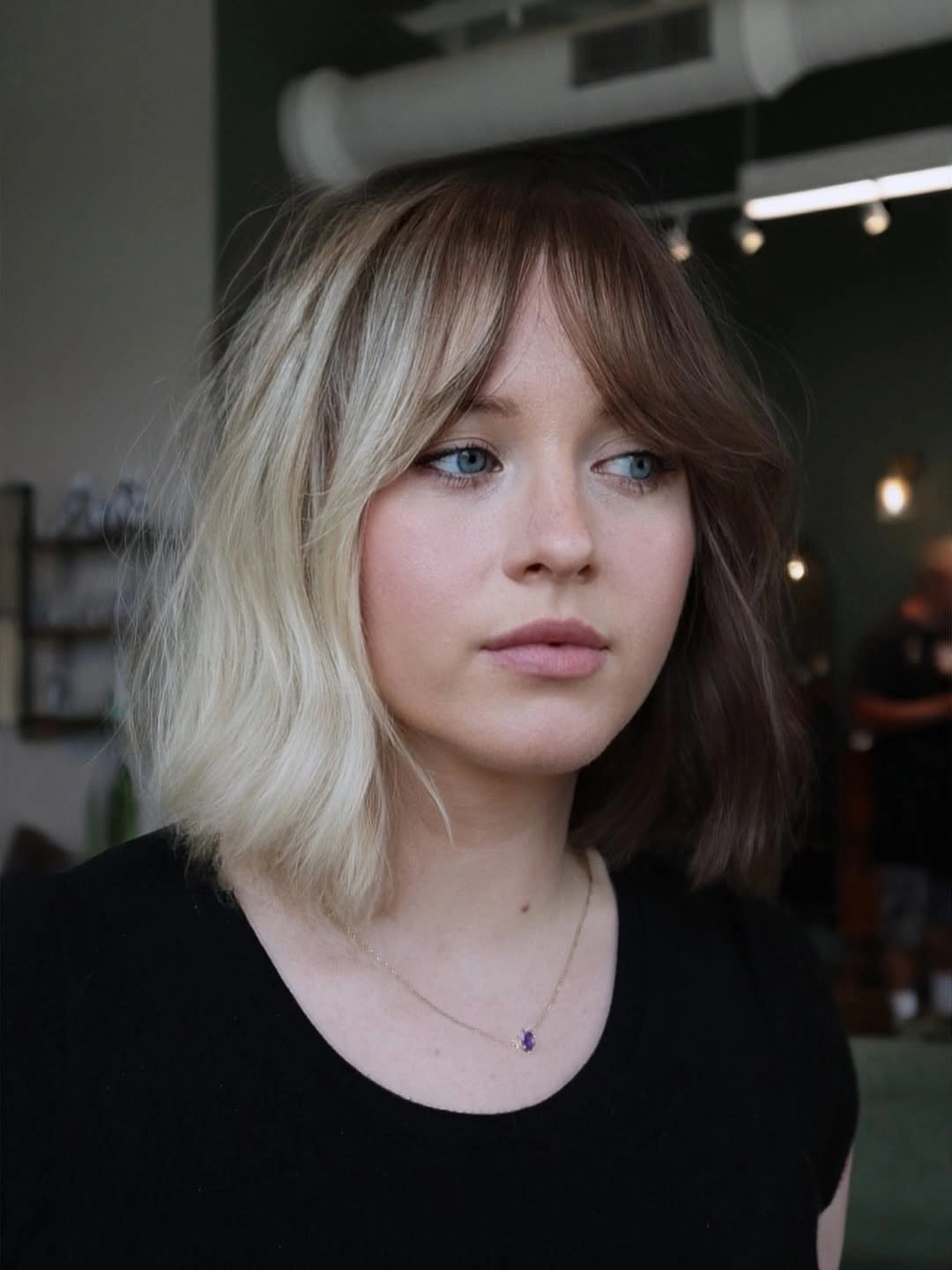
The contrast is strongest because the two sides occupy broad, separate areas with little visual ambiguity about which color belongs where. The pale blonde side reflects much more light, while the brunette side creates a dense dark block, so the overall effect depends on opposing values placed next to each other rather than on subtle changes inside one brown, red, or blonde family.
The separation remains easy to follow around the front because the light and dark areas meet near the central parting rather than gradually fading into one another. That creates a graphic boundary even though the hair itself has a soft, natural bend through the ends. At this shoulder-skimming length, the blonde and brunette occupy large enough sections to register as two color blocks at once. Neither side functions as a small accent, so the composition is balanced around opposition rather than a dominant base with a few contrasting pieces. This is therefore a useful reference for winter hair colors built on deliberate value contrast. The defining visual idea is not dimension within brown or blonde, but the immediate side-by-side relationship between a very light section and a much darker one.
Muted Plum-Brown Adds a Violet Cast to Dark Hair
The interest in this dark color comes from undertone rather than from a noticeable jump in lightness. Across the long layered waves, the surface reads as a very deep plum-brown to violet-brown, with the purple cast remaining visible through broad areas of the hair instead of appearing only as isolated bright pieces or a separate contrasting section.
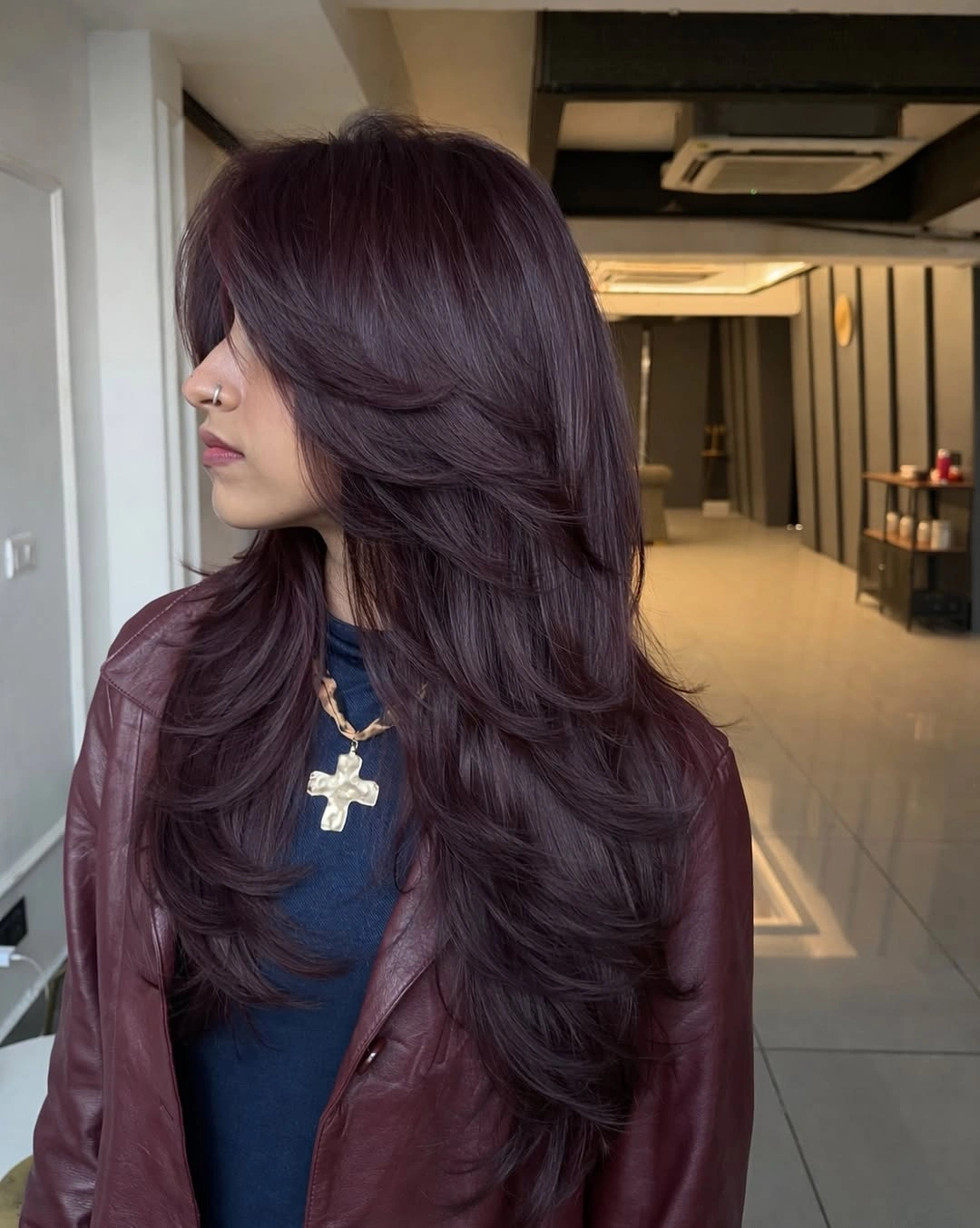
Because the depth stays consistently dark, the violet character changes how the brunette-like base is perceived without turning the look into a light-dark composition. Curved sections catch enough light to reveal muted plum and wine-toned reflections, while the shadowed areas remain close to near-black brown, keeping the palette concentrated and cool-leaning in appearance.
The purple influence is easiest to notice where the layered waves turn toward the light. Those areas reveal plum and muted violet more clearly, while deeper folds fall back toward a brown-black depth, giving the same dark palette different readings across the surface. Importantly, the variation does not depend on pale streaks or a two-tone division. Most of the visible hair stays within a narrow dark value range, so the eye notices the violet cast as an undertone running across the whole rather than as a separate highlight color. For dark winter hair colors, that makes undertone the main point of comparison. A near-black level can still read distinctly plum or violet when enough colored reflection is visible, showing how hue can alter a deep base even when overall lightness changes very little.
Soft Peach Copper Keeps the Color Luminous
This copper sits on the softer side of the warm spectrum, with peachy and slightly rosy notes visible through the long voluminous waves. The color appears luminous because broad curves catch lighter reflections across the surface, yet those brighter areas remain close to the main copper value rather than separating into obvious pale ribbons or high-contrast streaks.
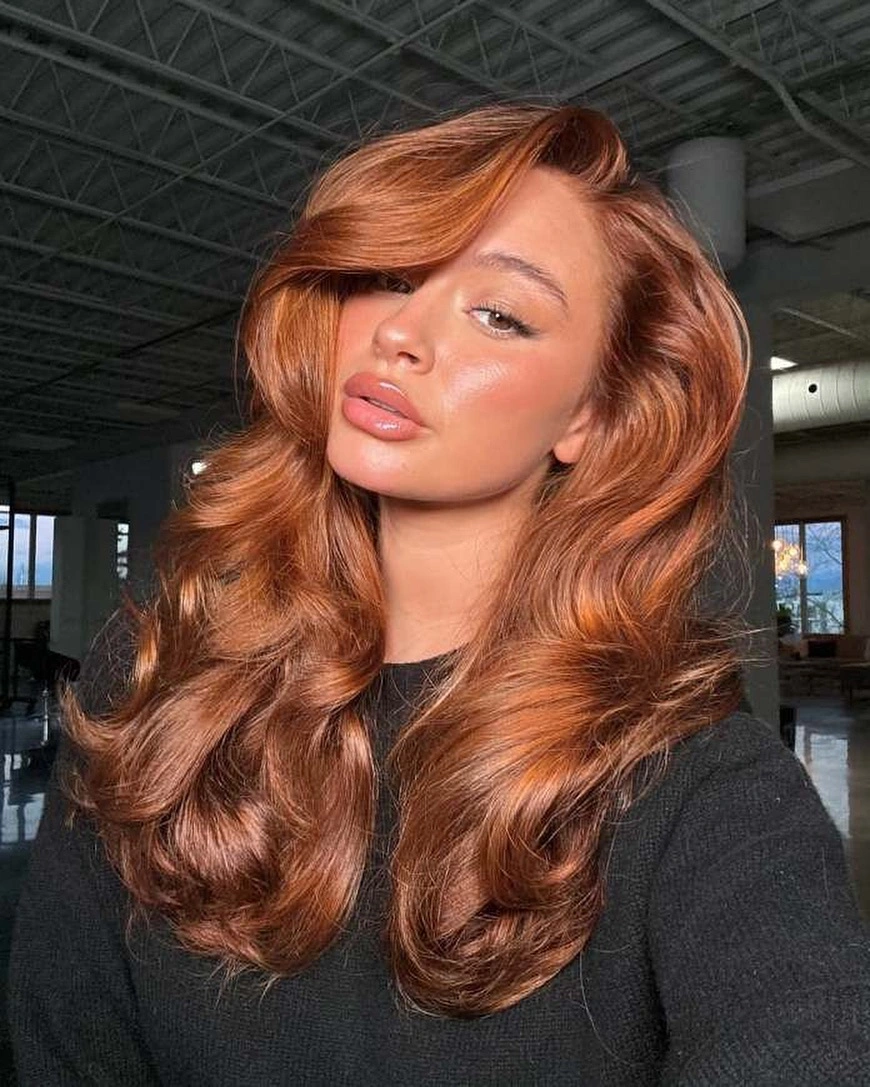
The effect comes from a gentle range of warm tones instead of maximum saturation. Some sections read as mellow copper, others lean more peach or rose-gold under the light, and the deeper folds settle into richer red-brown warmth, creating a rounded color field that feels dimensional without becoming sharply striped or aggressively orange.
Soft in this case describes the saturation more than extreme lightness. The copper remains clearly present, but its peachy warmth and rosy cast keep it from reading as a forceful orange-red block across the entire length. The large waves create wide areas of highlight and shadow, which lets the color move between lighter peach-copper and deeper warm copper without obvious boundaries. Because those shifts follow the curved surface, they read as a luminous tonal range rather than separate colored bands. This gives the warm palette a gentler visual register while preserving enough depth to keep the hair from appearing pale. The result is a useful counterpoint to vivid copper ideas: brightness is present, but it is moderated by softer peach and rose-brown warmth.
Vivid Orange Copper Makes the Color the Focus
Here the copper family moves decisively toward stronger saturation. The long waves read as vivid orange-copper to red-orange across most of the visible hair, with the bright warm color extending from the upper sections through the lengths rather than appearing only in selected ribbons, ends, or a lighter frame around the face.
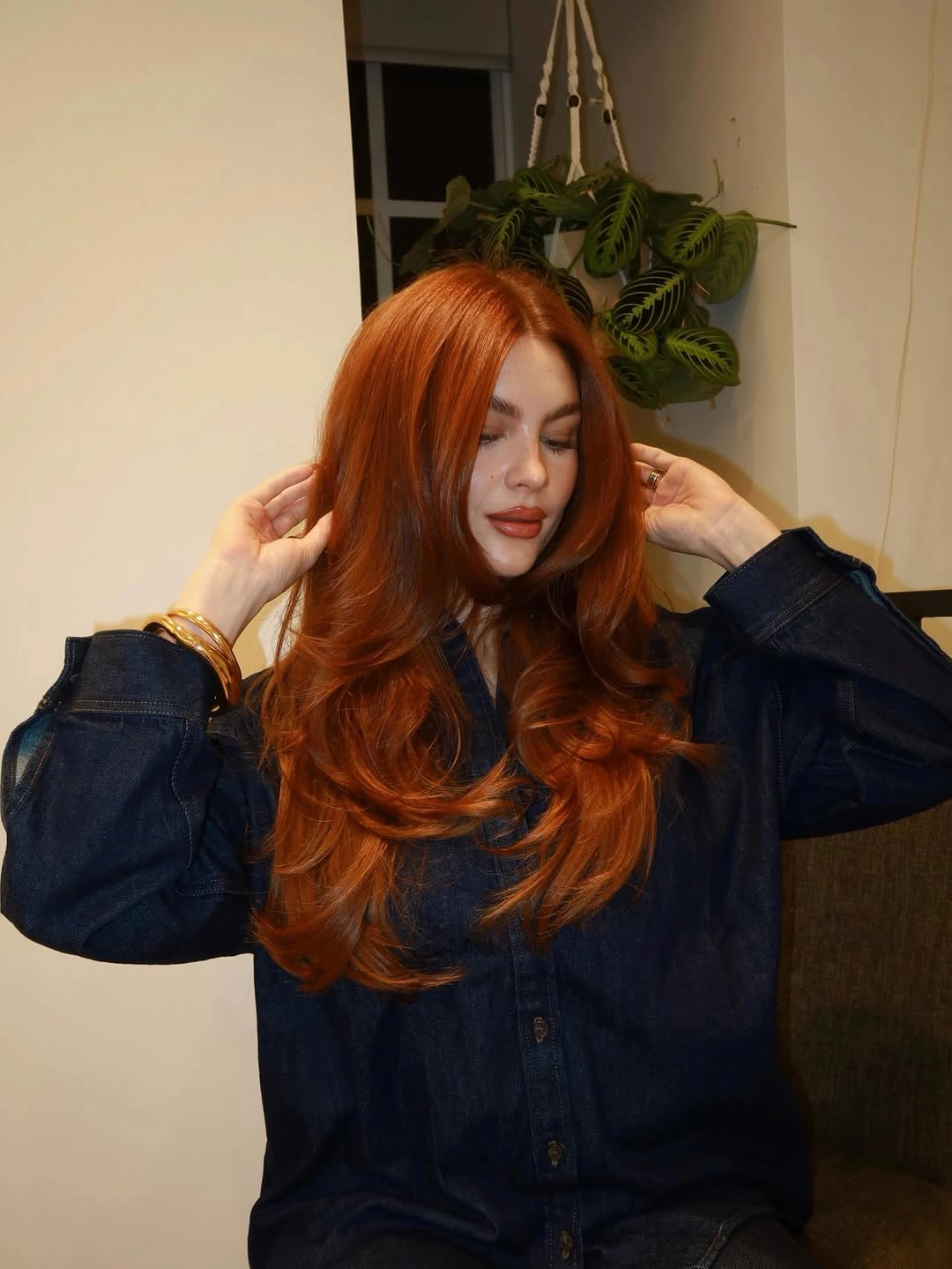
That broad coverage is what makes the color feel more assertive than a softer peach-copper direction. Light catches on the wave crests and lifts them toward brighter orange, while the recessed curves deepen toward red-orange, but both ends of that range stay highly saturated enough that the entire surface reads as one bold warm statement.
The strongest impression is saturation, not contrast between separate colors. Nearly every visible section participates in the orange-copper palette, so the eye reads one expansive field of warm color before noticing the smaller changes created by highlight and shadow. The waves still add tonal movement, with raised curves appearing brighter and recessed sections turning deeper red-orange. Those shifts do not interrupt the overall uniformity because they remain inside a closely related, highly saturated warm range from top to lower lengths. As a bright winter hair color, this direction demonstrates how intensity can become the defining feature even without blonde pieces, dark panels, or a visible gradient. The color stays cohesive, but its vivid orange-red character gives the entire surface a much stronger visual presence than softer copper tones.
Deep Berry Burgundy Creates a Saturated Wine Effect
The color moves away from orange-red warmth and into a darker berry family, with the long hair reading as saturated burgundy from the smooth upper section through the curved ends. Plum and magenta character becomes especially visible where the surface catches light, giving the red a cooler, wine-like direction without relying on blonde pieces or a lighter contrasting base.
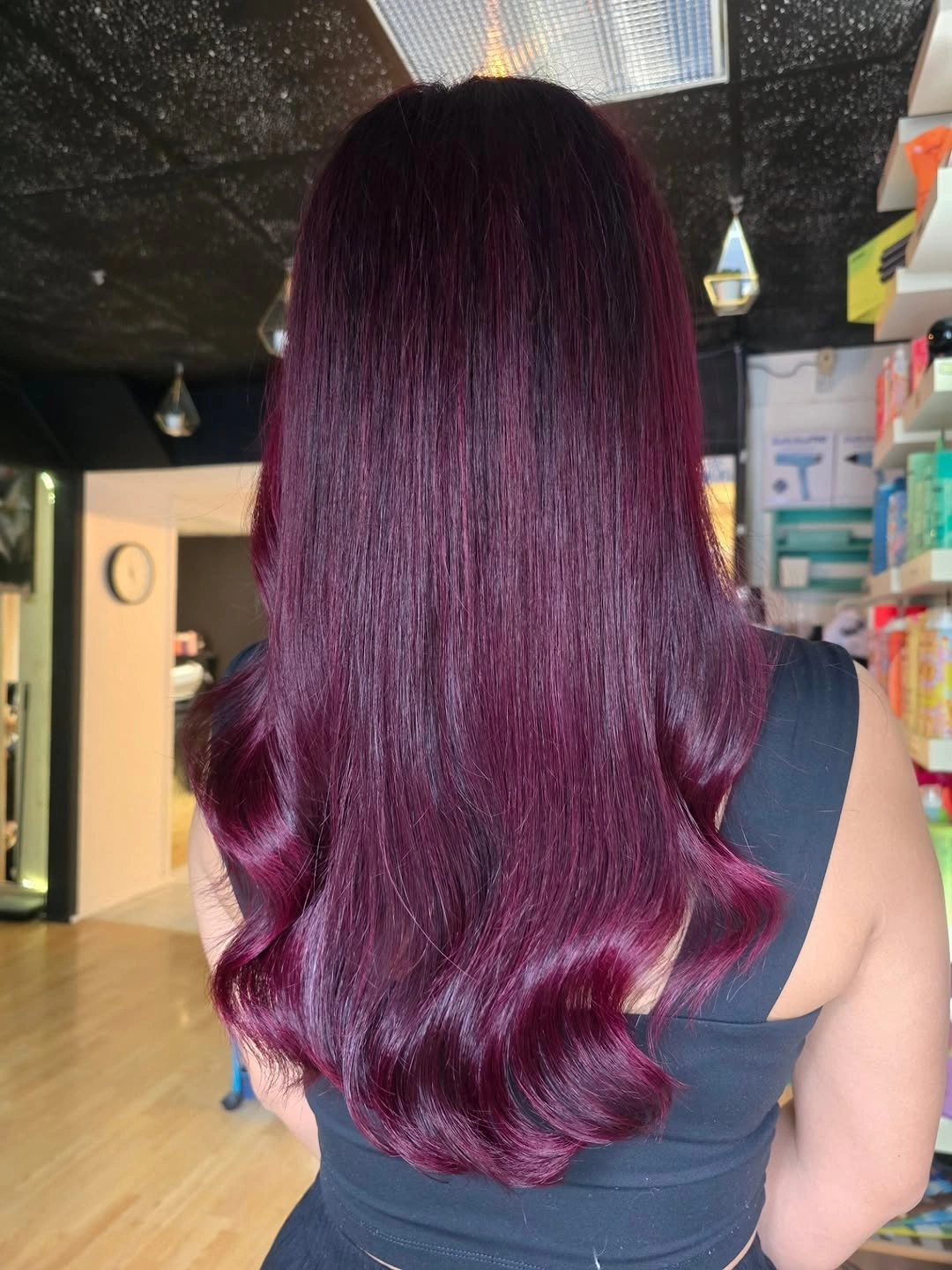
Depth is important here because the burgundy remains dark enough to keep its dense visual weight even where the reflective areas turn brighter and more purple-red. The smoother upper lengths show a broad, continuous field of color, while the curled lower sections create changing highlights that reveal more of the plum and berry undertones already present within that same saturated shade.
The central distinction is undertone rather than a large change in value. Dark red remains the dominant reading, but the visible magenta and plum cast shifts it away from copper, auburn, or orange-based warmth. Along the straighter upper portion, that berry character appears comparatively even and concentrated. The curved ends create brighter flashes of burgundy and purple-red as their surfaces turn toward the light, adding movement without introducing another color family. For dark winter hair colors, this is a useful example of saturation held inside a deep range. The color remains rich and substantial from top to bottom, while its wine-like character comes from the balance of red, plum, and magenta rather than from separate ribbons.
Copper and Blonde Ribbons Break Up Dark Brown
Three clearly different color families share the same long wavy surface here: a dark brown foundation, saturated copper-orange sections, and much paler blonde ribbons. Instead of one base carrying only a slightly lighter variation, the hair repeatedly shifts between deep brunette, vivid warmth, and high-value lightness, so the contrast is both tonal and chromatic.
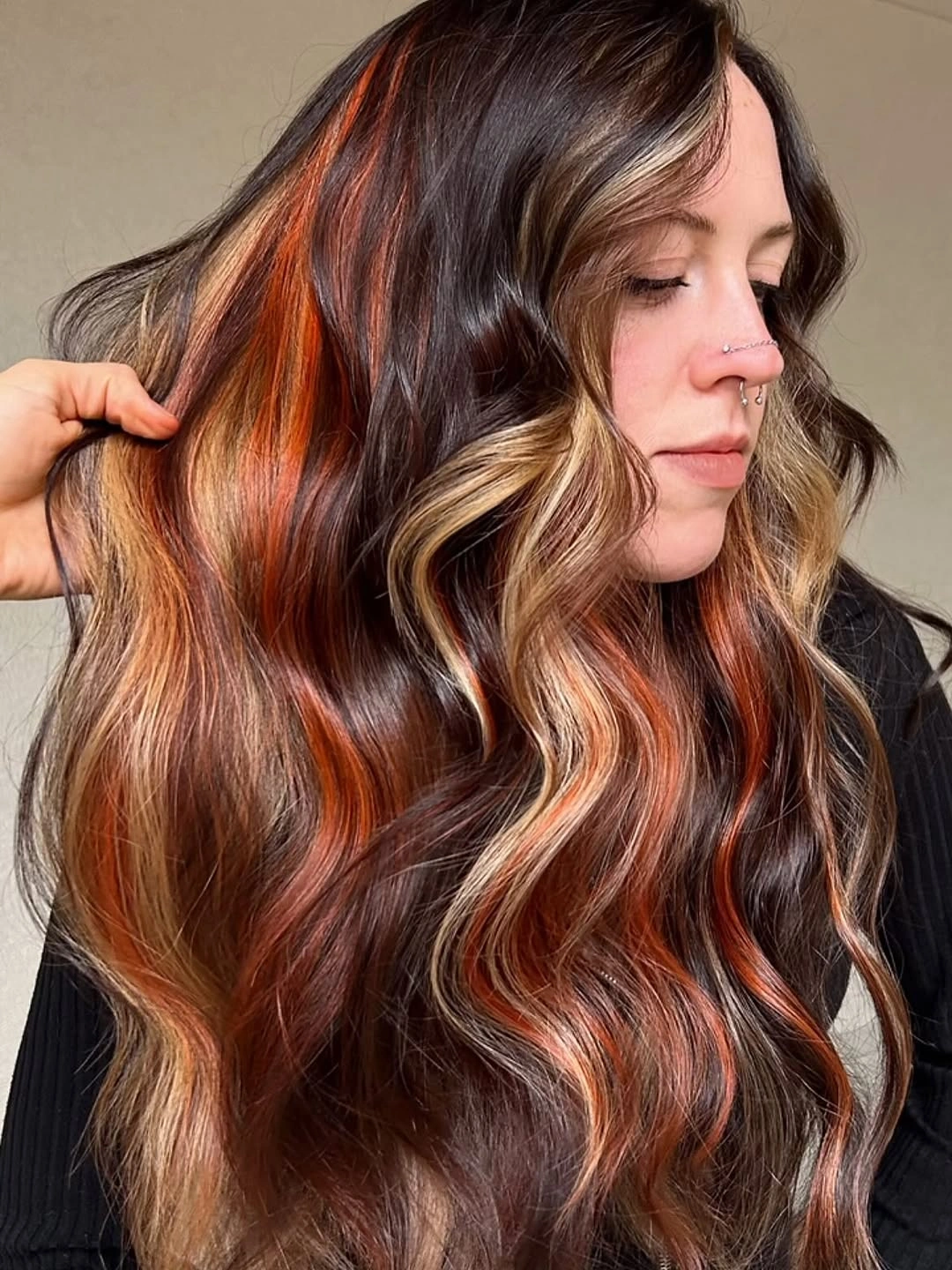
The lighter and warmer sections are substantial enough to remain individually readable as they travel through the front and lower lengths. Copper-orange bands bring strong warmth against the brunette, while pale blonde introduces an even greater jump in brightness, creating a layered color arrangement in which neither type of lighter section can be mistaken for simple reflection on the dark base.
The dark brown areas act as visual separators between the brighter colors. When copper and blonde appear beside that depth, each registers differently: one changes hue dramatically while staying warm, and the other creates the clearest light-dark contrast in the composition. The wave pattern lets those three families alternate across neighboring curves. Some sections expose brunette beside copper, others place blonde beside dark brown, and still others bring the pale and orange tones close enough to emphasize how different their brightness levels are. This makes the color useful for readers comparing winter hair colors for brown hair that use several visible values at once. The defining feature is not a single highlighted zone but the coexistence of dark, warm, and pale bands across a broad portion of the hair.
Blue-Black Waves Flash With Vivid Cobalt Highlights
The hair reads black or nearly black overall, but intense blue becomes unmistakable wherever the long waves catch stronger light. Those cobalt-toned passages do not turn the entire surface into a uniformly bright blue; instead, they flash across selected curves while deep blue-black remains visible between them, giving the color a cool and highly saturated internal contrast.
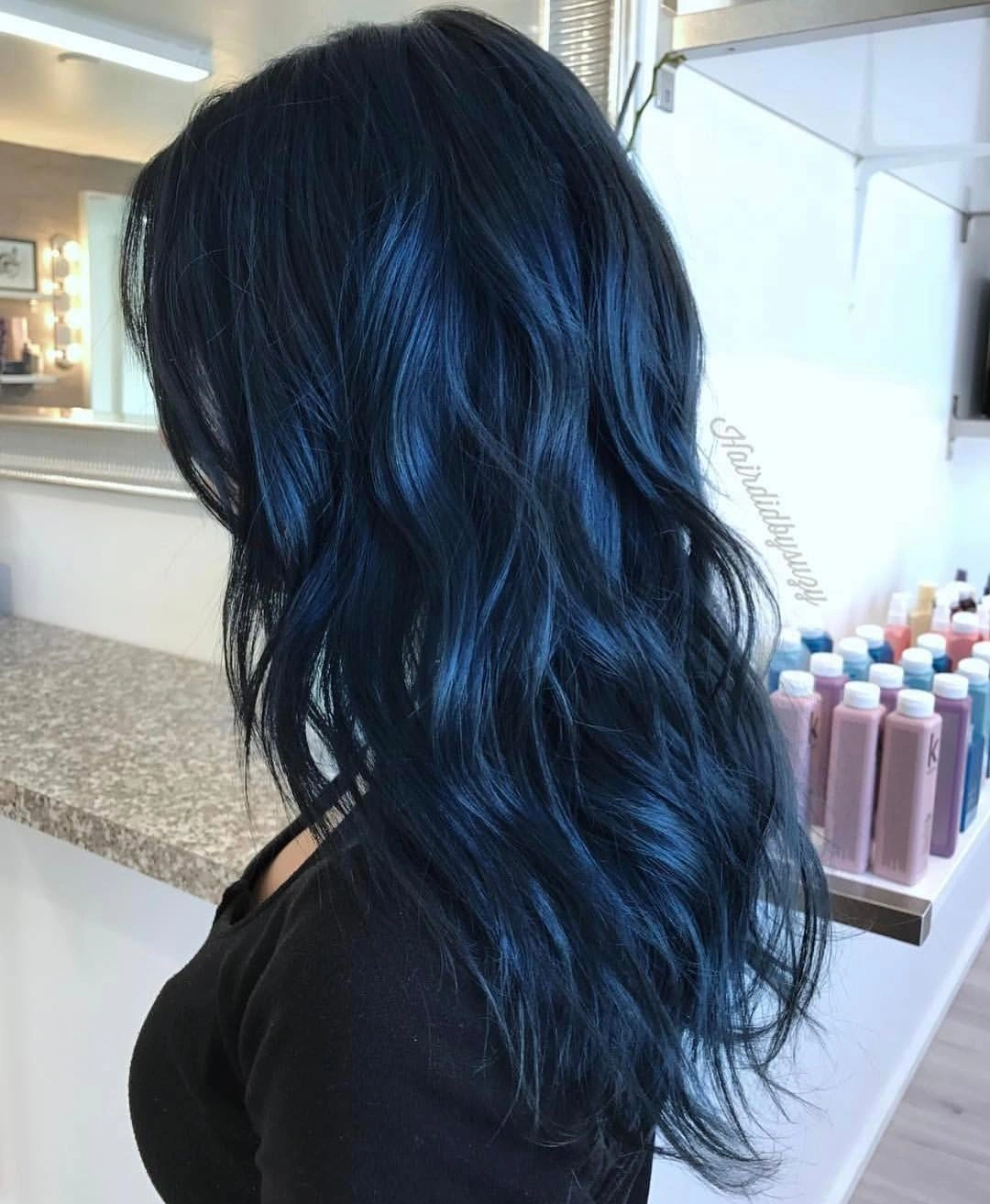
What separates this from a dark shade with only a subtle cool cast is the strength of the blue itself. Several raised sections show vivid cobalt rather than merely gray or neutral shine, while recessed folds return to a much deeper navy-black appearance, allowing the same dark foundation to move between near-black depth and conspicuous blue without introducing pale highlights.
The contrast stays within a cool family even though its intensity changes dramatically. Deep blue-black provides the visual base, and the brighter cobalt areas function as saturated flashes rather than as blonde or light-value ribbons. Because the hair is long and wavy, the blue appears repeatedly along different bends instead of gathering in one isolated front section. That distribution gives the surface a rhythmic sequence of dark and vivid cool passages while preserving the overall nearly black impression. Among vivid winter hair colors, this direction shows how strong color can exist inside a very dark value range. Brightness comes from saturated blue reflection against blackened depth, so the effect feels dramatic without depending on a transition toward pale color.
Caramel Face-Framing Brightens a Medium Brunette Base
The strongest lightness is concentrated around the front, where broad caramel-beige sections sit against a medium brunette foundation and create an immediate frame beside the face. Additional warm variation continues through the wavy lengths, but those secondary lighter areas are less dominant, making the front placement the clearest structural feature of the color.
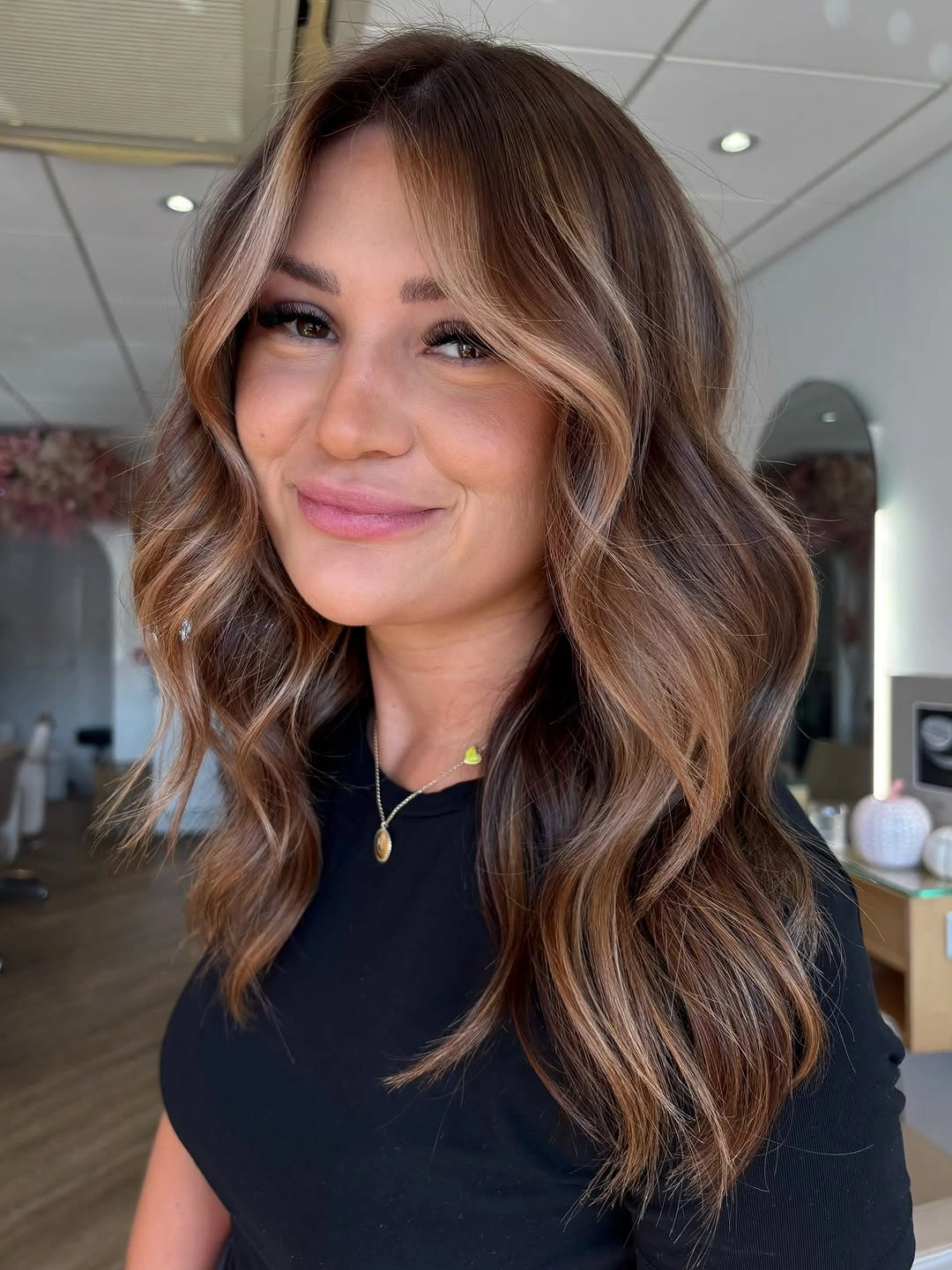
That localized brightness changes the balance of the brunette without breaking the hair into several equally strong color families. Medium brown remains clearly visible through the crown, interior, and much of the length, while the lighter front pieces create a larger value jump exactly where they curve forward, giving winter hair colors for brunettes a visibly focused rather than evenly distributed contrast.
The face-framing sections are pale enough to separate distinctly from the surrounding brown, yet they remain warm in character rather than reading as icy or silvery blonde. Their caramel-beige cast keeps the transition visually connected to the warmer brunette areas farther back. As the waves continue downward, smaller warm-brown and caramel shifts add dimension without competing with the brighter front. This creates a hierarchy of placement: the lightest pieces lead the eye, and the more restrained variation through the lengths supports them. The result is useful when comparing winter hair colors for brown hair by location as much as by shade. Instead of scattering maximum brightness everywhere, the color concentrates its strongest contrast near the front and lets the remaining brunette retain more of its medium depth.
Cherry Red Creates a Rich Monochrome Color Story
This long wavy hair is dominated by a saturated cherry-red color that remains comparatively consistent across the visible crown, front sections, and lower lengths. There are natural differences in brightness where the waves turn toward or away from the light, but no conspicuous pale ribbons or localized face-framing sections interrupt the broad red field.
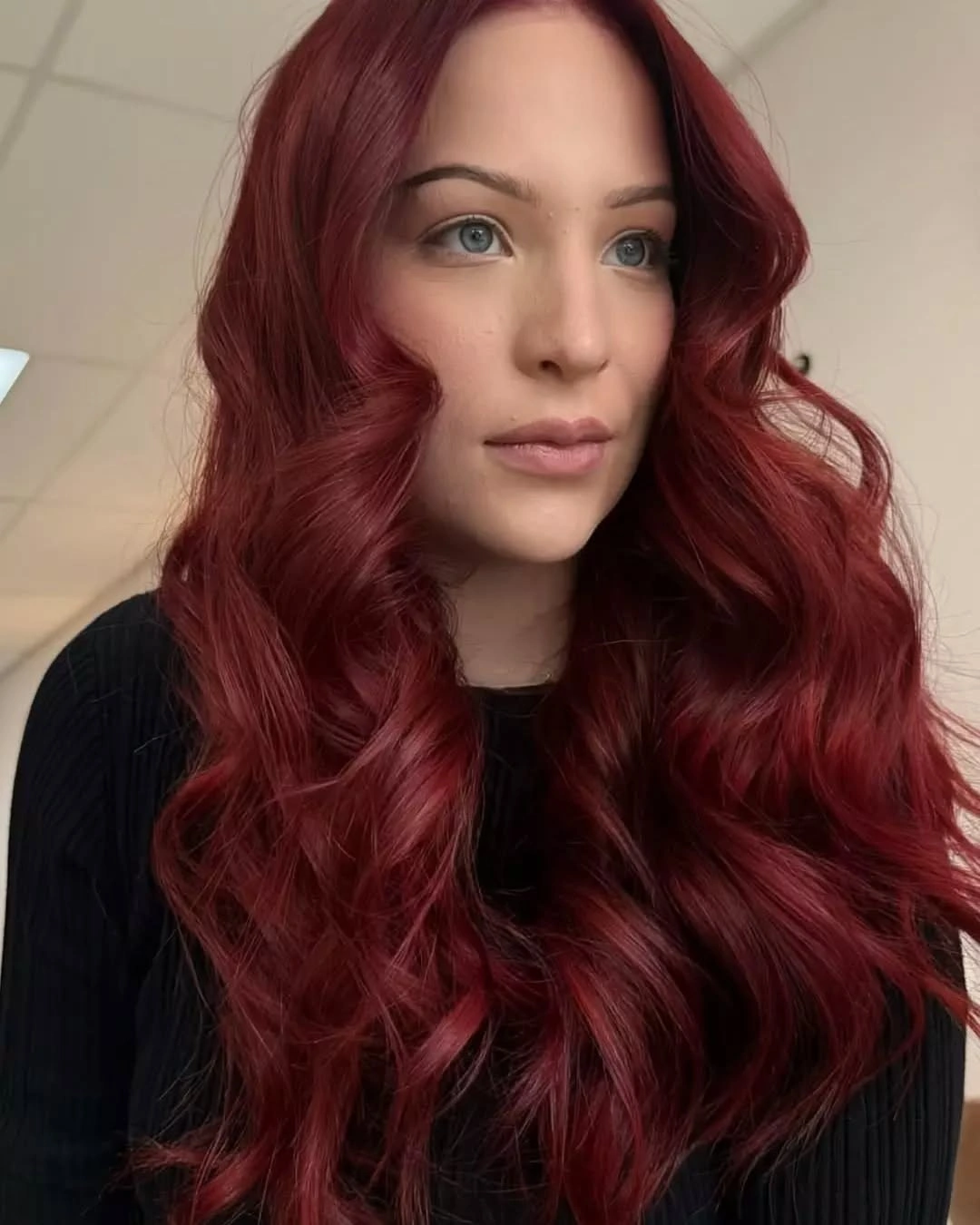
The color therefore makes its statement through hue and saturation rather than placement contrast. Deeper folds lean toward dark crimson or burgundy-red, while raised curves catch brighter cherry reflections, yet those shifts remain close enough to one another that the hair still reads as an all-over red direction rather than a mixture of separate competing shades.
Consistency is what gives this color its visual force. The cherry-red character travels across large areas of the hair, so the eye encounters saturated red first and the smaller differences between darker and brighter curves second. The long waves introduce enough shadow to prevent the color from looking completely flat. Deeper red collects inside the bends, while brighter cherry appears along the exposed surfaces, creating dimensionality without breaking the monochrome impression. That makes this a different kind of vivid winter hair color from one built around contrasting pieces. Instead of directing attention to a specific front section or ribbon, the red occupies nearly the entire visible surface and lets saturation carry the composition.
Fine Copper Ribbons Add Warmth to Deep Brunette
The brunette base remains deep and dominant, while slender copper-to-warm-brown ribbons thread through the front pieces and continue into the lower waves. Because these warmer lines are relatively narrow, they introduce brightness in small repeated intervals rather than creating one broad light frame, allowing the darker brown to remain visible between nearly every warmer passage.
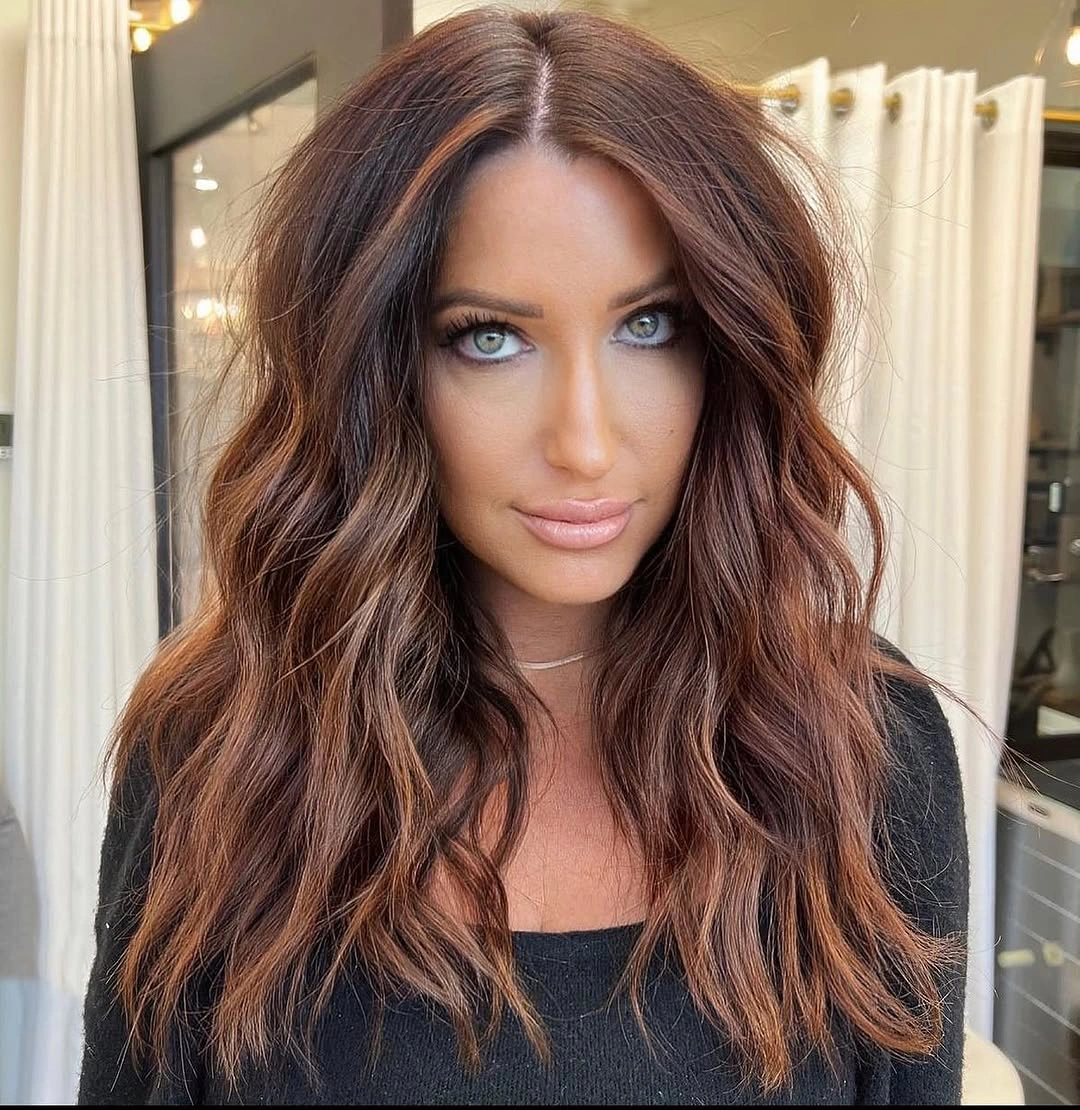
This is a finer-grained approach to dimension than a look built around wide caramel sections or several dramatically different color families. The copper warmth sits close enough to the brunette in value to feel connected, yet its orange-brown cast is distinct enough to register along individual bends, making placement and ribbon width more important than an extreme jump from dark to light.
Around the front, the warmer strands trace several narrow curves without replacing the brunette beside them. That repeated dark-to-copper spacing gives the color a detailed surface while preserving substantial depth near the part and through the interior. Farther down, the fine ribbons continue through the wavy lengths rather than ending after the face-framing area. Some appear more copper, while others read as warm medium brown, creating a close range of related tones instead of a single contrasting accent. For winter hair colors for brunettes, the useful distinction is scale. Thin warm passages can alter the overall temperature of deep brown while leaving much more of the original dark field visible than broader, lighter sections would.
Soft Beige Blonde Keeps a Short Lob Subtle
This shorter wavy shape carries a restrained beige-to-taupe blonde palette with noticeably deeper color near the root area and softer lightness through the ends. The tonal distance remains modest rather than dramatic, so the hair reads as a connected range of muted blonde and light brown-beige values instead of a strong dark-root-to-platinum transition.
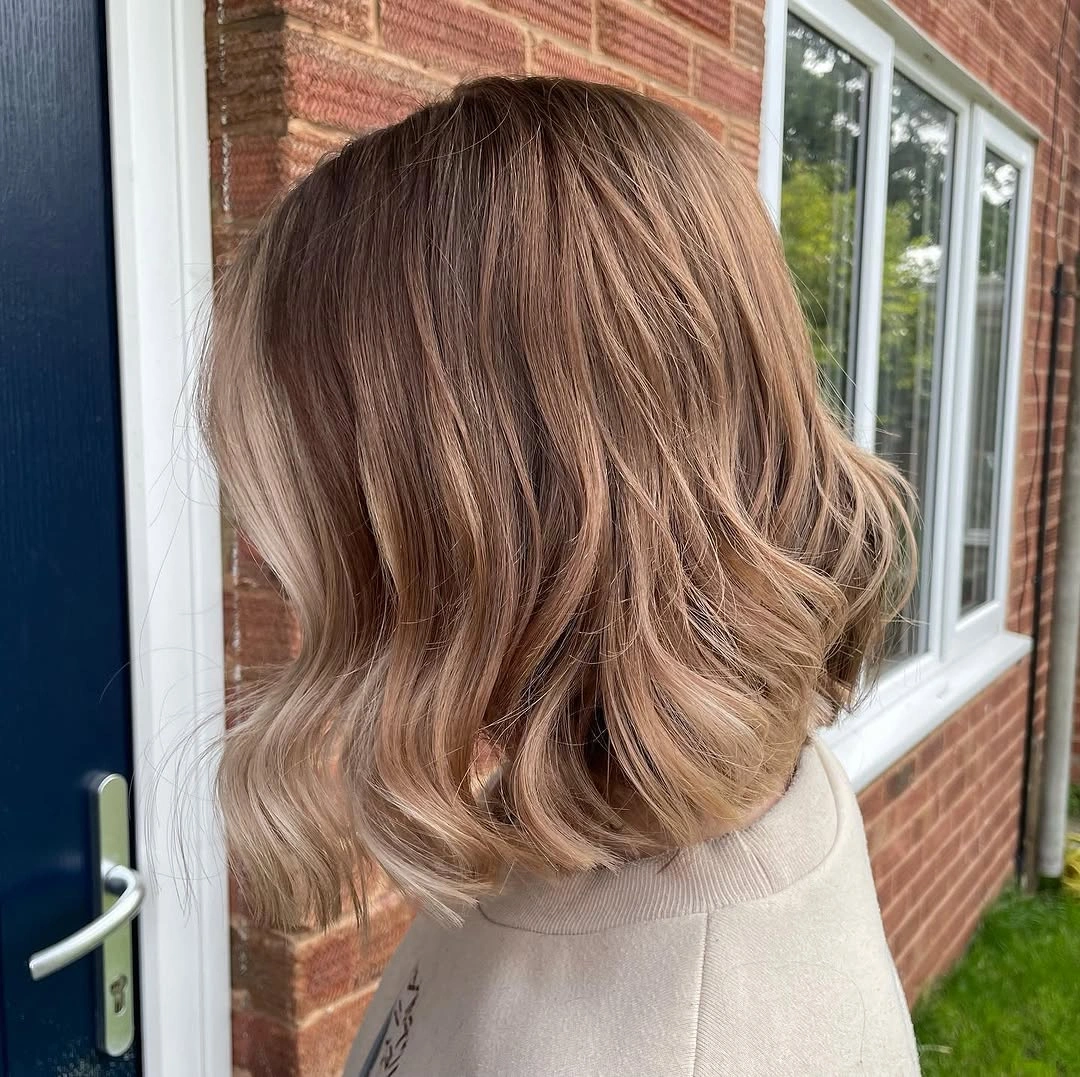
The compact length makes that low contrast especially easy to read because the deeper top and lighter ends remain relatively close together within the same visible shape. Beige, taupe, and softly creamy sections move through the bends without producing sharp stripes, giving this example of winter hair colors for blondes a quiet tonal structure based on neighboring neutral-looking shades.
The root area provides the deepest point, but it does not create a hard boundary against the lighter lengths. Instead, the visible color gradually settles into softer beige-blonde through the waves, keeping the overall palette restrained. Toward the curved ends, lighter sections become more apparent as they turn toward the light. Even there, the blonde remains subdued rather than icy or extremely bright, so the tonal variation stays gentle across the short length. This makes the color distinct from both saturated copper and very pale platinum. Its interest comes from low contrast, muted beige character, and the way a compact wavy shape keeps those subtle value changes visually close together.
Long Ginger Copper Sits Between Soft and Bright
The very long waves are filled with ginger-to-copper color that is clearly saturated, yet the tone carries enough brown and deeper orange warmth to avoid the almost electric brightness of a stronger red-orange direction. Across the visible length, the color stays consistently warm while shifting between richer ginger, copper, and slightly deeper reddish-brown areas as the waves turn.
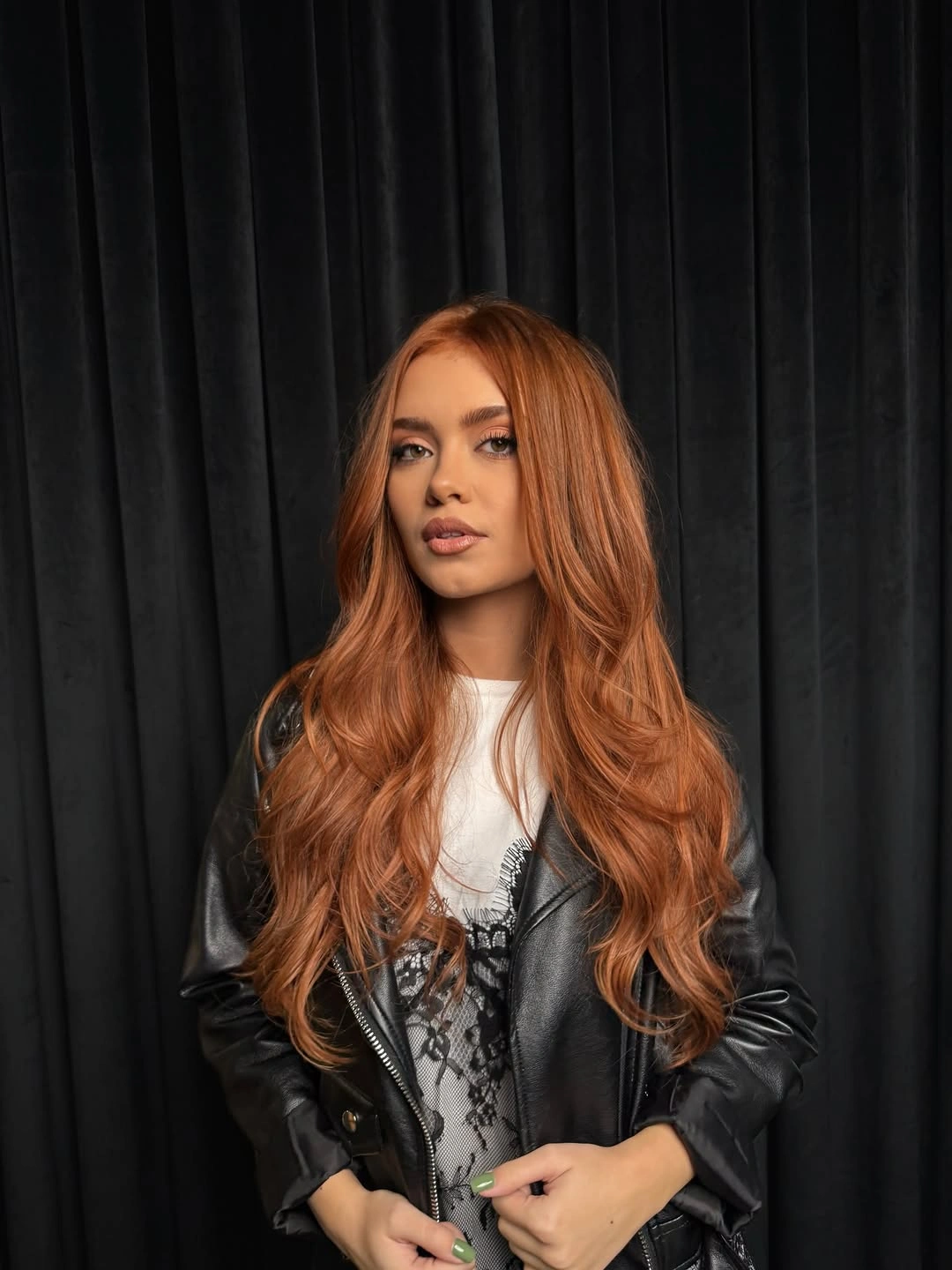
That places this shade in a useful middle range between soft peach-toned copper and a much more vivid orange-copper statement. It has more density and saturation than a muted warm palette, but the browned character keeps the color from reading as uniformly intense orange, giving the long hair a substantial warm presence without relying on pale contrast pieces.
The upper lengths establish a strong ginger-copper field before the color continues through the long waves. Rather than changing into a separate lighter family, the lower sections stay within closely related copper and orange-brown tones. Light catches several raised curves and makes them appear brighter, while deeper folds lean toward a richer rust or red-brown reading. Those changes add dimension without disturbing the overall continuity of the warm palette. Among bright winter hair colors, this is less extreme than the most saturated orange-red examples but noticeably stronger than soft peach copper. Its visual identity comes from that middle position, where warmth is pronounced and luminous while still carrying visible depth.
Bright Platinum Blonde Pushes the Palette Very Light
The palette shifts dramatically toward the lightest end here, with long center-parted waves reading pale platinum to creamy white across nearly the entire visible length. There is little dark color interrupting the effect, so brightness becomes the dominant feature from the upper sections through the ends, creating a very different value impression from deeper brunette, red, or copper directions.
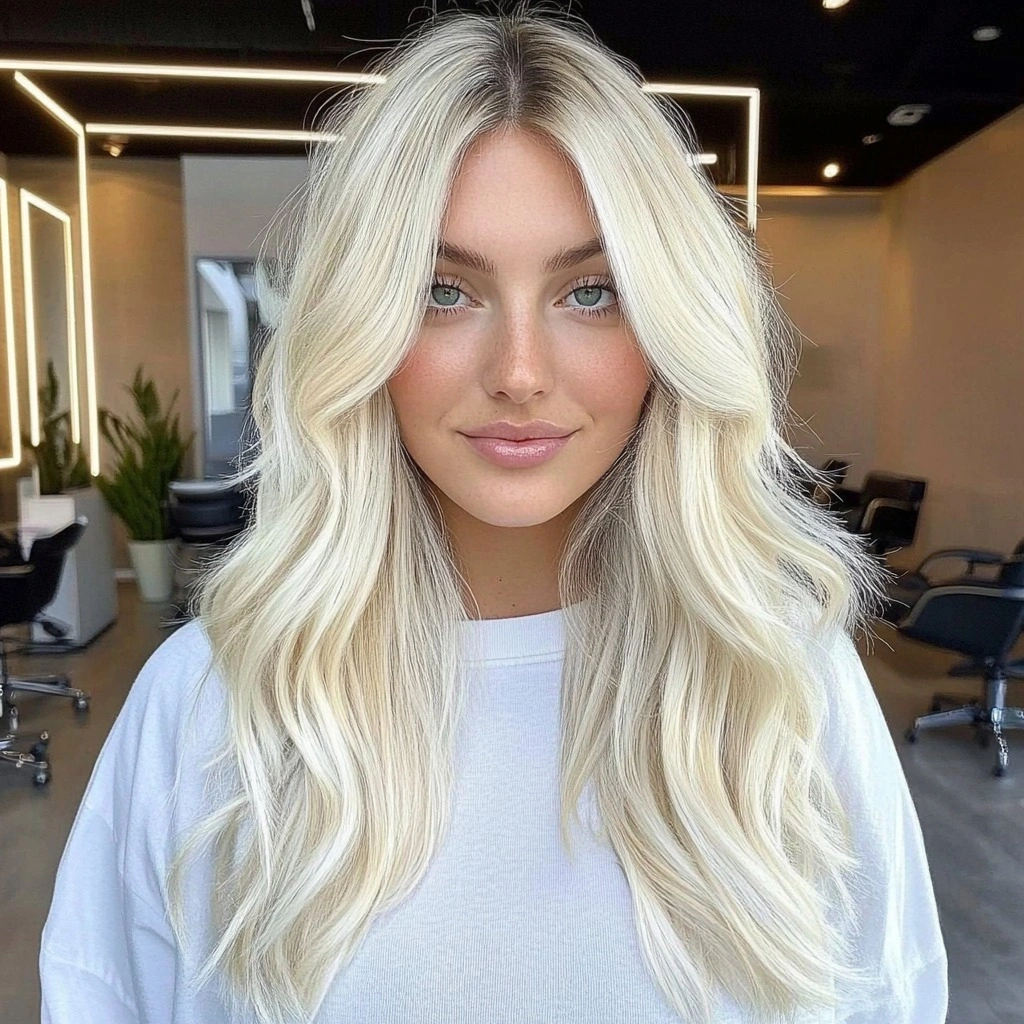
Within that very light range, some areas appear cooler and more platinum while others catch a faint creamy warmth, but the differences remain narrow enough that the hair still reads as one broadly pale blonde field. For winter hair colors for blondes, the key comparison is therefore overall value: the color stays consistently high in brightness rather than depending on isolated light ribbons against a darker foundation.
The center part allows the pale color to spread symmetrically through the front sections before flowing into the longer waves. Brightness remains strong on both sides, so no darker interior area becomes a competing focal point. Curves through the lengths create subtle changes between creamy white and slightly cooler platinum-looking reflections. Those shifts give the light surface dimension while preserving the impression of exceptionally pale blonde from top to bottom. This direction shows how far the palette can move toward lightness without introducing a vivid fantasy hue. Its distinction comes from sustained pale value and minimal deep contrast, making brightness itself the central color characteristic.
Icy Silver and Blue Share the Same Long Waves
The long waves combine several cool light colors at once, with pale silver forming much of the luminous base while icy blue and brighter blue sections move through the lengths. Unlike a nearly uniform platinum blonde, this palette changes hue as well as brightness, so different curves alternate between silvery white, frosted blue, and more noticeable saturated blue passages.
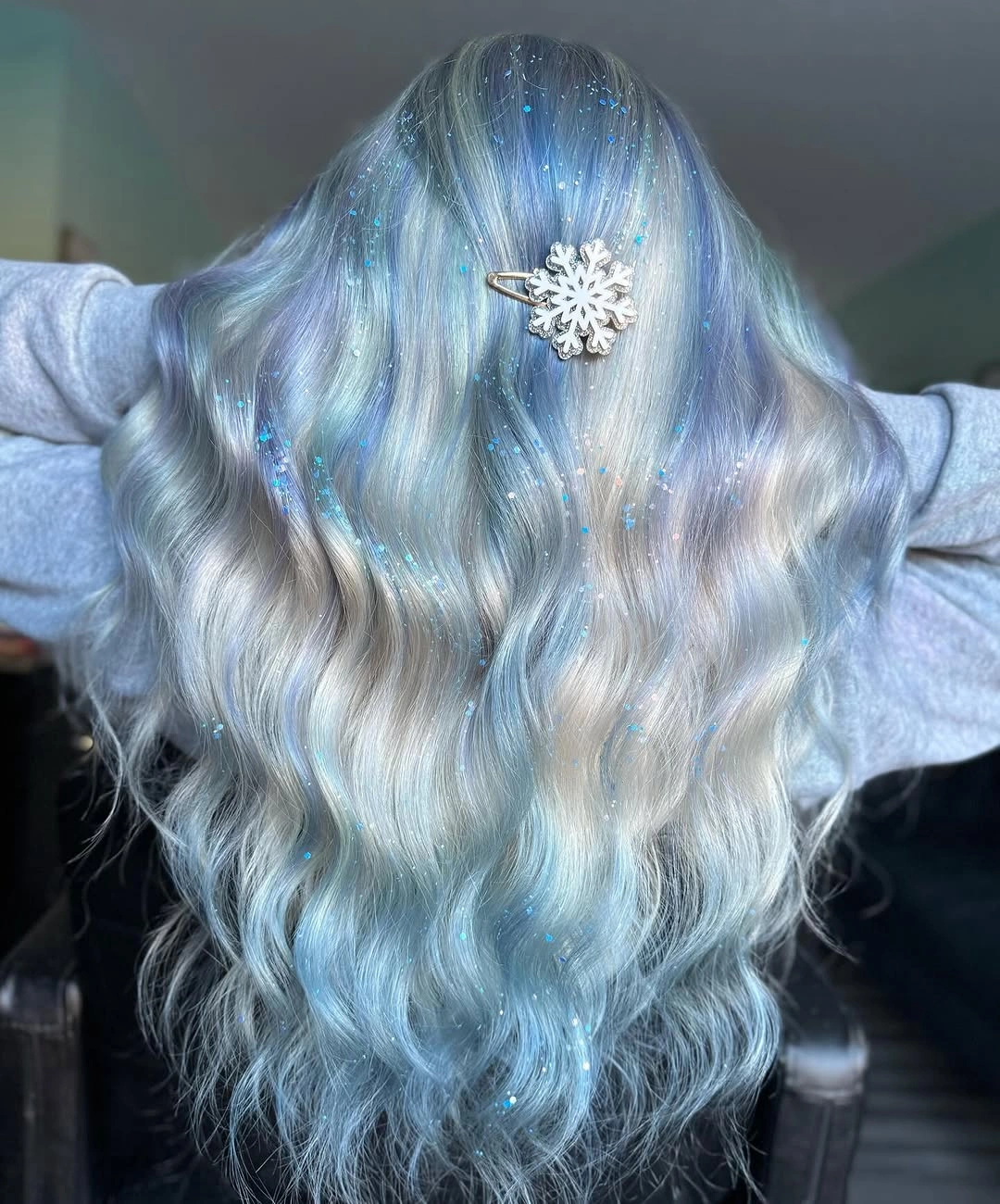
The color remains predominantly light even where the blue becomes stronger, which gives the combination a very different structure from cobalt flashes against a nearly black foundation. Pale silver and blue sit much closer in value, allowing the eye to follow cool hue changes across neighboring waves without encountering the extreme dark-light contrast of a blue-black palette.
Some upper and middle sections appear almost silver-white, while adjacent strands carry a clearer icy blue cast. Farther through the waves, brighter blue areas become more pronounced, building a layered cool spectrum rather than one single pale shade. The repeated curves help separate those tones because each bend reflects light differently. Silver remains highly luminous, pale blue softens the transition, and stronger blue provides the clearest color accent without overwhelming the lighter foundation. Small sparkling accents and the visible snowflake-shaped clip reinforce the icy visual theme, but the hair color remains the main point of comparison. The defining feature is the coexistence of silver and multiple blue intensities across one predominantly light, cool palette.
Scarlet Copper Brings Maximum Saturation to Long Hair
Saturation is the dominant feature here, with the long hair reading as an intense scarlet-copper to red-orange across nearly the entire visible length. The color stays forceful from the upper sections through the lower strands, and brighter orange-red flashes appear where the surface catches light without breaking the overall field into separate ribbons or pale accents.
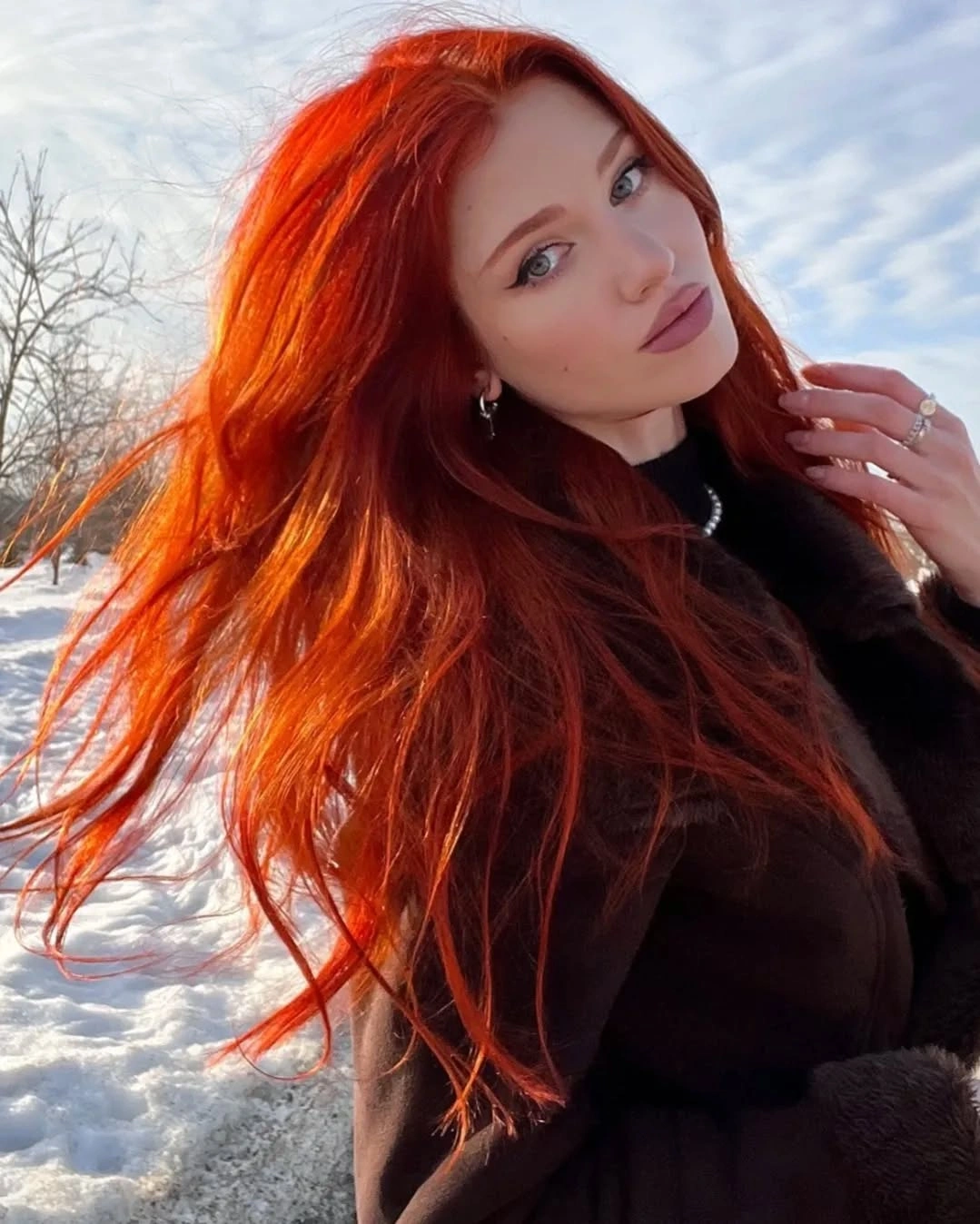
What makes this direction distinct from softer ginger-copper is the strength of the red-orange signal itself. Deeper crimson-red areas appear inside the shadowed sections, while exposed lengths push toward fiery copper and orange, so the variation happens through shifts in intensity inside one highly saturated warm family rather than through contrasting color placement.
The upper portion establishes a vivid scarlet-red base immediately, and that intensity continues rather than fading as the hair extends downward. Brighter copper-orange appears along several exposed strands, but the surrounding red remains saturated enough to keep those highlights visually connected. Through the longer lengths, the balance repeatedly moves between red and orange without introducing a noticeably pale value. That keeps the palette dense and energetic, with hue shifts doing more work than light-dark contrast. For bright winter hair colors, this example is defined by how little restraint there is in the warm saturation. The visible surface stays strongly red-orange from top to bottom, making color intensity itself the central visual structure rather than a supporting accent.
Taupe-Beige Ribbons Cool Down Medium Brown Waves
Medium brown remains the foundation, but lighter taupe-beige ribbons introduce a cooler-looking contrast around the front and continue through portions of the long waves. These lighter sections are distinct from caramel or copper because their beige cast appears more muted and neutral, giving the brown base a softer, less golden form of brightness.
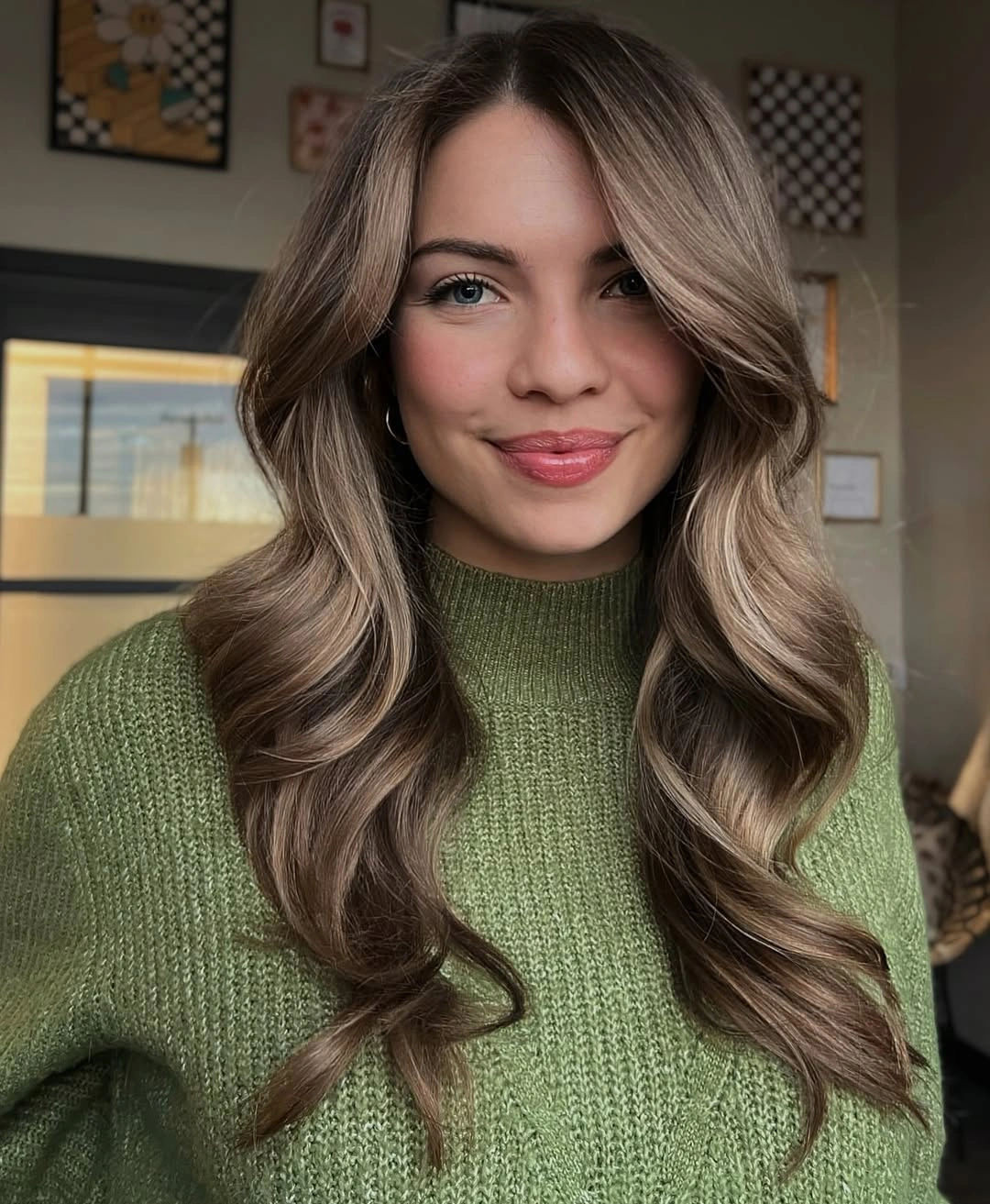
The strongest contrast sits near the face, where broader pale taupe-beige pieces lift the value against the surrounding medium brown. Farther through the lengths, additional lighter bands repeat that cooler beige direction at lower intensity, so the color reads as a brown base threaded with restrained lightness rather than an all-over shift toward blonde.
The front pieces carry the clearest value change, but they do not erase the medium brown around the part and interior. That balance keeps the deeper base easy to read while letting the taupe-beige sections redirect attention toward the outer curves. Along the lower waves, the lighter color reappears in narrower passages instead of forming one continuous pale block. Because those passages stay beige rather than strongly gold or copper, the contrast feels cooler and more subdued than a warmer brunette palette. This makes the color a useful reference for winter hair colors for brown hair when temperature matters as much as brightness. The visible effect comes from placing muted taupe-beige against medium brown, creating dimension without relying on vivid warmth or an extreme dark-to-light split.
Soft Golden Brown Keeps the Contrast Low
The long hair stays within a restrained warm light-brown family, with honey and golden variation appearing gradually through the waves rather than as sharply separated highlight bands. The overall value remains fairly consistent from the upper sections through the ends, so warmth and luminosity build through close tonal shifts instead of a conspicuous contrast design.
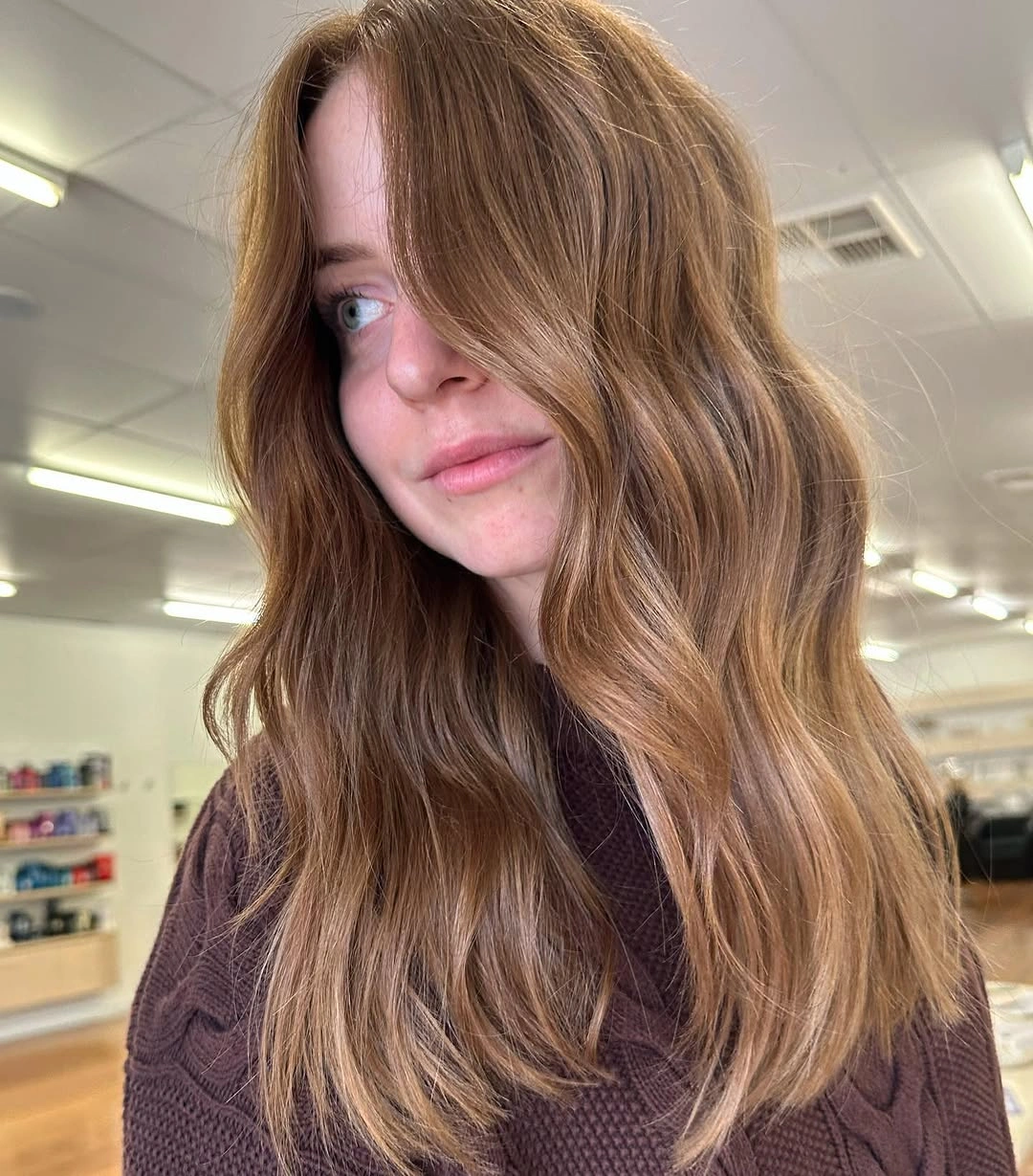
Golden-brown areas catch more light along the curved lengths, while neighboring sections settle into slightly deeper honey or medium light brown. Because those tones remain close in both depth and temperature, the hair reads as one cohesive warm field, with the brighter passages adding gentle movement rather than creating obvious stripes or a pale frame.
The root and upper areas appear a little deeper, but the change toward the lower lengths is gradual and modest. There is no sharp boundary where dark brown suddenly gives way to blonde, which keeps the warm palette visually continuous. Across the waves, honey and golden reflections emerge most clearly on the raised curves. The recessed sections retain a softer brown depth, giving the surface dimension while preserving the low-contrast character. For soft winter hair colors, the visual point here is the narrow tonal range rather than a bold placement effect. Warm light brown, honey, and gold sit close enough together that the result reads as nuanced and cohesive instead of strongly highlighted.
Dark Roots Fade Into Ash-Blonde Lengths
A pronounced dark-to-light transition defines this long wavy color, beginning with deep brunette roots and upper sections before moving into much lighter beige-to-ash-blonde through the front and lower lengths. The value change is broad and gradual enough to connect the two ends of the palette, yet the dark crown and pale lower areas remain clearly distinct.
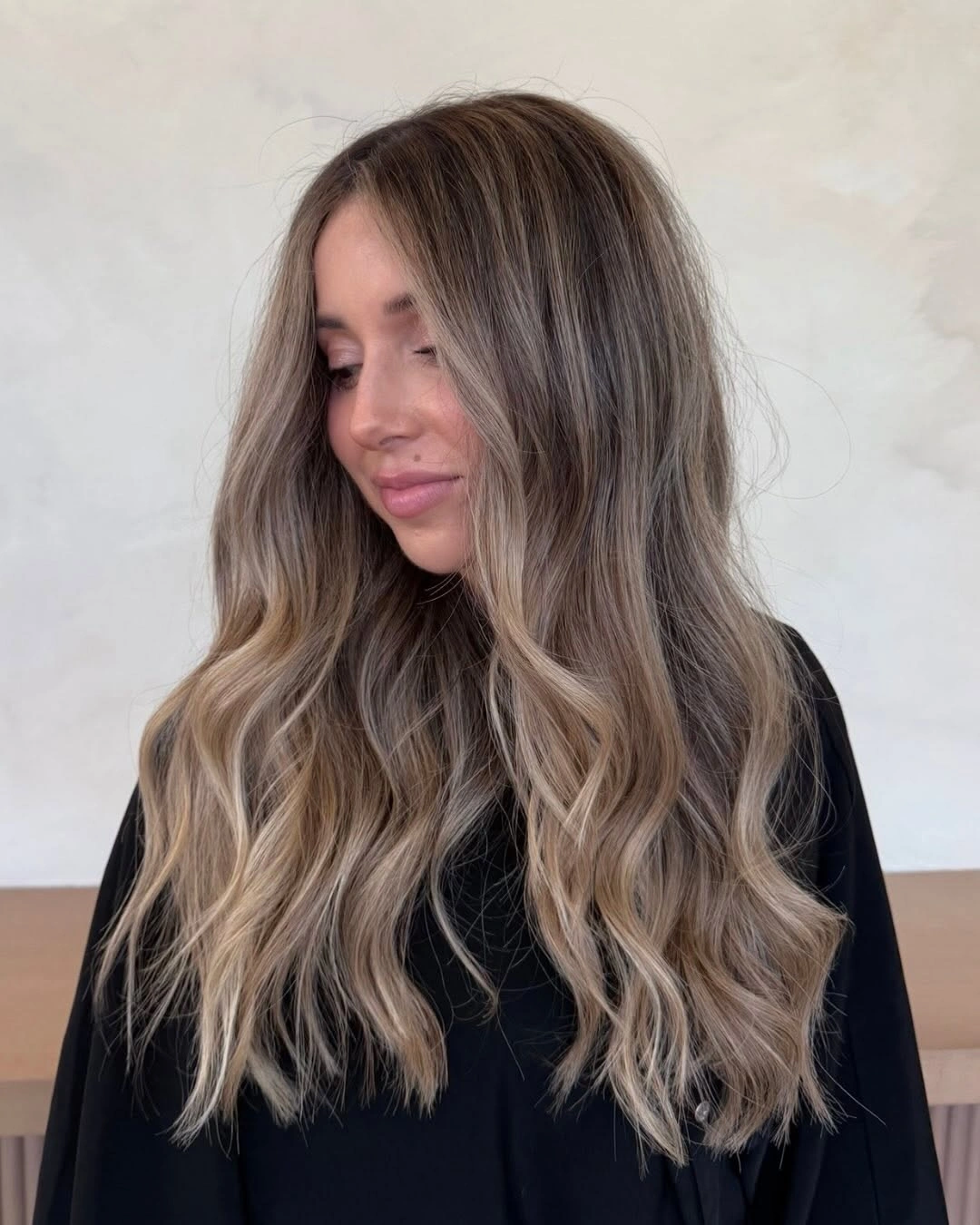
The lighter color becomes especially prominent around the front and through the lower half, where beige and ash-blonde sections occupy much more of the visible surface. Dark brunette remains concentrated nearer the roots and interior, so the eye can follow a clear progression from depth above to lightness below rather than reading isolated ribbons on a uniform base.
Near the part, the color is firmly brunette, giving the upper portion the deepest value in the composition. As the waves move outward and downward, lighter beige and ash-blonde become increasingly dominant, creating a visible transition instead of a sudden two-color boundary. Some strands preserve brown farther into the mid-lengths, while neighboring sections turn pale earlier. That uneven but connected distribution gives the dark-to-light effect depth and keeps the lower blonde from looking like a completely separate block. For readers using balayage as a visual search term, the observable feature here is the blended brunette-to-ash-blonde progression, not a verified coloring process. Strong value contrast is present, but the meeting point between dark and light remains gradual through the lengths.
Two-Tone Red and Pale Blonde Create Sharp Contrast
Strong red-versus-pale contrast defines this long layered color arrangement, with saturated crimson-red occupying broad sections while very light blonde to silvery-white appears through other large portions of the hair. The two families remain clearly readable beside each other, creating a graphic opposition based on both hue and value rather than subtle tonal blending.
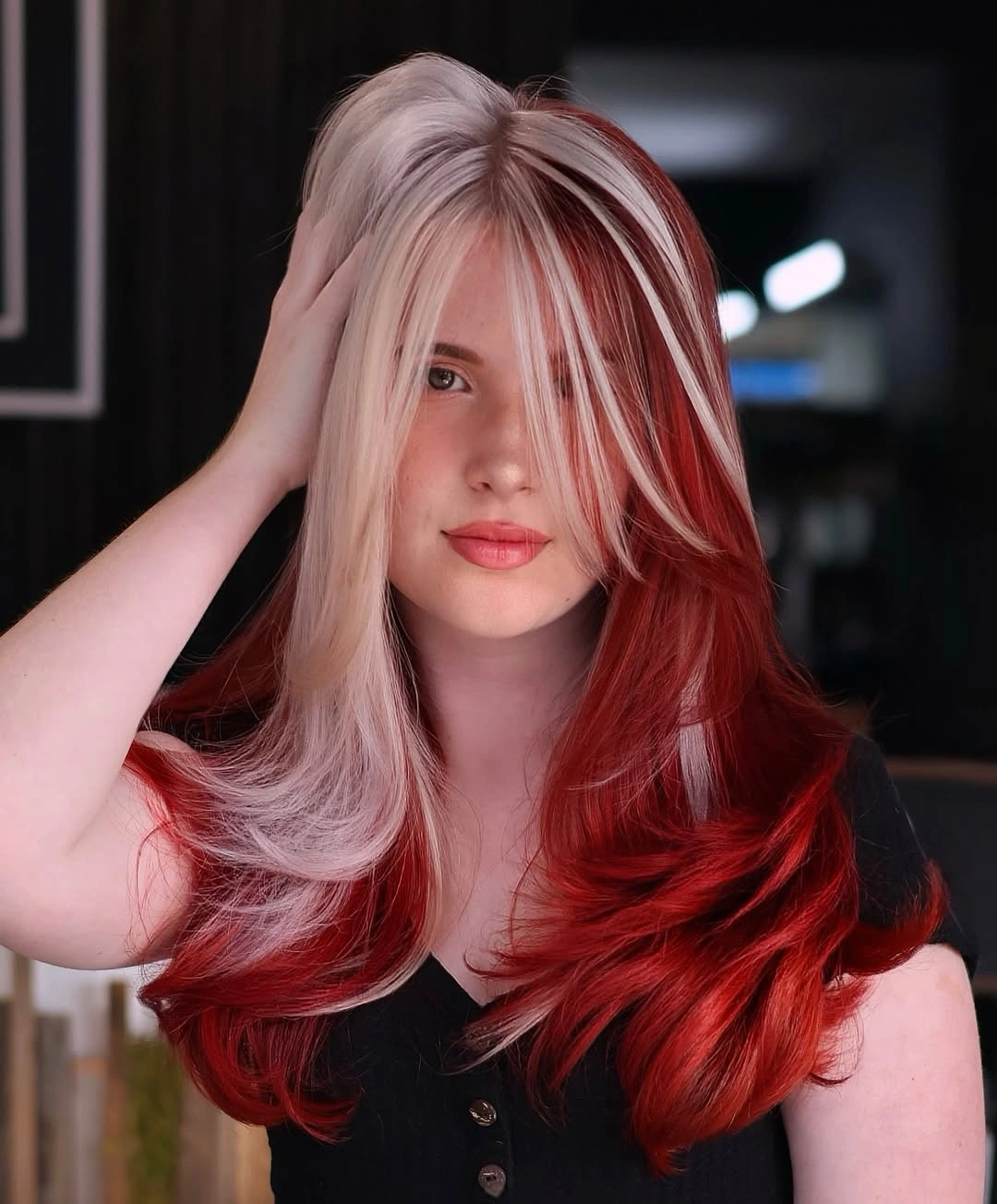
The placement is more complex than a simple left-right split because pale sections and red sections overlap through the layered front and lower lengths. Very light strands frame part of the face and continue into curved ends, while vivid red fills neighboring layers, so the contrast repeats across several levels of the hair instead of staying confined to one boundary.
The pale side reads close to platinum or silvery blonde, which makes the saturated red beside it appear even deeper and more intense. Because the value gap is so large, each color strengthens the visual impact of the other without needing an intermediate brown or copper bridge. Layering exposes the two colors in alternating curved sections around the front and through the ends. Some pale pieces cross into areas dominated by red, while red sections remain visible underneath and beside them, giving the two-tone pattern a more interwoven appearance than a clean half-and-half division. As a bright two-tone winter hair color, the main idea is controlled opposition between a vivid warm red and a very pale cool-looking counterpart. The repeated layered placement keeps both colors equally important across the visible length.