Winter blonde does not have to mean one icy, high-contrast shade. If you're exploring winter blonde hair color ideas for 2025, this collection moves through creamy platinum, soft beige, muted ash, silver-white, and warmer golden directions, showing how much the mood can change before length or cut even enters the conversation. The most useful choice is not simply light versus dark, but whether you want the color to feel crisp, soft, warm, smoky, or almost luminous.
The strongest blonde hair color ideas for fall and winter often come down to placement as much as tone. A darker root can sharpen pale lengths, face-framing brightness can lift a warmer base, and subtle ribbons can add depth without taking over the whole look. Across these examples, notice where the lightest color sits, how much contrast appears at the crown, and whether the blonde reads as even, layered, or deliberately interrupted.
Creamy Platinum Meets a Sharp Blunt Bob
A nearly even creamy platinum gives this jaw-length bob a clean, graphic finish. Because there is very little visible contrast between the crown and the ends, the color reads as one bright field instead of a mix of separate ribbons. The straight shape reinforces that simplicity, letting the pale tone and blunt perimeter carry most of the visual weight.
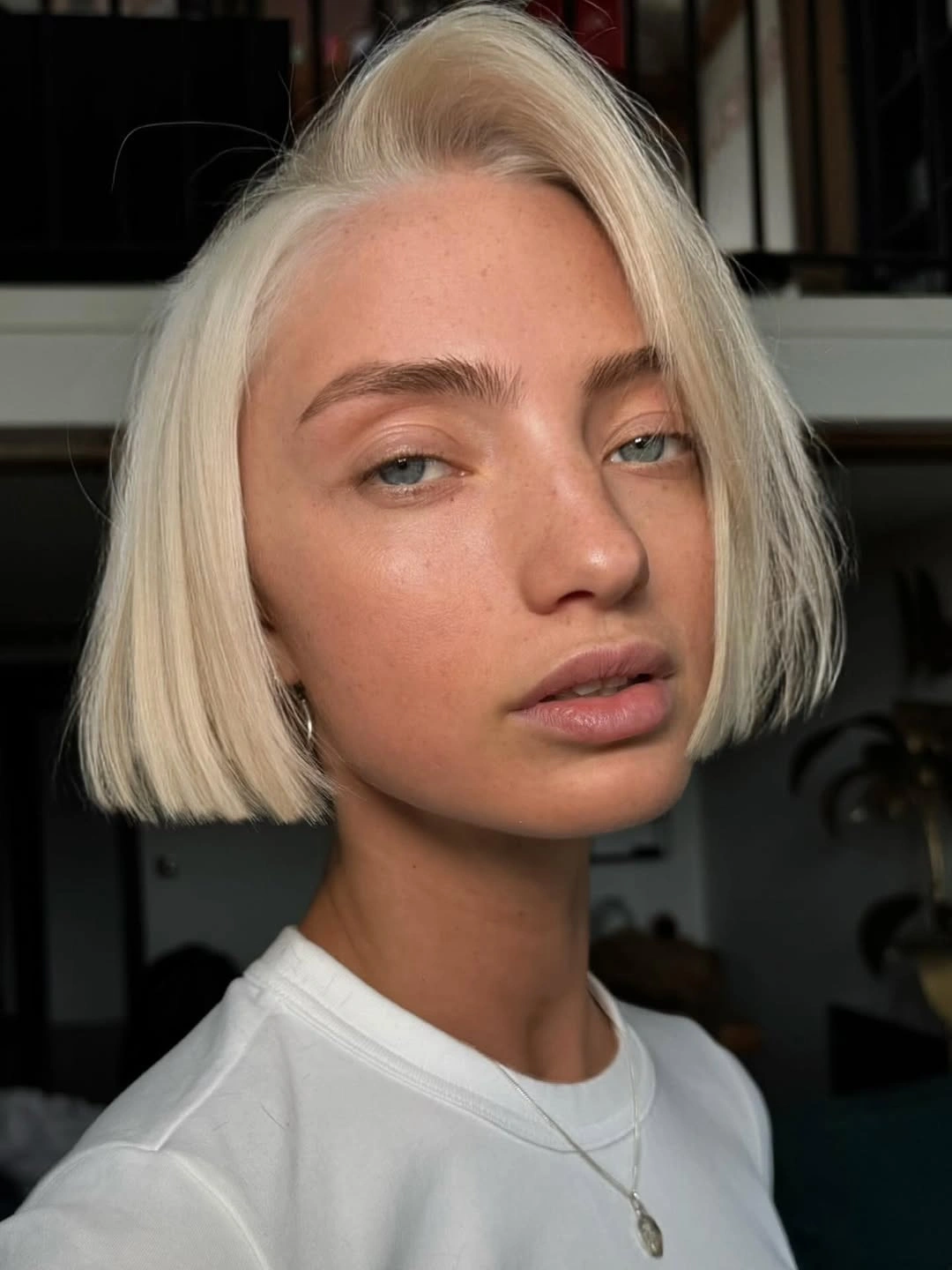
This short platinum blonde bob is especially useful if you prefer light color without an obvious dark root or heavily dimensional pattern. The subtle warmth keeps the blonde from looking stark, while the smooth surface makes tiny shifts between ivory and cream easier to notice. On a compact cut, that restrained tonal variation feels intentional rather than flat.
The appeal here is precision: pale color, a crisp edge, and very little visual interruption. It is a strong reference for anyone drawn to blonde that looks bright and polished without relying on strong contrast.
Dark Roots Give Icy Blonde More Depth
The darkest value is concentrated at the crown, which makes the icy white lengths appear even brighter by contrast. Rather than trying to keep every visible strand equally pale, the color lets the root area remain part of the design. That dark-to-light shift gives the shorter silhouette more structure and keeps the white blonde from blending into one flat surface.
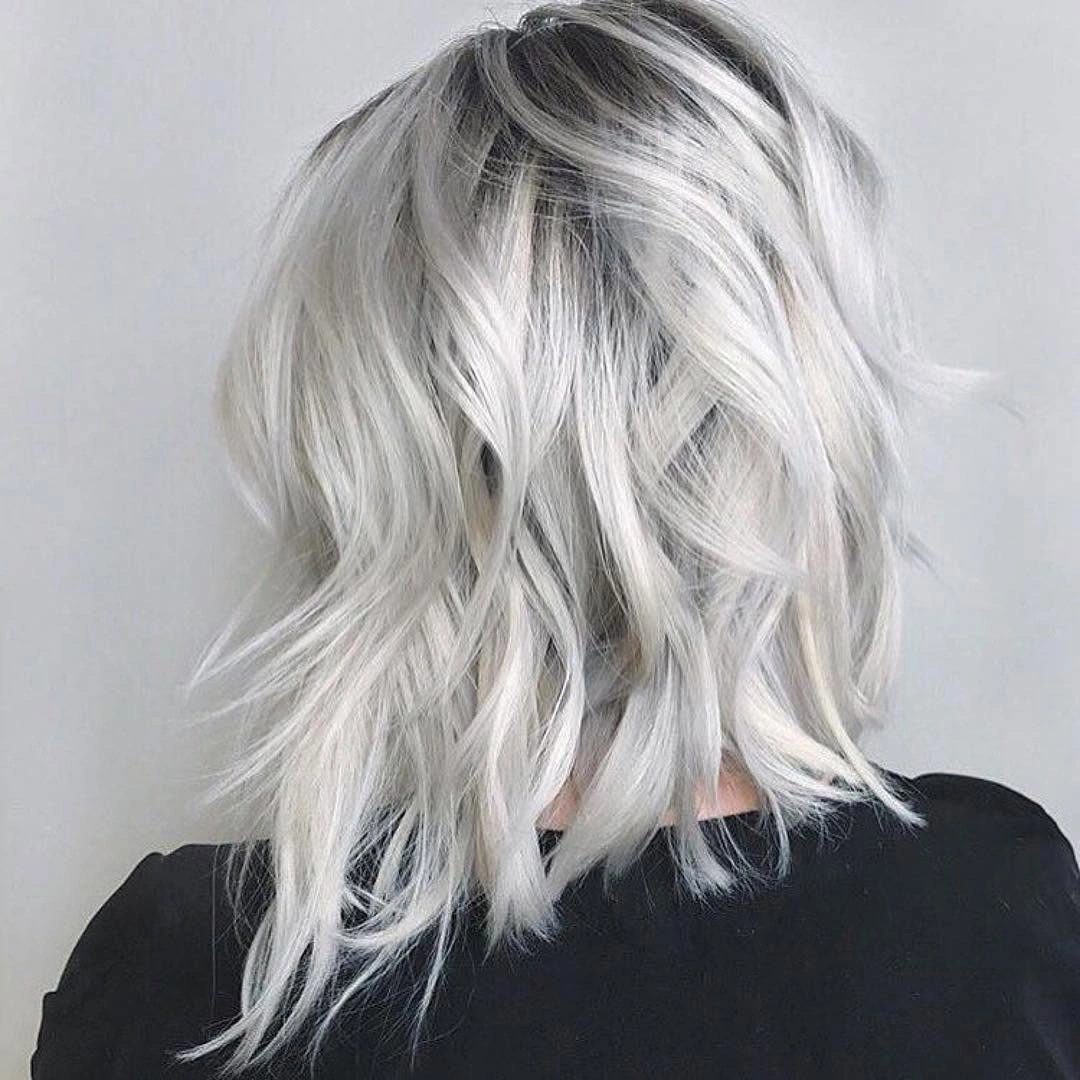
Loose bends make the contrast feel more dimensional because they break the pale lengths into changing areas of light and shadow. Some sections read almost white, while others pick up cooler gray or softer silver notes as the hair curves. The result feels less uniform than a straight platinum bob, even though the overall impression is still very light.
This is a good example of root depth doing more than simply framing the face. It changes the entire balance of the blonde by making the brightest sections look cleaner and more defined.
Warm Beige Blonde Softens Long Layers
This blonde sits in a soft space between beige and gold, giving the long hair noticeable warmth without pushing fully into copper. The upper lengths appear slightly deeper, while the curved ends catch more light and look creamier. That gradual tonal shift works especially well with the rounded shape of the layers, because the color seems to move as the hair bends.
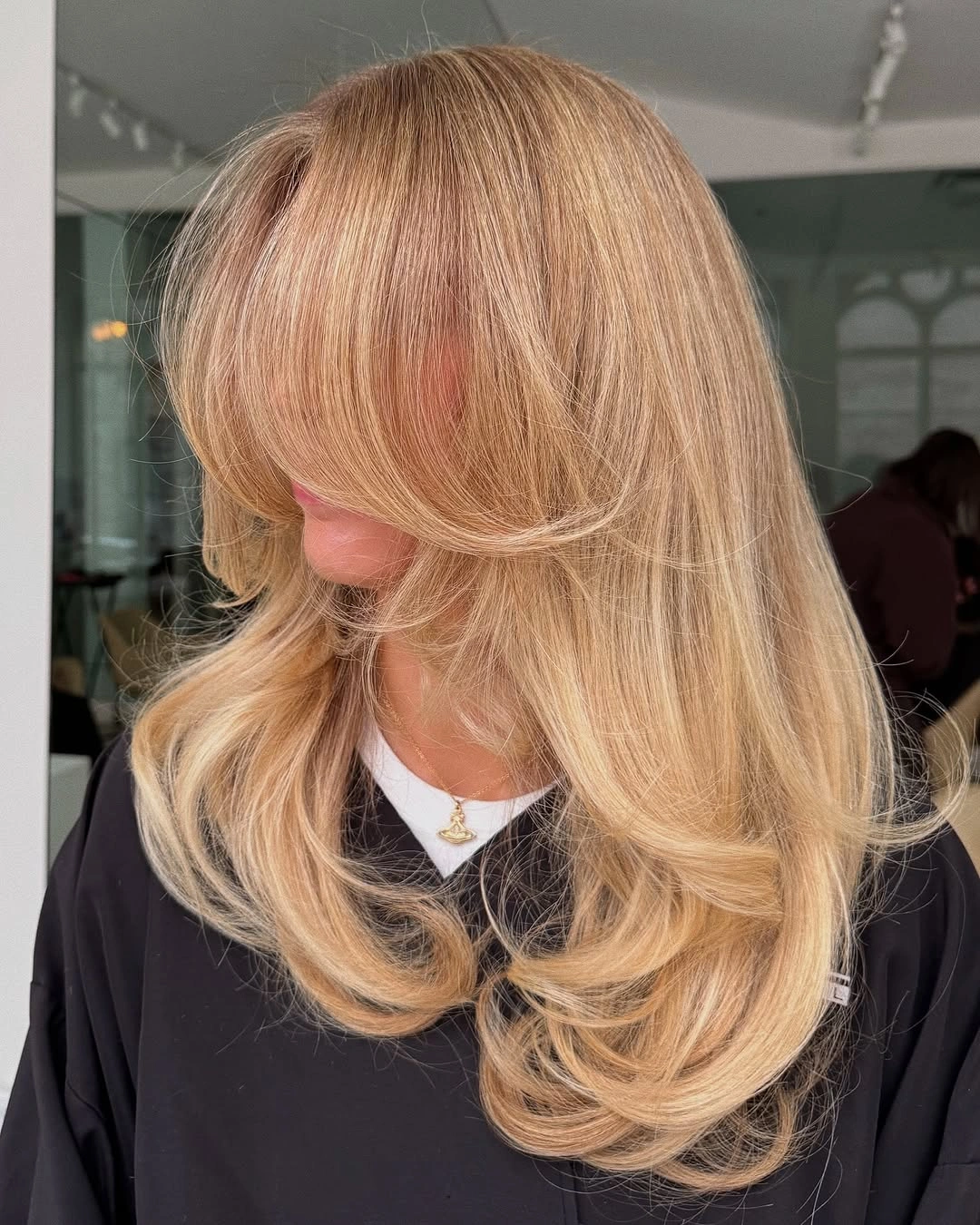
The face-framing pieces bring brighter-looking curves closer to the front, while the fuller lower lengths keep the overall color from feeling too delicate. Instead of depending on a dark root for contrast, this look builds dimension through gentle differences in warm blonde tones. The effect is polished, but still soft enough to feel relaxed rather than rigid.
Winter blonde can be warm and still feel refined. This version makes a persuasive case for beige-gold when silver or near-white blonde feels too sharp.
Curtain Bangs Brighten Pale Beige Blonde
The curtain fringe creates a concentrated frame of pale blonde around the face before the color continues into much longer waves. That front brightness gives the style a clear focal point, while the rest of the hair carries softer beige and lightly golden variation. The contrast is subtle, but it keeps a very long silhouette from reading as one uninterrupted sheet of light color.
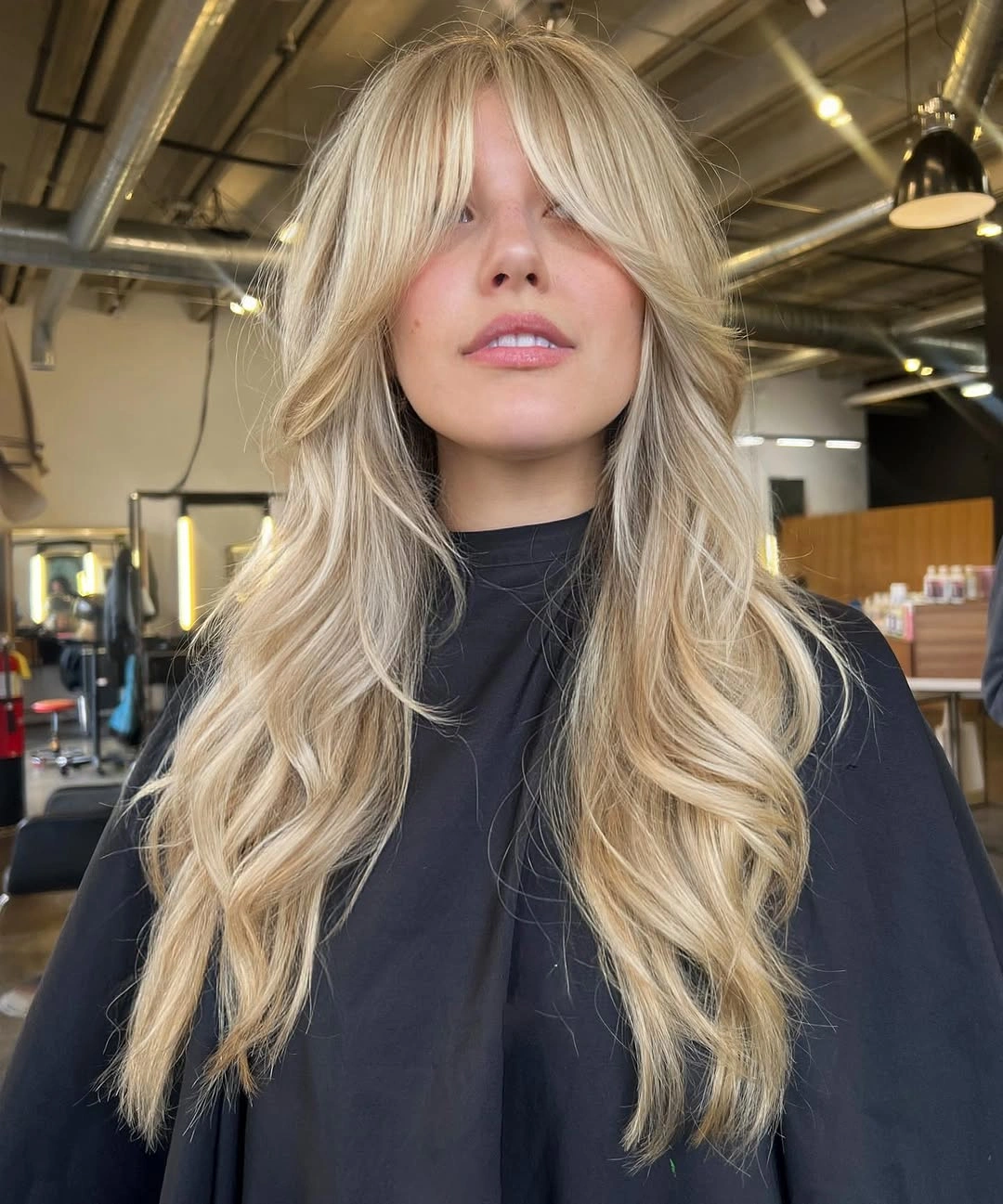
The gentle waves help separate the warmer and cooler areas without turning them into obvious stripes. Some bends catch as creamy blonde, while others show slightly deeper golden-beige dimension through the lower lengths. Because the differences stay close in value, the result feels fluid and soft rather than strongly highlighted.
For long hair, that balance matters. The pale face frame creates freshness up front, while the warmer movement through the lengths keeps the overall blonde from feeling overly icy.
Neutral Beige Blonde Keeps Brightness Understated
Neutral beige softens the brightness here, creating a blonde that feels quieter than icy white but still clearly light. The tone avoids strong gold and strong gray, which gives the straight lengths a muted, balanced appearance. Because the finish is smooth, the small shifts between pale beige and slightly deeper areas become easier to read without looking busy.
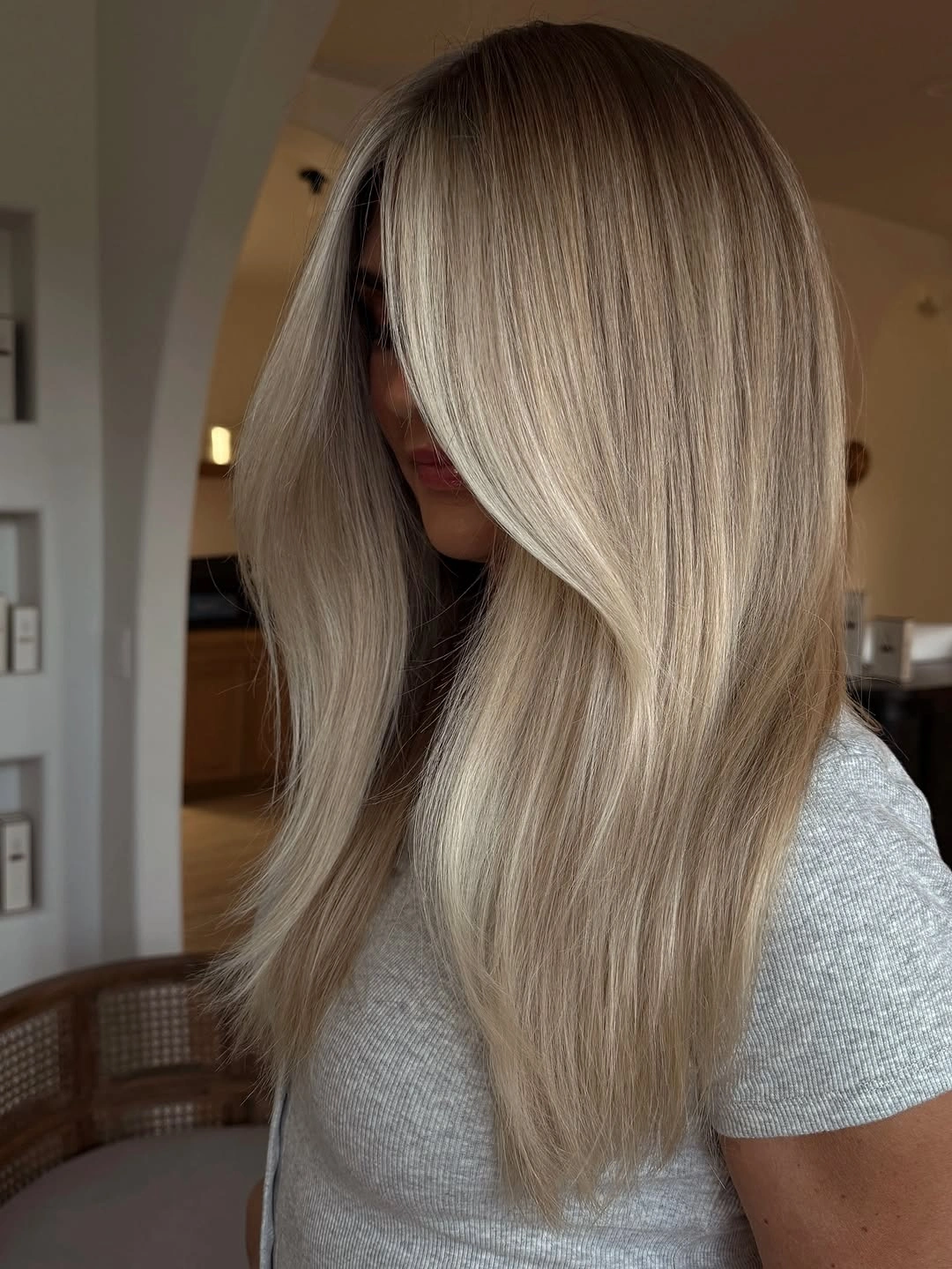
A softly deeper root adds just enough separation at the top to keep the color from appearing completely uniform. The transition is restrained rather than dramatic, so the eye stays on the long, clean sweep of blonde through the mid-lengths and ends. This kind of subtle depth works well when you want dimension to support the color rather than become the main event.
The strength of this shade is its middle-ground quality. It sits comfortably between warmer golden blonde and cooler silver, making neutral beige a useful reference for readers who prefer understated contrast.
Smoky Ash Blonde Brings the Brightness Down
Not every winter blonde needs to chase maximum brightness, and this smoky ash-taupe version makes that restraint look deliberate. The muted color lowers the contrast across the long lengths while keeping the overall impression clearly blonde rather than deep brown. Silver-beige highlights appear softly through the waves instead of forming bright, sharply separated bands.
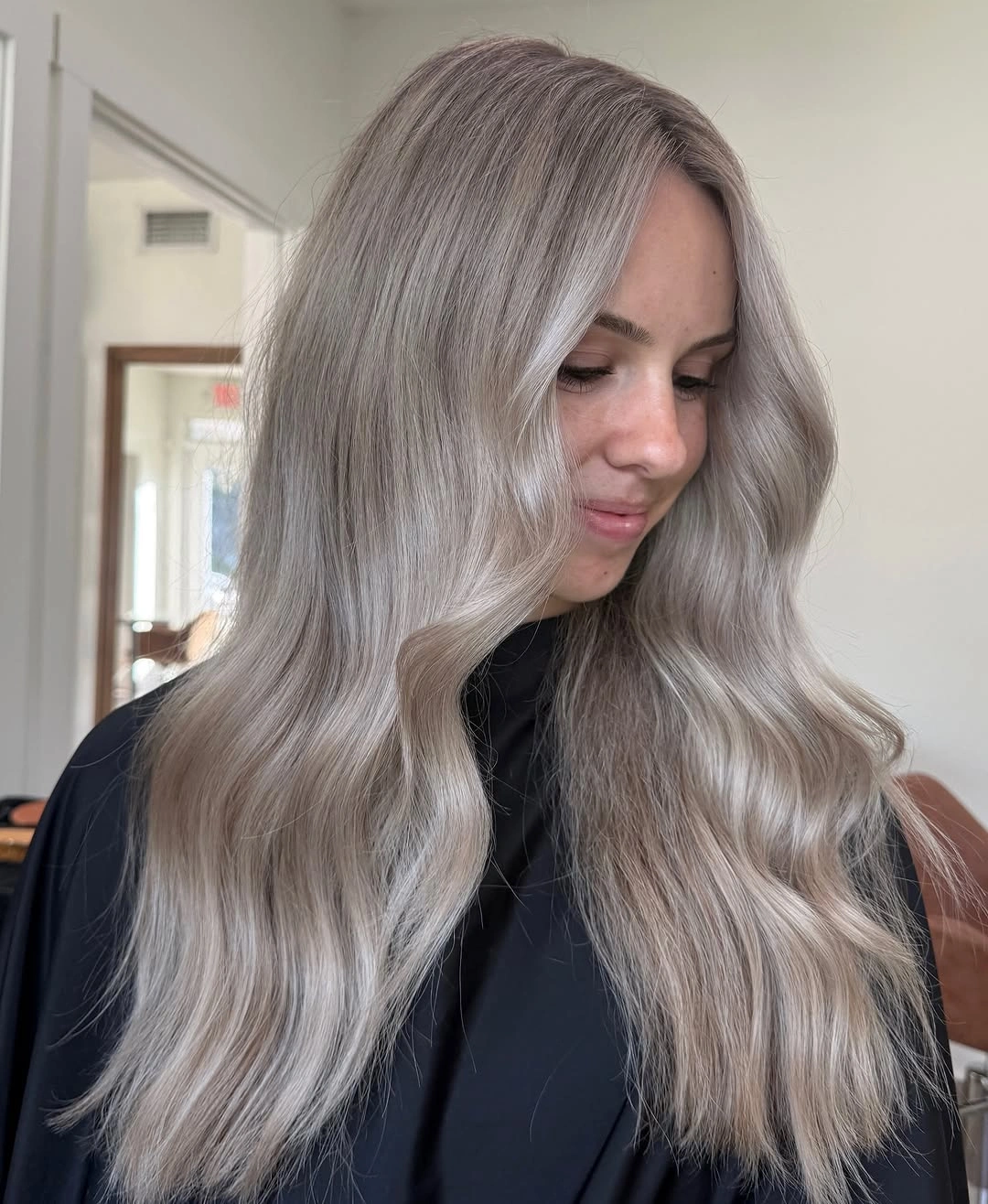
A slightly deeper crown gives the color a darker starting point, but the transition into the lengths stays gradual rather than dramatic. As the waves curve, some areas pick up a cooler silver cast while others settle into softer taupe and beige. That shifting surface gives a darker winter blonde with smoky depth enough dimension to feel layered without becoming high contrast.
The appeal is in how quietly the tones relate to one another. It is a useful direction when icy white feels too stark but a warm golden blonde would move the color in the opposite direction.
Creamy Face Framing Lifts Golden Blonde
The brightest blonde is concentrated beside the face, which immediately gives this warm color a lighter focal point. Behind it, the upper and middle lengths hold more golden depth, so the creamy front section stands apart without looking disconnected from the rest. That placement lets the hair feel bright where it matters most while preserving warmth through the larger silhouette.
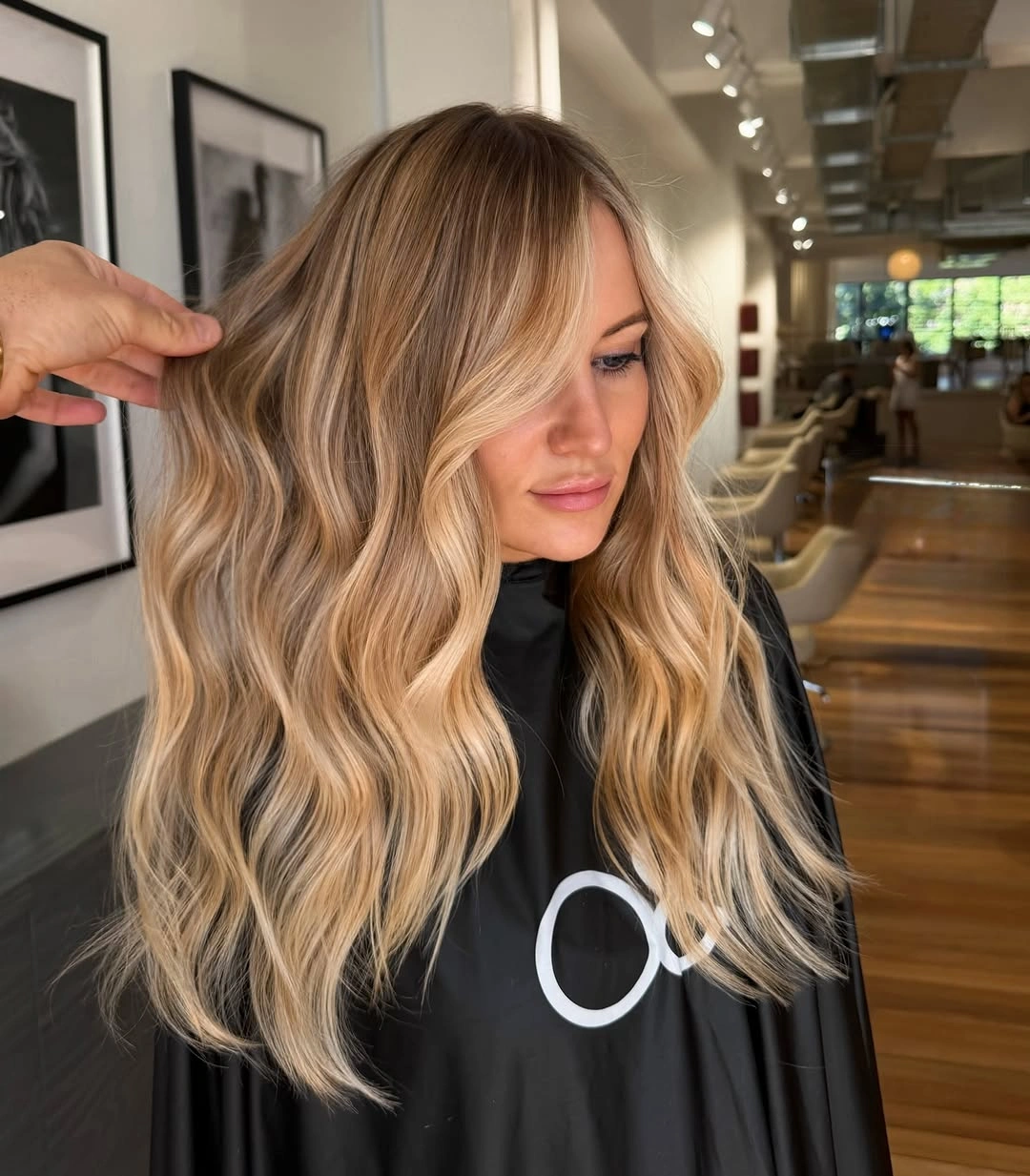
The long waves make the relationship between those tones especially clear because each bend exposes a different balance of cream and gold. Some sections appear softly sunlit, while the deeper areas provide enough contrast to keep the brighter front from disappearing into the length. The color feels dimensional without relying on an icy base or an obvious dark root.
This approach suits readers who like a luminous blonde effect but do not want every strand pushed toward platinum. Concentrating the palest color near the face creates impact while allowing the rest of the hair to stay richer.
Near-Platinum Blonde Stays Soft Through Subtle Variation
At first glance, the hair reads as almost entirely pale ivory-white, but the closer tonal shifts keep that brightness from becoming flat. A faintly deeper area near the crown gives the blonde a softer starting point, while small creamy differences appear through the long waves. The result is very light overall without looking like one solid block of white.
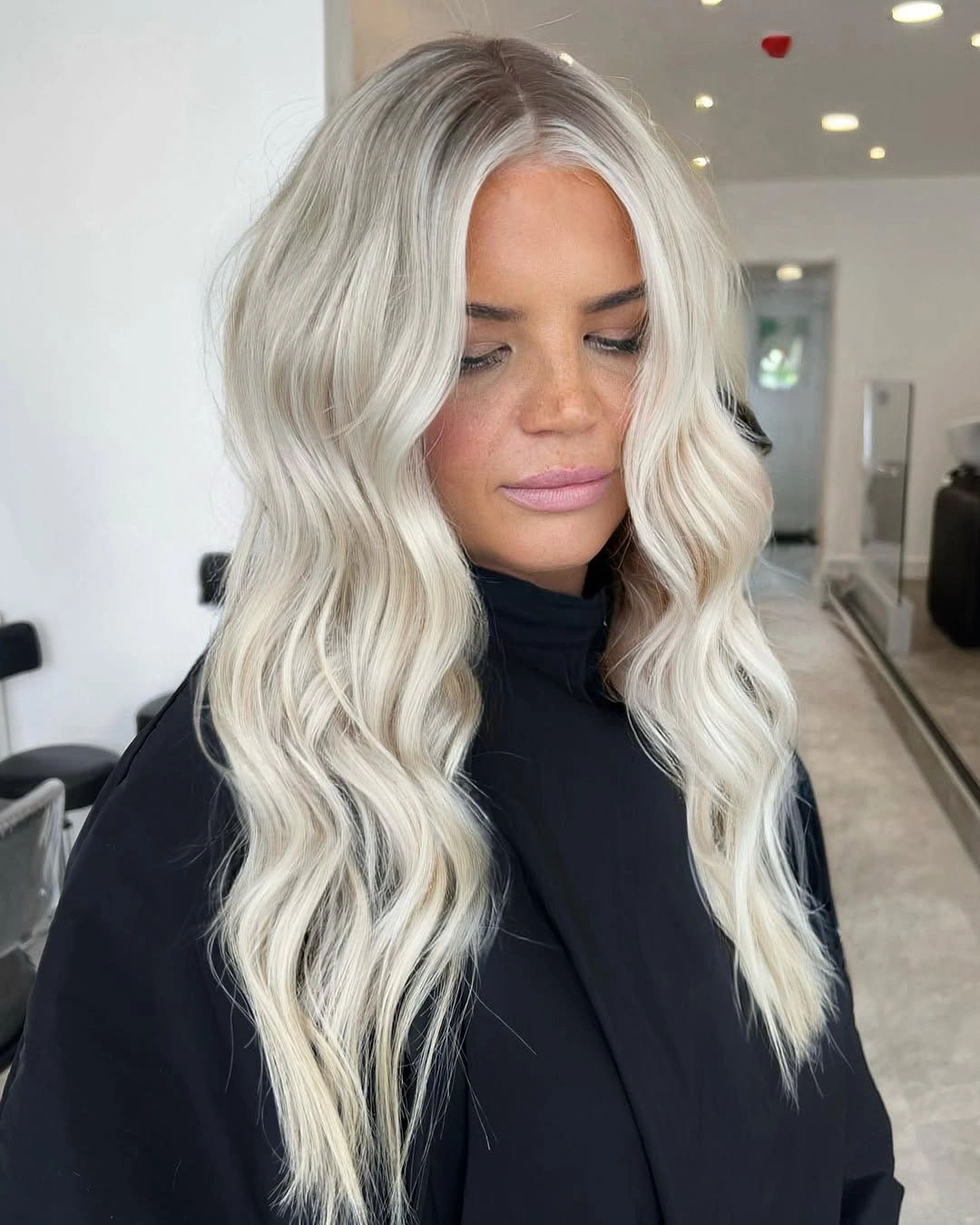
Movement does much of the work here. As the hair turns toward and away from the light, individual sections shift from cool ivory to softer cream and gentle shadow, so the blonde gains dimension without introducing obvious darker ribbons. That makes the color feel airy and blended rather than sharply contrasted from root to end.
It is a softer interpretation of icy blonde than a strongly silver shade or a look with pronounced dark roots. The pale palette remains the main attraction, but subtle variation keeps the length visually active.
Icy Blue Accents Energize Pale Blonde
Pale blonde remains the dominant color here, but light blue sections change the mood immediately. The blue appears around the curtain fringe, continues through pieces beside the face, and returns again toward the lower ends, so the accent feels repeated rather than isolated. That placement gives the long layered shape a cool graphic edge without covering the blonde foundation.
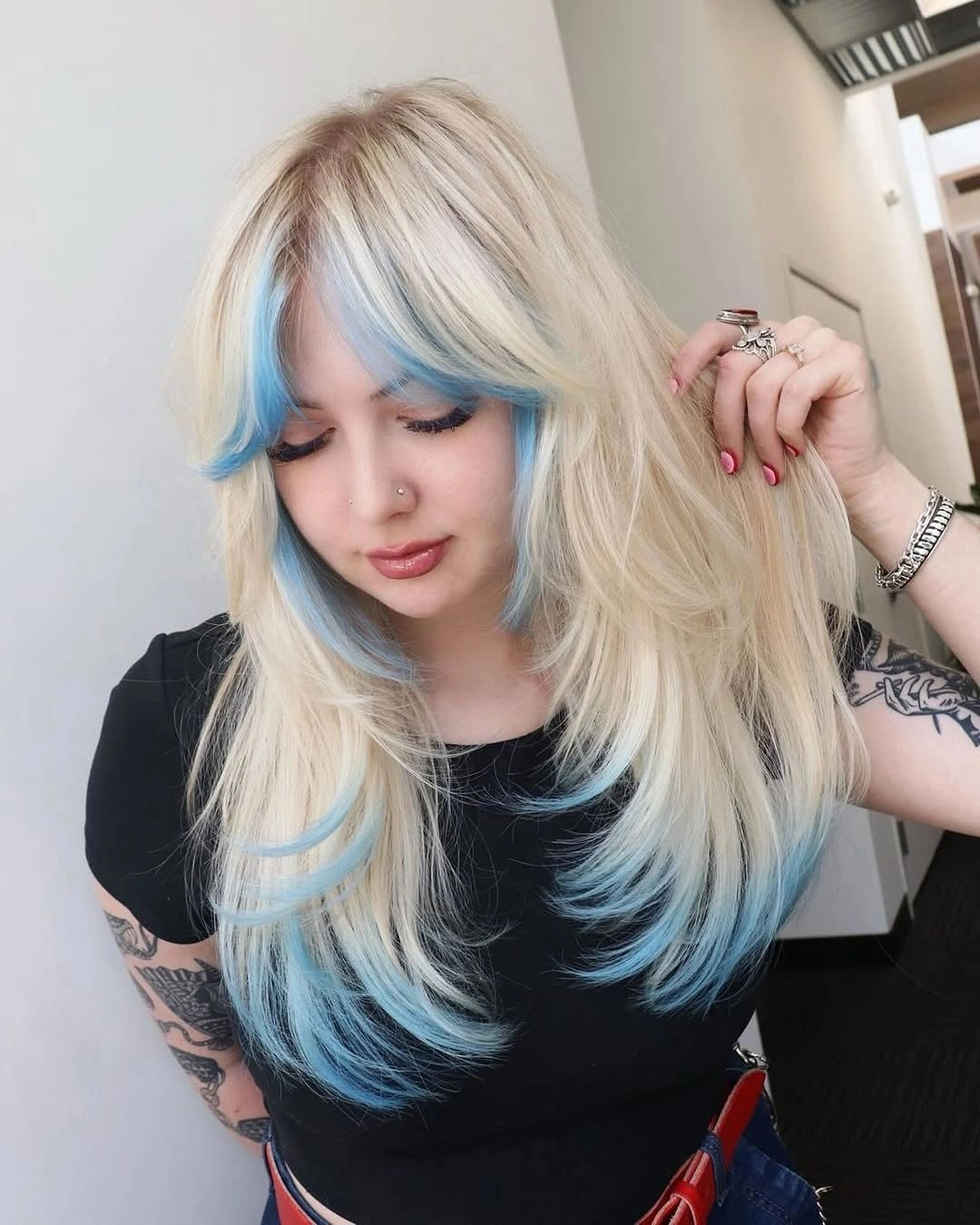
Repeating the blue near both the face and the perimeter creates a visual connection from top to bottom. Because the surrounding blonde is creamy and very light, the accent reads clearly even where the blue itself stays relatively soft. The contrast works through color placement rather than through a dark root, making the overall effect playful while still recognizably blonde.
This is an appealing route for anyone who wants winter-cool color without replacing a pale blonde base. The blue acts like a deliberate accent, giving selected layers more definition and personality.
Strawberry Copper Meets a Pale Blonde Face Frame
Copper and orange carry most of the color here, creating the warmest direction in the collection so far. Against that saturated background, the pale blonde sections around the fringe and face become immediately noticeable, almost like ribbons of light cutting through the warmer field. The contrast is bold because the two color families remain visibly distinct rather than melting into one beige tone.
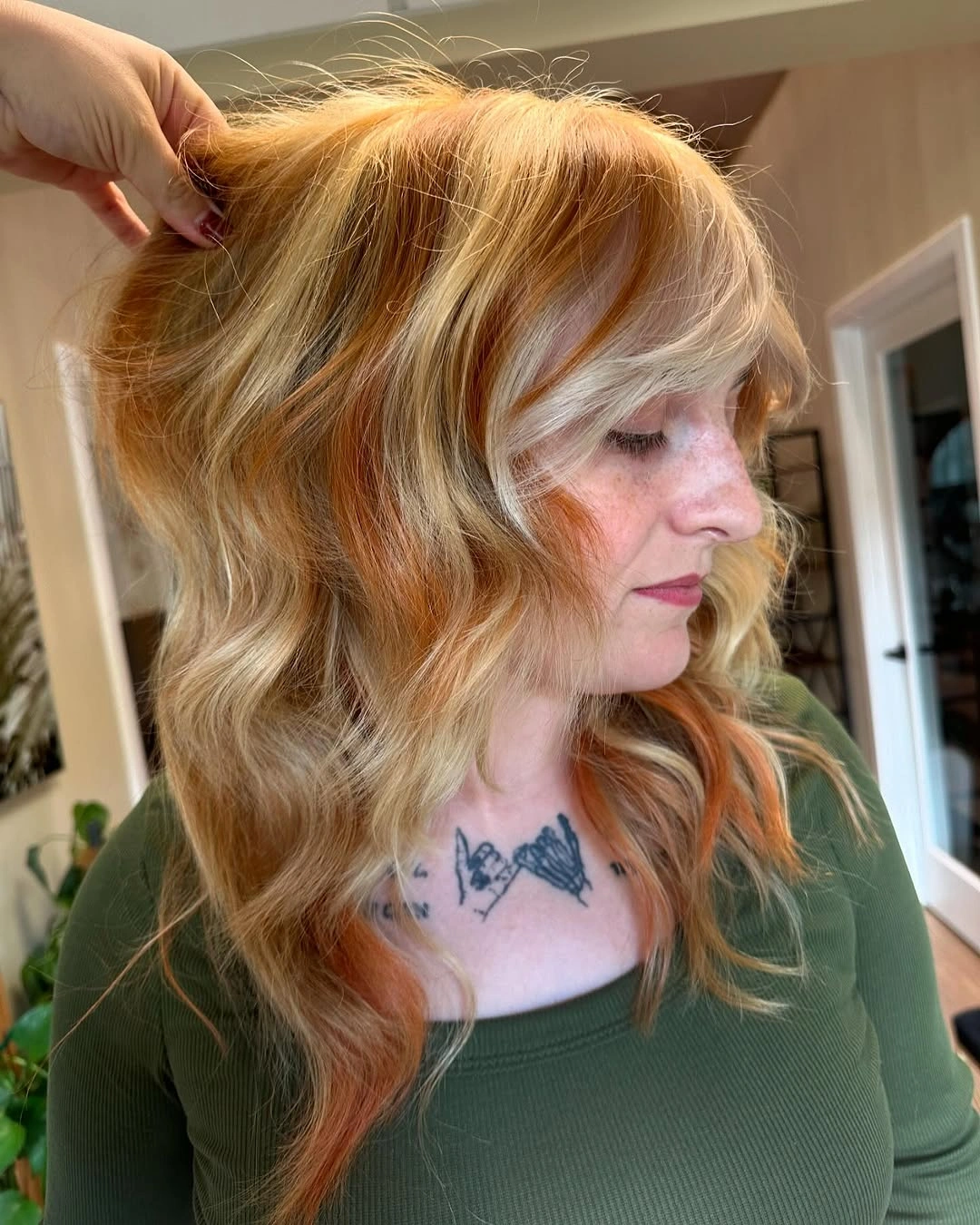
Those pale pieces sit exactly where they receive the most attention, framing the front while the strawberry-copper blonde continues through the waves behind them. Because the lighter color is concentrated rather than scattered everywhere, it changes the face area without diluting the richer warmth across the rest of the hair. The placement makes contrast the defining feature rather than simple overall brightness.
Strawberry-copper blonde with pale face-framing pieces offers a warmer alternative to silver, ash, and pearl directions. It shows that winter blonde can lean vividly warm while still keeping light blonde as a purposeful part of the palette.
Silver-White Blonde Sharpens a Medium-Length Bob
Silver-white is doing most of the work here, but the faint cool shadow at the crown keeps the shoulder-length shape from losing definition. The mid-lengths and ends read brighter and cleaner, so the eye picks up a gentle dark-to-light progression without a dramatic root line. On a long bob, that controlled contrast feels especially crisp because the pale perimeter stays concentrated around the shoulders.
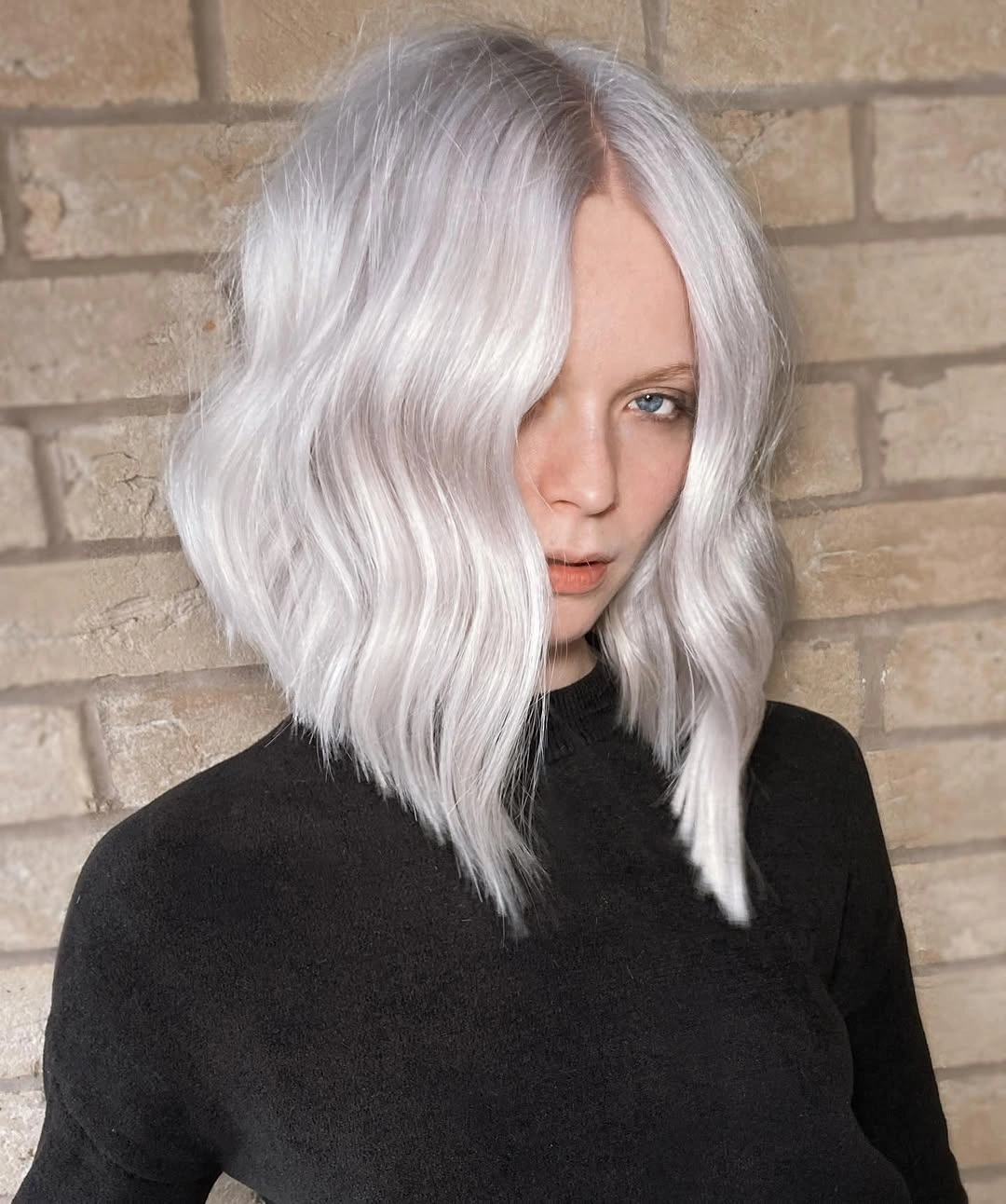
For readers comparing blonde hair color ideas for medium-length and short hair, this is a useful middle point between a cropped bob and very long platinum lengths. The softly waved shape gives the silver-white tone enough movement to avoid looking rigid, while the pointed ends keep the outline light rather than heavy. The color feels icy, but not severe.
The compact length makes every small shift in the pale color easier to notice. It is a clean option for anyone who likes silver-white blonde with a little depth left at the crown.
Pale Golden Blonde Keeps Long Layers Airy
Pale gold and cream sit close enough together here that the color reads as blended warmth rather than distinct bands of light and dark. There is no strong root contrast pulling attention upward, so the long layers feel airy from the upper lengths through the ends. That low-contrast balance is what makes the blonde look soft instead of overtly dimensional.
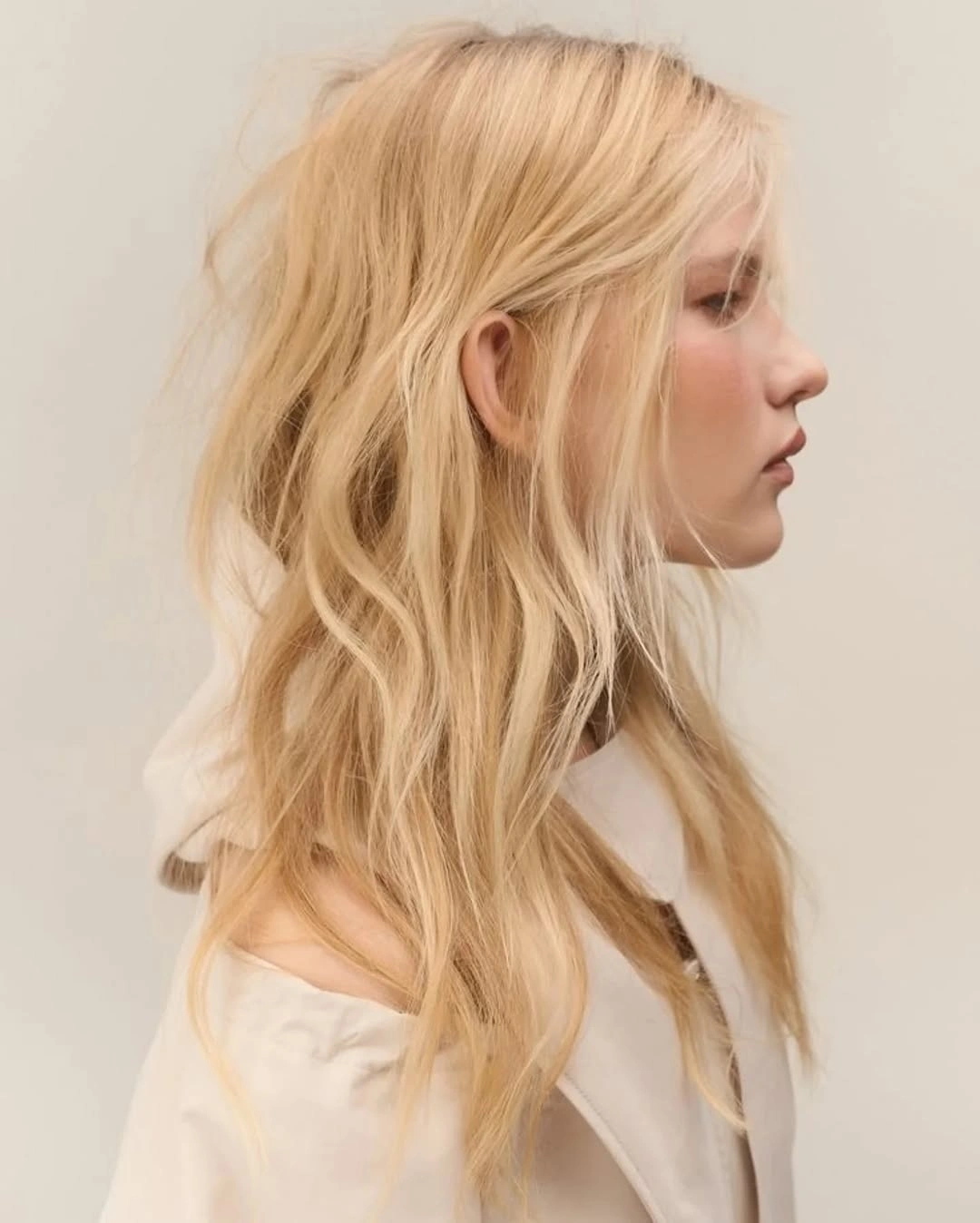
The irregular waves reveal small tonal changes only when the hair bends, which keeps the warmer color understated. Some sections catch more cream, while others settle into a slightly deeper golden cast, yet none of those shifts dominates the overall look. It is a straightforward choice, and that simplicity is part of its appeal.
This is the kind of blonde where warmth can stay gentle rather than turning strongly honeyed or coppery. The loose texture gives the subtle tonal differences enough room to show.
Darker Ribbons Build Depth Through Beige Blonde
What stands out here is that the darker depth does not stop at the crown. Cooler taupe-brown sections continue through the mid-lengths beside pale blonde ribbons, so the hair alternates visibly between light and deeper values all the way down. The result feels more internally layered than a blonde with only a soft shadow at the roots.
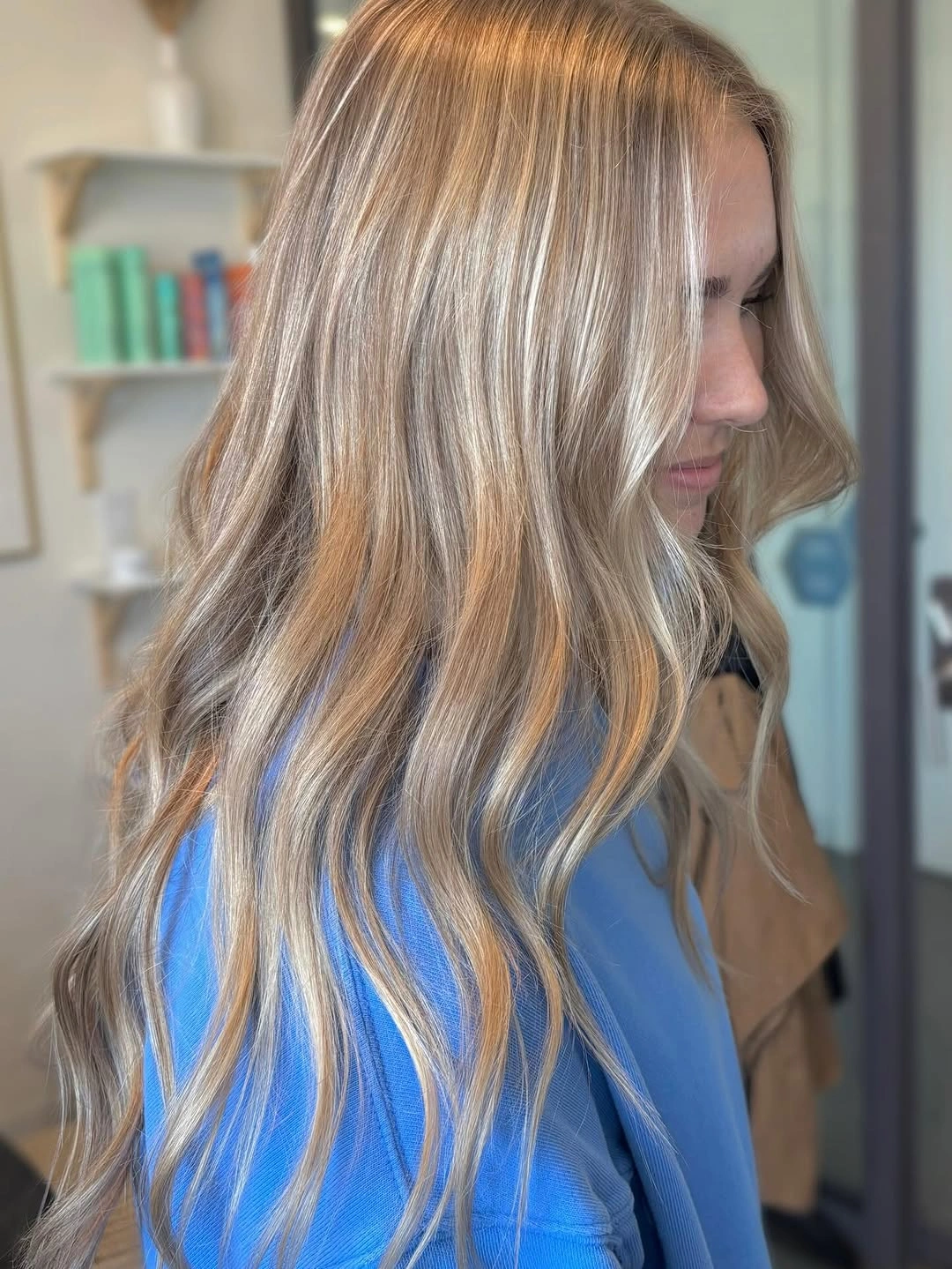
Wide waves make those tonal bands easier to read because each curve separates one ribbon from the next instead of blending everything into a single beige field. If you like blonde with darker ribbons for visible depth, this is a strong reference for how contrast can travel through the length. The interest comes from placement, not from one dramatic front piece.
The deeper sections keep the pale blonde from dominating every part of the silhouette. That makes the overall color feel dimensional while still staying within a muted beige and taupe palette.
Icy Blonde Looks Sleek on a Long Bob
This icy blonde long bob is striking because the brightness is so continuous. Near-white color dominates from the upper lengths through the curved ends, giving the shoulder-length shape a polished, almost seamless finish. A subtle shadow near the roots adds just enough depth to keep the top from disappearing into the pale lengths.
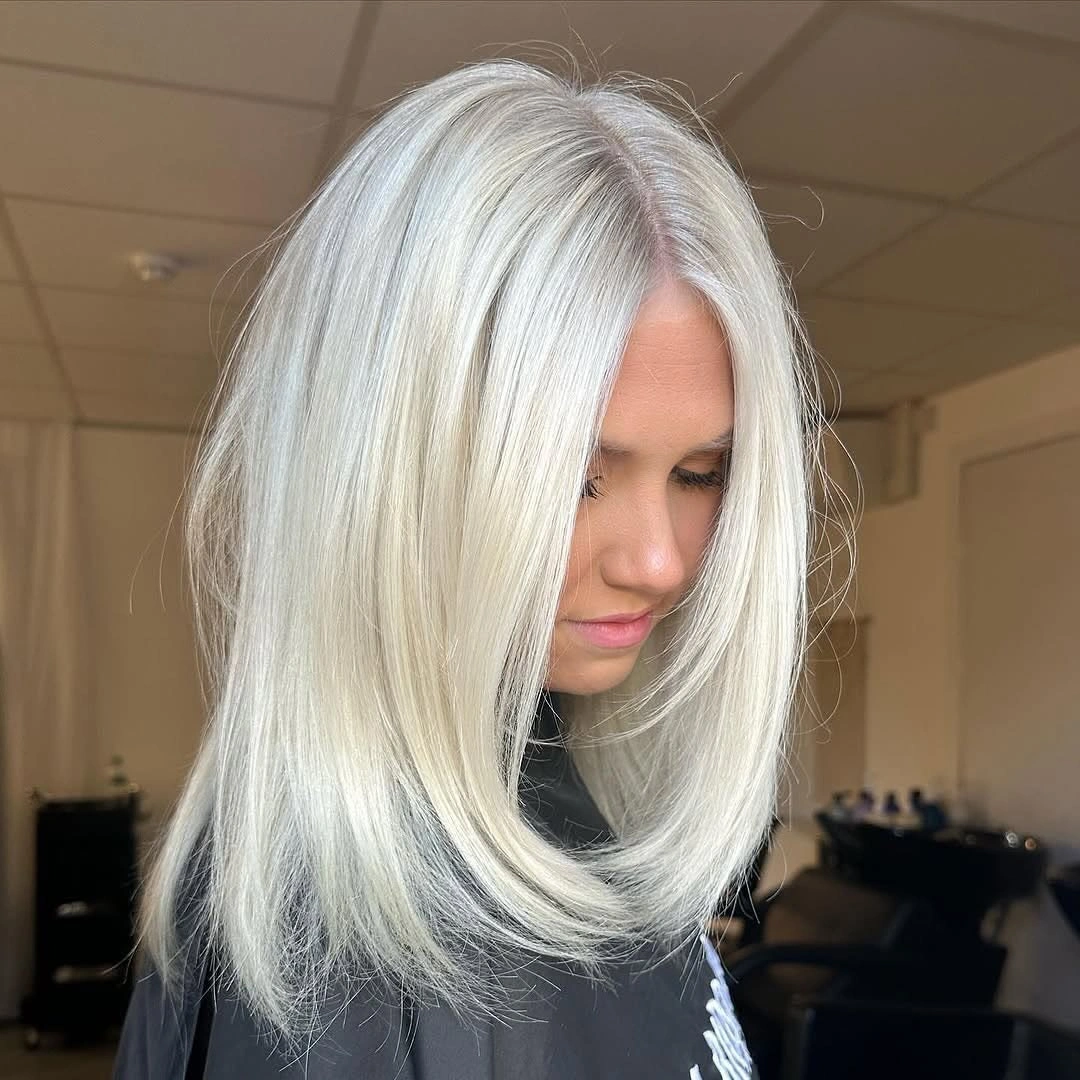
The smooth finish changes how the color reads compared with a wavier, more ribboned blonde. Instead of breaking into obvious light and dark sections, the shade looks broad and luminous, with the softly curved front ends adding movement at the perimeter. It is a good example of tonal clarity carrying the style more than strong internal contrast.
The restrained root shadow matters precisely because it does not compete with the near-white lengths. It gives the color definition while allowing brightness to remain the first impression.
Caramel Ribbons Warm Up Dimensional Blonde
The deeper brown area at the crown gives this warm blonde a stronger starting point, then creamy-gold and caramel-beige ribbons take over through the waves. That shift creates blended blonde dimension with visible root depth without turning the length into harsh stripes. The warmth stays present from top to bottom, but the brightest pieces still catch the eye first.
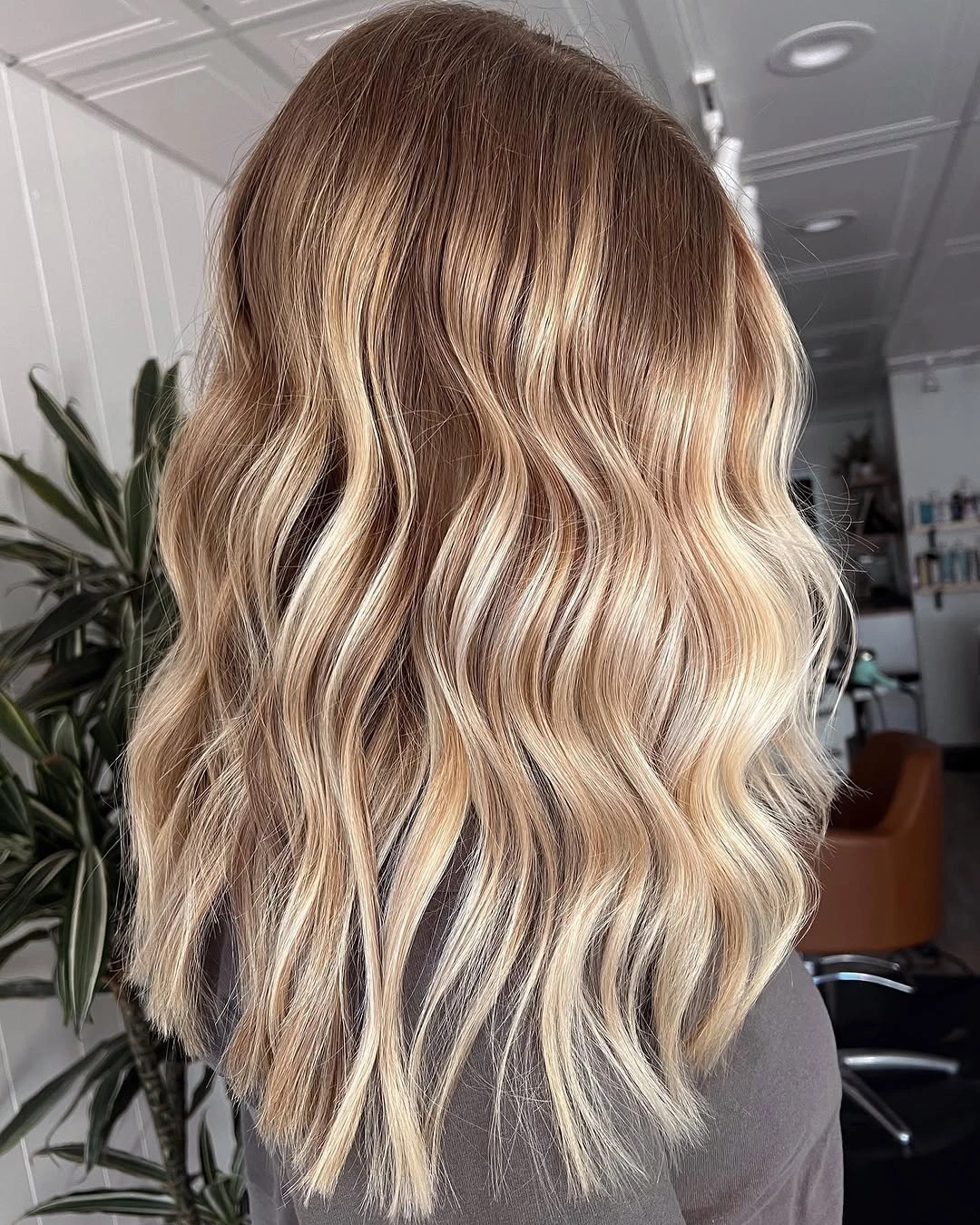
Caramel-toned blonde dimension works especially well here because the lighter and deeper shades repeat across the middle and lower lengths instead of appearing in one isolated zone. The waves separate those ribbons just enough to show the color pattern, while the overall blend remains soft. It is a warmer, richer approach to contrast than a silver or ash-based blonde.
The darker crown gives the lighter lengths something substantial to play against, while caramel and cream keep the transition warm. It is a useful direction when you want depth to remain obvious without losing the brightness of blonde.
Brunette Depth Makes Cool Blonde Ribbons Stand Out
Here, the brunette base is not a narrow shadow tucked only at the roots. It remains visible between broad pale ribbons through the upper and middle lengths, so the contrast feels built into the whole color pattern. The cooler blonde pieces stand out sharply against that depth, giving the waves a more graphic, layered appearance.
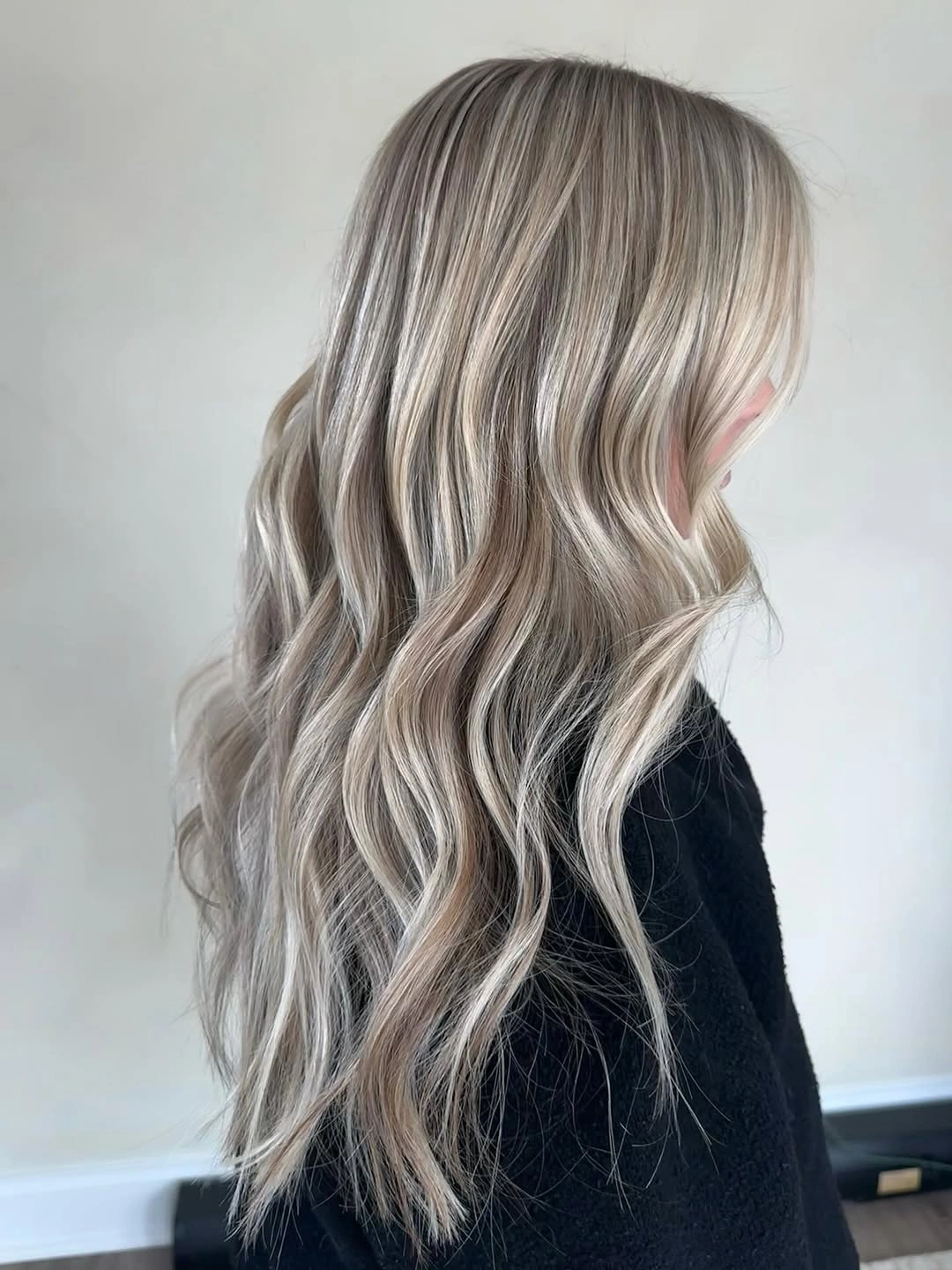
That stronger separation creates blonde dimension over a deeper brunette base without letting either side disappear. Pale beige-platinum sections curve across the darker background in broad sweeps, making the light-dark relationship easy to read even from a distance. I like this when dimensional blonde should look deliberate rather than softly diffused.
The darker base gives the pale ribbons room to stay distinct through the length instead of merging into one cool beige. It is a bolder approach to dimension, but the broad waves keep the contrast fluid.
Luminous Icy Blonde Runs Through Long Waves
The first impression is uninterrupted brightness: broad waves carry a pale cream-white blonde through nearly the entire visible length. Because the tones stay within a narrow light range, the hair looks luminous rather than heavily highlighted. Only faintly deeper areas around the crown and underneath interrupt the pale surface, and they do so quietly.
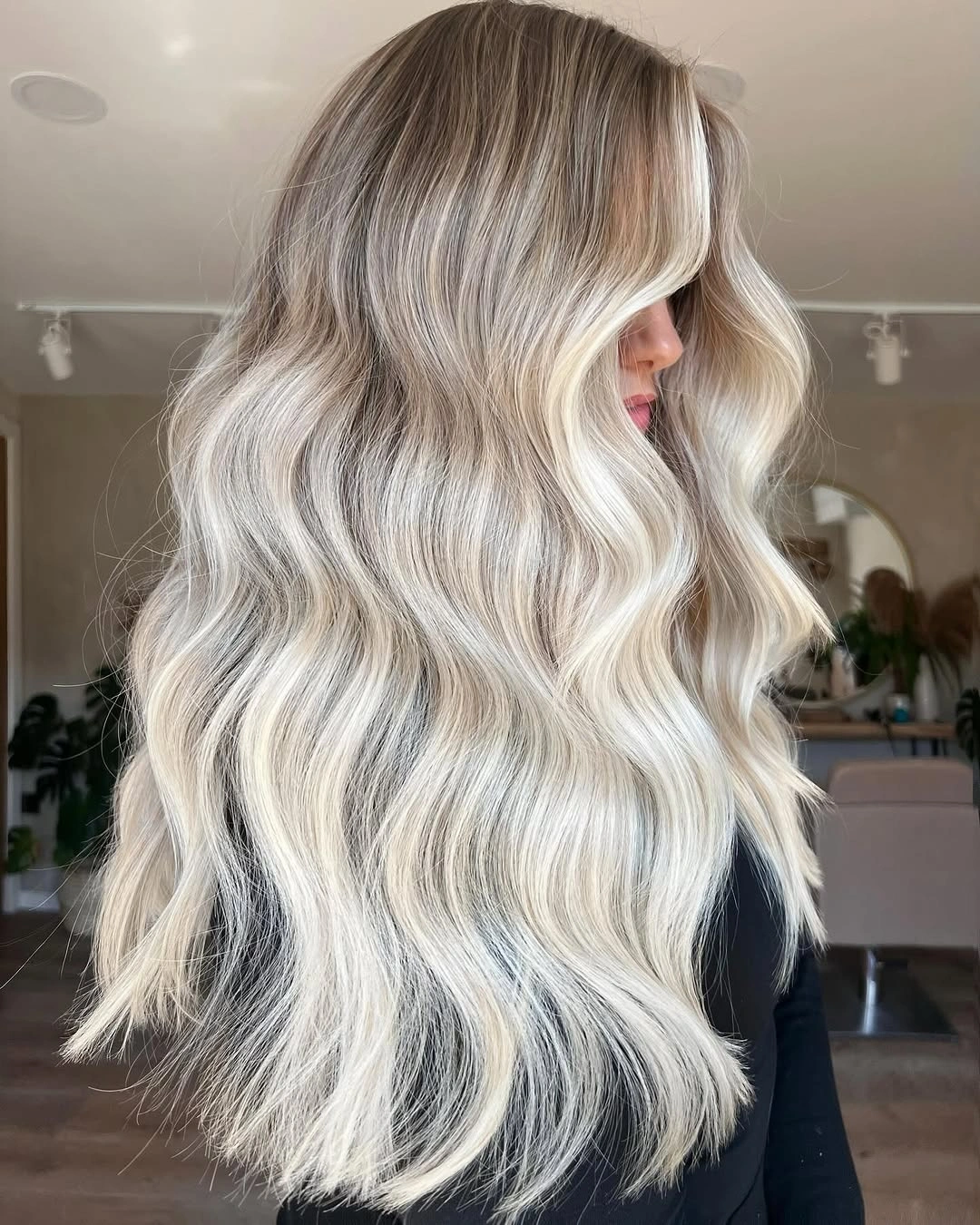
Those understated shadows matter most when the waves begin to overlap. They create enough separation between one curve and the next that the very light blonde still has shape, instead of blending into a single bright mass. The result keeps the softness of long flowing hair while pushing the color close to an icy, near-white finish.
This is pale blonde at its most expansive, with length and movement carrying the brightness rather than strong internal contrast. The slight depth underneath is enough to preserve definition without changing the luminous overall effect.
Pearl Beige Blonde Finds a Softer Neutral
Pearl-beige is an appealing middle ground when platinum feels too stark and warmer gold feels too sunny. This blonde stays distinctly light, but the soft neutral beige takes the edge off the brightness and gives the color a quieter finish. The loose waves reinforce that softness because there are no sharp tonal breaks competing for attention.
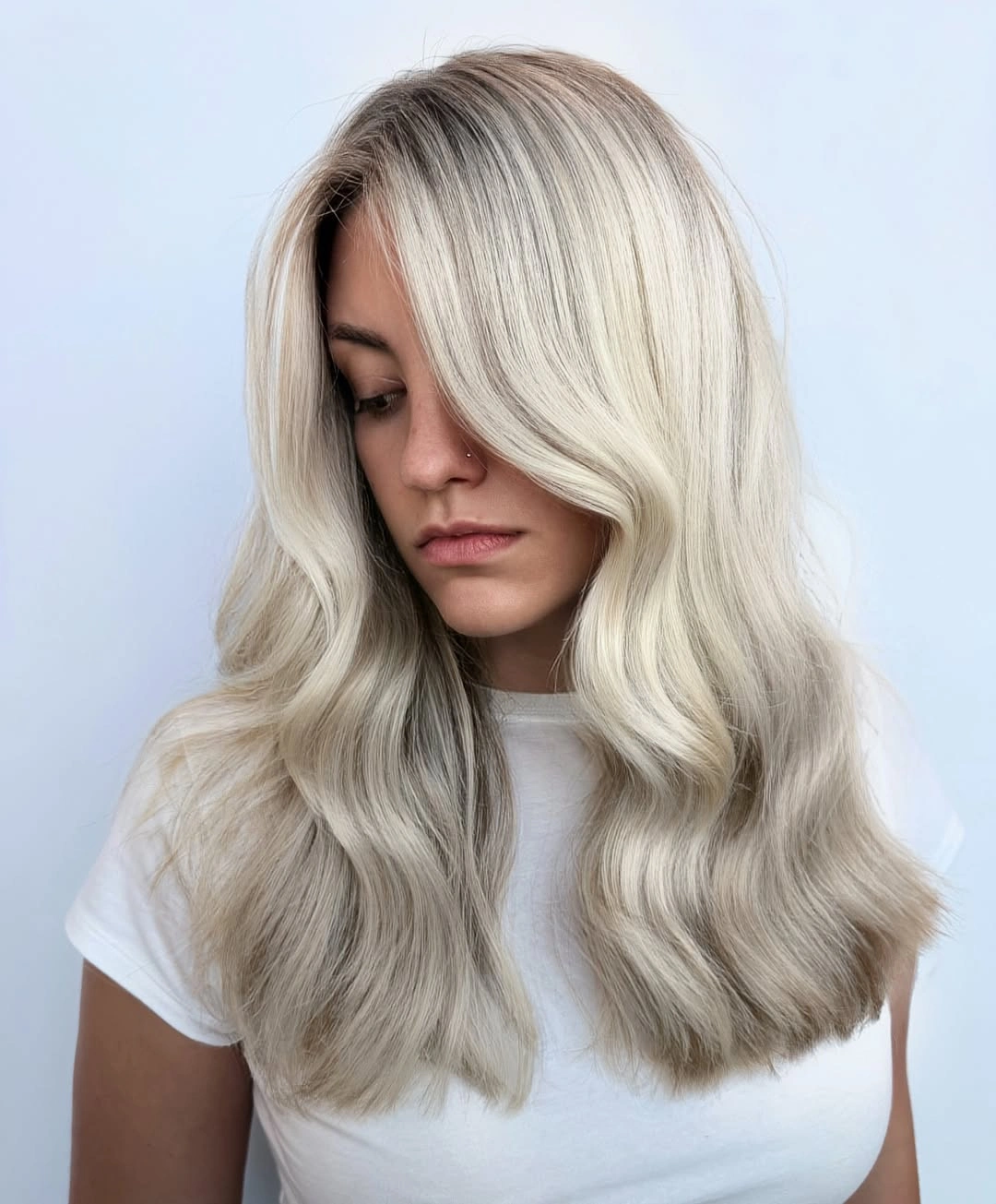
A gently deeper root gives the upper section definition, then the color settles into smooth ivory-beige lengths with only restrained shifts in value. The larger waves create movement without revealing dark ribbons or a strongly contrasted base. That makes the shade feel composed and neutral, with enough dimension to avoid looking flat.
The balance between cool ivory and beige is what makes this color useful for readers who want neither obvious gold nor steel-gray blonde. It stays light and polished while keeping its temperature pleasantly restrained.
A Shadowed Root Grounds Cool Shoulder-Length Blonde
The darker root occupies real visual space here, which makes it part of the color balance rather than a tiny transition at the part. From that deeper crown, the shoulder-length hair moves into pale silver-beige around the face and through the lower half. The compact cut keeps the contrast concentrated, so the shift from dark to light reads immediately.
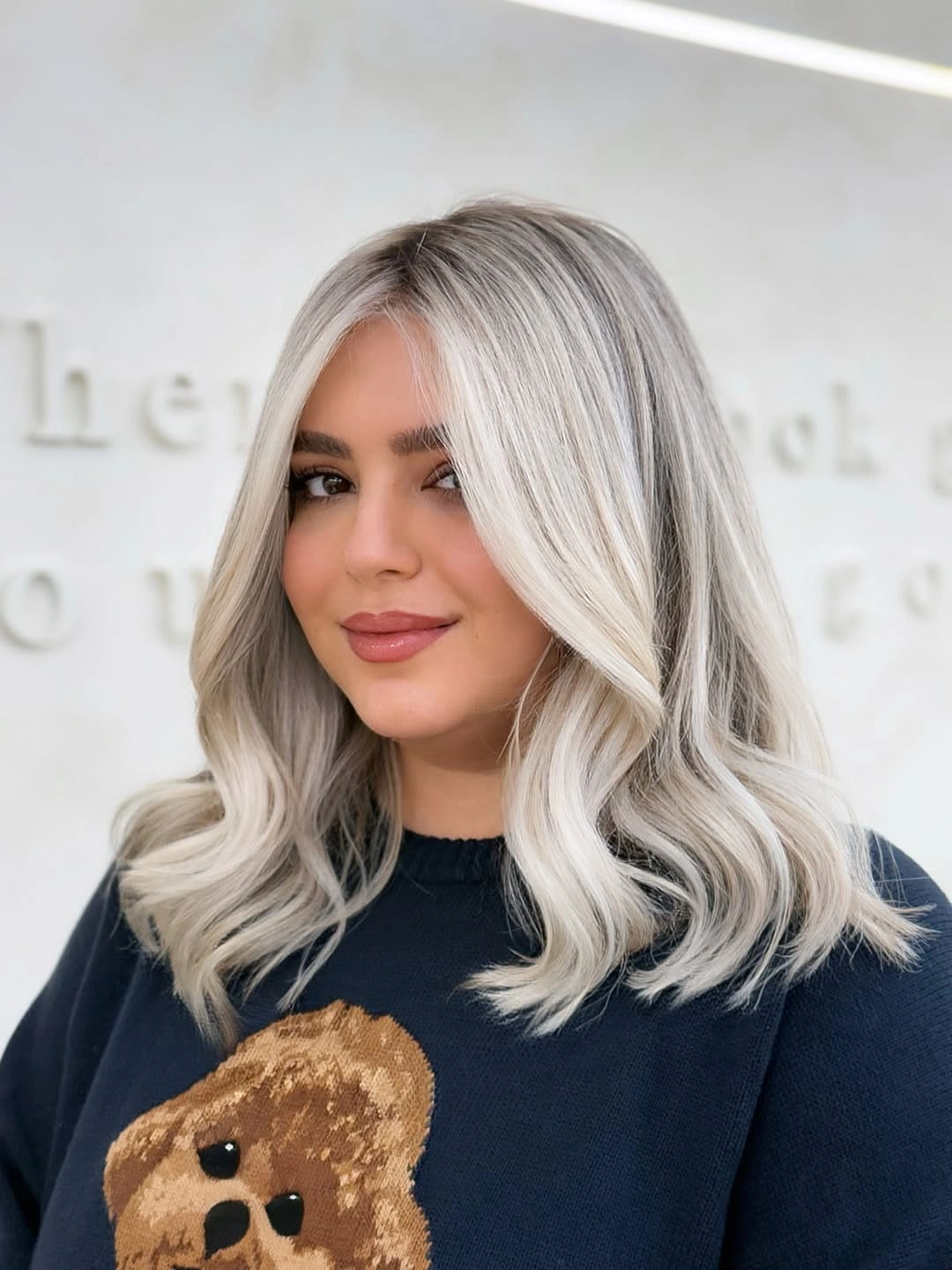
This shorter blonde with a shadowed root and blended lengths is especially effective because the lightest areas sit close to the face. Loose bends soften the transition through the ends, preventing the color from looking striped even though the root depth is pronounced. It is a practical reference for readers who want cool brightness without an all-over pale crown.
The length makes the dark-to-light relationship feel concise rather than sprawling across long hair. Pale front pieces bring brightness forward, while the deeper crown gives the color a clear visual anchor.
Steelier Silver Blonde Gets Definition From Dark Roots
The color moves decisively into silver-gray territory here, with a cool metallic-looking cast that is stronger than pearl or beige blonde. A charcoal-brown root frames the pale lengths, while the smooth upper section lets that temperature difference stay crisp and easy to see. The contrast feels sleek rather than soft, which gives the long style a more sculpted attitude.
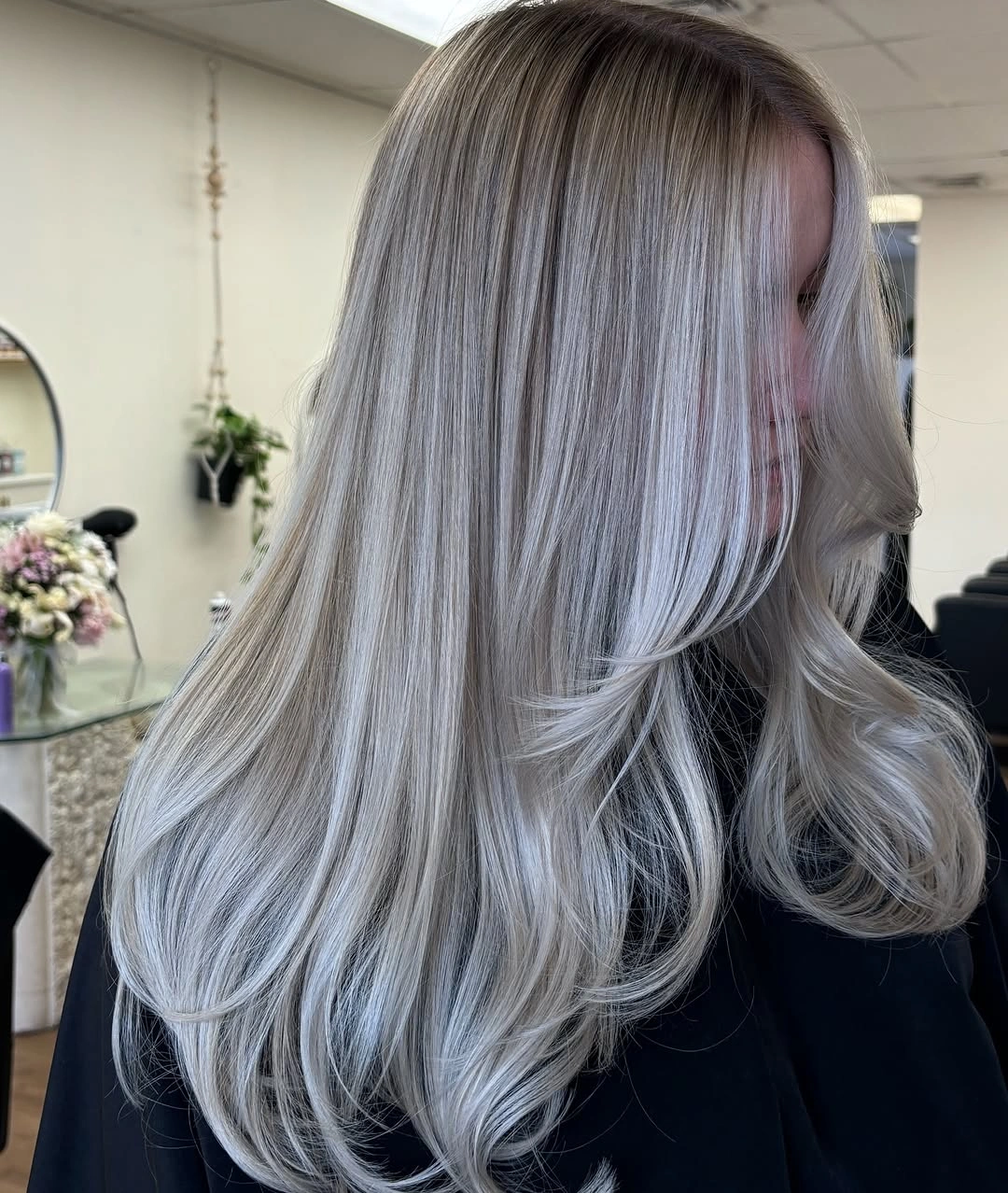
Layered ends curled outward keep that cool palette from becoming visually severe. As the lower sections turn away from the body, they catch as pale silver arcs and introduce movement beneath the straighter upper lengths. The combination of dark roots, gray-silver color, and curved ends makes the shade feel intentional from crown to perimeter.
The coolest feature is not brightness alone, but the distinctly gray cast set against deeper roots. Curved ends soften the geometry of that contrast without muting the steelier tone.
Orange Color Blocking Energizes Pale Blonde Layers
Pale blonde still covers most of the crown and lengths, but the concentrated orange sections completely change the character of the color. Instead of warming the entire head, orange appears in distinct areas beneath the full fringe, beside the face, and through parts of the lower ends. That separation lets the blonde remain clearly dominant while the warmer shade reads as intentional color blocking.
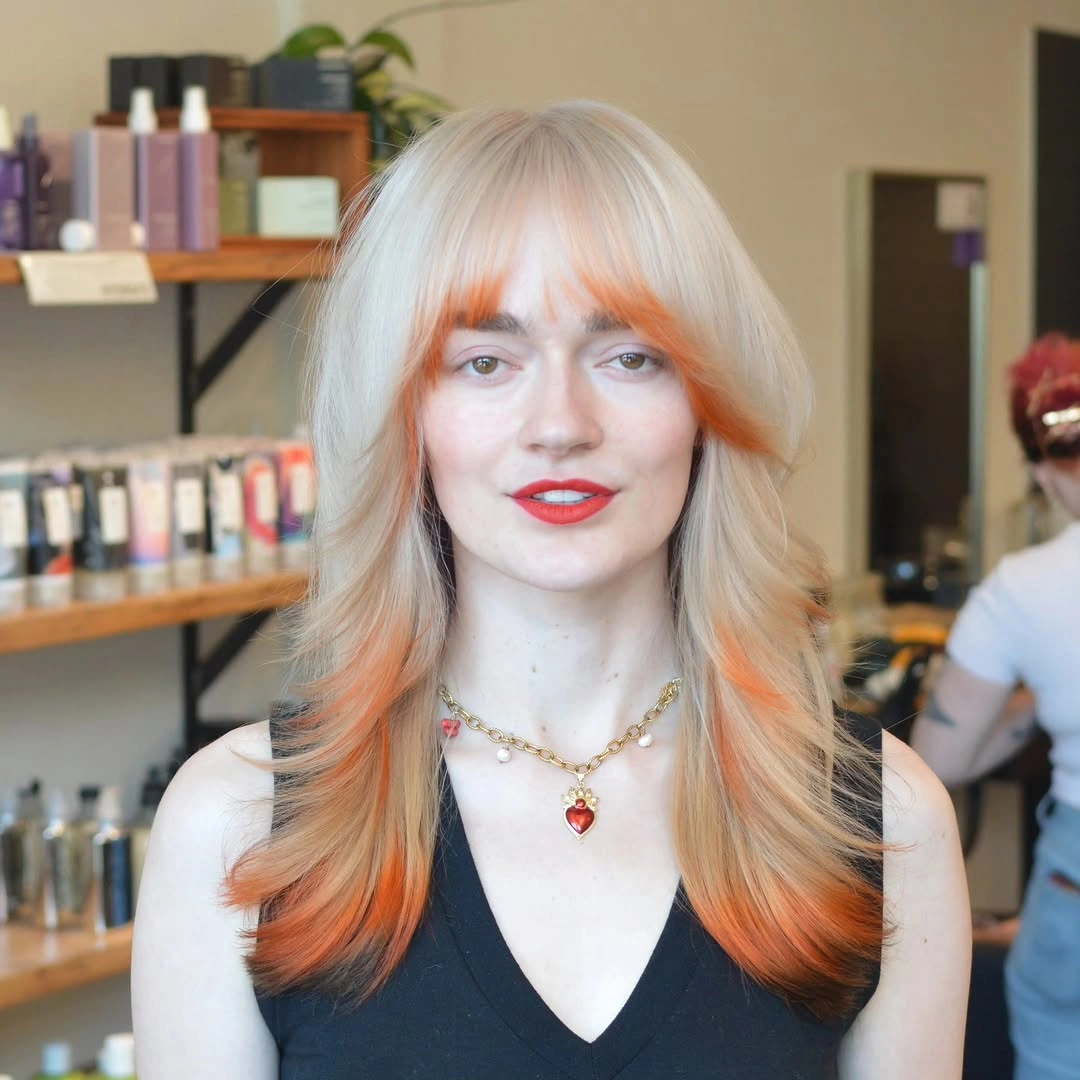
Repeating orange near the fringe and again toward the ends is what makes the placement feel connected rather than random. The upper accent peeks from beneath the pale bangs, while the lower sections carry the same vivid warmth into the layered perimeter. Because those points are separated by larger stretches of blonde, each orange area stays easy to notice without overwhelming the lighter base.
This placement gives pale blonde a more expressive role than simply being bright or neutral. The contrast comes from where the orange appears, allowing the haircut itself to help organize two very different colors.