A trendy winter hair color should make a real choice, not just look brighter under a coat collar. Before picking the icy blonde, the copper bob or the silver face frame, it helps to ask what you want the color to change: the mood around your face, the weight of your length, or the amount of drama you are willing to see every morning.
The strongest trendy winter hair color ideas here are not all loud, and the quiet ones are not automatically safer. Some trendy winter hair colors win because a dark root keeps pale blonde from going blank, while others work because a red panel, plum wash or hidden underlayer refuses to behave. The best trendy fall and winter hair color ideas leave room for both beauty and second thoughts.
Cool Blonde That Knows When To Stop
This cool beige blonde works because it resists becoming a sheet of icy light. The darker taupe crown gives the pale lengths a place to begin, and the fine gray-beige dimension keeps the color from looking flat against the long, softly waved shape. For readers saving trendy winter hair color ideas, this is the pale option that makes restraint feel deliberate.
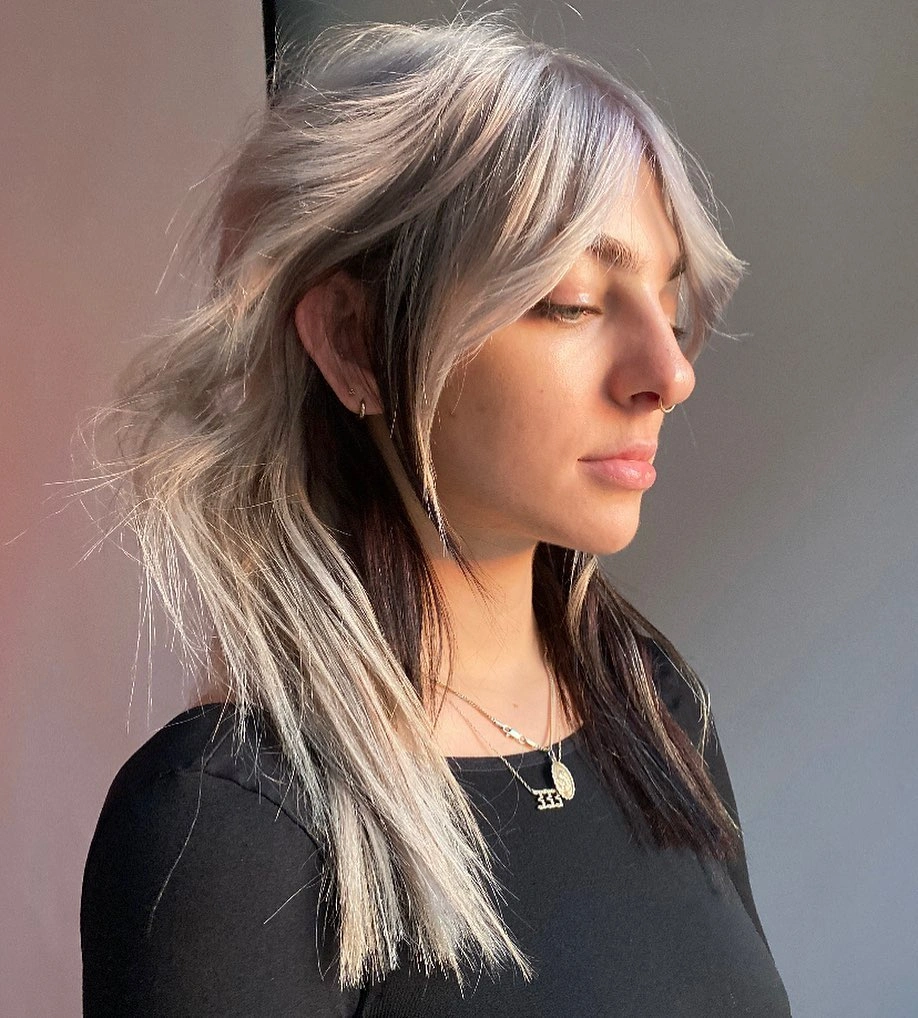
The lightest strands are doing their best work near the face and lower front sections, where they brighten without turning the whole head into a spotlight. I like that the root depth is not a dramatic shadow or a pasted-on contrast; it simply keeps the blonde attached to the rest of the look. That makes the color feel grown-up rather than timid.
The useful decision is how cool to let the blonde become before it loses softness. Here, the beige note keeps the color interesting enough that it does not need another trick.
Red And Gold With No Apology
This is the warm color in the room that knows everyone noticed it. The deep copper-red crown, darker auburn sides and broad orange-gold center panel make the long waves read almost like a planned color story from root to end. Among trendy winter hair colors, it is not pretending to be a casual refresh or a barely there change.
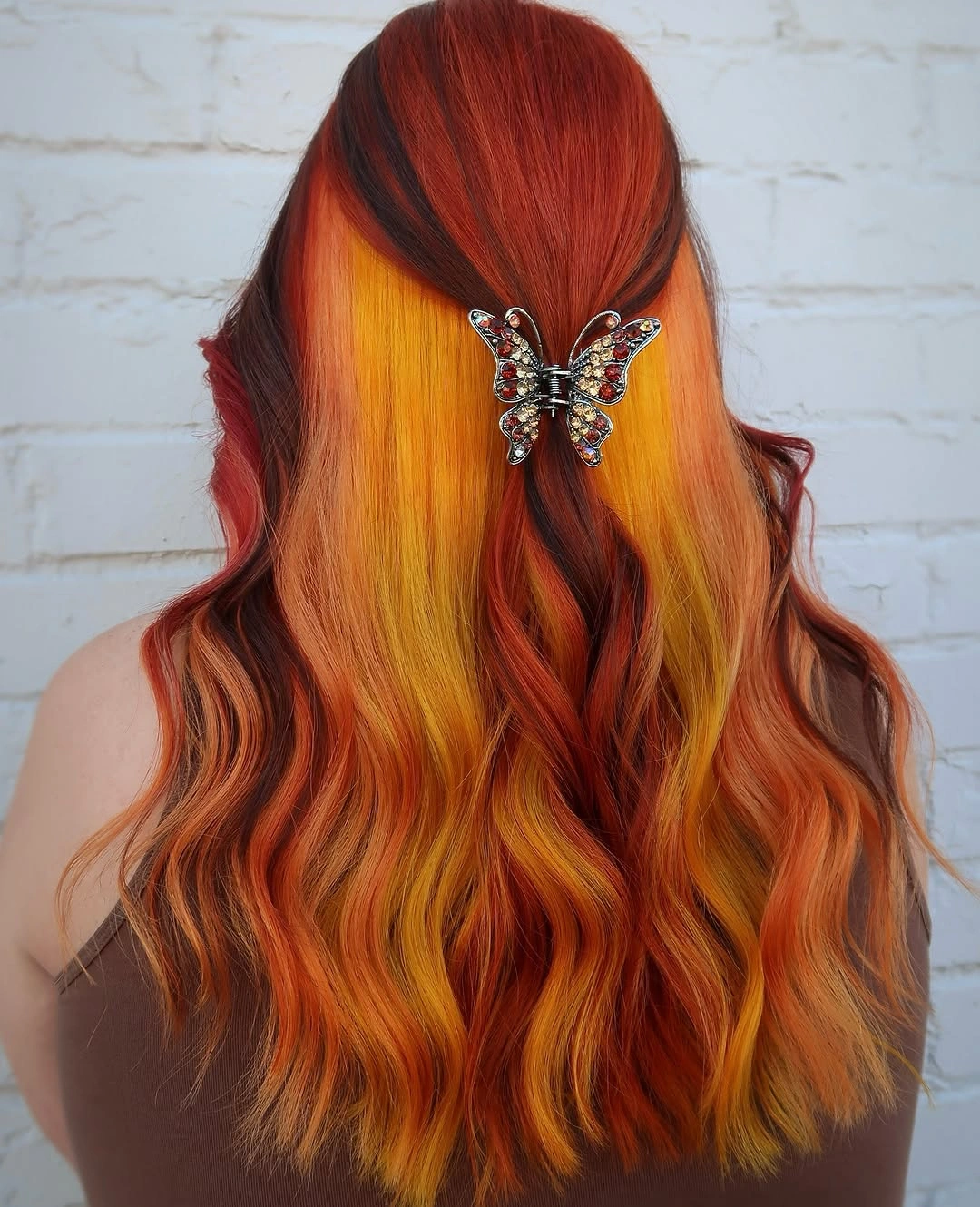
The butterfly clip gathers the top just enough to make the placement clear, but the shade itself still carries the drama. I would not call this subtle, and I would not try to soften that fact into praise. The best reason to choose a palette this vivid is that you actually enjoy hair color taking up visual space.
The hesitation is obvious: the yellow-orange center can feel theatrical before it feels elegant. That does not ruin the idea, but it means the reader should want the performance, not stumble into it.
Copper Bob With Real Nerve
On a jaw-skimming bob, copper has to hold its nerve. This saturated orange tone sits close to the face and upper neck, with a deeper root area giving the crown a little shadow and preventing the color from looking flat. The short shape makes the warmth feel immediate, more like a real color decision than a vague seasonal brightening.
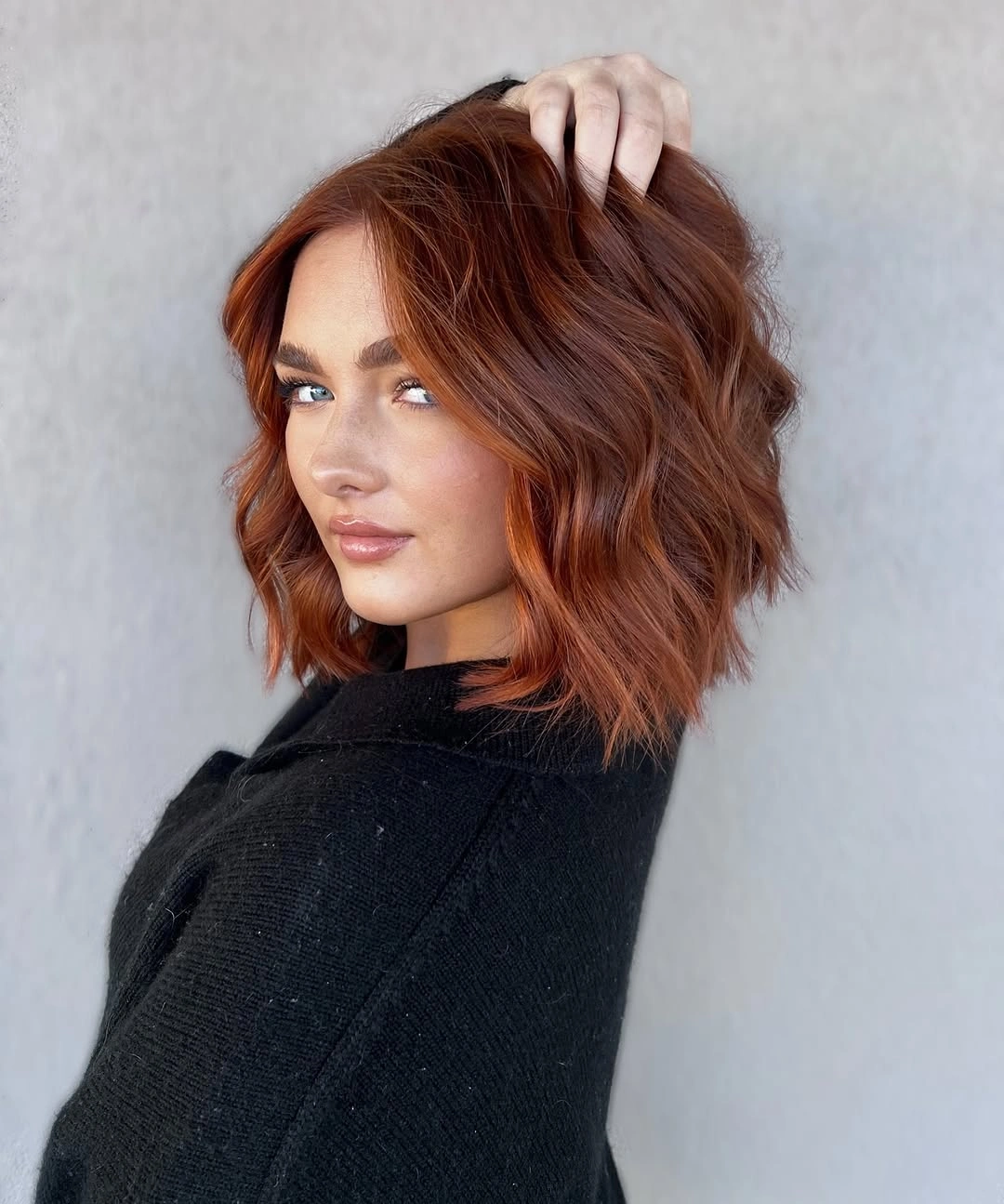
The side part and swept fringe make the color feel lively, but the nearly continuous copper family keeps the bob from becoming scattered. I like it most because the shade and shape agree with each other: both are direct, bright and slightly impatient. A softer brown copper would change the mood completely, and not necessarily for the better.
The real choice is whether to let the short shape make the color sharper, or to soften the shade so the cut feels easier. I would keep the stronger copper, because the bob earns that bit of nerve.
Brunette Contrast With A Sharp Face Frame
Brunettes looking through trendy winter hair color ideas often have to decide how much light they want right beside the face. This dark brown or black base makes that question blunt, because the two platinum-silver front panels begin at the part and stay clean against the long waves. It is graphic before it is pretty, which is exactly its appeal.
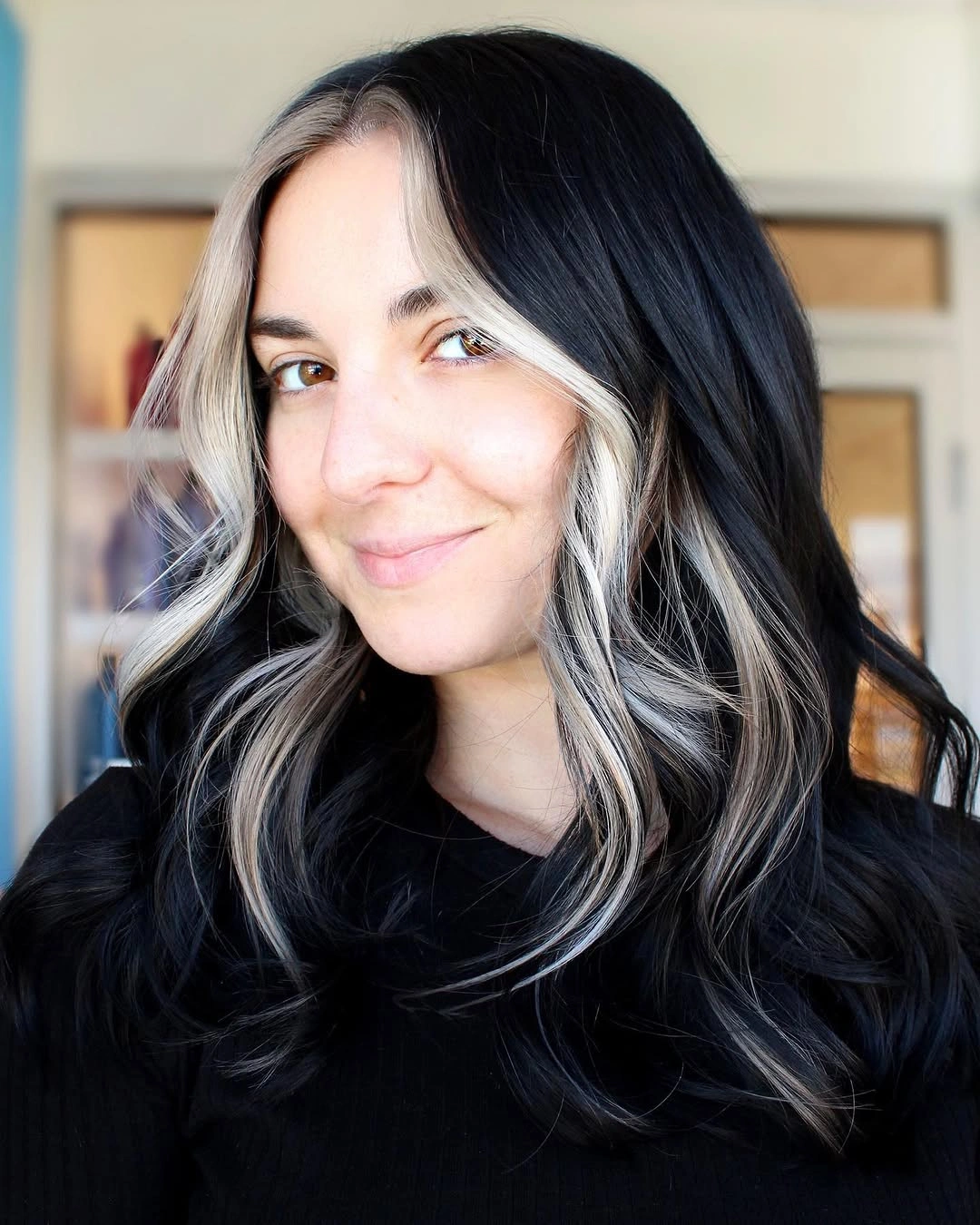
The waves soften the split enough that it does not look like a flat stripe, but they do not disguise the decision. That is the balance I would keep: silver-white pieces strong enough to frame the face, with the dark lengths still carrying most of the shape. Narrowing the panels too much would make the look less brave and more ordinary.
The possible problem is not contrast itself; it is contrast without enough attitude behind it. If the reader wants a crisp visual border, this works, but if she wants softness first, the panels may keep interrupting her.
Warm Blonde That Refuses A Stripe
This blended blonde is appealing because it lets warmth build through the hair instead of placing it in one obvious band. Beige-blonde sits on top, darker roots keep the crown from looking washed out, and ribbons of honey, caramel, warm brown and copper appear through the long waves. It is one of the trendy winter hair color ideas that treats richness as movement.
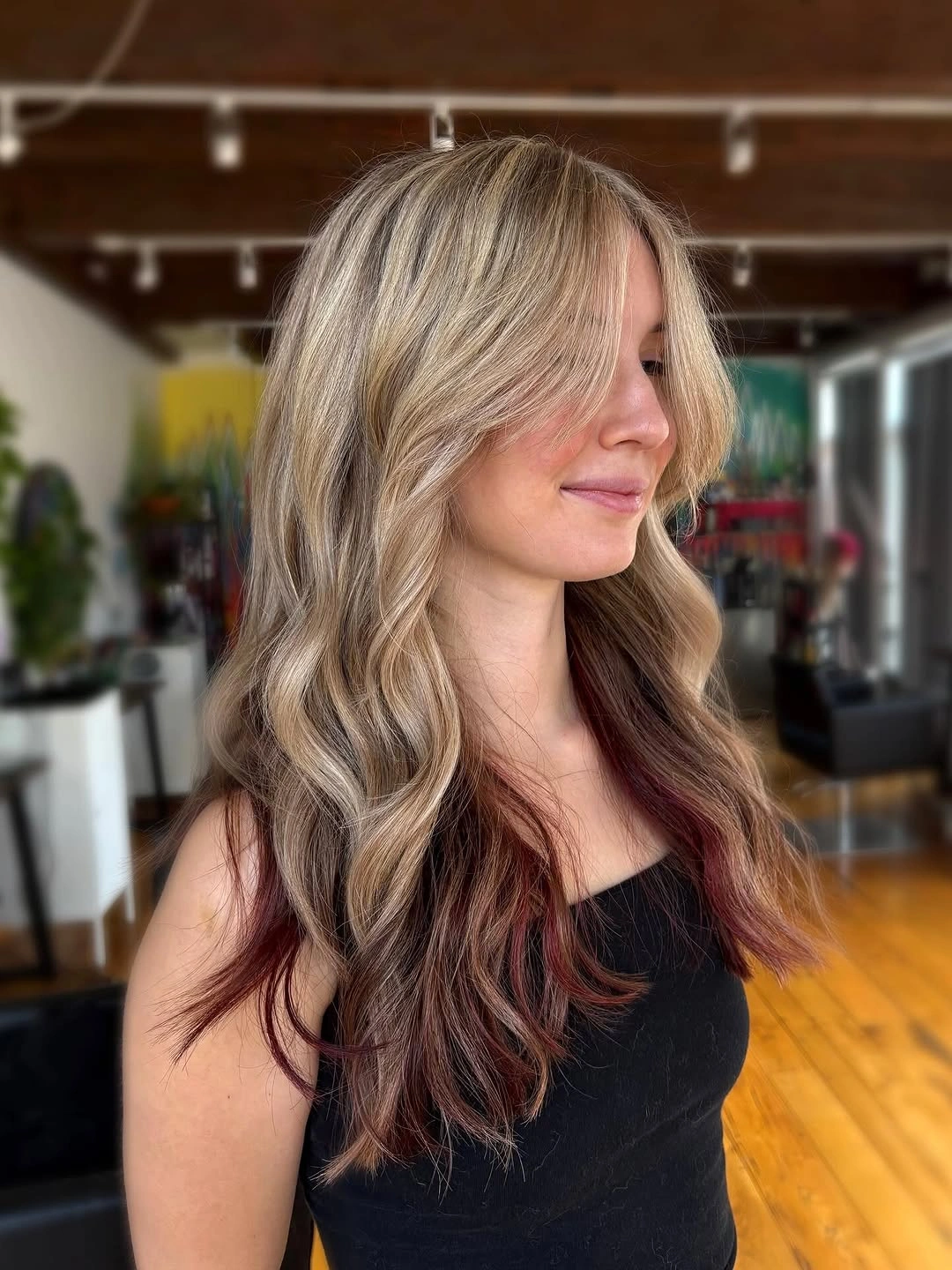
The most useful part is the way the deeper pieces appear underneath and toward the ends, so the shade changes as the waves separate. That gives a reader a real choice: keep the blonde surface soft, or let more copper show and make the color moodier. I prefer this exact in-between point because it still has polish without losing warmth.
The danger is not that the look is too quiet; it is that too much blending can make every tone agree politely. A little copper showing low in the waves keeps the beige from becoming sleepy.
Two-Tone Bob That Means It
This trendy winter hair color for short hair turns the bob into a clean split rather than a soft compromise. One side falls in pale creamy blonde, the other in deep espresso or chocolate brown, and the center part makes the division part of the shape. The jaw-to-neck length gives the two colors a sharper edge than long waves would.
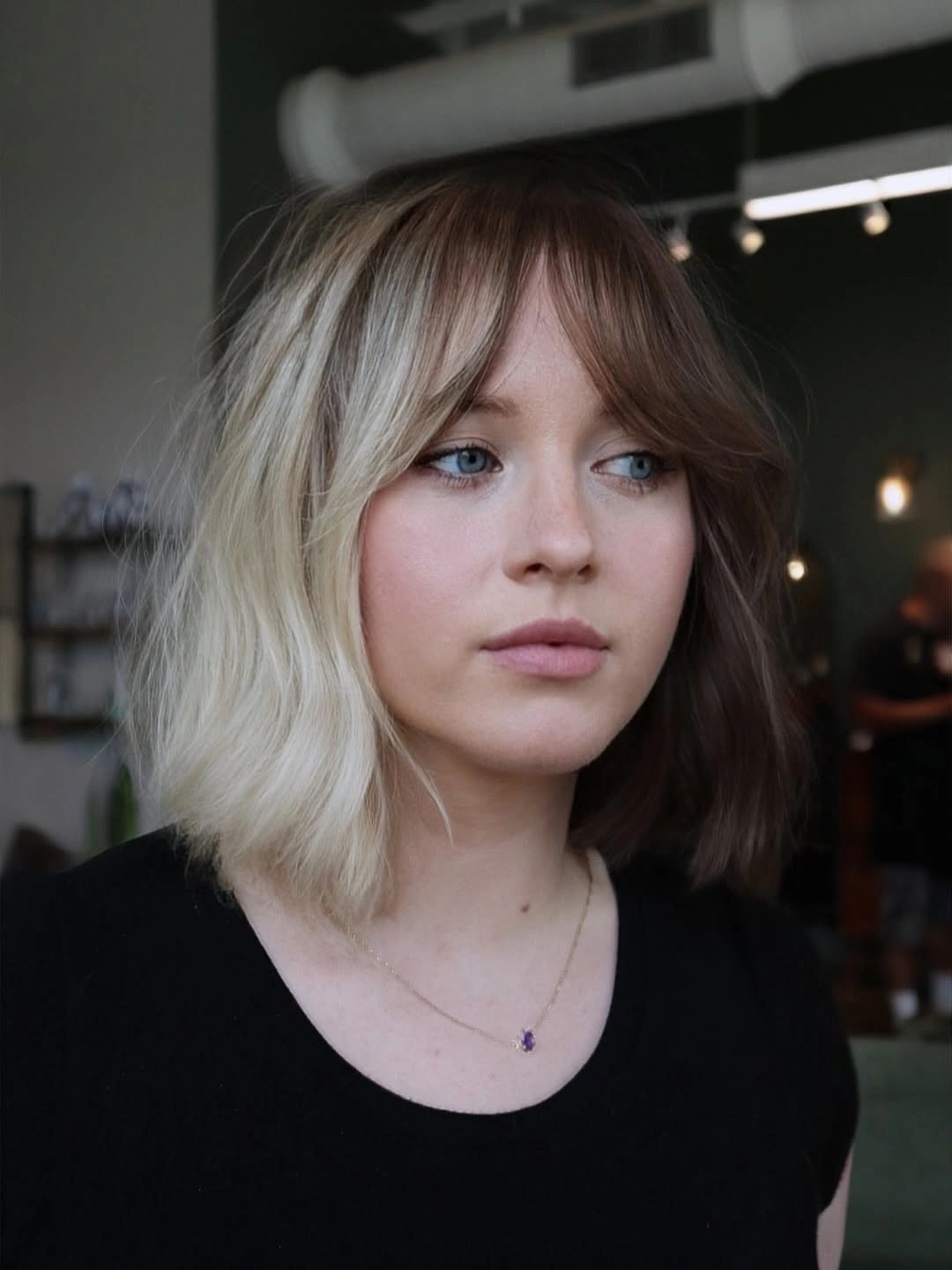
I like the split most when it is treated as structure, not indecision. The soft curtain bangs and inward-curving ends keep the outline wearable, but the two colors remain on their own sides instead of politely mixing together. That refusal to blend is the point, even if it asks for more confidence than a few highlights.
The reader’s fork in the road is simple: make the bob graphic, or make it gentler. Adding extra shades would probably blur the one thing that makes the style worth choosing.
One Pale Streak Beats Perfect Symmetry
Brunettes considering trendy winter hair color ideas do not always need a matched pair of front highlights. This long dark style is better because it is uneven: a chunky beige-blonde section starts in the fringe and runs down one side, while the near-black or deep brown base holds the rest of the shape. The imbalance feels like a point of view.
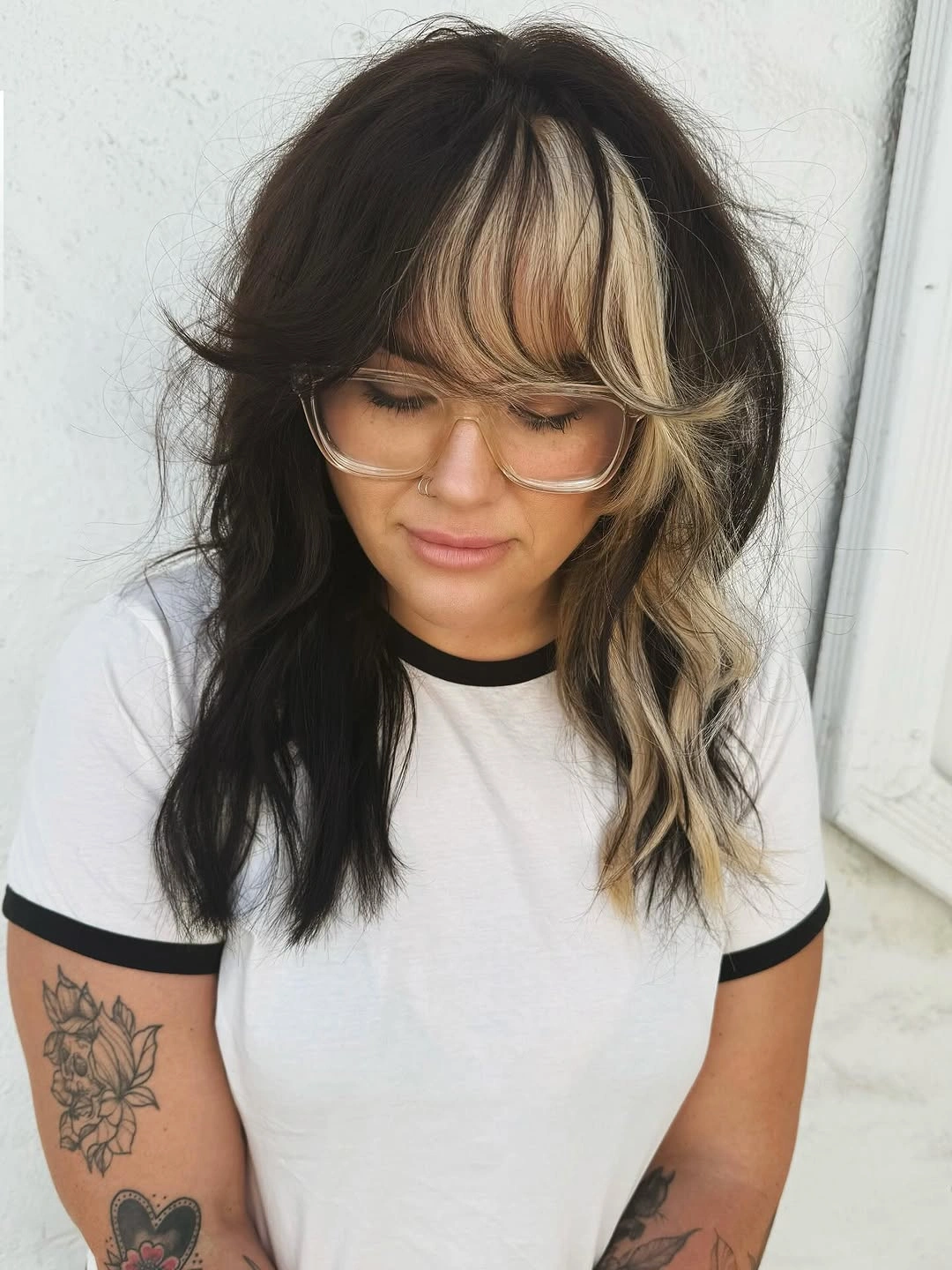
The layered, slightly shaggy shape helps the streak feel like part of the haircut rather than an accessory pasted on top. A few lighter strands repeat lower in the hair, but they do not compete with the front panel. The choice worth discussing is whether you want your contrast corrected into symmetry or left with its odd little charm intact.
I would leave the off-center placement alone because it gives the dark base a more specific mood. If everything were mirrored, the color would become cleaner but less memorable.
Copper And Blonde In The Same Sentence
This red-and-blonde mix is strongest because copper remains the main color instead of becoming the background for highlights. The auburn base runs from crown through the mid-lengths, while pale beige or blonde ribbons appear at the front and again near the lower waves. It belongs with trendy winter hair colors that are warm without turning soft.
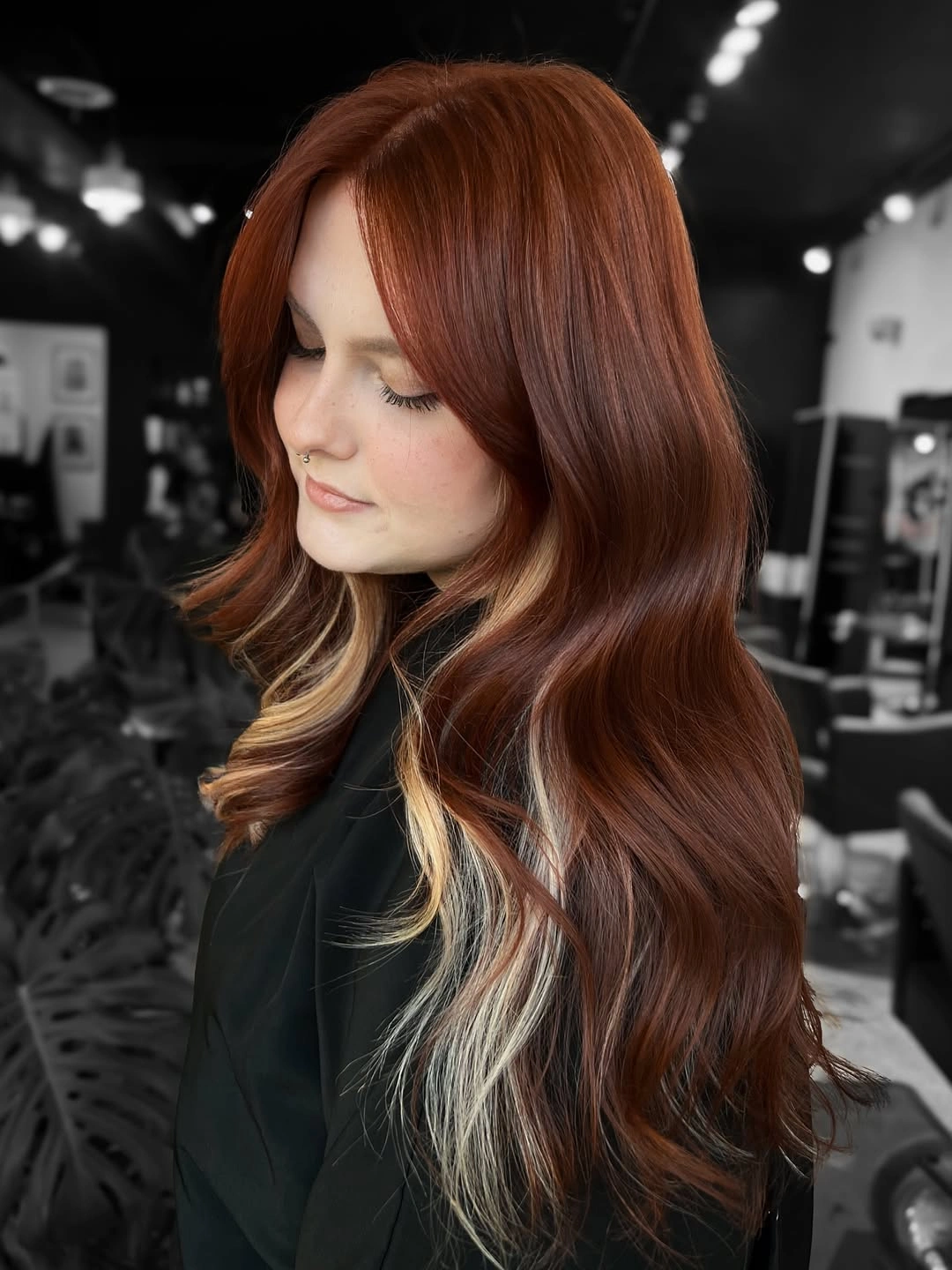
The face pieces brighten the color, but they do not erase the auburn, and that restraint is the lesson worth keeping. A heavier blonde would make the look louder and probably less interesting; a darker copper alone would lose the flicker that makes the waves readable. This is one of those slightly impractical shades that earns its inconvenience by being beautiful.
The most interesting choice is the ratio, not the contrast. Let the blonde interrupt the red too much and the color loses its copper confidence.
Purple Color With A Strange Little Spark
Shoulder-length hair gives this purple mix a close, concentrated mood around the face. The dark violet and plum base carries magenta or red ribbons through the front and lengths, while blue-violet and a small green accent appear underneath. The shorter outline keeps the fantasy color compact enough to feel moody rather than sprawling.
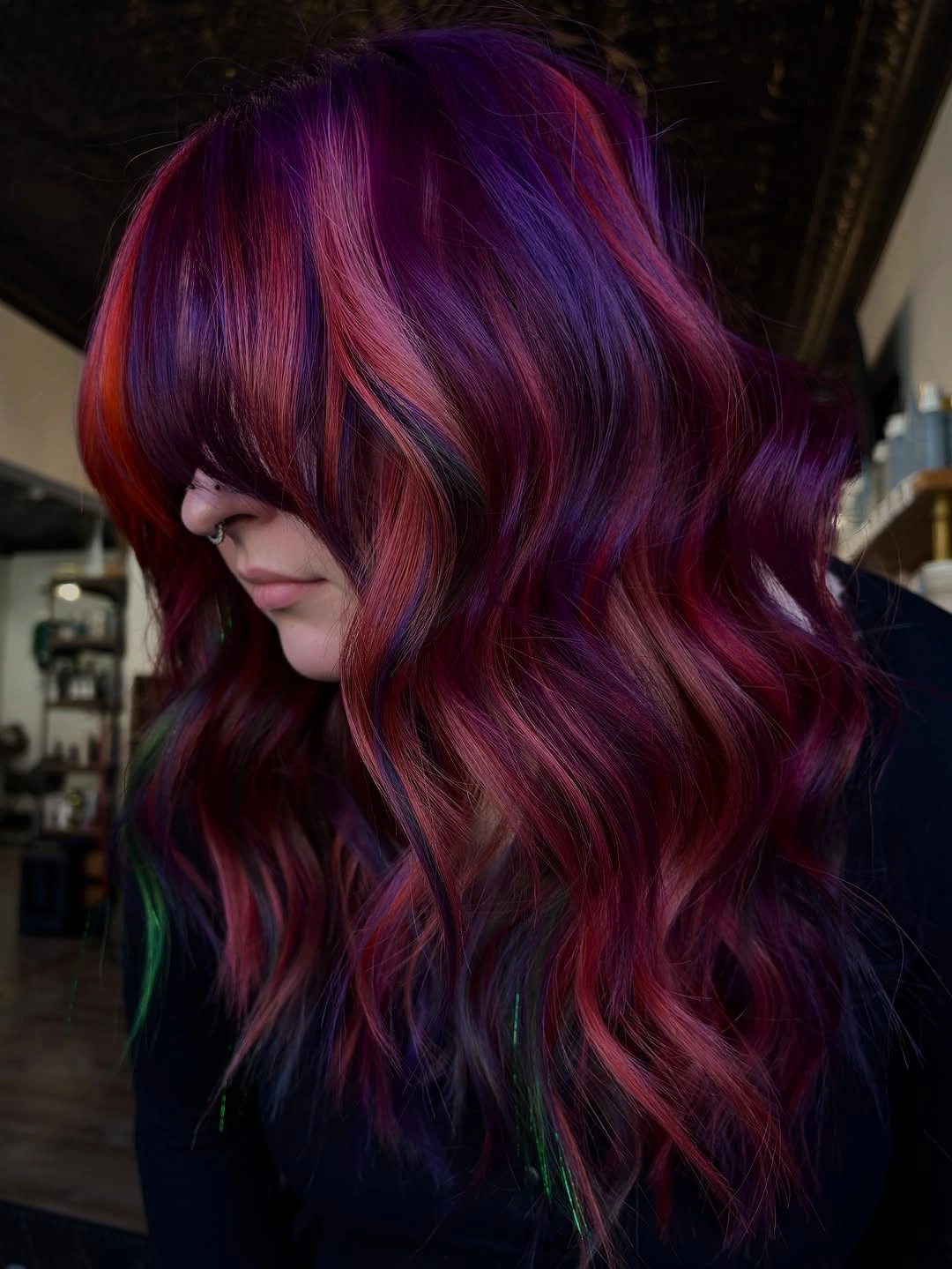
The heavy bangs make the color feel enclosed around the eyes and cheeks, which suits the jewel-tone mood. I would be careful, though, because not every accent has the same authority: plum and magenta belong naturally together, while the green note is more of a surprise. The question is whether that surprise feels delicious or distracting.
I am glad the green is small because it gives the purple a little friction without stealing the scene. A larger green section would change the whole argument from moody color to deliberate clash.
Red White And Charcoal For The Brave
Dark bases can make trendy winter hair color ideas feel sharper, and this one is the most editorial of the set. Burgundy-red sits at one front side and fringe, a wide white or silver panel cuts through the front, and the opposite lengths fall into charcoal gray and black. It is not a soft update; it is a full position.
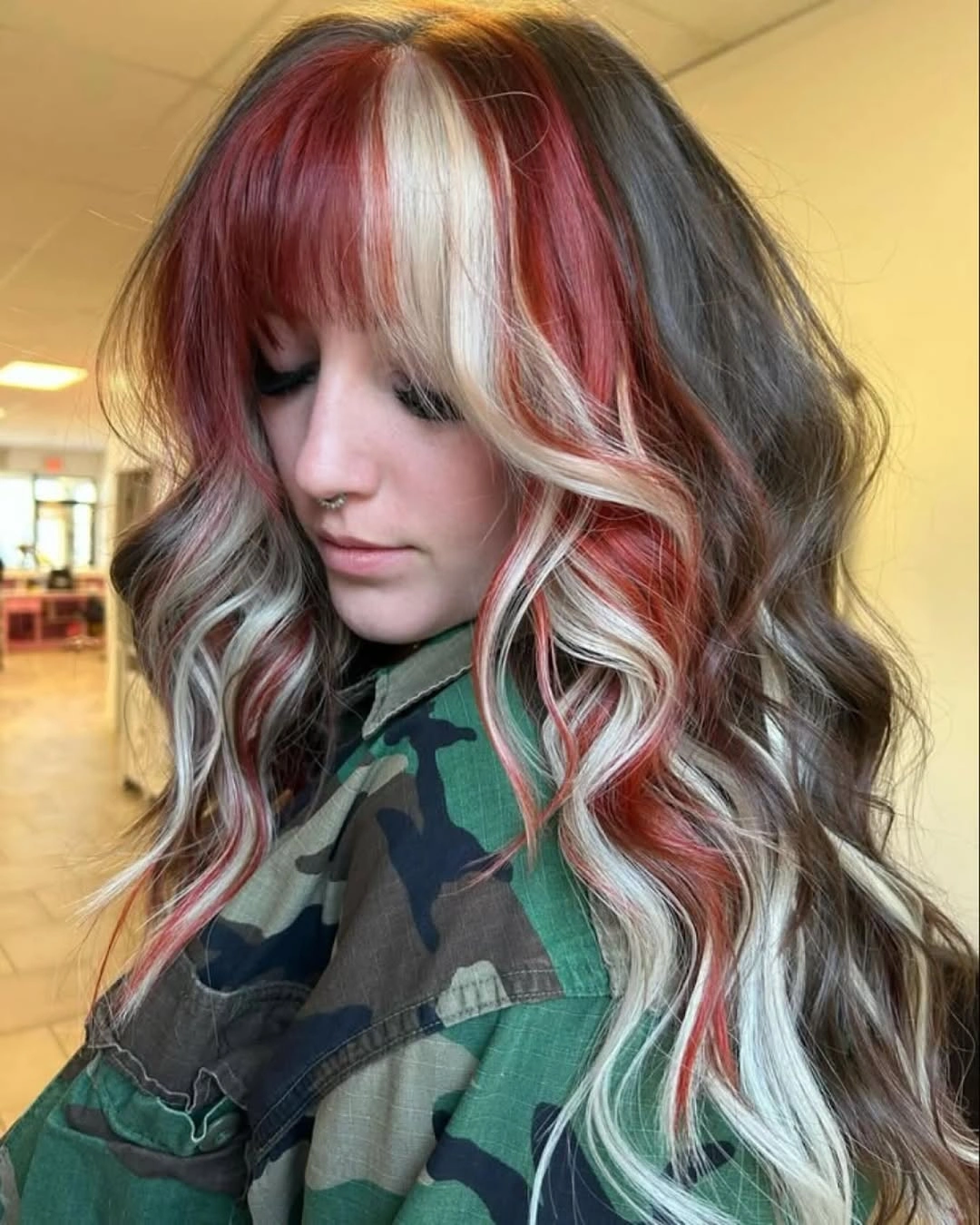
What keeps the color from becoming pure chaos is the pale panel acting as a clean divider between the warm red and cool dark side. The loose waves overlap, but the blocks still read clearly, so the design stays sharp rather than muddy. I respect it most when it is allowed to stay asymmetrical instead of being made prettier by committee.
This is the option for a reader who wants the color to create tension, not simply brighten her hair. If that tension sounds exhausting, a smaller red or silver accent would be the wiser fantasy.
Blonde Layers With A Brown Undercurrent
This shoulder-length blonde makes a good case for shadow as part of the color, not a problem to erase. Beige-blonde dominates the top and front, while a deep brown section slips underneath and down one side. The shorter layered shape keeps the contrast close to the cheeks and fringe instead of letting it disappear through long lengths.
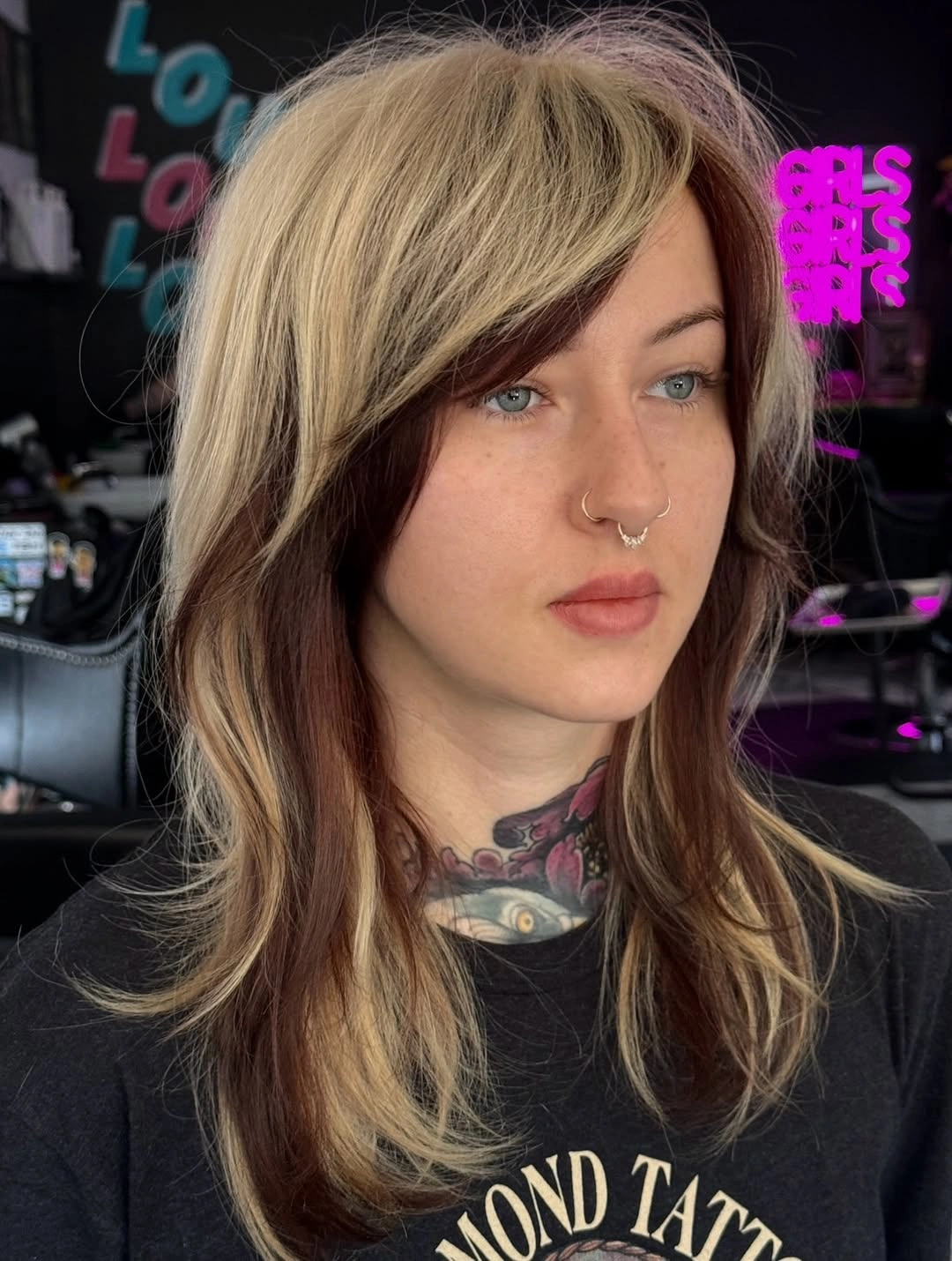
That undercurrent matters because blonde can look strangely weightless when every visible piece is pale. Here, the brown panel gives the sweep and side part something to push against, especially where the fringe crosses the forehead. A reader who likes blonde but distrusts an all-light outline may find this more interesting than adding another bright piece.
I would not try to make the dark section too even or too exposed. Its value is that it reads first as depth, then as a color choice.
Pale Blonde Without The Ice Act
This creamy blonde is the quiet one, and that is not an insult. The beige roots, soft lowlights near the underside and very long waves keep the pale color continuous without making it look frozen. In a lineup of trendy winter hair colors, it proves that a light shade can have presence without a stark front panel.
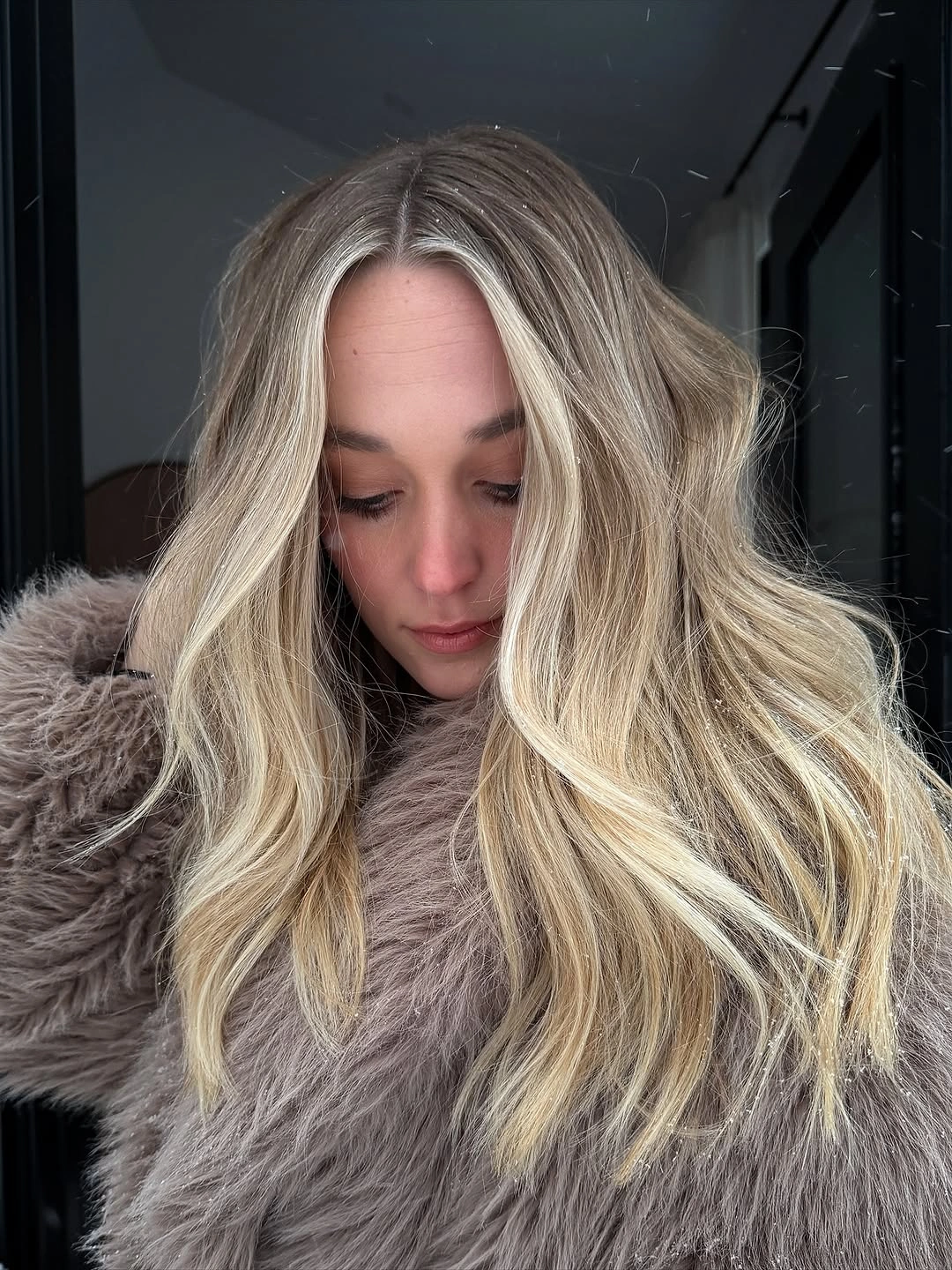
The length gives the blonde room to show gentle shifts from crown to ends, which is more useful than another high-contrast interruption. I like that the face-framing layers stay in the same pale family rather than announcing themselves as separate pieces. The result is not daring, but it is not empty either, and that distinction matters.
The reader’s decision is whether calm blonde is enough, or whether she will keep wanting a more obvious accent. This version works only if tonal refinement feels satisfying on its own.
Brown Bob With Warm Ends
Warm brown becomes easier to read when the haircut gives it a firm edge. This blunt bob rests around the jaw and upper neck, with chocolate brown at the crown and muted caramel or copper through the lower perimeter. Because the hair is short, the color shift at the ends feels specific instead of getting lost in movement.
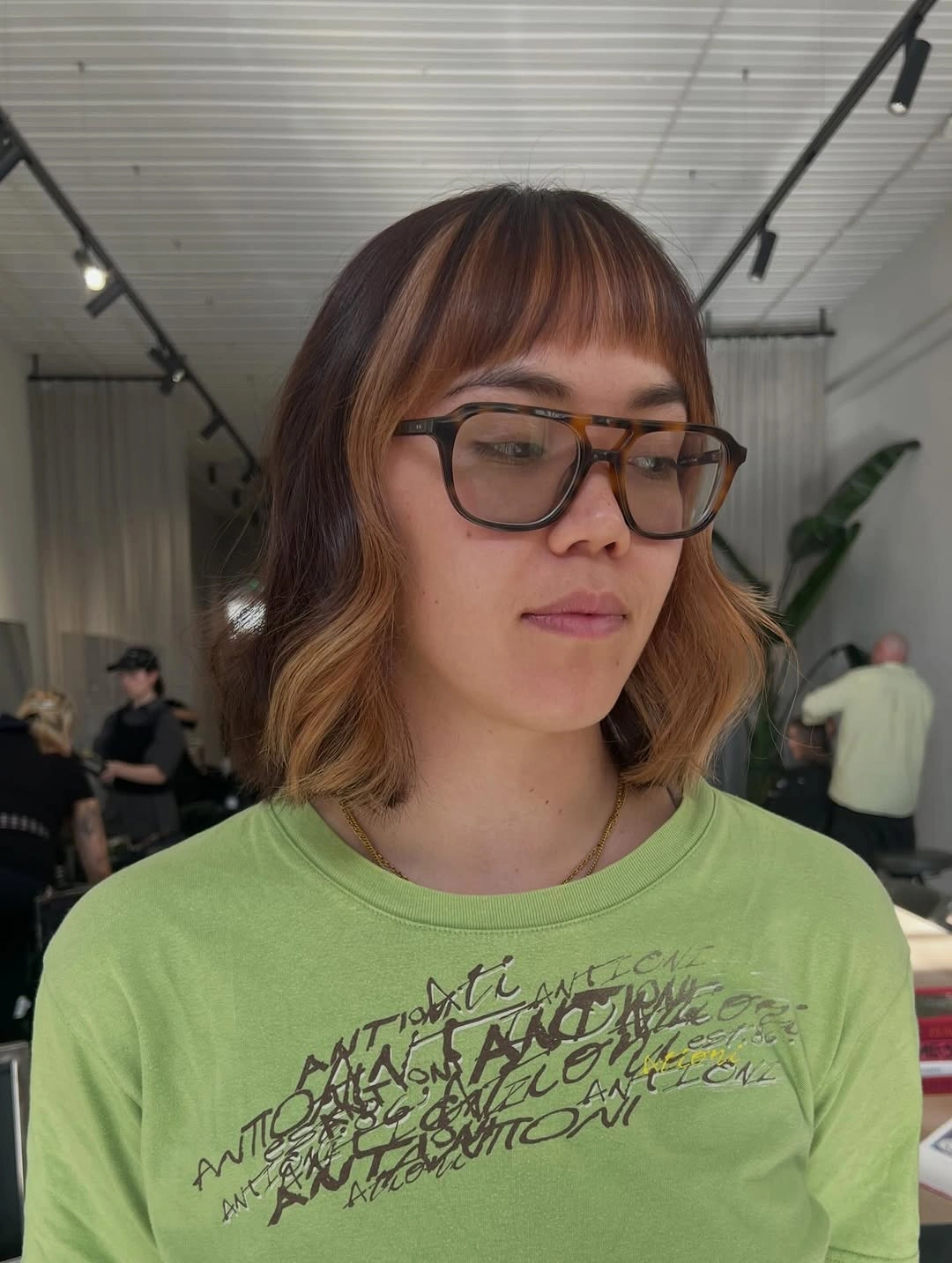
The straight fringe gives the shape a graphic front, while the slightly inward side sections make the warm ends feel softer than the blunt line. I like the tension between neatness and glow here: the cut is firm, but the color loosens the edge. A cooler brown would make it sharper, though maybe less charming.
The best question is whether the reader wants the ends to look sun-warmed or deliberately coppery. Push the warmth too far and the blunt bob changes from tidy to cheeky very quickly.
Mushroom Brown For The Subtle Winter Vote
This cool brown lob is for the reader who wants change without announcing a rebellion. The ash or mushroom brown crown stays deeper, while beige and gray-blonde ribbons move through the mid-lengths and ends. The shoulder-length shape keeps the muted color visible, but the effect relies on temperature instead of a dramatic panel.
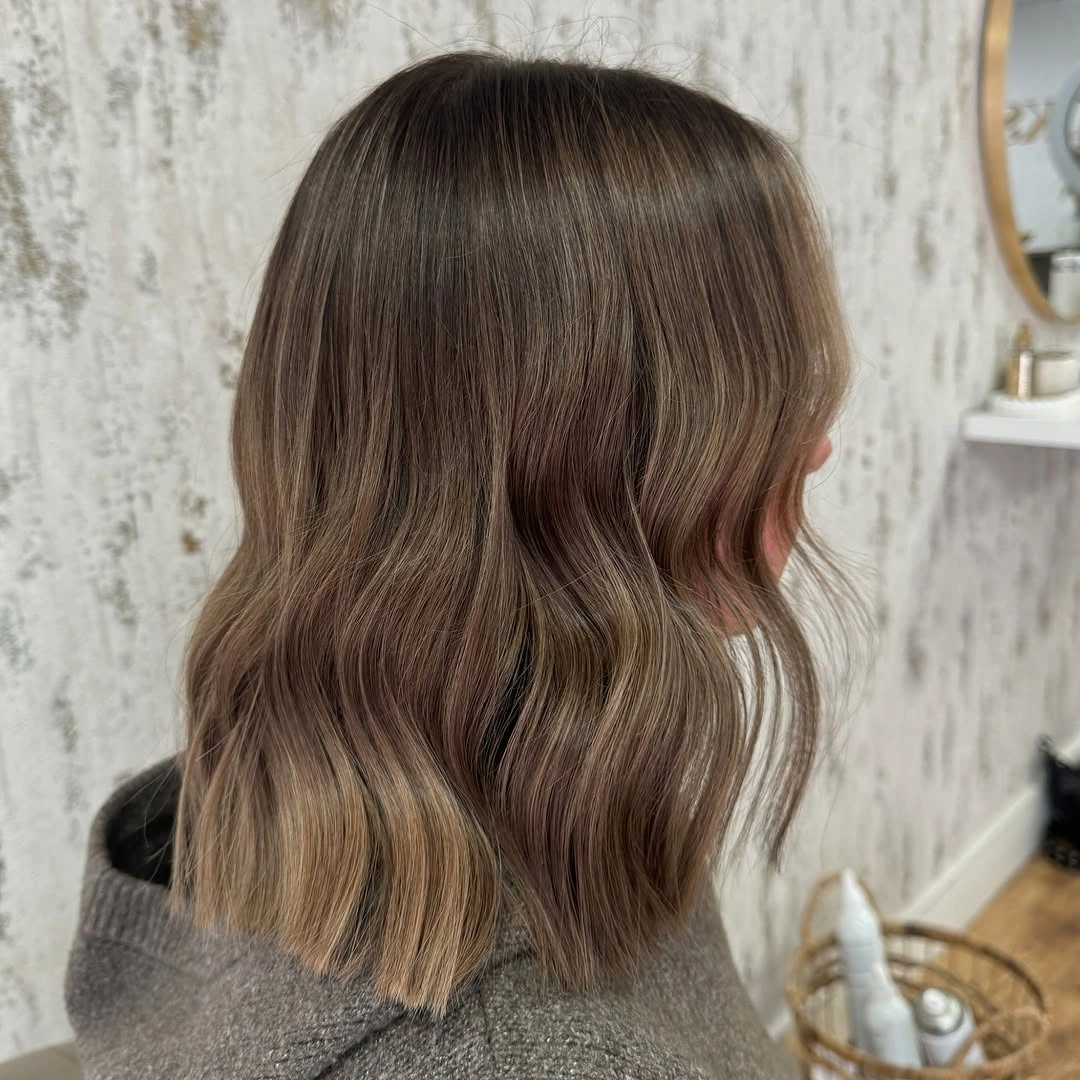
The danger with cool-neutral color is that it can sound more interesting than it looks, but the shoulder-length waves help this one. The tonal bands repeat through the bends, so the lighter pieces appear and disappear rather than lying flat on top. I would keep the crown depth because that is what prevents the muted blonde from going sleepy.
This is the section for deciding how subtle is too subtle. If the reader wants visible change in every mirror, mushroom brown may feel clever on paper and too quiet in real life.
Hidden Blonde Under A Brown Surface
The hidden blonde panel is the rare dramatic idea that also understands privacy. A medium cool brown surface covers most of the visible crown and outer waves, while a broad platinum section appears underneath when the hair is lifted. The contrast is clear, but it does not have to introduce itself every minute.
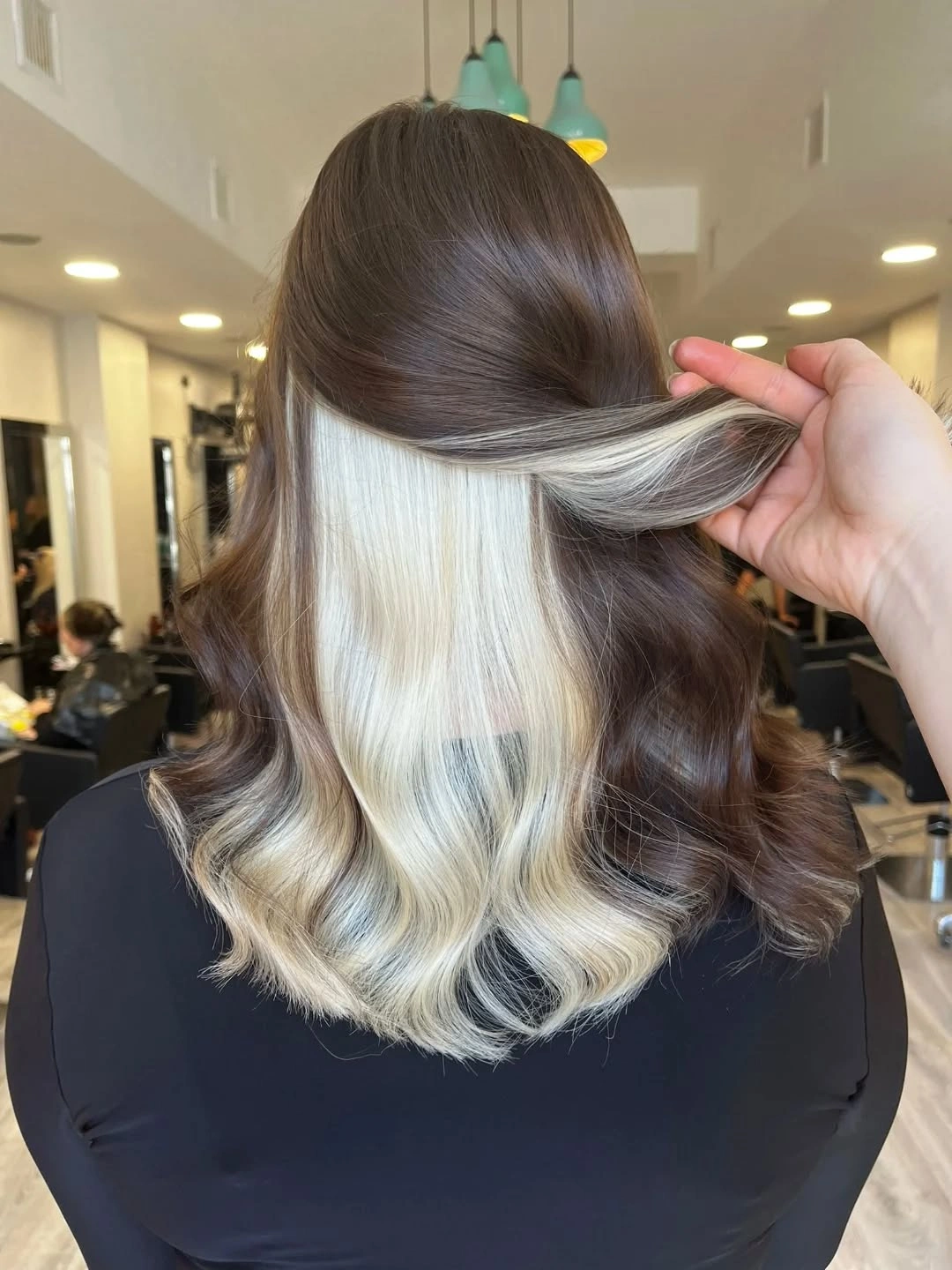
That concealed placement changes the whole mood of the color. A face-framing streak asks to be seen immediately; this pale underlayer waits for movement, a gathered section or a different angle. I find that more interesting than many louder brunette contrasts because the reader gets drama without making it the only fact in the room.
The decision is not whether the blonde shows, but when it shows. That timing gives the color a slyness that a front streak cannot really fake.
Silver Panels On A Dark Base
For brunettes, trendy winter hair color ideas often come down to the face frame, and this paired silver version is the cleanest. A dark brown or black base fills the back and lengths, while bright gray-blonde or platinum ribbons begin at the center part and run down both front sides. The symmetry makes the contrast feel precise before it feels playful.
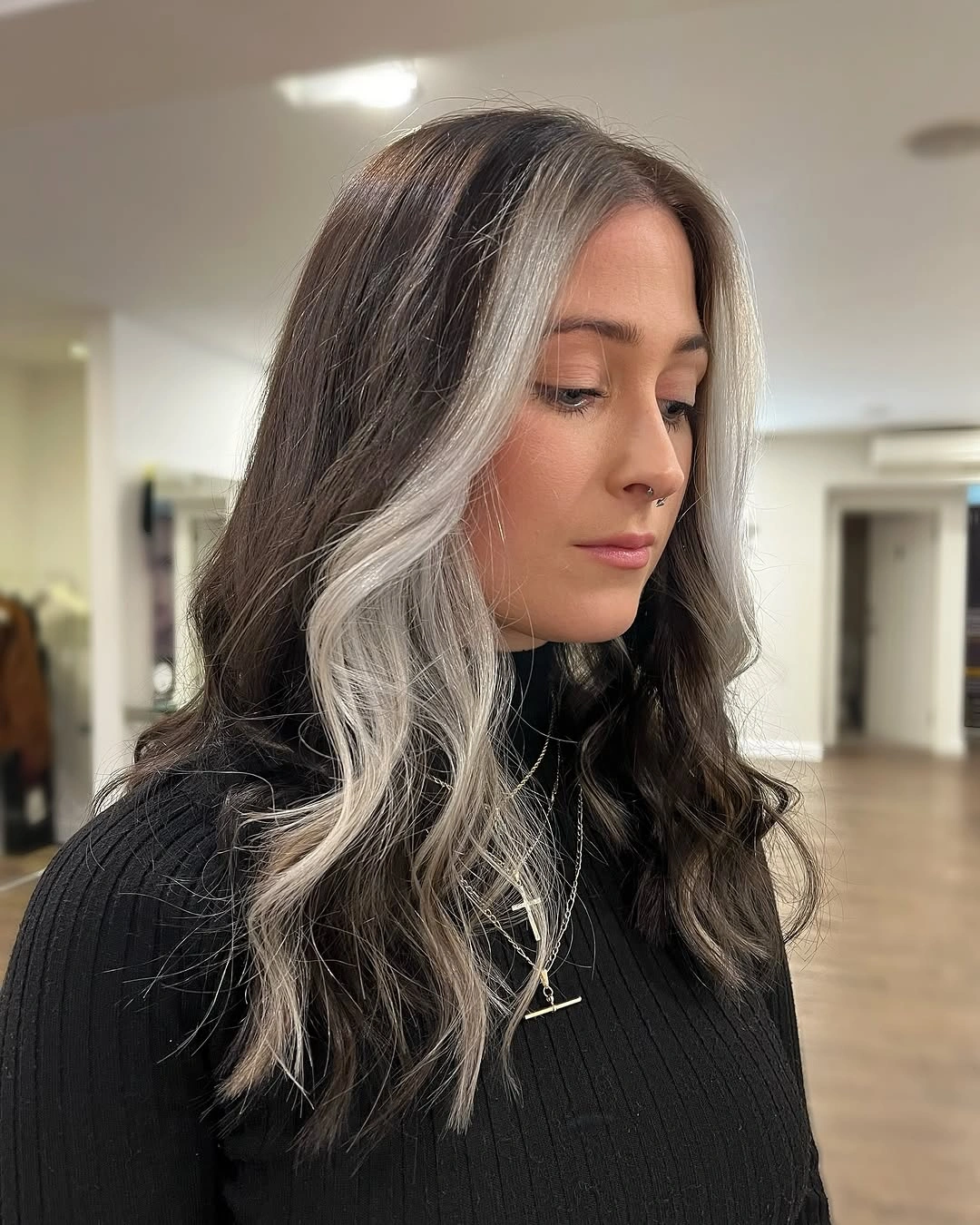
I admire the clarity, but I also think that is where the risk lives. Because the panels are balanced and bright, the look can turn predictable faster than a single streak or hidden underlayer. The saving detail is the loose wave, which softens the edges without blurring the light-dark division into ordinary highlighting.
The reader has to decide whether precision is the appeal or the problem. If she wants a little oddness, the single-streak version has more bite.
A Blonde Ribbon That Moves With The Twist
This brunette look is interesting because the pale accent depends on the hairstyle to show itself. Chestnut or warm brown remains the dominant field, while a beige-blonde ribbon curves across the half-up twist and reappears through the lower waves. It is one of the trendy winter hair color ideas where placement matters more than raw brightness.
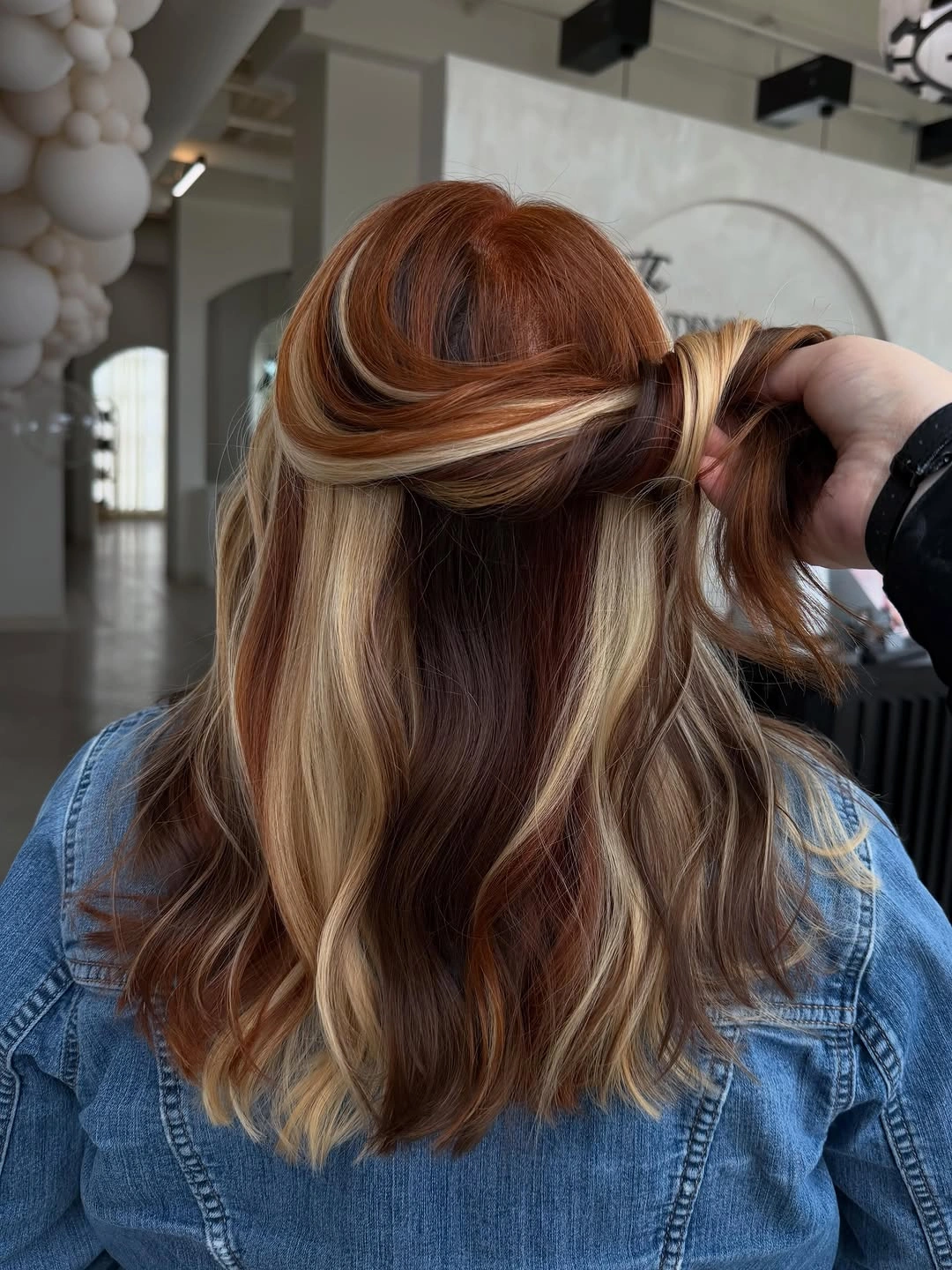
The color would read differently if the hair were fully loose, and that is the point worth discussing. Around the tied section, the light piece becomes a curved band instead of a straight stripe, which makes the contrast feel more fluid. I like this for a reader who wants warmth and brightness but not another obvious face frame.
The compromise is that the color’s best moment may depend on how the hair is worn. That can be appealing if the reader likes a shade that changes character with the shape.
Soft Brunette With A Lightened Front
This is the friendly brunette contrast, and I mean that as a compliment, not a dismissal. Medium warm brown stays visible through the crown and back, while blonde or beige ribbons begin around the fringe and front sides before blending into the lower waves. The full bangs or curtain fringe keep the light pieces close to the face.
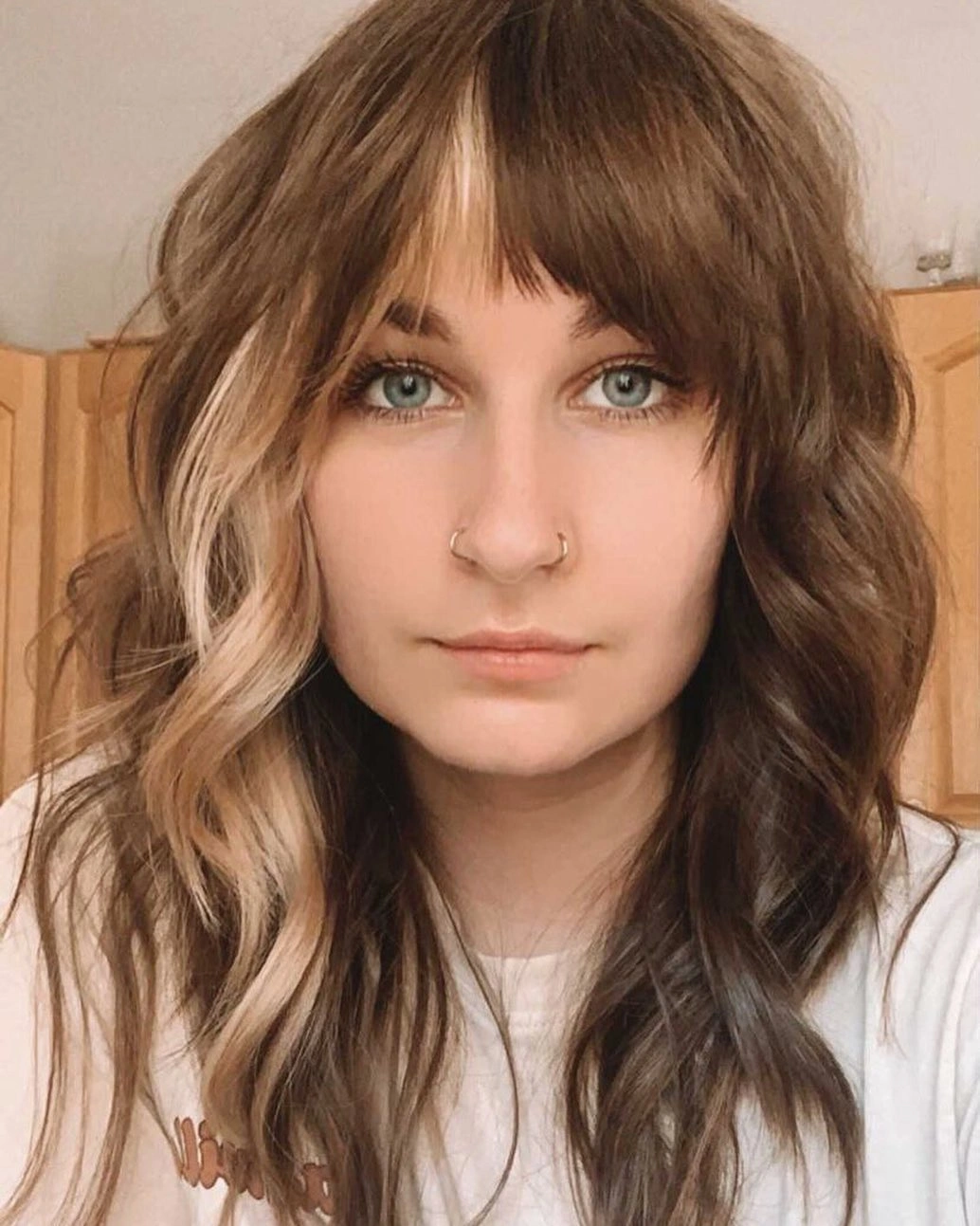
The color works because it brightens where a reader will notice it first, then lets the brown body remain central. That makes it less severe than the silver-panel looks and less secretive than the hidden underlayer. I would use this as the middle option for someone who wants lift without turning every front piece into a graphic stripe.
The main choice is how soft to keep the transition around the fringe. Too much separation would push it toward the high-contrast category, which is a different mood entirely.
Plum Waves With More Depth Than Shock
Brunettes comparing trendy winter hair color ideas may be tempted to treat purple as a stunt, but this long layered version stays inside one cool jewel family. Deep violet, eggplant and muted berry shades move through the waves, with lighter plum pieces catching near the front. The color is dramatic, yet it does not need a random bright streak to justify itself.
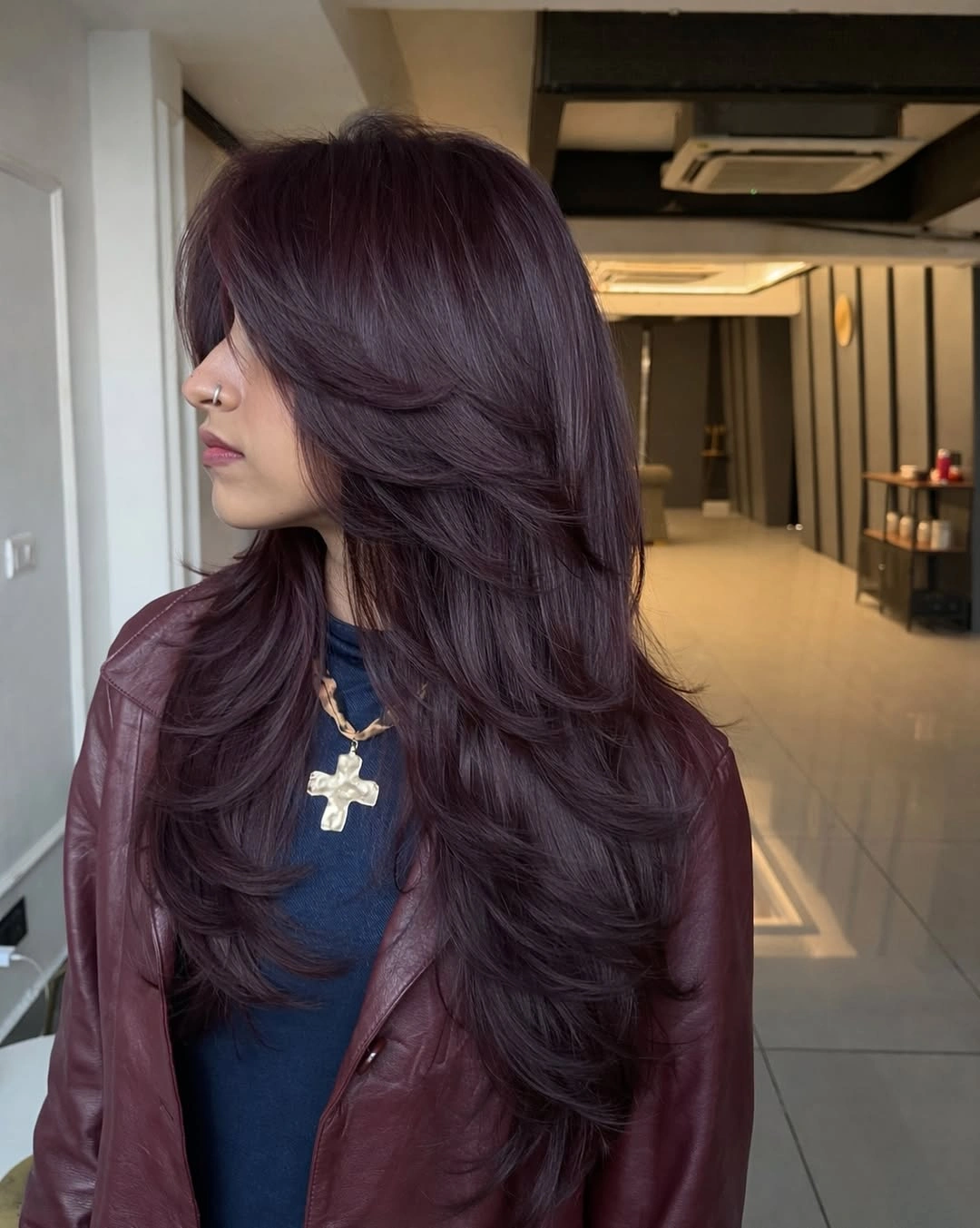
The side-swept fringe and curled layers make the purple read as depth rather than flat dye. That is important, because dark plum can become heavy when the shape gives it no separation. Here, the layers let the tones open and close around the shoulders, so the drama feels rich instead of merely loud.
Compared with the multicolored purple, this one asks for less surprise and more saturation. I prefer it for the reader who wants mood without turning every strand into a separate idea.
Golden Bronde With A Polished Glow
This golden bronde is polished enough to be easy to like, which is both its appeal and its danger. The medium light-brown crown gives way to broad caramel and honey pieces near the face and through the lower lengths. It sits comfortably among trendy winter hair colors because it brings warmth without abandoning the deeper base.
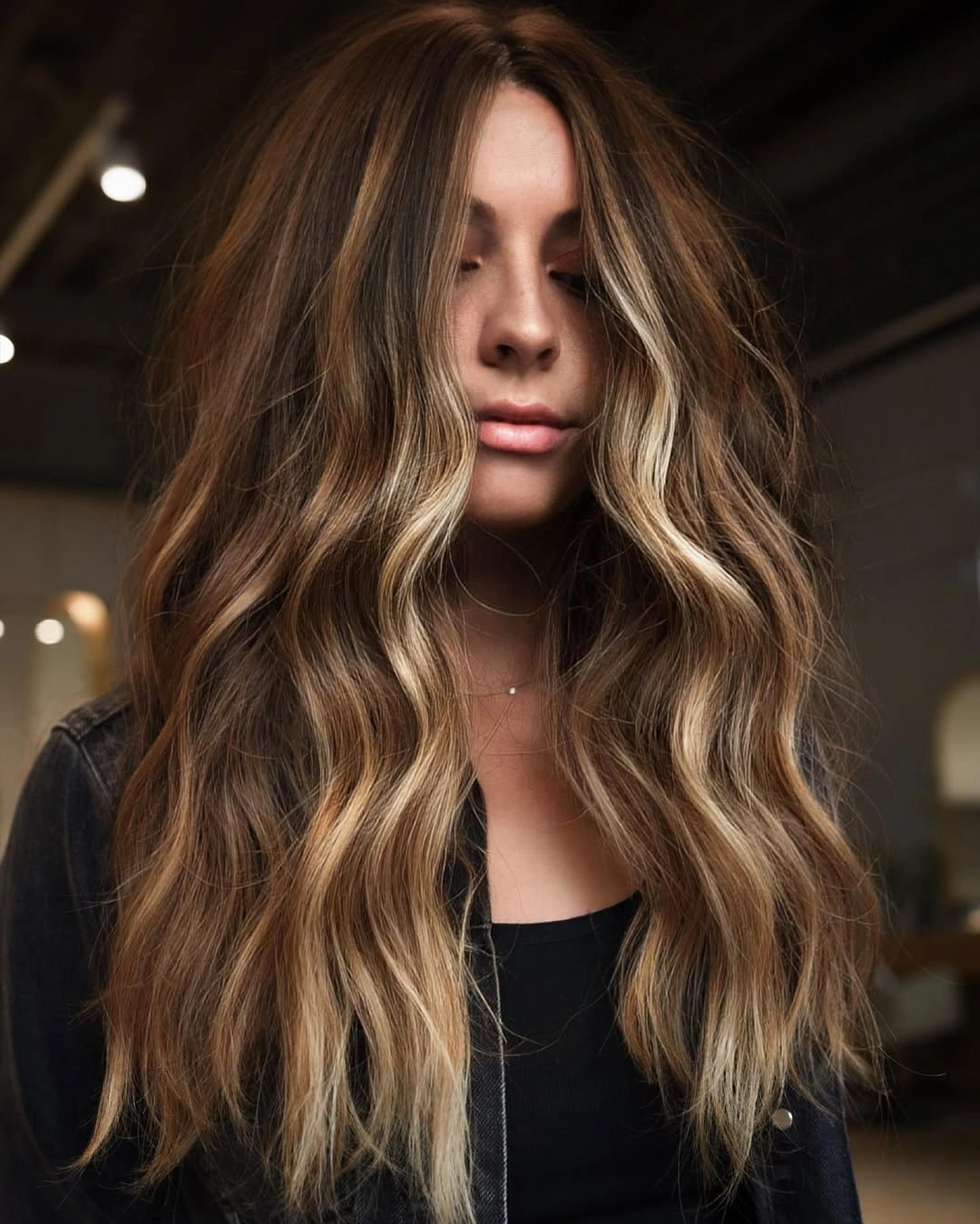
The brightest ribbons widen toward the face and ends, so the hair glows gradually rather than flipping into flat all-over blonde. I like that the darker base remains visible between the warm pieces, because that prevents the color from becoming syrupy. Still, the reader should ask how golden she wants winter hair to feel before it loses edge.
The risk is not that the color is wrong, but that it is almost too agreeable. A stronger brown pocket or slightly cooler ribbon would make the same idea less predictable.
Brunette Waves With Glimpses Of Heat
For brunettes who want trendy winter hair color ideas without giving up the dark field, this half-up look has a pleasing flicker. Deep brown or black remains dominant, while narrow copper, auburn and beige-blonde sections appear near the side lengths and lower waves. The partial updo lets the streaks peek out instead of taking over.
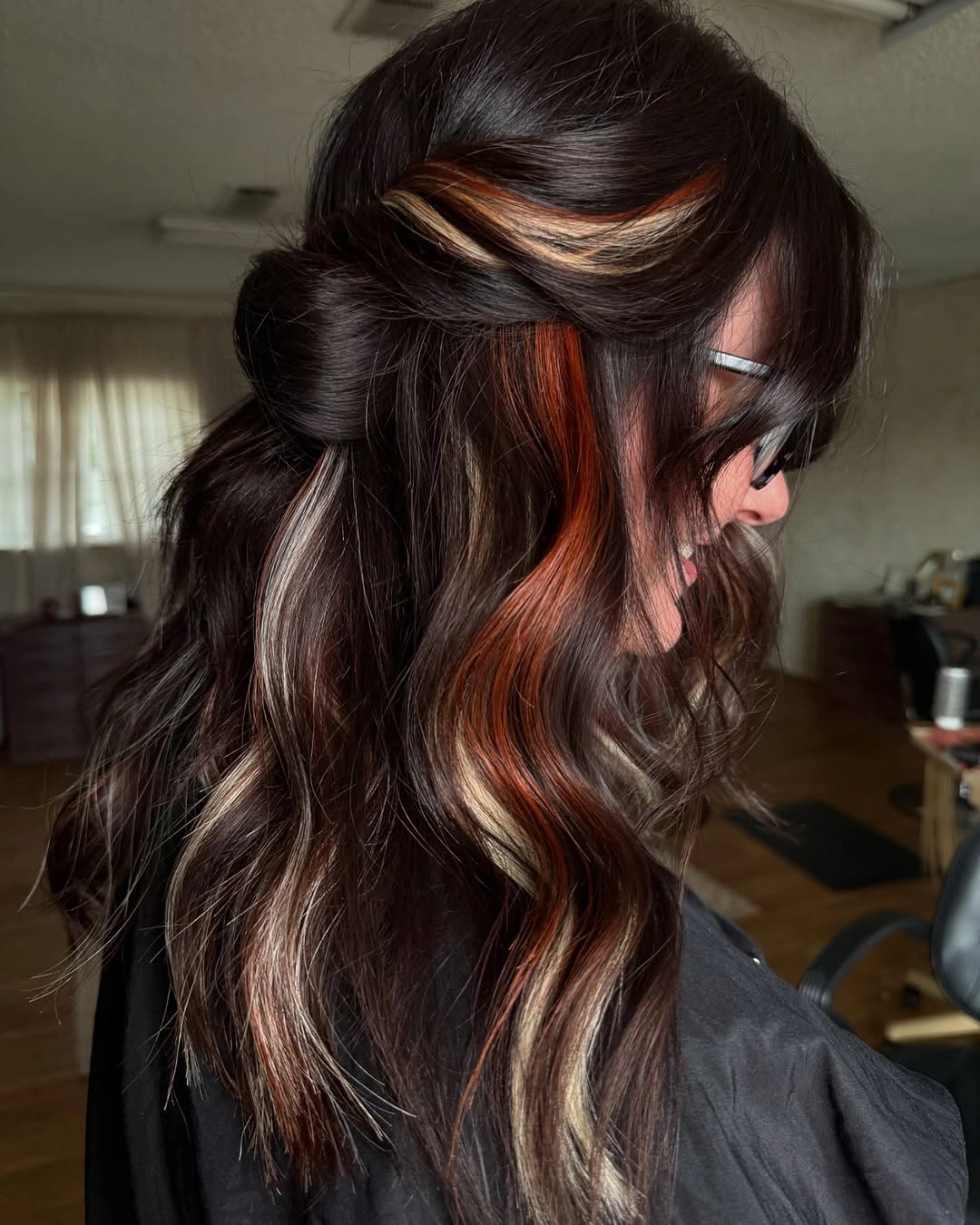
I like the scattered warmth because it feels less formal than a matched money piece, but it also has to be handled with restraint. Copper and blonde sitting beside each other can look lively, or they can start competing for attention. The darker field is what keeps this from feeling busy, so I would not lighten too much of the base.
The choice is whether the reader wants glimpses or a full declaration. This color is strongest when the warm pieces feel discovered, not evenly distributed for fairness.
Classic Creamy Blonde With A Quiet Spine
This final blonde is classic, but classic should not be used as a polite synonym for dull. The light beige-to-creamy color flows from subtle darker roots into long glossy waves, with soft face-framing pieces and warmer lowlights giving the pale field a little life. It is the tonal blonde version of trendy winter hair color ideas, not the dramatic one.
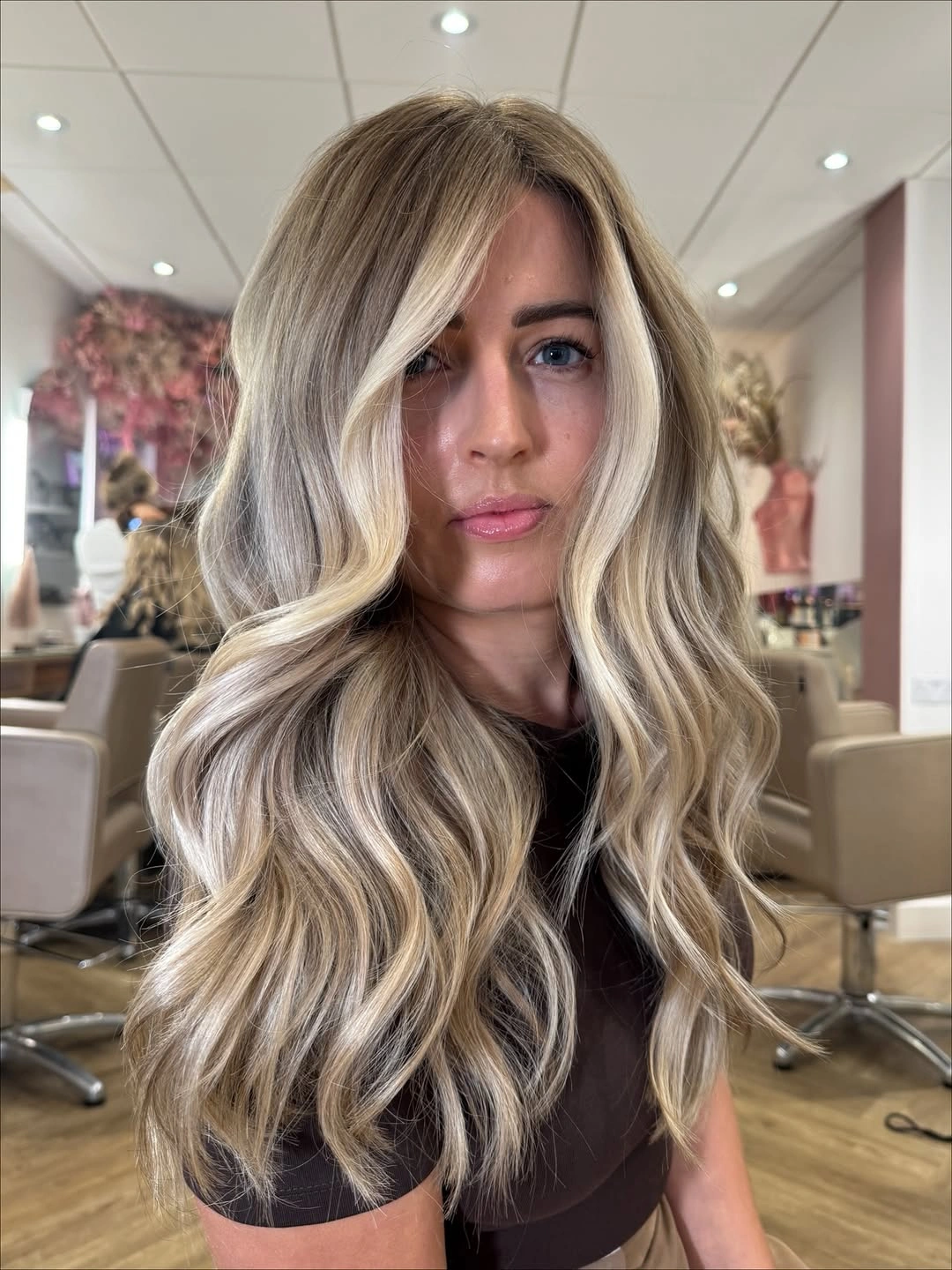
The root depth is doing quiet structural work, giving the blonde a starting point and keeping the length from becoming a pale curtain. I like the broad luminous field, but I would be wary of removing every darker note in pursuit of brightness. The color needs those small interruptions to keep its smoothness from becoming generic.
The remaining choice is whether the reader wants blonde to be the whole statement or the base for a sharper accent. This version chooses the first path, and it only works if that calm finish feels complete.