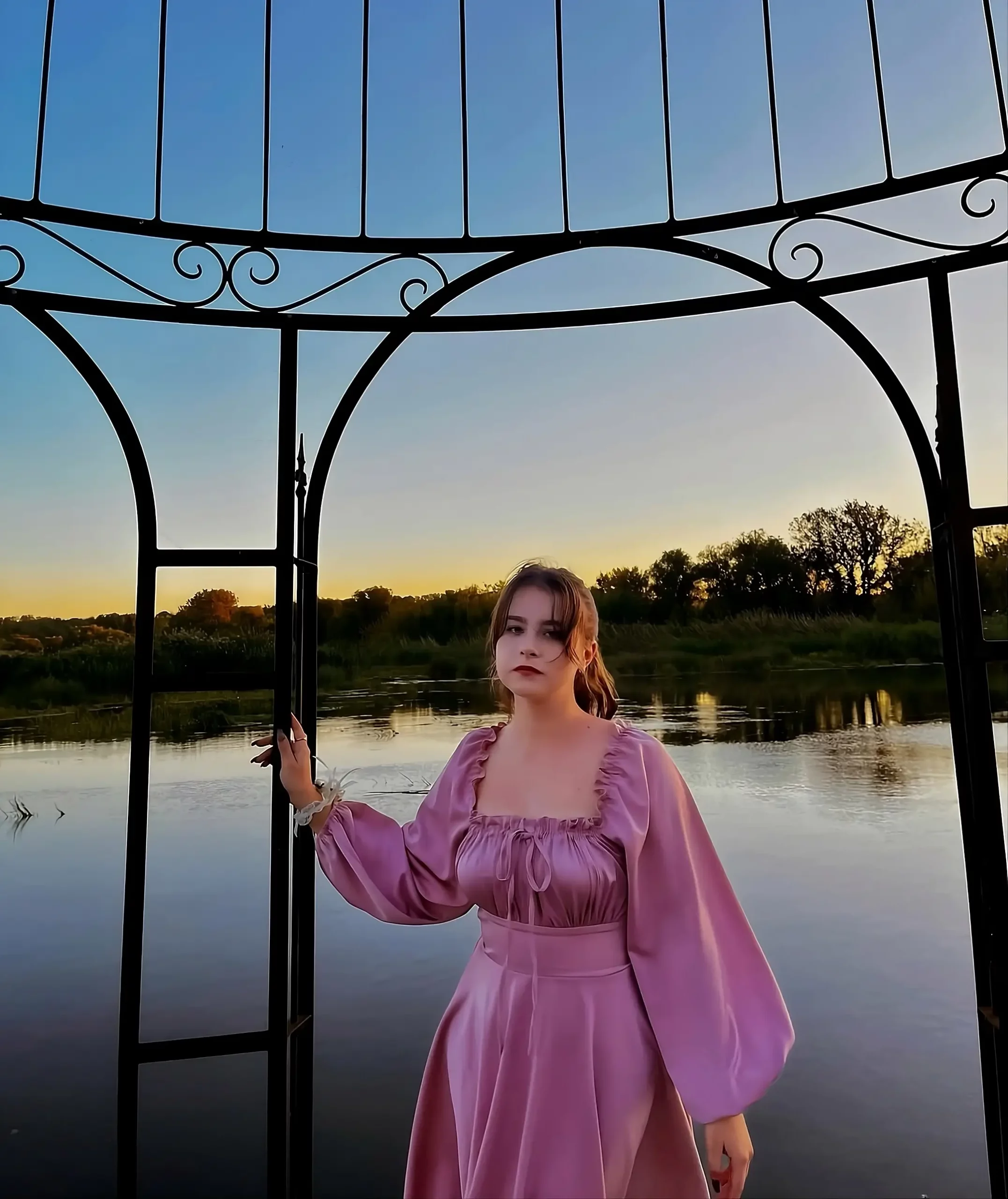
Trendy haircuts 2027 works best here as an editorial label for comparing shape, not as proof that any one cut is rising, forecasted, or universally current. Across the full 23-image collection, the useful story is visual: cropped sides beside blunt fringe, shaggy crown lift above longer napes, curtain bangs opening into medium layers, and long cuts shaped by tiered ends.
The collection gives readers a way to compare haircuts by what can actually be seen – length, perimeter, parting, bangs, side pieces, back shape, volume placement, and how layers move from the face toward the ends. Some cuts read compact and graphic, while others stay soft, long, and blended, so the strongest takeaway is how small changes in fringe, nape, and face framing alter the whole silhouette.
Layered Medium Shag With Piecey Short Fringe
This look shows a medium-brown cut in side profile, with a short textured fringe at the forehead and pieces that skim around the ear before dropping into a longer nape. The shape reads shaggy or wolf-like, but the safest description is a medium layered haircut with a clear short-to-long build. Its place among trendy haircuts 2027 comes from visible structure, especially the contrast between the lifted crown area and the looser length at the back.
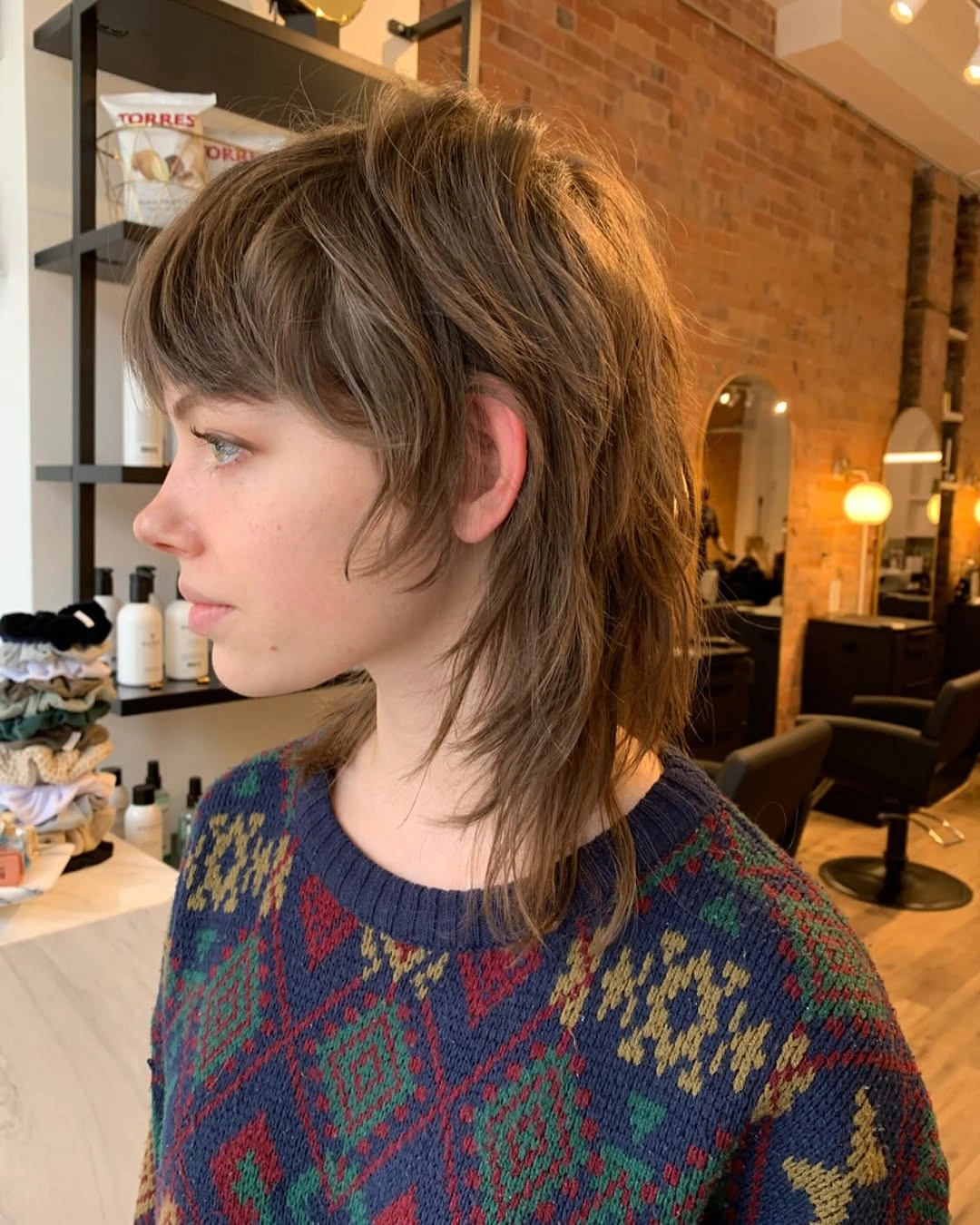
The side angle makes the haircut easy to read because the shorter top and face pieces are not hidden by a front-facing pose. The fringe sits above the eye line, while the side sections break into thinner pieces near the cheek and ear. At the bottom, the longer layers flip outward, giving the medium hair a more active outline than a single-length cut would have.
The useful idea here is crown-to-nape contrast: the haircut keeps weight and motion high, then lets the back length extend into softer flipped ends. It is a strong medium hair reference for readers who want to compare layered silhouettes without relying on a precise salon label.
Close Dark Crop With Short Blunt Bangs
This look moves to the most compact shape in this opening group, with very short dark hair, close sides, an exposed ear, and a short fringe that creates a firm front edge. The top is not flat, because small separated pieces give it visible texture and lift. The sides and nape appear closely cut, but the image does not settle a specific fade category, so close taper is safer than calling it a definite low fade.
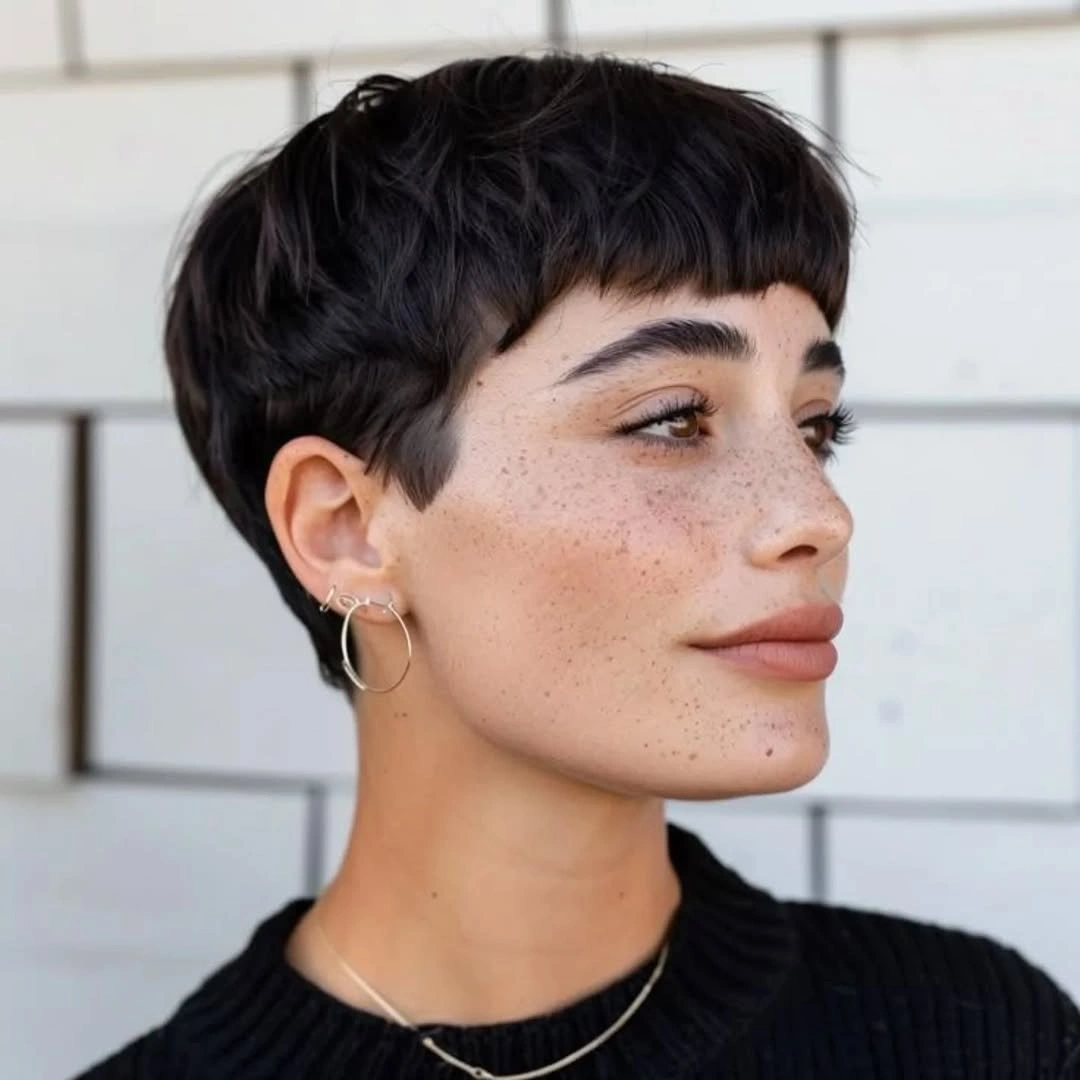
The haircut’s main strength is its tight outline. The sides sit close to the head, the nape is cropped short, and the small blunt bangs bring attention to the front boundary rather than to length. Compared with the longer layered cuts around it, this style uses less visible perimeter and more emphasis on the relationship between the textured top and the clean side line.
This section should carry the article’s compact silhouette argument. It shows how a short crop can feel precise through the bang line, exposed ear, and close nape without needing claims about who it suits or how it was cut.
Dark Shoulder Shag With Curtain Bangs
This look shows a dark shoulder-length shag built around long parted curtain bangs and a soft, face-covering front. The sides flare outward, then the lower length falls into loose waves around the shoulders. This is a useful medium hair example because the shape is not only about length; the haircut depends on how the bangs, cheek-level pieces, and wavy ends widen and soften the outline.

The curtain bangs create the first layer of movement by opening near the center and blending into longer pieces at the sides. Those side pieces add visible width around the cheek and jaw area before the cut narrows again into the lower waves. The overall effect is less compact than the cropped style and less long and polished than the earlier long style, giving the collection an airy shag direction between short crop and long layers.
The distinct point here is softness through separation. The haircut uses bangs and side layers to build shape around the face, while the shoulder-length waves keep the bottom loose instead of blunt.
Long Brown Layers With Center-Part Framing
This look introduces a longer brown haircut with a center part, a smooth crown, and face-framing pieces that fall from the cheek area toward the collarbone. The length remains the dominant feature, but the front does not hang as one flat sheet. Instead, the visible layers curve gently into the rest of the hair, giving the long hair a shaped front while keeping the overall outline blended.
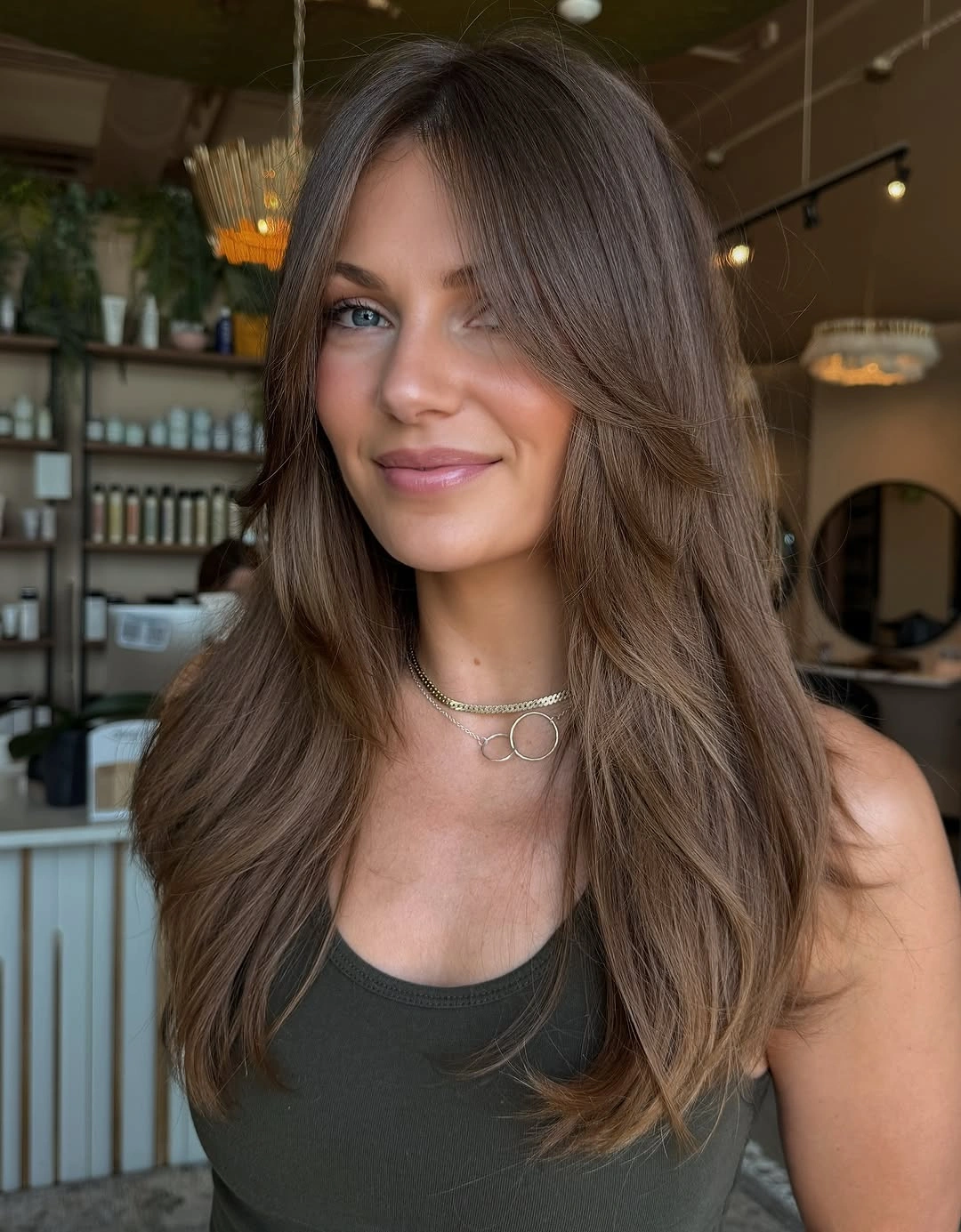
This cut is quieter than the shag examples because the layers are softer and less broken apart. The crown looks smooth, the parting is balanced, and the ends show loose movement without strong choppiness. For readers comparing long hair in this collection, this look is important because it shows how subtle face framing can change the front view while leaving the chest-length body intact.
The haircut’s main lesson is restraint. It keeps the long perimeter visually central, then uses cheek-to-collarbone pieces to add shape without turning the style into a shag or heavily tiered cut.
Long Brunette Layers With Rounded Front Pieces
This look shows long brunette hair with a center part, rounded front pieces, and curled C-shaped ends that make the layer tiers easier to see. The front layers open away from the face, then connect into a chest-length perimeter that still reads long rather than medium. A cautious butterfly cut reference can fit here because the visible shape relies on cascading front pieces and rounded movement, but the naming should stay tied to what is shown.
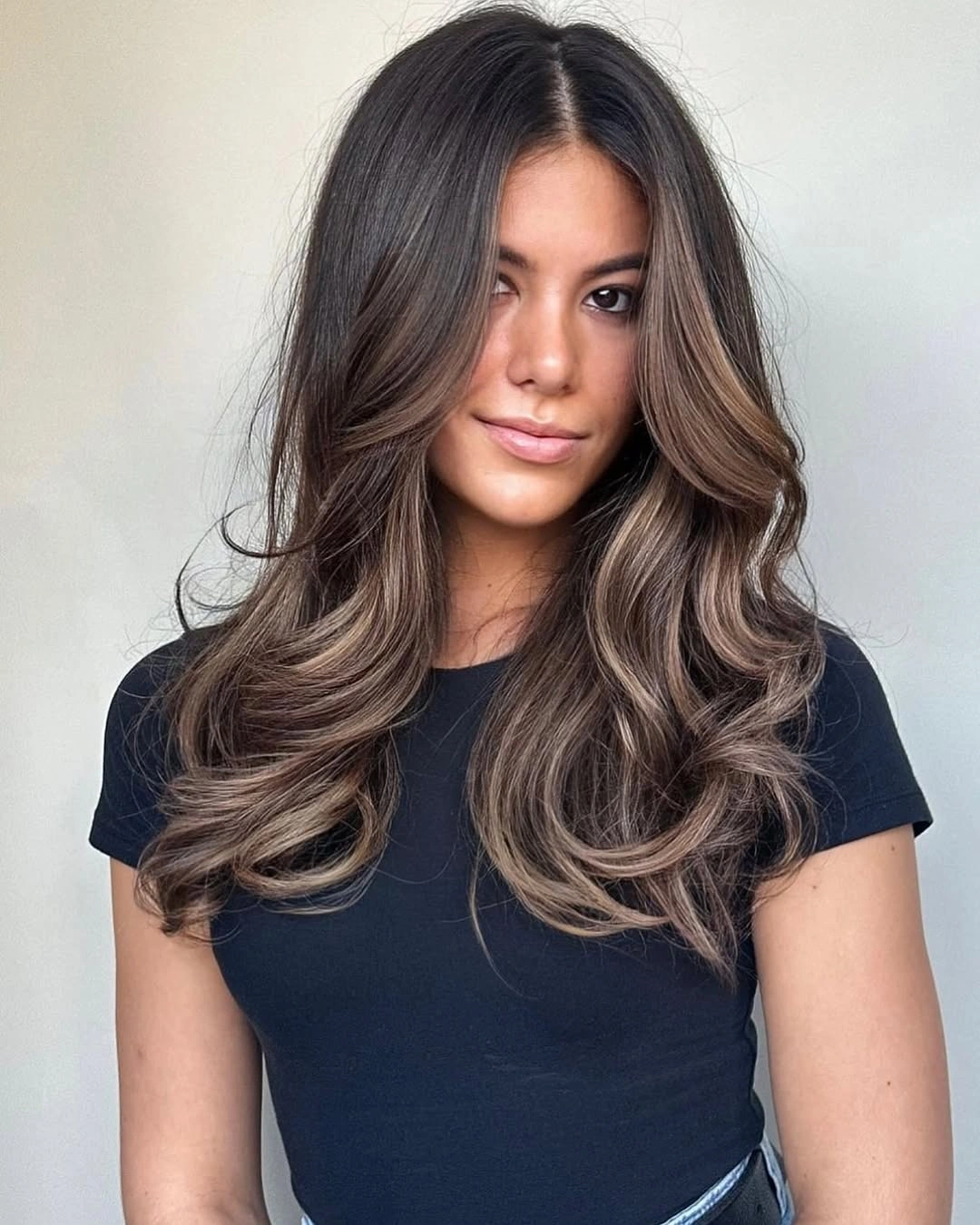
The strongest visual relationship is between lift near the face and length at the bottom. The front pieces curve in larger arcs, while the lower ends curl enough to reveal separate tiers rather than one straight edge. Compared with the earlier look, this haircut has more pronounced layering and more rounded volume, yet it still keeps the long perimeter as the anchor.
This section owns the first clear long cascading layer argument in the article. The haircut shows how rounded front pieces and curled ends can make long hair look more dimensional without needing unsupported claims about technique, density, or trend status.
Medium Wavy Shag With Wispy Curtain Bangs
This look shows medium-long dark hair with a wispy parted fringe that opens softly near the center and blends into layered side pieces. The crown has gentle lift rather than a sharply stacked shape, and the cheek-level volume connects into loose waves through the lower length. As a medium hair reference, it adds a lighter curtain bangs direction without repeating the stronger shag contrast from the earlier shag or the long cut just described.
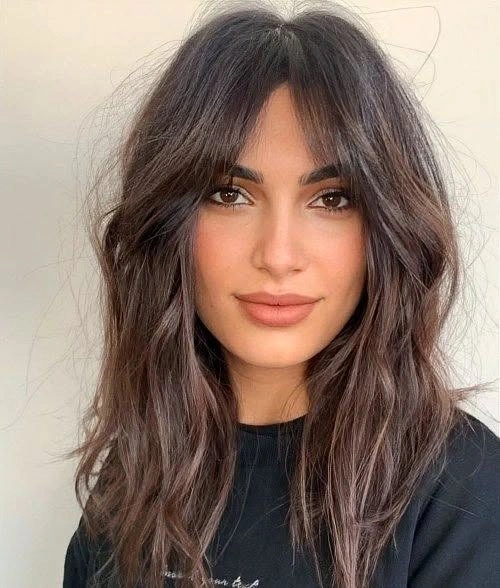
The fringe is the main difference here because it looks airy and separated, not heavy or blunt. Those front pieces do not stop as a hard line; they drift into the side layers and help the haircut feel continuous from the brow area down toward the shoulders. The waves through the lower half keep the perimeter soft, so the shape reads as layered movement instead of a single rounded outline.
This section’s distinct idea is connection. The haircut shows how wispy curtain bangs can become part of a shag-like shape when the side layers and loose waves keep carrying the same soft separation downward.
Long Black Layers With Full Wispy Bangs
This look shifts into long black hair with a full wispy bang line across the forehead, rounded side layers, and curled lower lengths. The dark outline makes the front fringe and the longer body easy to separate visually, even though the whole haircut stays cohesive. For long hair, the useful comparison is how a fuller bang changes the face-side structure while the layered length continues below.
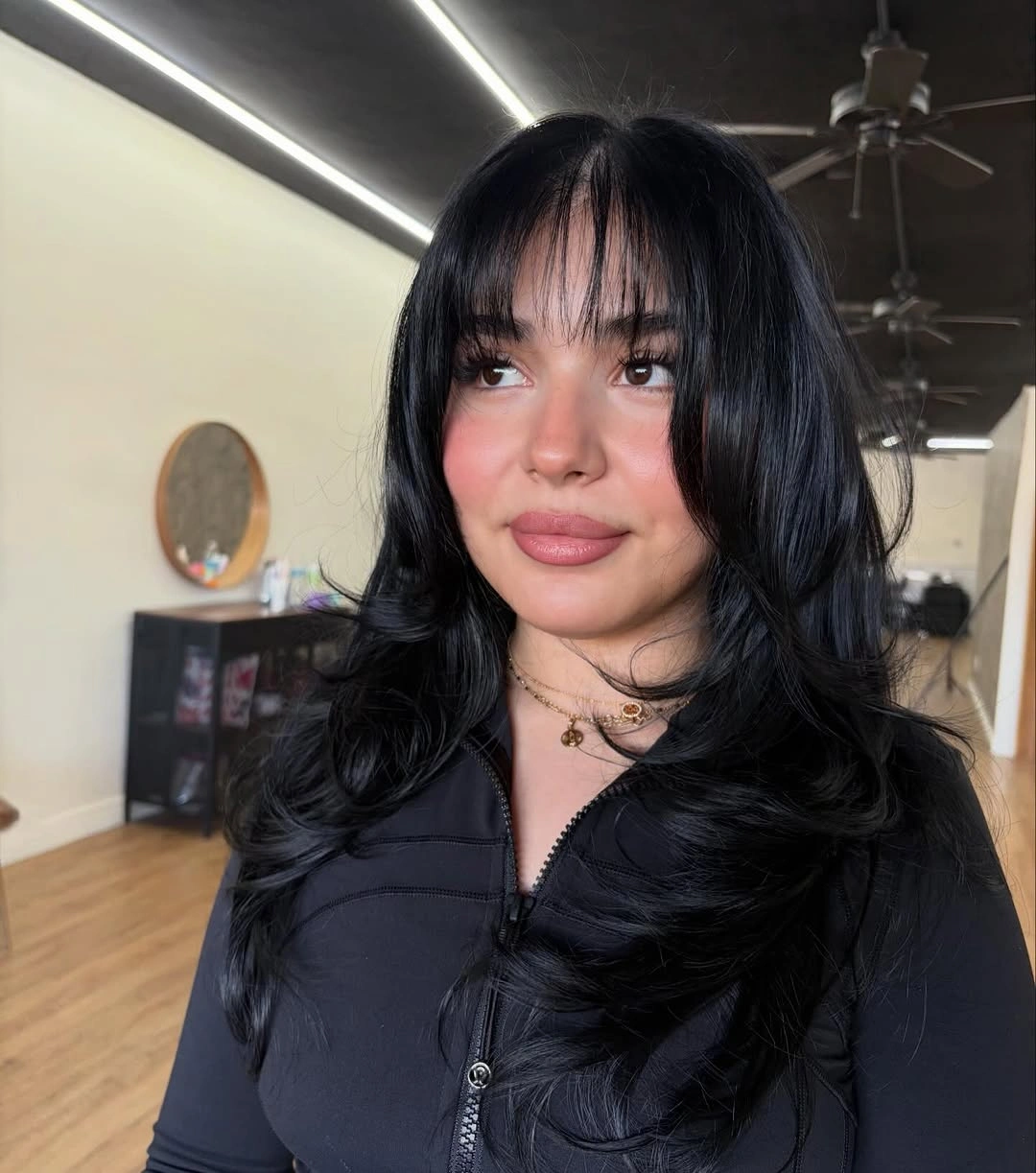
The bangs sit as the strongest front detail, but they are light enough to show separation rather than forming a dense solid panel. On both sides, the layers curve outward and then drop into longer sections that curl near the ends. This gives the haircut two visible movements at once: a short, soft horizontal fringe at the top and a longer, rounded cascade through the sides and bottom.
The point here is full fringe against length. This look keeps the long haircut visibly layered, while the bangs create a clear front boundary that distinguishes it from the center-parted long cuts before it.
Long Side-Swept Layers With Curled Ends
This look presents a long black cut from the side, with a heavy side-swept front section that falls diagonally and partly covers the face. The rest of the haircut moves into cascading layers, with curved lower sections and curled-under ends that make the long shape feel tiered. A cautious butterfly cut reference can fit only as a visual comparison, because the visible idea is long layers opening from the front into a larger rounded fall.
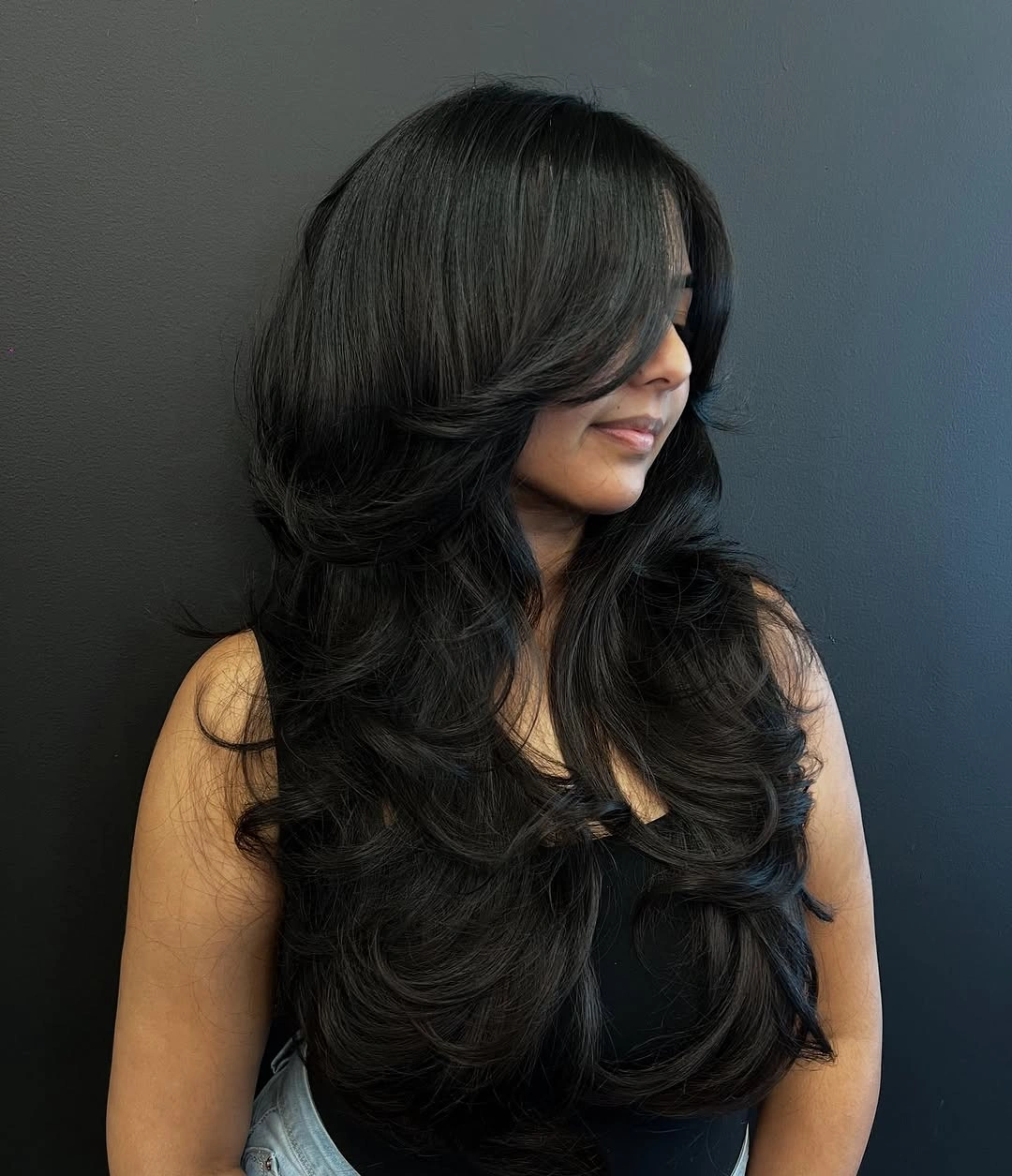
The side-swept front is what controls the silhouette. Instead of a balanced center opening, the front hair drops in one heavier diagonal panel, then blends into layered volume around the middle of the cut. The lower lengths curl under and outward in places, which helps the eye follow the separate steps from the face-framing area down to the long perimeter.
This image owns the diagonal front-fall argument in the sequence. It shows how long hair can be shaped less by a visible center part and more by one sweeping front section that leads into cascading layers.
Back-View Feathered Layers With Rounded Length
This look is shown from the back, making the architecture of the long haircut clearer than a front pose would. The dark hair falls into stacked feathered layers, with many ends flipping outward and creating visible horizontal tiers through the middle and lower sections. The perimeter stays long and rounded, with a soft U-like or V-like impression rather than a blunt straight finish.
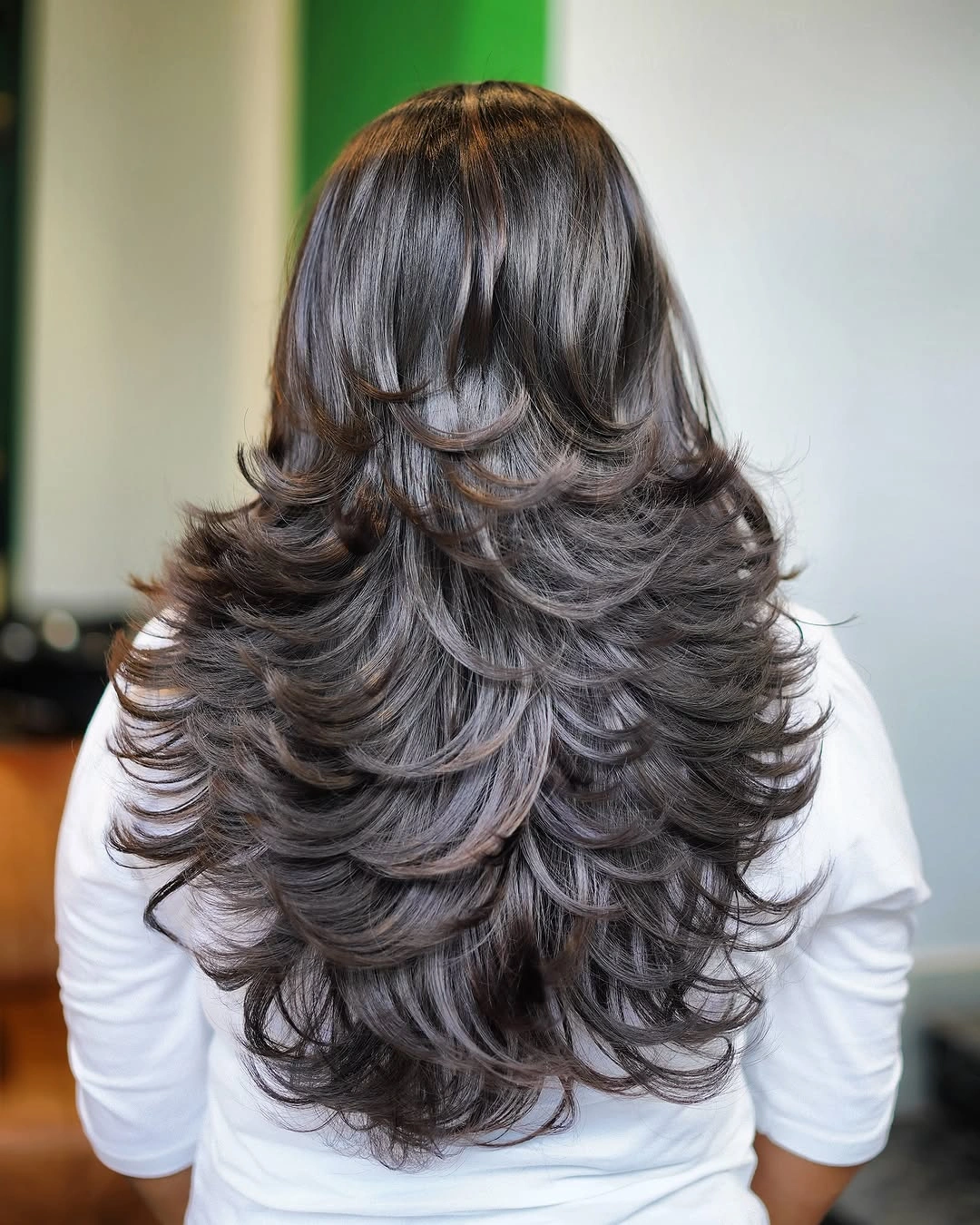
This back view matters because it shows how the layering continues across the whole head, not only around the face. Shorter tiers sit over longer ones, and the flipped tips make each layer edge easier to notice. The long hair still keeps its overall length, but the repeated curved ends prevent the back from reading as one flat sheet.
This section should carry the back-structure lesson. The haircut demonstrates how feathered layers can build movement through the rear view while preserving a long rounded perimeter.
Medium Wolf Shag With Longer Nape Layers
This look shows a medium dark shag or wolf-like cut in side profile, with a short fringe, rounded crown, cheek pieces, and a longer nape that drops past the shorter front shape. The top appears fuller in silhouette, while the lower back length is more separated and choppy. This is the strongest medium short-to-long disconnection so far because the contrast between the cropped front area and the extended nape is especially visible from the side.
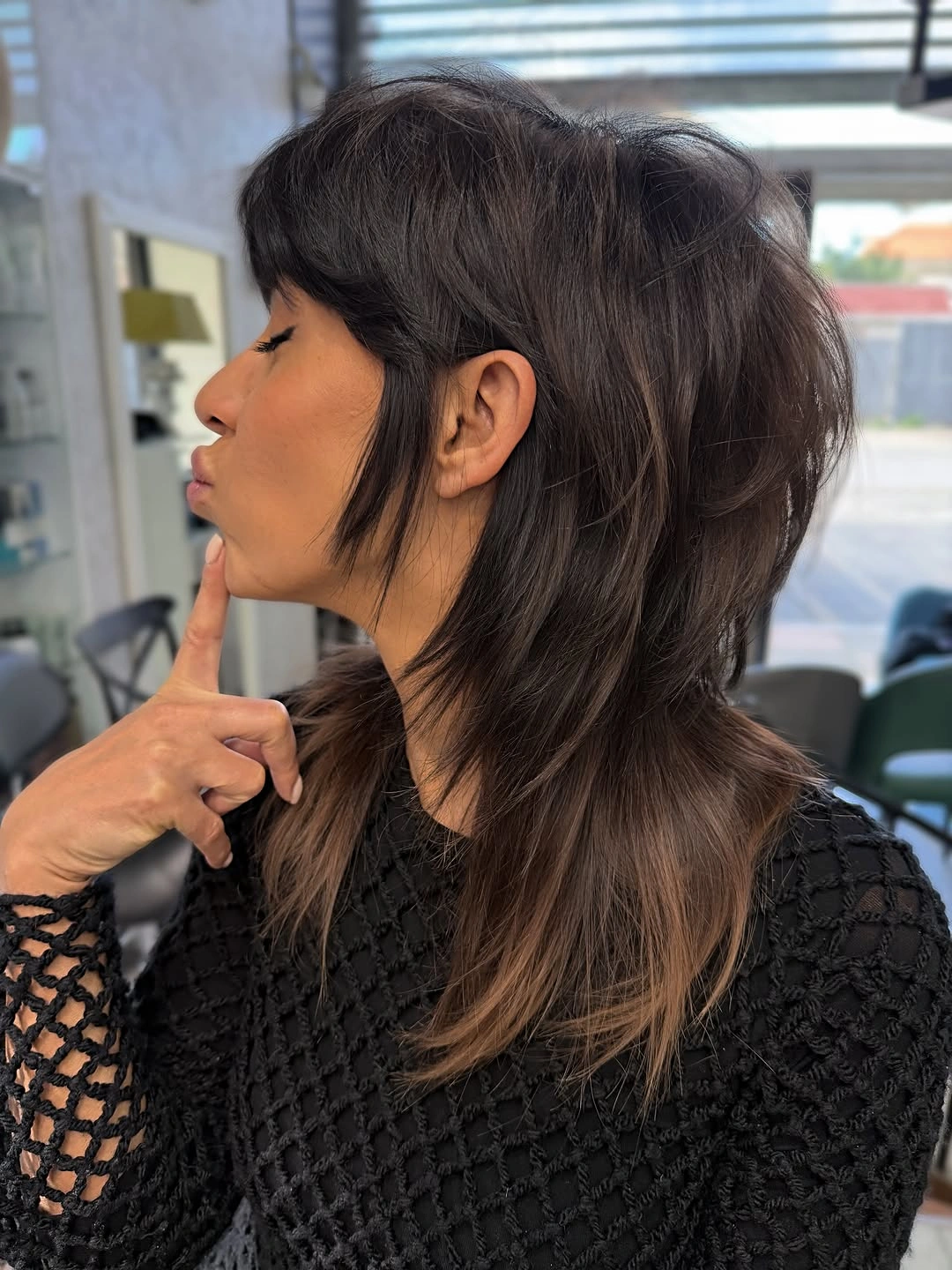
The fringe and crown build the compact upper shape first. From there, the cheek pieces create a bridge into the side layers, but the back does not stay rounded like a bob or lob; it lengthens into a more uneven lower section. That relationship makes the haircut feel sharper than the soft curtain-bang shags, because the viewer can see the front, crown, and nape working as separate but connected zones.
The useful idea here is disconnection with a readable profile. This look keeps medium hair in the article, but it pushes the shape toward a shag by letting the short fringe and rounded crown contrast with the longer, choppier back.
Collarbone Blonde Lob With Soft Center Layers
This look brings the article into a more restrained medium hair direction, with a collarbone-length lob, a center part, and smooth upper sections that fall with only slight face framing. The ends look softly waved and somewhat blunt in their overall line, even though the front pieces have enough movement to avoid a rigid block. Its value is the quieter construction: length, parting, and perimeter do most of the work.
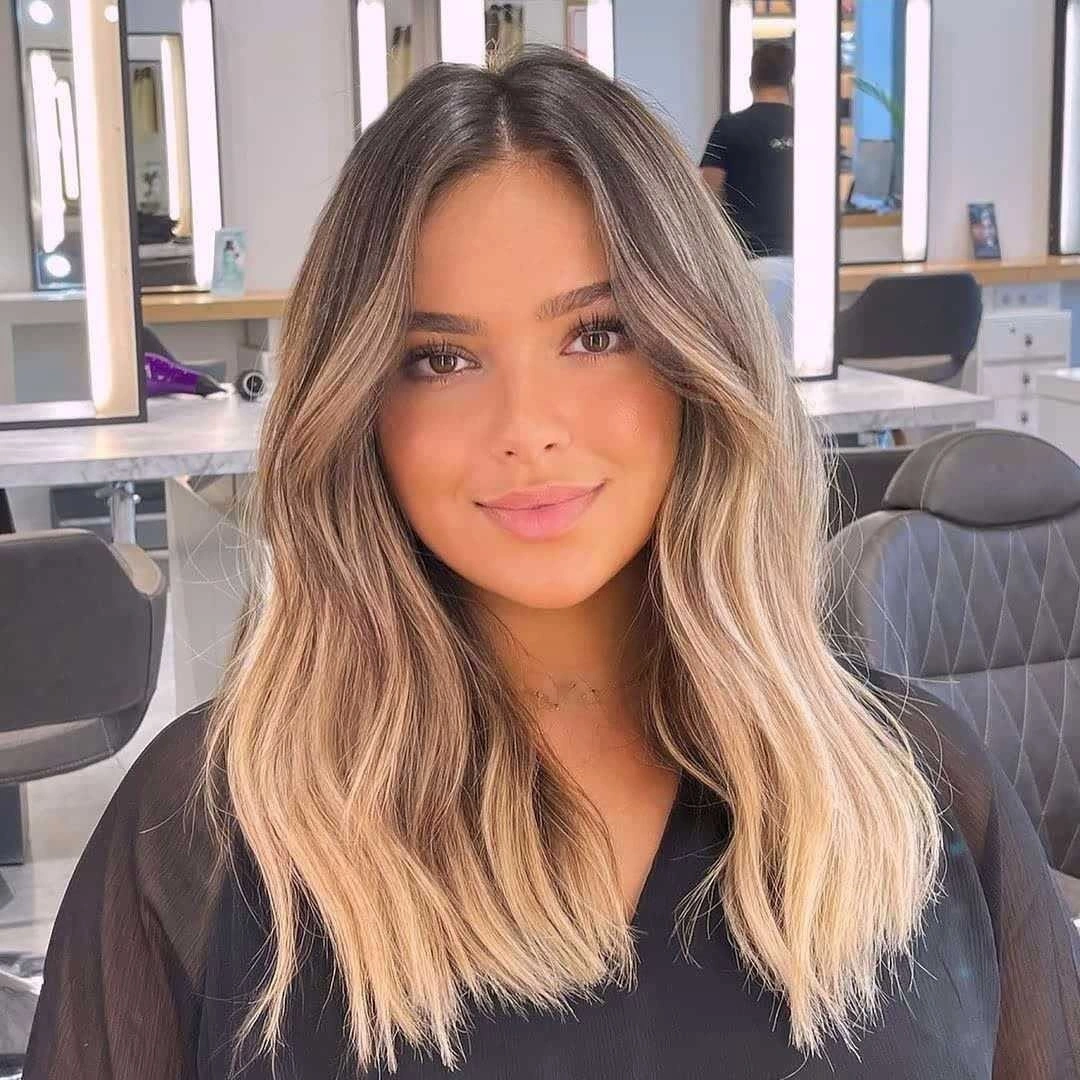
The center part keeps both sides visually balanced, and the haircut does not depend on heavy bangs or dramatic crown volume. The face-framing pieces are subtle, sitting close to the front rather than sweeping outward in large arcs. At the bottom, the collarbone-length edge defines the lob clearly, making it distinct from both the longer layered cuts and the shorter bob shape that follows.
The useful comparison here is simplicity. This look shows how medium hair can look shaped through a clean part, a controlled collarbone perimeter, and light front movement without needing a shaggy or strongly tiered outline.
Short Rounded Bob With Wispy Curtain Bangs
This look shows a short blonde bob with wispy parted bangs, rounded side volume, and ends that curl under and outward around the neck. The haircut sits higher than a lob, so the neck-length perimeter becomes a key part of its identity. The bangs soften the top line, while the rounded sides give the shape a compact, buoyant outline without needing a hard blunt edge.
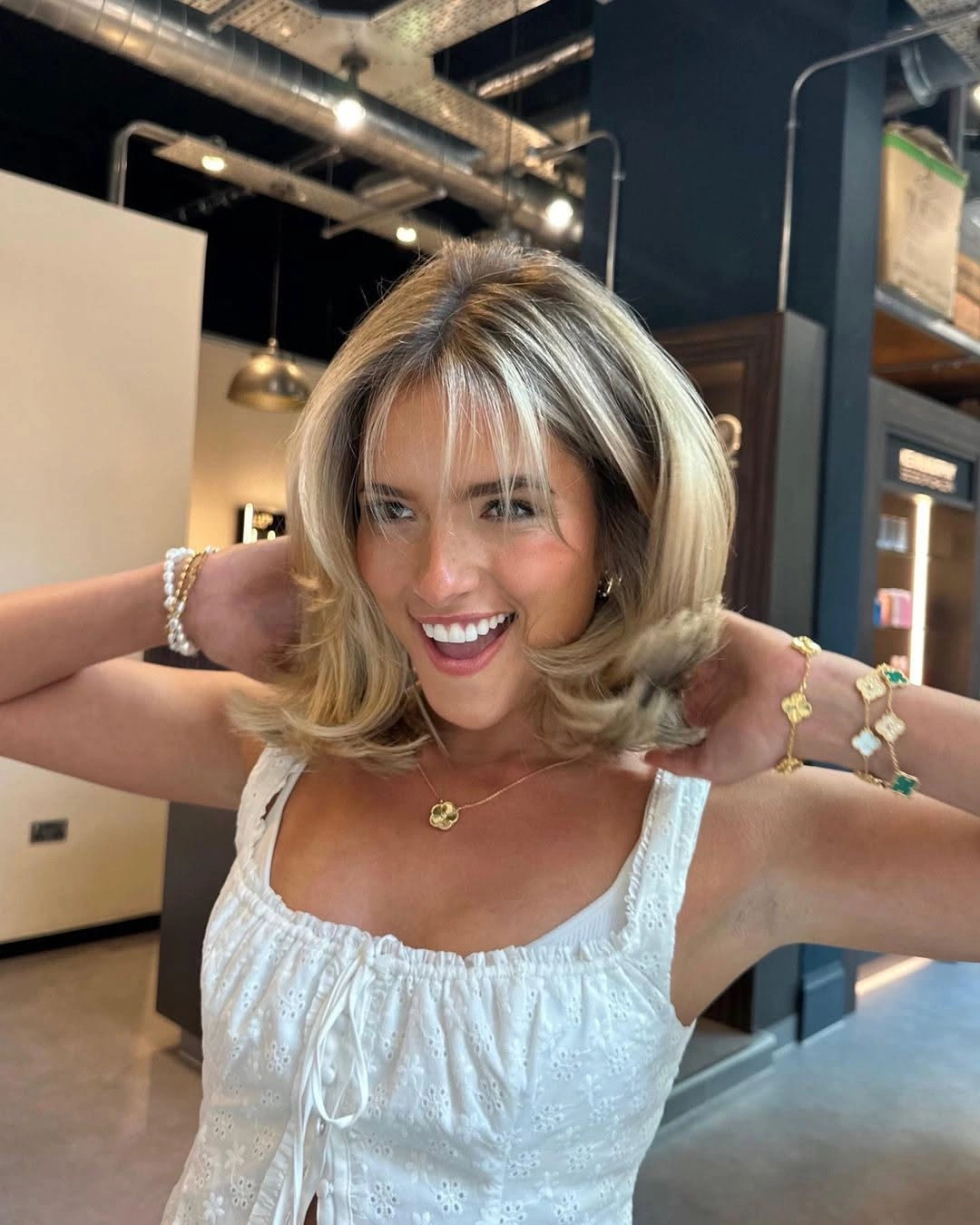
The parted fringe is light and separated, which keeps the front from feeling closed off. It blends into the side sections, where the hair curves around the cheek and then turns under near the ends. Because the length stops around the neck instead of reaching the collarbone, this section can clearly separate the short bob idea from the medium lob described just above.
The section’s main idea is rounded short shape with a softened front. This look shows how curtain bangs can sit on a bob-scale haircut, creating movement at the forehead while the curled-under ends preserve the compact bob outline.
Shoulder Lob With Heavy Curtain Fringe
This look presents a dark shoulder-length bob or lob from the side, with a heavy curtain fringe and rounded upper volume. The side angle makes the front section easy to read because the fringe falls in a broad panel before connecting into the rest of the haircut. At the bottom, the shoulder-level ends flip outward, giving the perimeter more activity than a straight blunt finish.
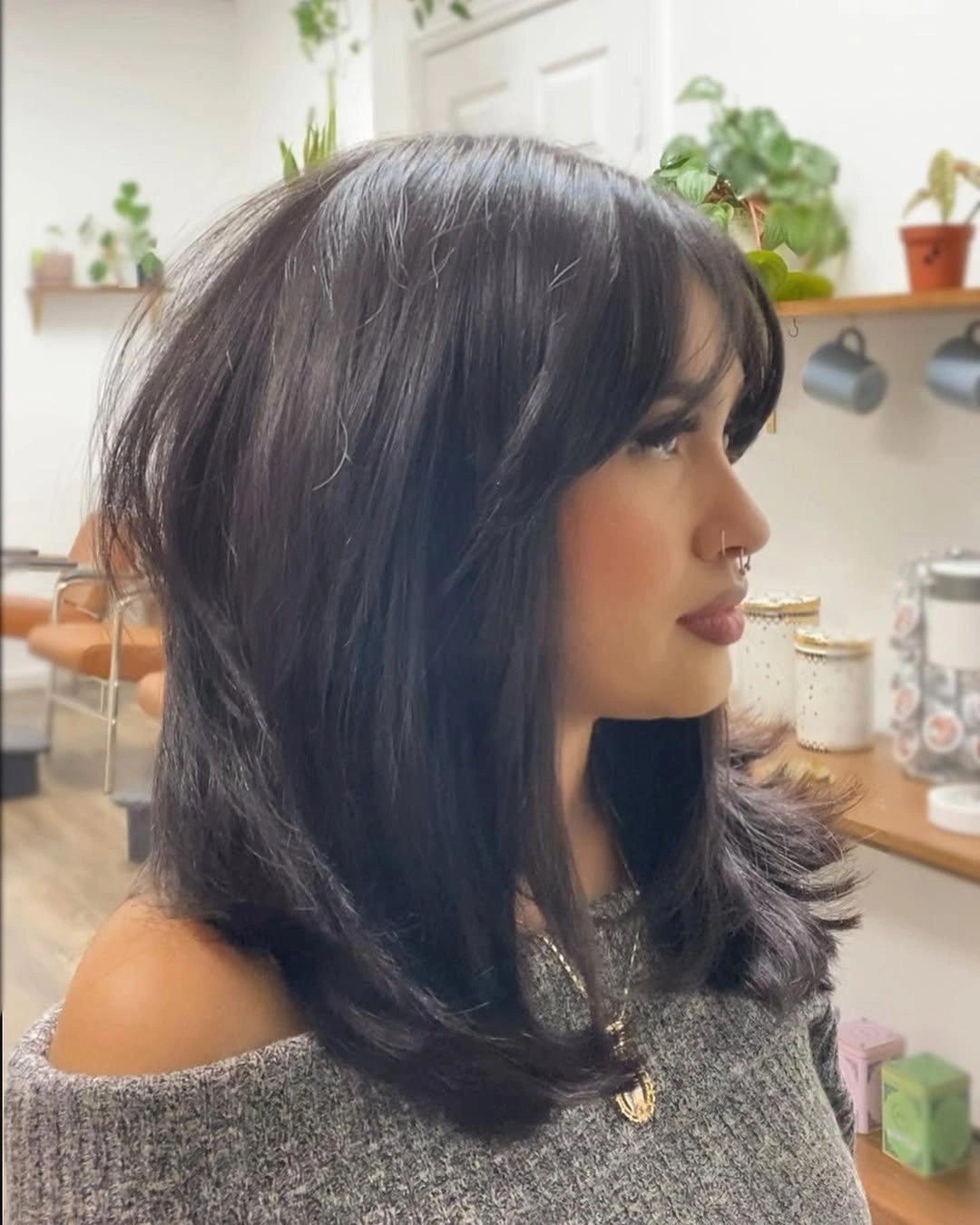
This cut sits between bob structure and shag movement. The overall length is controlled and shoulder-skimming, but the upper volume and flipped ends stop it from reading as a simple one-length lob. The curtain fringe adds weight near the front, then the side layers carry that motion down toward the shoulder, creating a shape that feels rounded, lifted, and visibly layered.
The distinct lesson is that a bob or lob can borrow shag-like movement without becoming the strongest shag in the collection. This look uses side-view volume, a heavy front curtain, and an active shoulder flip to bridge those two haircut languages.
Long Brunette Layers With Voluminous Curtain Pieces
This look moves back into long hair with a center-ish part, large face-framing curtain layers, and a chest-length cascade. The front pieces are the dominant feature because they sweep away from the face in broad curves before joining the longer body. The lower ends curl enough to show stacked layers, making this one of the most dramatic long-layer shapes in this middle range.
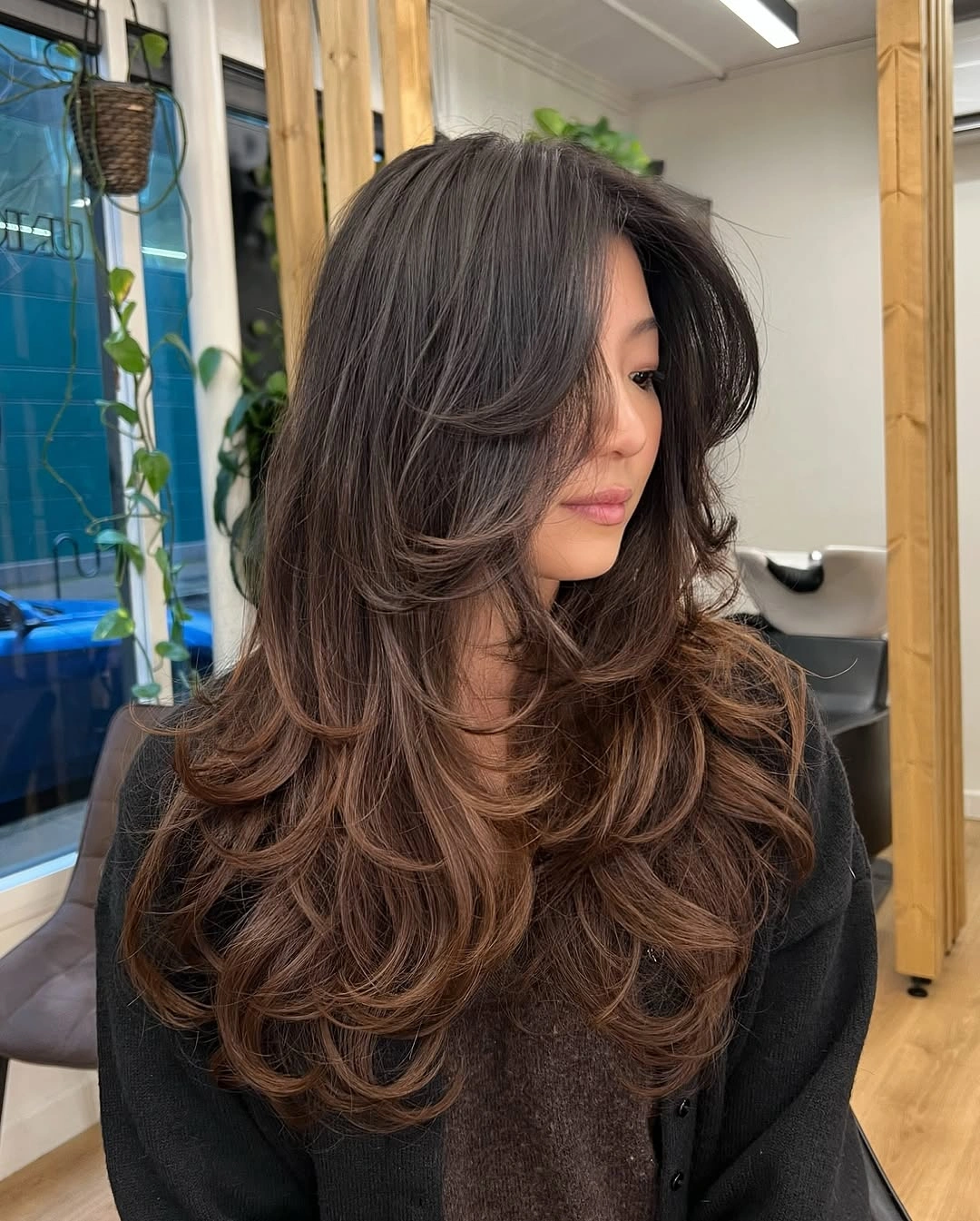
A cautious butterfly cut reference belongs here only as a visual comparison, since the image clearly shows long, curved face pieces and tiered movement rather than a single flat length. The upper layers frame the face with volume, while the lower sections fall into repeated rounded curves across the chest. Even with that movement, the long perimeter remains visible, so the cut does not shift into medium hair.
This section owns the high-volume long-layer argument for this range. This look shows how large curtain pieces, stacked curves, and curled lower ends can make long hair read architectural while the extended bottom still anchors the silhouette.
Long Dark Layers With Heavy Curtain Bangs
This look shows a long dark cut with heavy parted curtain bangs, a sweeping face frame, flipped shoulder-level layers, and extended lower length. The front opening is important because the bangs split softly near the center, then curve into thicker side sections. This creates a fuller-looking long outline by visual shape, not by any claim about hair density or how the cut was made.
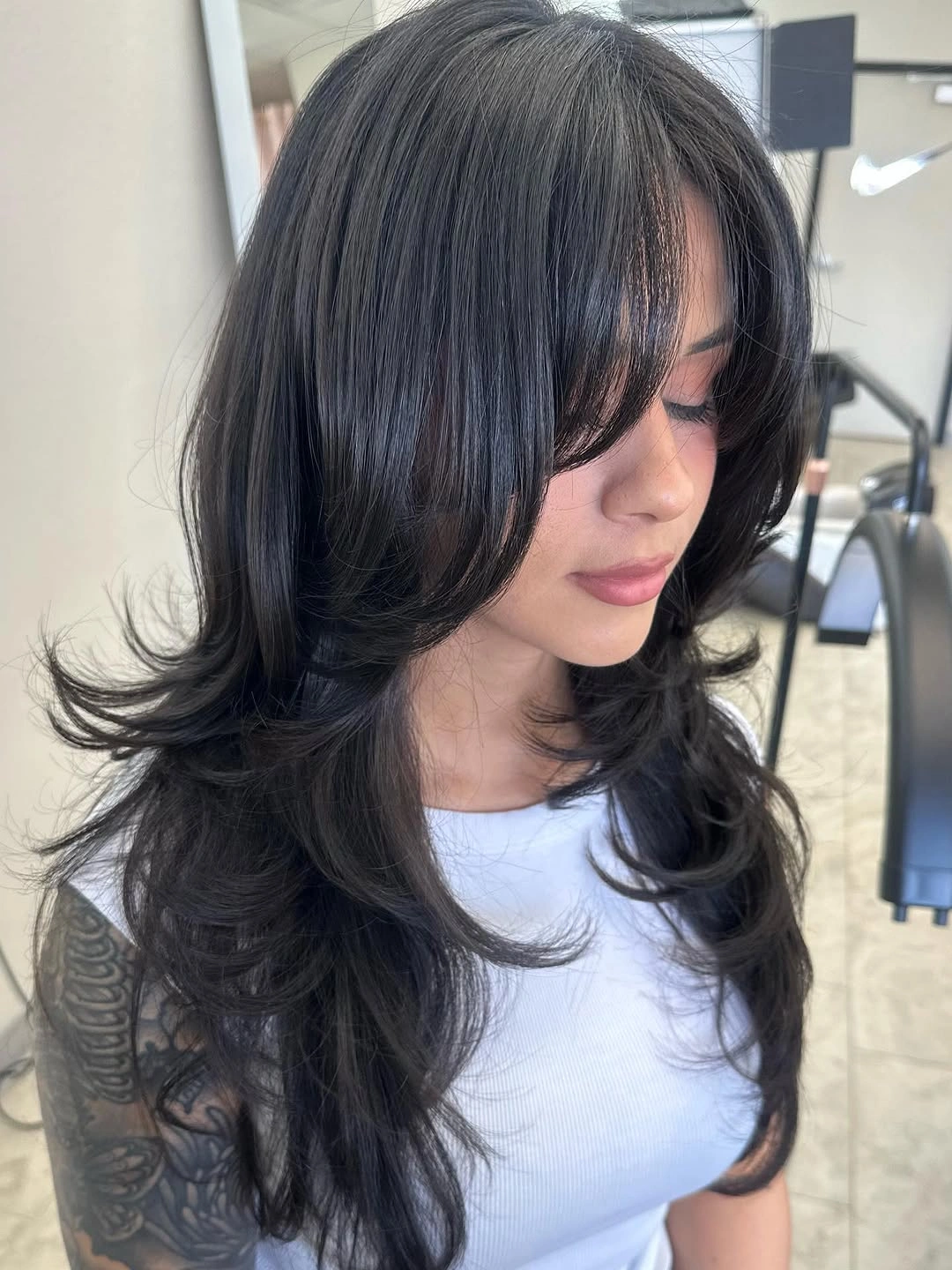
The face-framing layers move outward before blending into the longer body, so the eye follows a clear path from the bangs to the shoulders and then down into the remaining length. The flipped pieces around the shoulder add width and motion, while the lower length keeps the haircut grounded. Compared with the earlier look, this cut feels darker, heavier at the front, and more focused on the curtain-bang opening than on large cascading curves.
The useful distinction is balance. This look lets the heavy curtain bangs command the top and front, then uses longer lower sections to keep the haircut from becoming too compact or bob-like.
Blue-Black Mullet-Like Shag With Rounded Bangs
This look shows a black or blue-black side-profile cut with a rounded blunt bang arc, a full crown by silhouette, and a cropped-looking side that exposes the ear area before the hair drops into a longer layered nape. The shape can be described cautiously as a shaggy mullet-like haircut, because the visible contrast comes from a compact front and side beside extended back length. Its interest is the way the bang curve sets a clean front boundary while the nape keeps moving past the shoulder line.
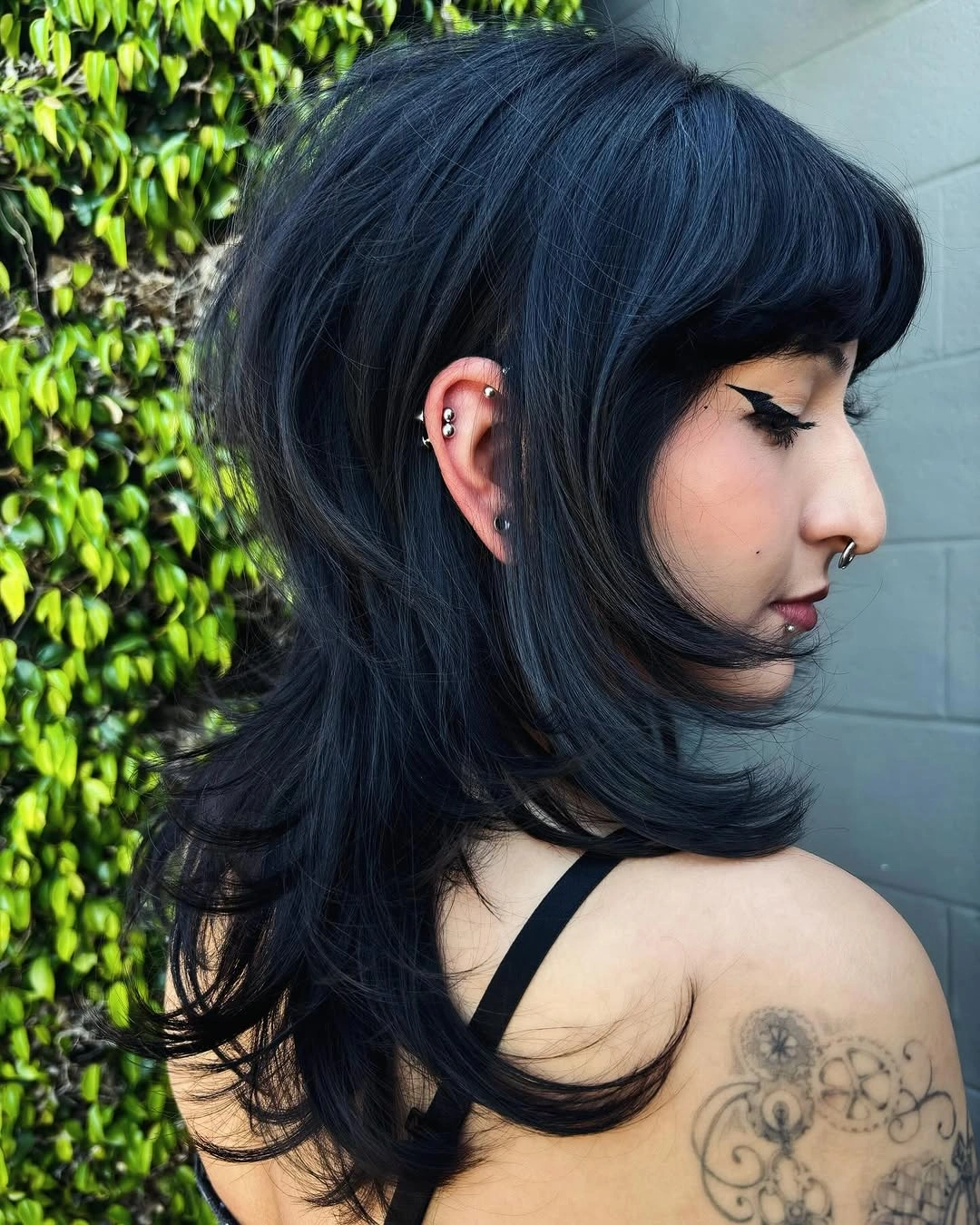
The profile makes the disconnect easy to see. The front reads rounded and controlled, especially where the bangs wrap across the forehead and into the side, while the back breaks into longer pieces below the shorter upper shape. That separation gives medium hair a sharper outline than a soft curtain cut, and it lets the eye compare the short front edge with the longer, looser nape layers.
The distinctive lesson is the bang-to-nape relationship: the cut starts with a clear curved front line, then changes direction into layered back length. It is a useful medium hair reference for readers comparing bold profile geometry without needing a definite technical haircut label.
Short Auburn Shag Bob With Flipped Nape
This look shows a short auburn or chestnut haircut with a swept fringe, layered crown, cheek-length front pieces, and a nape that flips outward instead of closing into a solid bob line. The shape sits in a medium-short range, with enough bob-like roundness to feel compact and enough broken layering to read as shaggy. The side view also makes the layered shell visible, because the crown, cheek area, and nape each carry a different curve.
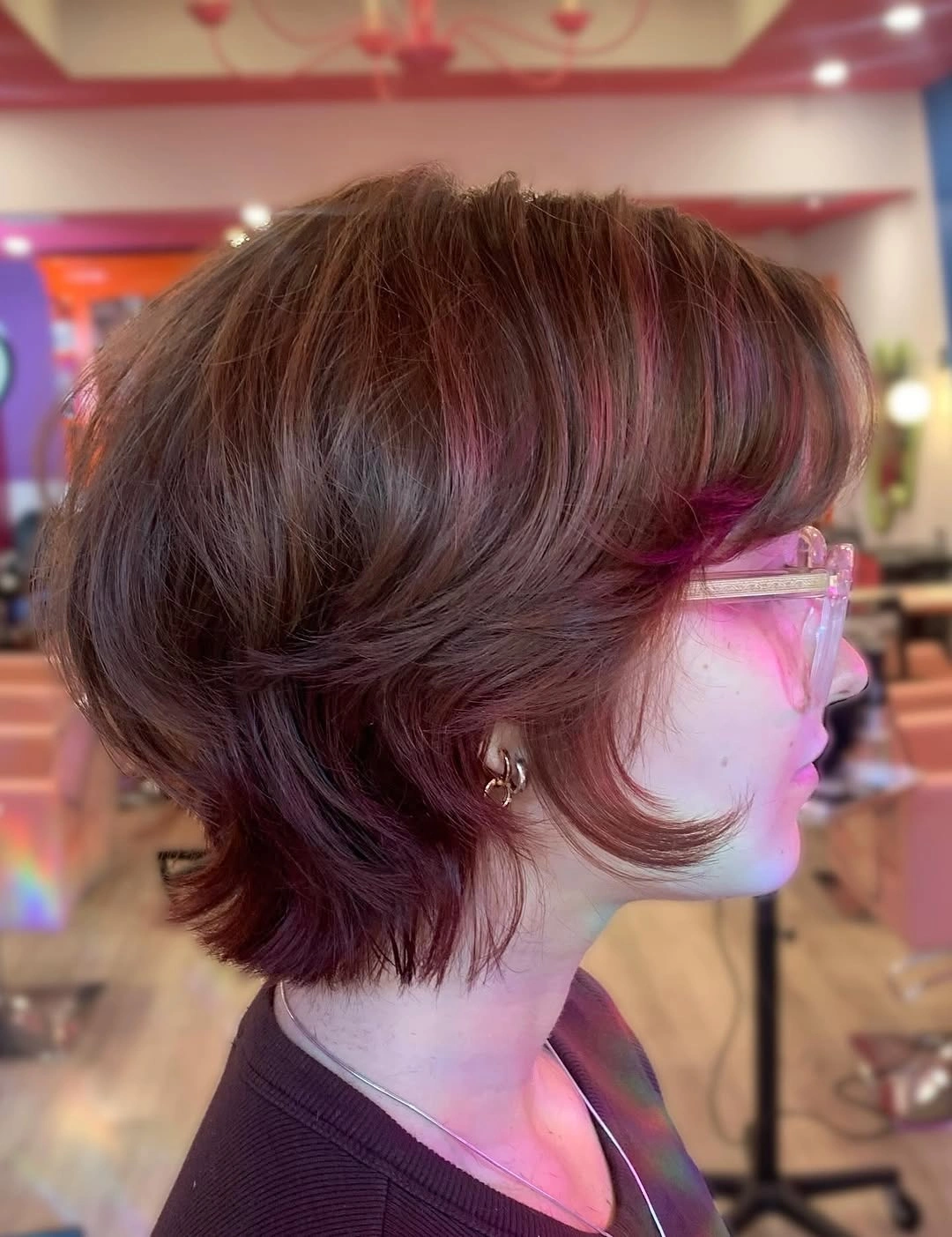
The front does not form a blunt bang across the forehead; it sweeps into the side and appears to merge with the cheek-length pieces. That makes the face-side section feel continuous with the rest of the cut, while the flipped nape interrupts the rounded bob shape from below. The result is a short shag direction where movement comes from the perimeter and profile, not from long length.
This image’s strongest contribution is the way the flipped nape breaks the bob block. This look keeps the cut short and rounded, then uses layered edges to make the outline feel lighter and more irregular.
Blonde Shoulder Shag With Curtain Bangs
This look shows a blonde shoulder-length shag with parted curtain bangs, a tousled crown, piecey side sections, and uneven flipped ends. The bangs open softly near the center and fall into longer pieces at the sides, creating a visible path from the forehead to the cheek area. The length stays around the shoulders, so this remains a medium hair reference rather than a long layered cut.

The side pieces are important because they move outward instead of lying flat against the neck and shoulders. They give the haircut a loose, airy outline, while the uneven ends keep the bottom from becoming a clean lob perimeter. Compared with the heavier curtain-bang looks earlier in the article, this look feels more separated through the sides and less anchored by a smooth lower edge.
The useful idea is a soft center opening supported by piecey movement. This look shows how curtain bangs can lead into a shoulder-length shag where the ends flip and separate rather than forming a polished line.
Long Wavy Shag With Cropped Front Edge
This look presents a dark profile cut with a short choppy fringe, a close-looking side near the ear, and much longer back lengths that fall into visible waves. The perimeter is uneven, with the front and side reading sharply cropped while the back keeps a looser, longer line. It can support a wavy shag description, but the curl impression should stay cautious because the image shows waves rather than tight curls.
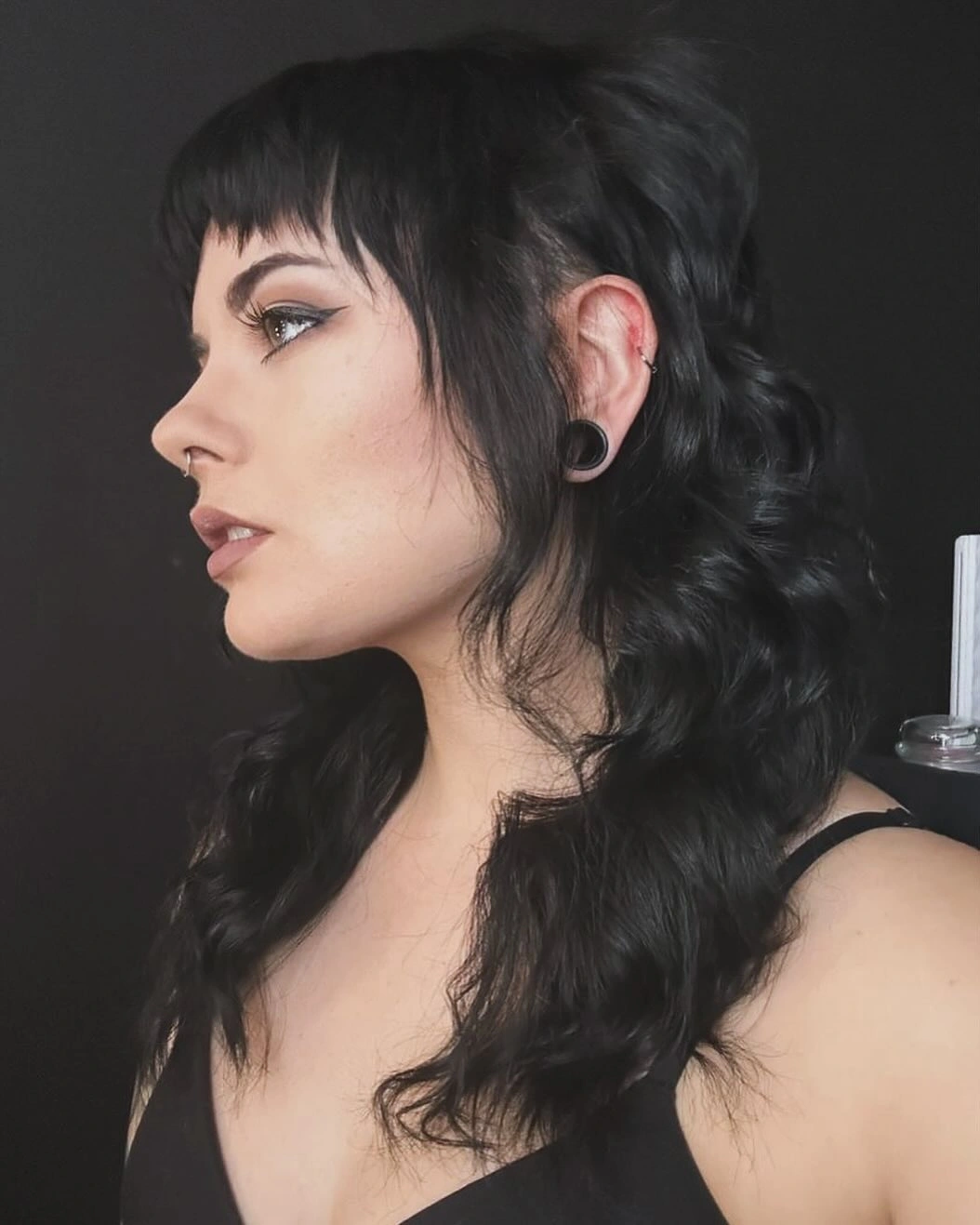
The front edge is the defining feature because the short fringe and close side create a strong break before the haircut extends into longer back pieces. That contrast separates it from classic long layers, where the front usually blends more gradually into the rest of the length. Here, the wavy back softens the profile, but it does not erase the cropped feeling around the forehead and ear area.
This section’s distinct point is sharp front versus soft back. This look keeps long movement visible, yet the choppy fringe and close-looking side make the silhouette feel more graphic than a standard long wavy cut.
Stacked Silver Bob With Dark Tapered Nape
This look shows a short silver-gray bob or pixie-bob from the side-back angle, with angled side length, a stacked rounded back, a dark tapered nape, and a smooth heavy top. The color contrast makes the nape especially clear because the lighter upper shape sits above the darker cropped area. As a haircuts for grey hair reference, it works visually because the silver-gray tone helps reveal the cut’s layered structure and rounded back shape.
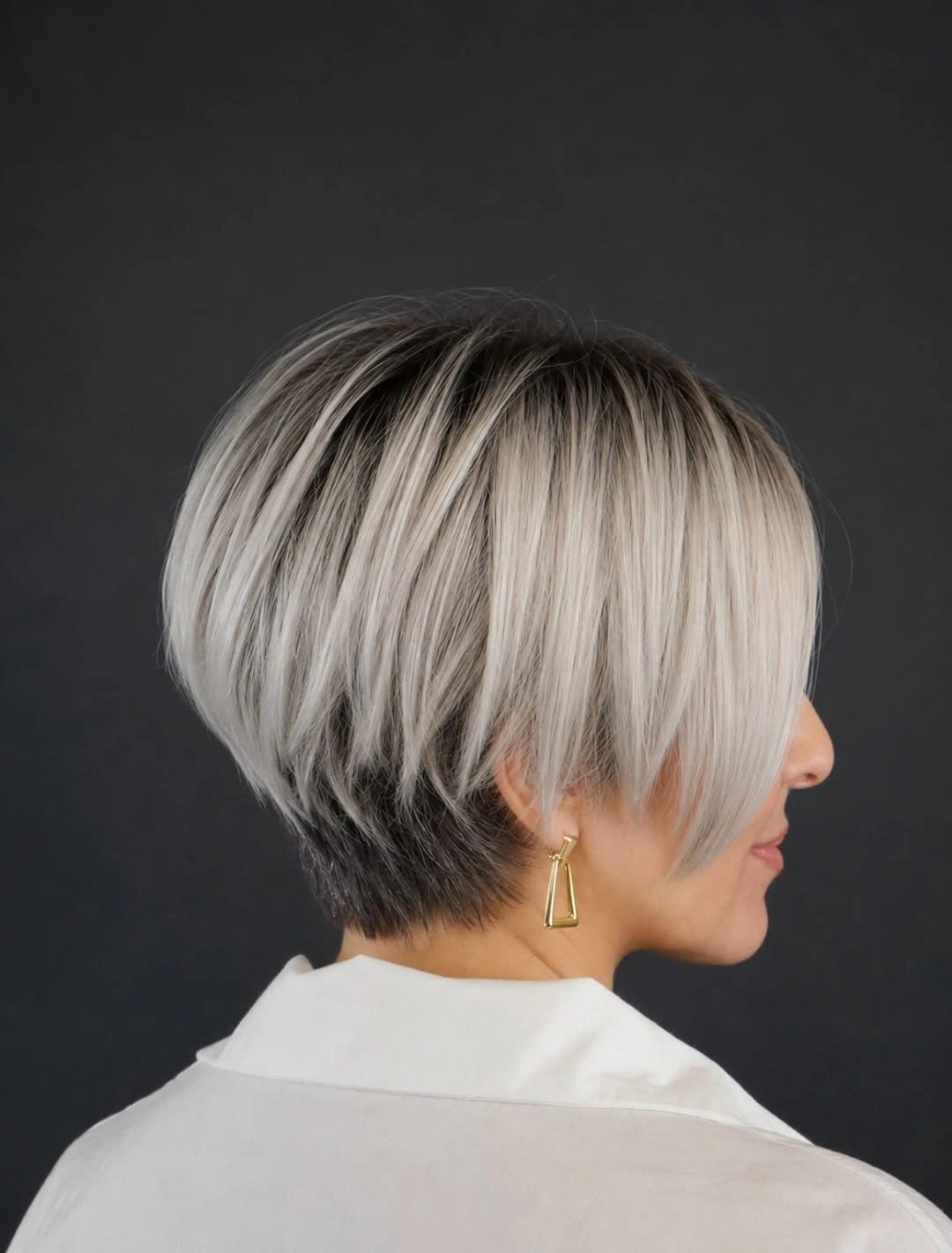
The back is the main construction point. The stacked area creates a curved volume above the nape, while the darker lower section narrows the silhouette underneath. The side length still reaches forward enough to keep a bob identity visible, so the haircut does not read only as a cropped pixie from this angle.
The strongest lesson is how the nape controls the whole short shape. This look uses a rounded stacked back, angled side line, and visible dark taper to show a compact haircut with clear architecture.
Medium Brown Layers With Soft Curtain Framing
This look shows a medium-brown shoulder-length cut with a soft curtain part, face-framing panels, feathered side layers, and outward flipped ends. The front opens around the face without forming a heavy bang line, then the side pieces curve into the rest of the haircut. As a medium hair reference, its value is gentle shaping rather than strong disconnection or heavy volume.
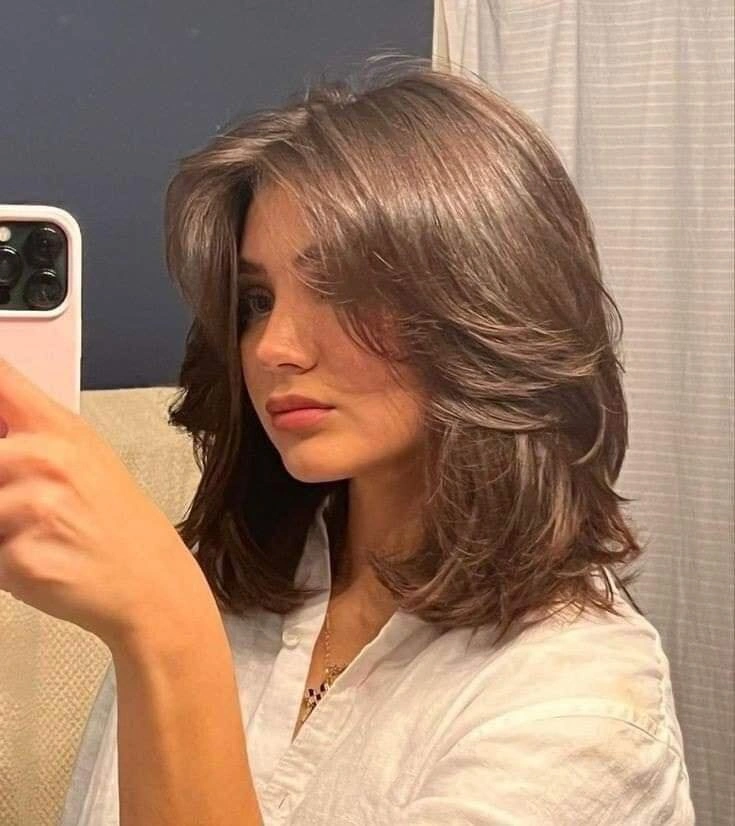
The side layers are airy because they separate into visible pieces around the cheek and shoulder area. The ends flip outward enough to keep the perimeter active, but the overall length still stays grounded near the shoulders instead of stretching into a long cascade. This makes the haircut useful for comparison because the movement comes from feathered edges and a soft front opening, not from a dramatic change in length.
The distinct idea is quiet lift through the sides. This look shows how curtain bangs can be interpreted as a soft part and face frame, with shoulder length keeping the haircut balanced and readable.
Long Brunette Layers With Bright Face Frame
This look shows long brunette hair with a lighter face-framing streak, high side volume, sweeping layers, and large curled ends. The front piece is visually important because its lighter tone outlines the curve near the face and makes the layered entry point easier to see. The haircut stays long, but the volume and rounded ends give it a more sculpted shape than a simple long perimeter.
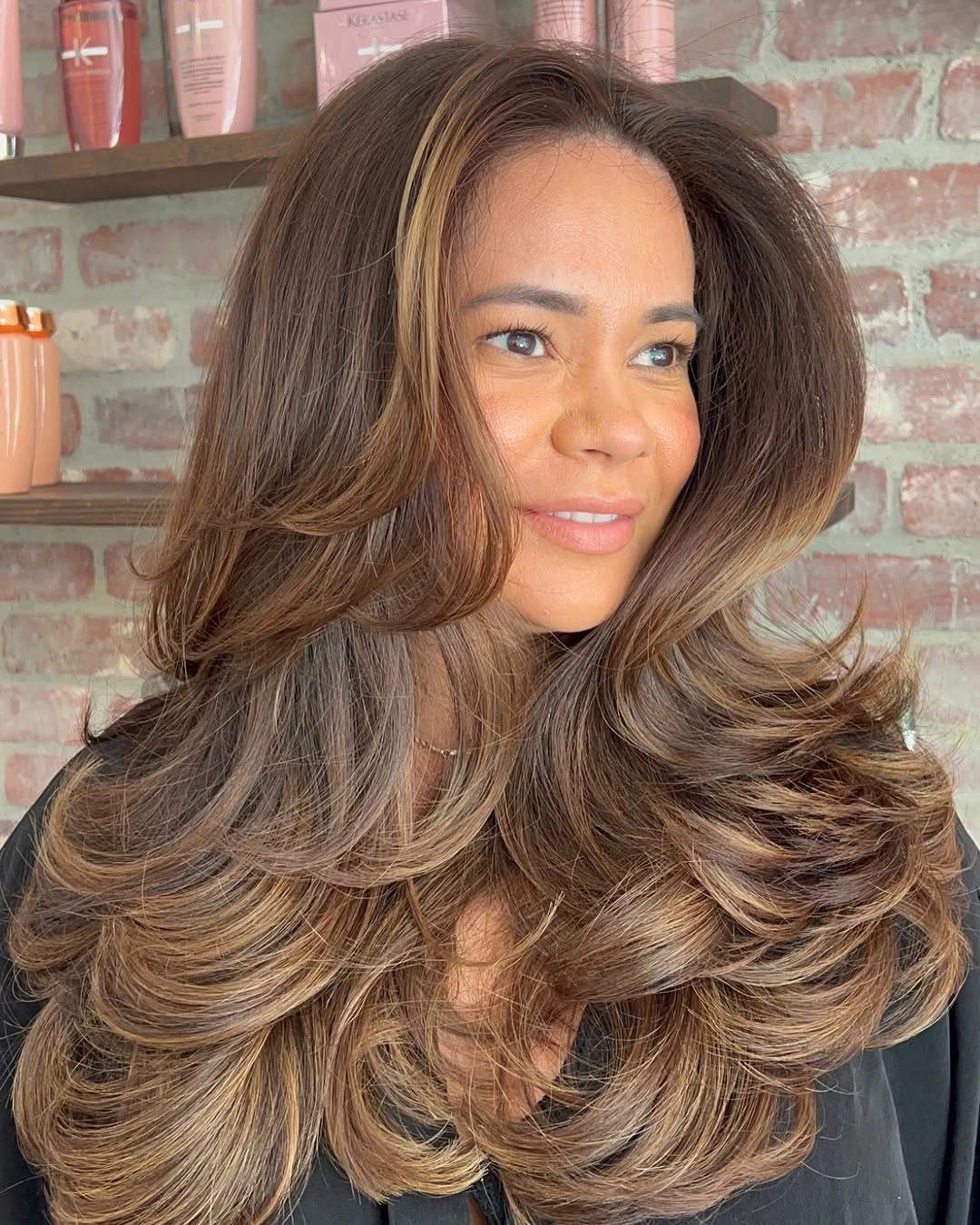
The large curves stack through the lower half, creating visible tiers across the chest-length body. A cautious butterfly cut reference fits only as a shape comparison here, because the image shows broad face-framing movement and curled layers that open away from the front. The lifted side volume also changes the balance of the cut, giving the long hair height and width before the ends settle into rounded bends.
This section’s contribution is long length plus lift. This look shows how a lighter face frame, high side shape, and tiered curls can make a long haircut read bold through construction without needing any popularity or forecast claim.
Dark Wolf-Like Shag With Long Nape
This look closes the sequence with a dark side-profile shag or wolf-like cut, built from a rounded crown, brow-skimming fringe, narrow cheek tendrils, a long nape, and flipped textured ends. The profile is the key evidence because it separates the shorter upper shape from the longer back. The safest naming stays descriptive, since the visible silhouette matters more than assigning one exact haircut label.
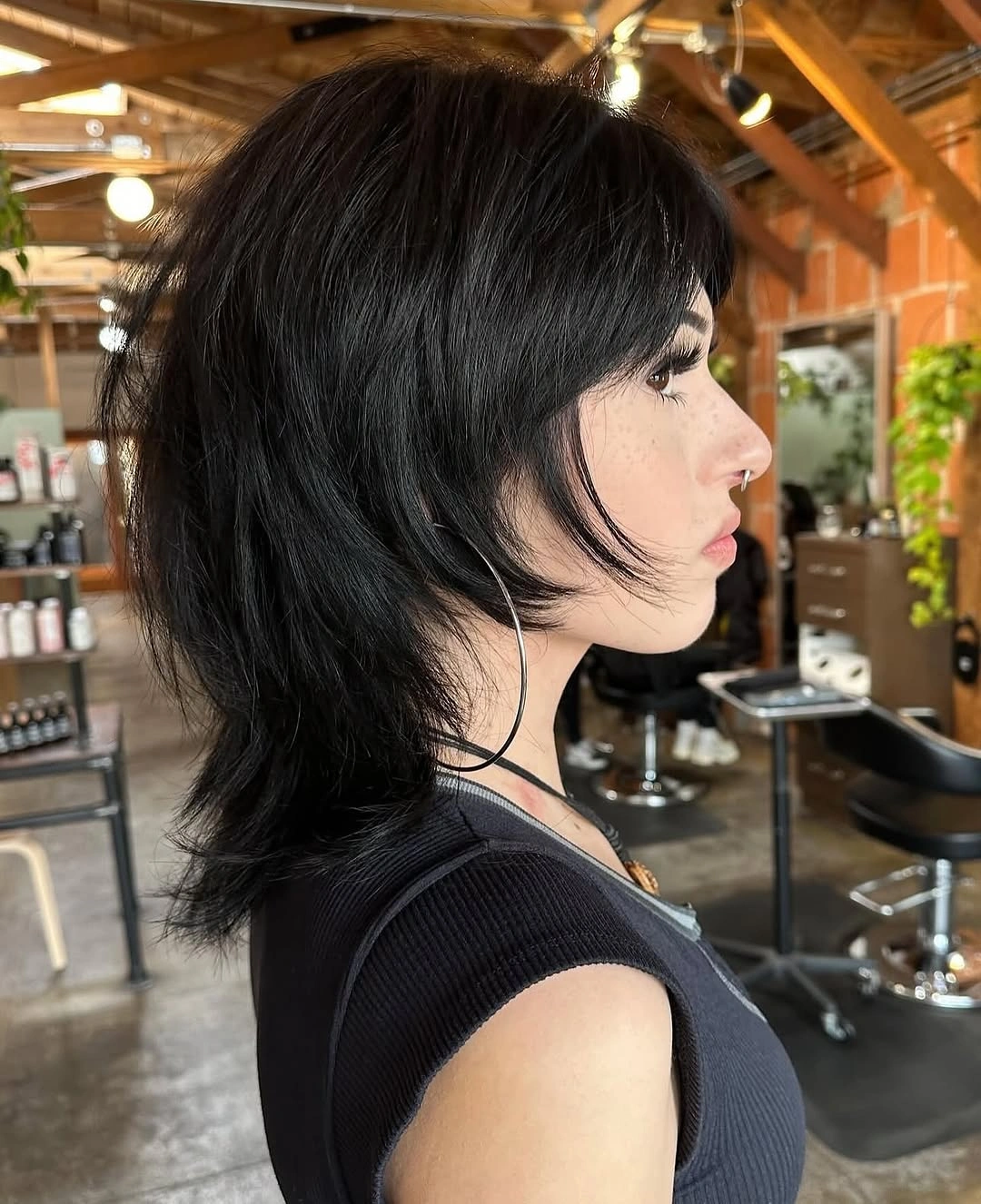
The crown appears rounded and compact, while the back length drops lower and breaks into a flipped perimeter near the nape. In front, the fringe and tendrils create a narrow line that sits close to the face, which sharpens the profile before the cut expands behind it. That contrast gives the medium hair a clear front-to-back structure without relying on color contrast or a blunt bob outline.
The final image’s strongest lesson is profile geometry. This look shows how a short crown area, slim face pieces, and a longer textured nape can make a shag shape read directional while still staying within a medium-length range.