Simple fall short nails can feel finished through one clear choice: a muted shade, a small line, a few dots, a quiet glitter accent, or a short motif placed where the shape can support it. These twenty-three ideas move through mauve, blush, burgundy, teal, brown, black, olive, nude, stars, flowers, checks, and tiny character-like details without turning every finger into a separate story.
Let the short outline decide how much ornament to keep. Broad color blocks and compact accents remain readable on rounded or square tips, while small dots and fine lines work best when they have open space around them; if a set starts to feel crowded, removing one detail will usually restore the softness faster than adding another color.
Soft Mauve with Fine Gold Curves
Medium almond nails use muted mauve and pale pink, with thin gold-colored curves tracing parts of the lighter fingers. The palette is soft, but the almond outline gives it a little length and the glossy surface keeps the colors alive. A dark knit sleeve and heart ring add a gentle frame, while the manicure itself stays focused on quiet contrast.
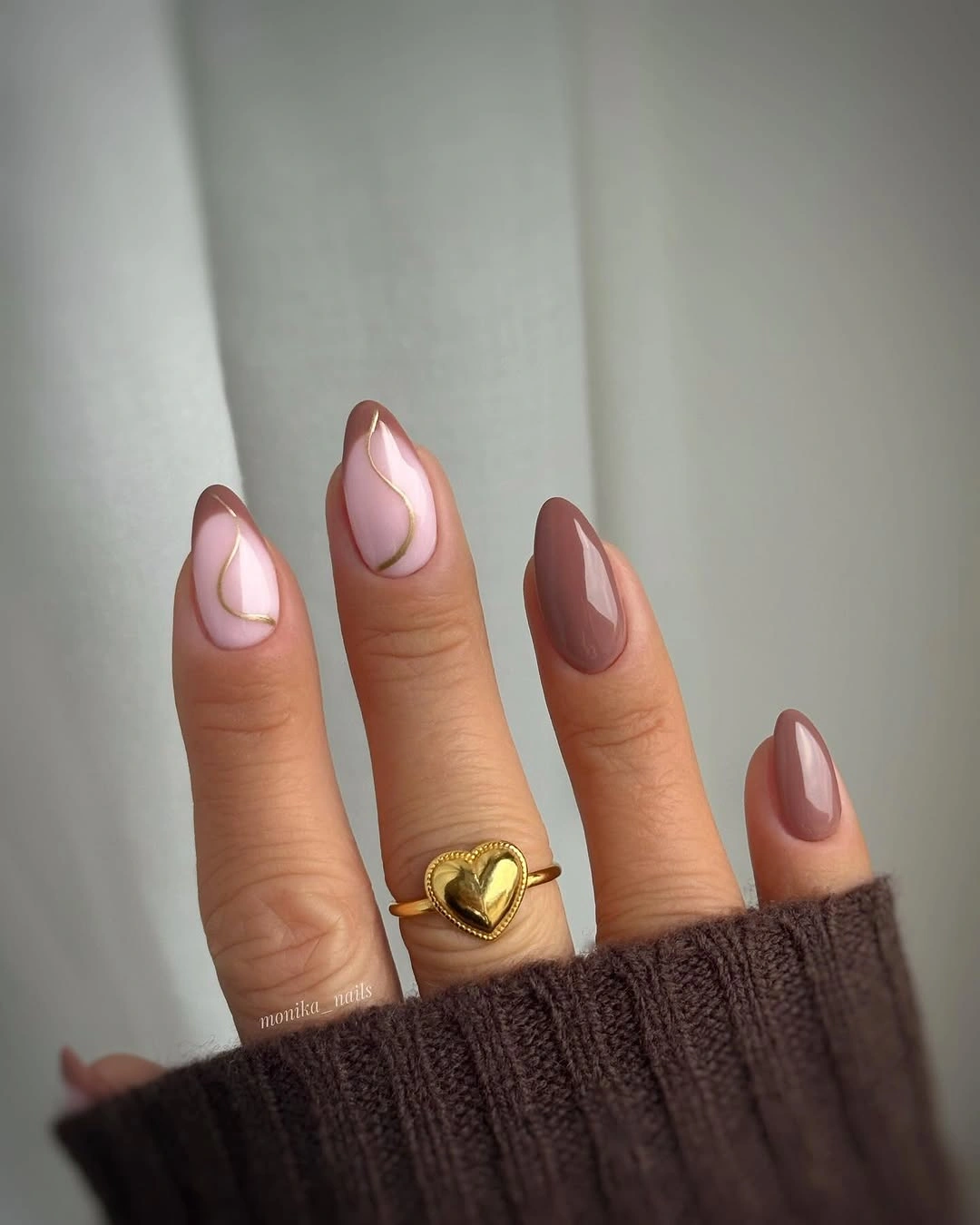
Keep the gold line on two accent nails and leave the mauve fingers solid if you want the simplest version. A shorter oval can carry one small curve near the upper edge, while a medium almond has enough room for a longer sweep. Let the pale base remain visible, because the open space is what keeps the detail delicate rather than decorative-heavy.
This design feels soft because line, color, and shape agree about scale. Mauve supplies depth without a hard contrast, pale pink opens the surface, and the fine gold note adds a small point of light. The tradeoff is that a thin line may disappear from a distance, so the manicure rewards close attention rather than relying on a large statement.
Blush Nails with Two Muted Green Accents
Short rounded nails are mostly glossy blush pink, with two fingers painted a muted deep green and tiny bright dots or pale marks on some of the pink nails. The green creates a quiet fall contrast without covering the whole hand in dark color. Rings and a black textured sleeve sit around the compact shape, leaving the simple color relationship easy to see.
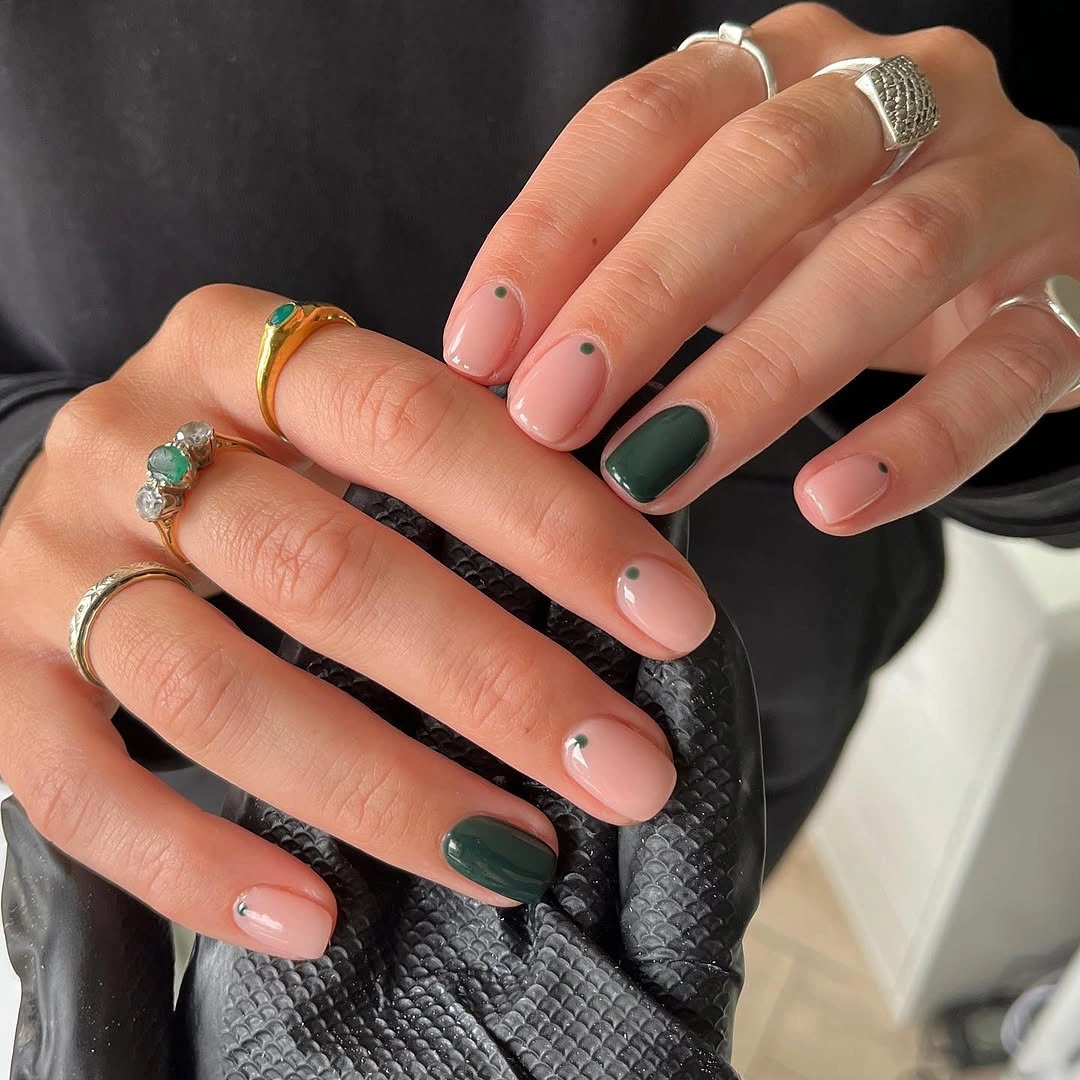
Use one green accent if you want the palette to feel even more restrained, then place one small dot on the opposite hand for balance. The rounded short shape keeps the mixed colors soft, while a square tip would make the contrast look more graphic. Repeat the blush on the thumb or ring finger so the green remains an accent rather than a competing base.
The set works through controlled interruption. Blush supplies the light field, green brings a deeper seasonal note, and the tiny marks give the pale fingers a reason to differ without filling them with art. The limitation is scale: if the dots become too small or scattered, they can disappear, while larger marks may change the gentle proportion.
Plum Almonds with Pale Leaf Lines
Medium almond nails alternate glossy plum and pale pink, with slender dark leaf-like marks on the light fingers. The plum color repeats across most of the hand, so the botanical accents remain small and airy rather than becoming the main theme. A white knit sleeve and neutral background support the soft contrast, while the almond shape gives the line work room to breathe.
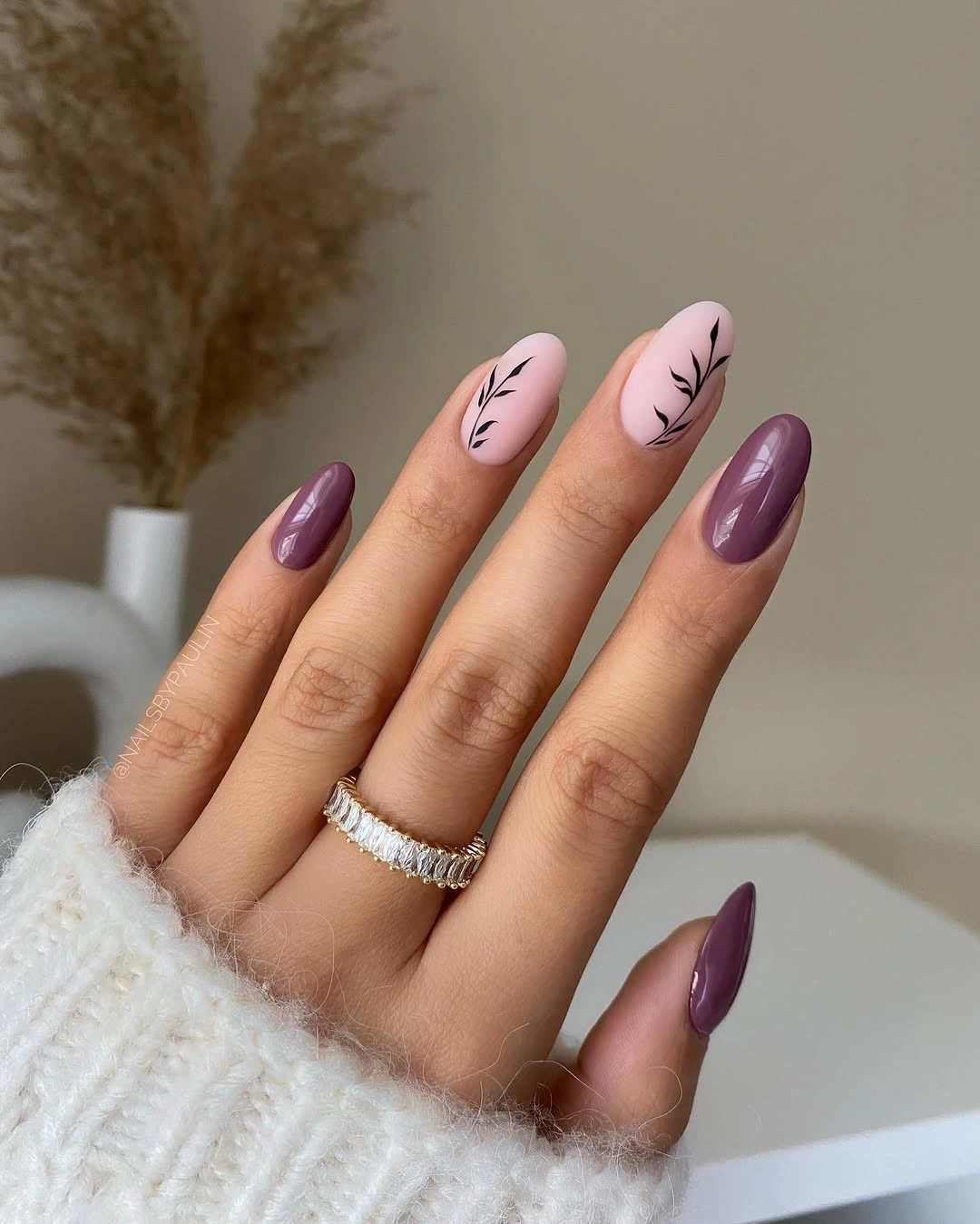
Keep the line work to two fingers and simplify each mark to one short stem or curved leaf if you want a quieter brief. A shorter rounded shape can hold one small line near the center, while the almond outline supports a longer vertical gesture. Preserve pale space around the marks so the contrast stays delicate instead of becoming a dark patch.
The romantic quality comes from restraint rather than a large floral illustration. Plum gives the hand depth, pale pink creates softness, and the fine marks add a little direction without interrupting the clean shape. The practical weak point is the line itself, since a small blur can change the airy feeling, so sparse detail is the safer choice.
One Dotted Accent on Muted Plum
Short rounded nails are painted a muted plum-purple, with one finger carrying a small dark pink or burgundy dotted line motif. The solid color does most of the visual work, while the tiny accent shifts the set from plain polish to a deliberate design. A mint sleeve and outdoor light create cool surroundings, but the compact hand remains calm and uncluttered.
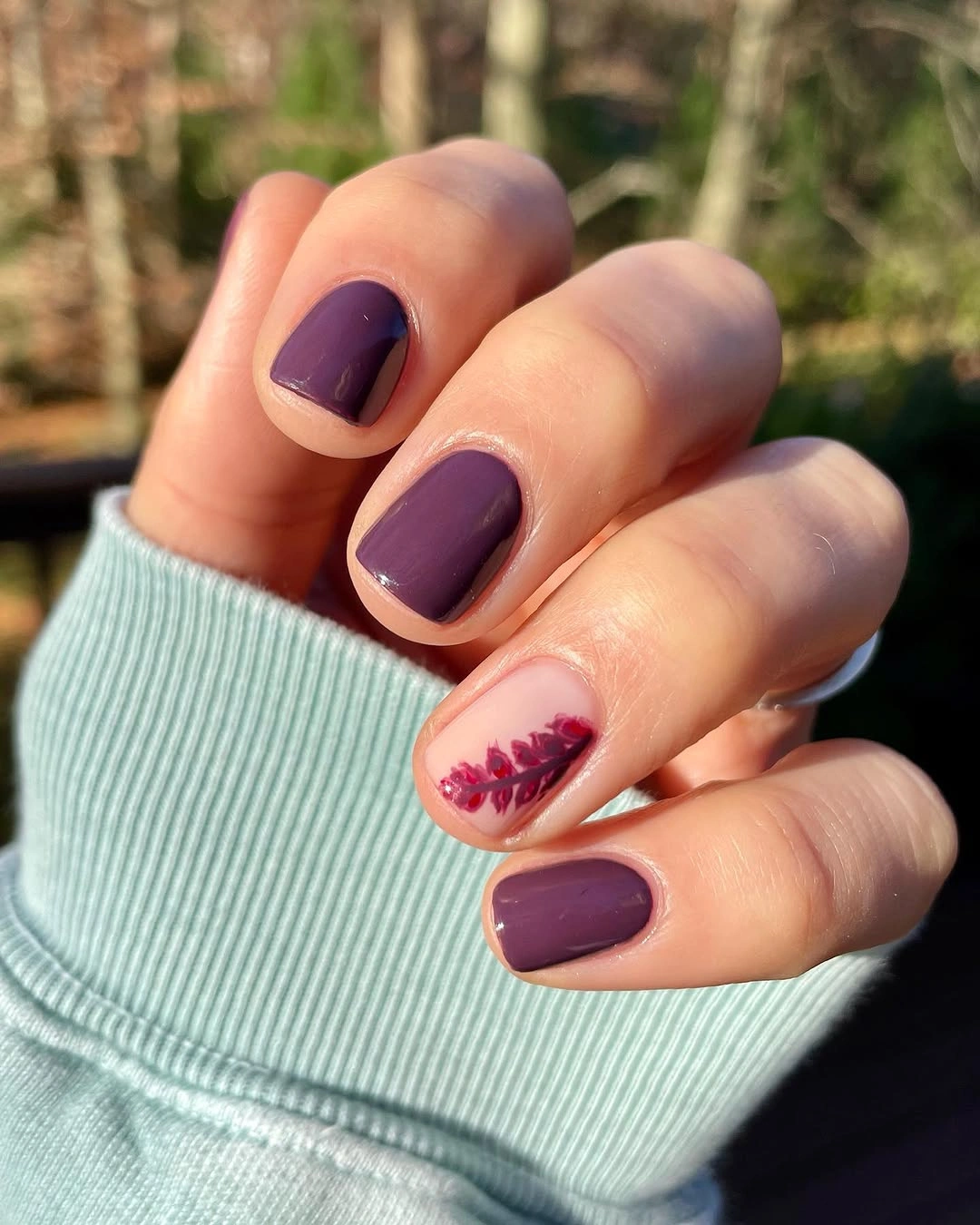
Keep the dots close together and near one side if you want the accent to stay visible without becoming a full pattern. A very short nail needs only one or two marks, while a medium rounded tip can support a short dotted curve. If you want more contrast, deepen the accent color before adding additional dots to the rest of the hand.
This is a soft-focus idea with a precise center. Plum supplies a quiet seasonal mood, the rounded shape keeps the dark color gentle, and the single dotted line adds a small personal detail. The tradeoff is visibility: a micro accent may be noticed only up close, which is useful for someone who prefers a design that does not announce itself immediately.
Burgundy with Concentrated Gold Glitter
Short rounded nails alternate glossy burgundy and pale gold glitter, with the sparkle limited to selected fingers. The wine color creates a warm anchor, while the glitter adds light without changing the compact shape or requiring a motif. A neutral background keeps the contrast clean and lets the shimmer remain a small focal point.
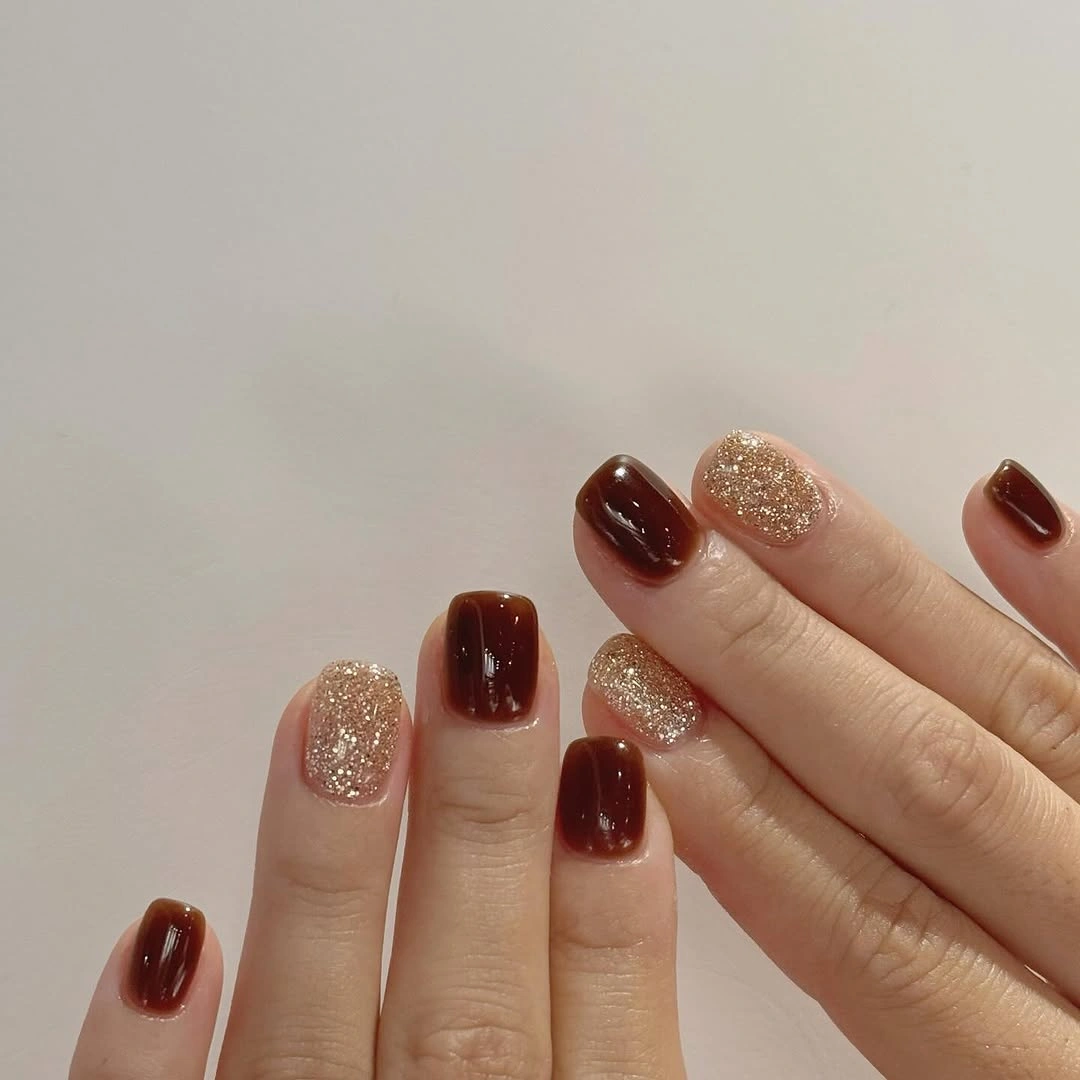
Use one glitter finger if you want the simplest version, or repeat it on the same finger of each hand for a soft symmetry. Rounded short nails benefit from a broad glitter area that remains readable, while a smaller tip can use a fine shimmer instead of dense sparkle. Leave the burgundy fingers untouched so the contrast retains a quiet rhythm.
The design feels festive but not loud because the bright finish is concentrated. Burgundy brings depth, gold raises the light level, and the short outline keeps the sparkle close to the hand. A realistic limitation is surface wear, since glitter can catch texture and make a chip more visible than it would be on a flat wine-colored nail.
Red and Blush with Tiny Edge Dots
Short rounded nails alternate deep red and pale blush, with small red or dark dots near the edge of several light fingers. The design is glossy and compact, and the tiny marks keep the pale nails from looking blank without turning them into full illustrations. A black sleeve creates a clear frame around the warm palette and rounded tips.
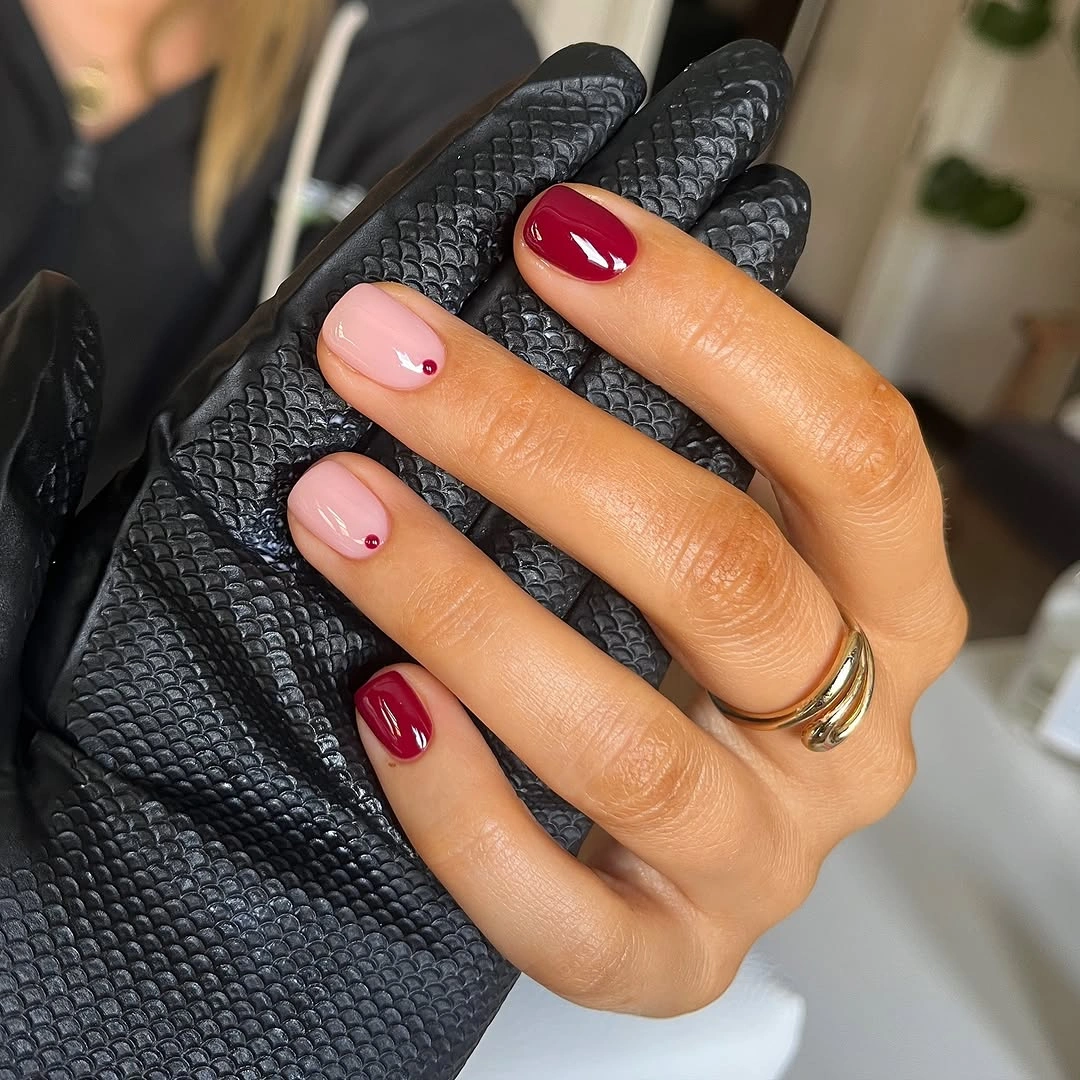
Keep the dots in one consistent position and use fewer on the shortest fingers. A medium rounded shape can hold a small pair, while a very short nail may look cleaner with one mark close to the side. If you want the red to feel softer, choose a muted wine tone rather than adding a second pale color.
The manicure works because the accent is small enough to support the color rather than compete with it. Red supplies warmth, blush creates an open pause, and the dots repeat the deeper shade in miniature. The tradeoff is edge precision: marks near the border can reveal uneven spacing, so a simple placement rule matters more than a complicated motif.
Brown and Nude through Curved French Tips
Medium almond nails alternate opaque brown and pale nude-pink, with the brown also appearing as curved French tips on the lighter fingers. The repeated color links the solid and outlined nails, while the nude base keeps the set light and open. A neutral gray background lets the almond shape and two-tone placement provide the visual structure.
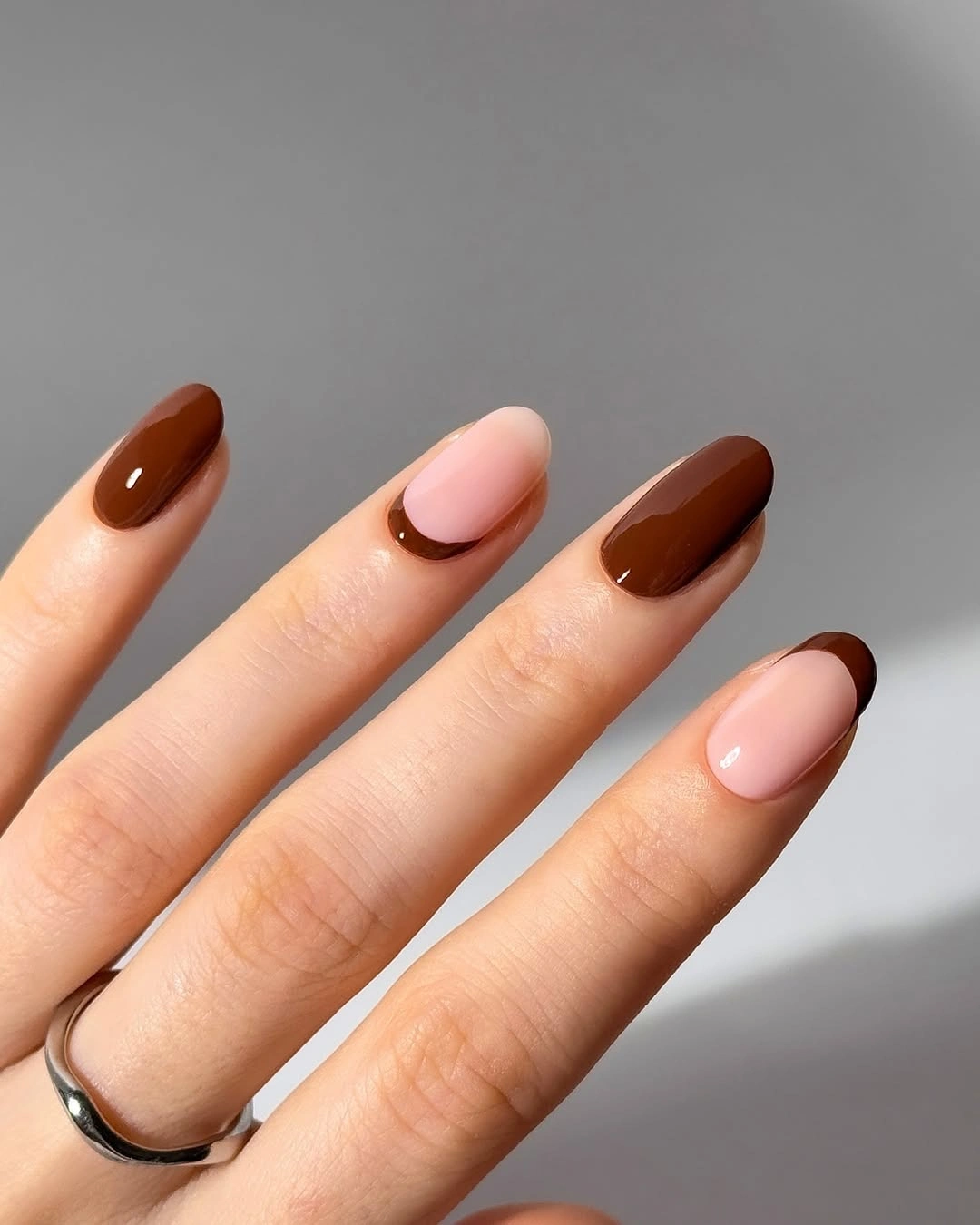
Use one brown shade across both the solid fingers and the tips if you want the design to remain simple. A shorter oval can use a smaller curve, while an almond shape allows the French edge to follow the taper and look more elongated. Keep the center of the pale nail clear, because the open area is what makes the brown placement feel soft.
This is a romantic interpretation of a French design because the contrast stays warm and the line follows the shape instead of cutting it into a hard block. Brown supplies seasonal depth, nude creates lightness, and the almond outline links the fingers together. The practical limitation is the tip edge, which will show small changes in symmetry and growth clearly.
Dark Squares with One Pale Line Accent
Short square nails are glossy deep brown or near-black, with one pale nude finger carrying thin dark abstract curves. The dark fingers form a clean repeated block, while the light accent provides a small window of contrast without adding glitter or several colors. White satin behind the hand makes the square edges and fine line work easy to distinguish.
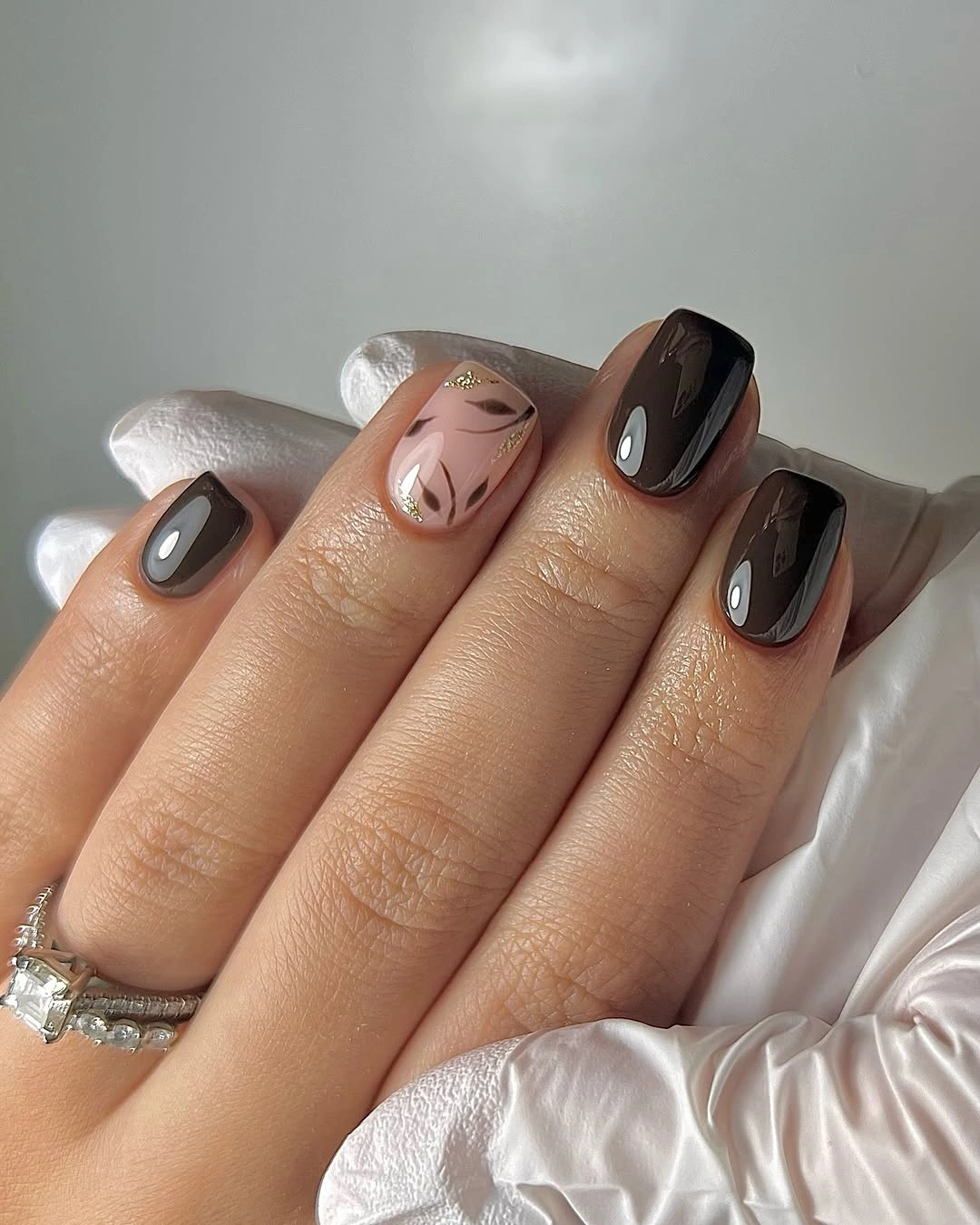
Keep only one pale accent and use two simple curves if you want the most restrained result. A short square can support a larger open shape than a tiny detailed drawing, while a rounded tip will soften the contrast around the hand. If the dark base feels too strong, replace the near-black shade with deep chocolate and keep the line work unchanged.
The look is simple because the accent has a single job: interrupt the dark field and direct the eye toward one pale surface. The square shape keeps the black or brown color graphic, while the open accent prevents the set from becoming visually flat. The tradeoff is that dark polish reveals edge wear quickly, especially when the design depends on crisp square corners.
Deep Teal with Small Floral Accents
Short rounded nails use a deep teal base, with selected fingers carrying compact floral marks in black, white, and pale pink. The cool color feels rich rather than bright, and the warmer flower details create a gentle contrast that keeps the set from becoming monochrome. The short rounded shape contains the art while a light background keeps the details visible.
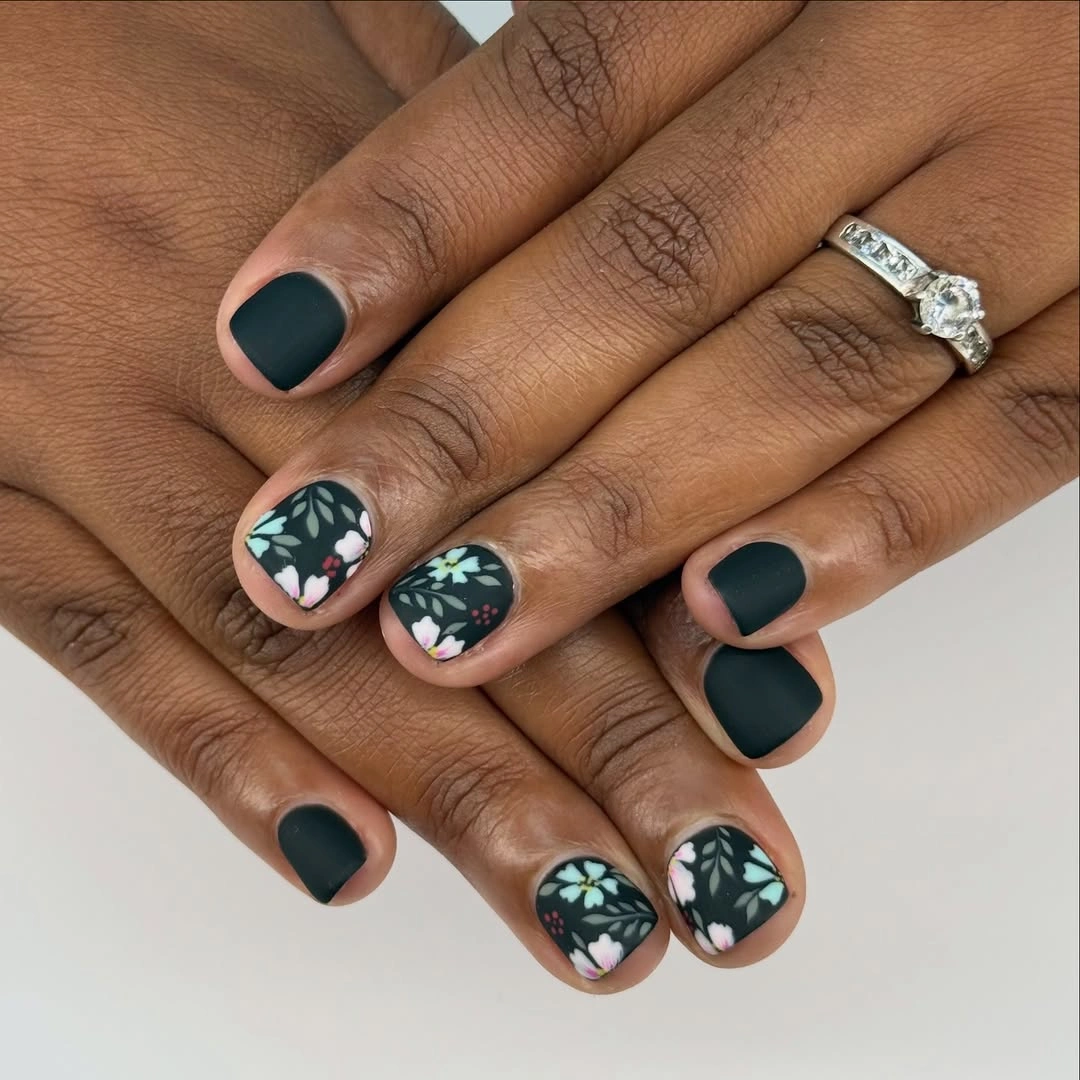
Keep the flowers on one or two accent nails and let the rest remain teal if you want a more minimal result. A short rounded tip benefits from small clustered marks rather than a large bloom, while a slightly longer shape can support a few extra dots. Repeat one warm floral color so the accents feel related to the teal base.
The softness comes from the balance between a dark cool field and tiny warm details. Teal supplies depth, pink adds a gentle lift, and white marks create small points of light without overwhelming the hand. The limitation is detail density, since a compact nail can lose clarity if every petal and dot is treated as equally important.
Checkerboard and Floral Warm Neutrals
Medium almond nails alternate pale nude-pink and warm brown, combining checkerboard accents with small orange and brown floral marks. The two motifs are different, but the shared palette keeps them connected and the almond shape gives both designs a long, calm frame. Gold rings and a gray surface remain secondary while the balance between geometry and softness takes focus.
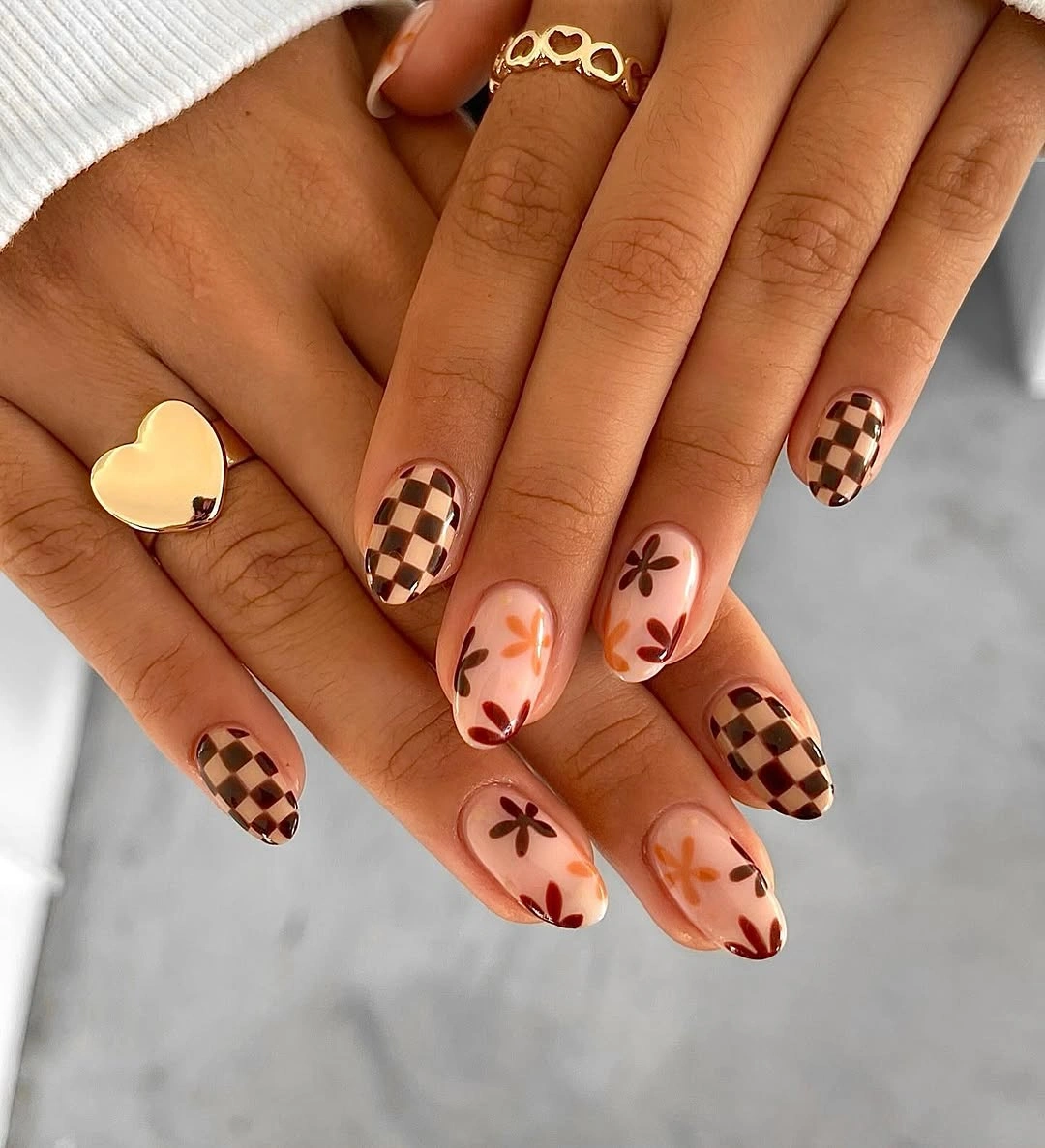
Choose checkerboard or florals as the main motif if you want a simpler set, then leave the other accent on one finger. A shorter almond needs broader checks and fewer flower marks, while a medium shape can keep both details airy. Repeat the same brown and orange across the decorated nails so the motifs share a clear color language.
This is the most decorative idea in the simple collection, but it stays romantic through a limited palette and controlled scale. Checks add order, flowers soften that order, and nude space keeps the designs from becoming heavy. The tradeoff is density: two motifs need room, so removing one small element may create more calm than adding another accent color.
Plum Polka Dots on Rounded Tips
Short rounded nails are painted dark plum or burgundy and covered with evenly spaced white dots. The pattern repeats across the visible fingers, creating a regular rhythm without requiring flowers, lines, or a second saturated color. The close crop emphasizes the rounded tips and the contrast between pale dots and the deep base.
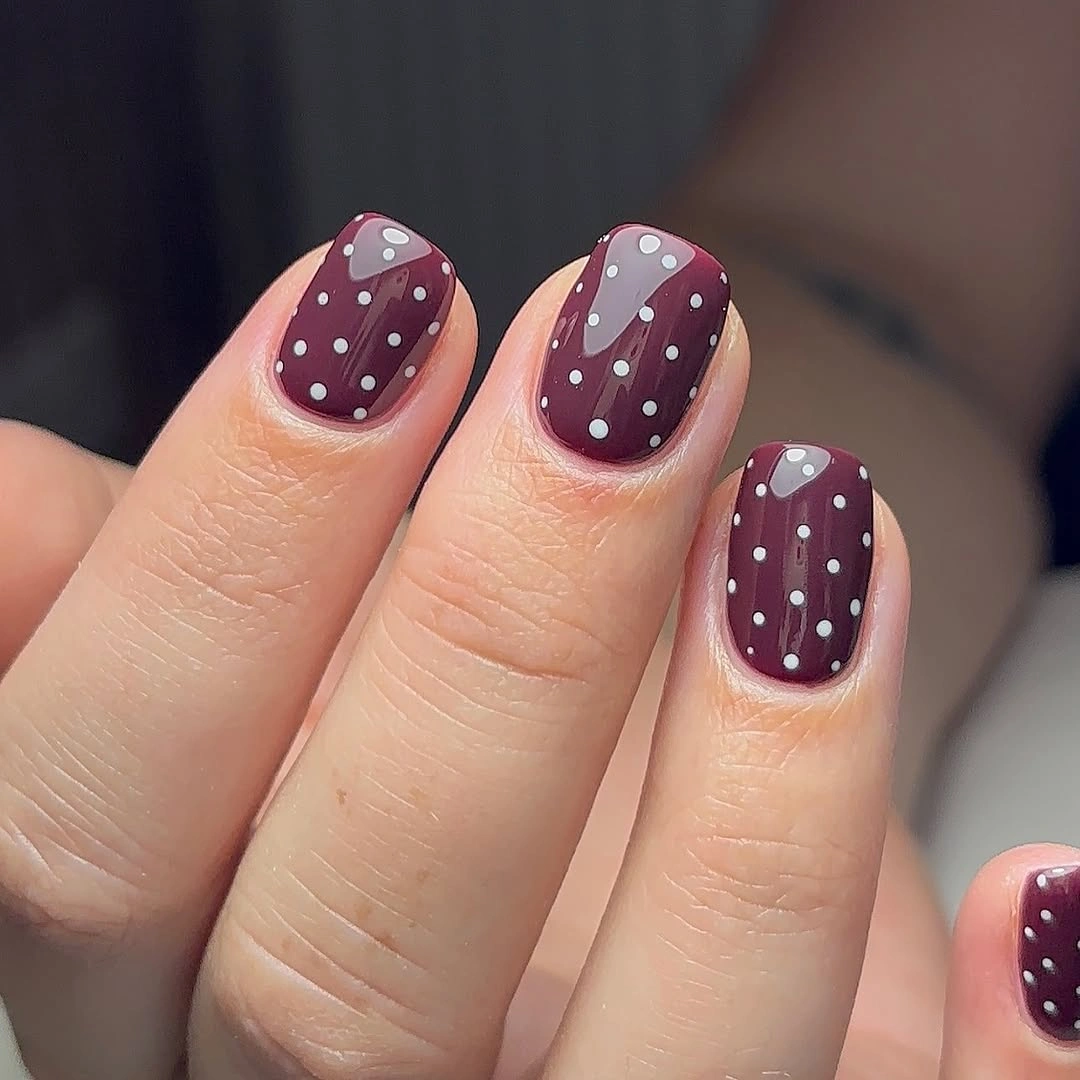
Use larger dots on a shorter nail and keep their spacing generous so the plum base remains visible. A medium rounded shape can support a denser rhythm, while a square tip will make the same pattern feel more graphic. If full coverage feels too playful, place the dots on two accent fingers and leave the rest solid.
The design is simple because repetition takes the place of complexity. Plum brings depth, white dots add light, and the rounded outline keeps the pattern soft rather than severe. The practical weak point is precision: uneven dot size or spacing can disrupt the quiet rhythm, so a smaller number of consistent marks may look more intentional.
Glossy Black on a Short Rounded Shape
Short rounded nails are painted a solid glossy black with bright rectangular reflections on the surface. There is no accent art, so the compact shape, clean sidewalls, and high shine carry the entire design. A gray knit sleeve and small rings sit behind the hand, giving the dark color a soft frame instead of a harsh one.
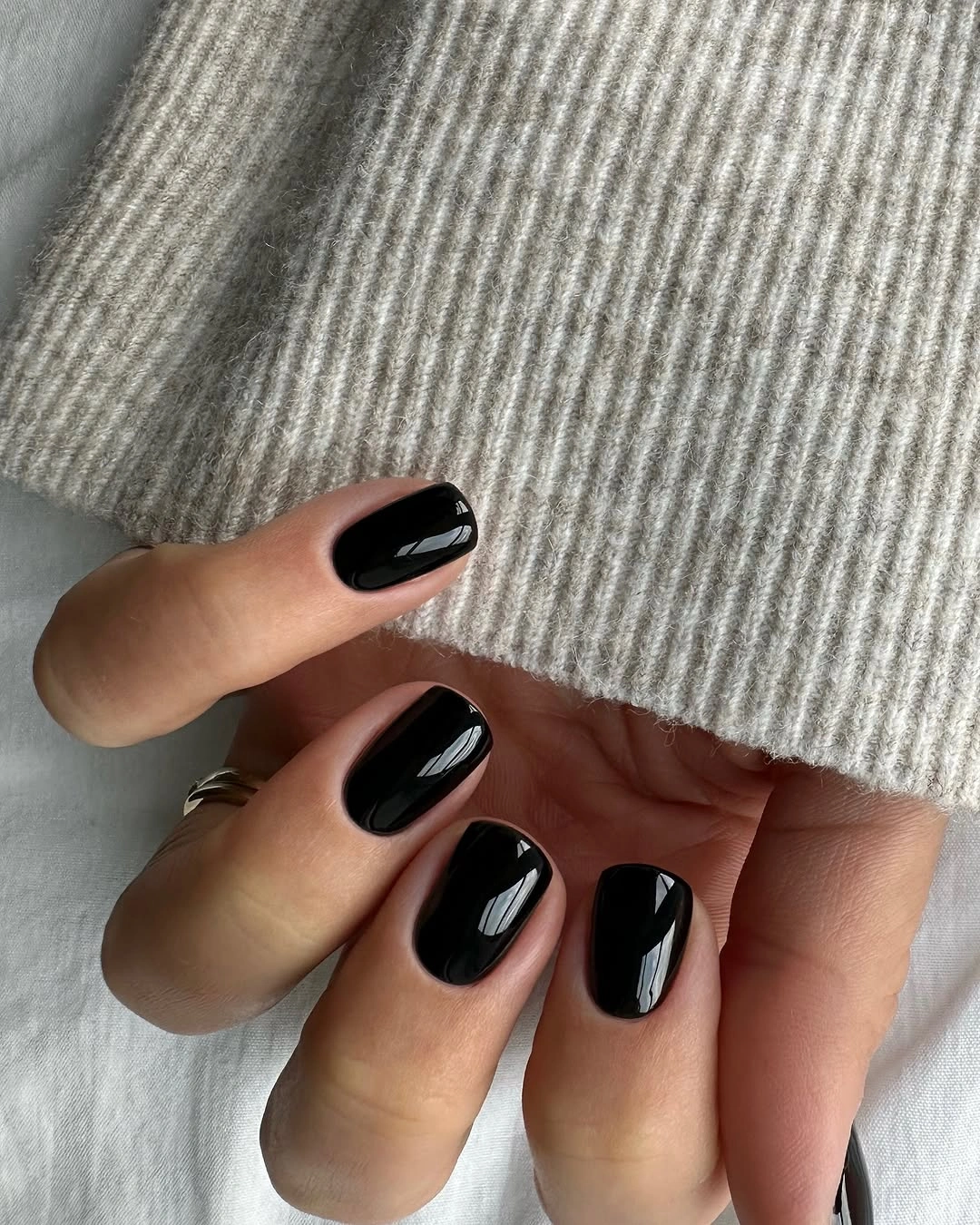
Keep the rounded outline if you want black to feel softer, or move to a short square for a more graphic result. A muted charcoal can lower the contrast while preserving the minimal idea, but the surface should remain smooth so the reflection does not break into visual noise. Because the color is complete on its own, extra decoration is optional rather than necessary.
This is the clearest proof that simple does not mean unfinished. Black supplies depth, gloss creates movement, and the rounded shape keeps the strong color approachable around the hand. The tradeoff is surface visibility: dark solid polish shows chips, dry edges, and uneven corners easily, so a minimal set asks for careful finishing.
Dark Burgundy with Clean White Stars
Short rounded nails alternate deep burgundy and near-black, with one or two fingers carrying simple white star shapes. The dark base remains dominant, while the stars create a crisp point of light and a small graphic motif. A silver ring and neutral background keep the high-contrast detail from becoming overly busy.
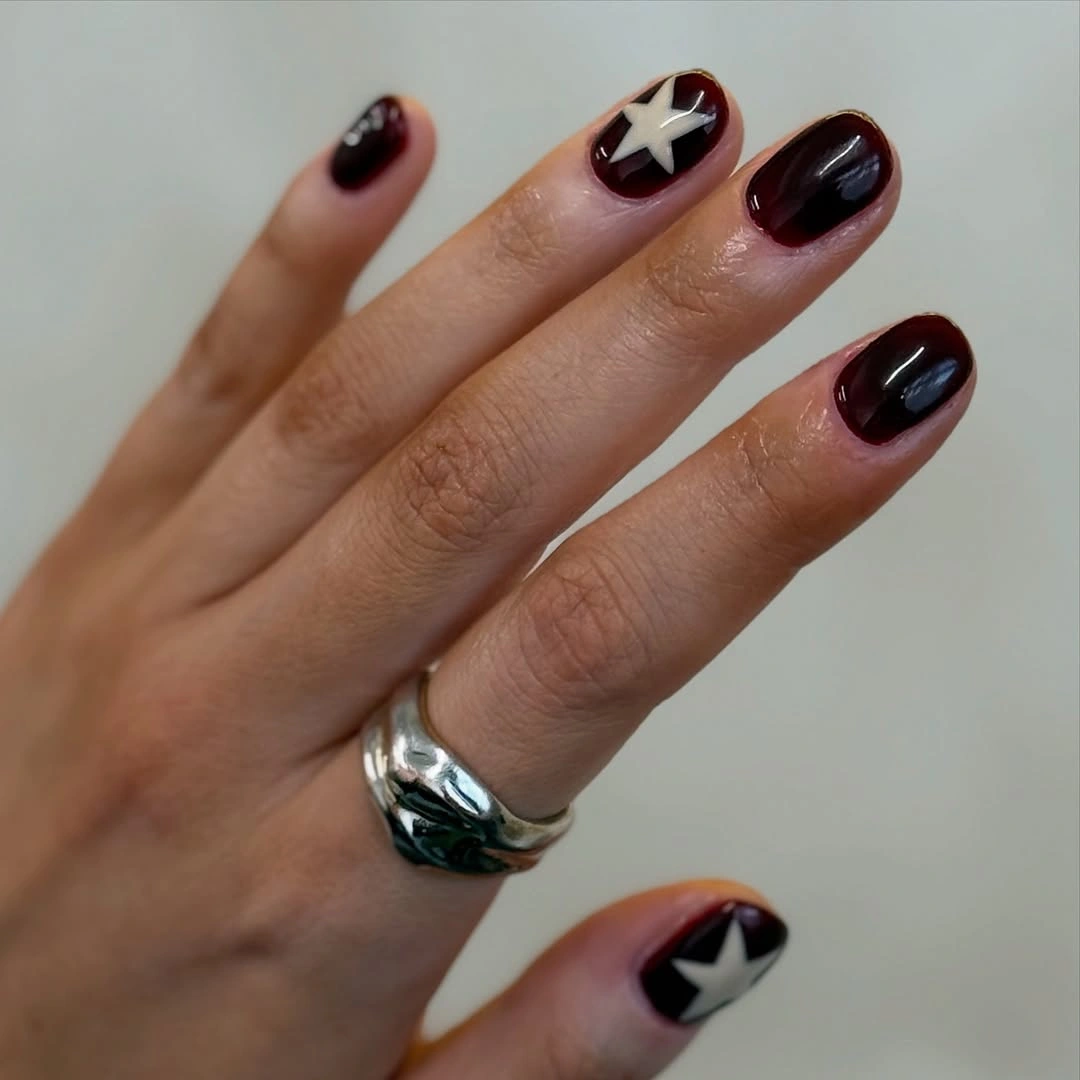
Use one star on the ring finger and leave the remaining dark nails solid if you want the quietest version. A short rounded surface benefits from a single clear shape rather than several tiny points, while a slightly longer tip can support a pair. Keep the white mark simple so the motif remains a clean accent instead of a detailed illustration.
The design feels soft despite the dark colors because the star is isolated and uncomplicated. Burgundy and black build a deep field, white opens one small area, and the rounded outline prevents the motif from feeling too sharp. The limitation is scale: if the star is too small it disappears, but a very large star can overwhelm the short nail.
Bright Red with Repeated White Stars
Short rounded nails use bright red and deeper red-burgundy, with white stars repeated on selected fingers. The brighter base changes the mood of the star idea, making the contrast more cheerful while the compact shape keeps it simple. Gray knitwear and sunlight create the setting, but the important visual shift is the move from dark plum to vivid red.
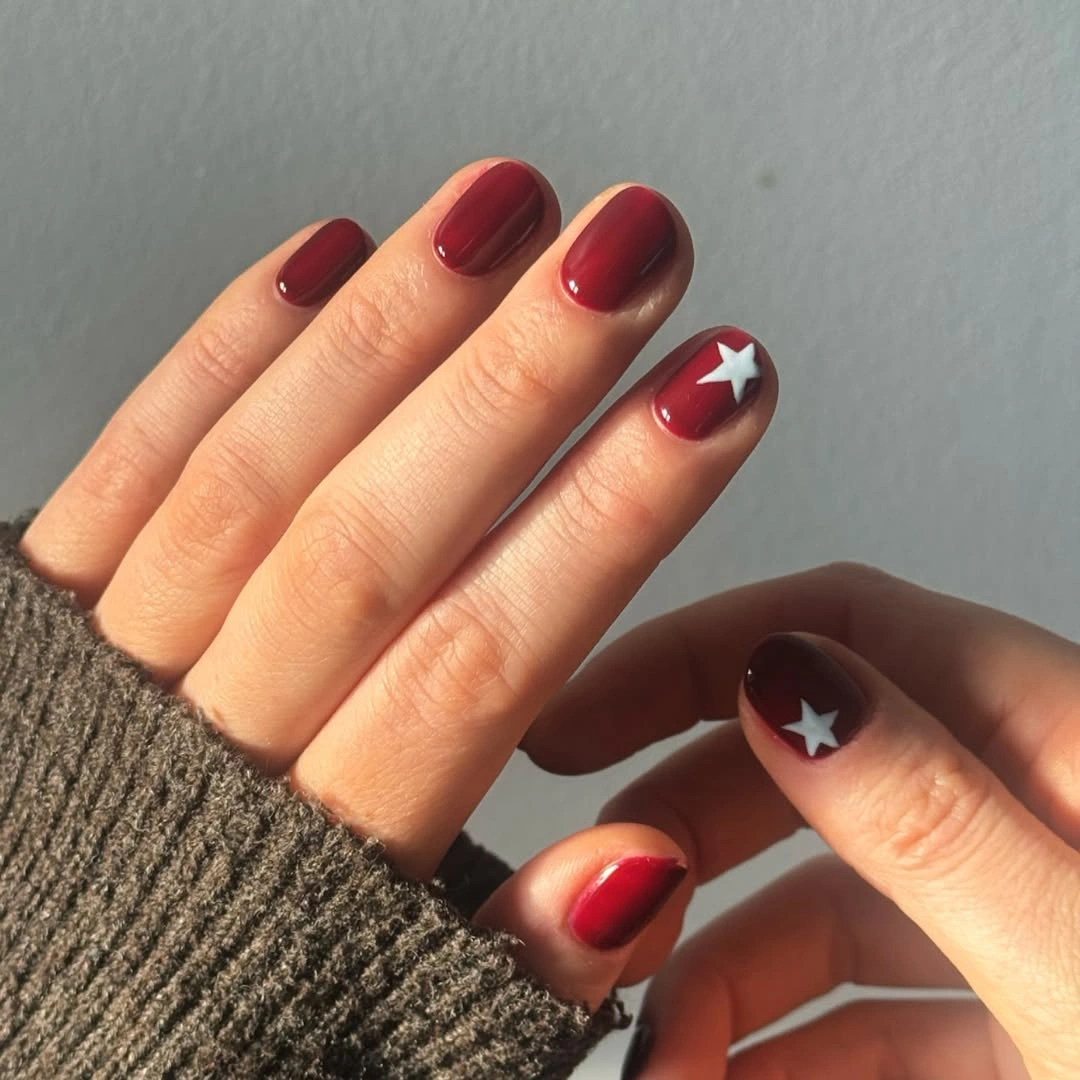
Keep the stars on two fingers and repeat the bright red on the thumb or ring finger for a balanced arrangement. A medium rounded nail can hold one larger star, while a shorter tip may look better with a small centered shape. If the red is too vivid for your palette, replace it with a muted wine shade and preserve the same white contrast.
This version works through color temperature and motif scale. Red brings warmth and energy, white supplies the graphic pause, and the rounded outline prevents the design from becoming formal or severe. The tradeoff is brightness: a vivid solid color can dominate the hand, so limiting the stars and keeping the shape short preserves the gentle proportion.
Black Squares with One Feather-Like Line
Short square nails are mostly glossy black, with one pale nude accent finger carrying a fine black mark that resembles a feather or leaf. The uniform dark fingers create a crisp base, while the light accent breaks the block without introducing glitter or a second strong color. White fabric behind the hands makes the square outline and pale canvas easy to see.
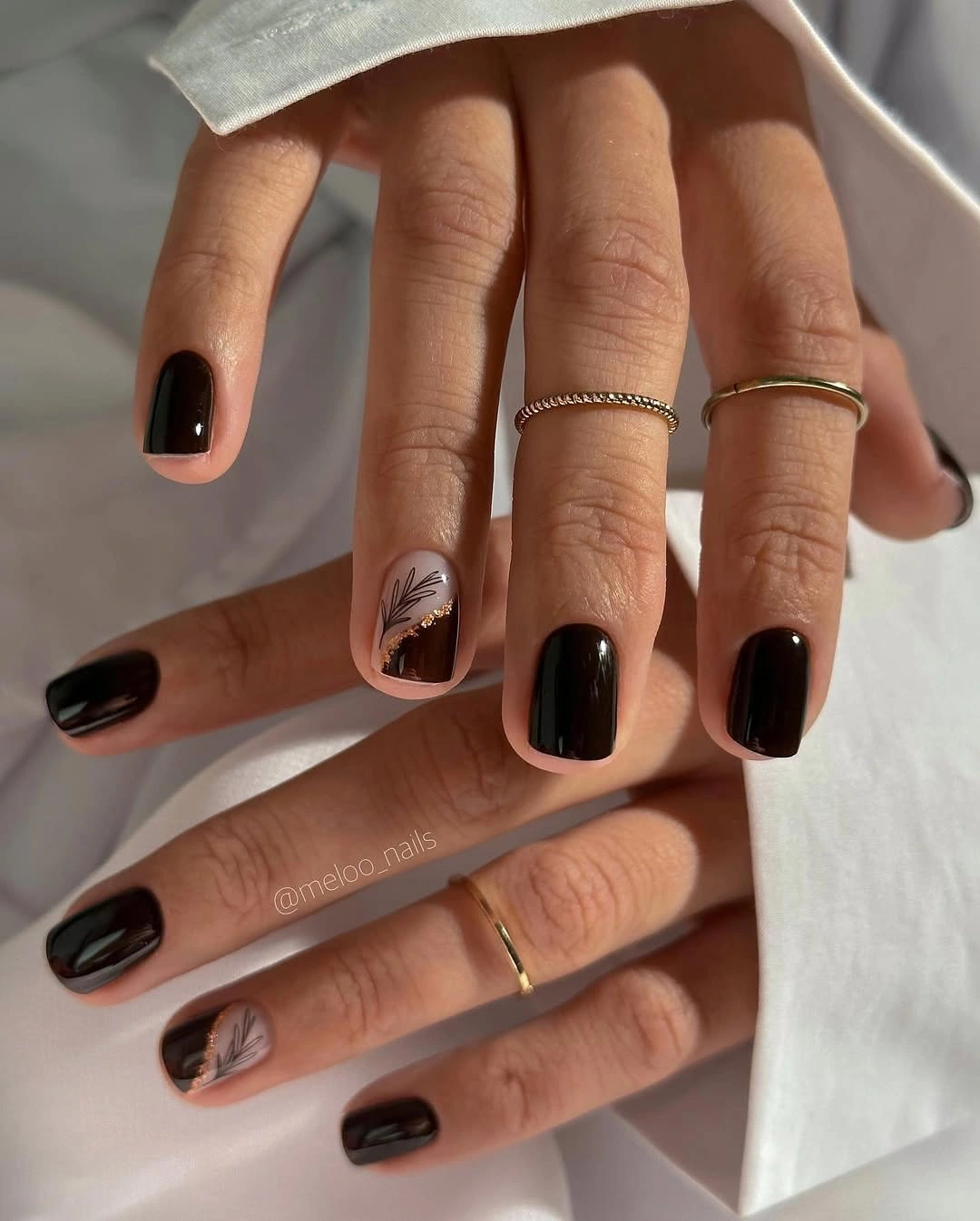
Keep the accent line thin and vertical if you want the design to stay delicate. A shorter square can use one curved stroke, while a medium tip can hold a small split or feather-like detail without filling the nude area. Let the black base remain solid, because the strength of the idea comes from one light interruption rather than several decorated fingers.
The manicure feels romantic through contrast and restraint. Black supplies depth, nude creates a quiet opening, and the fine line gives that opening a little movement without defining a large motif. The practical limitation is edge clarity, since black square corners and a pale accent both show small imperfections more readily than a softer mixed-color set.
Muted Gray-Green as a Quiet Solid
Short rounded nails are painted a muted gray-green or olive-gray with a glossy surface and no visible art. The shade is subdued rather than jewel-bright, so it feels earthy and calm while the rounded shape keeps the color soft. Hands overlap on a pale towel, giving the low-contrast palette a light frame.
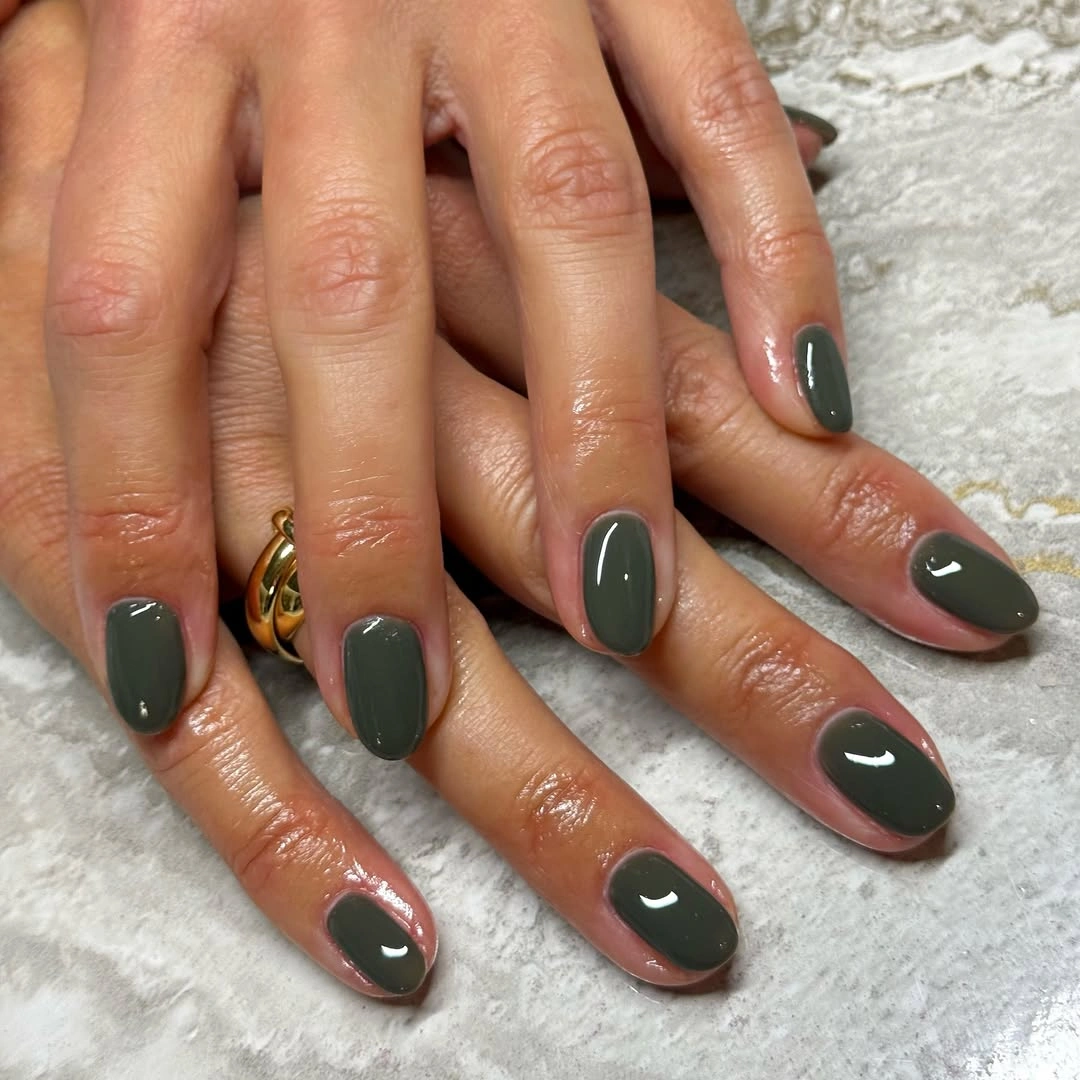
Keep the color solid if you want the shade to remain the entire point, or add one pale accent only when you need more separation. A shorter round shape will make the gray-green even quieter, while a short almond will add a little length without changing its muted character. Avoid adding several nearby greens, because the strength here is the clarity of one restrained tone.
This manicure is romantic in a quieter sense, relying on mood and surface rather than ornament. Gray-green brings earthy depth, gloss adds a small reflection, and the rounded outline keeps the result gentle around the hand. The limitation is low contrast: in some light the shade may appear gray or olive, so the exact color impression will shift with the surroundings.
Glossy Teal on Short Squares
Short square nails use a saturated teal-blue green with a glossy, even finish. The color is brighter and more jewel-like than the muted gray-green example, but the compact square shape keeps it from becoming visually expansive. A white sleeve and warm light create a clean contrast, leaving the single shade to carry the design.
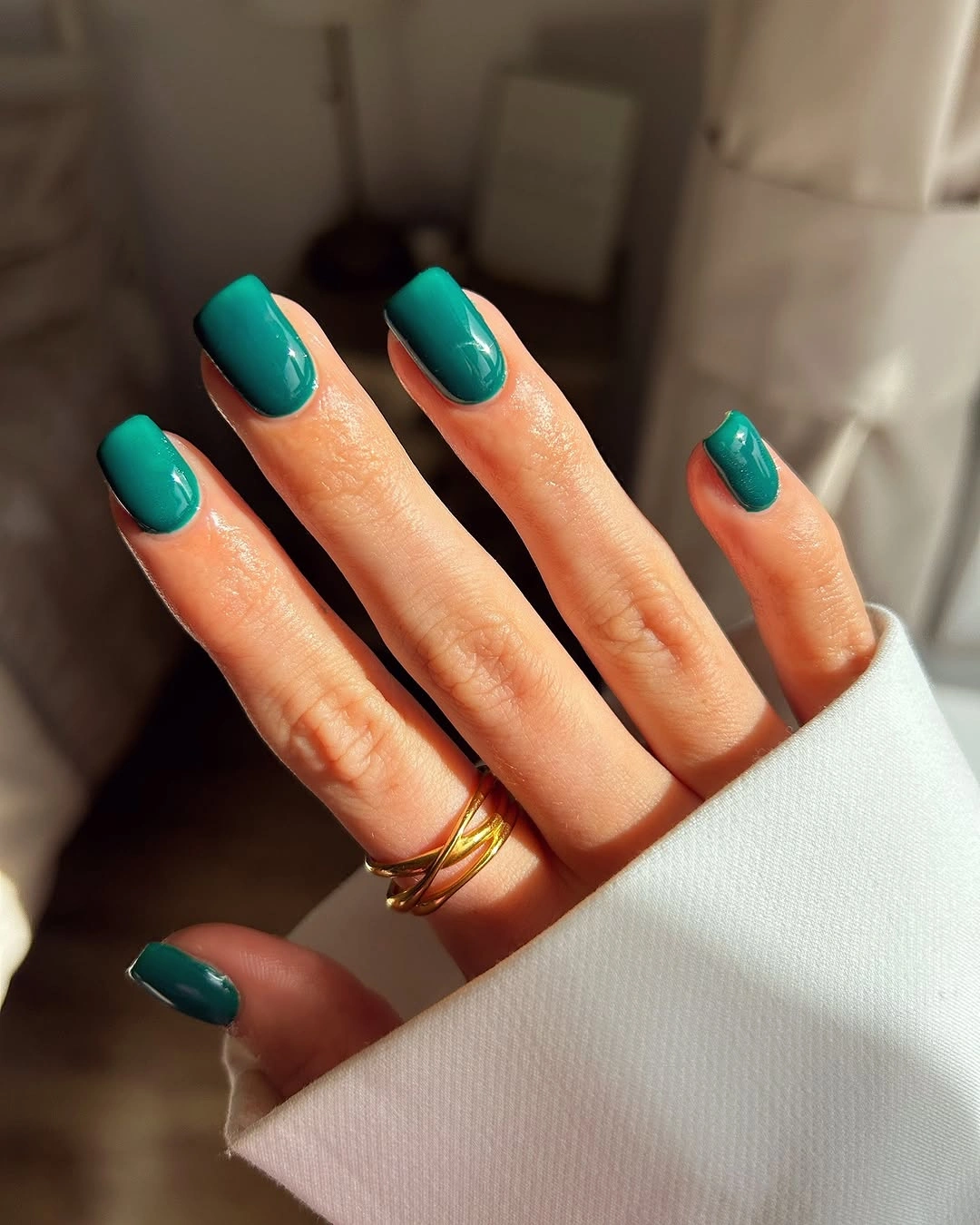
Keep the teal solid if you want a simple color statement, or add one pale dot rather than a full motif. The square outline makes the shade look crisp, while a rounded tip would soften its intensity. If the teal feels too bright, shift toward a darker blue-green without changing the finish or the short proportion.
The design stays simple because saturation provides enough interest on its own. Teal creates a clear color block, gloss supplies movement, and the square edge gives the hand structure without extra decoration. The tradeoff is visibility of surface marks: jewel tones and clean corners reveal uneven edges, so a single-color set still needs a careful finish.
Nude with Tiny Multicolor Dots
Short rounded nails use a pale nude base with small red, orange, green, and blue dots near the edges, plus a few simple white curves. Most of the surface remains open, so the colors arrive as tiny points instead of a dense pattern. The glossy finish and rounded shape keep the multicolor detail playful, light, and compact.
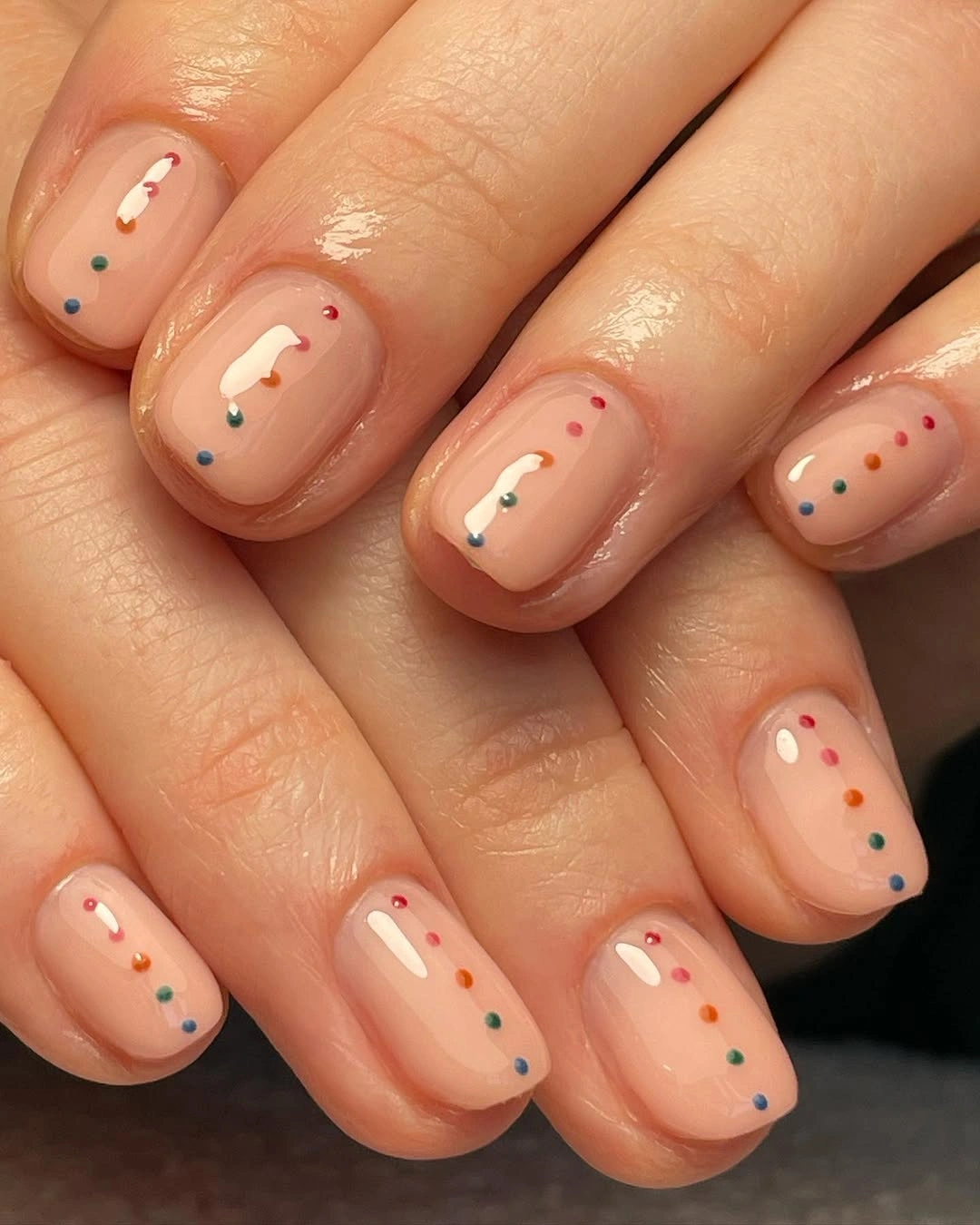
Use three dot colors instead of four if you want a calmer palette, then repeat them in the same order on two fingers. A very short nail benefits from fewer, larger dots, while a medium rounded surface can hold a small line alongside them. Keep the nude base visible because it is the visual pause that makes the colors feel gentle.
This design is simple through scale and spacing. Nude supplies the open field, tiny dots add a soft rhythm, and the white curves provide a small echo without becoming a full motif. The practical limitation is consistency: when the dots are too close or vary widely in size, the airy effect can turn into visual noise on a small nail.
Burgundy with a Clean White Dot Rhythm
Short rounded nails are painted dark burgundy and covered with small white dots that repeat across the surface. The glossy base remains visible between the marks, while the regular pattern creates a graphic rhythm without requiring a second color family or a complicated image. Sunlight and gold rings add warmth around the hand, but the manicure stays compact and clear.
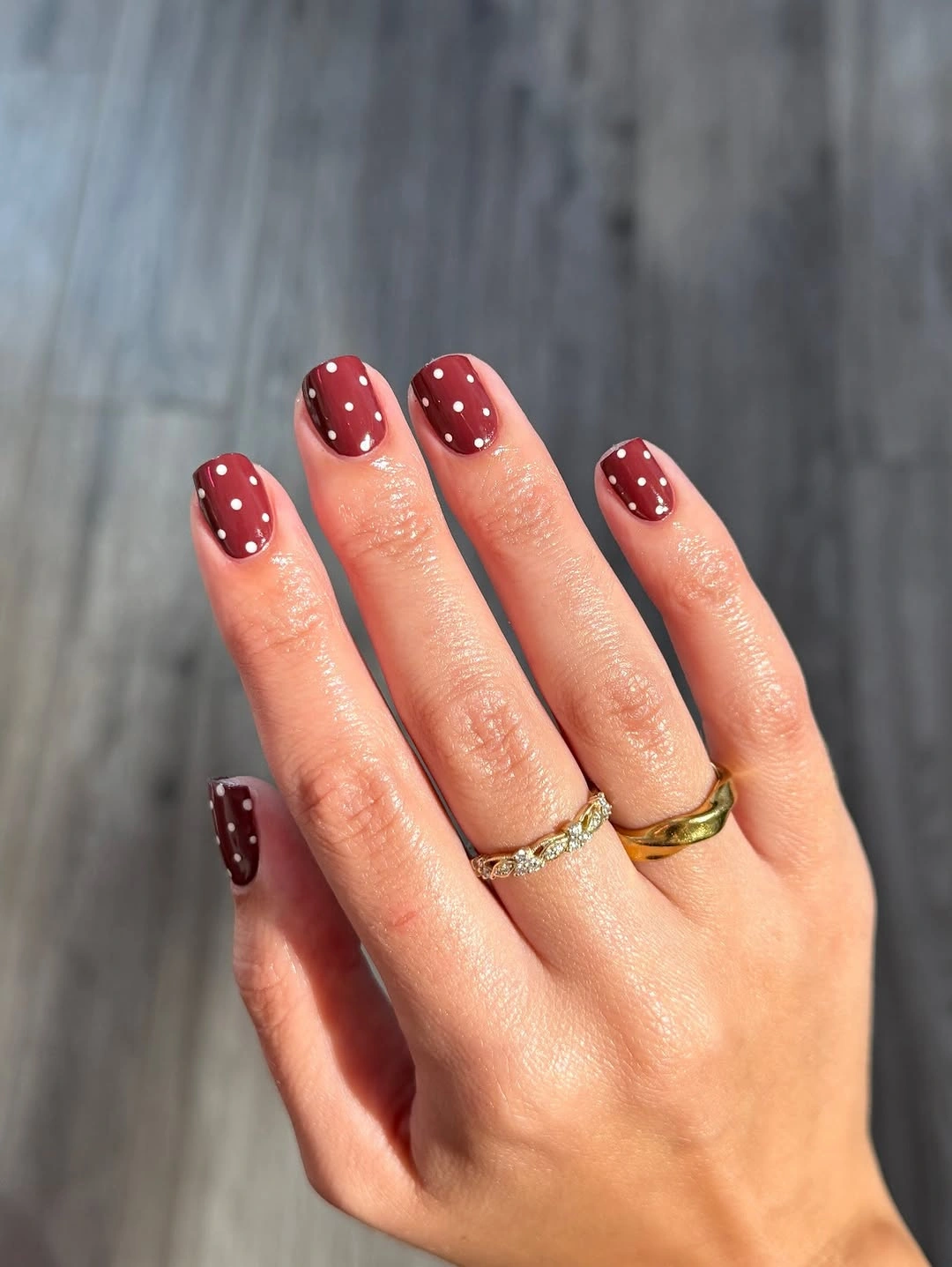
Keep the dot spacing generous if you want the burgundy to remain the dominant field. A shorter nail can use three or four dots in a vertical curve, while a medium rounded tip can hold a denser arrangement. If the pattern feels too playful, place it on two accent fingers and leave the rest in solid wine.
The dots soften burgundy by introducing repeated light rather than a large pale accent. The rounded shape keeps the pattern friendly, the glossy finish gives the dark base depth, and the consistent mark size creates cohesion. The tradeoff is precision again: a calm polka rhythm depends on spacing that looks intentional rather than randomly scattered.
Olive, Blush, and Fine Gold Lines
Short square nails alternate muted olive green and pale pink, with thin gold-colored curves and small abstract marks on the light accents. The olive fingers provide earthy depth, while blush opens the palette and the narrow gold lines add a refined point of light. A black sleeve and gold rings echo the contrast without taking attention from the short shape.
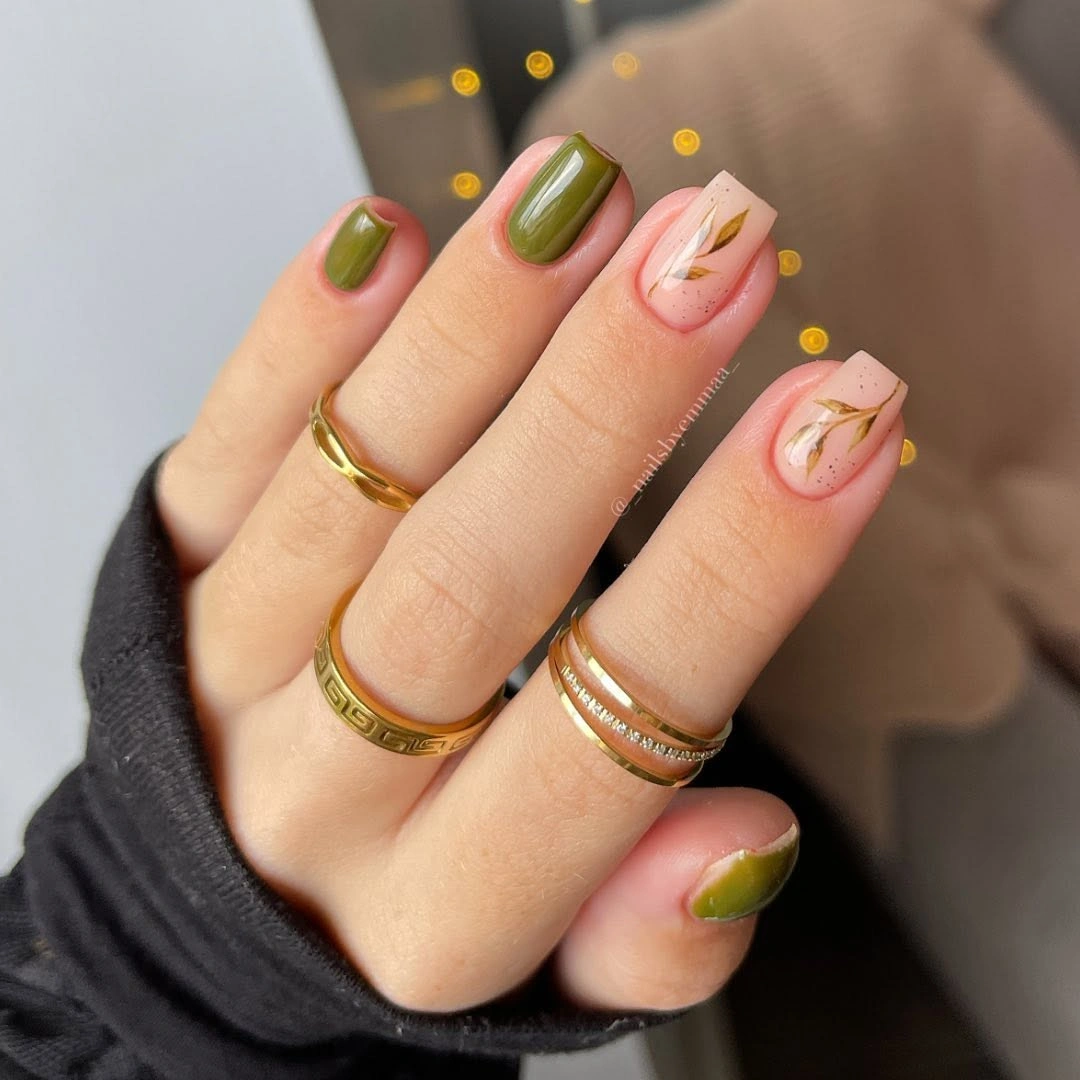
Keep the gold detail on two pale fingers and let the olive nails remain solid for the simplest arrangement. A short square can support one curved line near the edge, while a slightly longer tip can hold a second mark with more space. Avoid adding another saturated shade, because the olive and blush relationship already provides enough contrast.
This design feels romantic because the colors stay muted and the ornament remains thin. Olive grounds the hand, blush softens the contrast, and gold draws a quiet line through the open accents without filling them. The limitation is edge precision: the short square shape makes the line placement easy to see, so restraint must be paired with consistent spacing.
Warm Solids with Tiny Animal-Like Accents
Short rounded nails alternate glossy burgundy, brown, and pale nude, while two light fingers carry small orange-brown animal-like faces with white and black details. Most of the hand stays solid, so the illustrated accents feel like a gentle surprise rather than a full character theme. A textured towel gives the warm palette a soft backdrop and keeps the compact tips visible.
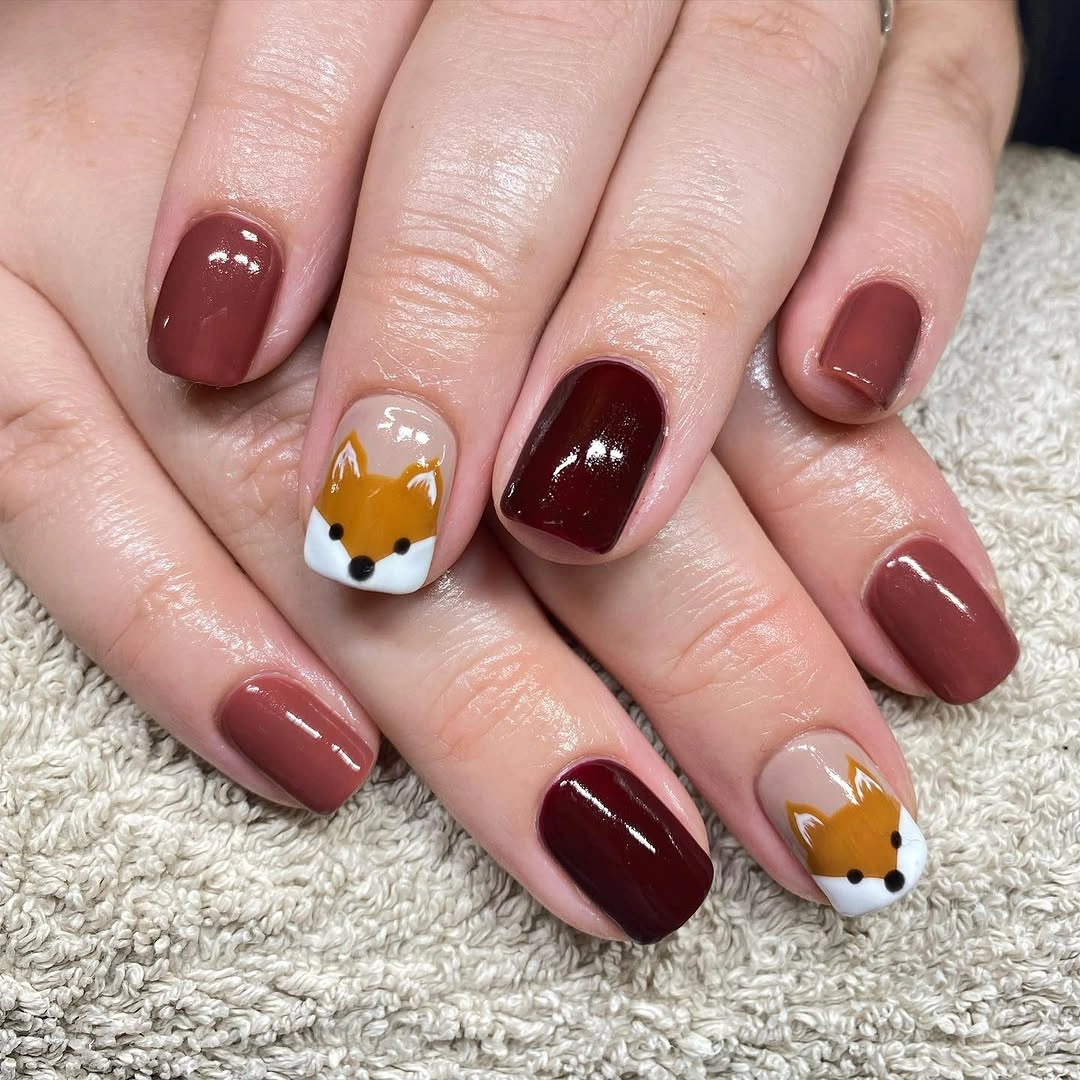
Use one pale accent finger if you want to make the idea simpler, and keep the face-like details broad enough to read at short length. Solid burgundy and brown can remain on the surrounding fingers, because they echo the warm colors inside the tiny illustrations. If the motif becomes too specific or crowded, replace it with two simple dots and a small curved mark.
The appeal comes from the contrast between a restrained base and a small narrative detail. Burgundy and brown create a fall foundation, nude opens the accent, and the orange-brown marks add warmth without changing the shape. The tradeoff is legibility: tiny character-like art can lose its expression quickly, so a simplified accent may be more graceful than a crowded one.
Pale Flowers with Burgundy Centers
Short rounded nails use pale pink-nude, white, and burgundy accents, with small white flower-like shapes and darker centers on selected fingers. Solid burgundy and cream fingers repeat beside the floral nails, giving the light pattern a deeper seasonal anchor. The rounded outline keeps the design delicate, and a neutral gray background lets the small flowers remain visible.
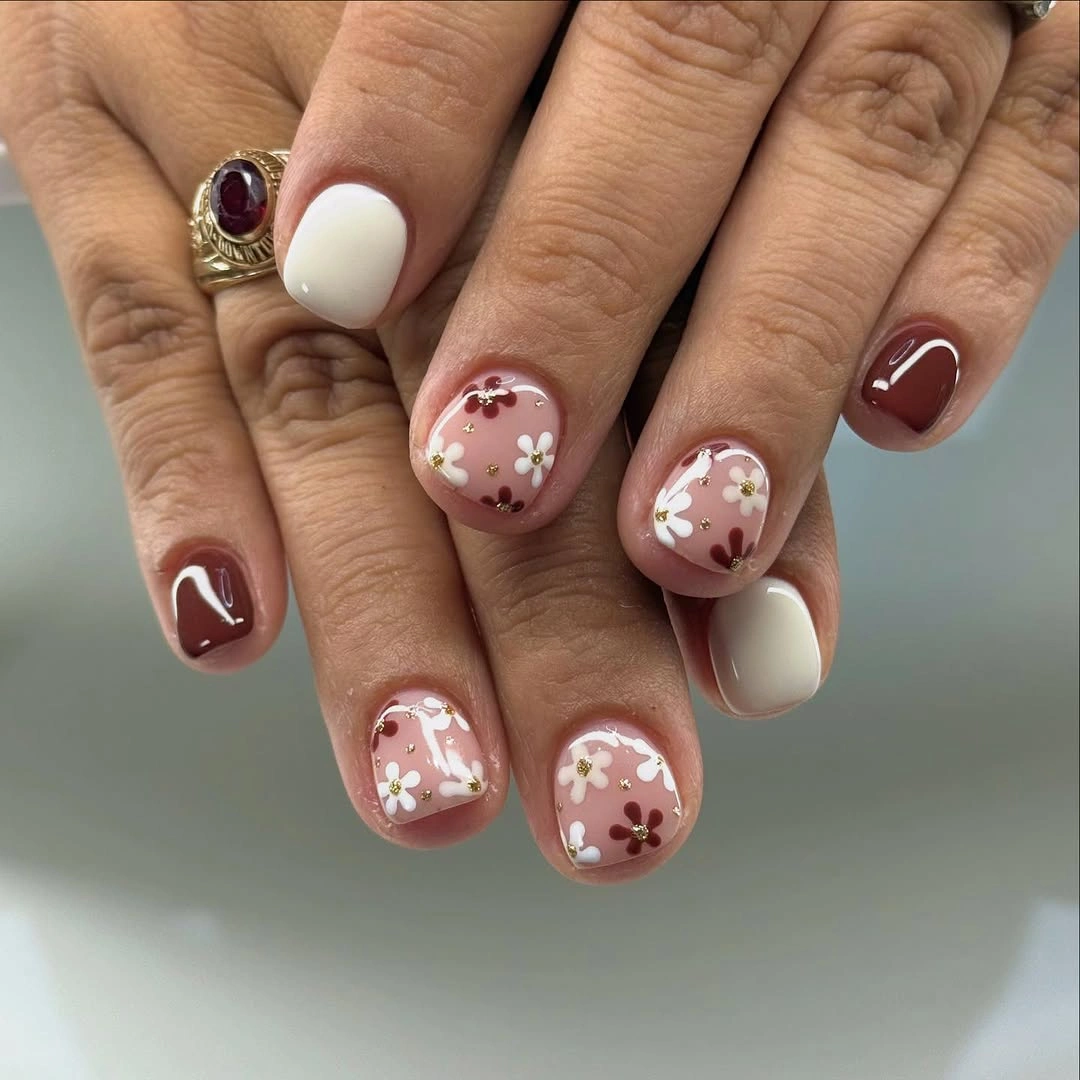
Keep two floral fingers and leave the rest in nude or burgundy if you want a softer result. A short nail can carry a few petals around one dot, while a slightly longer rounded tip may support a second small bloom. Use burgundy in the centers or nearby solid nails so the light flowers feel connected to the palette.
The manicure is romantic without becoming ornate because the flowers stay small and the colors remain limited. Nude supplies air, white adds softness, burgundy provides depth, and the rounded shape keeps the contrast gentle. The practical limitation is detail wear: tiny petals and centers need clear spacing, so a simplified flower will often age more gracefully.
Brown and Burgundy with One Gold-Shimmer Accent
Short rounded nails alternate dark brown, burgundy, pale pink, and one bright gold-shimmer accent, with fine gold-colored lines on a few fingers. The warm dark shades ground the hand, while the reflective nail supplies a small point of light instead of a full glitter set. A white sleeve and soft gray background keep the final palette calm and close to the simple brief.
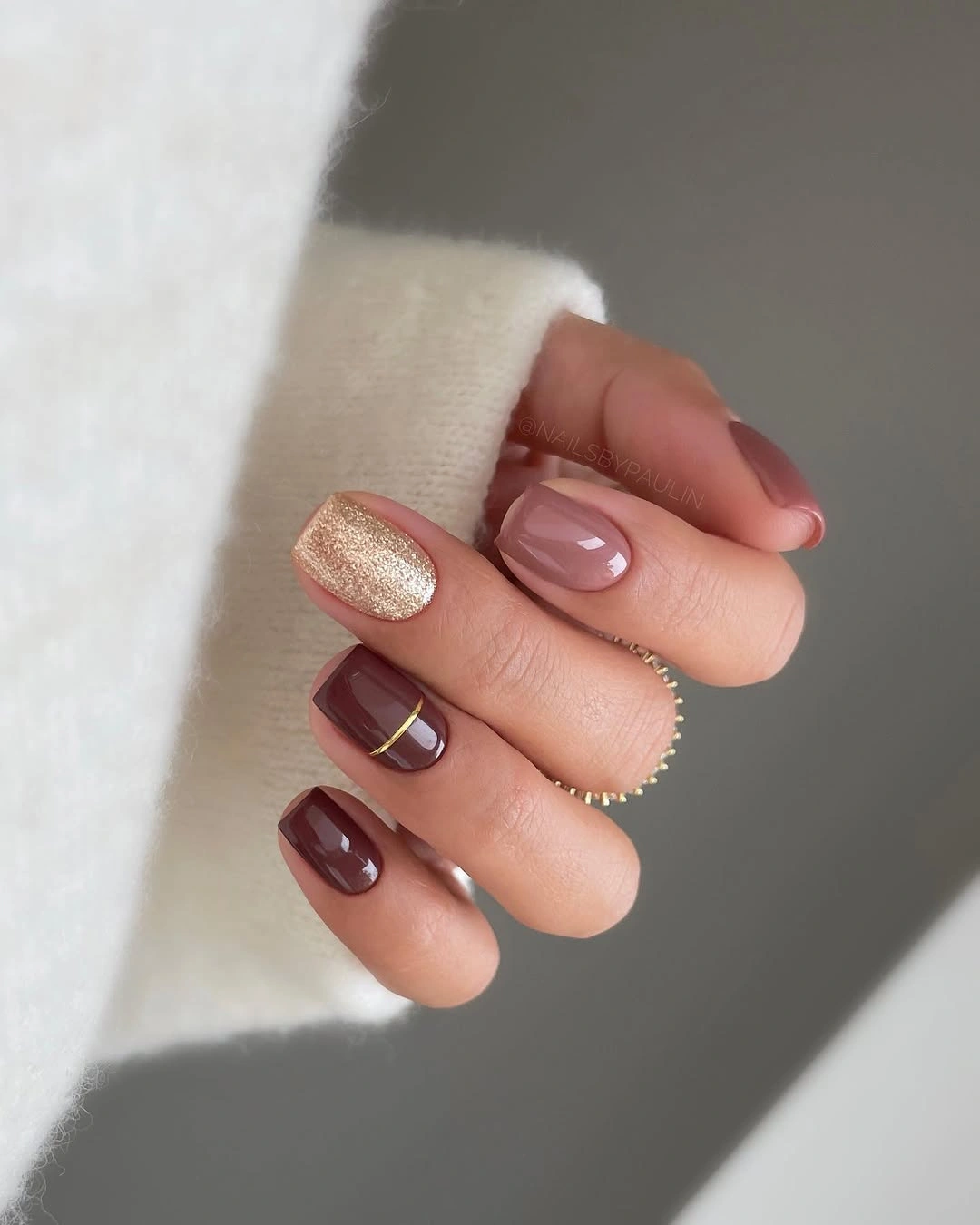
Keep the shimmer on one finger and reduce the lines to a single narrow curve if you want the quietest version. The rounded shape already softens the dark colors, while a short square would make the same palette more graphic. Let brown and burgundy repeat across the hand so the gold remains an accent rather than a new color story.
This closing idea brings together the collection’s gentlest tools: related warm shades, one reflective surface, and a small line instead of dense art. Brown and burgundy provide depth, pale pink opens the mix, and gold catches light without requiring long length. The tradeoff is surface sensitivity, since a shimmering accent can show wear sooner than the solid neighboring nails.