September hair colour trends often sit between richness and light: a dark base can carry copper ribbons, a warm red can become softer through waves, and a pale face frame can change the impression of an entire style. This collection moves across brunettes, coppers, burgundy, mauve, plum, and multi-tone panels. The common thread is visible placement, not a single formula or salon method.
Color looks different when it is spread through loose waves, concentrated around the face, hidden beneath a darker top layer, or placed on a short bob with a clean outline. Read each example through the silhouette as well as the shade. A practical adaptation may mean shortening the length, narrowing the lightest panel, or keeping the strongest tone away from every section of hair.
Caramel Ribbons Through Brunette Waves
Long brunette hair falls in loose waves with warm caramel and lighter brown ribbons through the lengths and near the face. The base remains deep, so the lighter pieces appear as movement rather than a full color change. Waves help the ribbons catch light in separate sections, giving the style depth without breaking its overall brunette silhouette.
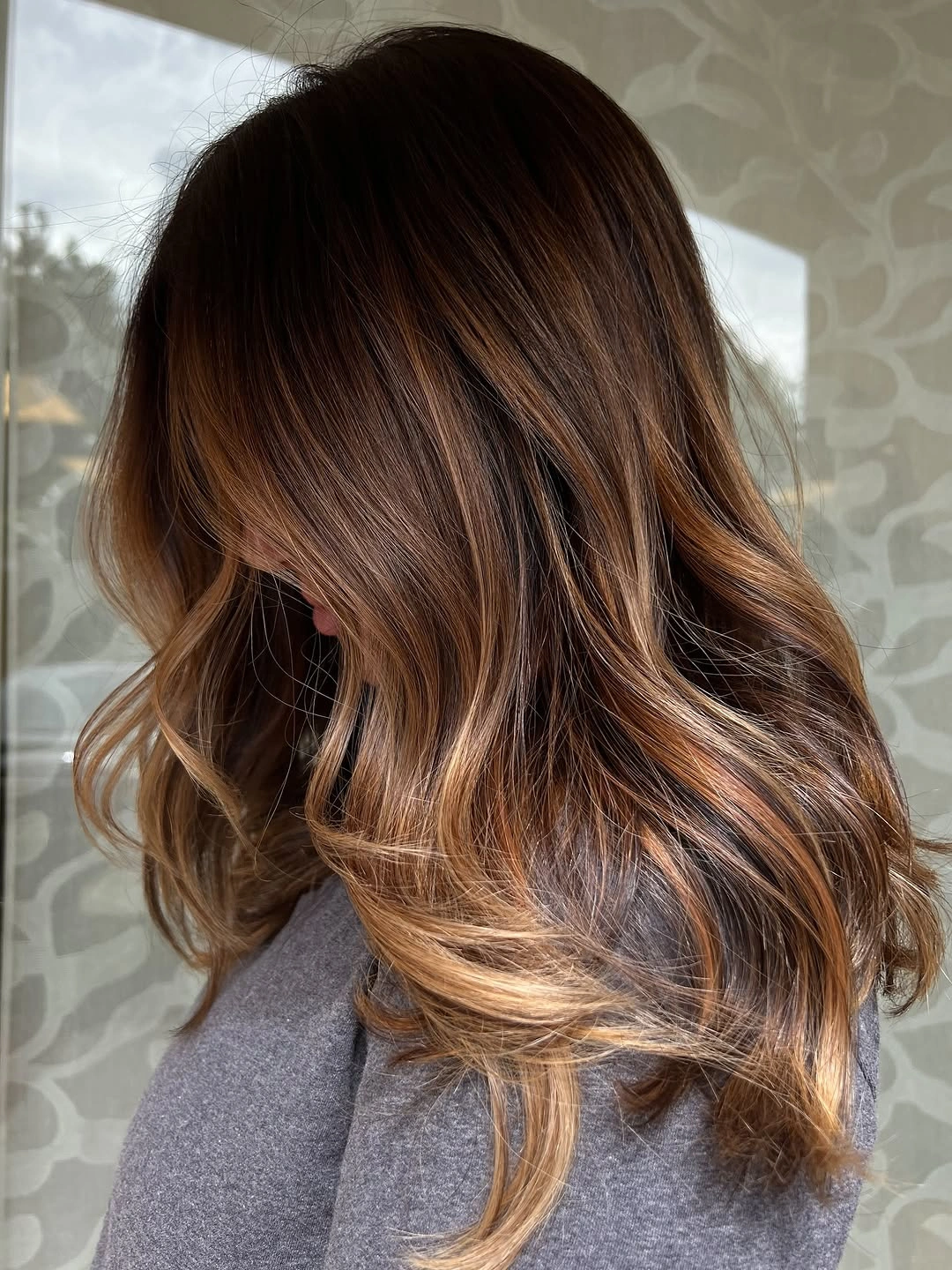
Keep the lighter pieces concentrated around the front and lower lengths if you want a quieter update. A shoulder-length cut will retain the warm contrast while reducing the amount of hair carrying the color. If the waves are worn straighter, the ribbons may look more graphic, so the placement should remain soft enough to work in both textures.
The visible color is strongest where the hair bends and separates, while the deeper base provides a calm frame. Long length gives the warm pieces room to blend, but it also means the contrast remains visible through a larger area as it grows. Choose this direction when you want dimension that reads gently rather than a single bright block.
Soft Copper With Wide Face-Framing Waves
Long copper hair is shaped into broad, soft waves with a center-to-soft side direction and movement around the face. The warm color appears consistent, while the wave pattern creates changing highlights across the lengths. Because the tone is the main statement, the silhouette stays simple and lets the color feel rich without relying on extra streaks.
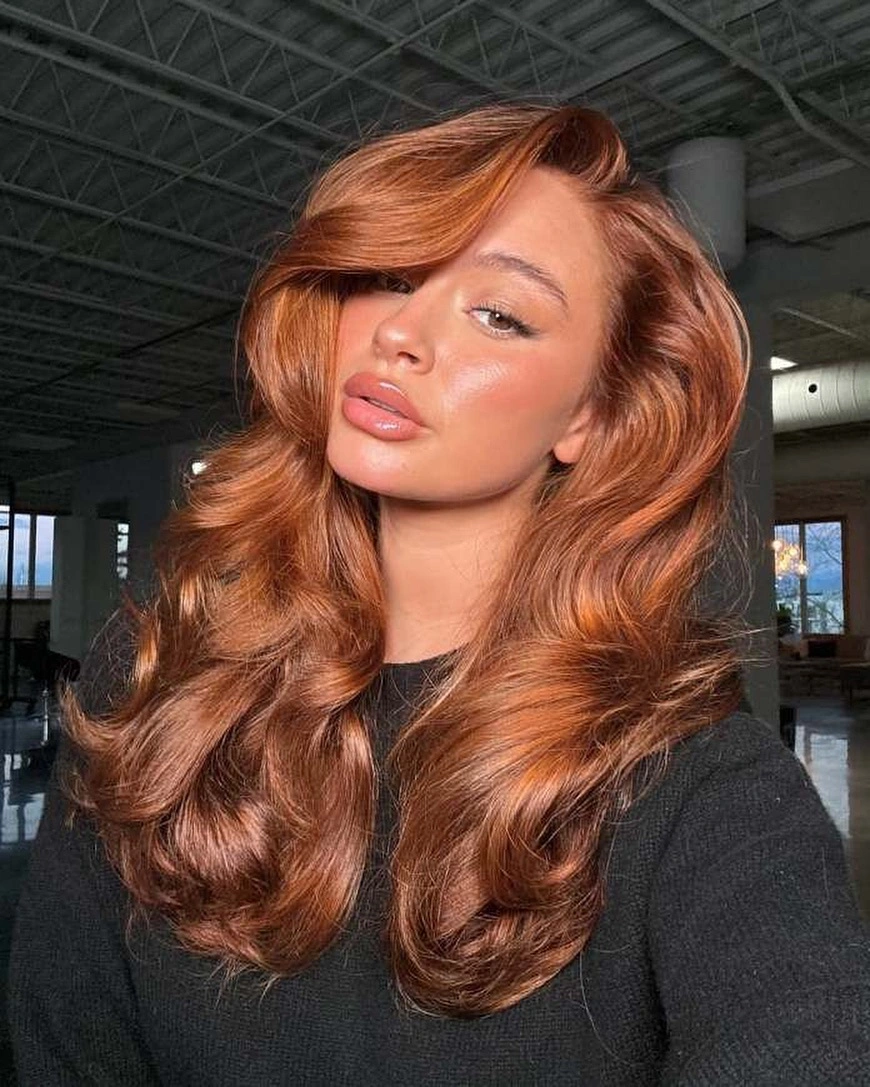
A collarbone length will keep the copper visible but make the style feel lighter and easier to reshape. Looser waves can soften the color, while a stronger part will change where the warmest movement sits around the face. If the tone feels too vivid, a deeper copper-brown can keep the same warmth with less saturation.
Large waves create fullness around the face and shoulders, so the style has a visible volume commitment as well as a color one. A strong warm tone may also make uneven fading more noticeable than a muted brown would. Choose it when the goal is a welcoming, high-impact copper that still relies on a clean, uncomplicated outline.
Dark Brown With Copper-Auburn Ribbons
Long dark brown hair carries copper-auburn ribbons through the mid-lengths and loose waves. The warm strands are more visible where the hair separates, so the color feels layered instead of evenly striped. The darker base keeps the overall silhouette deep, while the copper marks give the waves a gentle seasonal glow.
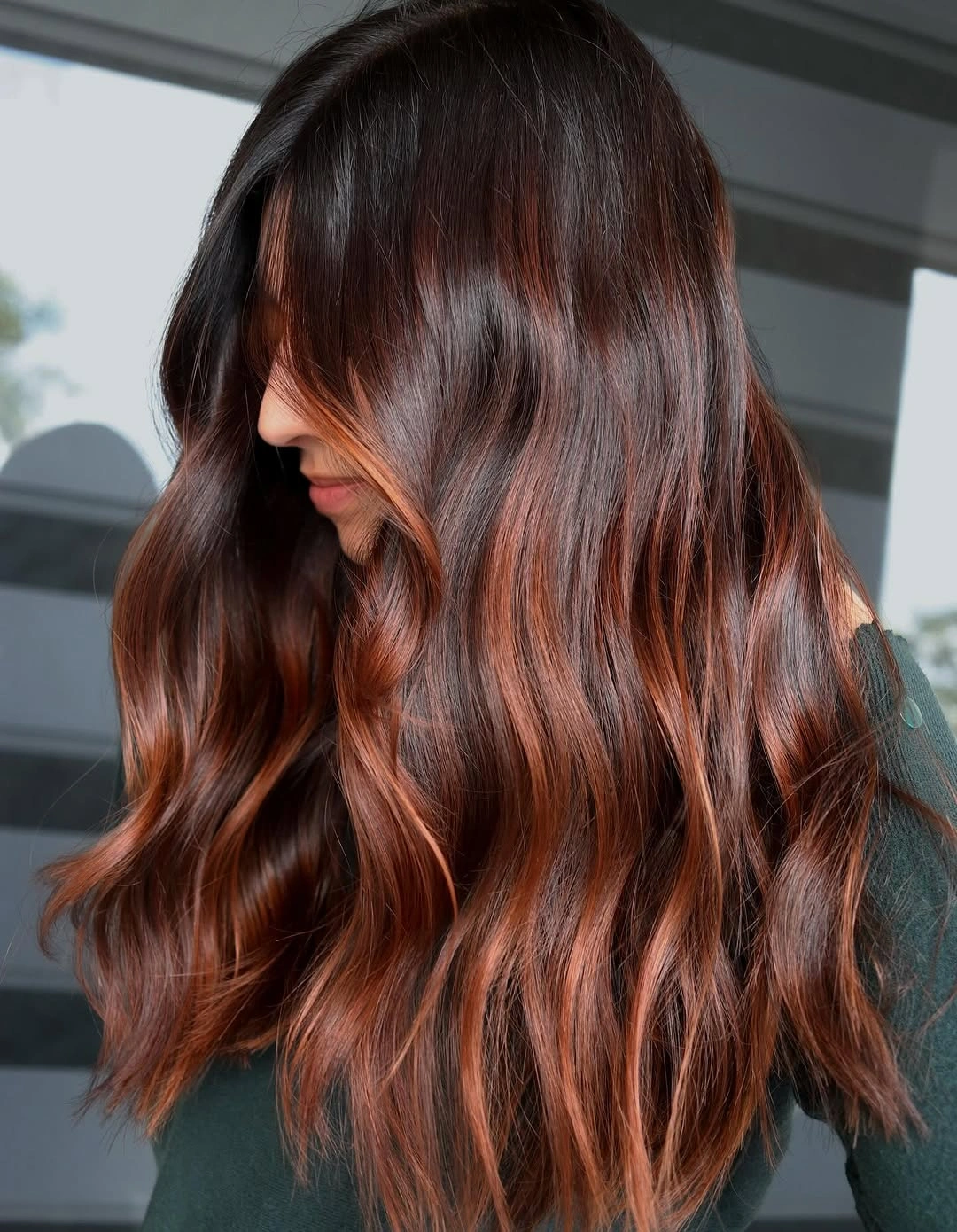
Place the warm ribbons mainly around the front and ends for a restrained version, or keep them underneath so they appear only when the hair moves. A shorter layered cut will make the contrast more concentrated. If you wear the hair straight often, use broader, softer sections rather than many fine ribbons that could look busy.
The color relationship is the key feature: deep value underneath, warm light moving through it. Long waves show that relationship well, but the lower sections may need more attention to keep the copper distinct. Choose this approach when you want a brunette base with visible warmth and prefer contrast that appears in motion.
Dark Length With Bright Copper Lower Sections
Very long dark hair with curtain bangs carries bright orange-copper sections around the front and through the lower layers. The darker top gives the style a stable frame, while the vivid color appears when the hair parts or moves. Curtain bangs connect the darker crown to the brighter pieces, making the transition feel intentional around the face.
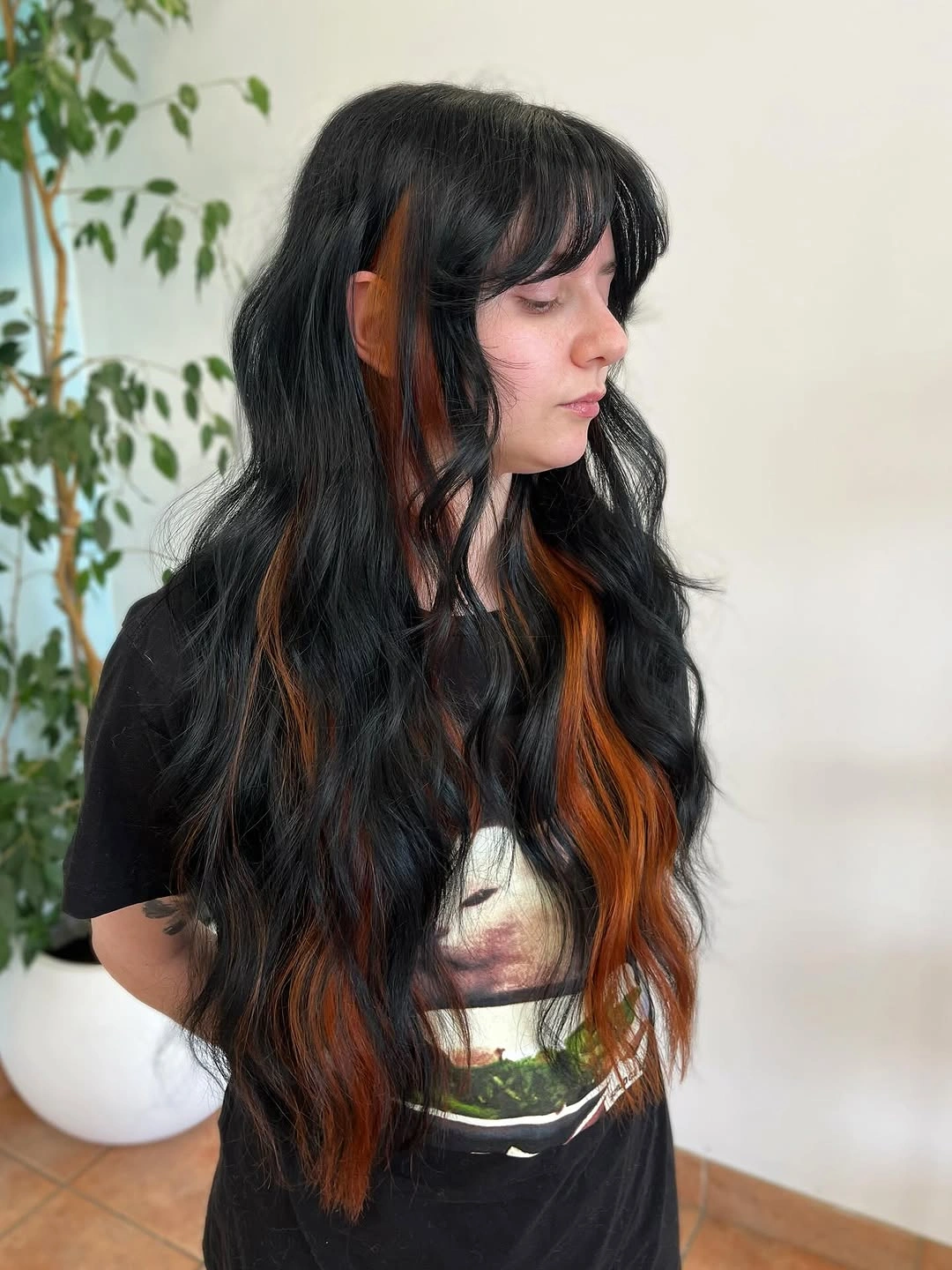
For a softer adaptation, place the bright tone only beneath the front layers or use a muted copper panel near the ends. A shorter cut will make the contrast more concentrated and easier to see, while keeping the top dark will preserve the peek-through effect. The strongest color should have enough surrounding dark hair to remain a deliberate accent.
Vivid lower sections require more visible upkeep than a close brunette blend, especially when the colors need to remain separate. The long length makes the contrast expressive but also increases the amount of color that must be refreshed. Choose it when you want the color to appear as a reveal rather than a full change across the entire head.
Chocolate Waves With Soft Face Framing
Long chocolate-brown hair uses soft waves and face-framing layers, with a smooth-looking surface that keeps the deep color coherent. There are no sharp highlights competing with the outline, so the style gains its depth from the shape and the way the waves separate near the ends. The front layers prevent the long silhouette from feeling heavy around the face.
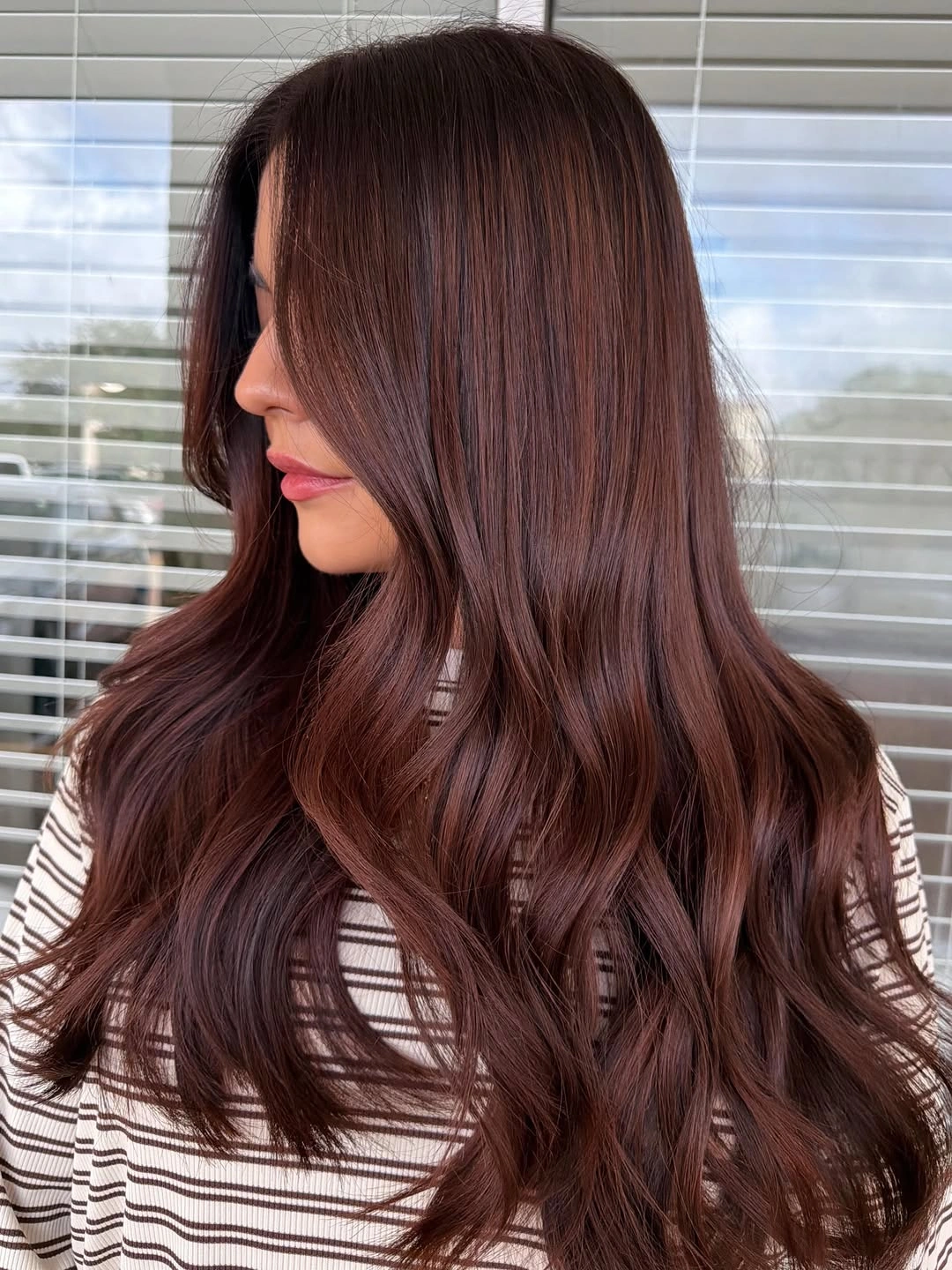
Add a few warm brown pieces near the face if you want more visible dimension, or keep the color solid for a quieter result. A shorter layered cut will make the ends feel lighter, while a smoother finish will emphasize the deep, continuous color. The most useful change is often where the front layer begins.
The solid brunette surface is simple to coordinate, but the long waves still require enough shaping to keep the ends from looking dense. Face-framing pieces create movement without changing the color story. Choose this option when you want richness and softness together, with the silhouette doing more work than visible contrast.
Warm Bronde With Large Loose Waves
Long light brown or bronde hair is parted near the center and styled in large waves, with lighter front pieces that brighten the face. The base and lighter sections remain close enough to blend, while the volume distributes the contrast across the sides and ends. The result feels airy because the waves are broad and the color transition is not sharply blocked.
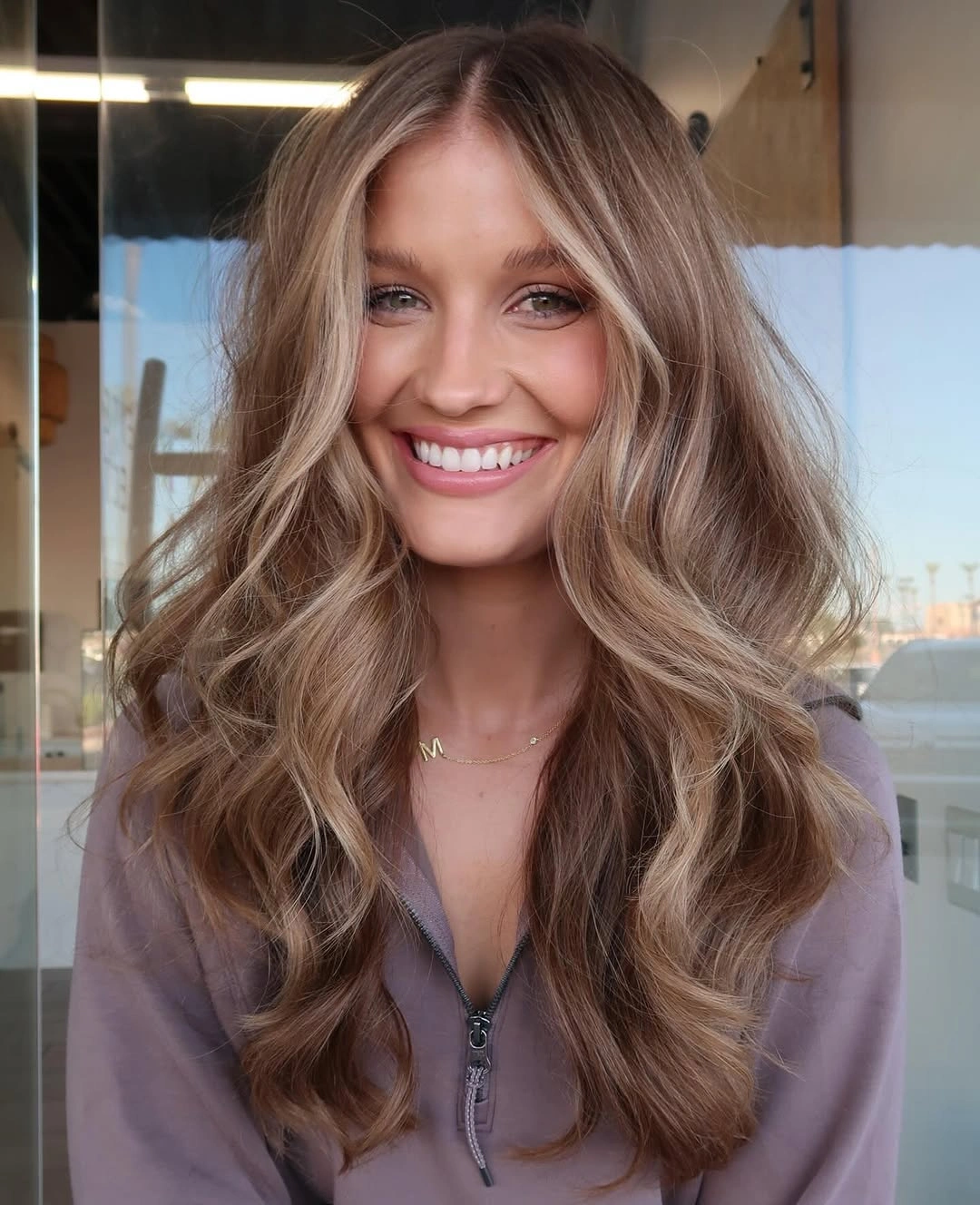
A shoulder-length version can keep the lighter front pieces while reducing the amount of hair that needs shaping. Use a softer wave for a more relaxed finish, or a smoother surface when you want the color placement to look more graphic. If the lightness feels too strong, warm the base visually with a deeper brown around the crown.
Volume is concentrated around the face and lower lengths, so the hairstyle has a fullness tradeoff as well as a color one. The long waves display the warm variation clearly, but a flatter finish may make it appear subtler. Choose it when you want a light, dimensional brunette direction with a gentle transition rather than a bold stripe.
Even Copper Through Soft Waves
Long copper-auburn hair is parted near the center and shaped into smooth waves, with the warm color carried consistently through the lengths. The wave pattern changes how the tone catches light, creating dimension without visible sections or contrasting panels. The silhouette remains simple, which allows the saturated warmth to stay central.
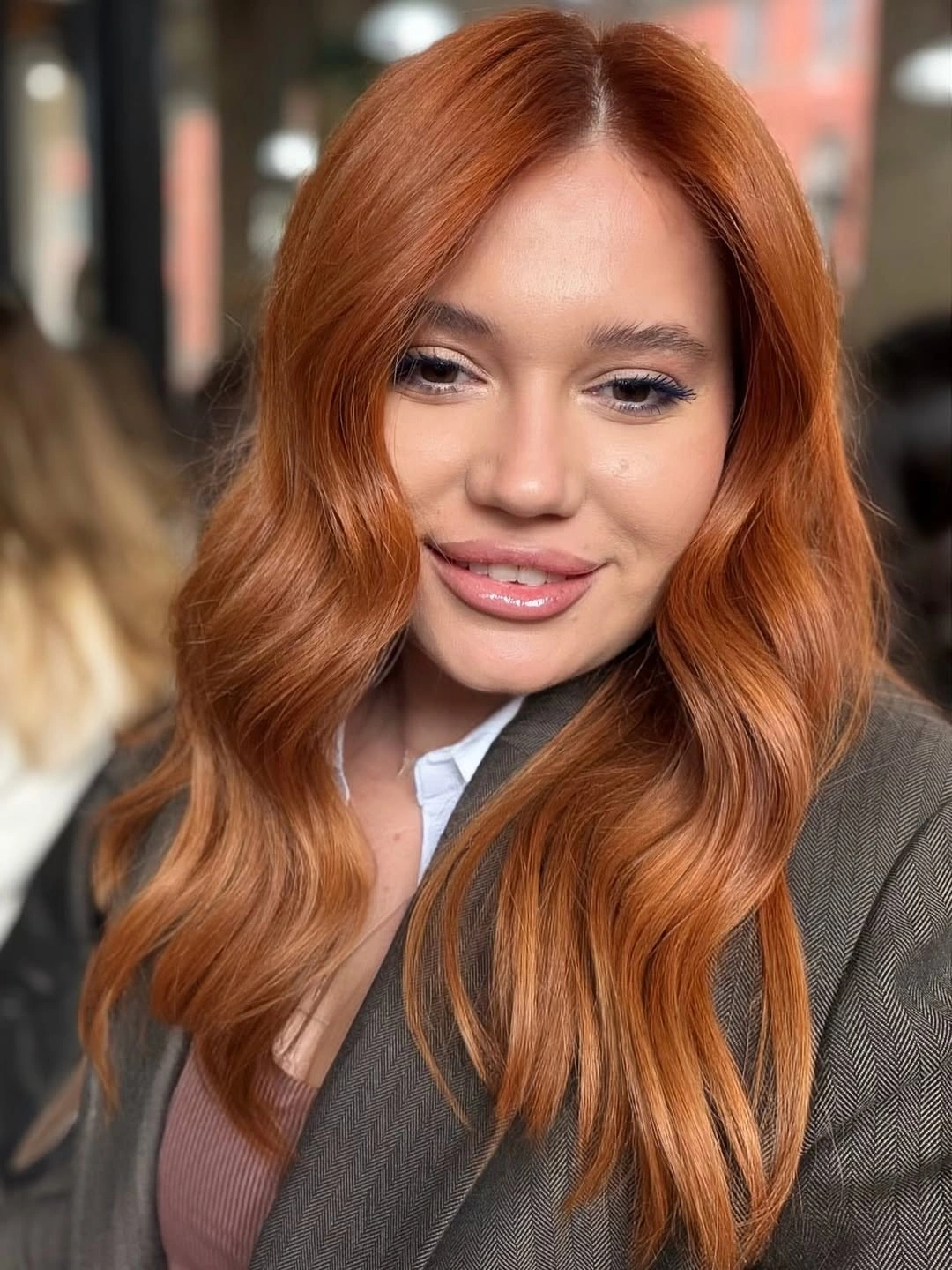
Try a collarbone length if you want the same color to feel less heavy, or loosen the waves so the surface looks more relaxed. A deeper auburn will lower the brightness while preserving the warm direction. Keep the part soft if the goal is to distribute the color evenly around the face. That adjustment changes the silhouette’s weight without losing the warm, dimensional direction of the color.
The even color is easier to read than a multi-tone design, but a strong warm shade can make fading or tonal changes noticeable. The long waves create a full outline around the shoulders, so regular shaping matters to the overall impression. Choose it when you want the color itself to provide the seasonal mood.
Deep Auburn With Pronounced Movement
Long deep auburn hair falls in pronounced waves, with a smooth crown and fuller mid-lengths creating a strong side silhouette. The color stays close from root area to ends, so the visual interest comes from the way the waves catch light across the warm surface. The style feels polished-looking without needing visible streaks or a busy part.
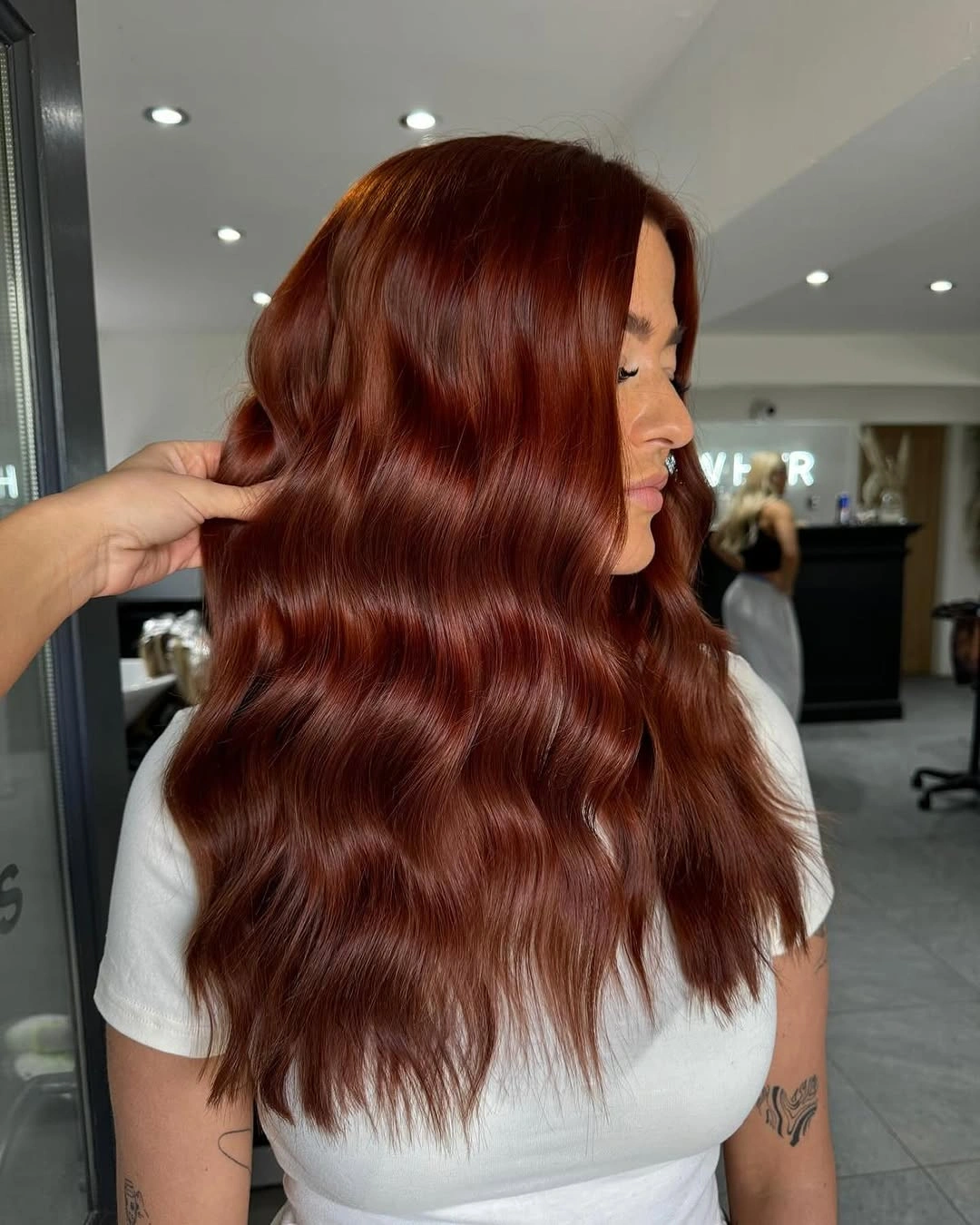
A looser wave will make the auburn feel more relaxed, while a shoulder-length cut will sharpen the outline around the face. If the color feels too dark, a warmer front section can open it without changing the full base. Keep the crown smooth-looking if you want the waves to remain the main movement.
The full waves create a generous shape around the shoulders, which may require more styling commitment than the color alone suggests. The deep tone is cohesive, but it will show uneven fading across the lengths. Choose it when you want a rich red-brown silhouette and are comfortable letting movement, not contrast, carry the result.
Short Copper Bob With Tousled Waves
A short copper-brown bob sits around the jaw or shoulders with tousled waves, a side-swept direction, and soft volume. The shorter outline makes the warm color feel lively because the ends move close to the face instead of trailing through a long silhouette. The part adds asymmetry, while the compact shape keeps the result focused.
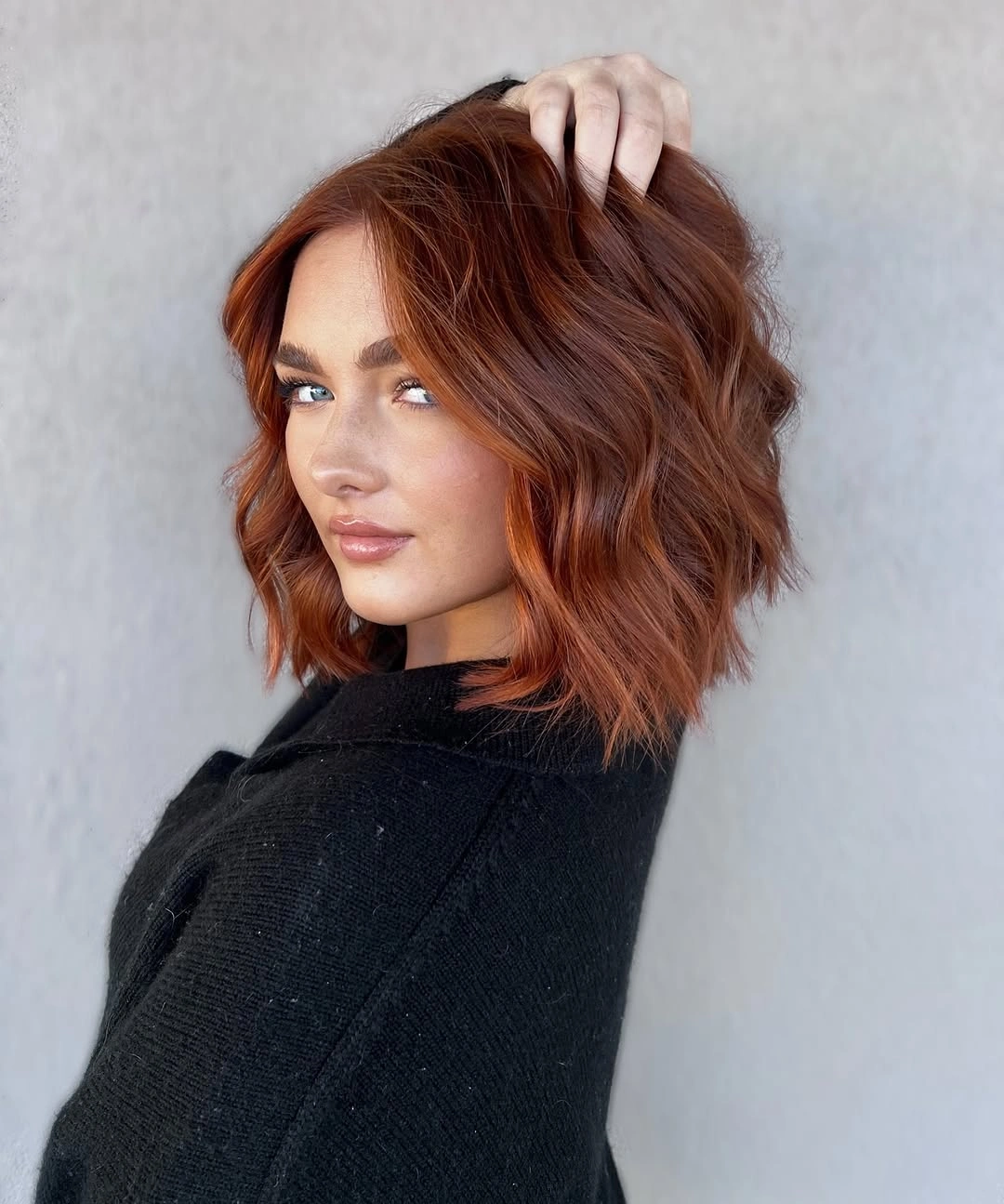
Keep the bob blunt for a cleaner color block, or add lighter front pieces if the copper needs more depth. A longer lob will soften the outline, while a smoother finish will make the warm tone look more uniform. Let the side sweep remain if you want the face-framing movement to stay visible. This keeps the compact cut readable while giving the copper enough variation to avoid looking flat.
Short hair can be easier to refresh overall, but the bob’s line will lose its intended shape as it grows. The copper color is expressive even without extra highlights, so there is no need to add more contrast. Choose it when you want a warm color with a compact silhouette and a little movement around the face.
Bright Orange On A Clean Short Bob
A short straight bob has a vivid copper-orange color and a rounded, clean outline through the back. The even tone looks graphic because there are no visible waves or highlights to interrupt it. The short shape gives the bright color a clear boundary, making the relationship between saturation and silhouette the central design decision.
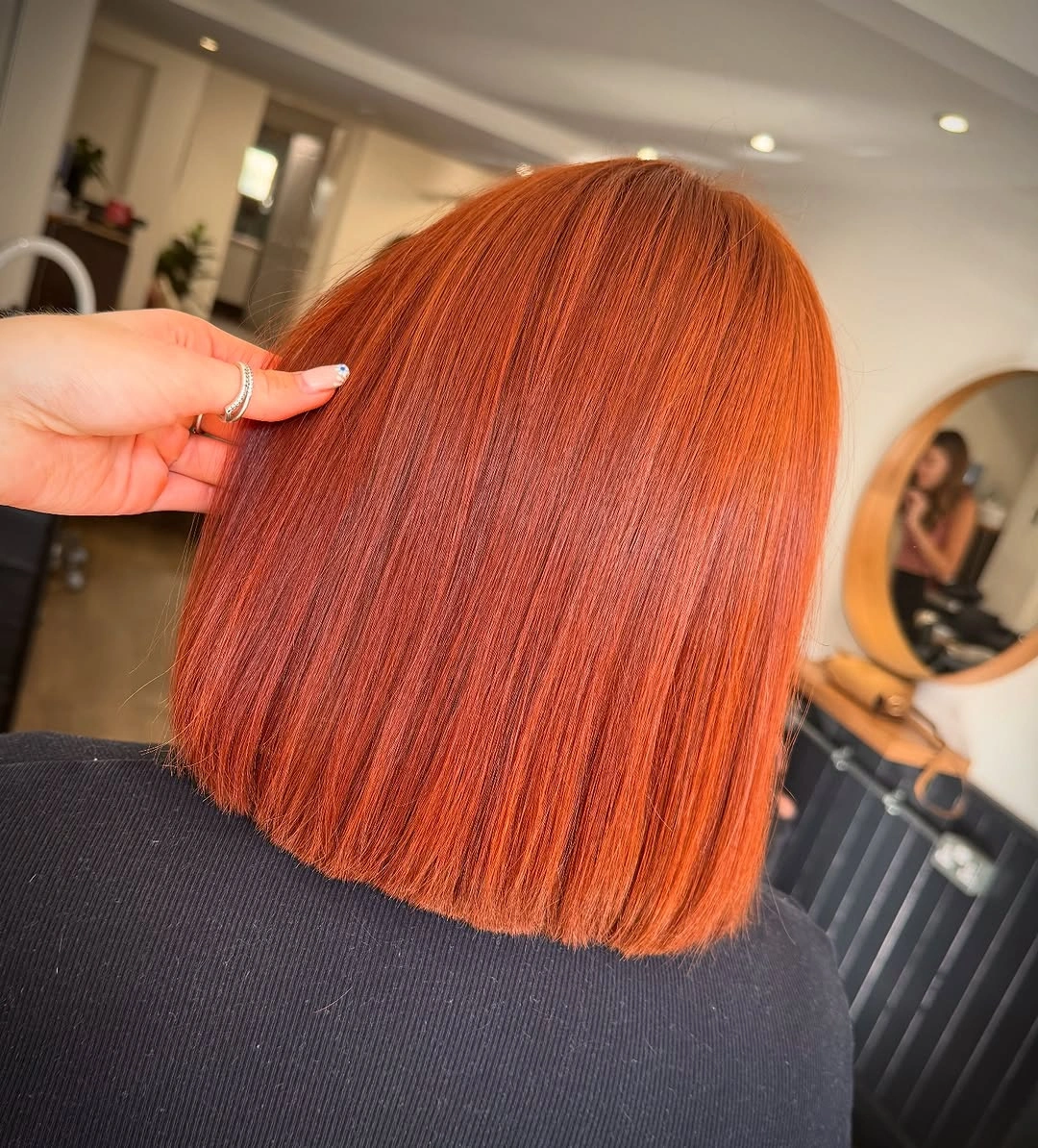
A slightly longer bob will soften the block of color, while a few darker strands near the crown can reduce the uniform effect. If the orange feels too vivid, move toward a deeper copper but keep the straight outline. The color works best when the shape remains simple and the surface is allowed to stay clear.
The compact length makes the color easier to see and potentially easier to refresh, but it also means the bob’s edge needs regular shaping. Bright orange will reveal uneven tone quickly because the surface is so uninterrupted. Choose this look when you want a clean, high-saturation reset and are comfortable maintaining the outline.
Layered Orange And Yellow Warmth
Long wavy hair combines red-orange and golden-yellow sections beneath a deeper red top layer, with the hair gathered partly at the back. The layered placement becomes visible as the waves separate, creating depth through several warm values. The darker top gives the bright colors a frame, so the palette feels expressive but still organized.
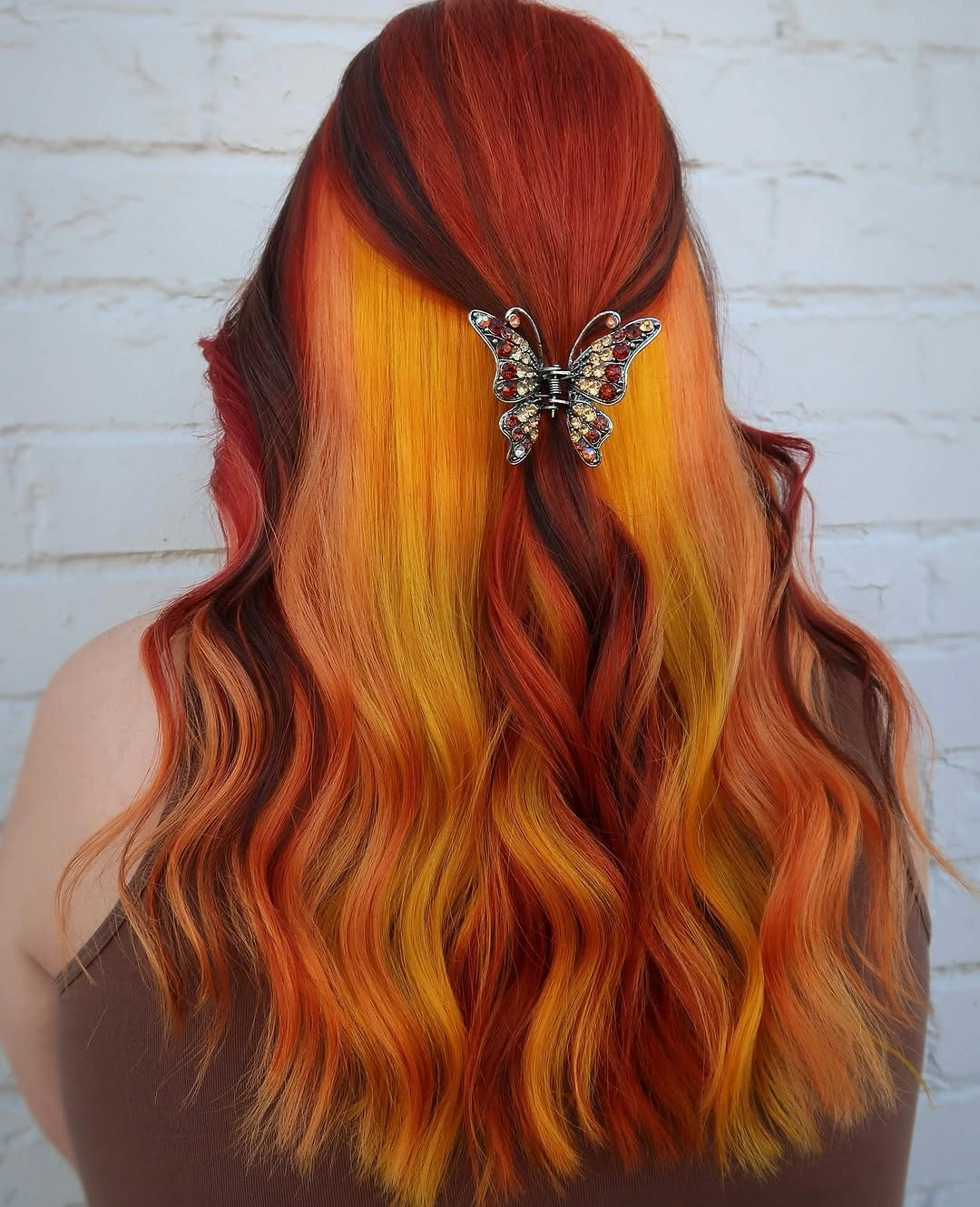
Keep the brightest yellow near the lower layers if you want a peek-through effect, or narrow the warm panels for a softer result. A shorter layered cut will concentrate the contrast and make the color map easier to read. If several warm tones feel demanding, use red-orange and one golden accent rather than all three levels.
Multiple warm sections require more upkeep than a single copper because their separation is part of the visible idea. The waves and partial gathering display the layers well, but a tight style may hide them. Choose it when color depth and movement are more important than a low-maintenance, uniform result.
Burgundy Length With Pale Front Pieces
Long dark burgundy hair falls in loose waves with pale blonde face-framing pieces that brighten the front. The contrast is concentrated near the face, so the deep length remains a rich background instead of competing with the lighter panels. The waves soften the boundary, allowing the two value levels to feel connected rather than sharply divided.
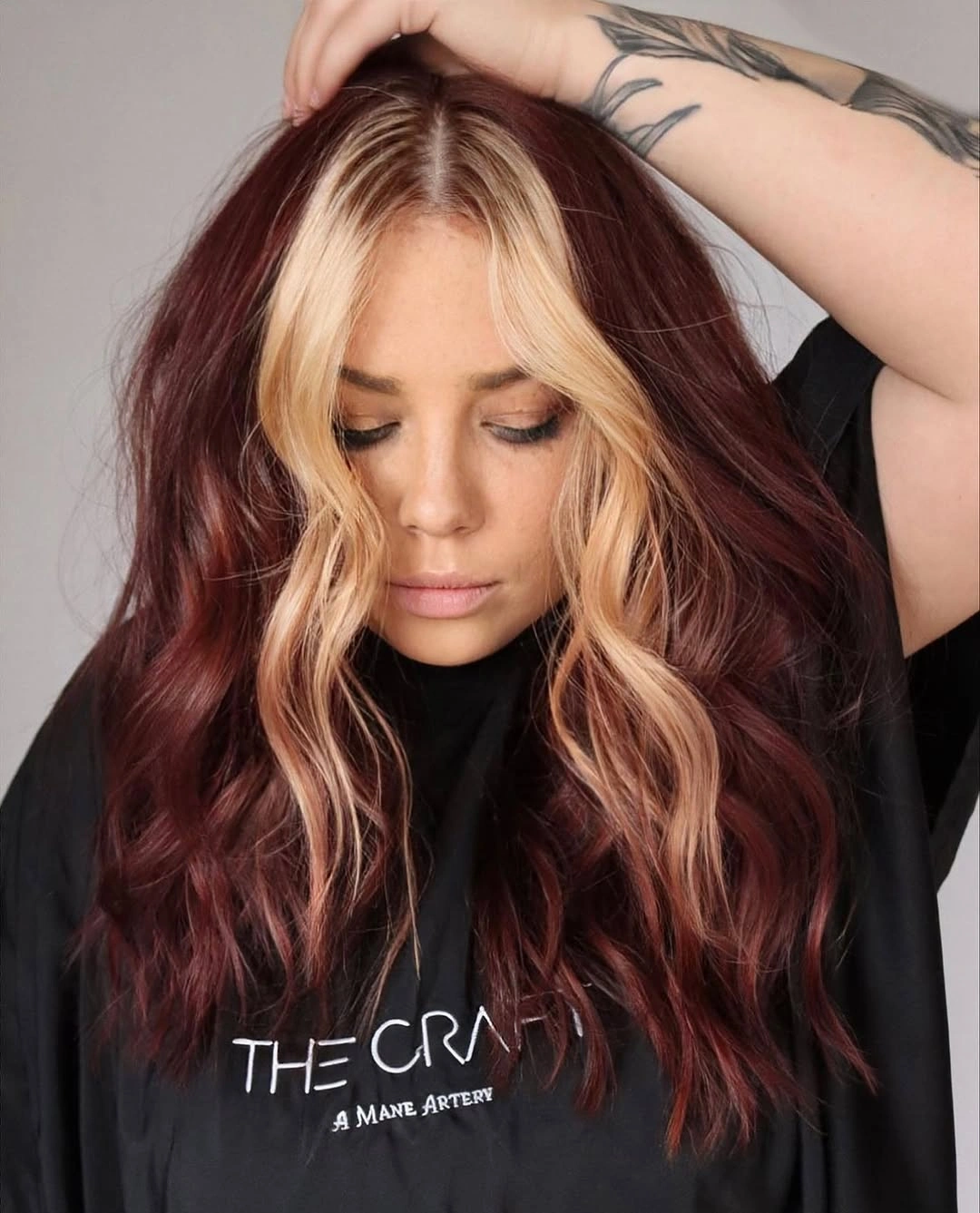
Use a narrower front section or shift the lightness toward warm caramel if the contrast feels too dramatic. A shorter cut will make the pale pieces more prominent, while a longer layer underneath will keep them visually separated. The useful placement is near the face; the rest of the burgundy can stay relatively calm.
The light front pieces will show regrowth or tonal change sooner than the deep length, making them the main upkeep point. The burgundy base helps keep the overall silhouette rich, while the waves stop the contrast from looking rigid. Choose this style when the face frame is the desired change and full-head brightness is not.
Compact Burgundy Bob With Side Fringe
A short burgundy bob has a deep red-purple color, a side-swept fringe, and a smooth curved outline around the jaw. The saturated tone becomes more graphic because the cut is compact and the surface is relatively even. The fringe sends the color diagonally across the face, creating movement without long layers or visible highlights.
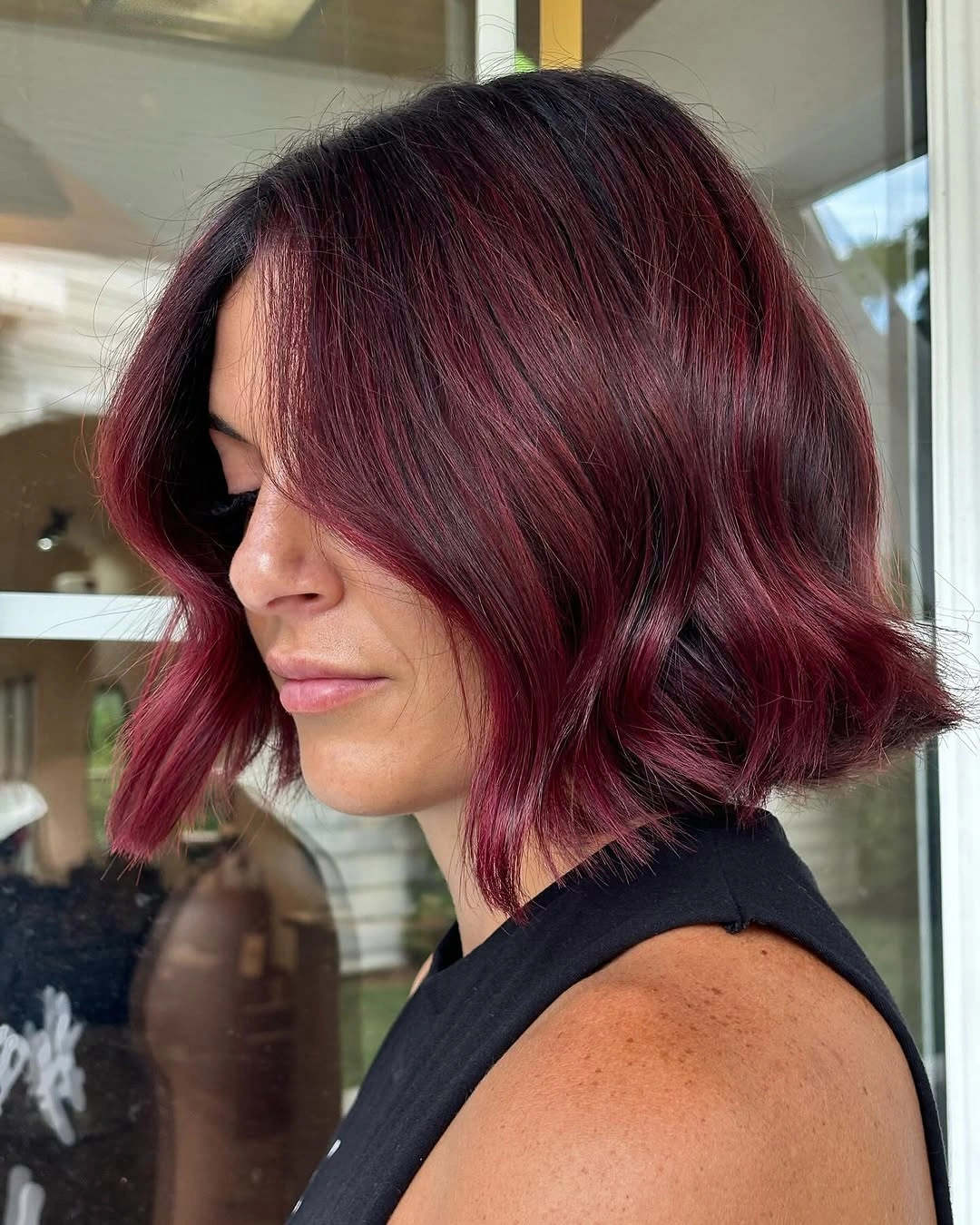
A longer lob will soften the curved edge, while a center part will distribute the color more evenly. If the burgundy feels too deep, a warmer red-brown can keep the same compact shape with less visual weight. Preserve the side direction if you want the fringe to remain the defining detail. That way the color and the curved outline remain coordinated instead of competing for attention.
The short outline may be easier to refresh than long hair, but it will show growth and loss of shape quickly. The color is doing enough work that extra streaks are unnecessary. Choose it when you want a clear red-purple reset with a visible parting decision and a silhouette that stays close to the face.
Dark Waves With Subtle Burgundy Ribbons
Long dark hair carries subtle burgundy-copper ribbons through loose waves, with the warm color appearing where the strands separate. The base remains dominant, so the ribbons create movement instead of a full transformation. A center direction keeps the distribution balanced around the face and lets the low-contrast color feel quietly dimensional.
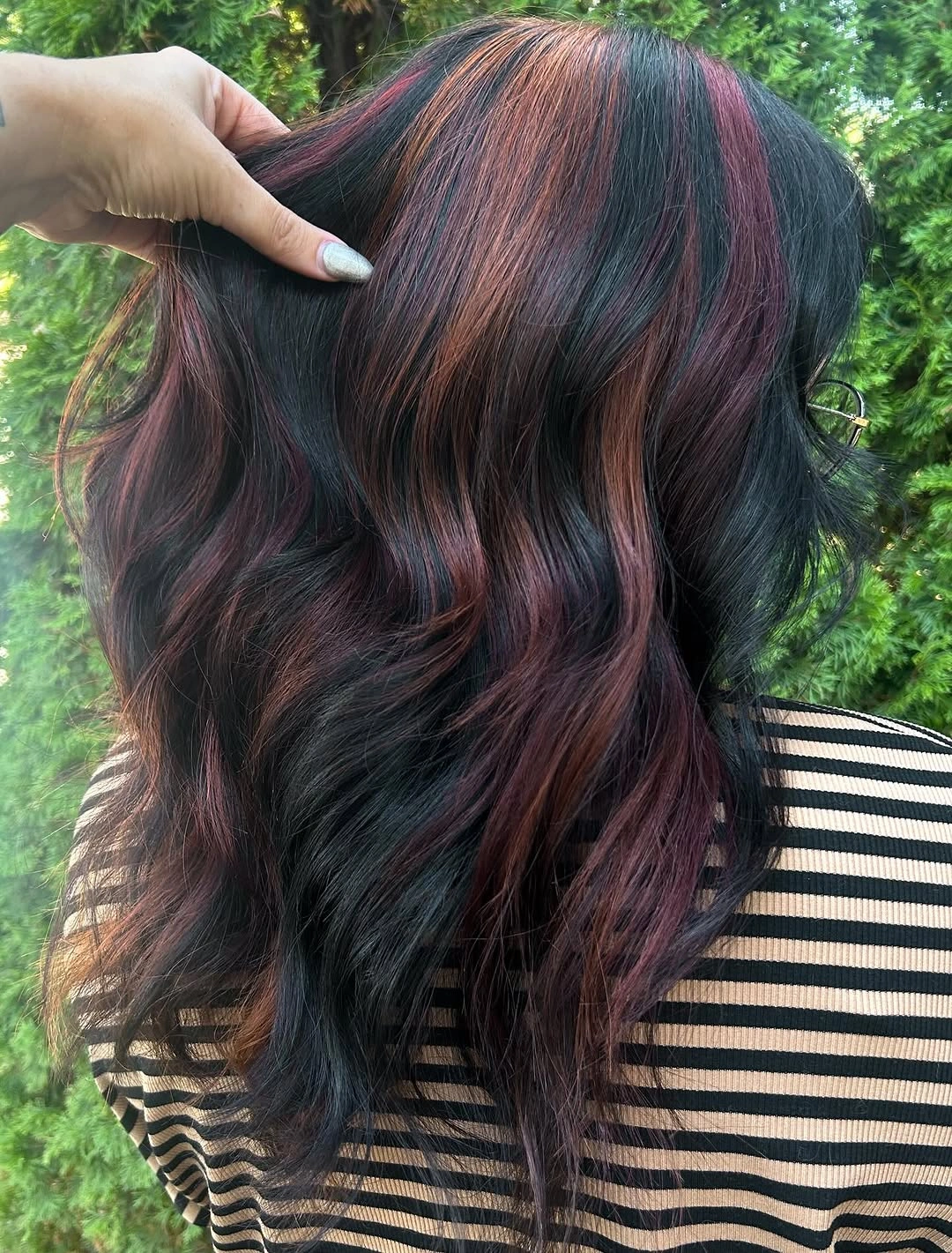
Concentrate the warm ribbons around the front and lower third if you want more visibility, or keep them underneath for a softer reveal. A shorter layered cut will make the contrast more concentrated, while a smooth finish may make the ribbons look more graphic. Choose the placement based on how often the hair will be worn loose.
Low contrast can be easier to live with visually, but it may disappear when the hair is completely straight or gathered. The long waves display the color best, while the darker base keeps the overall outline calm. Choose it when you want a seasonal shift that appears through movement rather than announcing itself immediately.
Copper With Bright Golden Face Pieces
Shoulder-length copper hair has lighter golden sections near the front, with soft bangs or face-framing pieces shaping the upper outline. The shorter length keeps the warm color close to the face, while the lighter panels create the first point of contrast. The cut carries fullness near the top, so the hair looks lively even without long waves.
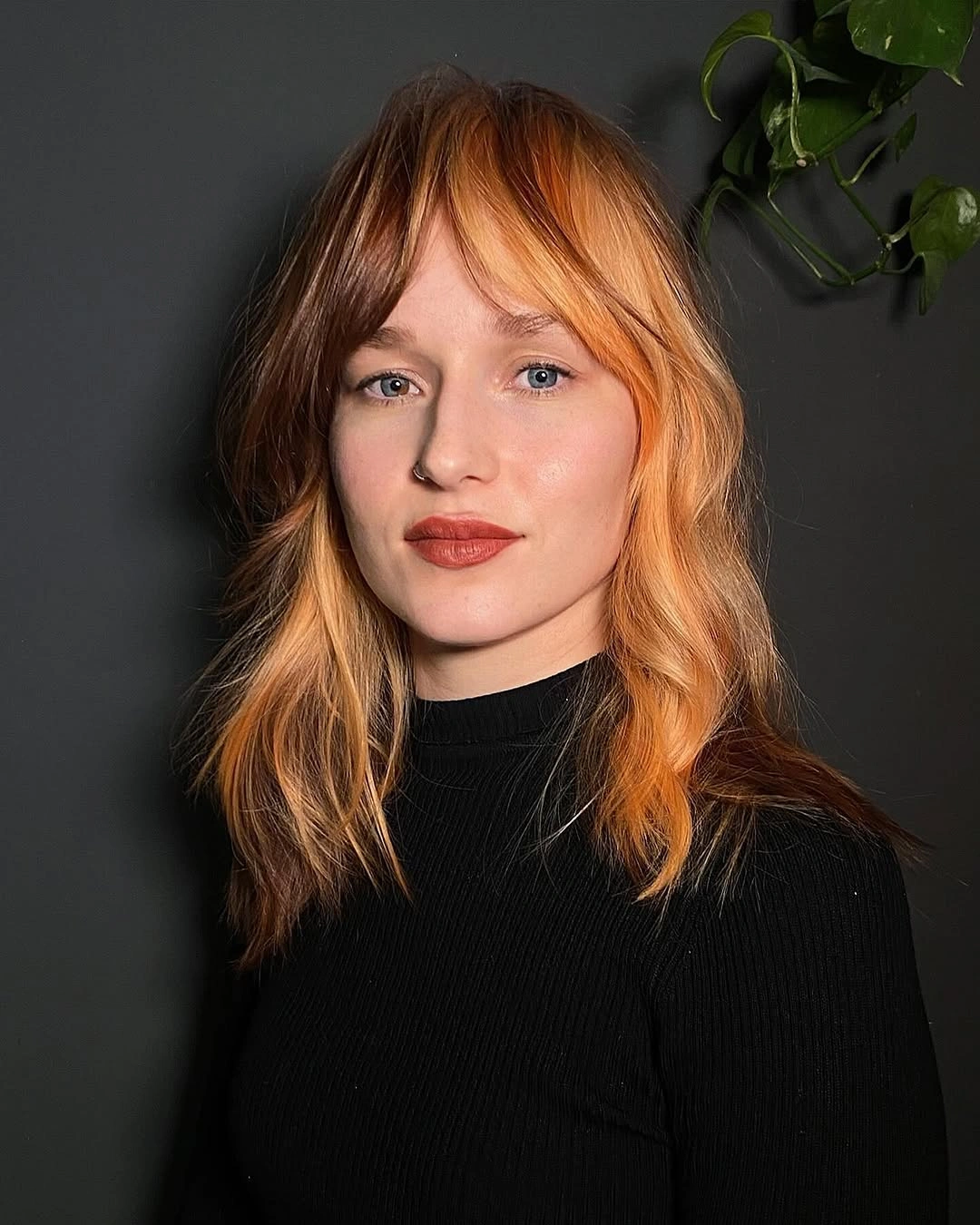
Keep the lighter pieces narrow if you want copper to remain the main impression, or extend them through the ends for a brighter result. A longer lob will soften the face frame, while a smoother finish will make the color blocks more visible. The adaptation should preserve the front placement because it controls the balance.
The shorter ends need regular shaping to keep the face frame and overall outline even. The light pieces are also the area most likely to show tonal change, while the copper base can remain visually stable. Choose this style when you want warmth around the face and a length that does not rely on extreme volume.
Dark Hair With Bright Red Face Framing
Medium-long brown hair has vivid red-orange panels around the face beneath a darker top layer, with loose curved ends. The bright pieces change the expression of the hairstyle without recoloring every length, and the darker crown keeps the silhouette grounded. The visible contrast is concentrated where the eye naturally looks first.
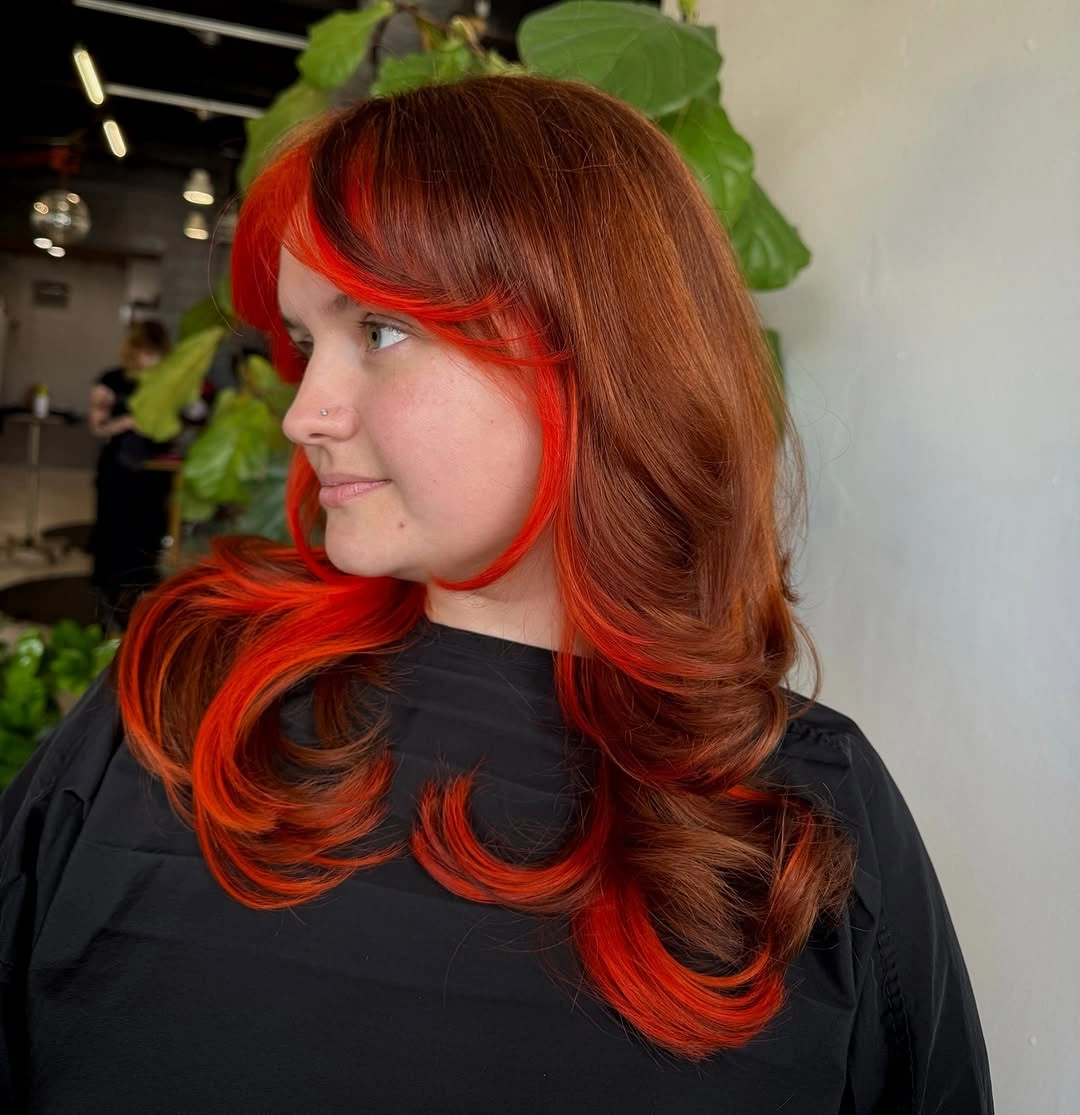
Use muted copper instead of vivid red for a softer adaptation, or move the bright panels farther under the top layer for a peek-through effect. A shorter cut will make the color more immediate, while a longer layer will keep the contrast partially hidden. The strongest choice depends on how much reveal you want when the hair moves.
The front panels are the main upkeep point because any shift in brightness will change the face frame. The dark upper layer reduces the overall color load, but the medium-long length still gives the red room to stand out. Choose it when you want a visible transformation in one area rather than a complete color reset.
Orange-Copper Underlayers In Dark Waves
Long dark brown hair shows orange-copper sections through the lower layers and front pieces, styled in loose waves. The warm color appears as the waves open, while the dark crown preserves a continuous top silhouette. This placement creates depth through reveal: the hairstyle looks dark at first and warmer as the lower movement becomes visible.
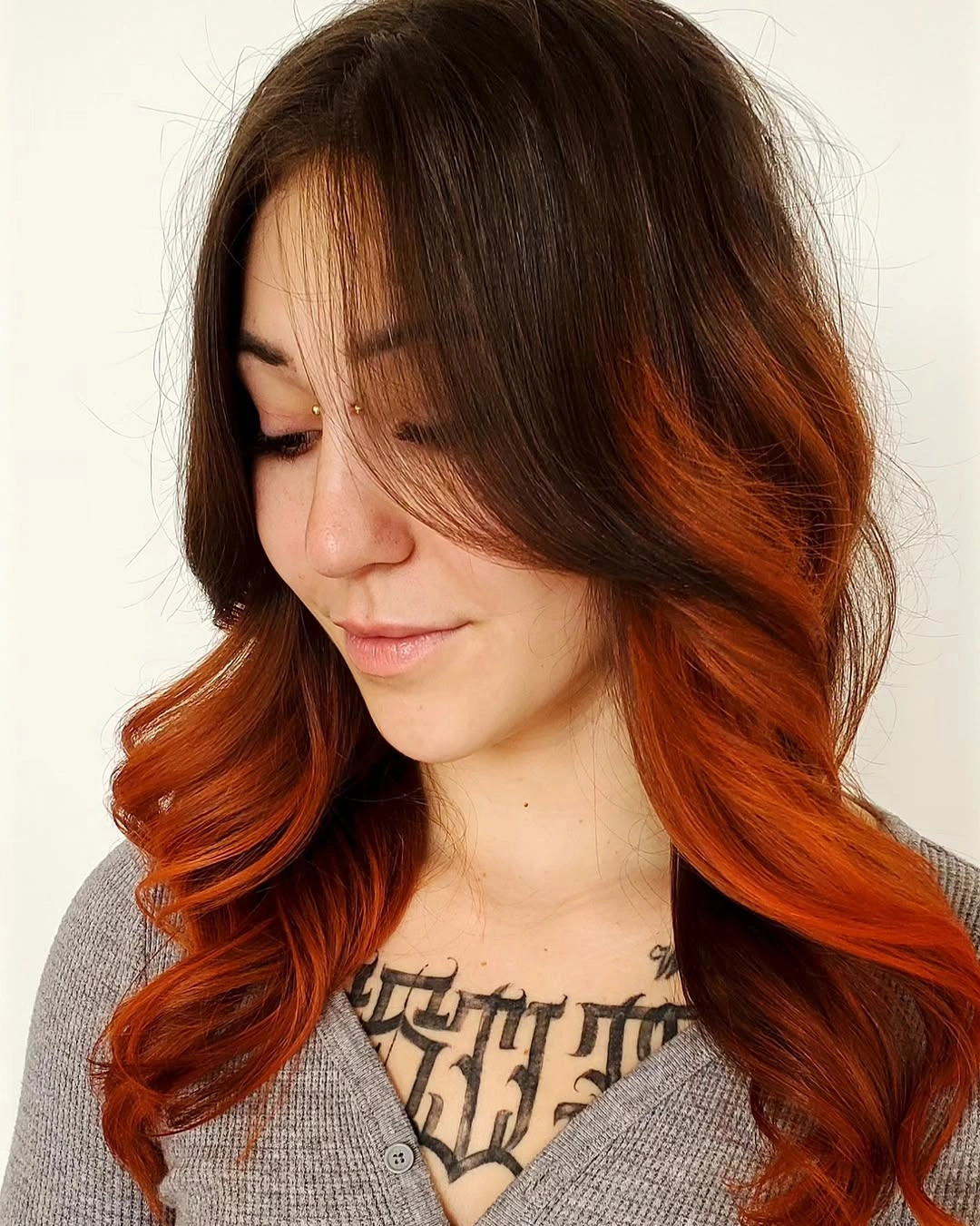
Keep the bright color under the top layer for a subtle peek-through effect, or bring a few pieces forward around the face for more impact. A shorter layered cut will make the underlayer easier to see, while a deeper copper can reduce the contrast. The adaptation should change visibility, not add more tones.
The lower sections may need more refresh than a close brunette blend, but the dark crown keeps the overall style calm between color appointments. Loose waves are important because they reveal the placement; a tight gathering could hide it. Choose this look when you want color that appears through motion and disappears into the base when still.
Dusty Rose Waves With A Soft Part
Long dusty rose or mauve hair is styled in loose waves with a side part and soft curtain-like pieces around the face. The muted pink tone remains the main statement, but the waves keep it from looking like a flat panel. The side direction adds asymmetry, while the lighter color creates a gentle frame around the face.
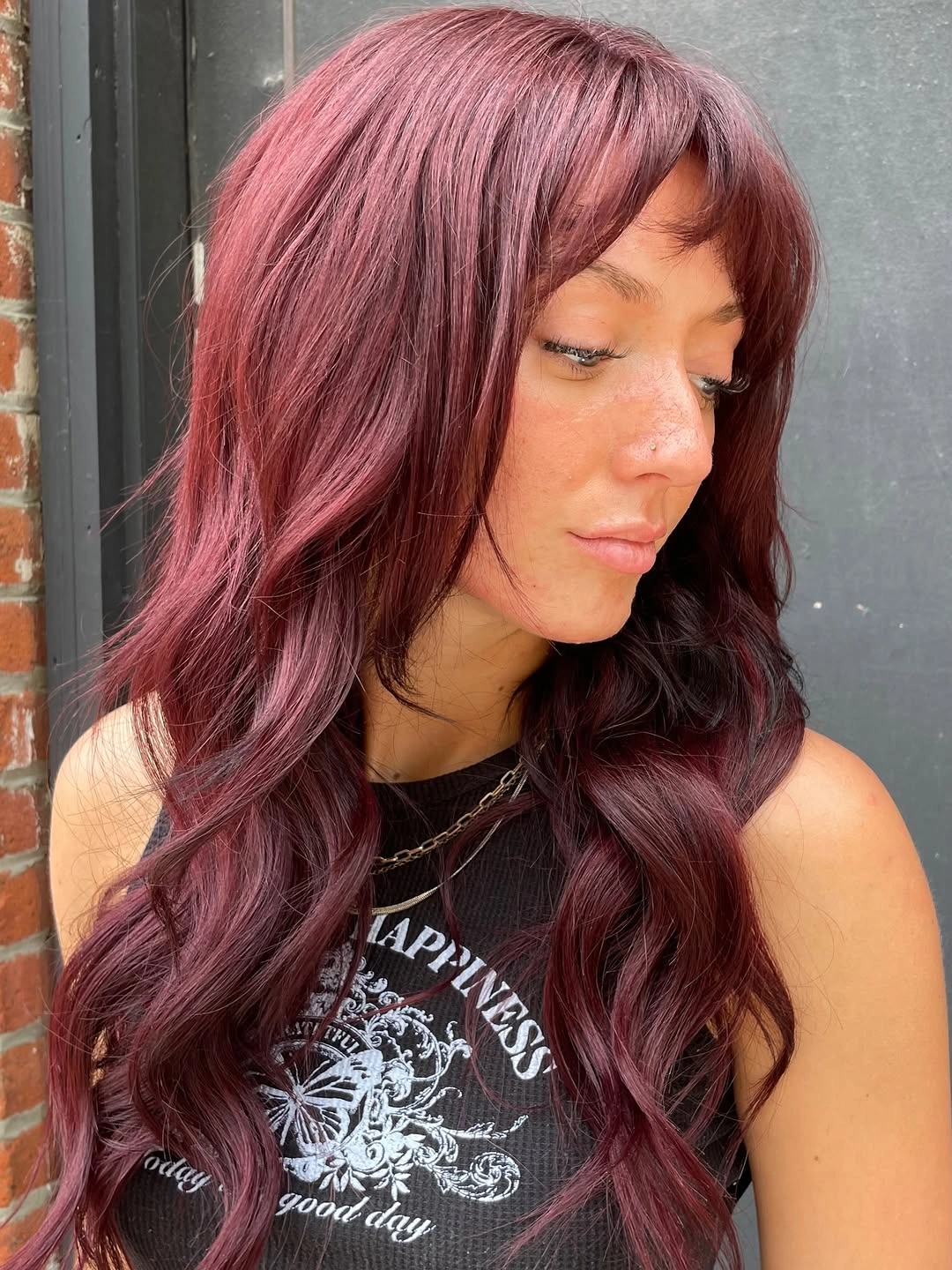
A shorter cut or less saturated mauve will make the color easier to wear visually. Keep the side part if you want the face-framing pieces to remain directional, or move toward a center part for a more even fall. A smoother finish will make the dusty tone look calmer, while a fuller wave will emphasize warmth and volume.
The muted color is softer than a vivid magenta, but long waves still create a large amount of visible tone. The style has both a color and volume commitment, especially around the shoulders. Choose it when you want a reflective, cozy mood built from a softened pink family rather than a bright statement shade.
Plum Waves With A Rich Layered Depth
Long purple-plum hair has a center part, soft layers, and broad waves that carry the color through the ends. The shade shifts with the curves, so the surface looks dimensional even though it stays within one deep family. The layered outline keeps the long style from falling as one heavy shape around the shoulders.
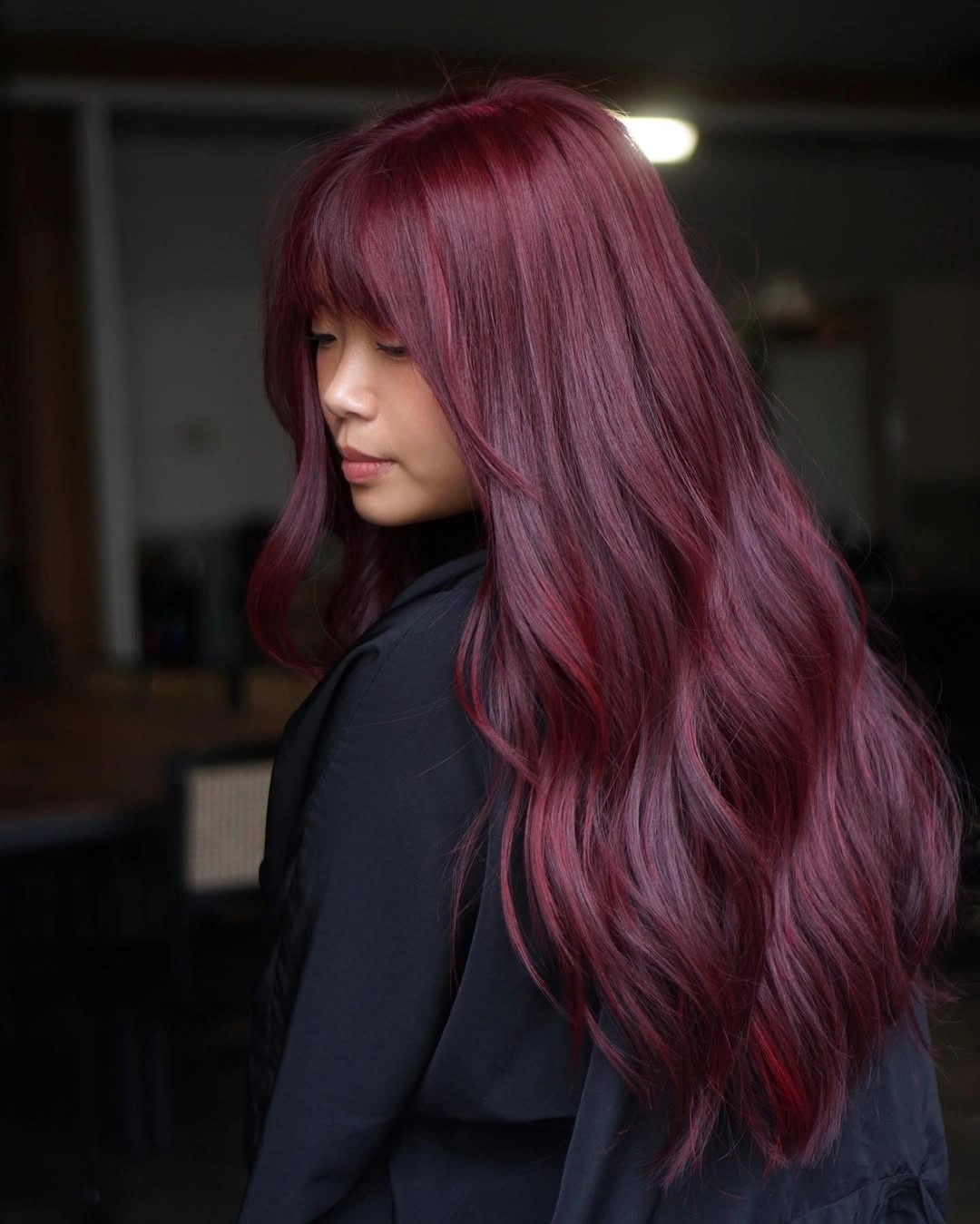
Use a shorter layered cut if you want the plum to feel lighter, or move toward a brown-plum for a quieter result. A looser wave will show less concentrated color, while a smoother finish will make the depth look more continuous. The part can stay centered because the shade already supplies the focal point.
Saturated plum is visually rich, but uneven fading will be easier to notice across the long lengths. The broad waves provide movement and help the color catch light, while the length remains the larger styling commitment. Choose it when depth and mood matter more than a low-contrast, nearly invisible color change.
Dark Hair With Burgundy And Magenta Ribbons
Long dark hair is layered with burgundy and magenta ribbons that appear through loose waves from the back. The ribbons sit inside a deep base, so the overall silhouette stays dark while the red-violet color moves across the lower lengths. The effect is strongest where the hair separates, making texture part of the color presentation.
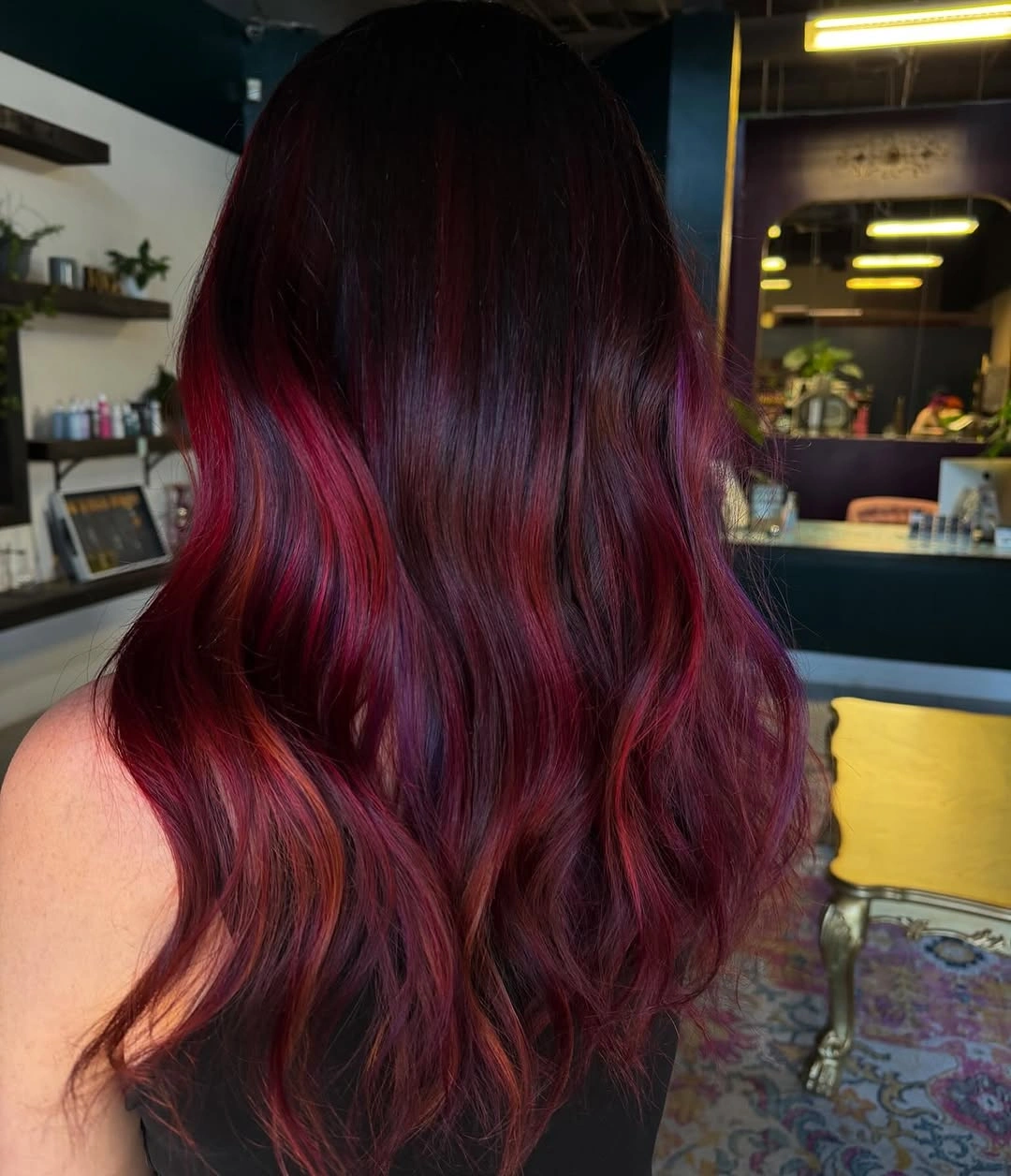
Concentrate the ribbons around the lower third for a quiet version, or bring a few pieces toward the face for more immediate contrast. A shorter layered cut will make the placement denser, while a smoother finish may make the color read as clearer stripes. Choose the visibility level before adding more colors.
The dark base gives the bright ribbons support, but it can also hide them when the hair is gathered or worn very smooth. Long waves show the intended movement, while the colored sections may need more attention than the base. Choose this style when you like color that appears gradually rather than all at once.
Multi-Color Waves In Red Pink And Orange
Long dark hair carries vivid red, pink, purple, and warm orange streaks through loose waves. The dark base gives the several bright tones a consistent frame, while the waves separate the colors enough for each one to appear. The palette is expressive, but the visible placement through the lower lengths keeps it from becoming a full bright block around the head.
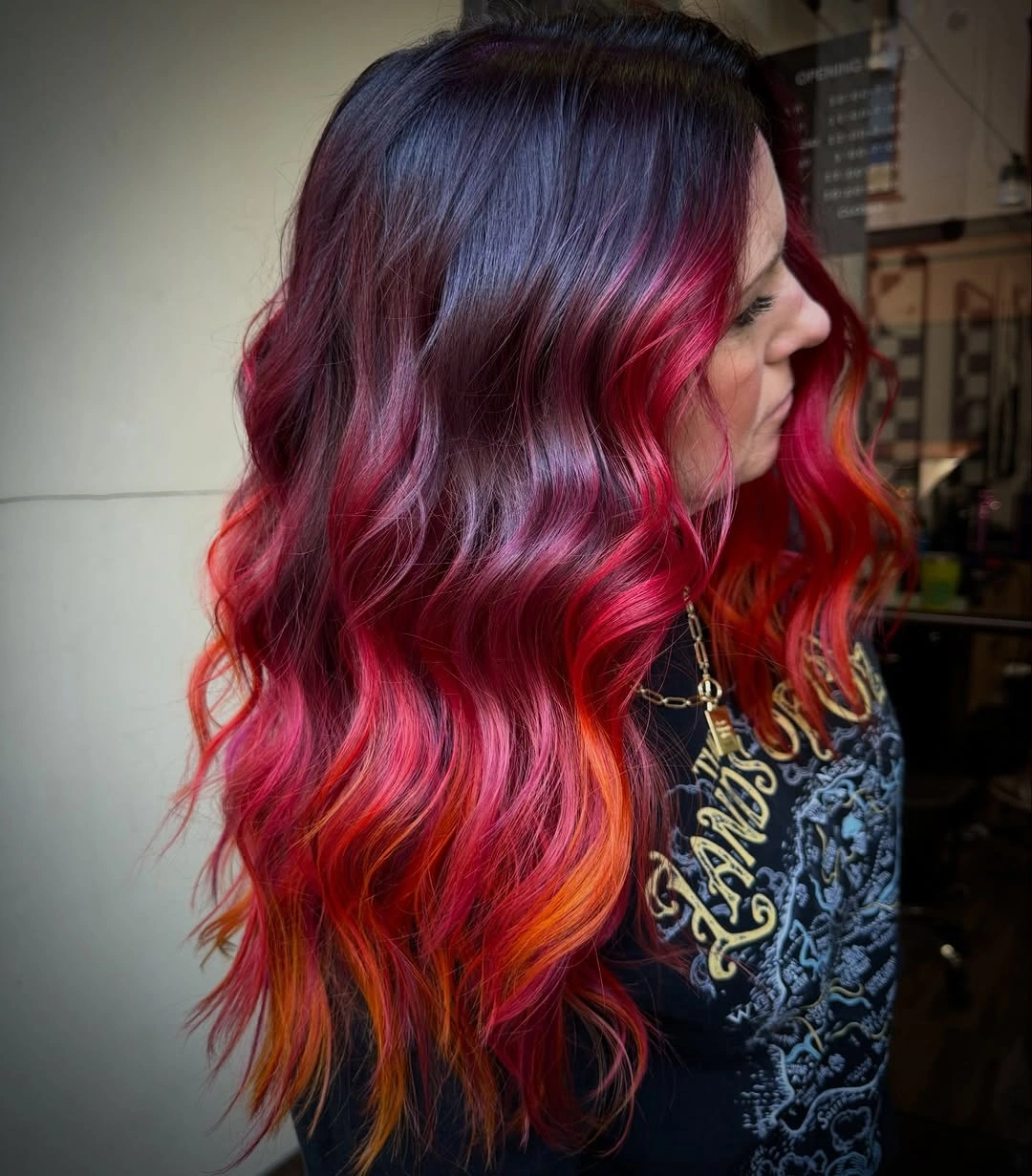
Choose one warm and one cool accent if a multi-color result feels too demanding. Keep the brightest pieces under the top layer for a softer reveal, or bring them forward if the face should carry more contrast. A shorter cut will concentrate the colors, so use fewer streaks rather than making them narrower.
Several vivid tones require more attention if their separation is part of the intended look. The dark base calms the overall silhouette, but color maintenance will remain more involved than with a single copper or brown. Choose it when variation and movement are the point, and keep the palette edited enough that the waves still look readable.
Broad Copper Blonde And Brown Panels
Long wavy hair combines dark brown, warm copper, and pale blonde sections in broad panels through the back. The waves soften the edges between the larger color areas, while the contrast remains graphic enough to change the whole silhouette. Instead of many small ribbons, the design uses a few visible blocks that are easy to recognize.
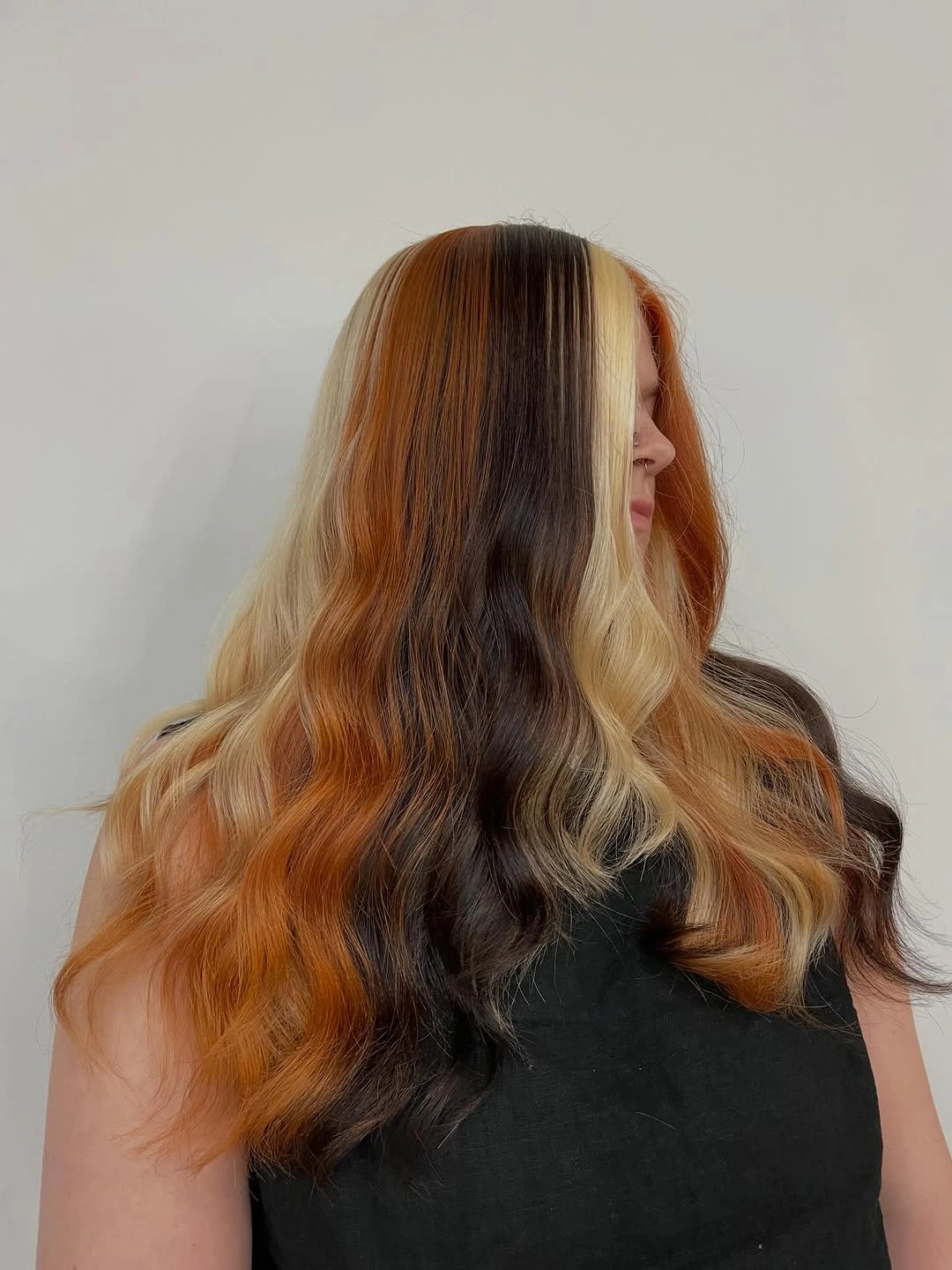
Use a narrower pale section or keep the lightest tone through the ends if you want less contrast. A shoulder-length cut will make the panels more concentrated, while a smoother finish will show their boundaries more clearly. The simplest adaptation reduces the width and number of panels rather than adding a new color.
Broad sections are visually decisive and therefore less forgiving when their tone shifts or grows out. The dark base supplies balance, but the multi-tone result still needs more upkeep than a close blend. Choose it when a graphic color map is more appealing than subtle dimension and the larger transitions can remain clear.
Dark Waves With A Pale Face Frame
Long dark brown hair has a bright pale blonde section falling over one side of the face, while the rest remains softly wavy and deep in color. The single light panel changes the visual balance immediately, creating a strong frame without recoloring the full length. The dark waves provide calm around it, so the contrast feels concentrated and intentional.
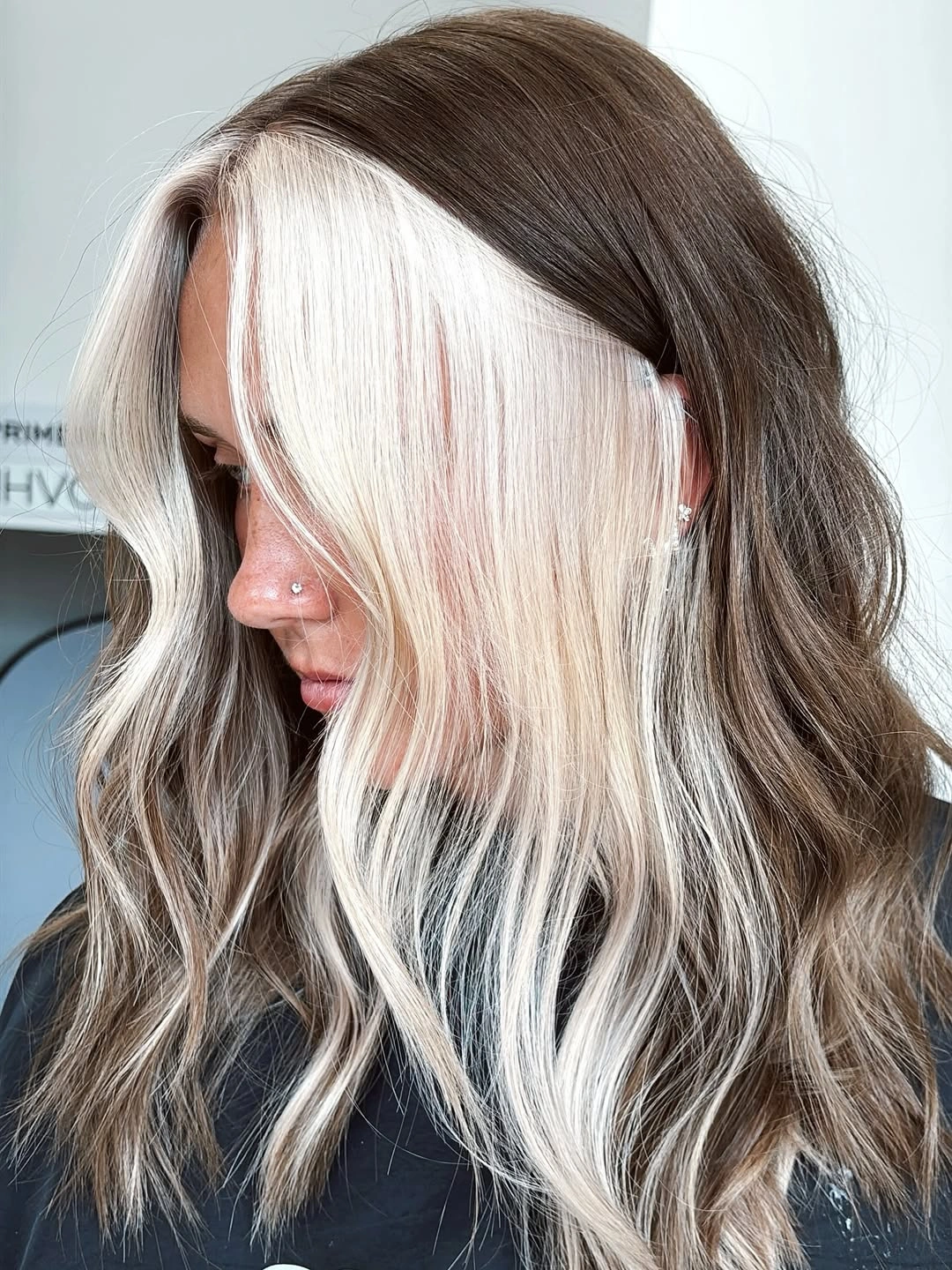
Use a thinner panel or a warm caramel version for a softer contrast. A shorter cut will make the light section more prominent, while a longer face-framing layer can let it blend into the waves. Keep the rest of the hair dark and simple if the goal is to make the front piece remain clear. This preserves the clear front-to-back contrast while making the accent easier to control as the hair grows.
The pale panel is the first feature likely to show regrowth or tonal change, and its placement means that change will be visible around the face. The deep lengths are easier to keep visually quiet, while the wave pattern prevents the dark base from looking flat. Choose it when one clear front detail is enough to reset the entire hairstyle.