September fashion trends are easier to use when the outfit has one clear reset: a bright sweater against dark tailoring, a pale trouser line under a short jacket, a strong scarf beside a quiet coat, or a print placed below a simple top. These examples are not one uniform aesthetic. They show how proportion, color, and one purposeful accent can make familiar pieces feel newly arranged.
The most helpful way to read the collection is as a set of visual decisions. Notice where the eye lands first, where the outfit creates breathing room, and which garment carries the largest shape. Then adjust one element for real life – a lower heel, a shorter hem, a smaller bag, or a warmer layer – while protecting the main relationship that gives the look its clarity.
Burgundy Scarf Against Cool Soft Layers
A pale blue sweater sits above dark wide-leg trousers, with a burgundy scarf draped across the shoulders and gray sneakers grounding the base. The scarf is the purposeful accent: it brings warm depth into a cool palette and gives the roomy silhouette a clear upper focal point. A patterned tote adds texture but remains secondary to the color contrast.
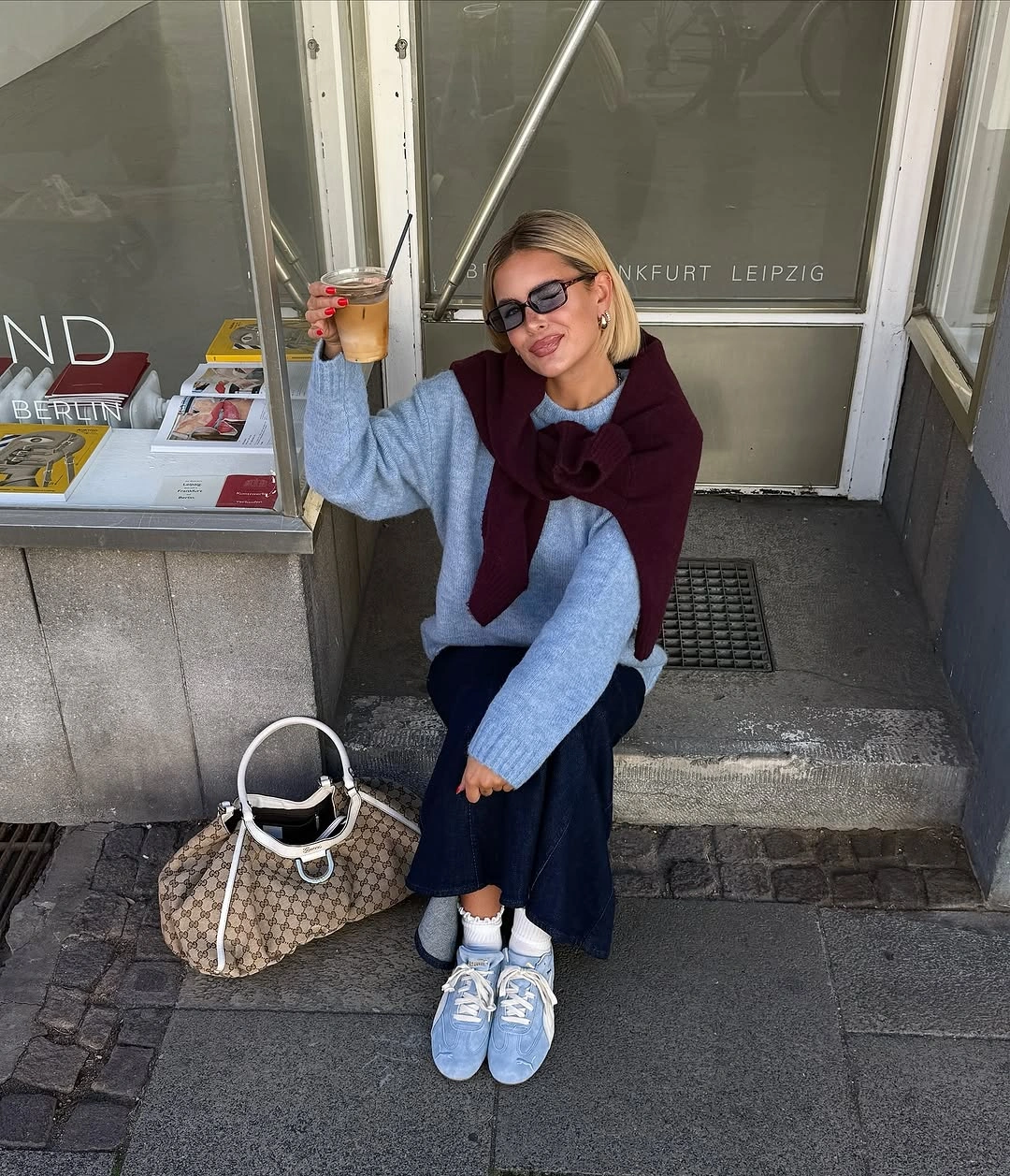
Let the scarf hang in a clean vertical line if you want the body of the outfit to look longer, or tie it closer to the neck for a more compact effect. A plain bag will sharpen the color story, while a shorter sweater can show more waist above the wide trousers. The key is keeping one warm accent rather than adding several.
The outfit feels soft because the colors are muted, but the generous sweater and trouser widths can blur proportion if they meet without a break. Sneakers make the silhouette casual-looking and practical, while the scarf keeps it from becoming shapeless. Choose it when comfort-looking volume needs one crisp color decision to feel deliberate.
Striped Top With A White Trouser Line
A black-and-white striped top is paired with loose white trousers, dark shoes, sunglasses, and a compact crossbody. The stripe creates a graphic upper half, while the white trousers give the lower half visual breathing room. The dark accessories repeat the top’s value and keep the light trousers from floating without an anchor.
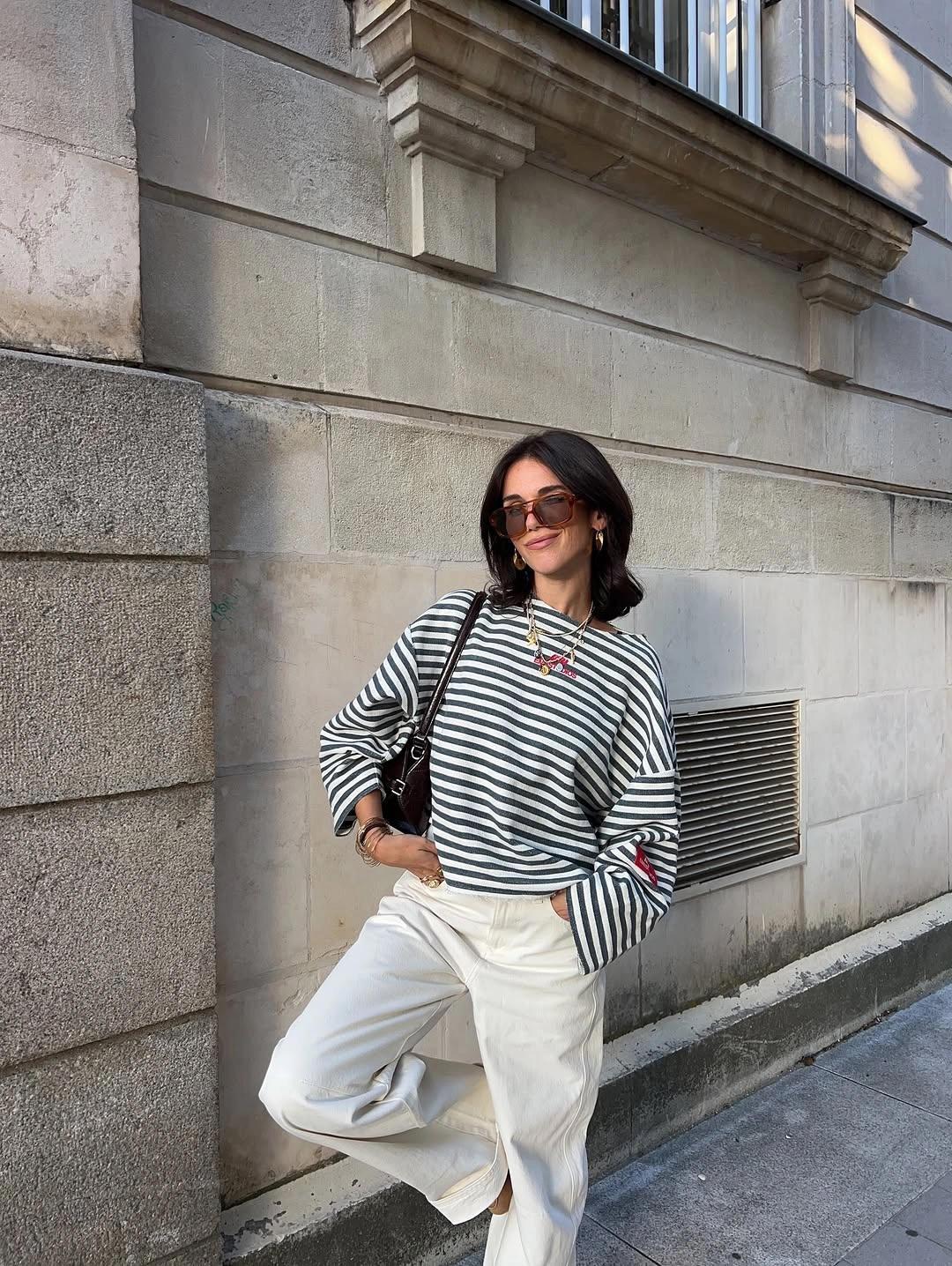
A tucked shirt or narrow belt will clarify the waist if the trousers are wide enough to hide it. Replace the crossbody with a brown bag for warmth, or use a shorter top to make the striped pattern feel sharper. Keep the lower half simple because the stripe is already the main surface detail. That keeps the vertical stripe and wide trouser relationship clear while the accessories remain secondary.
The pale trousers are a practical consideration around the hem, while the loose cut offers room through the leg. The outfit reads clean because the dark accessories are limited and repeated. Choose it when you want a crisp contrast with very little layering, then adjust the waist or shoe rather than adding more pattern.
Plaid Mini With A Light Jacket
A pale jacket frames a brown scarf and checked mini skirt, while dark tights, brown shoes, and a small orange bag create a compact color story. The plaid is the strongest pattern, the scarf builds a visible neck layer, and the orange bag acts as one small accent. The outfit stays clear because the light jacket gives the upper half space.
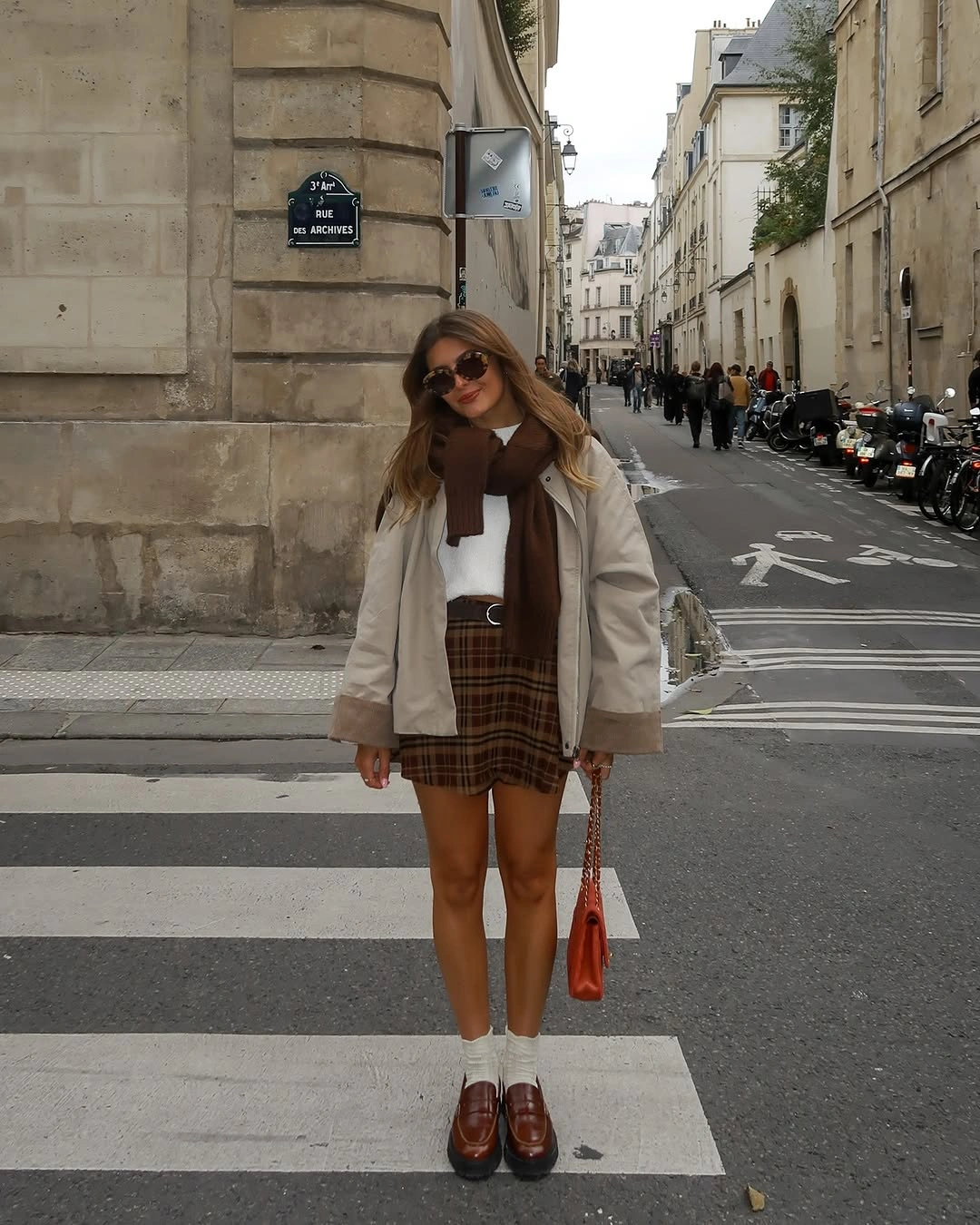
Change the orange bag to brown if you want the plaid to lead, or repeat the orange near the face with a scarf for a stronger focal path. A longer skirt will alter coverage without changing the palette, while a cropped jacket will preserve the compact proportion. Keep the accessories quiet if the print is already doing enough.
The short hem and low shoes make the look casual-looking, while the tights provide a visible layer below. The pale jacket can feel roomy, so a partial tuck or a smaller bag may help keep the waist from disappearing. Choose it when one check and one accent are enough to refresh a familiar September base.
Checked Peplum With Brown Volume
A black-and-white checked peplum blouse creates a defined waist before widening over broad brown trousers. The contrast between the compact upper line and generous lower shape is the trend decision, while small earrings remain intentionally quiet. The outfit looks current because the volume is controlled at one point rather than spread evenly from shoulder to hem.
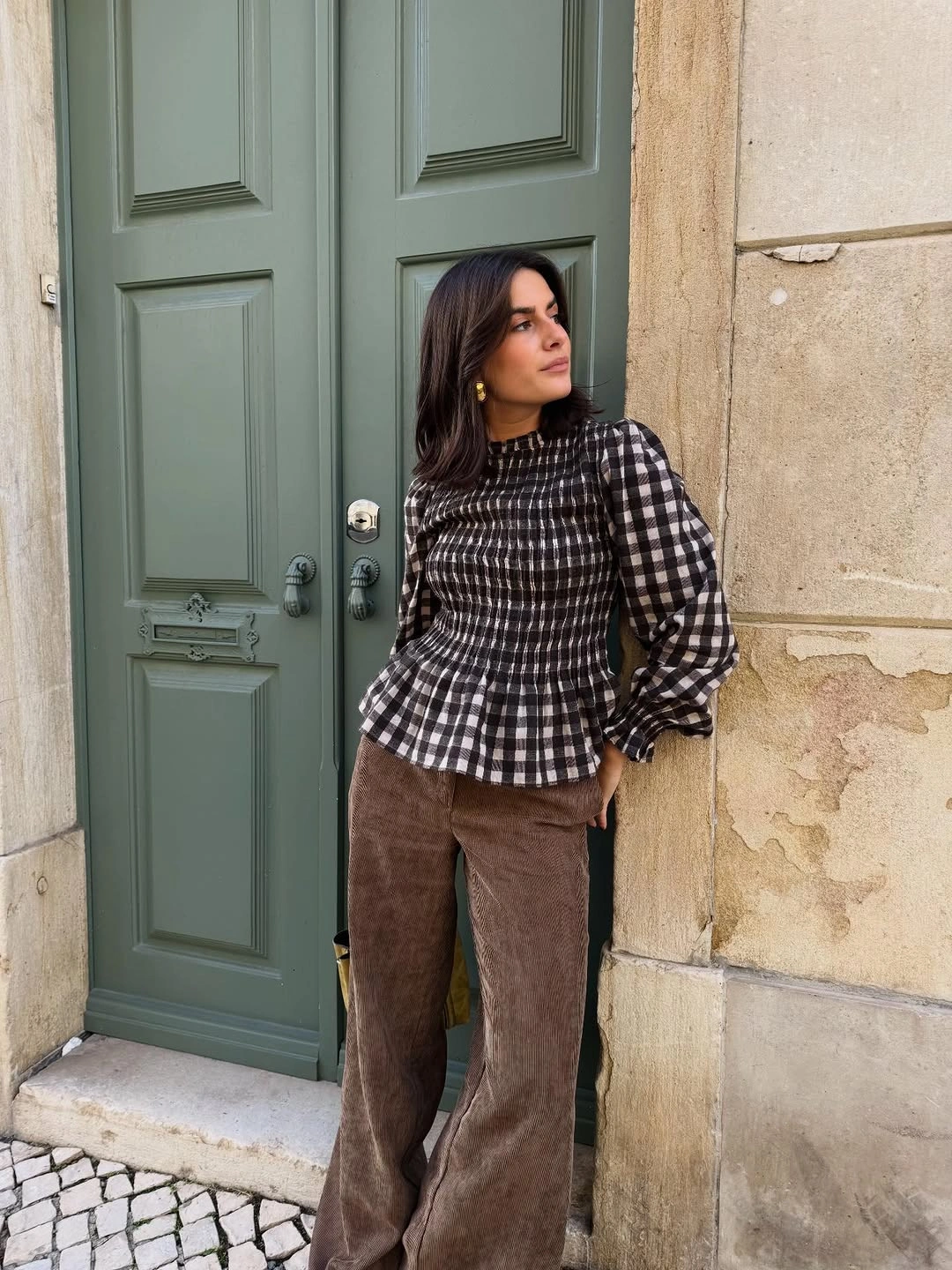
Use a plain fitted blouse when you want the trousers to become the focus, or add a belt if the peplum shape is softer than the visible line. A slimmer leg will make the check feel more dominant, while a low-profile shoe will keep the wide hem from gaining too much weight. Preserve one clear waist-to-volume transition.
The printed blouse already supplies visual information, so additional jewelry or a patterned bag could disrupt the breathing room. Wide trousers allow movement but need a clean hem to avoid shortening the line. Choose this combination when the reset you want is proportion rather than a new color or statement accessory.
Pink Burgundy Stripes With Wide Denim
An oversized pink-and-burgundy striped sweater or cardigan is paired with wide blue jeans and a warm brown shoulder bag. The sweater carries the pattern and color, while denim offers a calmer lower field that lets the stripes remain legible. The bag repeats the warmth without matching the top exactly, so the outfit stays relaxed rather than overly coordinated.
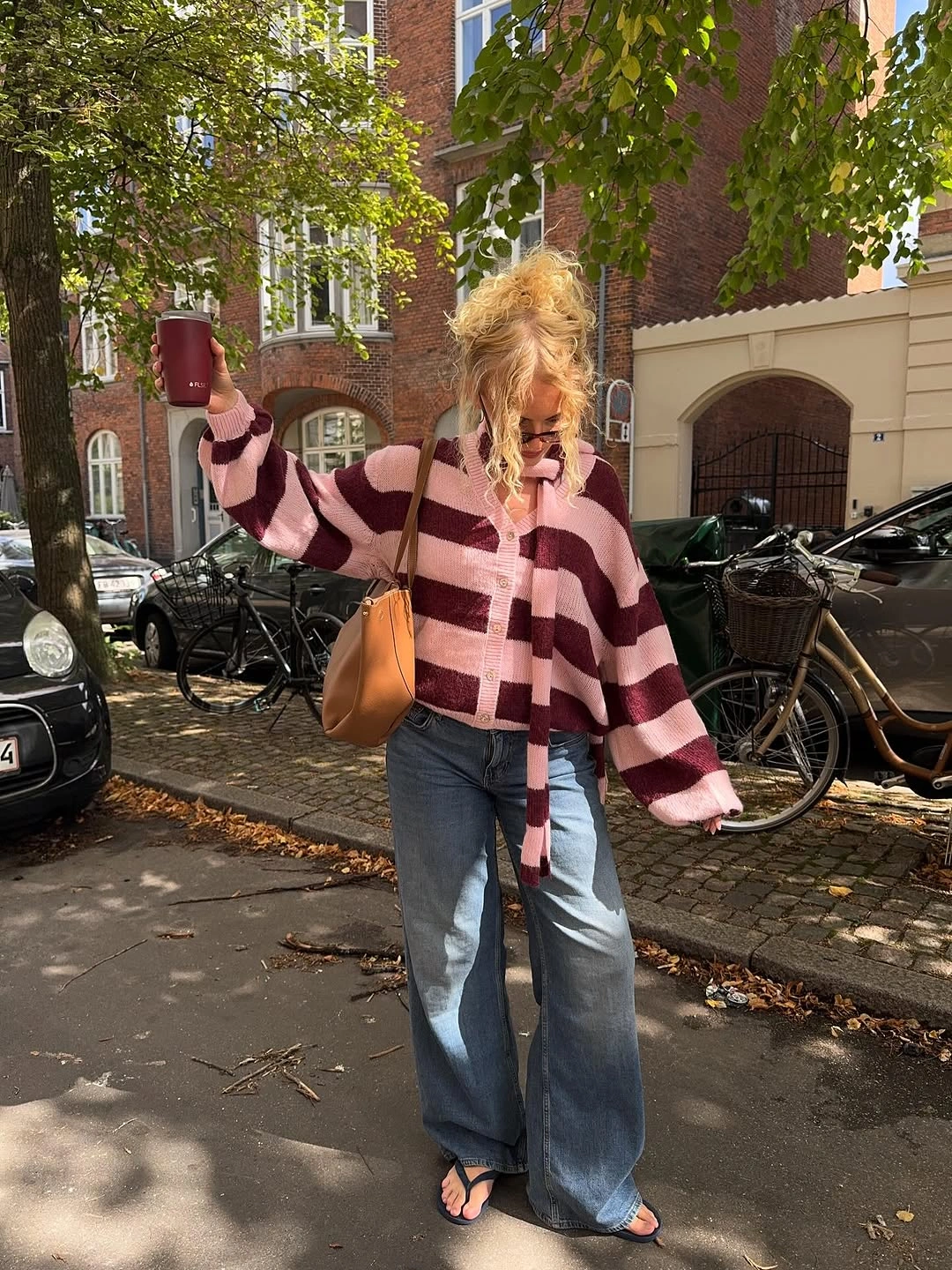
A front tuck will give the waist a small interruption, while a compact bag can reduce the volume around the hip. Use a plain burgundy top if the stripes feel too dominant, or choose a slimmer jean for a cleaner vertical line. The outfit works best when the oversized sweater remains the only large patterned area.
The generous proportions look easy to wear, but equal width can hide the body’s center and make the jeans feel heavier. The soft color contrast keeps the silhouette light, while the bag supplies practical-looking structure. Choose it when a fresh color mix matters more than fitted tailoring and one small adjustment is enough.
Brown Jacket Over A White Tee
A brown jacket, white tee, and dark wide-leg jeans create a simple contrast between a warm outer layer, a light center, and a deep lower half. The white tee is doing important work: it stops the jacket and denim from merging and gives the outfit a clean vertical break. A brown bag and dark shoes repeat the outer framing.
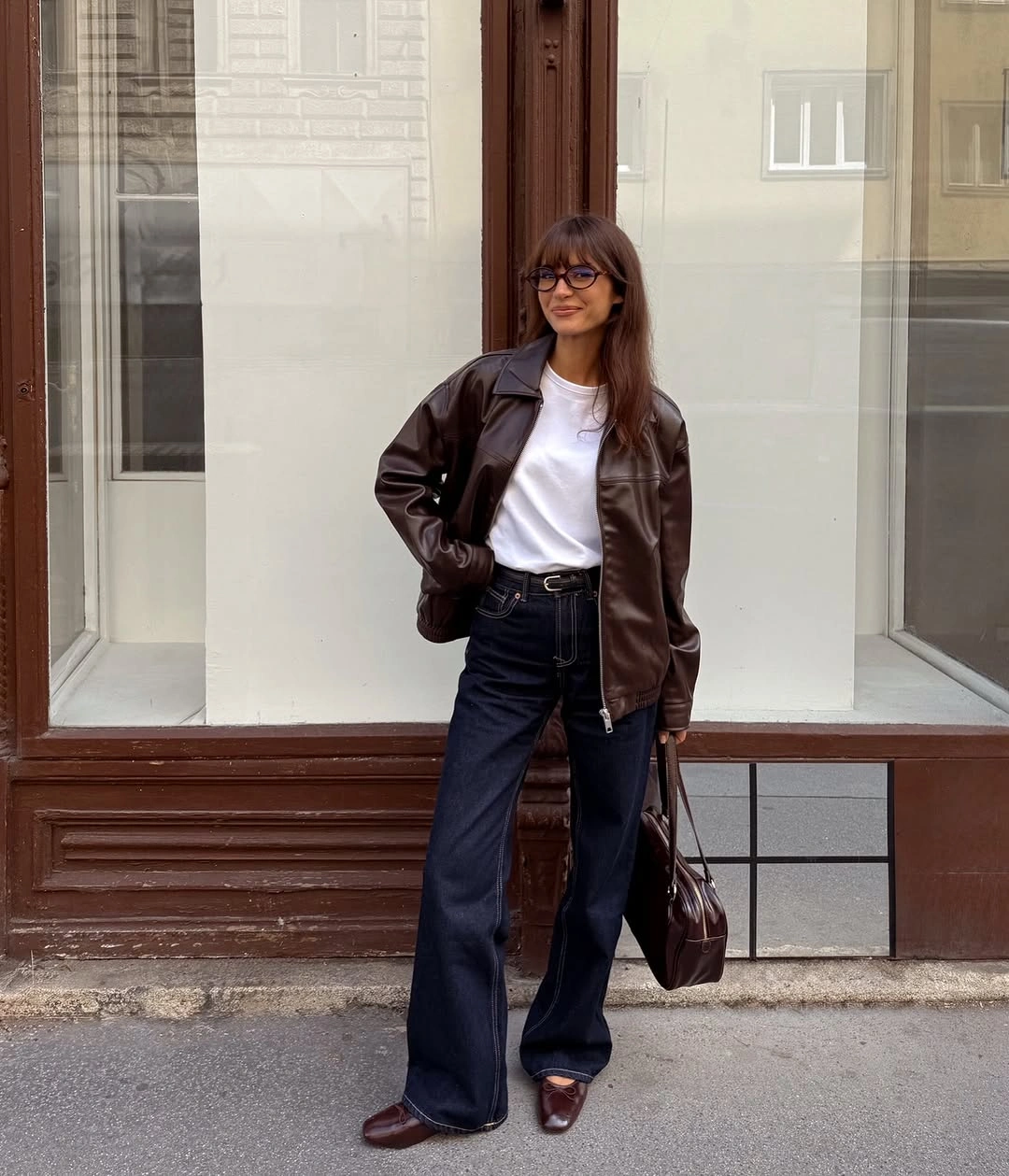
A cropped jacket will sharpen the waist, while a longer one will make the open white center more directional. Add a narrow belt if the jeans sit high and need definition, or use a smaller bag to keep the side line clean. The light tee should remain visible enough to preserve the contrast. This creates a simple center line so the jacket’s shape does not disappear into the denim.
The wide jeans need a shoe with enough presence to meet the hem, while the simple layers keep the outfit practical-looking. Brown is easy to repeat, but adding another dark top could close in the center. Choose it when you want a familiar base that feels updated through the spacing between dark, light, and warm elements.
Cobalt Blue Above A Dark Midi Skirt
A saturated cobalt sweater becomes the sole bright color above a dark midi skirt, black loafers, and a large black tote. The outfit has immediate hierarchy because the blue is vivid and everything below it stays quiet. The midi length and loafers create a grounded line, while the tote adds structure without competing in color.
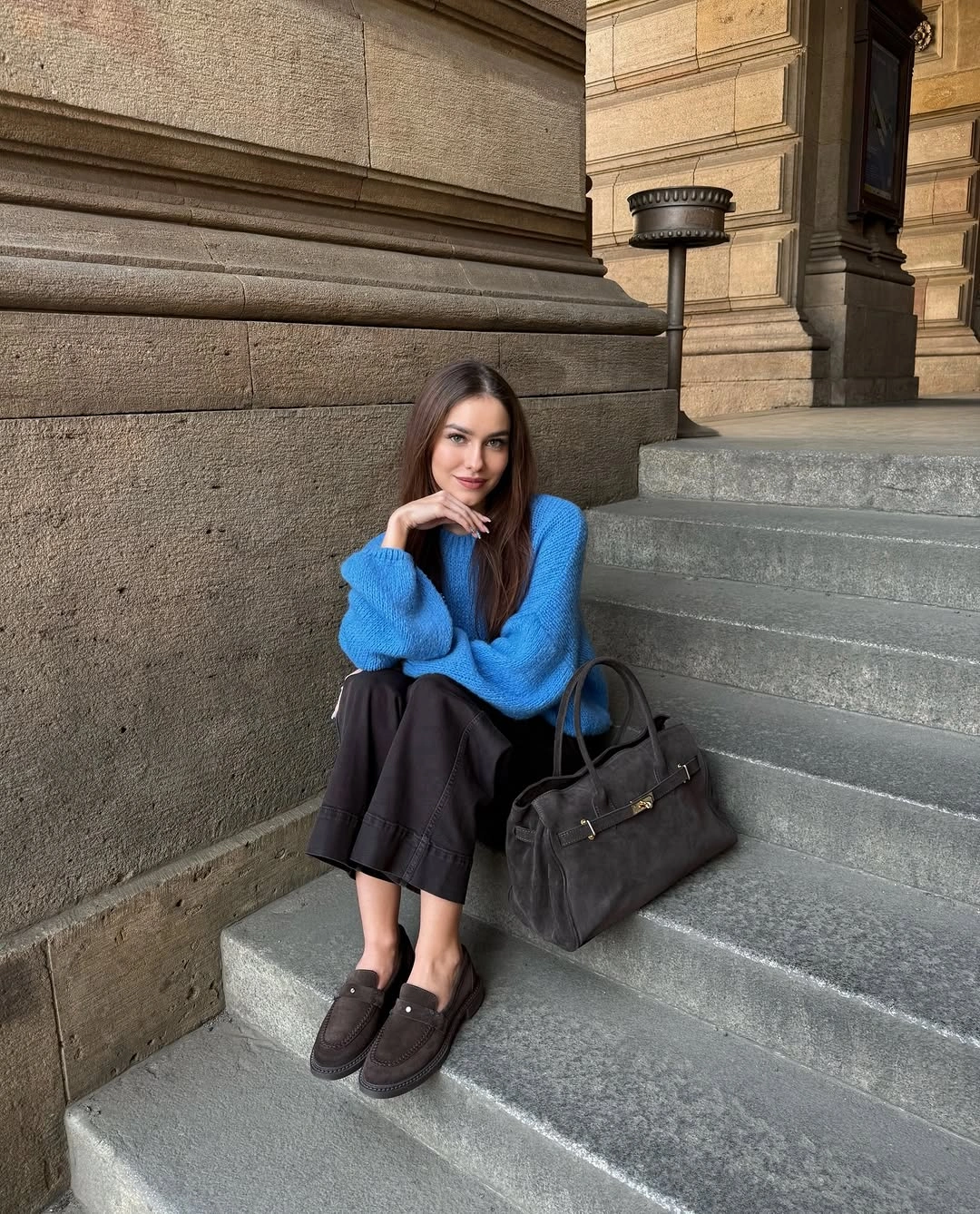
Use a smaller bag if the large tote adds too much volume, or repeat cobalt in a small accessory when the sweater feels isolated. A shorter skirt will make the outfit more energetic, while a longer coat can soften the brightness around the shoulders. Keep the dark base simple so the blue stays purposeful.
The saturated sweater is the visual center, so a patterned layer would dilute the clean reset. The skirt and loafers keep the outfit at a composed dress level, while the tote gives it useful weight. Choose it when one clear color is enough to transform a dark base and you do not need additional decoration.
Blue Gray Shirt With White Trousers
A pale blue-gray shirt is tucked into wide white trousers, with a dark tote and sunglasses providing contrast. The cool palette creates visual breathing room, while the dark accessories give the pale outfit a firm edge. The tucked shirt is the structural choice: it keeps the wide trousers from becoming an uninterrupted block.
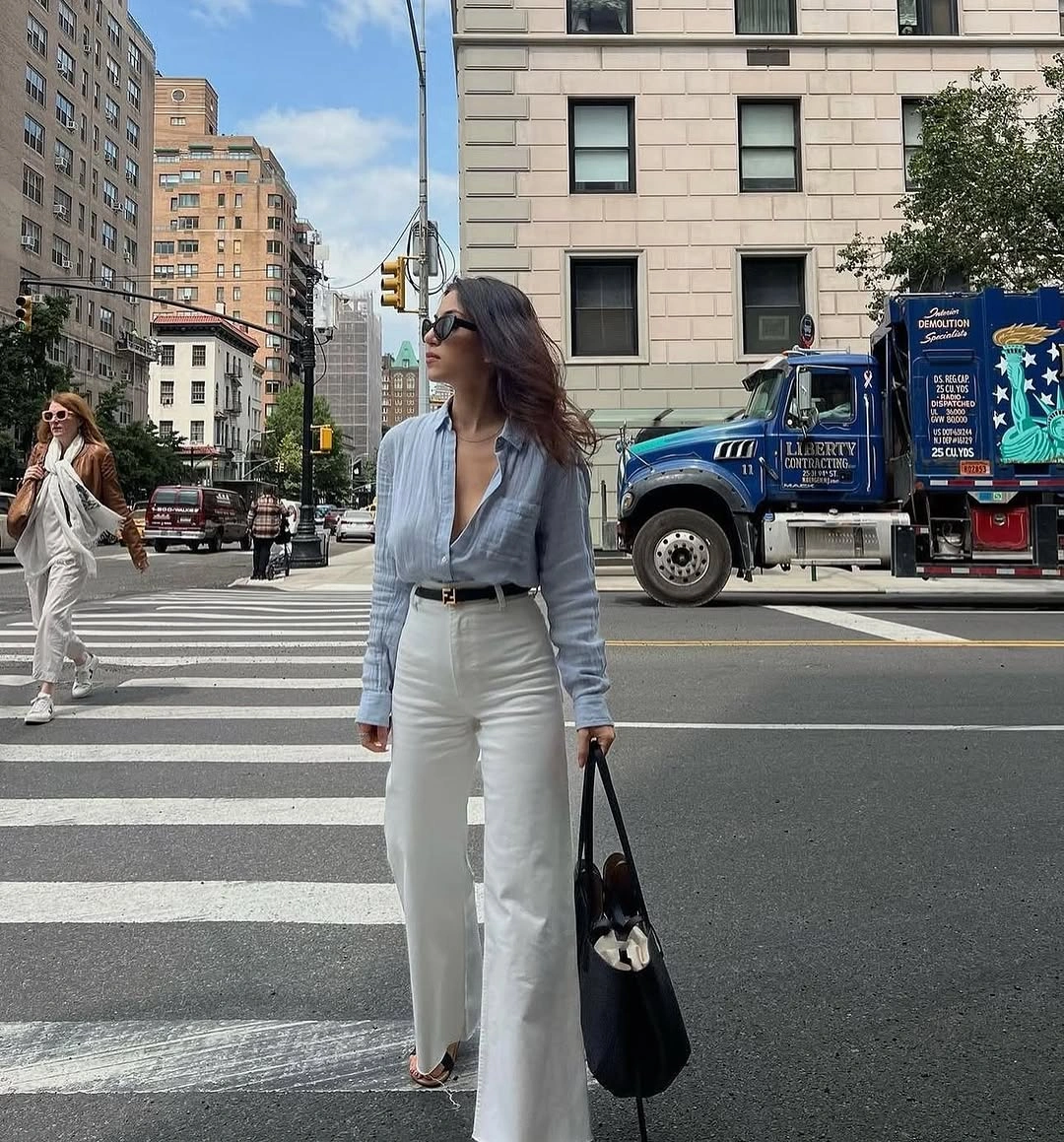
Add a brown belt or shoe if the cool colors feel too distant, or replace the tote with a smaller bag for less side volume. A cropped trouser will show more of the footwear, while a longer hem will make the outfit feel more fluid. Keep the tuck if the trousers are wide. That choice keeps the cool palette intentional and gives the wide leg a clean finish at the shoe.
The white lower half offers a clean reset but requires attention around the hem. The dark tote balances the brightness, although a large bag can shift the focal point away from the shirt. Choose this outfit when light space and clear lines matter, then adjust the accessory scale instead of adding more layers.
Burgundy Blouse With Spotted Trousers
A deep burgundy blouse is worn with wide trousers carrying a leopard-like pattern, burgundy shoes, and a small matching bag. Repeating burgundy at the top, foot, and side gives the printed trousers a frame, so the pattern reads as part of the outfit rather than the whole story. The broad leg amplifies the print but keeps the silhouette fluid.
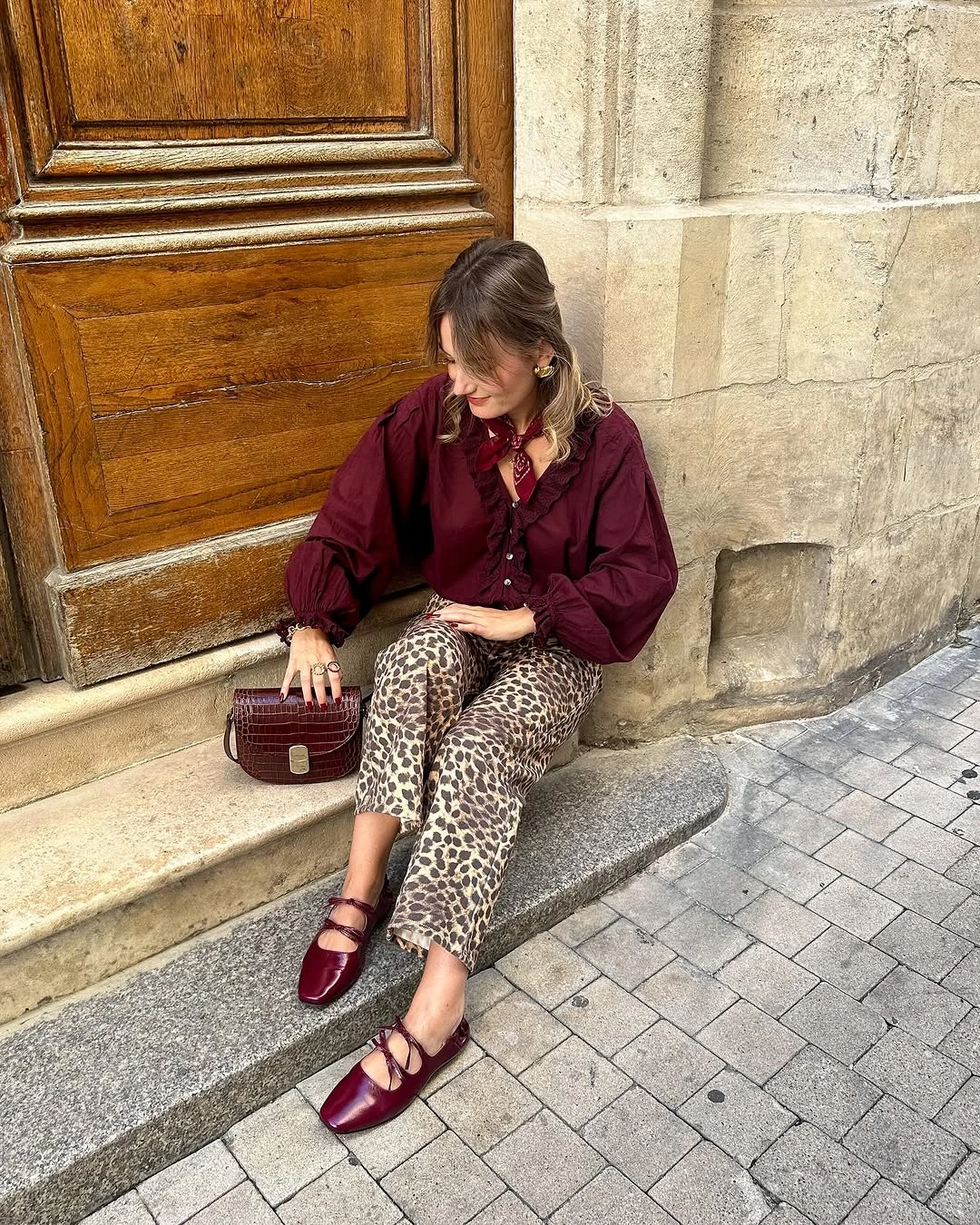
Use plain brown trousers if the pattern feels too strong, keeping the burgundy accessories for continuity. A tucked blouse will sharpen the waist, while a shorter bag strap can move the matching accent higher. Let one patterned garment lead; another print would compete with the repeated burgundy. The restrained layout lets the burgundy accents feel connected without turning the outfit into a matching set.
The outfit is expressive but not random because the colors return in several places. Wide trousers and flat shoes make it relaxed-looking, while the print can feel visually busy during movement. Choose it when the goal is a strong surface detail supported by a simple color echo, not a quiet neutral outfit.
Checked Trousers With A Brown Jacket
A brown jacket frames beige-and-dark checked trousers, a dark top, a black bag, and warm brown shoes. The jacket repeats one of the trouser tones, which gives the patterned lower half a calm border. The checked surface provides structure, while the dark center keeps the outfit from becoming too pale or overly formal-looking.
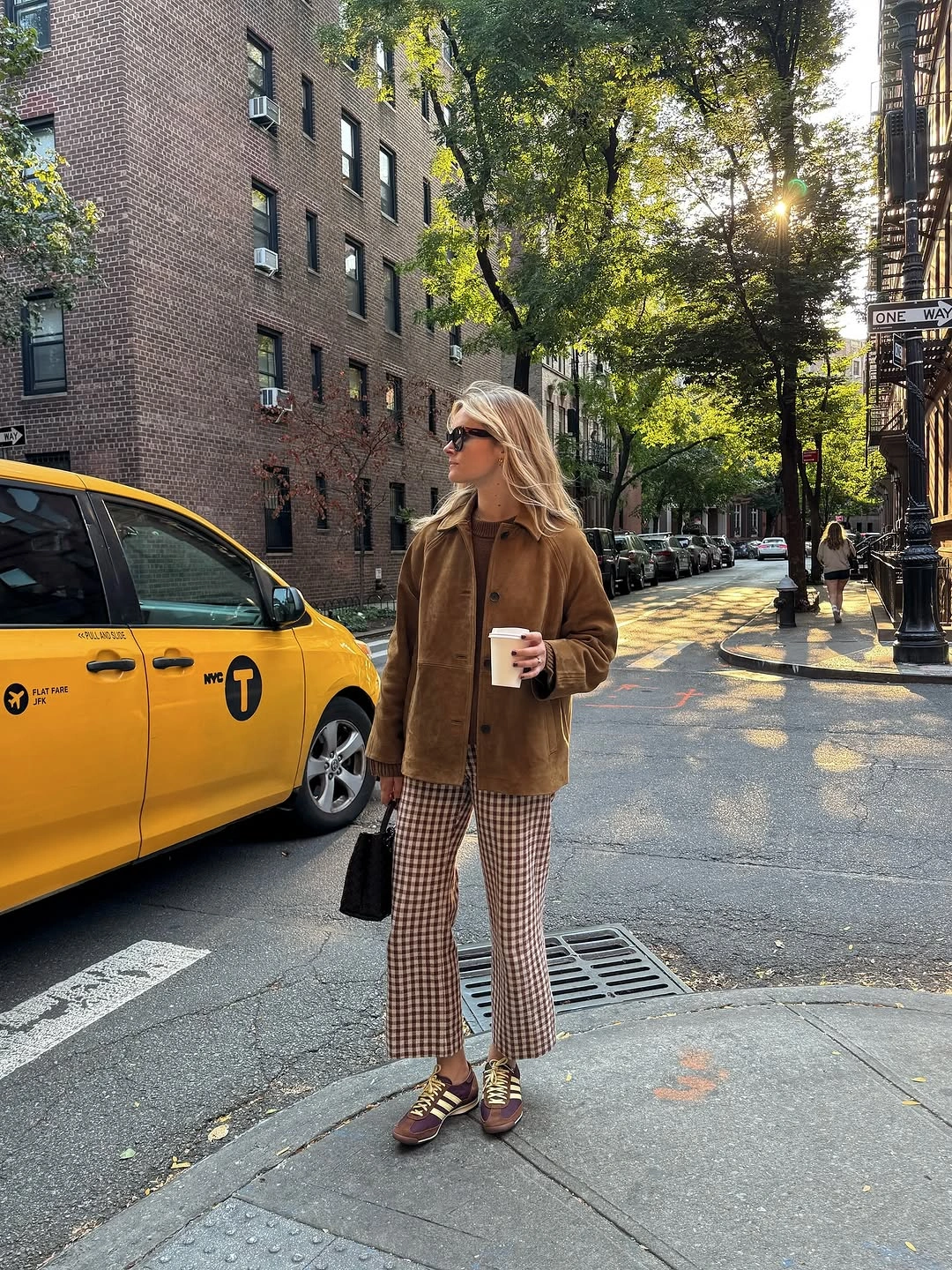
Use plain trousers when you want the jacket to lead, or switch the dark top to cream for more breathing room. A narrow belt can connect the upper and lower halves if the jacket is open. Keep the bag simple because the check already creates enough visual rhythm around the legs. This gives the check room to read as the main pattern while the solid pieces control the surrounding contrast.
The outfit feels organized through repetition, but the check and jacket both add structure, so a soft shoe may be more comfortable visually than another rigid piece. The warm palette is easy to coordinate. Choose it when you want a patterned trouser trend with a practical route back to solids. The result keeps the trend visible without asking every item to carry the same structured message.
Short Brown Jacket With White Volume
A short brown jacket sits above a pale top and wide white trousers, creating a clear cropped-over-long proportion. The jacket defines the upper edge, while the white trousers open the lower half and make the dark outer piece stand out. A small dark bag and shoes add enough contrast to finish the line without overwhelming it.
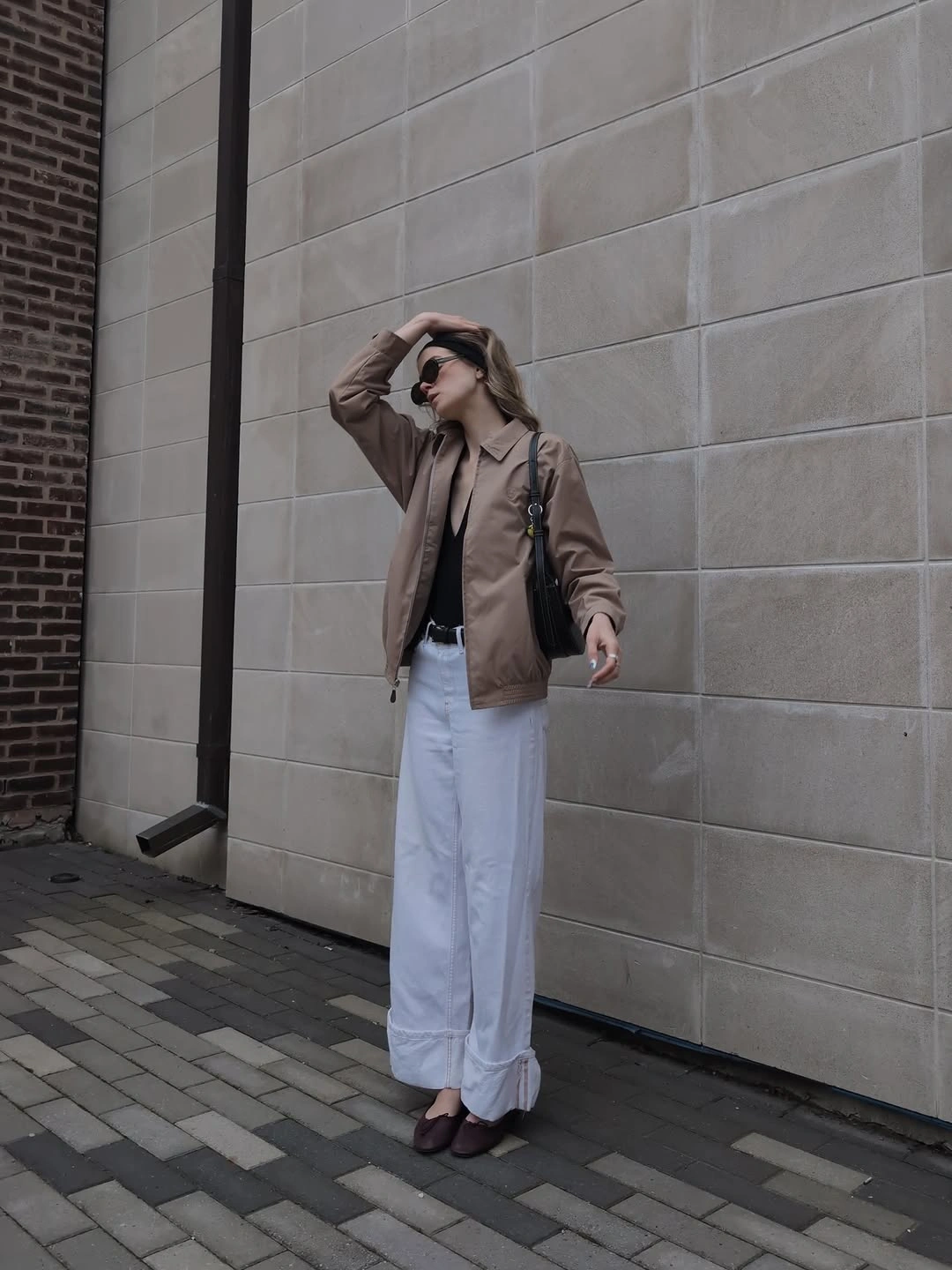
Use a belt or tucked knit if you want the waist even clearer, or choose a longer jacket for a softer transition into the trousers. Brown shoes will connect the outer layer to the lower half, while dark shoes will make the hem more graphic. Keep the pale center visible if you want the outfit to feel light.
The broad white trousers are the largest visual area and may need practical care around the hem. The short jacket keeps the silhouette crisp, but its cropped line can feel abrupt if the top underneath is too long. Choose it when proportion is the main update and you want one warm layer to organize a pale base.
Floral Pink Layer With Green Bag
A pink floral cardigan is paired with wide brown trousers, brown boots, and a green shoulder bag. The cardigan carries the surface pattern, while the brown trousers give it a stable lower half. Green becomes a small unexpected accent at the side, adding freshness without changing the warm center of the outfit.
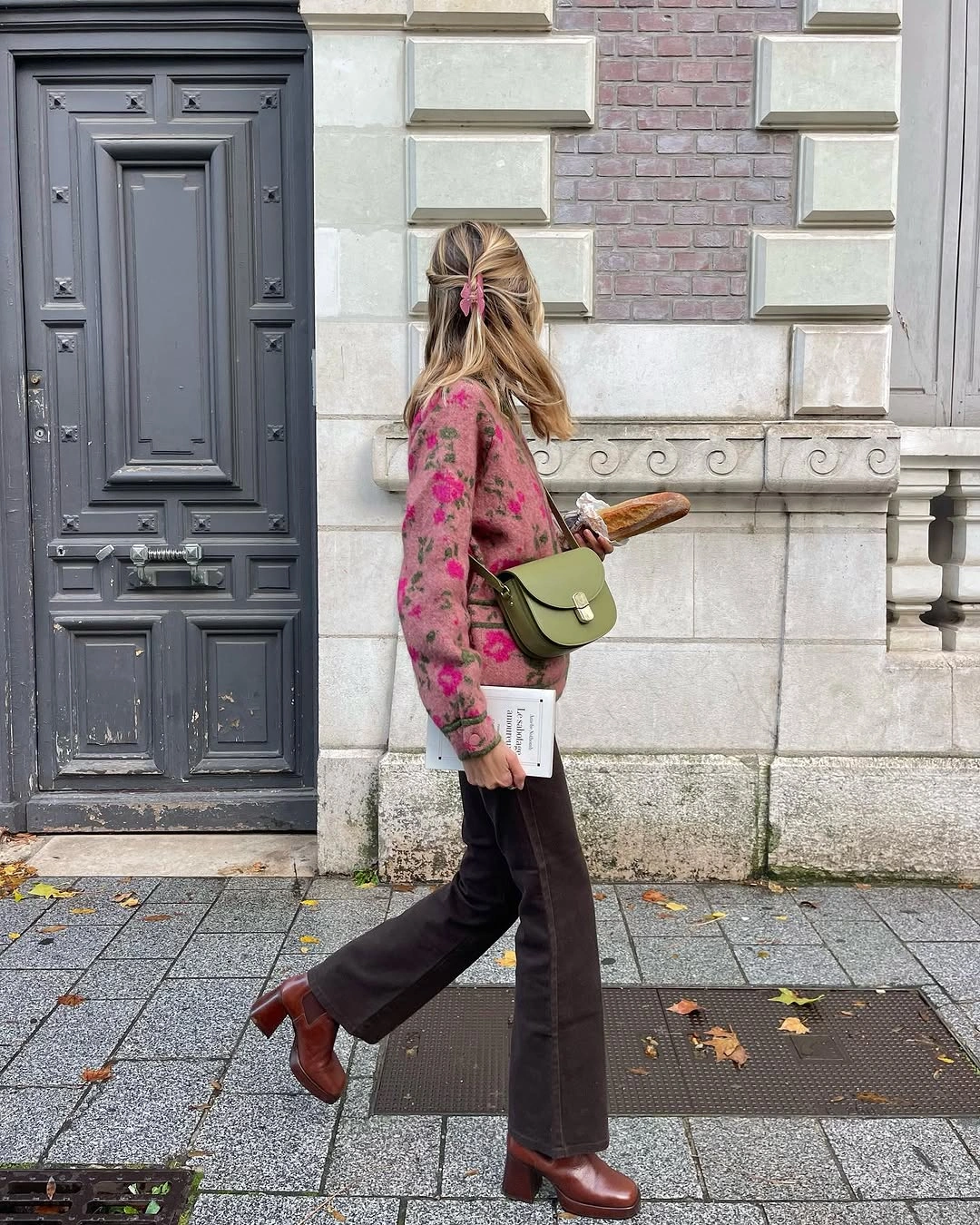
Use a brown bag for a tonal version, or repeat the green in a small shoe detail if the side accent feels isolated. A tucked base layer can clarify the waist beneath the cardigan, while a straighter trouser will make the floral print feel more prominent. Let the pattern stay on one garment. This makes the floral piece the clear point of interest and keeps the green accent from feeling accidental.
The wide trousers ground the soft cardigan, but the pattern and green bag already supply detail, so extra accessories would reduce the breathing room. Boots give the lower half enough weight. Choose it when a gentle print needs one unexpected accent and you want the outfit to feel fresh without becoming colorful everywhere.
Beige Coat With Orange And Red Boots
A beige trench-like coat layers over a bright orange top and cropped white trousers, finished with red tall boots and a muted green bag. Orange and red create a warm focal path through the center and lower leg, while beige and white give the stronger colors space. The green bag is quiet enough to act as a secondary counterpoint.
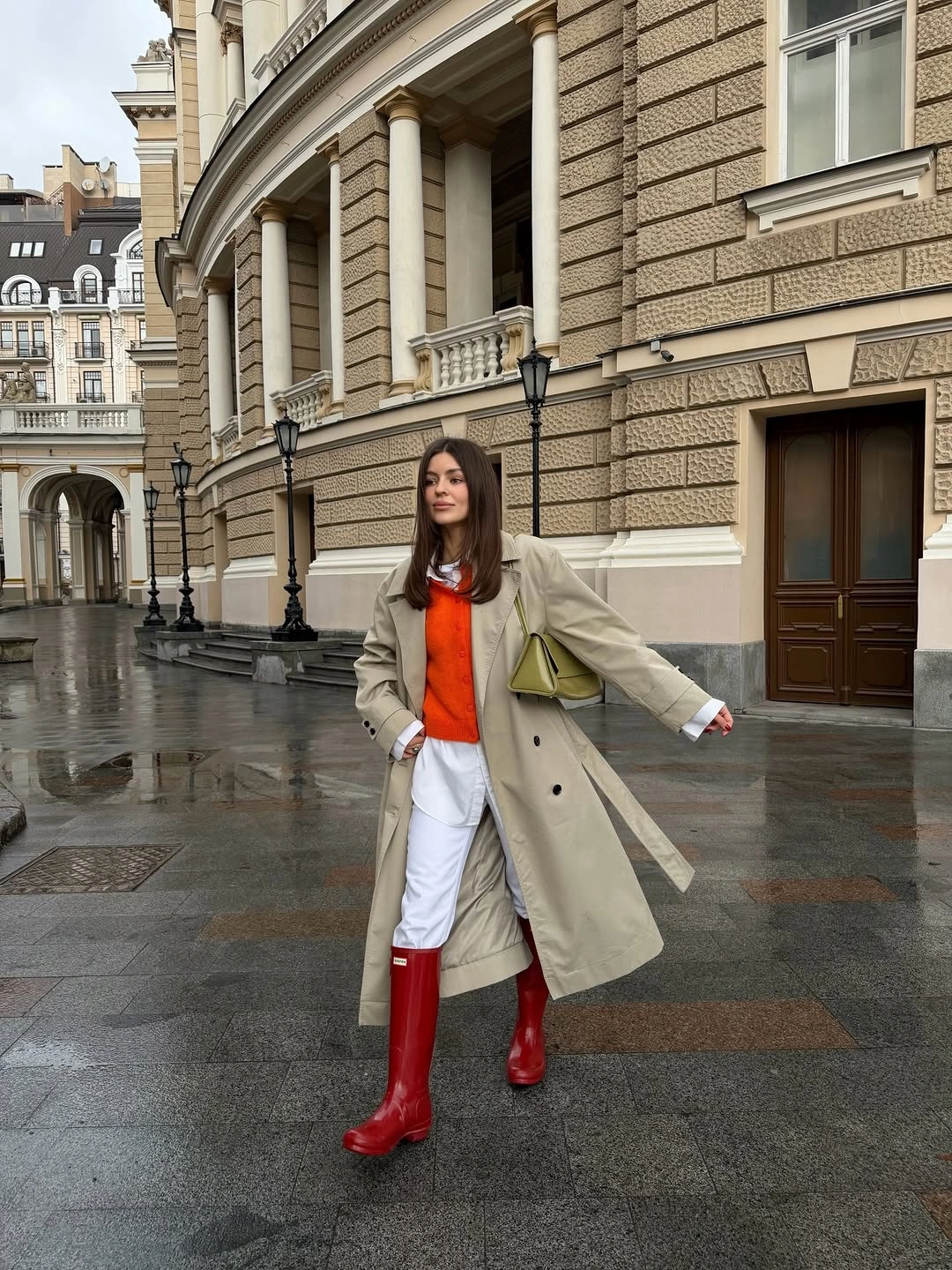
Keep either the orange top or the red boots if you want a cleaner accent system. A brown or beige bag will reduce the number of competing notes, while full-length trousers will make the boots less dominant. The coat should remain neutral so the warm colors can stay purposeful rather than scattered.
The outfit is visually energetic because several accents are close together, and the cropped trouser makes the boots impossible to miss. The light palette prevents the color from feeling closed, but practical care around pale hems is relevant. Choose it when a strong warm contrast is the desired reset, not when subtle coordination is the priority.
Long Dark Coat Over Pale Denim
A long dark coat is layered over a white top and wide blue jeans, with pale shoes and a dark bag. The white top creates a clean opening under the coat, while the wide denim continues the relaxed line below. Pale footwear keeps the jeans visible and prevents the dark coat from pulling the entire outfit downward.
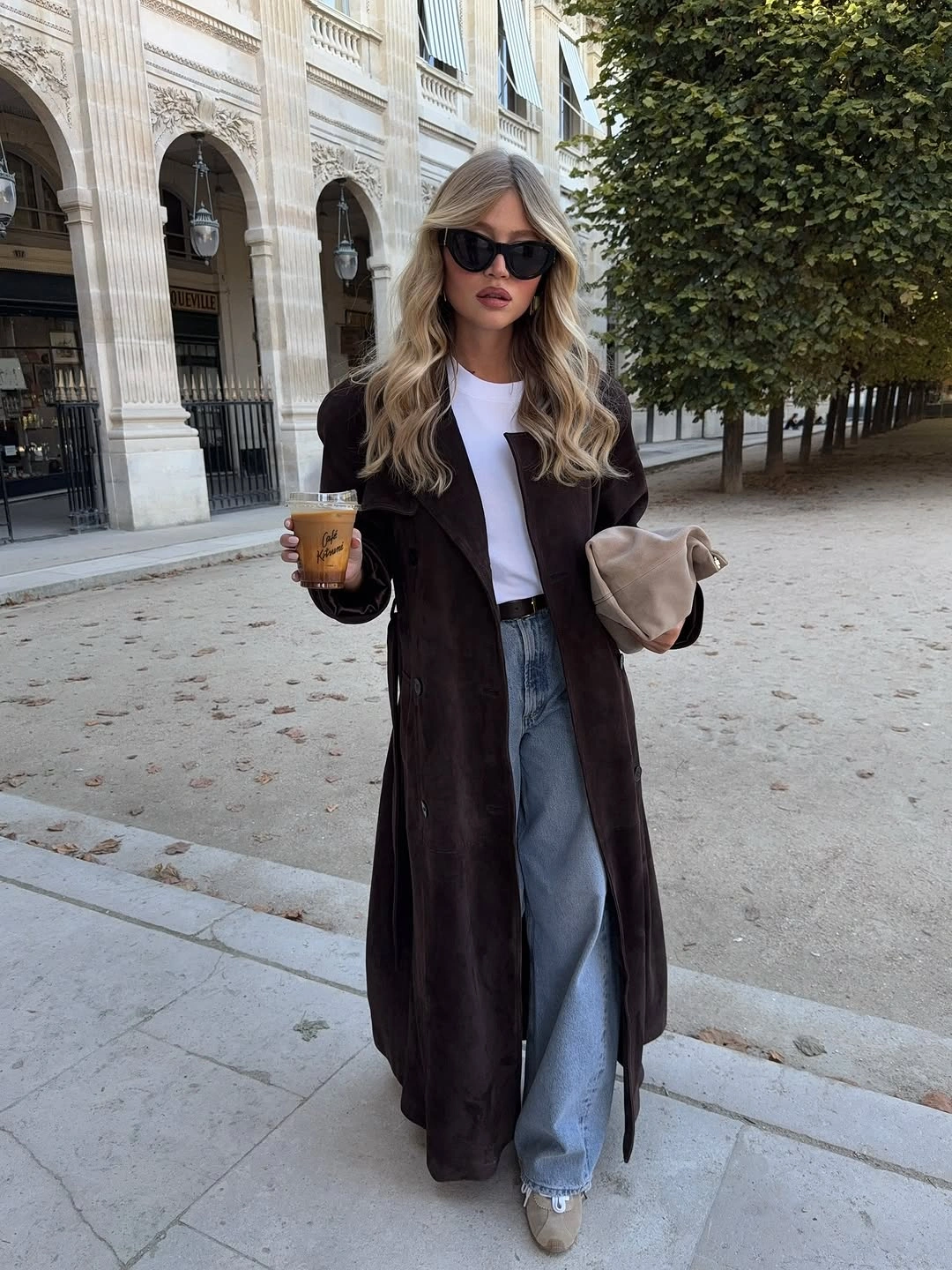
A shorter jacket will make the denim more casual-looking, while a brighter bag can shift the focal point to the side. Use a tucked top if the wide jeans need more definition, or keep the loose line if comfort-looking volume is the goal. The white center is worth preserving because it separates the dark layers.
The long coat and wide jeans create generous volume, but the pale center keeps the outfit from feeling closed. The shoe needs a clean shape to meet the hem, while the bag can add practical structure. Choose it when a dark outer layer needs a light reset underneath rather than another bright accent.
Rust Coat With Layered Warm Accessories
A rust-orange coat sits over dark clothing with a brown scarf, burgundy bag, and pale pouch-like accent. The coat is the anchor, while the scarf and bag deepen its warmth without matching exactly. The small pale accessory provides a break near the hands, stopping the warm palette from becoming one uninterrupted dark field.
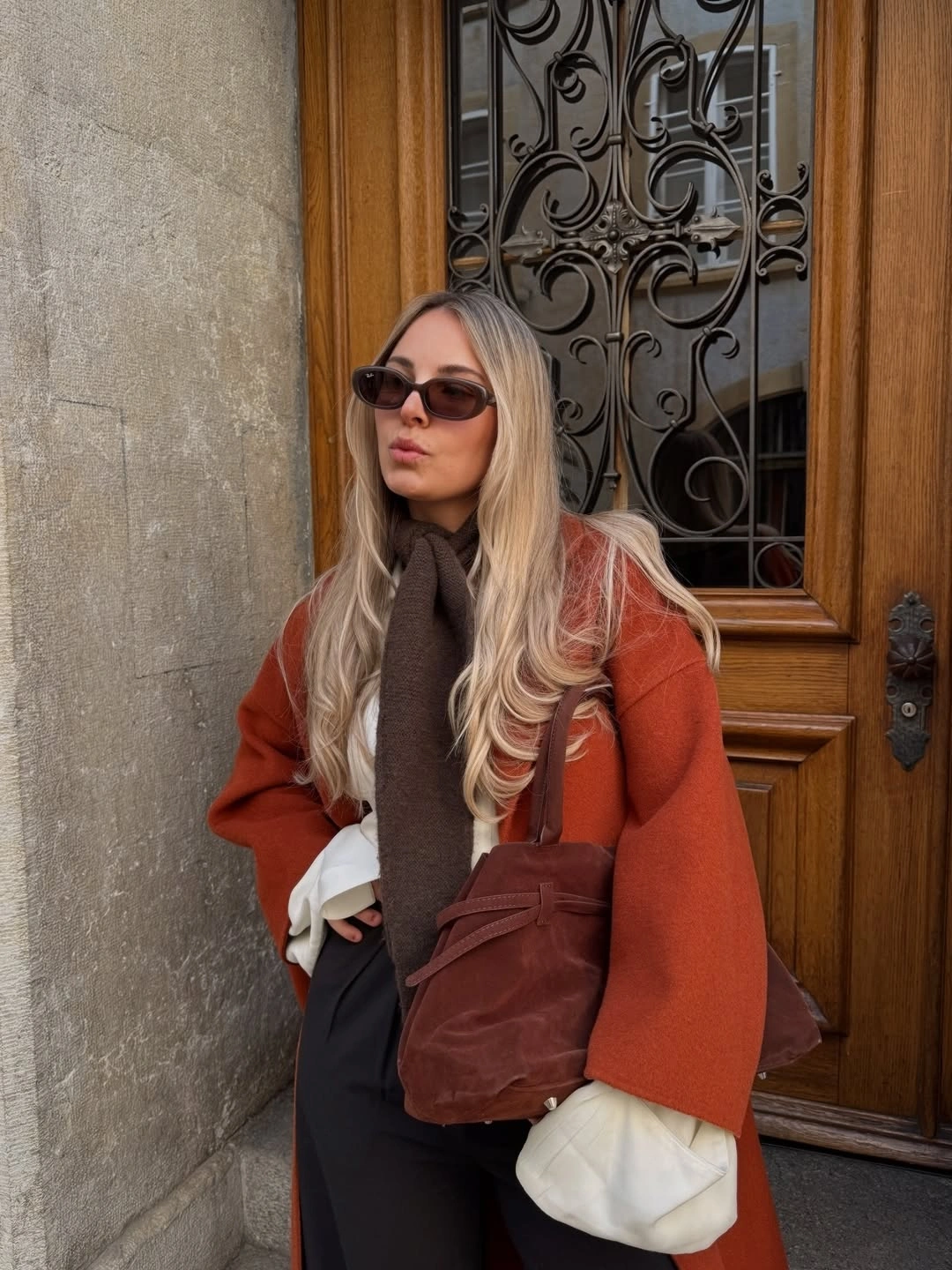
Keep the scarf and bag close in color and remove the pale accessory when you want a cleaner line. A lighter top can open the center, while a neutral bag will make the coat more prominent. The outfit works best when the outer layer remains the largest color area and the accessories stay supportive. This proportion keeps the outfit balanced even when the coat takes up most of the visible frame.
Several accessories are visible around the torso and hip, so the outfit has more visual information than a simple coat-and-jeans base. The warm palette makes it cohesive, but too many competing textures could reduce clarity. Choose it when layered accent color is the point and you want the coat to carry the seasonal mood.
Dark Jacket With A Polka-Dot Skirt
A dark jacket is worn over a white skirt with black polka dots, finished by black knee-high boots. The skirt becomes the light focal field, while the jacket and boots create matching dark brackets above and below it. The dot scale adds movement without changing the simple black-and-white palette. The arrangement is especially useful when you want a print-led outfit with strong but simple framing.
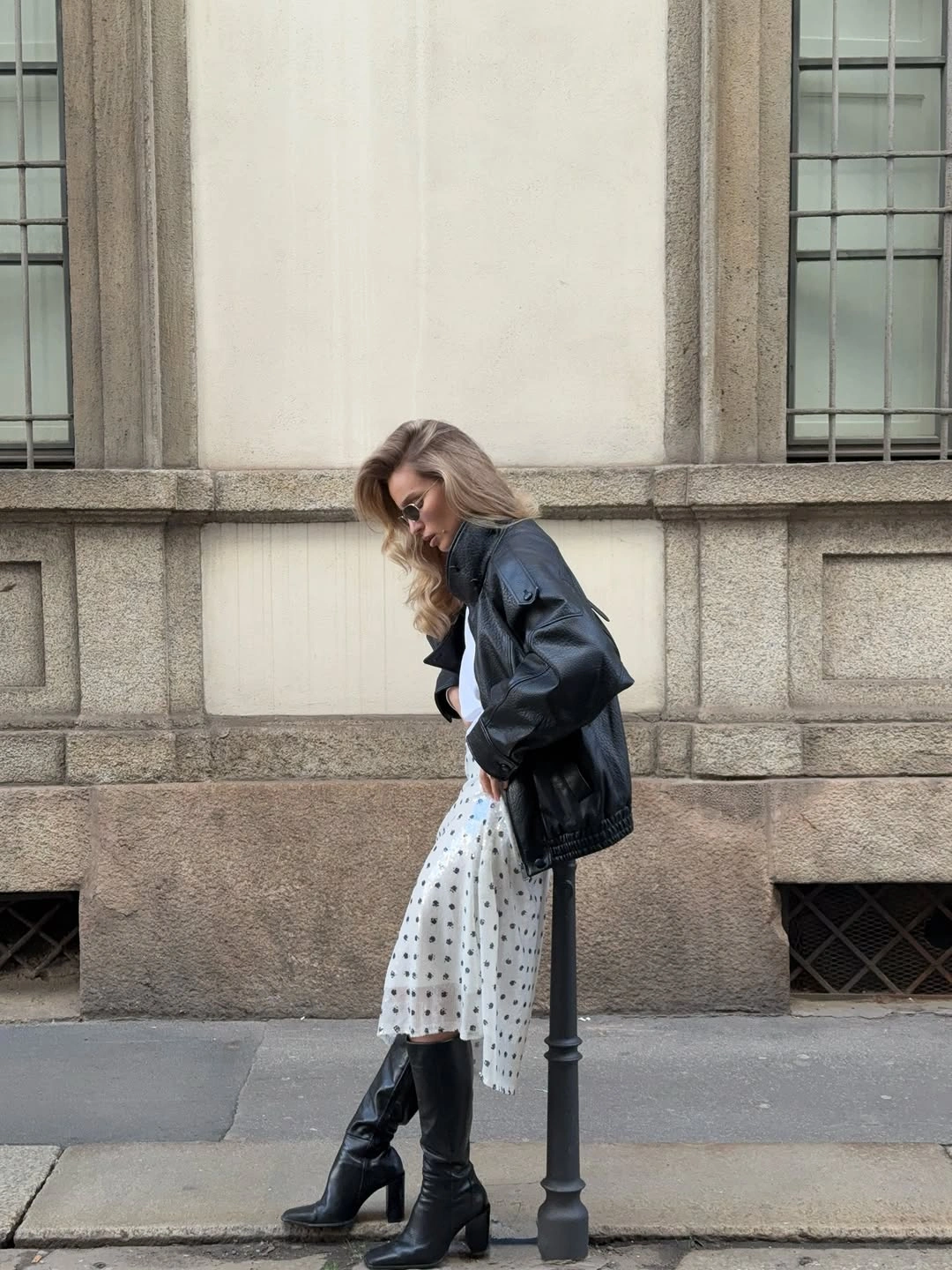
Use a plain skirt if you want the jacket and boots to lead, or choose a shorter jacket to show more of the dot pattern. A lighter boot would soften the lower bracket, while a dark bag would repeat the jacket. Keep the print to one garment so the outfit has visible breathing room. This gives the dots enough space to read while the dark pieces continue to define the silhouette.
The strong dark bookends make the lower half easy to read, but the tall boots add weight around a light skirt. The short-to-mid hem also affects coverage and movement. Choose it when a graphic print is the refresh you want and the rest of the outfit can stay deliberately quiet. The controlled contrast makes the outfit feel intentional rather than heavy, even with the dark footwear.
Burgundy And Orange With A Clear Color Block
A deep burgundy top is paired with bright orange trousers, orange sandals, an orange handbag, and a warm layer over the shoulders. The orange is repeated across the lower half and accessories, turning a vivid color into a deliberate block rather than a stray accent. Burgundy provides the dark counterweight above it.
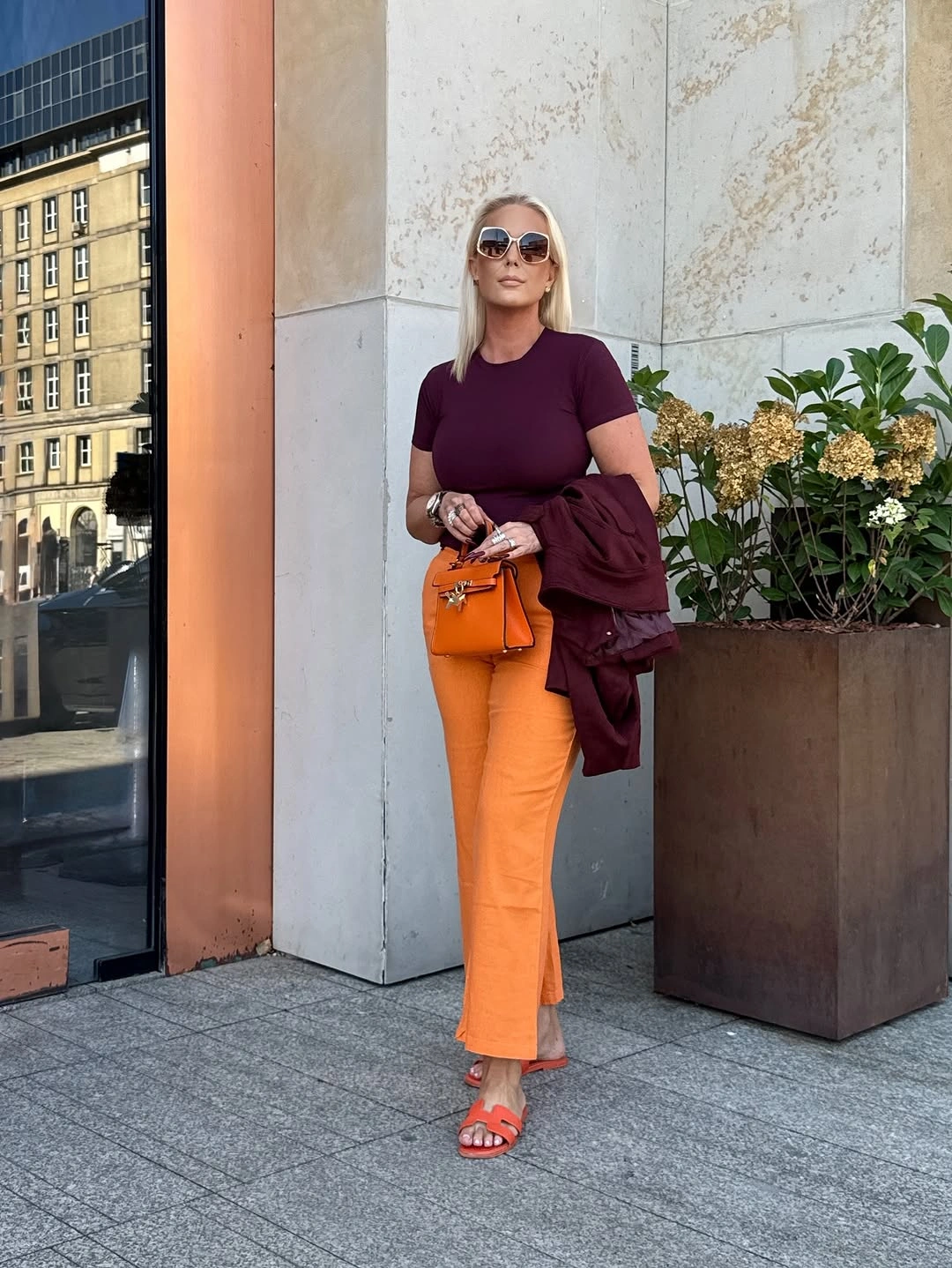
Keep the orange trousers and replace the bag with a neutral if the repetition feels too exact. A darker shoe will make the lower line more grounded, while a shorter layer can reduce the amount of color around the shoulders. The outfit works when orange remains the main accent and burgundy stays its supporting contrast.
The bright palette reads warm-weather casual-looking because of the short sleeves and open sandals, while the saturated trousers carry strong visual weight. The open lower styling may not suit every part of the month, but the color system can move into cooler weather with a closed shoe and outer layer. Choose it when a clear block of color is the trend.
Taupe Coat With Pleated Brown Skirt
A long taupe coat covers a brown turtleneck and pleated mini skirt, with tall brown boots and a tan bag extending the warm neutral line. The coat supplies length and coverage, while the pleats create movement beneath it. Tall boots continue the lower line, so the short skirt reads as a deliberate layer rather than a separate outfit.
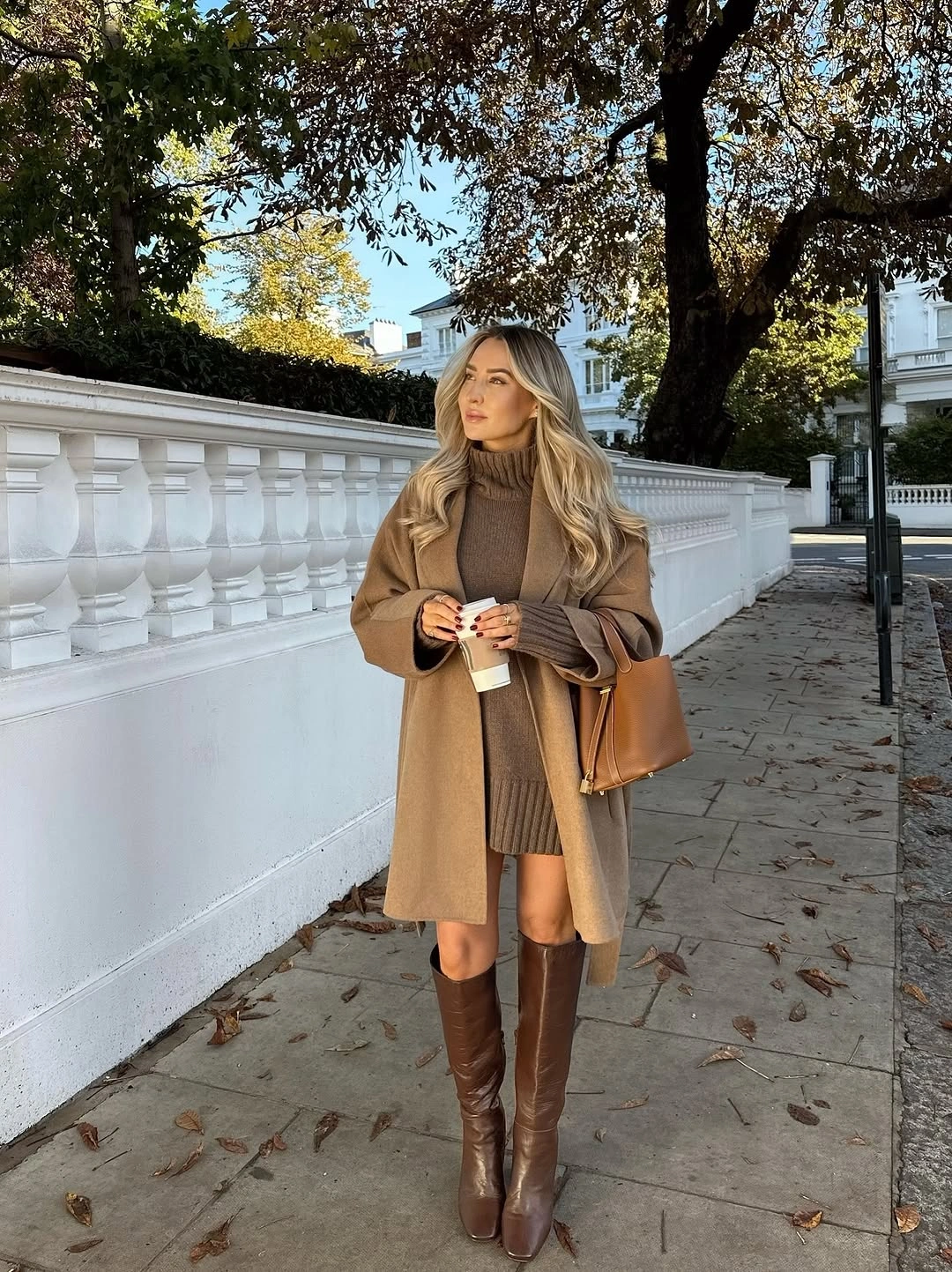
Use a lighter skirt to reveal the pleats more clearly, or choose a shorter coat if you want the short base to lead. A darker bag will sharpen the warm neutrals, while a pale knit can open the neckline. Keep the boots close in value to the coat if you want the outfit to feel continuous. That keeps the pleated base visible while the neutral layers provide a calm frame around it.
The long coat balances the short skirt, but the combination can feel enclosed if every layer is deep and warm. The pleats and boots add enough structure, so extra patterns are unnecessary. Choose it when a layered neutral silhouette is the refresh you want and a short hem can remain visible beneath a longer outer piece.
White Sleeveless Top With Brown Trousers
A white sleeveless top is tucked into high-waisted brown trousers, with a brown belt, bag, and sunglasses repeating the warm lower palette. The pale top opens the torso, while the belt establishes a clear waist before the trousers widen. The outfit reads polished-looking through its clean color blocks rather than a complex layer system.
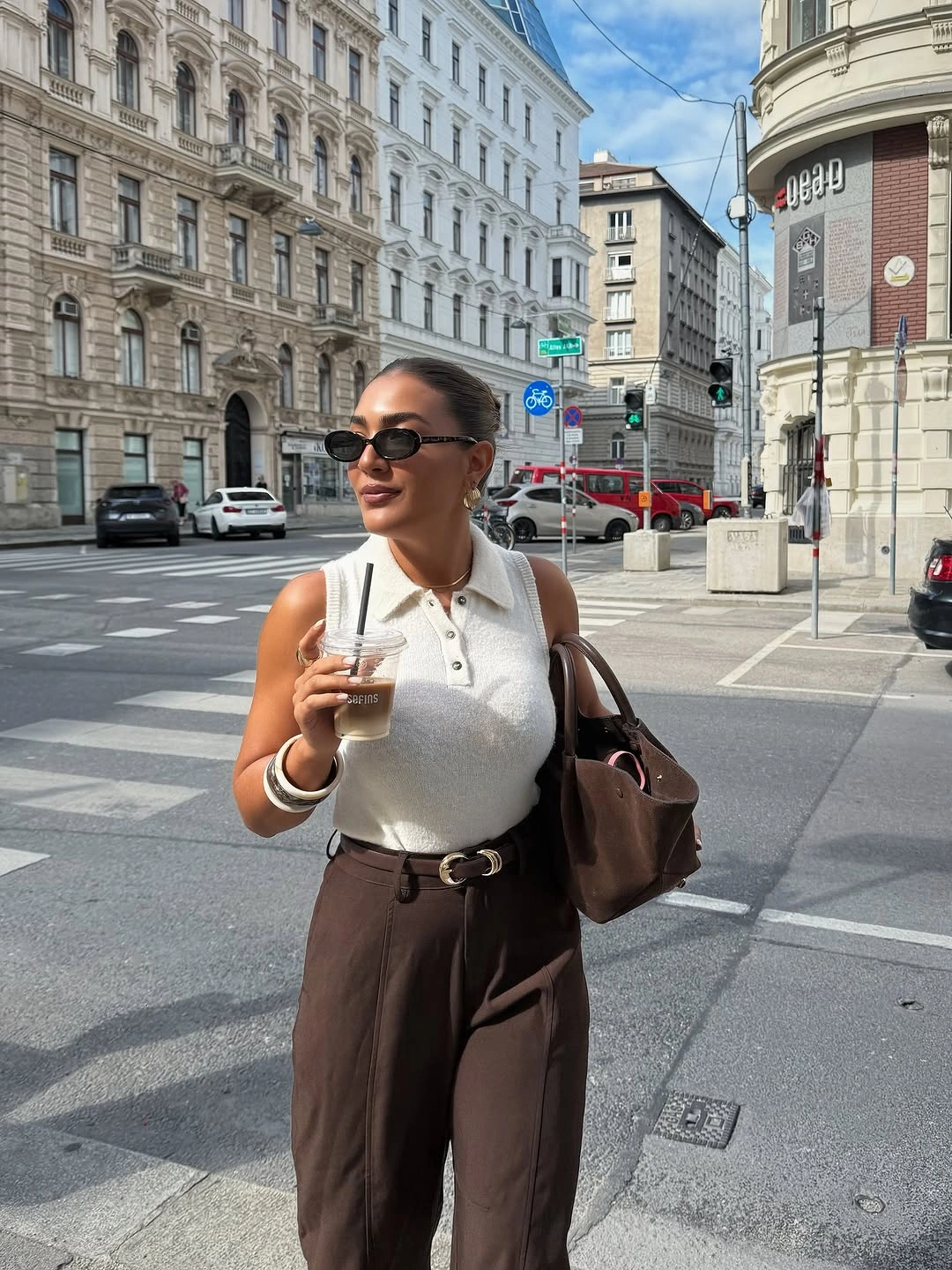
Add a brown jacket when you want more coverage, or use a black belt for a sharper contrast. A smaller bag will keep the waist and trouser line visible, while a wider leg will emphasize the relaxed silhouette. The tuck is the key element; without it, the pale top could lose its structural role. This preserves the relaxed trouser shape while giving the pale top a clear connection to the accessories.
The sleeveless cut leaves the upper body relatively open, while the wide brown trousers supply most of the visual weight. The matching accessories make the outfit coherent, but too many brown pieces could reduce the contrast. Choose it when clean proportion and a warm belt line matter more than layered texture.
Short Brown Jacket With A Pale Hem
A short brown jacket is worn over a pale skirt or shorts, with white socks, warm sandals, a striped layer, and a large tan tote. The brown jacket creates a compact top, while the pale lower piece opens the outfit below it. The tote supplies side volume, and the socks connect the pale hem to the shoes.
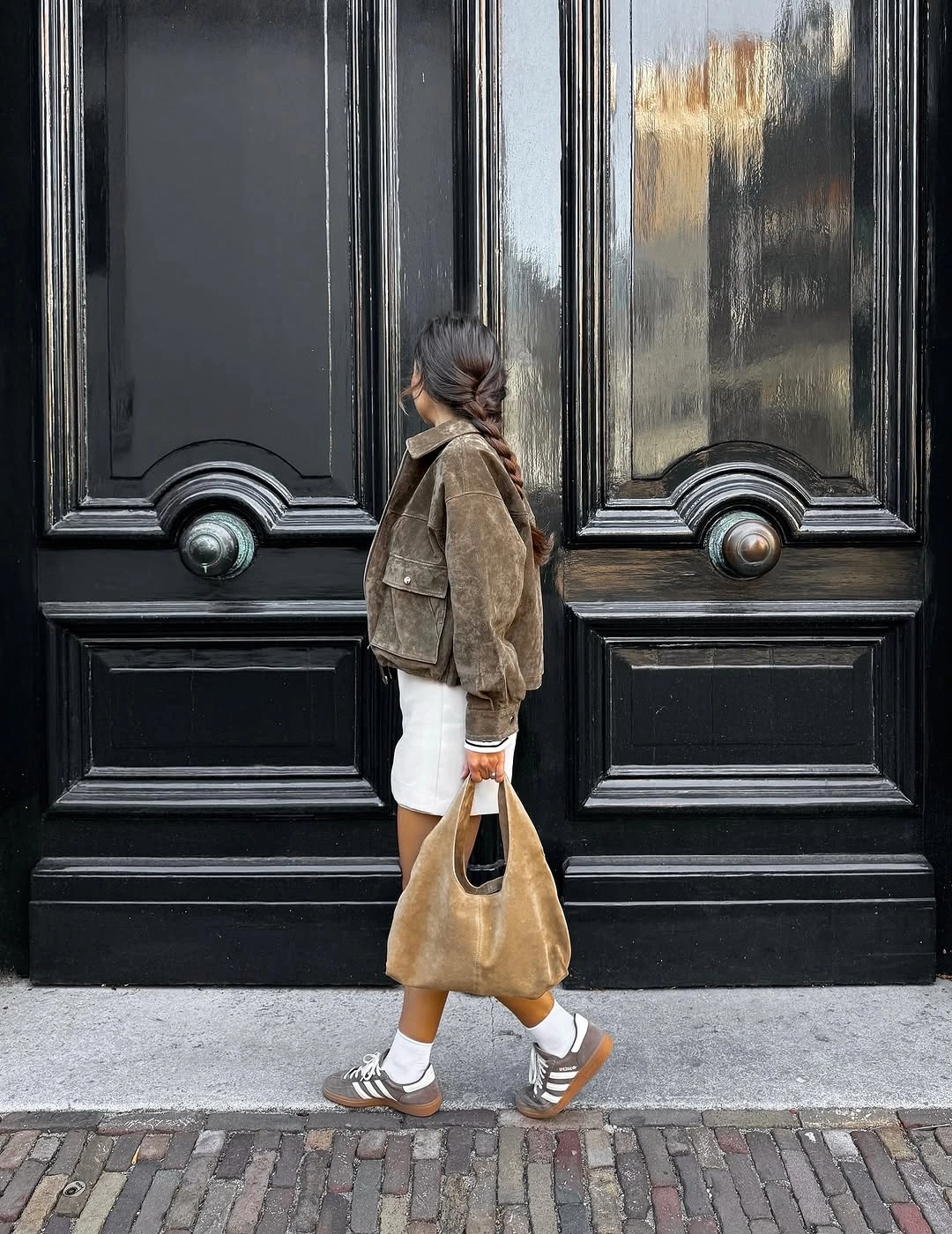
Use loafers or boots when more coverage is needed, or choose a smaller bag to make the lower half feel less weighted. A plain top will let the pale hem lead, while a longer jacket will soften the cropped proportion. Keep the socks if you want a visible bridge between hem and shoe. The visible bridge helps the cropped hem look intentional instead of disconnected from the shoe.
The outfit is light and casual-looking, but the short lower piece and open sandals make its practical use narrower than a coat-and-trouser combination. The color balance is easy to understand because brown frames pale space. Choose it when the trend you want is a crisp short proportion and a warm accessory thread.
Long Brown Coat Over A Dark Base
A long dark brown coat covers a short dark outfit, with warm olive-brown boots and a large textured bag adding depth near the lower body and side. The coat gives the short base a strong outer frame, while the boots introduce a muted color shift instead of a bright contrast. The result is deep and compact, with texture doing more work than color variety.
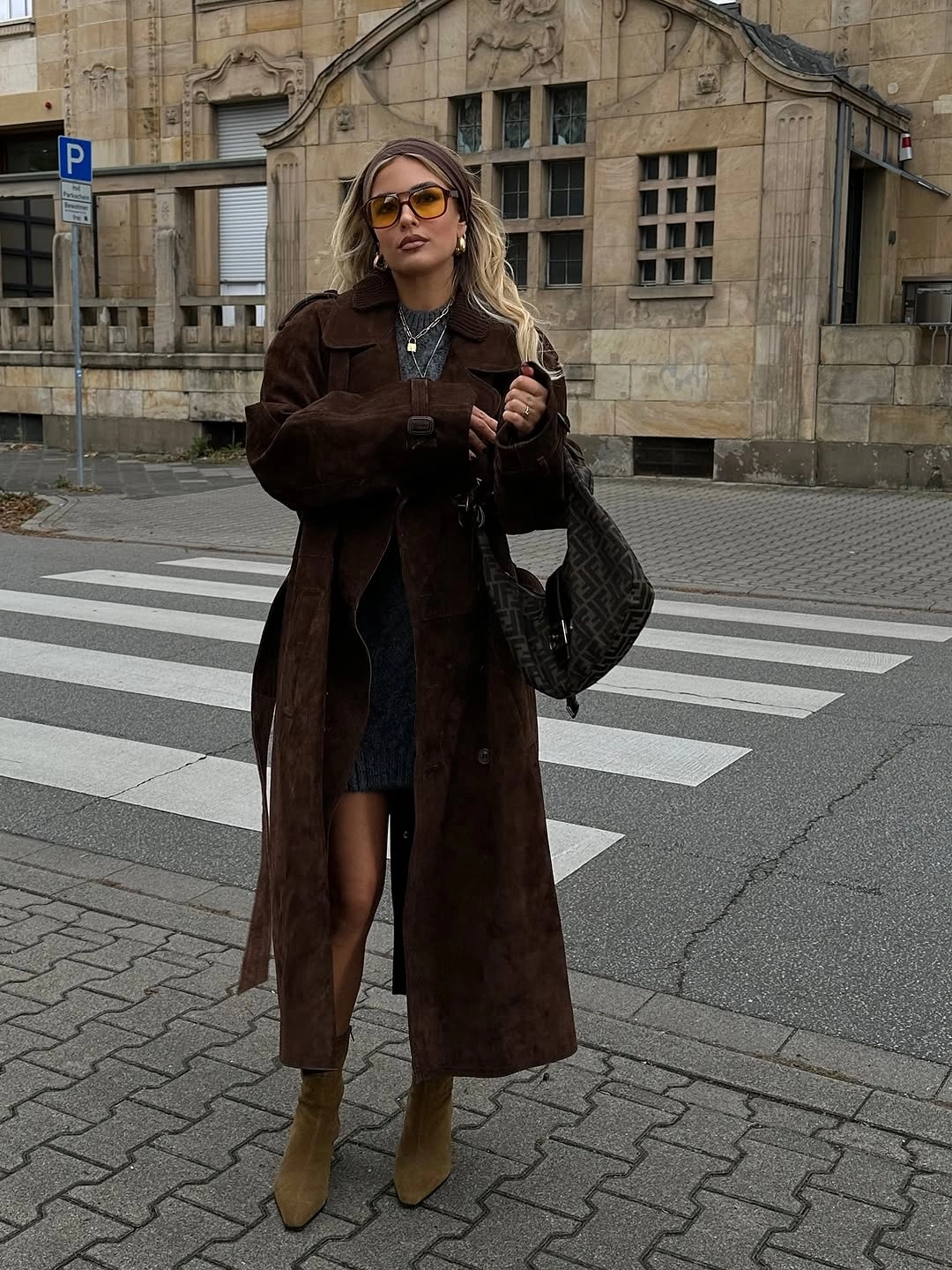
Use a lighter scarf or a simple black bag if the palette feels too closed. A shorter coat will reveal more of the base, while a taller boot will continue the long line. Keep one warm shift, such as the boots, and let the coat remain the largest visual decision. This creates a clear hierarchy: the coat supplies the mass, the boots supply the warm shift, and the bag stays quiet.
The short hem remains a coverage and movement consideration, even though the coat supplies length. The large bag adds texture but also increases side volume, so a smaller shape would make the outfit cleaner. Choose it when a deep layered silhouette is appealing and a muted boot is enough to prevent the look from becoming flat.
Brown Coat With A White Center
A long brown coat is worn over a white top and wide white trousers, with white sneakers and a dark brown structured bag. The white center and lower half brighten the coat, while the bag restores a warm anchor at the side. The outfit feels calm because the palette is limited, but the long coat and wide trousers still create generous volume.
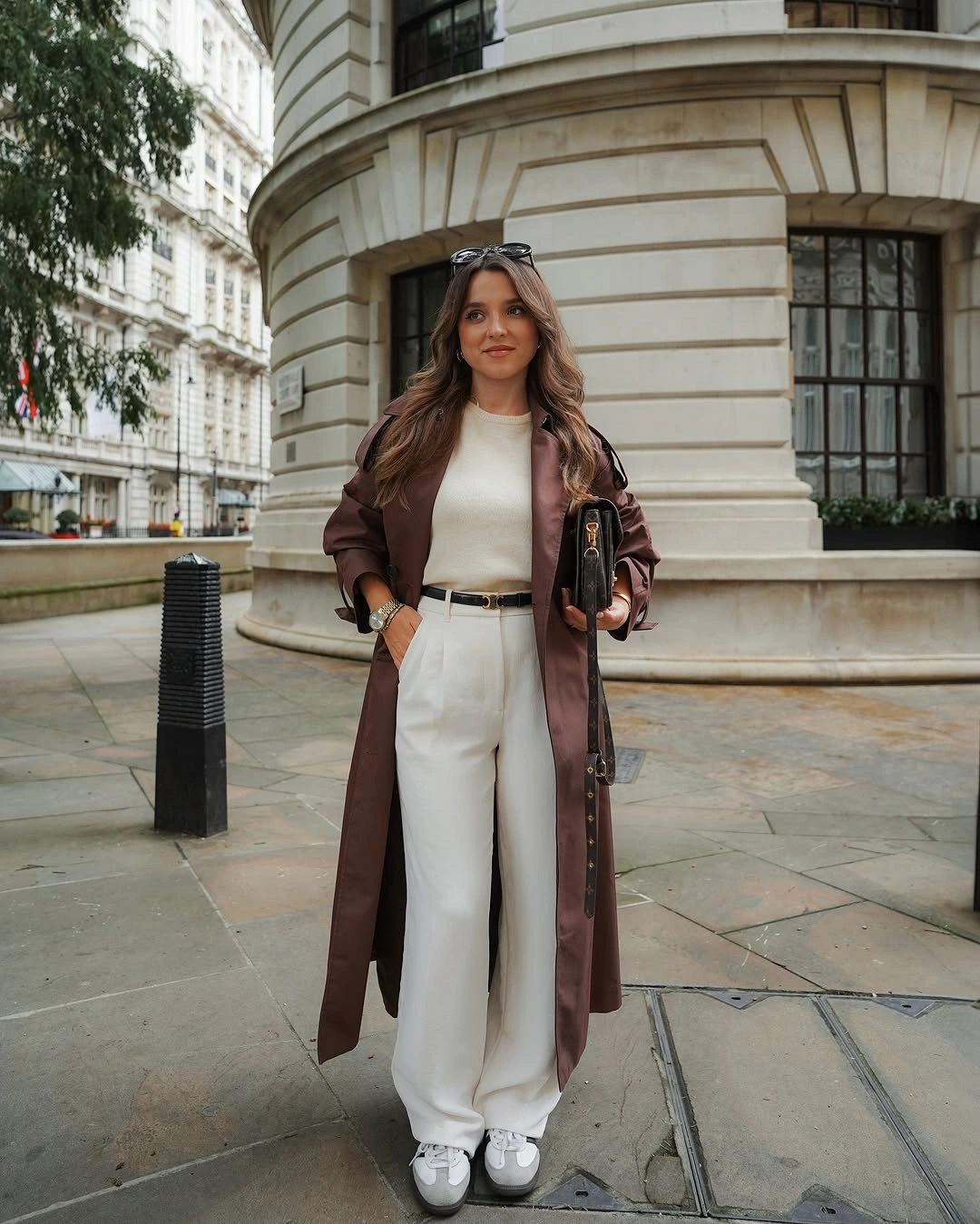
Use a brown belt or shoe if you want a stronger connection between the coat and lower half. A shorter jacket will make the white trousers more prominent, while a darker shoe will ground the hem. Keep the white top visible if the goal is to preserve the bright center under the coat. That keeps the bright center open and lets the coat’s shape remain the main silhouette decision.
The pale trousers require practical care around the bottom, and the wide shape needs enough room to fall cleanly. The brown bag gives the outfit structure without adding another large color block. Choose it when you want a neutral fashion reset built from contrast between a dark outer layer and a light center.