October haircut ideas 2026 are less about one trendy length and more about deciding what kind of change you want to notice first. In this set, the strongest choices come from fringe weight, face-framing color, tapered ends, and the way layers move around the cheekbones and shoulders. Use the details as a menu: a small bang shift can feel as intentional as a vivid color panel if the shape supports it.
The range moves from glossy long brunette layers to compact shags, rounded bobs, vivid orange, pale pastels, and quieter brown texture. That makes the article useful if you are comparing impact against upkeep, because some cuts ask for daily bang control while others lean on looser waves or a softer side part. Before choosing, compare where the volume sits, how much fringe maintenance you want, and whether color or shape should be the first thing people notice.
Long Dark Layers With Heavy Sweeping Fringe
Long brunette hair gets a sculpted feeling from the dense fringe that sweeps across the forehead and melts into rounded cheek pieces. The layers form large C-shaped bends through the sides and lower lengths, so the haircut keeps its length while looking deliberately shaped. Glossy dark color helps every curve read cleanly.
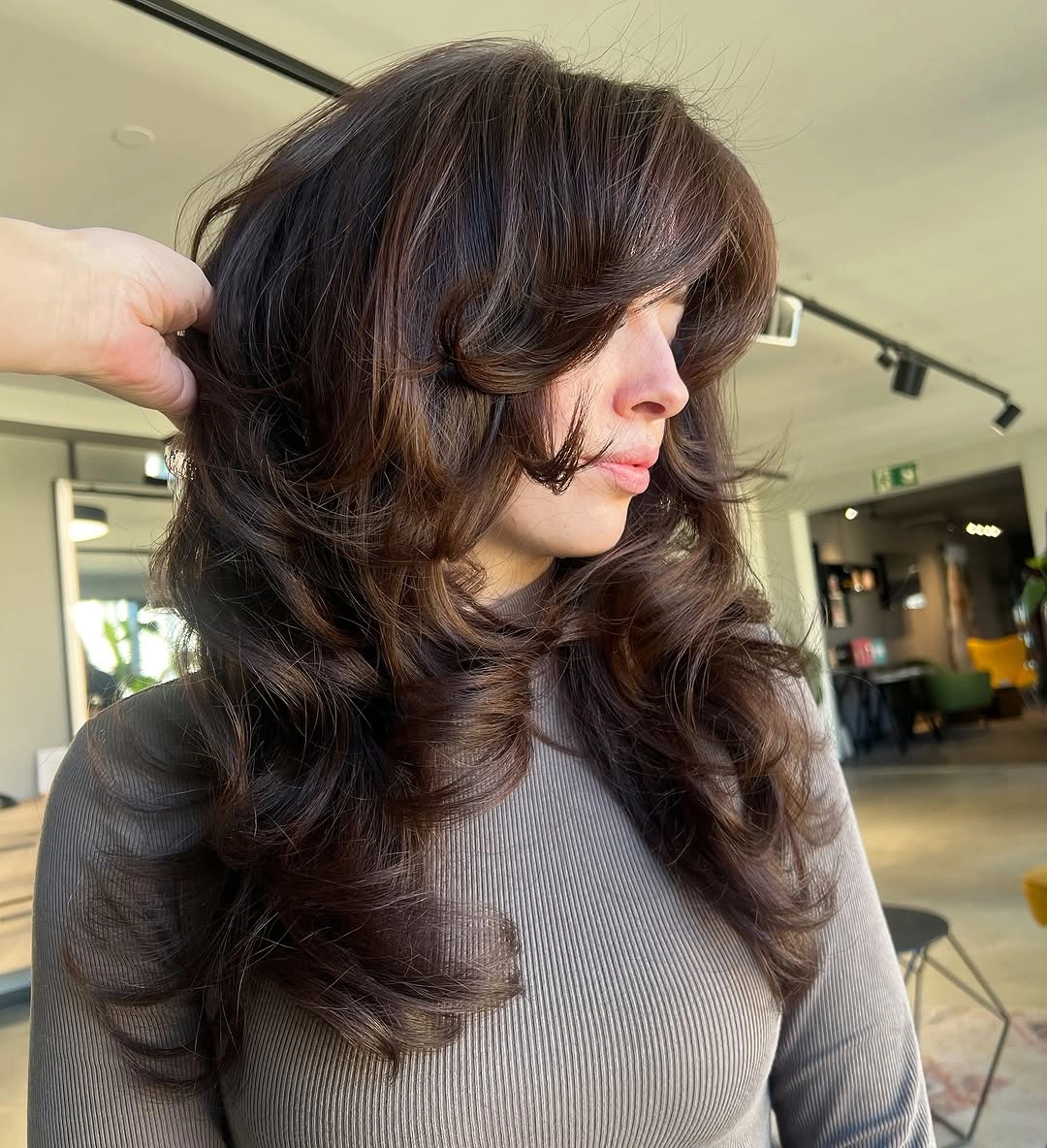
The balance works because volume travels from the crown into the face frame and then down to the curled ends. Instead of letting long hair hang in one sheet, the front pieces create a soft frame that still has weight. It is one of the stronger october haircuts if you want a visible change without cutting off the length.
Ask for the front to be lightened into curtain bangs if a full fringe feels too covered around the eyes. To keep the shape readable, style the ends in broad bends rather than tiny waves. The tradeoff is upkeep: heavy front pieces usually need trimming and a little direction so they do not fall forward all day.
Short Black Shag With Copper Crown Color
A vivid copper-orange crown sits over black bangs, sides, and lower ends, turning this short layered cut into a sharp color statement. The choppy perimeter hovers around the jaw and neck, while the crown carries the strongest lift. That placement makes the bright top feel intentional instead of random.
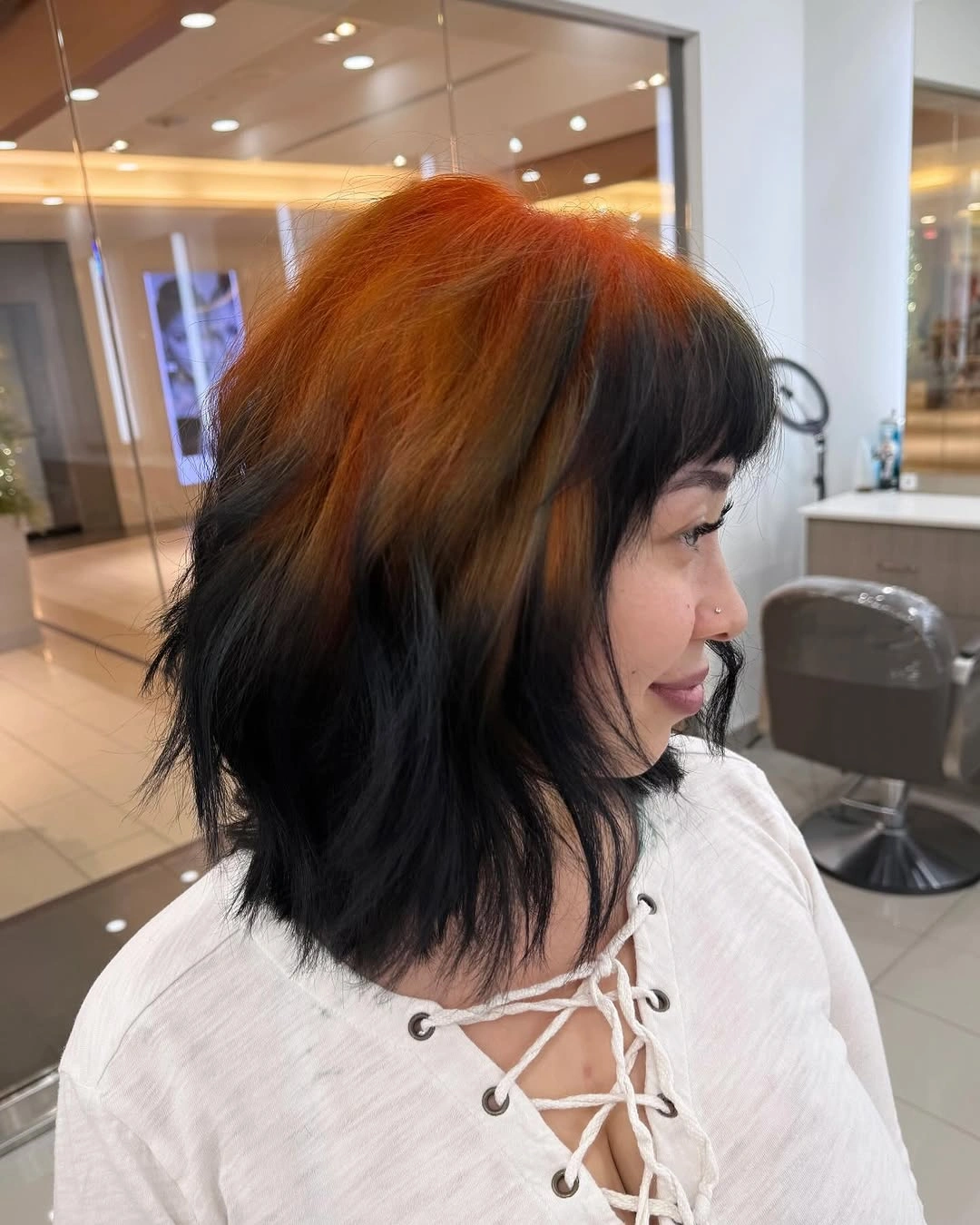
Warm color pulls attention upward, and the dark lower section gives the outline a clean anchor. Piecey ends matter here because they match the energy of the color contrast and keep the short shape from becoming too round. The result feels compact, bold, and easier to read from the side.
Keep the bright shade limited to the top if full-head copper feels like too much commitment. A textured perimeter will support that contrast better than a smooth blunt line. Regrowth and fading can show quickly with this much separation, so it suits someone who is comfortable maintaining a crisp color break.
Long Auburn Layers With Soft Forehead Bangs
Warm auburn length falls below the shoulders with soft bangs that open slightly near the center. The face-framing pieces taper toward the shoulders and chest, giving the long haircut a gentle front shape. Compared with heavier fringe, this version feels softer and less closed over the face.
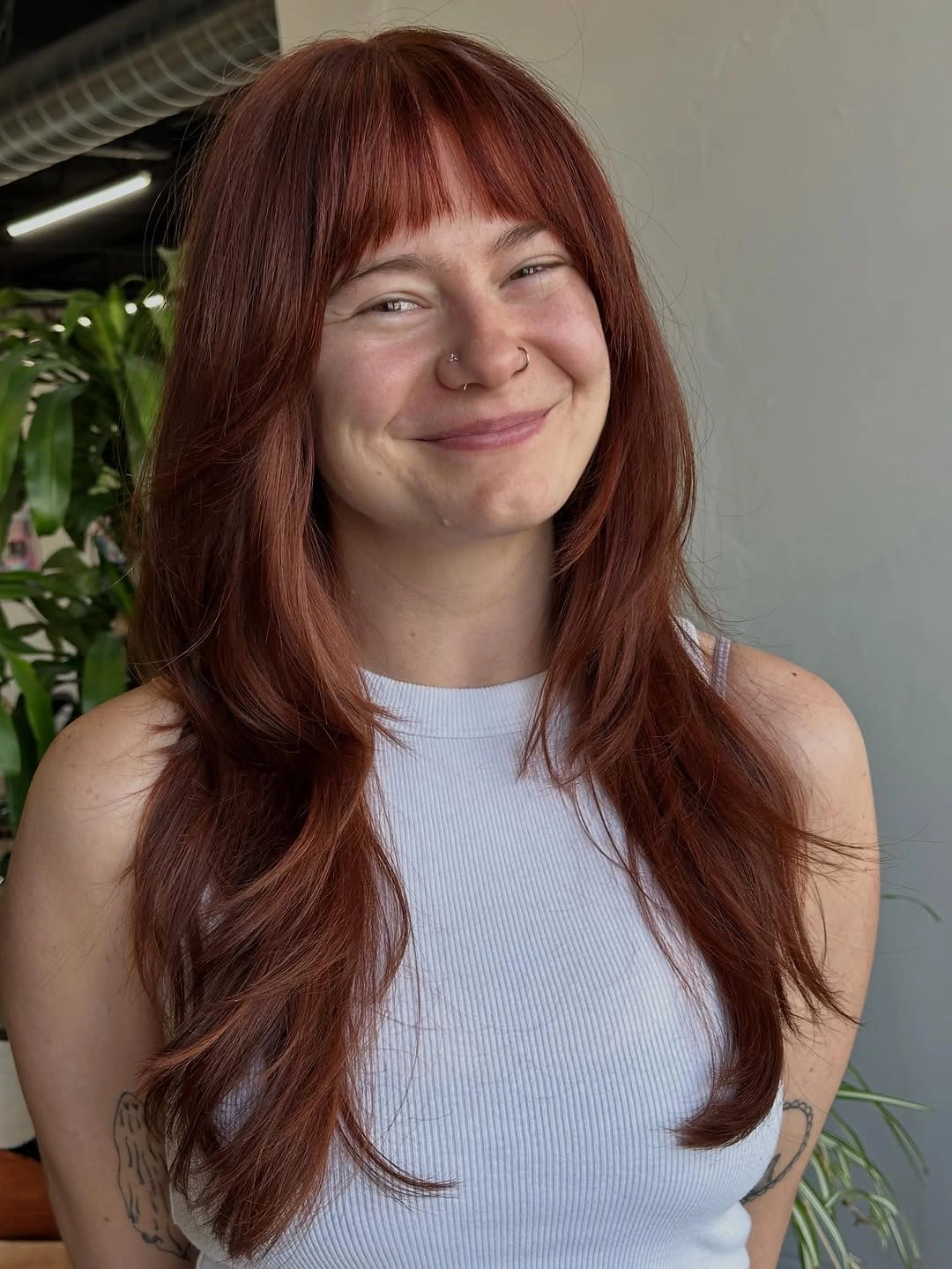
The proportion works because the bangs add structure while the long lengths keep the style familiar. Auburn color also helps the curved front pieces stand out without needing high-contrast panels. It is a good direction when you want long hair to look refreshed, not completely reinvented.
Choose a blended fringe if blunt bangs feel too severe, and ask for face pieces that can bend inward near the cheek and shoulder. The front ends need a little shaping to show the taper. If you want a dramatic chop, this may feel subtle, but it is a smart first step into bangs.
Dark Waves With Platinum Face Panels
Loose dark waves run through the long lengths while pale blonde panels frame both sides of the face. A short dark fringe remains visible at the forehead, which keeps the front from becoming all blonde. The movement lets the two tones stay separate without looking stiff.
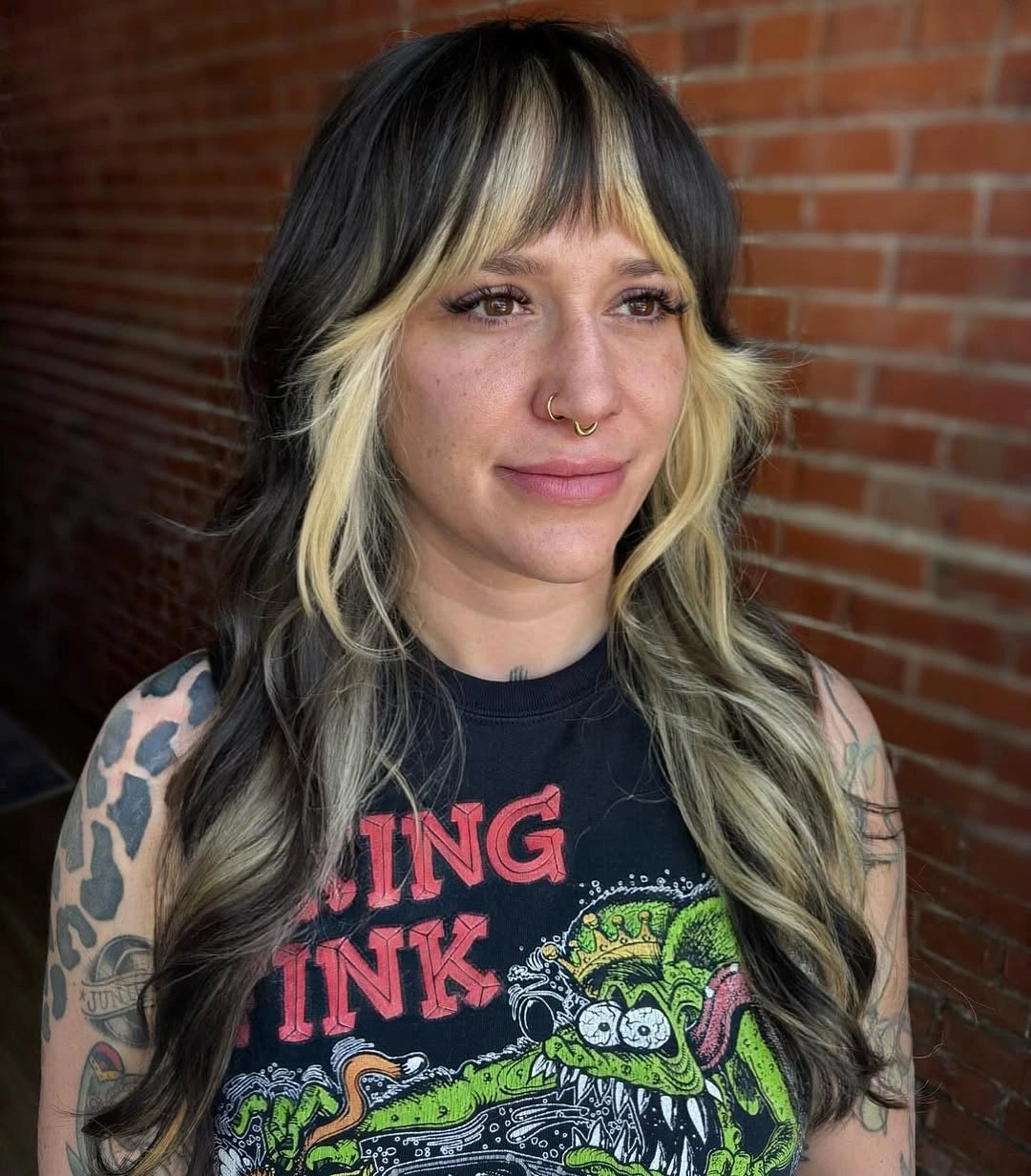
This is not a subtle change, and that is the point. The light front pieces brighten the face area, while the dark base gives the waves depth and keeps the overall shape grounded. Because the contrast sits right at the front, roots and tone shifts may be more noticeable than with softer color.
Keep the bright pieces concentrated near the face if you want a focused update to long hair. Waves or wide bends help reveal the separation through the lengths without turning the haircut into a hard color block. For a quieter version, narrow the panels or soften the blonde tone.
Medium Copper Shag With Feathered Sides
Bright copper color covers a shoulder-grazing shag with wispy bangs and sides that flip away from the cheeks. The ends are airy and piecey rather than blunt, which gives the medium length a lively outline. The strongest detail is the outward feathering around cheek and jaw level.
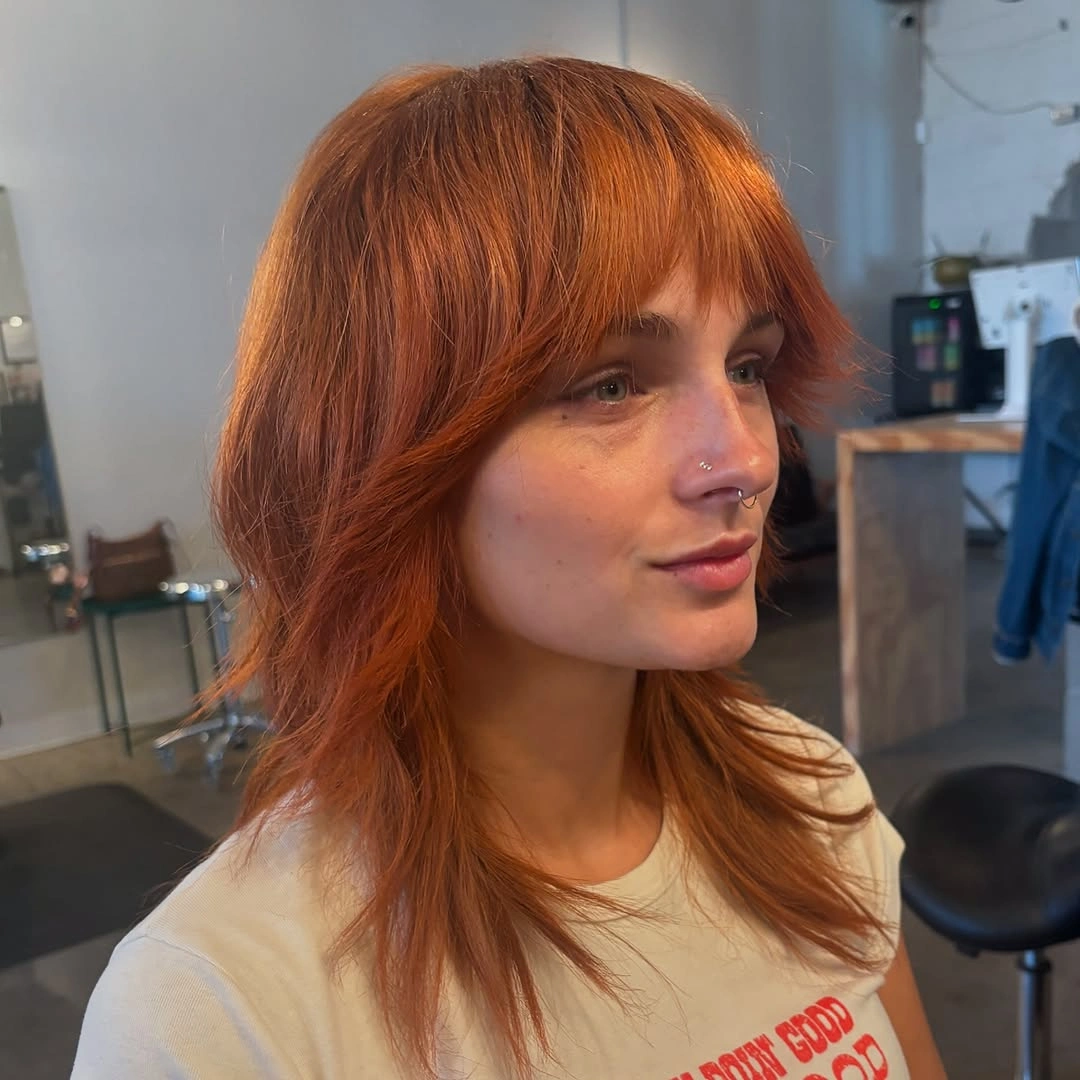
Shorter side layers open the face and keep the cut from feeling heavy at the shoulders. A unified copper shade connects all those flipped pieces, so the texture reads as one shape instead of scattered ends. The haircut has energy, but the length still stays practical.
Style the side pieces away from the cheeks when you want the feathering to show. A softer auburn variation would keep the same movement with less color intensity. The main caution is dryness: piecey copper ends can look rough quickly if the perimeter is not kept neat.
Long Copper Waves With Curtain Bangs
Rich copper length falls past the shoulders with curtain bangs that part near the center and sweep toward the cheekbones. The lower lengths carry fuller waves, while the crown stays softer. This gives the haircut volume below the face instead of piling all the shape at the top.
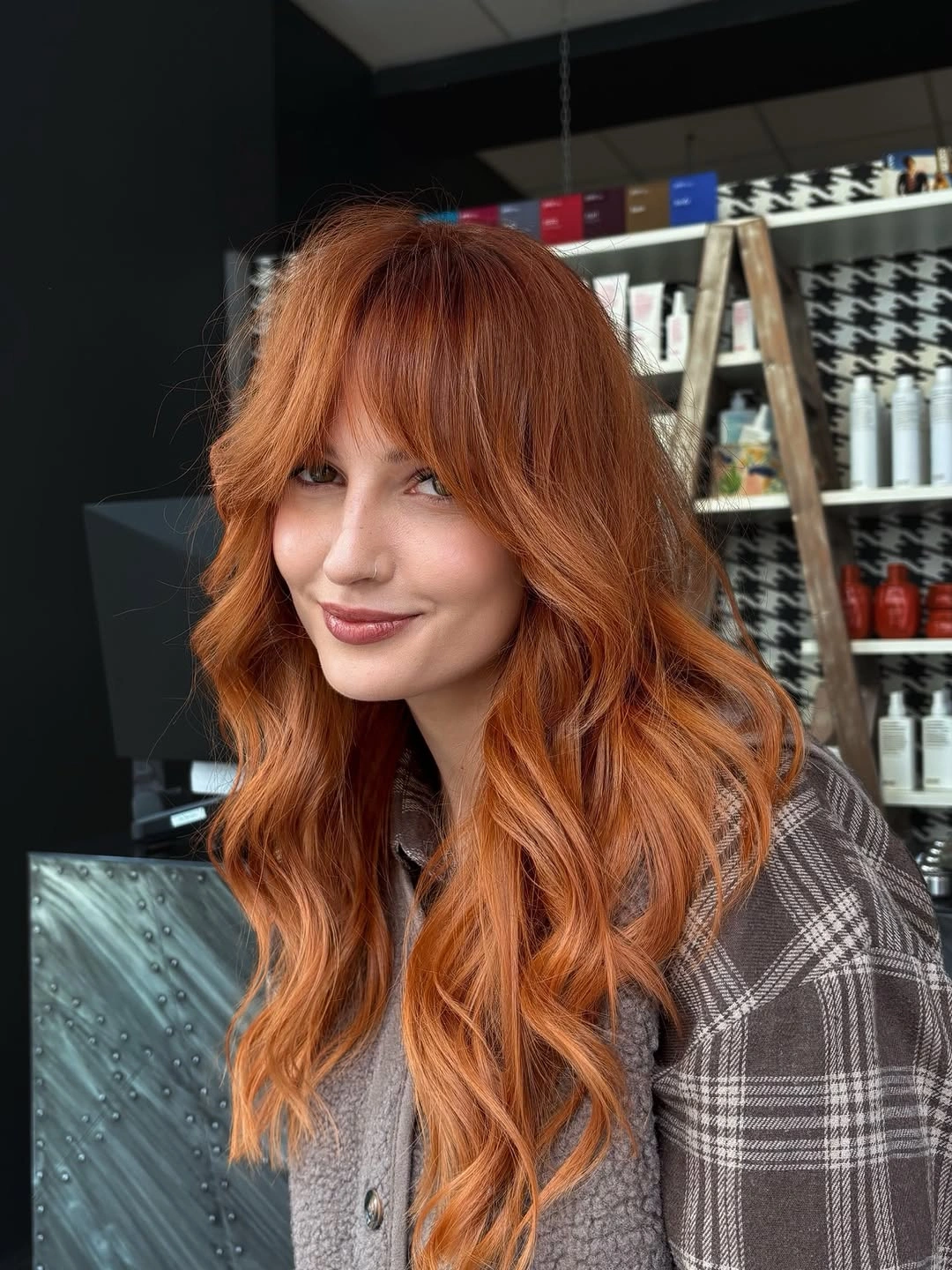
Curtain bangs make long hair feel open because they move away from the center instead of forming a solid fringe. The waves keep the copper from reading flat, especially through the mid-lengths where light catches each bend. This is one of the october haircuts that works best when you want fullness without a short shape.
Shape the bangs outward while styling so the face stays visible. Larger waves through the lower lengths will echo the full finish better than tight curls. The color and length both ask for care, because flat styling can make the bottom feel heavy and dull the copper impact.
Pale Blonde Layers With Peach Accents
A very pale blonde base sets up small peach-orange accents through the fringe and lower front pieces. Soft bangs blend into shoulder-length layers that turn outward at the ends. The shape feels polished because the flip is controlled, not messy.
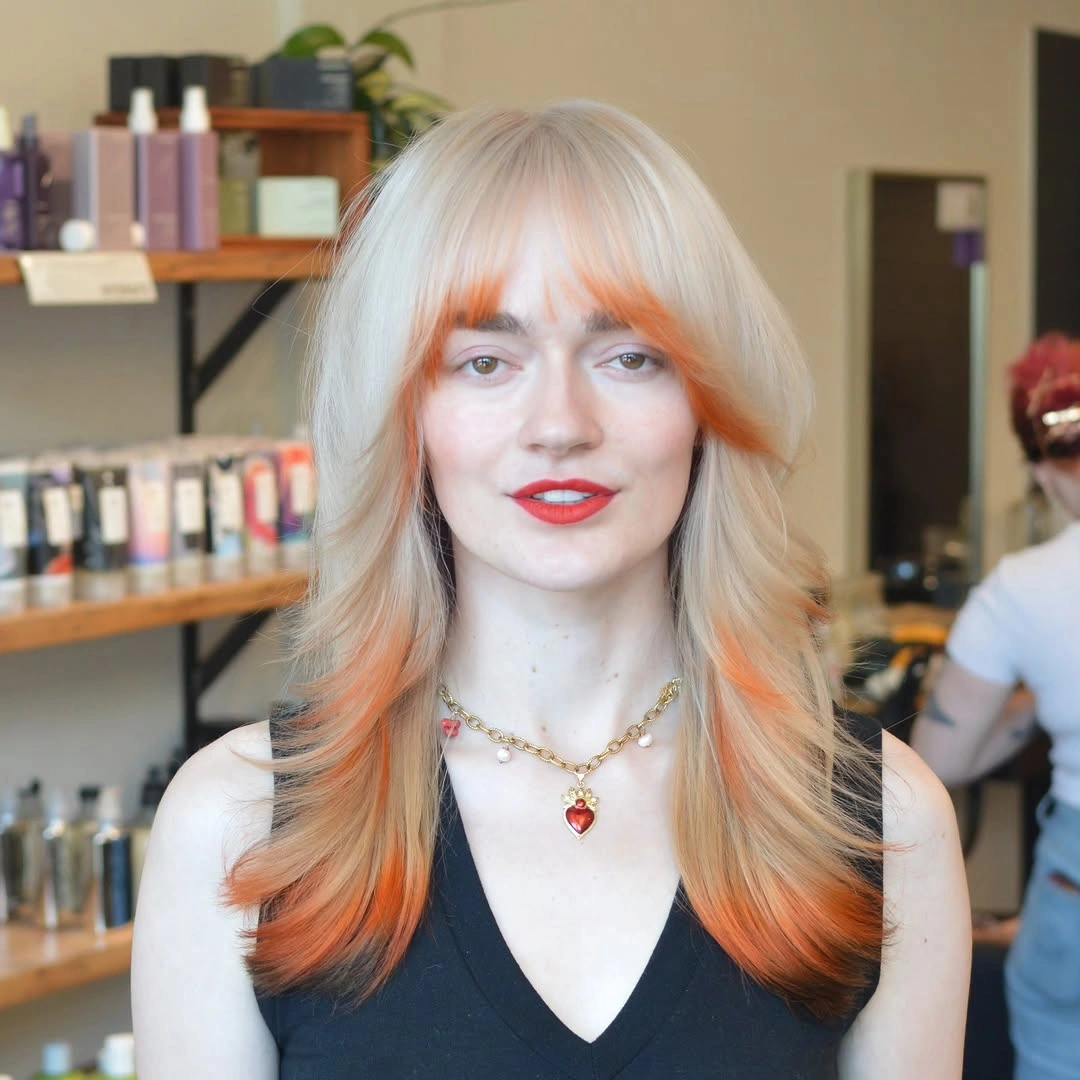
For a smaller color commitment, keep the accent shade near the bangs and front ends rather than spreading it through every layer. The pale base makes even a limited peach section easy to see. Turned-out ends add swing, so the shoulder length does not sit like a flat block.
The balance depends on contrast staying playful rather than chaotic. Light blonde, peach pieces, and a darker underside each have a role, but the soft bang shape keeps the front connected. Expect tone changes to be more visible on such a light base, especially if the accent color is meant to stay crisp.
Copper-Red Shoulder Shag Without Heavy Bangs
Shoulder-length copper-red hair falls in loose, undone waves with a soft opening near the center. There is no full forehead fringe, so the face pieces do most of the work. Piecey ends keep the shag relaxed and prevent the red color from feeling too polished.
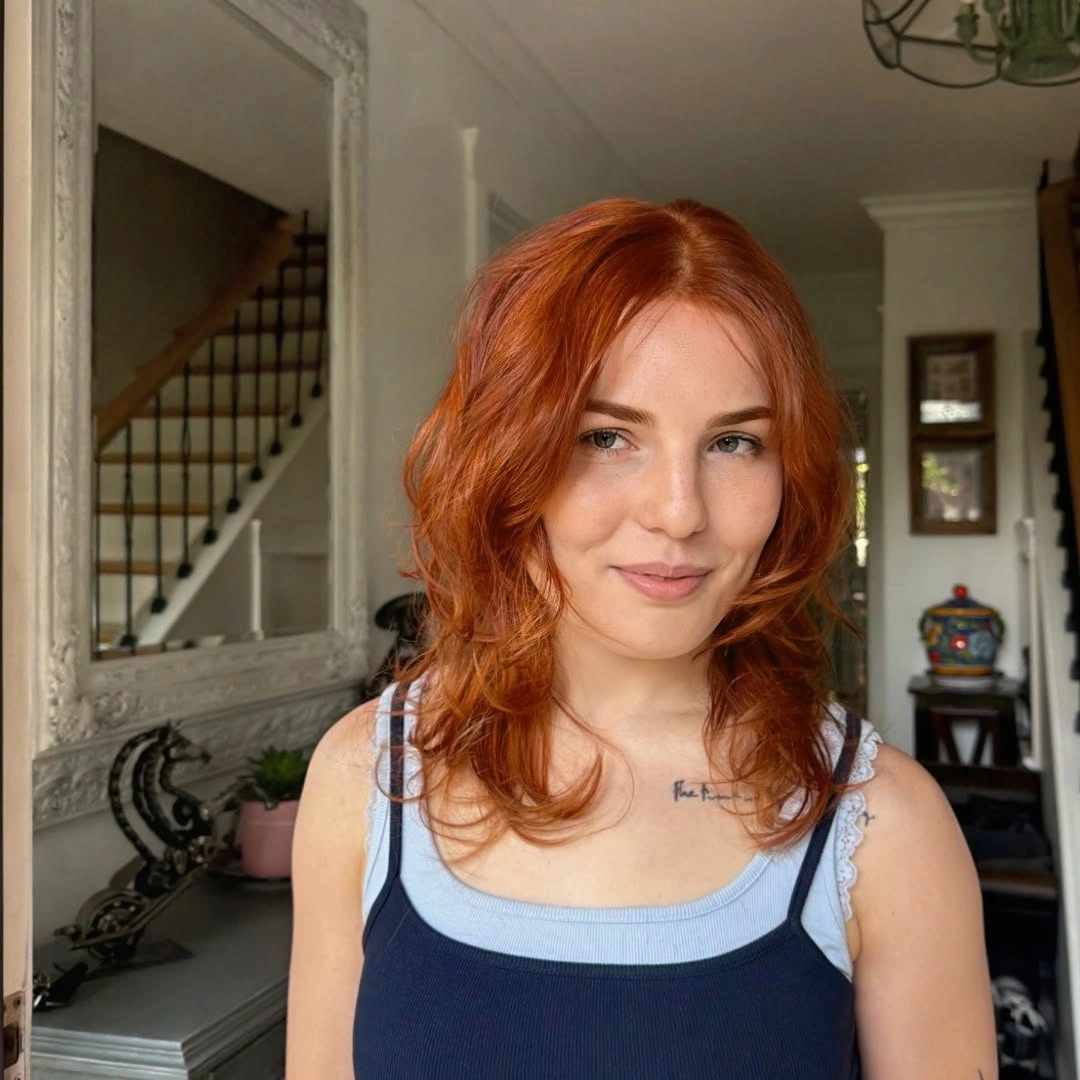
Without a strong fringe, the change may feel quieter from the front, but that can be a benefit. The open part keeps the face visible while the layers add width around the cheeks and collarbone. Shoulder length supports the texture because the ends are not long enough to drag the waves down.
Choose longer face pieces if you like movement but do not want bang maintenance. Irregular waves suit this haircut better than a perfectly uniform curl pattern. Keep the front pieces shaped, though, because undone texture can collapse into flatness when the layers lose definition.
Long Black Shag With Pale Side Streaks
A long black shag uses short choppy bangs and narrow pale streaks near the temples for contrast. The ends taper into a piecey, wispy finish rather than a dense line. That combination gives the haircut edge while preserving the long vertical shape.
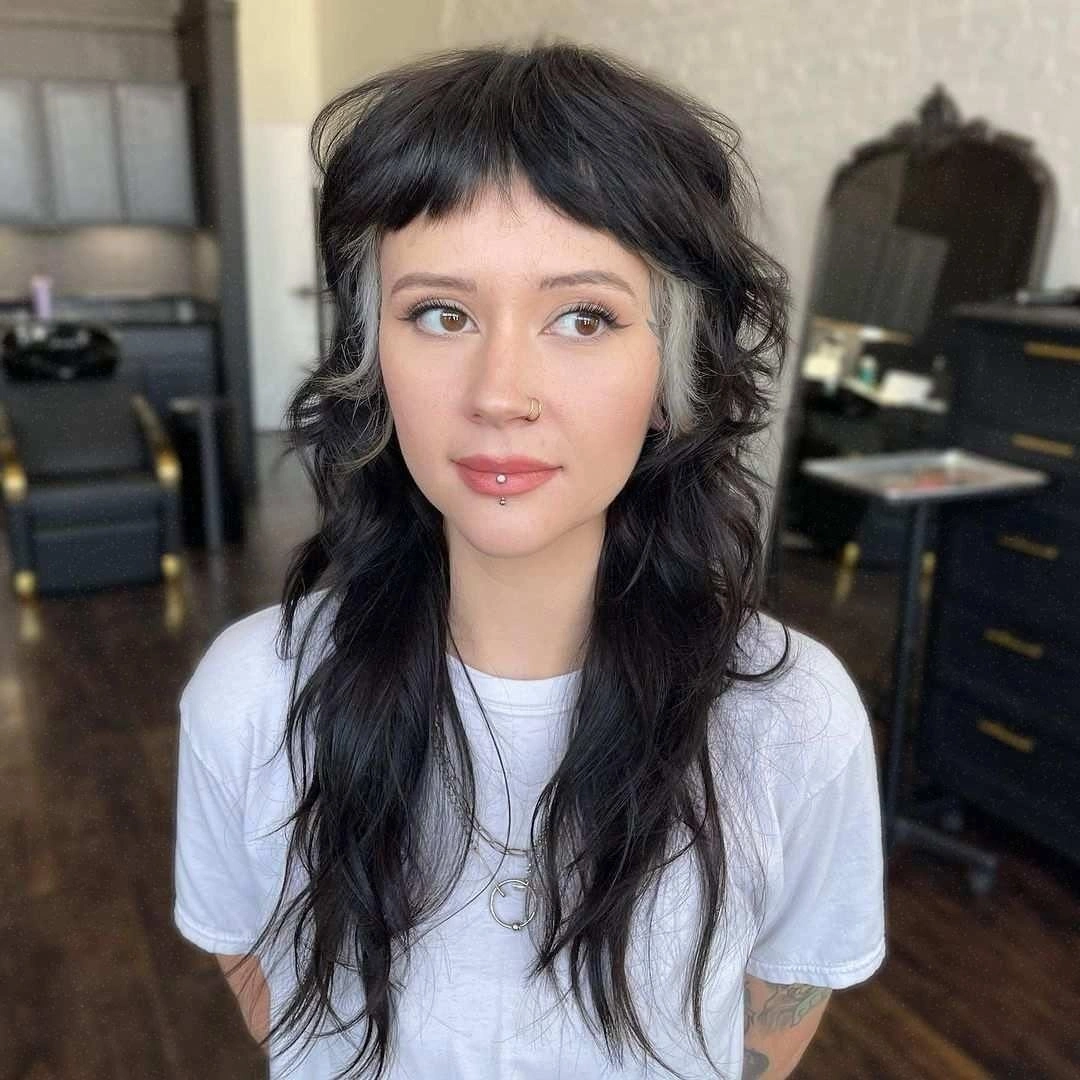
The light side pieces break up the dark base around the face without taking over the whole haircut. Short bangs add structure, which matters because the loose lower layers are intentionally narrow. This is a sharper way to wear contrast than soft highlights, but it is smaller than broad blonde panels.
Try narrow side streaks first if full face framing feels too graphic. Keep the longest ends trimmed into a deliberate shape so the taper does not look accidental. The bang length is the bigger commitment, since very short fringe takes patience to grow out.
Short Pink-Red Shag With Tiny Bangs
Hot pink covers the top and bangs, while deeper red shows through the lower sections of this short shag. Tiny straight-across bangs sit high on the forehead, and the side layers flip outward near the cheek and ear. The neck-length perimeter keeps the vivid color contained.
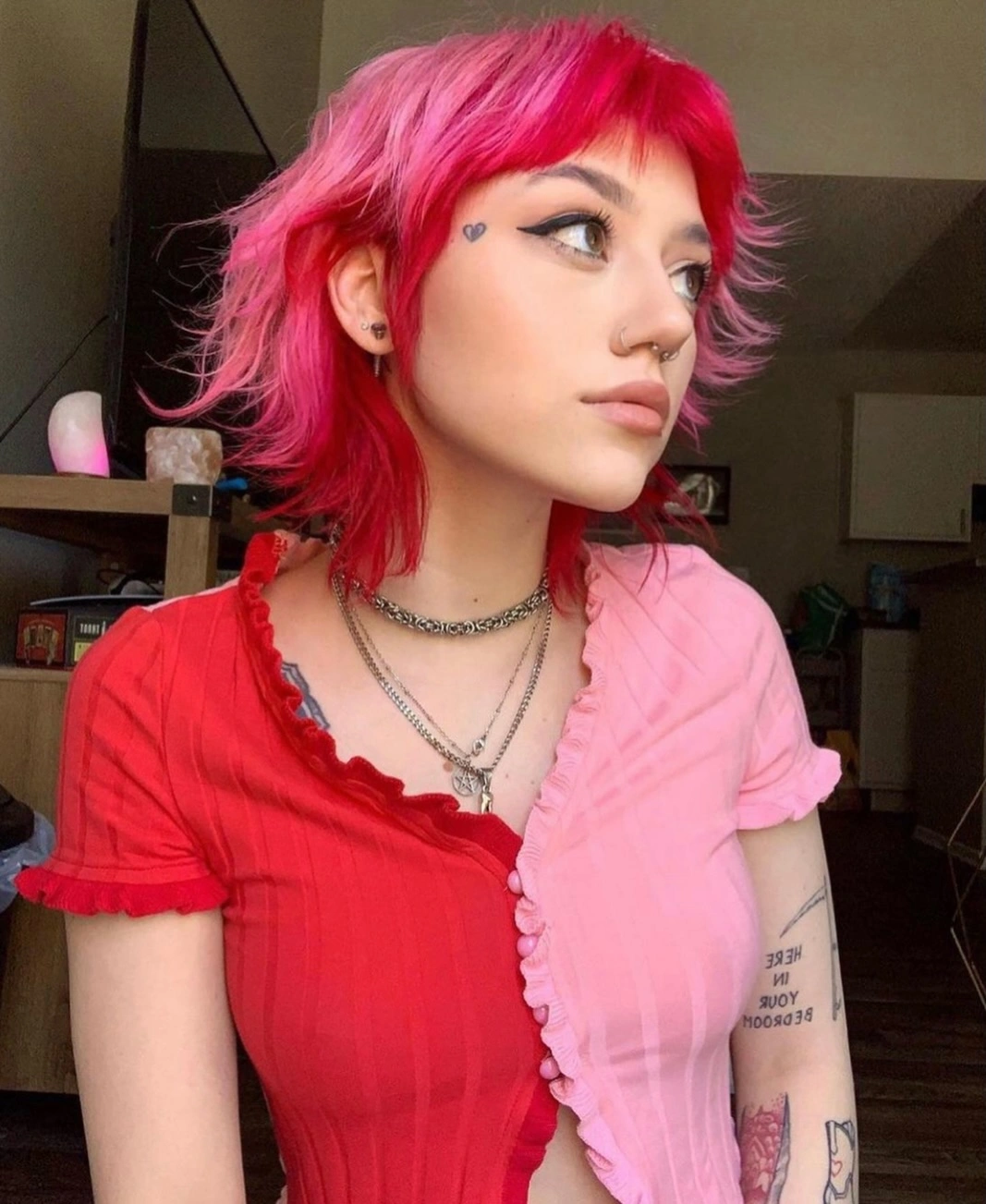
The proportions work because the short cut turns saturated color into a clear silhouette. Flipped sides balance the tiny fringe by adding movement away from the face. If the same color sat on very long hair, it would read differently; here, the compact shape keeps the focus tight.
Keep a similarly vivid shade on a short, layered shape if you want the color to read as part of the silhouette instead of one flat surface. A longer fringe variation would make the idea easier to wear if baby bangs feel too exposed. Vivid pink-red can fade visibly, so the payoff is strongest when you are willing to refresh the tone and keep the tiny fringe intentional.
Black Shag With Wispy Bangs And Curled Layers
Black shoulder-length hair relies on shape instead of color contrast: short wispy bangs, visible crown lift, and curled lower pieces. The side layers taper around the ear before bending toward the neck and shoulders. Shine is important because it reveals the separation in the dark hair.
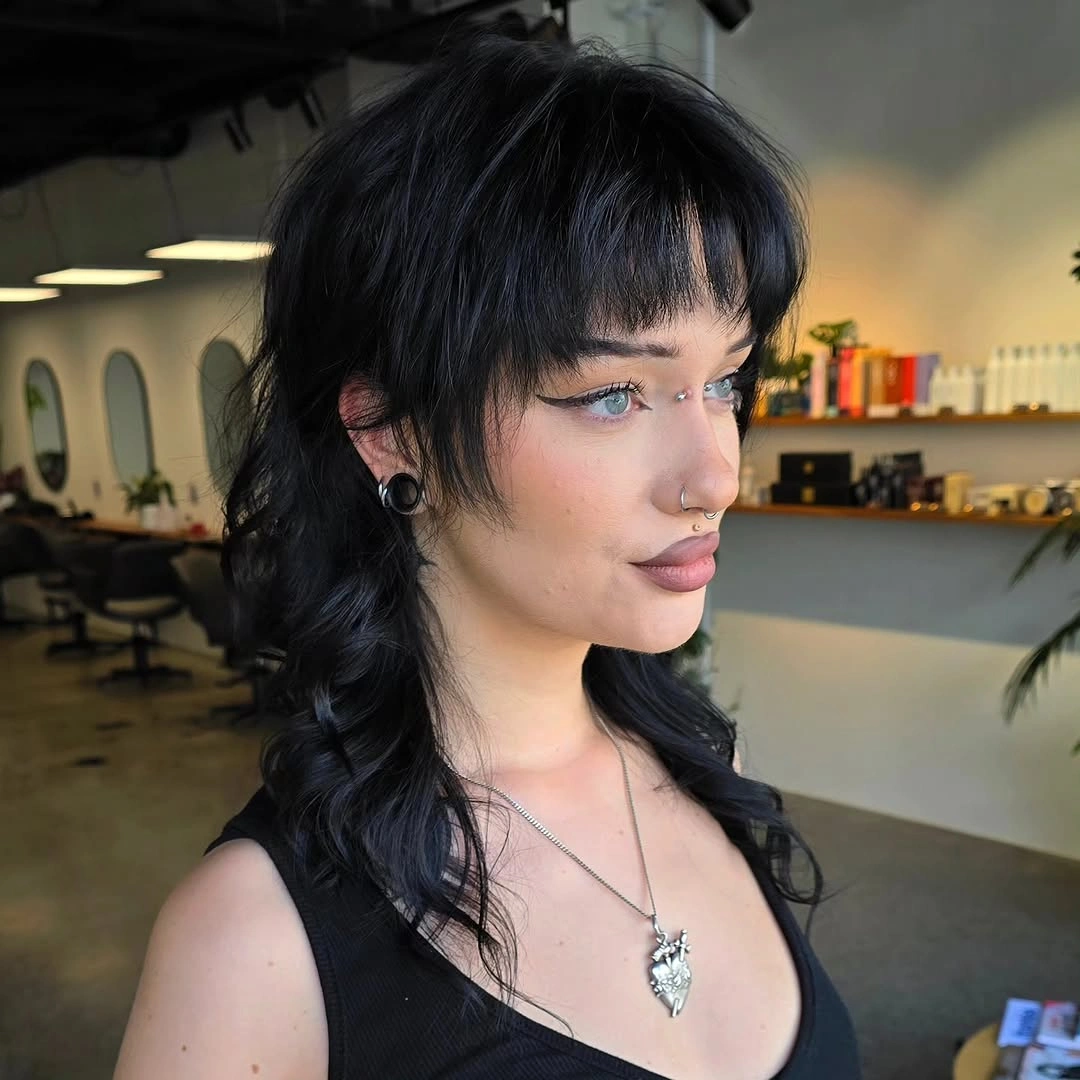
The movement keeps the monochrome color from looking flat. Lift at the crown gives the upper shape air, while curled lower layers soften the short fringe. Because the color is so dark, any bend or gloss that catches light becomes part of the haircut’s structure.
Use separated bends if you want the layers to stay visible on dark hair. Wispy bangs are a gentler choice than a blunt line, especially with curled ends. The crown shape may need refreshing during the day, so this is not quite a leave-it-alone style.
Short Red-Teal Cut With Micro Bangs
A warm red upper layer meets teal micro bangs and teal lower side sections in a short, rounded cut. The length sits around the jaw and neck, with side pieces curving outward softly. The blunt bang line makes the front color impossible to miss.
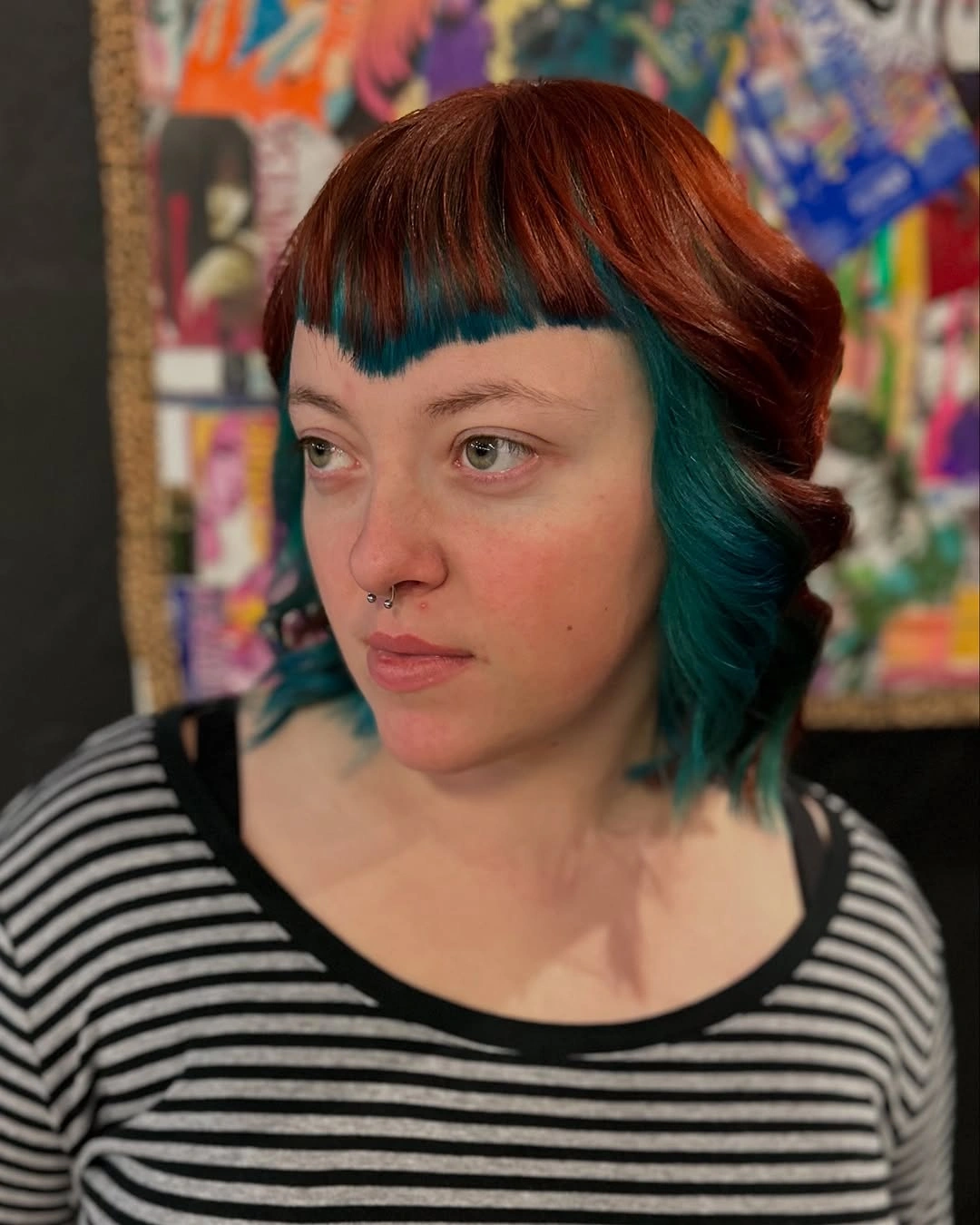
The texture is smoother and more bob-like than the shaggier cuts around it, so the color zones become the main structure. Warm red and cool teal separate the haircut into readable areas. The short perimeter helps the pairing feel deliberate rather than overwhelming.
Choose a vivid fringe band only if you want the front view to be the focal point. Micro bangs offer very little styling flexibility, and two strong colors can look muddy if they are not refreshed with care. For a softer take, keep the short rounded shape and reduce the color contrast.
Auburn Layers With Black Face-Framing Panels
Medium auburn layers fall past the shoulders while black sections frame the bangs, cheeks, and lower layers. The front pieces curve like dark brackets around the face. Softly sweeping bangs connect the color placement to the layered shape instead of leaving it separate.
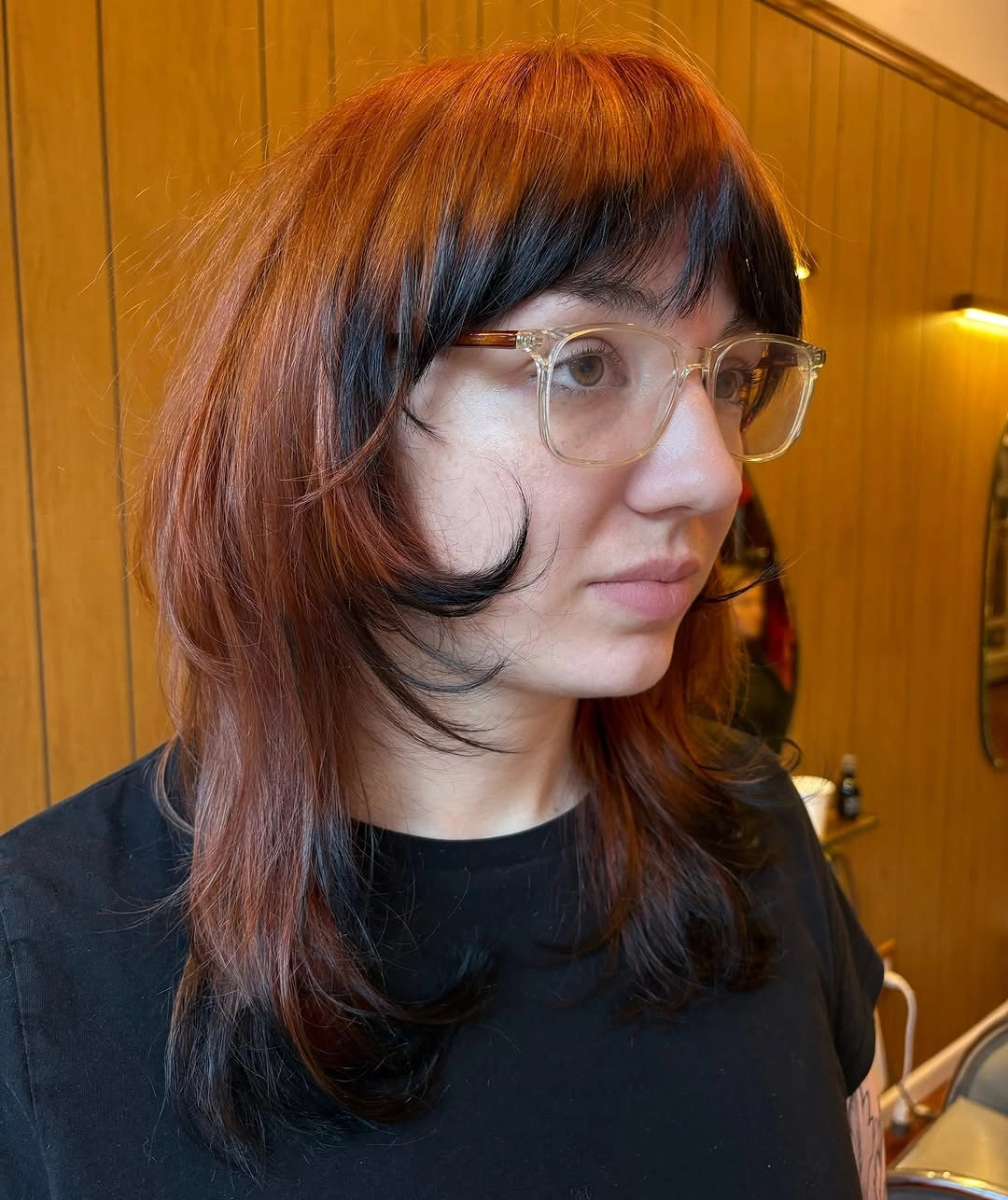
The balance comes from contrast that is graphic but not neon. Black panels outline the face-framing curve, while auburn through the top and back keeps the haircut warm. The medium length gives enough room for both colors to appear without turning the whole style into a long-panel look.
Darker front panels are useful when you want definition without adding a bright shade. If you wear glasses or similar face accessories, check where the fringe and side pieces land because the front can get visually busy. Movement through the ends helps prevent the dark sections from feeling too heavy.
Copper Waves With Dark Lower Sections
Copper-brown hair falls around the shoulders in defined, glossy waves with darker lower pieces appearing through the movement. The front is side-parted rather than cut into a full fringe. That softer opening lets the underlayer contrast show in flashes instead of a hard panel.
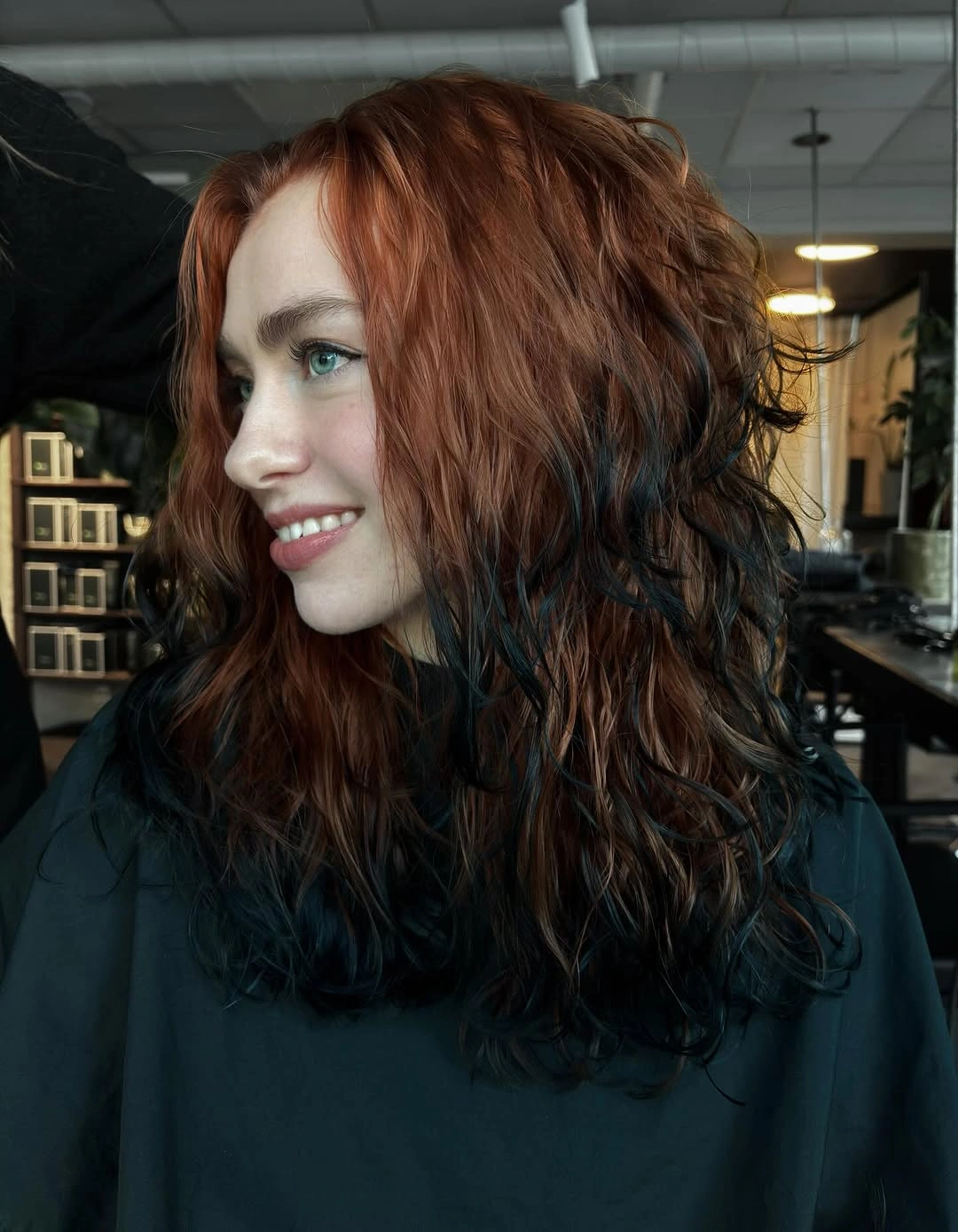
Wavy separation is what makes the color placement work. As the bends separate, the dark lower sections add depth under the warmer top and front. The side part keeps the forehead area easy, which is helpful if you want drama without committing to bangs.
Use defined waves when underlayer color is meant to be visible. If the hair is worn very smooth, the darker pieces may disappear, which can be good or disappointing depending on your goal. The glossy, separated finish also reads less airy than a brushed-out shag, so choose it for a more controlled texture.
Soft Brown Shag With Warm Face Pieces
A medium brown base gets softened by warm front pieces, sweeping bangs, and loose shoulder-length waves. The side profile shows a cheek-level curve that blends into airy ends. The color shift is gentle, so the haircut depends on texture as much as tone.
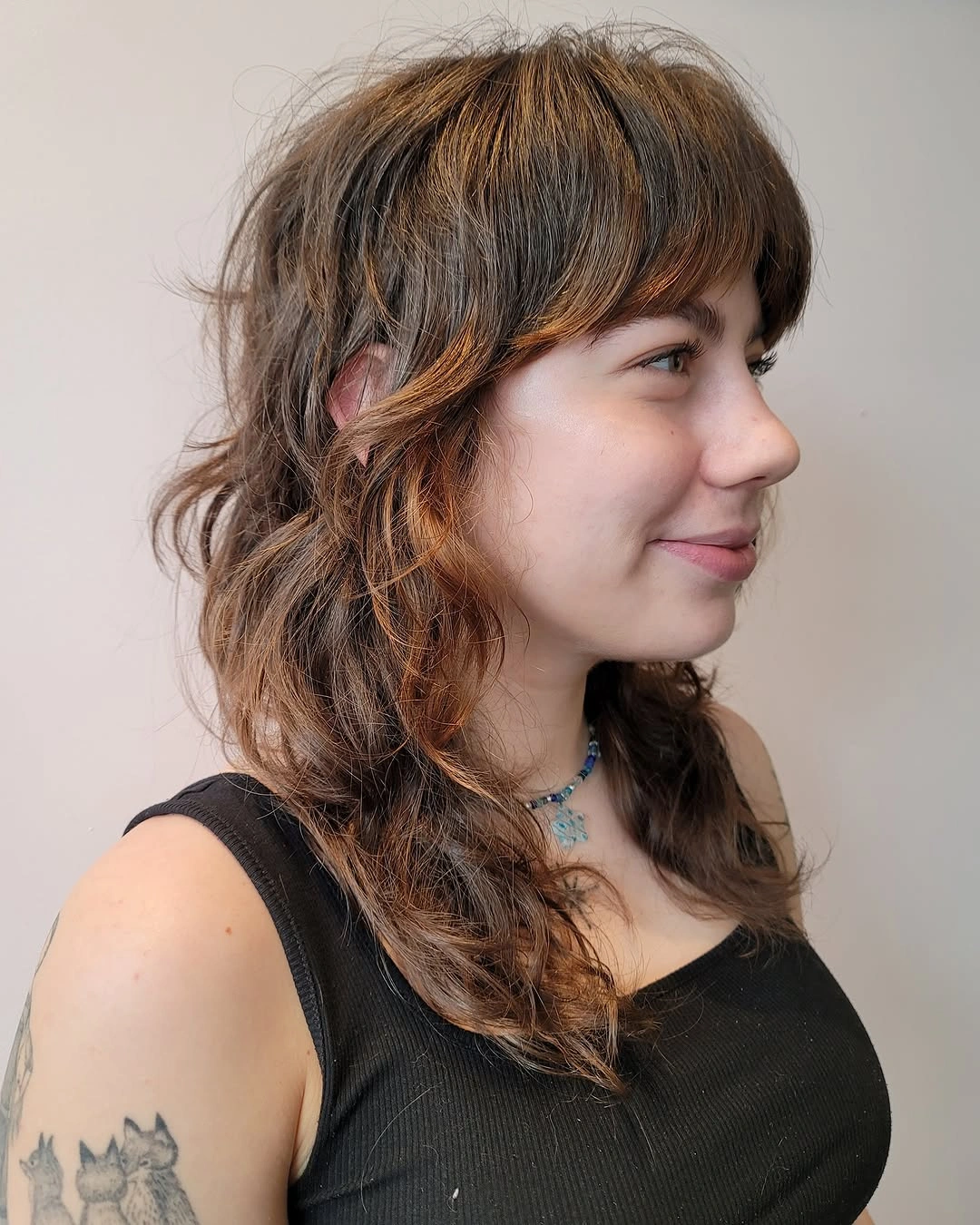
The proportions feel easy because the warm pieces brighten the side layers without creating a stark frame. Tousled waves support the shag shape and keep the medium length from looking too exact. It is a softer answer to the bolder october haircuts built around black, teal, or neon color.
Choose this direction if you want brown hair to feel lighter without obvious panels. Keep the bangs airy so they match the undone waves instead of forming a heavy cap. The limitation is visibility: subtle warmth may not read strongly in low light, and loose ends need care to avoid frizz.
Dark Shag With Red Underlayer Pieces
Mostly dark hair forms a short-front, longer-back shag with red-orange pieces around the ear, sideburn area, and nape. Short choppy bangs sharpen the profile, while the back length extends past the neck. The boldest color is tucked under the dark top rather than placed across the crown.
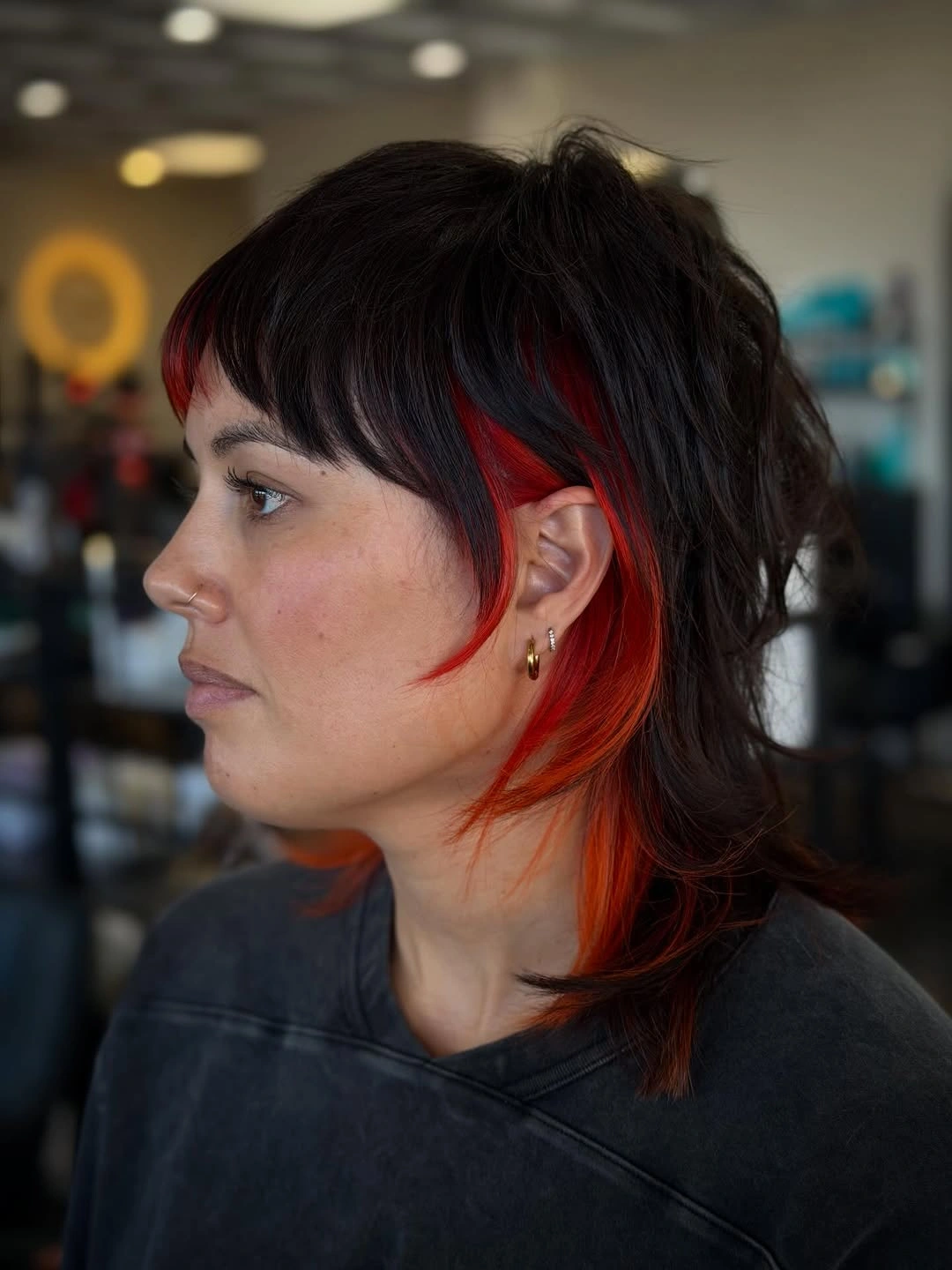
The hidden placement makes the look easier to control from some angles and stronger from others. Red flashes near the ear create movement where the layers separate, but the dark top still defines the overall silhouette. Short bangs make the cut feel more decisive than a simple layered bob.
Place vivid color under side layers if you want impact that can be partly concealed. Use the ear area as a checkpoint when deciding how much color should show with everyday styling. The tradeoff is that the red may vanish when the hair falls differently, and the short fringe leaves less room for quick changes.
Pale Bob With Wispy Bangs And Pastels
A pale blonde short bob sits around chin to neck length with wispy bangs and scattered pastel streaks. Turquoise, pink, blue, and purple pieces appear through the fringe and sides rather than forming one large block. The finish stays airy and soft.
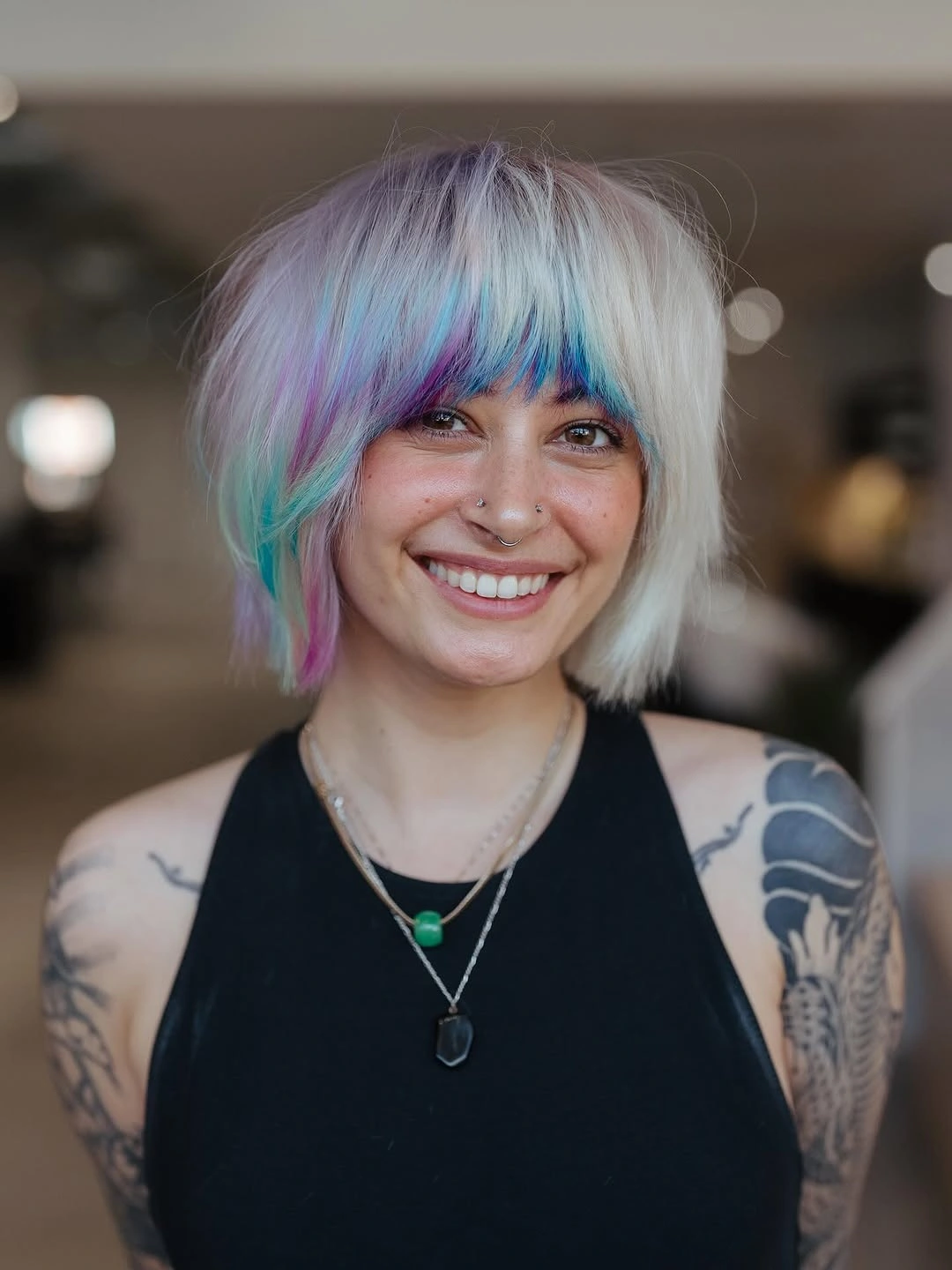
Small streaks keep the very light base from looking flat while preserving the rounded bob shape. Wispy bangs are important because they soften the short length and let the pastel pieces peek through lightly. Compared with a blunt micro fringe, this front feels much less severe.
Scatter color in small sections if you want a vivid effect that stays delicate. Keep the bang area light and textured so the bob does not become too solid at the forehead. Pastels on pale hair can shift quickly, so this option rewards someone who likes refreshing tone and texture.
Rounded Copper-Brown Bob With Side Sweep
A rounded copper-brown bob brings smoother curves into a set full of shags. The long side-swept front crosses near one eye area, and a darker underside adds depth below the warm top. Large curved ends make the shorter length look full.
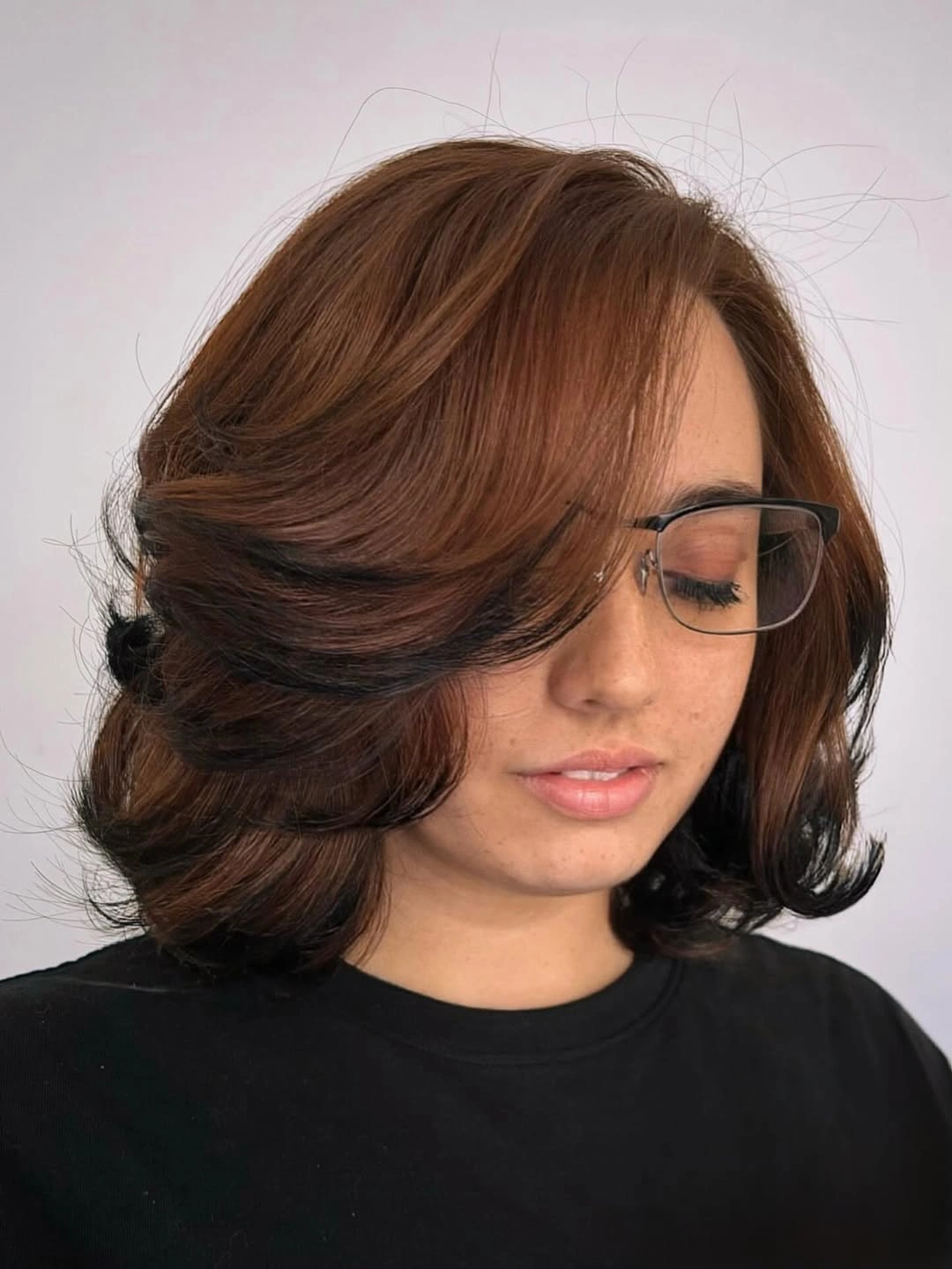
This is a practical choice for someone who wants shape without a heavily piecey finish. The polished bends give the bob structure, and the side sweep creates drama without micro bangs. It also shows how a shorter haircut can feel soft when the ends curve rather than spike.
Test the front length around glasses or eye comfort before committing to such a deep sweep. The section may need pinning, tucking, or reshaping if it falls forward too often. Smoother bends can require more deliberate styling than an undone shag, but the payoff is a cleaner outline.
Brown Shag With One Platinum Face Frame
Medium brown shaggy layers fall around the shoulders, but one wide pale blonde section takes over the front focus. Soft split bangs blend into the side layers, and loose waves keep the shape relaxed. The contrast is strong without turning the whole cut bright.

Try one dominant face-framing piece when you want a focused update instead of allover color. The brown base keeps the haircut soft, while the pale section brightens the front immediately. Because the brightness is asymmetric in visibility, it will naturally pull attention to one side.
Keep surrounding layers loose if the color contrast is strong. Bangs help connect the pale piece to the haircut, so it does not look like a separate stripe. Pale front sections may need tone care, and the visual weight can feel intense if you prefer perfect symmetry.
Long Light-Brown Shag With Tapered Ends
Long light-brown hair reaches well below the shoulders with wispy bangs and narrow tapered ends. The finish is relaxed, slightly tousled, and straighter through the lower lengths. Instead of vivid color, the haircut relies on airy texture and a lighter perimeter.
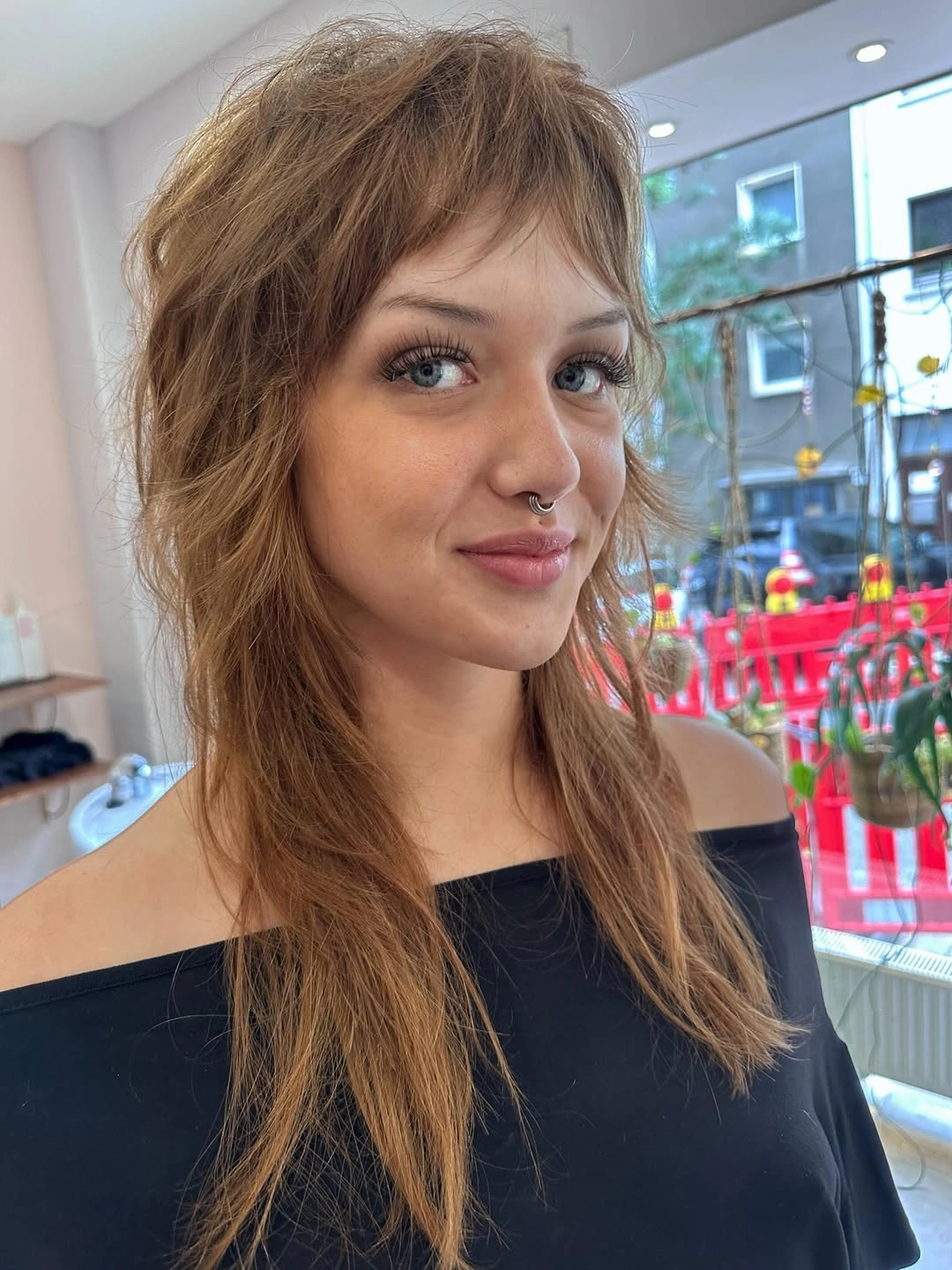
Narrow ends can make long hair feel lighter, but they are not ideal if you want a dense, full bottom line. The wispy fringe softens the forehead without creating the commitment of heavy bangs. Neutral color keeps attention on the cut, which is why the taper has to look intentional.
Choose tapered layers when the goal is movement and less visual weight. Pair them with soft, separated bangs so the front and ends speak the same relaxed language. The change may feel understated beside color-blocked options, but that quietness can be useful for everyday wear.
Blonde Shag With Red-Pink Interior Panels
Long pale blonde layers build a fluffy shag shape around full bangs and wide face-framing volume. Red-pink sections appear underneath the bangs and through the inner side pieces. The color feels tucked inside the haircut, not painted across the whole surface.
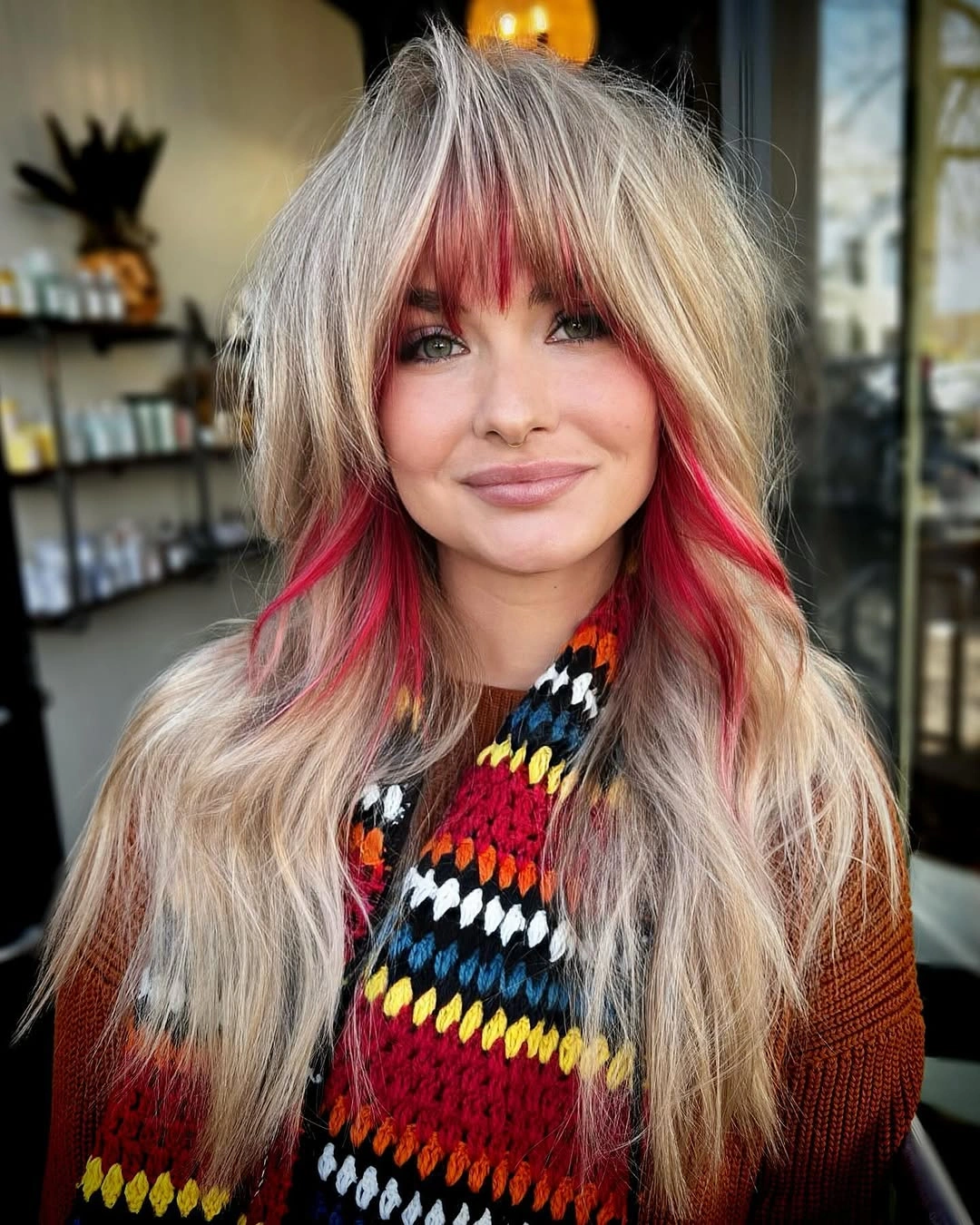
The hidden warm color adds depth under the blonde layers and gives the full fringe more punch. Because the bangs are heavier than the wispy examples, they balance the broad shaggy sides. This is a maximal long option for readers who like face-area volume and color surprise.
Place vivid color under face-framing layers if you want it to reveal itself when the hair opens. Keep the blonde layers textured so the red-pink sections can peek through instead of staying buried. Full bangs and fluffy volume can demand more shaping, so this is not the lowest-effort idea in the set.
Copper Long Layers With Blonde Face Panels
Copper-red top and outer sections frame broad pale blonde panels that run down both sides of the face. The front opens in a curtain shape, with pieces bending away from the center. Long layered ends curl softly around the shoulders and chest.
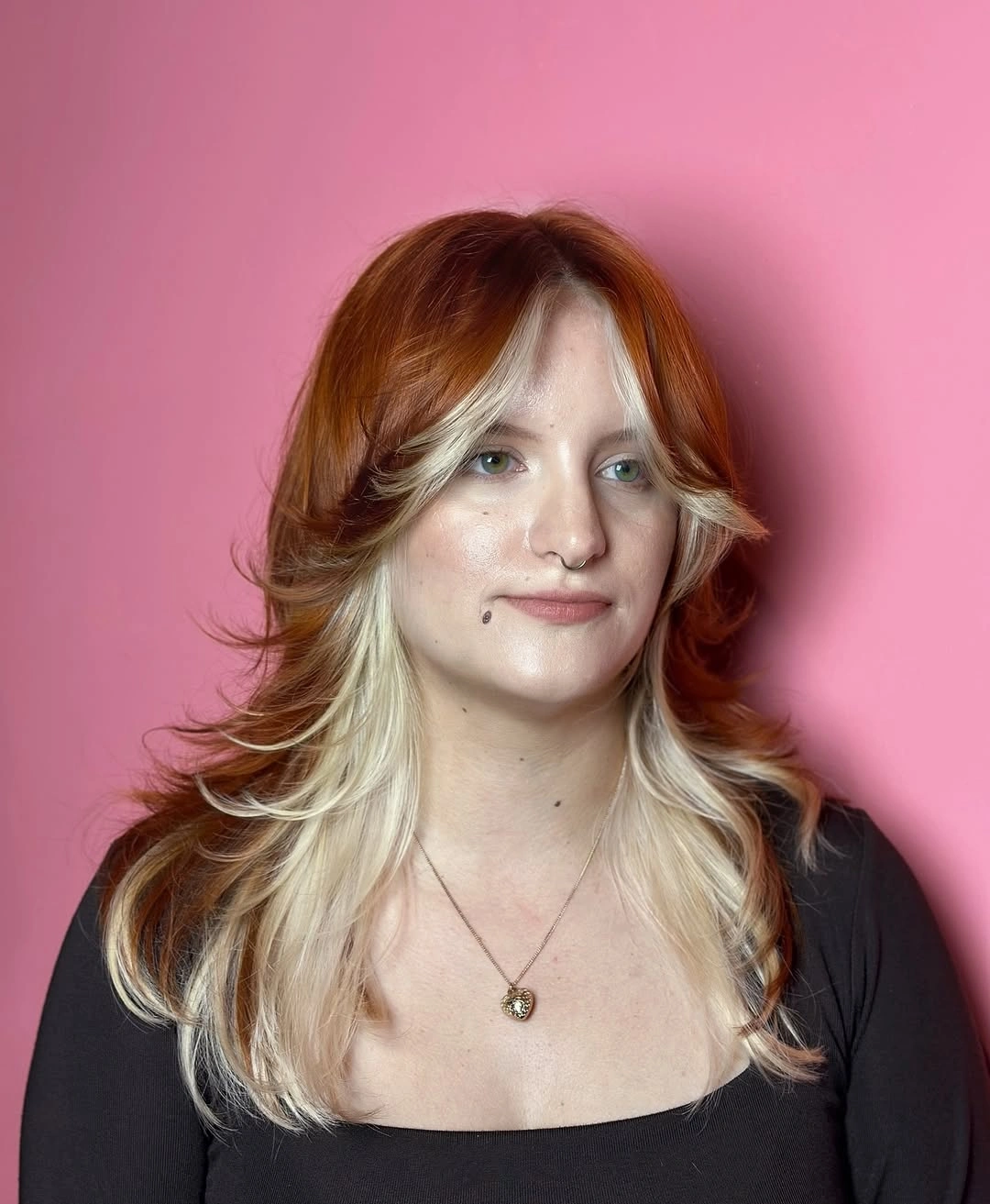
The proportions work because the bright panels follow the same direction as the curtain front. Blonde lightens the face area, while copper keeps warmth and depth across the top. Since the panels are broad and symmetrical, the change reads immediately from the front.
Choose this approach when you want a highly visible update to long hair. Style the front away from the face to show both colors and keep the curtain movement clear. The light pieces are not subtle, and blonde next to copper can need tone care to stay clean.
Bright Orange Shag With Short Wispy Bangs
Allover vivid orange makes this shoulder-length shag stand out before any contrast placement is needed. Short wispy bangs sit lightly across the forehead, and wavy side layers create an irregular, tousled outline. Piecey ends keep the saturated color from looking too solid.
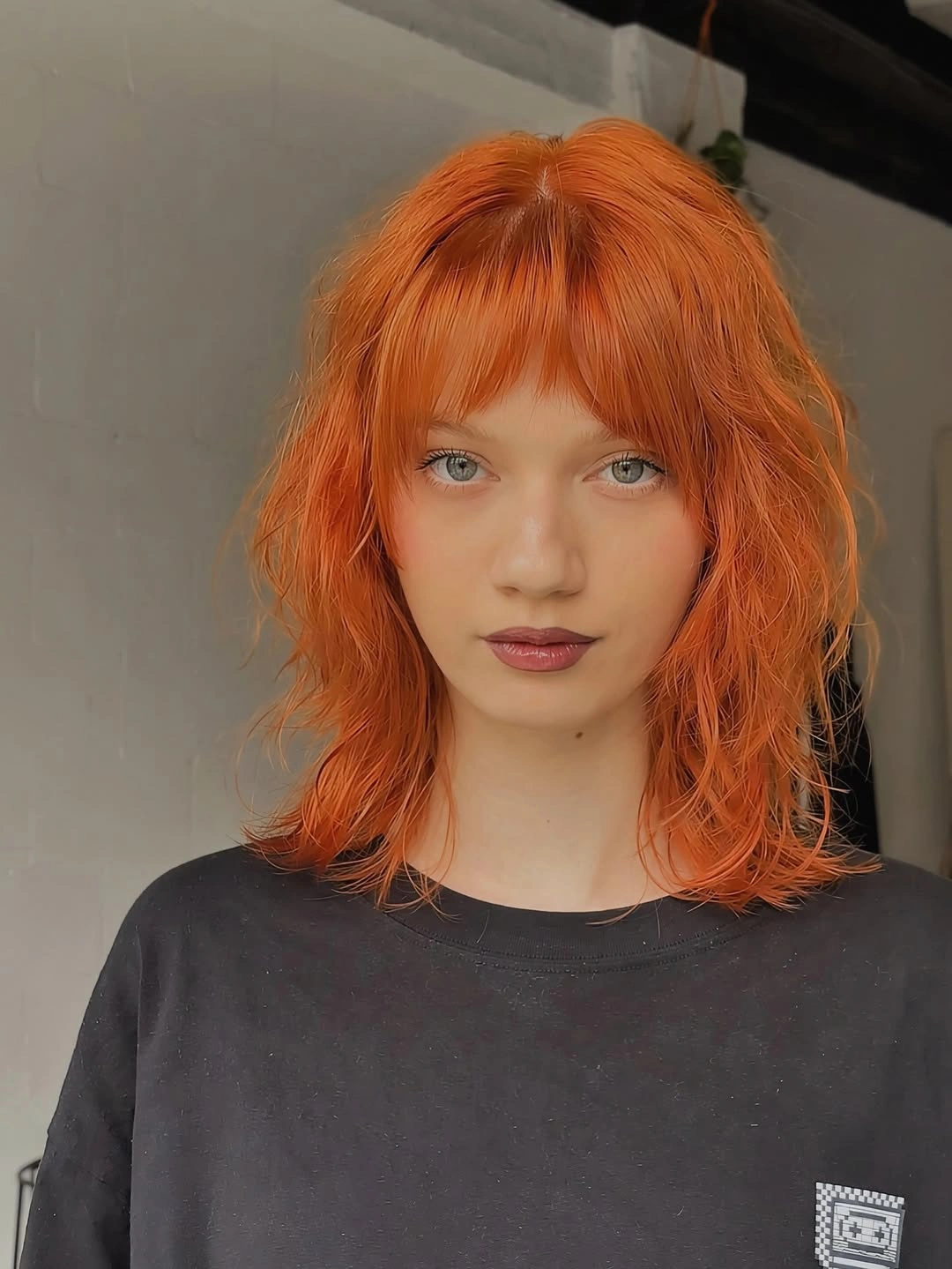
One strong shade keeps the layered silhouette easy to read. The movement matters because bends and separated ends break up the orange surface, giving the cut shape without panels. Wispy bangs also soften the front so the color does not form a heavy block at the forehead.
Choose a single saturated color if face panels or underlayers feel too busy. Keep the bangs light and the ends conditioned, since vivid orange can make dry texture more obvious. Fading may affect the whole head evenly, so maintenance is broader than with one small accent section.
Muted Brown Shag With Tapered Side Pieces
Muted brown hair falls past the shoulders with short soft bangs and tapered side pieces around the ear. From the side, the silhouette shifts from a cropped face frame into longer relaxed back lengths. The texture is piecey and slightly wavy, but the color stays quiet.
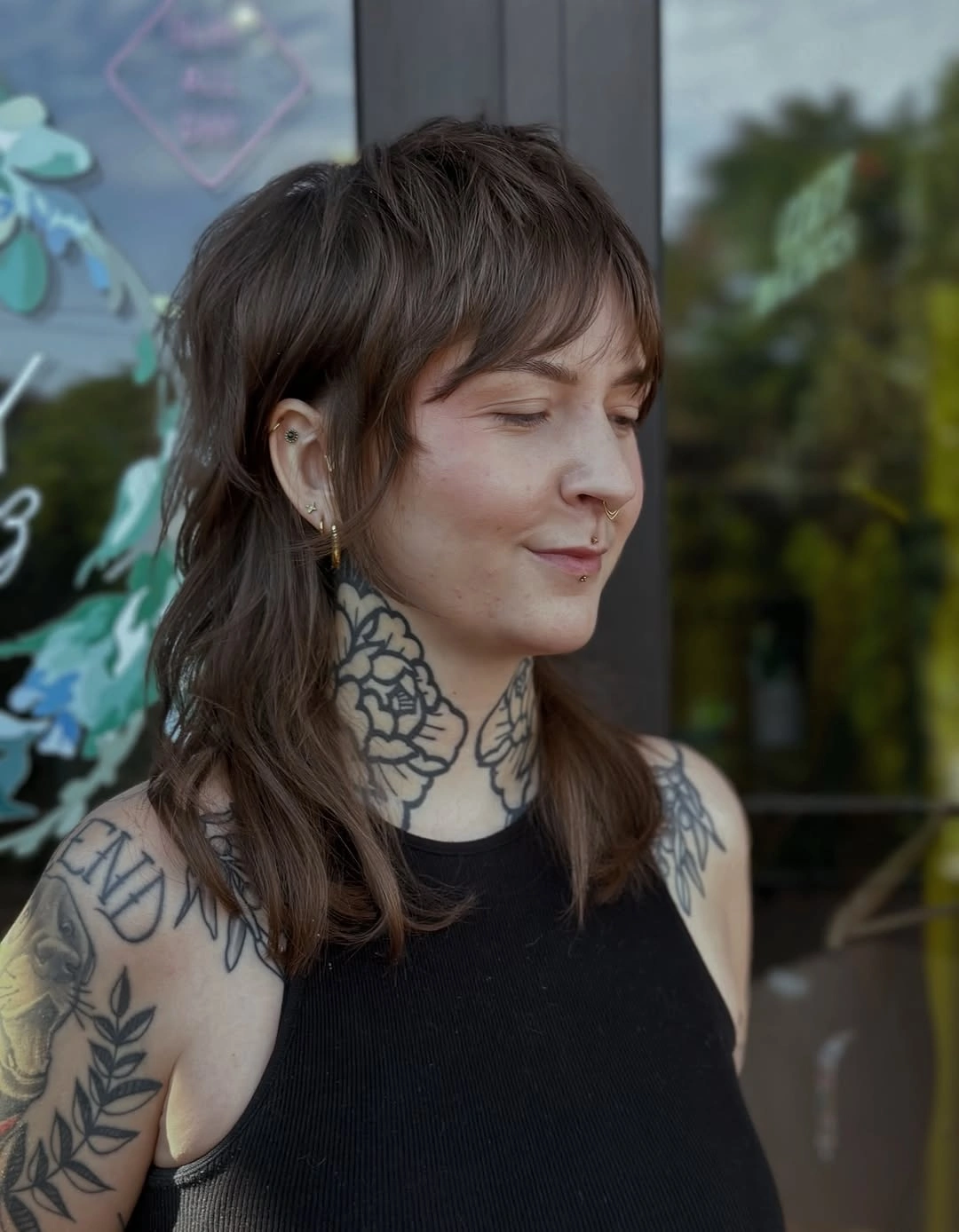
The quiet shade lets the shape do the work. Short side pieces add definition near the cheek and ear, while the longer back keeps the haircut from becoming a fully short cut. Relaxed texture helps those layers connect instead of looking like separate lengths.
Use shorter side layers if you want edge while keeping overall length. This is a good direction when shape matters more than instant color impact. The tradeoff is grow-out: pieces around the ear can sit awkwardly for a while, so plan how you will tuck, wave, or trim them between cuts.