Middle parting hairstyles are less about a single center line than about what that line asks the rest of the shape to do. Across these twenty looks, the part meets long waves, compact bobs, curtain pieces, braids, shaggy layers, straight lengths, and formal movement, creating different proportions even when the starting placement looks similar.
Use the collection to judge silhouette before choosing a finish. A shorter cut makes the part more visible around the face, layered lengths distribute weight downward, and a soft wave can keep symmetry from feeling rigid; the best adaptation is usually one proportional change that preserves the main line.
Long Brown Waves with a Balanced Center
Long brown hair opens clearly at the middle and falls well below the chest in loose S-shaped waves. The front sections curve away from the face, while the lower lengths gather enough volume to keep the center line from making the silhouette look flat. A dark hoodie leaves the outline easy to read, so the shape rather than the setting carries the impression.
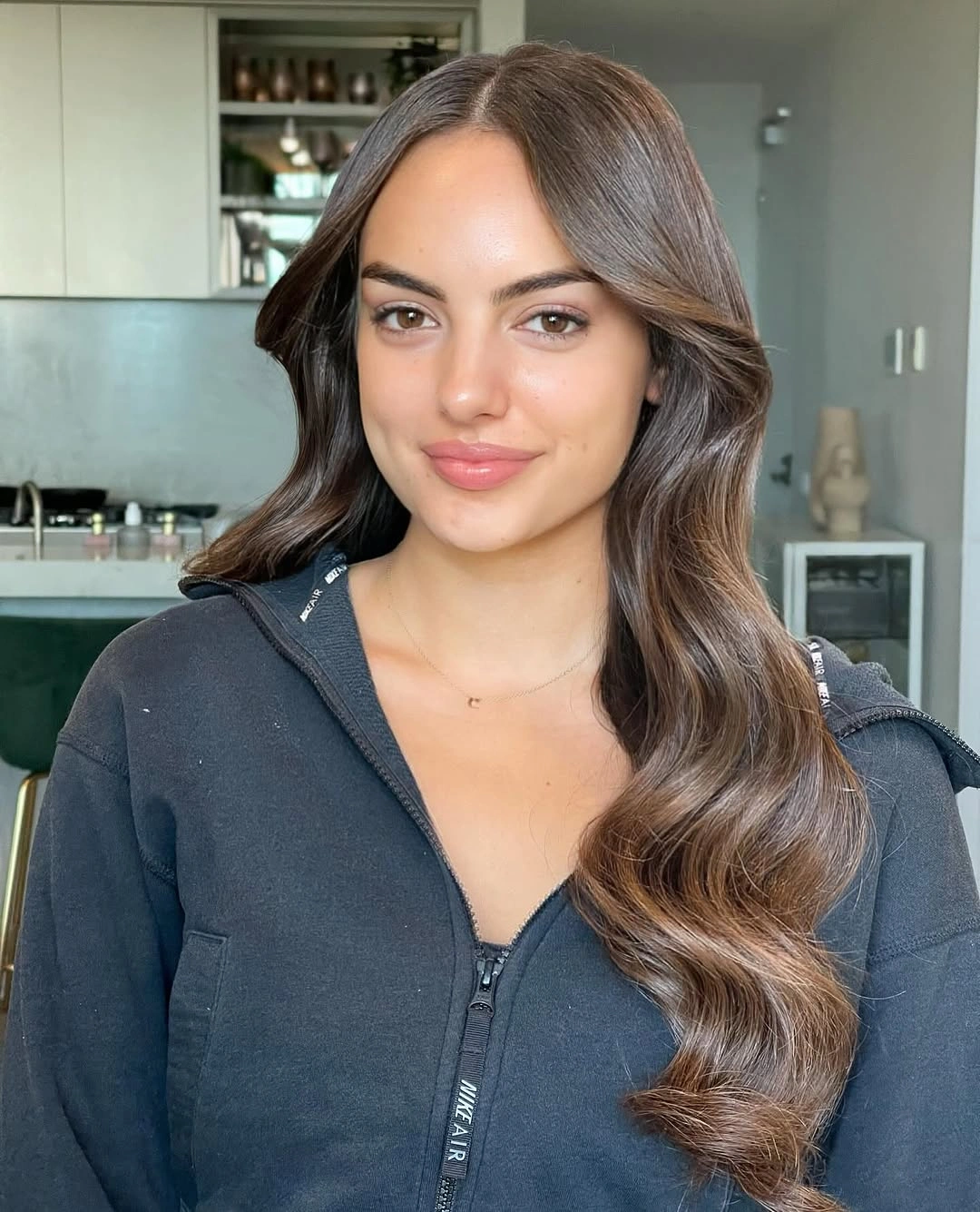
Keep the part precise at the crown and let the wave become broader as it moves downward if you want this proportion. The length supplies weight, so the front bend is doing useful work by opening the cheeks and giving the upper section space. On shorter hair, preserve the outward direction near the face even if the lower wave has to become much smaller.
The look is balanced because the center line is calm while the ends carry movement. That separation creates a readable hierarchy: part first, face frame second, long wave last. The tradeoff is visual weight, since very long hair can pull the lower silhouette downward if the front pieces are left as one uninterrupted curtain.
Temple Braids Beside Loose Blonde Length
Long blonde hair is worn loose with soft waves, while two narrow braids run back from the temple area beside a visible center opening. The braid detail gives one part of the face a controlled edge, but the rest of the hair stays full and relaxed below the shoulder. In profile, the contrast between tidy lines and open movement becomes the main proportion decision.
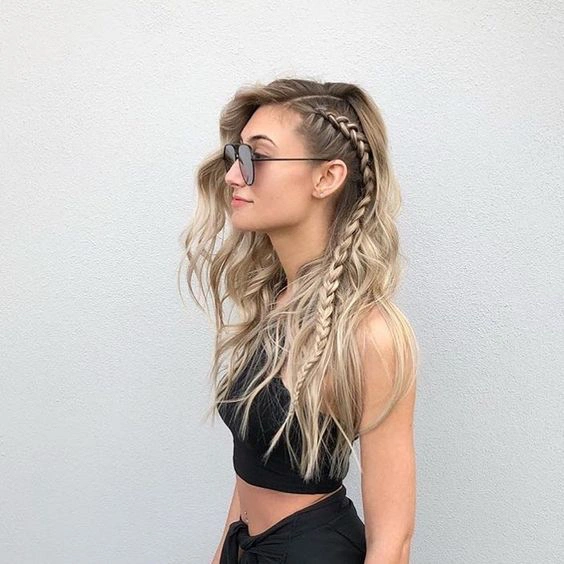
Keep the braids slim if you want the loose length to remain the dominant shape. They can work like a light frame around the face, while a shorter shoulder-length cut can use one braid on only one side. Avoid adding a second large accessory, because the small linear detail already supplies a focal point near the part.
This hairstyle balances structure and softness through scale. The braids are narrow enough to control the front without shrinking the long waves behind them, and the open lengths keep the look from becoming an updo. The limitation is length dependence: without enough hair below the shoulder, the contrast between a small braid and a loose cascade will not be as pronounced.
Formal Waves with a Gentle Side Weight
The hair appears close to center-parted, but one side is swept more strongly and carries a fuller cascade of cool gray-brown waves. Defined ridges create a dressed-up surface, and drop earrings sit close to the heavier side without disappearing into it. The near-middle placement preserves balance while the side sweep prevents the portrait from feeling mechanically symmetrical.
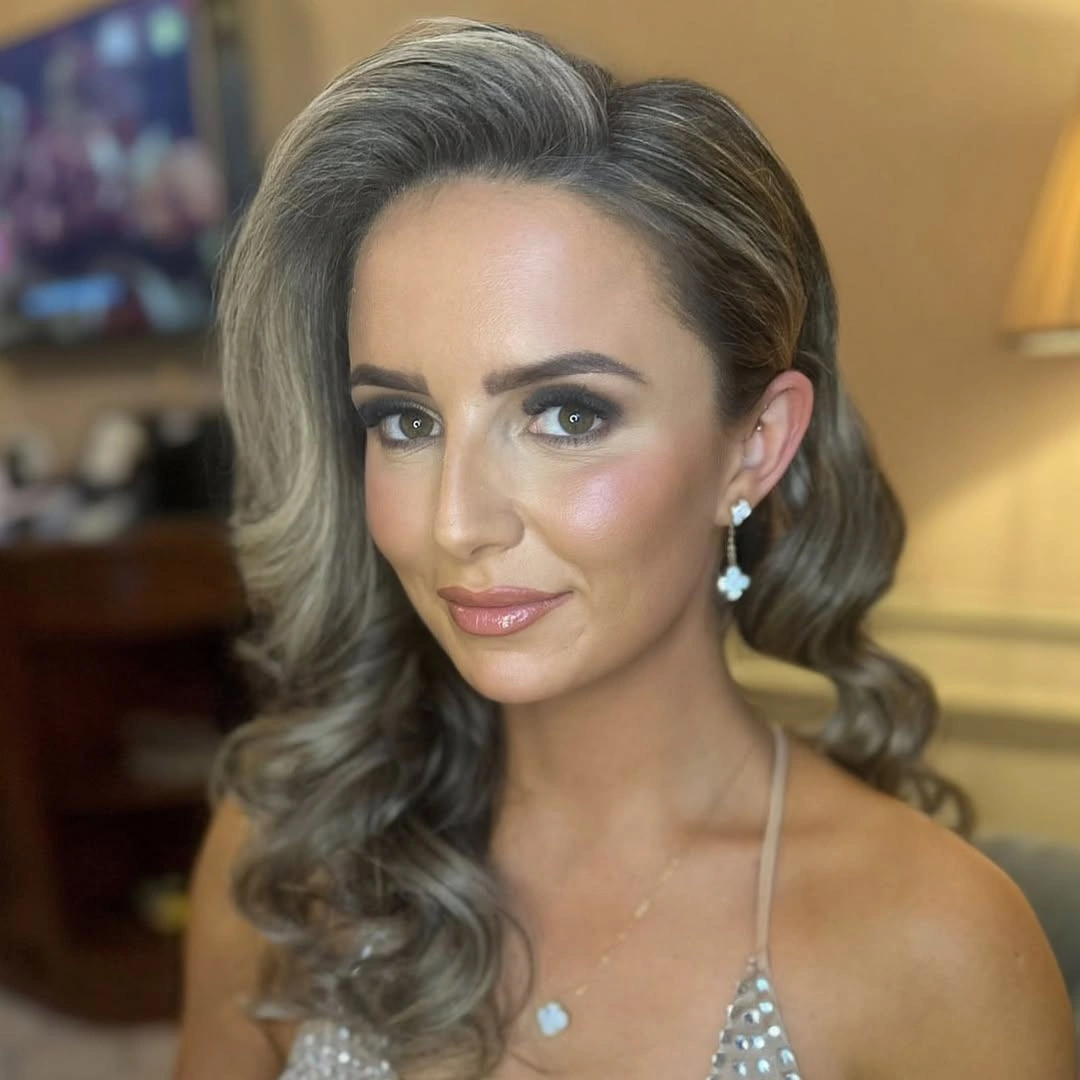
Use a near-center part when you want the logic of symmetry but prefer one side to carry more volume. Keep the lighter side close to the face and let the fuller section fall toward the shoulder, so the shift looks intentional rather than accidental. A softer wave can make the same proportion more relaxed, while a sharper ridge pushes it toward evening styling.
The important relationship is not the exact part position but the difference in visual weight on each side. The centered starting point stabilizes the forehead, while the side sweep gives the lower silhouette direction and a more formal scale. A fuller side also needs refreshing after wear, because once the wave collapses the original balance becomes harder to see.
Shoulder-Length Waves with an Open Face
Dark hair reaches the shoulders in soft waves, opening at the middle and curving into front pieces around the cheekbones. The length is long enough to show movement but short enough that the part remains visible from crown to ends. A black sleeveless top leaves the rounded outline clear, making this a useful medium-length reference.
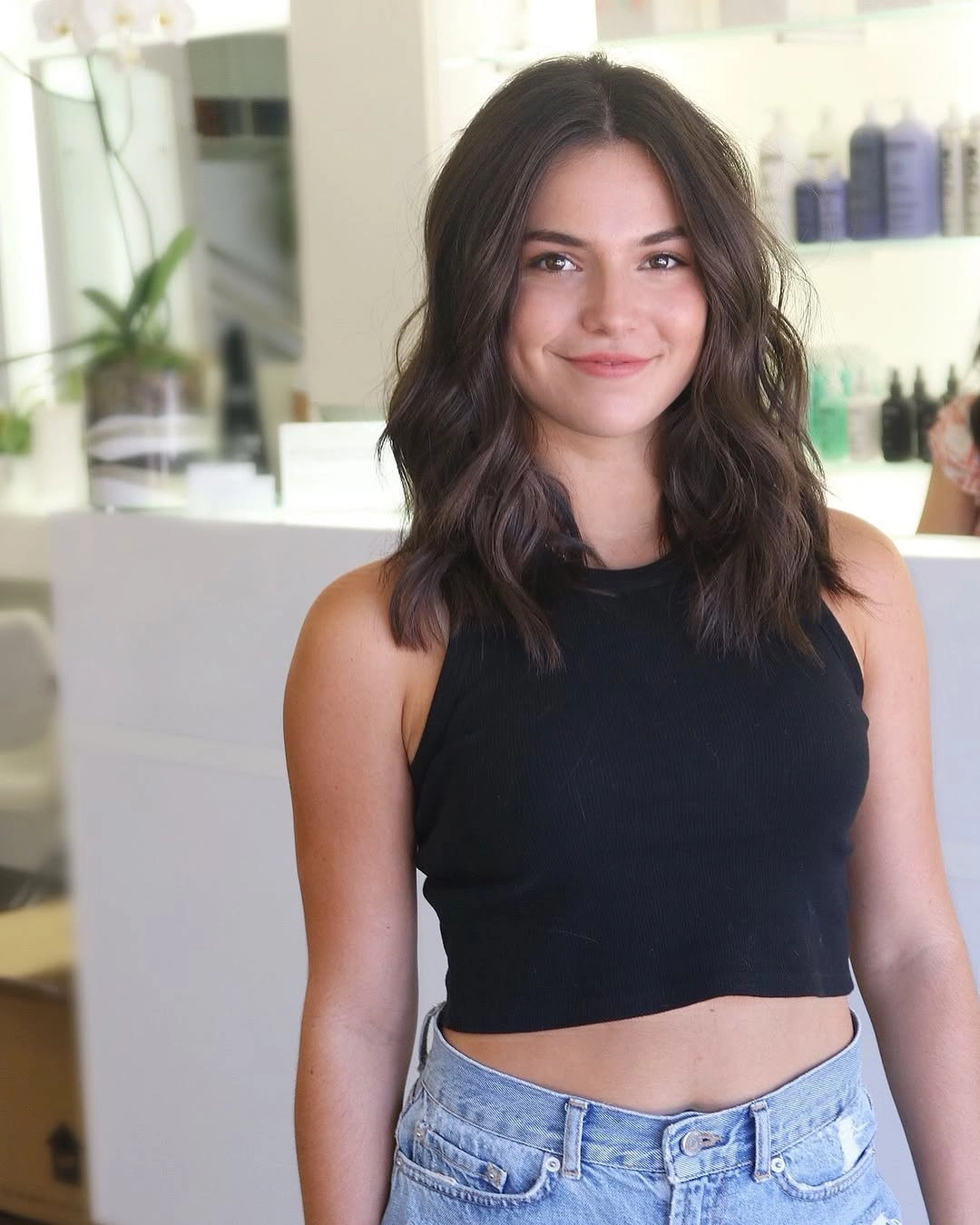
Keep the front bend broad rather than pulling every section straight if you want the same open proportion. Shoulder length can support a center part without the weight of a long cascade, but the ends need a little separation so the outline does not read as one solid hem. A slightly shorter cut can keep the part while moving the volume closer to the jaw.
This shape is a middle ground between a bob and long hair. The part has enough room to frame the face, while the lower wave stops before it creates a large vertical mass. The realistic tradeoff is that medium ends can lose their direction quickly, so the overall balance depends on keeping the front and lower bends from collapsing into the same line.
A Casual Lob with Soft Front Pieces
Warm brown hair ends around the shoulders in a casual, slightly broken lob. The center separation is softened by loose front pieces, and the ends sit in airy bends rather than a polished uniform wave. Sunglasses and the car setting are secondary, but they clarify how this proportion works in an everyday context instead of a formal portrait.
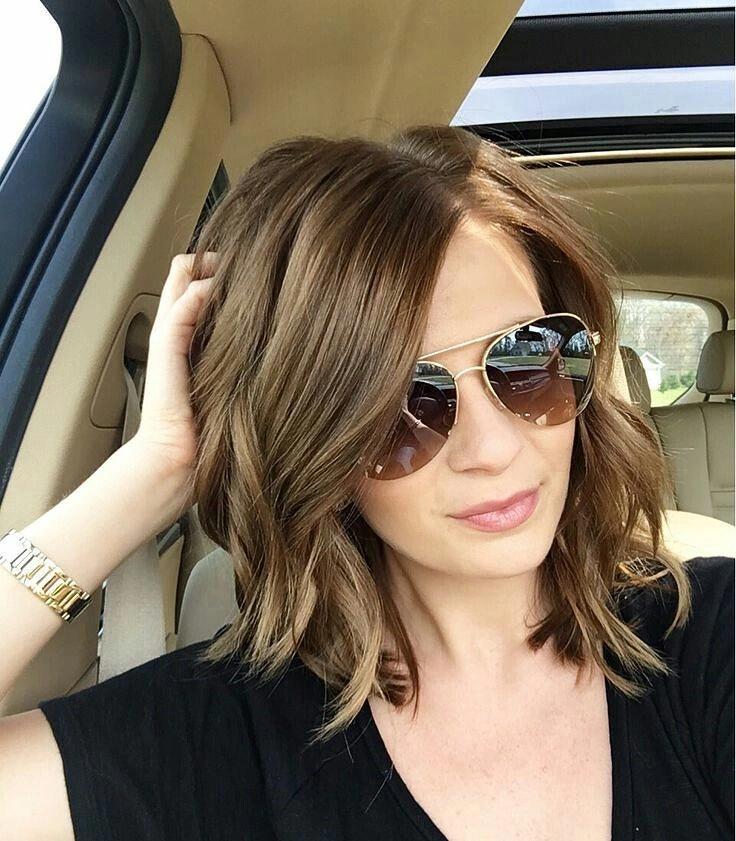
Let the front pieces remain imperfect if you want the middle part to feel relaxed rather than tailored. A lob benefits from a little unevenness because the shorter length can otherwise look too symmetrical from the front. If the ends are made smoother, keep some lift near the crown so the center line does not pull the whole silhouette close to the head.
The hairstyle is proportionally light because the length stops near the shoulder and the texture changes from section to section. That gives the middle part a casual rhythm instead of a strict mirror effect. Its limitation is predictability: loose ends can look different from day to day, so the same cut may alternate between polished and deliberately undone.
Short Bob with Outward-Turned Ends
Short dark hair sits around the jaw and neck, opening at the middle into soft curtain-like front pieces. The ends turn outward in broad bends, giving the compact bob air around the face instead of a hard, inward block. A simple necklace below the cut reinforces how little length is needed for the part to become a visible design element.
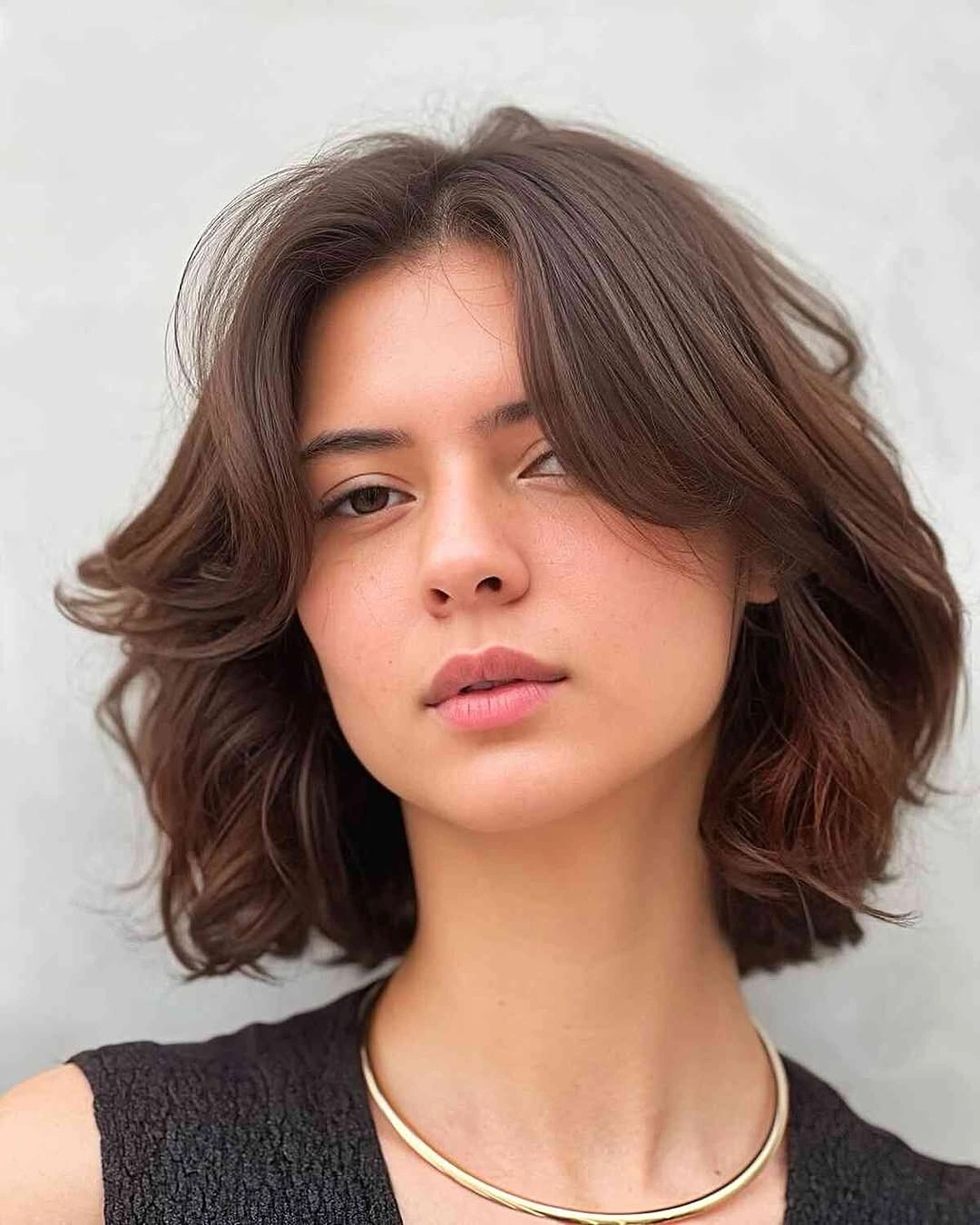
Keep the middle separation clean at the crown and let the ends move away from the jaw to recreate this balance. On a shorter bob, the outward bend controls the width of the silhouette, so a flatter end will make the style look more compact and severe. A little extra length at the front can preserve the curtain effect when the back is cut close.
The shape works through proportion rather than decoration. The center line opens the upper face, while the flipped ends widen the lower outline just enough to keep the bob from looking like a single dark cap. The tradeoff is upkeep at the perimeter, because a bob built around outward ends shows growth and loss of shape sooner than a looser long style.
Long Layers that Build a Lower Cascade
Long dark hair separates at the middle, then feeds into shorter face-framing pieces and broad waves through the chest-length ends. The visible layers create a progression from a controlled crown to fuller lower movement, so the part does not sit above one uninterrupted sheet of hair. A ribbed black top keeps the layered silhouette legible from shoulder to chest.
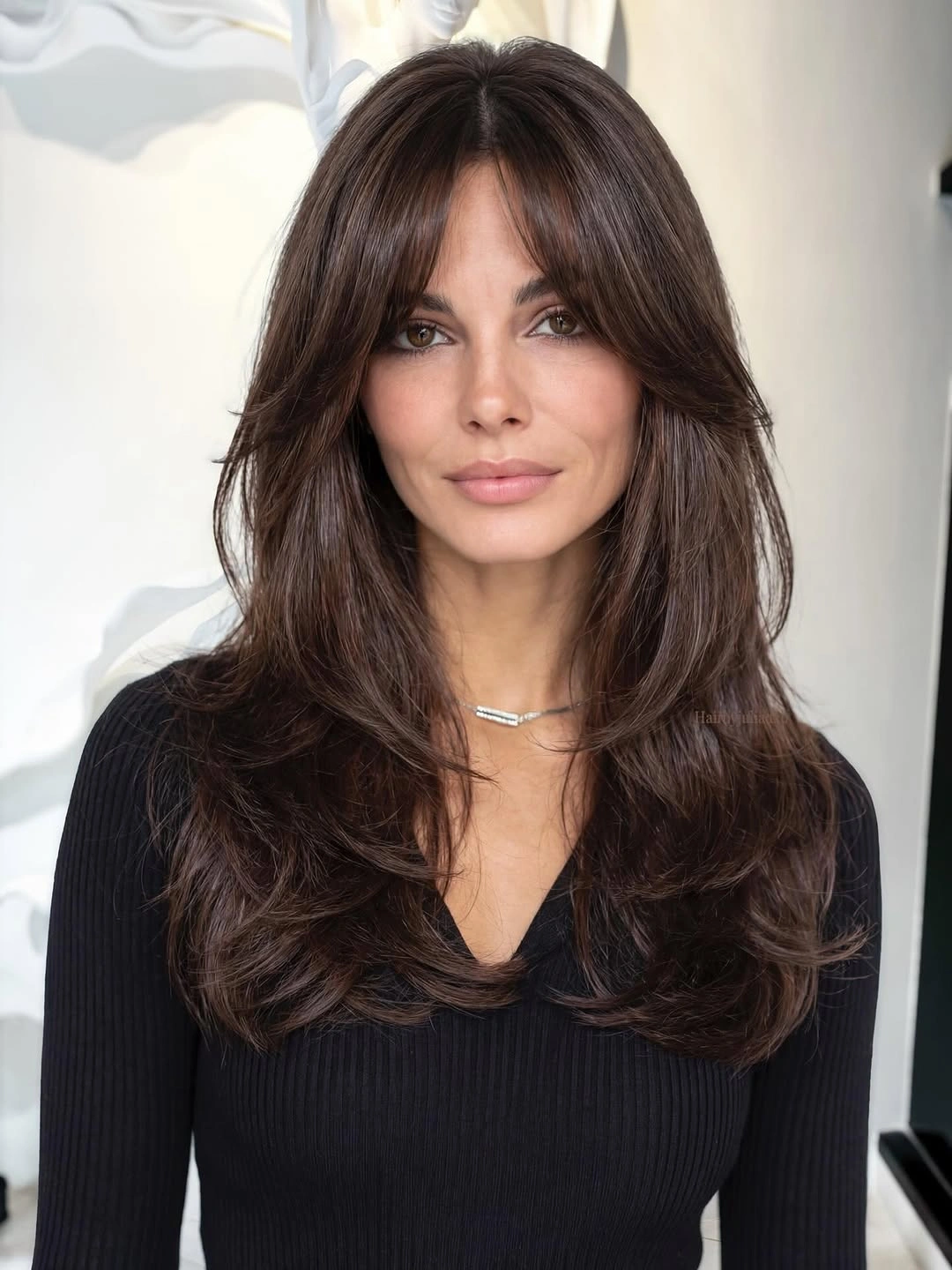
Let the first shorter pieces begin around the cheek or jaw area if you want the center line to lead into a visible cascade. The important adjustment is distribution: too much weight at the top hides the part, while too much removal at the bottom can make long hair look thin. A medium-length version can keep the same logic with fewer layers and a smaller wave.
This is a strong example of how layers change visual weight. The center part supplies symmetry at the top, but the lower cascade creates width and movement where the long length would otherwise become heavy. More structure also creates a maintenance cost, because the proportion depends on the layers remaining distinct instead of merging into one broad wave.
One Braided Side beside Shoulder Waves
Light blonde hair falls around the shoulders in loose bends, with a narrow braid running near one temple while the front part stays close to the middle. The braided side is controlled and linear, whereas the open side keeps more movement around the cheek. The shorter length makes the contrast easier to see because the braid and loose ends occupy the same compact frame.
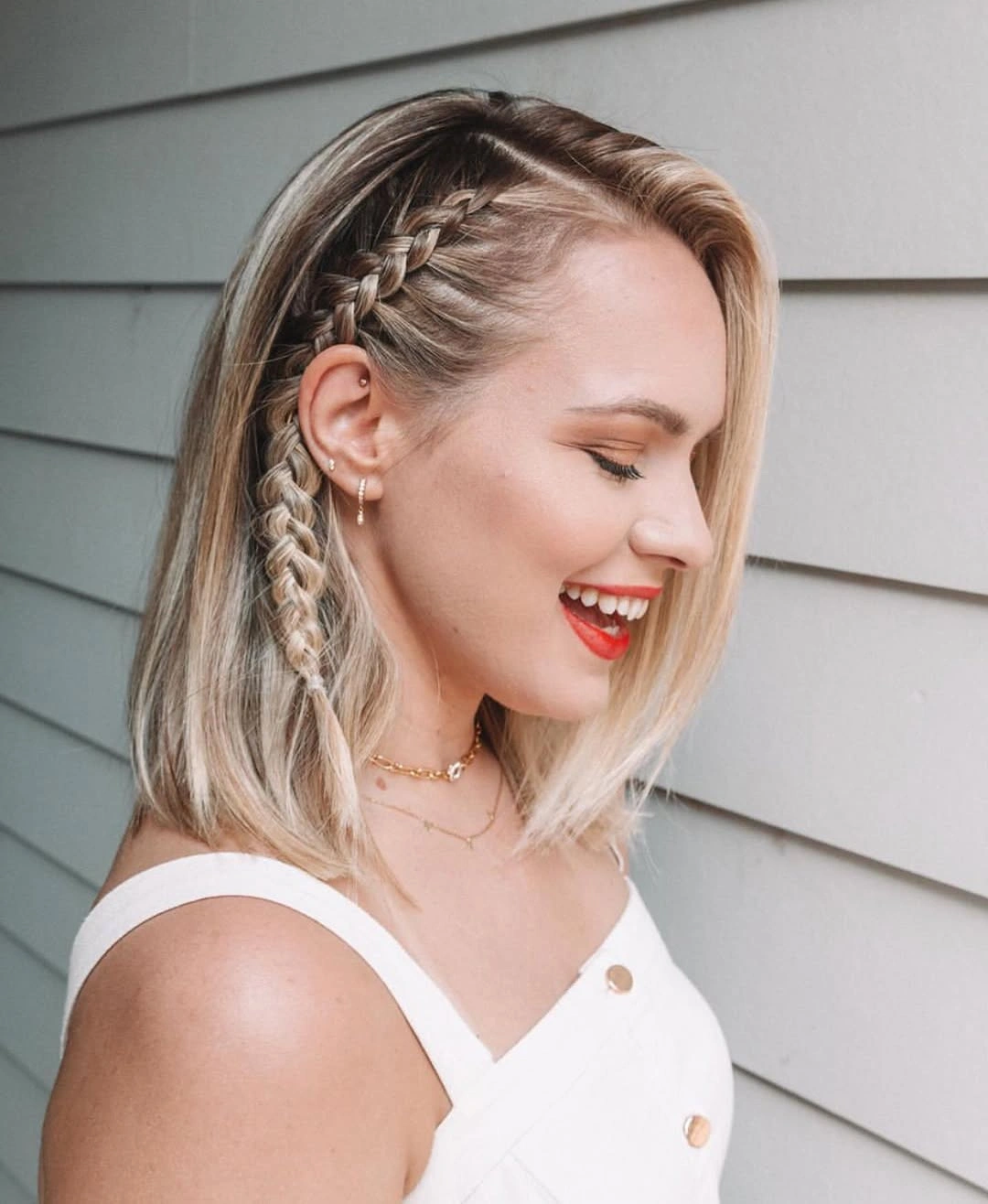
Use one side braid when you want a small asymmetry without changing the whole haircut. Keep the opposite side loose so the braid remains a supporting line rather than a matched pair that competes with the center opening. If the hair is shorter, move the braid closer to the hairline and let the ends remain soft around the jaw.
The proportion is interesting because the center part suggests balance while the braid shifts attention to one side. Shoulder length prevents the asymmetry from becoming dramatic, so the result remains casual and easy to read. The limitation is that the braid needs enough length and control to stay visible; on very short hair it can become a tiny detail with little effect on the overall silhouette.
Textured Waves with a Curtain Fringe
Long dark hair has a center-opening fringe that breaks into uneven waves and lighter streaks through the lower lengths. The texture is more irregular than a smooth blowout, and the face-framing pieces blend into a shaggy, airy silhouette. A dark graphic top supports the casual scale, but the structure comes from the change between fringe, mid-lengths, and ends.
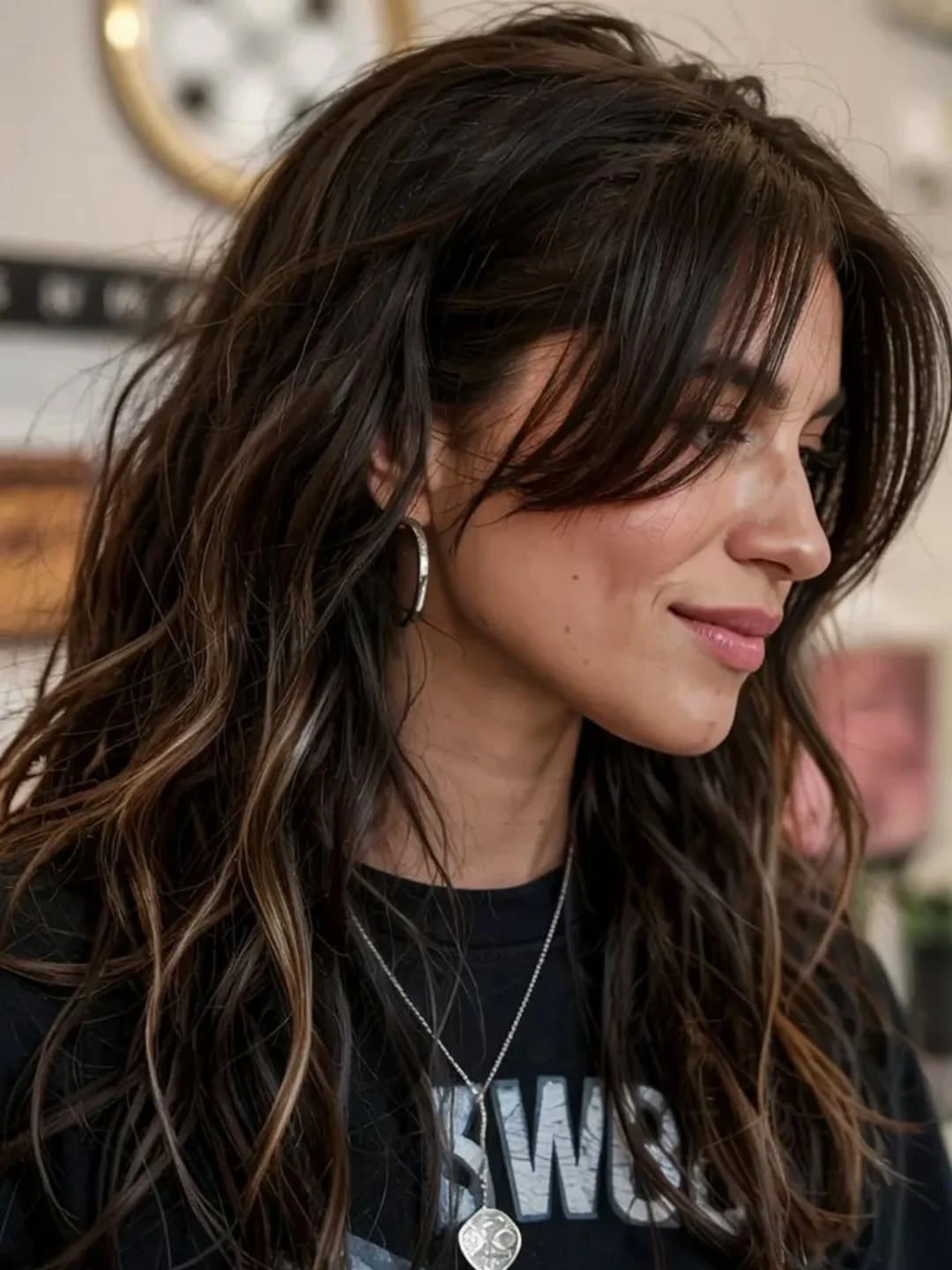
Keep the fringe long enough to split and sweep rather than cutting it into a single blunt band. The uneven texture can stay relaxed through the lengths, while the face frame provides the proportion that keeps the middle part visible. If you prefer a neater result, smooth only the front pieces and leave the lower wave broken so the silhouette does not lose its movement.
This hairstyle softens symmetry by varying texture from section to section. The center part is still the organizing line, but the irregular wave prevents both sides from reading as exact copies, which gives the long length a more casual scale. A textured shape also has a growth-out challenge: once the fringe or shorter pieces lose their separation, the original airy progression can look heavier.
Controlled Crown and Formal Length
Long dark hair opens around the middle with smooth front tendrils and a controlled crown, then falls into defined waves below the shoulders. The visible shape is more formal than an everyday loose style because the upper section stays neat while the lower section supplies the drama. Gold earrings and a sheer dark top clarify the evening scale without becoming part of the hairstyle itself.
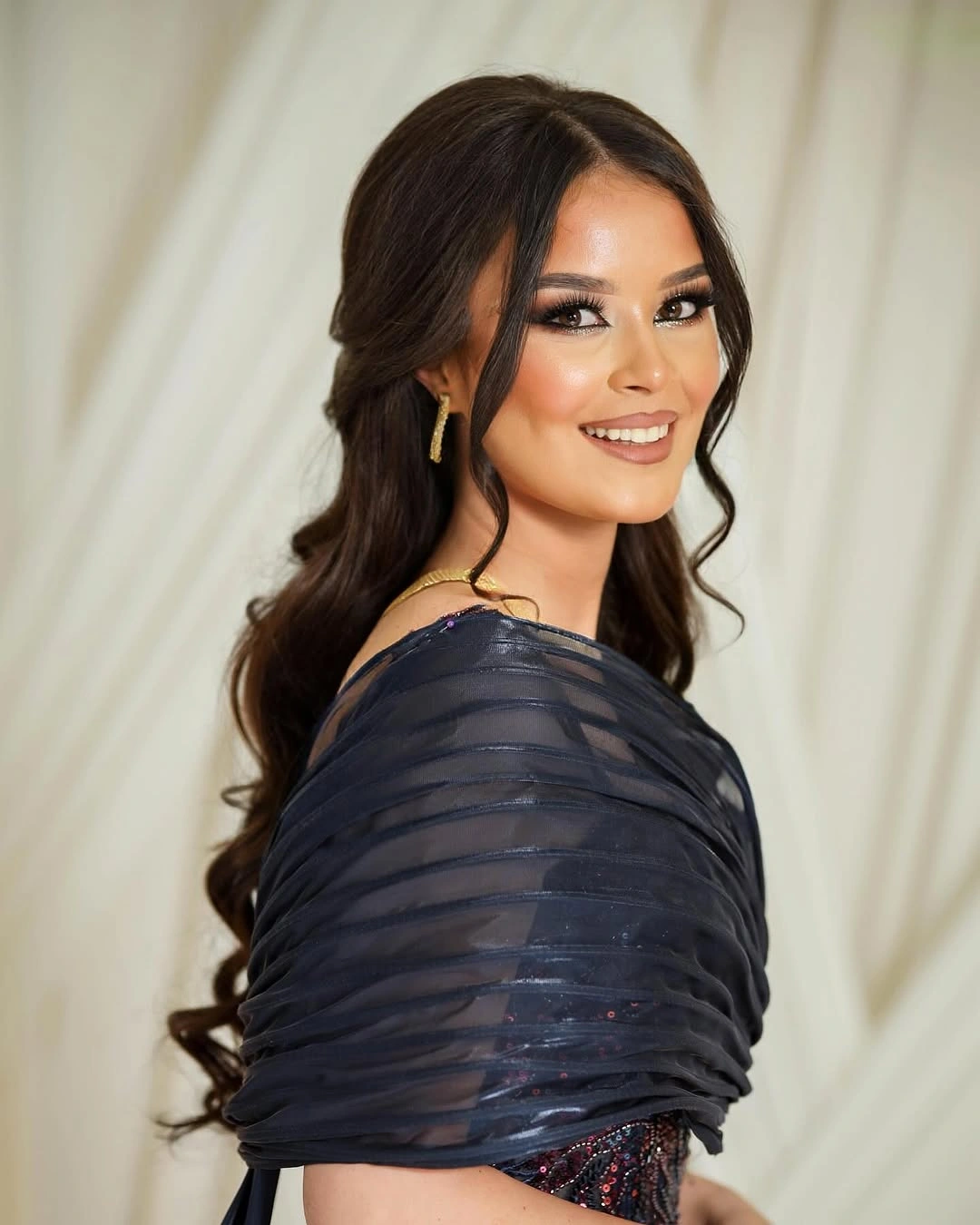
Preserve the clean crown and let the wave become fuller only after the hair clears the shoulder if you want this hierarchy. That keeps the middle part visible and prevents the upper face from being overwhelmed by volume. A shorter version can use the same controlled top with softer bends at the ends, but it will read more like a polished lob than a formal cascade.
The look depends on a strong vertical proportion: tidy at the top, expansive below. This makes the hairstyle feel dressed up while keeping the center line clear, and it explains why the long length matters more than extra accessories. The tradeoff is endurance, since a defined lower wave can relax during wear and reduce the separation between the controlled crown and the fuller ends.
Rounded Short Bob with Side Volume
Dark hair is cut into a short rounded bob with a clear center part and curved ends that lift slightly away from the face. Volume sits at the sides, giving the compact silhouette width instead of allowing the part to pull it into a narrow vertical line. The open neckline makes the jaw-length outline easy to compare with the longer looks in the collection.
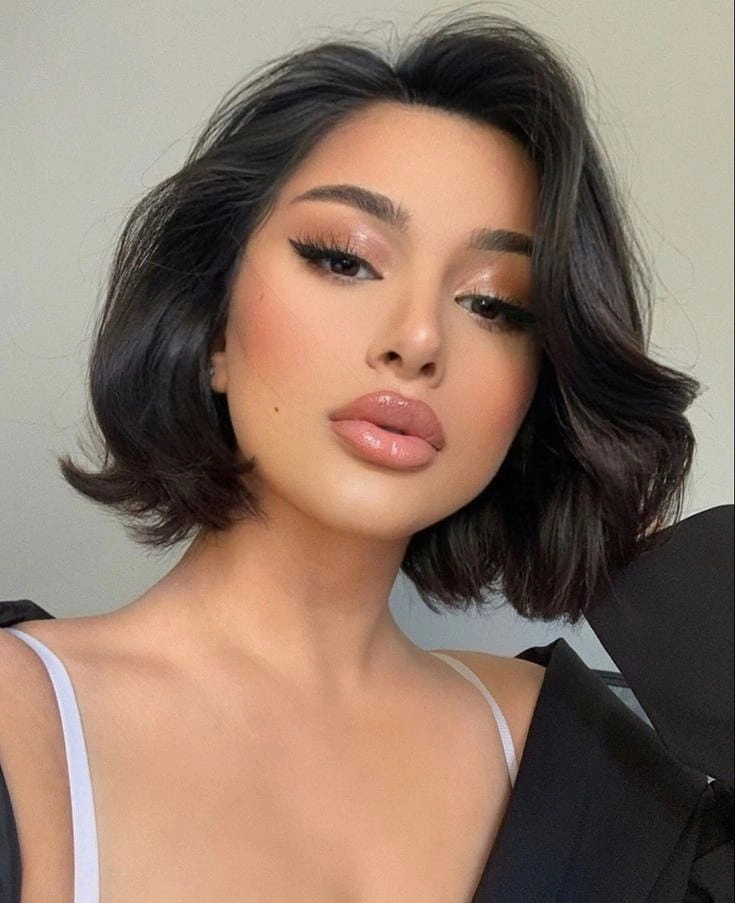
Keep the sides rounded and the front pieces slightly longer if you want the center line to feel open rather than severe. A flatter side will make the bob look narrower, while too much outward lift can overpower the part. For a softer version, let one front section bend more than the other, but keep the overall jaw-length scale intact.
This cut shows how a middle part becomes more graphic as length decreases. The part exposes the face, while side volume restores width and keeps the bob proportionate from forehead to jaw. The practical limitation is the perimeter: because the shape relies on a rounded outline, small changes in the ends can alter the whole impression more quickly than they would on long hair.
Tailored Brown Bob with a Clean Hem
Medium brown hair ends at the jaw in a smooth rounded bob with a precise center part and a clean lower edge. Unlike the softer wavy examples, the hair stays close to the head and lets the hemline carry the shape. A brown blazer and white top reinforce the tailored proportion, but the clear outline is visible even without the clothing context.
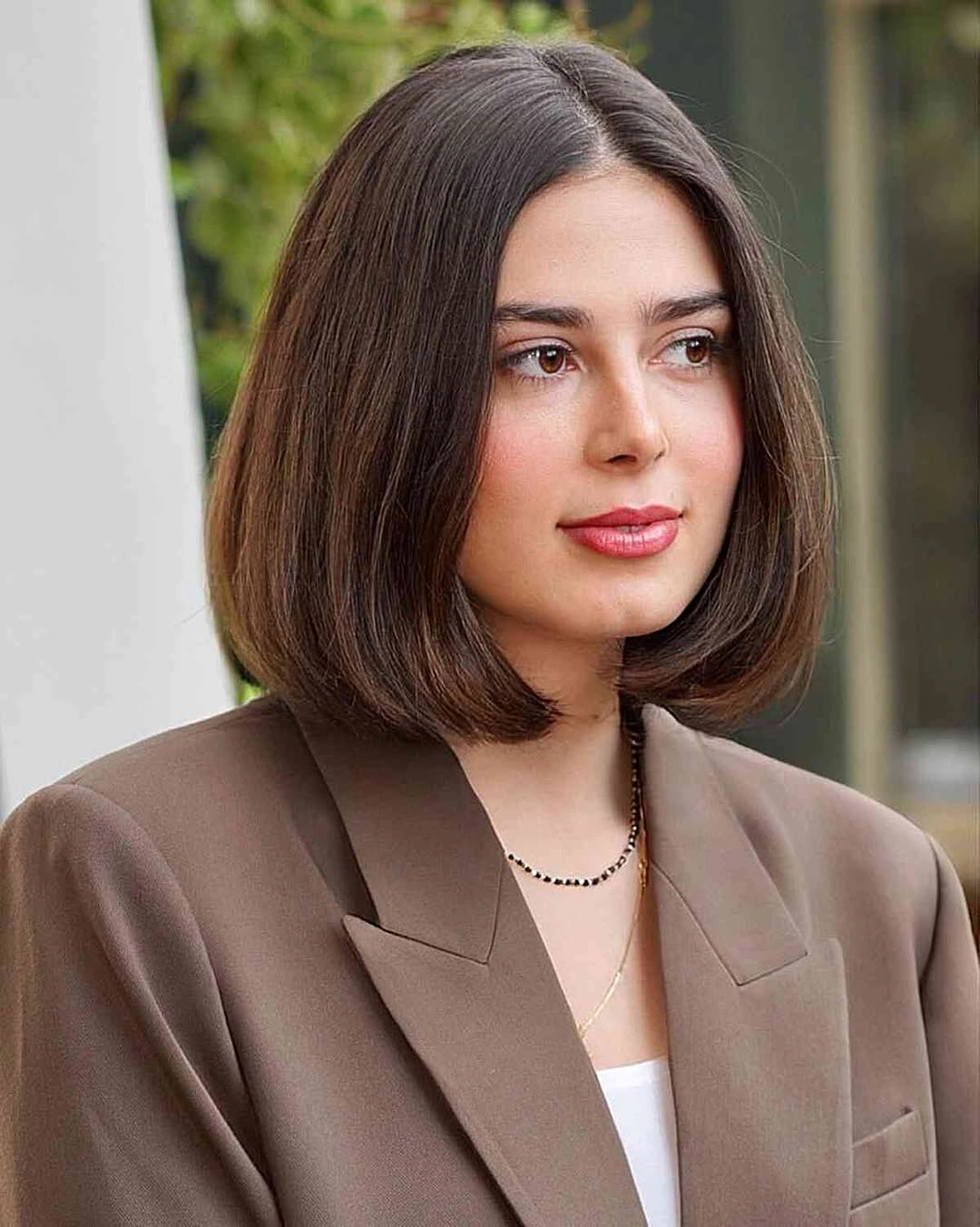
Keep the part narrow and the ends smooth if you want the bob to feel deliberate rather than casual. The clean hem benefits from a slight inward curve because it follows the jaw without creating extra width at the sides. If you introduce texture, use it selectively; a fully broken surface would change the structural quality that makes this version distinct.
The balance here comes from precision. A centered part divides the upper section evenly, and the blunt-looking hem keeps both sides at a similar scale, so there is little visual noise. That clarity has a maintenance cost: as the ends grow or lose their curve, the clean line becomes less obvious and the hairstyle can look less tailored.
Long Curtain Layers with Broad Flipped Waves
Very long taupe-brown hair opens at the middle through a wide curtain fringe and then expands into large flipped waves from the cheek level downward. The shorter front pieces establish the face frame, while the long lower layers build a broad triangular silhouette. A pale top keeps the warm color and layered volume visible from crown to ends.
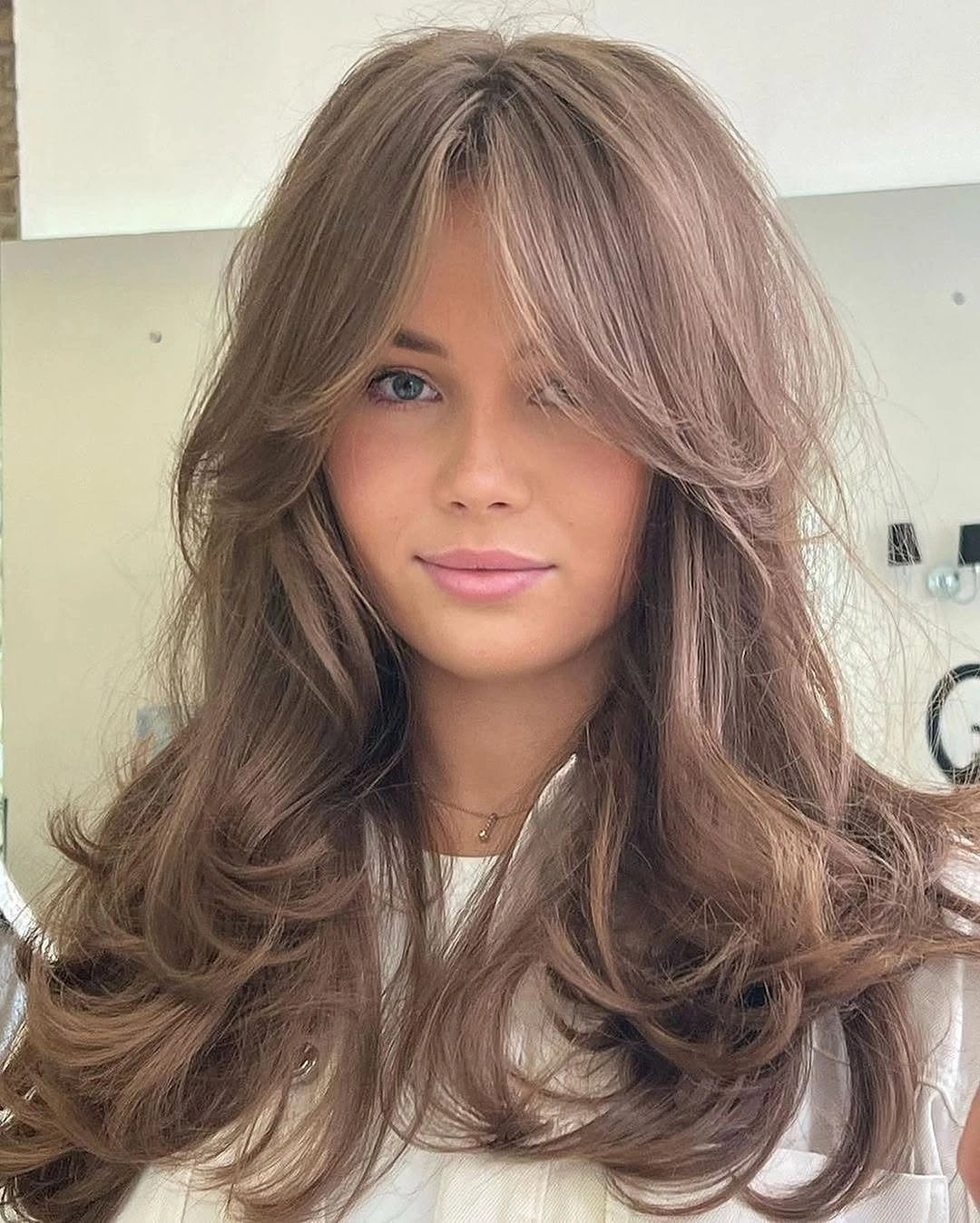
Let the curtain pieces start the movement and allow the lower layers to become fuller as they descend. That progression keeps the center part legible even when the hair reaches well below the shoulders. On a medium cut, preserve the same sequence with a shorter face frame and fewer bends, rather than trying to copy the full width of the long version.
The proportion is intentionally expansive: the top is organized, the middle frames the face, and the ends provide the largest visual mass. This prevents very long hair from looking flat but also makes the style more dependent on shape retention. If the lower layers merge or lose their flip, the silhouette can become heavy even though the center part remains in place.
Warm Blonde Waves at Shoulder Length
Warm blonde hair falls to the shoulders in broad, soft waves with a visible center part and loose front sections. The color catches the indoor light, while the moderate length keeps the outline lighter than the long layered examples. A white sweater sits below the ends, making the shoulder-grazing proportion easy to see.
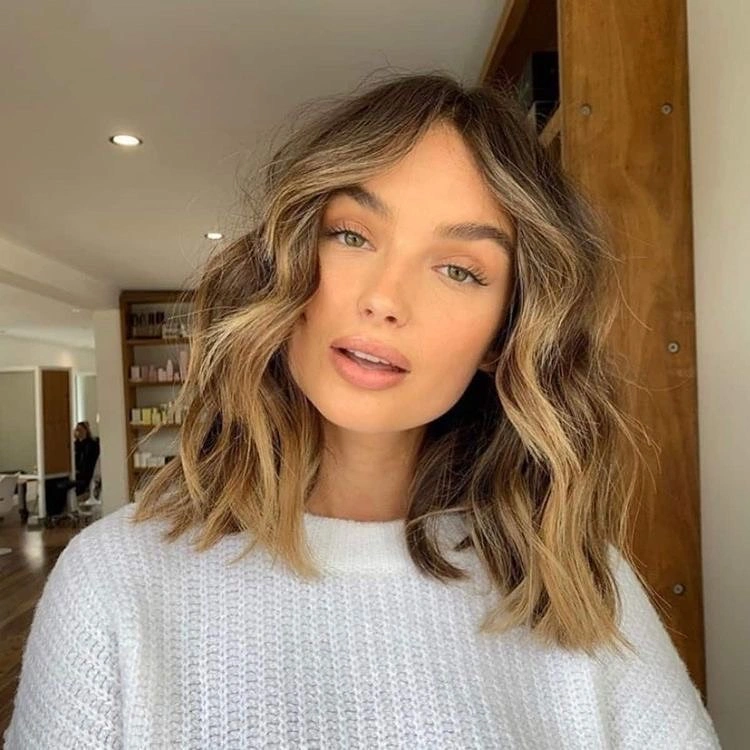
Use a broad wave rather than a tight curl if you want the part to remain the first structural decision. The shoulder length already creates a compact frame, so too much volume at the sides can make the hair look wider than the face. If the finish becomes straighter, keep the front sections slightly separated so the middle opening does not disappear.
This style works because color, length, and texture stay in proportion. The blonde is supported by enough movement to avoid a flat block, but the waves stop before the hair becomes a large lower mass. The tradeoff is refresh time: soft bends can lose their shape after sleep or friction, making the same shoulder-length cut look more linear from one day to the next.
Long Black Waves with a Symmetrical Evening Line
Very dark hair separates at the middle and falls in large, sculpted S waves below the chest. The front sections stay close to the face before opening into a broad, symmetrical cascade, and a pale blue draped top emphasizes the evening scale. Compared with the casual references, the repeated wave pattern makes both sides feel intentionally matched.
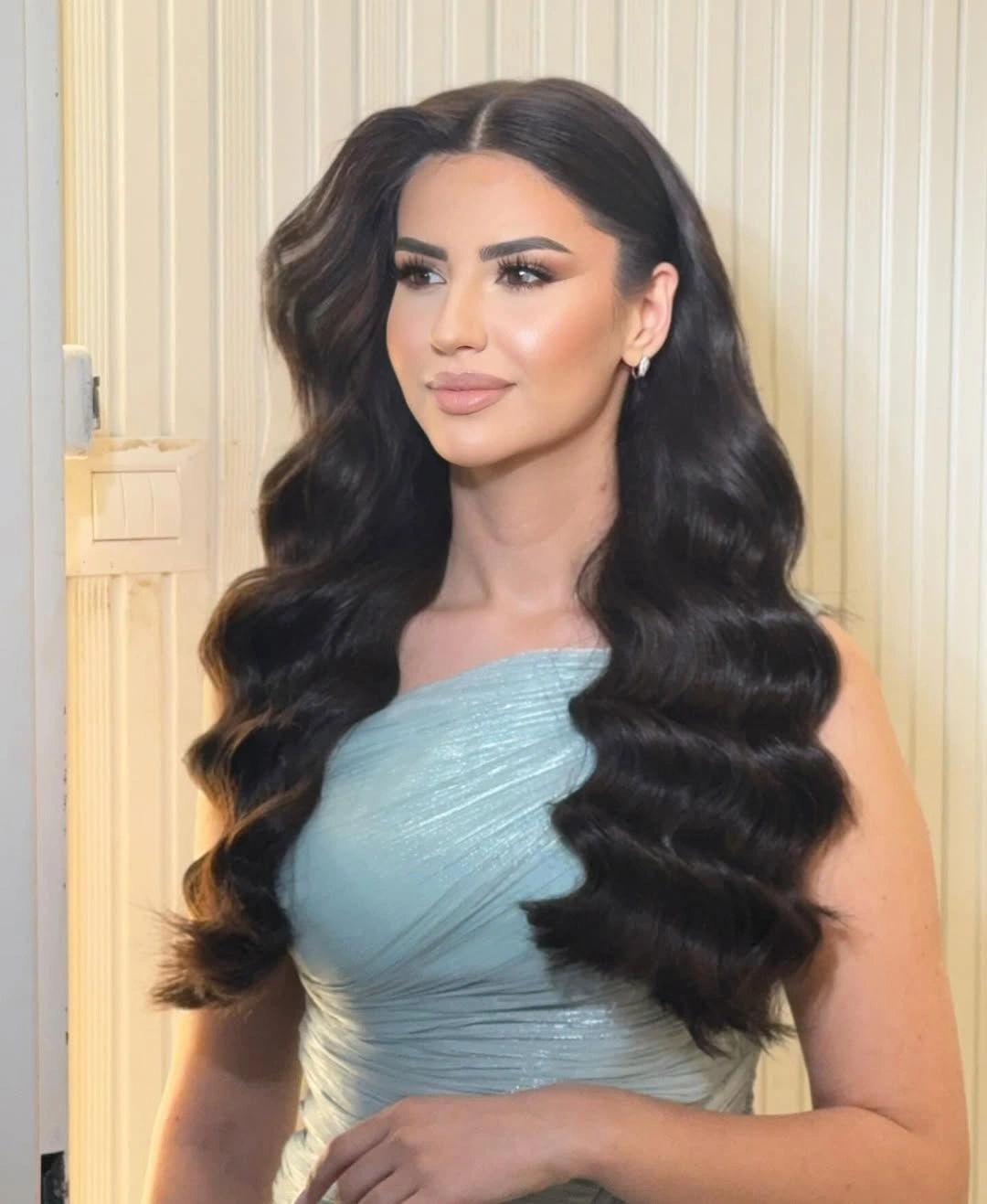
Keep the crown controlled and repeat the same broad direction on both sides if you want this formal symmetry. A medium length can use fewer bends, but the two sides should still share a similar width so the center part remains the organizing axis. If you want a softer result, loosen the lower wave rather than moving the part off center.
The visual weight is carefully distributed from the center line through the ends, which is why the style feels ceremonial rather than simply long. Symmetry makes the silhouette powerful, but it also makes small differences between sides more visible than in a textured cut. The practical limitation is definition over time: when one wave relaxes faster, the proportion can look uneven even if the part stays centered.
Short Lob with Face-Framing Curtain Pieces
Short taupe-brown hair ends around the shoulders with a center part, long front pieces, and softly bent ends. Sunglasses sit near the face, but the important structure is the relationship between the narrow crown and the airy lob below it. Lighter pieces around the front give the compact length a little separation without creating a dramatic layered cascade.

Keep the front pieces slightly longer than the back outline if you want the middle part to open the face while the lob stays casual. The ends can remain broken and light, but the crown should not be over-lifted or the shorter length will become top-heavy. A smoother finish will look more tailored, while a few uneven bends preserve the everyday proportion seen here.
This lob is useful because it shows a middle part working without a large wave or a long silhouette. The face frame provides direction, and the shoulder length limits the total visual weight, so the cut can remain relaxed. The tradeoff is that a small amount of growth changes the proportion quickly, especially when the front pieces and outer edge are meant to sit at different levels.
Airy Shoulder Layers with Uneven Ends
Medium brown hair reaches the shoulders in shaggy, uneven layers that open around the middle and break into separated ends. The texture is casual rather than sculpted, and volume sits near the cheek and shoulder area instead of collecting only at the bottom. A dark jacket and outdoor background support the street scale, but the layered spacing is the defining feature.
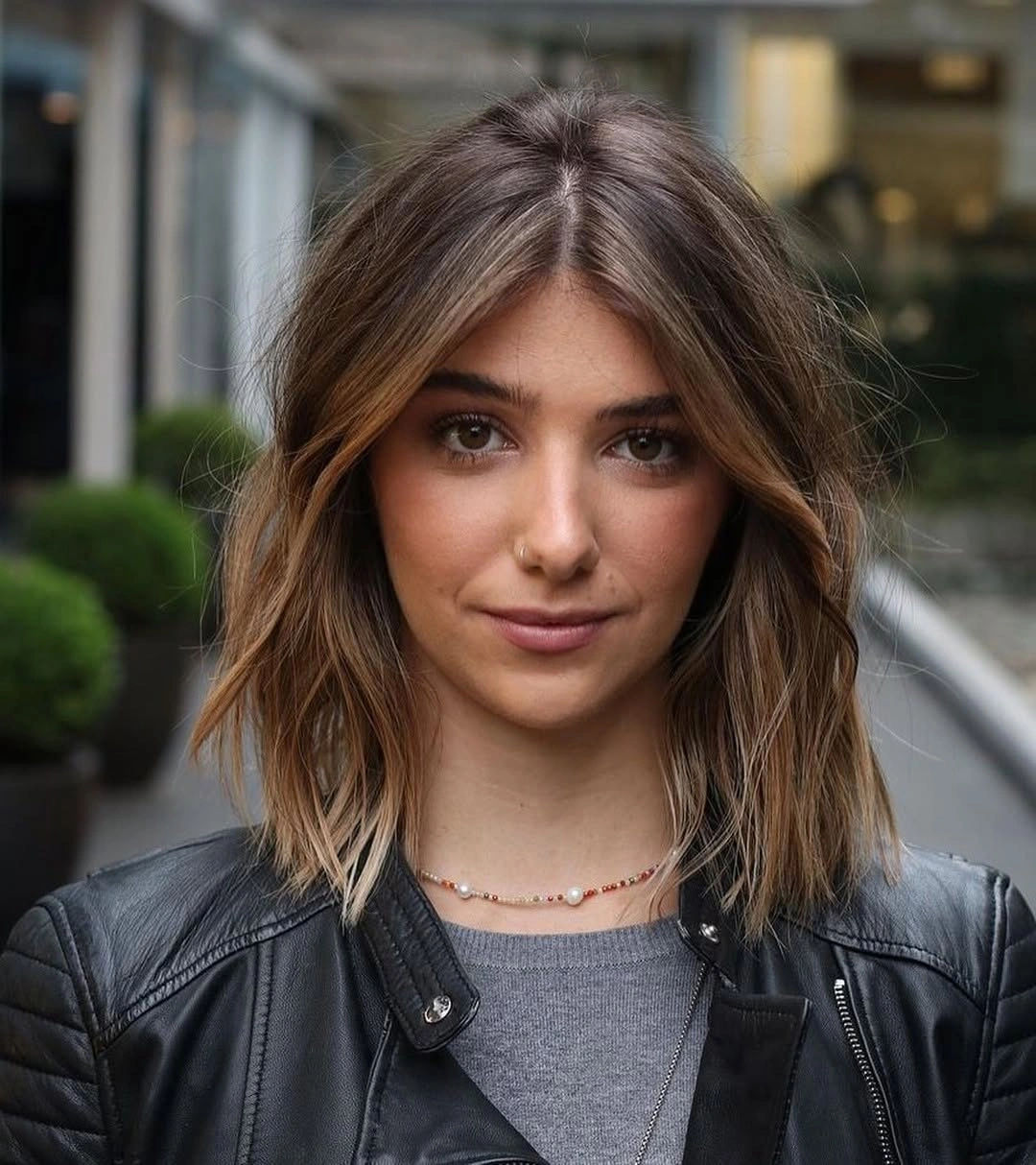
Let the center part feed into long curtain pieces and keep the ends irregular if you want the same airy structure. A shorter version can preserve the layers around the face while trimming the lower edge, but removing too much weight may make the shape look disconnected. If you prefer polish, smooth the front sections only and keep the lower texture varied.
Uneven layering changes the way symmetry is perceived. The part remains centered, yet the broken ends and different strand directions prevent the hairstyle from reading like a mirrored sheet, which gives it a more casual visual weight. Growth-out is the honest limitation: as the shorter pieces lengthen, the spaces between layers can close and the airy outline can become denser.
Very Long Straight Hair with Tapered Ends
Very long dark hair falls almost to the waist from a clean middle part, with long face-framing pieces blending into mostly straight lengths. The lower outline tapers slightly instead of ending in a heavy blunt line, and only a little bend appears near the ends. A light sweater provides contrast, leaving the length itself to carry the silhouette.
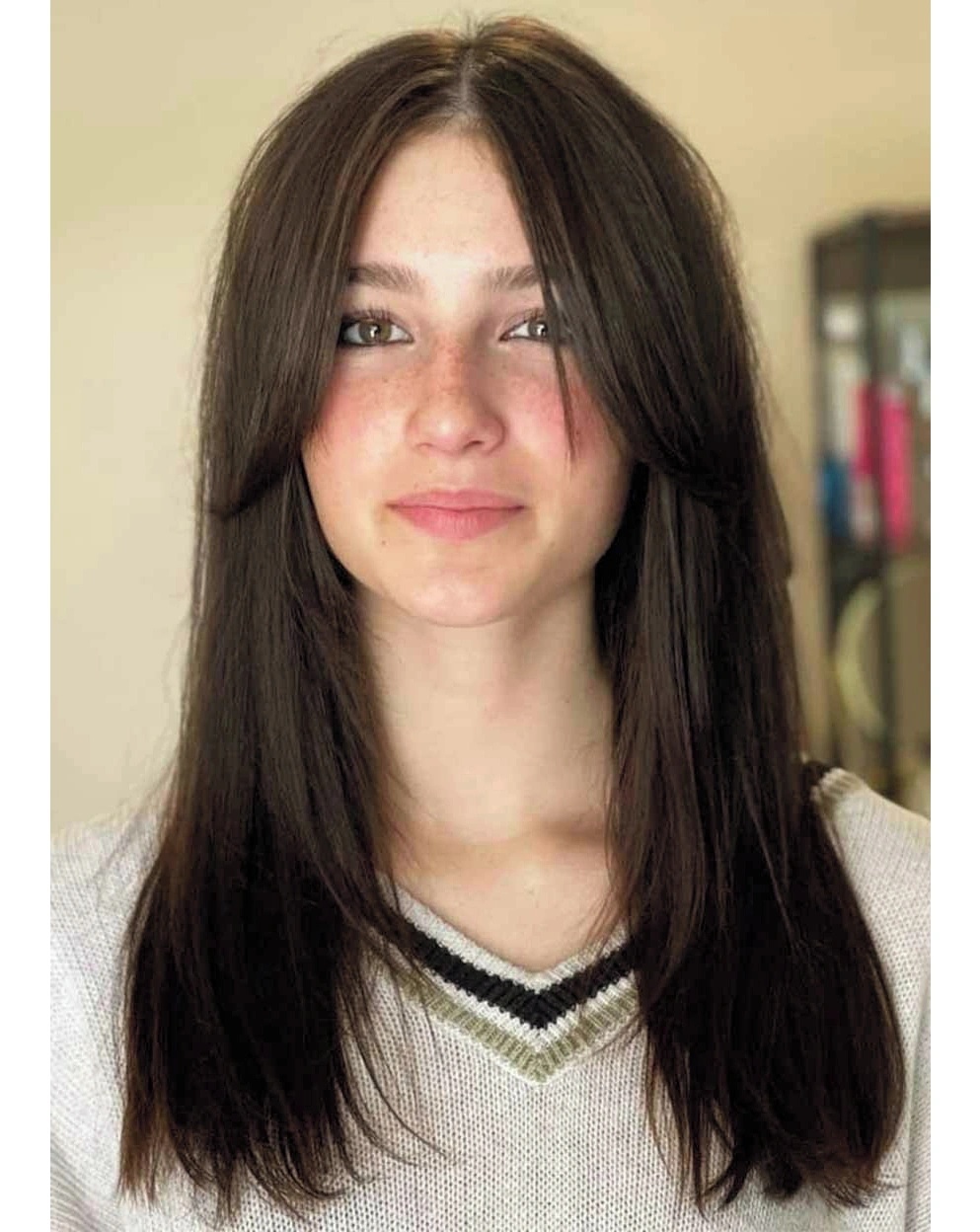
Keep the center line narrow and add just enough front framing to stop the length from becoming one solid curtain. The tapered lower edge reduces some visual weight, while a shorter version can use a sharper hem without losing the same minimal logic. If you add waves, place them below the cheek so the graphic part and long vertical line remain visible.
This style is almost entirely proportion-led. The middle part creates a strong vertical axis, the front pieces keep the face open, and the tapered ends prevent the lower shape from becoming completely rectangular. The tradeoff is heaviness: very long straight hair can look dense when the ends lose their taper, so the outline matters as much as the part itself.
Layered Brunette Waves with Balanced Lift
Long brunette hair opens near the middle and moves into layered waves that curve away from the face before widening through the chest-length ends. Lighter pieces near the front add dimension, while both sides carry a similar amount of volume. A black top makes the warm brown movement visible without changing the clean, balanced proportion.
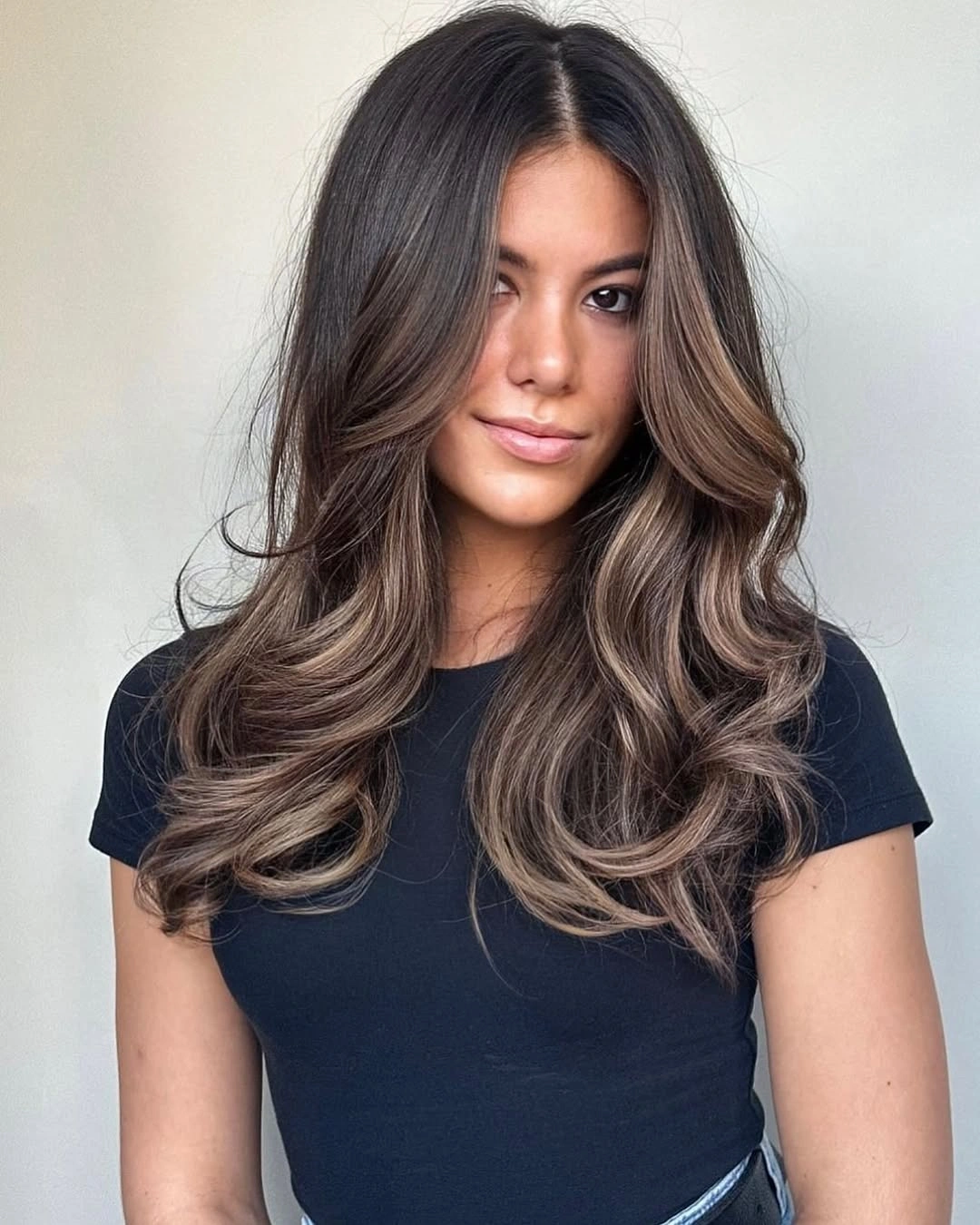
Keep the face frame and lower layers moving in the same outward direction if you want the hairstyle to feel balanced. A shorter cut can preserve the first layer near the cheek and reduce the number of waves below, while a straighter finish will make the length look more graphic. Avoid adding volume only at the crown, because that would shift the visual center away from the middle line.
The style reads neatly because the upper and lower sections agree about direction. The center part is not fighting the layers, and the lighter pieces help separate the face frame from the dark body of the hair. The practical note is root lift: once the top collapses, the lower waves may look heavier even though their shape has not changed.
Long Tousled Waves with Soft Curtain Framing
Long dark brown hair separates at the middle and falls through loose, irregular waves, with long curtain pieces sweeping around both sides of the face. The crown has a little lift, while the ends look feathered rather than blunt, placing the style between polished waves and a textured everyday cut. A black shirt keeps the focus on how the pieces overlap and distribute weight.
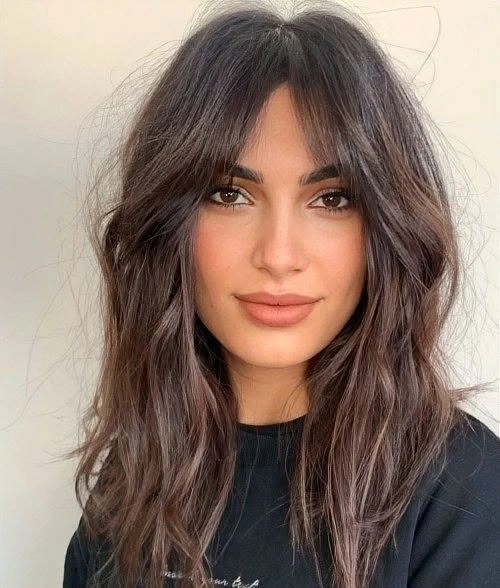
Let the curtain pieces remain long and allow the lower wave to vary slightly from section to section if you want this flexible proportion. The center part provides the stable element, so the rest of the texture does not have to match perfectly. For a neater version, smooth the front frame and keep the lower lengths loose rather than pressing the whole head into one uniform pattern.
This closing look is a bridge between symmetry and movement. The part organizes the front, the curtain pieces keep the face open, and the varied wave prevents the long silhouette from becoming rigid or overly formal. Its limitation is predictability: a relaxed finish will not repeat exactly after every refresh, so the appeal depends on accepting small changes in texture.