A useful family Halloween costume for 2026 can begin with one small decision instead of a perfectly identical shopping list. A repeated color, print, hat, or silhouette detail gives the group a shared visual thread, while different cuts let adults, children, babies, and even pets move comfortably in their own versions.
These 25 ideas show how a matching family Halloween costume can stay readable without becoming rigid. Some rely on black and white contrast, some build a mood from saturated color, and others use one memorable accessory; the practical choices matter just as much as the theme when a stroller, carried baby, dog, or active child is part of the plan.
Spotted Layers Make the Family Instantly Readable
Black-and-white spots do the coordinating before any extra accessory enters the frame. One adult carries the pattern with red accents, another keeps the upper silhouette darker, and the children repeat the light spotted surface around a stroller, so the group reads as one idea even though the proportions are completely different. That is a strong starting point for a family costume because the print remains recognizable on a top, a onesie, or a blanket-like layer.
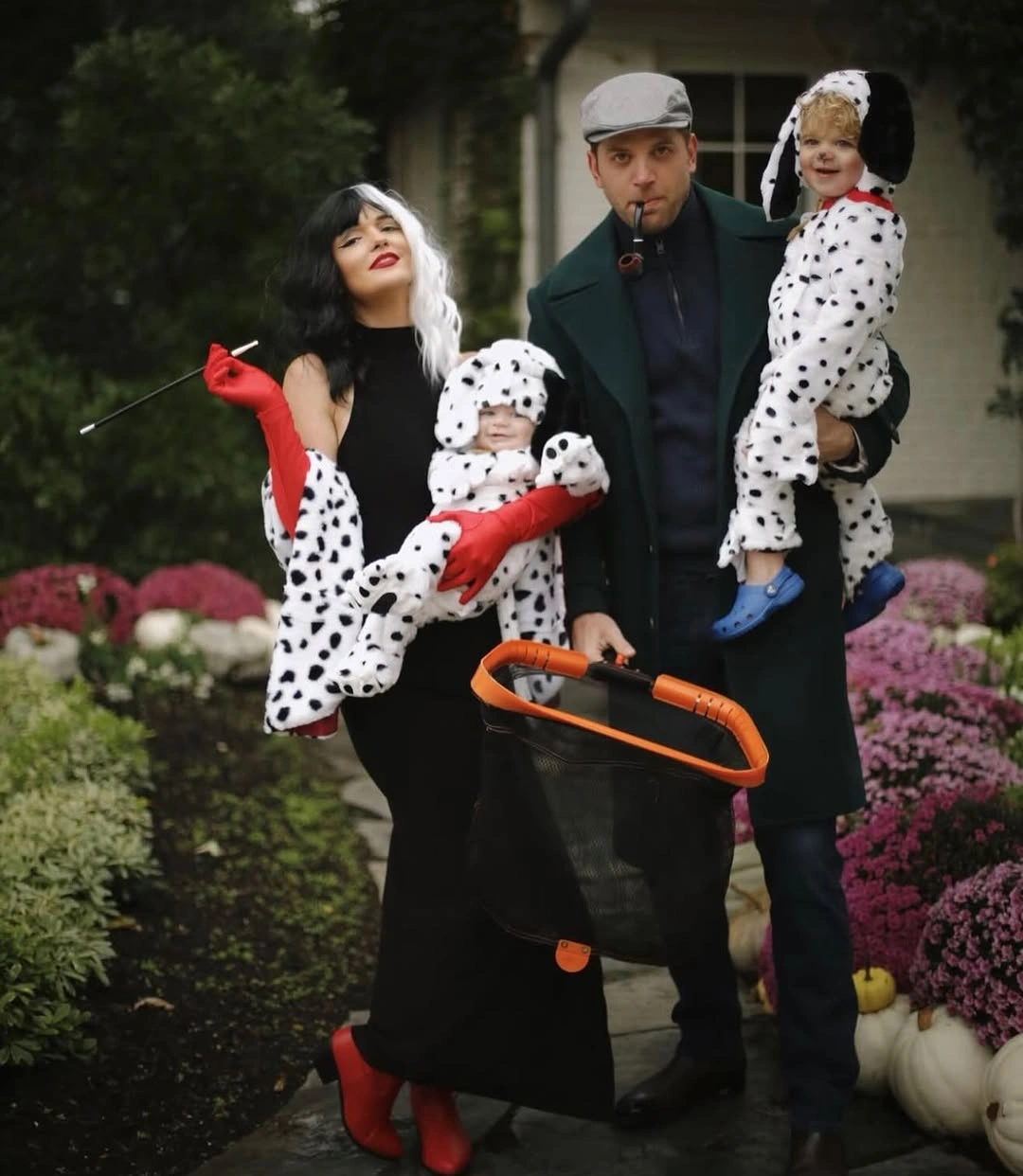
What makes this arrangement work is the controlled interruption of red. A small warm detail gives the mostly monochrome group a focal point, while the dark stroller creates a grounded center rather than another competing costume. If every person added a bright accessory, the high-contrast print would lose its clean rhythm, so the red is most effective when it stays concentrated on one or two adults.
For a simpler build, repeat the spotted surface in one visible garment per person and let the exact cut change with age. A baby can use a small printed layer, while an older child might wear a plain black base with a spotted hood or bow; the tradeoff is that bold pattern photographs clearly but can feel busy when layered with too many unrelated colors.
White Structure Meets a Dark Child Silhouette
A bright structured adult look supplies the first point of focus here, with pale draping beside it and a small child in a dark hooded shape. The three silhouettes do not match, yet the light, light, and dark value pattern separates each person immediately. A long pale object held diagonally also adds direction, so the costume feels active rather than arranged as a row of unrelated outfits.
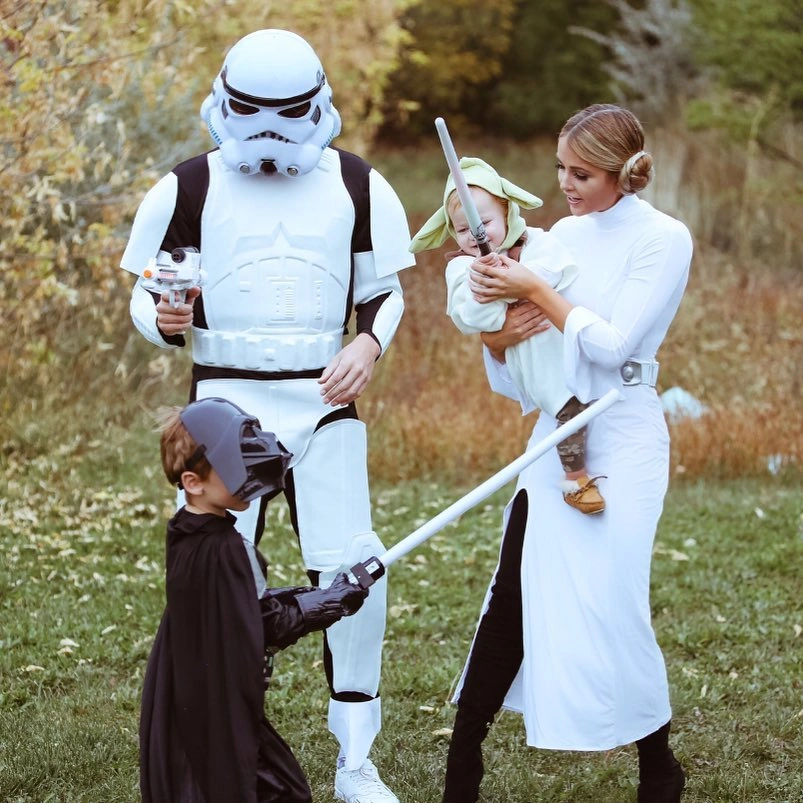
Value contrast is doing more work than the story reference. White structure catches attention, the softer pale layer keeps the composition from looking armored or stiff, and the child stays legible because the dark base creates a clear edge against the lighter adults. That combination is especially useful when a small child is shorter than everyone else and needs a strong visual role without an elaborate construction.
Build the same balance with a crisp light jacket or jumpsuit, a pale robe-like layer, and a dark sweatshirt or cape for the child. Shorten any long hem before walking, and replace a cumbersome prop with a small handheld detail if needed; the dramatic proportions are memorable, but movement and clear sightlines should decide how much volume stays in the final version.
Bright Green Keeps the Group Playfully Unbalanced
Bright green takes the lead in this indoor group through a short costume with a large circular front detail. Behind it, a fuzzy blue full-body look and a purple accent introduce different textures and heights, so the family feels playful rather than uniformly polished. The cheerful palette also proves that a family Halloween costume does not need to rely on black, orange, or frightening imagery to look intentional.
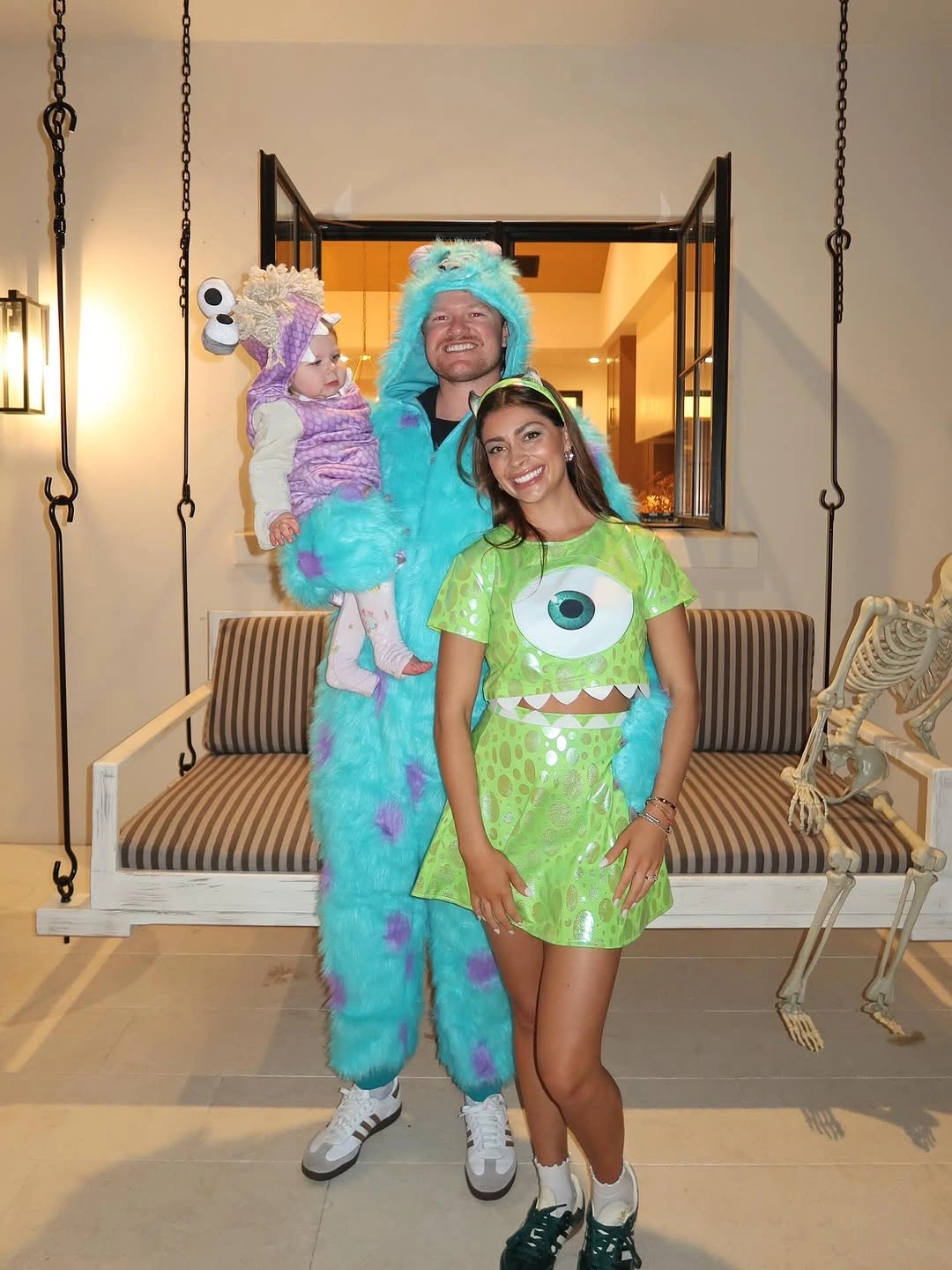
The important color relationship is green against blue, with purple used sparingly as a bridge rather than a fourth competing focal point. The clean green shape reads quickly, while the fuzzy blue surface adds volume and makes the background figures feel substantial without requiring extra prints. Large circular decoration works best when the rest of the outfit stays simple enough for that shape to remain the first thing the eye notices.
A practical version could use one saturated jumpsuit or dress as the lead and add a blue textured hoodie for a child, leaving purple to a hat, sock, or small accessory. Fuzzy pieces can become warm and bulky indoors, especially around car seats or active play, so a soft-looking layer that opens easily may preserve the same color idea with less restriction.
Tall Hats Tie Green and Tan Together
Two tall hats create the clearest connection in this muted green and tan group. One adult combines a pale top with beige layers, the other carries a deep green dress, and the child stays in a quieter gray-green outfit, so the family matches through color and headwear rather than through identical garments. The vertical hats give the adults height while the smaller child silhouette keeps the composition grounded.
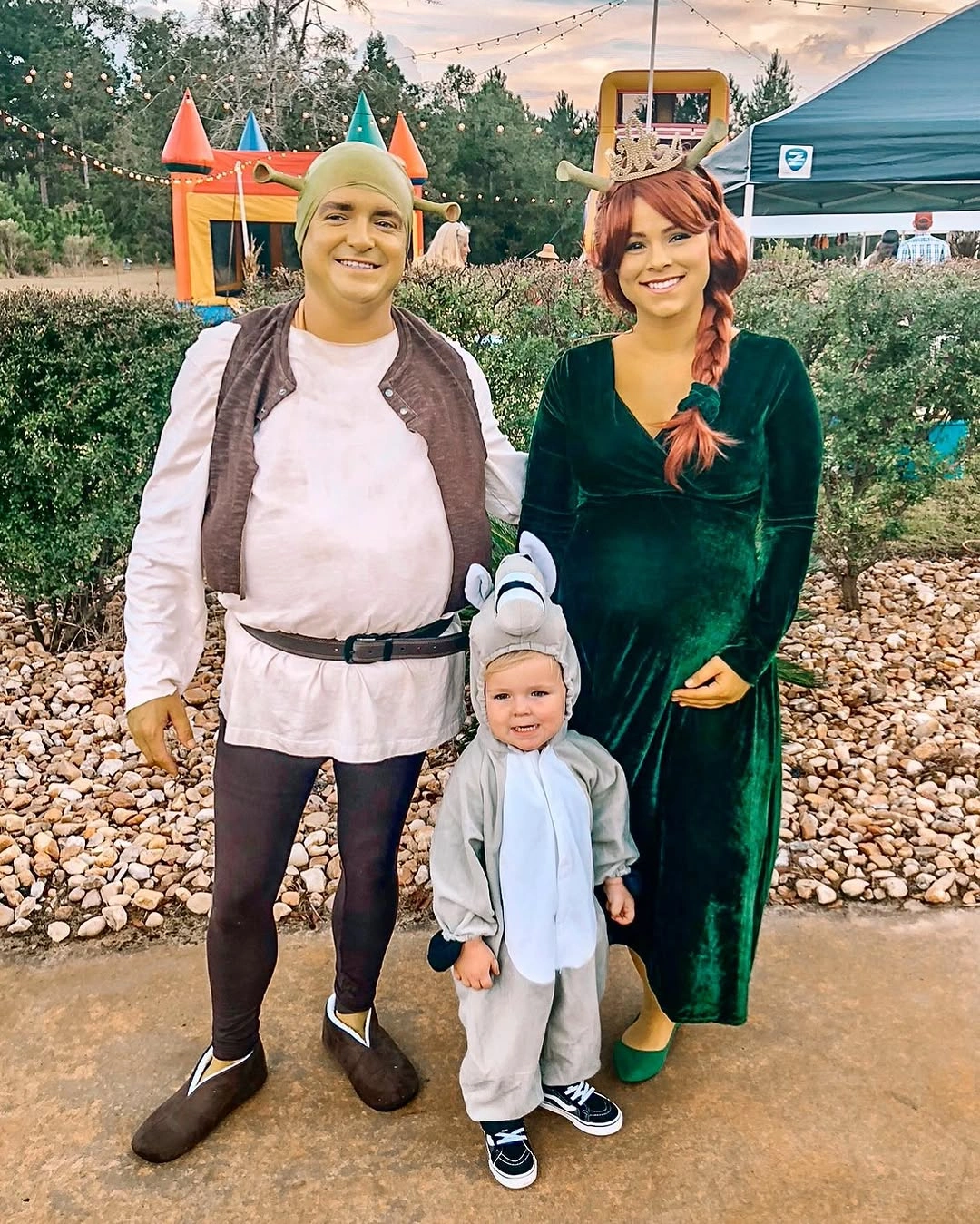
Deep green is the anchor, but it needs the pale and tan pieces around it to remain approachable. If every garment were equally dark, the hats and long layers could merge into one heavy block; the light adult base creates relief and lets the child echo the green without becoming a miniature copy. That is a useful color lesson for a softer fantasy group: repeat one shade, then surround it with calm neutrals.
Start with a green dress, cardigan, or sweater, add beige layers to another adult, and give the child a gray-green top or hat. Headwear can carry most of the theme, yet tall shapes need to clear doorways, car roofs, and windy paths; a lower soft cap or simple band can preserve the palette when the full hat is impractical.
Give Each Family Member a Color Role
A larger group becomes easier to read when each person receives a distinct saturated color instead of fighting for the same costume in every size. Pink, blue, green, yellow, and red appear in separate blocks across the adults and children, creating an energetic group Halloween costume with enough difference for every child to recognize their own part. The coordination comes from brightness and shared playfulness, not from identical cuts.
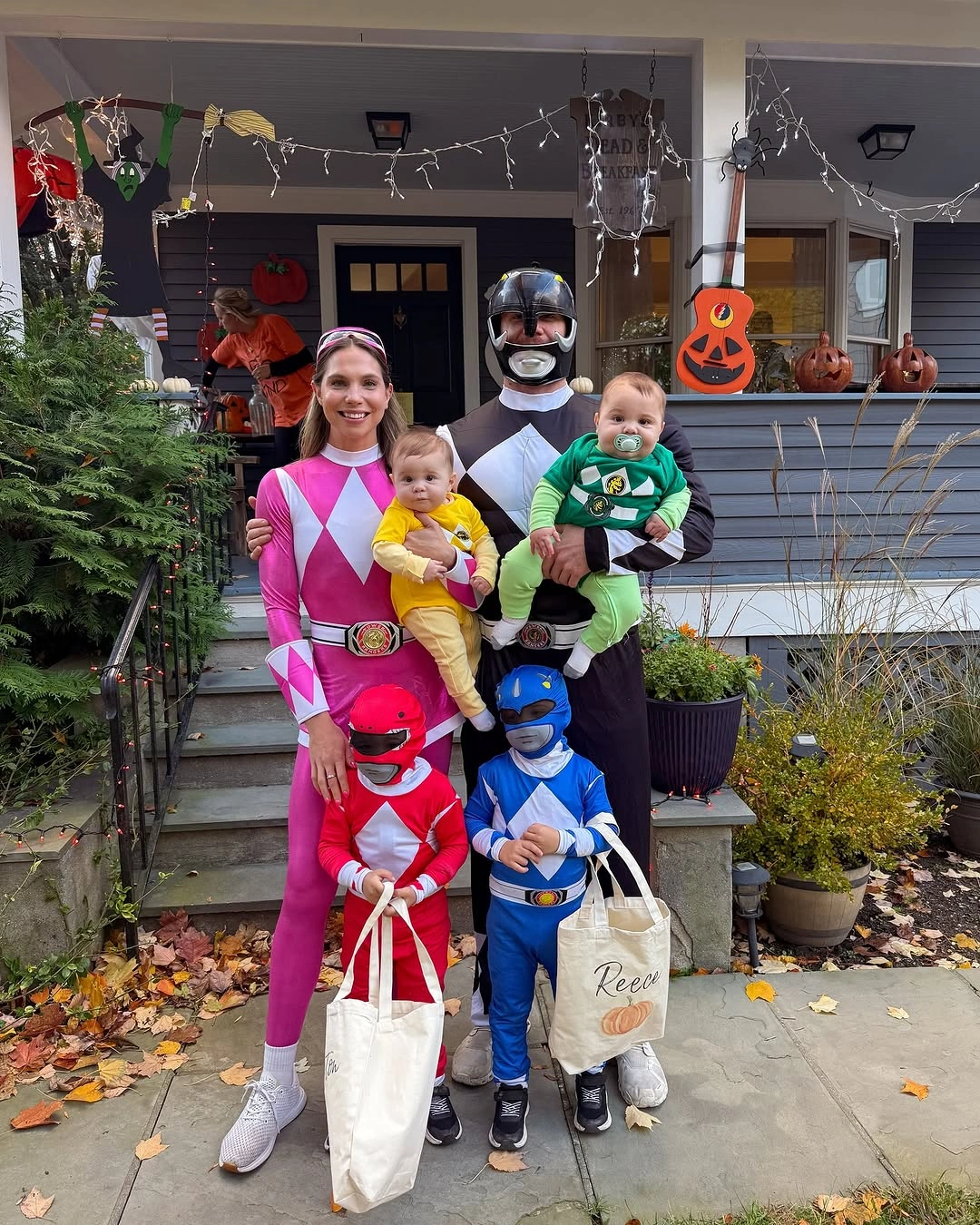
Color coding is particularly helpful when several children have different preferences or when the available sizes do not line up. A dominant shade gives each silhouette a job, while one repeated small accent can still tie the group together; without that linking detail, many bright colors may look like separate costumes photographed together. A white shoe, black belt, or shared trim can quietly create the missing boundary.
Choose a five-color palette, assign one main shade to each person, and let the base garment stay simple. A child can wear a bright shirt over dark leggings while an adult uses the same color in a vest or cape-like layer, but keep extra prints to a minimum; strong color is memorable, and too many unrelated patterns make the group harder to scan.
Orange Shapes Need White Space Around Them
Orange with black shapes is the statement in this front-door group, while a plain white adult dress gives the theme room to breathe. The child joins through a smaller orange-and-green look instead of another full-scale novelty silhouette, and the black bat details in the background echo the clothing without needing to become part of it. This is an easy family Halloween costume structure because one person can carry the pattern and everyone else can support it quietly.
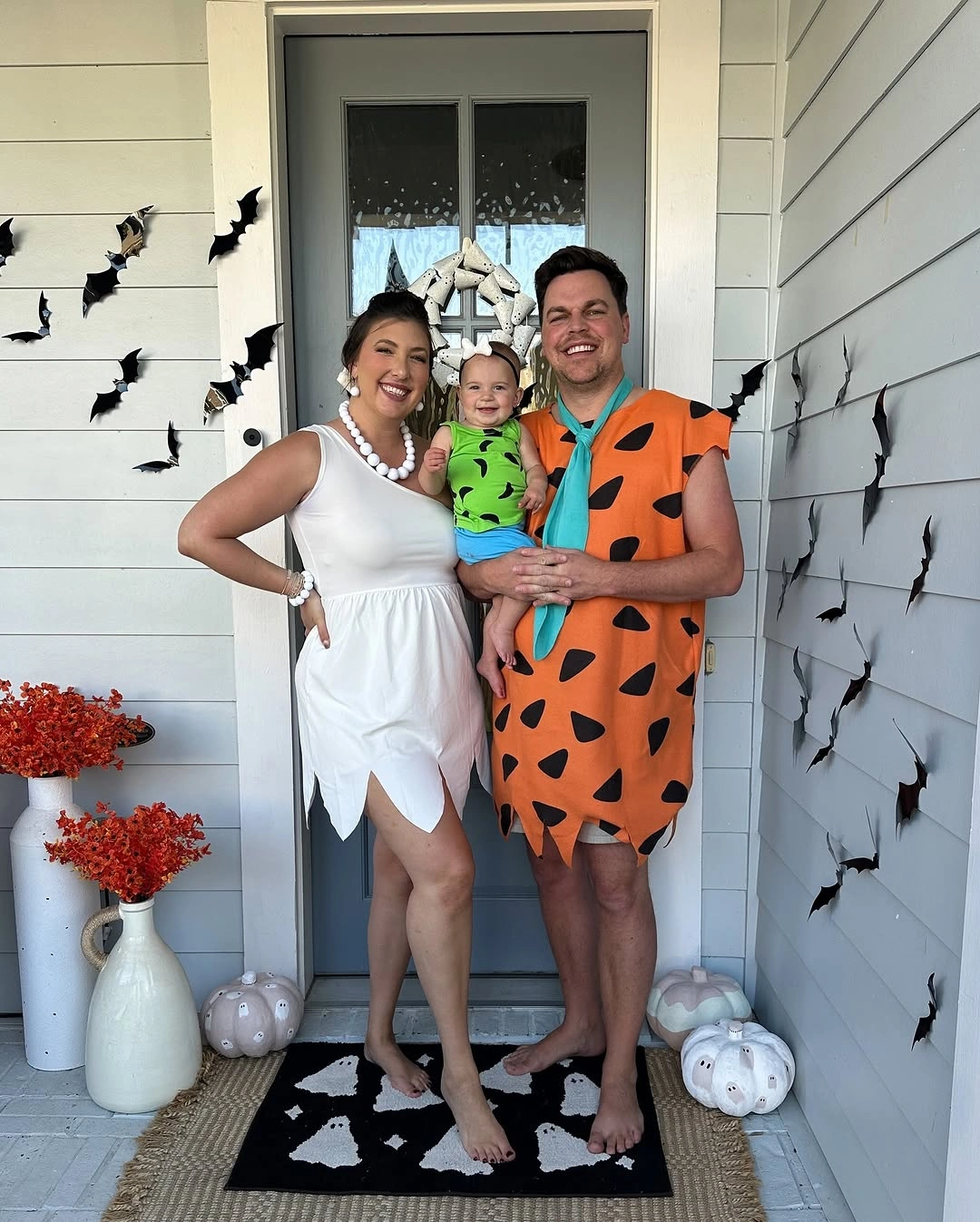
The palette stays clear because the colors have separate jobs. Orange supplies the seasonal energy, black outlines the pattern, and white prevents the whole group from becoming a dense dark-and-warm block. When a print already contains strong contrast, a plain neighboring garment is more useful than another decorated piece, especially in a portrait where the people stand close together.
Use a white dress or shirt for one adult, an orange patterned top for another, and a small orange accent for a baby or toddler. A black bow, sock, or trim can repeat the pattern without overwhelming the child, while the white base deserves realistic care around food, outdoor dirt, and the ordinary mess that comes with carrying a young family member.
Cool Robes, Pale Draping, One Bright Accent
The tallest figure in this group establishes a cool blue-gray direction with a long robe and pointed hat, while a pale flowing adult layer softens the line and bright green gives the child a visible place in the palette. The proportions are intentionally uneven: one adult supplies theatrical height, the second adds lightness, and the child breaks up the cool colors. A long brown accessory reinforces the gesture but is not necessary for the clothing idea.
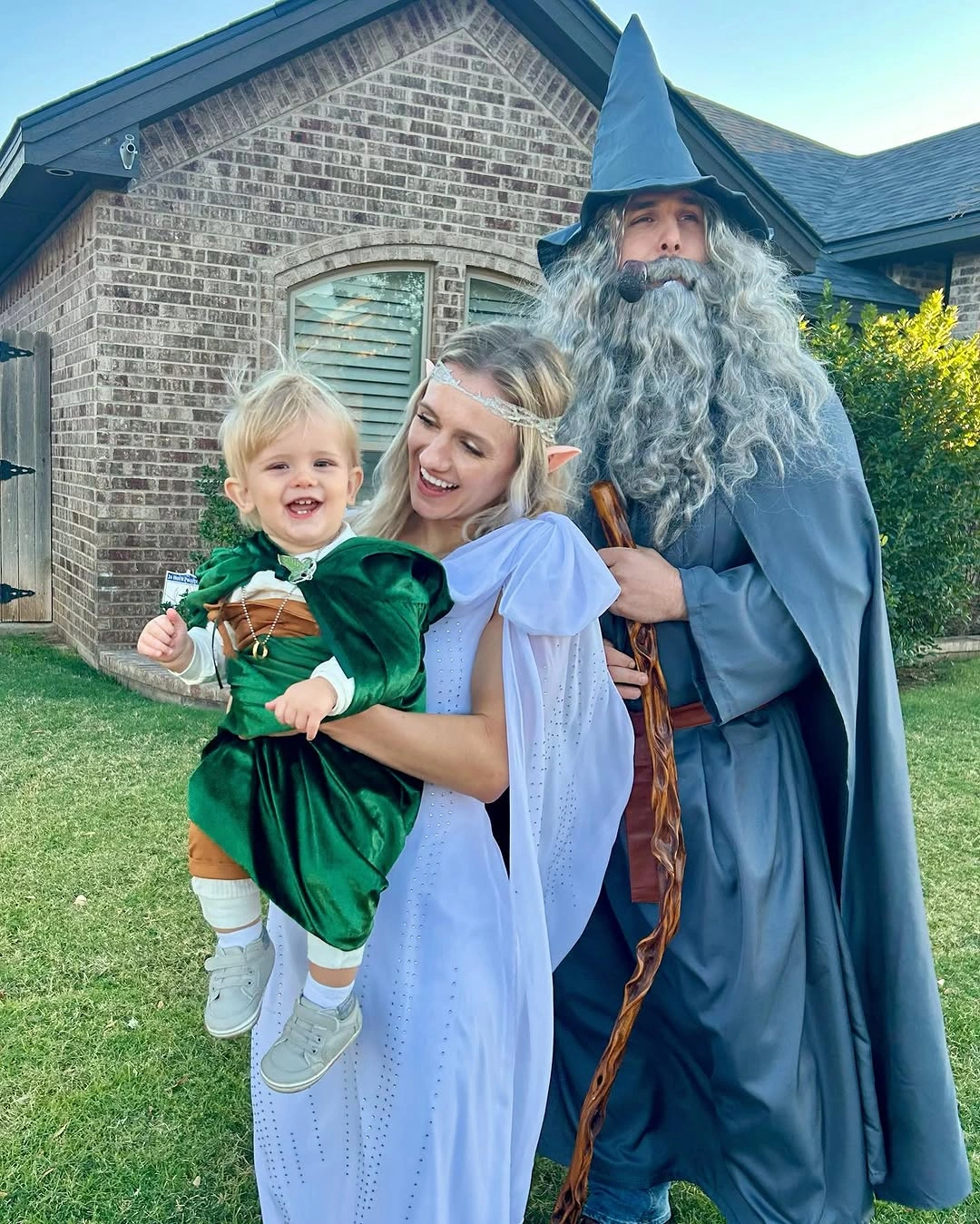
Green is effective here because it is not diluted across every person. Against blue and pale blue, the saturated child look becomes a small visual counterweight, keeping the adults from swallowing the group through height and volume. The related cool colors still create continuity, so the bright accent feels chosen rather than accidental.
Try a long blue cardigan, robe-like layer, or cape over a plain adult base, then use a pale dress and a green child hoodie or hat. Shorten any floor-skimming hem and keep props light enough to carry safely; the costume keeps its theatrical character when the proportion is suggested, even after the impractical length has been removed.
Formal Black Looks Gain Definition from White
Formal black clothing gives this family group a strong backbone: one adult wears a dark suit, another carries a long black dress, and the children repeat the same value with pale details. The adults do not need matching garments because tailored edges and a shared dark base create the connection. A light collar, shirt, or accessory on a child then prevents the lower half of the group from turning into one indistinct block.
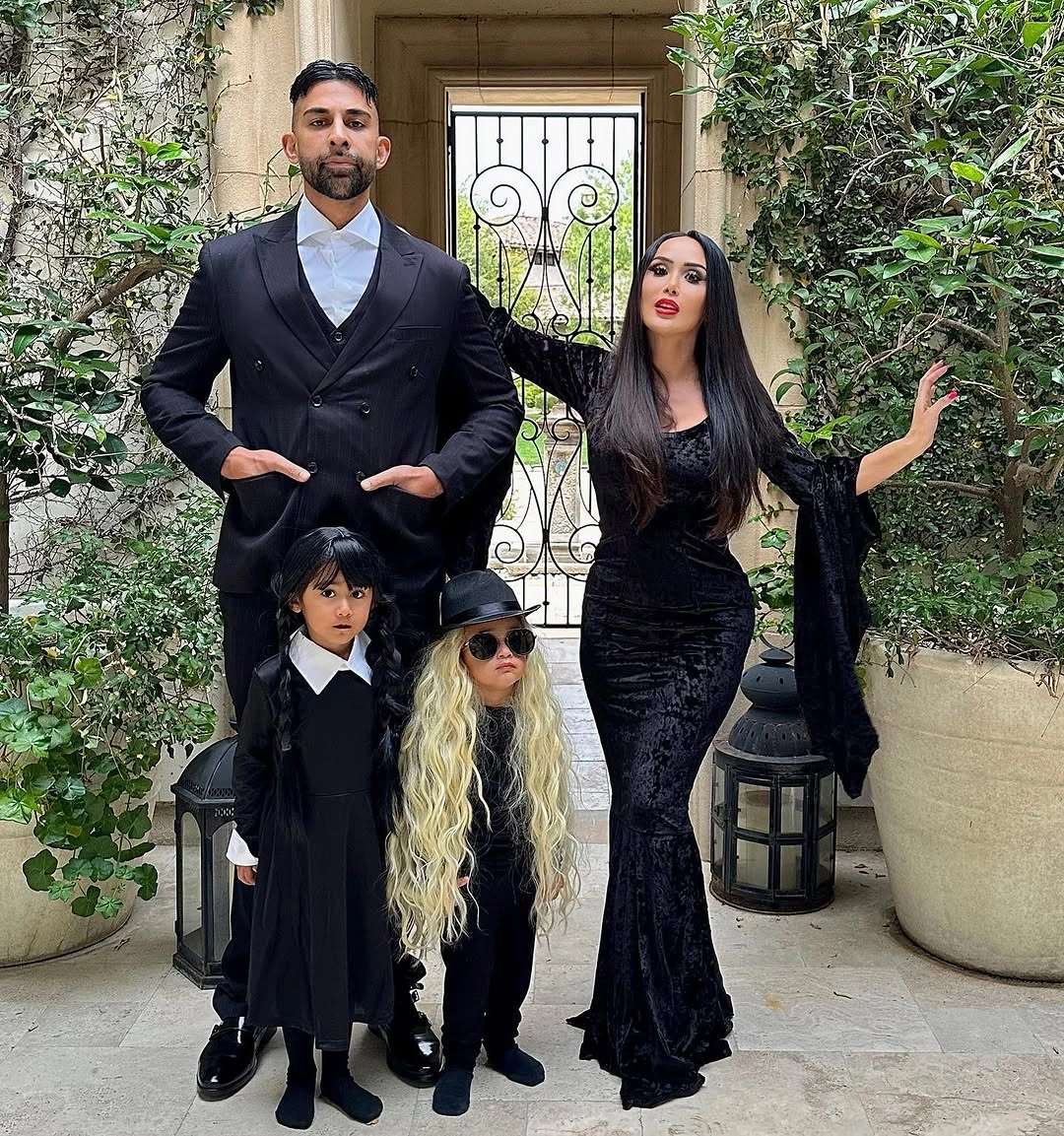
White is used as punctuation rather than a second full palette. That restrained contrast gives small details enough strength to show against the black clothing, while the long adult lines make the group feel composed. In low light, the same idea becomes even more practical: pale edges help faces, collars, and hands remain visually separate from dark fabric.
Use black basics as the foundation and reserve white for shirts, socks, collars, or a small hair accessory on the children. The arrangement is easy to assemble across different sizes, but a very fitted or stiff version may limit play, so softer black layers can deliver the same formal impression with better movement and comfort.
Oversized Pumpkin Shapes Carry the Whole Concept
Simple black clothing becomes a complete group costume when oversized orange pumpkin-face shapes take over the upper silhouettes. The adults and smaller figure repeat the same idea at different scales, which means the family can coordinate without matching shirts, trousers, or shoes. The contrast is immediate and uncluttered: dark bodies support the orange forms, and nothing else asks to be the main event.
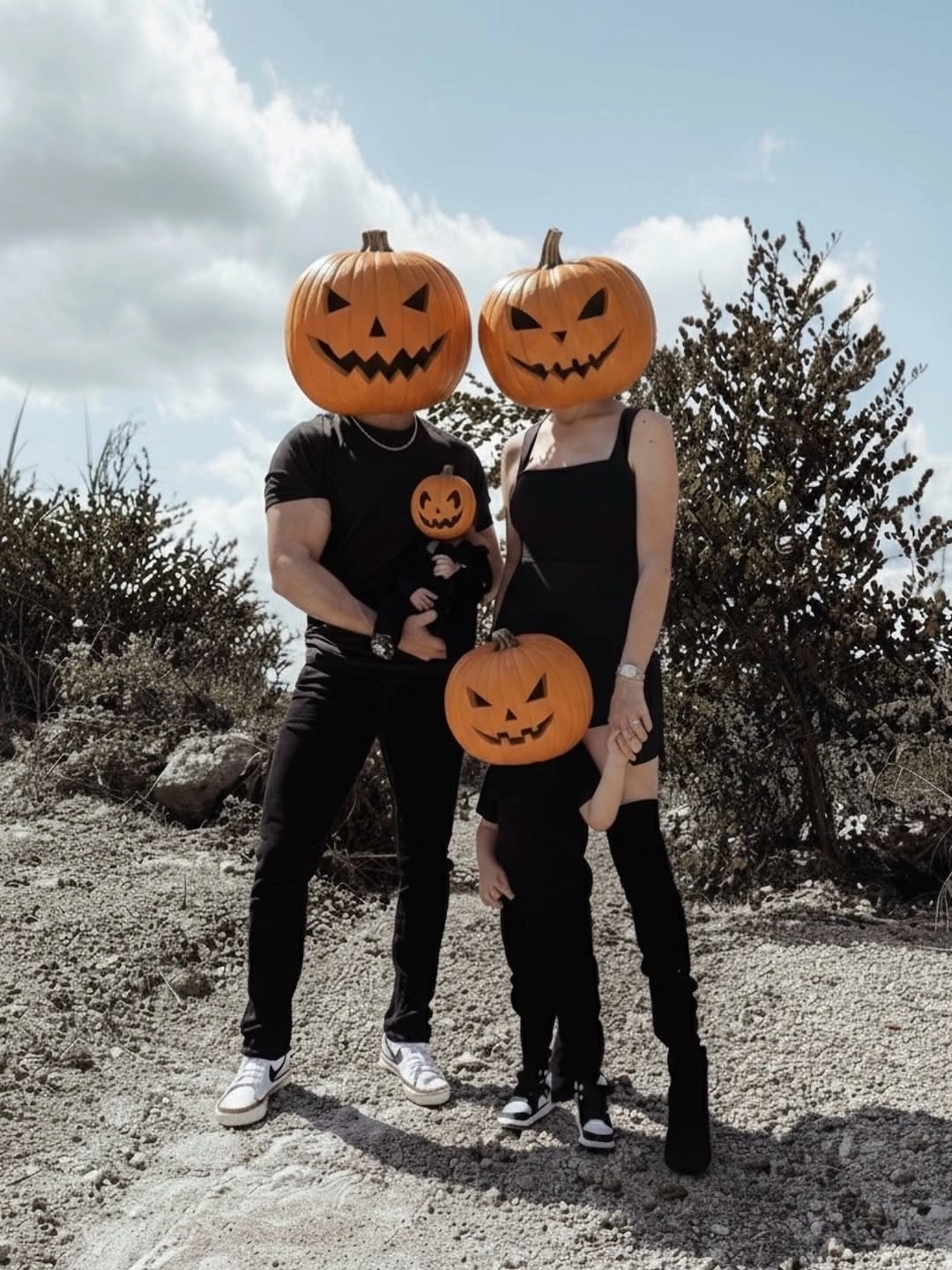
Scale is the clever part of this arrangement. A large rounded shape gives the adults presence, while a smaller version lets a child participate without needing a complex full-body costume. Because the base is almost monochrome, the orange remains visible across the group and can be recognized from a distance, even when the clothing itself is intentionally plain.
Start with black tops and bottoms, then repeat orange in a hat, hood, bib, or lightweight face-covering accessory sized to each person. Keep sightlines and heat in mind before choosing a large headpiece; a smaller orange shoulder detail or cap can preserve the same contrast when full coverage would make walking, supervising, or sitting difficult.
A Tiered White Dress Balances Black Tailoring
Black tailoring and a tiered white dress create a graphic two-person contrast, with the dark suit acting as the stable side of the composition and the light dress supplying movement. The visible layers or ruffles give the white silhouette depth without relying on a loud print, while dark shoes and surrounding accents keep the look from floating against the room. The result feels theatrical because the shapes are clear, not because every detail is extravagant.
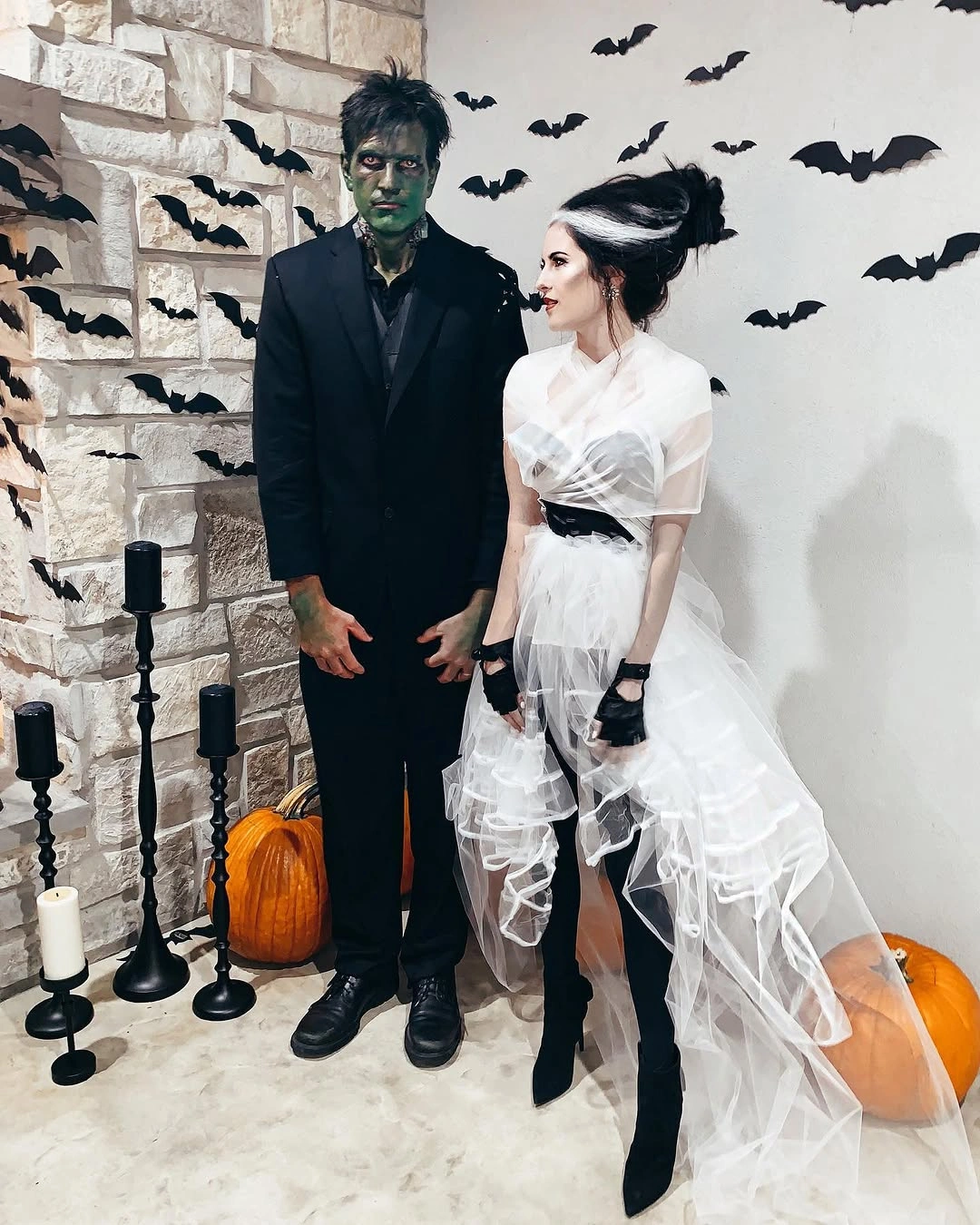
Opposite values make the different construction easy to understand. The suit absorbs attention through clean edges and a dark vertical line, whereas the dress spreads outward through its tiers, so each outfit has a distinct visual job. That balance is useful for a couple or family costume built around one dramatic piece: the supporting look should steady the focal piece rather than compete with it.
Pair a black suit, blazer, or dark shirt with a white skirt or dress that has visible layers, then repeat black in shoes or a small accessory. White volume can catch on chairs and make stairs awkward, so a shorter overskirt or one ruffled layer may be a better adaptation when the costume needs to survive a busy family gathering.
Let Pumpkin Orange Travel Across Every Age
Pumpkin orange links the adults and young children in this nighttime portrait, even though the garments have different shapes and one very young child is carried. Dark details keep the warm color defined, while the repeated hue remains visible in low light. That makes this a useful Halloween costume for family with baby because the smallest participant can join through a simple base layer rather than a bulky standing costume.
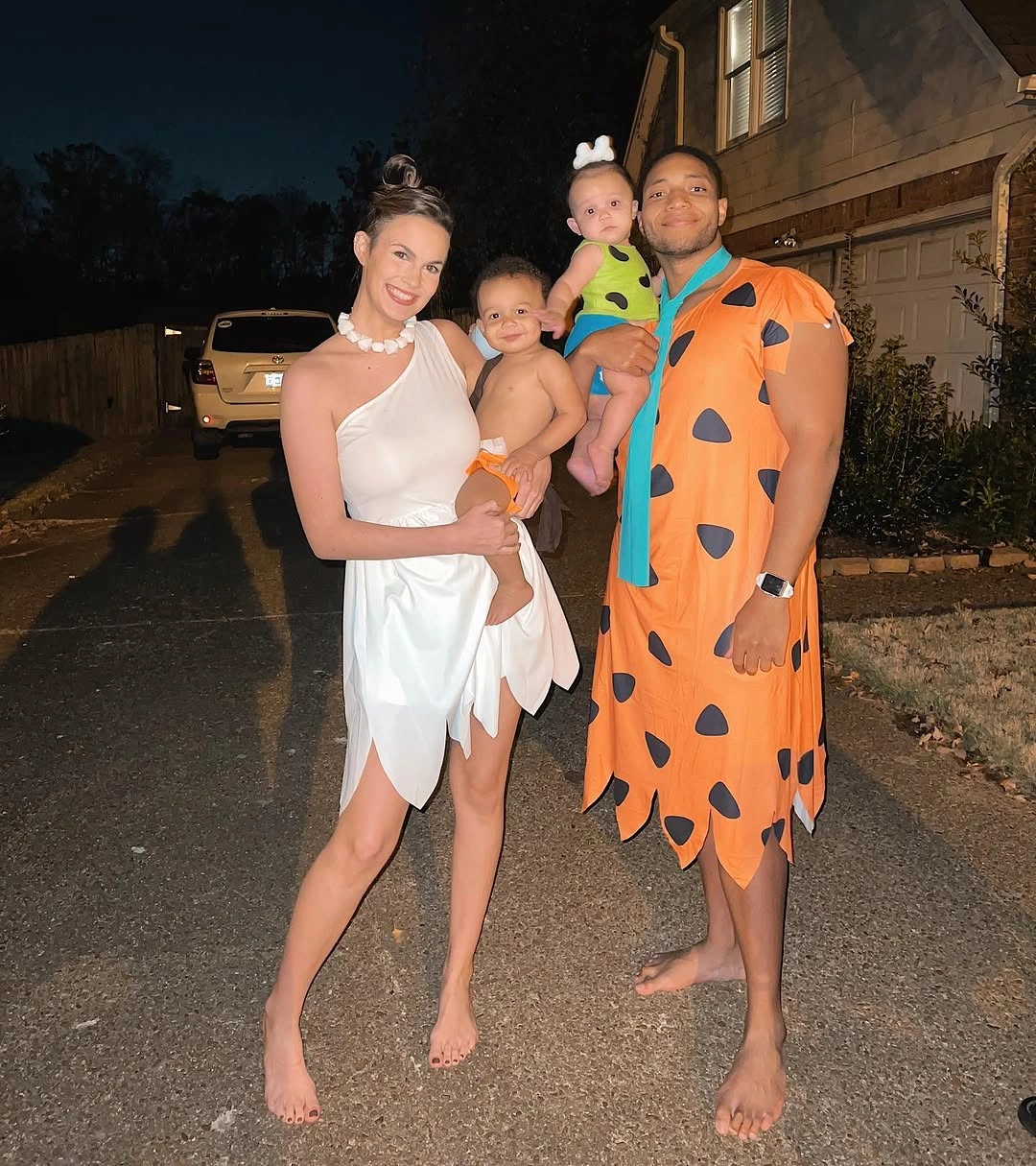
Color continuity matters more here than matching construction. An orange shirt, dress, sweater, or small blanket can perform the same connecting job, and black trim supplies enough contrast to stop the group from looking like one flat orange mass. The carried child also changes the composition: a quiet accessory is more practical than a large headpiece that could press against an adult or obstruct the baby.
Choose orange as the shared base, vary the garment by age, and use one black bow, stripe, or shoe as the secondary note. Bright orange photographs with energy, but it can feel intense if every accessory repeats it at full strength; allowing one person to wear a darker base gives the eye a place to rest while the family remains linked.
Pinstripes Bring Formal Order to Family and Dog
A navy pinstriped suit supplies precise vertical texture in this family-and-dog arrangement, while a long black dress creates a second uninterrupted adult line. The children echo the formal mood through black-and-white details, and the small dog joins at ground level in a dark accessory. Nothing needs to be identical because the shared value, tailoring, and restrained palette already carry the connection.
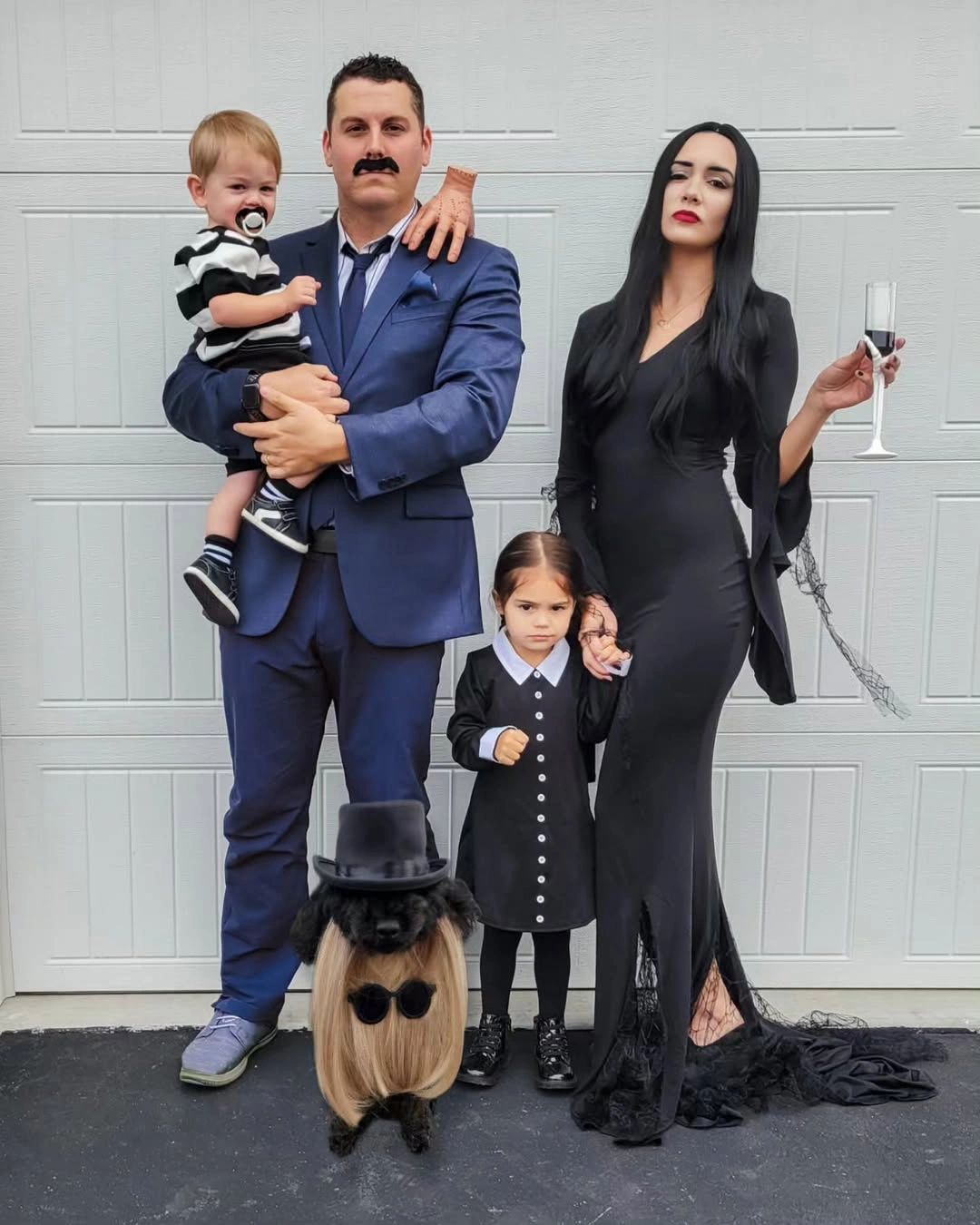
The pinstripes are the quiet detail that keeps the dark clothing from becoming visually smooth and anonymous. Pale shirts or collars on the children provide small breaks in the black, and the pet stays integrated because its accessory does not introduce a new color. This is a good example of using one precise pattern for texture while leaving the rest of the group calm.
Build the adults from a dark suit and black dress, then use white shirts or collars for the children and a low-profile dark bow or bandana for the dog. Structured clothing can be less comfortable for active children and pets, so keep the formal impression in the color and edges rather than insisting on stiff pieces or a long accessory that could catch.
Saturated Colors Give Every Child a Role
Red, blue, green, and black divide this larger group into compact, action-oriented silhouettes. One adult carries a dark fitted look, another brings a red-and-blue layer, and the children take different color roles instead of disappearing into identical copies. That approach makes a family Halloween costume feel energetic while allowing each child to choose a look that suits their own comfort and movement.
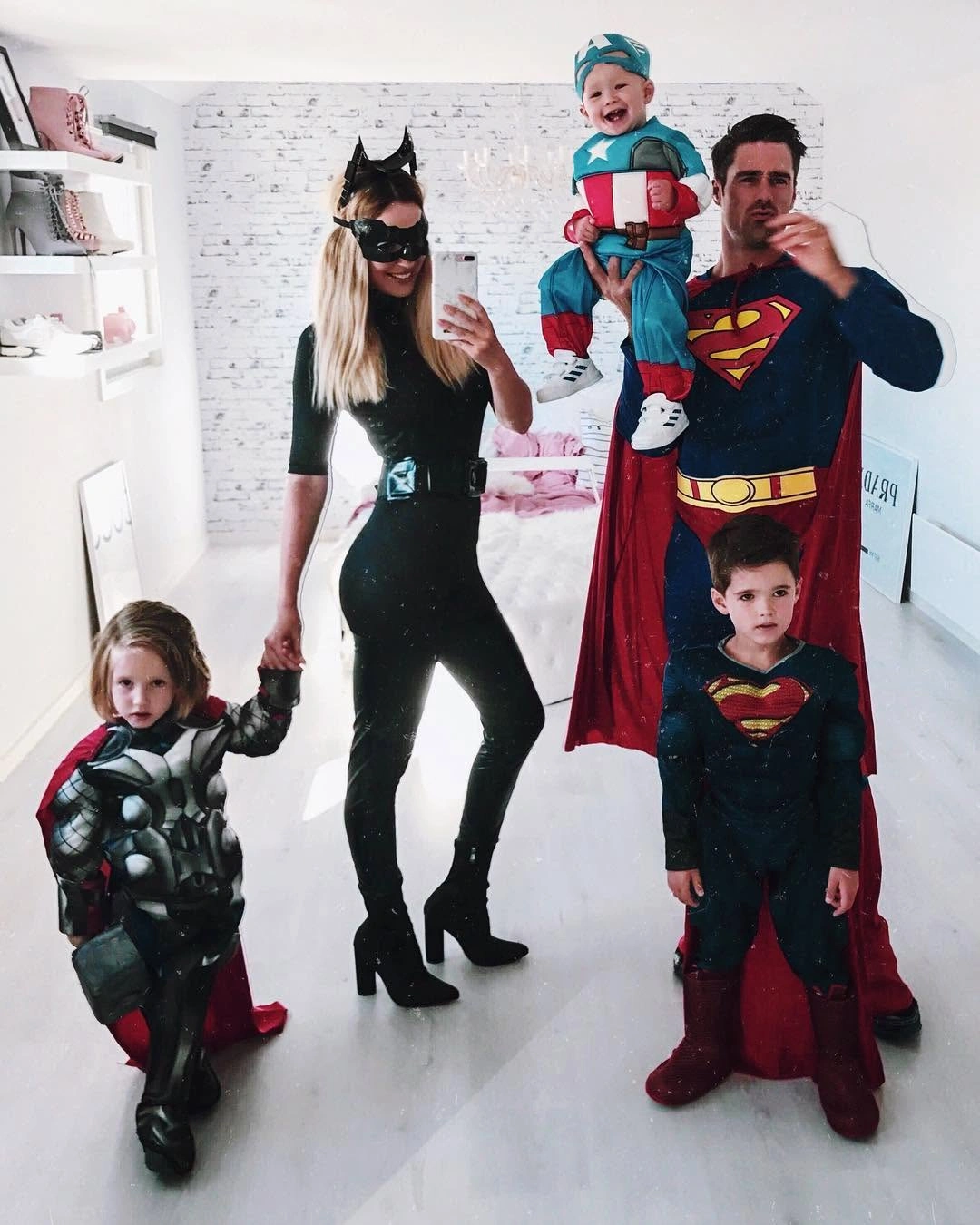
The color system works because the bright pieces are separated by dark anchors. Red and blue lead the adult grouping, green gives a child a distinct place, and black keeps the overall palette from turning into an uninterrupted field of saturation. A repeated red or blue detail would be enough to connect the different costumes without forcing every person into the same silhouette.
Let adults wear neutral or black bases, then assign one bold shade to each child and repeat one accent across the group. Long layers can look dynamic but may snag on steps or play equipment, so a short vest, sweatshirt, or secure accessory can suggest the same action-ready mood while leaving arms and legs free.
Pair One Bold Stripe with Solid Red
One adult takes visual space through a black-and-white striped suit and tall hat, while the second adult answers with a solid red dress. Two dogs bring the warm accent down to the lower edge of the group, so the family-and-dog idea has a clear hierarchy rather than several competing patterns. The arrangement feels theatrical because the stripe is concentrated in one place and the red stays clean around it.
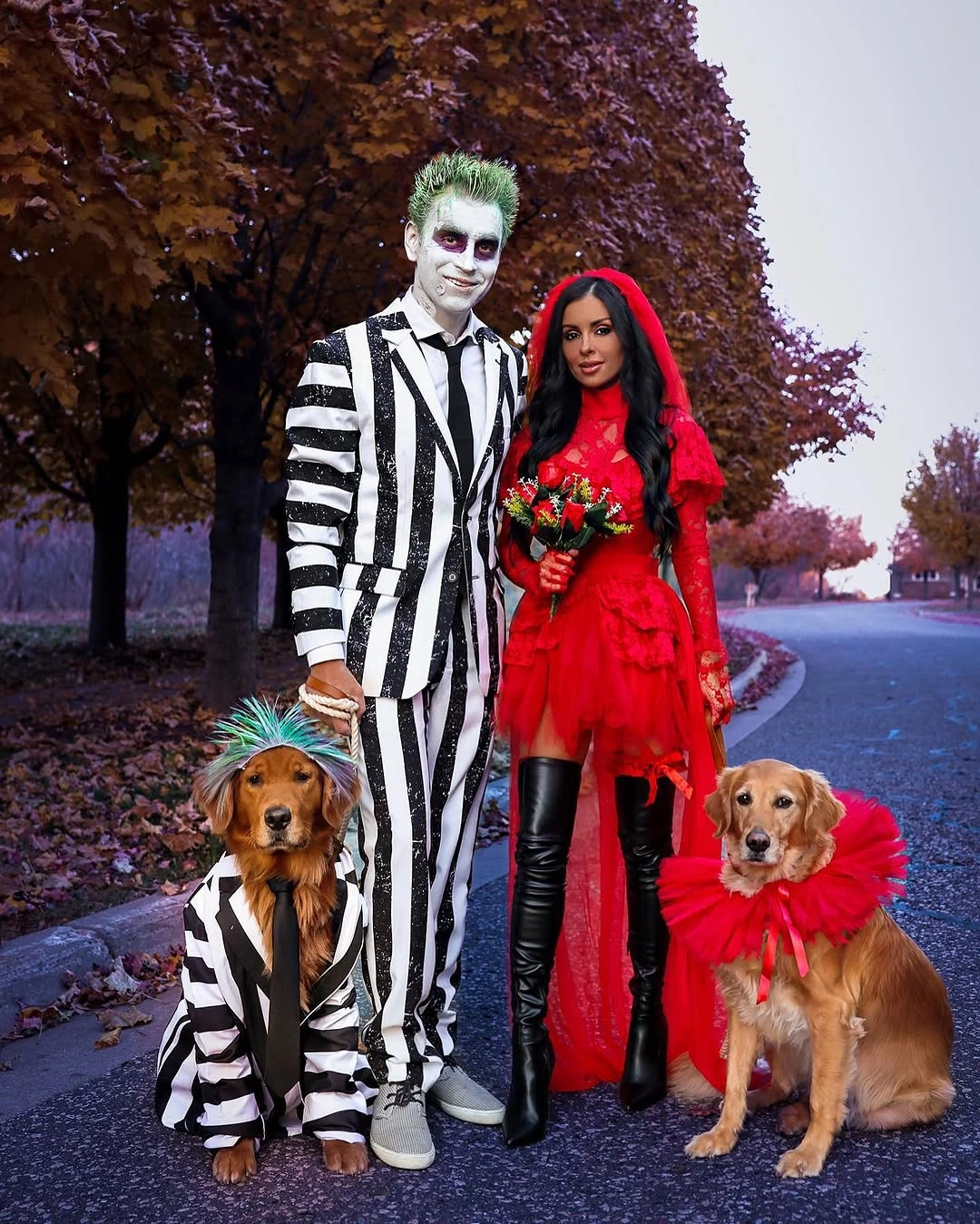
Pattern and color are performing separate jobs. The stripes create movement and graphic rhythm, the red dress provides a broad calm shape, and the dogs echo red or orange without wearing another complicated print. That division keeps the portrait readable and gives the pets a supporting role instead of making the lower half look unrelated to the adults.
A striped jacket, trousers, scarf, or hat can carry the statement, while a red dress or shirt supplies the counterweight and a simple pet bow or bandana completes the palette. Dramatic hats and pet clothing deserve a comfort check before a long outing; the visual idea remains strong when the accessories are smaller, secure, and easy to remove.
Yellow and Denim Build a Reusable Group Look
Bright yellow immediately leads this indoor group, while blue-gray denim-like bib layers repeat the same garment idea across different ages. Gray and black accessories soften the saturated color, and the repeated bib shape gives the adults and children a common structure without demanding matching proportions. It is a cheerful group costume that can be assembled from pieces with a life beyond one holiday.
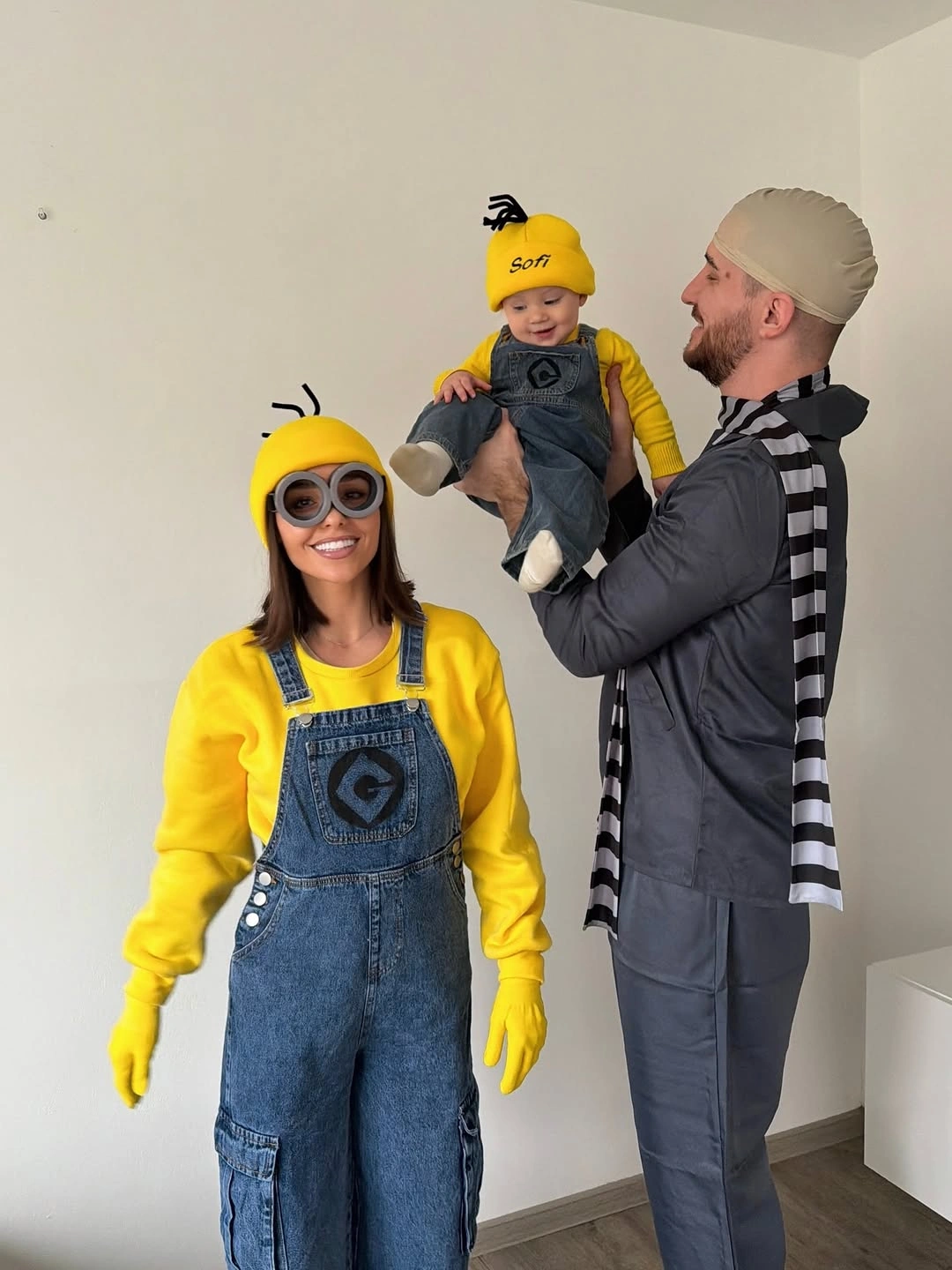
The strength comes from combining a vivid color with a familiar layer type. Yellow supplies the playful signal, bib or overall-like shapes create continuity, and gray keeps the palette from becoming too loud. Because the layer is repeated rather than the entire outfit, each child can wear a different base shirt and still look connected to the adults.
Choose yellow for some tops, gray for others, and add a denim or blue-gray bib layer wherever it is comfortable. Bib pieces can feel warm over thick clothes and may complicate quick bathroom breaks, so an open vest or a short front panel can preserve the recognizable shape while making the costume easier for children to manage.
Matching White Tops Leave Room for Gray
Two white chef-style adult tops establish this simple kitchen-supported idea, and the small child adds a gray base with a rounded-ear detail. The adults match through color and overall shape, while the child stays distinct instead of being placed inside a miniature uniform. A pot and kitchen surface reinforce the setting, but the clothing itself is enough to make the costume understandable.
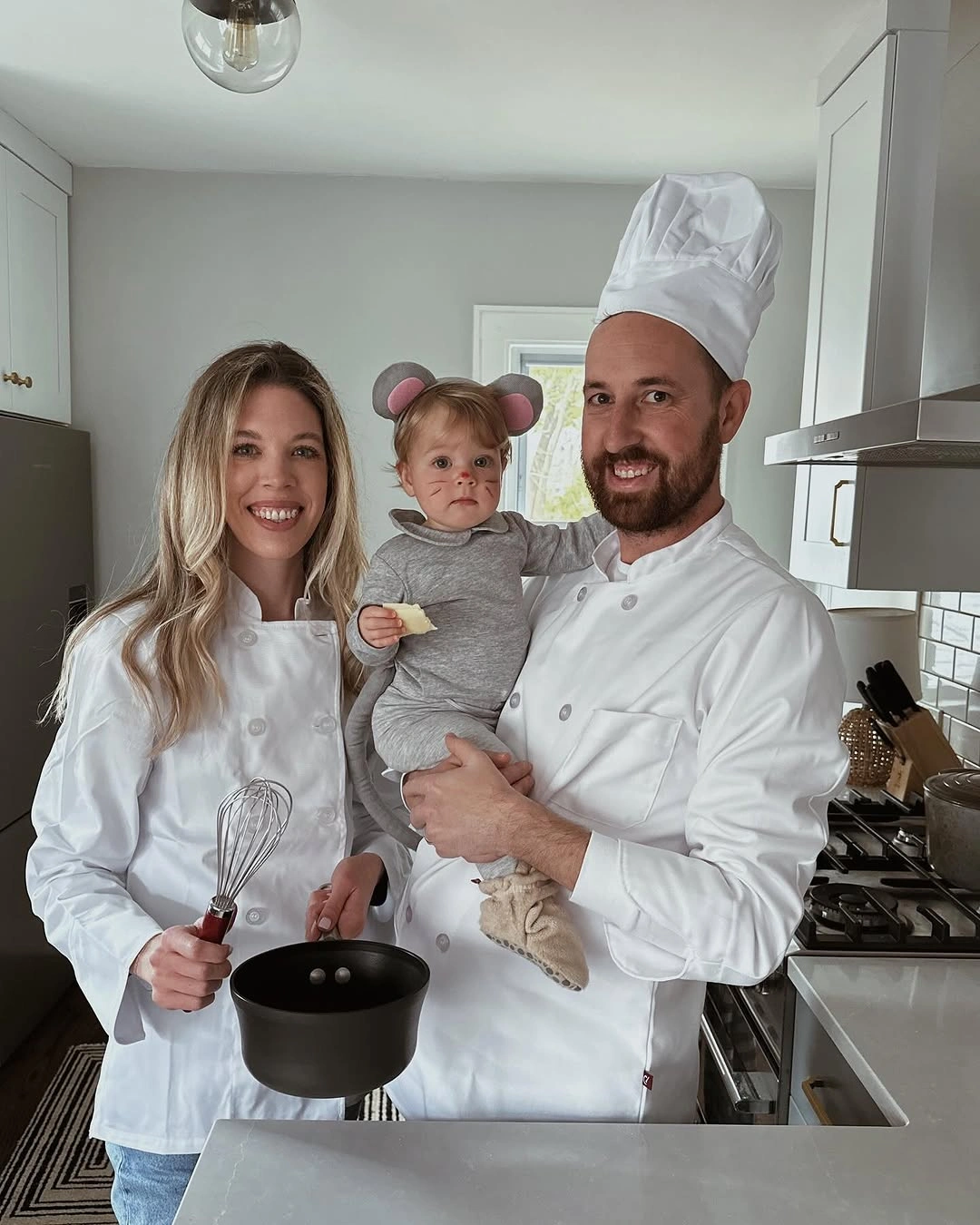
Gray is a useful counterweight to the white block. It gives the child a darker, softer visual center and keeps the adults from blending into the pale room, while the repeated adult tops do most of the thematic work. This kind of restraint is especially helpful for a Halloween costume for family with baby because the smallest look can stay light, simple, and easy to hold.
Use white shirts, aprons, or lightweight coats for the adults and a gray onesie, sweater, or hat for the child. Skip loose utensils, cords, and oversized props near a baby, and remember that white clothing shows spills quickly; the costume stays practical when the clean palette is supported by washable, uncomplicated layers.
Diamonds and Stripes Share a Red Boundary
A red-and-black diamond pattern gives one adult an oversized theatrical silhouette, while stripes appear in smaller child layers and dark clothing fills the spaces between them. Red repeats across the group, making the different patterns feel related rather than random. The children do not need the same coat or hat; a striped sock, top, or leg layer can echo the adult’s graphic rhythm at a more manageable scale.
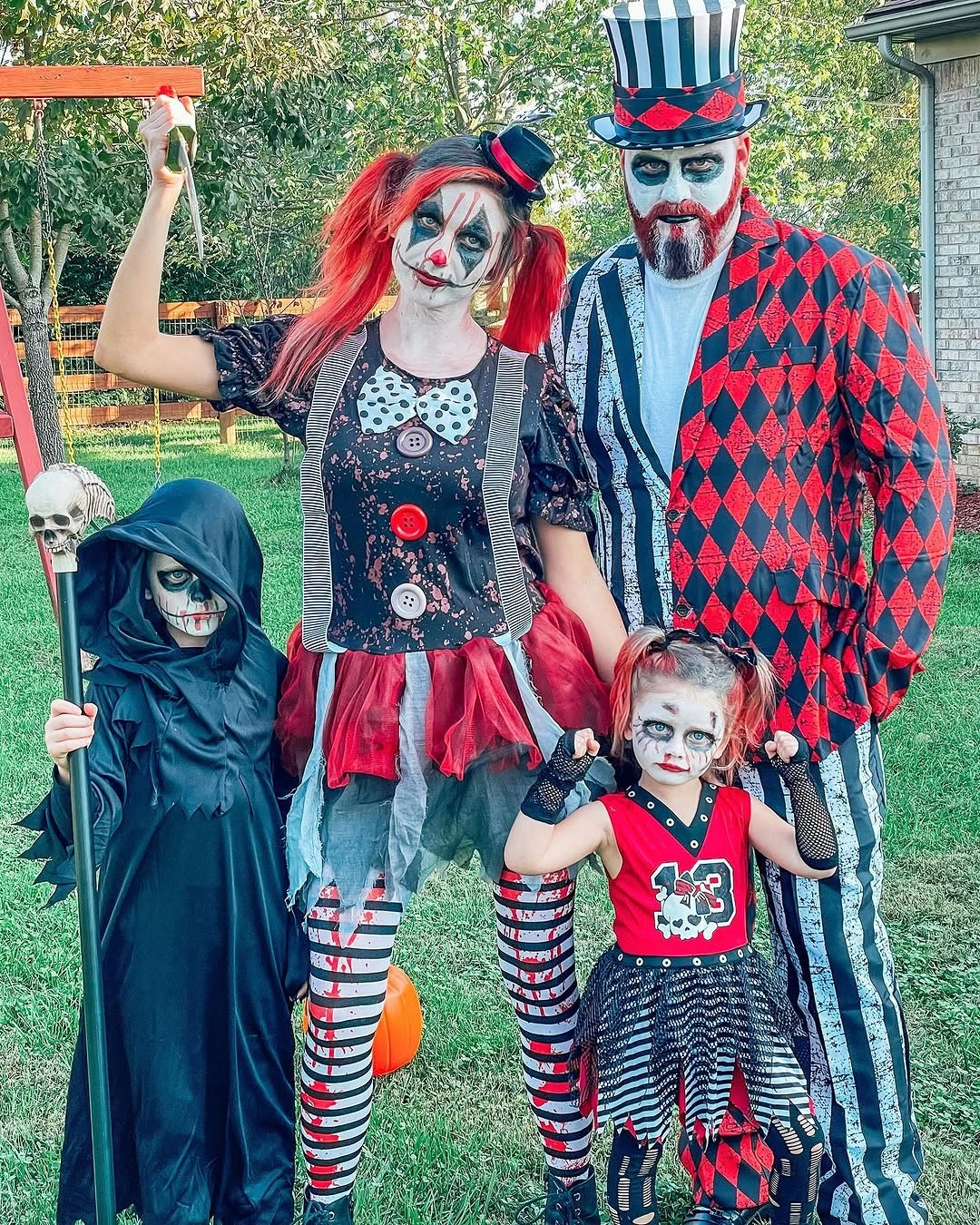
Color is the rule that makes this pattern mix hold together. Diamonds bring scale, stripes bring direction, and black-and-white details give the eye a pause between red accents. If every person added a new bright shade or a separate statement hat, the pattern conversation would become noisy, so limiting the palette protects the theatrical effect.
Keep the group within red, black, and white, then place the largest print on one adult and a simpler stripe on a child. A tall hat can suggest the same drama with less fabric than a long coat, but it should stay secure and clear of doorways; the memorable part is the proportion and color boundary, not the maximum possible volume.
Aqua Leads While Smaller Colors Echo It
Aqua or turquoise creates the longest color line in this bright indoor trio, with white and a purple-yellow waist detail shaping the second adult. The child contributes a compact red-and-blue look, so the palette feels lively without asking every person to carry the same amount of color. One saturated anchor is enough to organize the group when the supporting outfits keep their colors in defined zones.
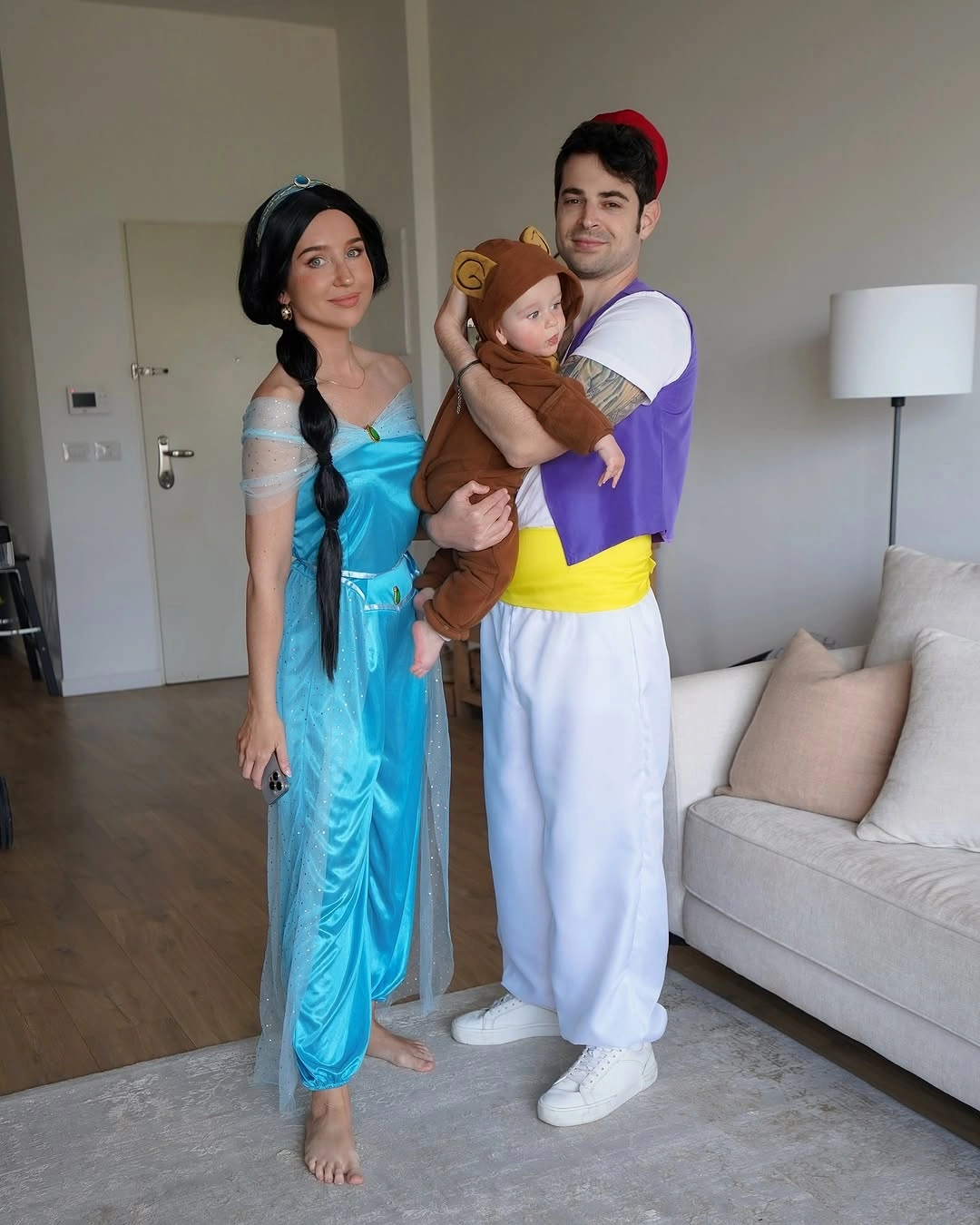
The balance comes from placement rather than simple warm-versus-cool contrast. Aqua occupies a large vertical area, purple and yellow concentrate near the center of the white look, and red-blue stays small because the child is held. Those proportions give the eye a route through the group; the brightest colors are not scattered evenly, so the portrait keeps a clear focal order.
Choose one aqua or pink statement piece, add a neutral white base for another adult, and repeat only two accent colors in a sash, belt, shirt, or child accessory. Long or fitted fantasy-like shapes may restrict sitting and walking, so a shorter skirt, cardigan, or color-blocked top can carry the same idea while letting the family move naturally.
White Drape Gives Orange Pattern Room
A plain white draped adult look and a short orange piece with dark repeated shapes create the clearest contrast in this nighttime family portrait. The small children are carried between the adults, which makes the quiet white-and-orange division especially useful: the pattern has a strong anchor, while the people holding the children do not need to add more visual noise. The group feels coordinated through value and color rather than identical construction.
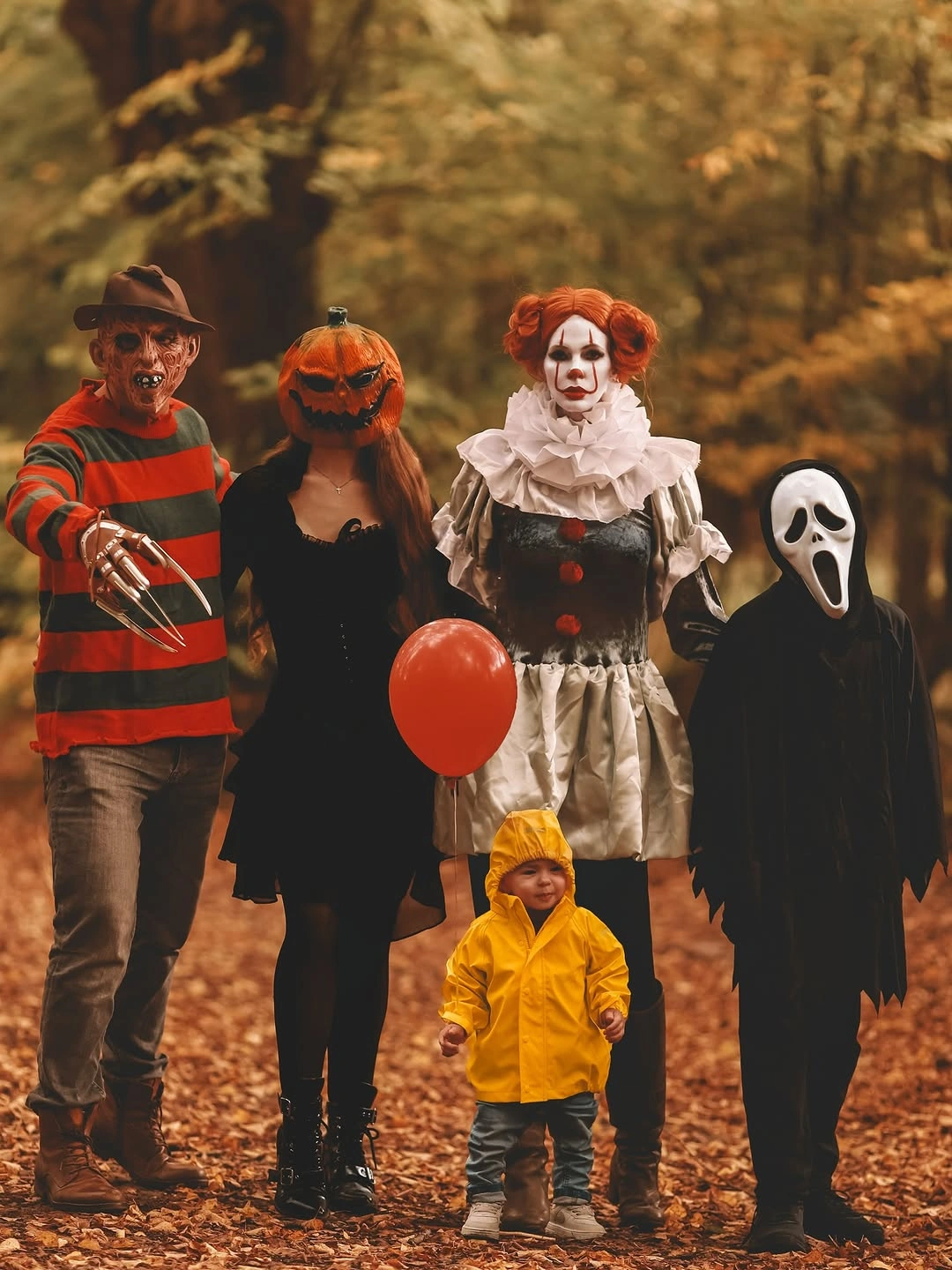
Orange works because it has a calm neighbor. White reflects attention back toward the printed adult piece, and the dark shapes inside the orange keep the surface from looking too flat in evening light. A carried baby or toddler can participate through a small warm-color layer, but the adult’s arms and the child’s face should remain unobstructed.
Pair a plain white shirt, skirt, or dress with one orange printed garment, then repeat orange or black in a small child detail. White fabric benefits from a realistic care plan when food and carrying are involved, while the orange statement does not need a second print; the strongest adaptation preserves the breathing space that makes the contrast legible.
Navy Pinstripes Keep a Dark Group Distinct
Pinstripes give the navy suit a fine vertical texture in this formal dark group, and the long black dress mirrors its adult seriousness without duplicating the pattern. The children repeat black with pale details, while a small dark dog sits within the same value range. The result feels composed because the clothing shares an edge-conscious, tailored direction even though every body needs a different cut.
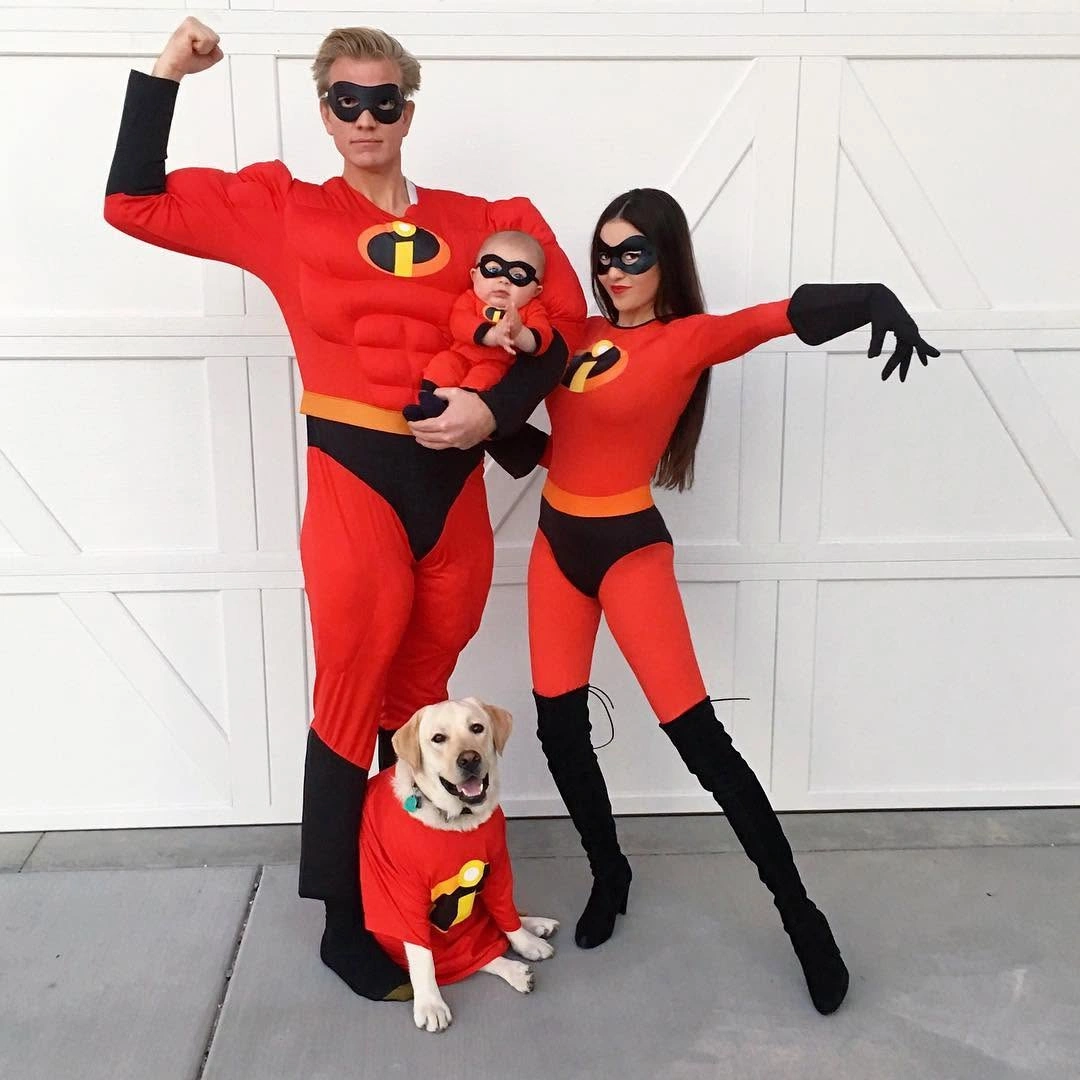
A lighter wall behind the group makes the dark clothing easier to separate, but the useful lesson stays in the clothing. Pale collars, shirts, or small accessories create interruptions that preserve faces and child silhouettes, while pinstripes add enough detail to keep the navy suit from becoming a single solid block. The pet fits naturally because it repeats the dark base instead of introducing an unrelated color.
Use a navy or black adult foundation, add white details to the children, and keep a pet accessory close to the body. The formal palette is easy to coordinate, yet it can feel less playful and less comfortable than soft layers; borrow the stripes, dark values, and clean edges without insisting on stiff tailoring for everyone.
Red Tops Draw a Clean Family Outline
Red upper layers and black bases give this family-and-dog group a simple graphic outline. One adult leads in a bright red top, the other uses a fitted black look, the children repeat the two-color contrast, and the dog joins through a small red accessory. Because the palette is narrow, the family can vary the garment types and still look connected in a quick front-door portrait.
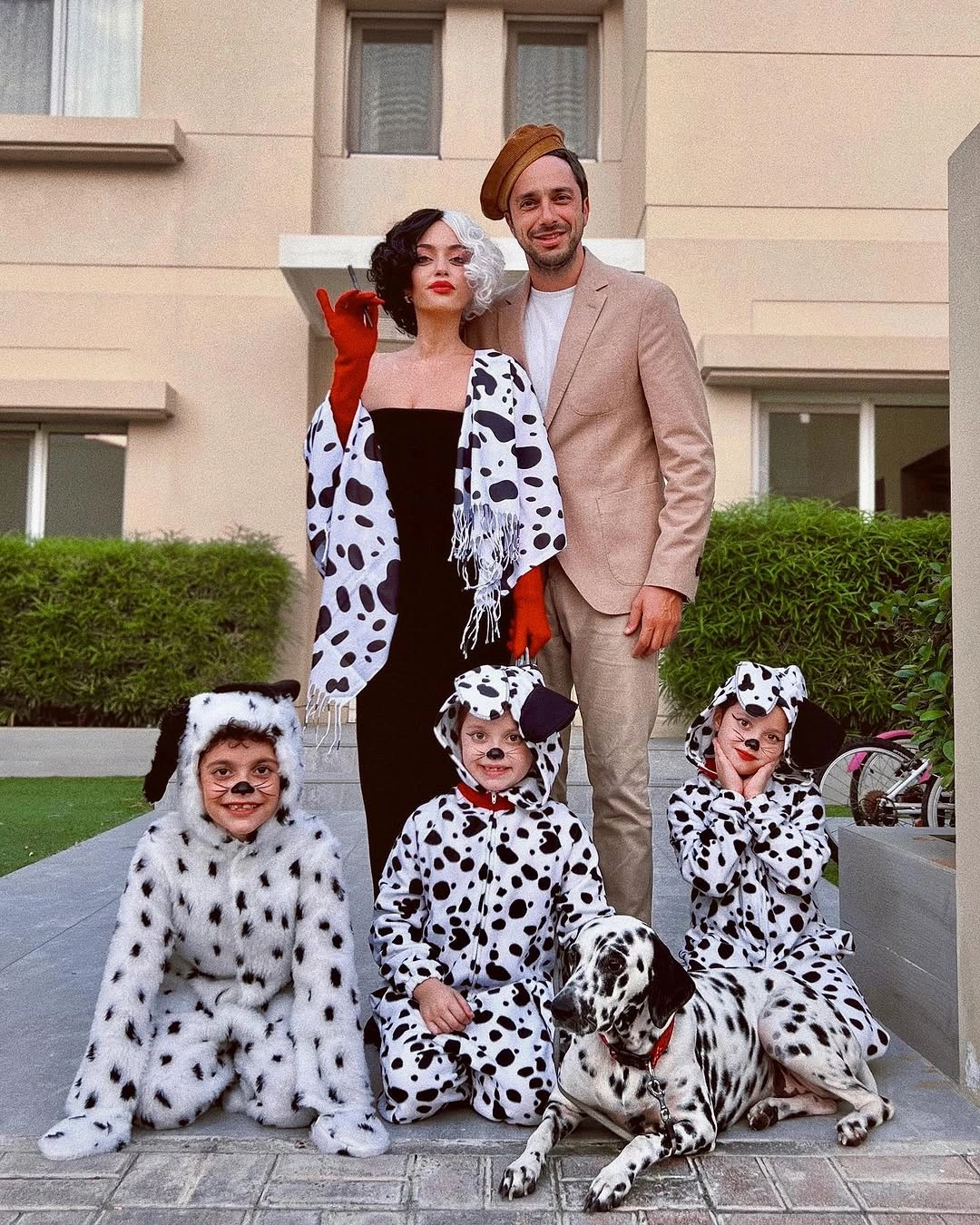
Red brings energy while black supplies the edge. That separation is more important than the exact costume shape because it makes each person visible against a pale background and keeps the dog’s small accent from disappearing at ground level. A shared top color also scales well when the available sizes or preferred silhouettes differ from one family member to another.
Choose red for shirts, sweaters, or a short upper layer, then use black for the base and one red bandana or cape-like accessory for the dog. Check fitted pieces for comfortable movement and make sure any pet detail is secure and easy to remove; the cleanest version is the one that keeps the two-color outline without adding unnecessary gear.
Simple White Layers Make the Theme Clear
Matching white adult tops repeat the same quiet structure in this kitchen portrait, while a gray child look and rounded-ear detail add a smaller contrast. The arrangement is intentionally spare: two adults share the light base, one adult holds the child, and the room supplies context without requiring a pile of props. That makes the idea approachable for families who want coordination more than costume complexity.
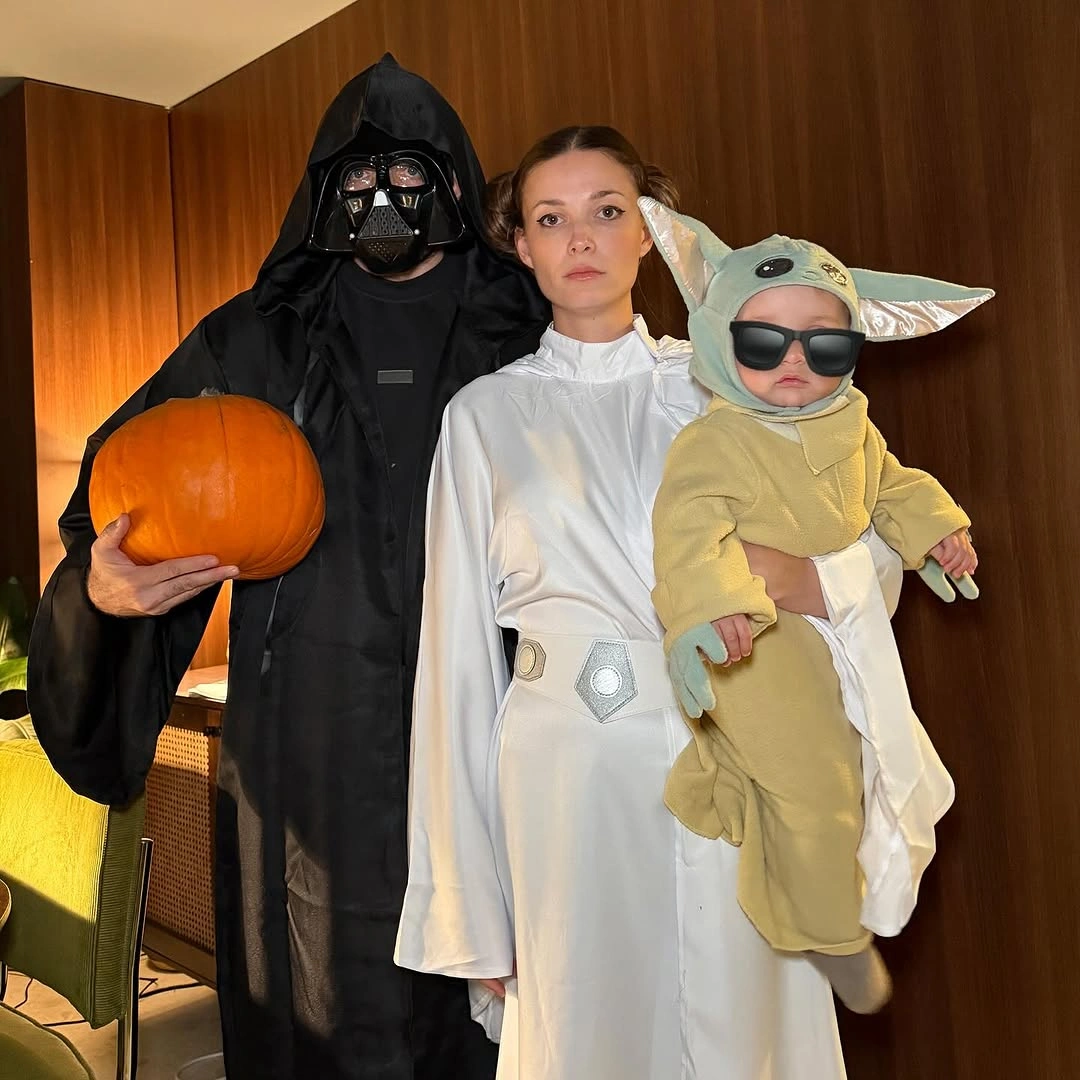
The white repetition works because the child is allowed to be different in value. Gray creates a compact center between the adults, and the small head detail gives the child a point of character without covering the face or adding a bulky suit. When the group is photographed indoors, a restrained palette also keeps ordinary furniture from competing with the people.
Use plain white shirts, aprons, or overshirts for adults and a gray outfit with one soft detail for the child. Avoid turning kitchen tools into loose accessories, and choose washable layers if the costume will be worn near food; the theme remains clear when the practical clothing does most of the work.
Pink and White Create a Bright Focal Point
A pink-and-white dress leads this outdoor trio through its short bright silhouette and vivid socks, while one adult stays in dark blue and the child contributes red and blue. Each color has a defined zone, so the group feels lively without collapsing into a single bright mass. The dark adult base is important because it gives the pale dress a clear boundary and keeps the smallest figure visible between them.
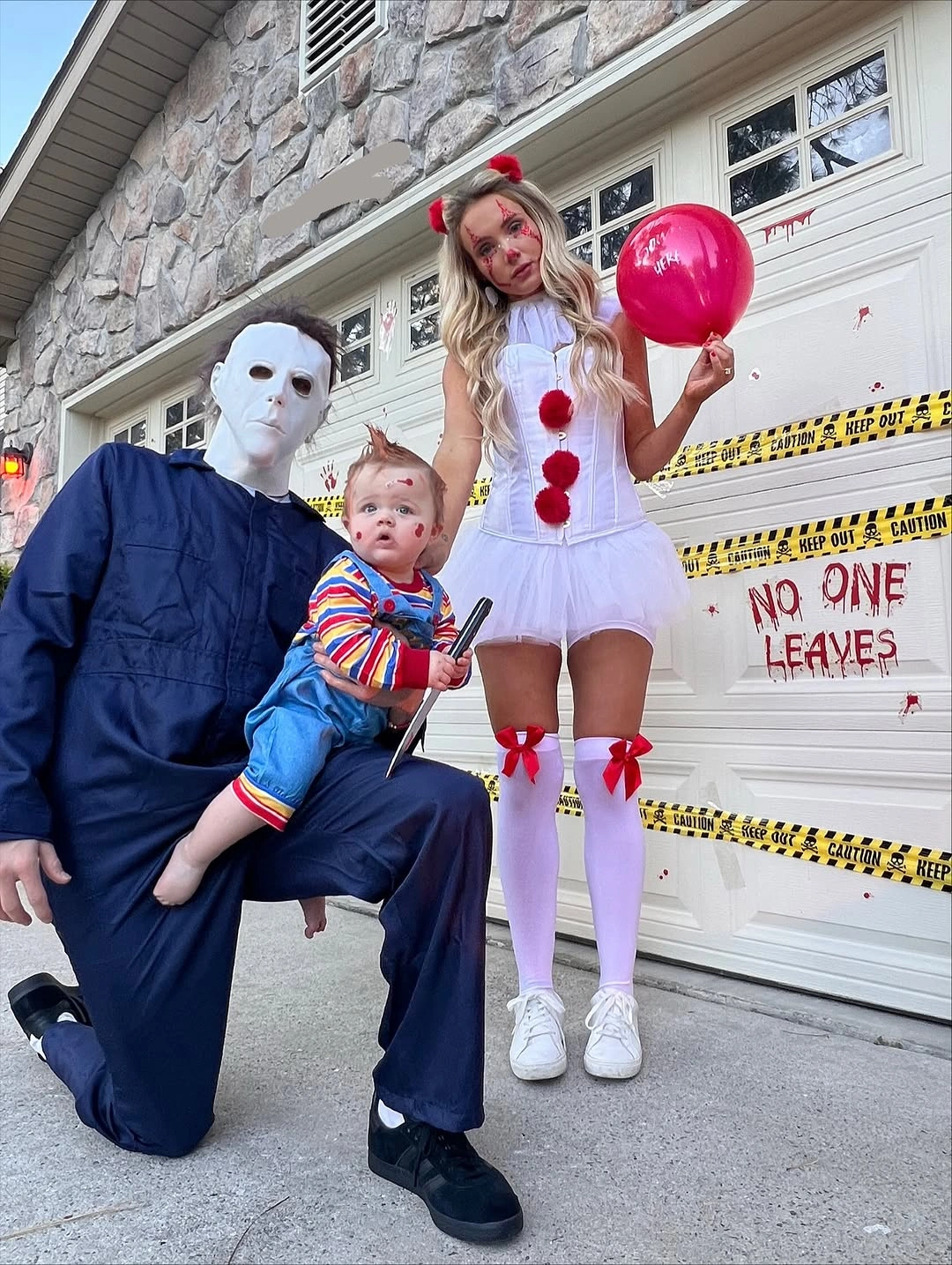
The strongest detail is not an extra prop but the relationship between the dress and the legwear. Pink repeats below the hem, creating a clean vertical line, while red and blue on the child add a smaller burst at a different height. That placement keeps the eye moving through the group and shows how an accessory can connect a costume more effectively than another full garment.
Build around one bright dress, use navy or black for the second adult, and choose a simple two-color child look. Bright socks are useful when a child’s costume needs to stay light, but they should allow normal walking and secure footing; if the full accessory feels awkward, a pink headband or small bag can preserve the same color echo.
Turquoise and Pink Carry the Fantasy Palette
Turquoise-green and bright pink establish the main conversation in this elaborate family group, with gold details concentrated around the taller adult look and vivid red, aqua, and yellow accents on the children. The adults carry the largest silhouettes, so the children do not need equally complex construction to look included. Their smaller color blocks echo the palette and let the whole group read as one theatrical plan.
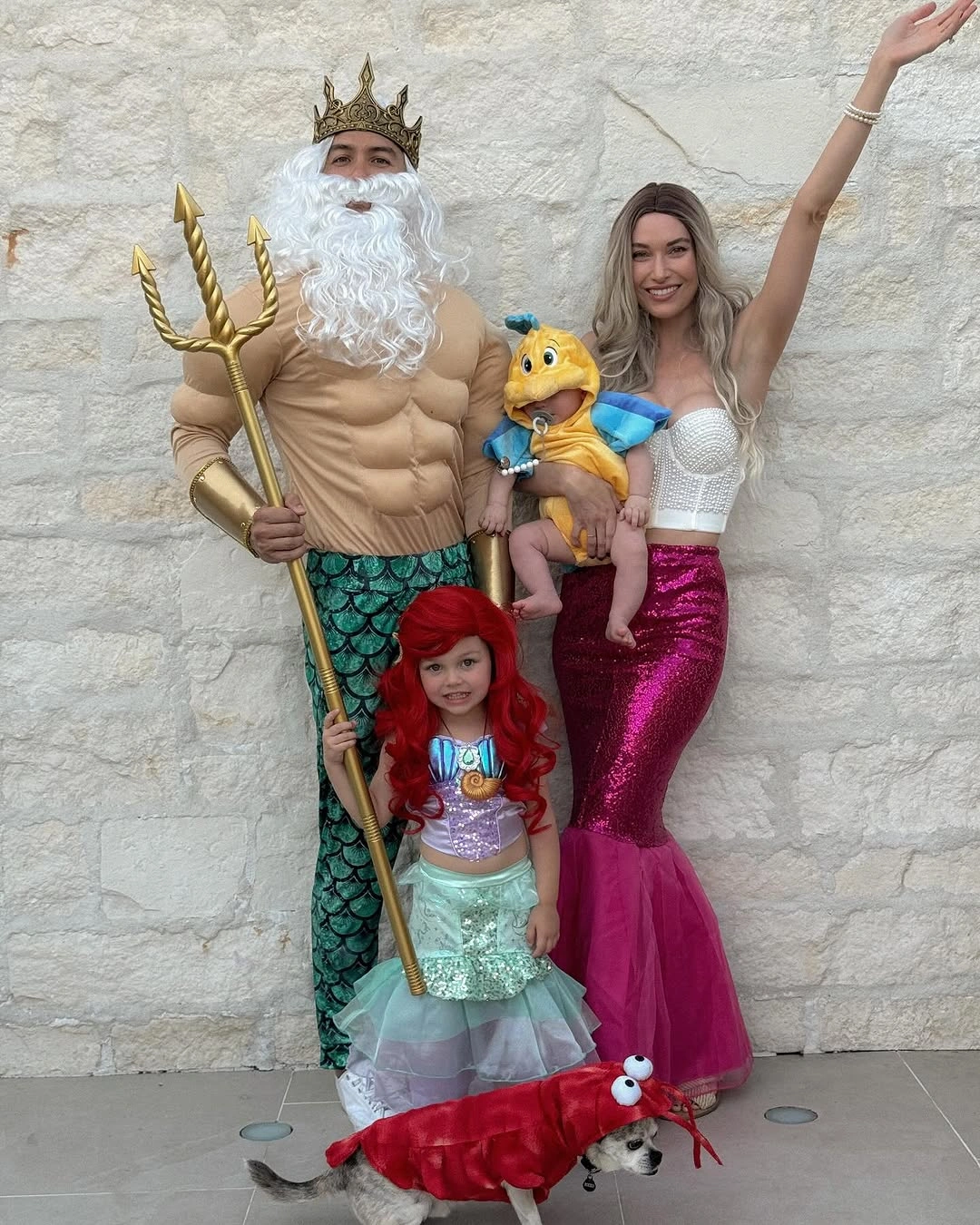
Color placement controls the drama. Turquoise provides a cool anchor, pink supplies a warm counterweight, and gold acts as punctuation rather than another full field; the red and yellow child details then repeat the energy at a lower scale. This approach is useful when one adult wants an elaborate focal look but the children need lighter, more mobile clothes.
Choose one long turquoise or pink layer, add gold at the waist or head, and let children participate through bright solid-color shirts, skirts, or accessories. Long fitted shapes can restrict sitting, steps, and play, so a short jacket, sash, or layered skirt may be the more realistic adaptation; preserve the color relationship and reduce only the parts that interfere with movement.
Neutral Hats Make Beige Feel Deliberate
Beige and tan layers give this outdoor family group a calm final palette, while matching brimmed hats provide the detail that makes the adults look intentionally coordinated. The children repeat the warm neutrals in smaller clothing rather than wearing scaled-down adult outfits, and the autumn-colored background simply increases the sense of warmth without defining the costume. This is an easy family Halloween costume built from basics and one shared shape.
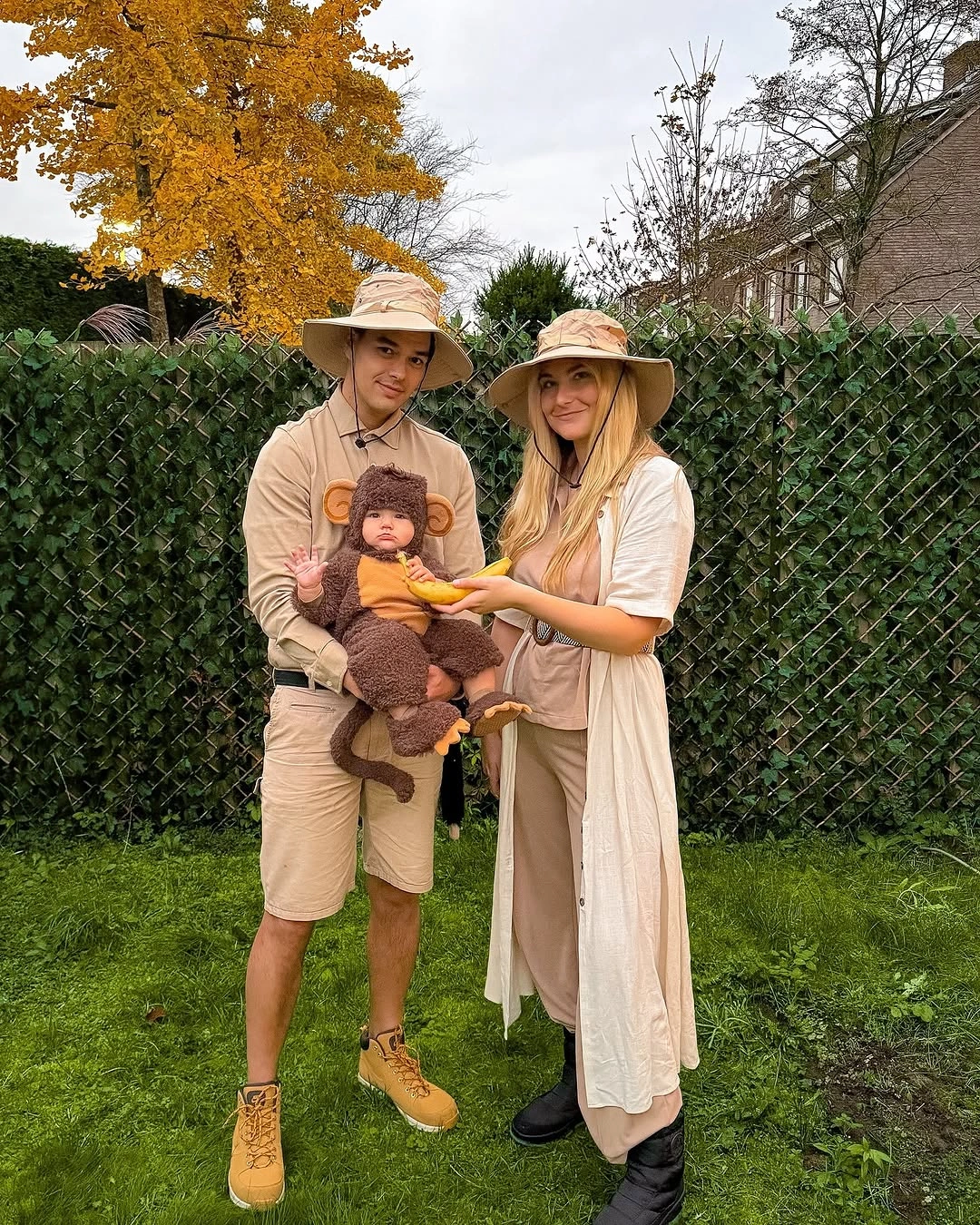
The hats matter because the clothing itself stays quiet. A shared brim creates a clear top edge, the light shirts keep the group visually open, and brown-beige child layers echo the adults without requiring exact copies. Neutral color also gives families more freedom to adjust the proportions for a baby, stroller, or active child while keeping the same overall idea.
Start with beige shirts, khaki-like bottoms, or warm brown layers, then add a hat or soft cap where it is comfortable. Pale neutrals are reusable and easy to combine, but they show grass, food, and dirt quickly outdoors; a washable darker base for children can keep the palette intact while making the costume less precious.