Fall toe nails colors work best when the shade respects the small canvas of a toe. Deep brown, forest green, taupe, plum, red, blue, and a few tiny accents can all look intentional, but not every hand manicure needs to be transferred to a pedicure. The most useful ideas here show how color, finish, and one clear focal toe can carry the whole result.
Short square or rounded toes are practical because they do not depend on dramatic length, yet the big toe still deserves the most attention. It is the place where a border, dot, gradient-like shift, or accent motif can read clearly. Use the simpler options for repeat wear and save the more decorative examples for the moments when a little extra upkeep feels worthwhile.
Glossy Taupe Across Short Square Toes
A glossy taupe-brown covers the short square toes in one calm, even color. The big toes provide the main surface, while the smaller nails repeat the shade and make the pedicure look coordinated from every angle. There is no competing art, so the warmth of the neutral and the clean shape of the toe become the entire design.
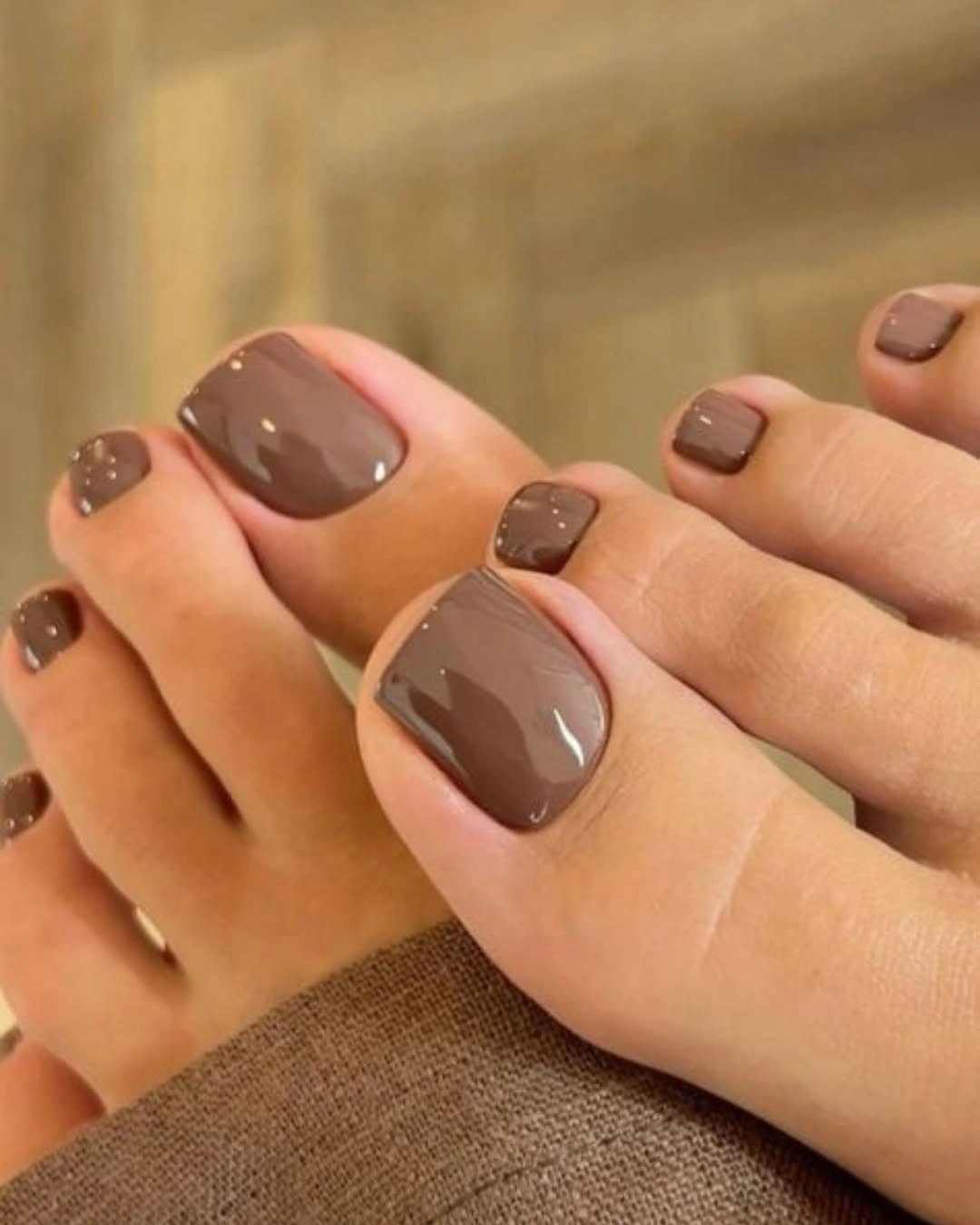
This is the easiest idea to adapt because it requires only one color and a tidy outline. Choose a slightly deeper brown for more autumn weight or a softer beige-taupe when you want the toes to blend into open shoes. The short square shape already supplies structure, so adding a pattern would not improve the basic balance.
Single-color pedicures are relatively simple to refresh, but dark neutrals show chips around the big toe quickly. The shine also makes uneven coverage visible in direct light. That is a fair trade for a low-detail look: the color stays useful across many outfits, and the main maintenance task is keeping the larger toes cleanly shaped.
Smoky Brown Blocks In A Tonal Mix
These short toes use several smoky brown, mauve, and gray-brown blocks rather than one identical shade. The colors remain close enough to feel deliberate, while the different values give the big and smaller toes a little more movement. The glossy surface keeps the muted palette from looking flat, even though the design does not rely on a motif.
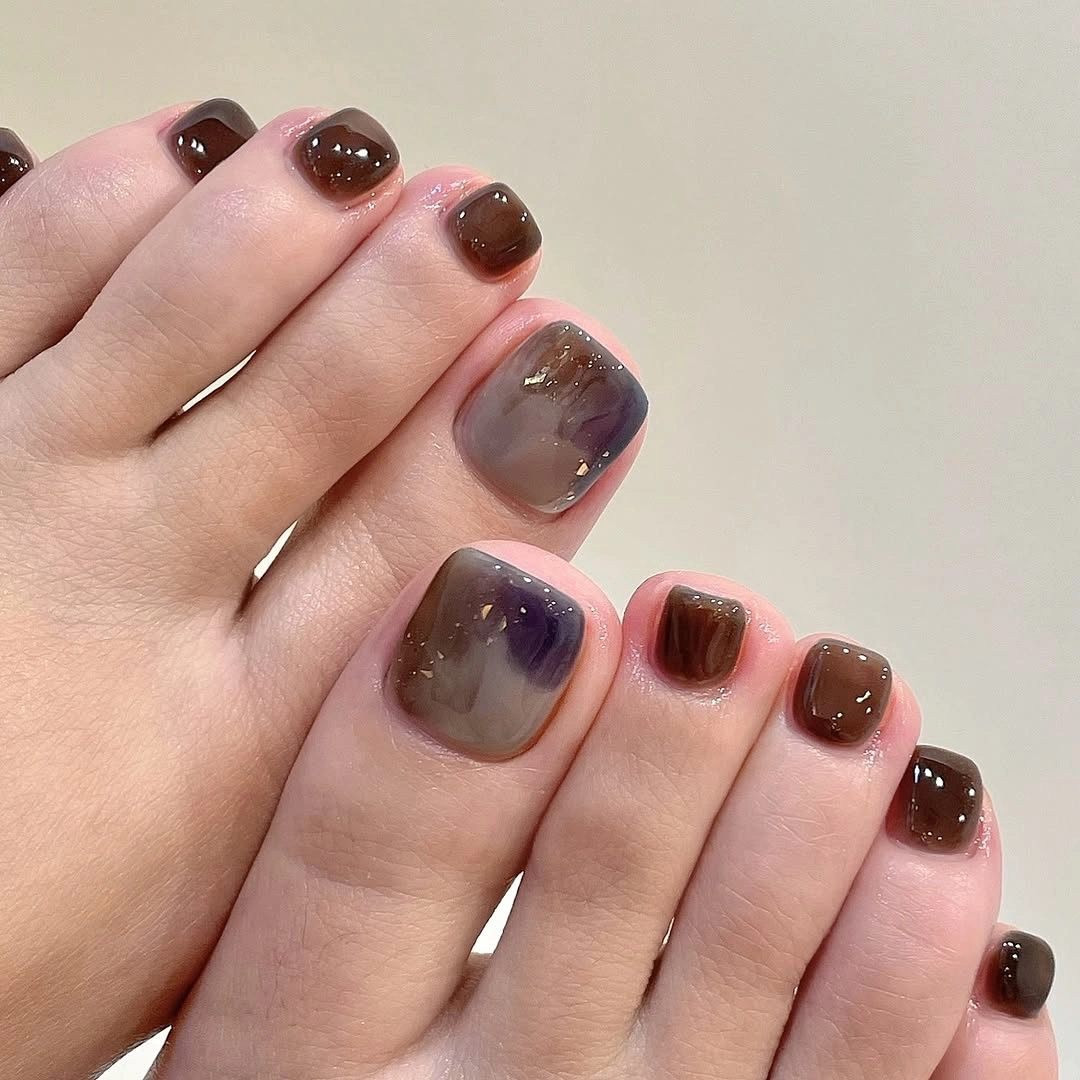
For a simpler version, keep the darkest brown on the big toes and repeat one mauve-gray shade across the smaller ones. That preserves the tonal idea while reducing the number of colors to maintain. If the toe shape is very short, larger color fields will look cleaner than several narrow divisions that could visually merge.
The mixed palette is more forgiving than detailed art because small differences in placement are not the main story. It still asks for a consistent edge, especially where the darker colors meet the skin. Choose it when one solid shade feels too plain but a patterned pedicure would be more work than you want.
Deep Forest Green Without Extra Detail
Deep forest green covers the short toes with a glossy finish, giving the pedicure a clear fall identity without any line work or decoration. The big toes carry the strongest visual weight, while the smaller nails quietly repeat the same dark color. The result feels grounded because the shade is rich, but the short shape keeps it from looking overdone.
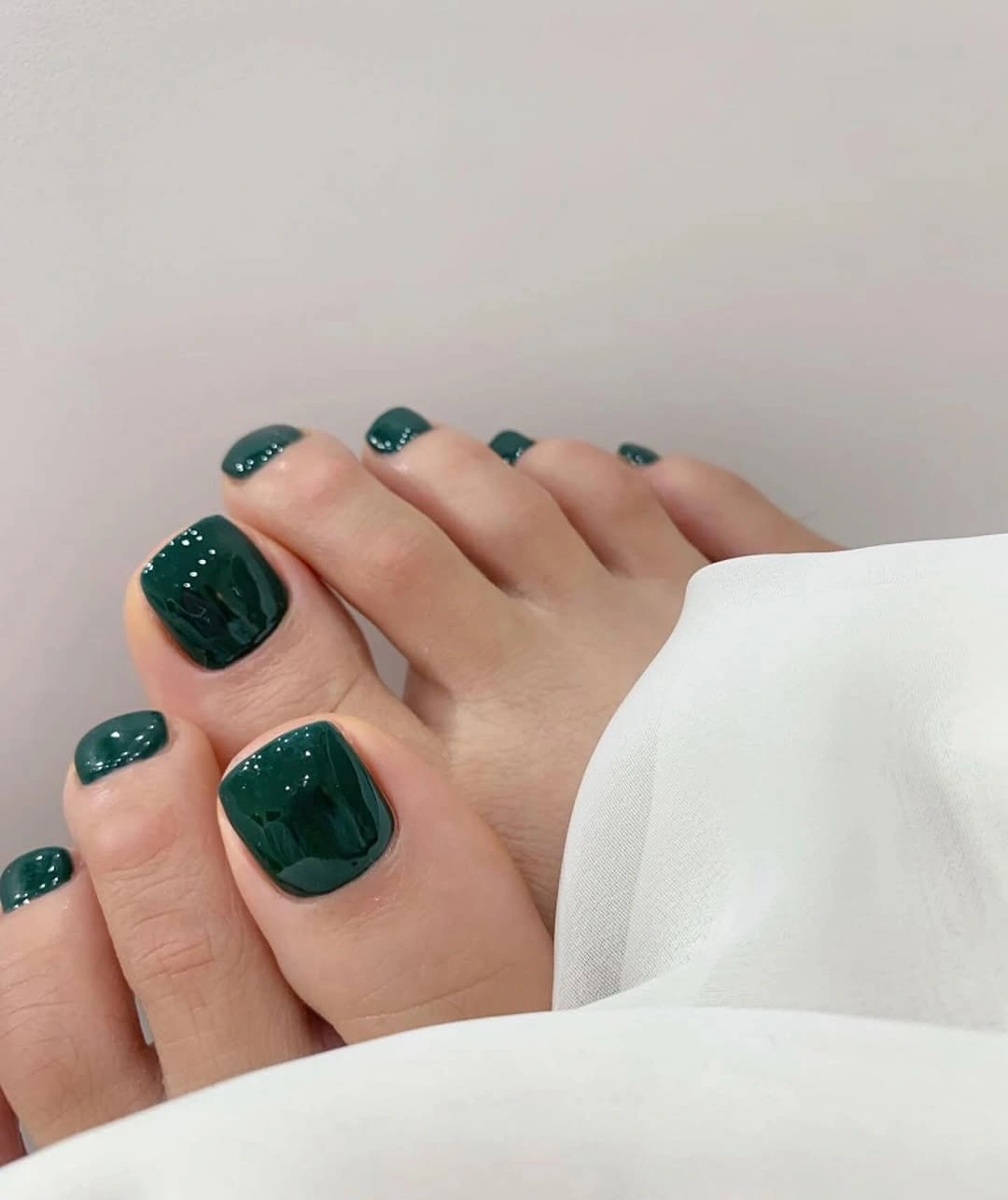
Use the same color across both feet when you want a dependable base, or reserve a lighter green for one big toe if you need a small change. A rounded-square edge will soften the effect, while a crisp square will make the dark shade look more graphic. The best adaptation remains solid because the color already has enough presence.
Deep green can be easier to live with than a dense design, but it will show a worn corner on the big toe. The glossy surface also catches light around the edge, making clean coverage important. This suits a practical wearer who wants a seasonal alternative to brown and does not need a motif to make the pedicure feel finished.
Sage Green With Pale Curved Accents
Muted sage green covers the smaller toes, while the big toes carry a pale mint curved shape over the same family of color. The accent is large enough to read on the main toe without making the whole pedicure decorative. Because the colors remain close, the design feels soft rather than sharply divided.
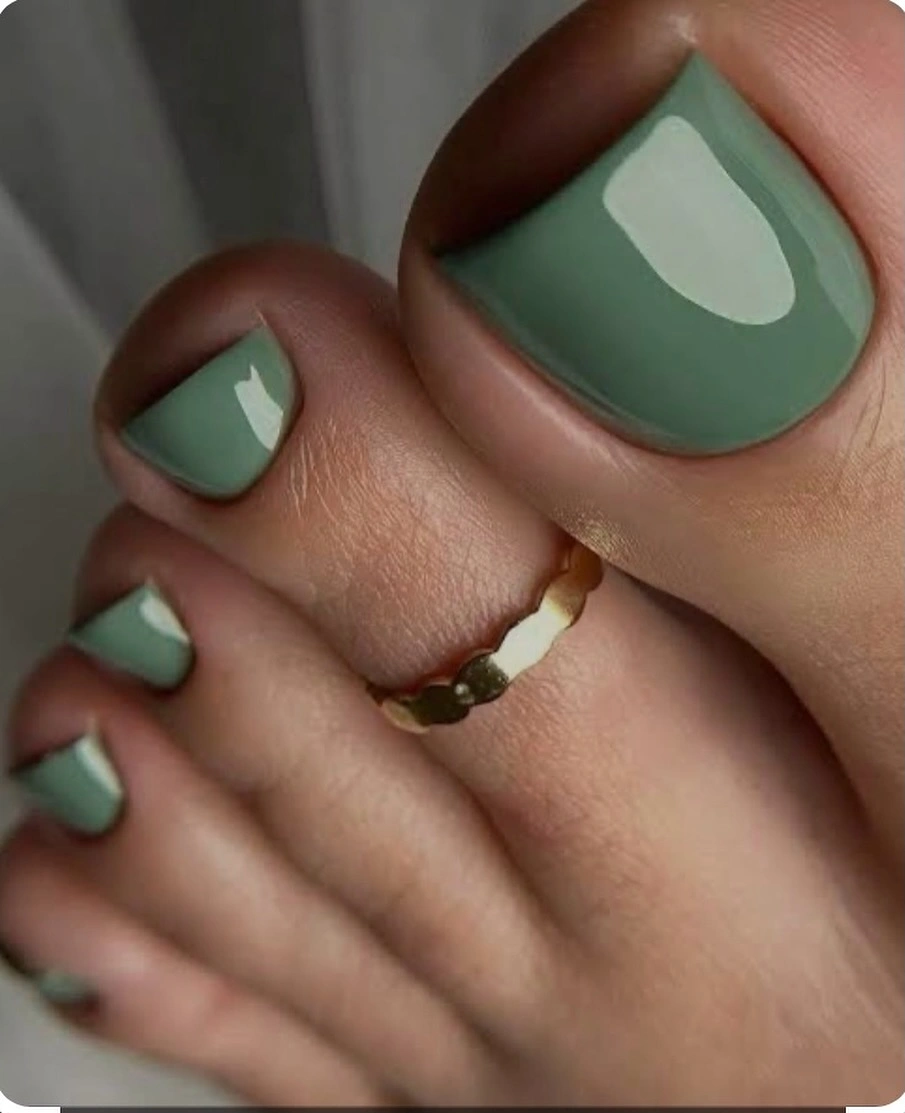
Keep the pale curve on one big toe if you want the lowest-detail version, or repeat it on both big toes for symmetry. Shorter toes benefit from one broad shape instead of several small marks. A cream accent can replace the mint when the green needs more contrast, but a close pale tone will preserve the gentle effect.
The big toe provides enough room for a curved accent, while the smaller nails are better left solid. The pale shape may reveal an uneven border sooner than the sage base, so the design is slightly more demanding than a single color. It is still a sensible choice when you want a little art without turning the pedicure into a project.
Forest Green On Both Feet
Both feet are painted a glossy deep green, with the color carried consistently from the large toes to the smallest nails. The close framing makes the pedicure feel especially clean because there is no accent to interrupt the repeated shape. A dark background strengthens the richness, but the design itself stays a simple solid-color decision.
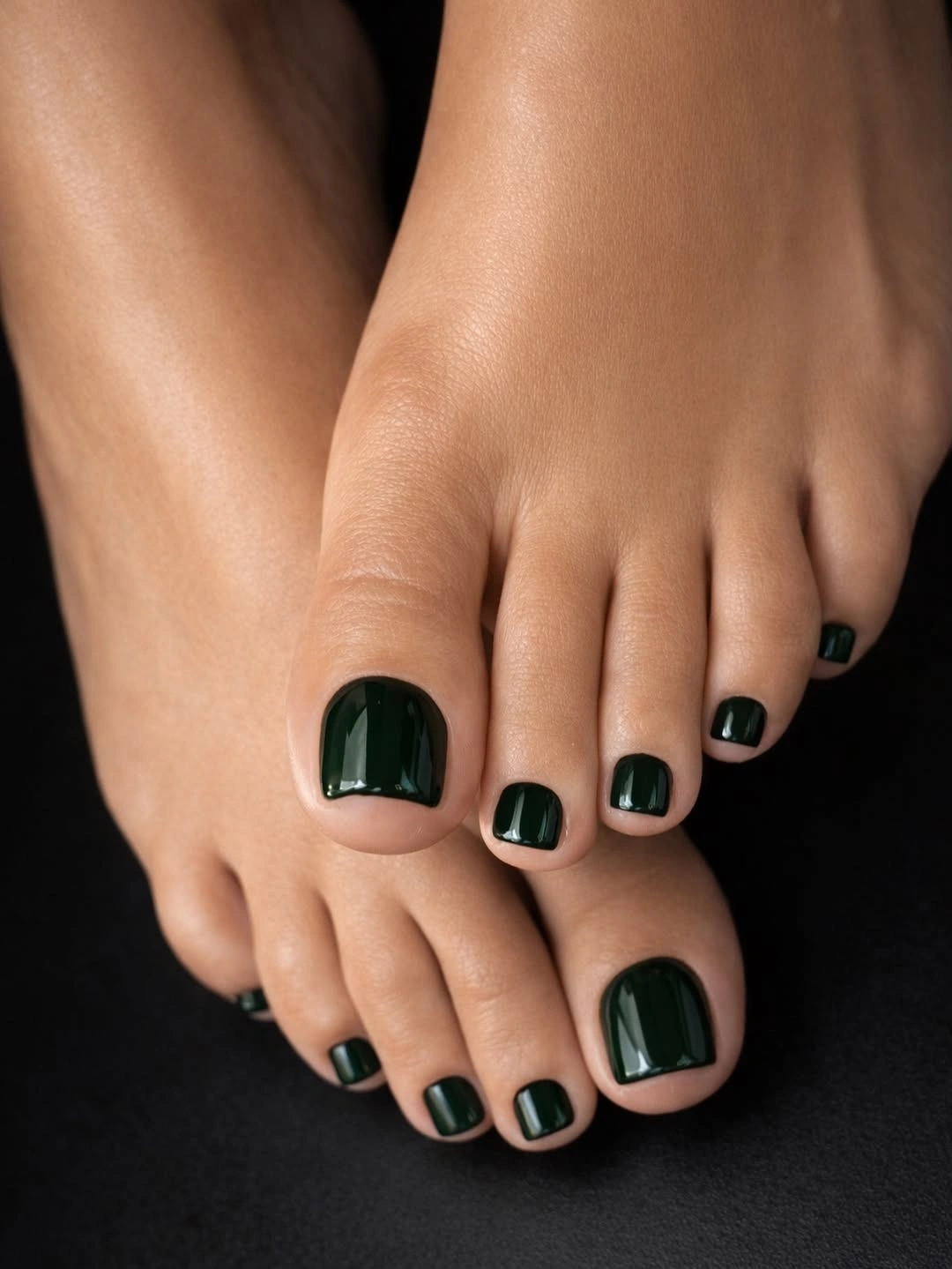
To vary the idea without adding pattern, use a slightly lighter green on the big toes and keep the smaller nails deep. Another easy adjustment is a muted olive that gives the same autumn direction with less visual depth. Avoid splitting every toe into a different shade, since the strength here comes from repetition and a clear color field.
The small toes need little explanation, but the big toes set the standard for the whole pedicure. Dark color will make a rough edge visible, especially when the feet are seen together. This is a low-maintenance route for someone who wants a reliable fall shade and would rather spend time on neat shaping than decorative detail.
Near-Black Brown For A Moody Base
Short toes use a dark brown-black color with a glossy reflection that becomes strongest on the big toes. The shade has the depth of black but reads warmer in the visible highlights, which keeps the pedicure connected to a fall palette. The absence of art lets the compact shape and the subtle warmth do all the work.
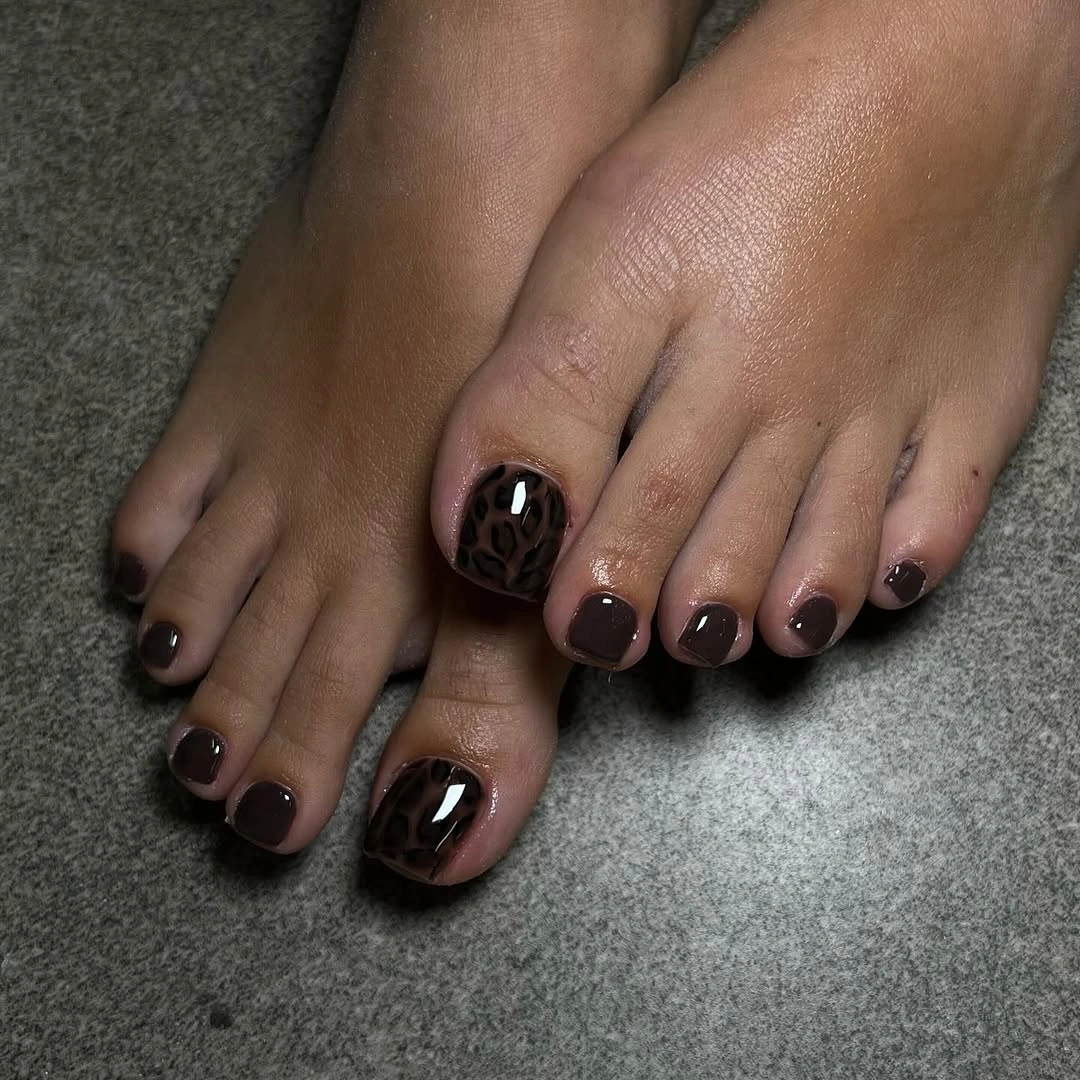
Use a true dark brown if pure black feels too severe, or move toward plum for a softer variation. The same shade can stay on every toe because the design does not need an accent to create hierarchy. If you want a small change, add a single pale line to one big toe rather than decorating the smaller nails.
A near-black color is practical in the sense that it is easy to repeat, but it is not forgiving around the edges. The large toes will reveal chips and uneven cuticle lines first, and the glossy highlight can make gaps obvious. Choose it when you want a quiet, moody pedicure and accept that neat application matters.
Pale Toes With Dark Tips And Leaves
Pale pink bases give these short toes a light center, while dark rounded tips and small botanical marks decorate the big toes. The contrast creates a clear focal point without coating every nail in a deep color. The smaller toes stay relatively simple, which keeps the dark tips from making the compact pedicure feel crowded.
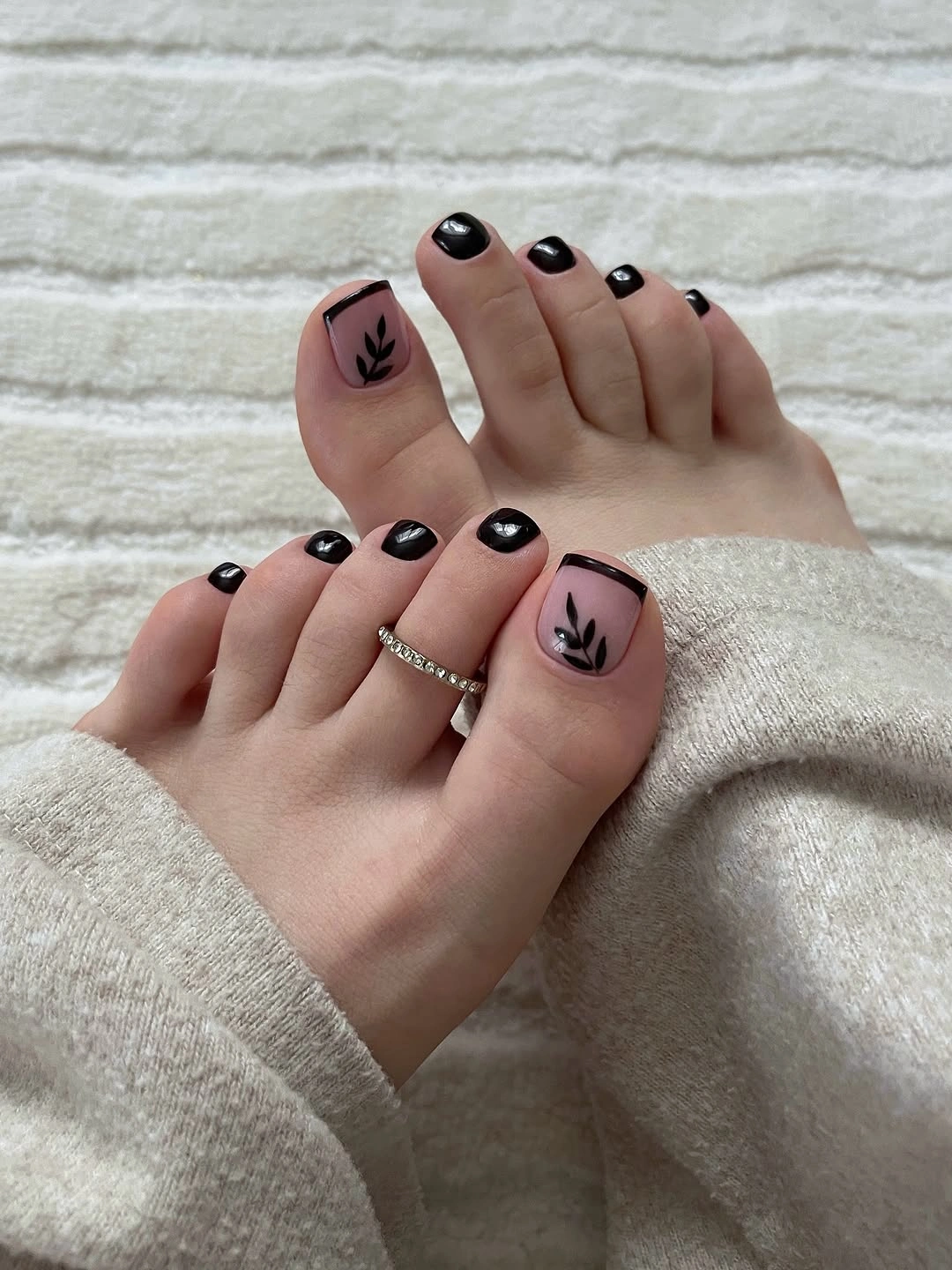
For everyday wear, keep the dark tip on every toe and place the botanical mark on only one big toe. A single dark dot can replace the leaf-like detail when the nail is too small for fine lines. If the pale base feels too stark, use a warmer nude so the tip contrast looks a little softer. The small change keeps the dark frame visible while giving the big toe a clear point of interest.
The open base makes the design look lighter, but it also shows any uneven border at the tip. The big-toe art is the first detail to need attention, while the smaller solid tips are easier to maintain. This is a good middle ground for someone who wants a decorative fall pedicure but does not want every toe covered in pattern.
Caramel Brown On A Compact Shape
Glossy caramel-brown covers the short rounded-square toes, with the larger toes showing the most reflection. The color is warm without becoming as deep as chocolate, so it feels seasonal while keeping the pedicure visually light. Because the surface is plain, the clean curve of each short nail remains easy to see.
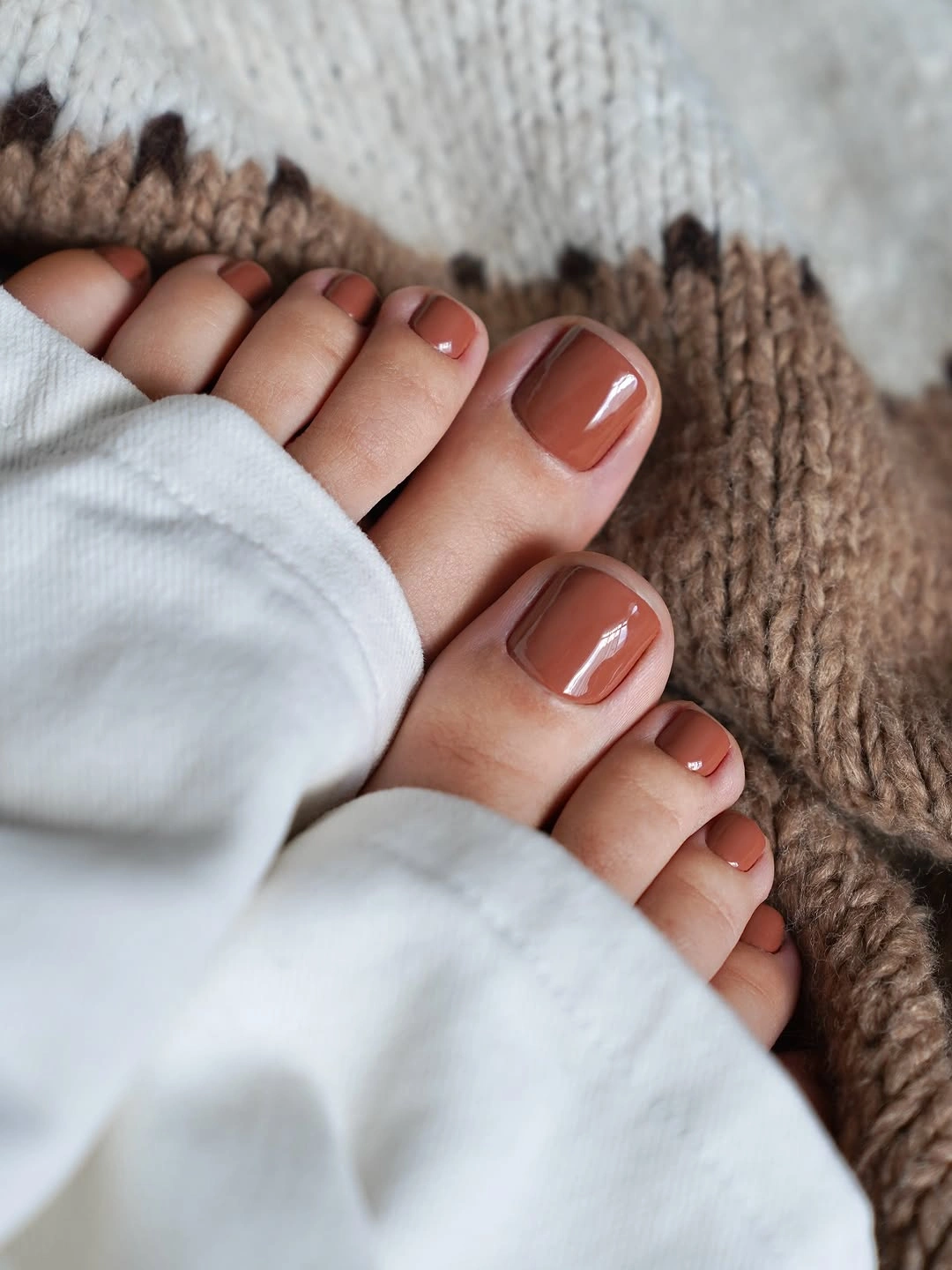
Choose a darker chestnut when you want more contrast with open shoes, or use a muted tan-brown for a quieter neutral. There is no need to add an accent if the goal is repeat wear. A slightly rounded edge will make the color feel softer, while a squared edge will give it a more defined outline. That keeps the neutral color useful across different outfits without making the toes look overly decorated.
Caramel is simple to refresh and less visually heavy than near-black shades, though the big toe will still show wear first. The glossy surface can reveal uneven coverage in strong light, so the basic preparation matters. It works well for someone who wants a warm fall color that stays useful with many shoe and clothing combinations.
Dark Brown With One Lighter Big Toe
Most of the short square toes are deep brown, while one big toe shifts toward a pale pink or soft light transition. That lighter nail breaks up the dark field and gives the pedicure a small focal point without requiring a pattern. The contrast is clear because the rest of the toes remain simple and close in shape.
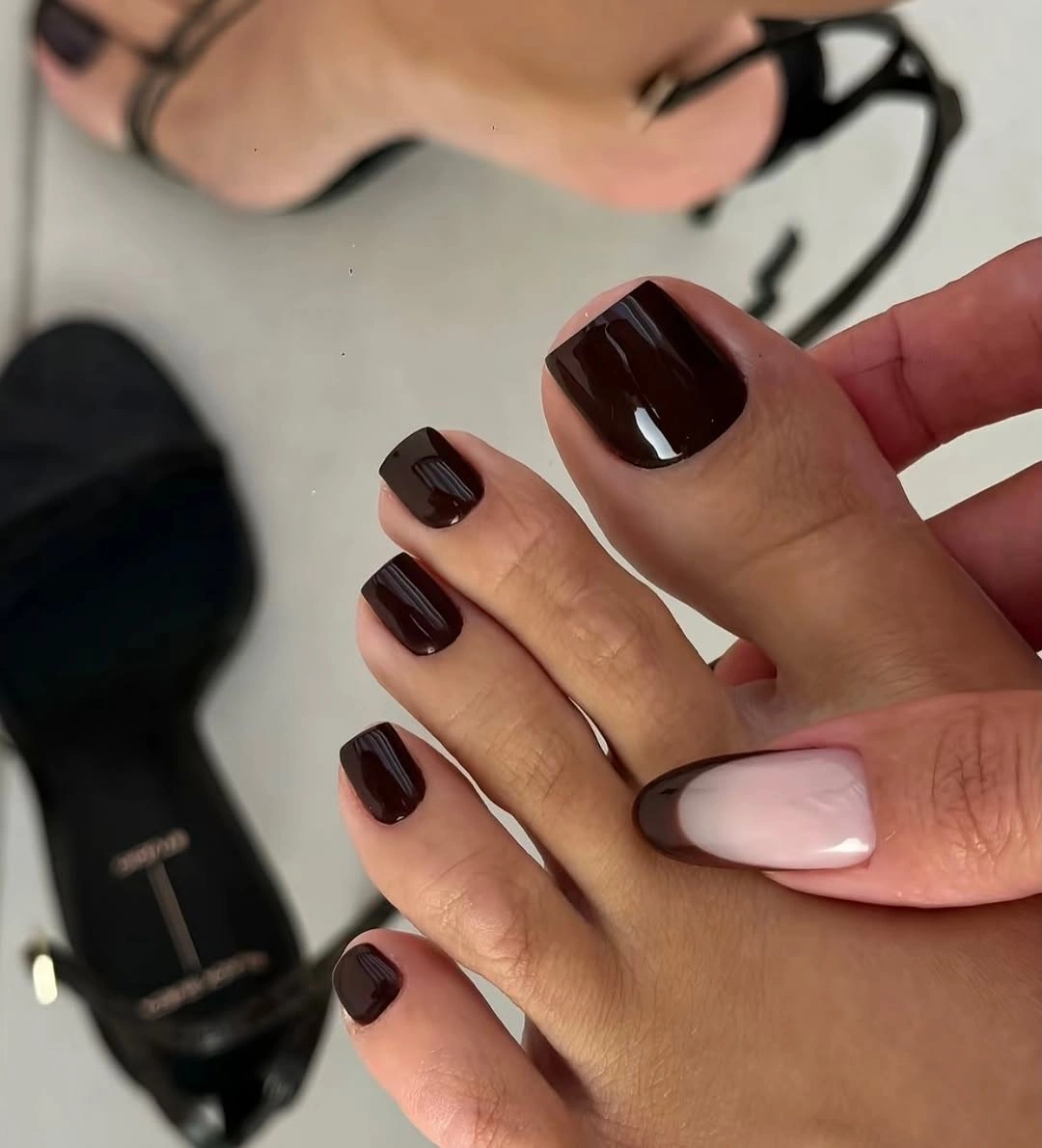
Repeat the lighter accent on both big toes when you want the feet to feel symmetrical, or keep one accent for a more casual mismatch. A warm taupe can replace the pale pink if the contrast needs to be reduced. The smaller toes are best left dark, since adding more light areas would weaken the main visual decision.
The lighter accent may need more careful edge work than the brown solids, but it gives the design enough interest to avoid extra art. Short square toes keep the color blocks practical, while the big toe remains the place where the contrast is judged. Choose this layout when you like a dark base but want one visible break from it.
Taupe Solids Repeated Across Both Feet
A glossy taupe-brown repeats across both feet in a very simple, close-cropped pedicure. The large toes and smaller nails share the same color, so the result looks tidy through consistency rather than contrast. The warm neutral is deep enough to feel seasonal but still soft enough to sit beside pale socks, denim, or open shoes.
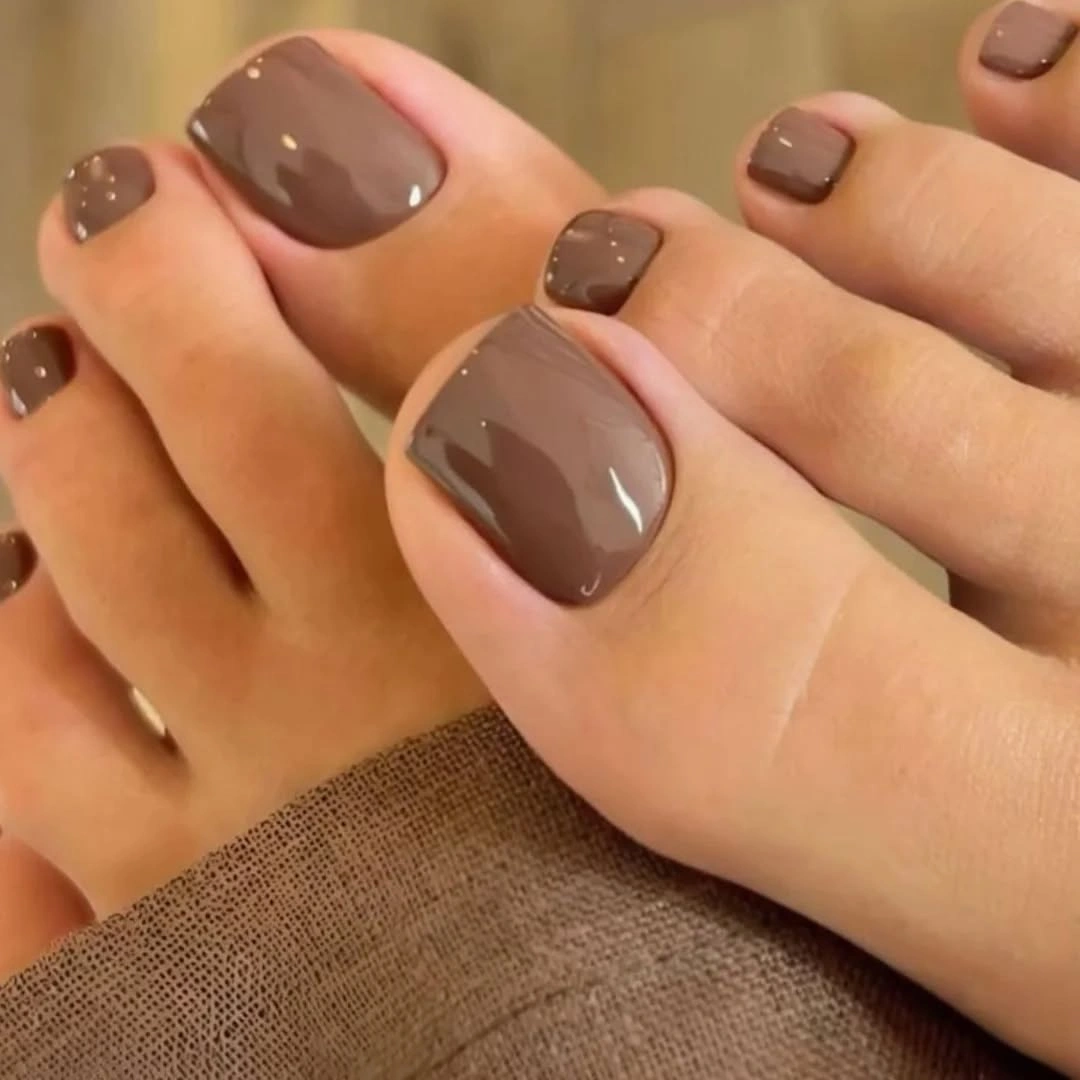
This is a useful base for experimenting with a single accent later. Add one darker big toe, a narrow border, or a small dot while leaving the remaining nails unchanged. If the goal is maximum repeatability, keep the taupe solid and adjust only the shape, choosing a rounded edge when you want less visual hardness.
The benefit is clear low detail, but the large toes still need a clean outline because there is no pattern to distract the eye. The single shade is easy to refresh and unlikely to clash with clothing. It suits someone who wants fall toe nails colors to function as a quiet foundation rather than the main accessory.
Brown Borders Around A Nude Center
Short square toes use a nude-pink center bordered by a darker brown line around the edge. The open center keeps the pedicure light, while the border gives each compact nail a clear graphic finish. The big toes show the idea best because their larger surface makes the relationship between the pale middle and dark perimeter easy to read.
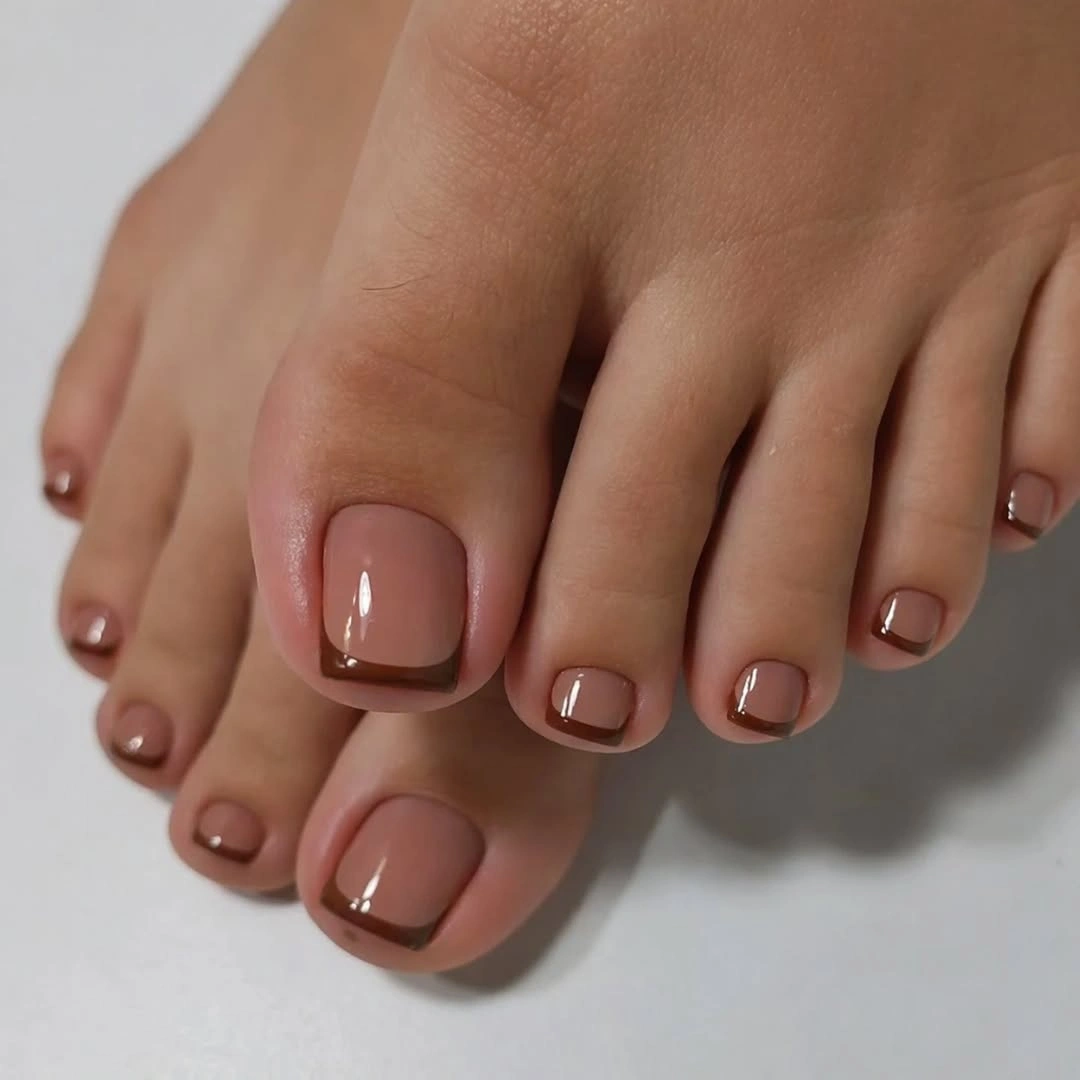
Make the border narrow on shorter nails and reserve it for the big toes if the smaller surfaces are too limited. A soft taupe line will create a gentler effect than deep chocolate, while a fuller brown tip will make the design more visible. The main adaptation should preserve the pale center, since that is what keeps the outline from feeling heavy.
Border designs can grow out more noticeably than full color because the open space changes near the cuticle. The line also needs consistent thickness to look intentional. This is a good choice when you want a small amount of structure and are willing to give the perimeter more attention than a plain neutral would require.
Soft Red Green And Lavender Mix
Short toes alternate glossy red, muted green, and pale lavender blocks, giving both feet a playful mismatch without adding tiny art. Each color appears as a clean solid, so the varied palette remains easy to understand. The light background and compact shape keep the brighter shades from becoming too forceful.
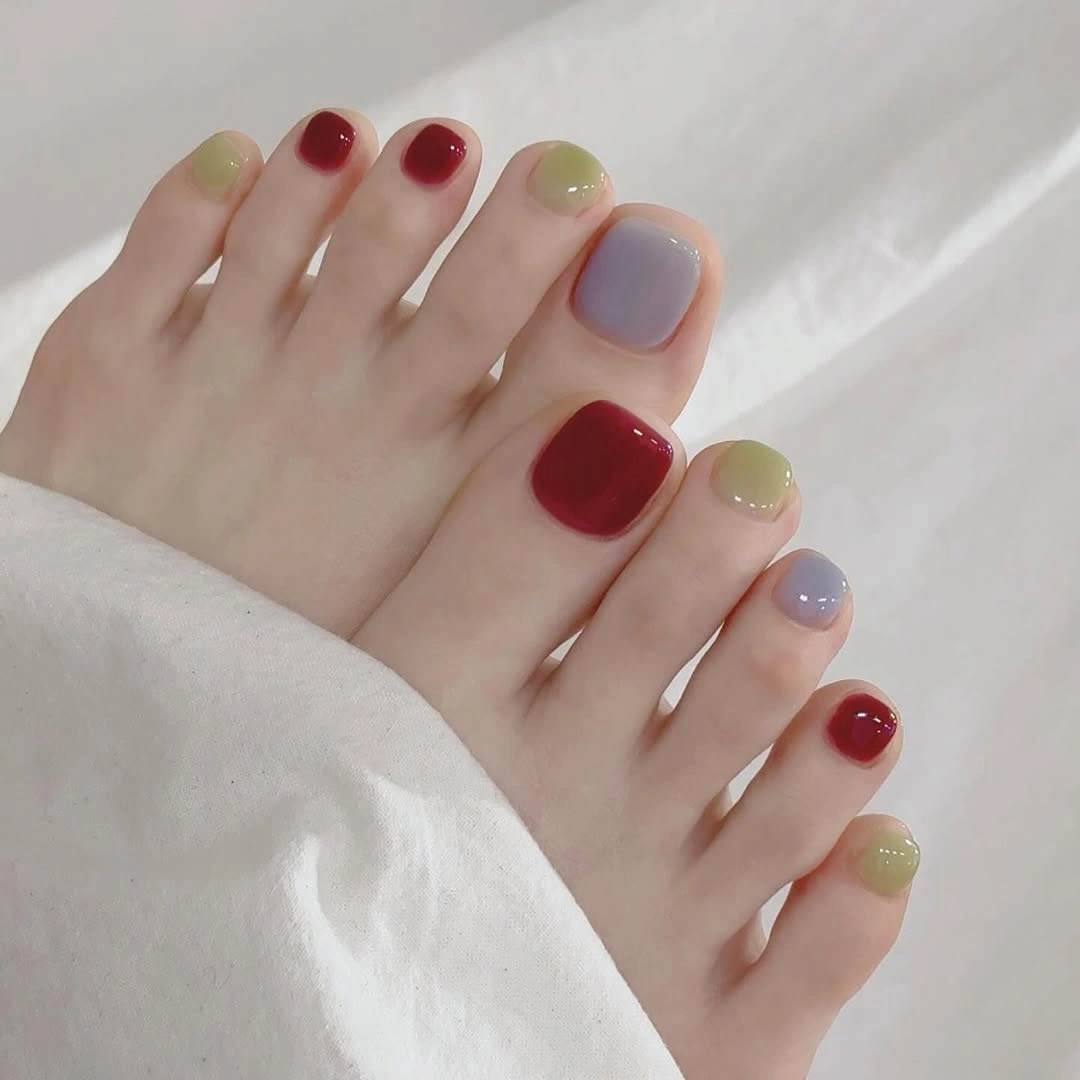
Repeat red on the big toes and use green or lavender only on the smaller nails if you want more order. Three colors are enough; adding several more would make the compact surface feel scattered. A muted burgundy can replace the red when the palette needs a deeper fall direction without changing the simple block structure.
Solid mismatched color is easier to maintain than mismatched art, but each shade still needs a clean edge to look intentional beside the others. The design works because the colors are distinct and the shapes are simple. Choose it when a single neutral feels too quiet and you want a pedicure with personality but limited detail.
Cool Gradient-Like Big Toes In Sandals
The big toes show blue-gray gradient-like blocks inside dark sandals, while the smaller toes stay in deeper brown or black shades. That placement makes the focal color feel deliberate rather than scattered across every nail. The shoe straps frame the toes, but the main idea remains the cool shift against a darker pedicure base.
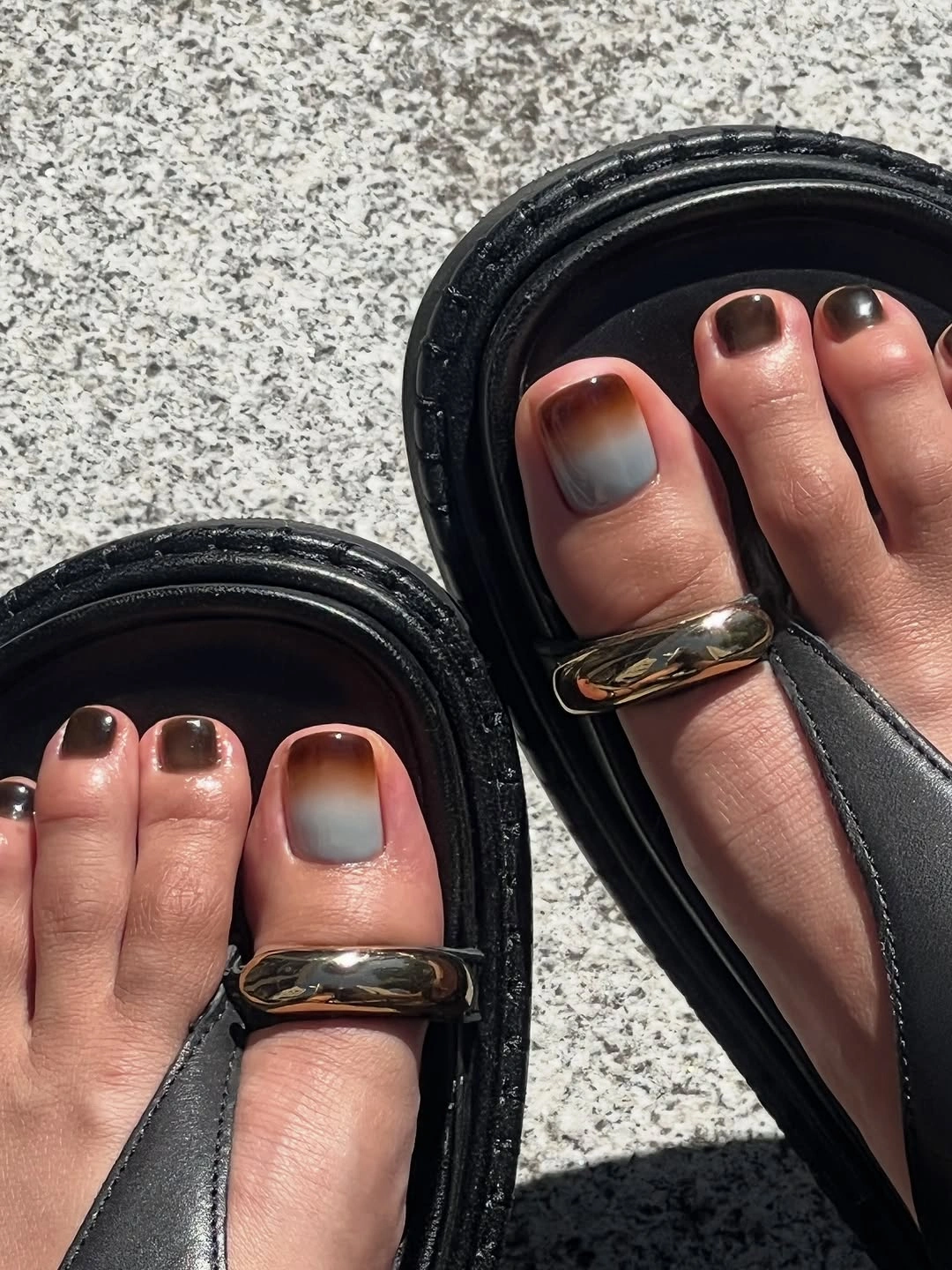
For a simpler version, use one blue-gray solid on each big toe and keep all smaller nails dark. A pale gray can soften the transition, while a muted blue will make the accent clearer. The focal toe should remain larger and calmer than the surrounding nails, otherwise the color story will lose its hierarchy.
The gradient-like effect adds more upkeep than a solid shade because its transition must stay visually smooth. The smaller dark toes are easier to repeat, which makes this layout practical when only the big toes receive extra attention. It suits someone who wants one cool surprise in an otherwise dependable fall pedicure.
Olive Gray With A Denim-Friendly Mood
Glossy olive-gray covers the short square toes, with denim visible nearby to reinforce the earthy, slightly cool palette. The color is deeper than a pale neutral but softer than black, so the pedicure has presence without becoming the only focal point. Repetition across both feet keeps the compact shape looking orderly.
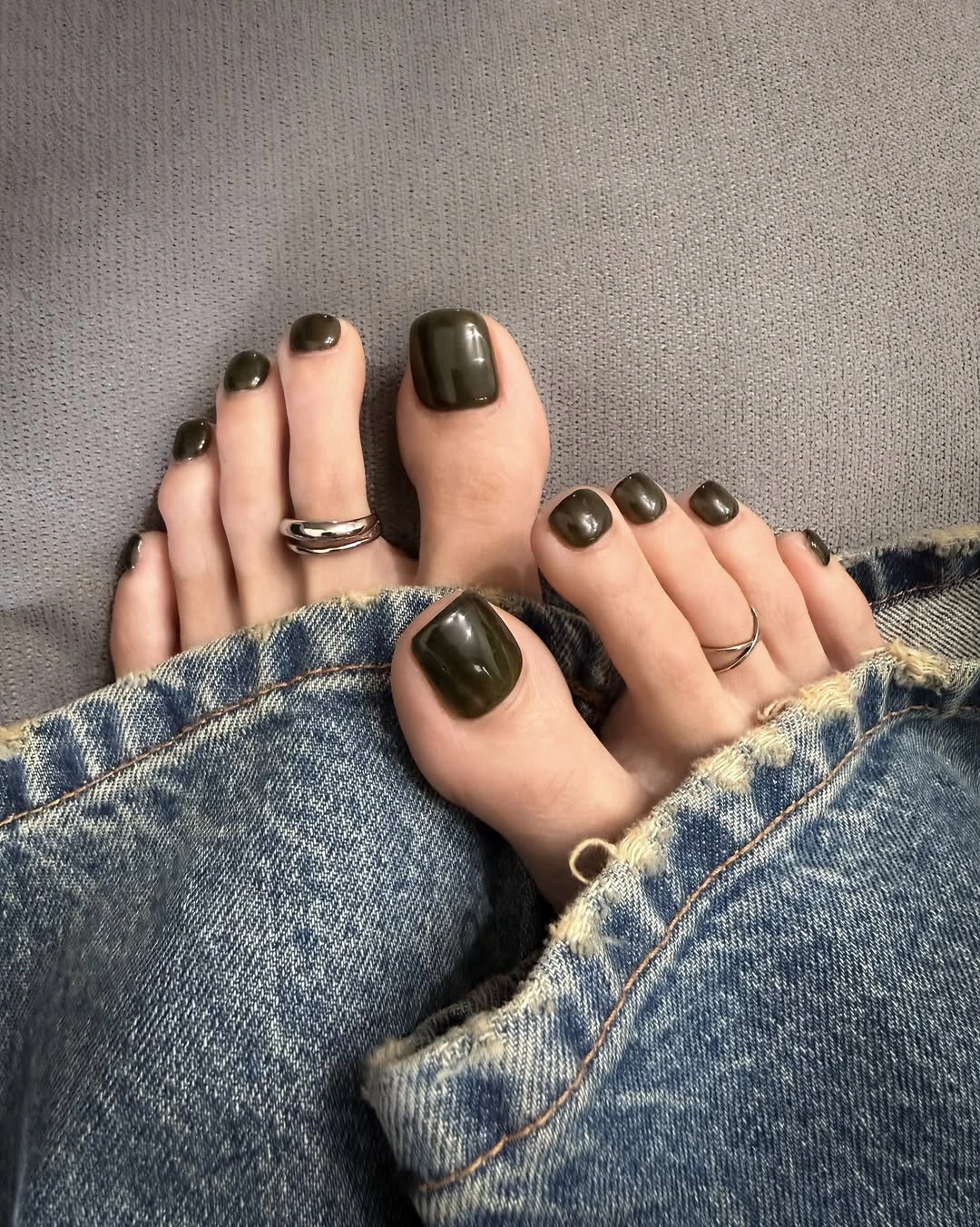
Use a deeper olive for more contrast or move toward gray-green when you want the shade to sit quietly beside denim and brown shoes. The design does not need an accent; if one is added, place it only on a big toe and keep it within the same muted family. A plain color is the most coherent adaptation.
The short square outline supports the color and makes it practical for everyday movement. Olive-gray can show edge wear, but it is less stark than black and less bright than a saturated green. Choose it when you want a fall neutral with a cool twist and prefer a color decision over a decorative one.
Deep Plum Under A Soft Black Layer
Short rounded toes show deep brown-purple color with a glossy surface and a moody black textile around the feet. The pedicure itself stays simple, but the dark plum shade has enough depth to feel intentional without a pattern. The compact nails keep the color close to the toe, so the result remains neat rather than dramatic.
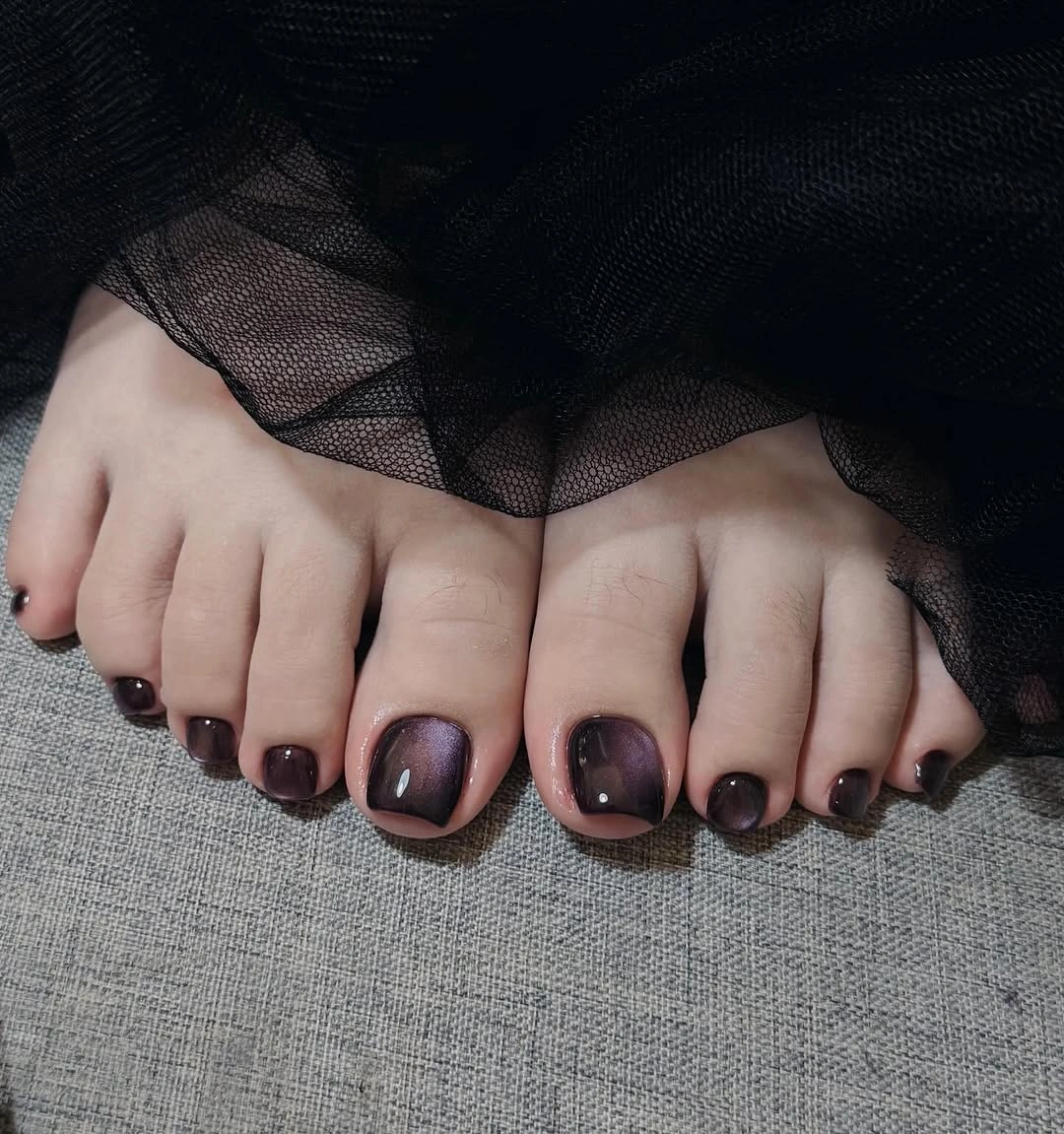
Use a warmer burgundy if you want the same depth with more red, or choose a soft brown when the plum feels too cool. Keep the smaller toes solid and let the big toe carry the strongest shine. The low-detail structure is already practical, so adding art would only make upkeep more complicated. The result keeps attention on the color and shine rather than adding another maintenance step.
Dark plum can be refreshed easily as a single shade, but it will still show chips at the corners of short nails. The close crop also makes the big-toe edge important. This option suits a wearer who wants a quiet, slightly mysterious fall color and does not need the pedicure to coordinate through multiple tones.
Taupe With One Spotted Big Toe
Muted taupe covers most of the short toes, while one big toe carries a black-and-tan spotted accent. The pattern is large enough to read on the main nail and small enough to stay contained, so the rest of the pedicure can remain calm. The neutral base gives the accent a place to stand without adding another competing color family.
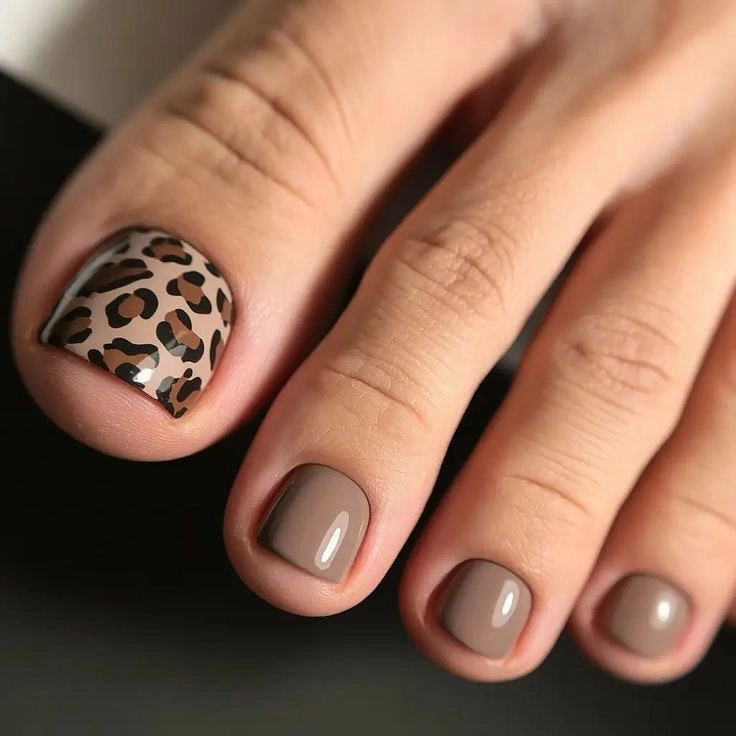
Repeat the spotted accent on both big toes for symmetry or keep it to one foot for a more relaxed mismatch. If the pattern feels too strong, replace it with two dark dots near the tip. The smaller nails should stay taupe because their simple color is what lets the larger accent remain the focal point.
The big toe offers enough space for the pattern, while the short length keeps the design grounded. The accent will need more care than the plain nails, especially around the edge where the dark marks meet taupe. Choose this arrangement when you want one playful detail and a low-complexity base. Keeping the rest plain also makes the accent easier to refresh without reworking the full set.
Warm Brown With Pale Dotted Details
Warm medium-brown toes carry small pale dots across the big toes and smaller nails. The dots break up the solid color but remain light enough to keep the pedicure soft. Because the base repeats on every toe, the decorative marks read as a quiet texture rather than a collection of separate motifs. The repeated base gives the tiny marks a steady background, so the finish stays cohesive.
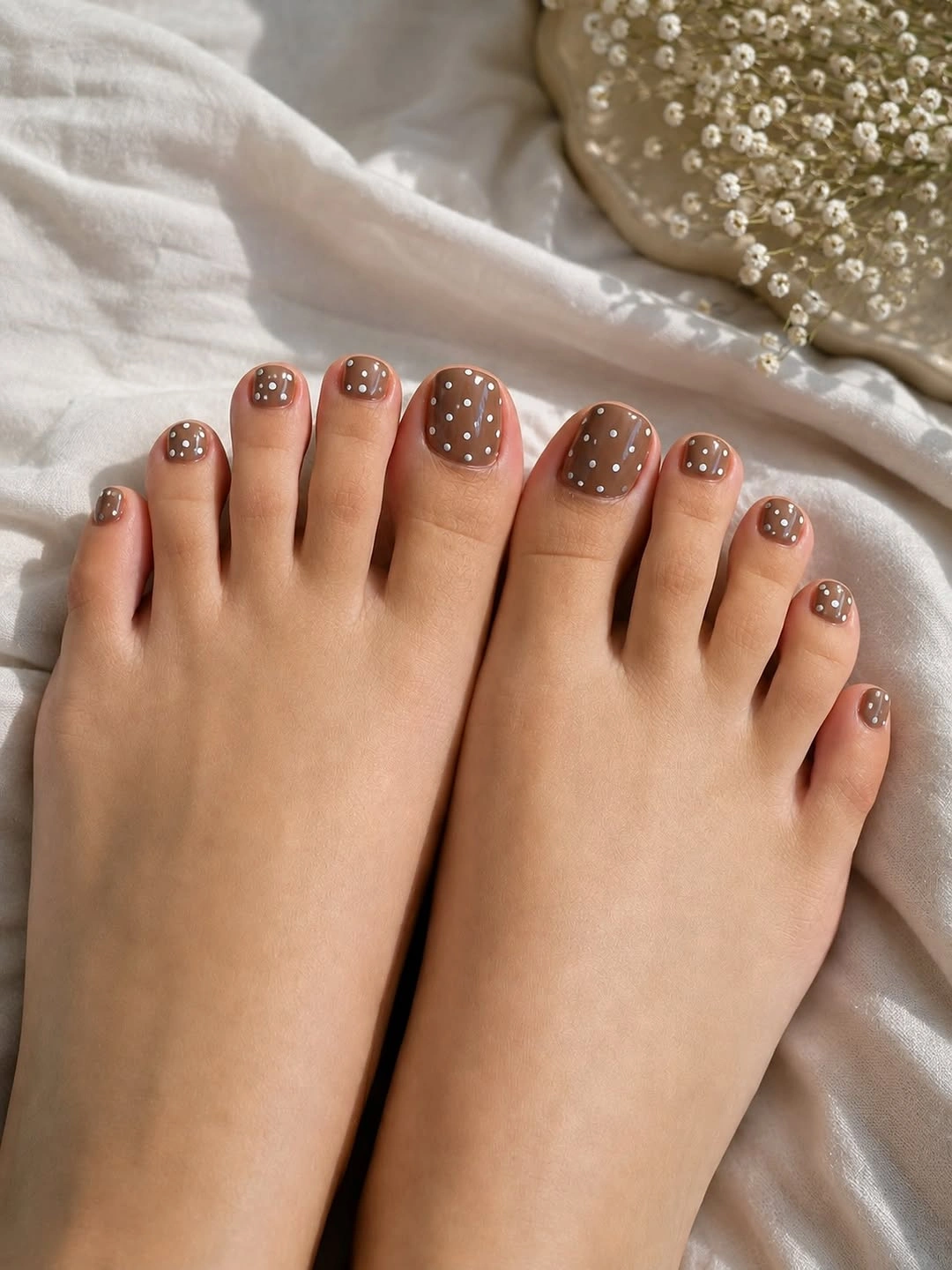
Use fewer dots and keep them near the tip if you want an easier version. A cream or muted peach accent will sit gently against the brown, while a white dot creates stronger contrast. On very short nails, two or three larger marks will look clearer than a dense field of tiny points. Spacing matters more than quantity here because the brown base already supplies most of the visual weight.
The repeated dots need reasonable spacing to look crisp, so this option asks for more attention than a plain solid but less than a detailed illustration. The brown base hides small changes in coverage, while the pale accents show where the design begins. It is a practical decorative choice when you want texture without a complicated color map.
Nude Toes With Curved Brown Accents
Nude-pink toes use dark brown curved marks and small circular details around the big toes, leaving most of the base open. The design feels light because the accents sit in selected areas rather than covering every nail. A warm skin tone and the soft base keep the contrast grounded, while the larger toes give the curves enough room.
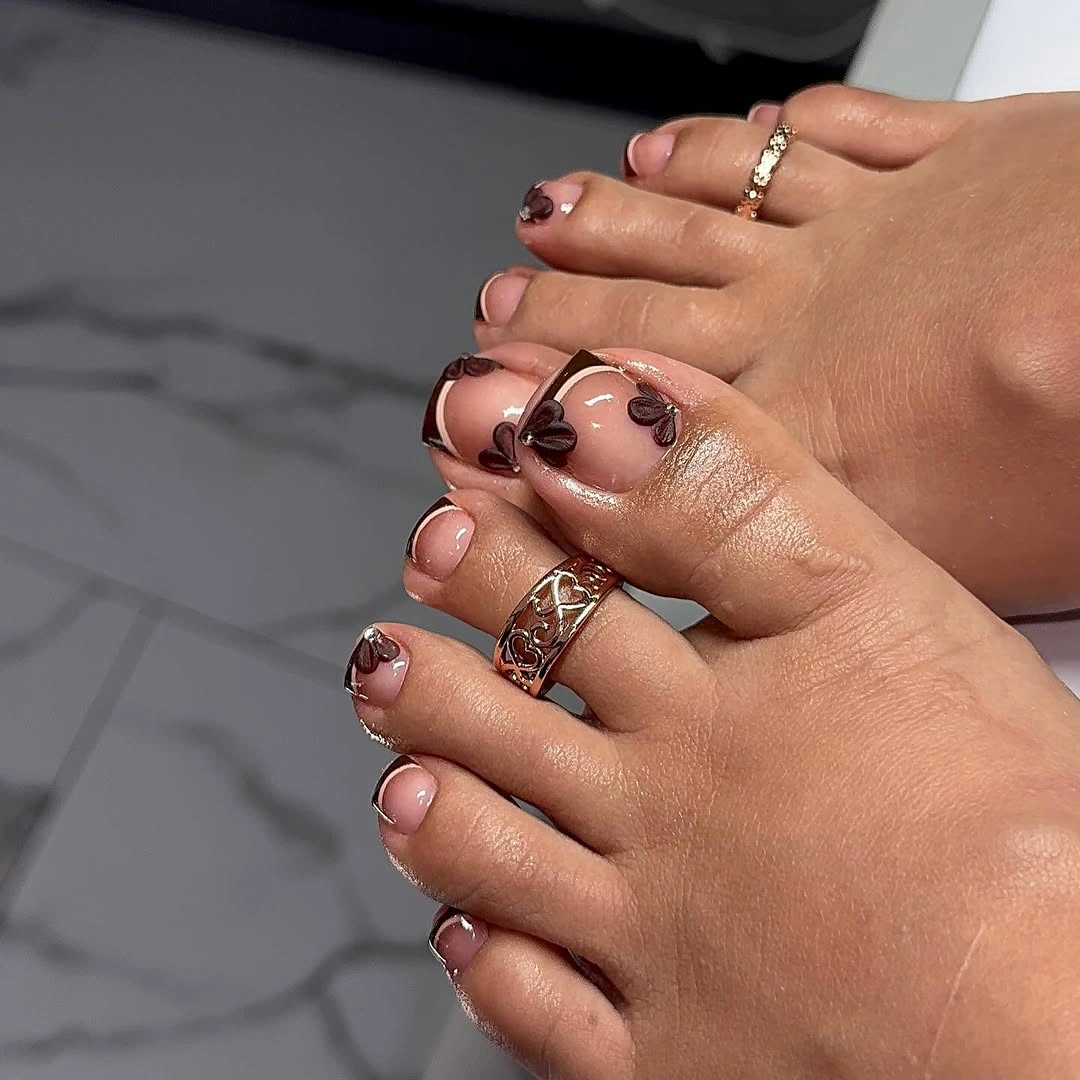
Place one curved line on each big toe and keep the smaller nails nude for the simplest adaptation. If the circles feel too decorative, remove them and let the brown curve supply the structure. A deeper brown will sharpen the idea, while a taupe line will make it quieter without changing the open placement.
The empty base helps the pedicure grow out gently, but the curved edges remain visible when they shift or wear. That is a reasonable upkeep tradeoff because the design is concentrated on only the larger toes. Choose it when a small amount of art feels useful but a full patterned pedicure would be unnecessarily demanding.
Brown And Inky Blue With A Bright Detail
Glossy brown and inky blue-black appear together on these short toes, with a small warm reflective detail on the larger nails. The palette is deeper and more unexpected than a basic brown pedicure, while the bright accent gives the dark colors a place to catch light. The compact shape keeps the combination controlled.
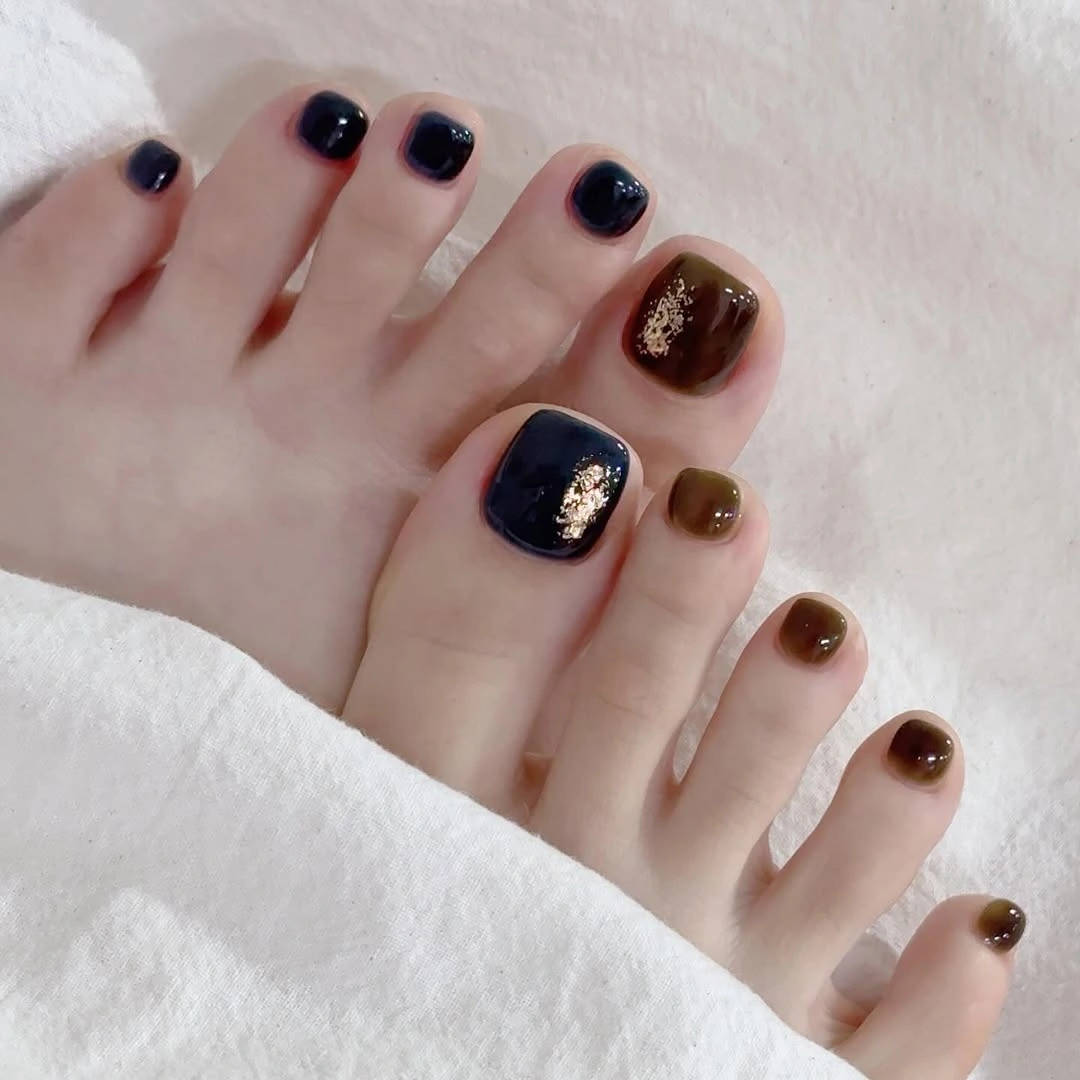
Keep the blue on the big toes and use brown on the smaller nails if you want the color relationship to read more clearly. A warm gold-looking dot or short mark can replace the larger accent, but it should remain small. If the blue feels too cool, choose a blue-black that visually connects to the brown.
Dark colors are easy to repeat but less forgiving around edges, especially when placed side by side. The bright detail may require the most careful touch-up, while the rest of the pedicure remains simple. This is a good option for someone who wants more depth than one neutral can offer but still prefers a compact design.
Bright Turquoise With A Patterned Hand Accent
Short square toenails are a vivid turquoise blue, while the same styling set includes hand nails with pale spotted accents. The toes stay clean and solid, so they can act as a clear color statement even when the hands carry more pattern. The contrast works because the bright blue is not diluted by extra detail on the small surfaces.
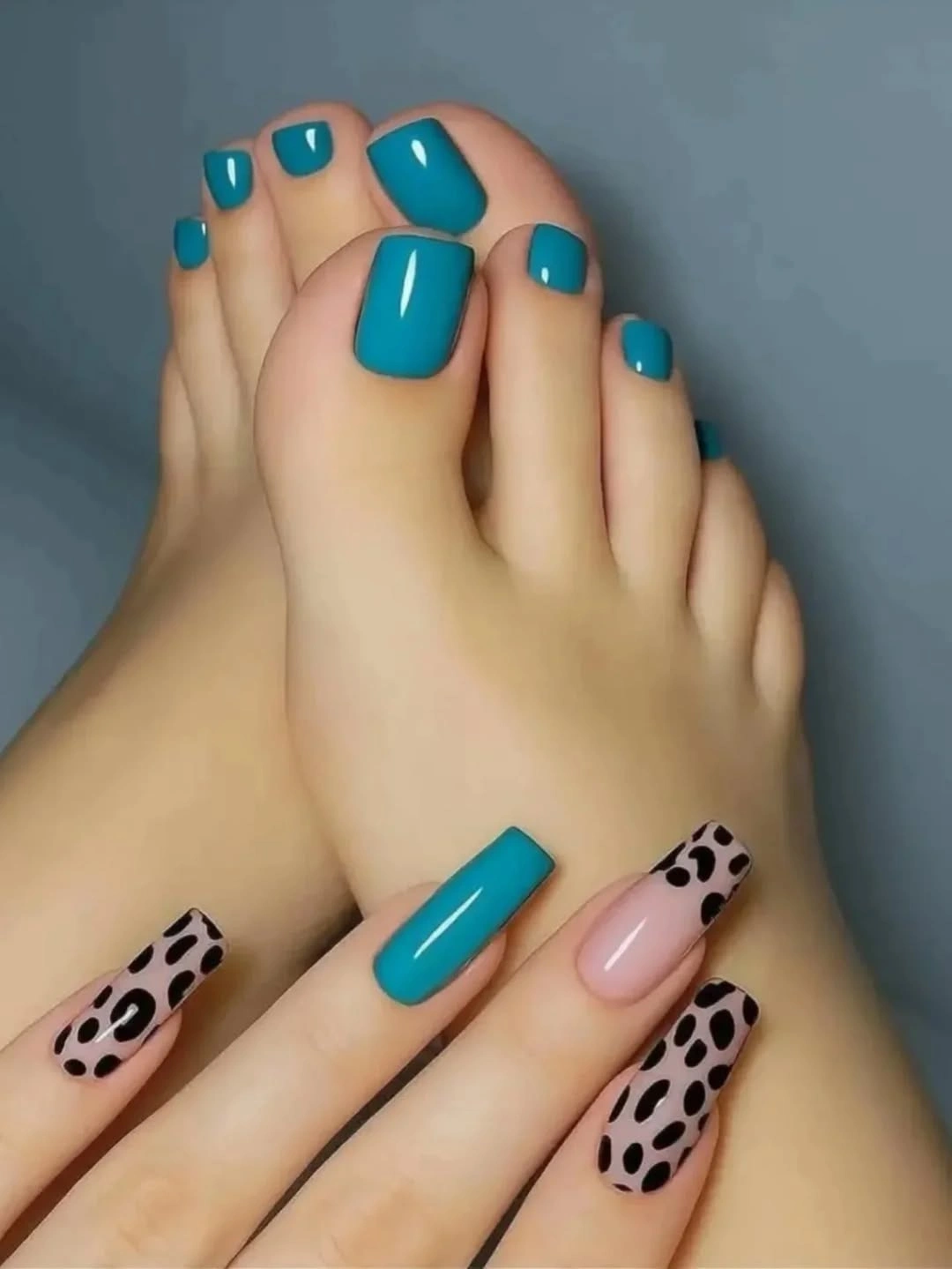
Use the turquoise only on the big toes if a full bright pedicure feels too strong, or repeat it on one hand accent to connect the two sets. A softer teal can reduce the intensity without losing the color relationship. The toe design should remain solid because the hand pattern already provides visual activity.
Saturated blue makes every toe easy to see, which means the outline and coverage need to be even. The short shape is practical, but bright color can show small chips more quickly than a muted neutral. Choose it when you want the pedicure to be the clear color moment and are comfortable letting it stand apart from the rest.
Deep Plum On Every Toe
Both feet are covered in a glossy deep plum, with the big toes anchoring the view and the smaller nails repeating the same compact shape. The color is richer than a basic red but still familiar enough to work as a single base. There is no art to distract from the even surface, so the pedicure reads clean and intentional.
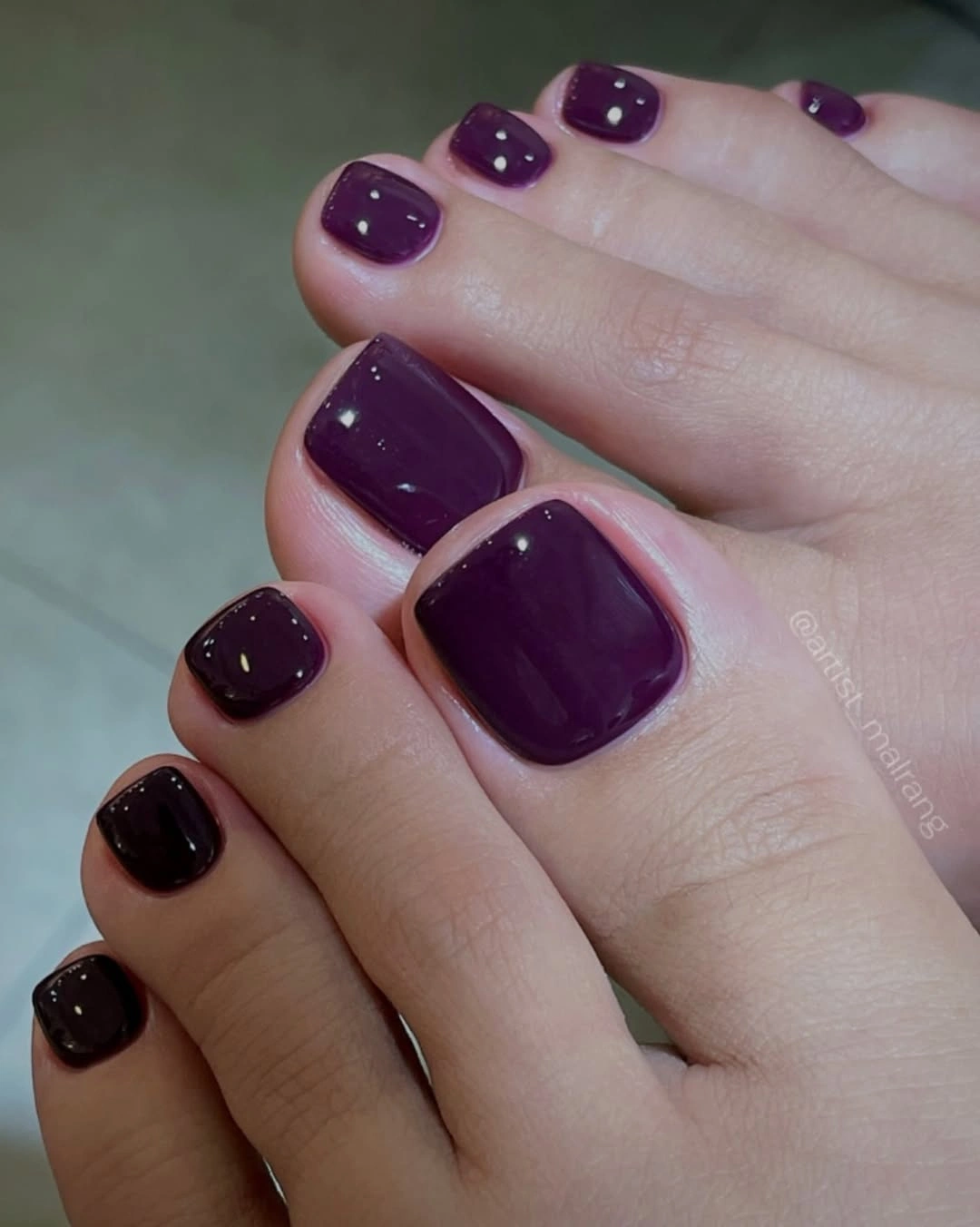
Shift the shade toward burgundy when you want more warmth, or use a brown-plum for a softer neutral. Keep the application solid and adjust only the edge shape if you want variation. A rounded square will make the deep color feel gentler, while a sharper square will emphasize its graphic quality. This lets the shade feel deliberate on every toe while the edge shape supplies the only variation.
One-color polish is the practical choice here, but the big toes still determine whether the result looks neat. The glossy surface can reveal worn corners, so a quick edge check matters more than adding decoration. This option works for someone who wants a dependable fall pedicure with enough color depth to feel considered.
Cobalt Blue On A Short Square Shape
Saturated cobalt blue covers the short square toes and catches a pale reflection across the big toes. The shade is bright enough to become the whole statement, while the compact outline keeps it from looking overly elaborate. Repetition across the feet gives the strong color a calm structure rather than a scattered effect.
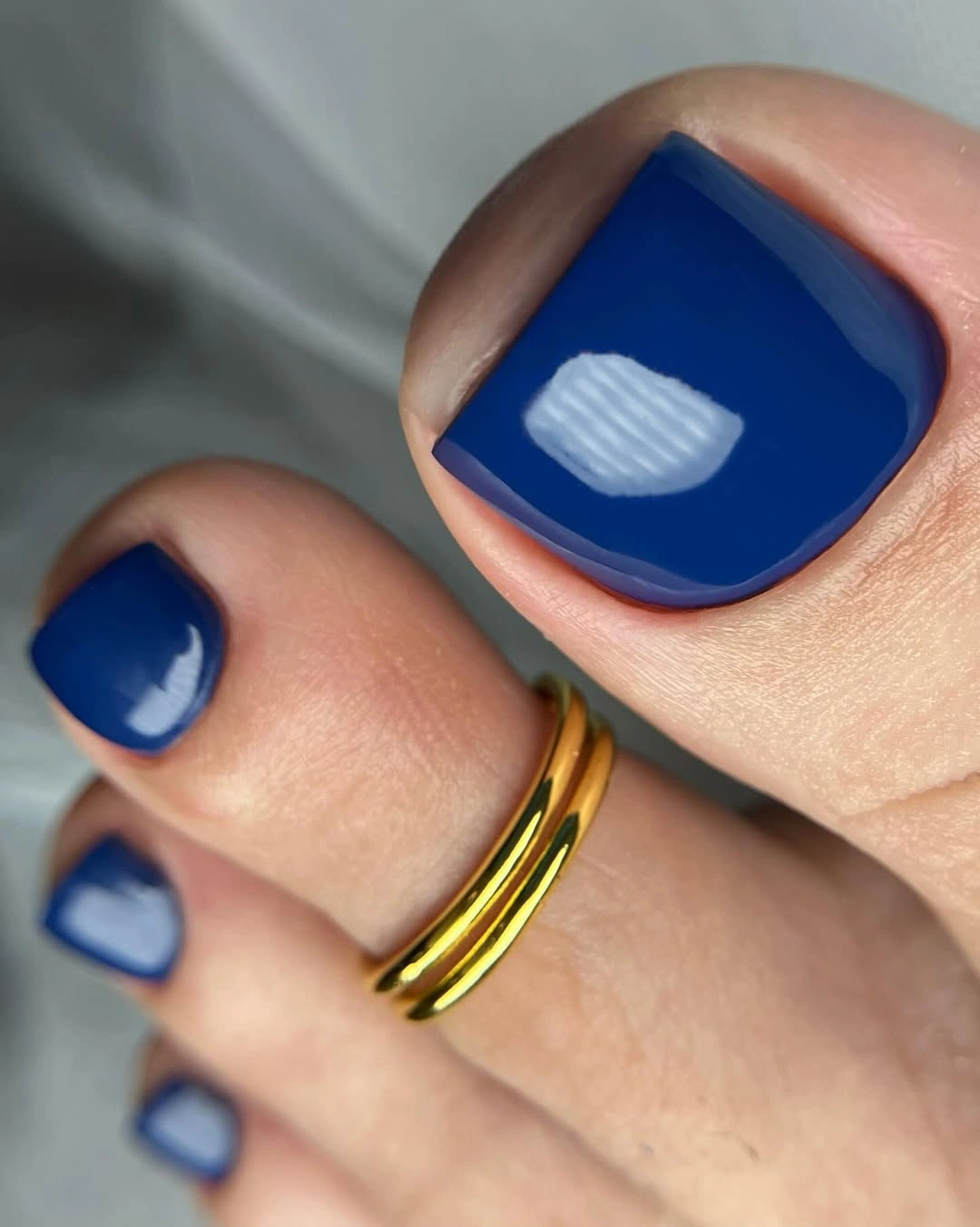
Pair cobalt with a neutral hand manicure or repeat it on one hand accent if you want the color to feel connected. A darker navy will make the pedicure more subdued, while a shorter rounded edge will soften the square outline. Do not add a pattern unless the blue needs a deliberate focal shift. The blue can therefore stay crisp and intentional without competing with a second decorative idea.
The color is simple to maintain as a solid, but high saturation makes chips and gaps particularly visible. The big toes deserve the cleanest outline because the reflective highlight draws attention there. Choose cobalt when you want a clear, cool statement and are willing to let the shade remain the most noticeable part of the look.
Classic Red On Short Toes
Glossy cherry-red covers the short square toes from the big toes to the smallest nails. The color does not need a motif to feel complete because its saturation provides a strong focal point and the compact shape keeps the result neat. Repetition across both feet makes the pedicure easy to read with open shoes or simple neutral clothing.
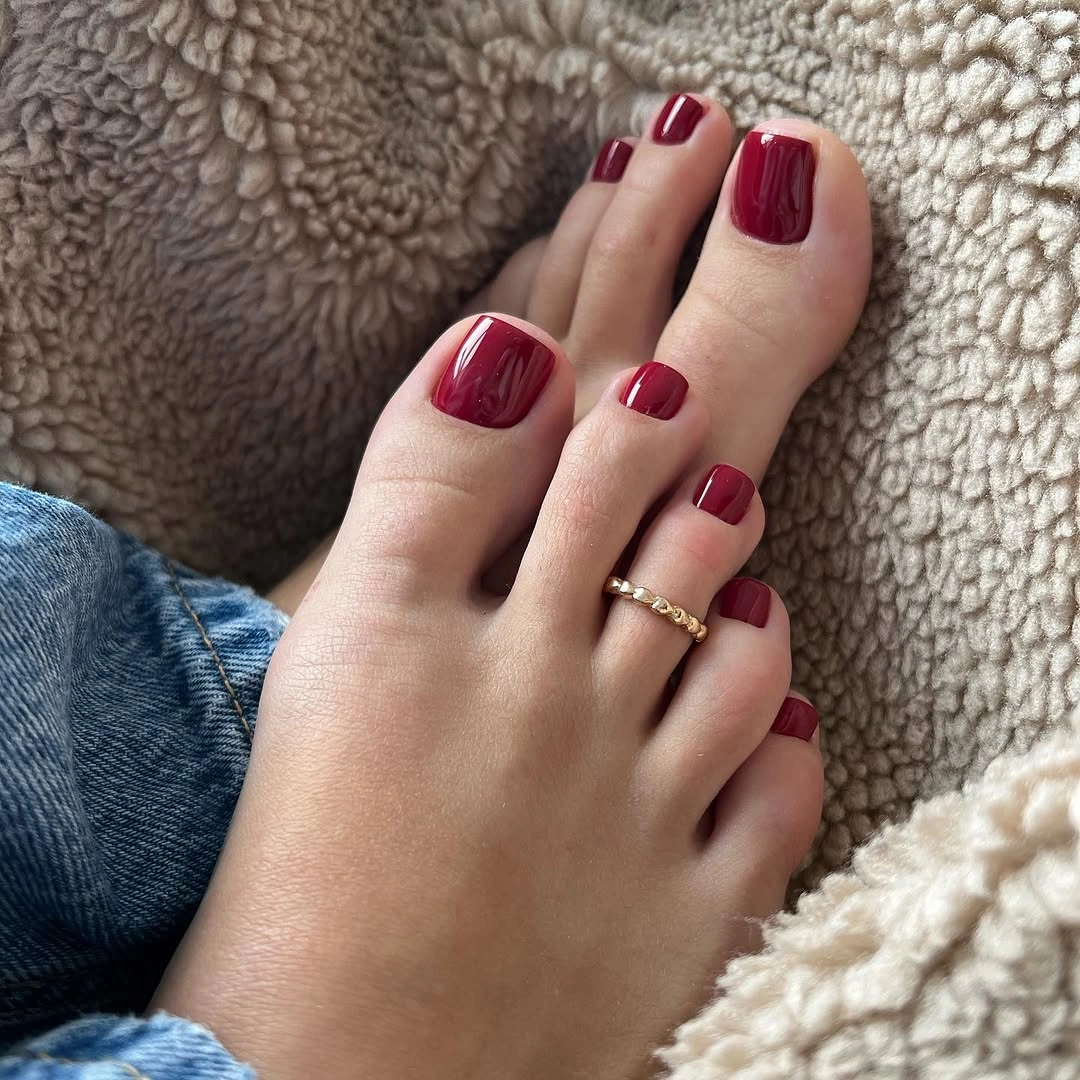
Use a deeper red-brown for a more muted fall direction, or keep the cherry tone and soften the shape into a rounded square. A single accent nail is optional, but the plain version is often the most useful because it can be refreshed quickly and coordinated without extra planning. That version keeps the deep red as the complete statement and makes the pedicure easy to repeat.
Red is straightforward but not invisible: the big toes will show edge wear, and uneven coverage can make the color look less clean. That is the only real complexity in this design. It suits a wearer who wants a familiar shade with strong visual payoff and would rather keep the pedicure simple than chase a new motif.