Fall nails with accent nail ideas work best when the accent has a clear job. It might add a change of finish, open up a dark color with pale space, or introduce one small motif that the rest of the hand does not repeat. This set stays interested in proportion, so the accent remains a deliberate shift instead of a request to decorate every surface.
There is also a useful restraint in choosing fewer changes. A single glitter nail can be enough beside a quiet neutral, just as one plaid or botanical nail can give a plain burgundy set its direction. Each example below looks at the scale of the detail, the space around it, and the point where a shorter shape makes the same idea more comfortable.
Soft Pink Lines Meet One Reflective Accent
Short almond nails begin with soft pink and translucent nude bases, then add fine dark curves and small floral-like marks on selected fingers. One bright silver-looking glitter nail supplies the strongest change in finish. The pale palette keeps the accent delicate, while the glitter gives the set one clear point of light rather than turning every nail reflective.
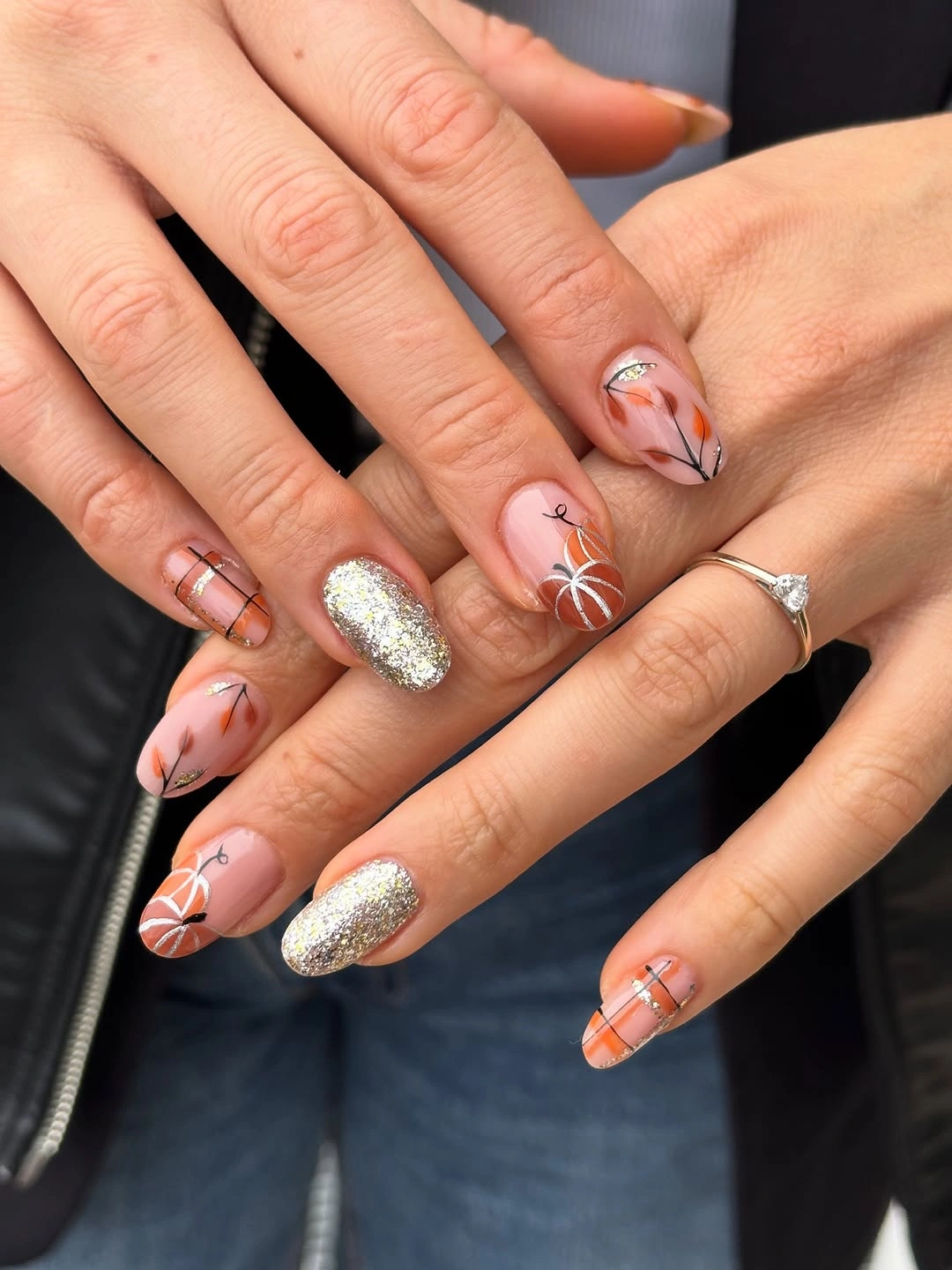
The design holds together because the accents are not all competing for the same role. Linework creates direction, pale color leaves negative space, and the glitter acts as a single interruption that the eye can find immediately. The short almond shape gives the smaller details enough room without making the manicure feel extended or overly formal.
Use one line-art nail and one glitter nail if you want to preserve the structure with less visual information. A rounded almond would soften the outline, while a muted blush base can keep the accent visible without making the whole set too pale; the useful decision is to leave at least a little quiet surface around each detail.
Taupe Solids Let Metallic And Glitter Accents Breathe
Short rounded-square nails use taupe, brown, and grey-brown solids, with one reflective silver-grey accent and another densely glittered nail. The palette remains neutral even as the finishes change, so the hand does not need a graphic motif to feel complete. The compact shape contains the shine and keeps the accent scale proportional to the nail length.
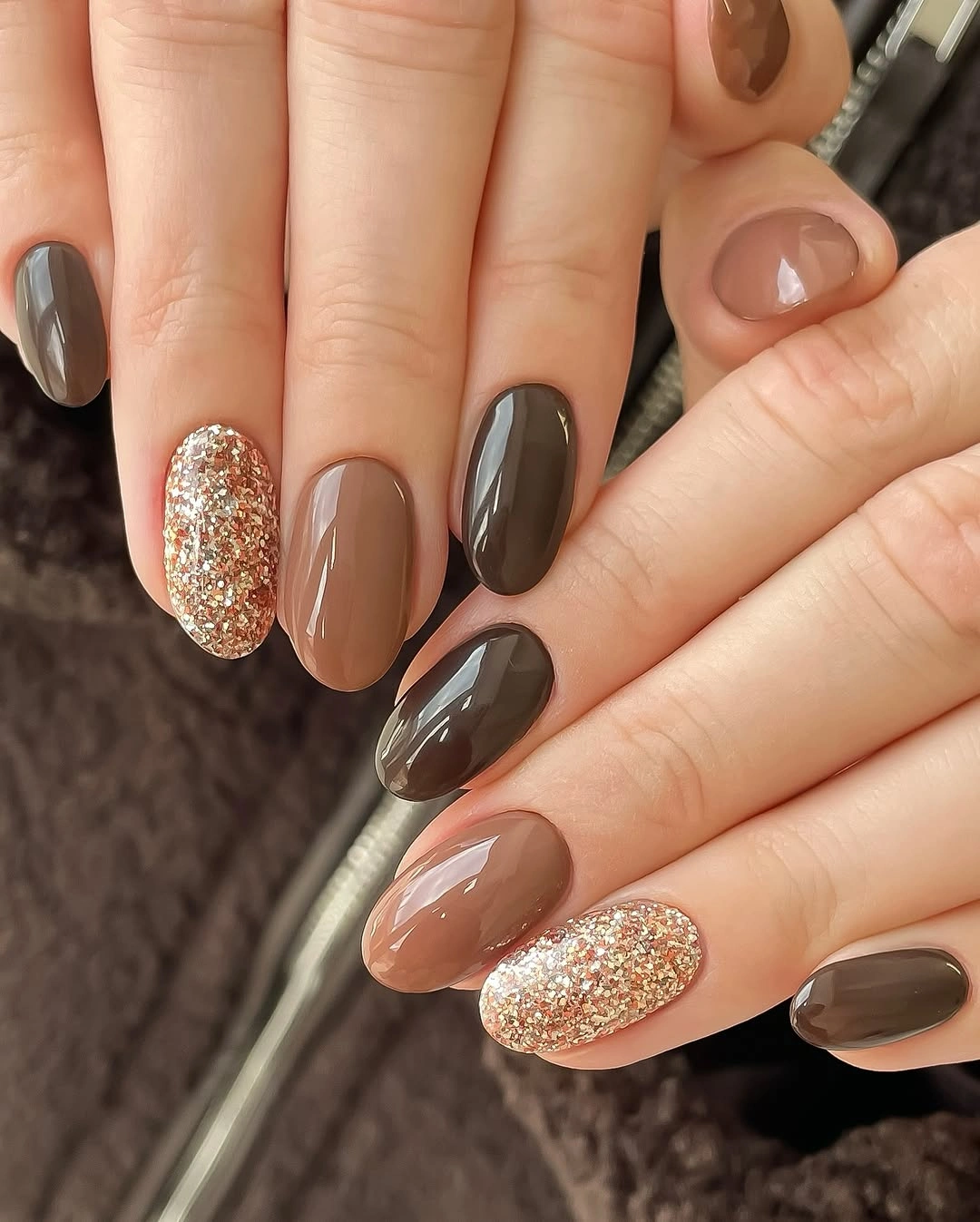
What gives the set coherence is the order of attention. The brown and taupe nails establish a quiet base, the metallic surface adds a cool flash, and the dense glitter creates one warmer point of light. Each finish is easy to distinguish, but the colors stay close enough that the design reads as a controlled study of texture rather than a collection of unrelated effects.
Choose one reflective accent if a full mixed-finish set feels too busy, and keep the rest in two neutral shades. A short rounded square is already a practical proportion; the main tradeoff is deciding whether the glitter or the metallic surface deserves the focal position, since both together make the design more noticeable.
Deep Burgundy Uses Shine As Its Only Accent
These short rounded-square nails are almost entirely deep burgundy, with a glossy surface that shifts slightly brighter where the light catches. No separate motif is clearly visible, so the accent idea comes from tonal movement rather than a different color or drawing. The compact outline gives the dark shade a calm scale and keeps the hand from looking overworked.
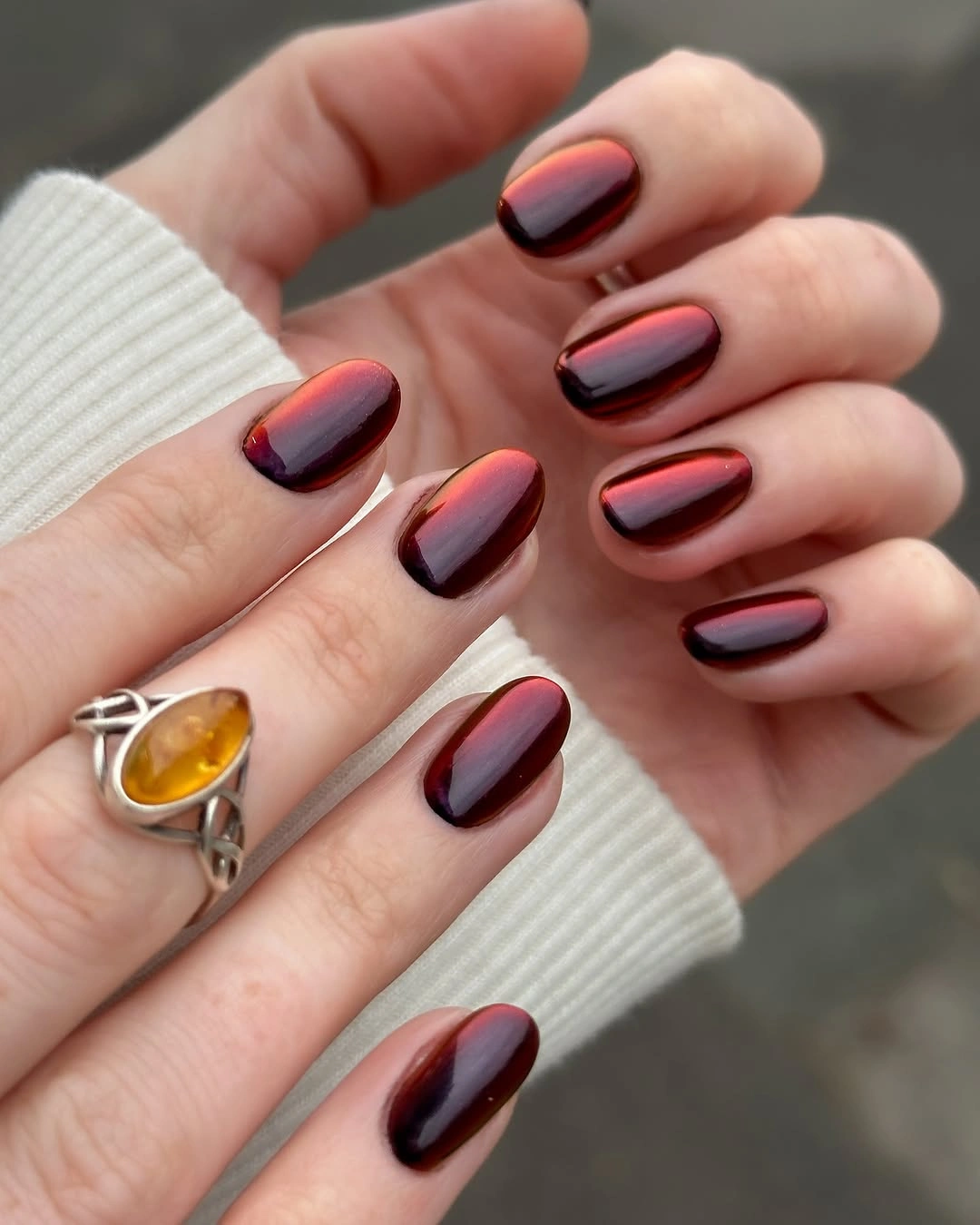
The restraint is important here. A dark burgundy already creates a strong field, and the glossy reflection adds enough variation to keep it from looking flat; adding glitter, florals, or a contrasting base would change the balance rather than improve it. The manicure is most coherent when the eye can stay with the surface and the rounded edge.
If a visible accent is needed, make one nail slightly brighter berry or a little more reflective instead of introducing a new motif. Keeping the length short will protect the quiet proportion, and a careful check in different light will help distinguish a real tonal choice from a reflection that only appears in one angle.
Burgundy Tips Draw A Precise Short Square
Short square nails use a pale nude center with deep burgundy tips and a few solid burgundy nails. The dark color is concentrated at the edge, leaving a light window around the cuticle and making the accent feel built into the shape. Rings and a black bag add gloss around the hand, but the manicure itself remains orderly and compact.
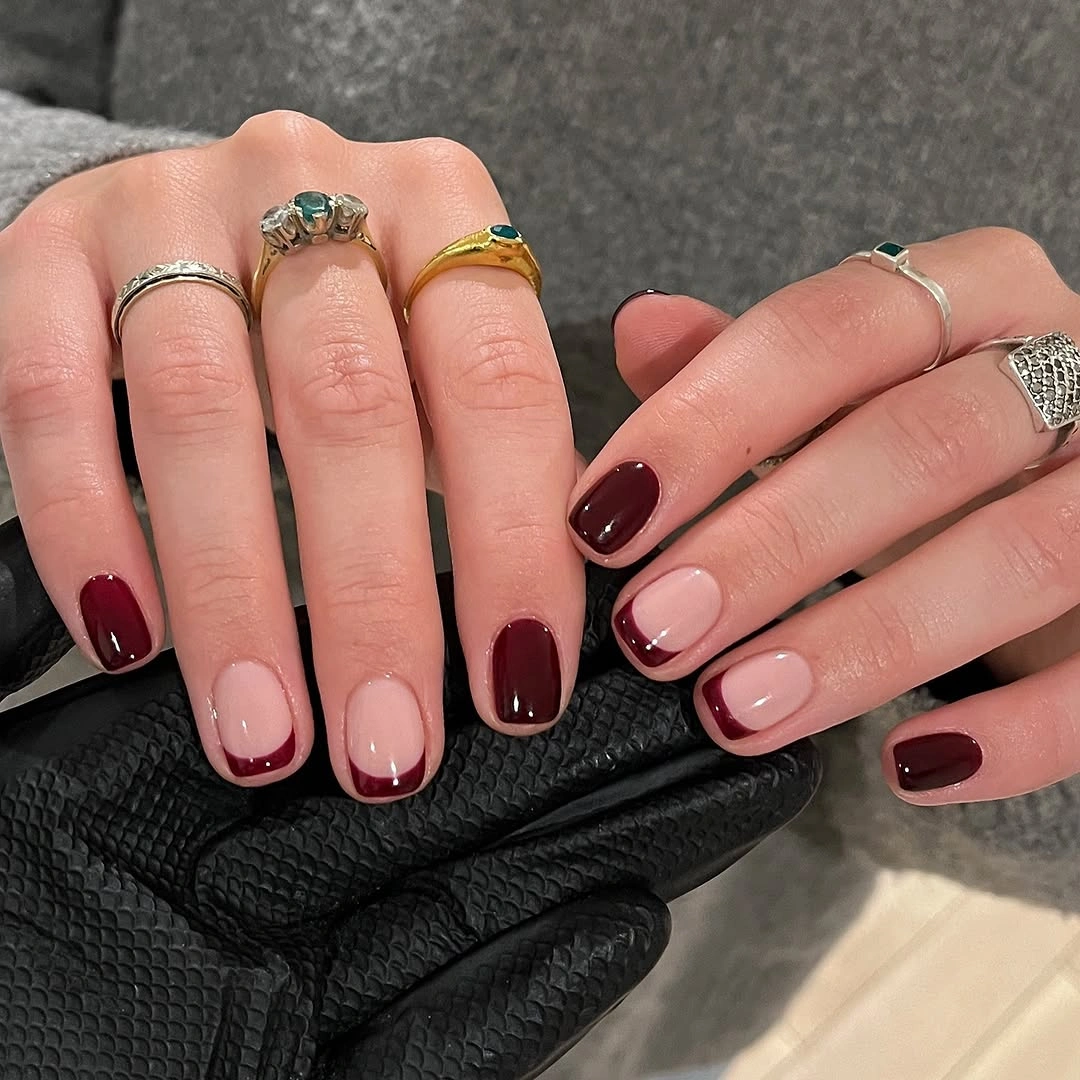
The open base is carrying as much weight as the tip. Nude space prevents the burgundy from becoming a full block, while the straight square edge makes the dark line look crisp and graphic. That combination gives the hand a clear rhythm without needing a separate art nail; the accent is the boundary between light center and deep edge.
Keep the tip narrow and let one solid burgundy nail act as the stronger anchor. If strict corners feel severe, a rounded square will preserve the same relationship with a softer finish; changing the whole nail to burgundy would remove the negative space that makes the design feel measured and open.
Long Nude Almonds Leave Room For Curved Lines
Pale nude or blush covers these long almond nails, while selected fingers show dark brown curved lines or border-like details. The base remains open and glossy, so the lines act as a quiet accent rather than a dense pattern. Denim and a knit sleeve provide color outside the manicure, leaving the pale nail surface to carry the composition.
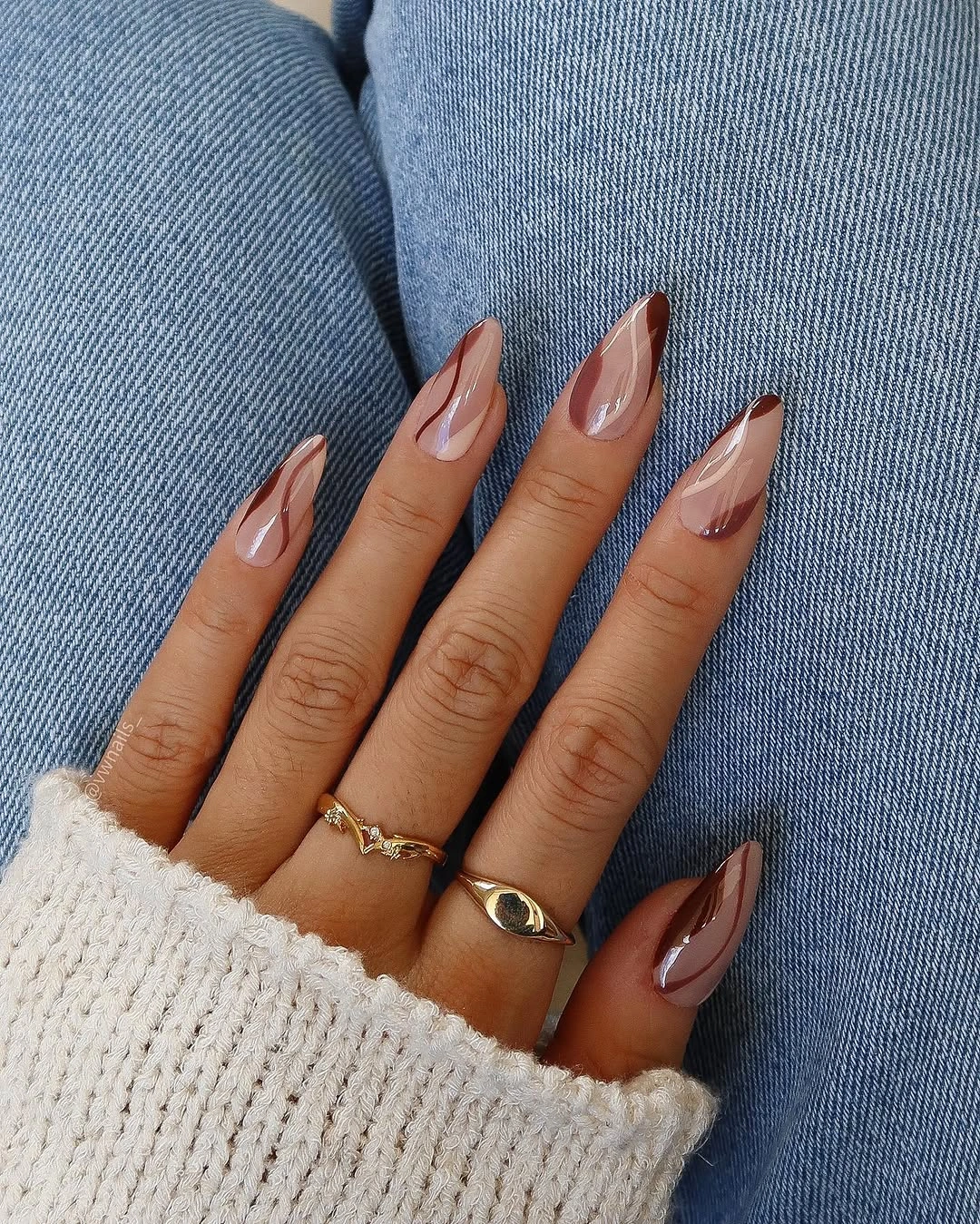
The most considered element is the amount of space left untouched. Brown gives the line enough definition, but the nude field remains larger than the decoration, allowing the almond silhouette to stay visible from cuticle to tip. This makes the accent feel like a route through the nail rather than a patch placed on top of it.
Use one curved line on each hand and move to a medium almond if the length feels too exposed. A warm beige or translucent blush can replace the base, but the design should remain light; adding several more marks would reduce the negative space that gives the accent its quiet character and balance overall.
Taupe Keeps A Dark Reflective Accent Measured
Medium rounded-square nails combine taupe and brown solids with one dark glossy accent that carries a pale curved reflection. A fine metallic-looking detail appears on another nail, but the overall palette stays neutral and close in tone. The design changes surface and contrast in small areas while leaving enough plain color for the hand to remain composed.
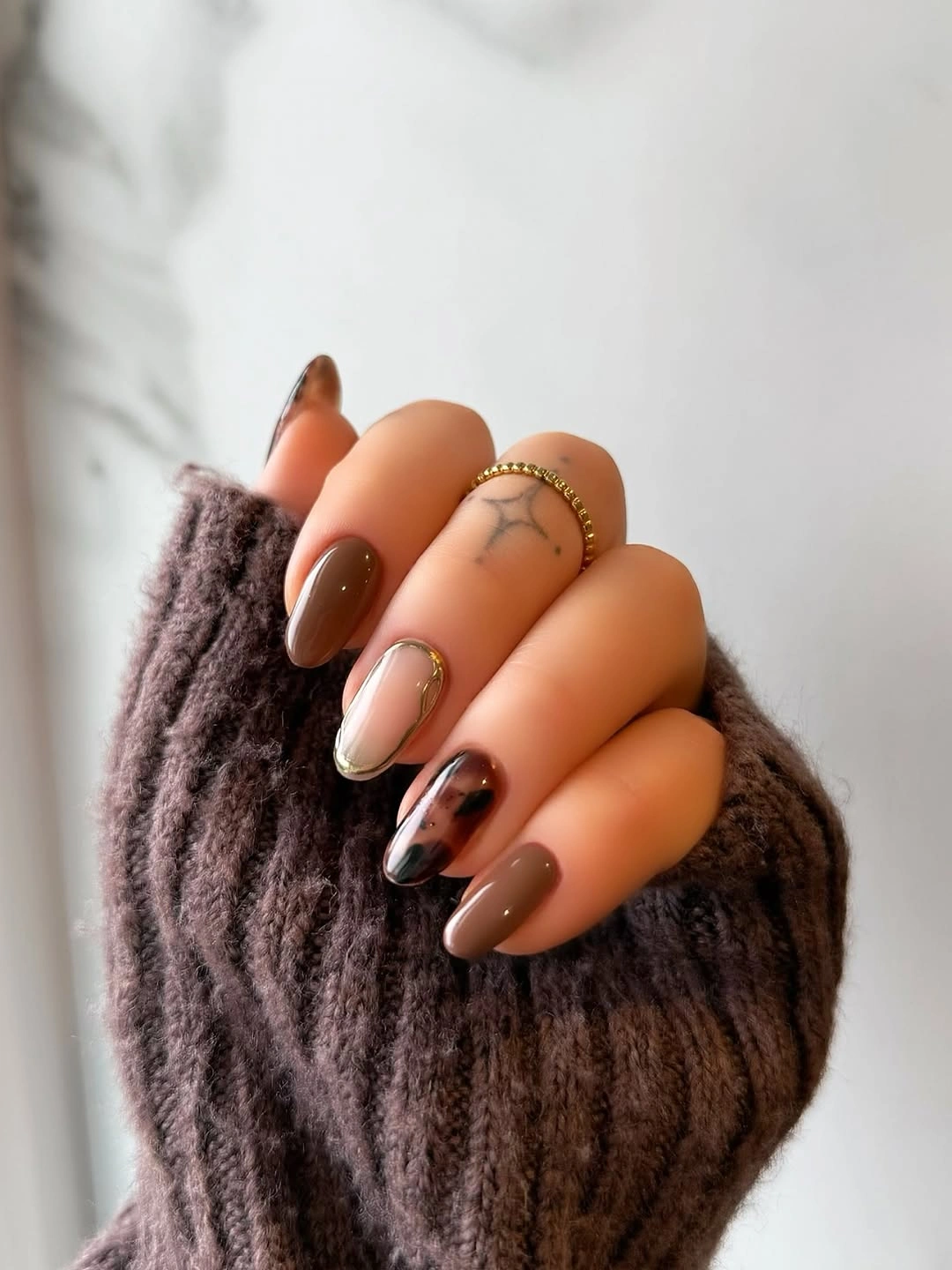
The relationship between plain and reflective surfaces is carefully scaled. The taupe nails create a soft foundation, the dark accent adds depth, and the small light detail introduces a narrow point of brightness. Nothing covers the whole hand with decoration, so the eye can register the accent as a change in material appearance rather than a separate theme.
Choose one dark accent and skip the metallic-looking detail if you want a cleaner edit. A medium rounded square is a useful middle length here, though a short oval would make the contrast gentler; the final choice should protect the calm base instead of adding changes merely because space allows it.
Burgundy Squares Pair Texture With Narrow Stripes
Long square nails use deep burgundy as the anchor, then introduce orange accents with raised-looking vertical texture and other nails with narrow burgundy and dark stripes. The two accents are different in character, but both remain within a warm autumn range. The long square provides enough surface for the details while keeping the front edge visibly structured.
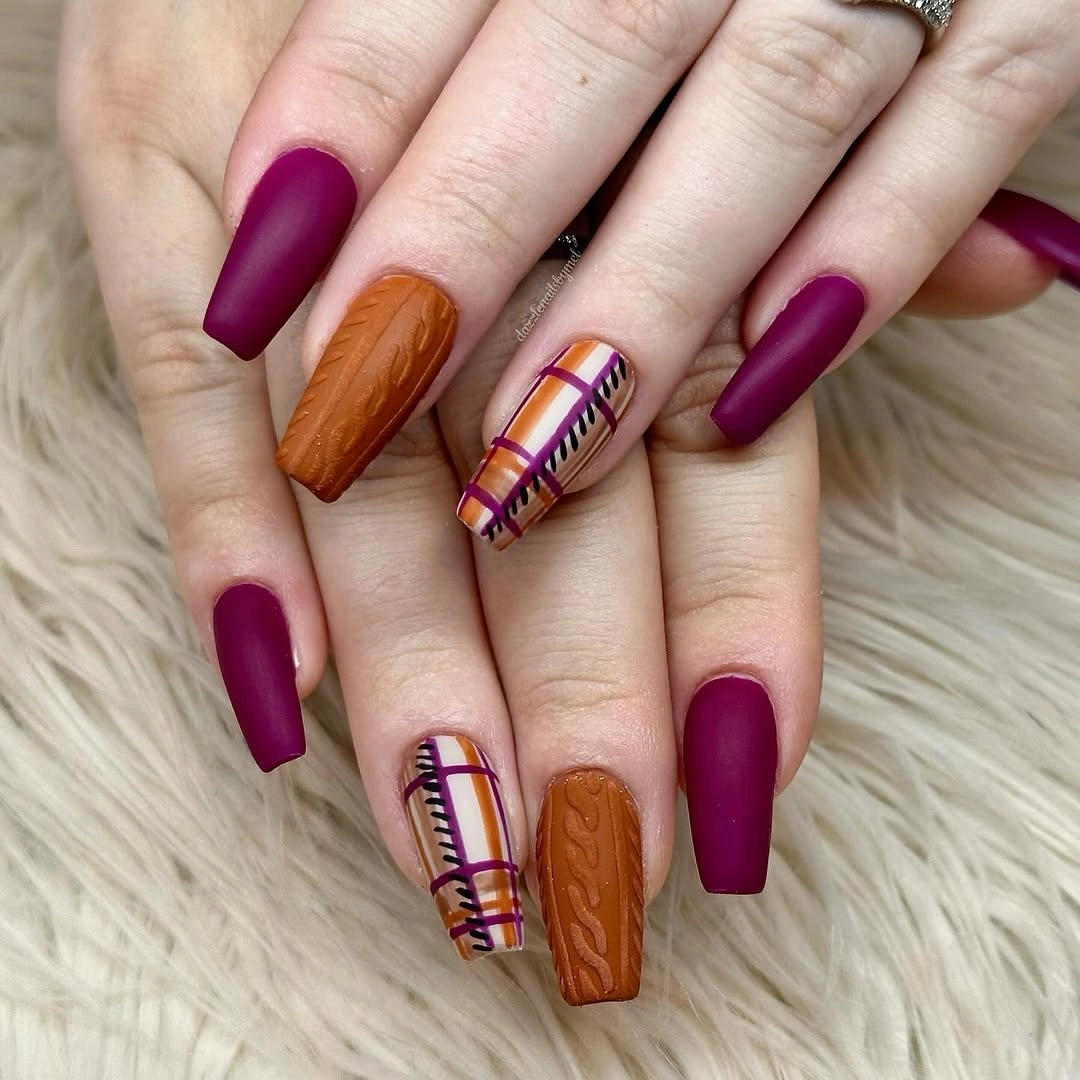
Texture and line are doing separate jobs. The orange accents change the surface and bring warmth, while the striped nails add geometry without requiring a large motif. Burgundy returns between them as a visual pause, which prevents the hand from becoming a series of unrelated statements and keeps the accent scale connected to the main color.
Use one textured nail and one striped nail if the full set feels too elaborate. A medium square would reduce the surface area and make the design easier to maintain, while the exact raised method can remain unknown; the important choice is to preserve the difference between tactile-looking texture and flat graphic lines.
Orange Solids Give A Pale Accent Nail A Boundary
Short rounded-square nails use bright orange glossy solids, with pale accent nails carrying small orange and dark motifs. The light base creates a clean boundary around the tiny details, while the orange repeats across the rest of the hand so the accent does not appear detached. The design is seasonal through color and scale rather than a large illustrated scene.
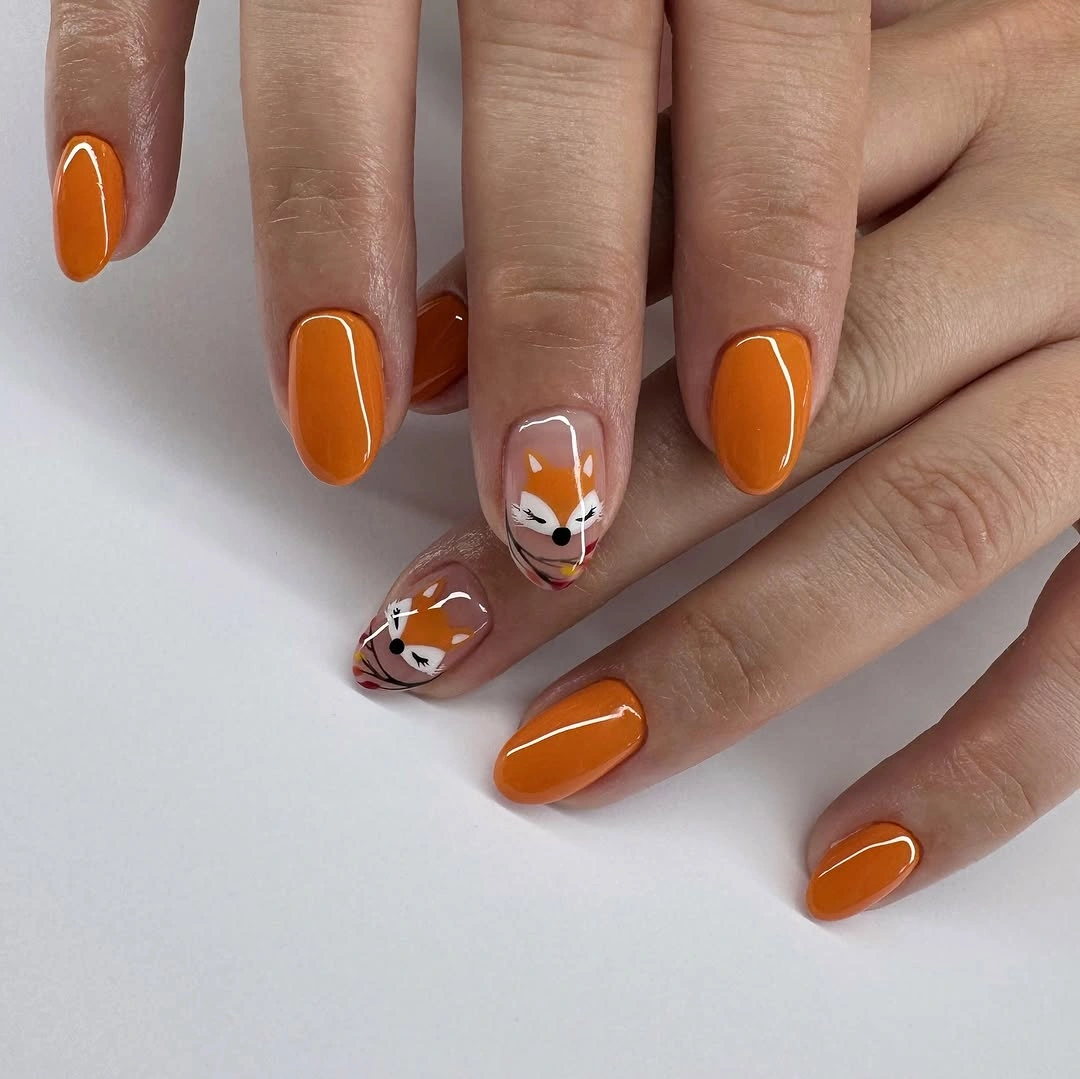
The pale nails are important because they slow down the strong orange. They add an open pause, then let the small marks appear as a controlled cluster instead of asking the eye to process orange on every finger. The short shape limits the amount of art, which is useful here because the accent works better when the motifs remain small and separated.
Keep two orange solids for every illustrated accent and simplify the marks if the nail surface is smaller. A muted terracotta could replace the bright orange for a quieter palette, but the base should remain light enough to show the contrast; identifying a precise motif matters less than protecting the scale of the accent.
Burgundy Squares Pause For Pale Floral Marks
Short square nails use deep burgundy glossy or satin-looking solids, with two pale pink accents carrying dark branch-like marks and small dots. The dark color stays dominant, but the light nails create a clear interruption that gives the hand a more open rhythm. The square silhouette remains simple, so the accent is easy to compare from finger to finger.
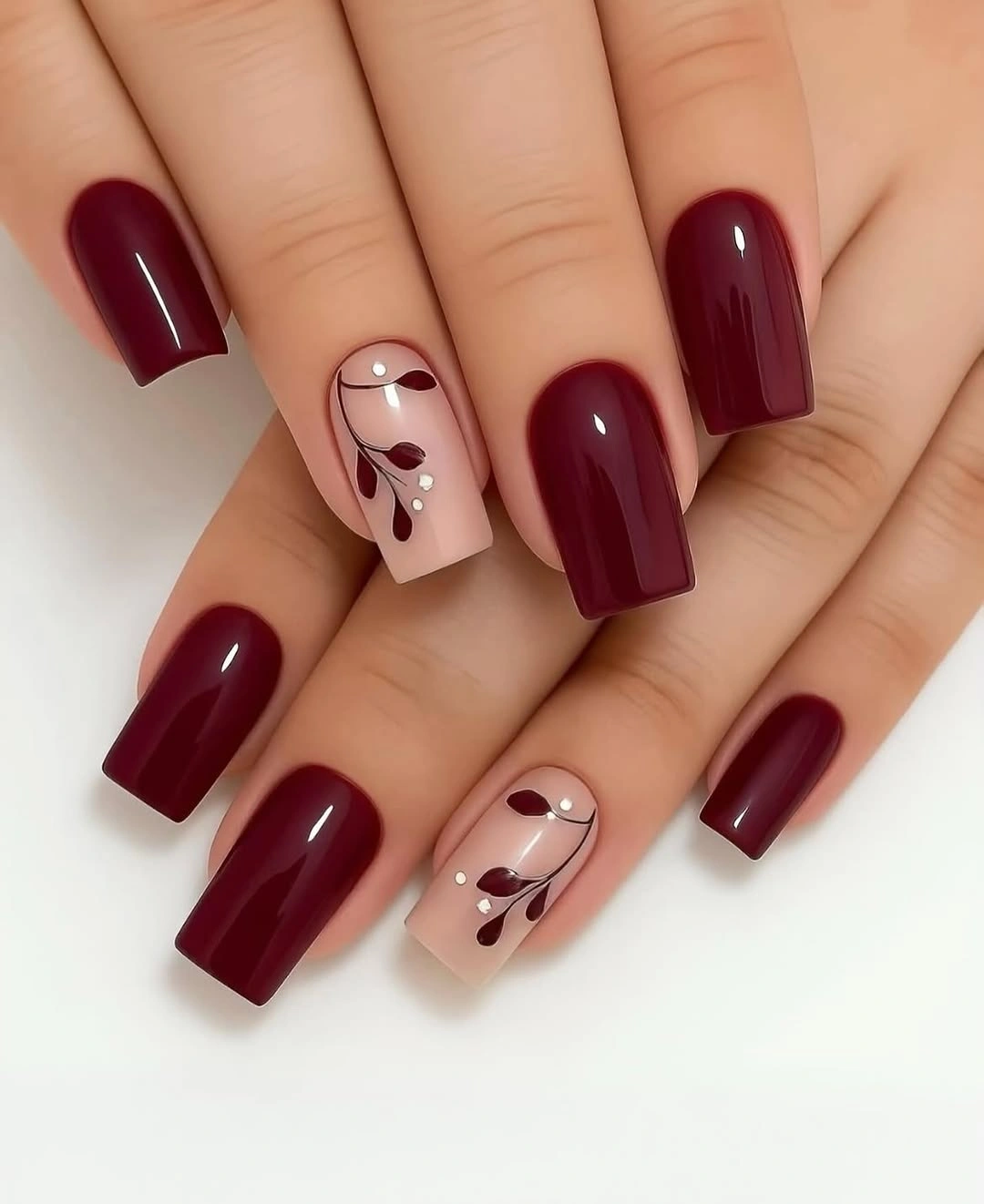
The design depends on repetition without duplication. Burgundy returns across the hand, the pale accents repeat as a pair, and the small marks vary enough to avoid a stamped feeling. Because the motifs remain on a light field, they do not need to be oversized; the short length and selected placement give them all the emphasis they need.
Use one pale accent on each hand and let the rest stay burgundy. A rounded square will make the edges less severe, while a matte surface could quiet the shine if the look feels too glossy; either change should keep the central proportion of dark solids, light pause, and sparse mark intact and easy to read.
Nude Almonds Keep Dark Accents Sparse Outdoors
Long almond nails are mostly pale nude or blush, with only a few dark burgundy marks or deeper accents visible in the outdoor pose. The base remains the largest visual area, and the brown sweater and fallen leaves provide a busy setting around the hand. That makes the sparse nail details feel even more considered because they do not compete with the background.
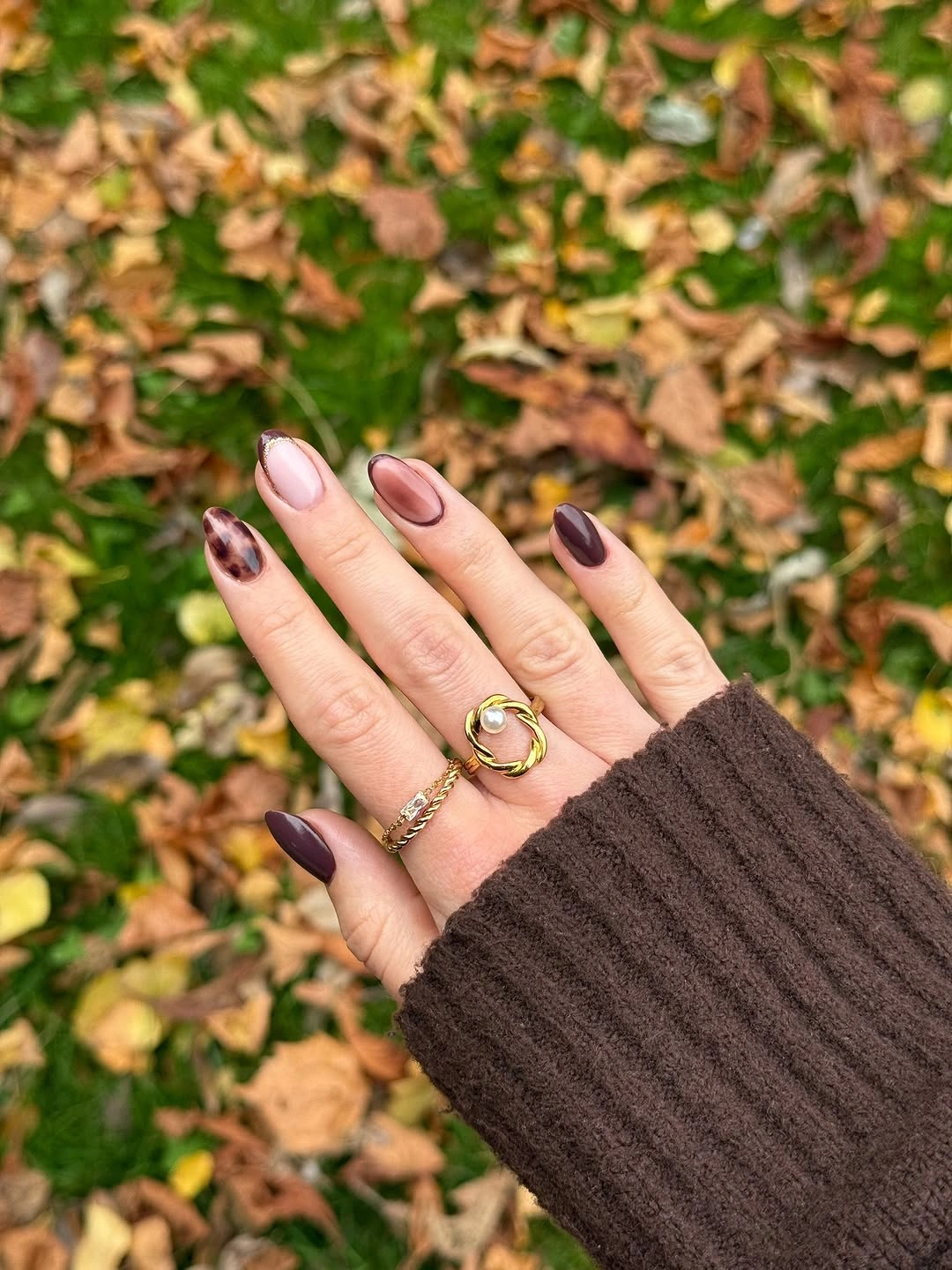
The strength lies in what the manicure leaves out. A dark accent appears as a small echo of the surrounding autumn colors, while the nude base preserves the long almond line and gives the hand space. This is a quieter approach than a full floral or glitter set, especially when the goal is a seasonal suggestion rather than a literal theme.
Place the darker color on one or two nails and keep the others pale if you want to adapt the idea. A medium almond will make the open space easier to live with, and the partially hidden details should stay simple; adding decoration that is not visible in the reference would undermine the measured quality of the design.
Multicolor Leaf Accents Sit On A Nude Base
Short rounded-square nails use a pale nude or blush base, then add leaf-like marks in orange, yellow, green, and dark tones. The color enters through small accents rather than saturated solid nails, so the hand stays light even as the motifs gather autumn warmth. Their placement near the center or tip leaves a visible border of calm base around each detail.
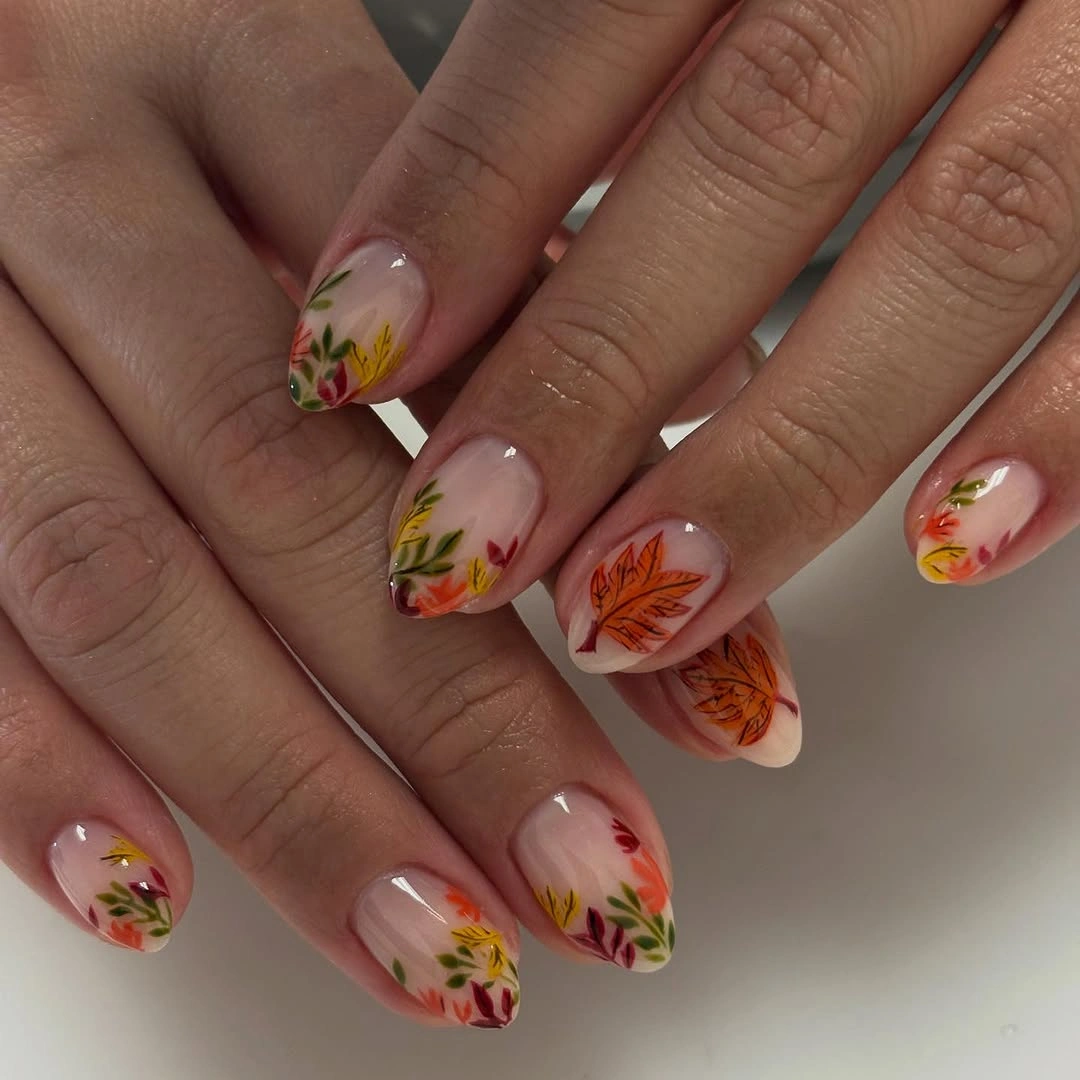
The accent scale is doing the quiet work. A nude field gives every color a place to sit, and the repeated small clusters make the different hues feel related without demanding identical drawings. Because the base remains plain on much of each nail, the set can carry several colors while still reading as restrained rather than busy.
Choose two or three accent nails and keep the rest nude for a cleaner interpretation. Short rounded-square tips give the motifs a stable frame, though a short oval would soften the result; the marks can remain leaf-like and abstract, since their usefulness comes from the color grouping and the open space around them.
Orange And Burgundy Use One Open Curved Accent
Short rounded-square nails alternate glossy orange and burgundy, with one pale or translucent accent carrying a single curved burgundy line. A few bright reflections appear on the solid nails, but the open accent stays visually lighter than the rest. The color pairing is warm and direct, while the pale nail prevents the set from becoming a sequence of dense blocks.
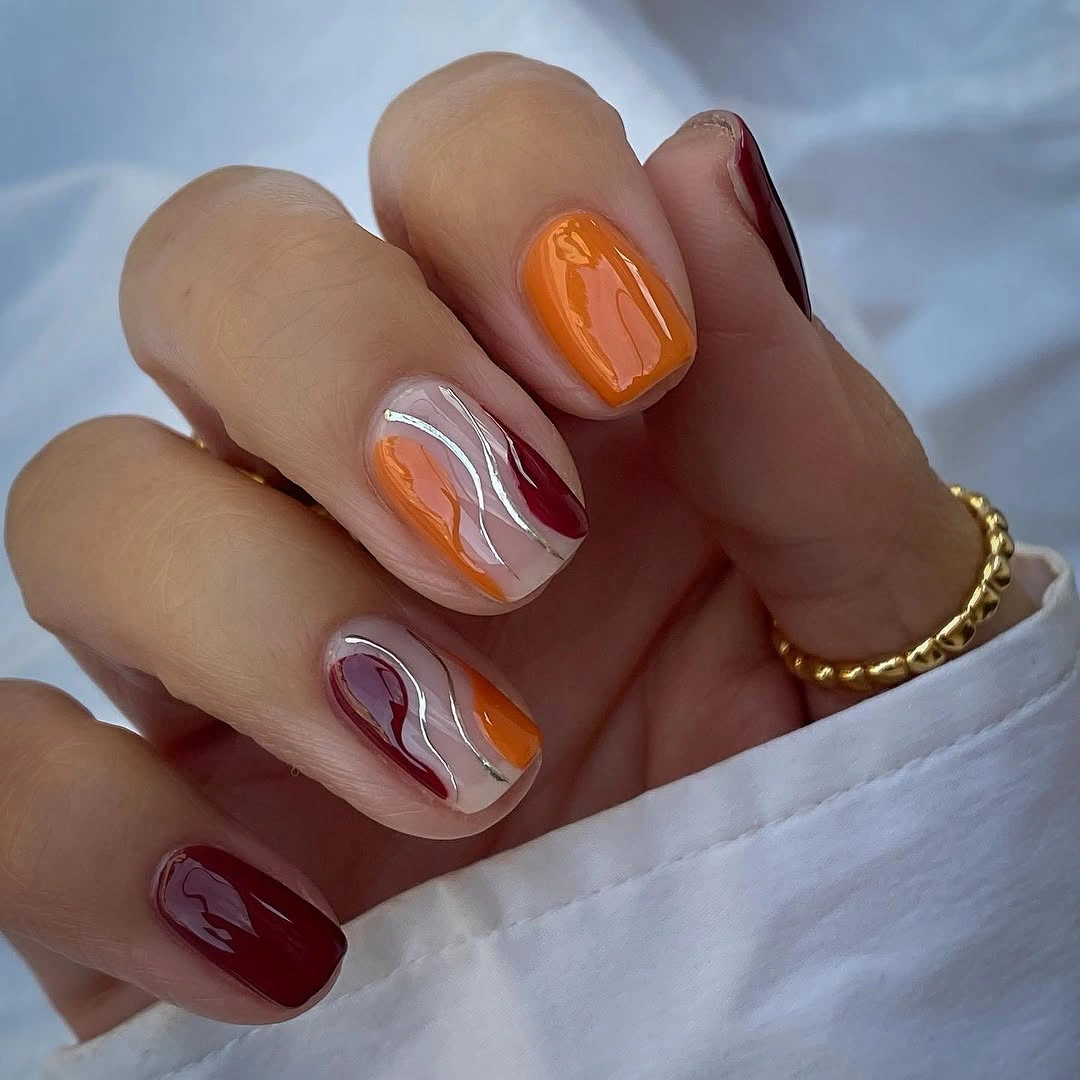
The line has value because it is not surrounded by more lines. The pale base offers negative space, the burgundy curve connects it to the darker solids, and orange adds the warmer flash. That hierarchy lets the accent read from a distance without becoming a full illustration, which is especially useful on a compact shape.
Keep the curved mark broad and simple, and let the pale nail sit on the ring finger if you want a natural focal point. A muted rust can replace the orange, while a shorter rounded square will preserve the crisp division between solid color and open accent without adding extra detail or visual clutter.
Plum Solids Let Pink Floral Accents Stay Small
Short rounded-square nails use deep plum or berry solids, then pause on two pink accents carrying dark branch-like floral marks. The light pink is not a full contrast wall; it is a small field that gives the marks somewhere to live while the plum remains the main color. The repeated accent placement keeps the set composed across both hands.
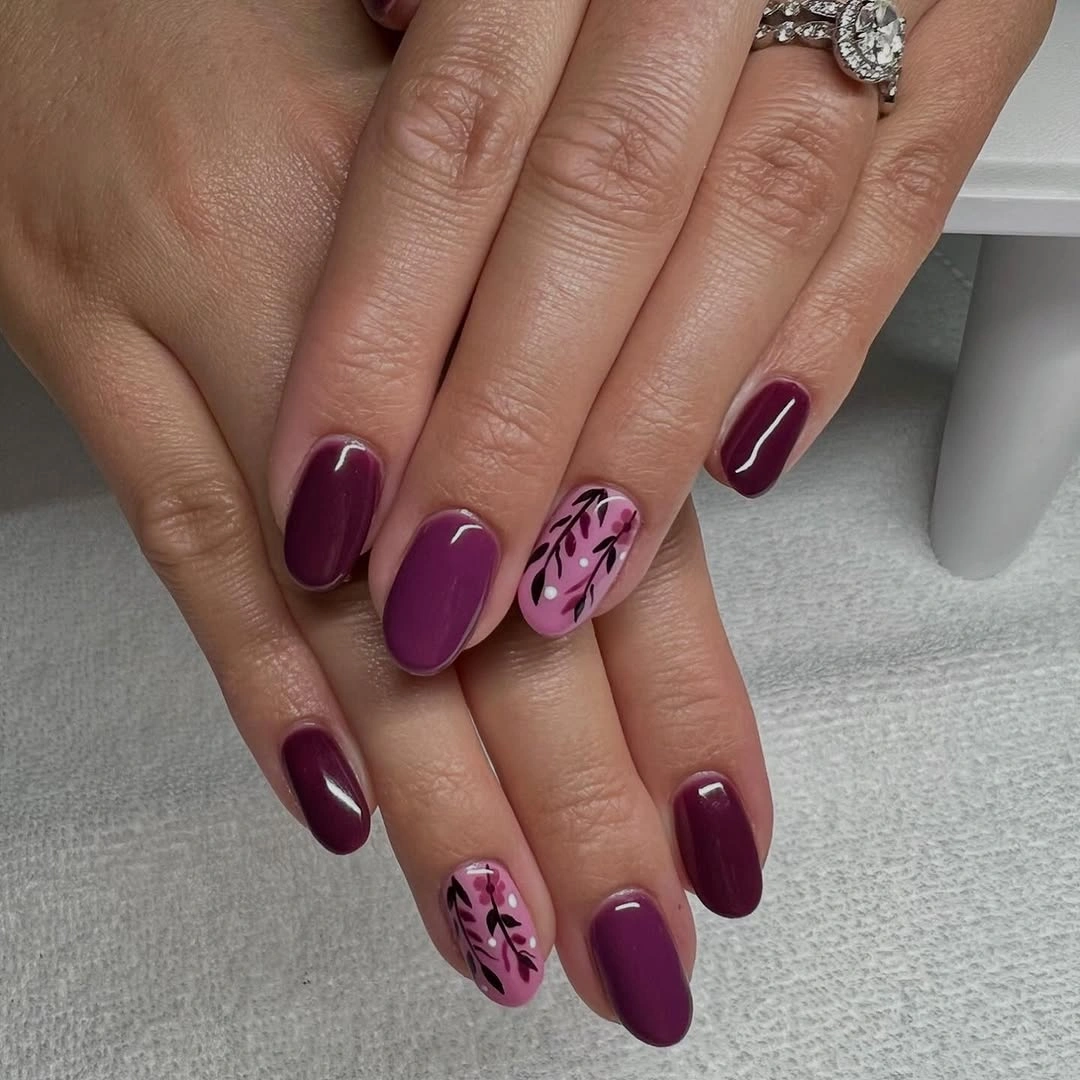
The design feels measured because the motif does not spread. Dark color creates the collection-wide anchor, pink softens selected fingers, and the branch-like marks supply a little movement without covering the entire accent. Short length supports this scale: the detail can be noticed, but it never has enough room to become an oversized illustration.
Use one pink accent per hand and let the marks stay close to the center of the nail. A muted mauve base would make the change gentler, while a matte finish could quiet the surface; whichever adjustment you choose, keeping the accent small is more important than matching an exact flower or symbol precisely.
Coral Matte Needs Only One Dense Glitter Nail
Long almond nails use a solid coral or salmon matte color, with one accent nail covered in dense orange-gold glitter. The flat coral surface carries most of the set, so the glitter becomes a single concentrated point of light rather than a repeated sparkle. A fuzzy sweater backdrop supports the warmth, while the almond shape keeps the look elongated.
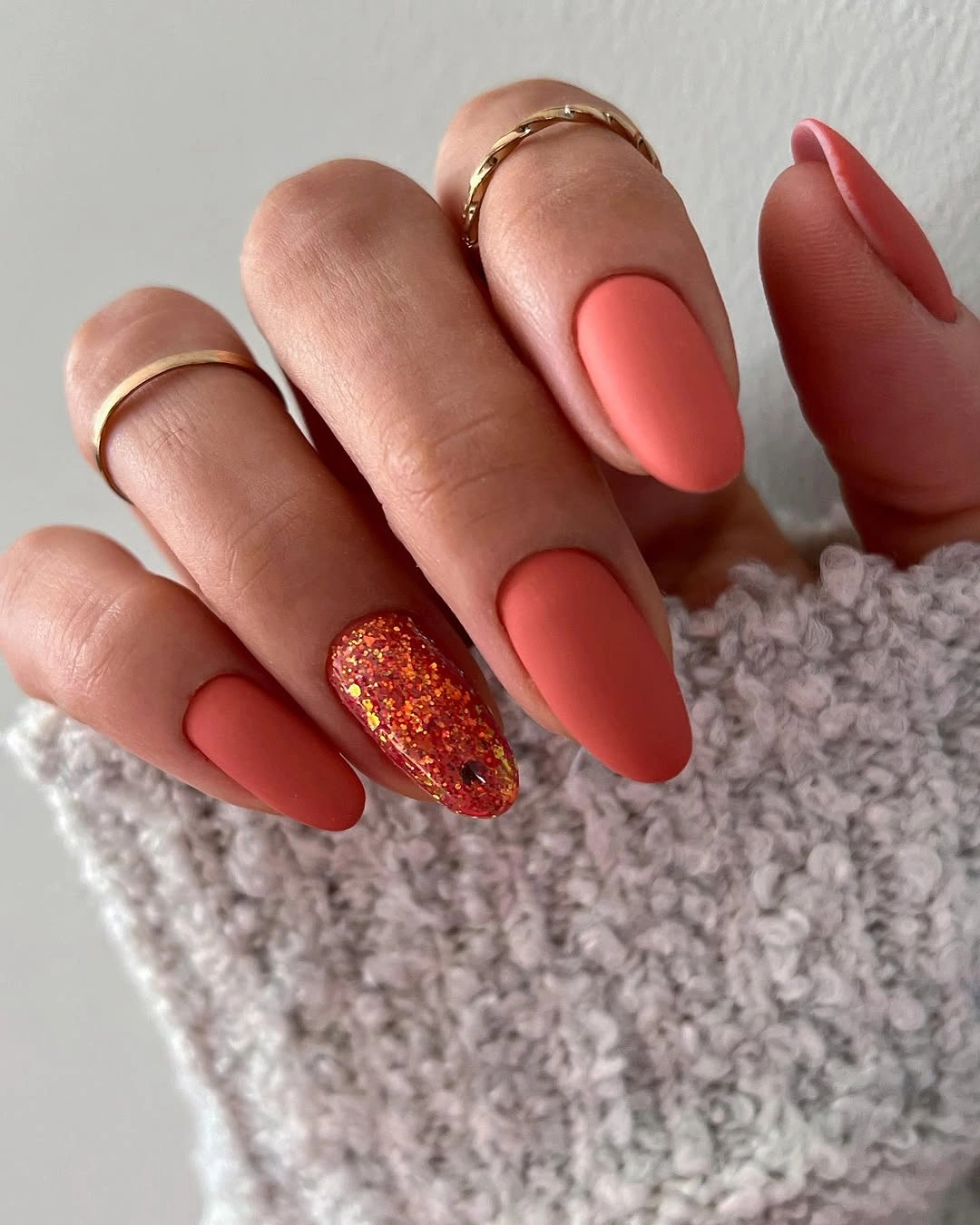
The contrast works because finish and scale change together. Coral matte is broad and quiet, the glitter is narrow in distribution but intense in reflection, and the almond outline gives the hand a long, clean route around both. A second glitter nail would make the design brighter, but one is enough to establish the focal point without losing the restraint.
Shorten the almond and keep the glitter on the ring finger if you want to make the idea easier for daily wear. A muted terracotta can replace coral, and the glitter can be softened to a fine shimmer; the essential relationship is one flat warm field with one more reflective interruption and no extra competing accent.
Burgundy And Nude Repeat Botanical Accents Quietly
Short rounded-square nails alternate burgundy and nude, with two pale nails carrying dark leaf-like marks and tiny gold-looking details. The palette is warm but not loud, and the short shape keeps the accent close to the hand. Plain burgundy nails create pauses around the decoration, so the botanical idea reads as a small rhythm rather than an all-over theme.
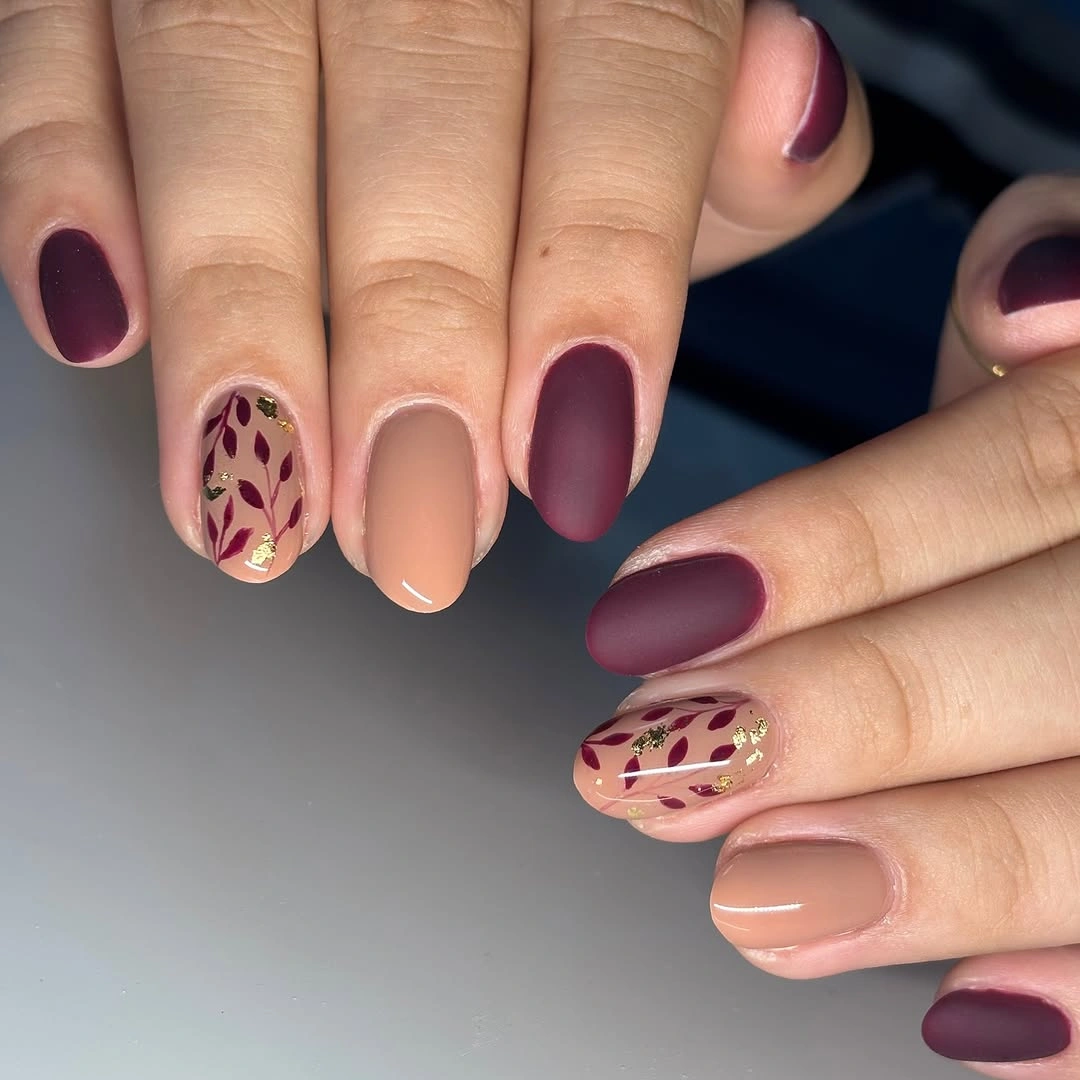
The composition is strongest where the light accent repeats without becoming identical. Nude opens the set, burgundy gives it depth, and the small marks connect the two through a dark line and a warmer reflective note. Nothing relies on a very long tip, so the design feels more about proportion and placement than about making the hand look elongated.
Use one decorated nail per hand and leave the remaining nude or burgundy surfaces plain. A rounded square will preserve the compact structure, while removing the gold-looking detail can make the set quieter; either way, the balance depends on the accent staying smaller than the solid color surrounding it.
Olive Pink And Brown Accents Share A Muted Palette
Medium almond nails combine muted olive-green, pale pink, and brown, with some fingers carrying darker edge or tip accents. There is no single loud motif; the manicure relies on color blocking and small shifts in placement. An olive knit sleeve and rings make the palette feel connected to the hand, but the nails remain the focus because the shape is repeated.
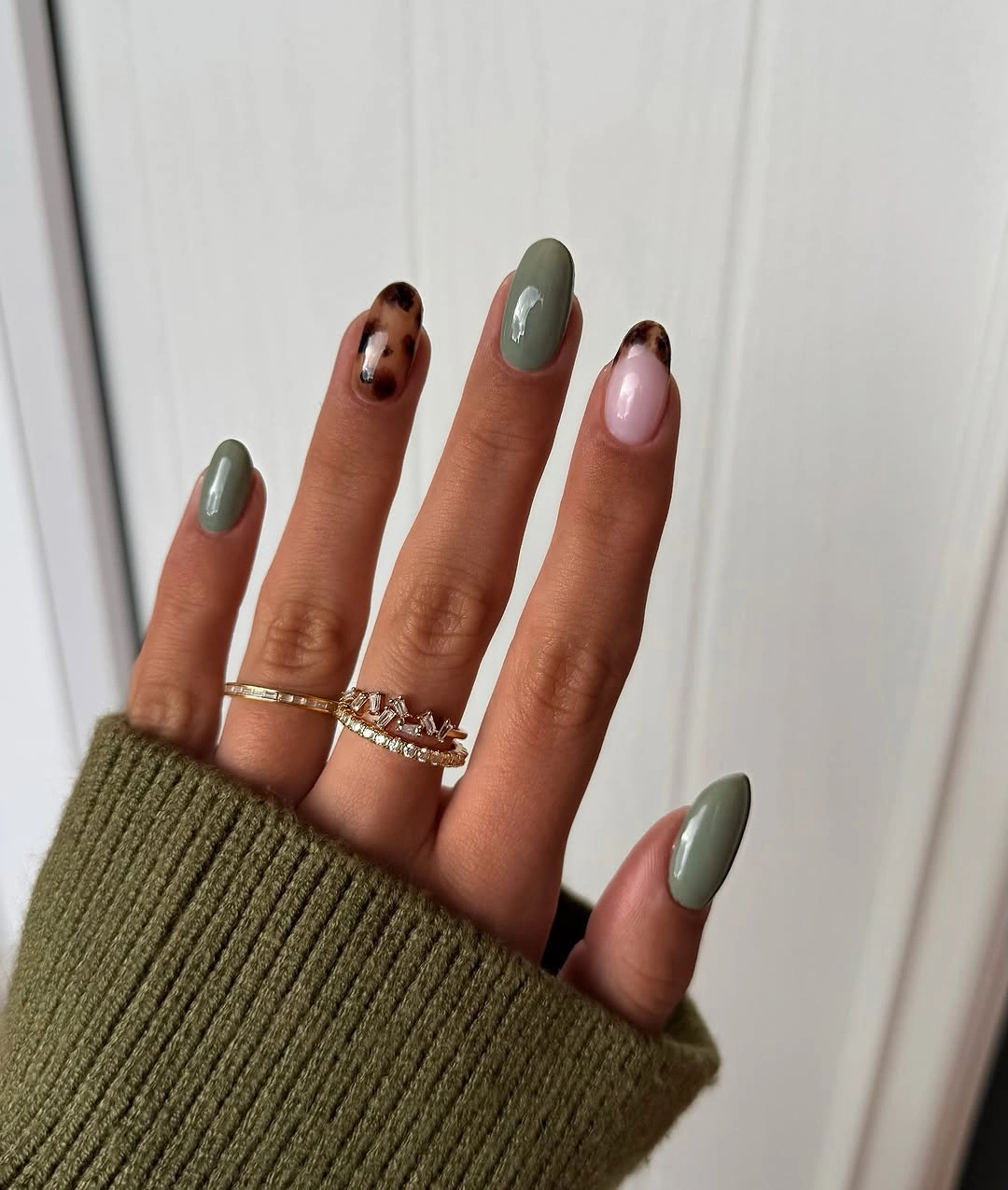
The restrained quality comes from keeping every color softened. Olive supplies the main depth, pink brings a lighter pause, and brown supports the edge details without becoming a separate statement. The medium almond length gives the colors enough room to register while avoiding the extended drama of a very long tip or a dense illustrated accent.
Choose olive as the anchor and add one pink or brown accent if you want a simpler version. A shorter almond will make the color blocks easier to manage, while a clean dark edge can replace more complicated art; the goal is to preserve the muted relationship rather than reproduce every change on every nail.
Nude Florals Gain Weight From Teal And Burgundy
Short rounded-square nails use pale nude bases with small multicolor flower-like motifs, then interrupt the light field with solid teal and burgundy nails. The saturated accents are placed selectively, so they give the hand weight without covering the entire set. The floral marks remain small and colorful, which makes the contrast between detail and solid color easy to see.
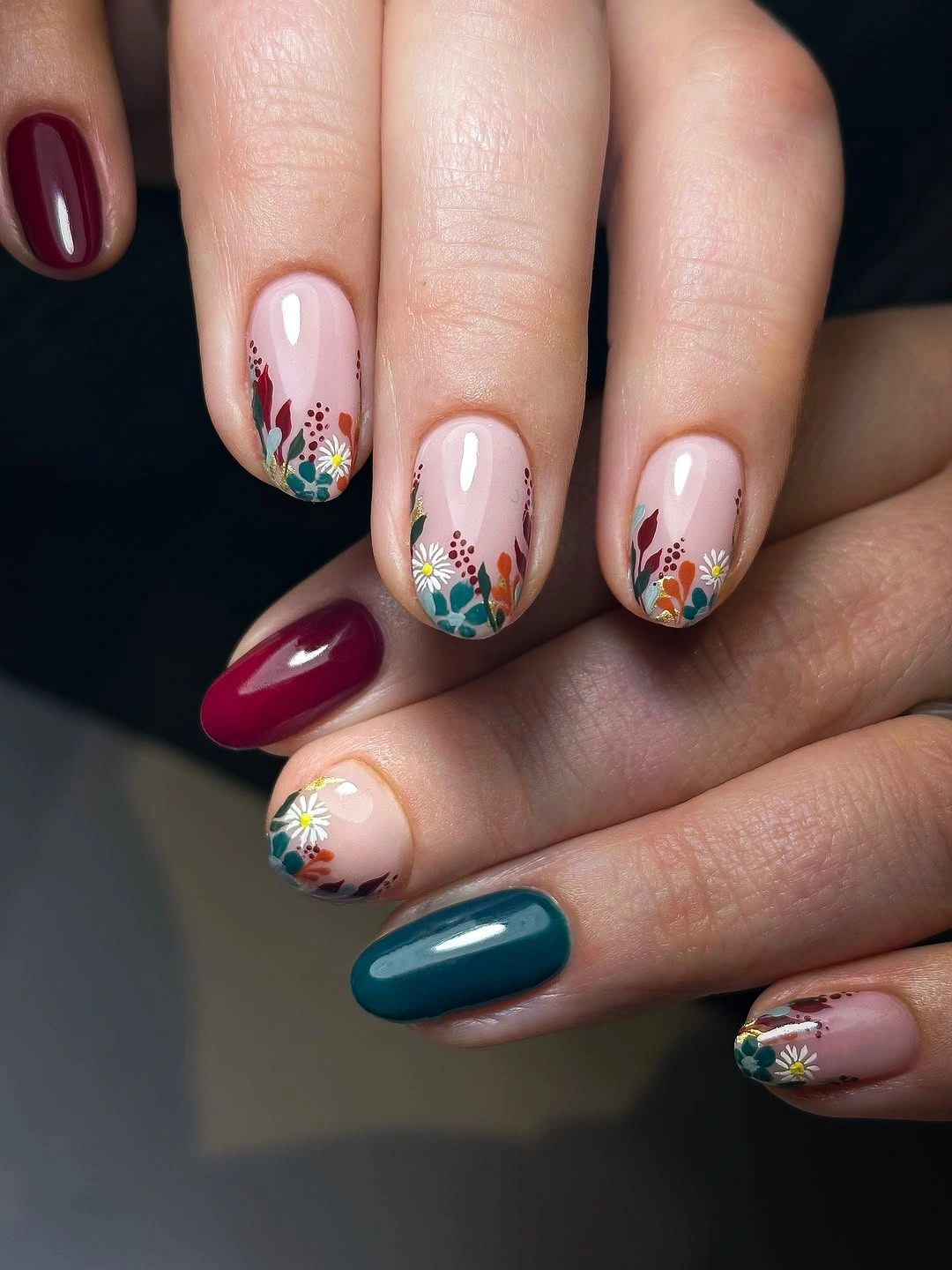
The palette is controlled by repetition of contrast rather than by matching every hue. Nude provides a neutral ground, teal introduces a cool depth, and burgundy brings a warm anchor; the little motifs then connect the two directions without becoming a separate color block. The short shape keeps the bright accents close to the hand and limits visual sprawl.
Use one teal or burgundy solid on each hand and keep the floral marks to two accent nails. A muted green or plum could replace the saturated tones if you want less contrast, but keeping some plain space is essential; adding solid color to every finger would flatten the careful alternation and reduce the pause.
Pale Pink Finds A Cool Accent In Sage Green
Medium almond nails use pale pink or nude as a base, then bring in muted sage and blue-green solids with a few soft curved details. The colors are calm and slightly greyed, so the accent feels modern without becoming bright. A textured background and ring add incidental warmth, but the manicure stays focused on the quiet contrast between pale pink and softened green.
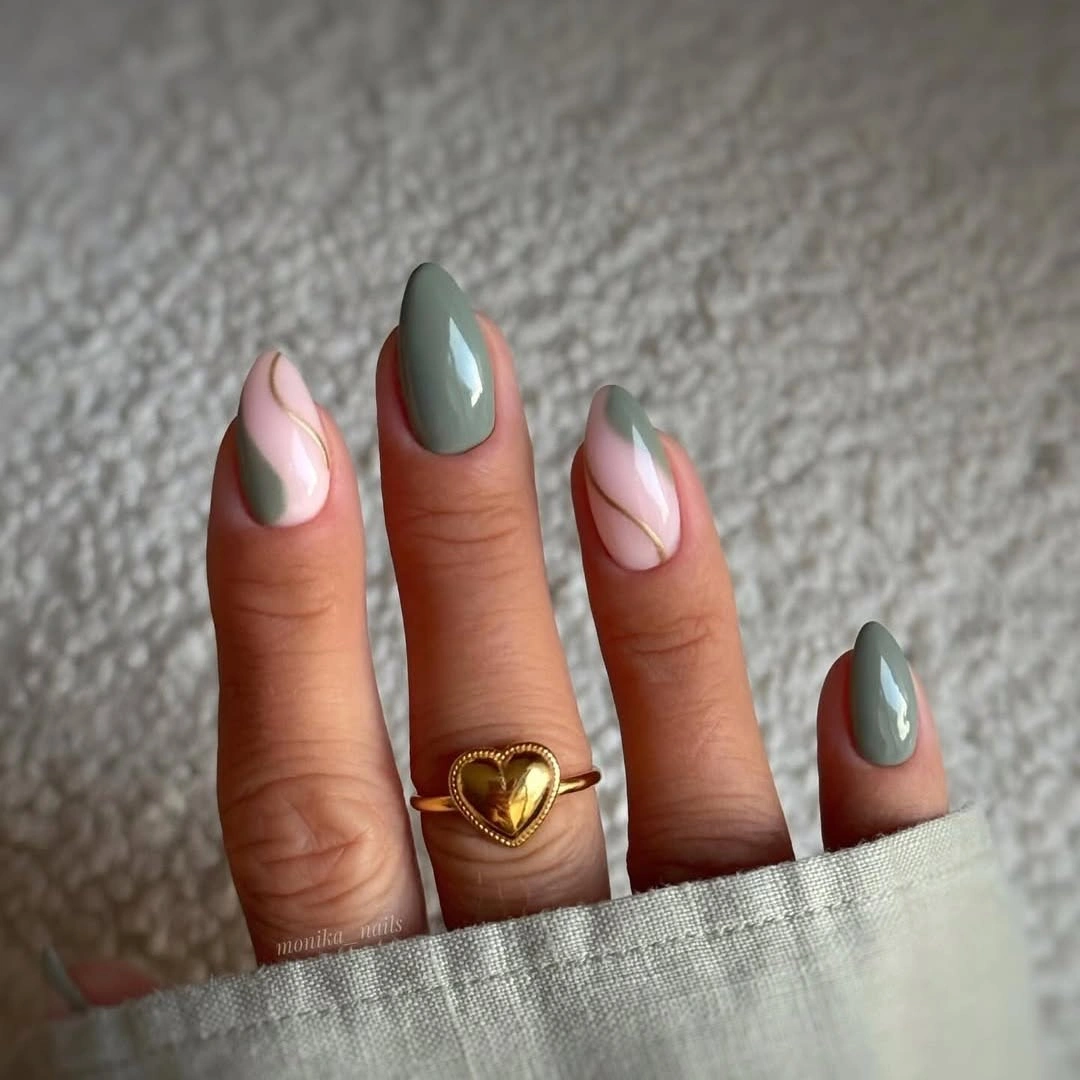
The design works through temperature and scale. Pink keeps the base open, sage adds a muted middle tone, and blue-green supplies the deepest cool note; together they create a gradual shift rather than a sudden color break. The almond shape lengthens the arrangement, but the softened palette stops the accents from feeling loud or overly decorative.
Choose one green shade as the focal accent and leave the rest pale when adapting the set. A short almond will make the color change more practical, while a simple curved detail can stay on one nail; restraint matters here because the palette already contains enough variation to carry the idea without more decoration.
Jewel Tones Need One Clear Accent Hierarchy
Short rounded-square nails mix burgundy, teal, brown, amber, and blue-green, with small raised-looking dots or metallic details appearing on selected fingers. The set is the most eclectic in the collection, yet the compact shape prevents the colors from stretching into a chaotic row. Each accent has a different surface or hue, so the manicure benefits from a deliberate focal order.
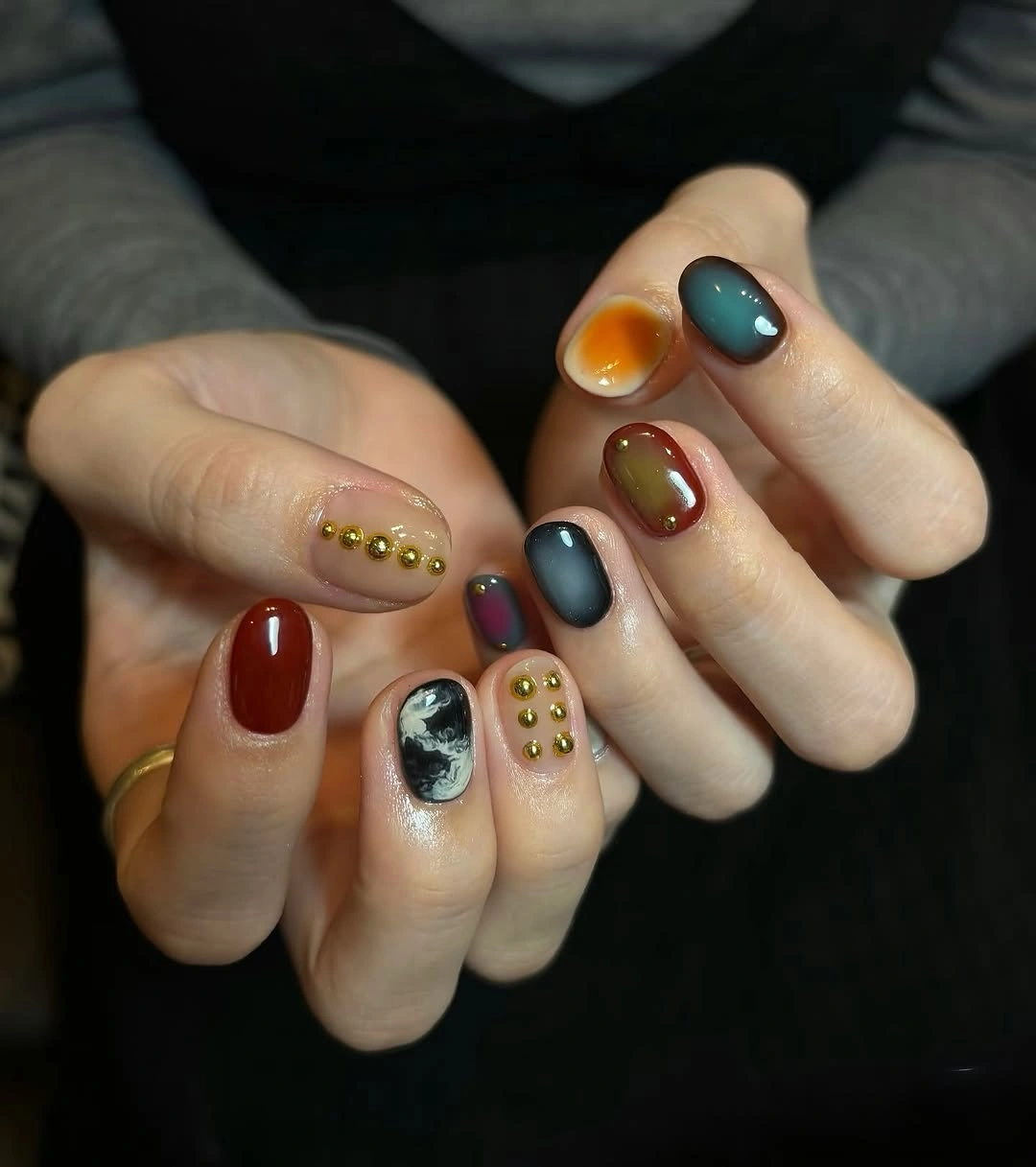
Here, restraint does not mean using fewer colors; it means deciding which color leads. Burgundy and brown provide depth, teal and blue-green add cooler notes, and amber catches warmth, while the small raised details should remain secondary to that palette. The close composition works because the accents are kept small enough to read as texture rather than separate objects.
Choose three colors and one raised-looking detail for a more coherent adaptation. Keep the rounded shape short, and remove whichever accent has the least connection to the chosen palette; a careful edit will preserve the collected jewel-tone feeling better than reproducing every visible shade or surface.
Plum Squares Use Silver Glitter As A Single Break
Short square nails combine plum and muted purple solids with one dense silver glitter accent and a softer lavender-grey nail. The cool palette stays close in tone, while the glitter supplies the only strong reflective change. The square edge makes the manicure feel crisp, and the compact length keeps the silver from becoming too dominant against the darker colors.
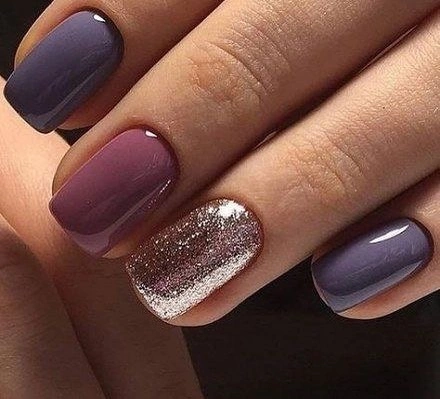
The accent has a clear role because it is isolated. Plum gives the hand depth, lavender-grey softens the transition, and silver arrives as a bright point rather than a repeated finish. That arrangement lets the manicure feel special while preserving enough quiet color for the design to work with simple clothing or a minimal ring.
Keep the glitter on one nail and use two close purple shades on the rest. A rounded square will reduce the graphic edge, while a finer shimmer can replace the dense sparkle for daytime; the proportion stays intact as long as the reflective accent remains visibly smaller than the solid base around it.
Brown Solids Frame Tortoiseshell Like Accents
Short rounded-square nails use brown and taupe glossy solids, with two accent nails carrying irregular dark patches over a lighter base. The pattern is tortoiseshell-like rather than a literal material claim, and its uneven shapes create movement inside an otherwise quiet neutral set. The compact surface keeps the patchwork close and prevents it from turning into a full-length print.
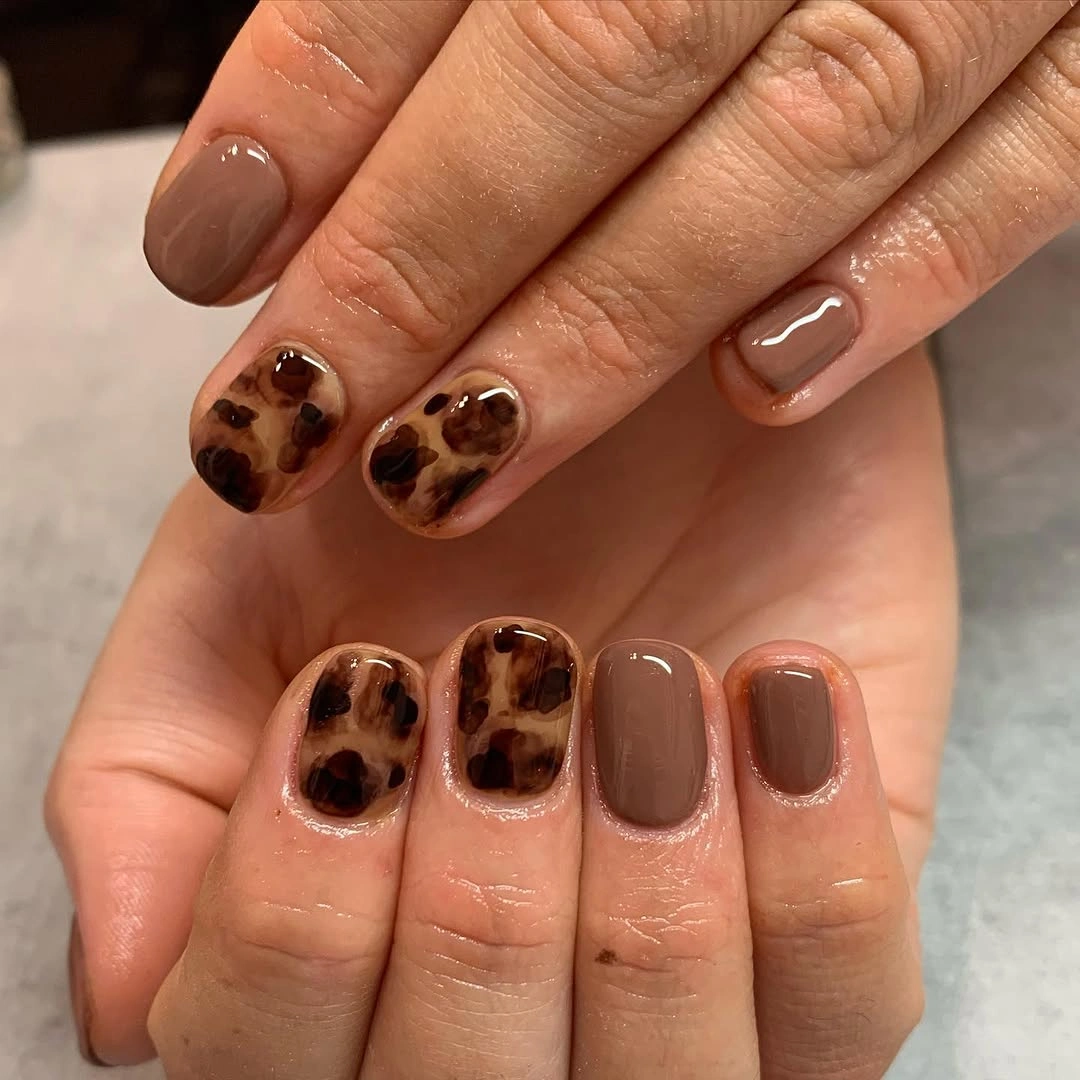
The accent works because the solid nails provide intervals of calm. Brown repeats around the patterned fingers, the lighter base lets the dark patches show, and the irregular placement keeps the eye moving without demanding a new color family. The glossy finish adds a small amount of light, but the design remains grounded by the warm neutral range.
Use the patchwork on two nails and keep the rest in one cocoa or taupe shade. A short oval would soften the look, while a rounded square preserves the graphic frame; avoid making the patches too uniform, since their value comes from controlled variation rather than a repeated stamp or identical pattern.
Nude Almonds Balance Burgundy Tips And Dots
Long almond nails use a pale nude base, burgundy tips on selected fingers, and small dark or pink dot clusters on two accent nails. The open base remains the largest area, while the berry edge and tiny floral-like marks introduce autumn color in measured doses. The long shape is visible, but the design avoids covering it with a dense motif.
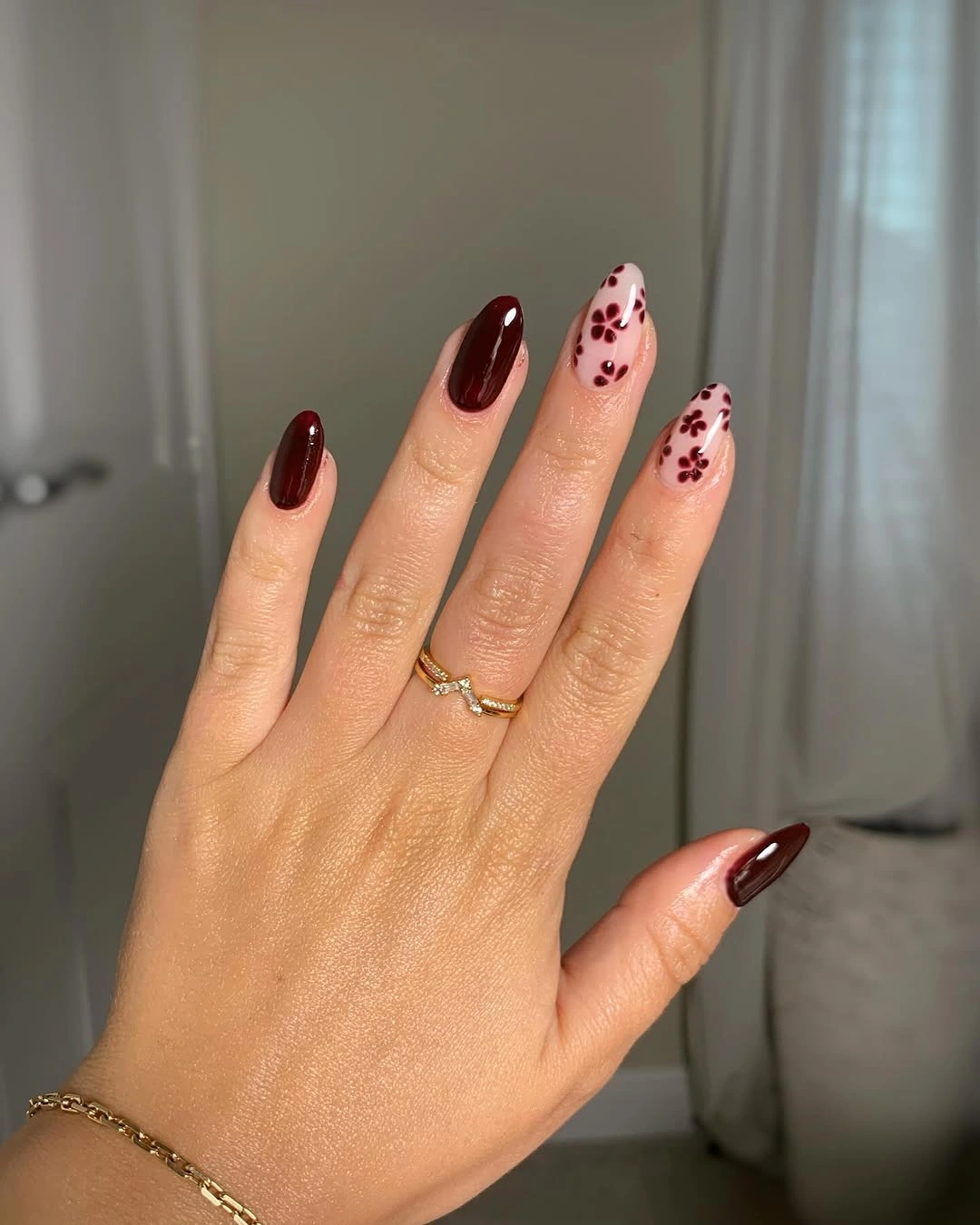
The balance depends on keeping the two accents related. Burgundy outlines the shape, the small dots repeat its berry family, and the nude surface gives both details room to breathe. That makes the set feel more layered than a plain French edge, but still more restrained than a full floral manicure; the eye can follow the pale line before noticing the small clusters.
Use one dotted accent and one burgundy tip per hand if you want the proportions to stay quiet. A medium almond would reduce the length, while a thinner edge would preserve more nude space; either adjustment keeps the design centered on negative space and controlled placement rather than extra decoration.
One Plaid Nail Refreshes A Neutral Almond Set
Long almond nails combine pale nude, brown, and a cool blue accent, with one nail carrying a brown-and-light plaid pattern. The plaid supplies the strongest geometry, while the blue note prevents the warm neutrals from becoming predictable. Plain glossy nails appear between the accents, giving the hand enough unpatterned space to keep the design coherent.
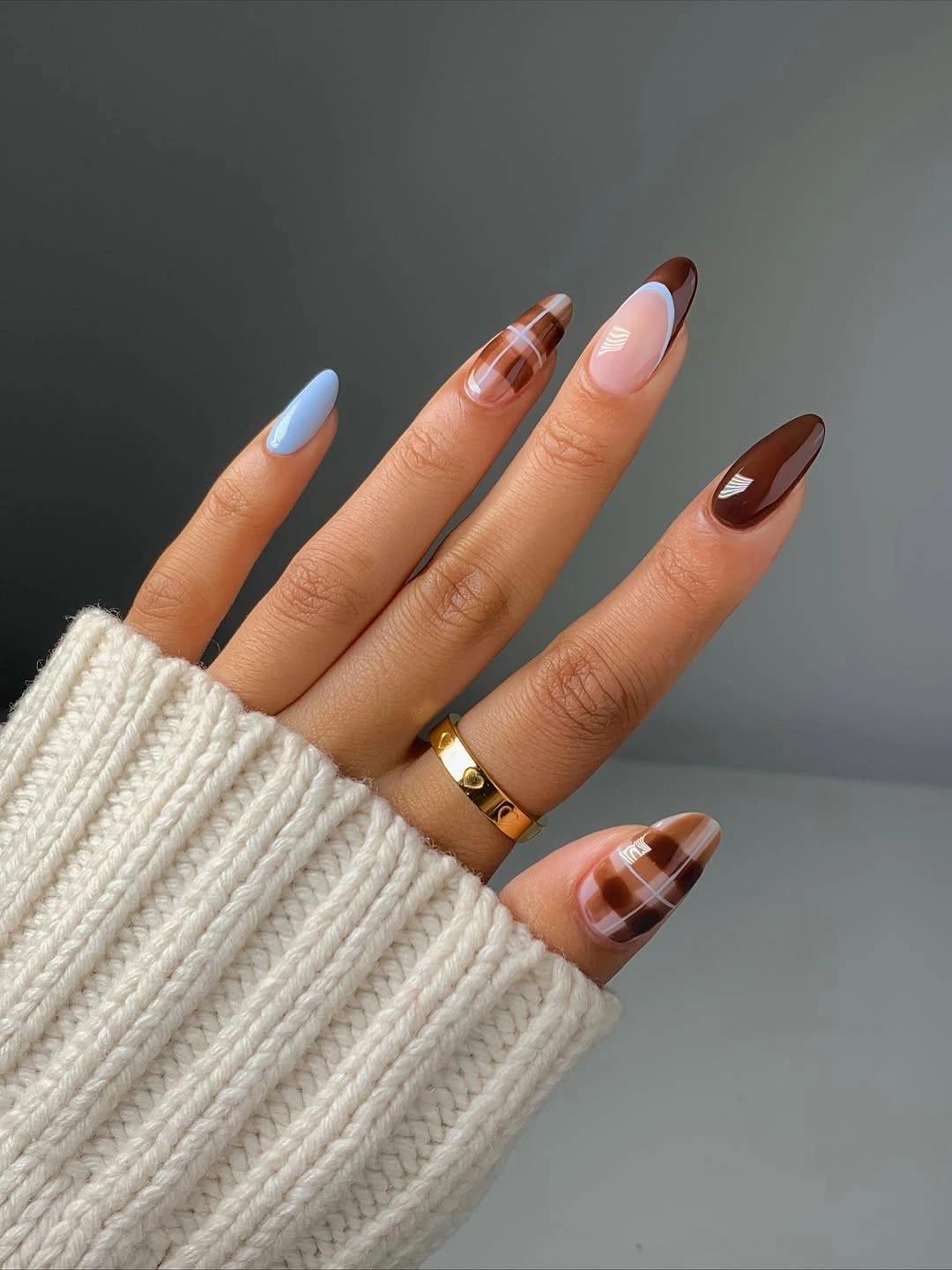
The choice of one patterned nail is doing most of the editorial work. Brown connects the plaid to the neutral solids, blue adds a small temperature shift, and the long almond shape gives the lines enough room to remain legible. More plaid would change the scale and make the set busier, while the single accent lets the pattern stay a focal detail.
Keep the plaid on one nail and choose either brown or blue as the secondary accent for a simpler version. A medium almond will make the lines easier to maintain, and leaving the other nails plain is more important than copying every color; the design depends on the pattern having room around it to remain legible.
Burgundy Edges And Warm Florals End With Space
Long almond nails use a pale nude or milky base, burgundy tips or half-moon edges, warm orange and brown flower-like marks, and one deep burgundy solid nail. Several accents appear, but each is separated by open pale space, so the set still has a clear hierarchy. The knit backdrop echoes the warm palette without changing the measured scale of the manicure.
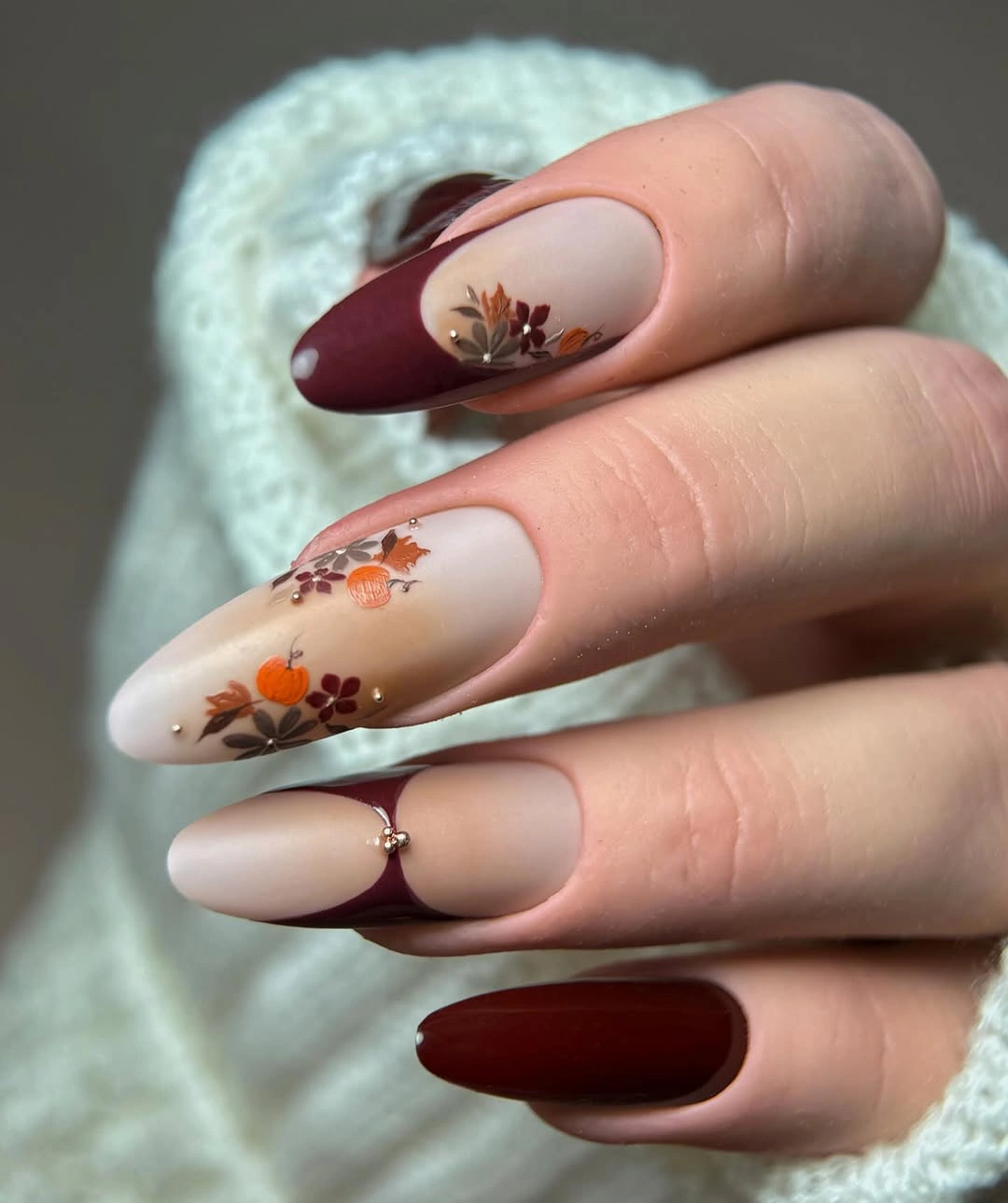
The design succeeds because the accents are related and limited. Burgundy supplies the boundary and the dark anchor, warm floral marks add seasonal color, and the nude base keeps the hand from becoming dense. Even with several different details, the eye can return to the pale almond surface between them; that negative space is what makes the final composition feel calm.
Keep one floral accent and one solid burgundy nail if you want to reduce the design without losing its character. A medium almond would make the edges easier to manage, while a softer brown tip could lower the contrast; leaving open space is the final choice that keeps the manicure refined rather than overfilled.