Fall nails for tan skin tone become especially interesting when a small placement decision changes the balance of the whole hand. Deep brown, pale pink, forest green, orange, plum, soft blue, and botanical or spotted accents appear here in different scales. Rather than treating color as a flat list, notice where the darkest value sits, how much base remains open, and what the shape does with it.
The collection moves from short rounded nails to long almond and pointed silhouettes, so each idea carries its own practical limit. A fine border may be the key detail on one set, while a single solid shade does the work on another. The most useful adaptation is often the smallest visible change: one accent, one altered tip, or one simplified line.
Sheer Pink Framed By Brown Curves
Long almond nails begin with a sheer pink-nude base and narrow brown curves that trace the edges. The center stays open, so the eye reads the dark line as a frame for the shape rather than a full coating. Against the visible tan skin tone, the warm brown adds definition while the pale base keeps the result airy.
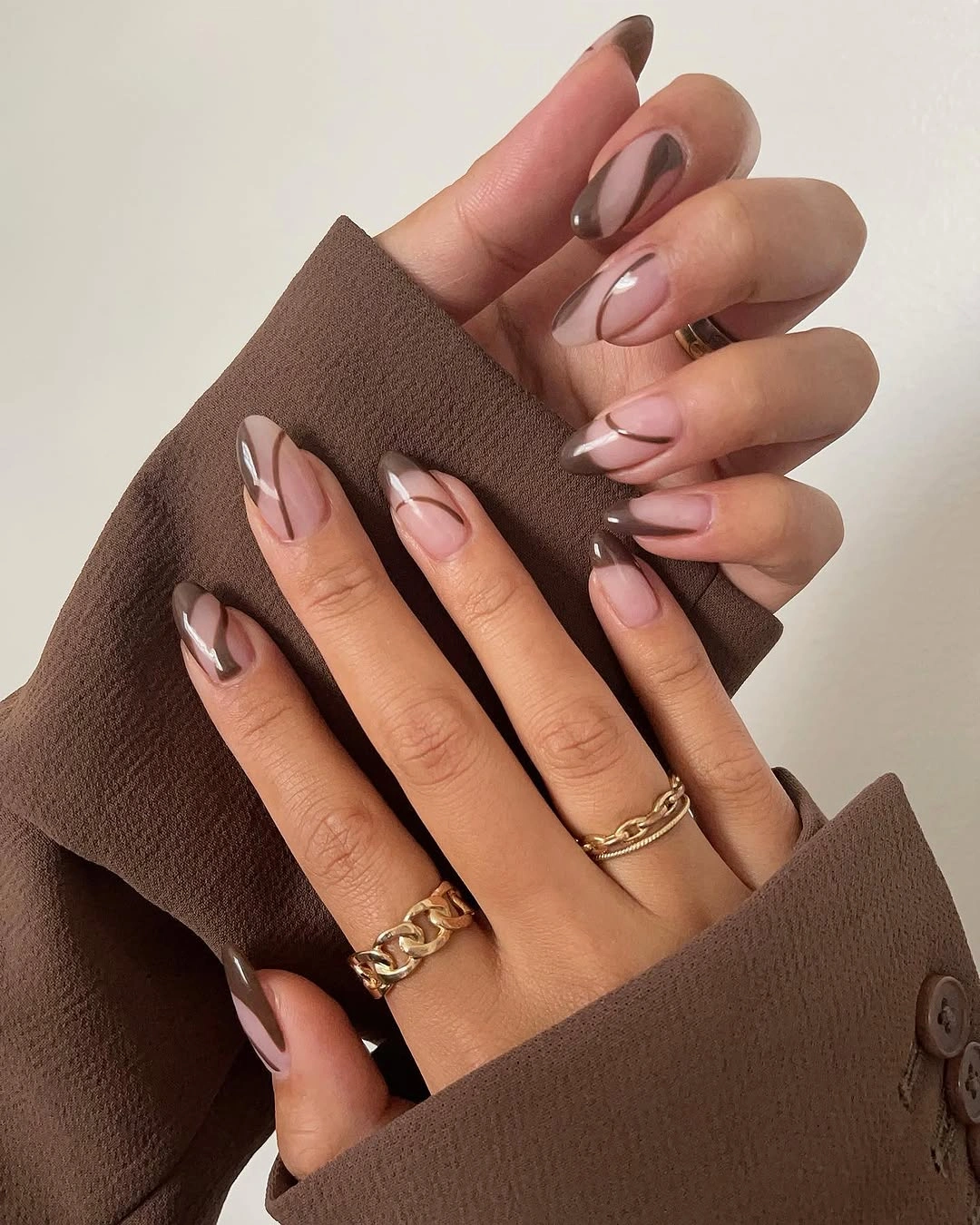
Keep the border only on the tips when adapting this to a shorter almond. A wider single curve will read more cleanly than several fine lines, and a soft taupe can reduce the contrast if the dark brown feels too sharp. The design depends on the open center, so resist filling the space with another motif.
The smallest visible feature is the border thickness, and it controls whether the manicure feels delicate or heavy. Growth will change that relationship near the cuticle, while the pale base will show any uneven edge. Choose this idea when you appreciate precise framing and are willing to maintain the line rather than hide it under solid color.
Deep Green Curves On A Pale Base
Medium almond nails use a pale pink base with deep green curved edges, leaving clear open areas through the center. The green is the strongest value on the hand, but its narrow placement prevents the design from becoming a full dark block. The curve follows the almond outline closely, which is why the accent feels integrated rather than added at random.
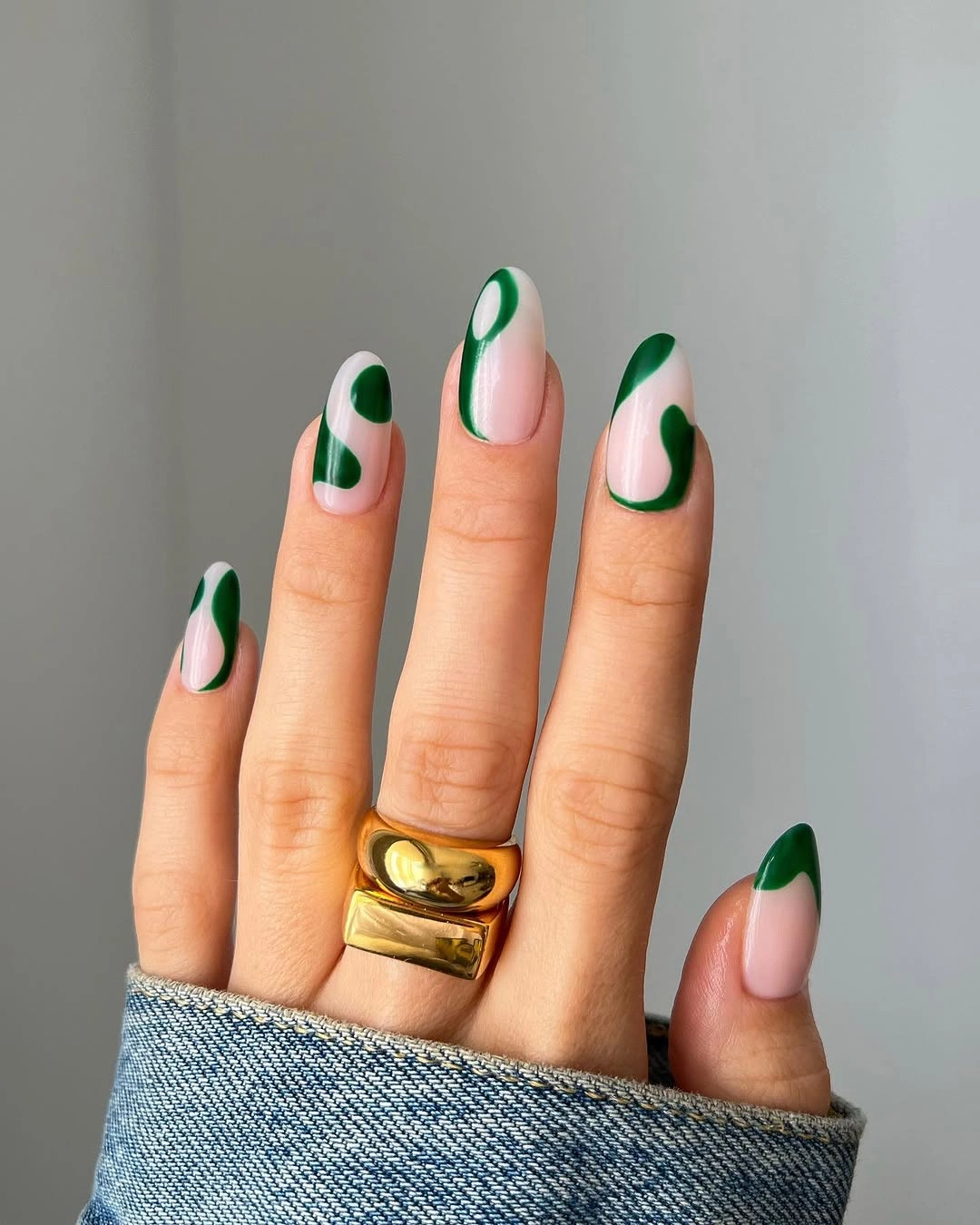
On a shorter nail, keep the green curve on two fingers and use a pale solid on the rest. A muted olive will soften the contrast, while a broader edge will be easier to execute than a very thin one. The best adjustment changes the number of accents, not the basic relationship between pale space and dark frame.
The design is visually simple, but the edge is unforgiving because every change in thickness can be compared against the neighboring nails. The medium shape gives the curve enough room and remains practical. Choose it when the smallest border is what attracts you and you are ready to keep that border clean.
Vivid Orange In A Clean Almond Shape
Long almond nails are covered in glossy vivid orange, with the color repeated cleanly across the fingers. The saturation is the main event, while the almond contour keeps the bright surface from looking blunt. Because there is no art to distract the eye, the relationship between orange, shine, and the visible skin tone remains unusually clear.
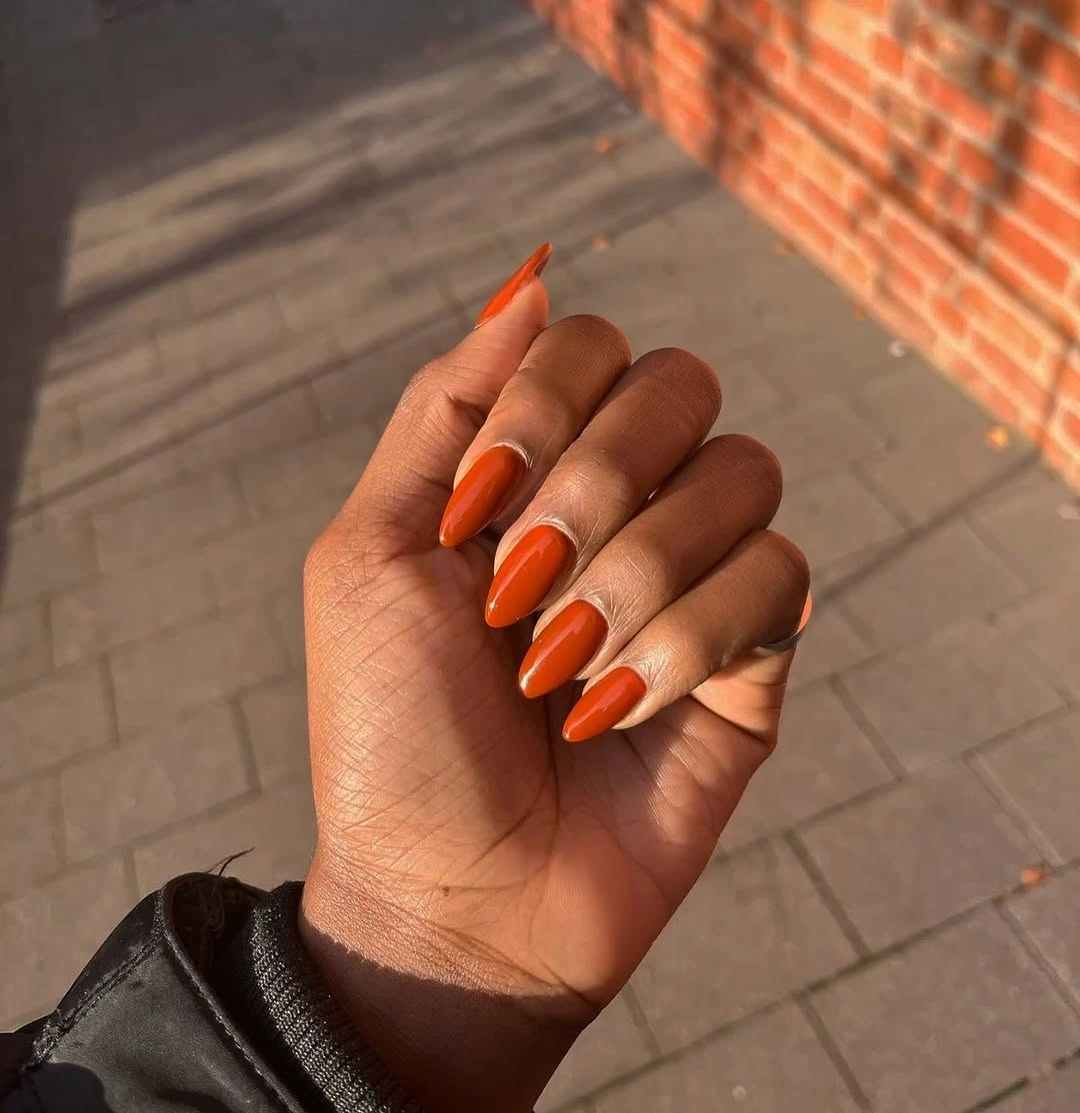
Use the orange on medium almond nails if the long length feels too exposed, or pair it with one warm nude accent for a small visual pause. A rustier orange will lower the brightness, while a shorter rounded shape will make the same color more compact. Do not add detail unless you want to move attention away from the color itself.
High saturation makes chips and uneven edges visible, but the solid structure makes the design easy to refresh. The long almond is the real commitment because it amplifies the amount of color seen at once. Choose this option when you want one unmistakable fall statement and prefer a clean surface to a collection of accents.
Chocolate Squares With Tortoiseshell-Like Detail
Medium square nails combine glossy chocolate solids with translucent brown patterned accents and pale highlights. The square corners make the dark color feel more graphic, while the open patterned nails interrupt the block of brown. The contrast is controlled because the accent stays in the same warm family rather than introducing a new bright hue.
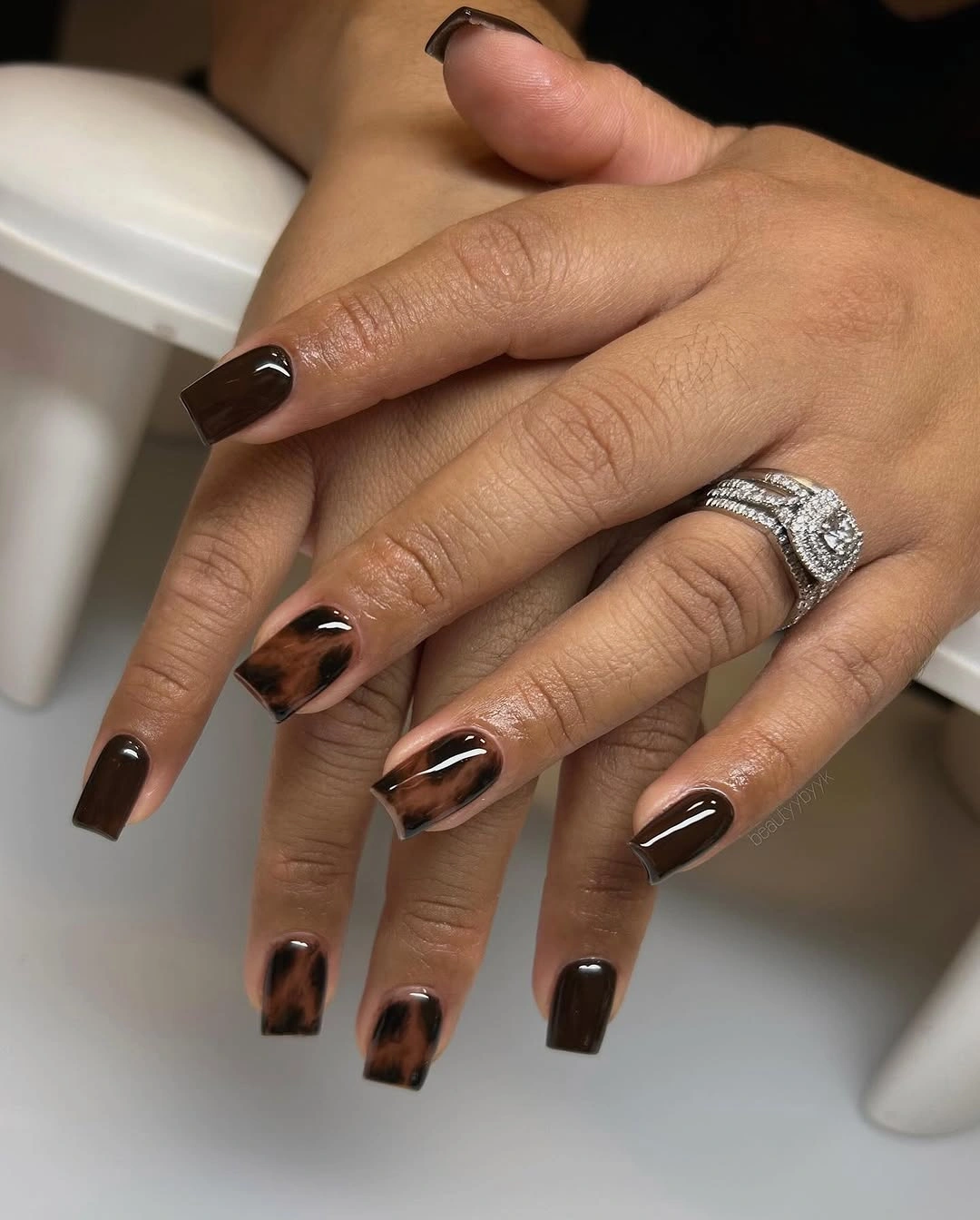
Keep one patterned big or ring finger and use chocolate on the other nails for a repeatable version. A rounded square will soften the corners, while a pale nude accent can make the set feel lighter. The patterned surface should remain selective; repeating it on every nail would remove the quiet contrast that gives it purpose.
The square edge shows wear at the corners sooner than a rounded shape, and the translucent accent exposes uneven borders. The solids are easier to maintain, making the set practical when only one nail carries the extra detail. Choose it when you want a close-toned design where the most interesting feature is a change in surface, not a change in color family.
Brown Nails With Small White Flowers
Medium almond nails use warm brown as the base, with small pale flower-like accents placed near the upper half of several nails. The tiny marks are not large enough to compete with the color, but they interrupt the repeated surface at carefully spaced points. The brown remains the anchor, while the pale details create a soft rhythm across the hand.
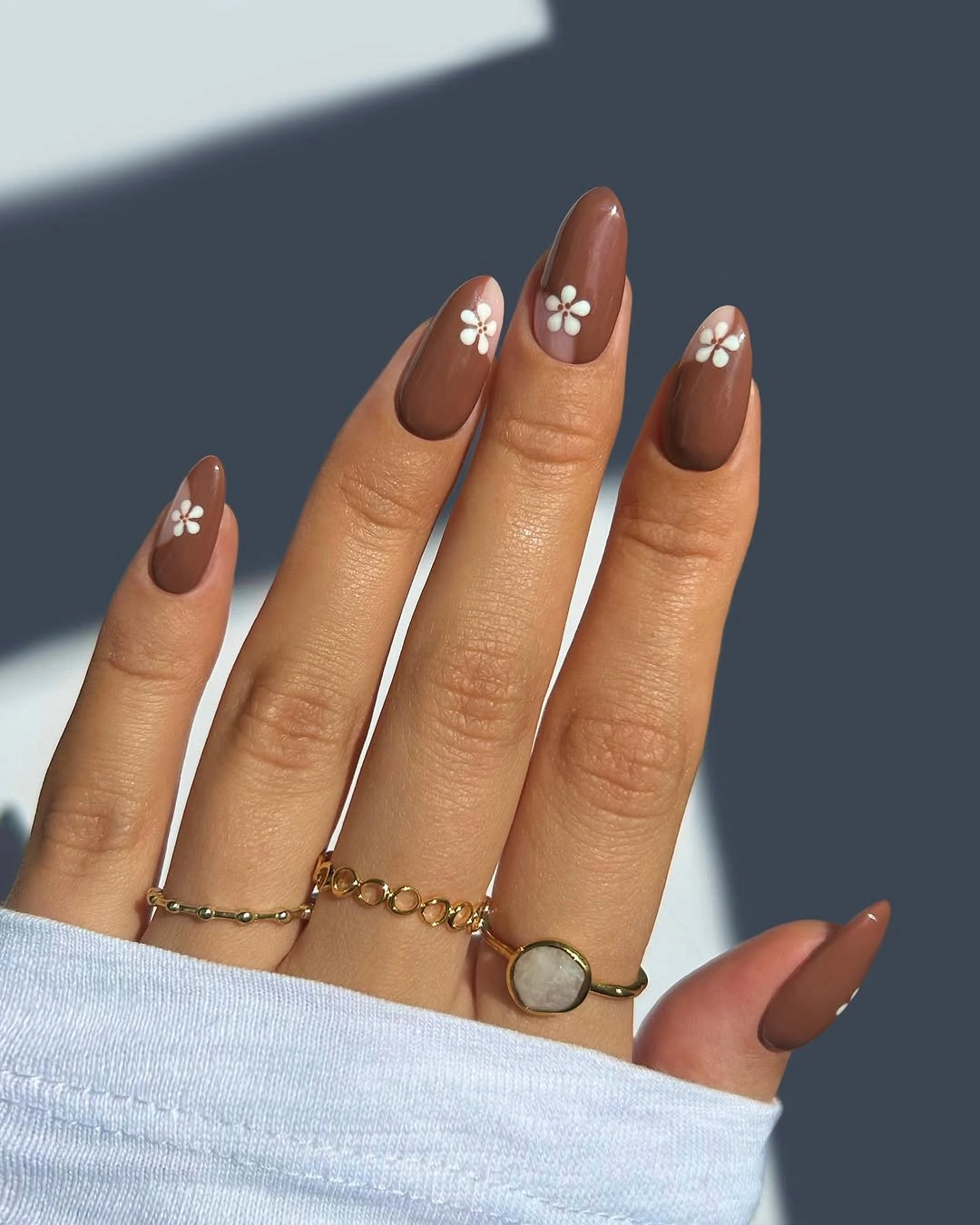
Use one pale mark on the ring finger when adapting the set, or replace the flowers with a single dot if the nail canvas is smaller. A deeper brown will increase contrast, while a muted nude accent will make the detail quieter. The key is to give the small mark room around it so it does not disappear into the solid base.
The base color is easy to repeat, but the tiny accents need clean spacing to look deliberate. Medium almond nails offer enough room without making the decoration dramatic. Choose this design when the detail-first appeal is important and you want a little softness placed on top of a dependable brown shade.
Neutral Solids With One Burgundy Anchor
Long almond nails alternate pale taupe, brown, and deep burgundy solids, with only subtle changes in finish or color depth. Burgundy is the darkest point and therefore anchors the collection, while the pale and mid-value nails keep the hand open. The design works through sequence: the eye moves from quiet neutral to deep accent and back again.
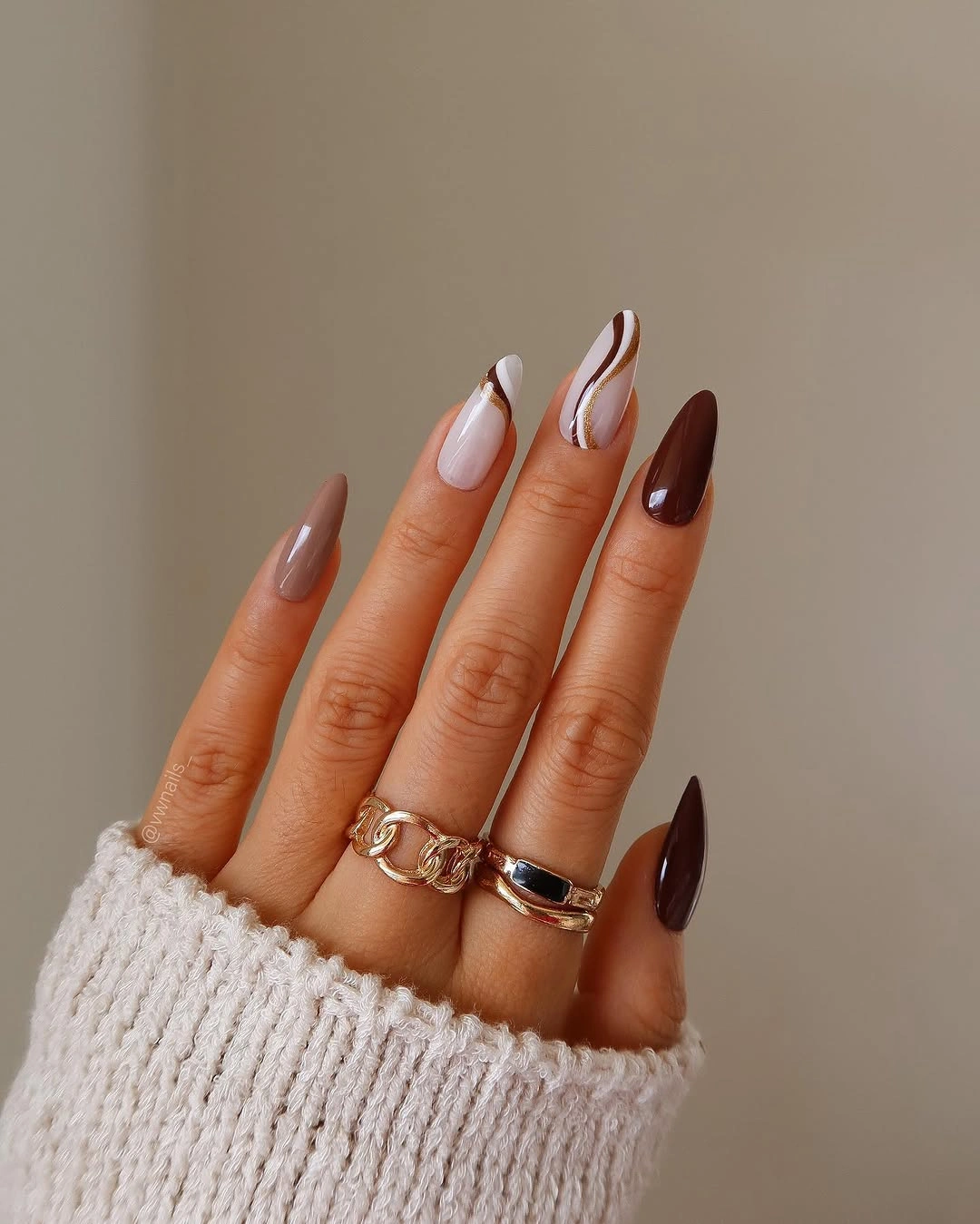
Use burgundy on two nails and repeat one neutral on a shorter almond for a cleaner map. If the shades sit too close, deepen the burgundy rather than adding another color. The shape should remain consistent because the plain surfaces leave no motif to distract from differences in length or contour. This preserves the clean, two-tone impression while making the set easier to wear at a shorter length.
The absence of art keeps the set practical, but it also makes each edge part of the visual critique. Burgundy will show chips, while the lighter taupe may reveal uneven coverage in a different way. Choose this option when you want the smallest change in value to guide the eye and do not need surface decoration.
One Cloudy Brown Accent Among Nudes
Medium-long almond nails mix translucent nude solids with a brown accent that looks cloudy and marbled through its center. The accent changes the surface without changing the overall warm direction, so it reads as a single interruption rather than a new palette. The long shape gives the internal variation enough room to remain visible.
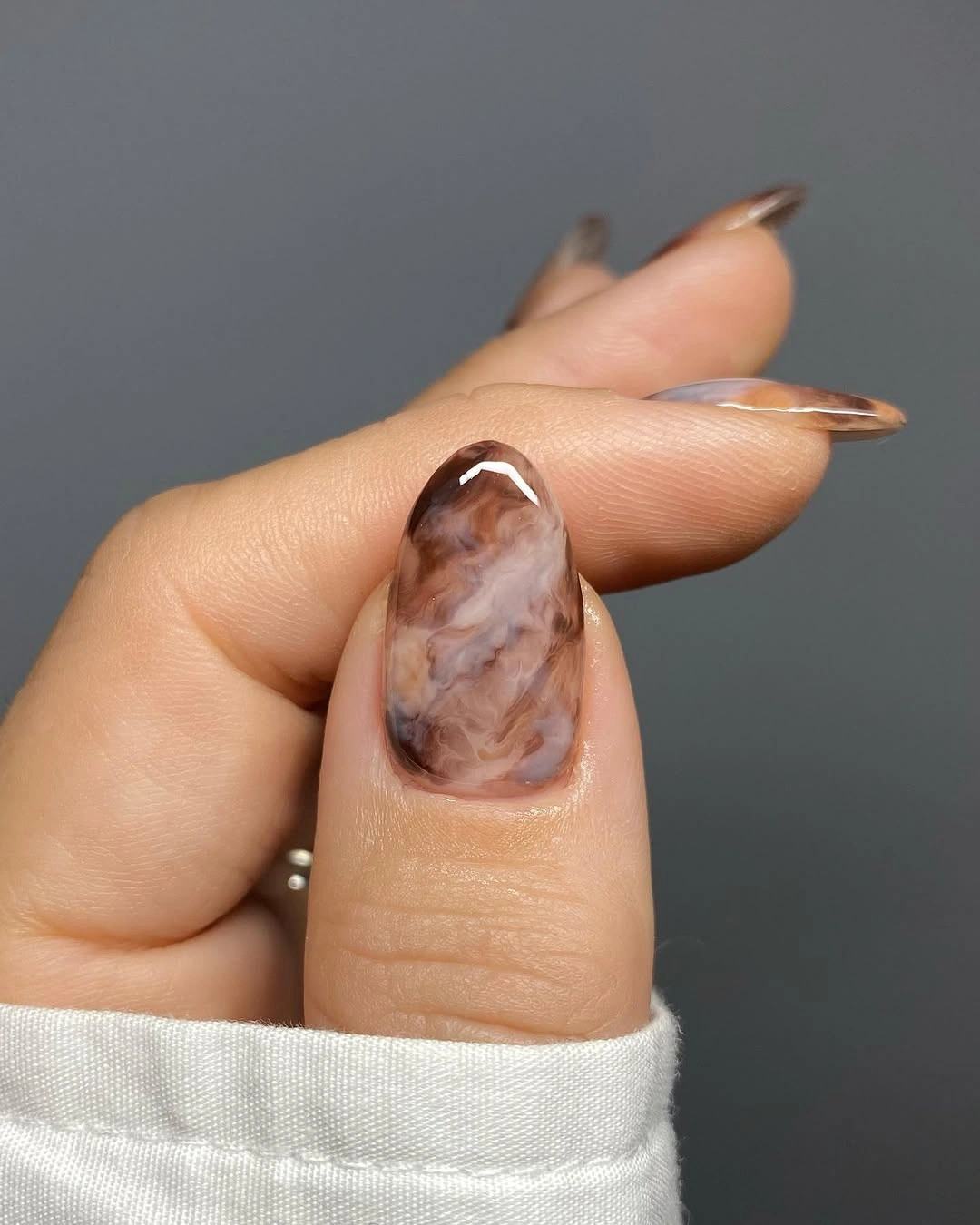
Keep the cloudy accent on one nail and use warm nude on the rest for the most repeatable version. A shorter almond can carry the same idea if the accent stays open and does not become too dark. If you want more contrast, use chocolate on one solid nail instead of adding another patterned surface. That keeps the cloudy detail as a small focal point instead of turning the manicure into an all-over pattern.
The pale nails make the accent prominent, which means its edge and color distribution will receive most of the attention. The open base keeps the manicure light, while the longer shape is the factor that adds drama. Choose it when a single change in texture is more appealing than several small motifs.
Reflective Brown And Pale Metallic Points
Long pointed nails combine reflective silver-brown surfaces, deep brown, and pale metallic-looking accents that sharpen the tips. The contrast is concentrated in the point, so the eye follows the taper and sees the different surfaces as a deliberate sequence. Warm brown keeps the result grounded, while the pale details add a high-light edge.
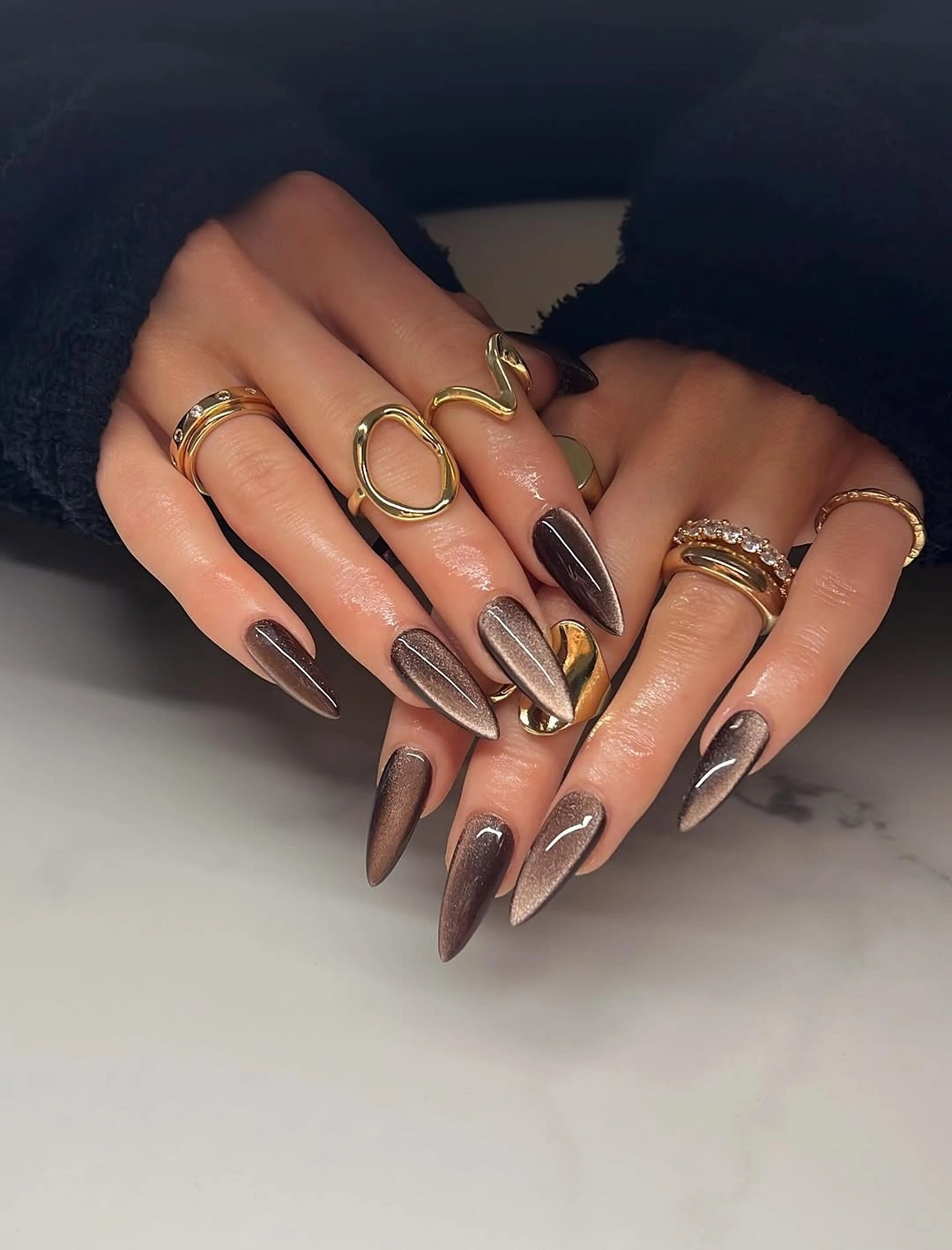
For a more usable version, keep deep brown on most nails and place one reflective pale accent on each hand. A medium almond will reduce the sharpness without losing the warm-and-light contrast. The smaller the nail, the fewer reflective changes it needs; one clear point will read better than several compressed marks.
The point and the reflective surfaces create two maintenance demands. The shape changes hand movement, and the bright accents make uneven edges highly visible. Choose it as a statement when the silhouette is part of the appeal, or simplify the number of high-light details if the color relationship matters more than drama.
Short Blue As A Cool Interruption
Short rounded-square nails are a pale sky blue with an even glossy surface. The cool color interrupts the warmer autumn palette while the compact shape keeps it easy to wear. There is no art, so the visual difference comes from the temperature of the blue against the visible tan skin tone and the clean repetition across the fingers.
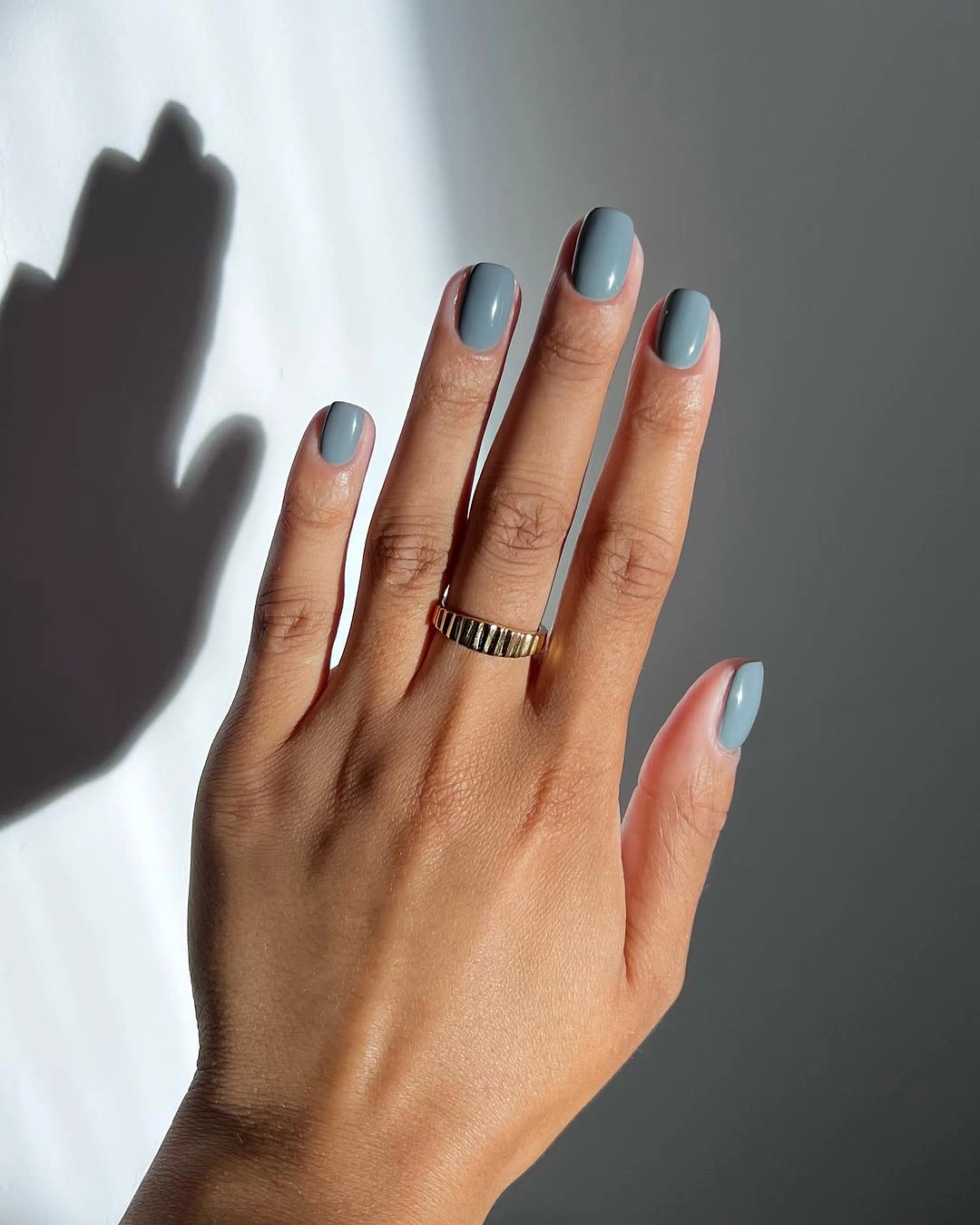
Use the blue on the big toes or one hand accent if a full cool set feels too separate from your wardrobe. A muted blue-gray will sit more quietly, while a stronger cobalt will increase contrast. The plain surface is the clearest way to show the temperature shift, so extra art would weaken the point.
Pale blue shows uneven coverage and edge changes, but the short shape limits daily interference. The color is easy to coordinate when paired with brown, gray, or denim, and the absence of a motif keeps refresh work predictable. Choose it when you want the smallest possible departure from warm fall shades.
Brown With Fine Gold-Like Outlines
Medium almond nails mix dark brown solids with pale accents, fine gold-like outlines, and small flower-like marks. The dark base supplies weight, while the pale nails create a light field for the thin details. What changes the balance is not the number of accents but their placement around the pale surface and the way the warm line repeats.
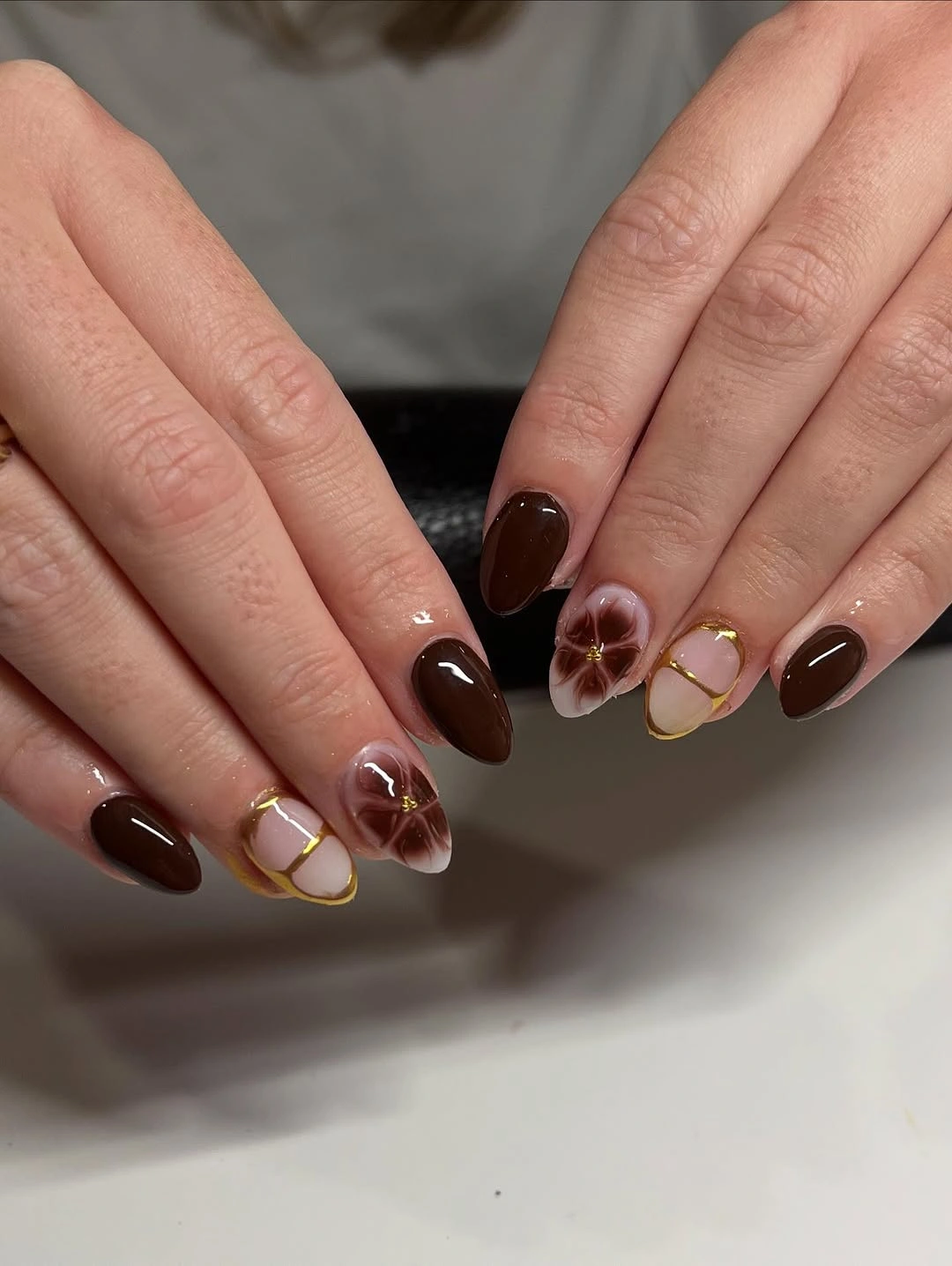
Keep the outline on one pale nail and repeat dark brown on the others for a version that is easier to maintain. A taupe line can soften the contrast, while a simple dot can replace the flower-like mark. The medium shape already provides enough room, so reducing the number of decorated fingers is the cleanest adjustment.
The fine outline is the first feature to reveal a shift in thickness or growth. The solid brown nails are more forgiving, creating a practical support structure around the delicate accent. Choose the design when you enjoy noticing small placement choices and want a detail that rewards close attention without covering the whole hand.
Pink Brown And Green Tip Sequencing
Long almond nails alternate pale pink, brown, and dark green with thin warm accents near the tips. The open bases let the colors appear as small directional changes, while the deeper green and brown give the hand enough visual weight. The set is organized by tip placement rather than full-color coverage, so the long shape remains visible.
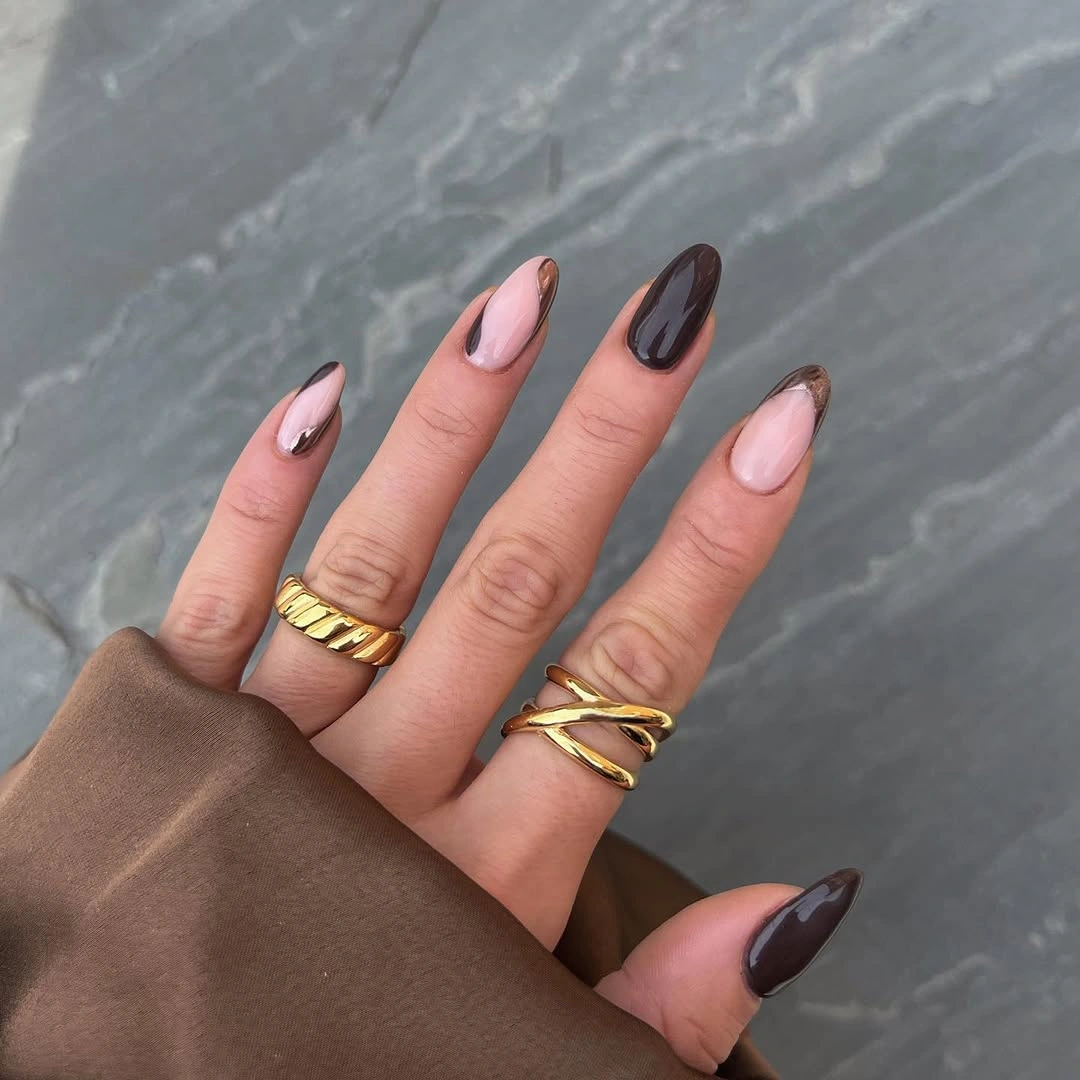
Choose two tip colors for a shorter version and keep the warm line on one nail. Brown and green create a grounded pair, while pale pink separates them and prevents the palette from feeling dense. If the tips are narrow, use one broad shape instead of several fine marks so the color remains legible.
The small accents have a delicate effect, but the borders need careful attention because the base is open. The long canvas supports the detail, while a shorter almond will make it calmer and more practical. Choose this set when the interesting feature is how the tips shift from finger to finger, not how much art each nail carries.
Orange And Black Spotted Contrast
Long almond nails use orange-and-black spotted accents over a warm translucent base, with dark solids nearby. The spots are the most active surface, but their colors echo the surrounding nails, so the pattern feels placed rather than random. The almond length gives the marks room to remain distinct and lets the warm base show through.
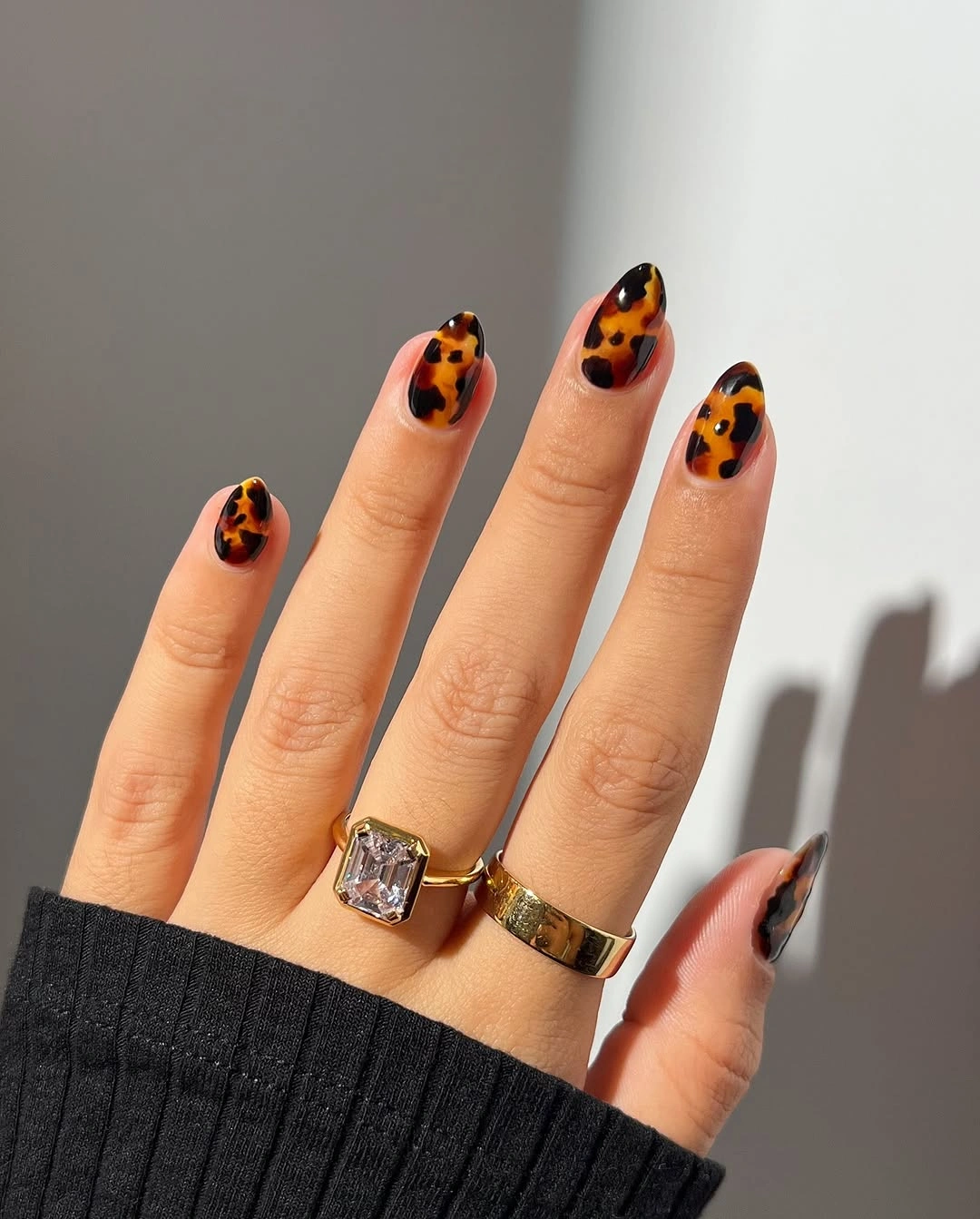
Use the pattern on two nails and a single brown solid on the rest for an easier rotation. If the design is transferred to a shorter almond, reduce the number of spots and keep the base open. A muted rust can soften the orange, while a deeper brown can replace black for a less graphic contrast. This keeps the playful detail visible without letting the pattern overwhelm the warm base.
The spotted nails demand more upkeep than the solids because their internal marks and borders remain visible. The dark accents create focus, while the translucent base gives some breathing room. Choose this option when you want a recognizable autumn detail and are comfortable letting the pattern be the first thing the eye notices.
Pale Square Solids With Minimal Contrast
Short square nails are a pale nude-pink solid, creating a clean block of light against the visible tan skin tone. The design has no art and almost no color variation, so the shape and the value contrast carry the full effect. The result is quiet, but it is not vague: the pale surface is the decision.
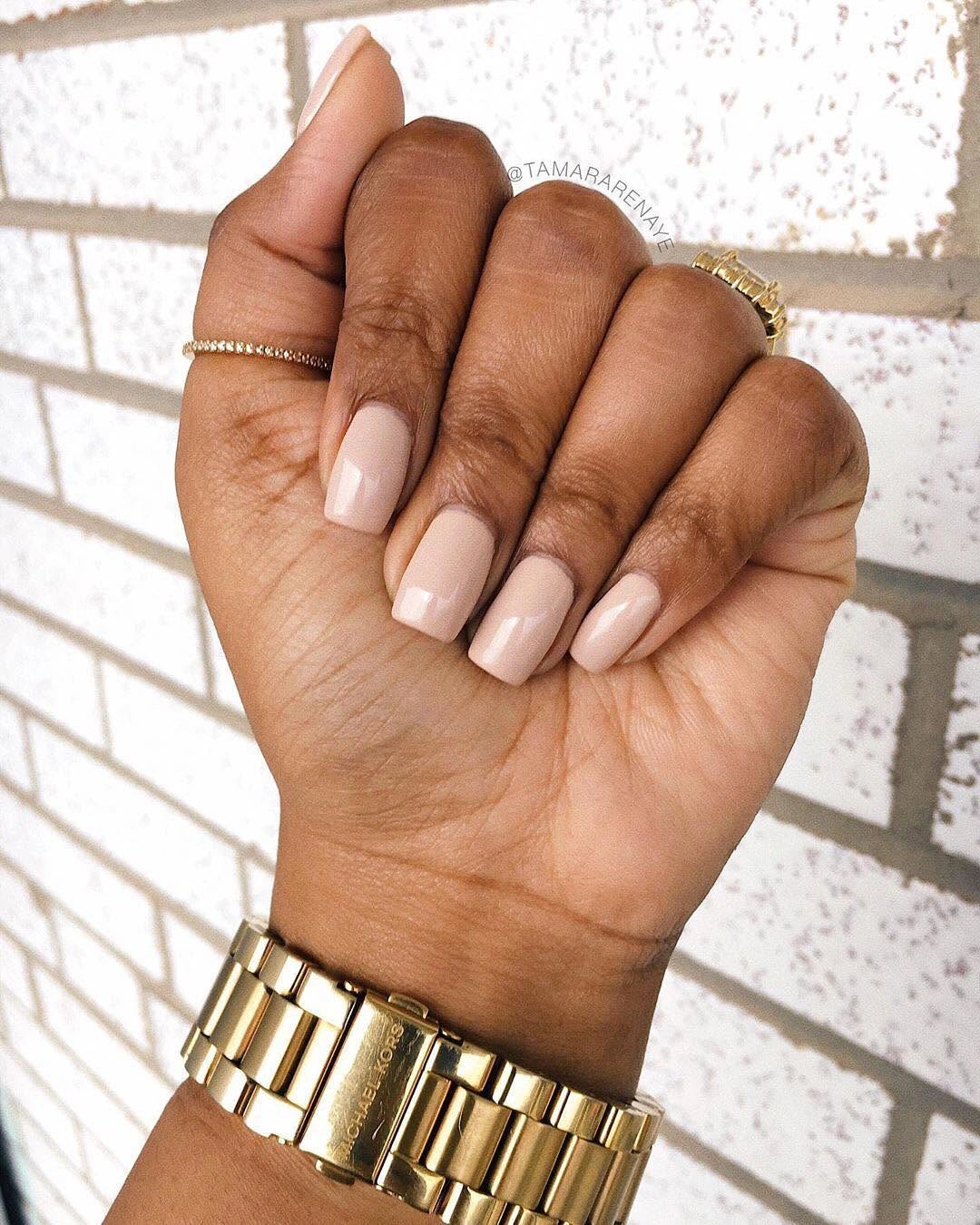
Use a slightly warmer beige or add one brown accent if the pale set needs more definition. Keeping the smaller nails solid will preserve the clean structure, while a rounded square will make the contrast feel gentler. The simplest adaptation is still one pale color across the hand because it keeps the visual message clear.
Light polish exposes uneven edges and regrowth more readily than a dark patterned surface, so neat shaping matters. The short length keeps the design practical, and the quiet color will not compete with jewelry or clothing. Choose it when you want a pale contrast and are willing to let precision replace decoration.
Muted Purple With Delicate Botanical Lines
Medium almond nails alternate muted purple solids with pale pink nails carrying thin dark botanical lines. The purple supplies a soft cool depth, while the pale accents lift the hand and create a place for the fine marks. The contrast is restrained enough to keep the design wearable, yet the line work gives the set a clear focal detail.
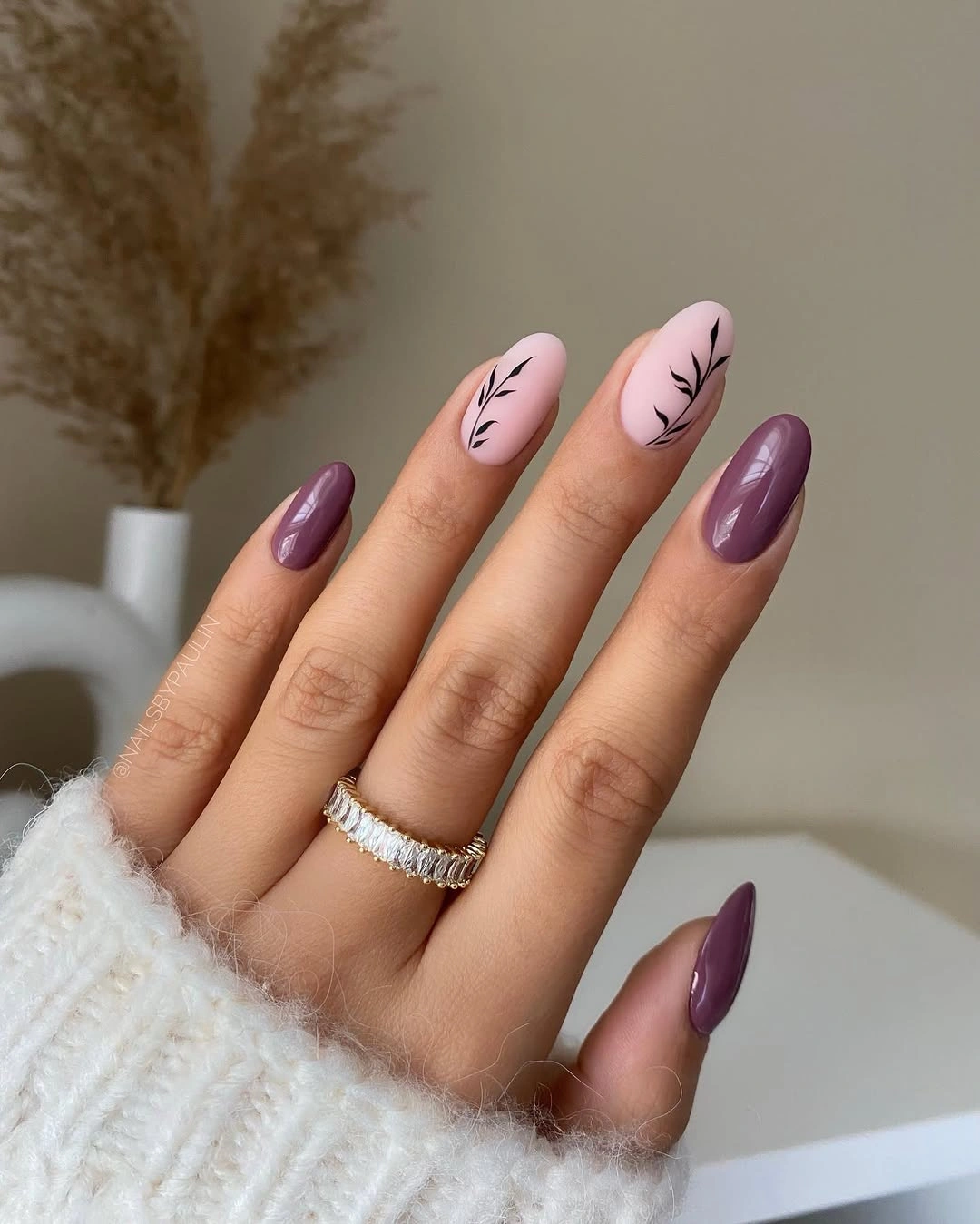
Keep one illustrated nail and use purple on the rest if you want the idea to be easier to repeat. A shorter oval can handle a single larger leaf-like line better than several small branches. If purple feels too cool beside the visible skin tone, move it toward a warmer berry while keeping the pale base.
The botanical line is the small feature that changes the balance, and it will show any uneven curve against the pale background. The medium shape gives it room, while the solid purple nails are simpler to refresh. Choose this design when you prefer a quiet accent with a clear placement story rather than all-over decoration.
Deep Brown With A Tortoiseshell-Like Accent
Medium almond nails mix deep brown, pale pink, and a translucent brown patterned accent framed by a thin warm outline. The dark solids give the design structure, while the open patterned nail creates a change in surface and value. The outline is small but important: it holds the accent together and keeps the varied sections from drifting apart.
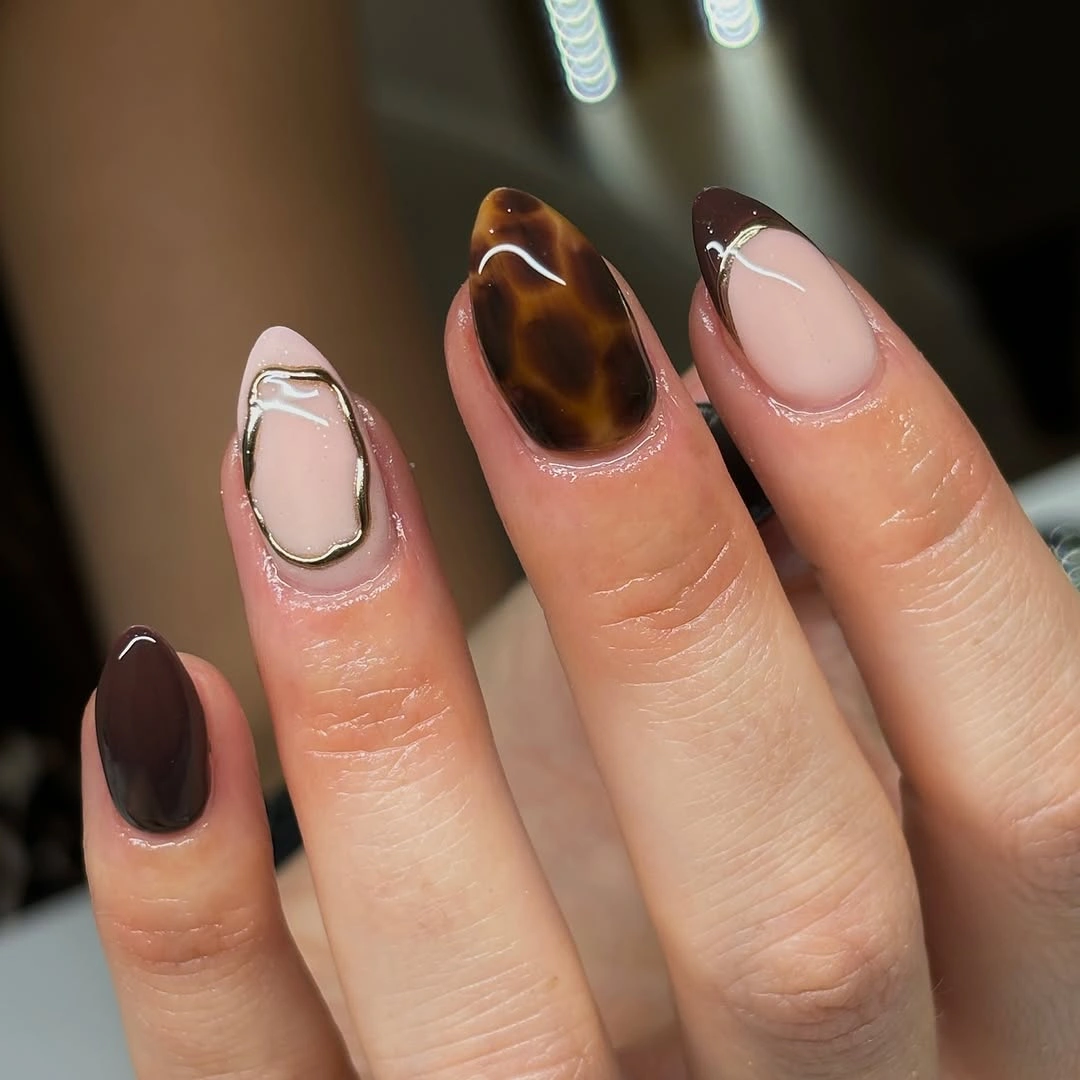
Use the patterned surface on one nail and keep the outline simple if you want a lower-detail version. A warm nude can replace pale pink, while a plain brown accent can stand in for the internal pattern. The medium length is already manageable, so the best adjustment reduces the accent rather than changing the shape.
The patterned nail will draw attention to its border and internal marks, while the deep solids remain easier to maintain. The pale section softens the overall darkness, but it also reveals smudges quickly. Choose this layout when the small change in surface is more interesting to you than a wide range of colors.
Brown And Cream Waves Across The Tip
Long almond nails use a pale base crossed by layered brown and cream waves that sweep toward the tips. The dark lines create a strong graphic path, but the pale center leaves enough space for the shape to remain visible. The design is most successful where the curves are spaced apart and allowed to keep their own direction.
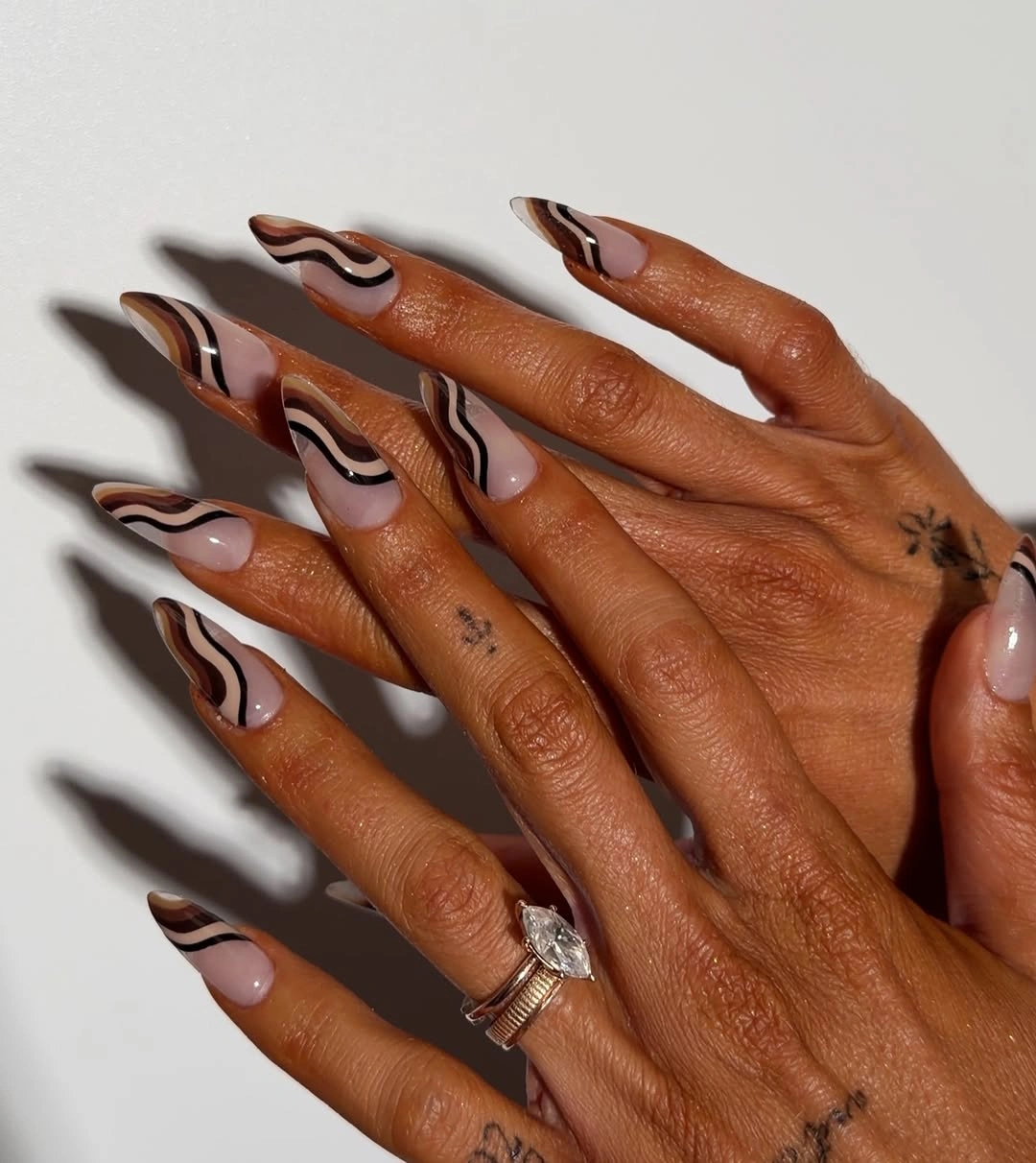
A shorter almond can use one broad wave and one fine cream line instead of several close curves. Keep the accent on two fingers and use plain brown or nude elsewhere if you want a more practical set. The contrast can be softened by choosing a warm taupe in place of the darkest brown. The open spacing will make the wave detail easier to follow and less busy at the shorter length.
The long canvas supports the layered lines, while the close spacing may feel crowded after shortening. Pale bases reveal every border change, so the pattern needs more care than a solid. Choose it when you enjoy a directional detail that can be simplified without losing the movement of the original design.
Dark Brown Against Fallen Leaves
Long pointed nails are a deep glossy brown, and warm fallen leaves around the hand echo the color family without becoming part of the manicure. The nails themselves remain plain, which makes the point and the shine easy to evaluate. The seasonal feeling comes from the deep brown and its surrounding warmth, not from painted motifs.
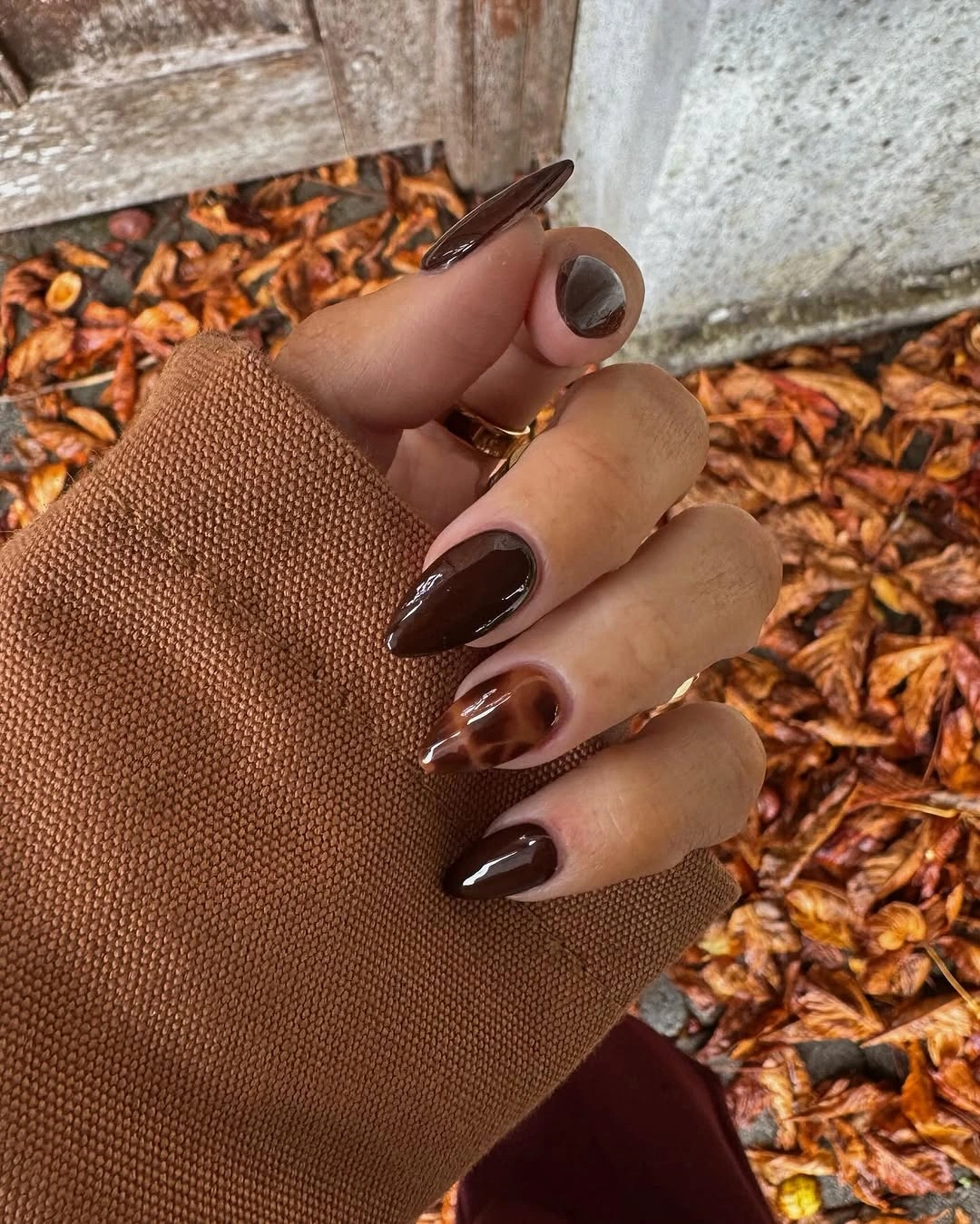
Move the color to a medium almond if the sharp length is not useful for daily routines. A slightly lighter brown will reduce the visual density, while a single accent is unnecessary because the silhouette already creates focus. Keep the surface solid so the shade remains the quiet center of the design.
The long point is the central tradeoff: it gives the color a dramatic outline but changes how the hand moves. A dark solid is straightforward to refresh, though chips and tip asymmetry will be obvious. Choose it when the shape itself is the feature and the surrounding autumn mood can remain subtle.
Brown Cream Dots And Checks
Medium almond nails combine cream and brown bases with dots, thin stripes, and small checked accents. The palette stays narrow, so the different motifs can share the hand without looking disconnected. Each mark is small, but the repeated brown value gives the set a clear rhythm and prevents the cream nails from floating apart.
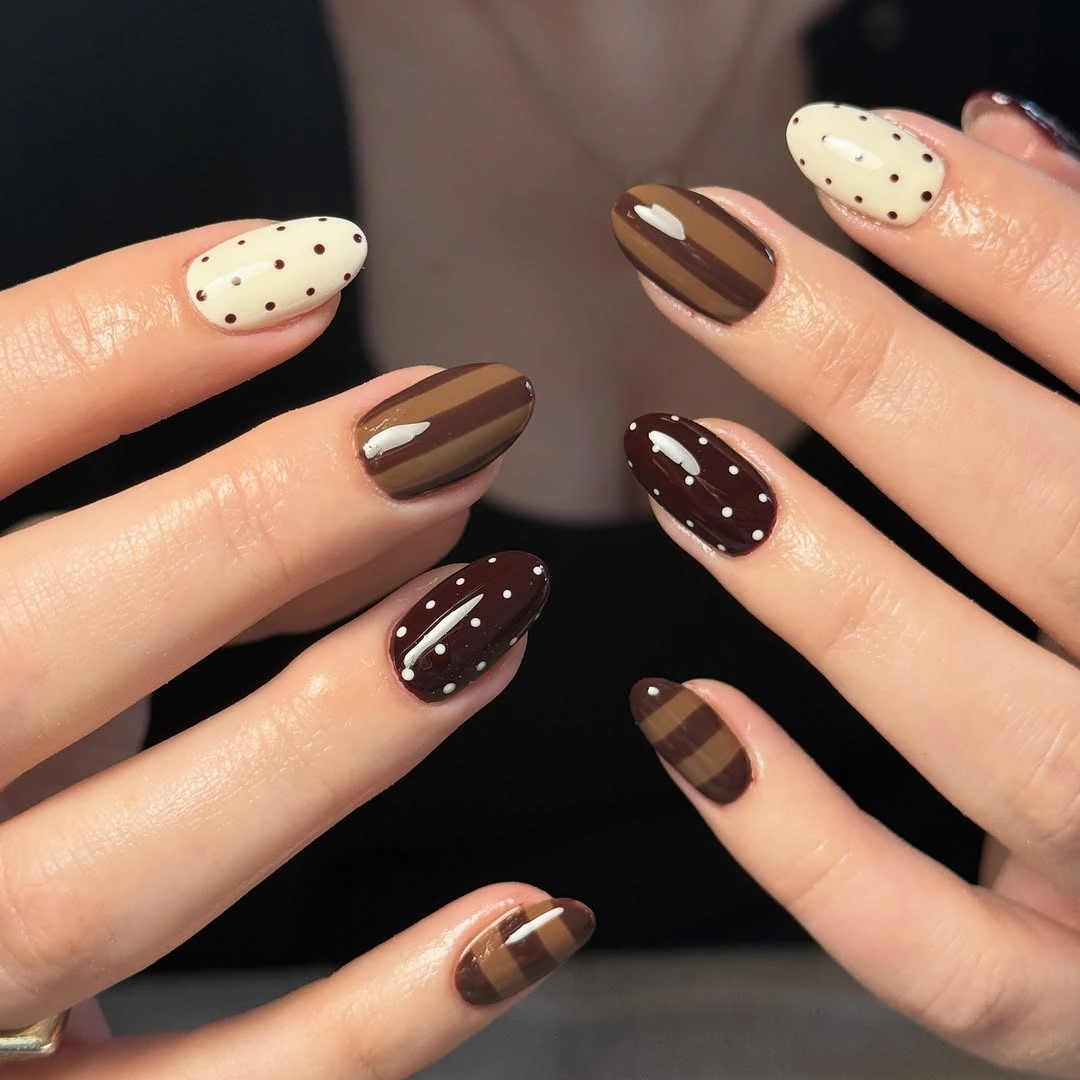
Choose one motif for a simpler version and place it on two nails beside a plain brown solid. Larger dots or wider stripes will remain readable when the nail is shortened. If the cream feels too bright, use a warm beige that keeps the contrast but sits closer to the brown family. This gives the warm palette a clear focal point and prevents the cream details from competing with each other.
The medium length is a reasonable compromise for small art, while the varied motifs still require more planning than a one-color set. Plain fingers provide visual rest and make repair easier. Choose this design when you want the hand to reward a close look but still need a clear path toward fewer details.
Chocolate Solids With Pale Negative Space
Long almond nails alternate glossy chocolate solids with pale nude accents and soft brown details. The dark nails create a strong anchor, while the pale fingers open the collection and keep the length from looking overly dense. The balance depends on repetition: the same brown family returns on both the full nails and the lighter accents.
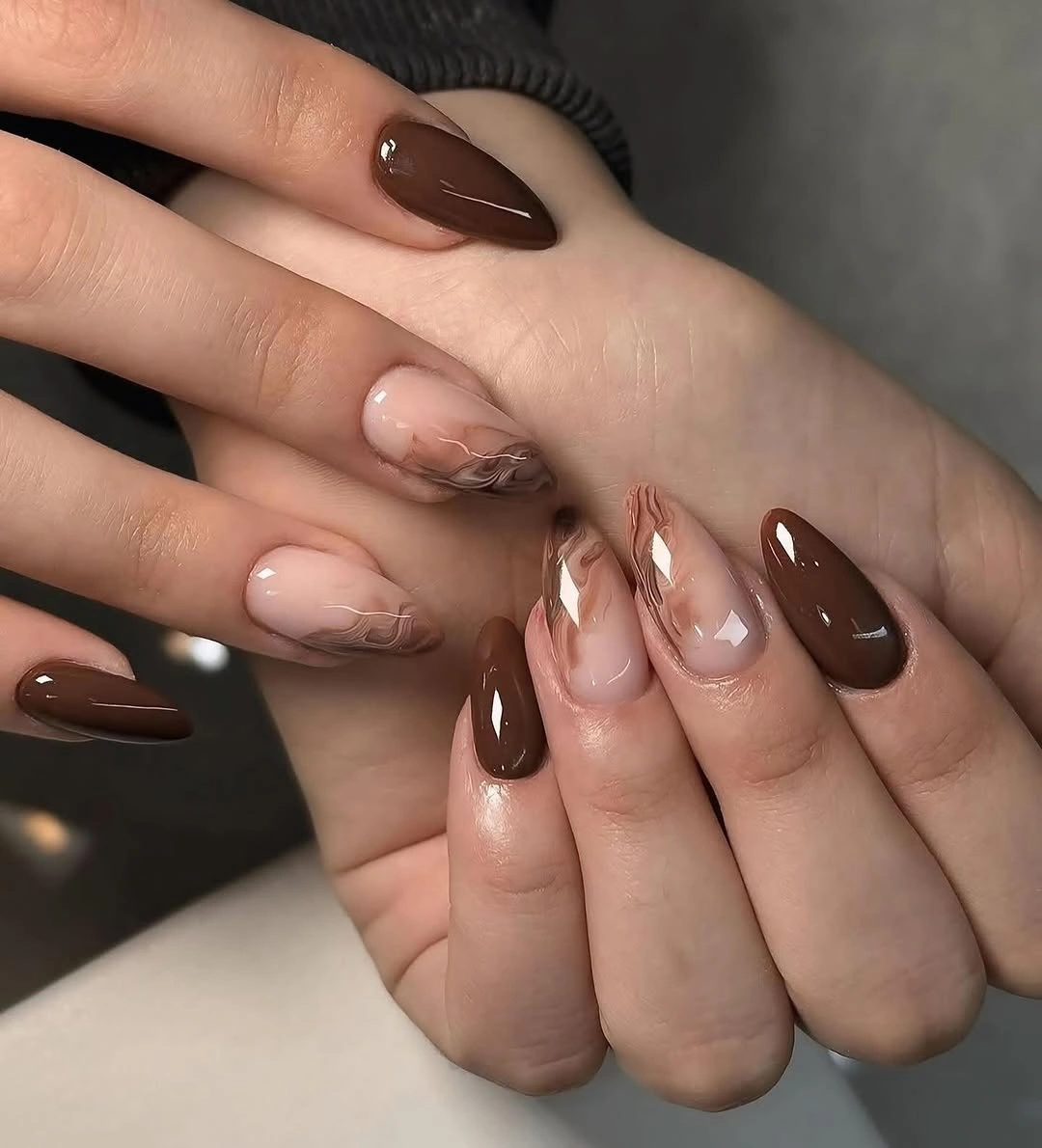
Use one pale accent beside several chocolate nails for a practical version, or keep the brown on the ring finger and thumb only. A shorter almond will make the contrast more compact, while a warm nude can replace the lightest section. The set does not need extra art if the solids and open nails are spaced well.
The chocolate nails are easy to maintain compared with the pale details, which may reveal edge wear more quickly. Long length remains the larger practical commitment, while the close palette keeps styling simple. Choose this idea when you want a dark fall base with negative space that can be reduced without losing its structure.
Pale And Brown With Small Organic Accents
Medium almond nails mix pale translucent bases, dark brown patterned accents, and tiny pale floral-like details. The base remains visible around the darker sections, so the set feels layered without becoming opaque. Small organic marks soften the stronger brown accents and create the finest point of interest in an otherwise controlled palette.
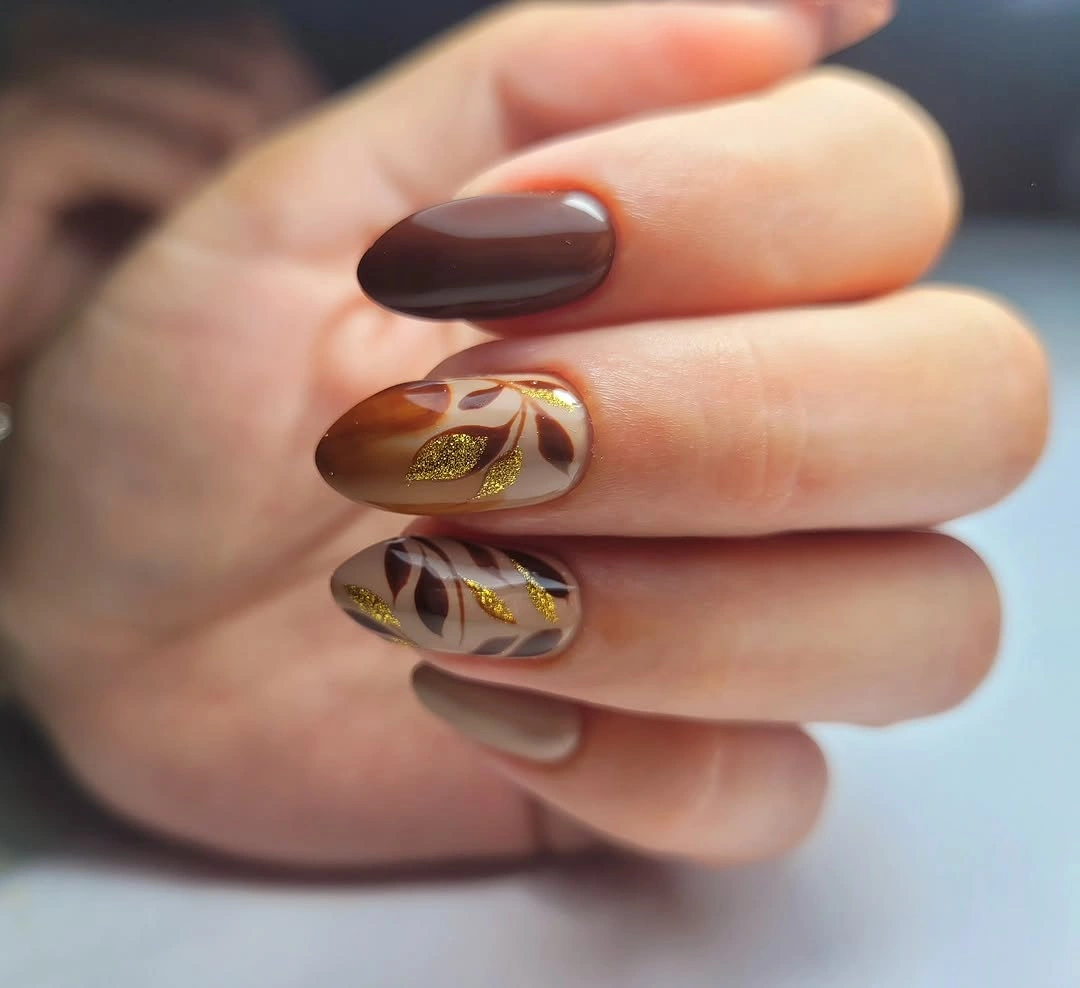
Keep the patterned detail on two nails and use pale taupe or brown solids elsewhere for an easier repeat. A shorter almond can handle one larger organic mark better than several small ones. If the pattern feels too close to the skin, deepen the brown rather than adding another color that would make the hand busier.
The open base helps the design grow out more gently, but the tiny accents and dark borders remain the first details to need attention. The medium shape balances decoration and movement, while the limited palette keeps coordination simple. Choose it when the smallest visible mark is what gives the manicure its personality.
Deep Brown With Patterned Pale Accents
Medium almond nails combine pale translucent bases, dark brown patterned accents, and small light details that echo the softer nails. The contrast is strongest where the brown pattern meets the pale surface, while the repeated depth keeps the set connected. The shape is long enough for the accents to breathe, but not so extreme that the design depends on length alone.
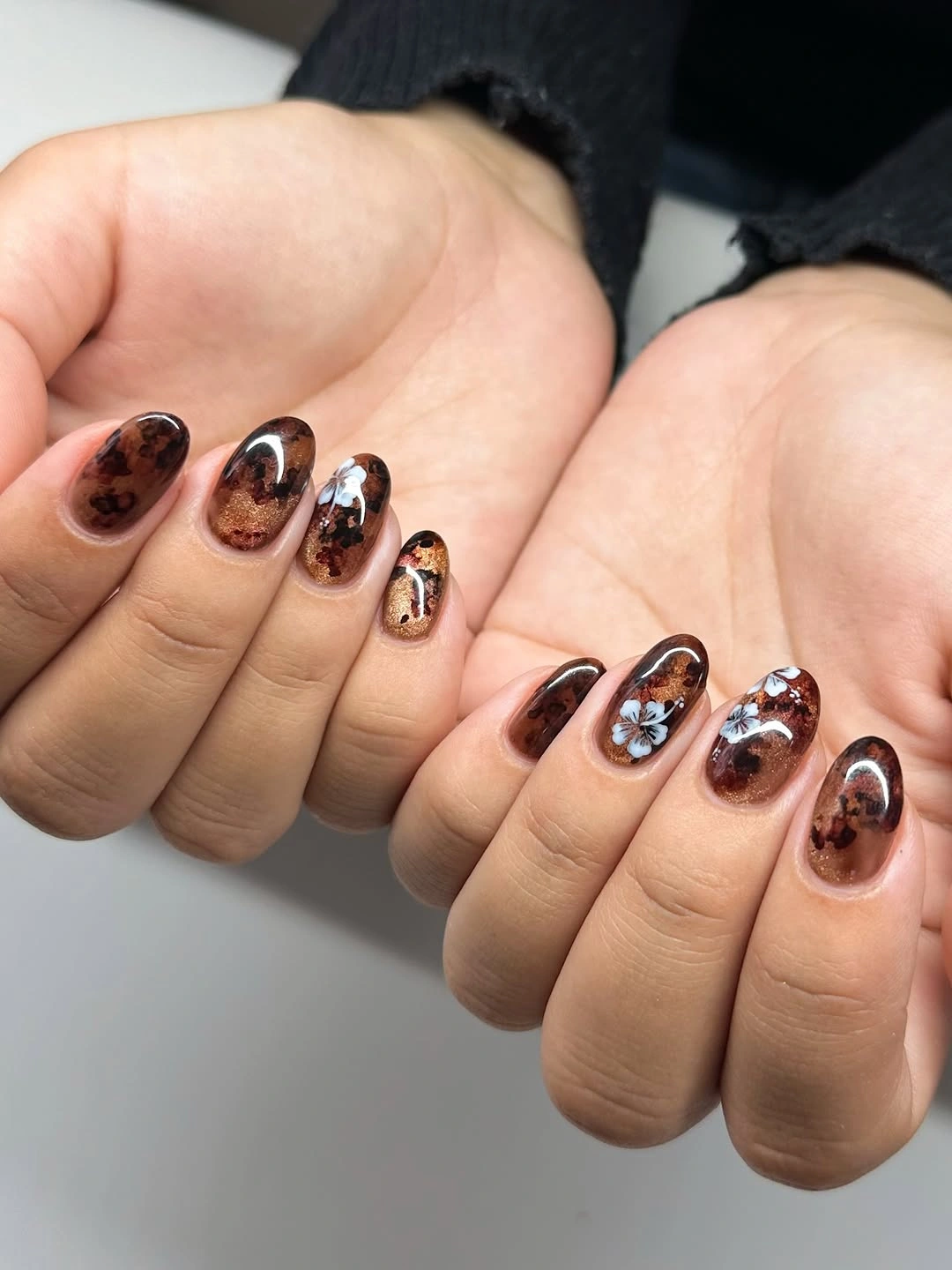
Use one patterned accent and keep the remaining nails in warm brown or pale nude when simplifying the set. A single light detail can replace several small marks, and a shorter oval will make the design feel quieter. Keep the dark accent selective because its value is what gives the hand definition.
The pale areas will show smudges and regrowth more clearly than the dark solids, but they also keep the overall manicure light. The medium shape makes the pattern practical enough for repeat wear, provided the accent is not copied to every finger. Choose it when controlled contrast matters more than a large collection of motifs.