Fall nails for fair skin tone can be organized through value and temperature rather than a fixed list of flattering shades. Burnt orange, copper, brown, burgundy, green, navy, pale pink, and mixed pastels each create a different contrast against the visible skin. The most useful examples show how to control that contrast with finish, negative space, and the amount of color placed on each nail.
A deep shade can become softer when it appears as a tip, outline, or one accent, while a bright shade can feel calmer when surrounded by a pale base. Shape matters too: short rounded nails make strong color compact, and long almond tips give curves and gradients more room. Use the ideas below to judge temperature, saturation, and practical scale together.
Burnt Orange On A Medium Almond
Glossy burnt orange covers these medium almond nails in one saturated, warm field. Against the visible fair skin tone, the color has clear value contrast, so the shape remains easy to read without extra art. The even surface also lets the orange stay the focus, making this a useful example of how a single warm shade can define a whole manicure.
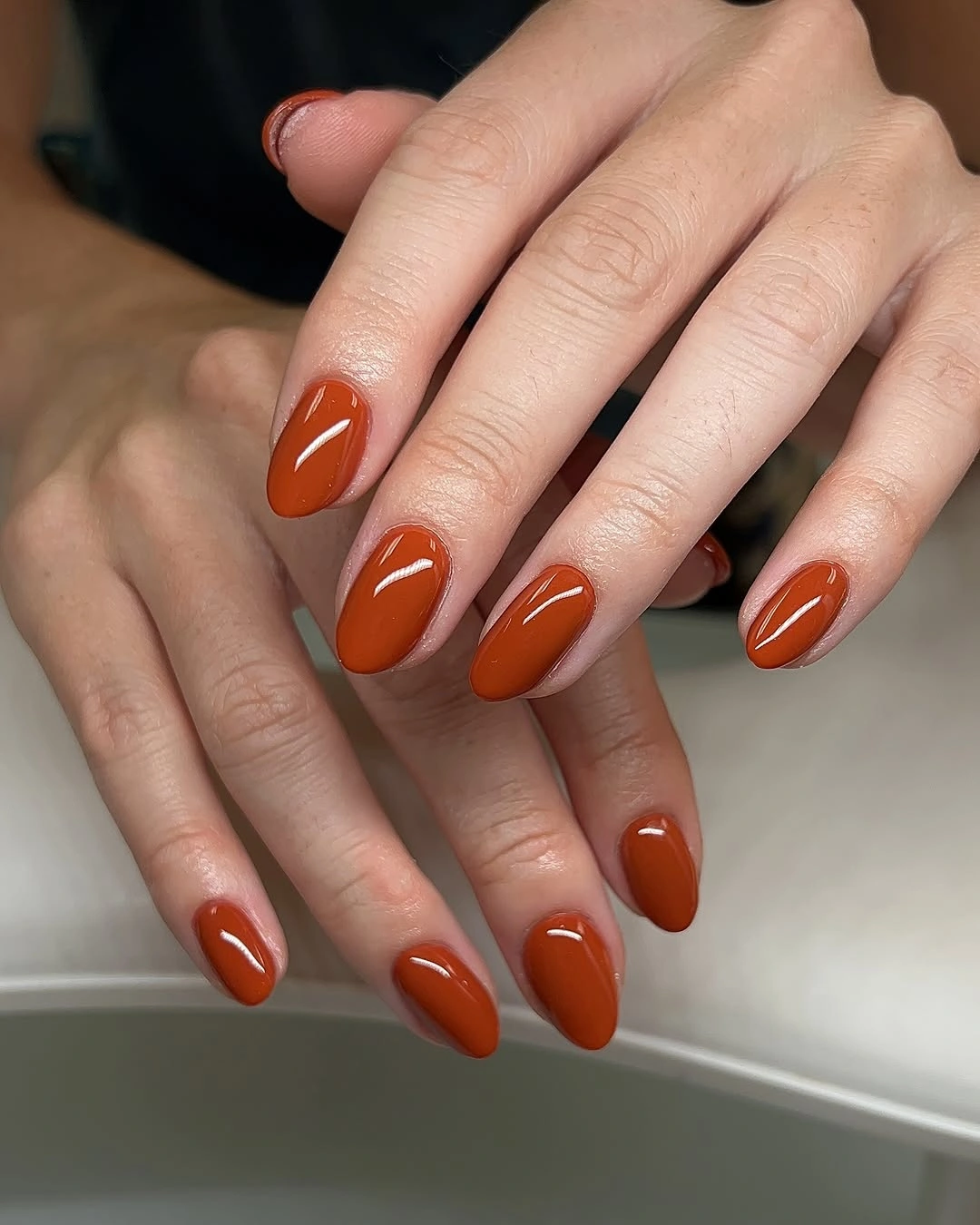
If the color feels too intense, use it on two nails and balance it with a warm nude or soft brown. A shorter oval will make the same saturation feel more compact, while a longer almond will amplify the bright tip. Keeping the base solid is helpful because adding a pattern would compete with the clear relationship between orange and skin.
Saturated orange is easy to understand but not especially forgiving around chips or uneven coverage. The medium length keeps the shape practical, while the gloss makes the color look brighter in direct light. Choose it when you want a confident autumn accent and are comfortable allowing one warm hue to remain the visual center.
Taupe And Charcoal With Gold-Like Sparkle
Taupe, soft brown, charcoal, and nude share this medium-long almond set, with reflective gold-like accents on selected nails. The muted solids provide low-saturation support, so the bright surfaces read as deliberate emphasis instead of overall glitter. The result shows how a small value jump can enliven a neutral palette without adding a complex motif.
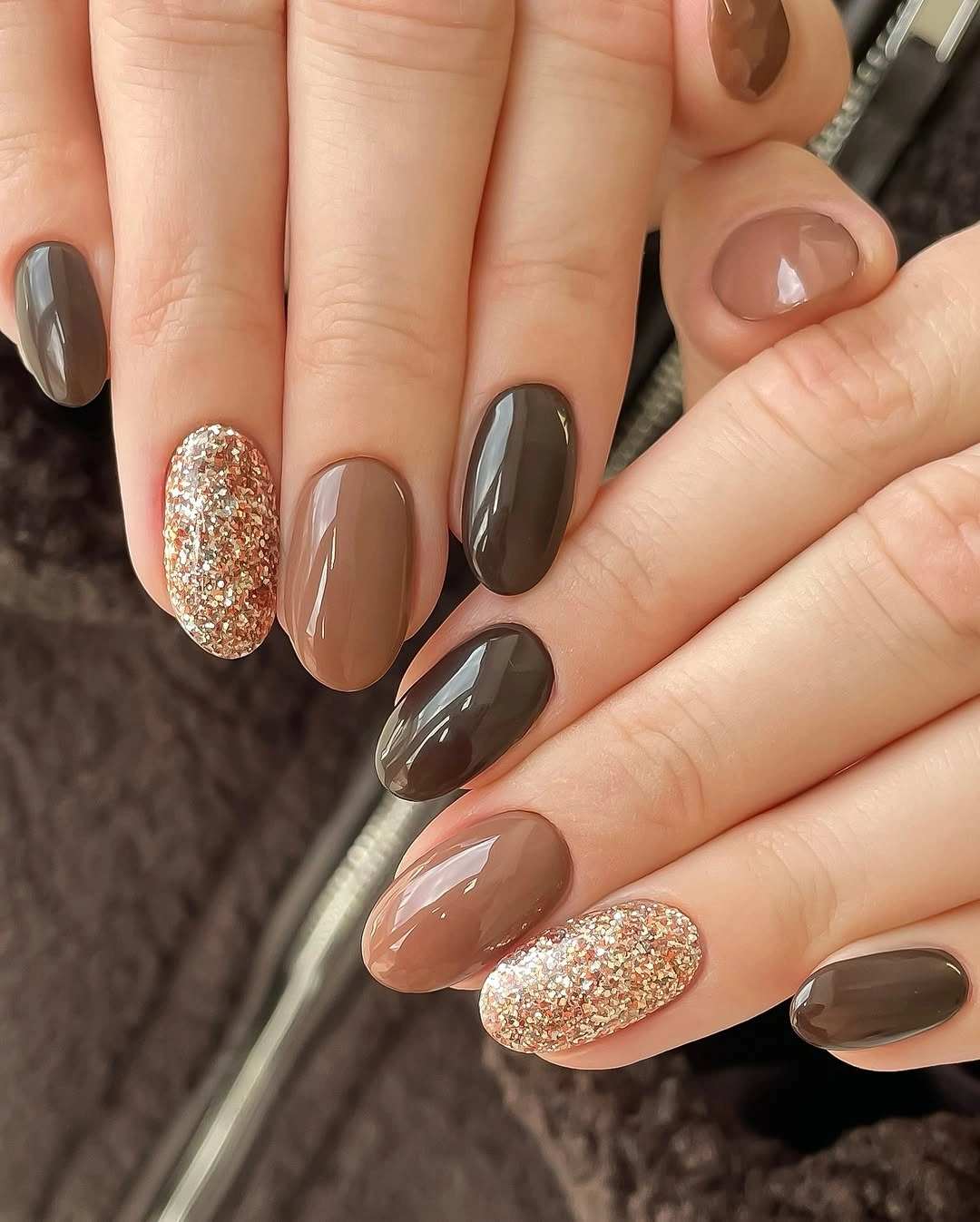
Use the sparkle on one nail and repeat taupe or charcoal across the rest when you want a lower-contrast arrangement. A shorter almond will keep the warm and cool neutrals close to the hand, while a pale nude can replace the darkest shade for a softer transition. The balance depends on leaving enough quiet color around the reflective accent.
The muted surfaces are relatively easy to wear, but the bright accent will draw attention to its own edge and texture. Long almond nails give the color shifts room, yet they also make the sparkling detail more visible in daily movement. Choose this approach when you want a neutral base with one controlled lift rather than a fully decorated set.
Translucent Taupe With A Quiet Gloss
Medium almond nails use a translucent-looking taupe-brown base with a smooth glossy surface and almost no visible art. The color sits close to the skin in value, so the effect is soft rather than sharply outlined. The manicure gains its interest from the relationship between the warm neutral, the light reflection, and the clean shape.
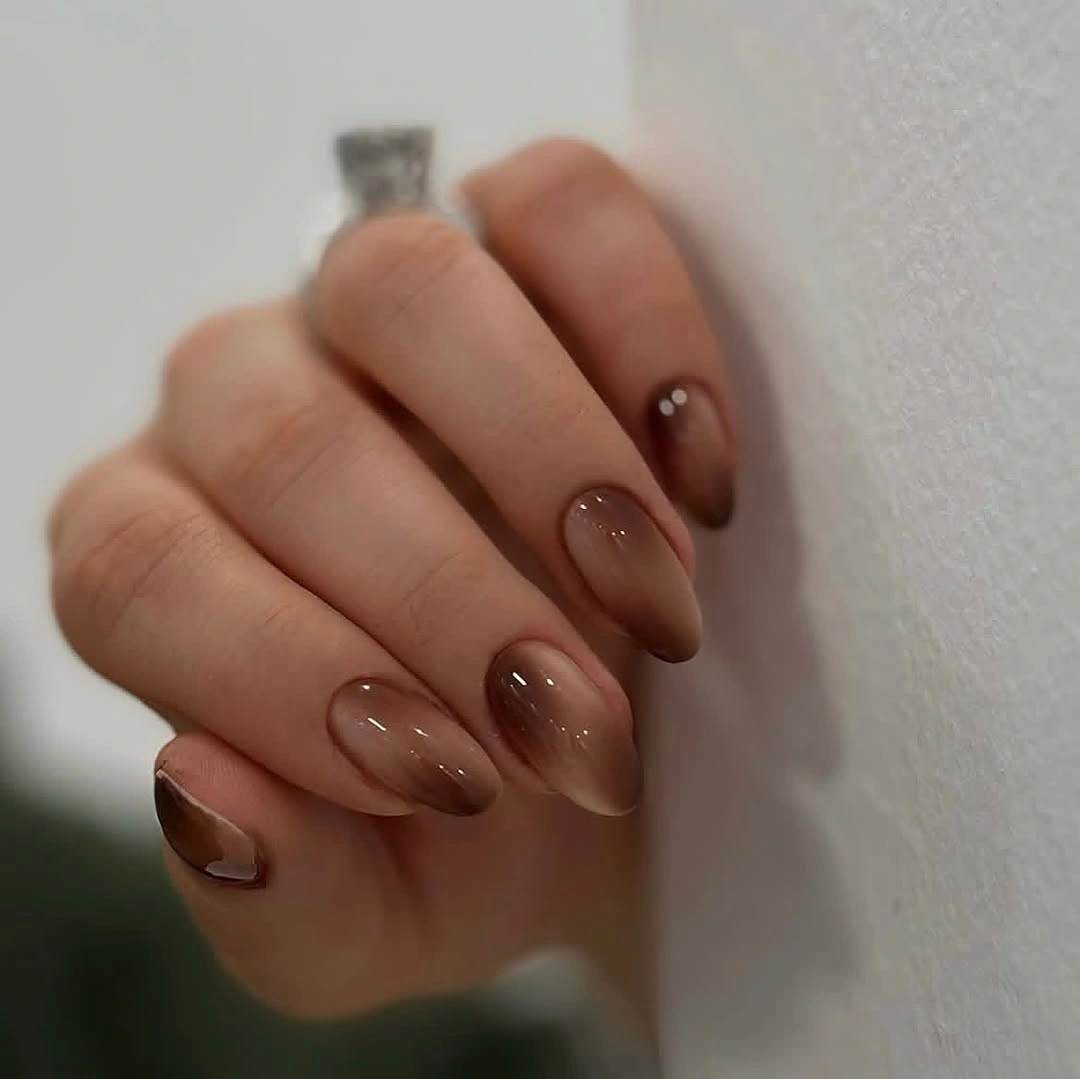
A shorter oval will make the color even more understated, while a deeper brown accent can add contrast without changing the base. If you prefer more seasonal definition, place the taupe beside one burgundy nail rather than adding several new shades. The quiet background works best when the color remains the main decision.
Low contrast hides some small shifts in tone, but a glossy surface can still expose uneven coverage around the edges. The medium shape is easy to repeat, and the absence of art keeps repair work simple. Choose it when you want a fair-skin-friendly neutral that looks intentional without relying on strong saturation.
Green Curves On A Pale Pink Base
Pale pink nails carry deep green curved edges that leave the center open. The green has high value contrast against the light base, but its placement at the border keeps the overall manicure balanced. The almond shape helps the curve look longer and more fluid, so the design feels directional rather than like a dark block placed on top.
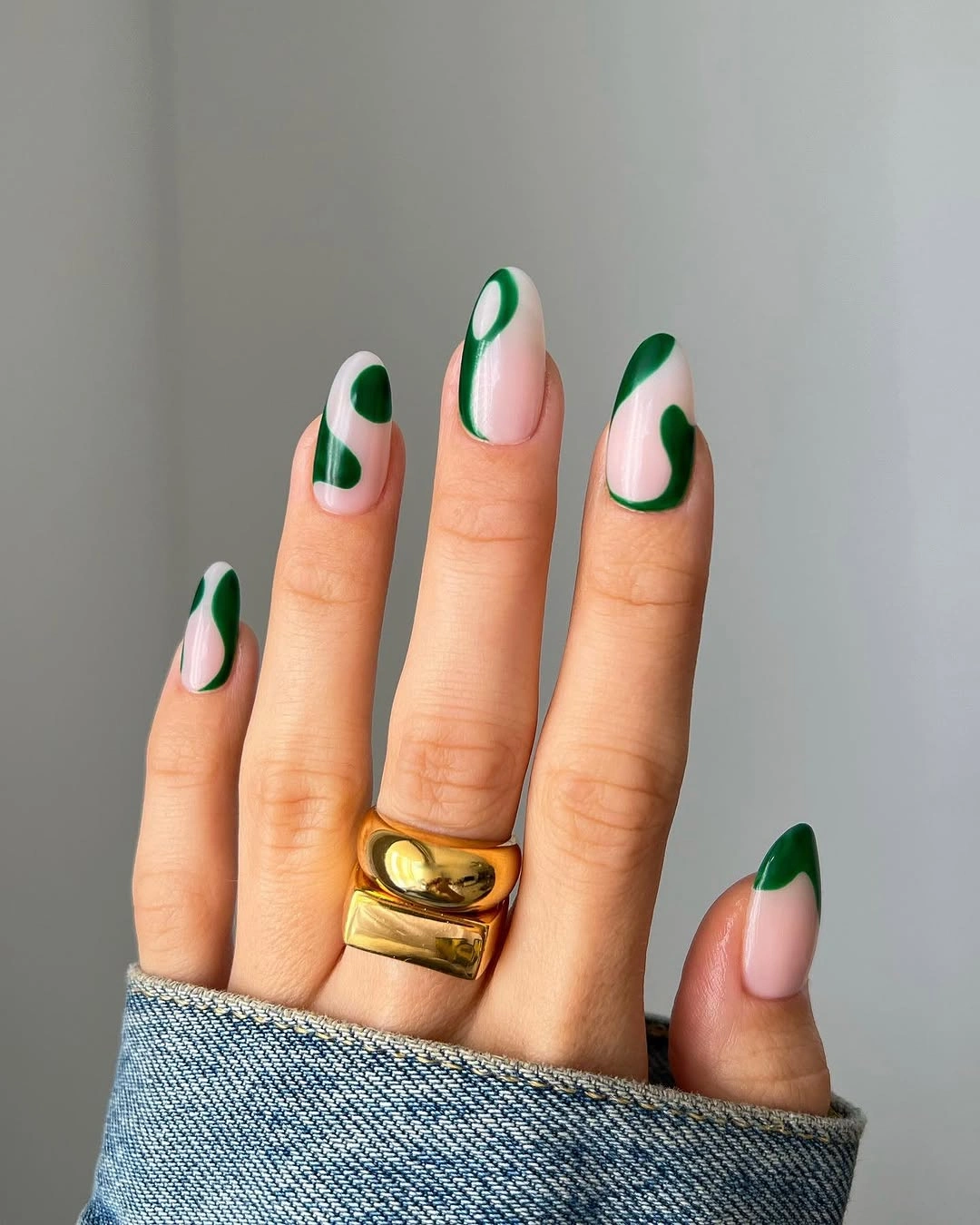
Use the green curve on two accent nails and keep the remaining fingers pale if you want a controlled version. A shorter almond can handle one broader curve better than several narrow lines. If deep green feels too strong against the visible fair skin, shift it toward muted olive while keeping the same pale-and-dark placement.
The open center softens the saturated edge, but it also makes the border thickness easy to inspect. The medium length offers enough space for the curve without forcing an extreme tip. Choose this design when you want a cool seasonal contrast and are prepared to maintain the clean relationship between pale base and dark edge.
Taupe Solids With Tiny Reflective Marks
Short rounded nails alternate matte-looking taupe solids with pale accents and tiny bright marks near the tips. The low-saturation base lets the small reflective details act as points of emphasis, while the compact shape keeps the result practical. Instead of using a large motif, the manicure shows how a tiny value and finish shift can change a neutral surface.
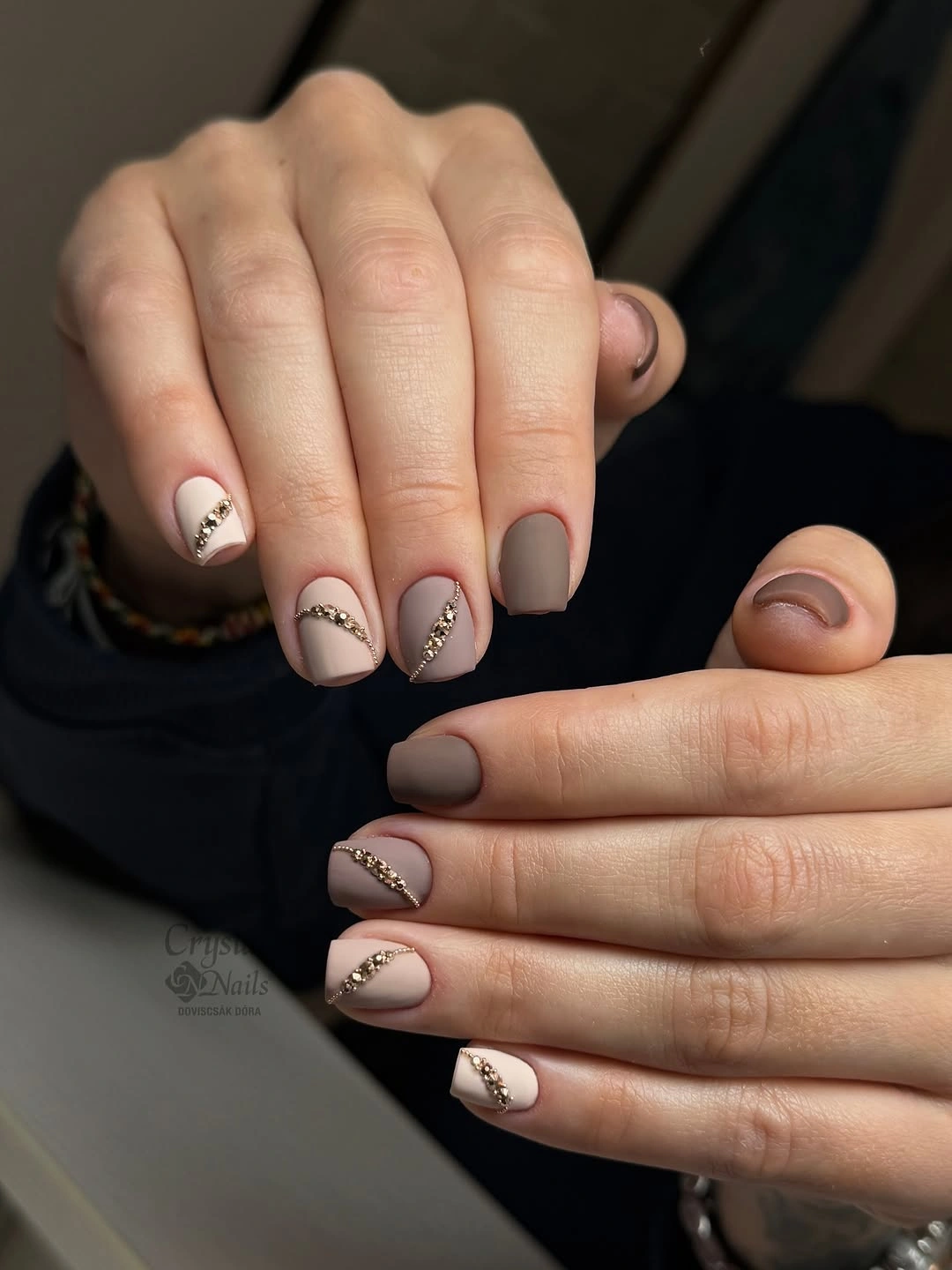
Keep one small accent on the ring finger and leave the other nails taupe if you want an easy repeat. A warm beige can replace the pale base, or a single darker brown nail can provide contrast without adding more decoration. The short shape already gives the design a clean limit, so restraint is part of its balance.
Tiny marks may need careful placement even though the rest of the manicure is simple. The matte-looking taupe reduces visual glare, while the bright details become noticeable when the hand moves. Choose this option when you want a low-saturation fall base with a small reflective lift and no need for long nails.
Neutral Layers With A Burgundy Anchor
Long almond nails combine pale pink, taupe, soft brown, and deep burgundy solids, with small accents that keep the palette from feeling flat. Burgundy supplies the darkest value and therefore becomes the anchor, while the lighter neutrals create visual breathing room around it. The result is warm and balanced because the deep color appears as a limited repetition rather than an all-over field.
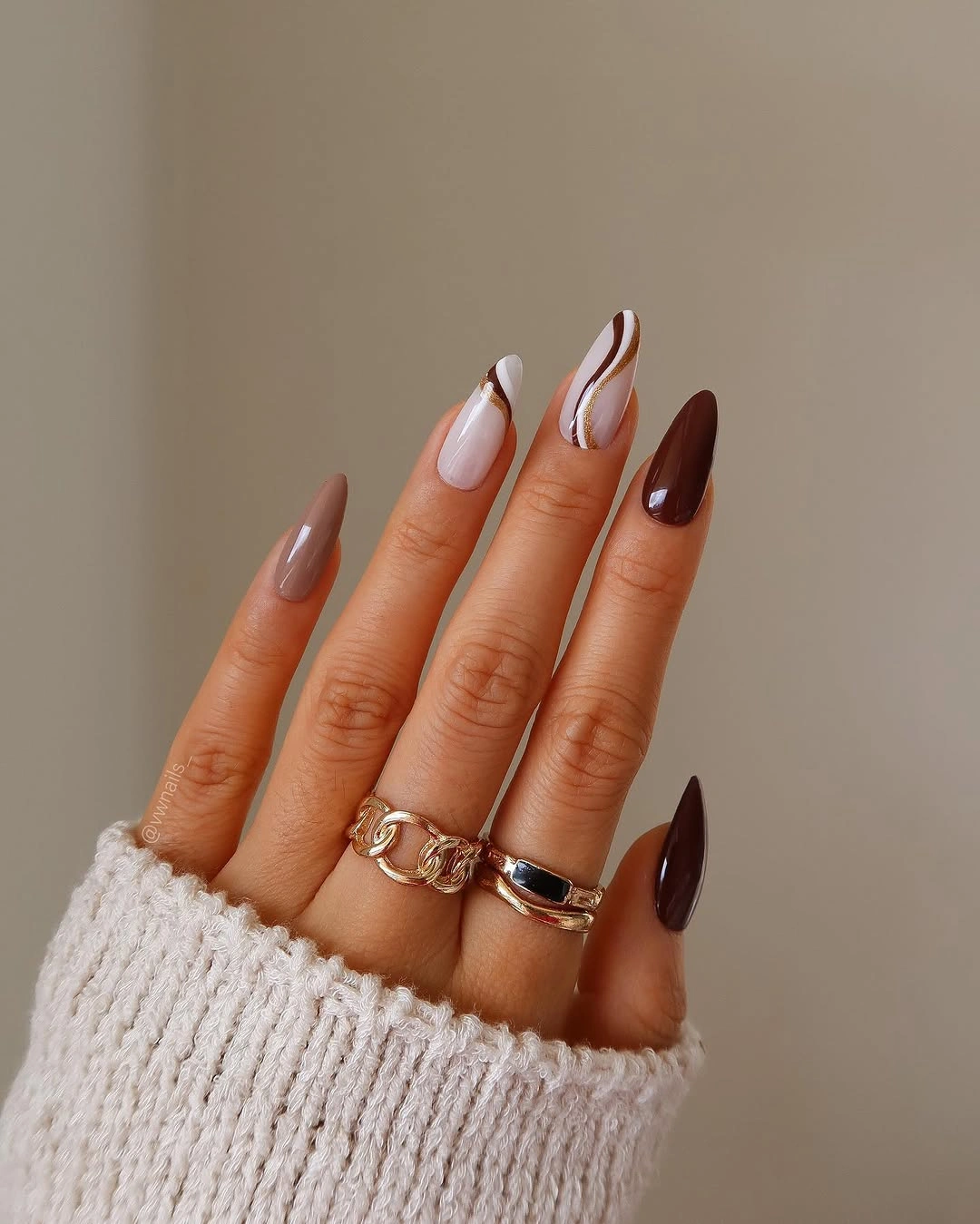
Use burgundy on two nails and repeat one taupe shade on a shorter almond for a simpler value map. A pale pink accent can soften the transition, while a brown accent will make it warmer. Keep the number of shades controlled; the design gains its interest from the measured difference between light neutral and deep red.
Plain color makes this set easier to maintain than a patterned design, but the long silhouette still requires consistent filing. Burgundy will show chips strongly, while taupe and pink may reveal edge changes in a different way. Choose it when you want a fair-skin-friendly autumn palette that can move from quiet to more dramatic through color order.
Reflective Copper Across An Almond Shape
Medium-long almond nails are a reflective copper-brown, with the metallic-looking surface catching light across the full shape. The warm temperature stands out against the visible fair skin, while the even application keeps the result focused. No motif is needed because the color’s value and surface already provide a clear point of emphasis.
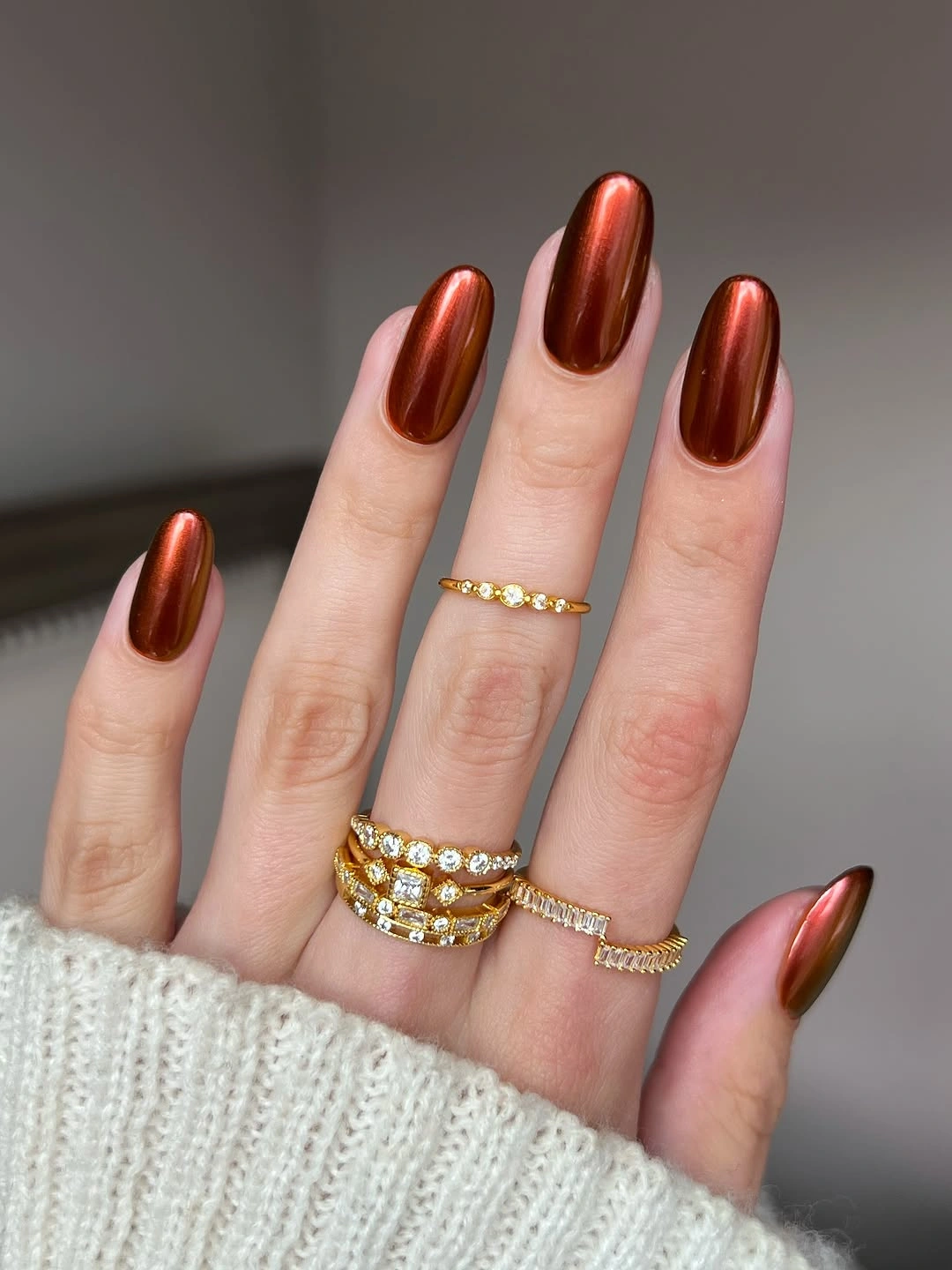
Move the copper to a shorter oval if you want less visual drama, or place it on one accent beside a warm taupe. A darker brown can reduce the brightness, while a pale nude beside it will increase the contrast. The most controlled version lets the reflective surface remain the only high-emphasis element.
Reflective color exposes the contour of each nail and makes uneven edges more visible than a soft cream would. The medium-long shape gives the glow room, but the plain surface keeps repair work straightforward. Choose it when you want warmth and shine to do the styling, with the understanding that the finish will draw attention to maintenance.
Red Orange With Pale Gold-Like Leaves
Matte-looking red-orange solids alternate with pale pink nails carrying small gold-like leaf-shaped marks. The warm base has strong saturation, while the pale accents act as visual space and let the tiny details read clearly. This arrangement shows how a bold color can become more balanced when it is interrupted by a quieter surface rather than another bright shade.
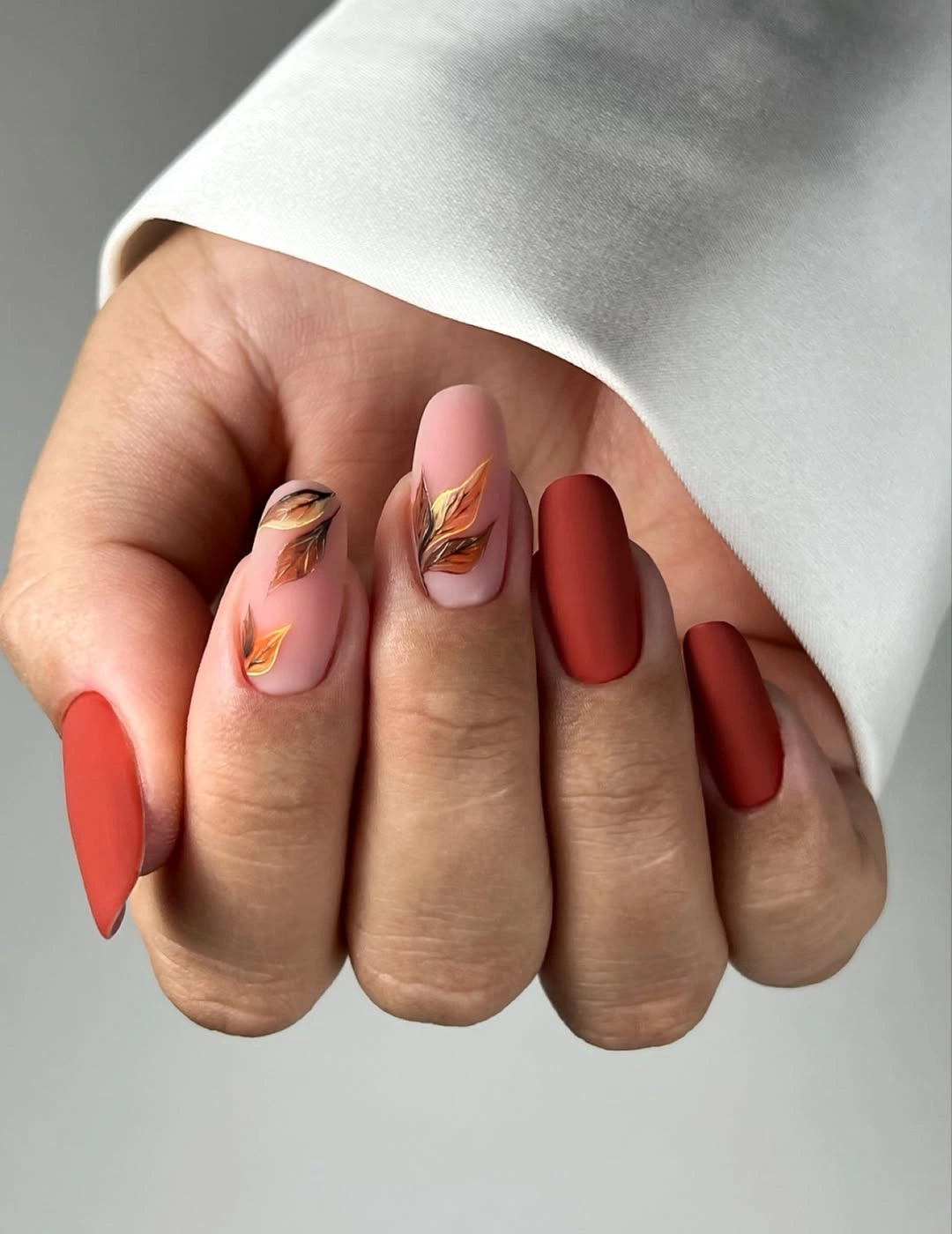
Use the decorated pale nail on one finger and keep red-orange on the rest for a more direct version. A warm nude can replace the pink if you want the contrast to sit closer to the skin, while a shorter almond will make the color blocks more compact. The small accent should remain small because the orange already has high visual weight.
The matte-looking solids may hide minor reflections, but the pale accent and fine mark need a clean border. Medium length gives the detail enough room without turning the design into a long statement. Choose this set when you want warm saturation with a restrained decorative note and are comfortable letting the orange remain the main color.
Warm Brown With Translucent Amber Accents
Short rounded nails mix translucent nude, dark brown, and amber-patterned accents with small reflective details. The pale and warm surfaces create moderate contrast, while the dark brown keeps the set from becoming too light. The compact shape makes the accents readable without needing the length of a long almond.
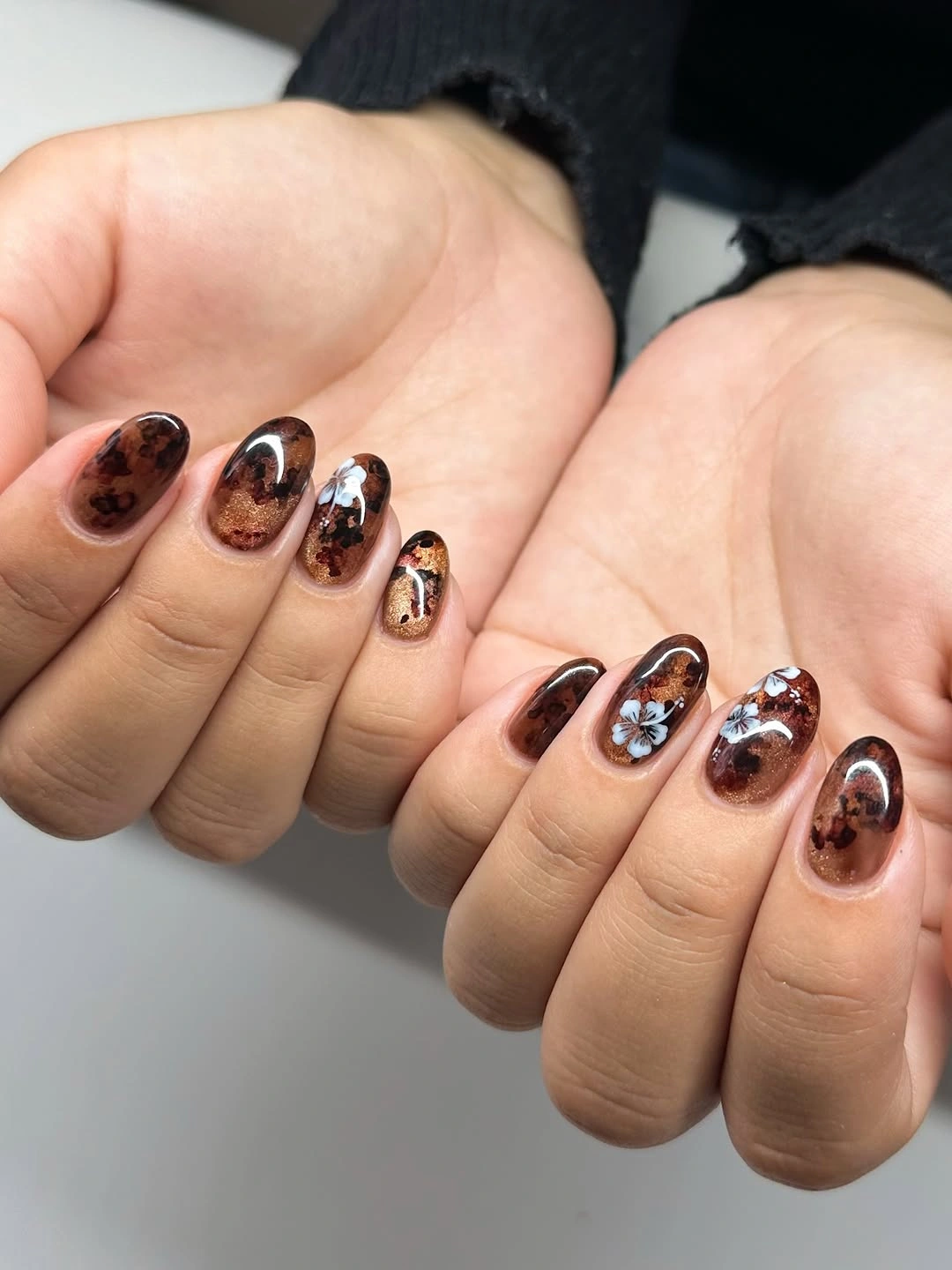
Keep one amber-patterned nail beside plain nude and brown when you want the simplest version. A pale taupe can soften the base, while a deeper chocolate will increase contrast against the visible fair skin. The shorter shape is already practical, so the best adaptation reduces the number of accents rather than adding a new motif.
The patterned nails need more attention than the solids, especially where the translucent area meets the edge. The warm palette remains easy to coordinate, and the compact length limits visual clutter. Choose it when you want a small amount of depth and color variation without making every nail a separate design project.
Bright Mismatched Pastels And Dark Accents
Medium almond nails mismatch blue, yellow, pink, green, brown, and dark shades in clear solid blocks. The palette is high in color variety but simple in surface, so the manicure stays legible. Against the visible fair skin, each saturated nail reads distinctly, making the set playful through color sequencing rather than art.
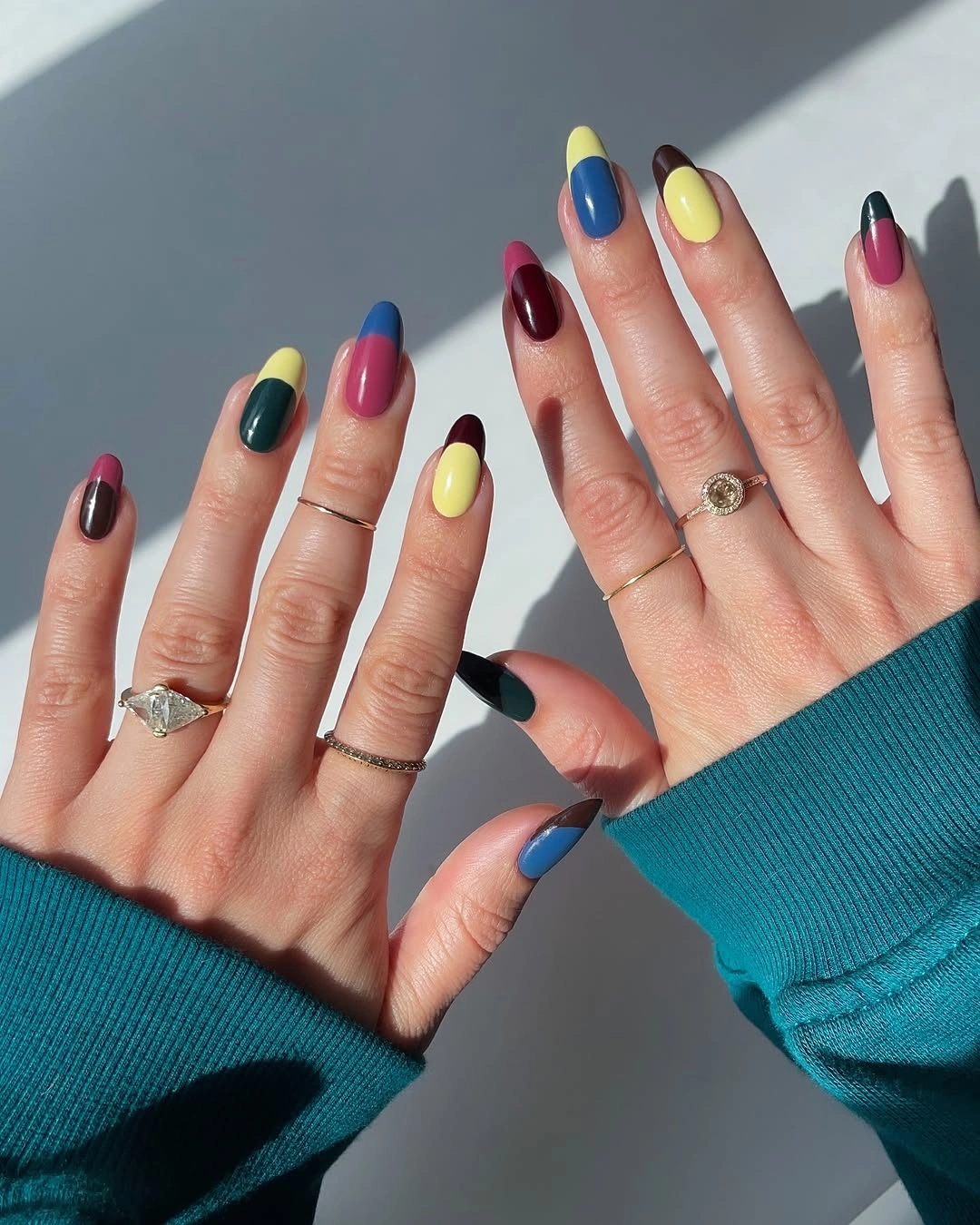
Choose three colors and repeat them instead of using the full range if the contrast feels too scattered. A dark accent can anchor the brighter shades, while a pale pink can create a visual pause between yellow and blue. Shorter almond nails will make the mismatch more compact and easier to coordinate with neutral clothing.
The solid blocks are straightforward to refresh, but many colors mean more decisions when one nail chips. The design works because the surfaces remain plain and the shape stays consistent. Choose it when you want an upbeat fall transition and prefer clear color contrast over tiny decorative marks or complicated line work.
Taupe And Brown With Pale Botanical Lines
Medium-long almond nails use taupe and brown solids beside pale nails carrying white leaf-like lines. The dark neutrals provide value support, while the pale accents create a high-light area against the visible fair skin. The botanical marks feel delicate because they are isolated on light bases rather than repeated across every finger.
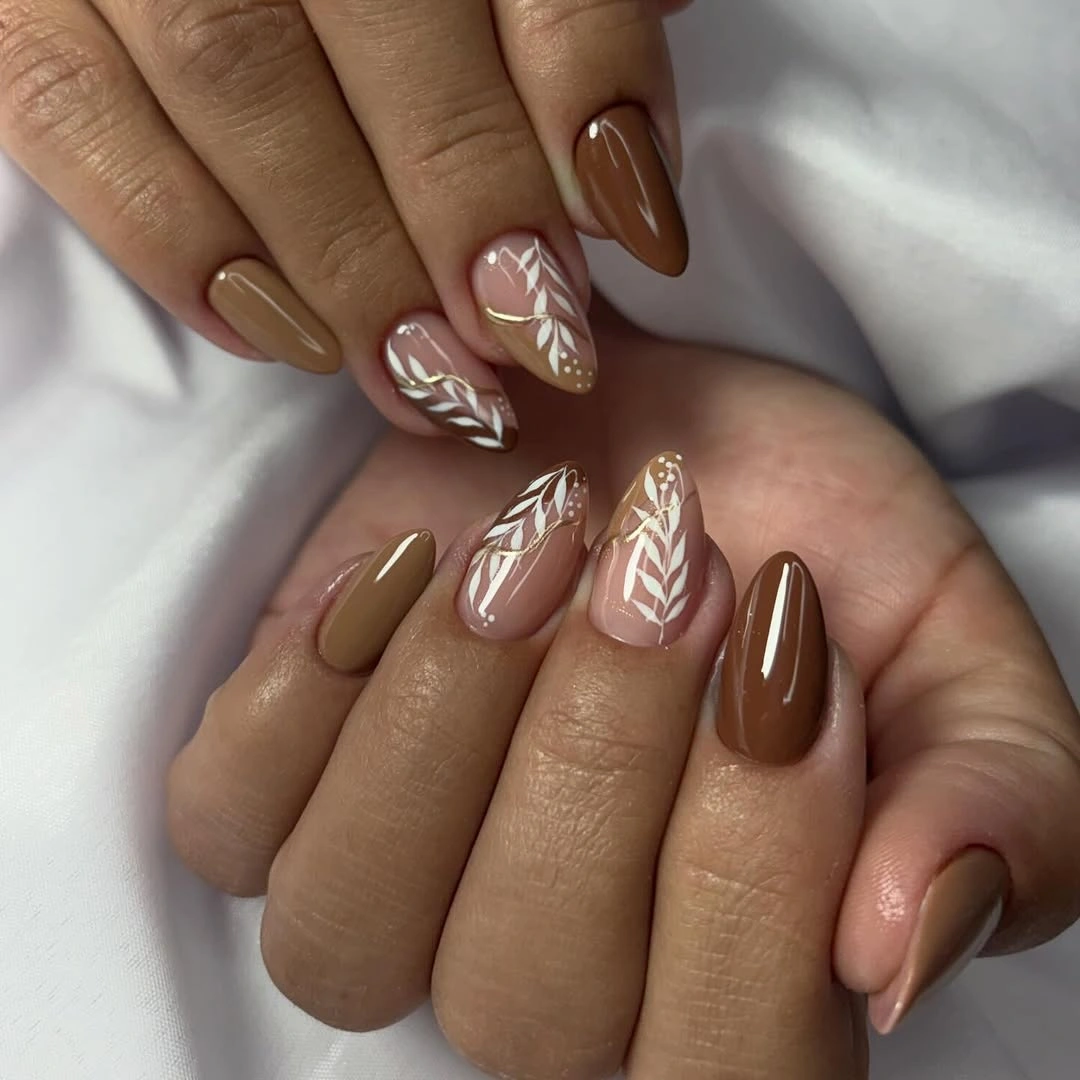
Keep one illustrated pale nail and use taupe on the remaining fingers for a more practical interpretation. A warm cream base will make the white line softer, while a deeper brown will make it more graphic. On shorter nails, use one larger leaf-like mark instead of several fine branches. That keeps the fair, light contrast visible without making every nail equally detailed.
The pale accents draw attention to line placement and need a clean surface, while the solids are easier to maintain. The medium length offers enough room for the drawing without requiring a dramatic silhouette. Choose this route when you want seasonal color supported by a small natural-looking detail rather than a full pattern.
Muted Brown Bands On A Short Nail
Short rounded-square nails combine translucent brown and mauve blocks with thin pale and dark bands. The design has a checked or striped impression, but its small scale keeps the compact shape central. Close values make the pattern softer than black-and-white graphics, while the horizontal bands add a little structure to the rounded tips.
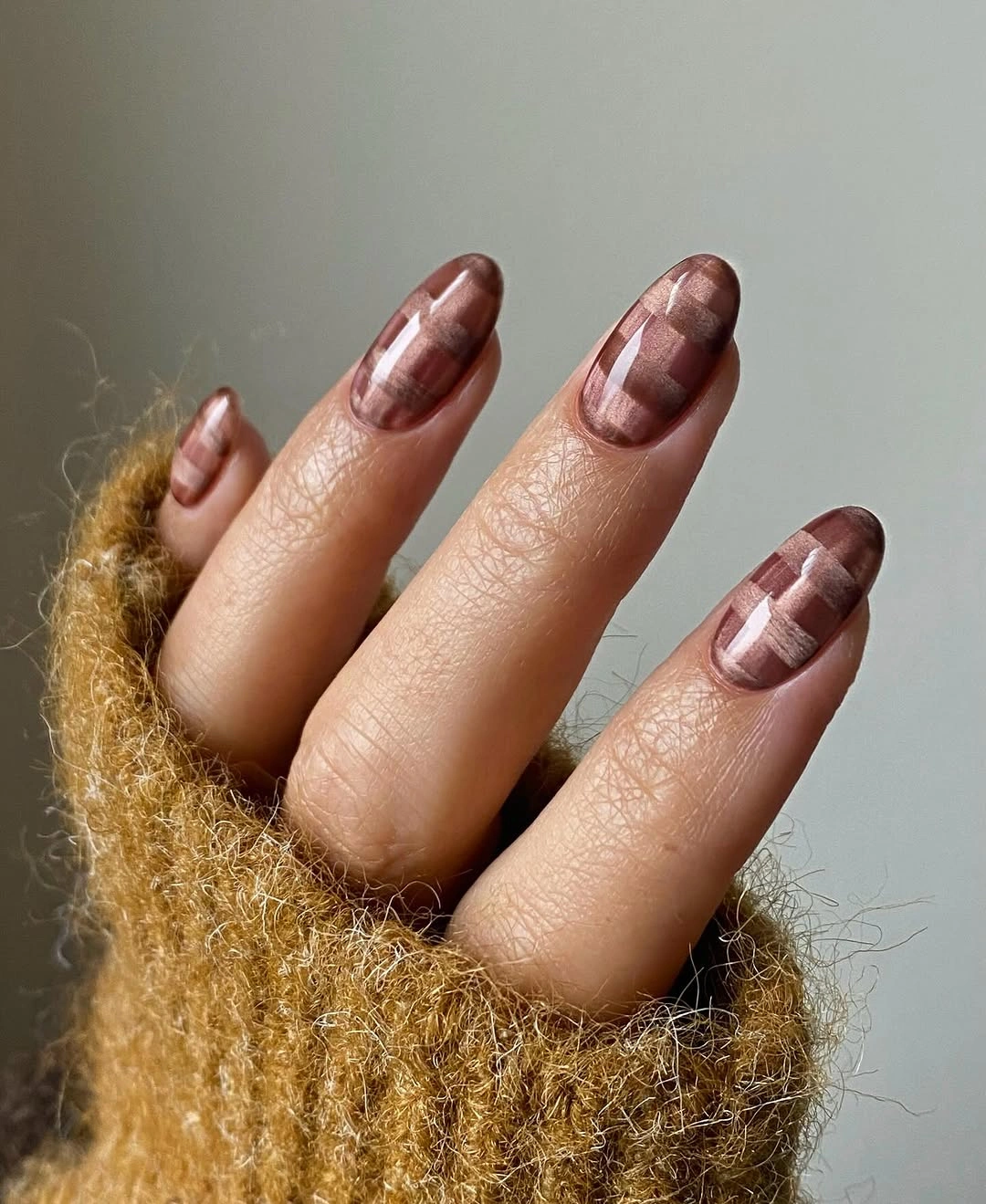
Keep the bands on one or two nails and use a plain brown elsewhere for easier repetition. Wider stripes will read more clearly on a short surface, while a deeper mauve can supply stronger contrast without adding another color. The design benefits from open space, so avoid filling every nail with several narrow lines.
Small bands need more precision than a solid neutral, but the muted palette makes minor variation less abrupt. The short shape is practical, and the pattern can be repaired on selected nails rather than across the whole hand. Choose it when you want a little surface structure with a low-saturation color relationship.
Pale Pink With Brown Graphic Accents
Short-to-medium nails combine pale pink, dark brown, white, and patterned rounded accents with one small reflective detail. The pale base keeps the look light, while the brown accent creates the strongest value jump. The compact length makes the design easy to read because the decorative shapes remain contained instead of stretching into a long narrative.
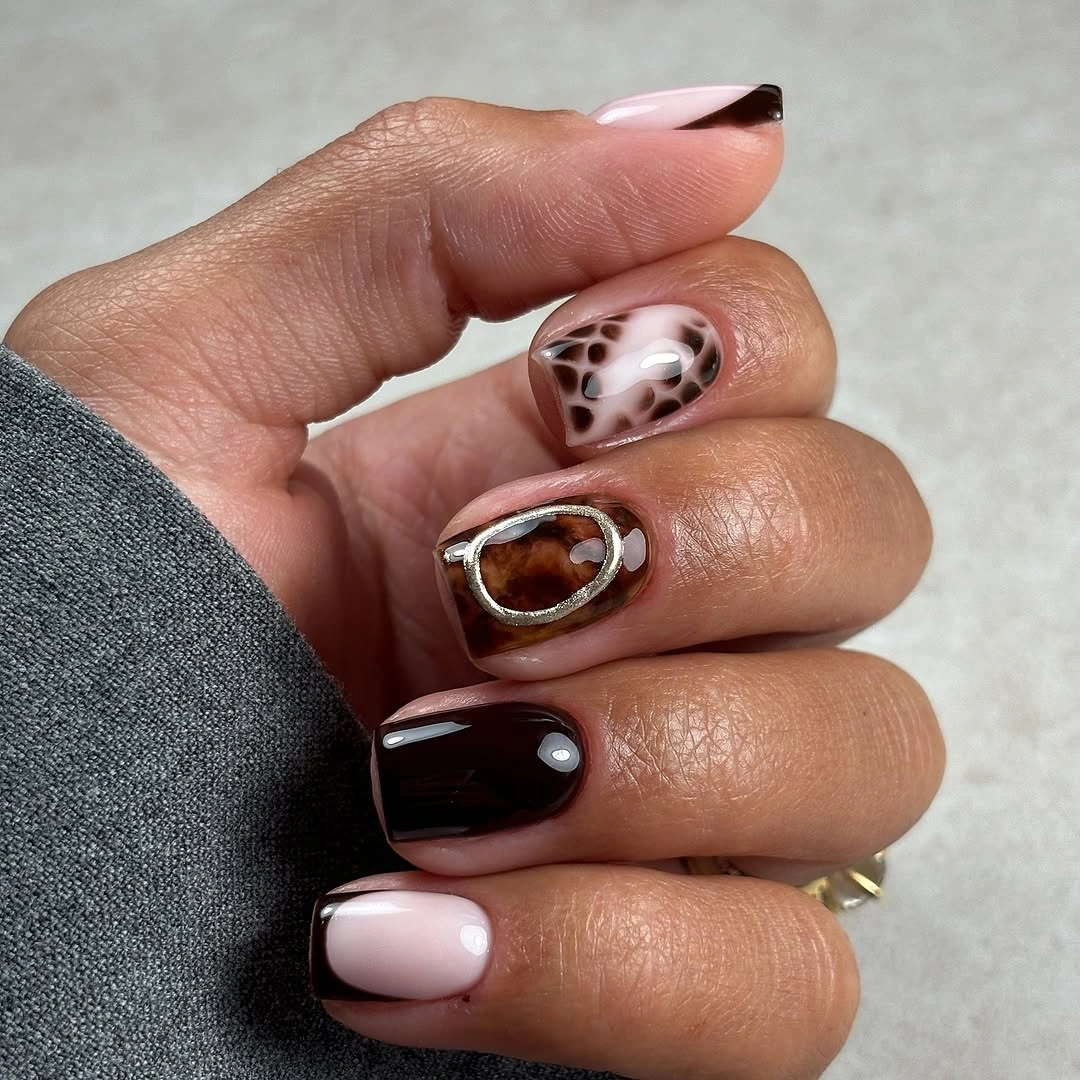
Use one patterned accent and one dark brown solid when you want to simplify the palette. A warm cream base can soften the contrast, or a darker brown can make the pale nail stand out more clearly. The most useful adaptation leaves at least half of the visible hand in plain color so the accent has support.
The short shape is practical, but pale surfaces show any change in edge or coverage. The patterned nail will also need more care than the plain ones, even though it occupies only a small part of the hand. Choose this set when you want a balanced mix of soft base and graphic detail rather than an all-solid manicure.
Green Red White And A Dotted Accent
Medium almond nails alternate deep green, dark red-brown, a white nail with small black dots, and a warm patterned accent. The colors have different values, but each nail carries a simple treatment, so the variety remains organized. The white accent acts as a light pause against the deeper shades and makes the dotted detail easy to see.
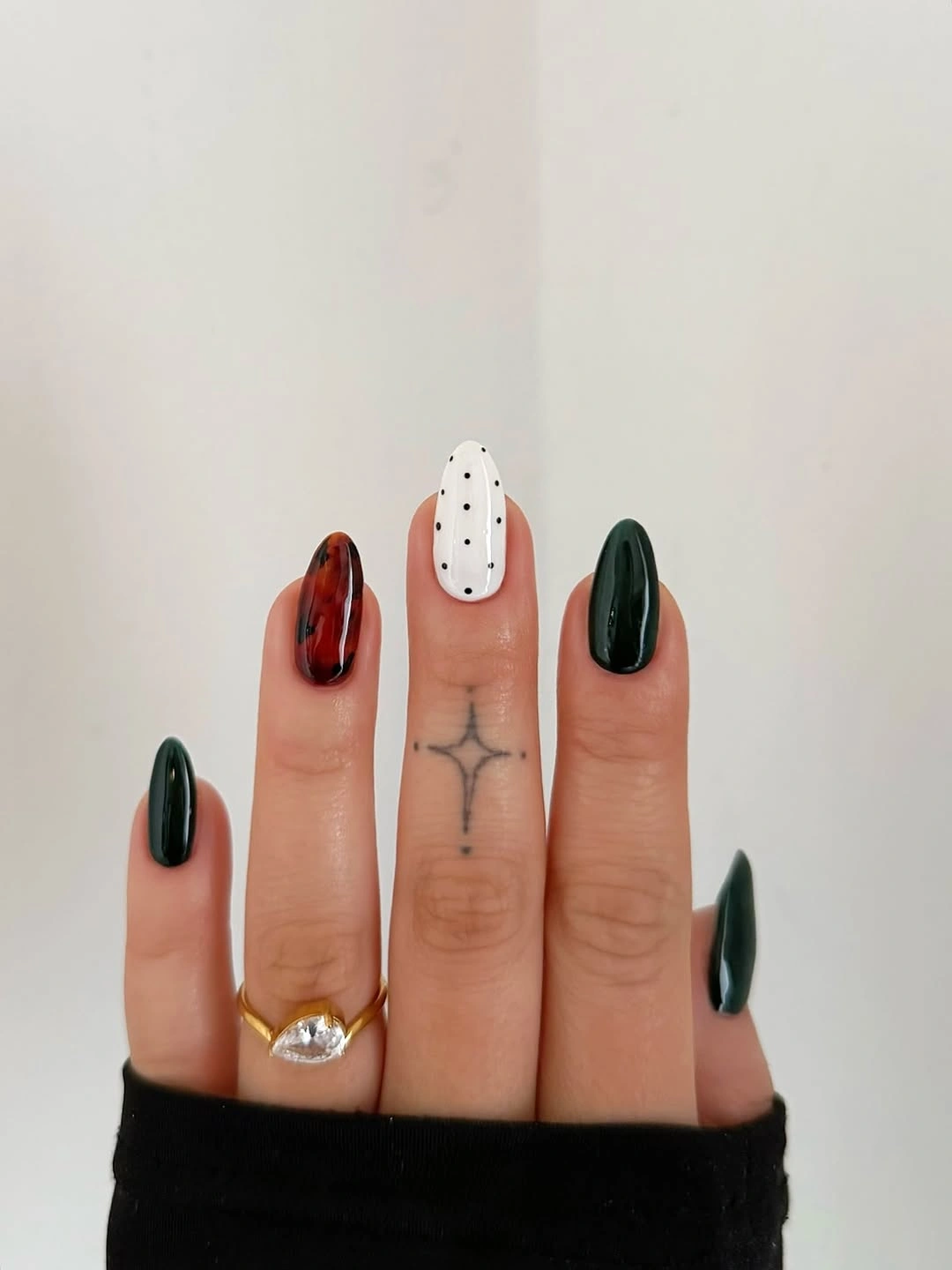
Keep green and red as solids, then choose either the dotted white nail or the patterned accent for a focused version. A shorter almond will benefit from larger dots and fewer color changes. If the white feels too stark against the visible fair skin, replace it with a soft cream while keeping the dark dots.
The mixed palette is lively, but it needs a consistent shape to avoid looking accidental. The solid nails are easier to refresh, while the white and patterned accents show wear sooner. Choose it when color variety matters and you are willing to let one or two accent nails receive more maintenance than the rest.
Pastel Color Blocks With Small Plaid Marks
Short-to-medium almond nails mismatch pale blue, yellow, olive, brown, and pink with plaid-like and abstract accents. The colors are bright but not all equally saturated, so the softer bases help the stronger yellow and blue settle. The compact shape keeps the mixed palette playful rather than expansive.
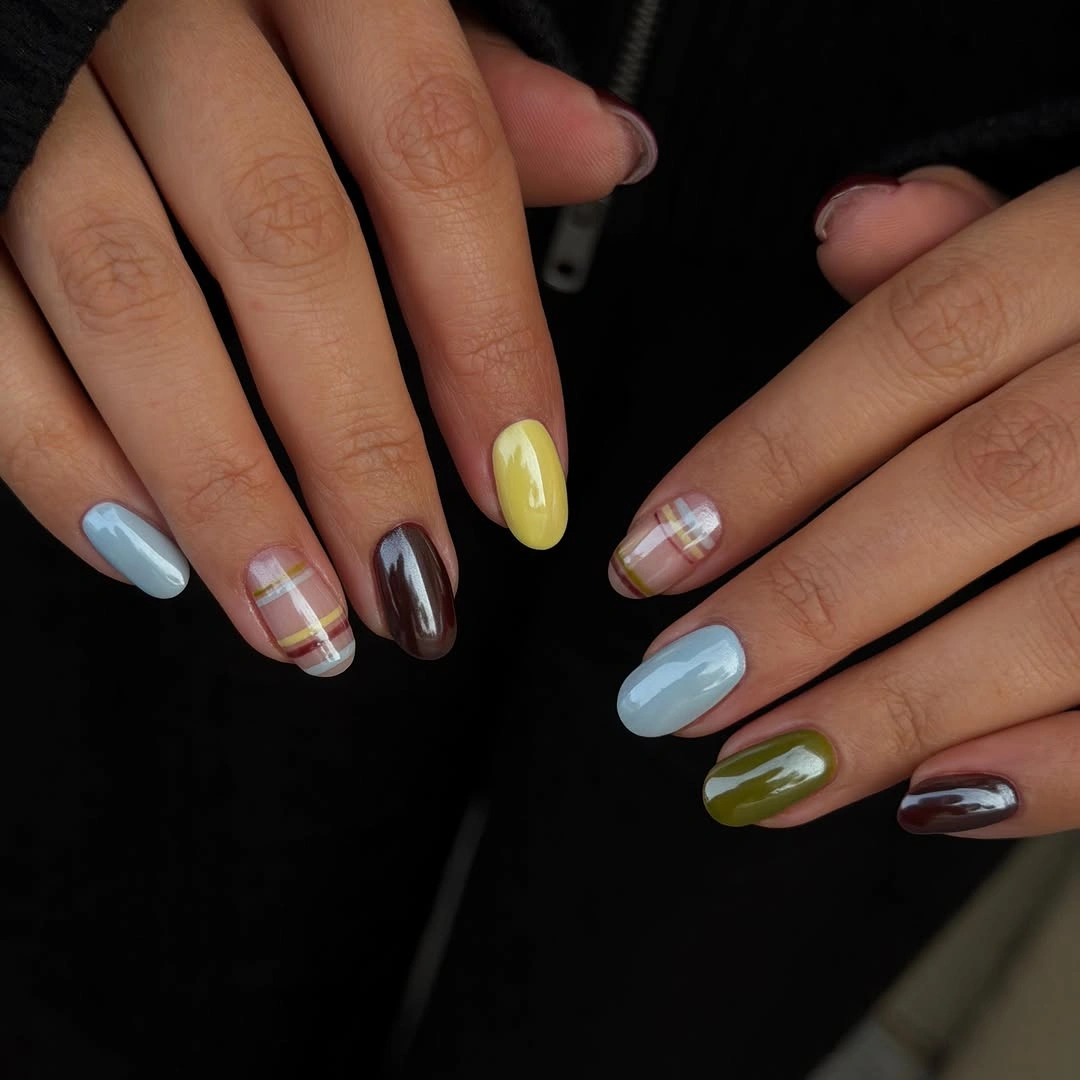
Choose two pastels and one brown for a calmer version, then keep the plaid-like detail on a single nail. A shorter nail can handle larger blocks better than tiny checks, while a pale pink base will create a visual bridge between the colors. The goal is to organize the mismatch, not to reproduce every accent.
Solid pastels are simple to refresh, but the darker and lighter colors will each reveal different edge changes. The small patterns require more care, yet the medium length keeps the overall design manageable. Choose it when you want a cheerful color story that uses contrast and repetition instead of a single dominant shade.
Plum And Burgundy Over Pale Space
Long almond nails alternate glossy plum solids with pale pink nails edged by burgundy curves. The dark colors have similar warmth but different depth, while the pale areas create visual breathing room against the visible fair skin. The curved edges make the long shape look extended without covering the entire nail in dark color.
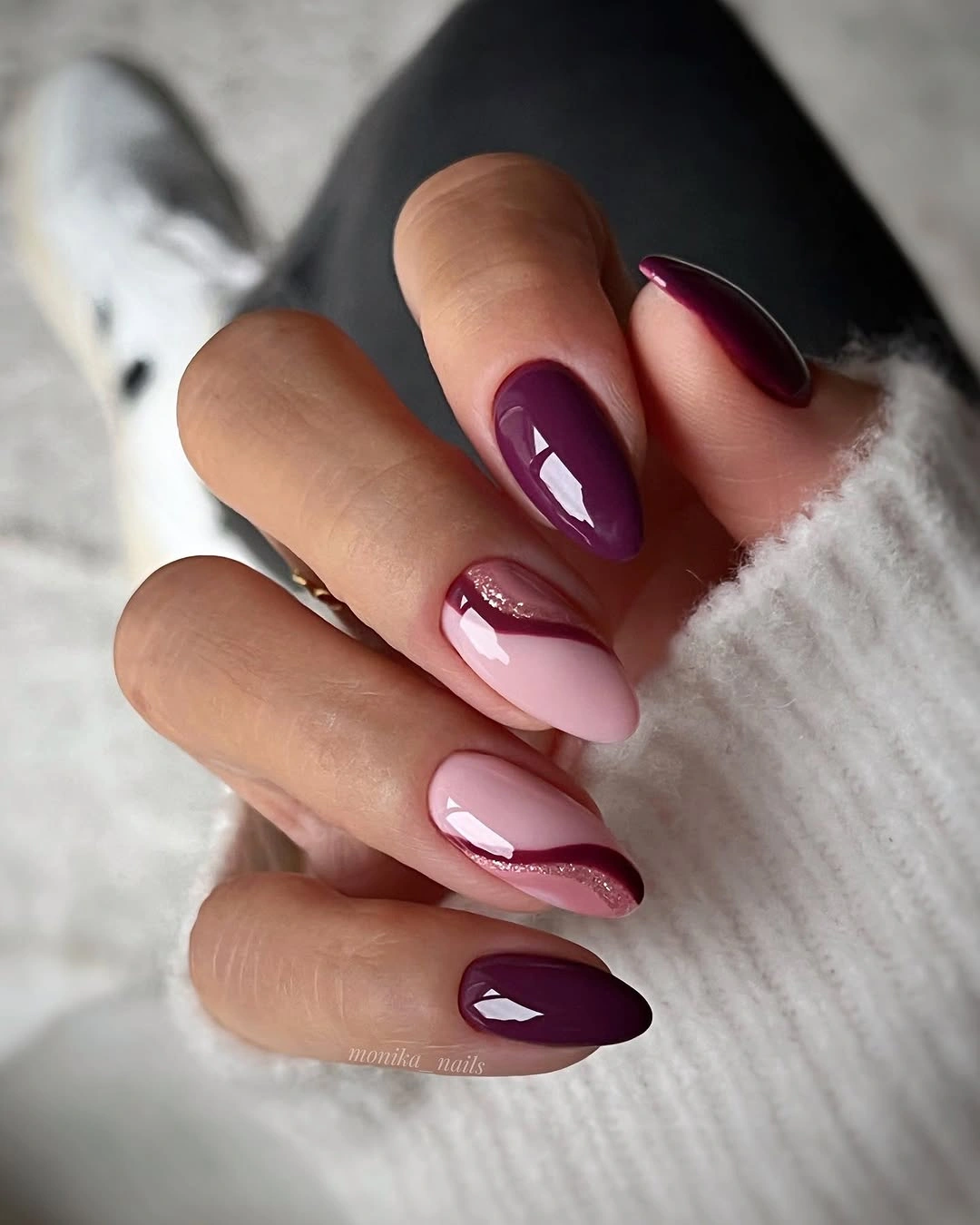
Use plum on two nails and one burgundy curve on a shorter almond for an easier map of value and temperature. A muted mauve can replace the pale pink when the contrast feels sharper than desired. Keep the curves broad and simple on short nails so the open space remains visible. This gives the plum family room to do the visual work without crowding the small accent.
The negative-space sections make the set lighter, but the border can reveal regrowth and uneven thickness quickly. The solid plum nails are easier to refresh, creating a practical division between accent and support. Choose this design when you want rich fall color tempered by pale space rather than a fully dark manicure.
Pale Centers With Dark Almond Frames
Long almond nails use pale pink centers with dark brown outer edges and small black or burgundy accents. The framing increases the value contrast around the nail, so the almond shape becomes immediately visible. Because the center remains open, the dark perimeter reads as a line of structure rather than a full coating.
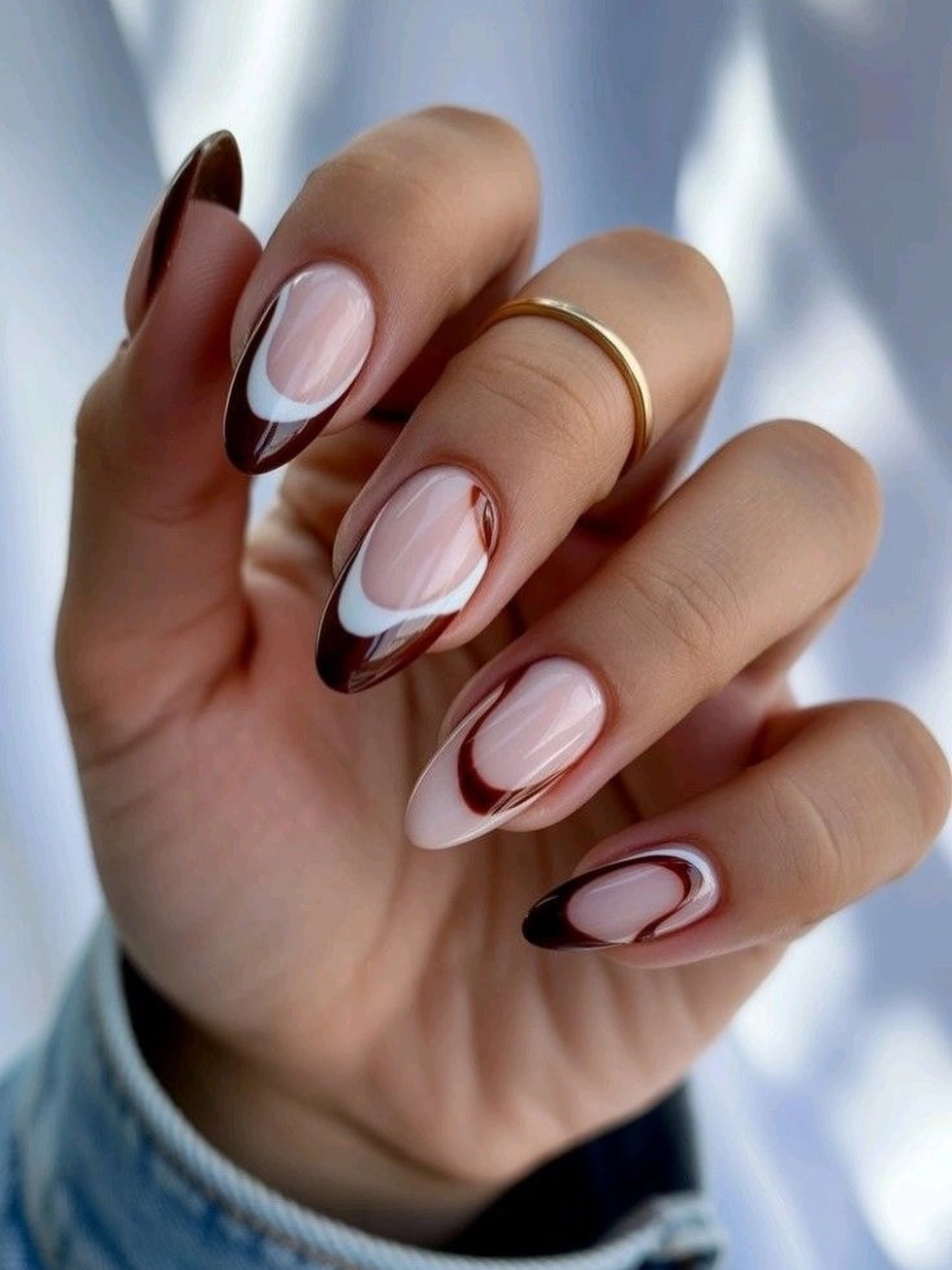
For shorter nails, keep the dark color near the tip and leave the center pale. Use a soft brown instead of black for a gentler relationship, or make one full dark accent nail if a clean contrast is preferred. The useful formula is simple: pale space first, dark edge second, and no need for extra decoration.
The perimeter is also the part most likely to show growth or uneven thickness. The pale center keeps the design visually light and makes the medium-to-long shape look elongated, but it asks for a tidy outline. Choose it when you want a strong frame with less visual weight than a solid dark manicure.
Orange Solids With Tiny Illustrated Accents
Glossy orange solids dominate these medium almond nails, while two accent fingers carry small black-and-pale illustrated marks. The bright base has high saturation, so the accents work because they are limited and visually contained. The result feels playful, but the orange remains the main color rather than becoming background for a complicated picture.
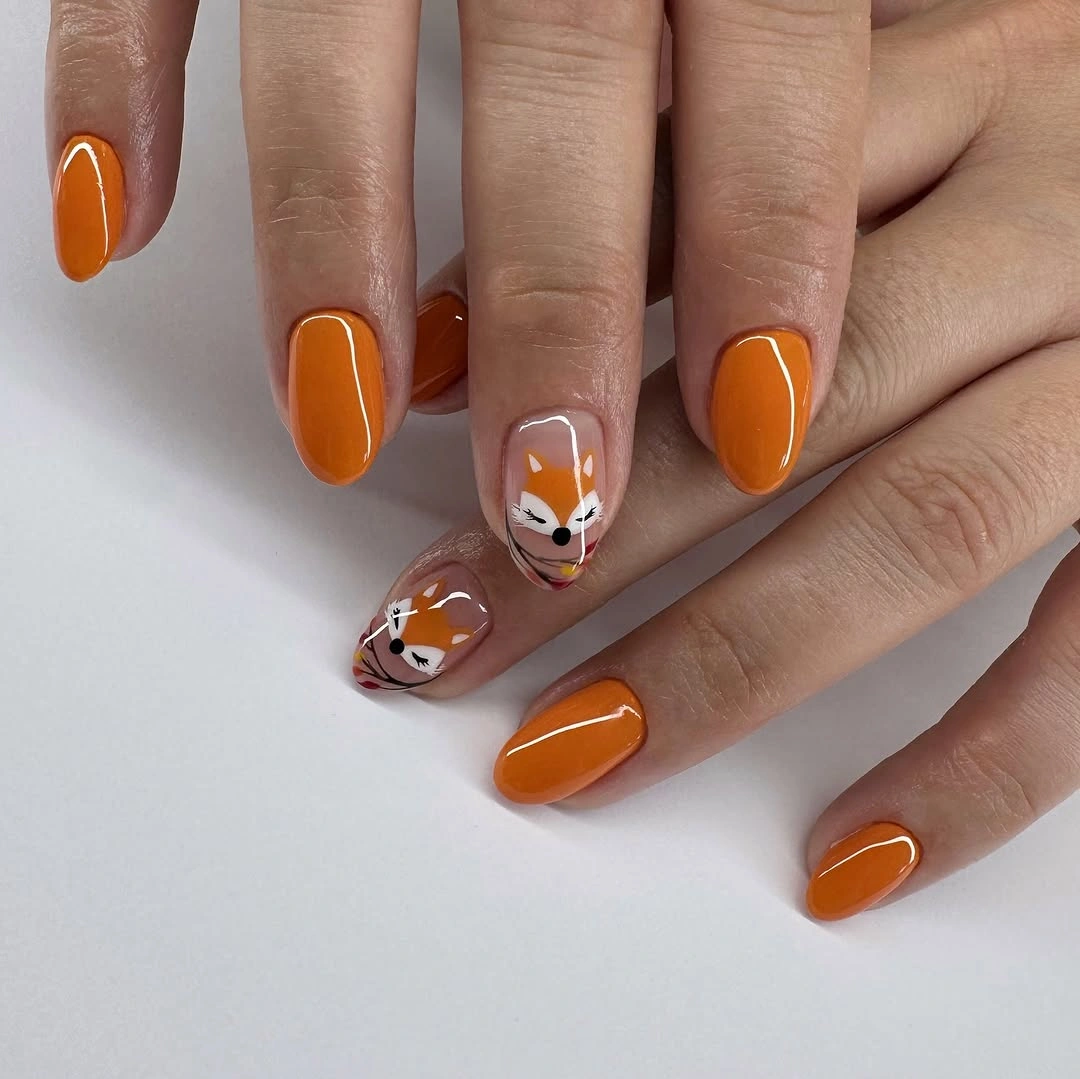
Use one illustrated nail beside plain orange if the full pair feels too themed. A warm rust will reduce the saturation, while a pale nude accent can make the small mark easier to see. The medium shape gives the drawing enough room, but shorter nails should use fewer internal details. The orange remains the anchor, while the tiny illustration reads as a controlled seasonal accent.
The solid orange nails are relatively direct to maintain, while the tiny illustrations become the first place to show wear or blur. The color contrast against fair skin stays strong, so edge care matters. Choose this idea when you want an upbeat fall color and a small personal detail, not a full set of miniature scenes.
Deep Red Curves With Pale Negative Space
Long almond nails combine deep red solids with pale nails edged by flowing red curves. The red has enough saturation to anchor the hand, while the pale sections reduce its overall weight and create a clear contrast around the visible fair skin. The curved placement lets the design feel expressive without covering the entire surface.
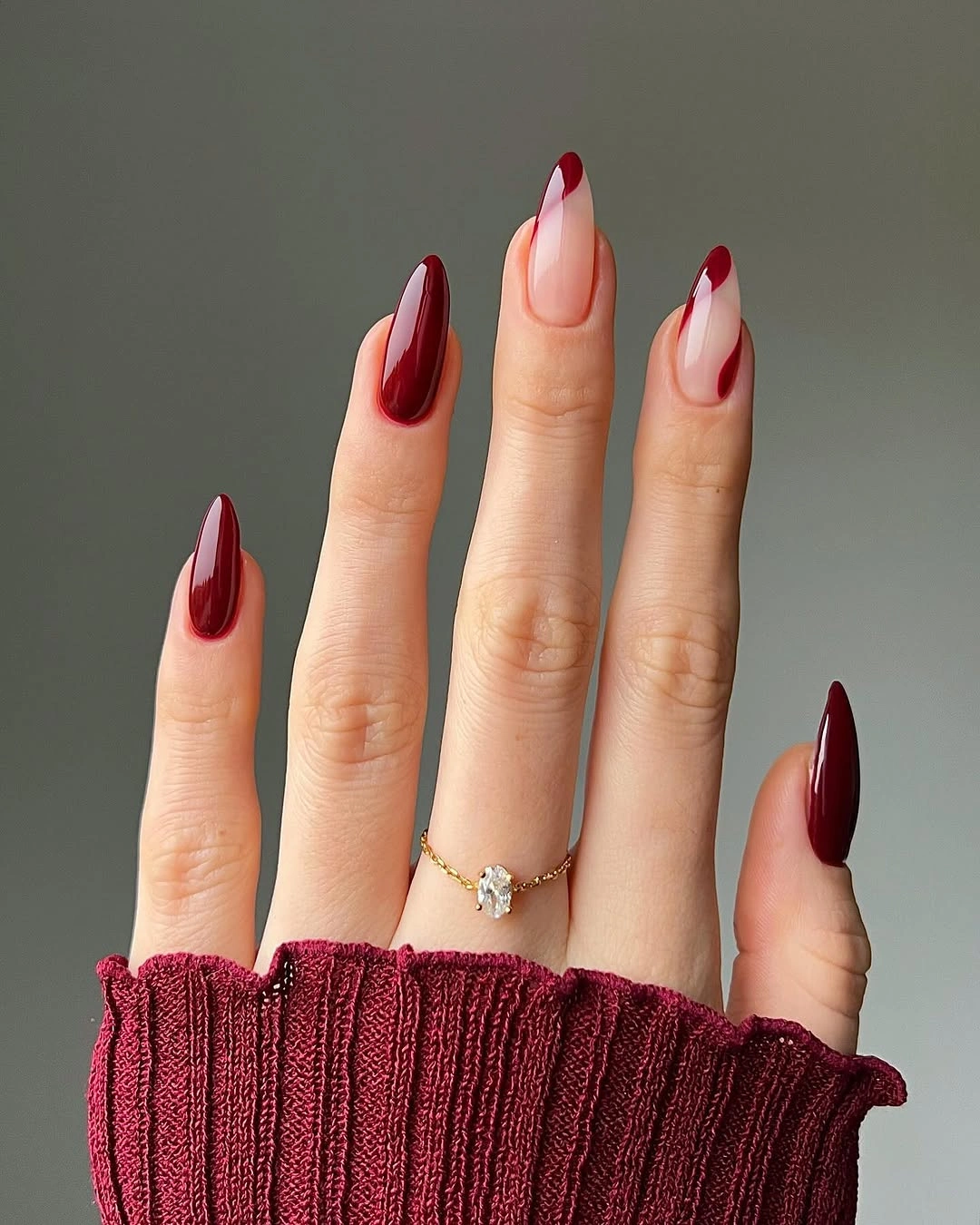
Keep the full red on two nails and reduce the curve to one accent on a shorter almond. A muted berry can soften the temperature, while a brown-red will make the palette more autumnal. Leave the center open so the contrast remains a relationship between red movement and pale space. This preserves the same cool-to-warm contrast while making the layout easier to maintain.
The pale areas need careful borders because the red curve is the feature that defines the design. The solid nails are simpler to refresh, and the long shape gives the movement room, but it also increases the amount of visible color. Choose it when you want red to feel fluid rather than simply solid.
Matte Navy With Pale Blue Lines
Medium almond nails use matte-looking navy solids with pale blue and white curved lines on selected fingers. The deep cool base creates strong value contrast, while the pale lines bring movement without introducing a warm shade. The medium shape keeps the graphic effect contained and makes the light accents easy to compare against the navy.
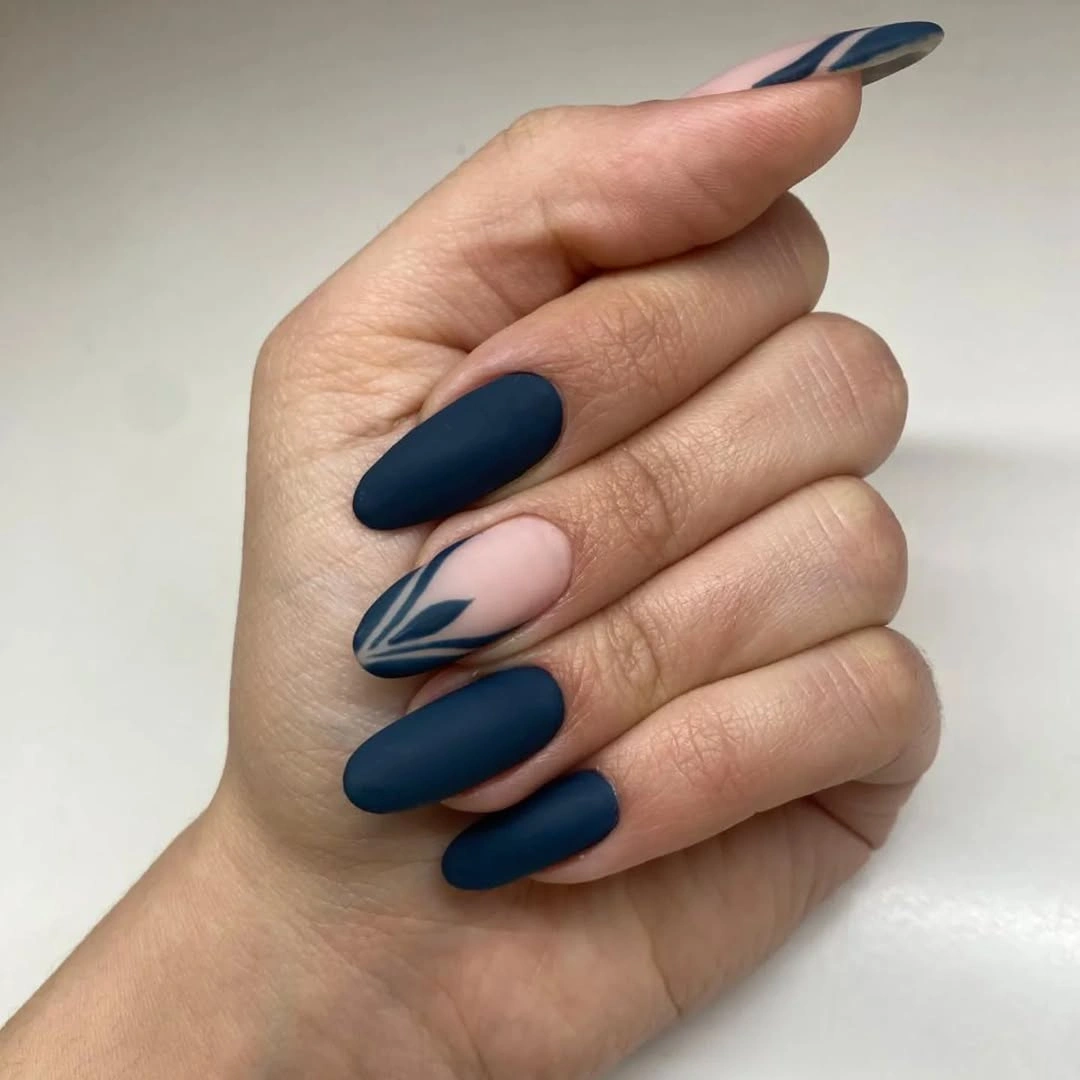
Keep navy on most nails and use one pale blue accent if you want a cleaner color map. A shorter oval will make the lines feel softer, while a muted gray-blue can reduce the contrast. The design is strongest when the pale lines remain selective and the deep base gets enough uninterrupted space. That approach lets the navy remain dominant while the pale lines act as deliberate highlights.
The dark surface makes the pale lines highly visible, so any uneven curve will stand out. A matte-looking finish may reduce glare, but it also makes the color itself more important to the overall balance. Choose this option when you want a cool fall contrast and prefer line work over a warm seasonal palette.
Deep Green On A Short Rounded Shape
Short rounded nails use deep forest green as a solid color across the visible fingers. The shade has low-to-medium brightness but strong depth, so it gives the compact shape a clear outline without needing any art. Against the visible fair skin, the contrast is direct and easy to read, while the short length keeps the effect practical.
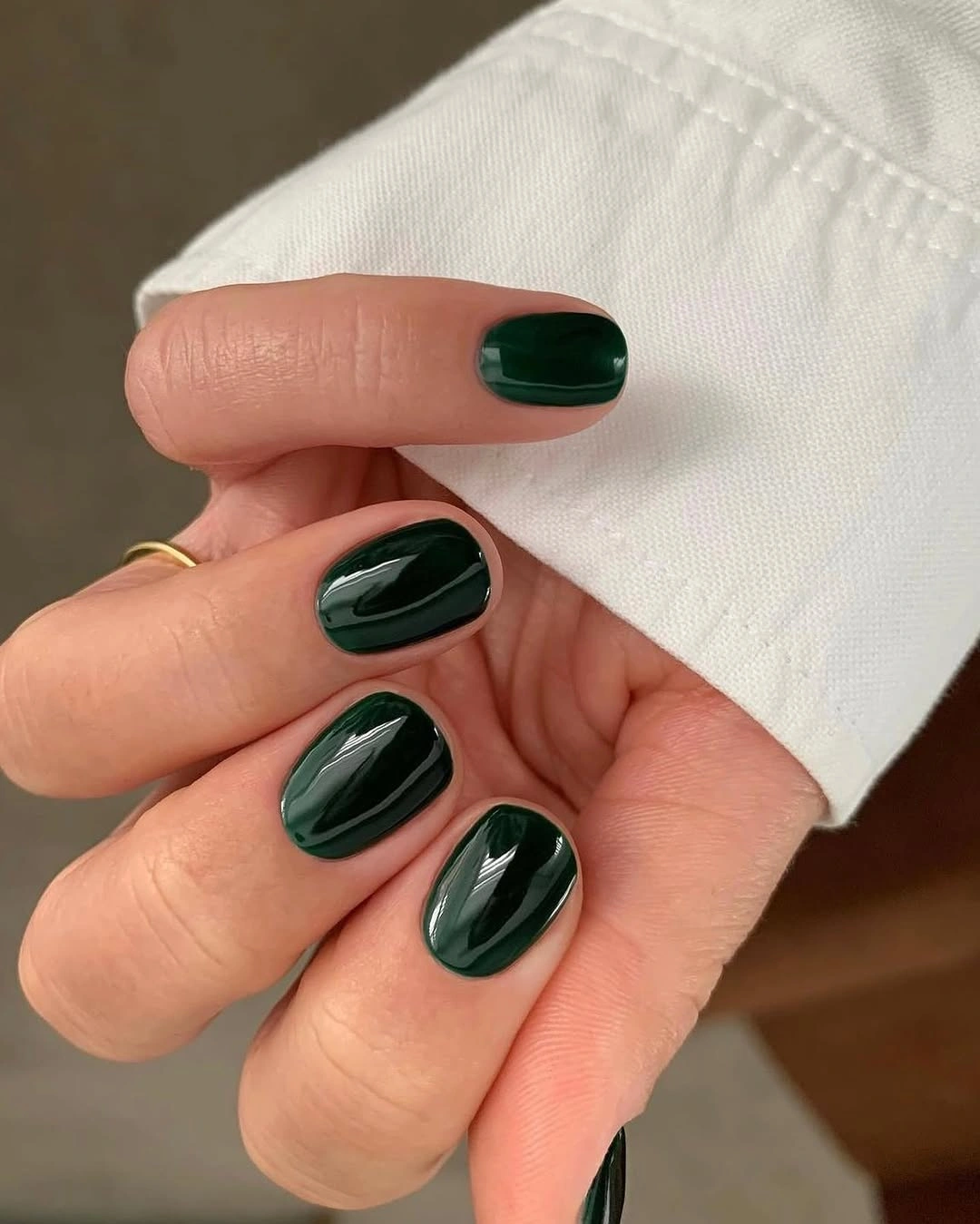
Use a muted olive if you want less value contrast, or keep the forest green on the big and ring fingers with a warm nude elsewhere. A plain solid is the most coherent version because the color already provides enough emphasis. Rounded edges will soften the look more than adding a decorative accent would.
Short nails reduce the everyday tradeoff, but the deep shade still shows worn corners and uneven cuticle lines. The simple surface makes refresh work predictable, and the compact shape keeps the color from dominating the hand. Choose it when you want a grounded fall shade that feels stronger than taupe but quieter than bright orange.
Translucent Warm Orange Brown
Long almond nails use a translucent warm orange-brown with a glossy surface and little visible decoration. The color sits between copper and brown, so it carries fall warmth without the full saturation of a bright orange. The long shape gives the tone room to catch light and makes the transparent-looking depth part of the design.
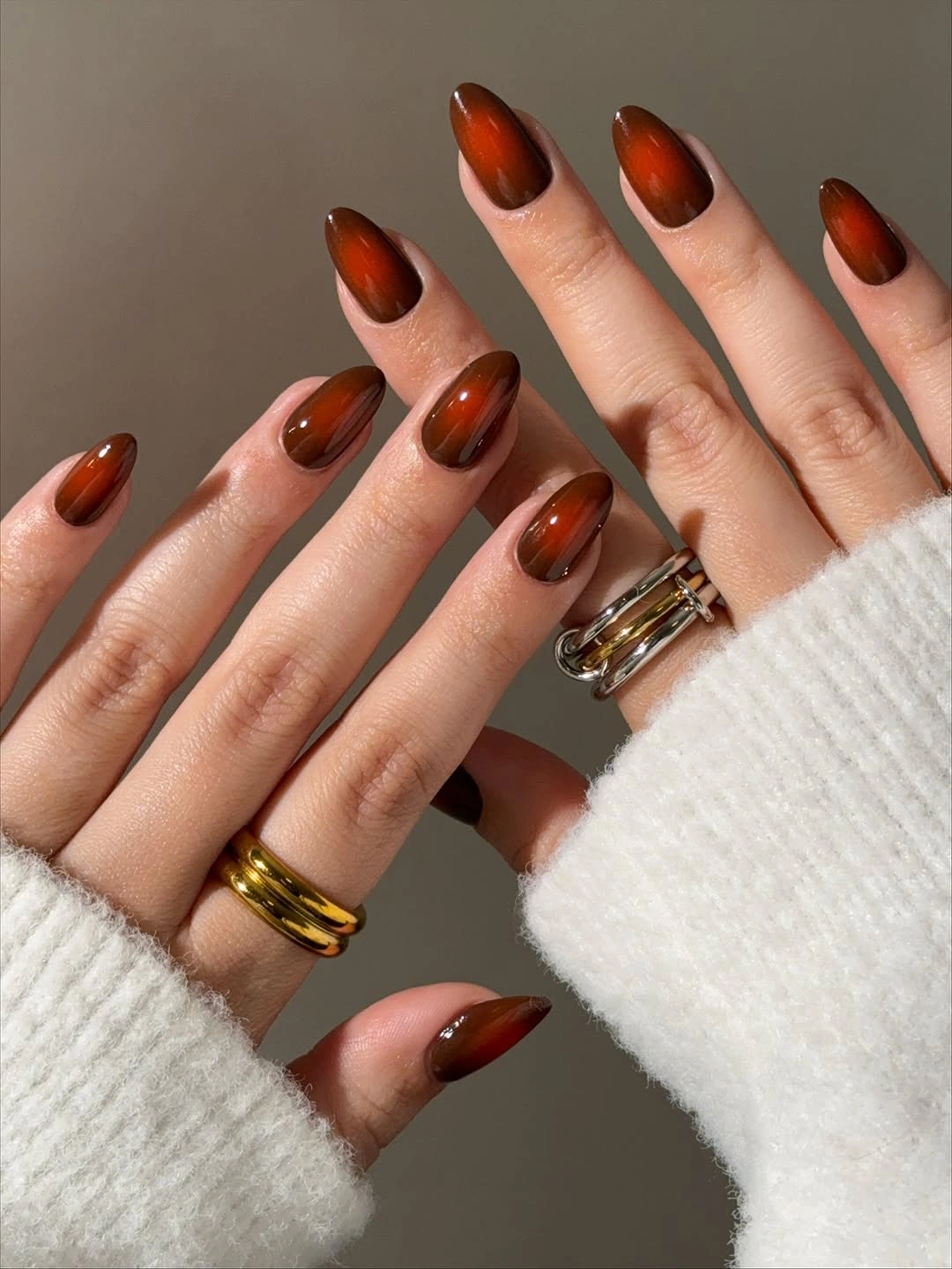
A shorter almond can keep the warm tone while reducing the visual intensity of the length. Use a softer brown if the orange reads too bright, or place the translucent color on two nails beside a nude. The best variation keeps the surface simple so the value shift remains visible. This makes the color more adaptable when you want the warm accent without a high-contrast finish.
The glossy translucent look can make the nail feel light, but it also reveals changes in edge, coverage, and color depth. The long almond is the main commitment, while the single warm family keeps coordination easy. Choose it when you want a dimensional autumn neutral rather than a flat solid or a detailed pattern.