Fall nail inspiration becomes more useful when it shows different levels of color, pattern, and finish. This collection moves from brown French lines and pale florals to animal spots, textured green, graphic checkers, gradients, and single-color statements.
Save the ideas that match your actual length, then notice what makes each one work: a clean edge, open base, controlled accent, or shift in value. That small distinction helps turn a visual reference into a manicure you can realistically wear.
Brown French Tips as a Fall Starting Point
Warm brown French tips over a milky almond base are an easy entry into fall nail inspiration. The design is familiar enough to wear daily, but the deeper edge gives the pale manicure a seasonal shift.
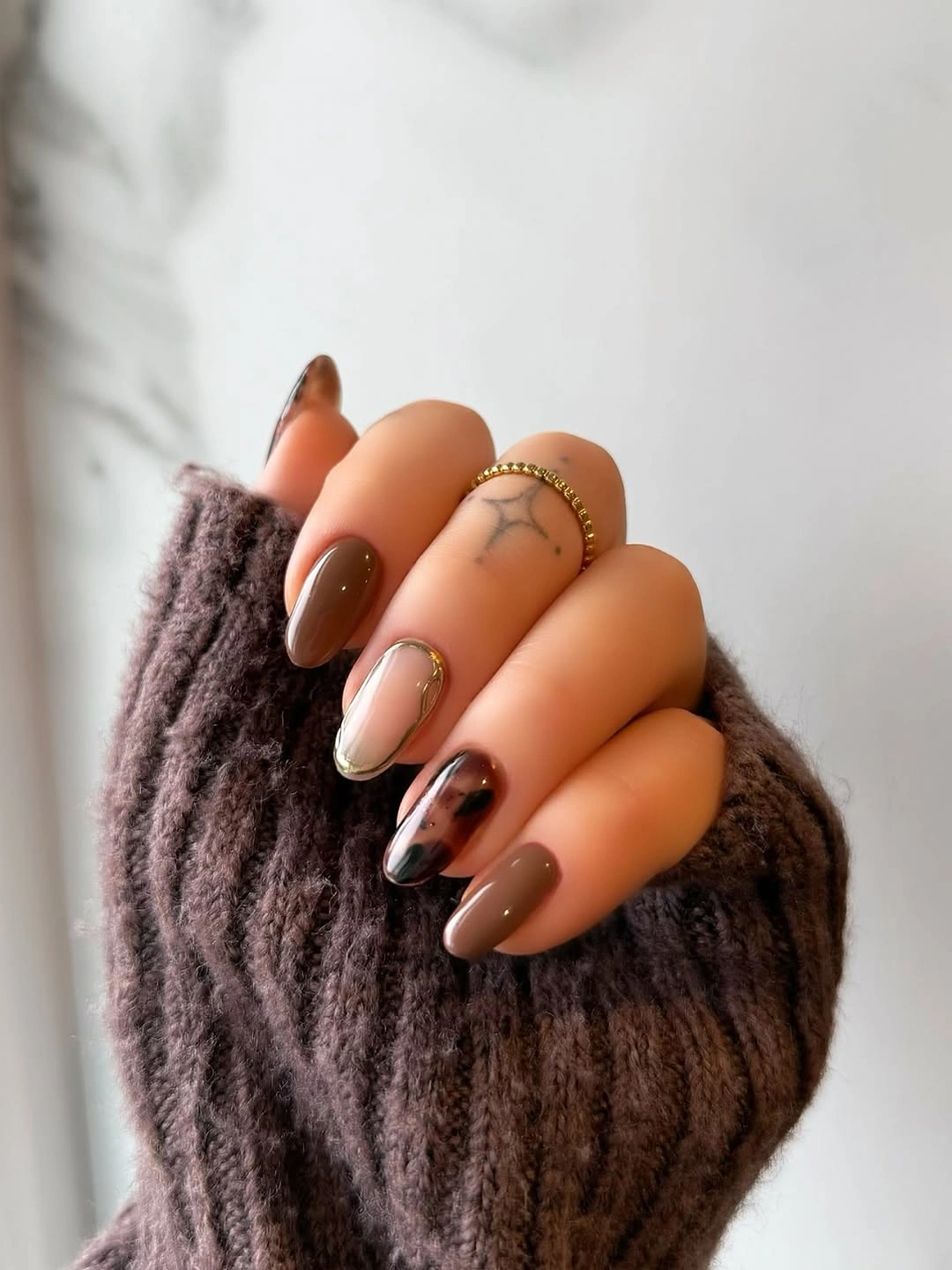
Brown is doing more than adding contrast; it makes the almond edge look longer without covering the base. Narrow the line for short nails, or let the tip grow slightly deeper when the manicure needs more autumn weight.
A brown French is a flexible starting point, but it can feel too familiar if the shape is left careless. The design earns its place through proportion: a neat edge matters more than adding another motif.
Tiny Warm Flowers on a Pale Base
Yellow and orange flowers sit lightly across a pale base, leaving space between each mark. The manicure feels autumnal through color rather than density, which makes it a gentle reference for someone who does not want dark polish.
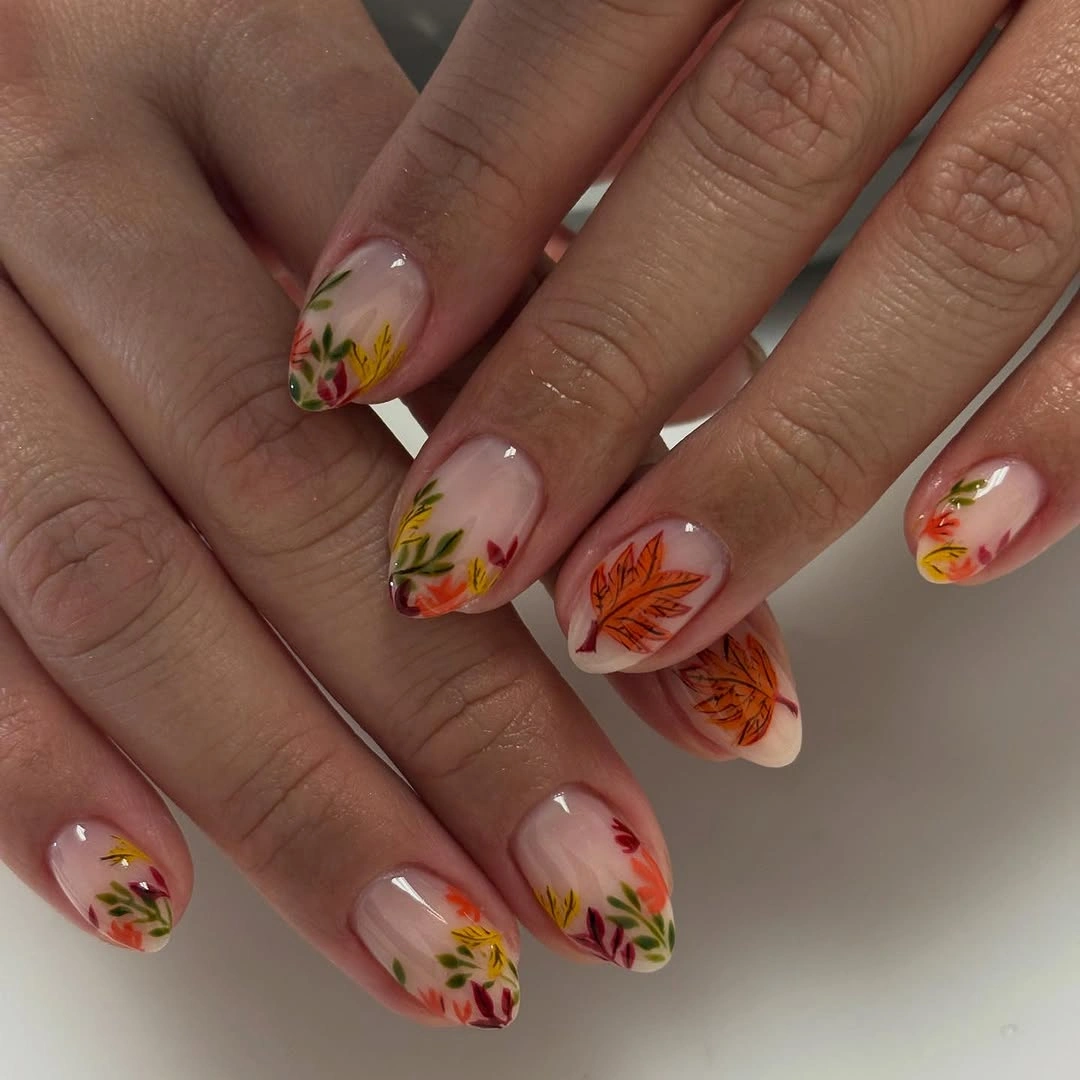
The tiny blossoms work because the pale center remains dominant. Use one larger flower on a short nail instead of several miniature marks, and the idea will still read clearly in a close-up.
Delicate flowers have a visibility limit at very short length. Enlarging one detail is more effective than repeating tiny marks that blur together, and it keeps the airy character intact.
Black Cream and Brown Animal Spots
Black, cream, and brown animal-like spots cover long almond nails in an intentionally mixed pattern. The neutral base keeps the print readable, while the extended shape gives each spot room to remain distinct.
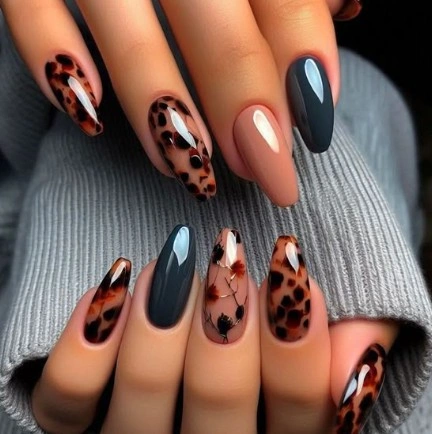
Animal spots vary naturally, so the set does not need mirror-image repetition. Leave one or two nails quiet if the length is shorter, since the pattern needs visible space around each irregular shape.
The print is the loudest idea in this group, so plain clothing will give it a cleaner setting. Its payoff is immediate movement; its tradeoff is that the long almond and pattern together are less understated.
Olive Chocolate and Nude Color Blocks
Olive, chocolate, and nude alternate in glossy blocks across the hand. There is no single motif to copy, yet the color relationship creates a complete idea for an autumn inspiration board.
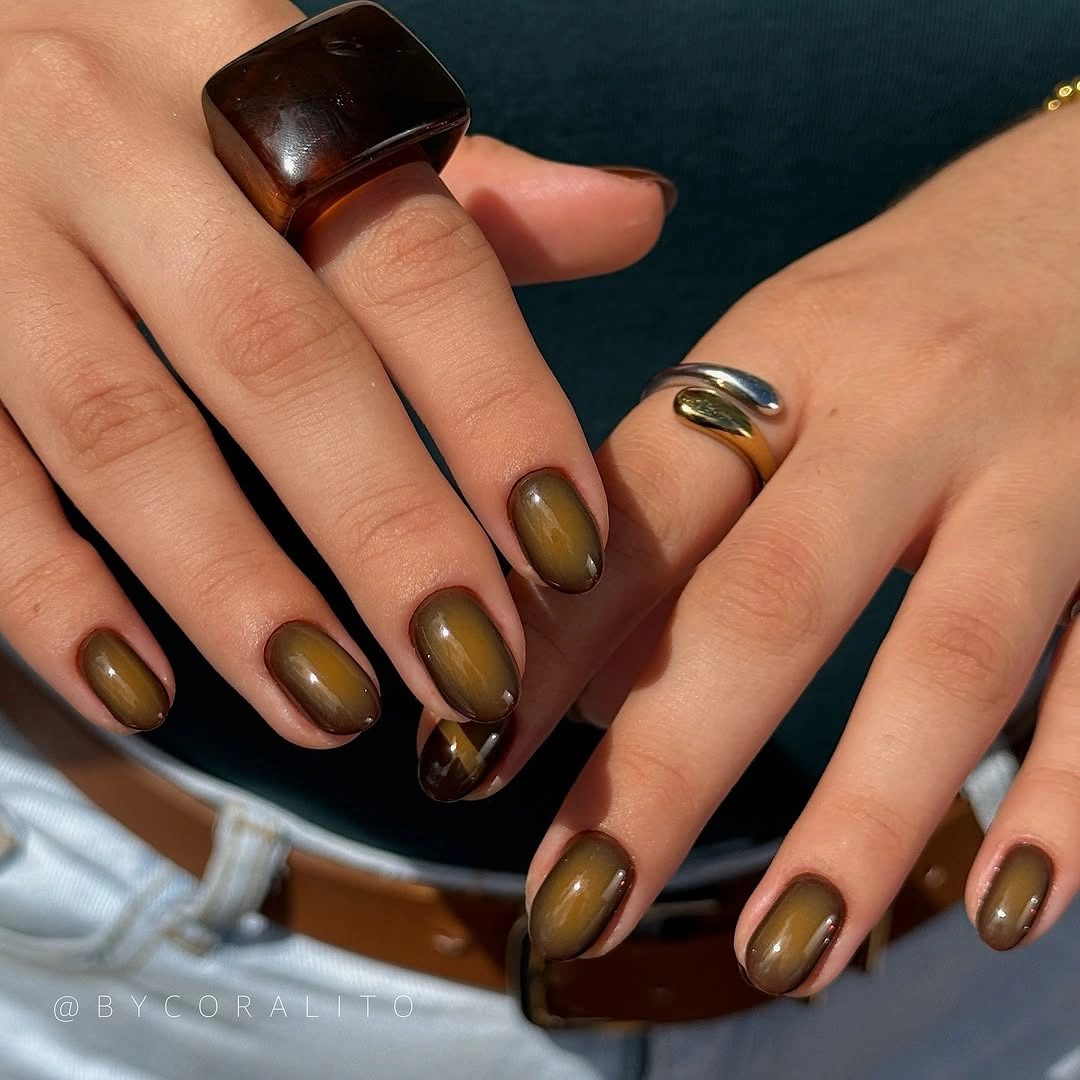
Glossy blocks are easy to understand from a distance, which makes them useful as a starting reference. Repeat one color on a shorter set and reserve the full three-tone rhythm for medium length.
Mixed blocks are easy to customize, but the colors need a common value or the set will feel scattered. Keep the olive, brown, and nude close in depth when adapting the idea.
One Raised Floral Nail in Matte Mauve
Matte mauve becomes more interesting through one raised floral accent. The decorated nail acts as a focal point, proving that a single change can carry a set when the remaining fingers stay quiet.
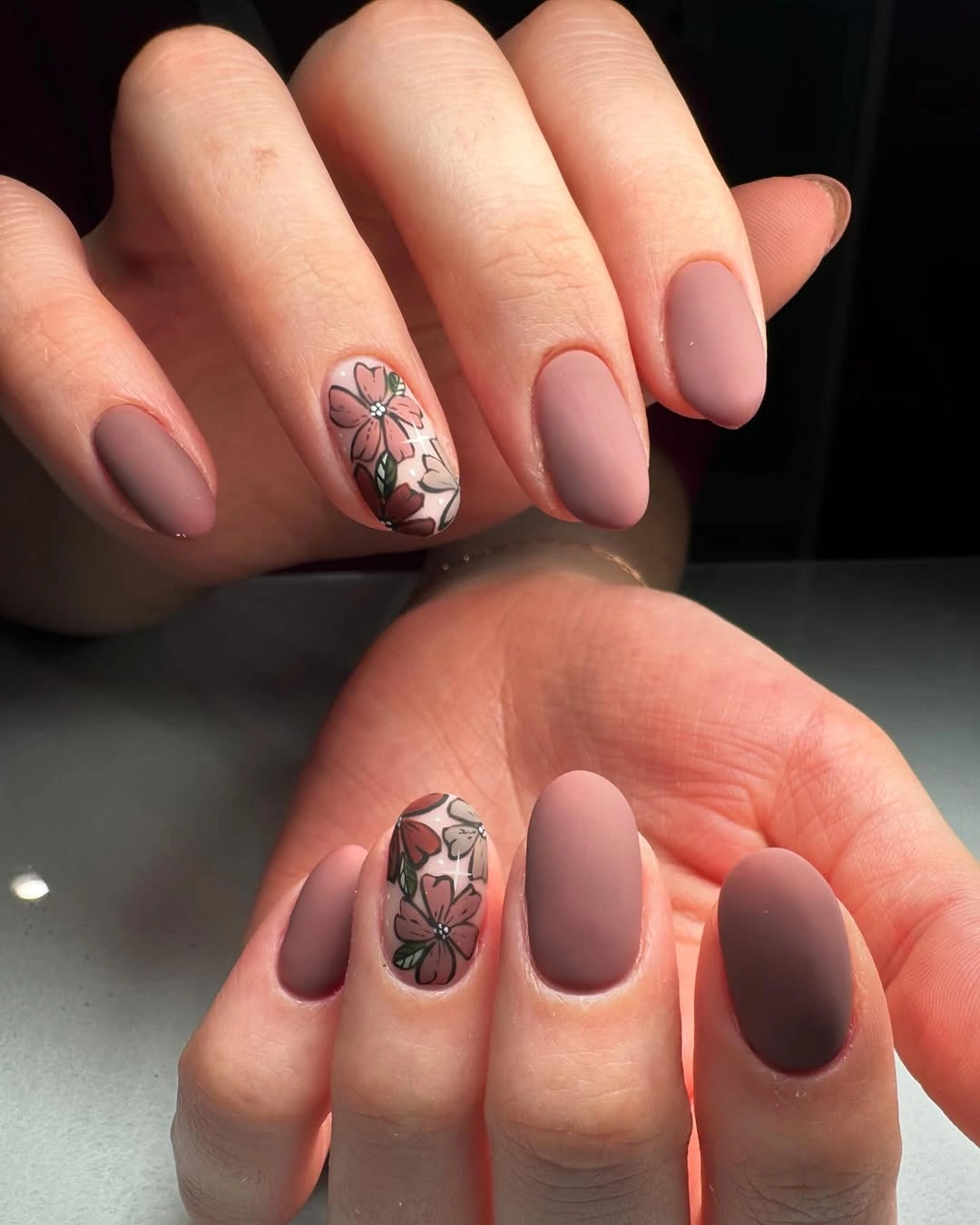
Matte finish lowers the volume of the mauve, allowing the raised flower to lead without glitter. A flat painted flower can offer a similar contrast when a textured surface would be inconvenient.
A single raised flower is memorable, although it may catch on hair or fabric. That makes a flat floral accent the practical choice for anyone who wants the same focal-point logic with less upkeep.
Burgundy with Silver Checker Panels
Deep burgundy meets silver checker panels in a set that balances warmth and geometry. The metallic squares make the dark color feel sharper, while the burgundy keeps the overall mood grounded.
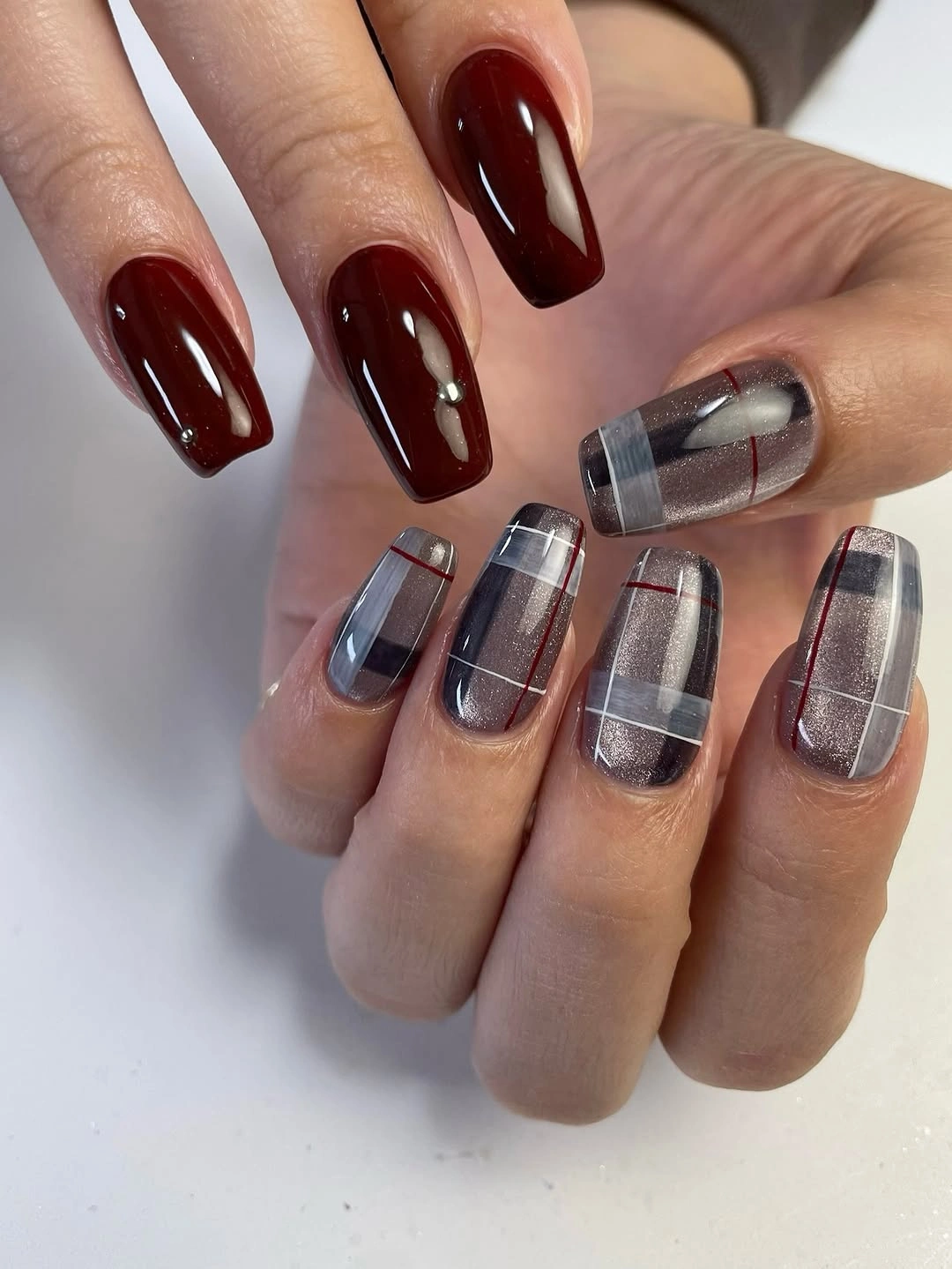
Silver checker panels need enough room to stay square and legible. A single metallic accent nail is the cleaner translation for short nails; longer shapes can alternate checker and burgundy fingers.
Silver and burgundy make the set more evening than office, especially under direct light. Use fewer squares when the manicure needs to transition into daytime routines.
Soft White Nails with Rust Flowers
Soft white nails carry small rust and brown flowers that sit close to the base. The airy background lets the autumn details look delicate instead of turning the manicure into a dense floral print.
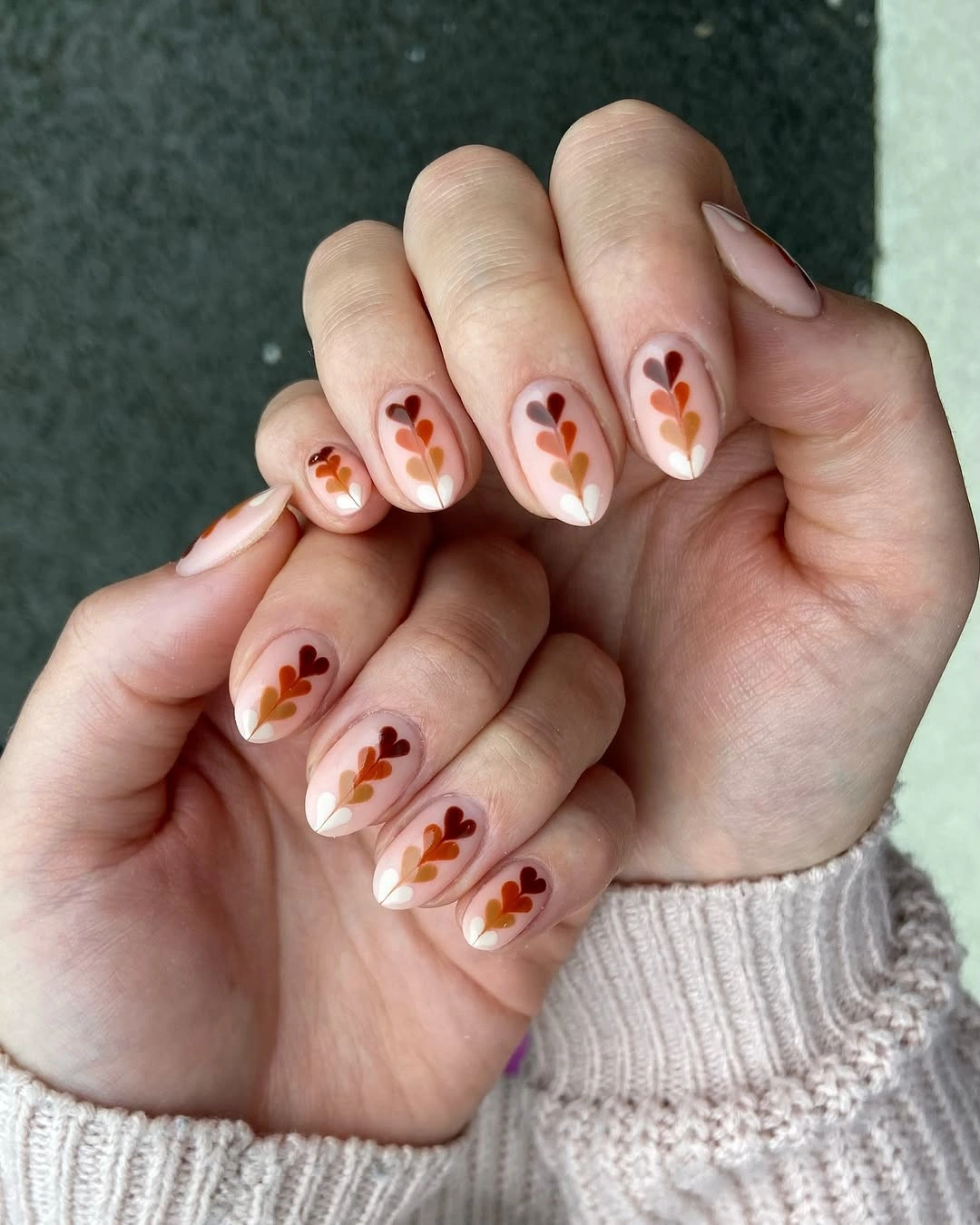
The flower colors are warm, but the white base prevents them from becoming heavy. Scatter fewer marks on a compact nail and keep the center open so the design remains delicate.
White and rust are soft together, but the flowers can disappear if the base becomes too sheer. Give the marks enough contrast to remain visible without filling the pale field.
Green Curved French on Pale Pink
Pale pink nails use green and white curved French accents instead of the usual brown. The cool green gives the familiar format a fresher direction, and the open base keeps the set light.
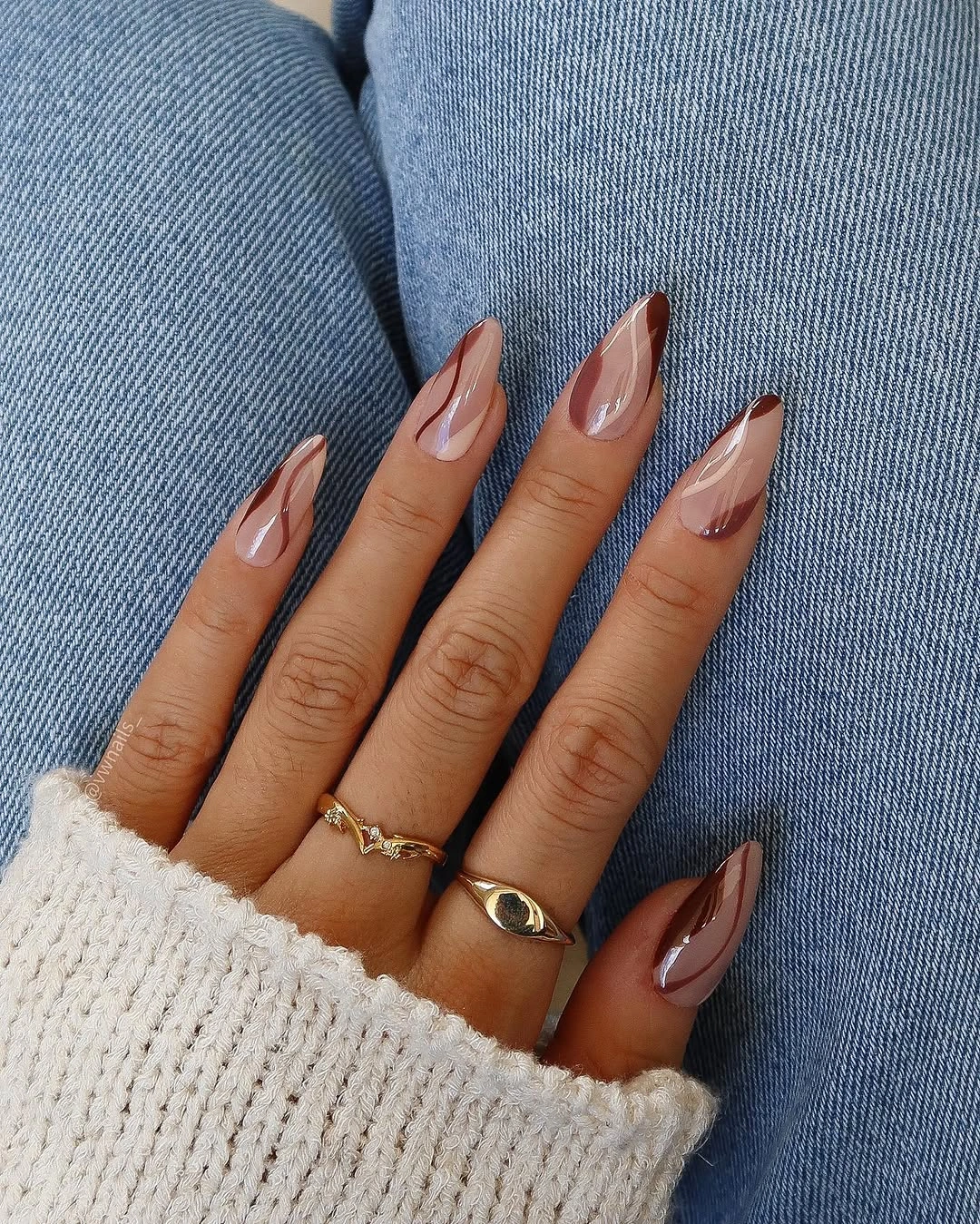
Green changes the mood more than an extra embellishment would. A soft sage would make the idea quieter, while a deeper green would push the French edge toward a stronger fall statement.
Green French tips are less traditional than white or brown, which is their strength on an inspiration board. They add range without asking the entire manicure to become dark.
Fine Brown Lines over Sheer Nude
Sheer nude almond nails are outlined with fine brown French lines. The narrow edge follows the shape closely, turning a minimal design into a useful reference for length and proportion.
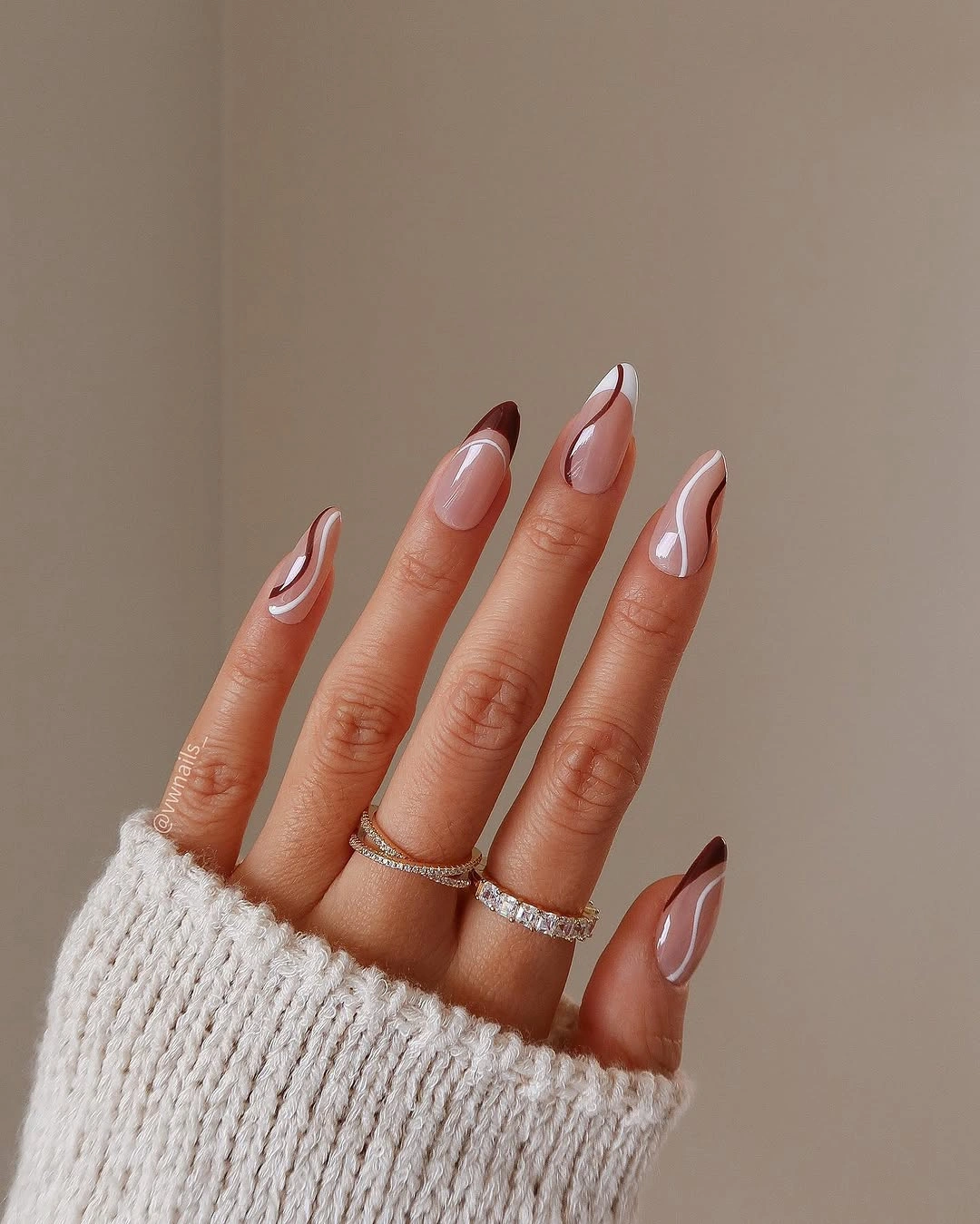
Fine lines reward a clean outline because there is nowhere for unevenness to hide. A short oval can use a slightly thicker edge, while the almond version benefits from the narrow, elongated curve.
Minimal lines expose the shape, so filing and symmetry carry most of the result. The reward is a design that can work with almost any outfit, while the limitation is little room to hide uneven edges.
Blush Nails with Quiet Silver Accents
Blush nails with thin silver accents create a quiet reflective effect. The detail is small enough to keep the base in charge, making the set useful for a clean, understated inspiration category.
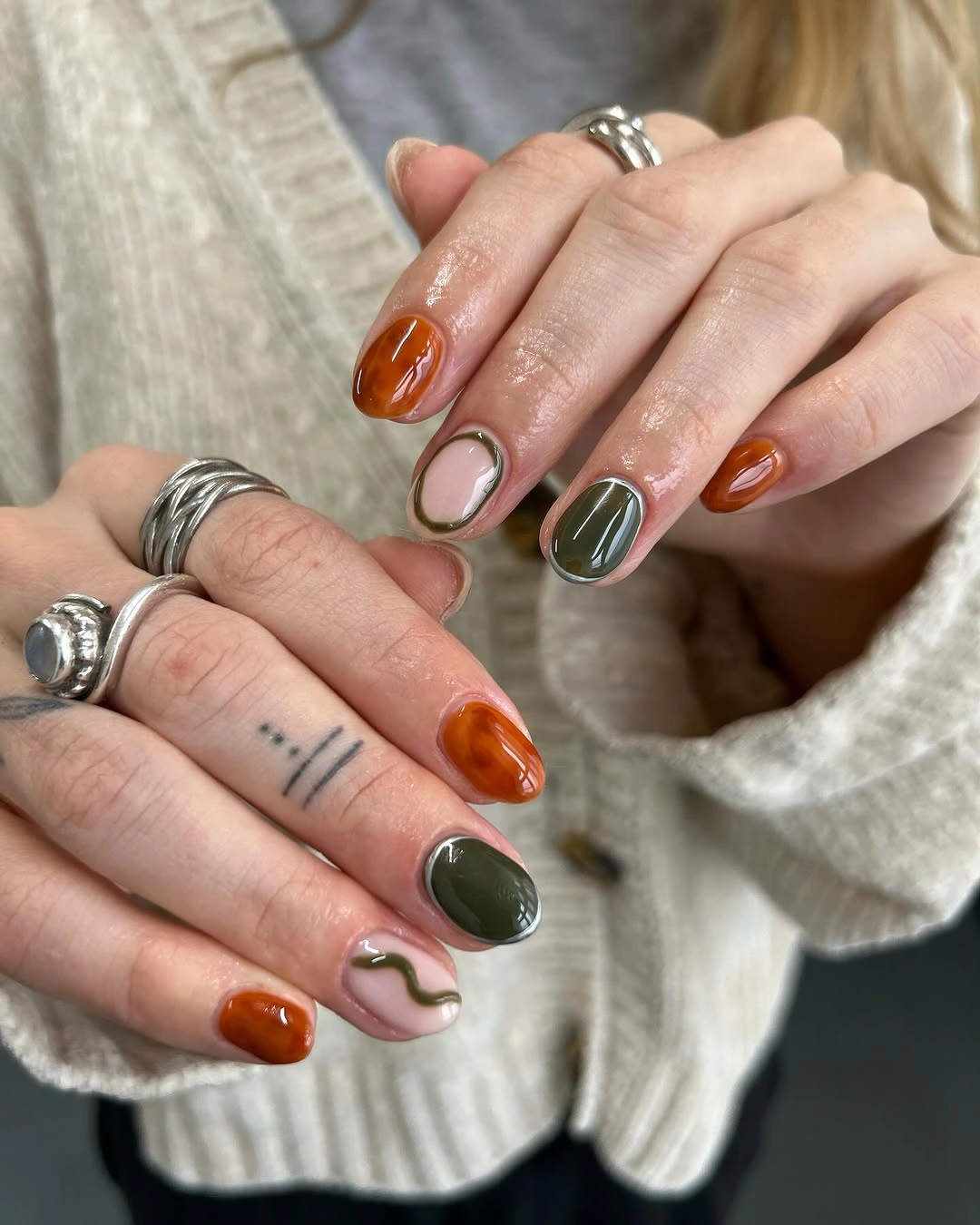
Silver is best treated as a glint rather than a second color block. Keep it near the tip or center, and the blush base will continue to look calm beside other jewelry.
Silver accents will not replace a full glitter manicure, and that restraint is the point. The set is best for someone who wants a hint of light rather than an obvious party finish.
Glossy Taupe on a Short Shape
Taupe polish fills a short shape with a smooth glossy surface. This plain reference matters because a solid neutral can anchor a board full of patterns and help the more decorative ideas look intentional.
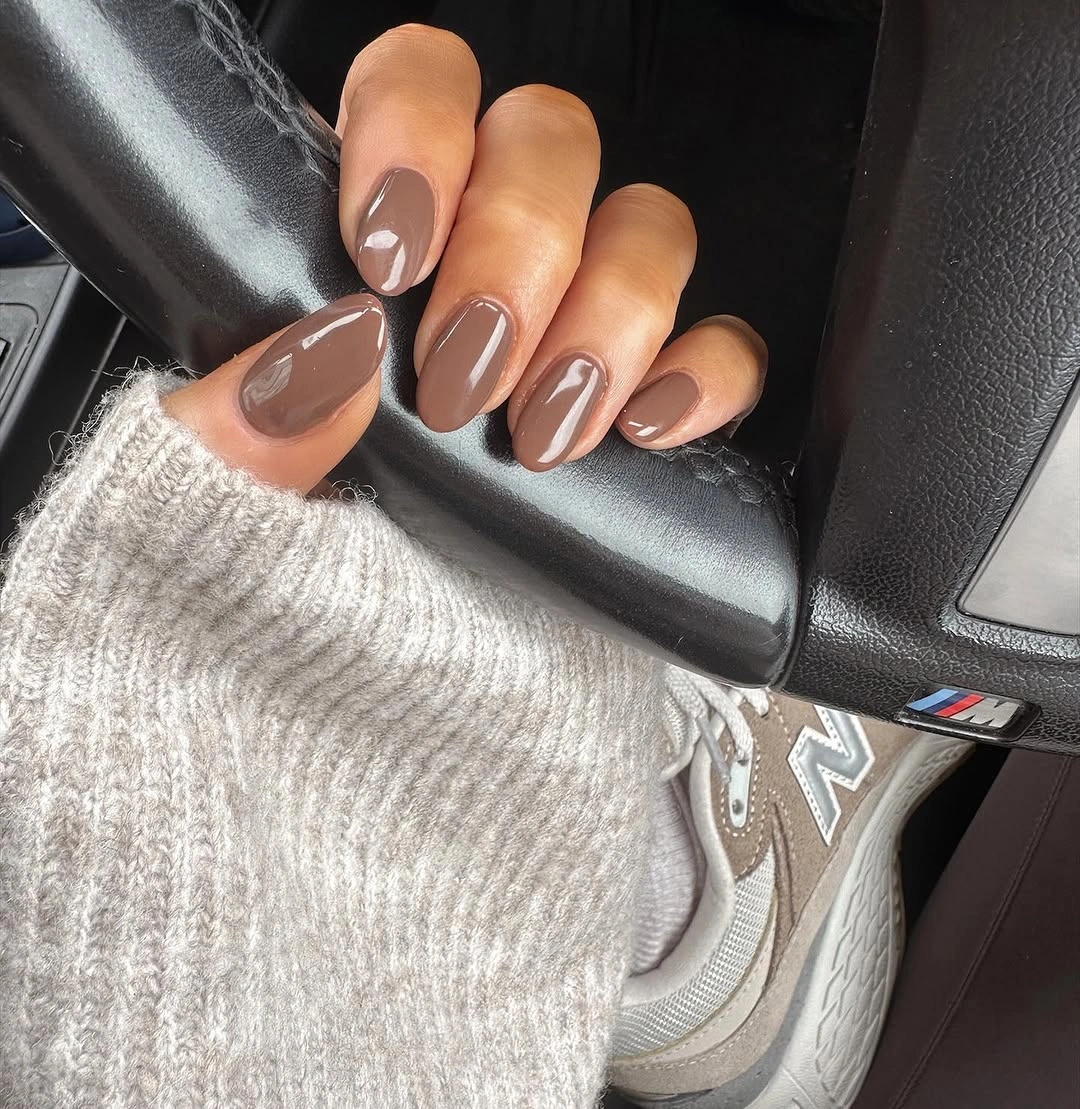
Solid taupe can be the quiet visual reset between complicated designs. Its limitation is obvious: the interest depends on shape and shine, so uneven edges will show more than they would under art.
A plain taupe nail may look ordinary beside dense art, but it provides useful balance in a real collection. It is the option to save when the board needs a wearable pause.
Forest Green with Knit-Like Texture
Forest-green nails use raised knit-like texture to make one color feel tactile. The surface echoes cold-weather clothing, giving the manicure a seasonal association without relying on a printed motif.
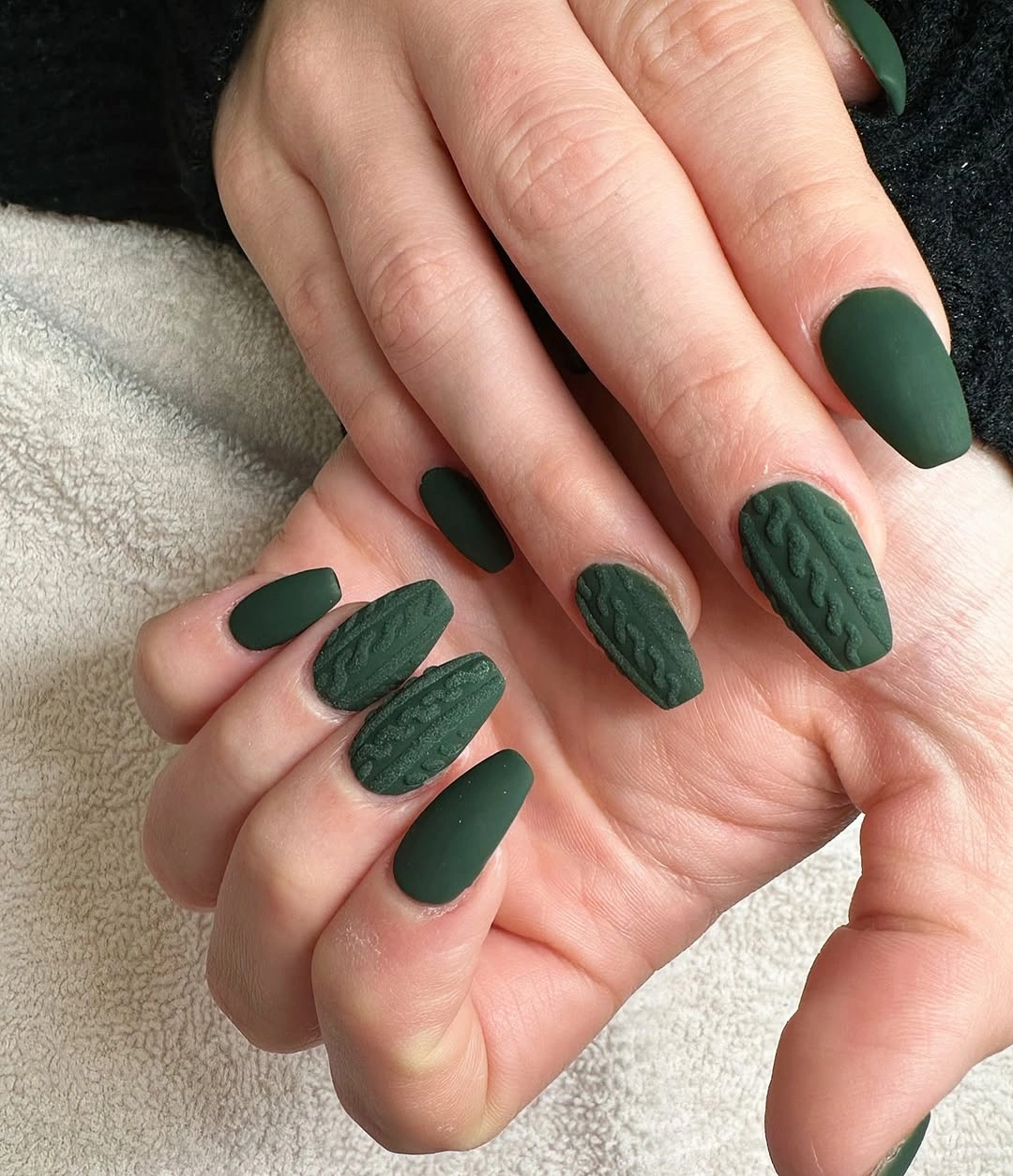
Texture gives green a winter association, although the raised surface may need more care than a flat finish. A few textured accent nails can preserve the idea while making the set easier to wear.
Raised texture supplies seasonal feeling without a literal leaf or plaid. The tactile idea is distinctive, though flat green with a few lines will be easier to maintain.
Wavy Orange and Black Autumn Lines
Orange, black, and brown lines curve irregularly across a warm base. The movement comes from the waves rather than from extra embellishment, so the set feels energetic but still linked to autumn shades.
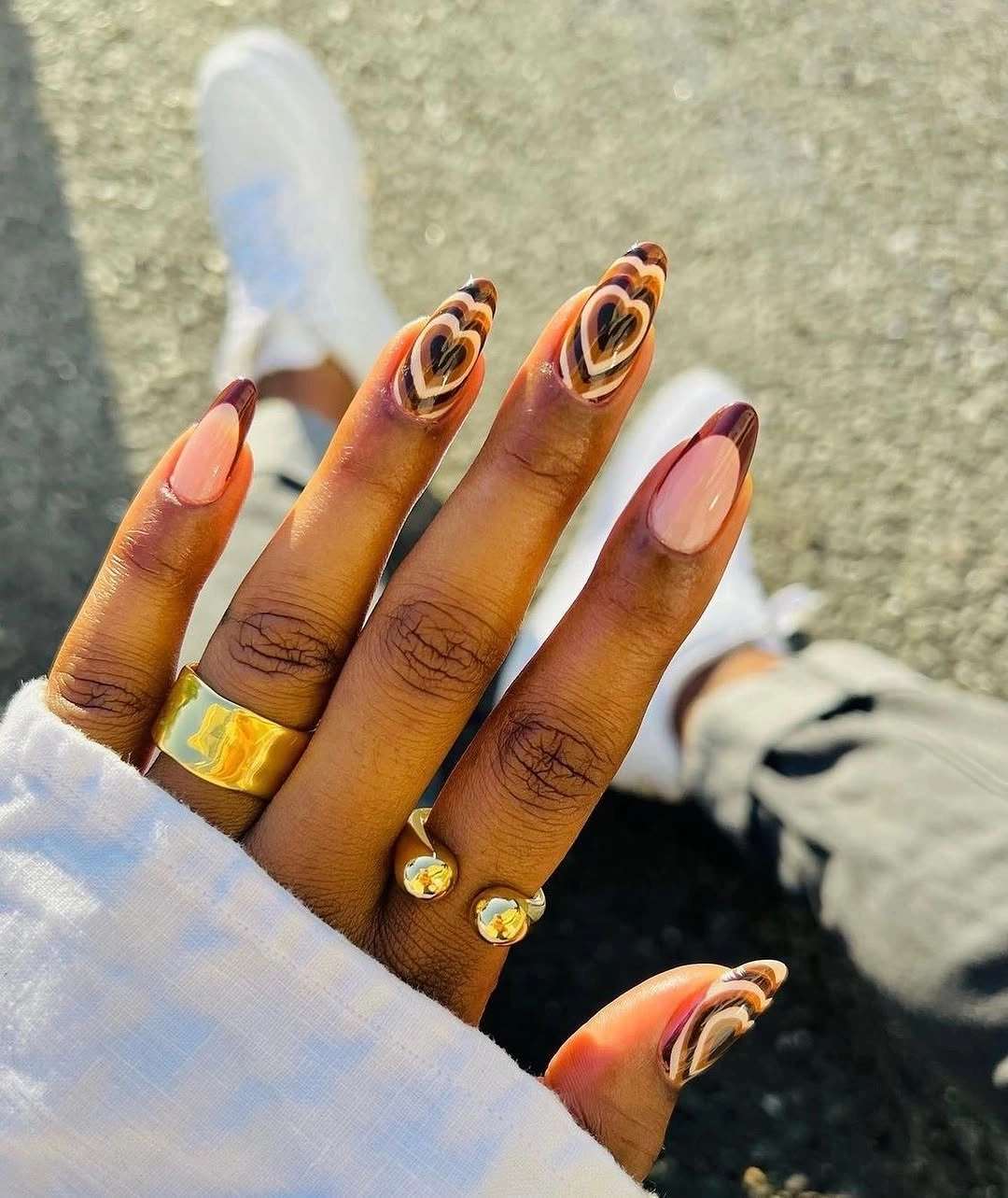
Curved lines bring life to an otherwise simple palette. Leave some base visible between the waves, because packed marks would make the orange and black compete instead of flowing together.
The wavy lines make every nail slightly different, so exact repetition is unnecessary. The design is expressive without relying on a fixed icon, which gives it room to adapt to different lengths.
Red Pink and Animal-Print Contrast
Red and pink share the hand with animal-print details on selected nails. The saturated colors make the manicure playful, while the print supplies a darker counterpoint that stops the set from looking sugary.
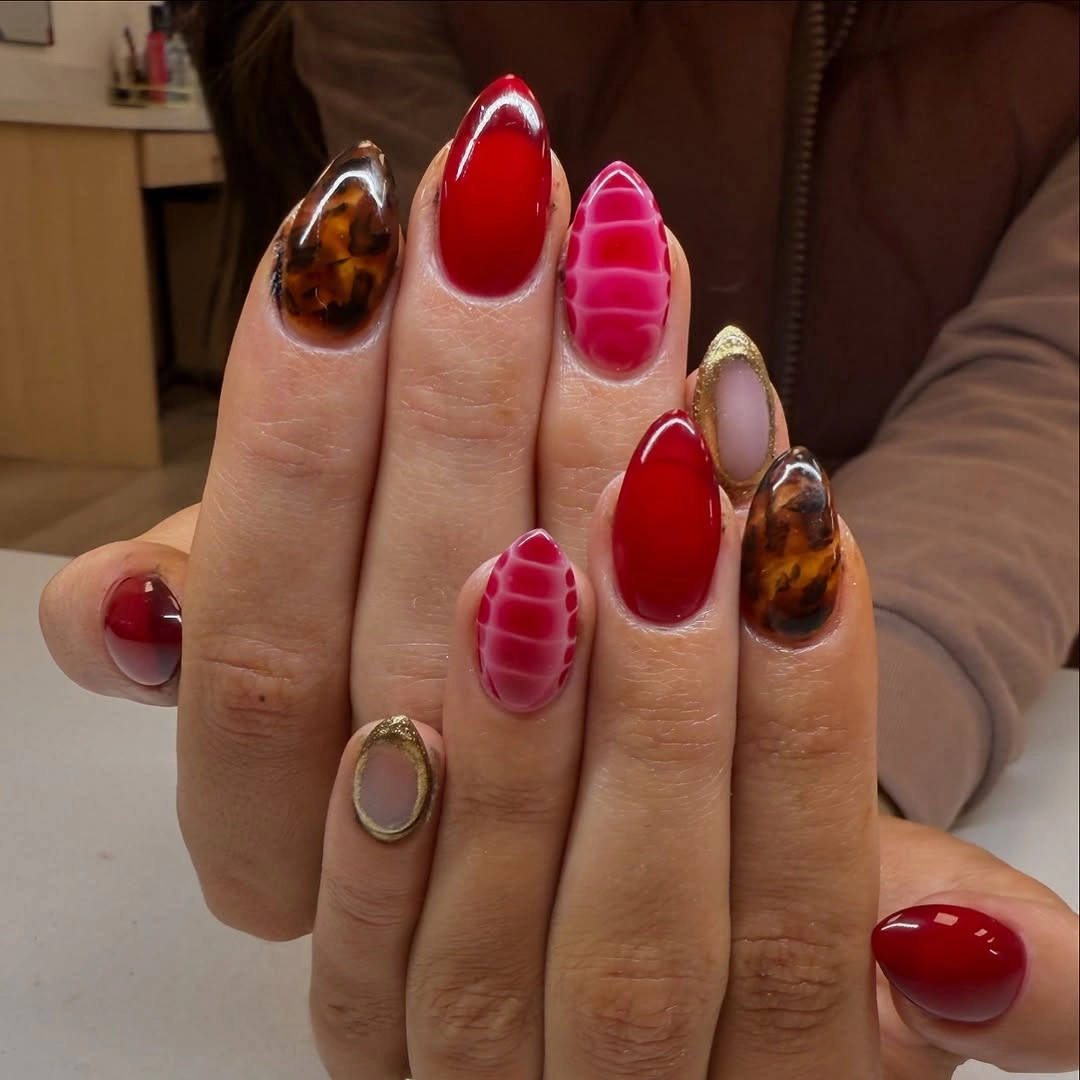
Red and pink already make a strong pair, so the animal print should stay selective. One or two patterned nails are enough to create contrast; repeating it everywhere would flatten the color rhythm.
Bright color and animal print make this a playful choice rather than a quiet neutral. Keep the base simple if you want the saturated combination to look intentional.
Dark Green Black and White Blocks
Dark green, black, and white blocks form a strong graphic mix, with one small dot detail adding softness. The contrast is clear enough for an inspiration board that needs ideas with immediate visual impact.
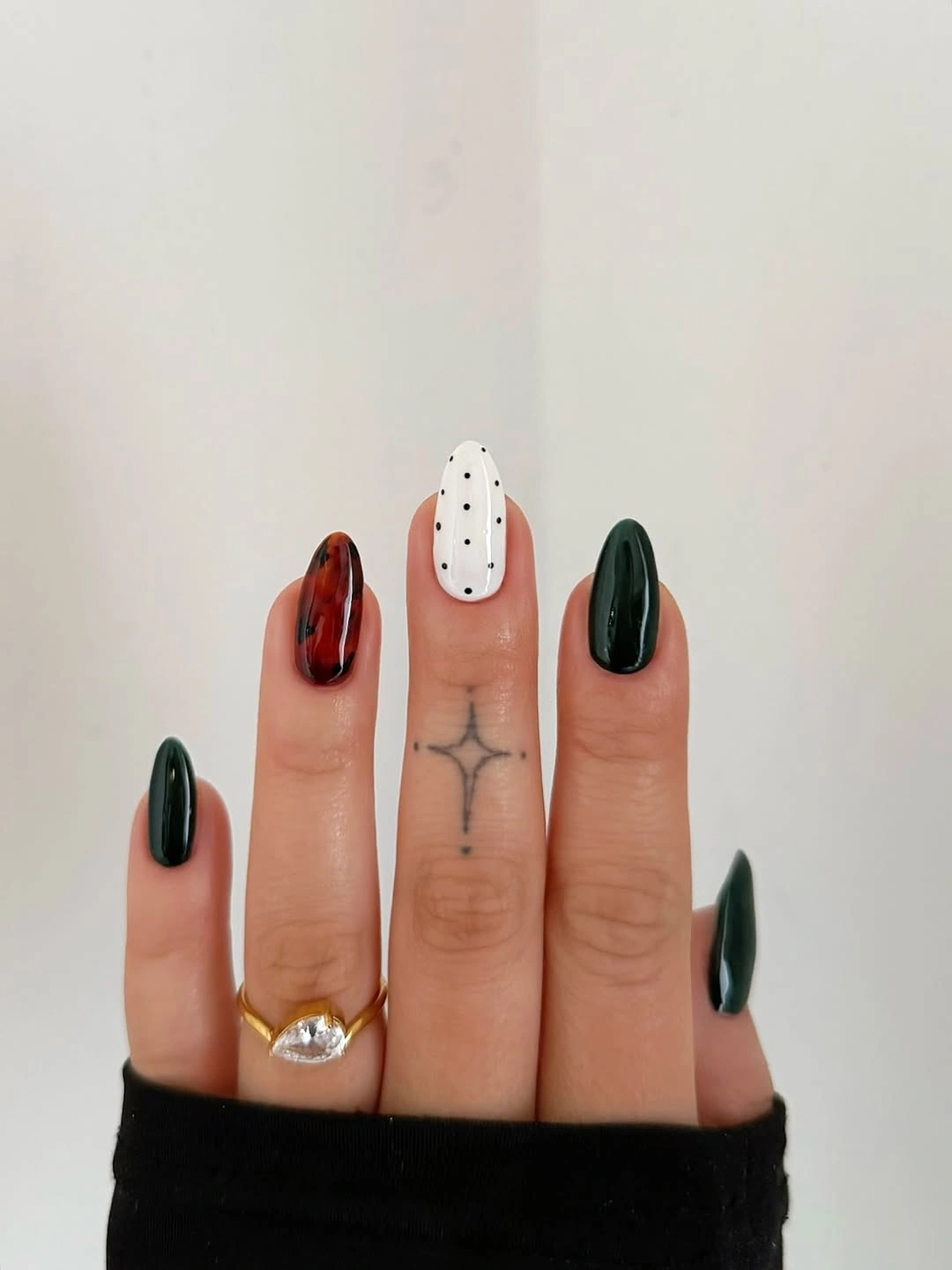
Graphic blocks are clearest when each color has a defined area. Use the dot as a small softening note, not as another large pattern, especially when the nails are short.
High contrast is effective in an inspiration feed, but it may feel sharper in daily wear. Reduce the number of black nails for a softer version while keeping the green as the seasonal anchor.
Pastel Strokes across a Light Base
Pale nails carry different small pastel strokes from finger to finger. The colors vary, but the light base gives the set a common background and keeps the collection from becoming a collection of unrelated marks.
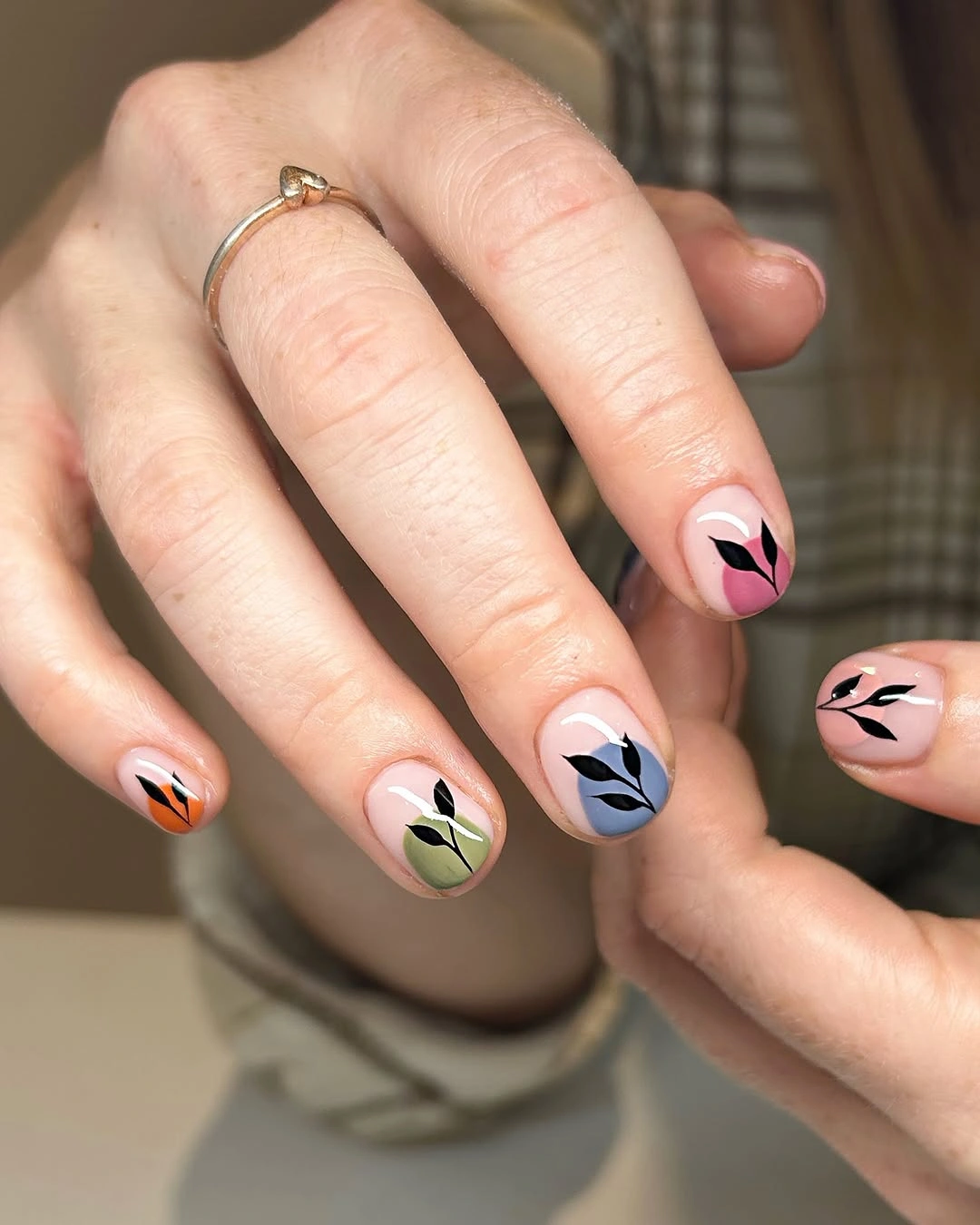
Different strokes feel connected because they share a pale ground. The easiest adaptation is to repeat the same stroke color on two nails and let the other fingers carry only the base.
Pastel strokes offer variety, yet too many unrelated colors would weaken the calm base. Pick a small family of shades if the set needs to look polished rather than sketchbook-like.
Checkers and Dots with Brown Accents
Black-and-white checkers and dots sit beside brown nails, creating a crisp pattern story with a warmer anchor. The set shows how a small amount of dark geometry can sharpen an otherwise soft fall palette.
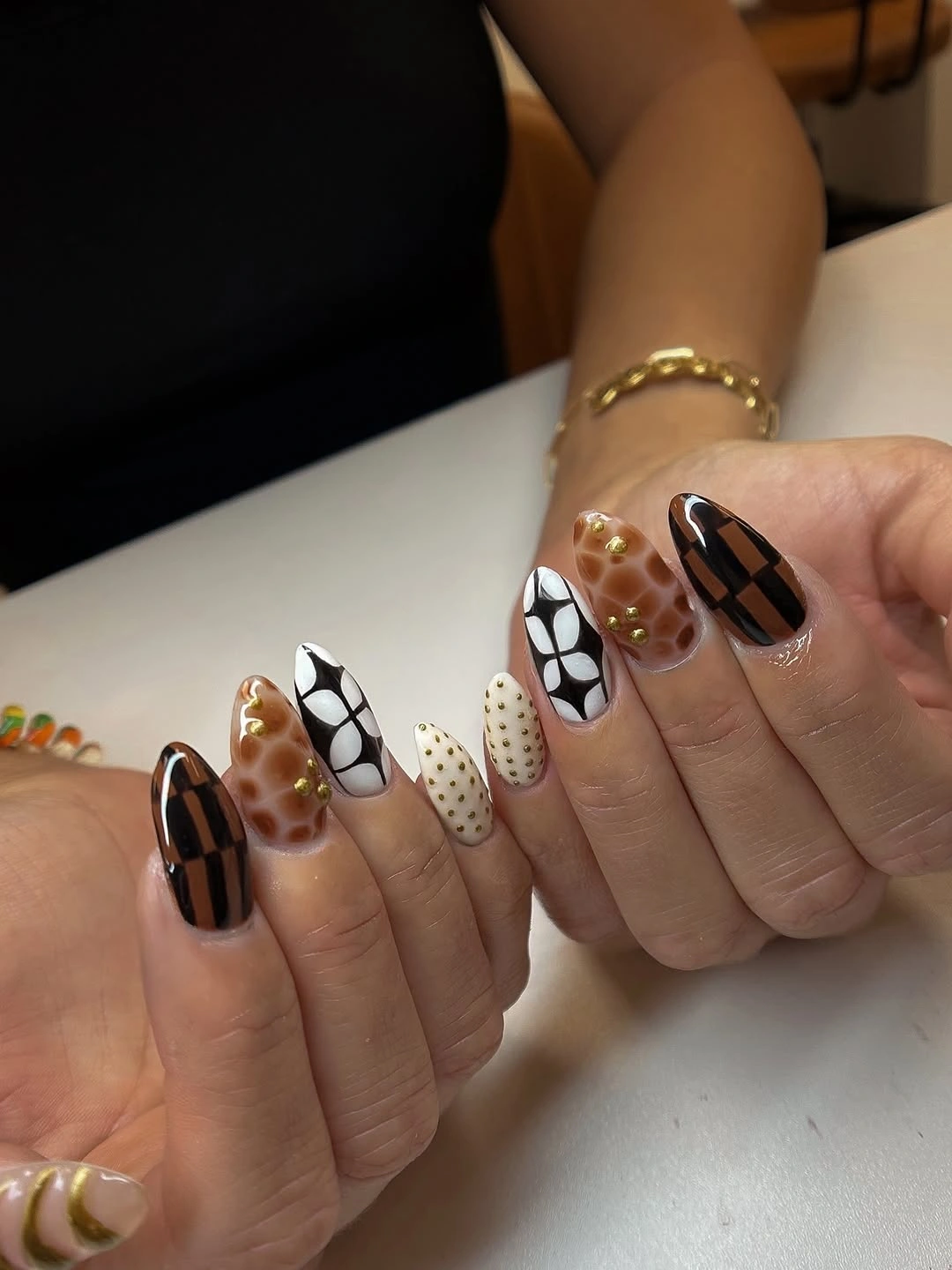
Checkers add the most contrast, while brown supplies the seasonal warmth. Keep the checkers toward the center or tip on short nails so the black-and-white grid does not make the shape look smaller.
Checkers are graphic enough to dominate the eye, so the brown nails are essential. They give the set warmth and make the black-and-white marks feel connected to fall rather than purely monochrome.
Orange to Black on Pointed Nails
Orange fades toward black on pointed nails, letting the gradient provide the drama. No drawn motif is needed because the change in value already creates movement along the length.
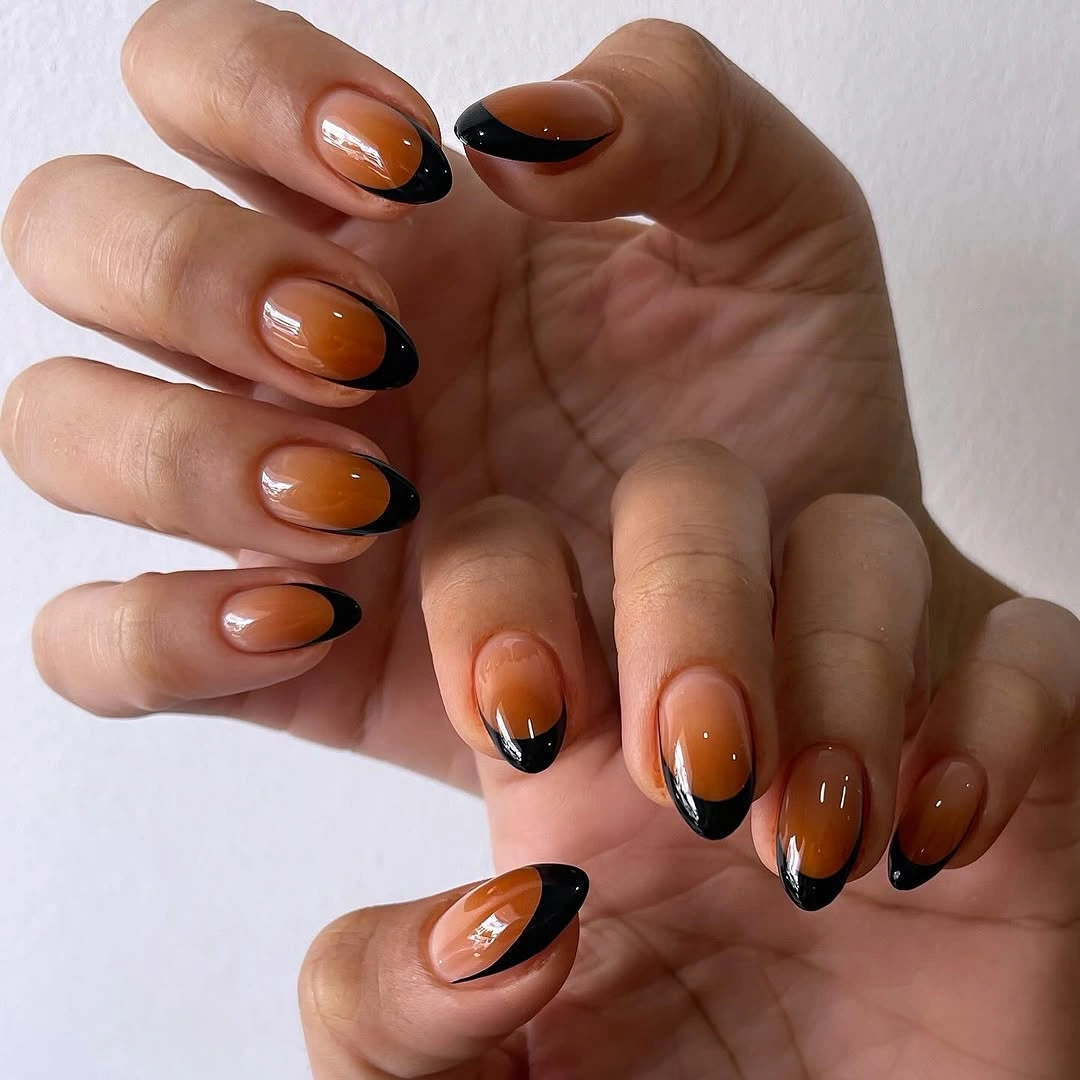
The gradient needs length to show its full transition. A shorter version can darken only the tip and keep the orange nearer the base, preserving the sense of movement.
Orange-to-black is dramatic because the value shift is large. It is not the easiest gradient to keep subtle, but it gives a short list of inspiration ideas one unmistakable statement.
Glossy Mustard Almonds
Glossy mustard yellow covers an almond shape and makes one warm color feel complete. The brightness gives an autumn board energy without requiring glitter, pattern, or a second accent shade.
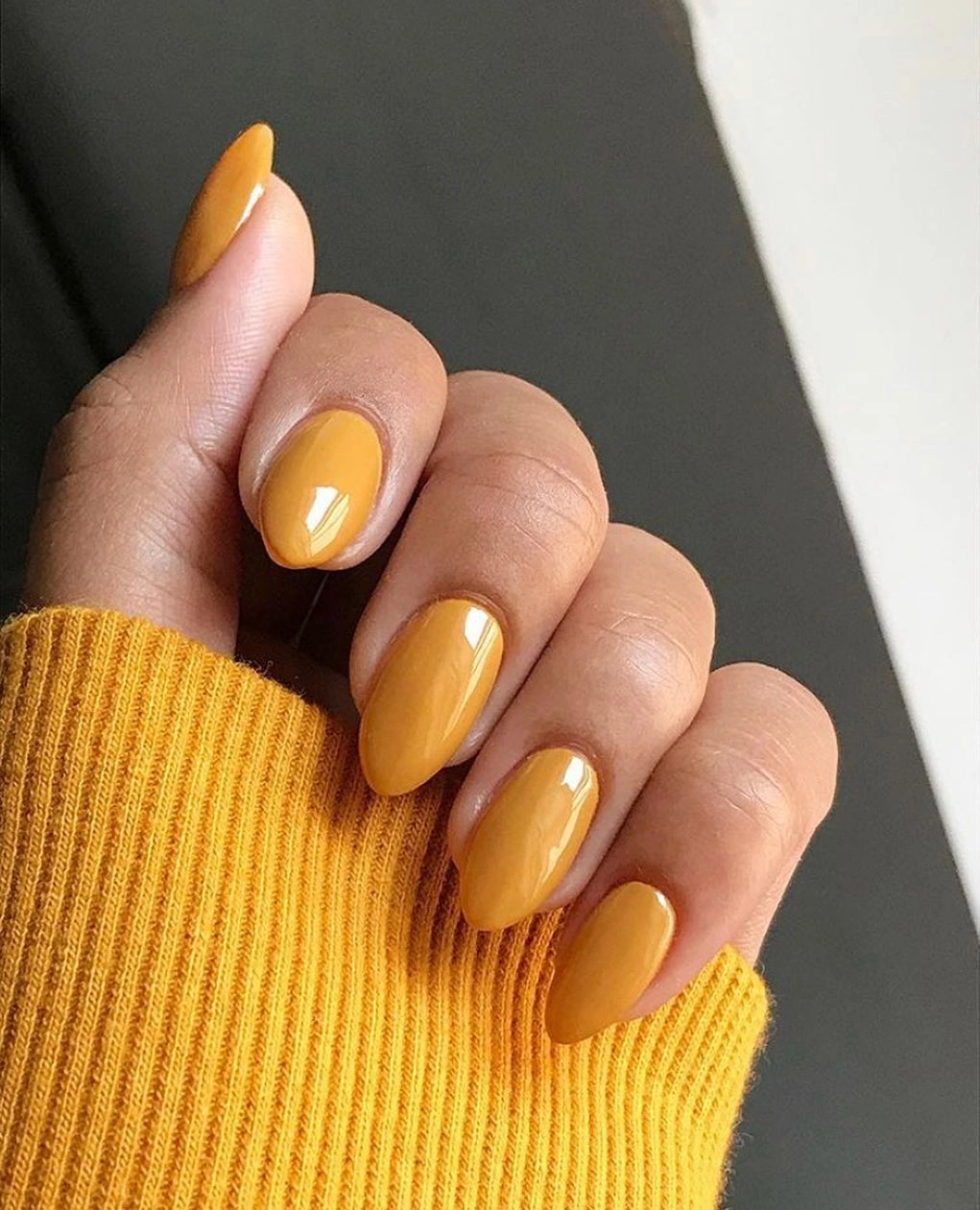
Mustard is more wearable when the finish stays smooth and the shape is not too extreme. On an oval, the shade feels friendly; on a longer almond, it becomes a clear statement.
Mustard is cheerful, though it is less neutral than brown or taupe once the season passes. Keep the shape moderate if the goal is to wear the color beyond the inspiration moment.
Brown Plaid with Small Metallic Details
Brown plaid panels and small metallic details break up a neutral manicure. The pattern reads seasonal through scale and color, while the restrained shine keeps it from becoming costume-like.
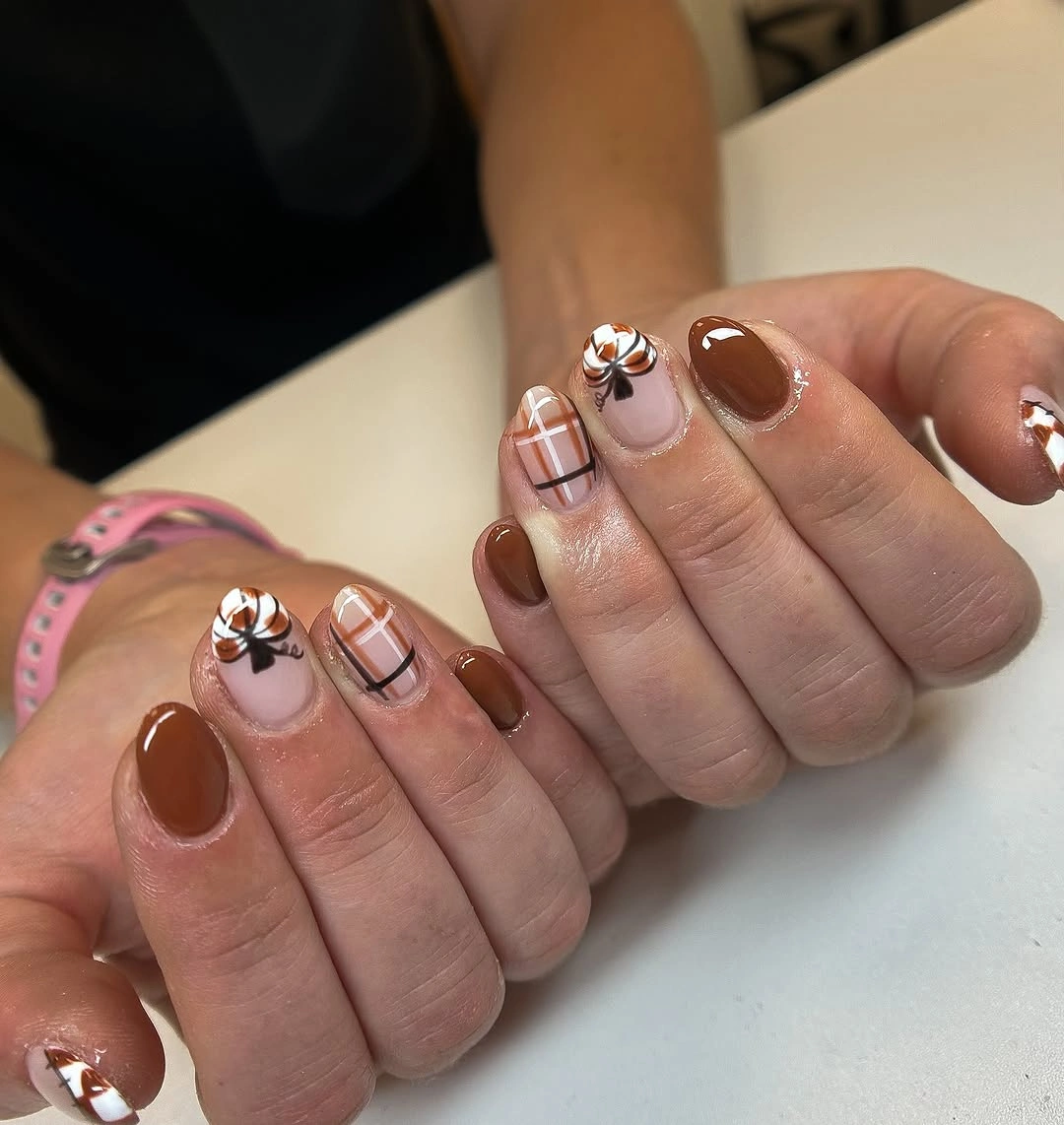
Plaid needs breathing room and metallic detail needs an edge to stop it from looking scattered. Keep the background shades close together, then let one small reflective mark do the finishing work.
Plaid and metallic detail can become busy on a short nail. Let the pattern occupy one or two fingers and keep the shine small, so the neutral base remains part of the design.
Deep Burgundy on a Compact Shape
Deep burgundy gloss finishes a compact rounded shape. It is a simple closing reference for a board because the color supplies the mood and the short silhouette keeps the idea easy to adapt.
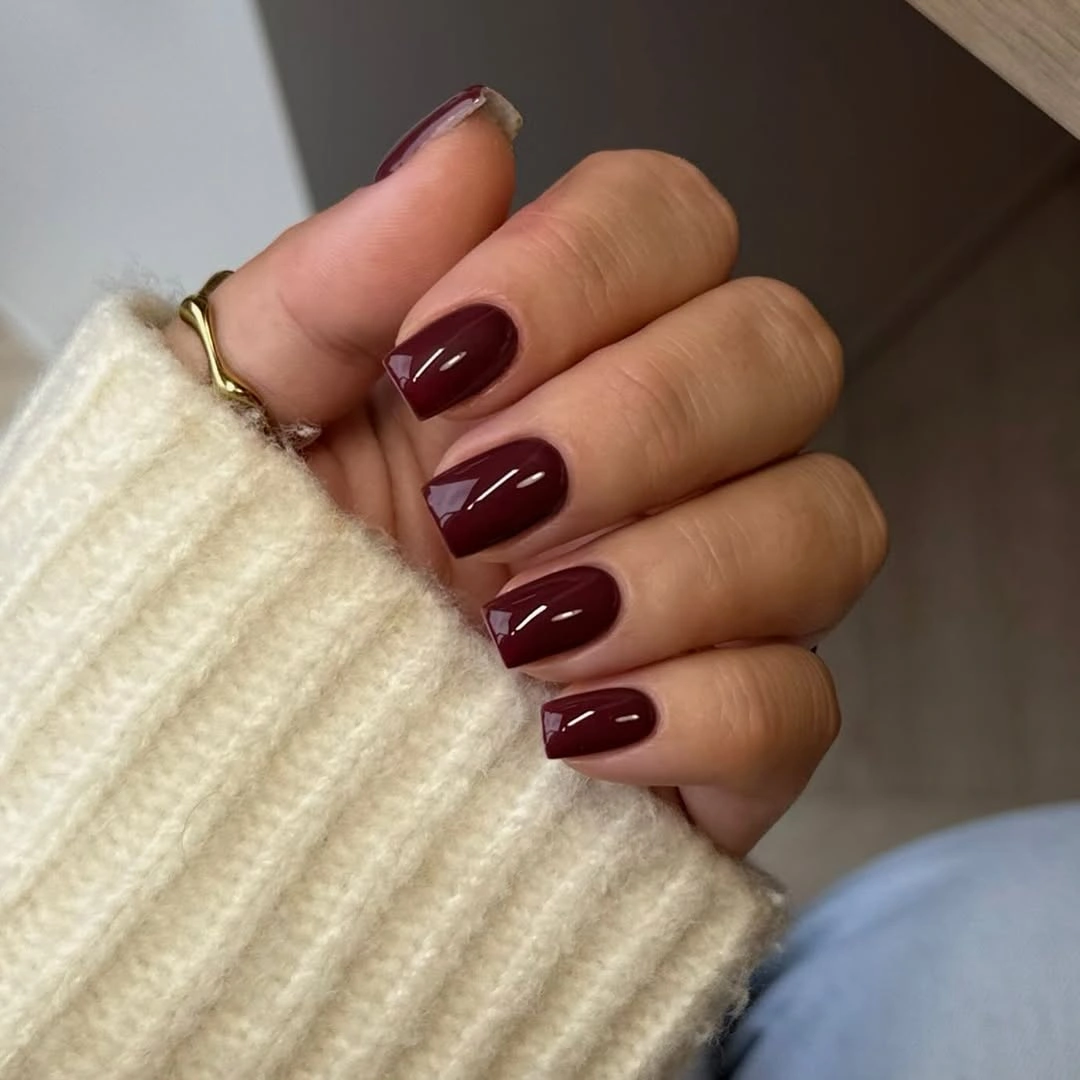
Burgundy gloss is a useful reference for color alone. It can sit beside elaborate examples without competing with them, and a rounded short shape keeps the shade practical after the season changes.
Deep burgundy is simple but not empty. The compact silhouette makes it a reliable adaptation when a longer or more decorative idea would not fit the reader’s routine.