Fall nail designs for the office need a clear idea without demanding constant attention. These examples use brown, taupe, mauve, olive, green, burgundy, orange, and amber through small French edges, blocks, borders, and selective accents.
The most useful detail is often the one that leaves space around itself. Compare the color value, the amount of shine, and the length before choosing a design, then scale the pattern down when your workday favors quiet hands.
Brown and White French for a Calm Office Set
Brown and white French panels give this office manicure a clear structure without asking for glitter or dense art. The nude base keeps the contrast measured, while the warm edge brings in a quiet fall note.
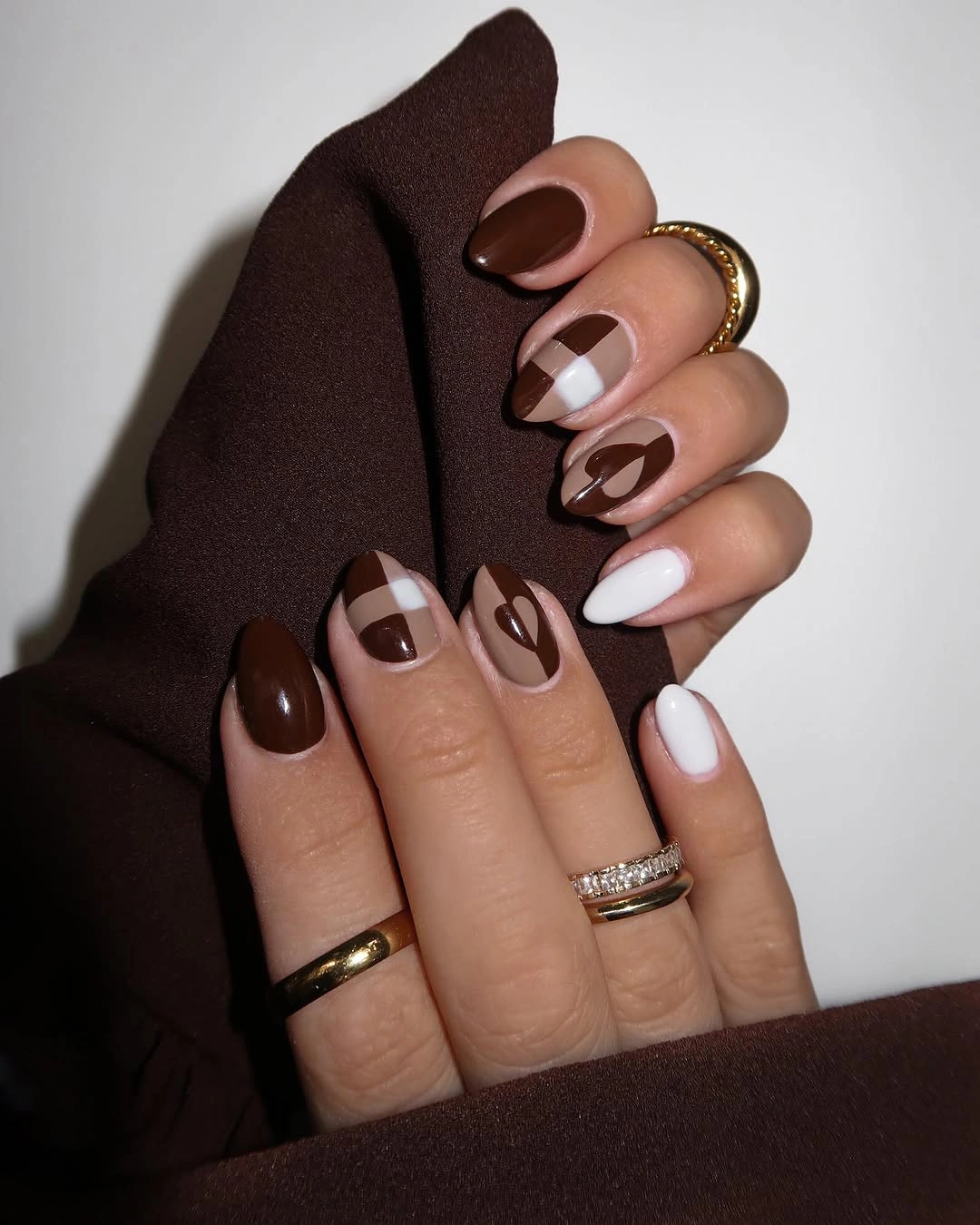
White and brown give the tip enough definition to read across a meeting table, but the nude center keeps it from looking theatrical. On shorter nails, use one panel per finger and leave the spacing generous.
This is a reliable office option because the seasonal reference lives in the edge, not in a large motif. Its only limitation is familiarity, so a slightly warmer brown can make the French feel more individual.
Blurred Taupe on a Compact Shape
Blurred taupe fills a compact shape with a soft, low-key finish. The color remains polished without becoming the first thing people notice, which makes it useful for a desk-focused routine.
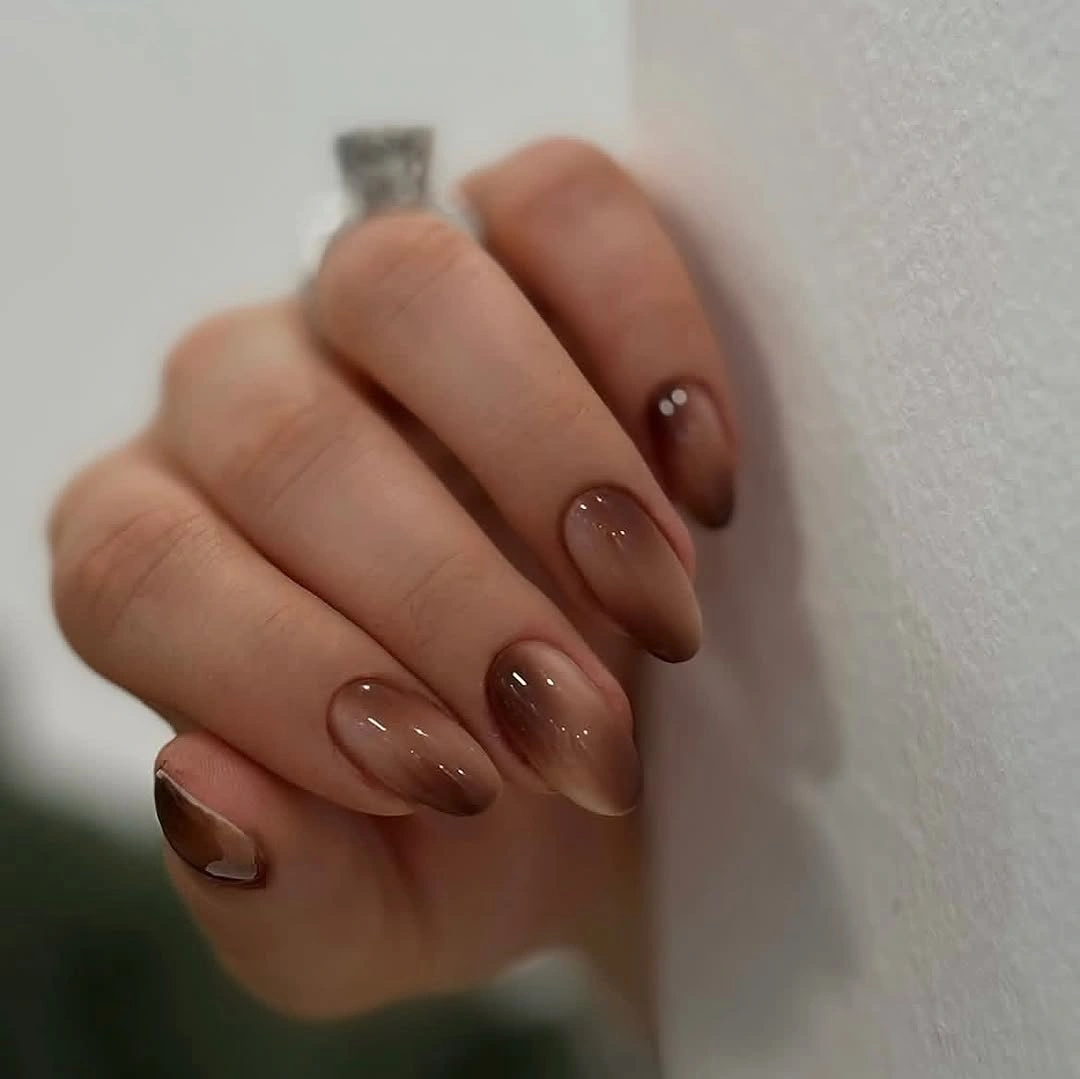
Taupe depends on an even surface because there is no pattern to distract from small flaws. The short shape helps it feel capable and practical, while the blurred color keeps the manicure soft.
Quiet color can look almost invisible from a distance, which may be exactly the goal. The tradeoff is that the manicure contributes mood through finish and shape rather than obvious decoration.
Nude Mauve and Black in Small Blocks
Nude, mauve, and black accents move across short nails in small blocks. The varied color gives the set personality, but the limited scale keeps it readable beside work clothes and a keyboard.
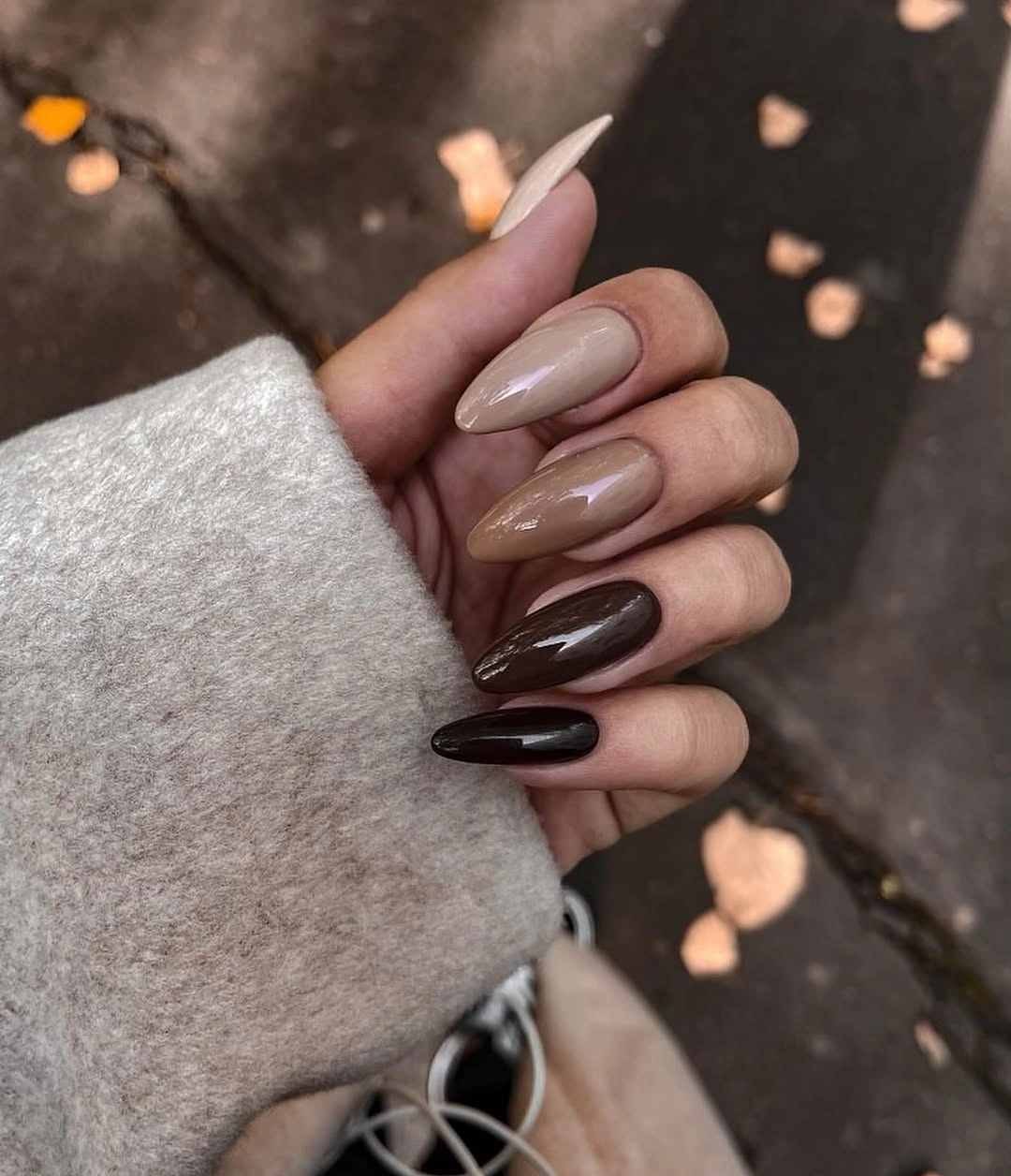
The black pieces are strongest as small interruptions to the nude and mauve. Reduce the number of blocks if the workplace is especially conservative, or repeat one dark accent on the thumb for balance.
Mixed blocks bring individuality, although black can make the set feel sharper than mauve or brown alone. Keep the darker shade limited when the manicure must stay understated.
Burgundy Tips with a Long Clean Line
Burgundy French tips follow a long almond line and make the shape expressive. Because the decoration stays at the edge, the manicure has a strong silhouette without painted details competing for attention.
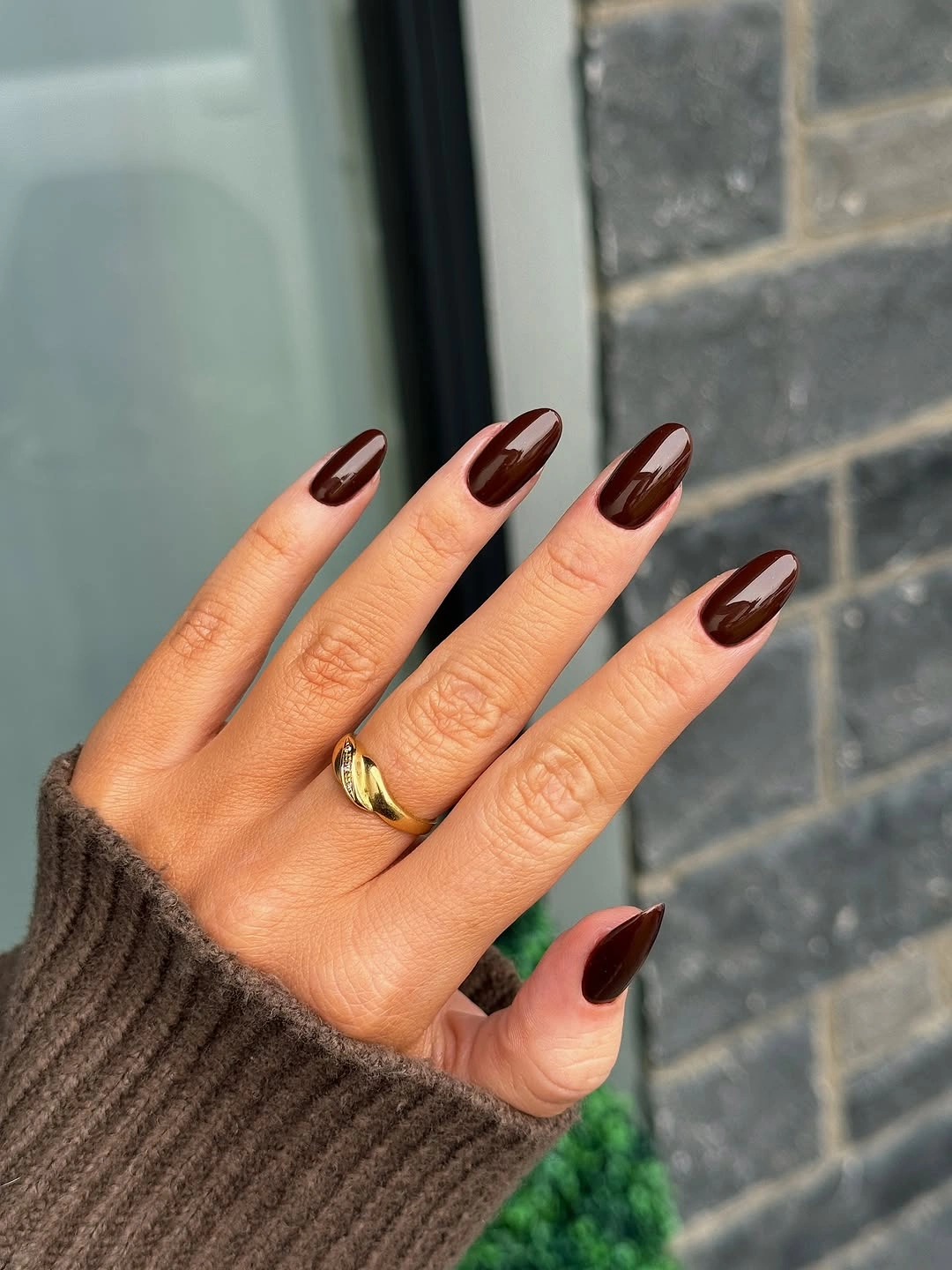
Burgundy at the edge preserves the long line of the almond, although the length itself may be the least office-friendly part. A medium oval can carry the same color relationship with less visual drama.
Long pointed nails are the main statement and may not suit every desk routine. The burgundy edge itself adapts well to a shorter shape, where it will feel more refined than dramatic.
Muted Lilac for a Quiet Desk Manicure
Muted lilac covers a short rounded shape and brings a cooler note to the fall palette. The color is gentle enough for a calm work setting, while the gloss prevents it from looking washed out.
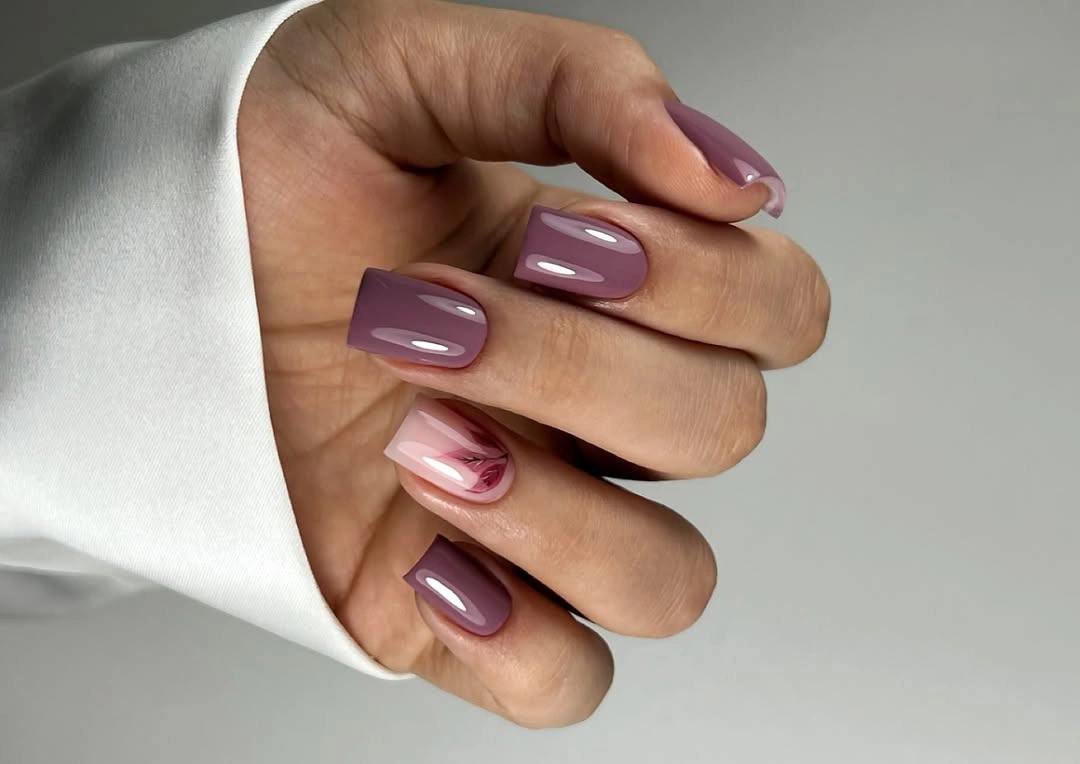
Lilac looks more professional when the shape is compact and the finish is smooth. The shade can shift from cool to warmer under different lights, so a small color sample is worth checking before committing.
Lilac is less typical for fall than rust or olive, but that difference gives an office look freshness. It is a subtle color choice, not a high-contrast design.
Fine Brown Borders on Short Nude Nails
Short nude nails use a fine brown border to make the silhouette look finished. The design is minimal, but the outline gives the hands a deliberate appearance without adding a noticeable motif.
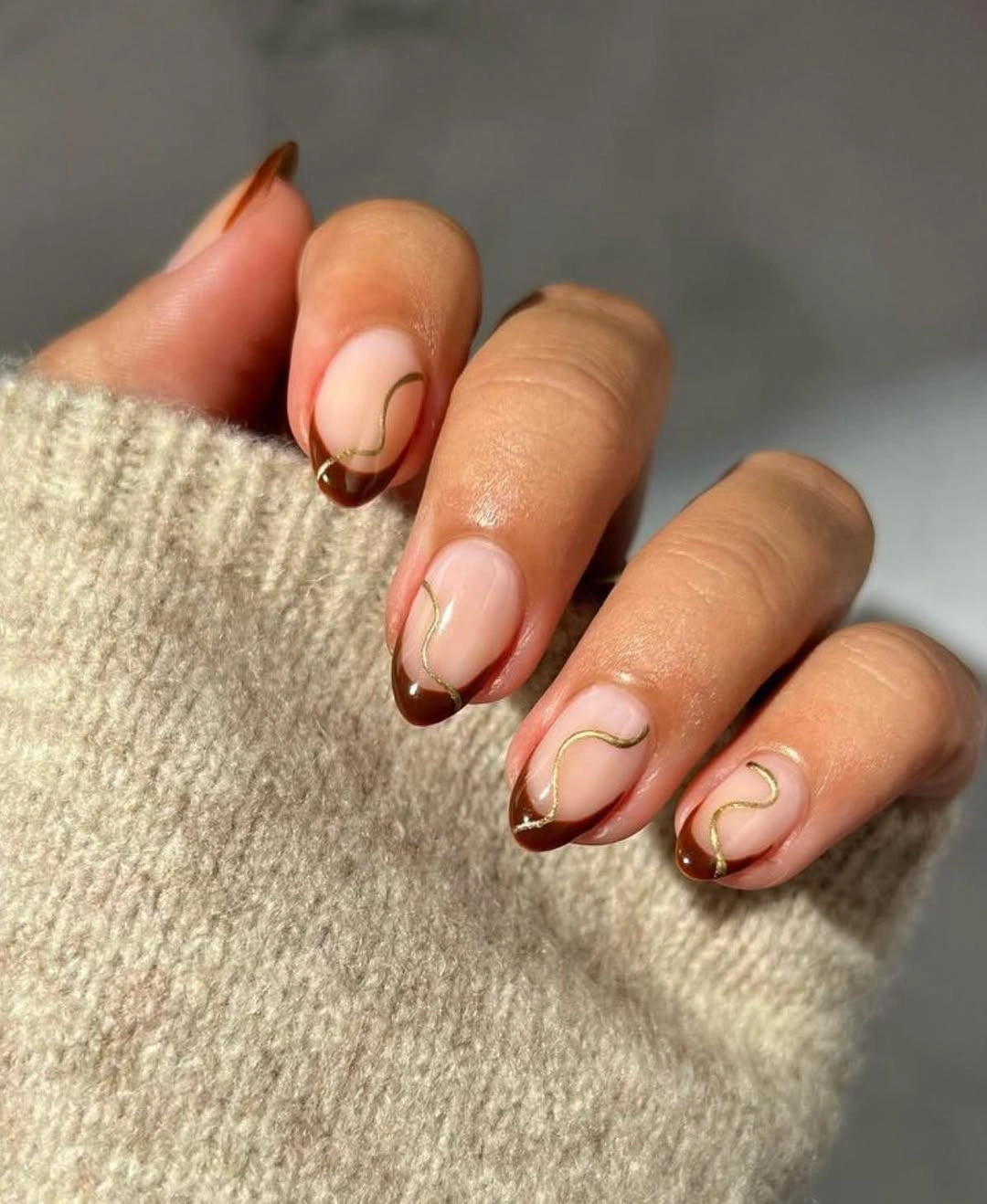
A thin border is a useful way to make short nails look intentional without adding length. If the line is too delicate to see, increase it slightly rather than introducing another accent color.
Fine outlines show small gaps, so precision is the maintenance issue. The payoff is a clean, low-cost-looking design that still feels finished without elaborate art.
Small Checkers in Black Brown and White
Black, brown, and white checker accents appear on selected nails. The pattern adds a graphic note, yet the limited number of checked fingers keeps the set from feeling loud in a professional setting.
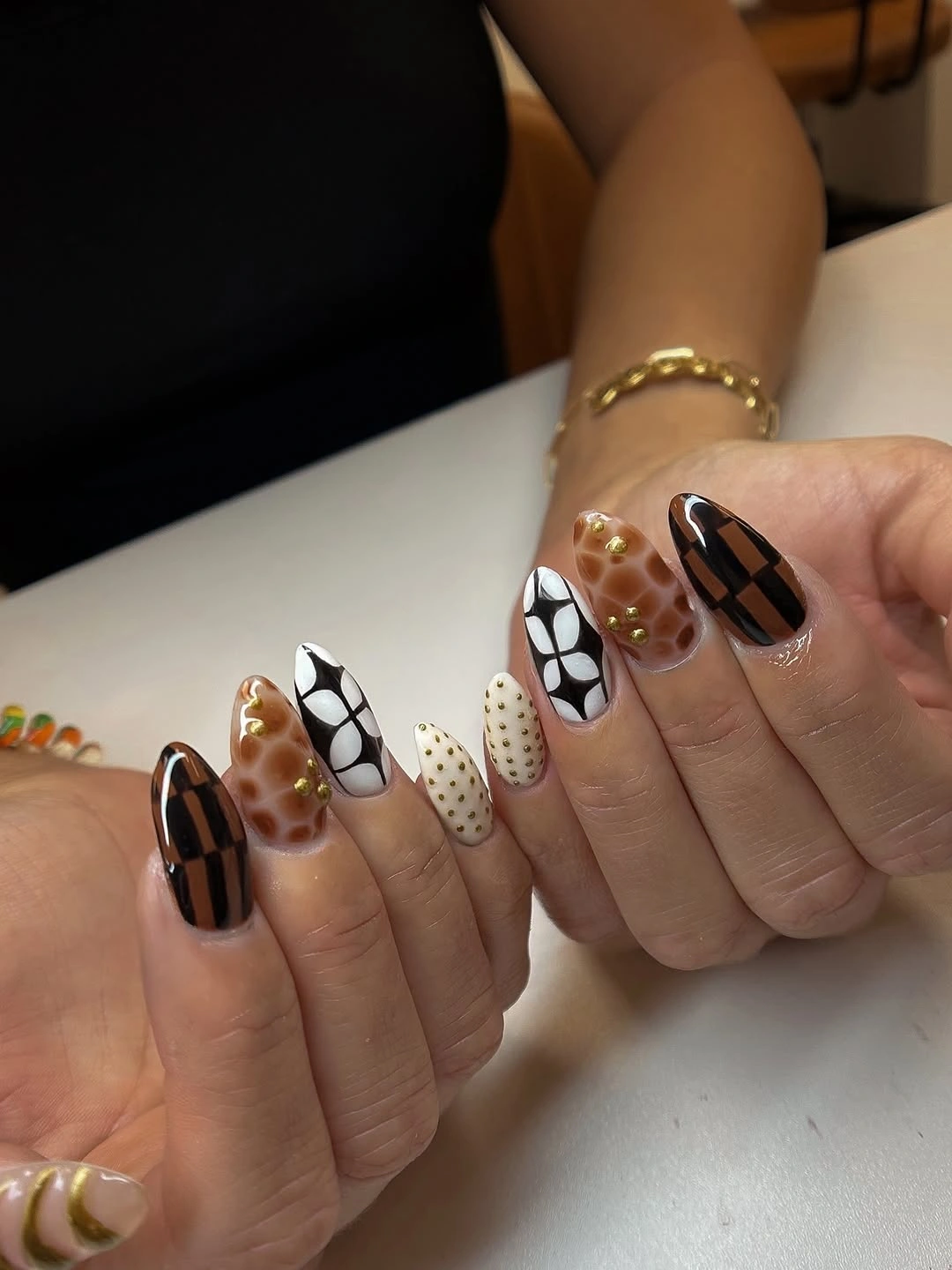
Checkerboards need clean scale to look deliberate. One checked nail per hand is the quietest adaptation, while two or three can work when the rest of the manicure stays plain.
Checkers are the first detail likely to draw attention, which can be useful or distracting depending on the workplace. Limiting the grid is the simplest way to keep the idea flexible.
Green and Nude Alternating Blocks
Green and nude alternate in solid blocks across the hand. The design adds seasonal color through placement rather than decoration, making it a useful option when art is not practical for work.
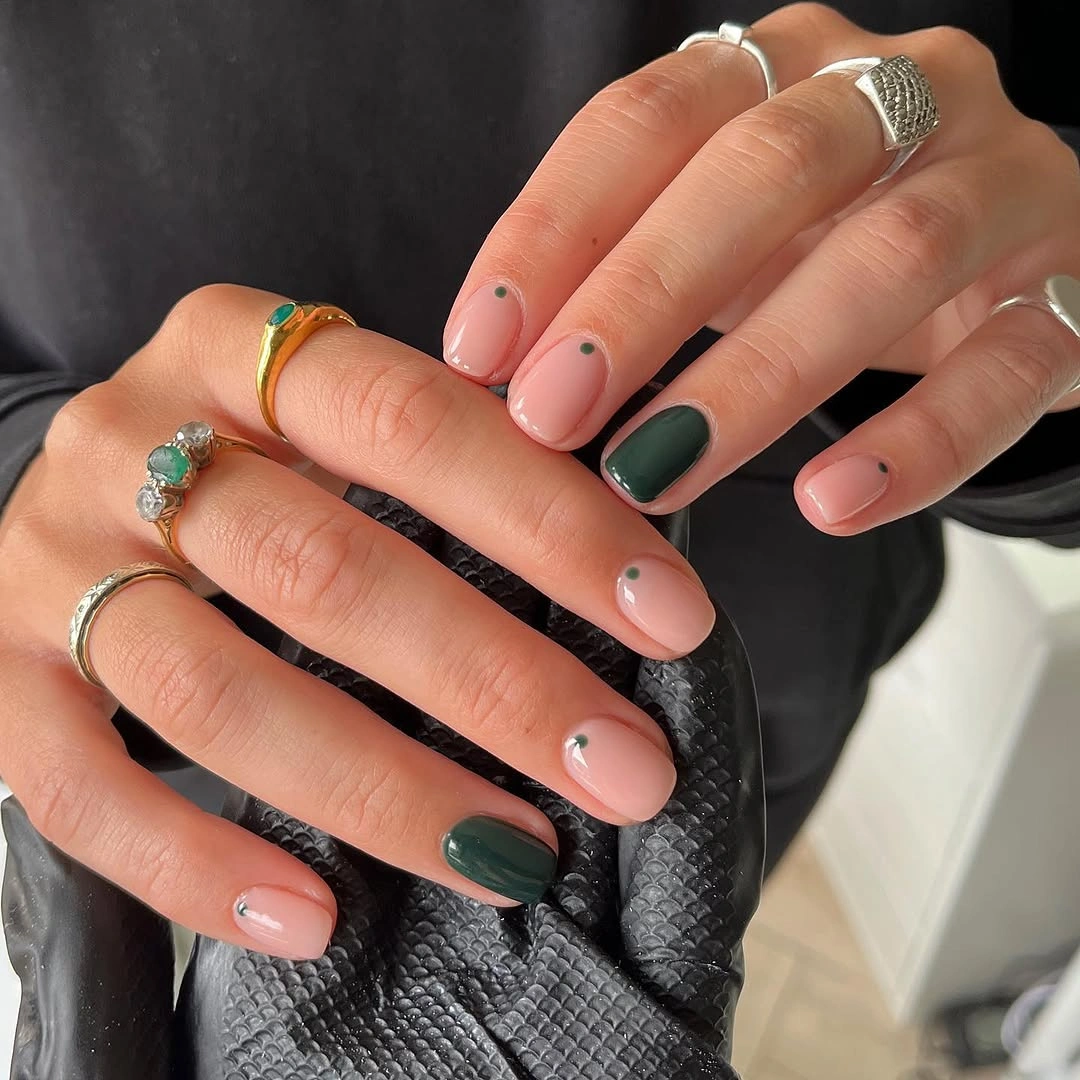
Alternating blocks are simple to copy, but the colors should repeat in a measured order. Keep the nude on several fingers if the green needs to feel like an accent rather than a full statement.
Green is seasonal without relying on a print, but it may need a calmer wardrobe around it. Nude blocks provide enough quiet space to make the combination work.
Black and Burgundy on Pointed Nails
Black and burgundy create a strong contrast on long pointed nails. The shape supplies most of the drama, so the surface can remain clean and easy to understand.
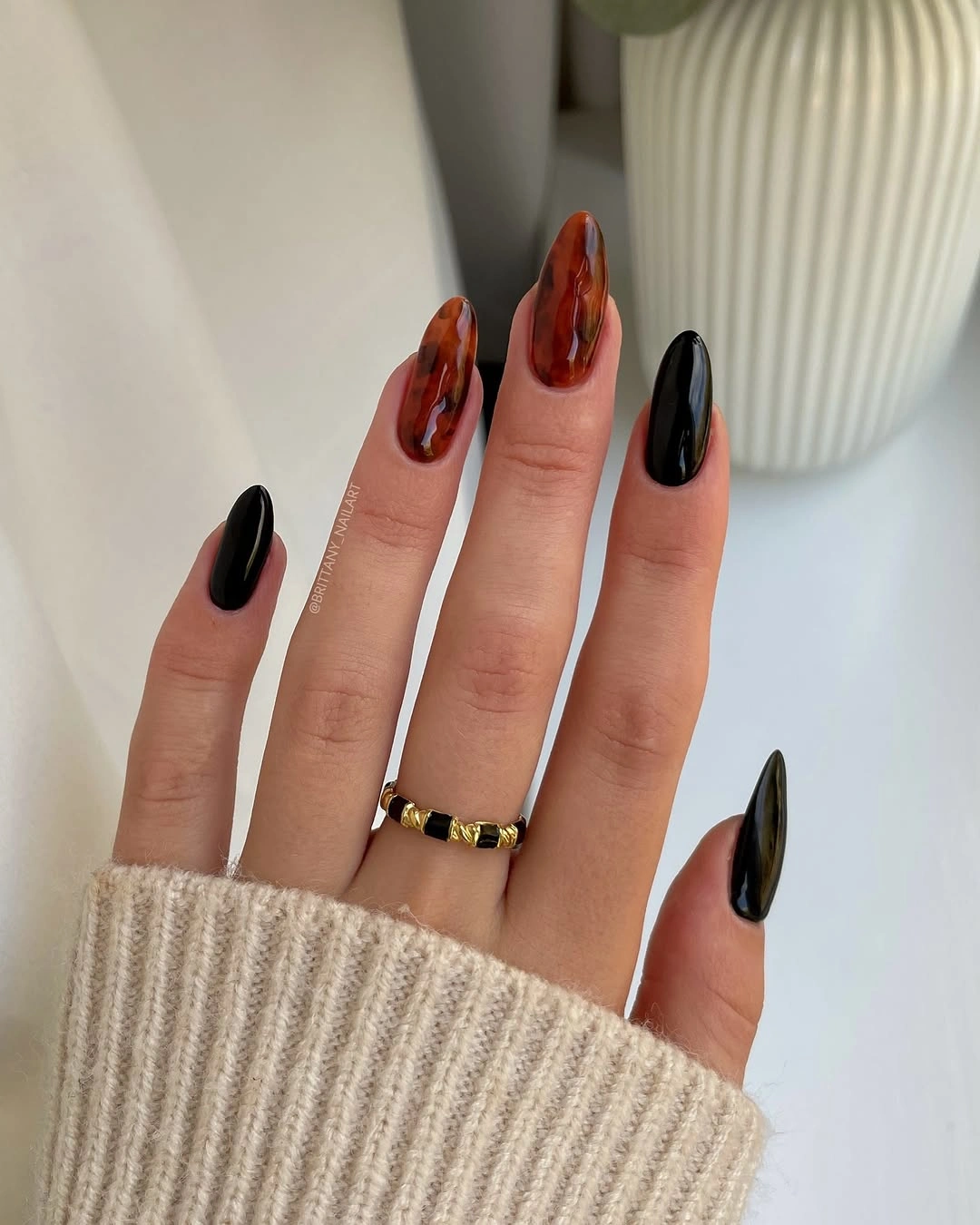
The dark pairing has enough contrast to work without patterns. A shorter almond or oval will make the color combination easier to carry through a week of typing and errands.
Black and burgundy are bold on a pointed shape, even without art. Choose the set when a statement silhouette is acceptable; otherwise keep the colors and soften the length.
White Nails with Warm Tortoise Accents
White nails are warmed by small tortoise-like brown accents. The clean base keeps the manicure office-friendly, while the irregular panels add enough fall character to prevent it from feeling plain.
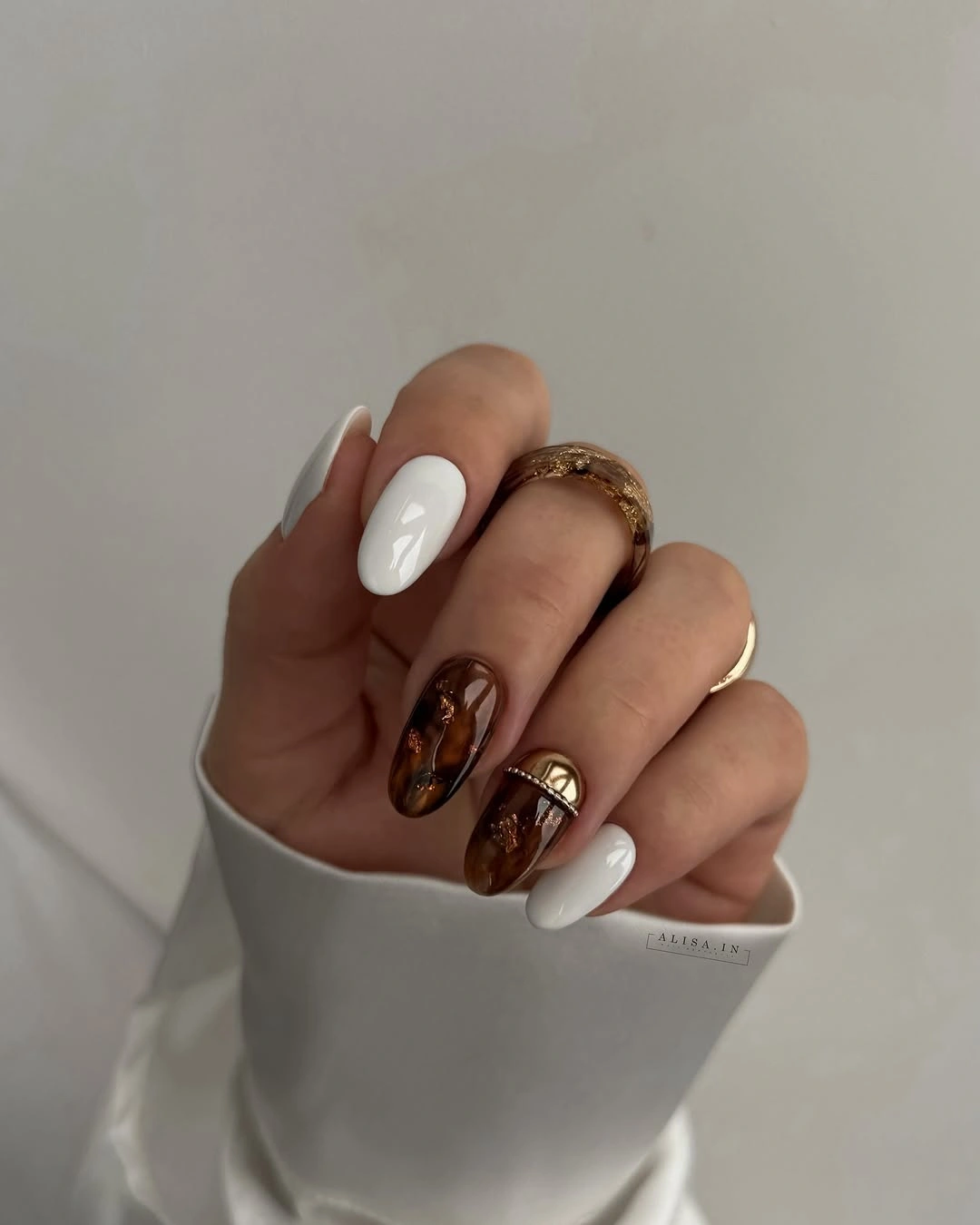
Tortoise-like accents add warmth without requiring a full brown set. Keep their irregular areas small if the manicure needs to look conservative around clients or formal clothing.
Tortoise-like panels are irregular by nature, so exact matching is not necessary. Their visual warmth is the benefit, while the patterned edge may need more attention as it grows.
Burgundy Florals on a White Base
White and burgundy share the set with small floral marks placed as accents. The pattern is visible, but the pale ground keeps the overall impression orderly.
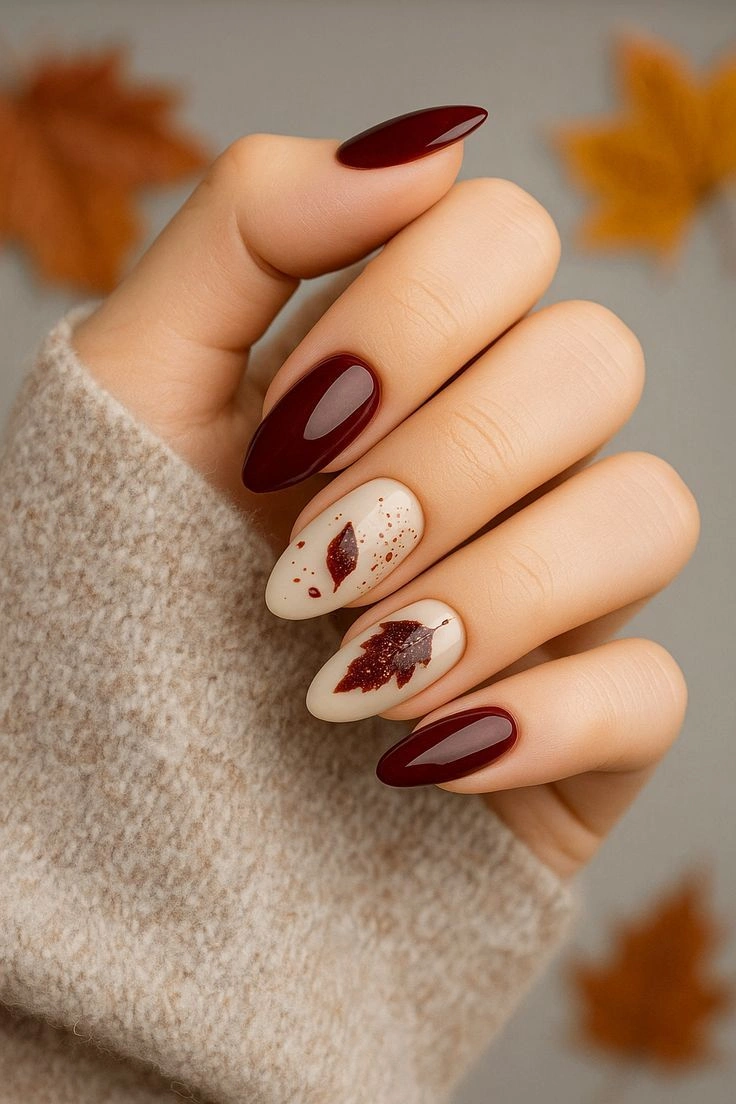
Floral marks are most useful on one or two fingers because the white base already supplies lightness. The set can move from office to dinner without needing a change of color.
White and burgundy have a clear contrast that photographs well, but the flowers add a more personal note. Use fewer floral nails if a very restrained office appearance is important.
Deep Olive with Restrained Contrast
Deep olive carries the seasonal mood, with limited black-and-white contrast breaking up the solid color. The result feels earthy and composed rather than decorative.
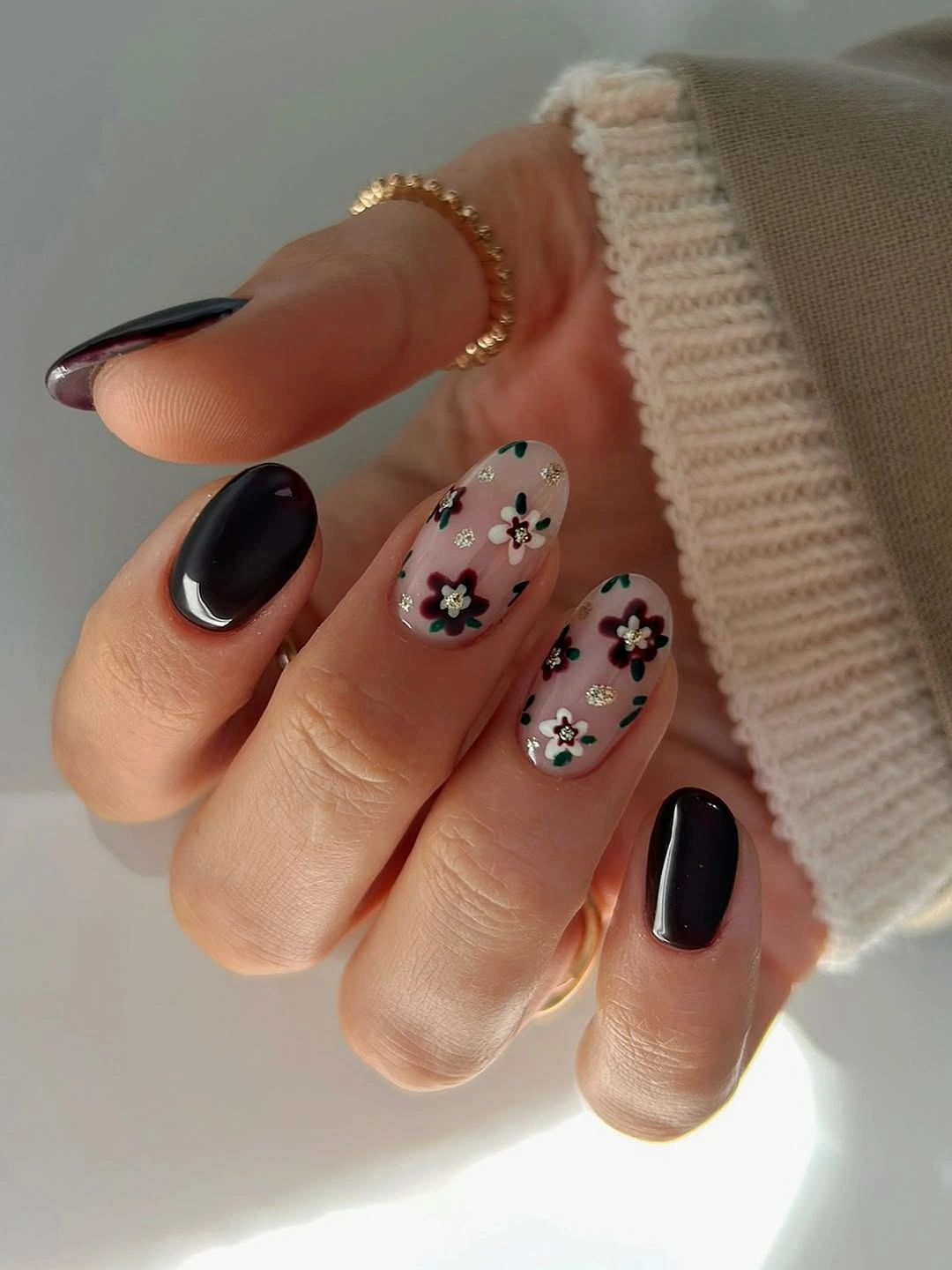
Olive is seasonally clear, but its depth can look almost black in low light. A small pale accent keeps the nails readable, while the otherwise solid finish remains easy to maintain.
Olive is easy to style with neutrals, though it can read darker than expected under indoor lighting. The small contrast detail keeps the solid set from becoming flat.
Olive Orange and Brown Autumn Mix
Olive, orange, and brown rotate across short-to-medium nails. The autumn palette is lively, but the block arrangement keeps the color changes from becoming a busy pattern.
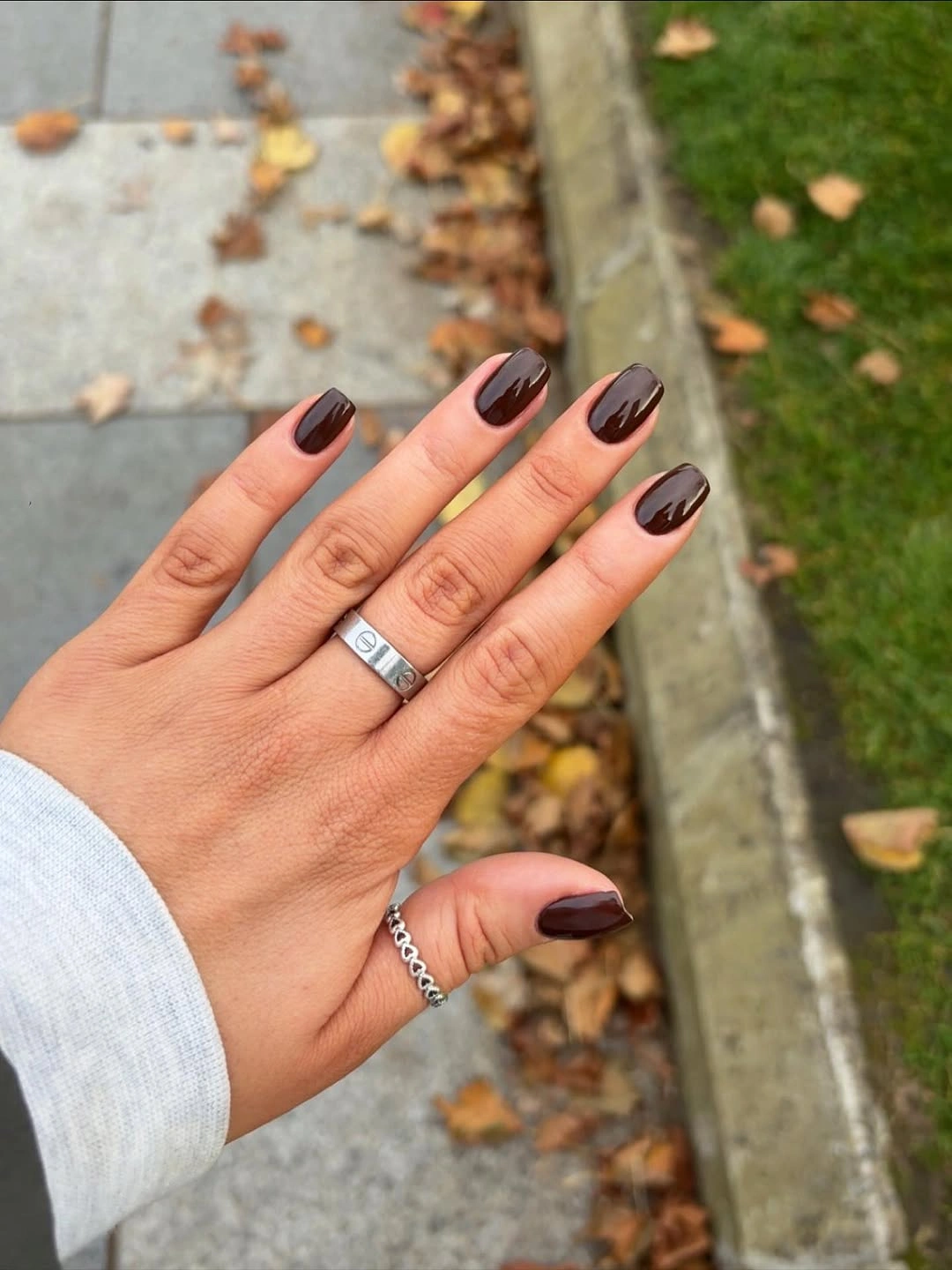
The color mix is the feature, so complex motifs would be unnecessary. A shorter shape can keep orange on the ring finger and repeat brown or olive across the rest.
Orange adds energy and may be too visible in a strict environment. Reduce it to one accent finger if the goal is to keep the autumn palette without making the manicure the conversation starter.
Sheer Nude with Brown and Green Lines
Sheer nude nails use brown lines and one muted green accent. Negative space keeps the colors professional, while the narrow details give the set a little more personality.
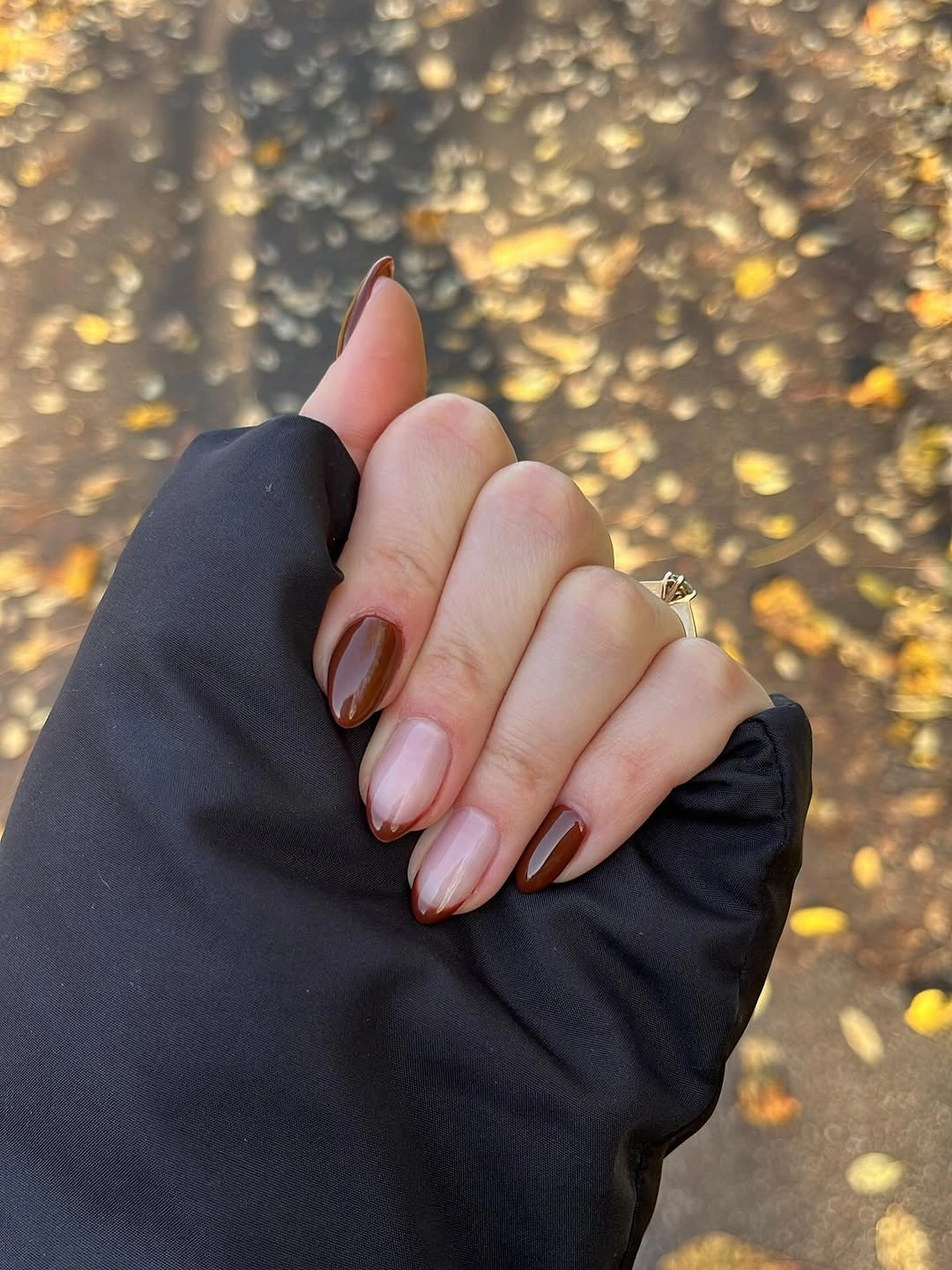
Brown lines create a frame without closing off the entire nail. Keep the green accent subdued when the manicure needs to blend with workwear, and let the nude space remain the visual majority.
Negative space helps the set feel professional, but the thin lines may be subtle in ordinary light. That balance makes it a good choice for someone who wants detail mainly for close-up enjoyment.
Glossy Green with Minimal Detail
Glossy green nails rely mostly on a single color, with only a few quiet contrast details. The low decoration level makes the manicure easier to wear and easier to pair with office clothes.
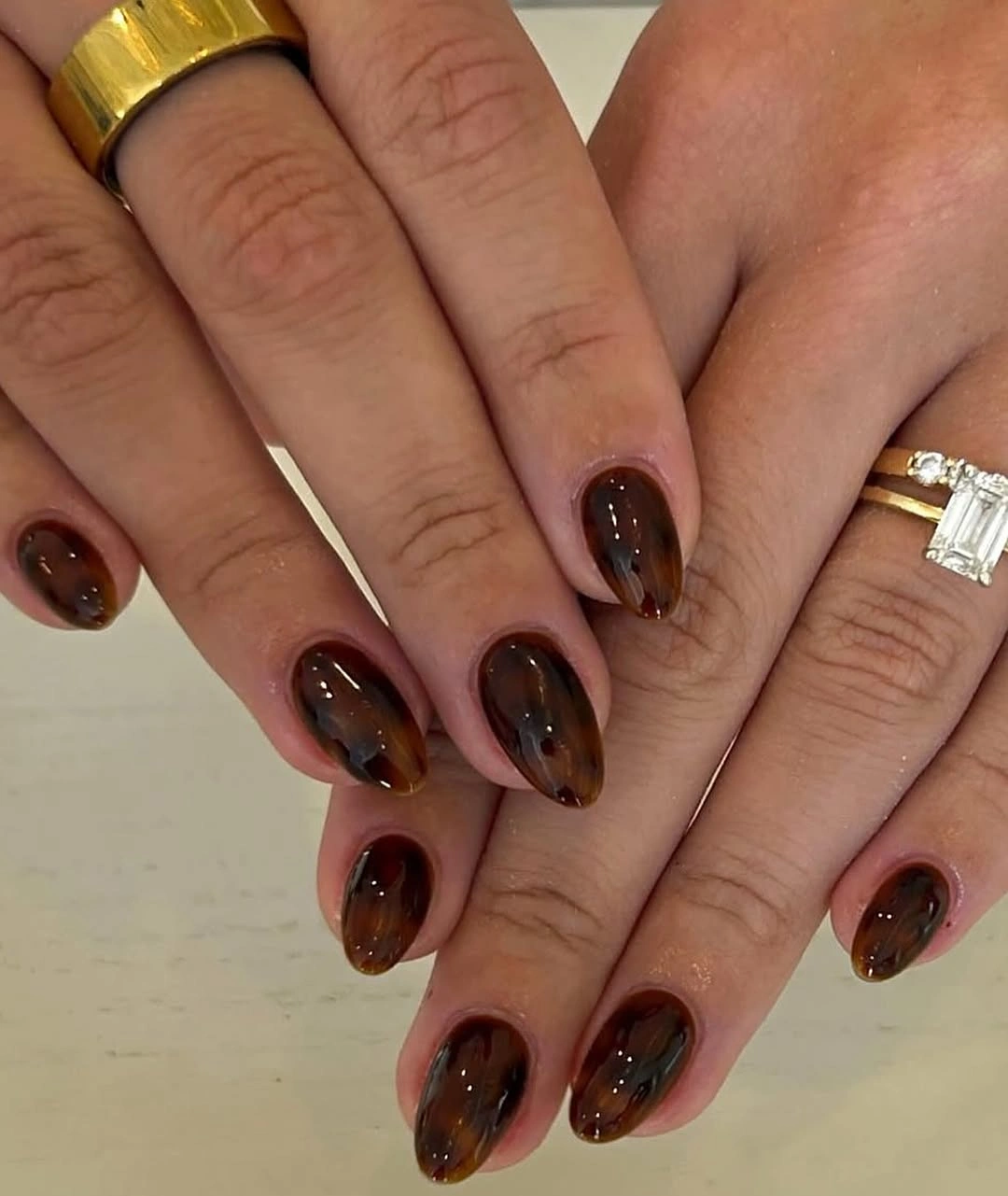
Gloss makes the solid green feel finished, but it also exposes shaping. Keep the free edge even and resist layering more art unless the office dress code allows a stronger look.
Solid green is simpler to maintain than dense art, yet the shade will remain noticeable. It suits a workplace that allows color but rewards clean proportions.
Short Orange and Brown in a Rounded Shape
Short orange and brown nails use a simple rounded silhouette. Warm color supplies the fall reference, so the design does not need glitter or complex line work.
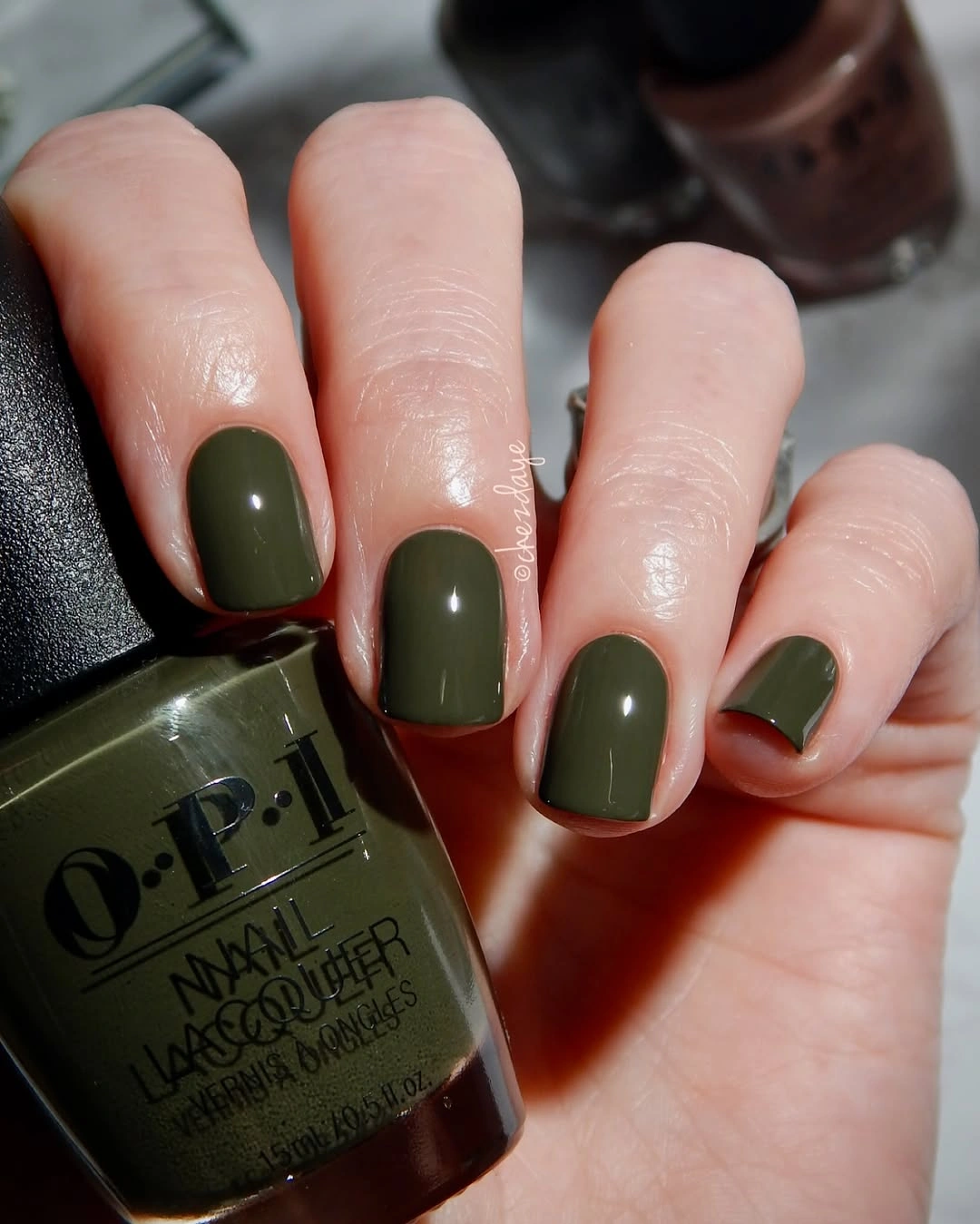
Rounded edges keep bright orange from becoming too sharp. Use the brown as a small companion shade rather than a full pattern, and the manicure will stay warmer than flashy.
Bright orange is not a neutral, so it is best chosen intentionally. The short rounded shape keeps the tone friendly and prevents the color from feeling overly fashion-driven.
Olive Amber and a Touch of Gold
Olive and amber tones are joined by small gold details near the base. The metallic note is selective, allowing the earthy colors to remain the main message.
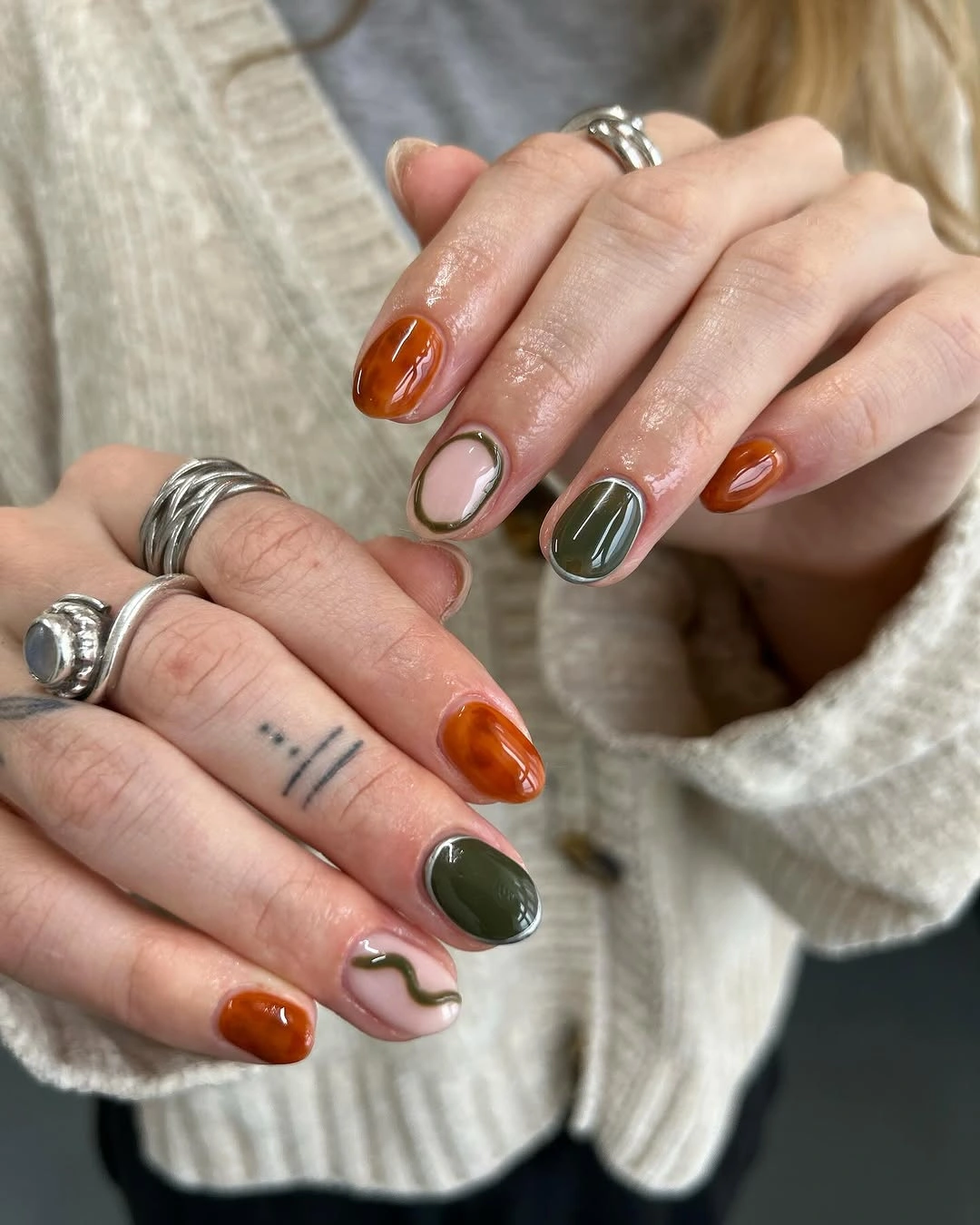
Gold is easiest to keep professional when it sits near the base or appears on one nail. The olive and amber should remain dominant so the metallic note reads as a small finish.
Small gold details can lose their polish first, especially near the free edge. Keeping them near the base protects the tidy appearance and lets the earthy palette stay in charge.
Dark Green and Brown Blocks
Dark green and brown blocks create a compact seasonal combination. The shades are strong, but their shared depth keeps the manicure from looking overly playful.
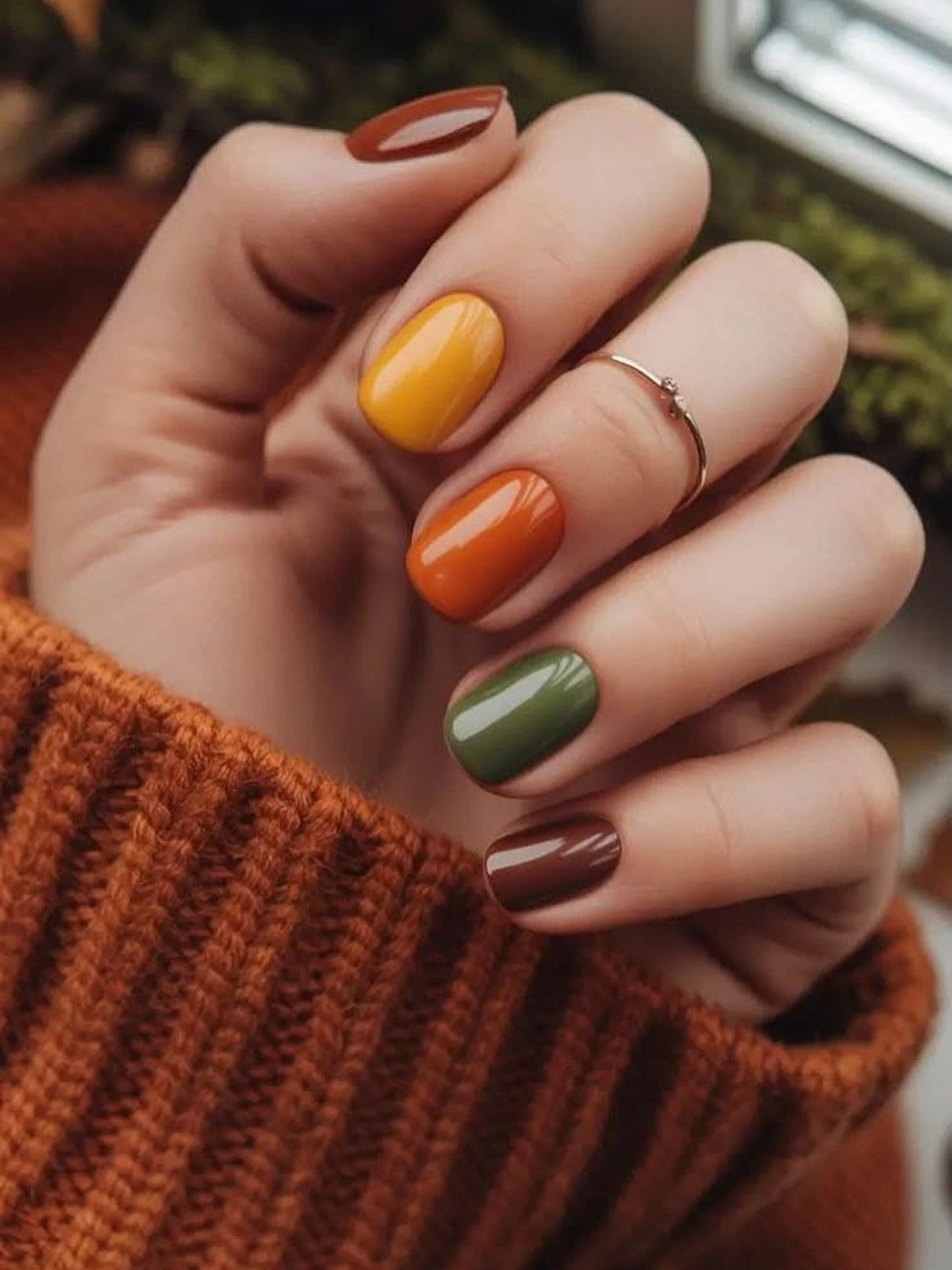
Dark blocks have a strong visual value, so a compact shape helps them feel controlled. Let the brown separate the green rather than adding white, which would raise the contrast considerably.
Dark green and brown are visually serious, which is why the set can handle a few alternating blocks. The limitation is low contrast: the two shades may merge in dim light.
Golden Yellow with Brown Metallic Notes
Golden yellow, brown, and metallic accents introduce shine in controlled amounts. The warm colors are noticeable, yet the set still has clear spaces between each element.
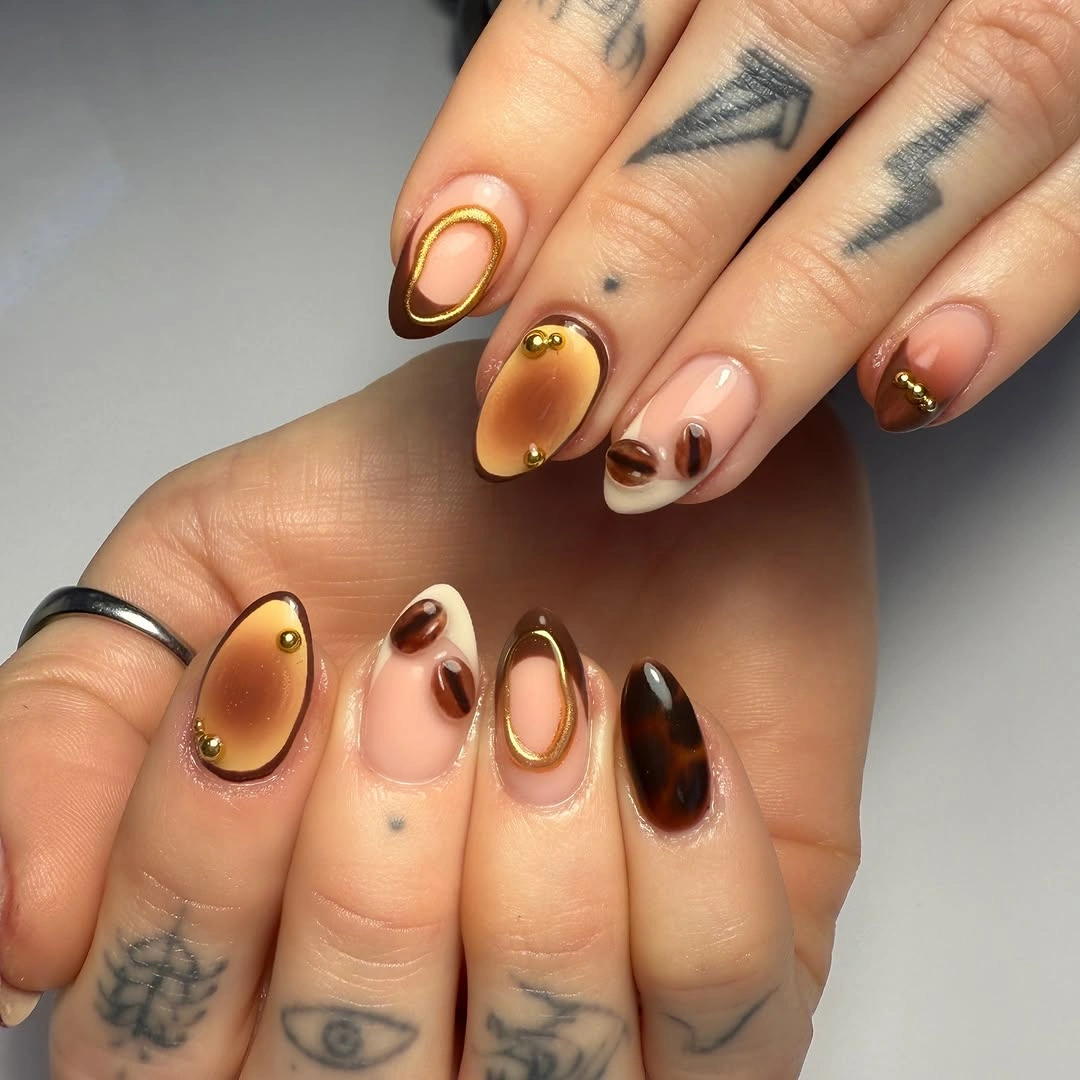
Gold gives yellow and brown a more polished finish, but too much shine would change the office mood. Keep the reflective accents narrow and let the warm blocks carry the design.
Yellow and metallic notes create a cheerful result, not a silent one. Use the design when a warm accent is welcome, and remove the shine if a more conservative finish is needed.
White and Amber Tortoise Panels
White nails with amber tortoise-like panels show how one patterned accent can warm a clean base. The design can stay conservative if the panels are limited to a single finger per hand.
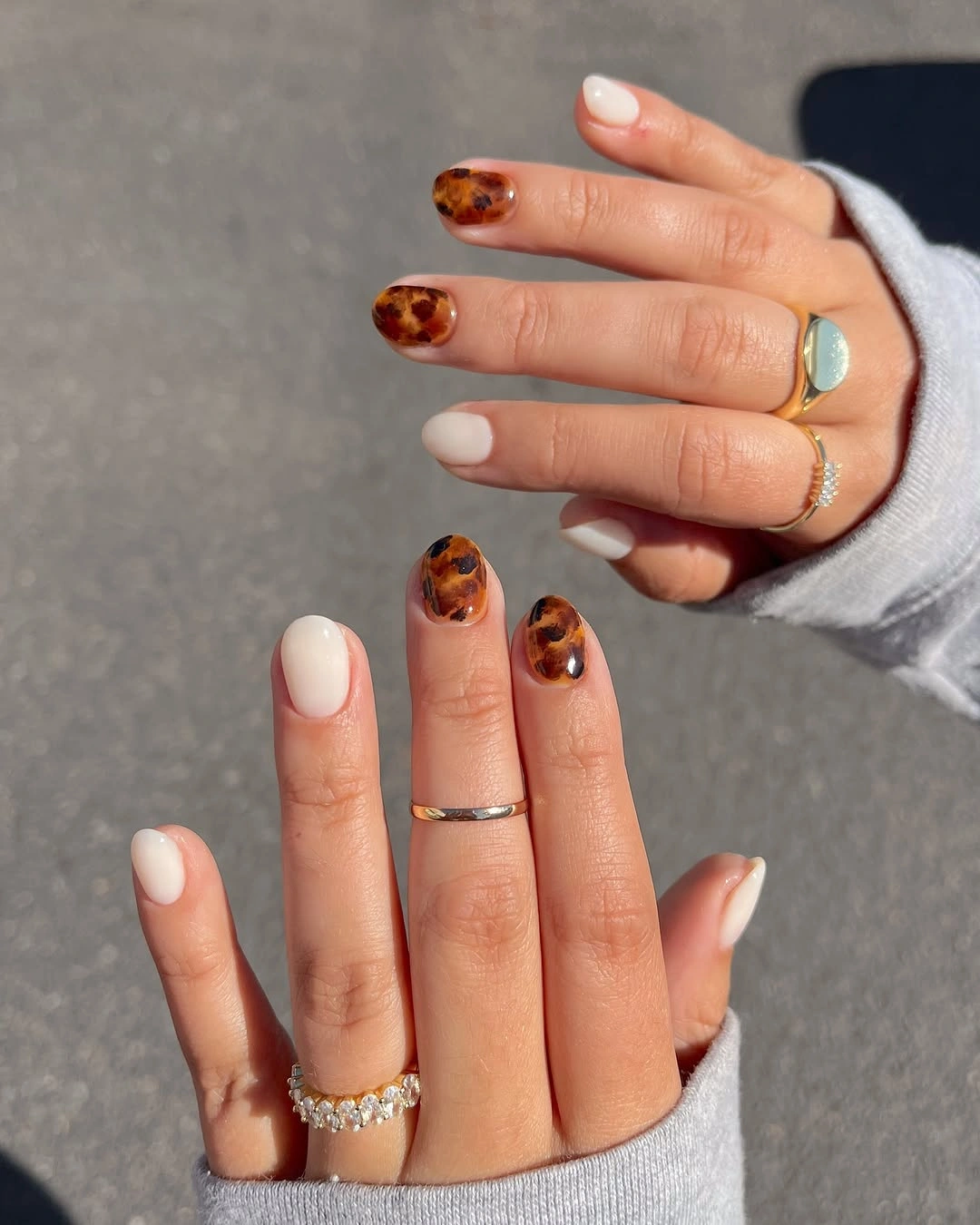
The clean white base gives the tortoise-like detail clear boundaries. One accent finger is the most conservative version; a few panels are workable when the rest of the outfit is quiet.
White and amber are easy to balance because the tortoise panel provides the only strong pattern. The design is adaptable, though the white base will show wear more readily than a darker neutral.