Fall nail designs for all skin tones work best as adjustable color structures, not as a promise that one exact bottle will look identical on every hand. The useful details are contrast, undertone, finish, and the amount of natural-looking space left around a design. These twenty-three manicures show how the same idea can move warmer, cooler, deeper, or softer without losing the visual choice that made it worth saving.
I paid particular attention to which element should stay fixed when the color changes. Sometimes that is the outline of a leaf, the placement of a French edge, or the sequence of a tonal gradient; elsewhere it is simply a consistent almond or oval shape holding several shades together. Use each section as a design map, then test the lightest and strongest colors against your own hand before committing to the full palette.
Bright Mismatched Almond Nails
Yellow, blue, teal, burgundy, pink, and brown turn these glossy almond nails into a saturated fall sampler. A consistent shape and finish provide the order that the varied palette needs. Burgundy and brown carry the deepest visual weight, while the brighter fingers prevent the set from becoming predictable.
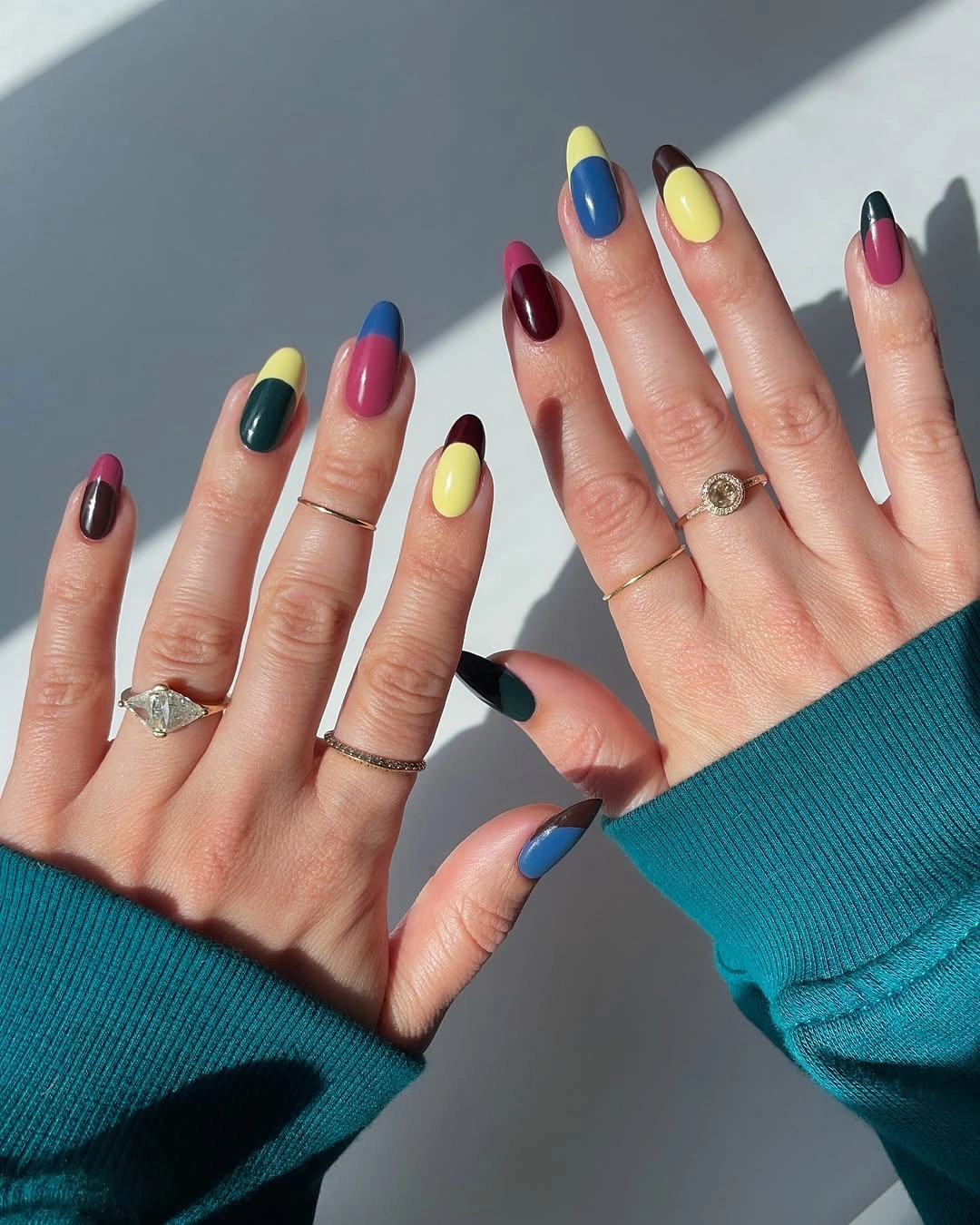
When testing this combination, begin with yellow and blue because those two colors create the strongest temperature contrast. Shift yellow toward mustard if it looks too sharp, or soften blue toward teal when a clear cobalt dominates the hand. The grounding shades can remain stable while those brighter notes are adjusted.
Shorter nails can use the same mismatched idea with slightly muted versions of each color. Keep one finish across the entire set so the palette appears intentional rather than assembled from unrelated leftovers. The goal is not equal attention for every shade, but a controlled sequence with two darker anchors.
Short Nude Nails With Graphic Leaf Tips
A nude base leaves these short rounded nails visually open, while black, orange, and olive leaf shapes concentrate detail at the tips. Dark outlines make the small forms readable without filling the entire surface. Because the base stays close to the hand, the design feels lighter than a full opaque fall manicure.
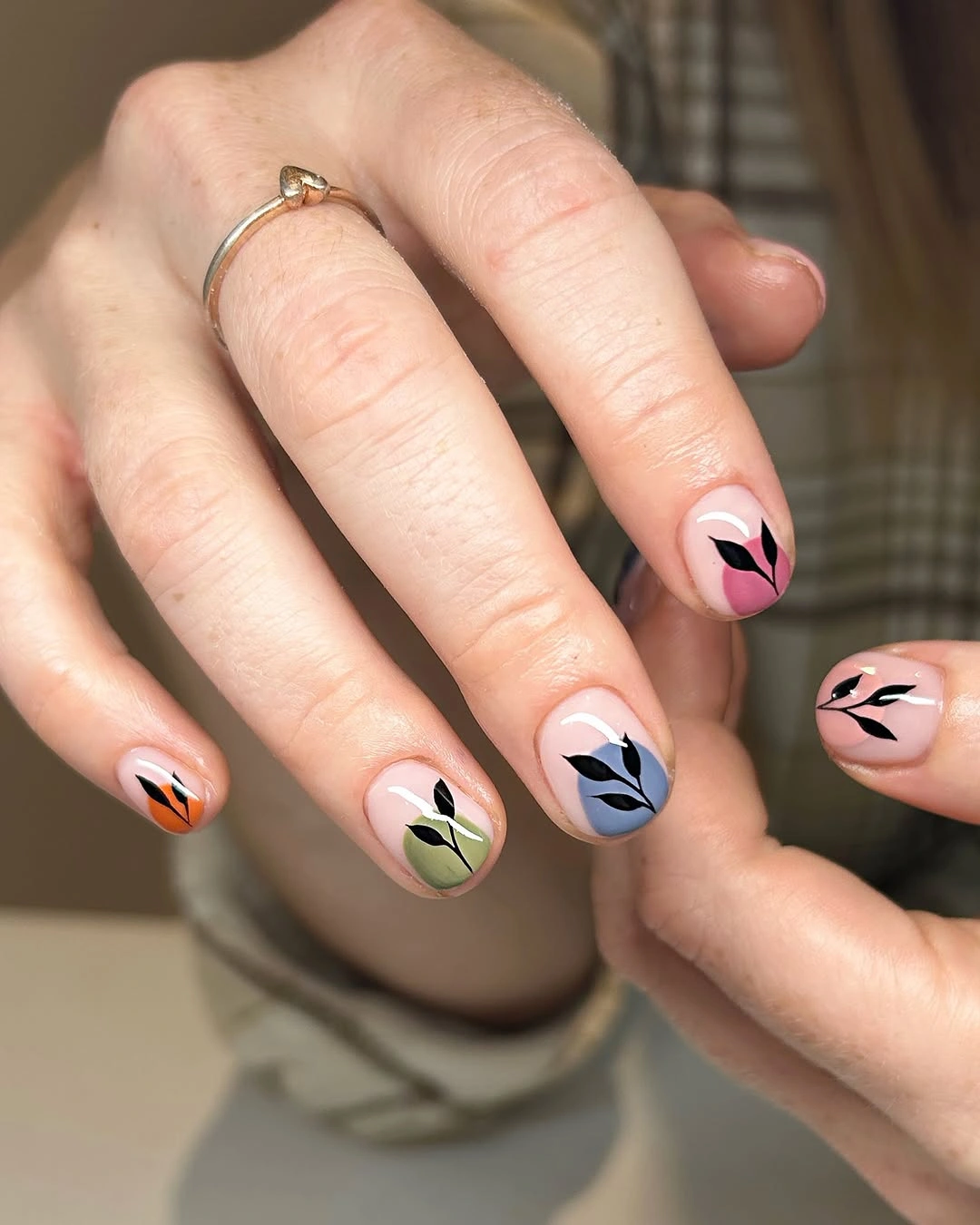
Base color is the first adjustment to make here: choose sheer blush, beige, or a warmer nude that looks intentional rather than chalky. Espresso outlines can replace black when you want less contrast, while olive and rust will still preserve the botanical theme. Keep the leaves separated so each color remains distinct.
Compact nails benefit from the tip placement because grow-out will be less obvious near the cuticle. The tradeoff is that tiny outlines must stay crisp, so adding more leaves is rarely an improvement. One clear cluster on each nail will communicate the idea more effectively than dense miniature foliage.
Long Marbled Stiletto Nails in Warm Leaf Colors
Yellow, orange, green, and pink blend across long stiletto nails with enough space for every color transition to remain visible. Instead of hard blocks, the shades overlap in loose marbling, allowing warm and cool notes to appear within the same surface. The pointed silhouette intensifies the energy of an already expressive palette.
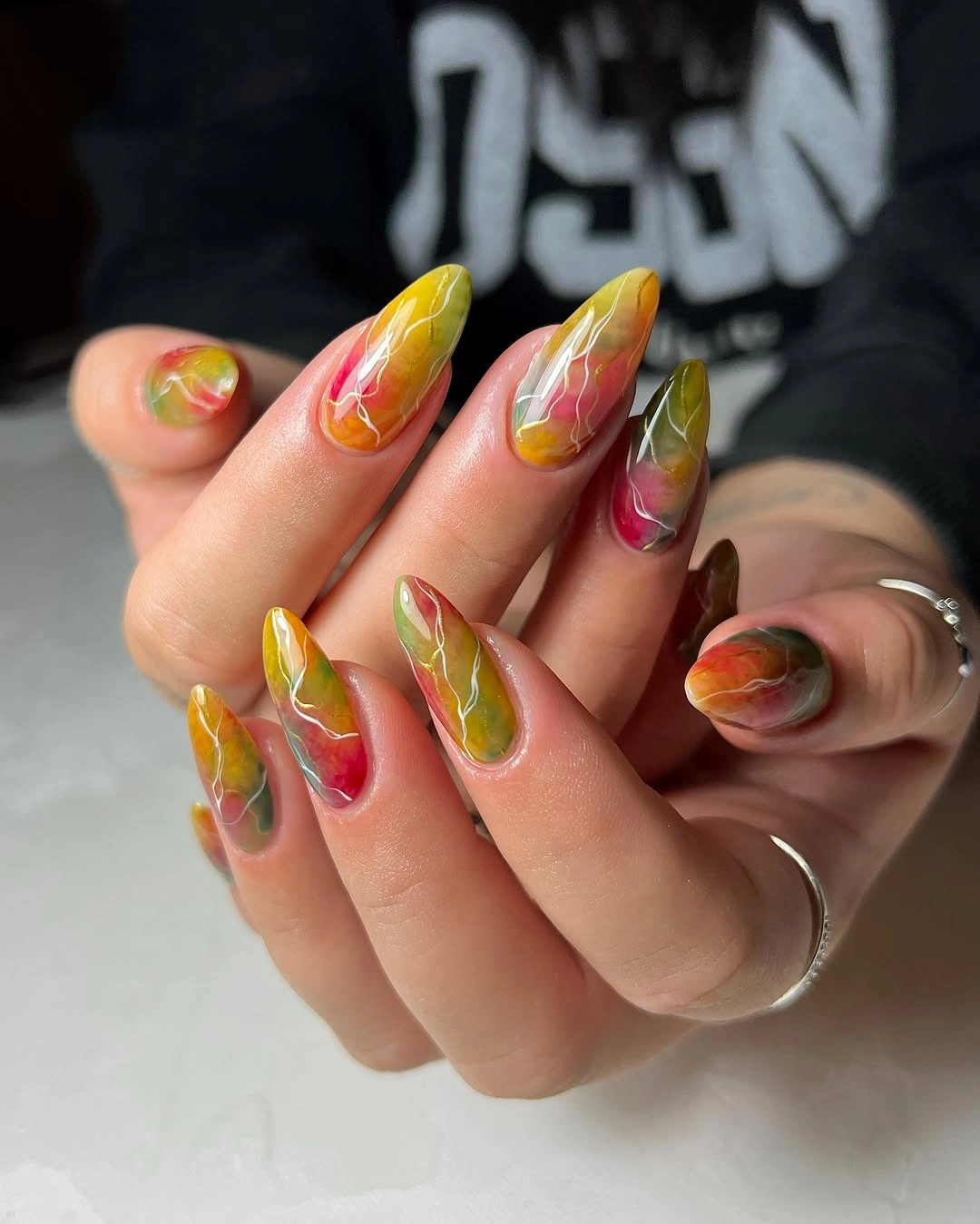
Customization should preserve the flowing transitions rather than the exact color recipe. Golden undertones may prefer more orange and olive, while cooler preferences can emphasize pink and a bluer green. Keeping a sheer area near the cuticle also softens the full combination and creates an easier grow-out path.
This is intentionally high-impact nail art, and shortening it removes some of the room that makes the marbling persuasive. A medium almond adaptation can still work if the number of colors drops from four to three. Let one shade bridge the others so the pattern does not break into unrelated patches.
Sheer Short Nails With Golden Leaf Art
Yellow and orange leaf clusters look almost weightless against a sheer blush base on short round nails. Generous negative space keeps the warm colors from covering the hand or overwhelming the compact shape. The scattered placement also creates a more natural botanical rhythm than identical leaves centered on every finger.
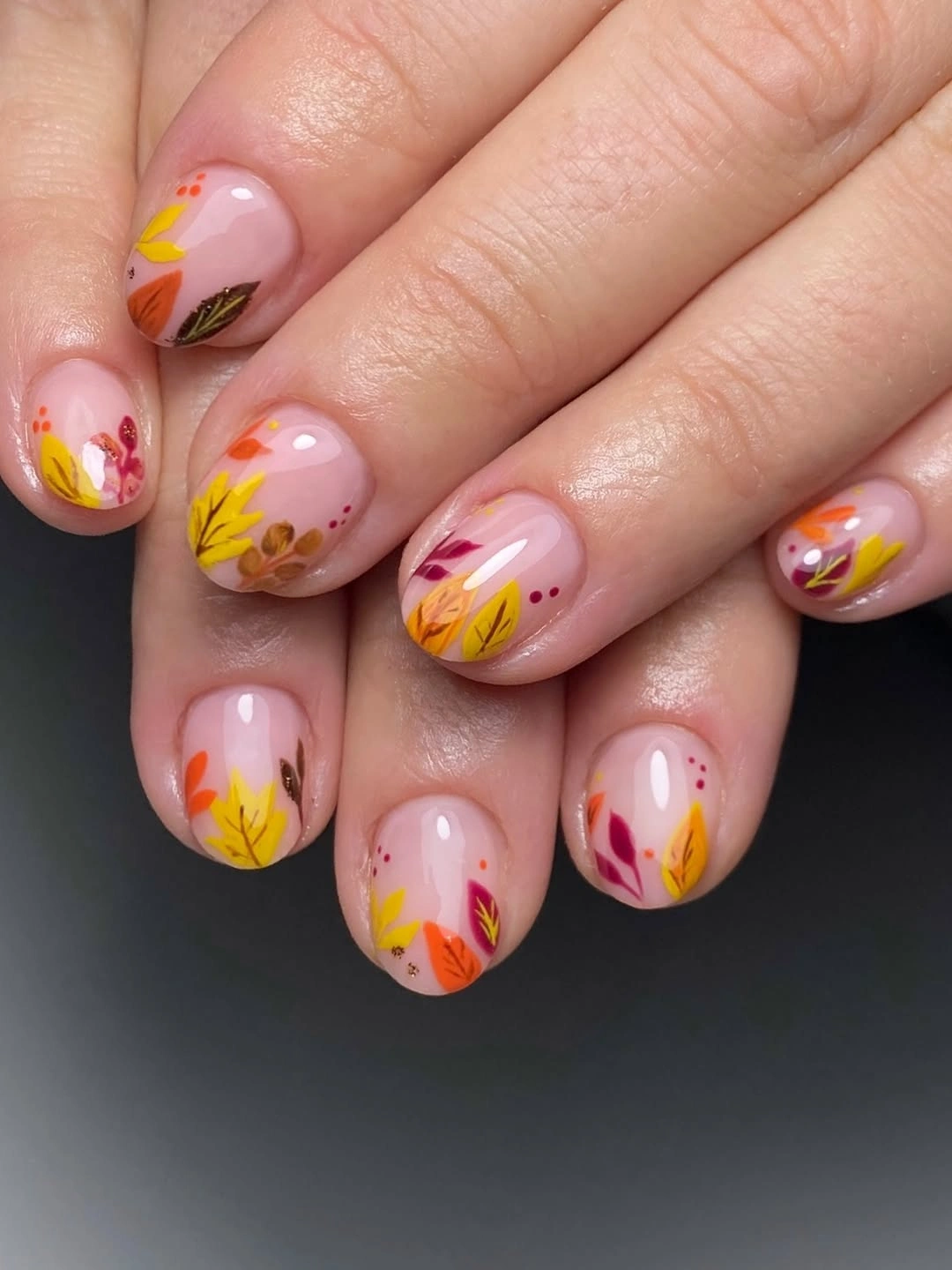
Mustard, rust, and burgundy can all replace the current leaf colors without changing the structure. Choose the pair that gives clear but comfortable contrast against your preferred sheer base. Very small nail beds need fewer leaves, not finer and more numerous ones, because visible space is part of the design.
The manicure offers a simple way to use seasonal art while keeping the surface light. A thin glossy finish will clarify the colored shapes, whereas dense glitter could blur their delicate edges. If you want one stronger accent, deepen a single leaf cluster rather than adding a completely different motif.
Pink, Brown, Burgundy, and Orange Almond Nails
Glossy pink, chocolate brown, burgundy, and orange create a sequence of warm and cool personality across long almond nails. With no artwork to mediate the colors, placement becomes the design. Brown and wine tones stabilize the hand, allowing orange and pink to supply brighter moments without feeling accidental.
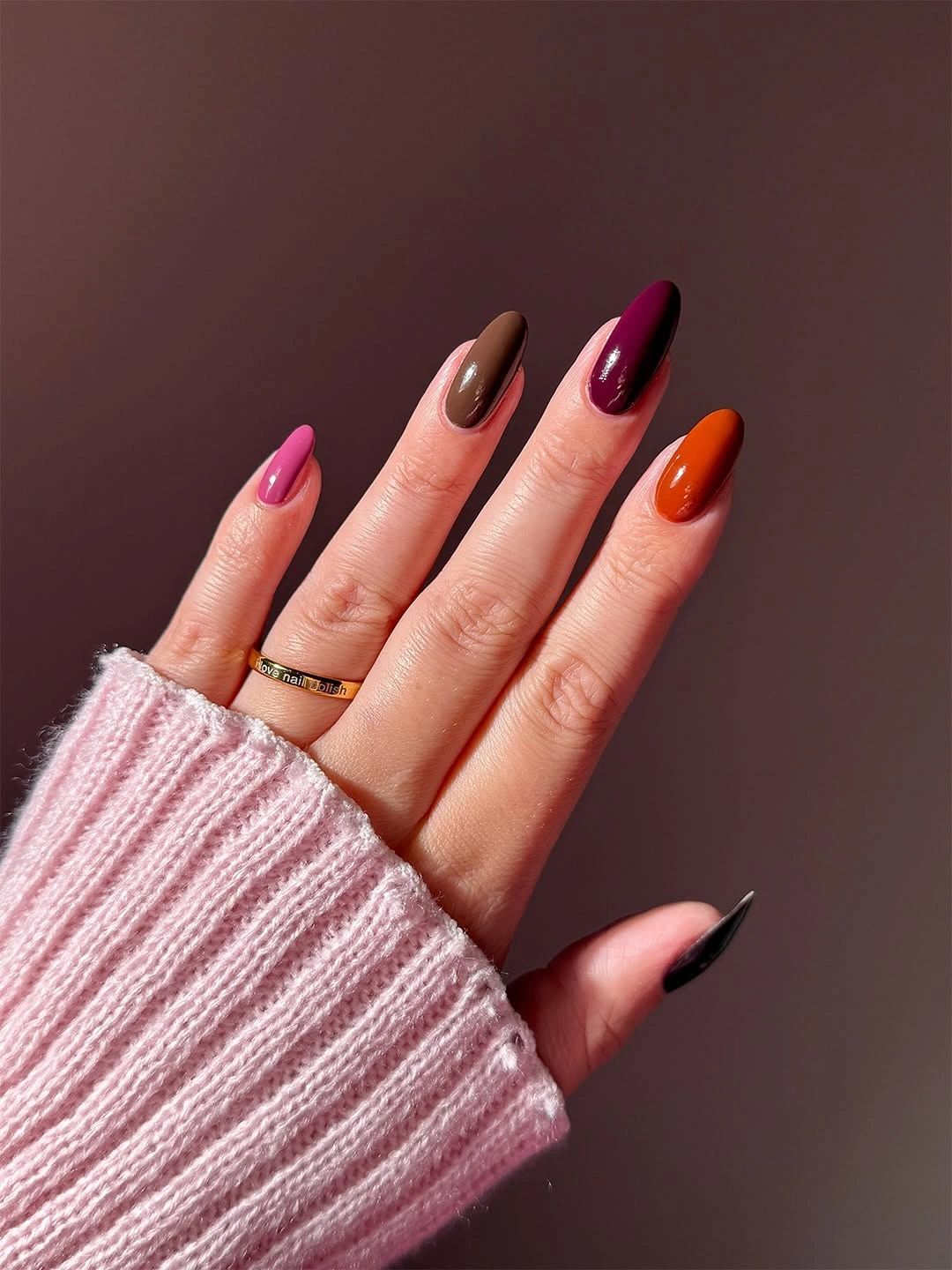
Testing one warm shade and one cool shade first is more useful than assuming the whole palette will behave the same way. Rose can replace clear pink for a quieter transition, while terracotta can soften orange. Once those two choices feel balanced, brown and burgundy can be moved lighter or deeper to complete the set.
A solid-color manicure is easier to adapt than detailed art because no motif depends on a precise background shade. Still, the sequence should have a clear anchor rather than distributing all four colors evenly. Repeat the most flattering deep tone and treat the brightest polish as a deliberate accent.
Taupe Short Nails With Blush Floral Centers
Taupe solids create a calm frame around blush center nails covered in tiny red-brown floral marks. Limiting the busiest detail to selected fingers keeps the short square-rounded shape practical. The darker miniature accents add warmth without asking the entire manicure to become deep or opaque.
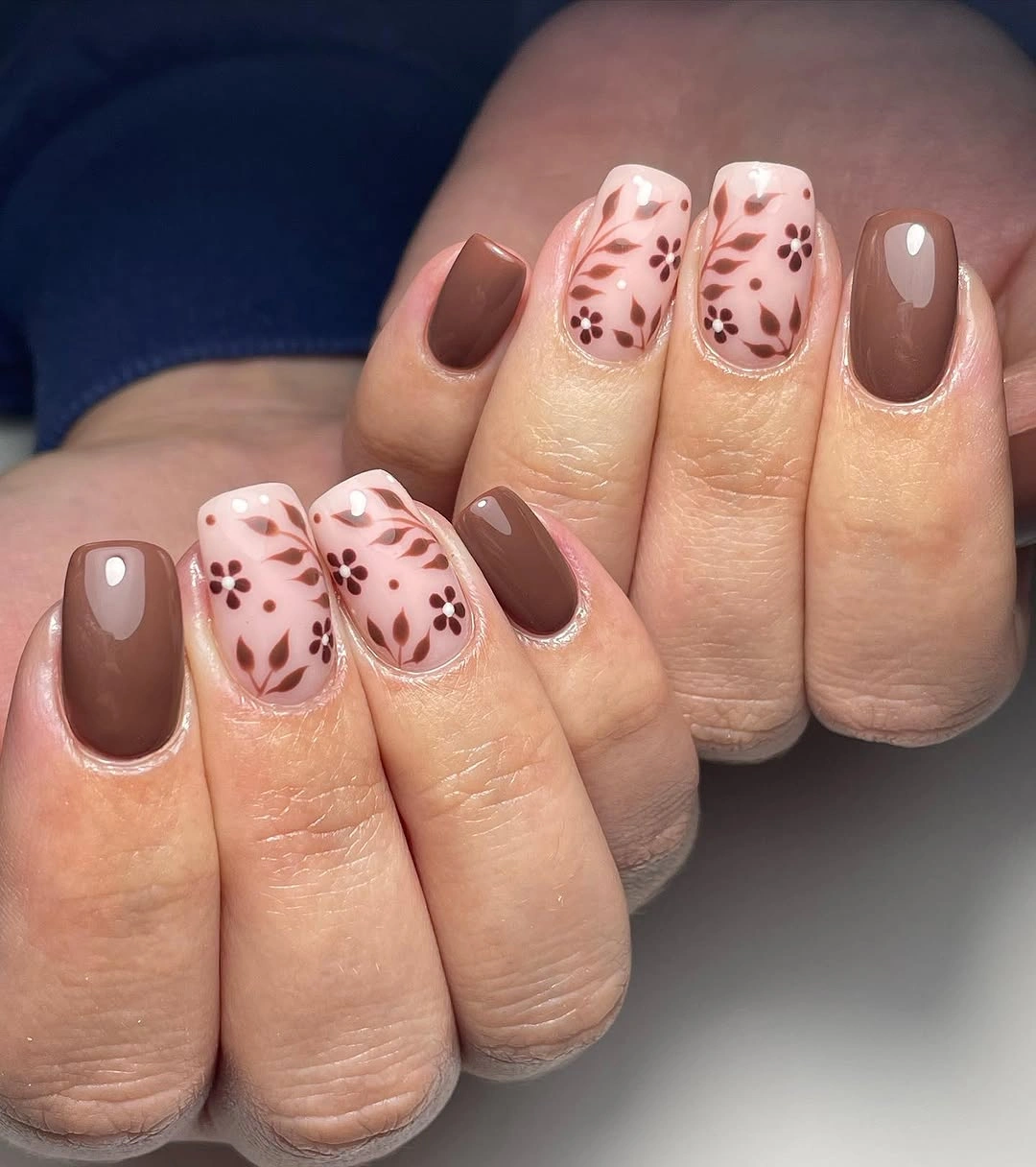
If taupe disappears against your hand, move it toward mocha for stronger definition or greige for a cooler distinction. The blush base should also differ enough from the taupe to make the floral fingers visible. Preserve the small scale of the flowers so they remain a texture rather than a crowded illustration.
This design handles daily wear well because most nails rely on uncomplicated solids. Centering the floral accents gives the hand a focal point without repeating it everywhere. For an even cleaner version, use one decorated nail per hand and let a second blush solid echo its background color.
Gold Chrome, Tortoiseshell, and Blush Almond Nails
Gold chrome catches the strongest light in this long almond set, while tortoiseshell, blush pink, and olive introduce warmer, quieter depth. The reflective nail behaves almost like jewelry beside the translucent brown pattern. Repeating soft bases prevents the metallic element from making every finger equally dramatic.
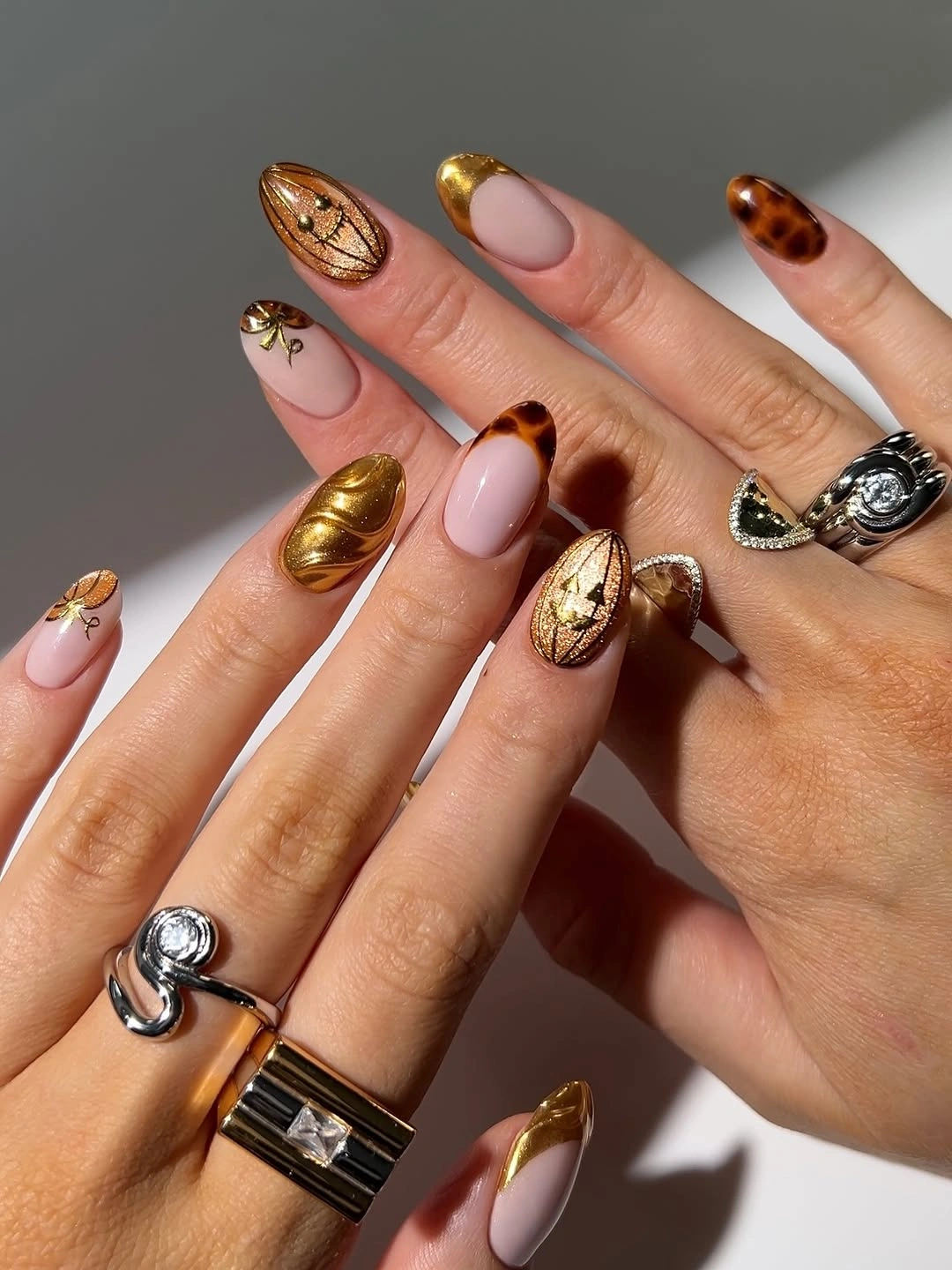
Reflective gold changes noticeably with surrounding light, so judge it beside the brown and pink colors rather than in isolation. Antique gold can soften a bright yellow reflection, while champagne creates a cooler transition into blush. Olive should remain muted enough to support, not compete with, tortoiseshell.
For less visual density, keep chrome on one nail and repeat the blush base more often. The tortoiseshell accent already provides pattern, so additional glitter or line art would crowd the composition. This is a case where reducing one finish improves the clarity of every finish that remains.
Checkerboard and Cream Halloween-Toned Nails
Cream brightens these long almond nails before orange checkerboard and black graphic details create a playful seasonal edge. The repeated checks give the set rhythm, while small dark accents sharpen individual fingers. Length provides enough room for the pattern to remain crisp rather than compressing into tiny blocks.
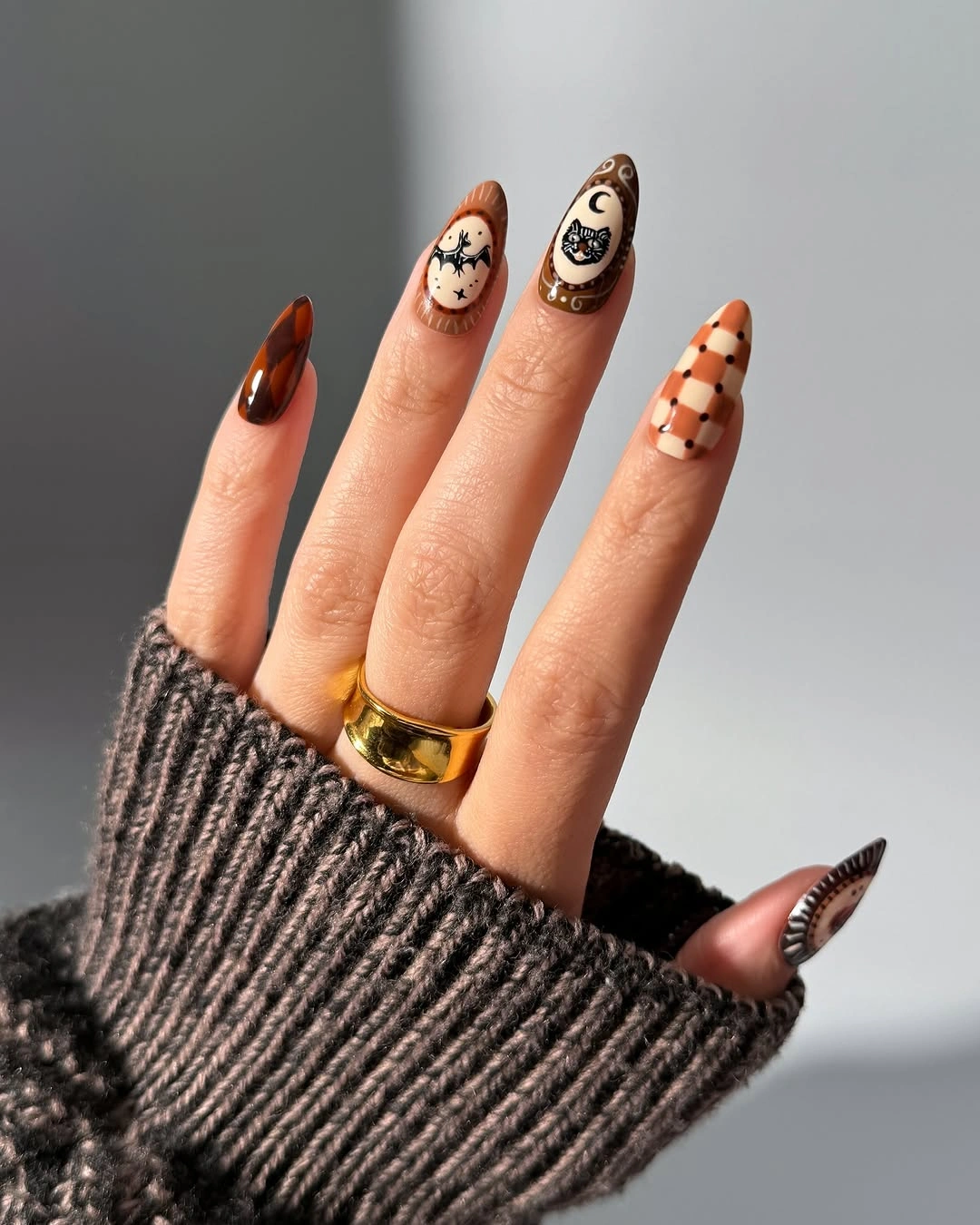
The cream base is the easiest point of adjustment: ivory, peach, or caramel can produce a warmer relationship with the hand. Black may shift to espresso when the contrast feels severe, but it still needs to define the orange pattern clearly. Keep at least one pale area untouched so the graphics have breathing room.
Visible scale matters, making the manicure less convincing on very short nails without substantial editing. A medium-length version should use checkerboard on one accent and turn the remaining graphics into simple orange tips. Preserving one recognizable pattern is better than shrinking every detail until none reads cleanly.
Soft Pink Aura Tips With Orange Edges
Orange-red color gathers near the ends of these long almond nails and fades into a soft pink base. Concentrating brightness away from the cuticle makes the warmth easier to wear than a fully opaque orange set. The blurred transition also follows the taper of the nail, giving the aura a lifted effect.
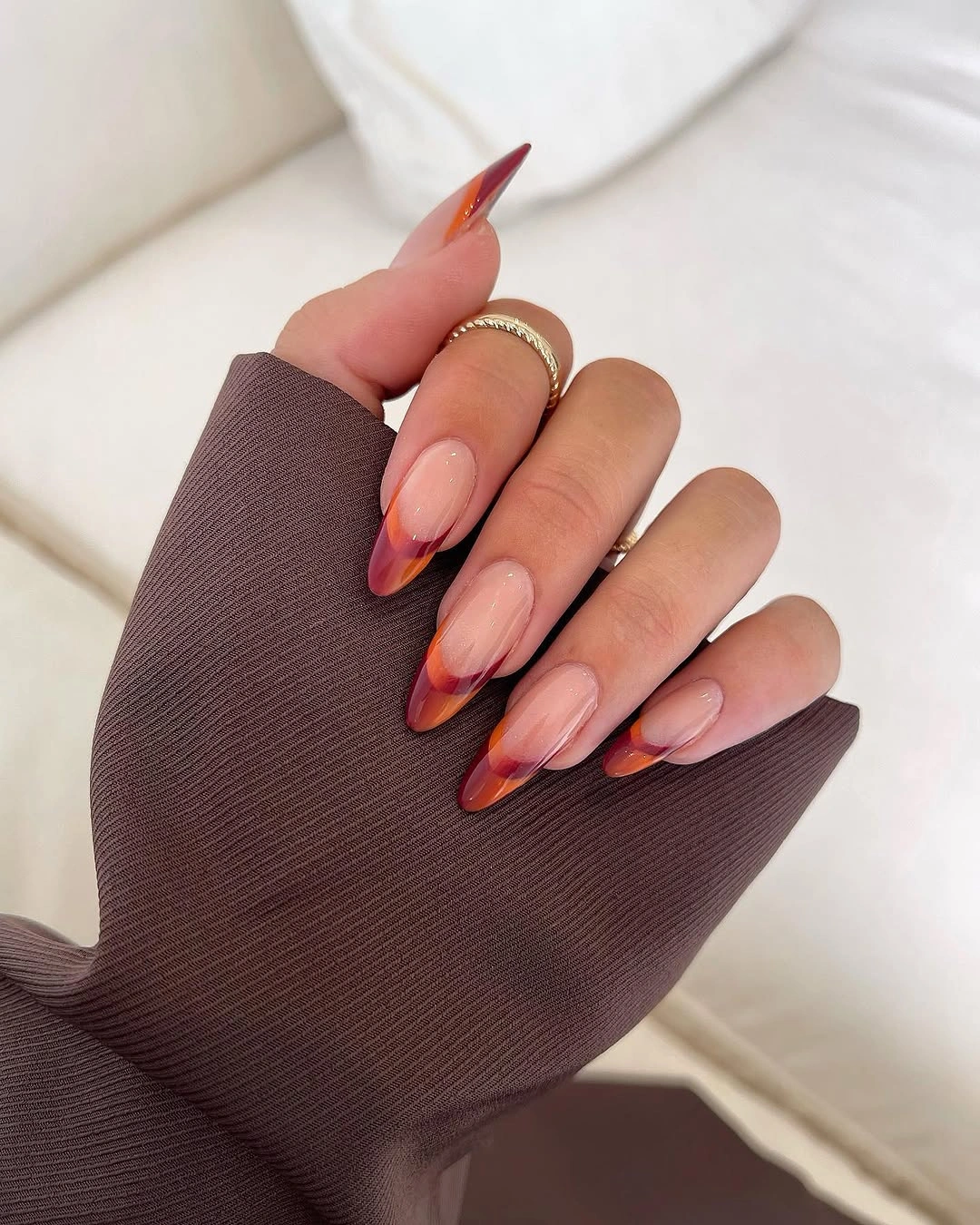
Adjust the center and edge separately when matching this idea to your preferred contrast. Peach creates a gentler glow, rust makes it more autumnal, and tomato red produces a cleaner graphic finish. The pink base should still look harmonious with the hand because it occupies most of the visible surface.
On shorter nails, use a smaller halo and rounder edge so the fade does not consume the entire base. A fully saturated tip would change the design into a conventional French treatment, so preserve some diffusion. The soft boundary is what gives this manicure its flattering sense of warmth.
Sage, Burgundy, and Pink Negative Space
Sage green and glossy burgundy form a rich fall pairing across long almond nails, while pale pink negative space prevents the color blocks from becoming dense. Asymmetrical placement moves the eye from one finger to the next. Each shade has a separate role: softness, depth, and open visual space.
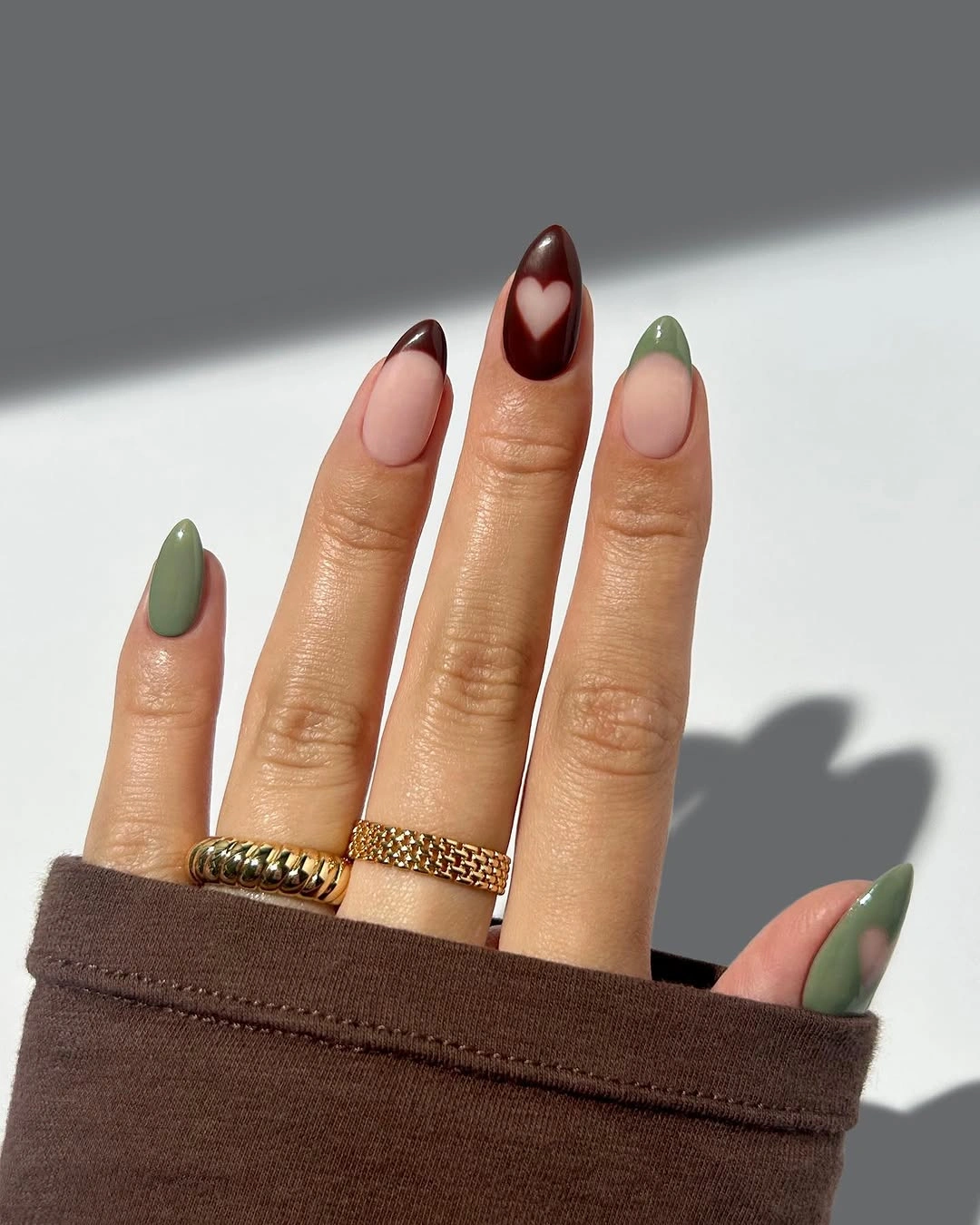
Golden or olive preferences may find a soft sage especially natural, whereas a muted eucalyptus can cool the same structure. Burgundy should retain enough shine to separate it from the dusty green. If both colors become matte and dark, the negative space will have to work too hard to keep the set light.
A shorter adaptation can reduce the number of color blocks and preserve one clear diagonal boundary. Do not make every nail asymmetrical in the same way; variation is what creates movement. Repeating pale pink on several fingers will also give the stronger fall colors a more deliberate pace.
Olive Metallic Short Nails With Dark Edges
Olive metallic shifts among green, brown, and gold on these short oval nails, creating more dimension than a flat earthy solid. Dark framed edges sharpen the shape without introducing separate artwork. The smooth reflective surface carries the design, so extra pattern would be unnecessary.
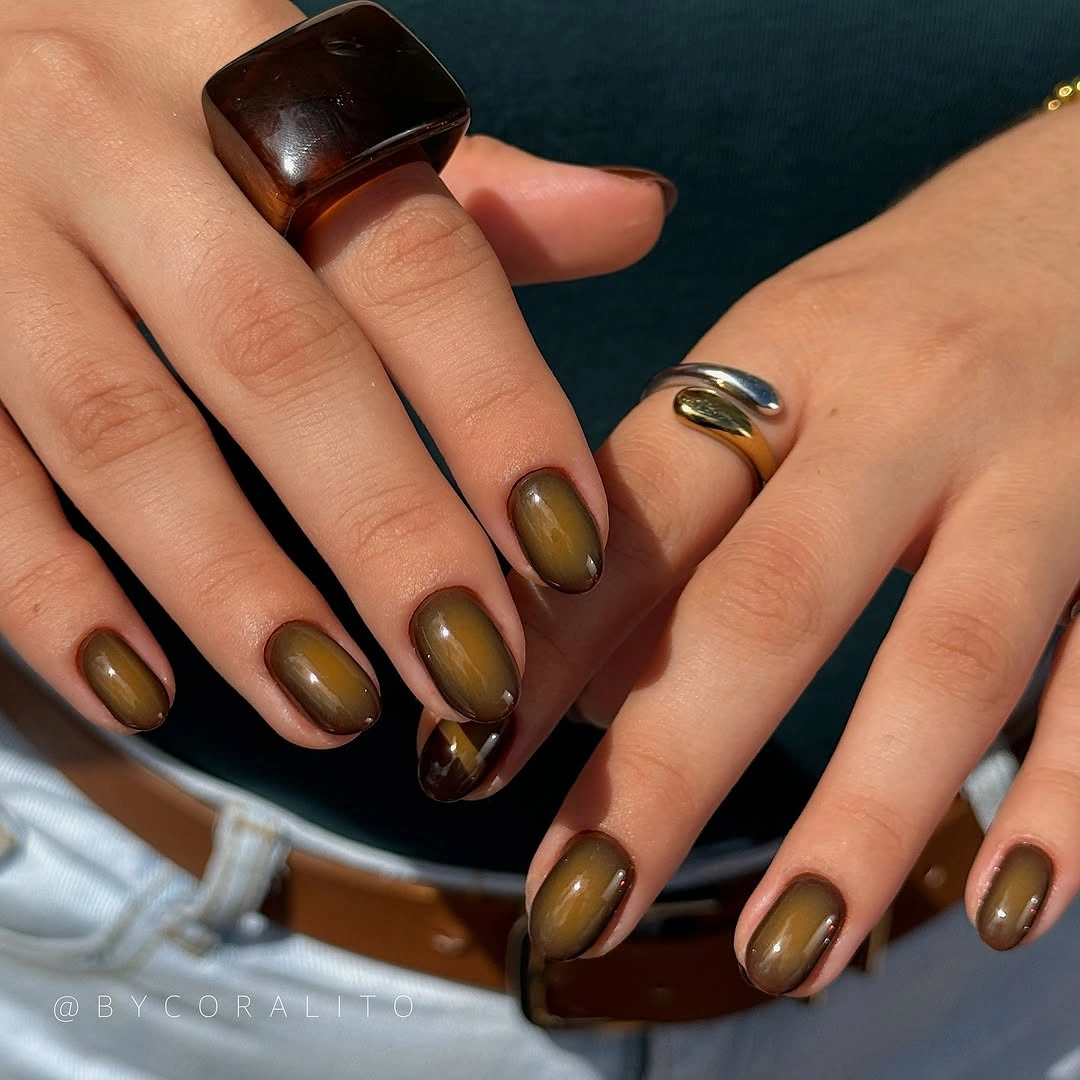
Bronze is a useful warmer substitute when olive looks dull, while pewter can cool the idea without losing its metallic depth. Compare the finish in more than one light source because the dominant tone can change substantially. The darker outline should remain narrow enough to define rather than visually shrink the nail.
Short length makes this a practical statement manicure, but surface preparation matters because metallic polish reveals unevenness readily. Keep the shape consistent and the decoration absent. One well-chosen reflective color will look more considered than trying to solve an undertone mismatch with added art.
Mismatched Almond Nails in Warm and Cool Solids
Orange, mustard, teal, blue, cream, brown, and blush move between warm and cool notes across these long glossy almond nails. One color per finger makes the set function like a testing board for fall polish. Repeated shape and shine turn the broad palette into an intentional sequence.
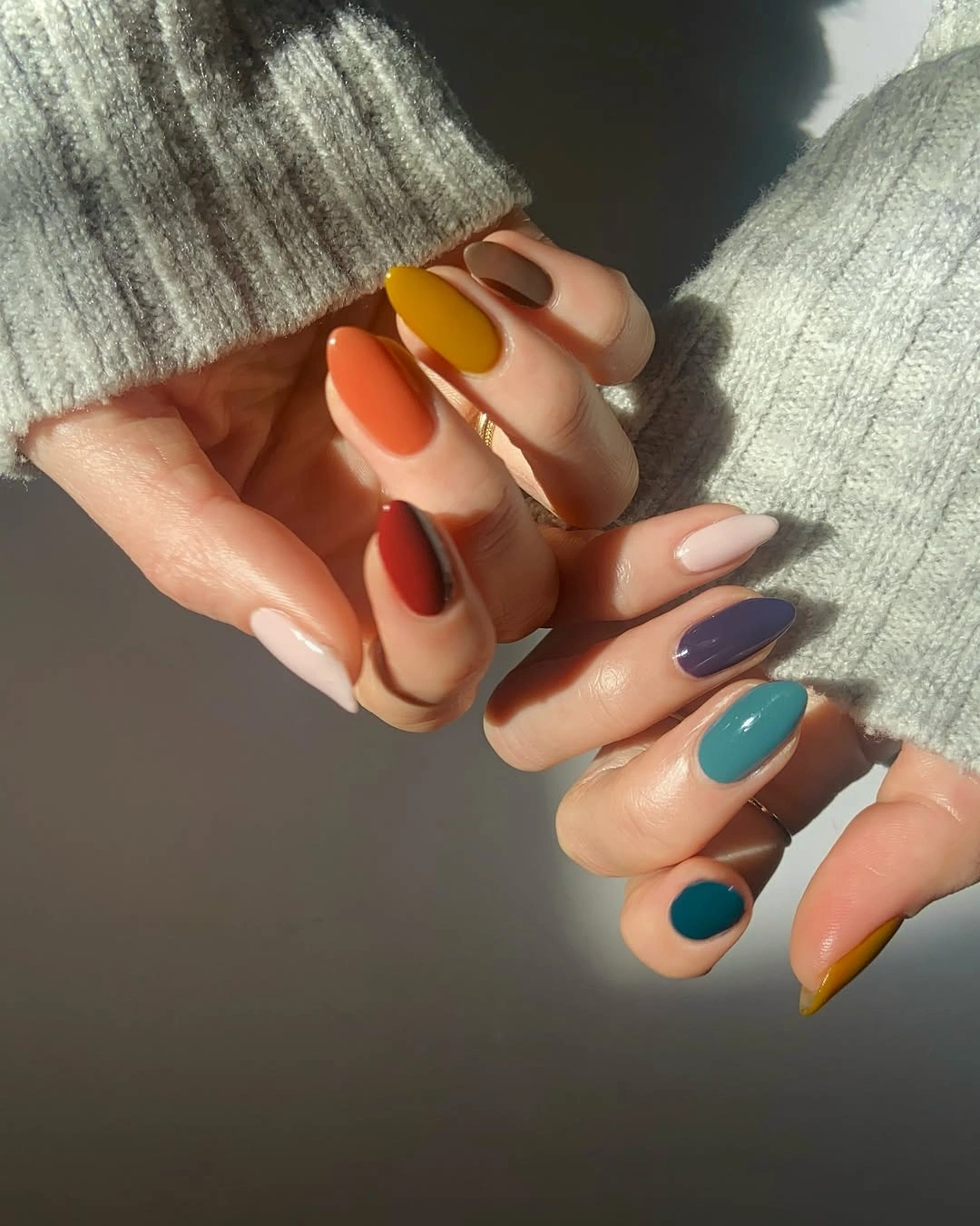
Place the shade you respond to most near the center of the hand, then use neighboring colors to support it. Mustard can soften toward ochre, blue can deepen toward slate, and cream can warm toward beige without changing the concept. There is no need for every finger to remain a different color if two shades clearly work better.
Repeating a favorite solid can actually improve the rhythm by giving the eye a place to return. Keep the glossy finish consistent when making substitutions, since mixed finishes would add another layer of comparison. The manicure is most useful as a flexible palette study rather than a fixed seven-color instruction.
Chocolate Nails With Cream Flower Lines
Chocolate brown creates a deep background for fine cream flower lines on short square nails. The repeated thin motif reads graphic rather than sugary because it never becomes a filled floral illustration. Strong contrast gives the art visibility even at compact length.
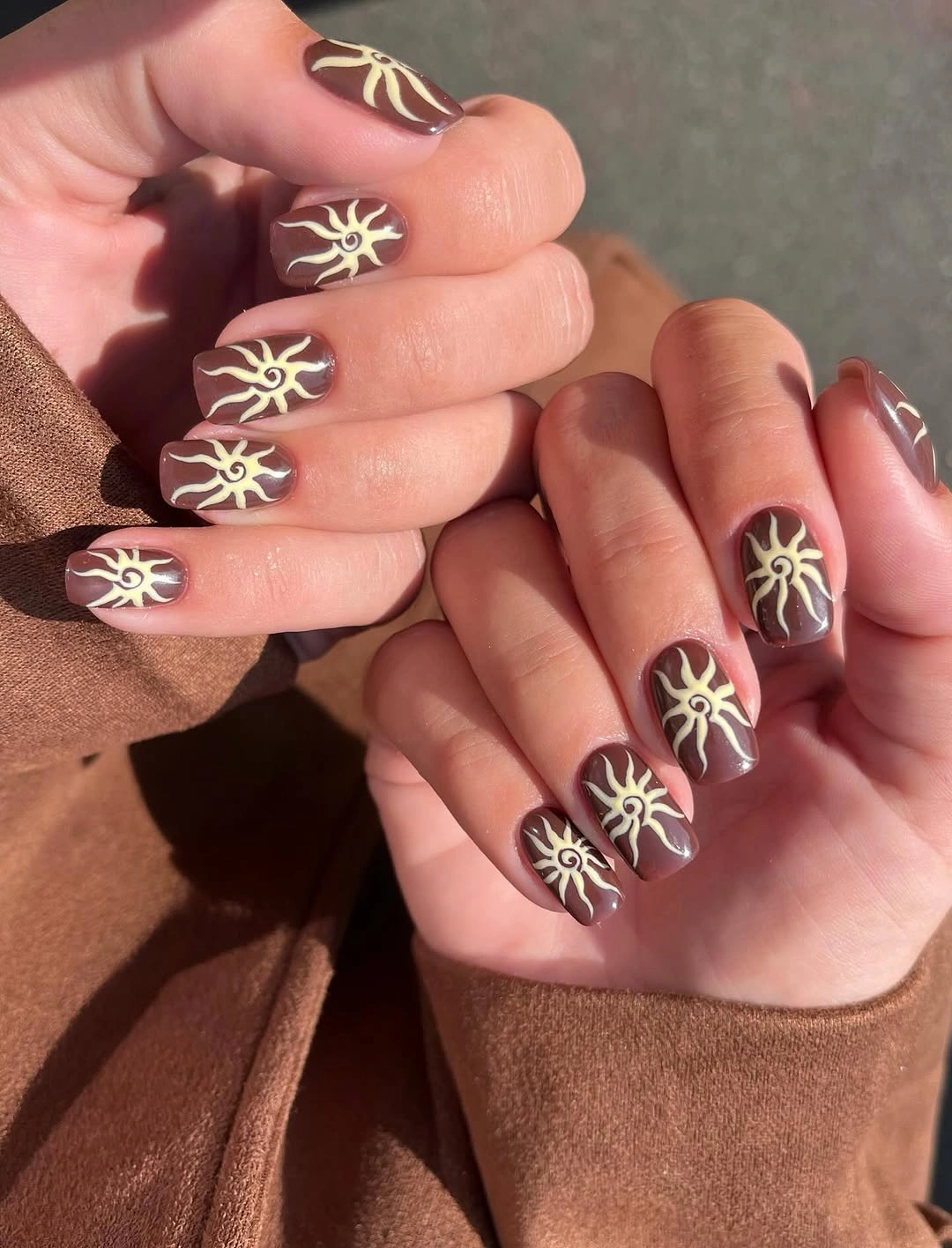
Line color controls the intensity more than the brown base does. Beige creates a softer tonal result, ivory offers a clear pop, and pale pink introduces a warmer, more romantic note. Keep the outlines equally fine in any version so the flowers do not overwhelm the short surface.
Square edges reinforce the graphic quality and make the dark manicure feel precise. If chocolate looks too close to the hand or too heavy, shift toward mocha while maintaining enough separation for the line art. This structure is adaptable because contrast can change without changing the motif itself.
Striped Short Nails in Brown, Cream, and Black
Brown, cream, black, and white stripes create a compact pattern across short rounded nails. Alternating light and dark lines keeps the design visible without relying on seasonal leaves or pumpkins. Controlled spacing prevents the stripes from making the nail look wider than it is.
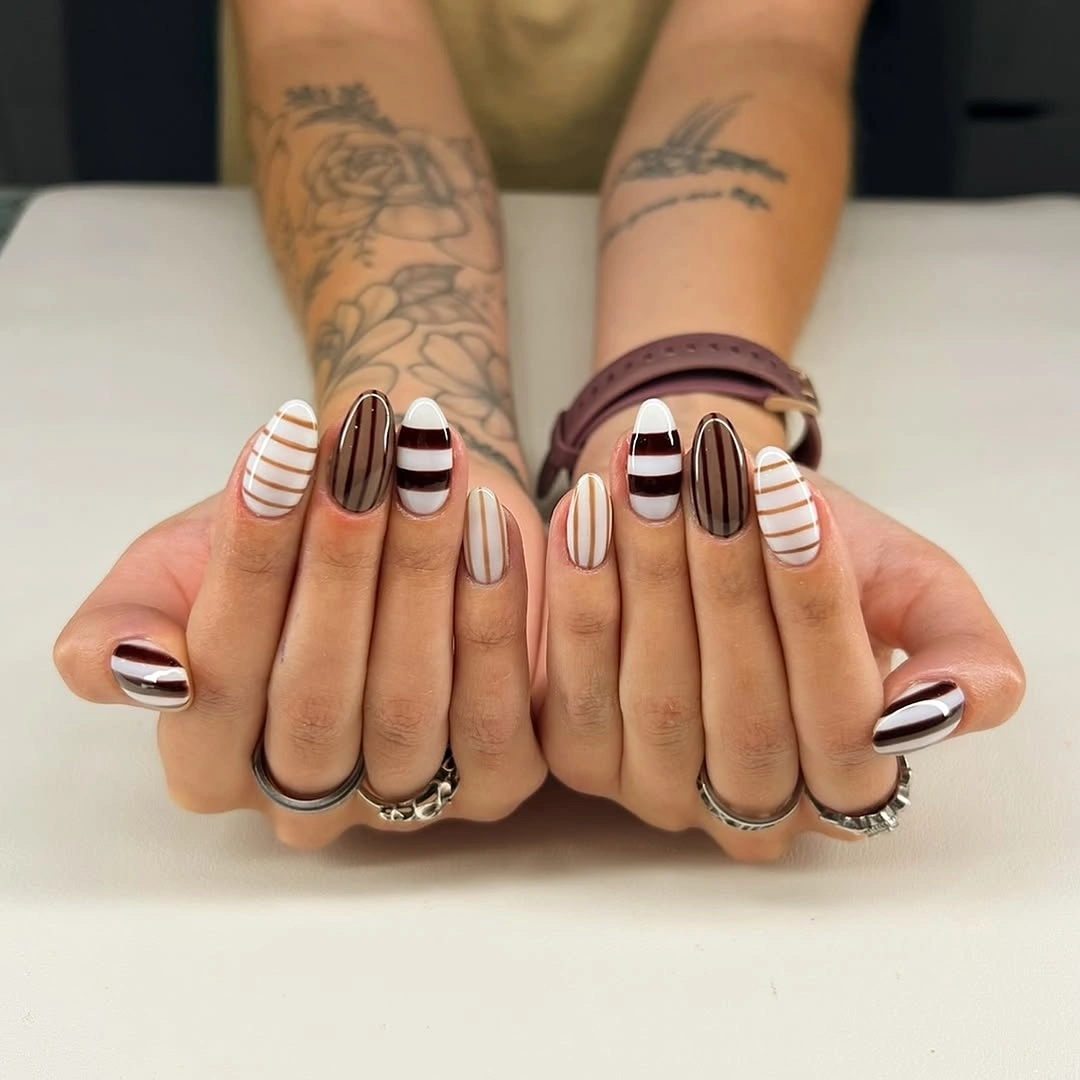
Narrow nails need thinner bands and fewer color changes to avoid a heavy result. Espresso can replace black for lower contrast, while beige can warm the light stripes. Whatever palette you choose, one repeated dark line should provide a consistent visual beat across the hand.
Pattern placement offers more flexibility than a complex illustration because the stripe direction can respond to shape. Slight diagonals add movement, while lengthwise lines make compact nails appear longer. Mixing several directions is possible, but keep the color order disciplined so the manicure does not become restless.
Slate Blue Leaves With Nude Negative Space
Slate blue botanical art brings a cooler autumn mood to long almond nails, balanced by creamy accents and nude negative space. The visible base keeps the blue leaves from forming one flat, opaque surface. Their directional placement also emphasizes length rather than filling each nail symmetrically.
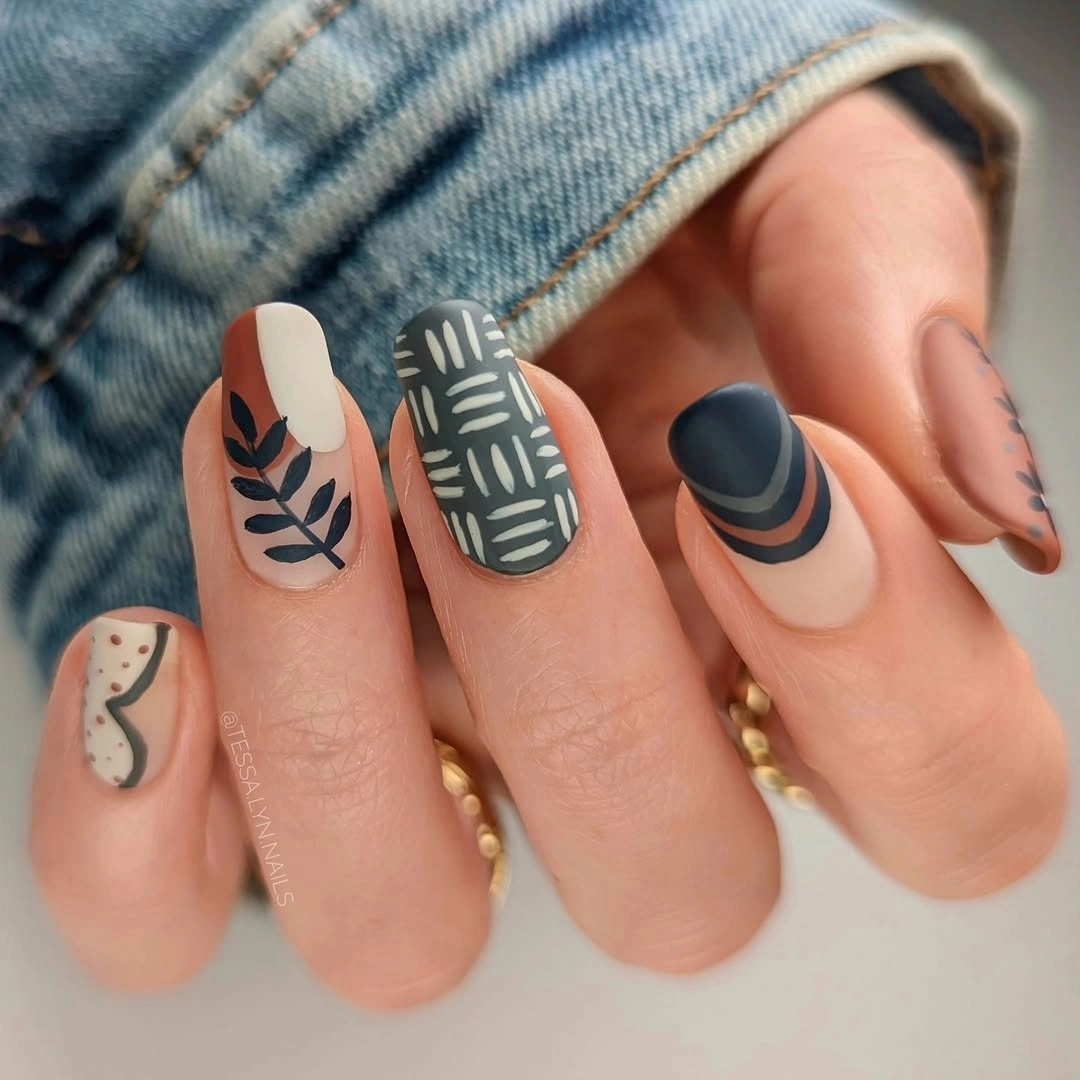
Cool blue botanicals offer a strong alternative when orange and warm brown are not the colors you enjoy wearing. Dusty denim can soften the leaves, while deeper navy creates more drama against the nude background. Select a base with enough warmth or coolness to look intentional on your hand before choosing the blue intensity.
Shorter nails should concentrate the largest leaf on one accent and reduce the number of smaller branches elsewhere. Negative space must remain visible for the design to retain its lightness. Filling every open area would remove the very contrast that makes the cool palette feel wearable.
Molten Olive and Gold Short Nails
Olive-gold metallic patches sit inside dark outlines on these short square nails, resembling small framed stones. Contained placement keeps the reflective finish organized instead of allowing it to spread into an undefined shimmer. The deeper border also gives each compact nail a clear shape.
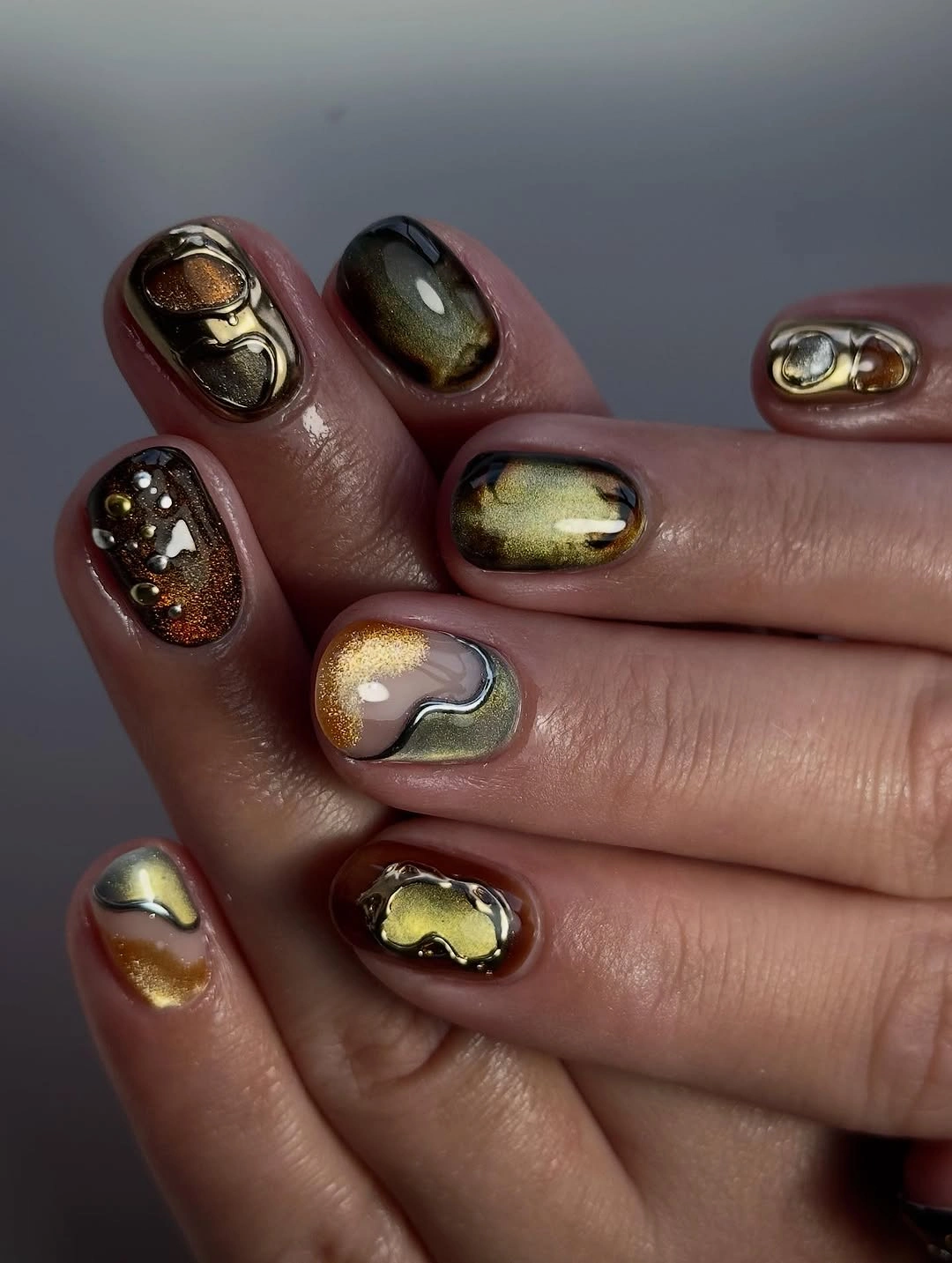
Antique gold, bronze, and green-gold can all occupy the metallic center while preserving the same construction. Choose the version that creates definition without looking excessively yellow or gray beside your hand. The border can move from black to dark brown if you need a softer frame.
Detail density is already high, so jewelry and additional nail embellishment are unnecessary for the idea to read. Smooth application matters because every metallic patch attracts attention. If you want a calmer set, use the framed effect on two accents and repeat a plain olive solid on the remaining fingers.
Burgundy, Orange, and White French Mix
Burgundy anchors this medium almond manicure while orange, white French tips, blush bases, and one floral accent introduce lighter contrast. The flower connects the warm shades and softens a set that might otherwise feel divided into geometric blocks. Glossy solids provide rest between the more detailed nails.
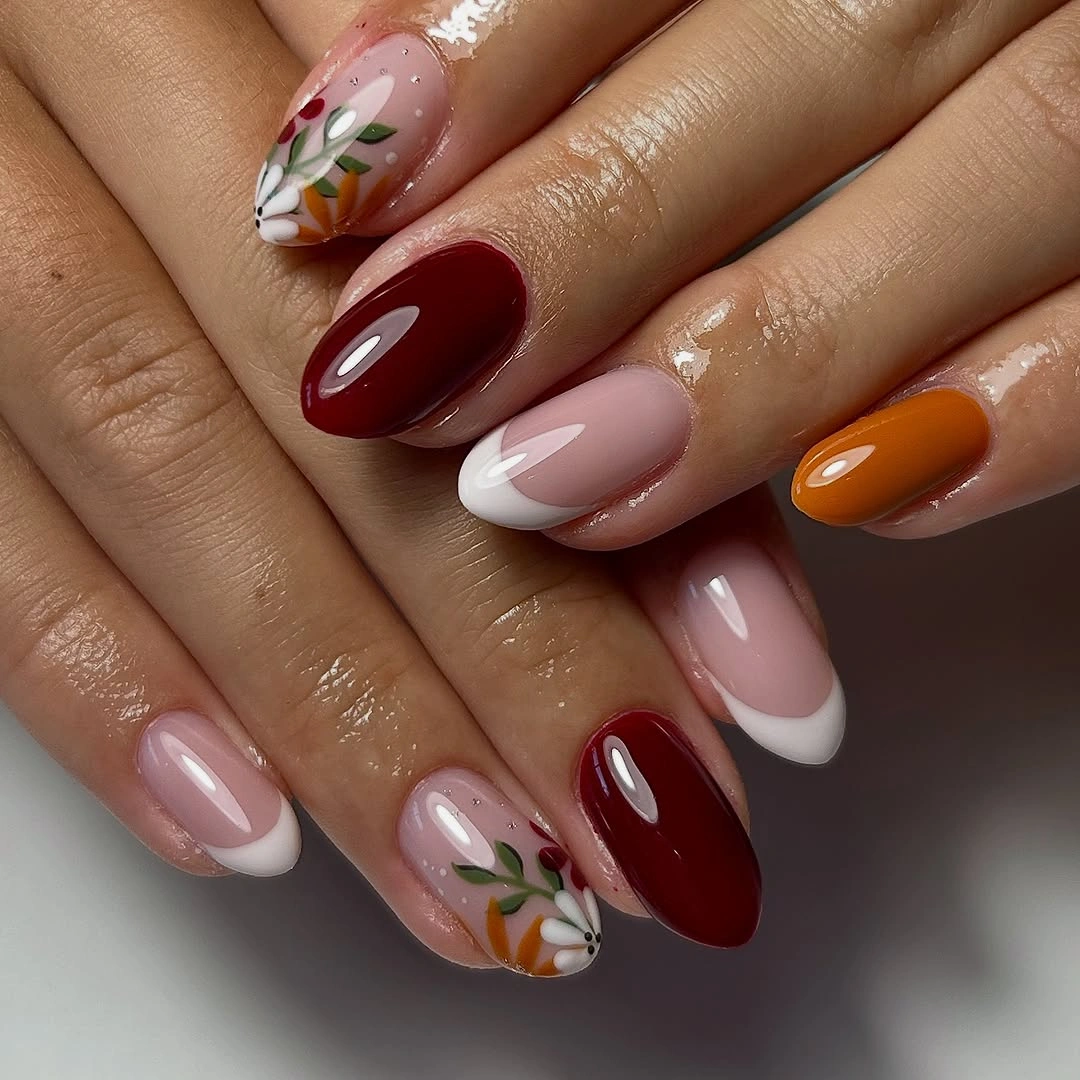
Choose burgundy or orange as the dominant color according to which one gives the hand clearer, more comfortable contrast. The secondary warm shade can appear in the flower rather than on several full nails. Keeping blush close to your preferred neutral will also make the white tips feel less disconnected.
For an easier version, retain either the French treatment or the floral art, not both. That reduction leaves the mixed palette intact while lowering the number of elements that need exact maintenance. The manicure is most successful when burgundy remains a visible anchor rather than merely one more color in the rotation.
Deep Green Short Nails With Gold Flecks
Deep green gives these short rounded nails a grounded fall base, interrupted by gold flecks near the center and small white dotted details. The lighter marks stop the dark color from reading as one heavy block. Rounded edges soften the intensity and keep the manicure practical.
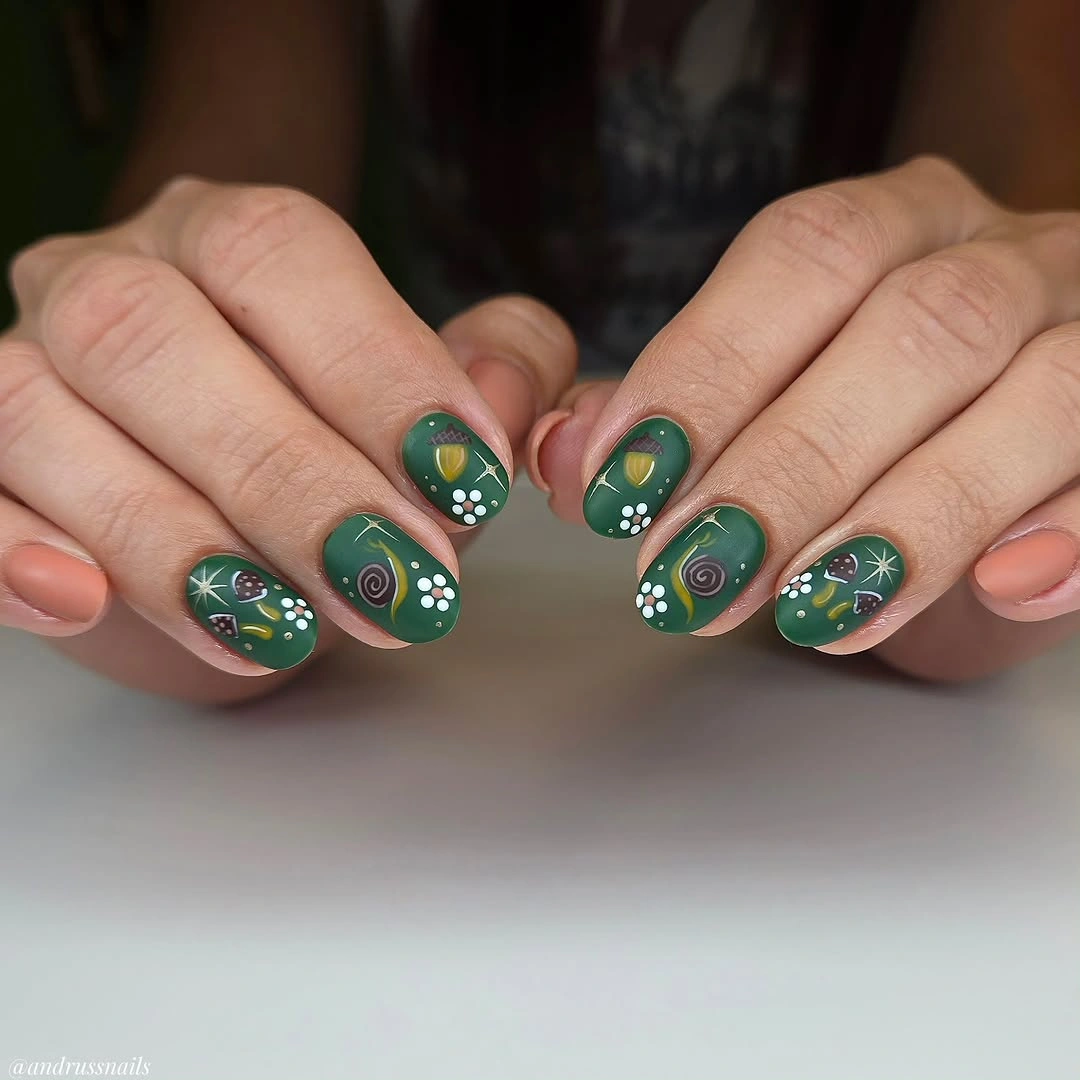
Champagne flecks can replace warm gold when yellow metallics create too much contrast. White dots may also shift to cream for a gentler relationship with green. Keep both accents sparse, since the rich base should remain the primary reason the design feels seasonal.
Deep green supplies color depth without relying on familiar black or burgundy. Gloss will reveal more nuance in the base, while a matte surface will make the flecks stand out more abruptly. For simpler upkeep, reduce the dots before reducing the metallic light.
Creamy Cow Print Almond Nails
Irregular black spots move across creamy long almond nails with enough open base to keep the print sharp. The tapered silhouette gives a familiar pattern a more fashion-focused character. Uneven spacing is essential because strict repetition would make the design look stamped and static.
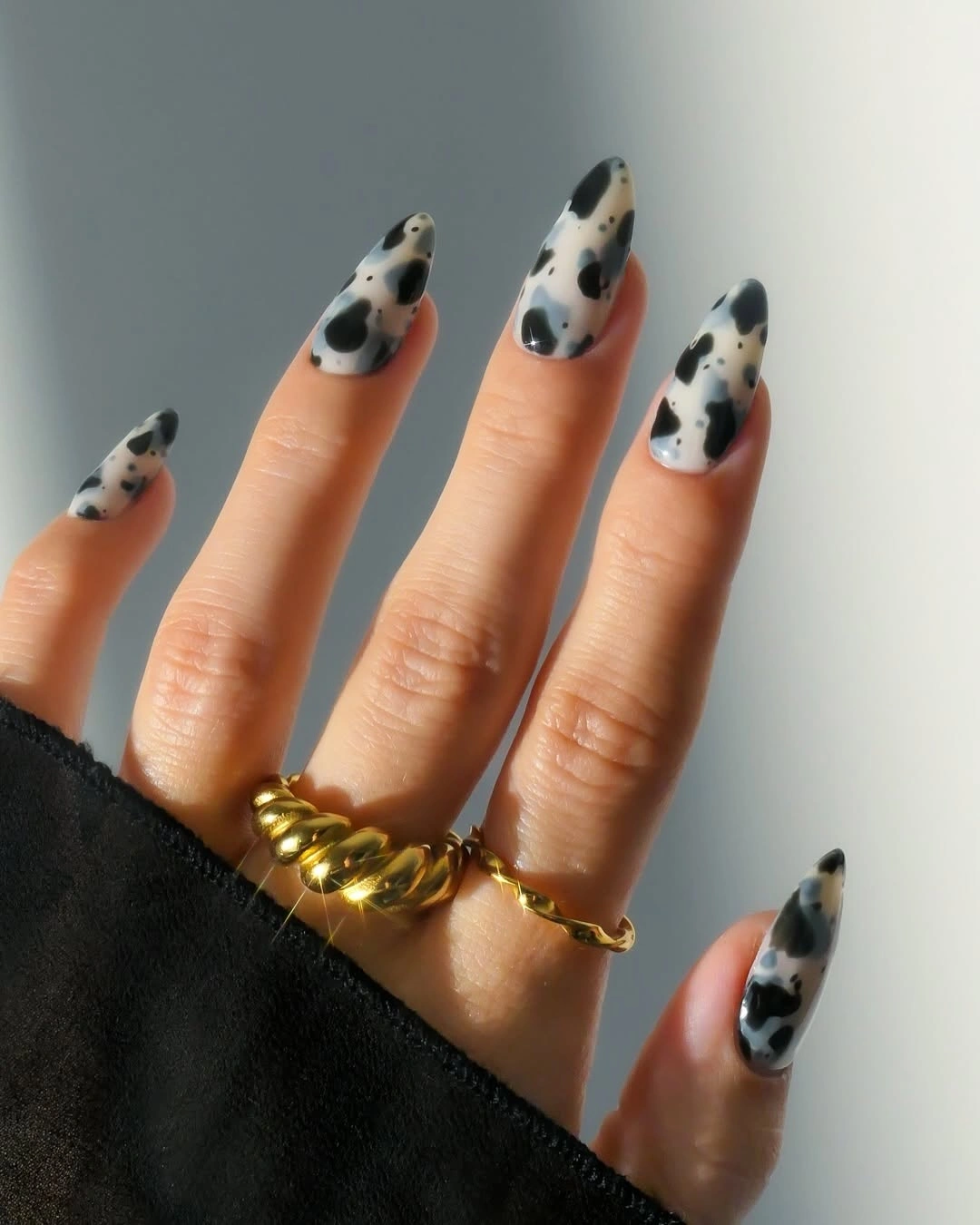
Base color provides the most effective adjustment across different complexions and preferences. Milky cream creates the highest contrast, beige warms the result, and soft taupe reduces the separation between print and hand. Keep black only if it still looks crisp against the chosen neutral; espresso is a softer alternative.
The pattern already makes a complete statement, so glitter, charms, and additional accent colors would dilute it. Shorter nails can carry fewer, smaller spots with more background space around them. Let irregular placement and the almond line provide movement rather than introducing another motif.
Bronze Metallic Short Oval Nails
One warm bronze metallic shade covers these short oval nails, creating impact through reflected color instead of artwork. Depending on the light, the finish can lean copper, brown, or gold. The uncomplicated surface keeps the compact shape neat and gives the changing reflection room to register.
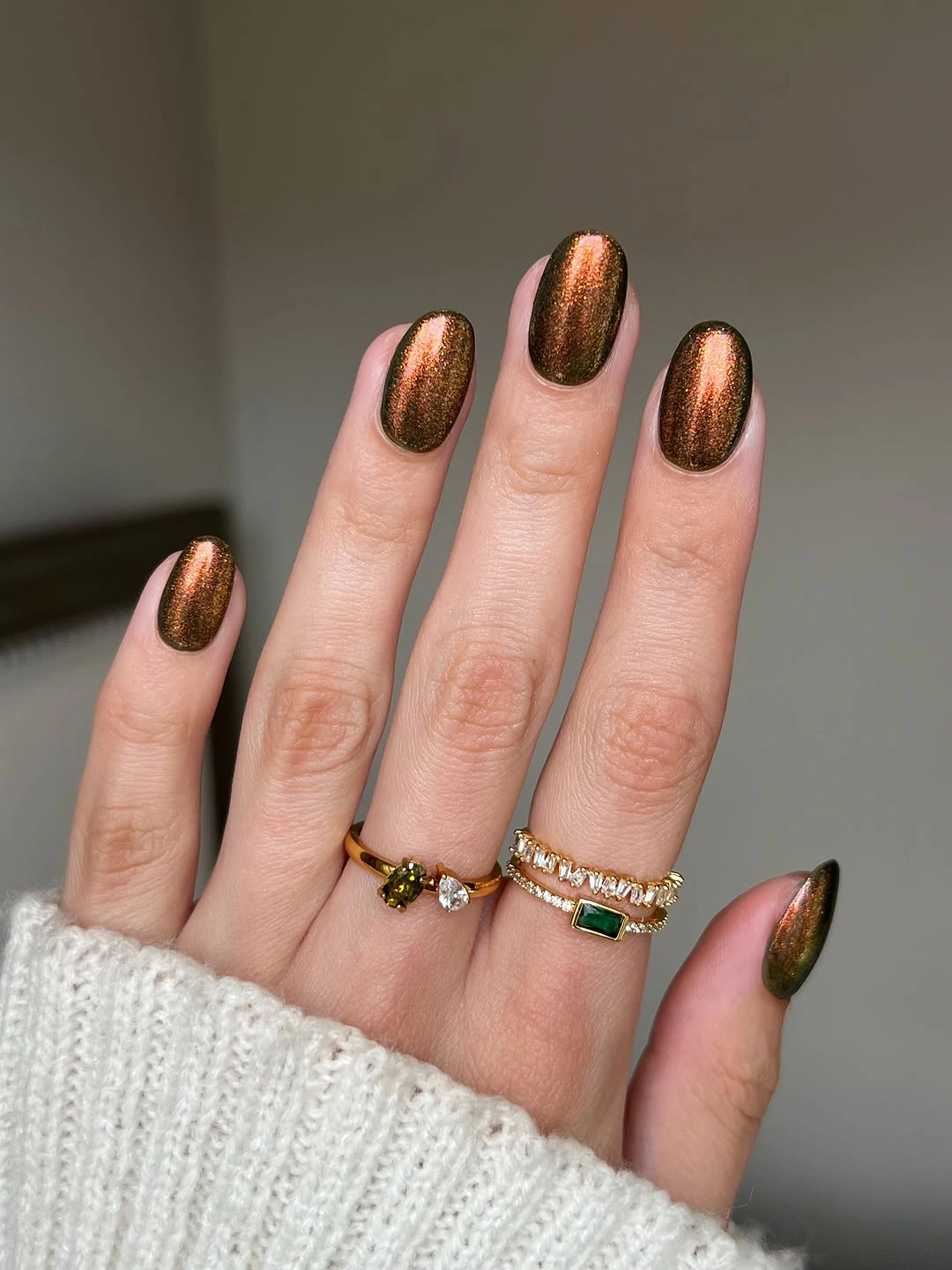
Choose a cooler bronze when orange-toned polish usually feels too strong, or move toward copper when warmth is the feature you want. Test the color in daylight as well as indoor light because metallic particles can shift its apparent undertone. The oval outline should remain smooth to support the polished effect.
Low visual clutter makes this one of the easiest fall designs to wear while still looking distinctive. It also requires less motif-specific repair than illustrated nail art. If one accent is desired, a slightly deeper bronze finger will preserve the tonal focus better than adding a contrasting pattern.
Mocha to Mustard Almond Color Story
Dark brown, mocha, taupe, and mustard form a tonal progression across long almond nails. Each solid shade remains visible on its own, allowing the hand to move gradually from depth to warmth. Gloss keeps the darker browns from becoming visually flat beside the brighter mustard note.
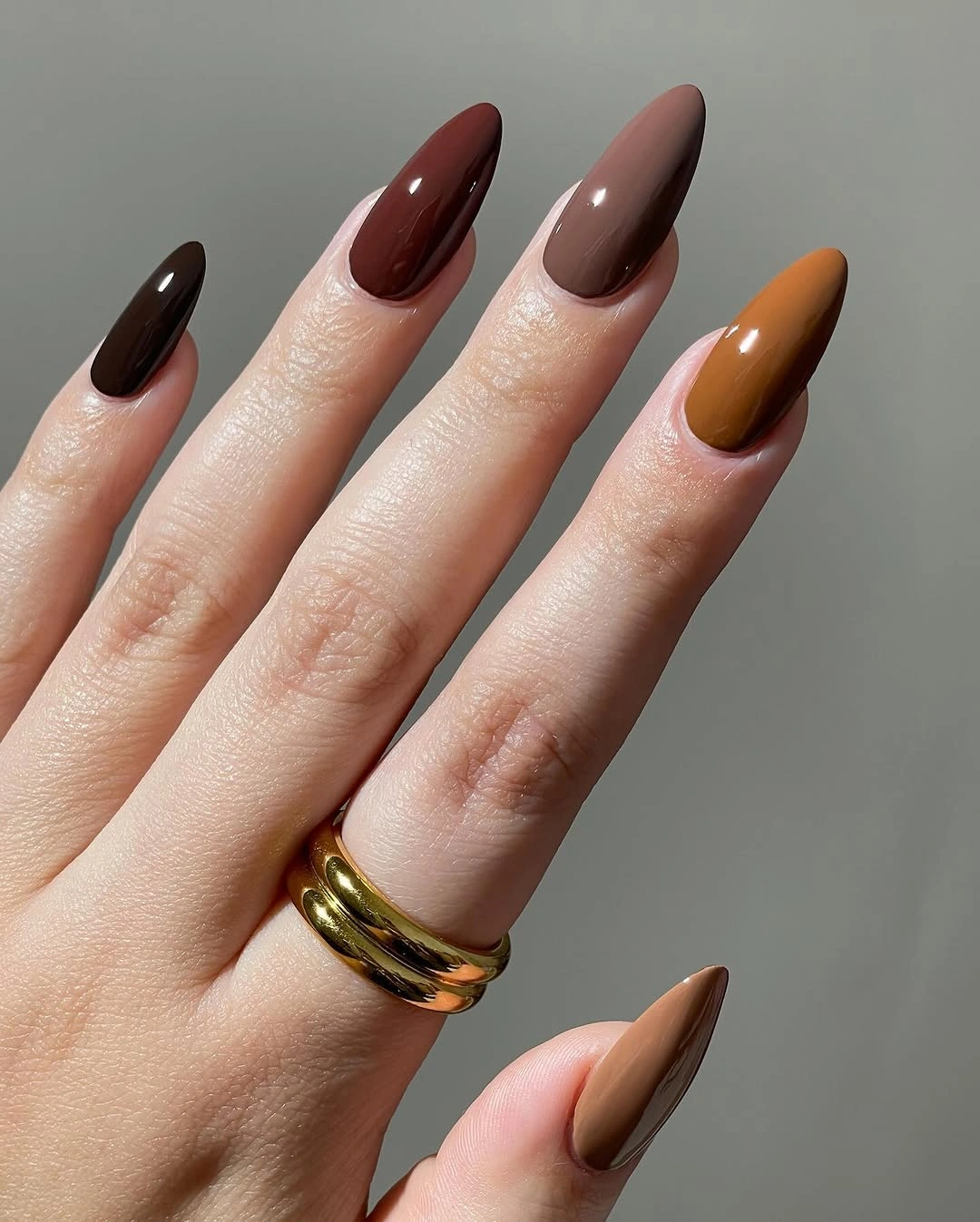
Customization is straightforward because no detailed artwork depends on the original colors. Repeat the two shades that look strongest and use the others as transitions rather than insisting on a different polish for every finger. Mustard can shift toward ochre or caramel when clear yellow feels too sharp.
The gradient should read as a deliberate color story, so avoid placing the lightest and darkest tones randomly. A measured sequence will emphasize the change in undertone and value. Shorter nails can use the same arrangement, though fewer shades may produce a cleaner result across a smaller hand.
Green Swirls and Tiny Autumn Illustrations
Green curves, brown accents, small flowers, and tiny fall illustrations create a collected, playful surface on long almond nails. Creamy bases leave light around the details and prevent the brighter green from dominating every finger. The swirls act as visual paths connecting otherwise separate miniature motifs.
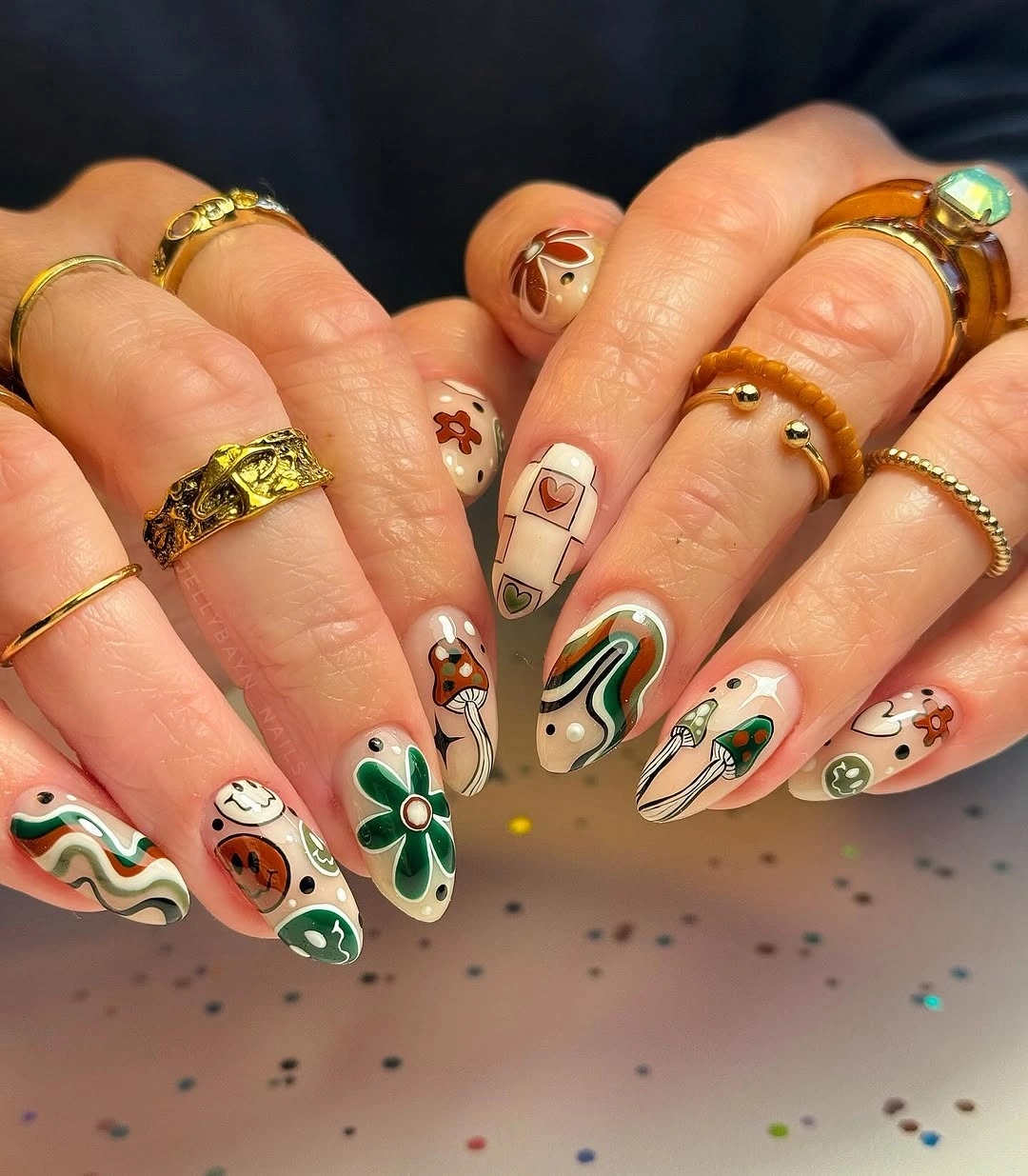
Choose one illustrated element that matters most, then let the curves organize the rest of the hand around it. Short nails should keep the swirl and remove several tiny drawings because the line can scale more gracefully than detailed figures. A muted green will also reduce contrast without changing the composition.
Close viewing reveals the manicure’s charm, but that same density increases the risk of visual clutter. Leave at least one cream-dominant nail as a pause and avoid repeating every tiny symbol. The design will feel more personal when a few selected details remain clear enough to recognize.
Pumpkin and Leaf Nails With Gold Glitter
Pumpkin art, fine leaves, mustard accents, and one gold glitter nail give these short oval nails an unmistakable seasonal direction. Nude and cream bases soften the orange illustrations and avoid the starkness of bright white. The metallic finger adds polish between the more literal motifs.
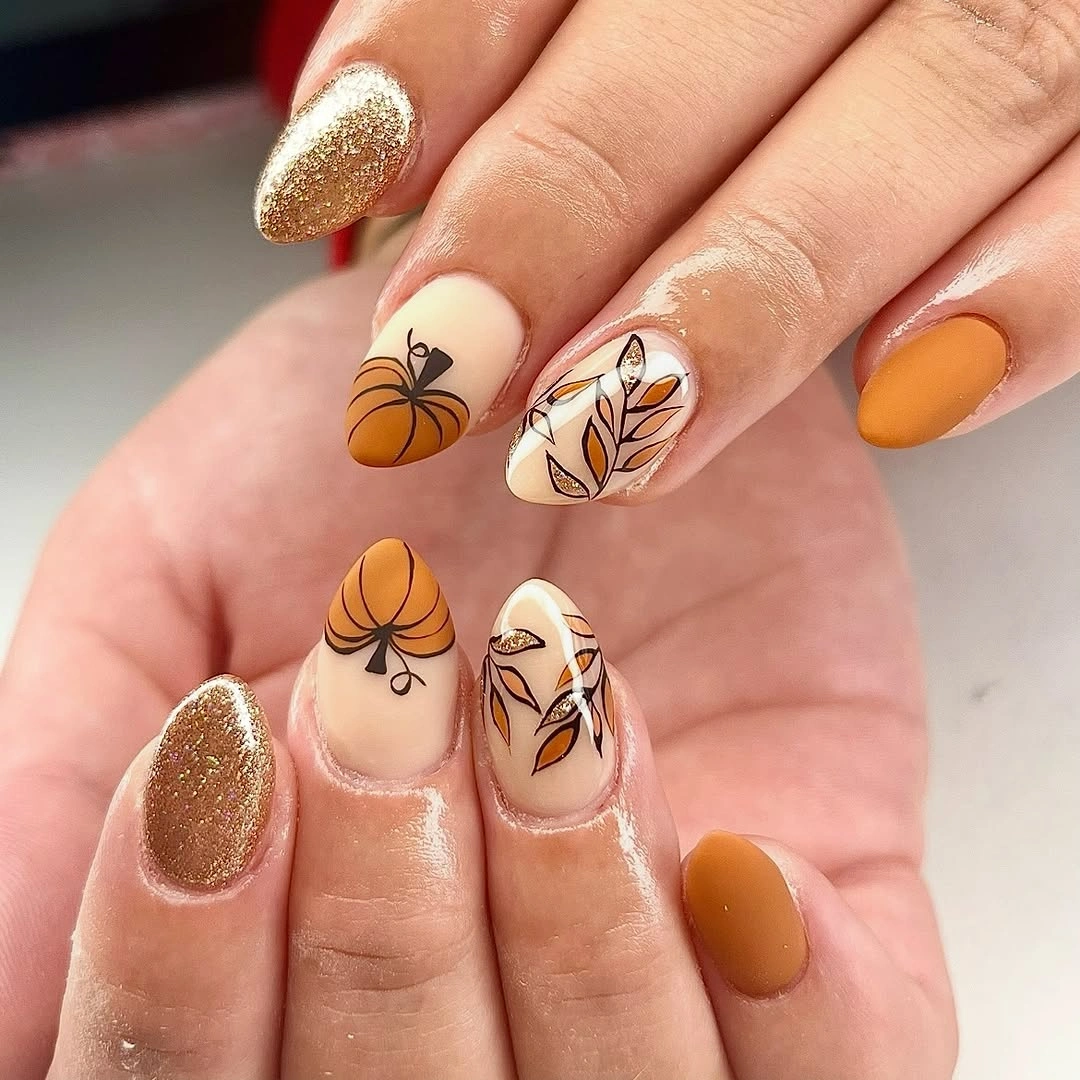
The full idea does not require heavy decoration on every finger. One pumpkin, one leafy accent, and a single glitter nail can carry the story while solids provide breathing room. Caramel may replace mustard for a quieter palette, and champagne glitter can soften a yellow-gold reflection.
Because the nail shape is compact, the illustrated forms should remain simple and separated. Dense vines around the pumpkin would make both elements harder to read. Preserve the warm seasonal hierarchy, then edit the number of accents according to how much detailed upkeep you realistically want.