Fall gel nails ideas 2026 can be read as a broad color and design direction rather than one fixed technique. This collection brings together orange, yellow, teal, burgundy, brown, green, black, blush, florals, dots, tortoiseshell, metallic accents, and small seasonal motifs, moving from short rounded nails to longer almond shapes. The common thread is a clear visual decision that remains easy to adapt.
Use the ideas according to the amount of detail you actually want to wear. A solid color can carry a short nail, while a pale base gives flowers, leaves, and tiny marks room to breathe. If a design feels too busy, keep the palette and remove one motif; if it feels too plain, add one accent finish instead of decorating every finger.
Mixed Fall Colors on a Compact Shape
Short rounded nails open with a lively mix of orange, yellow, teal, plum, blush, and brown solids. The colors change from finger to finger, but the glossy surface and compact shape make the set feel intentional rather than random. It is a strong reminder that fall color can include cool blue-green notes as well as the expected warm shades.
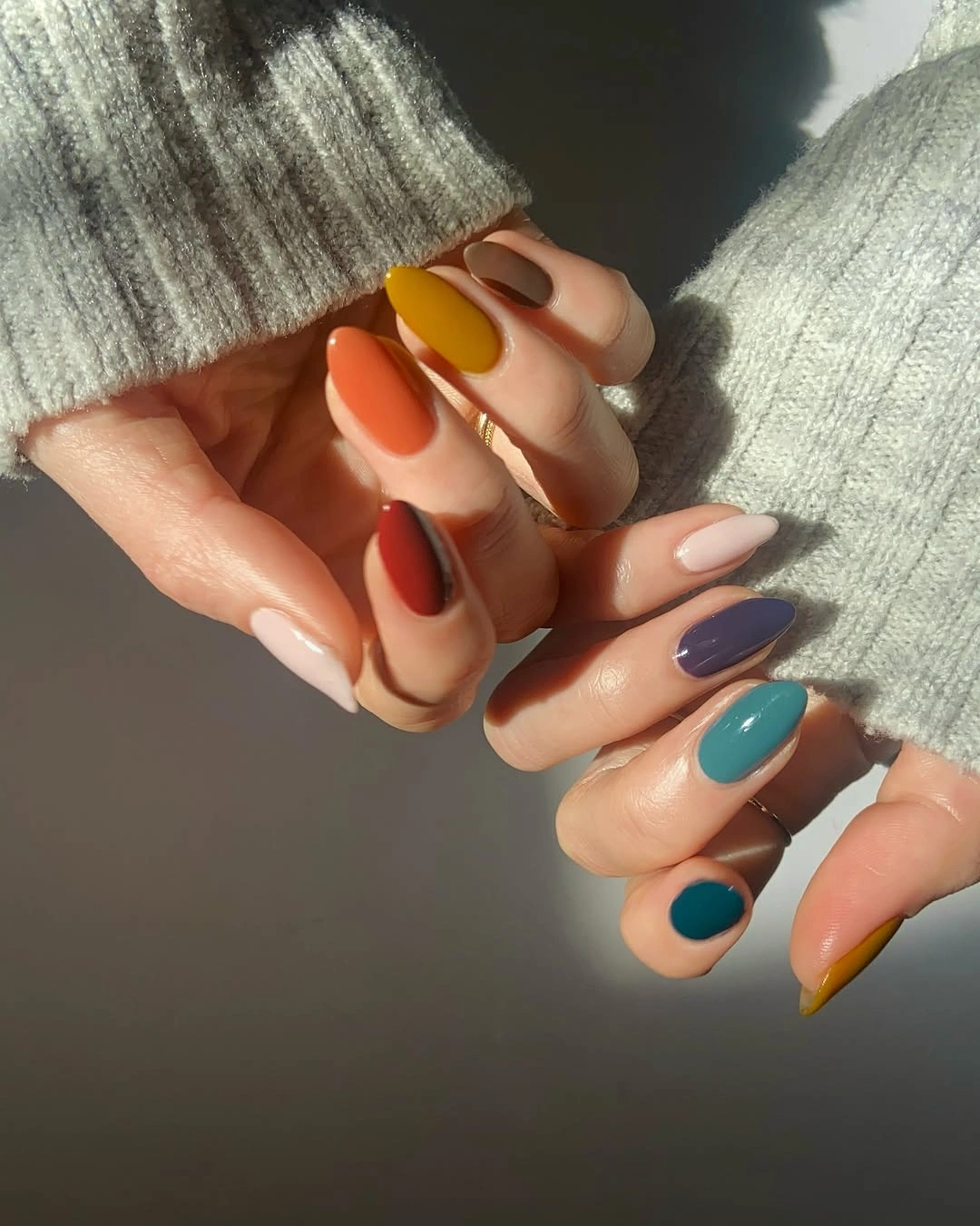
Choose three colors instead of six if you want a more edited version, repeating one warm shade on the thumb and ring finger. A very short round nail benefits from broad solid areas, while a medium round outline has enough room for one tiny accent dot. Keep the finish consistent so the palette itself remains the clear design language.
This idea works for someone who wants a seasonal update but does not want a motif or glitter. The contrast comes from color order, which makes the manicure easy to adapt to clothing by replacing only one or two shades. The tradeoff is that several strong colors can compete, so repeating a warm anchor will give the hand more cohesion.
Black Botanical Lines over a Clear Base
Short rounded nails use a translucent base with black botanical lines and small leafy details. The open surface keeps the hand light, while the dark outlines give the manicure a clear graphic direction. Because the design relies on line work rather than full color, the short shape remains visible and the accents do not feel heavy.
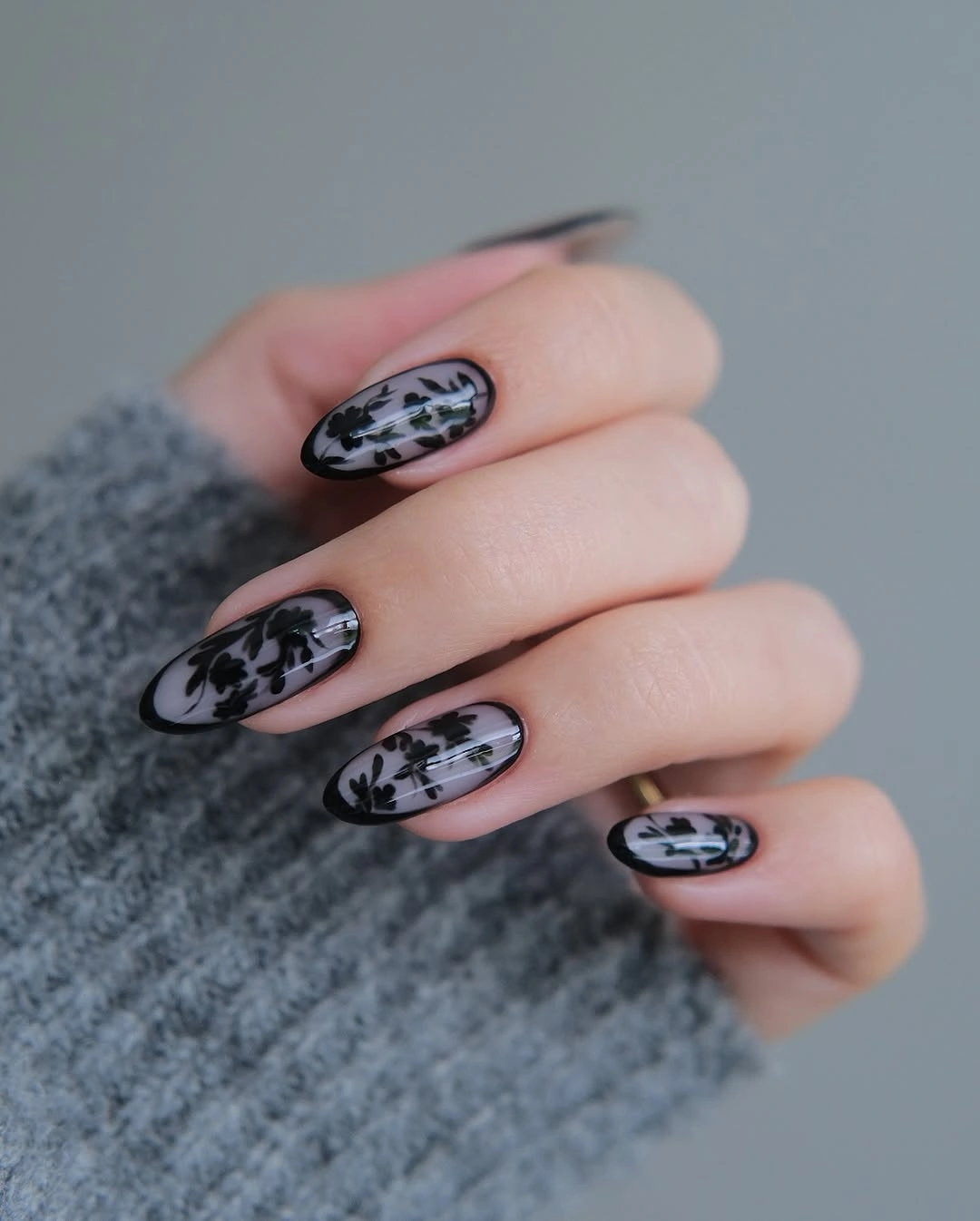
Use the botanical detail on two or three nails and leave the others translucent or softly pink. A very short nail can carry one leaf and one stem, while a medium length can support a small branch. If black feels too strong, deep brown or charcoal will soften the contrast without losing the line-led structure.
The clear base is doing practical work by separating the marks and allowing the natural center to remain part of the palette. That makes the set useful when you want detail without full coverage, especially with light knitwear or gray clothing. The limitation is that fine lines need space, so removing one leaf may improve clarity more than adding another.
Muted Mauve with Tiny Leaf Accents
Long almond nails use muted mauve and blush solids, placing small dark leaf accents on selected fingers. The color stays soft, but the pointed shape and glossy surface give the hand a more elongated silhouette. A few fine marks add a seasonal suggestion without turning the manicure into a full botanical theme.
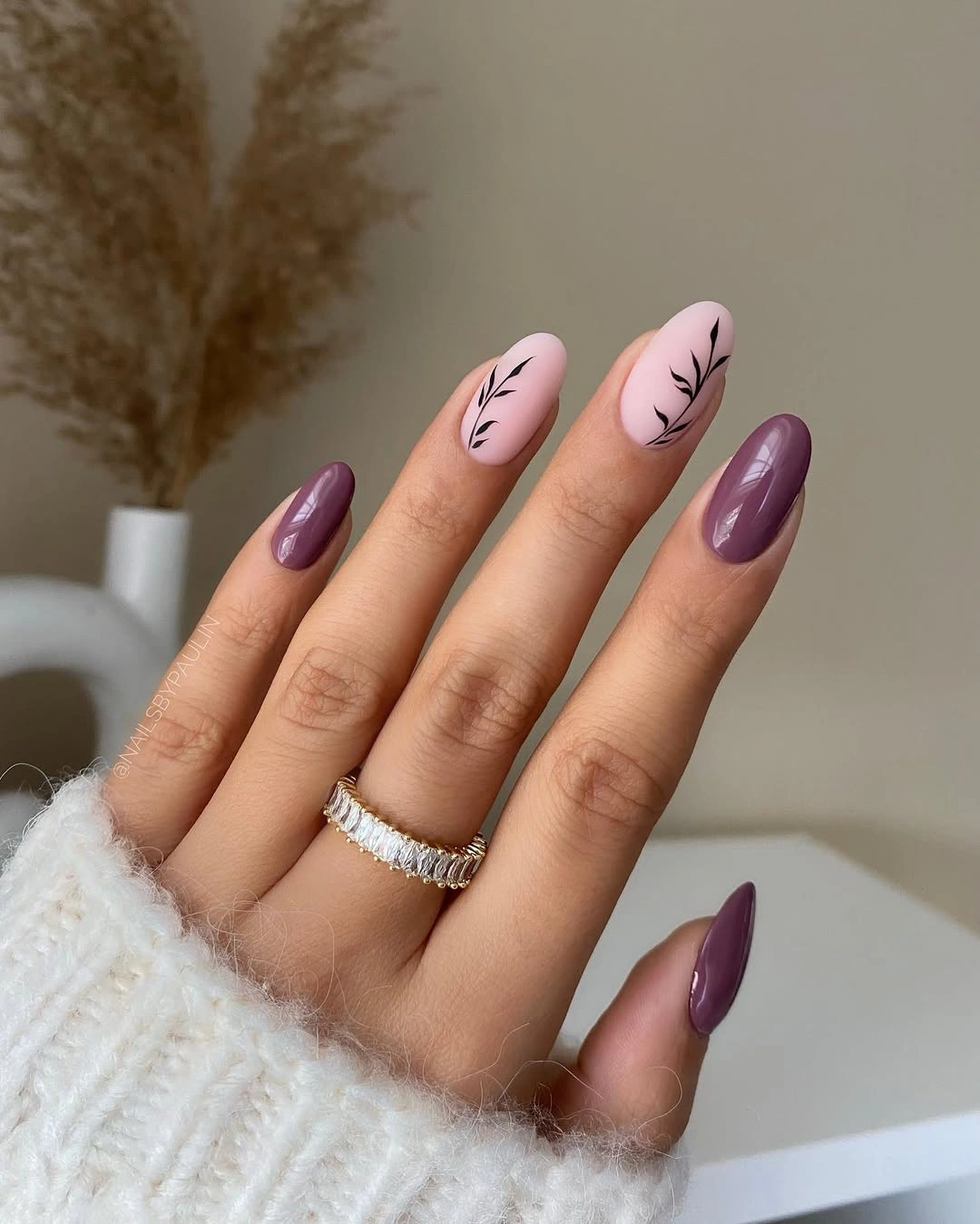
Keep the leaf detail on two nails and use plain mauve on the rest for a calmer result. A medium almond can shorten the mark toward the tip, while a shorter oval can replace the branch with one simple leaf. If the mauve feels too cool, add a warm blush base on the accent fingers. One stronger leaf on the ring finger can solve that without adding another color.
The design works because the muted base lets the small leaves remain visible without requiring high contrast across the whole hand. The almond outline provides enough shape interest, so the art can stay sparse and still feel complete. The tradeoff is that a pale mauve surface may look quiet in low light, making a glossy finish or slightly deeper accent helpful.
Chocolate and Cream Blocks on Short Nails
Short rounded nails combine glossy chocolate, cream, and white through simple blocks and divided shapes. Some fingers stay in rich brown while others use pale geometric accents, creating contrast without a dense motif. The compact shape keeps the palette practical, and the repeated warm neutrals make the different placements feel related.
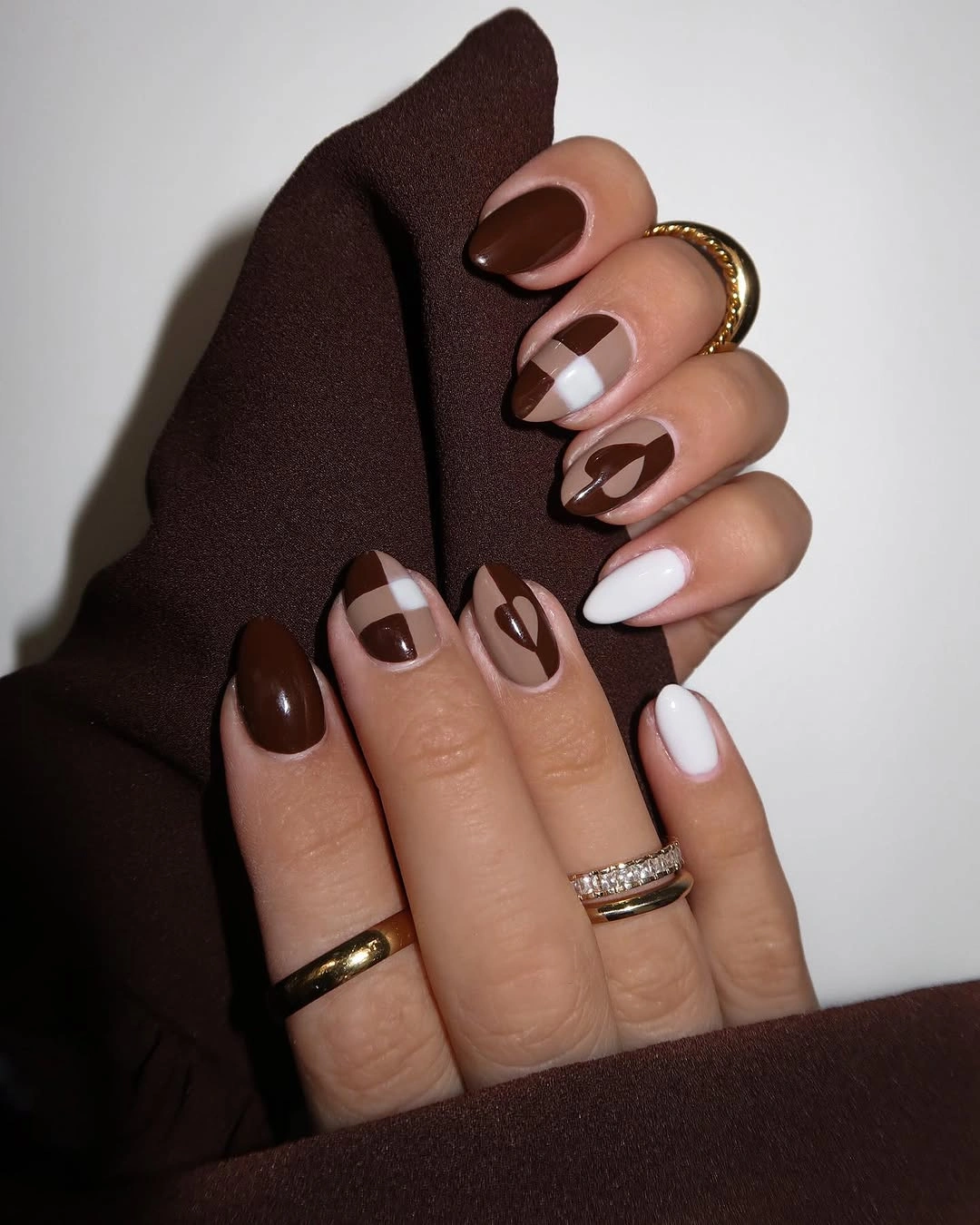
Use one block style on two nails and keep the rest in solid brown for a cleaner appointment brief. A very short nail needs large sections that remain visible, while the medium rounded outline can hold a compact curved division. Warm beige can replace white when the palette should feel softer and closer to the chocolate base.
The design is useful because it gives a graphic result without relying on bright color or glitter. Brown provides the seasonal anchor, while cream and white keep the hand open enough for everyday styling. The limitation is that too many divisions can shorten the nail visually, so broad panels and visible base space will improve the proportion.
Warm Coral with Small Metallic Leaf Marks
Short rounded nails use a warm coral-red matte color on most fingers, then place small metallic leaf-like accents on one or two nails. The finish contrast gives the set depth, while the reflective details add a seasonal glow without changing the main color. The rounded shape keeps the strong coral approachable and compact.
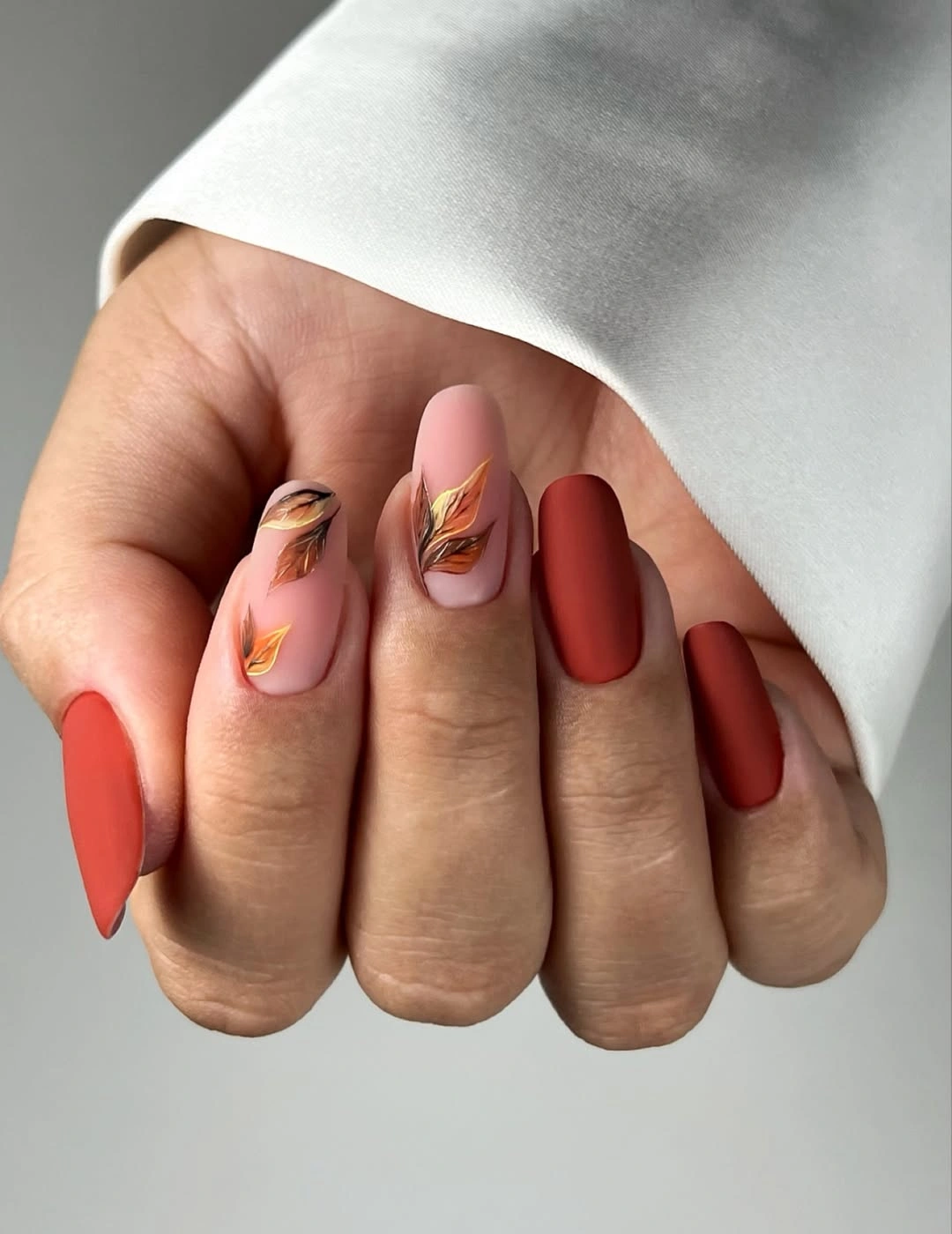
Keep the metallic detail on the ring finger for a restrained version, or repeat it on the thumb to spread the light. A shorter nail can use one small foil mark, while a medium rounded outline can support a slightly larger leaf. If coral feels too bright, terracotta will keep the warm relationship but make it more autumnal. The change in base color should be enough to shift the mood.
The matte surface makes the metallic accent look deliberate because the two finishes are clearly separated. It also gives the coral a softer visual weight than a full gloss would, which helps the hand remain wearable. The tradeoff is that matte color shows stray shine and texture more easily, so the accent count should stay limited.
Deep Burgundy with One Decorative Accent
Long almond nails use deep burgundy solids and reserve one finger for a pale decorative detail with fine line work. The berry color gives the hand a strong seasonal mood, while the single lighter nail prevents the set from feeling closed. The glossy surface and almond shape make the design feel polished without adding a second pattern across the hand.
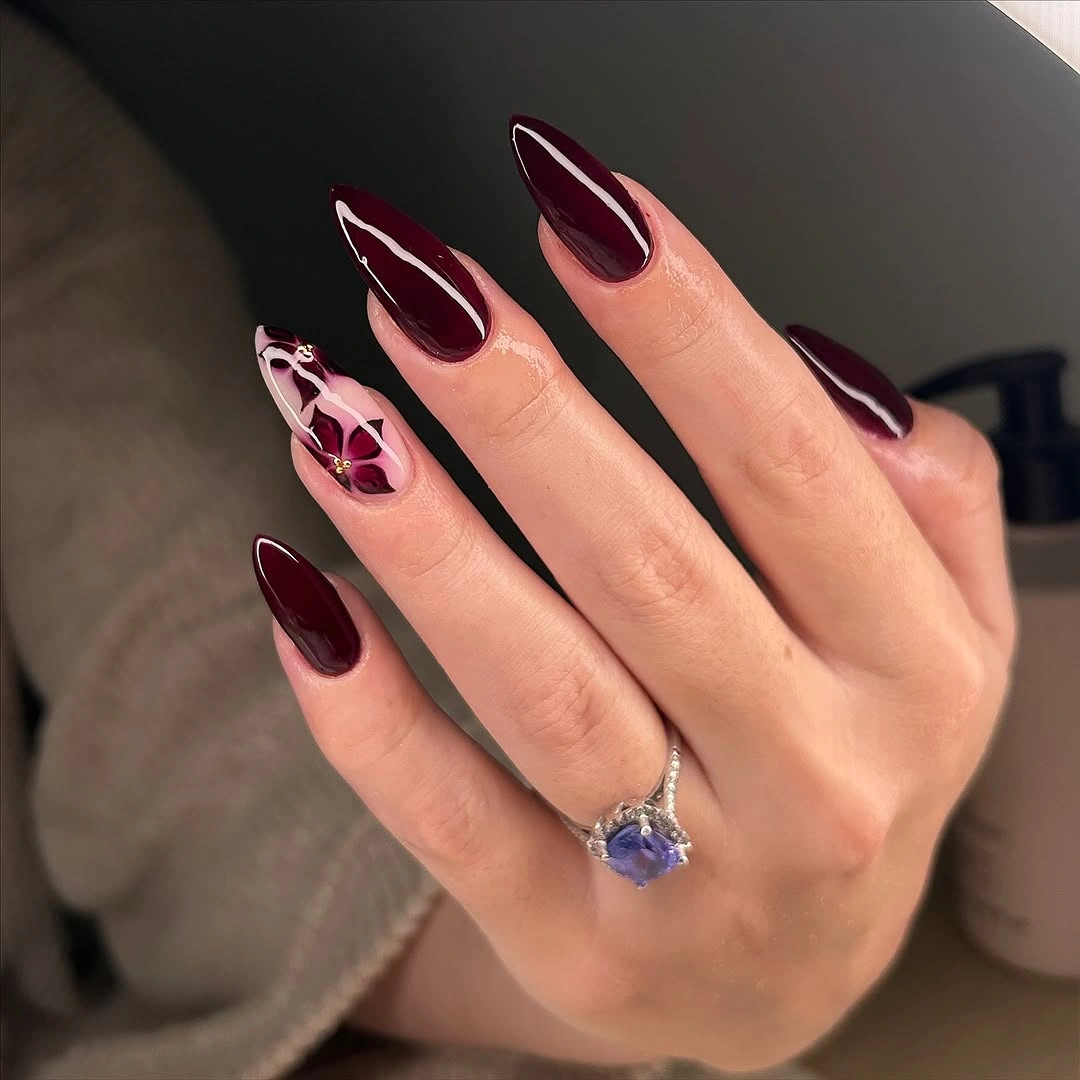
Keep the accent on the ring finger for a natural focal point, or simplify it to one pale line on the thumb. A medium almond can carry a smaller decorative shape, while a shorter nail needs a broader mark to remain visible. The burgundy fingers should stay solid so the pale detail keeps its visual importance. That contrast is more effective than spreading tiny art across the entire hand.
This structure works when you want a dark statement that still has an approachable break. The pale accent can coordinate with cream clothing, while burgundy remains the central color decision. The limitation is that fine detail can disappear against a small base, so a simple outline will read better than several compressed pieces.
Open Brown Tips with Gold Flecks
Medium square nails use pale translucent bases with brown tip blocks and small gold flecks placed inside selected accents. The open center keeps the hand light, while the brown adds an autumn direction and the gold gives the design a small reflective lift. The square shape makes the tip placement look crisp and deliberate.
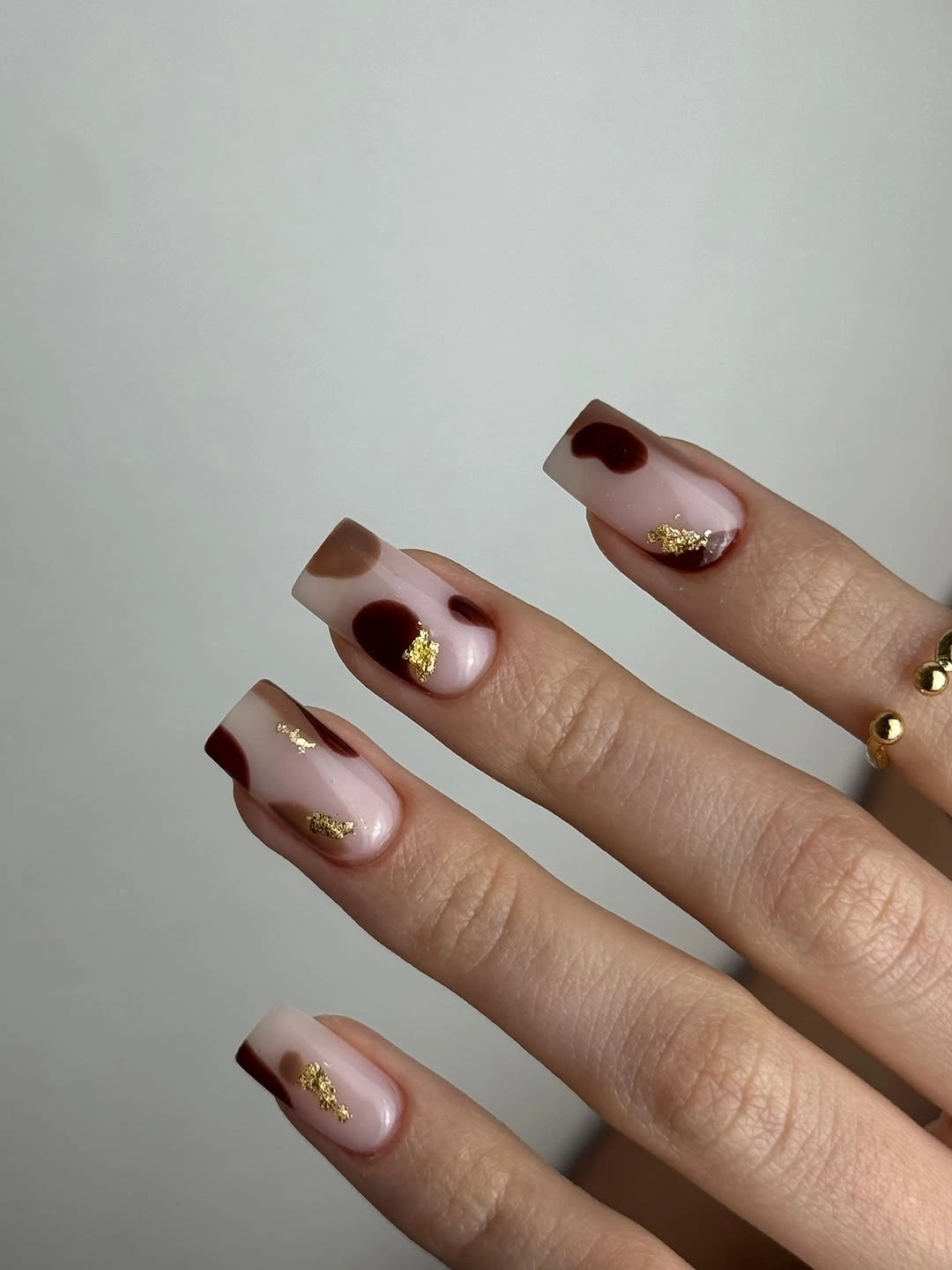
Use the flecks on one nail and keep the remaining brown tips plain if you want less detail. A short square benefits from a broad brown edge with two small metallic marks, while a medium length can support a little more space between them. Warm beige can replace the pale base when a softer contrast is needed.
The design works through controlled layering: translucent base, dark tip, then a small metallic interruption. It offers a seasonal detail without fully covering the nail, which makes it easier to pair with neutral clothing and simple rings. The tradeoff is that gold flecks can look scattered if the background is too busy, so the surrounding fingers should remain quiet.
Autumn Motifs on a Nude Almond Base
Long almond nails use a nude base with small pumpkin-like and autumnal motifs on selected fingers, while the surrounding nails carry warm orange and burgundy tones. The illustrations give the set a literal seasonal cue, but the open base stops the motifs from filling the hand. The almond shape provides enough length for the tiny shapes to remain readable.
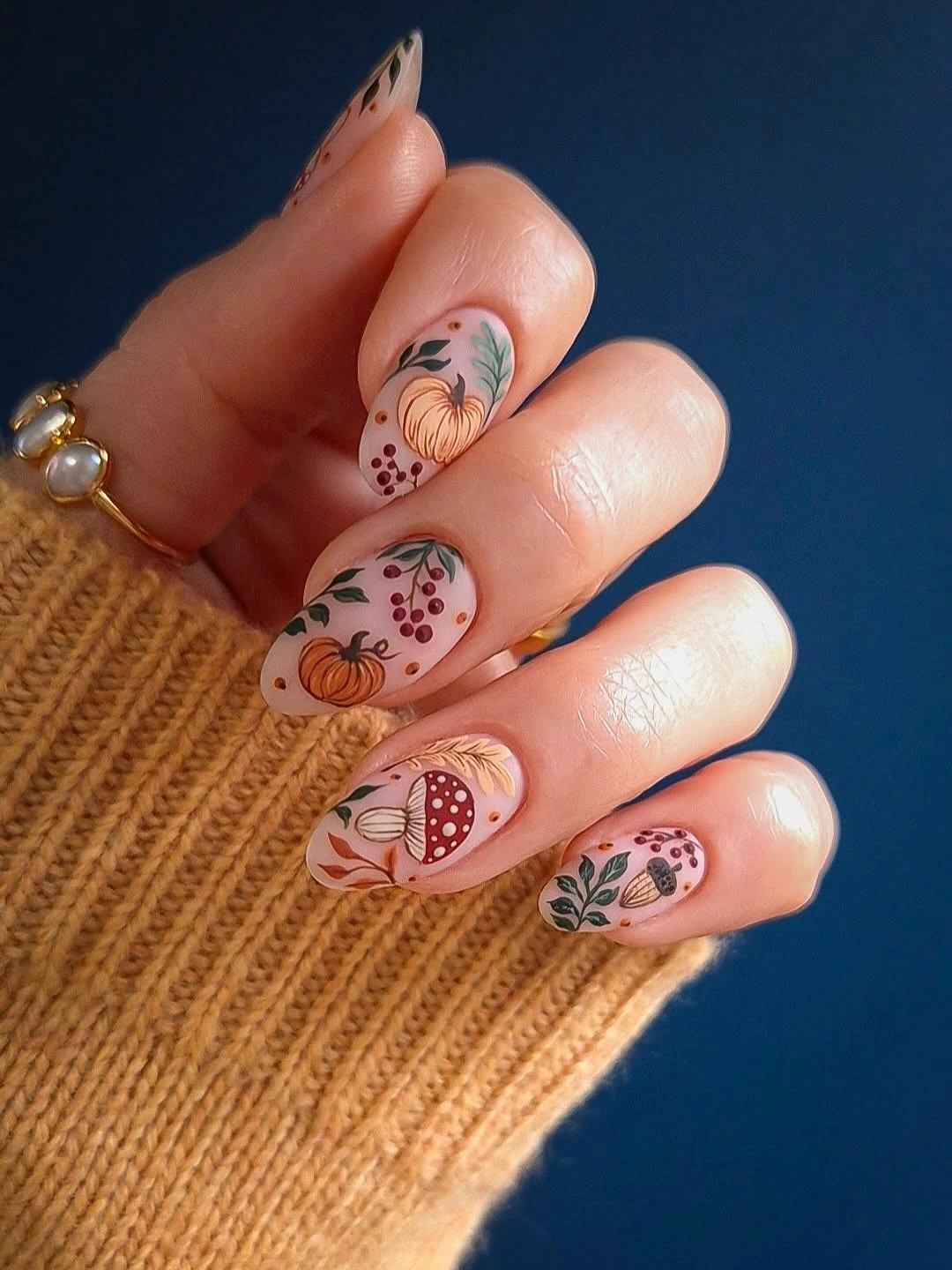
Use the motifs on two nails and keep the rest in one warm solid shade for a more wearable arrangement. A medium almond can simplify the drawings into one pumpkin-like mark, while a shorter shape should use larger dots or leaves. Rust, brown, and cream can replace brighter orange when a quieter palette is preferred. That keeps the seasonal reference clear without turning every finger into an illustration.
The clear structure makes the theme easy to understand without needing several different symbols on every finger. The nude base also keeps the hand light enough for everyday styling, while the warm solids create the seasonal connection. The limitation is detail density, since small illustrations can compete quickly, so one dominant motif per accent nail is enough.
Orange Flowers with a Pale Glossy Center
Long almond nails use pale pink and nude bases with orange floral tips and small yellow details. The bright flowers bring energy into the fall palette, while the open center keeps the manicure transitional rather than fully saturated. The almond shape gives the petals room to sit along the tip without crowding the fingers.
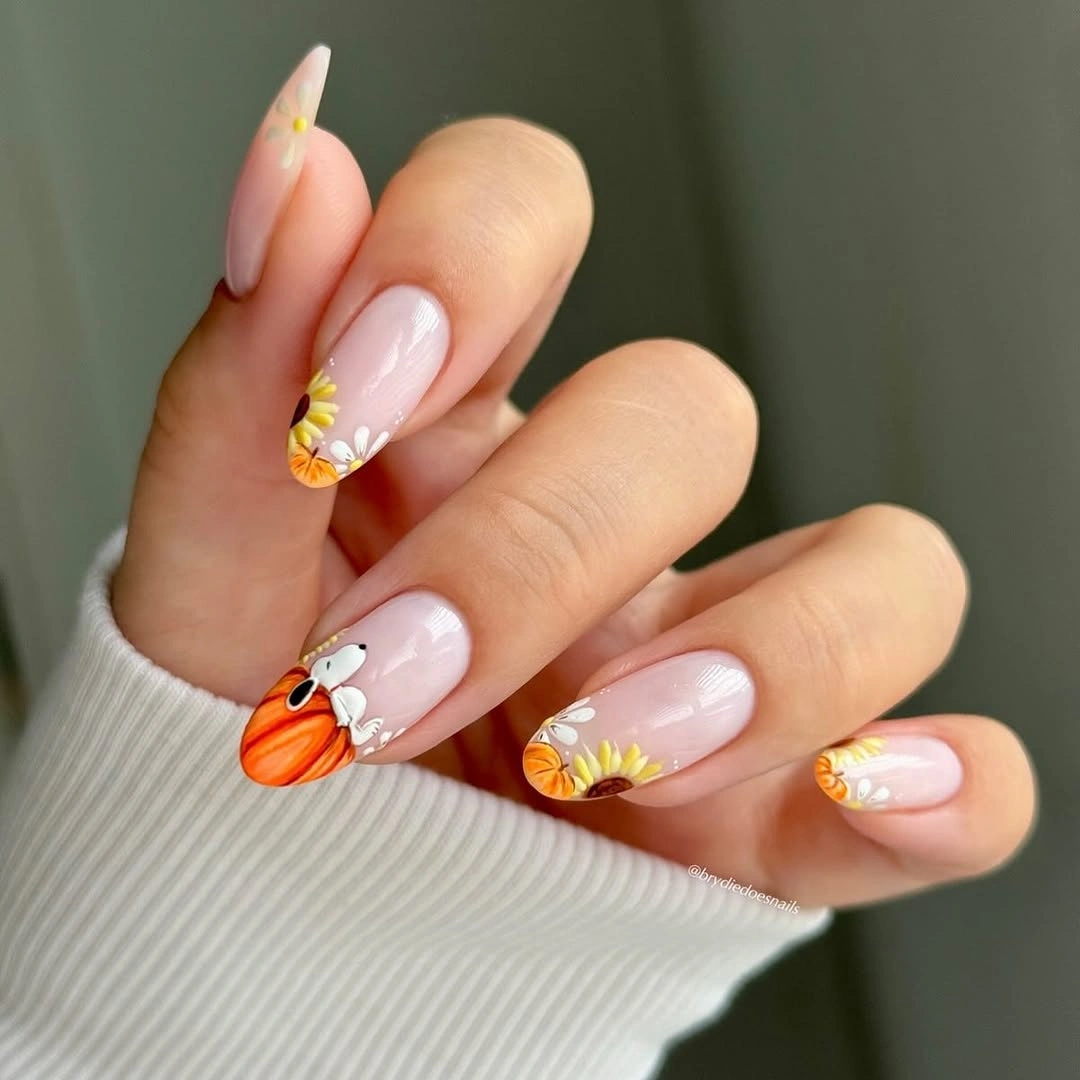
Use orange on every tip and place the full flower on two nails for a softer version. A medium almond can use larger petals, while a shorter nail may need one small flower or a simple orange crescent. Rust and cream can replace the brighter colors when you want the look to move farther into autumn. The clear center should stay visible so the color remains transitional.
The design works because the color is concentrated at the edge, leaving the pale base available for light clothing and understated jewelry. It gives a reader an expressive seasonal detail without asking the entire hand to become decorative. The tradeoff is that several petals can merge on a short surface, so open spacing is more important than extra color.
Botanical Lines with Small Gold Foil Accents
Long almond nails use a pale nude base with thin dark botanical lines and small gold foil-like details. The leaves create a delicate structure, while the metallic flecks add warmth and catch light against the open surface. The hand looks detailed but not crowded because most nails remain pale and the art is concentrated in selected areas.
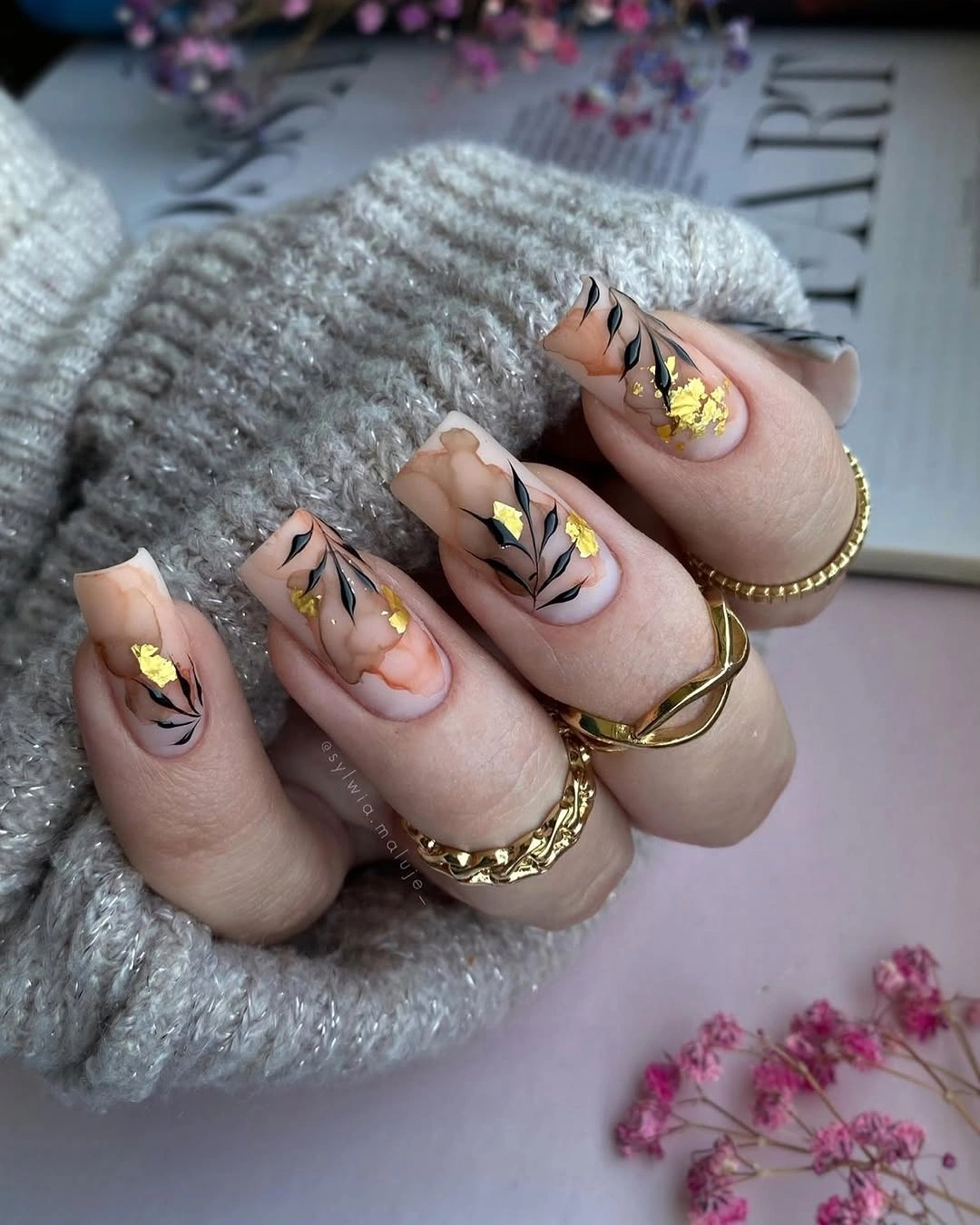
Keep the botanical design on two nails and place the gold on one of them for a more edited result. A medium almond can shorten the branch and use one foil fleck, while a short oval needs a single leaf and a tiny dot. Warm brown can replace black if the line work feels too sharp. Leaving the other nails pale will make the small details easier to judge.
The combination works because gold and nude share a soft warmth, while the dark leaves provide enough contrast to define the motif. It is useful for someone who wants a decorative fall idea that still looks light from a distance. The limitation is that line work and foil can compete, so spacing between the two details is essential.
Burgundy, Blush, and One Fine Accent
Long almond nails combine deep burgundy solids with blush accents and one fine decorative line. The berry color gives the set a clear fall direction, while the pale nail opens the hand and lets the small detail read. The simple structure makes the manicure feel expressive without requiring multiple motifs or different finishes.
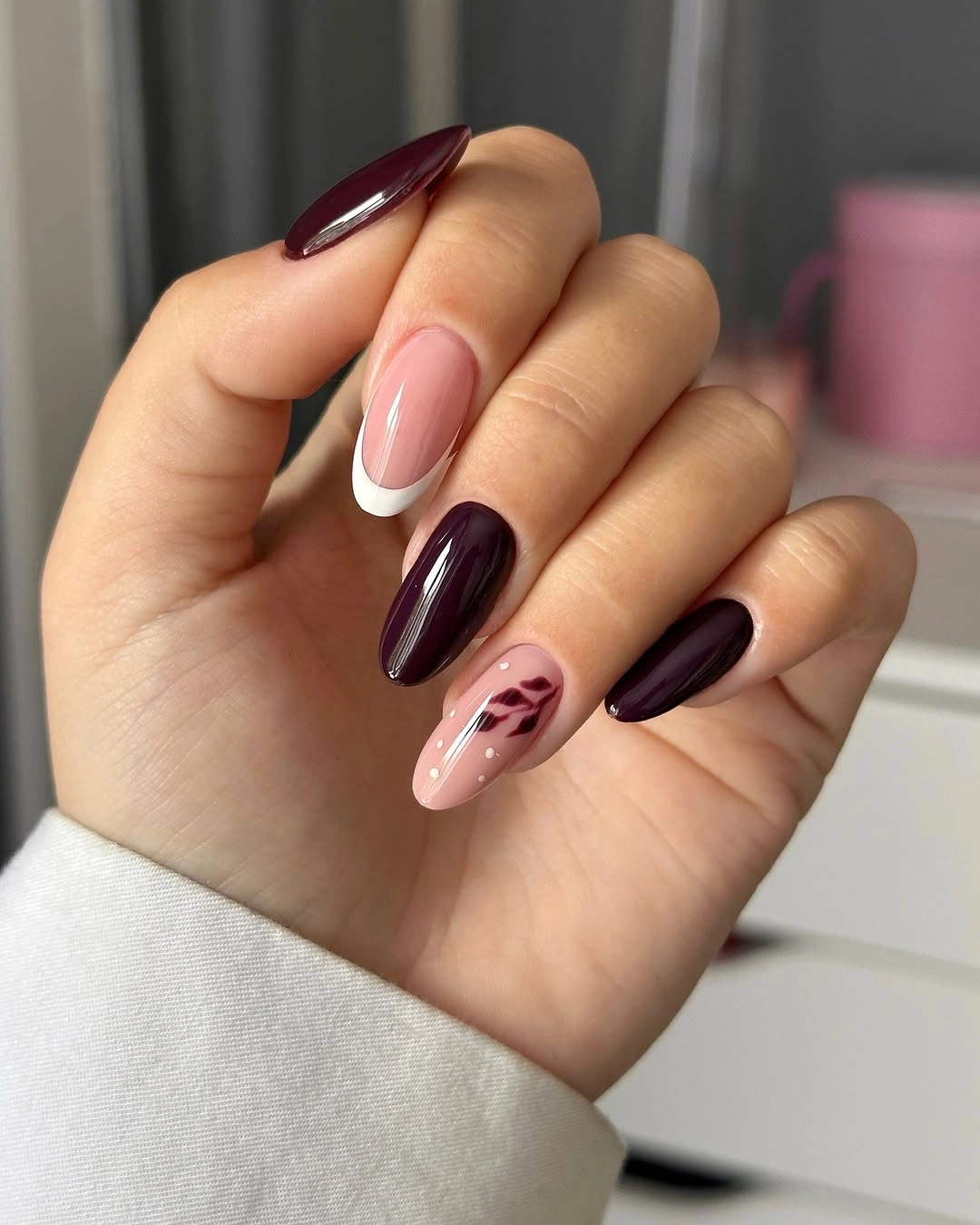
Use the pale accent on the ring finger and keep the line to one nail for the cleanest version. A medium almond can carry a slightly larger curve, while a shorter nail should replace the fine detail with a dot or short sweep. If the burgundy feels too strong, use a softer plum on the supporting fingers. The remaining fingers should stay simple enough to frame the accent.
The contrast between deep solid and pale art nail is doing most of the visual work. It keeps the collection seasonal but adaptable, especially with cream, gray, or denim clothing. The tradeoff is that a tiny line can disappear if the pale base is too small, so choosing a clear shape is more important than adding more detail.
Brown and Floral Details on a Soft Base
Short rounded nails use brown solids with pale accent nails carrying small floral marks in warm orange and muted colors. The main palette is calm, but the flowers add a gentle seasonal cue and prevent the set from becoming one flat brown tone. The rounded shape suits the small motif scale and keeps the hand friendly.
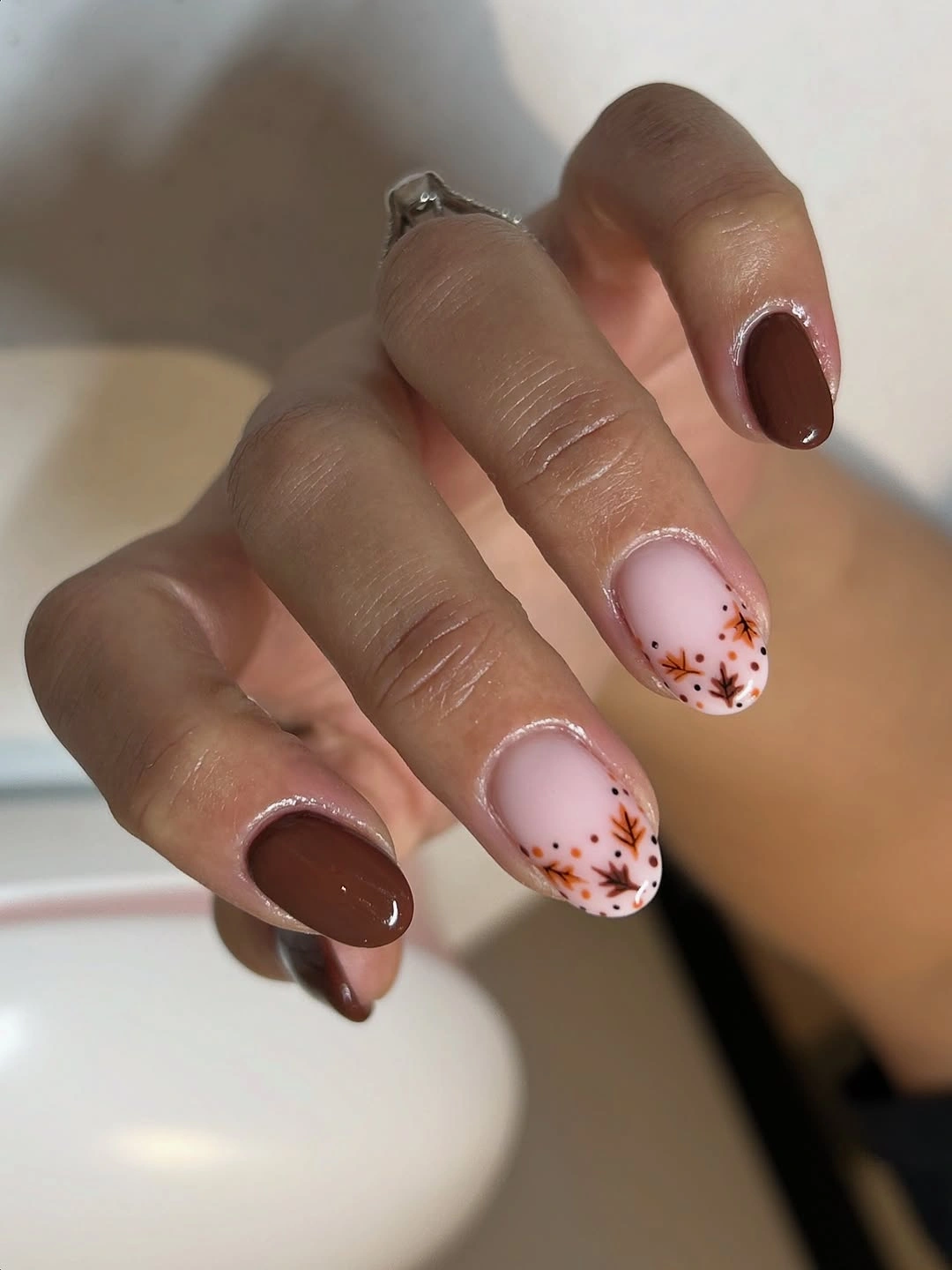
Place the flowers on two nails, leaving the other fingers glossy brown or sheer blush. A very short rounded nail can use one larger flower, while a medium oval can carry several petals with visible spacing. Replace orange with rust if the design needs a deeper fall direction without changing the soft base. The pale accent remains important because it separates the petals from the brown.
This arrangement works because the pale accents give the eye a pause and the brown solids maintain a clear seasonal anchor. It is easy to wear with knitwear and small jewelry because the motifs stay modest. The limitation is that tiny flowers can merge with the base, so a simple color contrast will help more than extra outlines.
Matte Sage with a Patterned Accent Nail
Short rounded nails combine matte sage with one or two patterned accents that use black, cream, and warm gold. The muted green supplies a cooler fall note, while the patterned nail adds visual energy against the quiet base. The compact shape keeps the contrast controlled and prevents the pattern from taking over the hand.
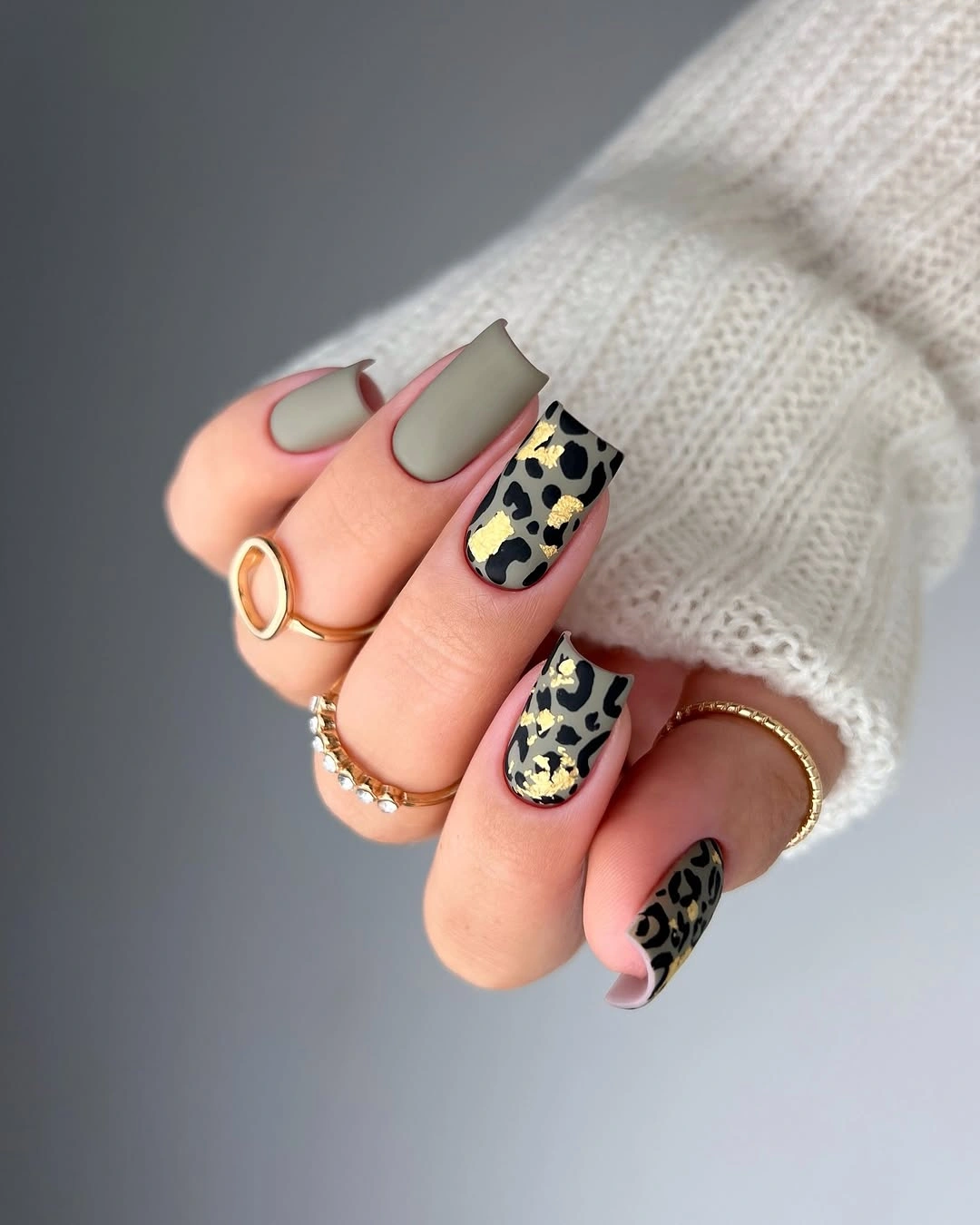
Use the pattern on one nail and keep the rest matte sage for a more practical version. A very short nail should use broad dark marks, while the center of a medium rounded nail can hold a small animal-like or graphic panel. Replace black with deep brown if you want the palette to feel warmer and less stark. The quiet base should remain the dominant visual field.
The idea works because the matte base acts as a quiet field for the accent to sit on. It gives the reader a way to explore pattern without committing to a patterned hand, and sage fits both denim and cream clothing. The tradeoff is that a detailed print can overpower a small canvas, so one focal accent will usually look stronger.
Warm Abstract Marks on Blush Almonds
Medium almond nails use a blush base with small orange, brown, and warm abstract marks placed on selected fingers. The design feels seasonal through color rather than through literal symbols, and the glossy surface keeps the pale hand fresh. The almond shape provides enough length for the marks to stay separate while the base remains open.
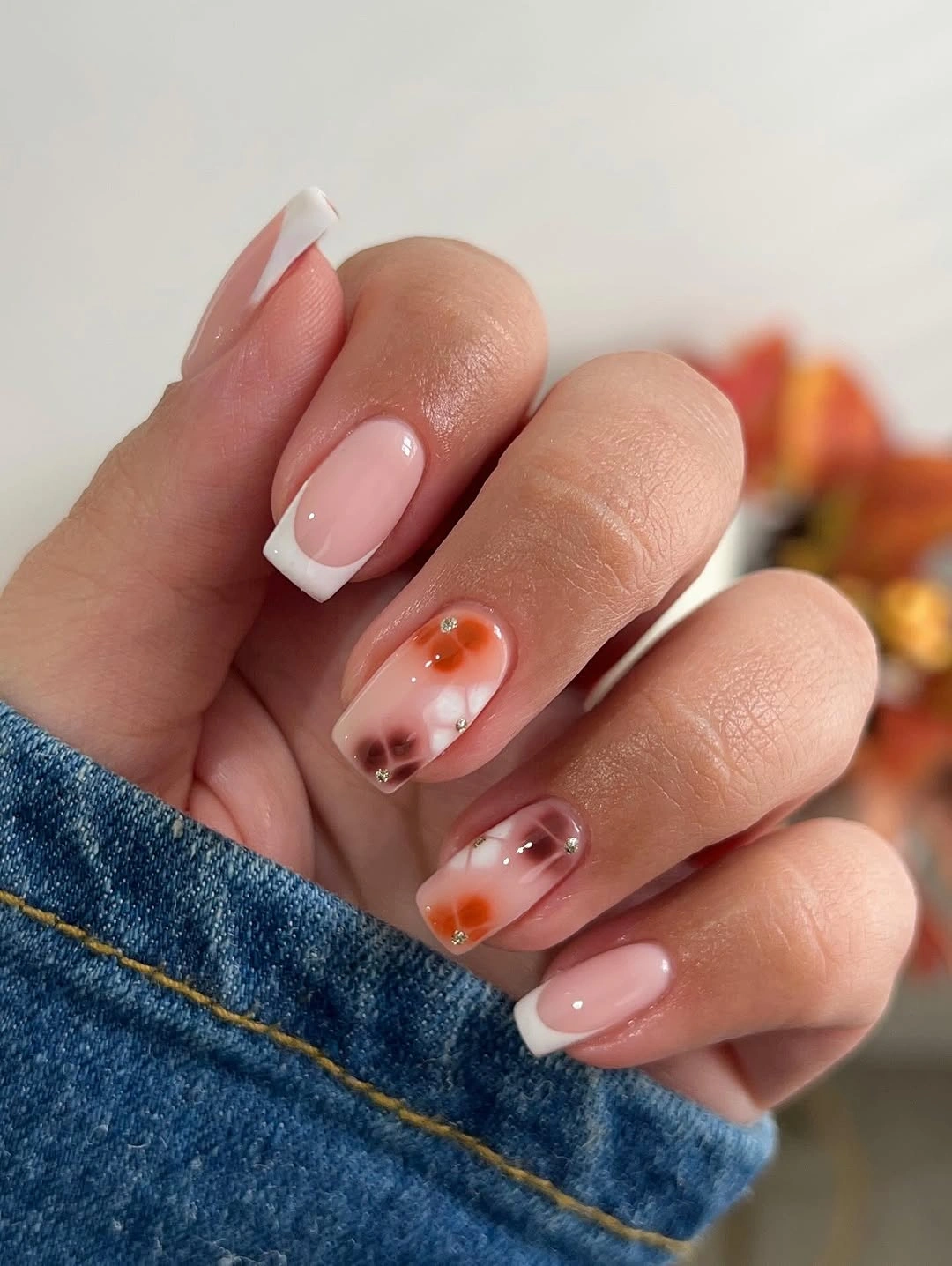
Limit the marks to two nails and finish the others in sheer blush or soft nude for a cleaner arrangement. A shorter almond can use one small orange curve near the tip, while a longer shape can support two contrasting shapes. Rust and cream will soften the palette if bright orange feels too summery.
The open base makes the warm accents feel light and wearable, which is useful for a transition manicure rather than a fully dark one. It also lets the shape remain visible and keeps the design compatible with denim or neutral clothing. The limitation is that several abstract marks can look accidental, so each accent should have a clear placement.
Black Solids with Tiny Flower Details
Short rounded nails use glossy black on most fingers and reserve transparent or pale accent nails for tiny floral details. The dark solids create a strong base, while the small flowers add a delicate contrast that prevents the hand from feeling too heavy. The compact shape makes the design practical even though the color is dramatic.
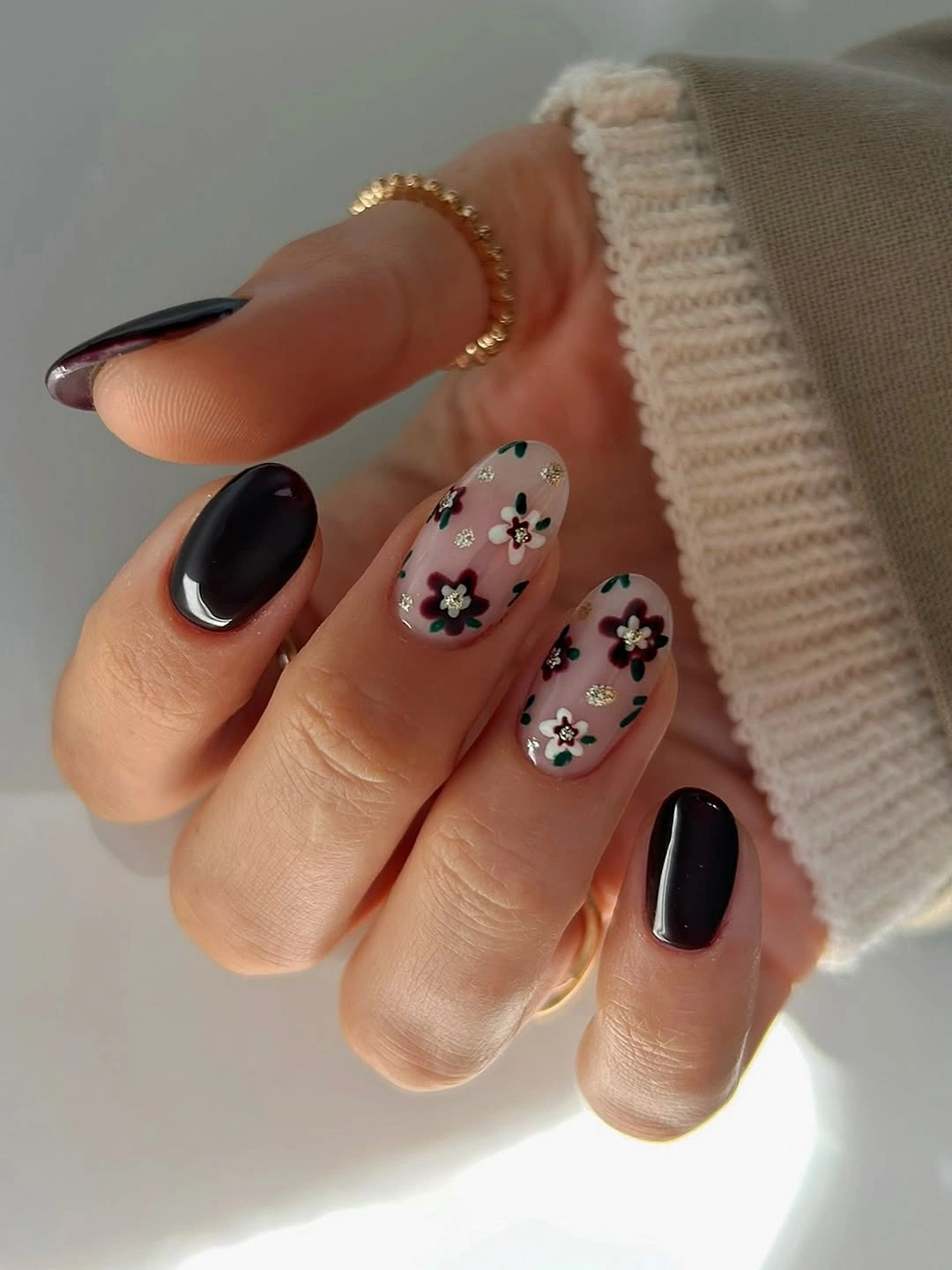
Use flowers on two nails and keep the rest pure black for the cleanest version. A very short rounded nail can carry one small flower, while a medium shape can support a few spaced petals. If black feels too severe, deep brown or plum will preserve the contrast while softening the mood. The accent should stay small enough that the dark base still leads.
The pale floral nails give the eye a resting point and create a clear relationship between dark color and light detail. It is a useful structure for someone who wants fall depth but still likes a small feminine accent. The tradeoff is scale, because tiny flowers can disappear against a small base, so a broader petal shape may work better.
Espresso with Sheer Framed Accents
Long almond nails alternate espresso solids with sheer nails framed by dark contours. The open centers reduce the weight of the deep color, while the outline keeps the accent fingers connected to the rest of the set. Glossy highlights reveal the difference between opaque and transparent surfaces, giving the hand depth without a bright accent shade.
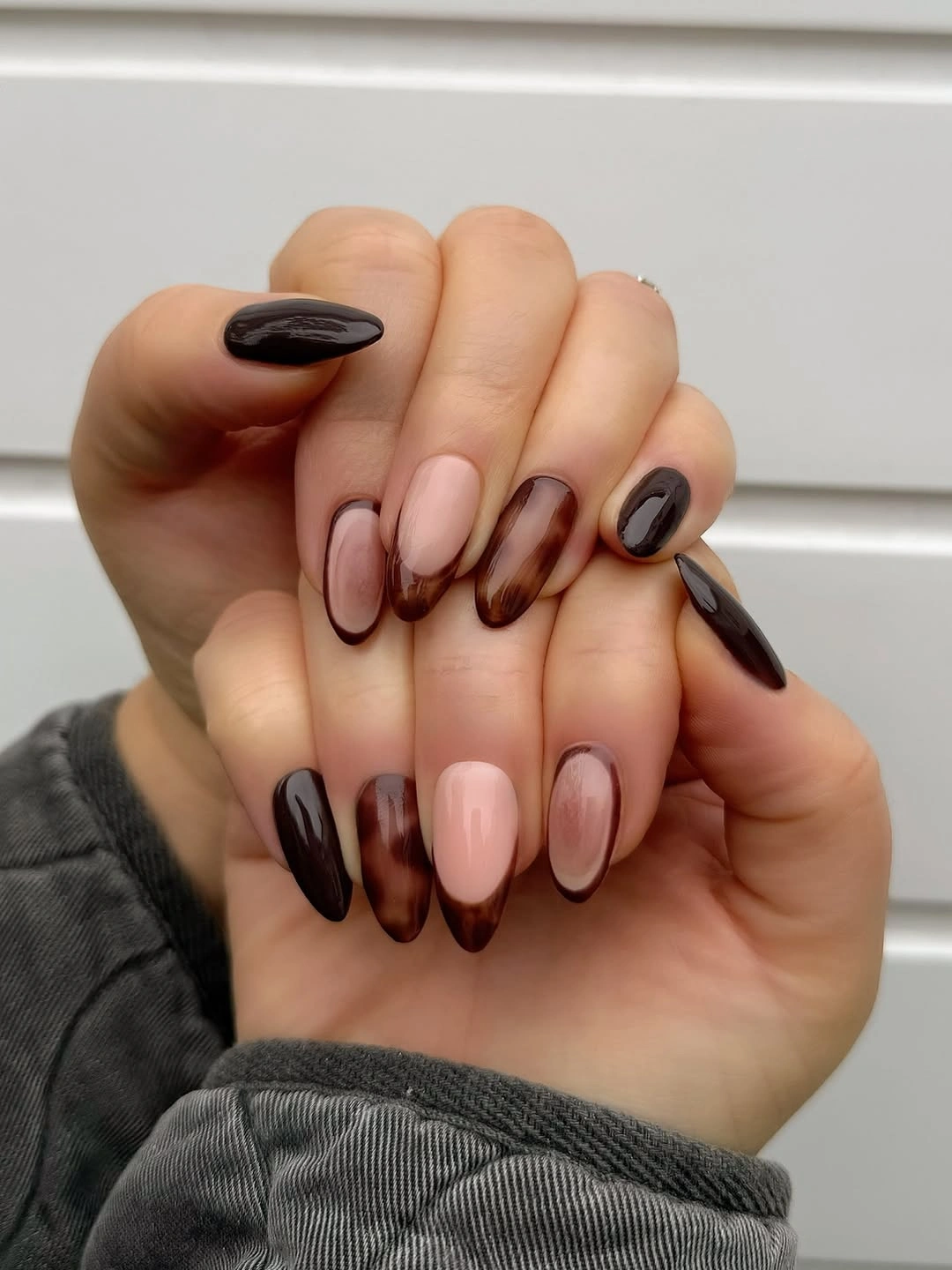
Keep the framed design on two nails and use solid espresso on the rest for a calmer result. A medium almond can shorten the contour to the tip and one side, while a short oval should use one simple border. Taupe or soft brown can replace the deepest shade if the contrast needs to be lower. This keeps the transparent center visible and the dark palette easy to wear.
The design works because transparency provides a pause between rich brown fingers and makes the long shape feel lighter. It is useful when you want a dark collection with visual detail but no glitter or flowers. The limitation is that close contours can crowd the center, so leaving more open space will improve the balance.
Warm Solids with Delicate Floral Accents
Long almond nails combine terracotta and warm brown solids with pale nails carrying delicate floral art. The colors are deeper than the early-season ideas, but the floral accents keep the hand soft and personal. The almond shape gives the warm solids a clean line and leaves enough room for the flowers to sit without filling every surface.
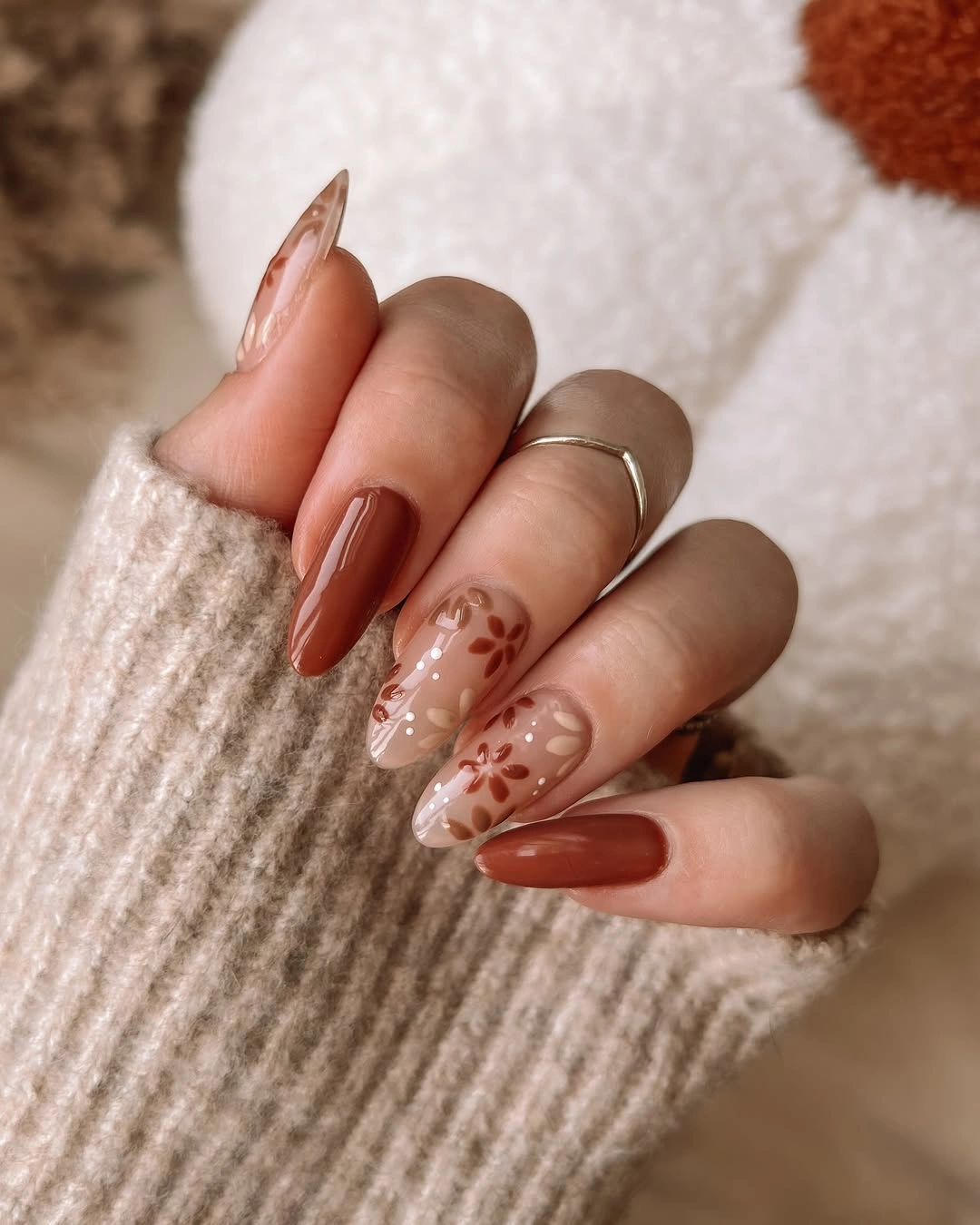
Use the floral detail on two nails and keep the remaining fingers in terracotta or nude for a more edited set. A medium almond can simplify the flower into a few petals, while a shorter shape needs one larger mark. Soft cream can replace the pale base when the design should feel warmer and less pink. Repeating one solid color will give the flowers a clearer frame.
The balance comes from letting the solids carry the color and the flowers carry the detail. That keeps the manicure easy to style while still giving it a clear autumn reference. The tradeoff is that warm shades can merge under low light, so pale accent nails and visible spacing will help the flowers remain readable.
Cool Blue with Bronze Sparkle
Long almond nails pair cool blue with warm bronze shimmer, creating a color contrast that feels more editorial than a standard brown set. The two finishes are glossy and reflective, but the palette remains limited enough for the almond shape to stay visible. The cool base supplies freshness, while bronze brings the seasonal warmth back into the hand.
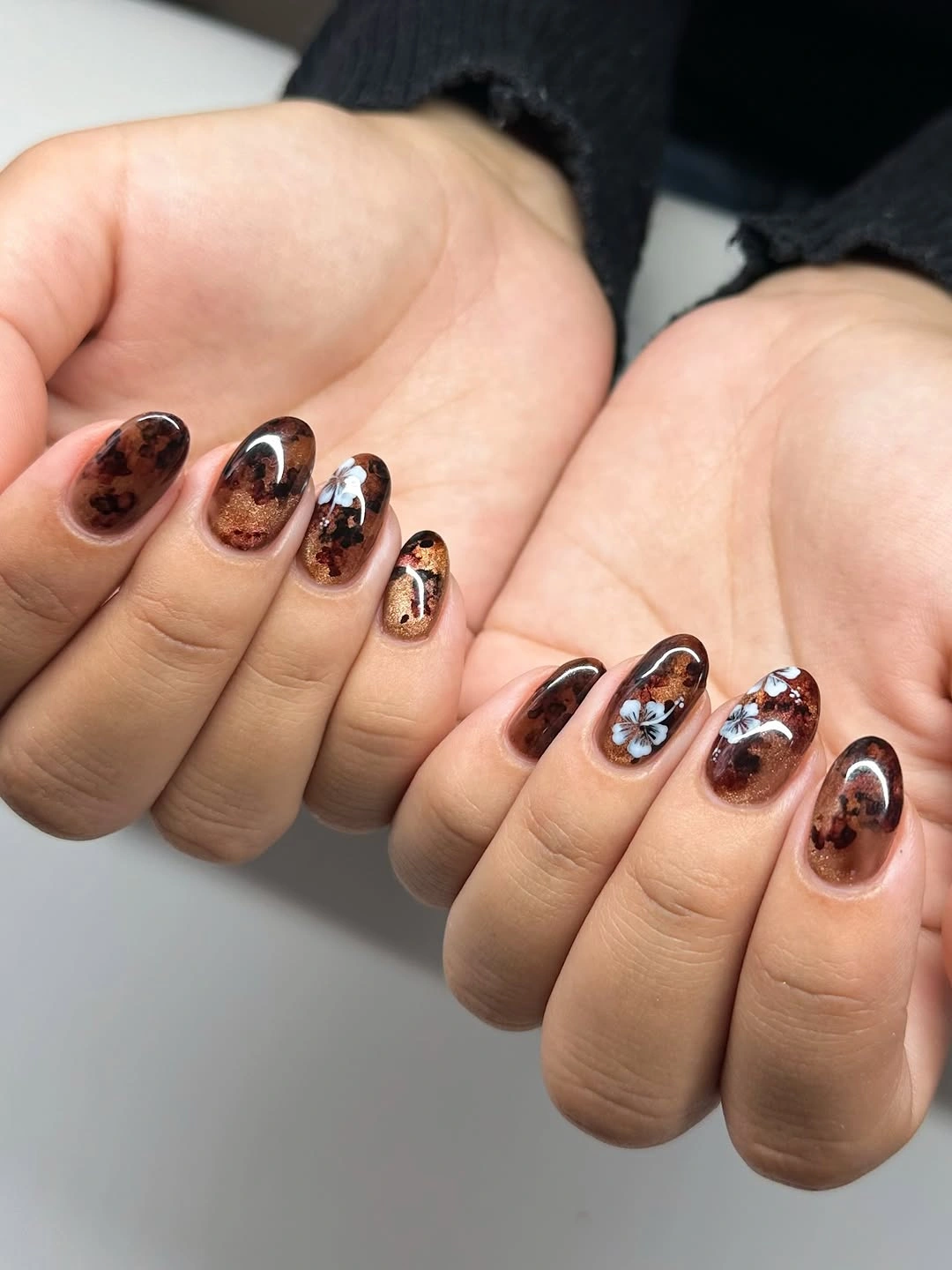
Use blue on three nails, bronze on one, and reserve a blue-to-bronze fade for the ring finger if you want less reflection. A medium almond can carry the same temperature contrast with shorter length, while a short oval benefits from metallic teal and copper instead. Avoid adding motifs so the color relationship stays clear. The color pairing already supplies enough visual interest for the hand.
The design works because the warm and cool shades are allowed to remain distinct instead of blending into one muddy tone. It gives a reader a fall palette that feels less predictable while still pairing with denim, gray, and cream. The limitation is lighting, since metallic color changes quickly, so strong separation will keep the idea recognizable.
Amber Solids with White Leaf Lines
Short almond nails use glossy amber-orange solids and add white leaf-like line art on selected fingers. The warm color carries the seasonal mood, while the pale lines create a simple focal detail without requiring a full pattern. The almond shape keeps the amber feeling elongated, and the white marks add a clean contrast.
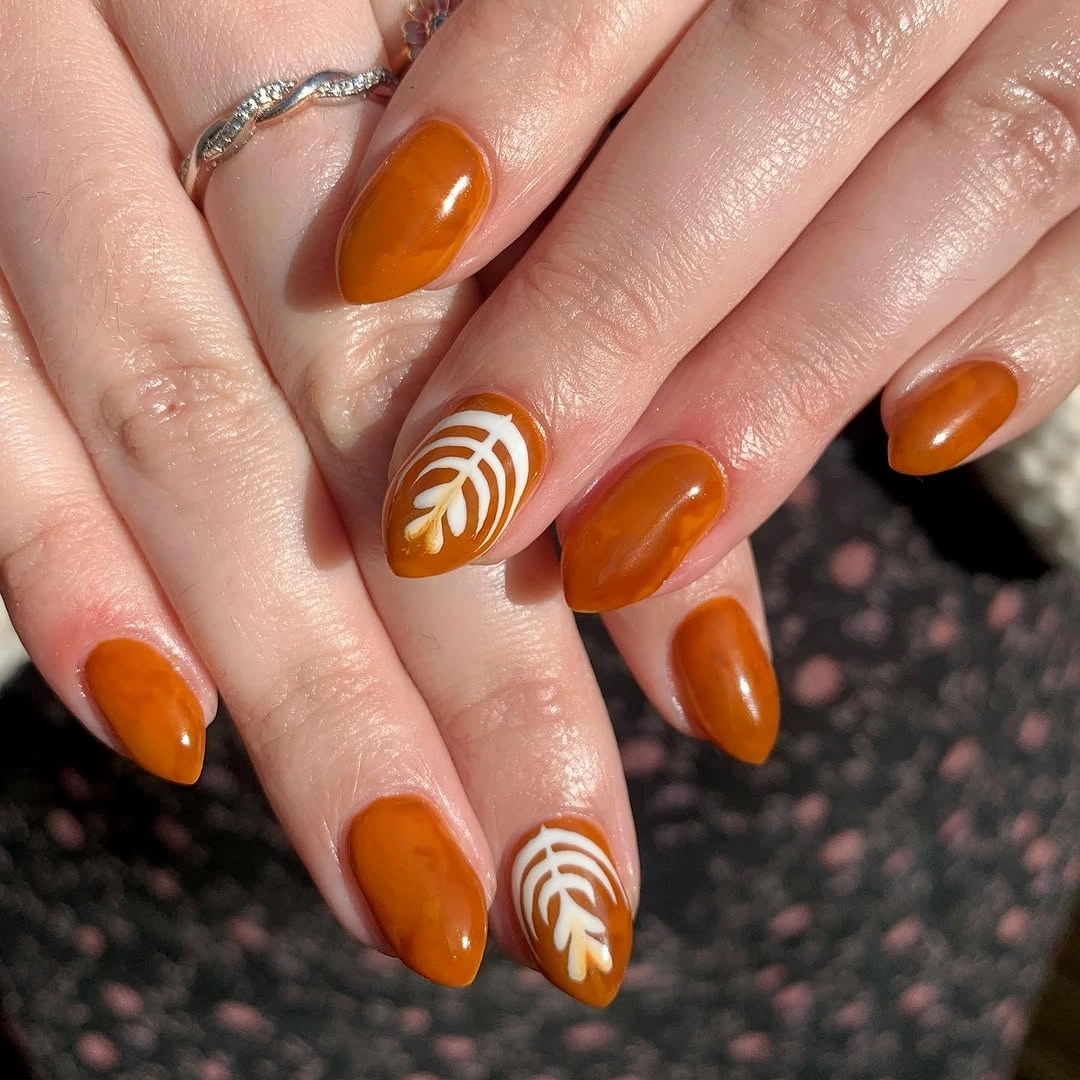
Reserve the white line art for two nails; the rest can stay in solid amber for a sharper composition. A very short almond should use one broad leaf curve, while a medium length can carry a few separated lines. Brown or rust can replace amber when you want the same idea to feel deeper. Keeping the other fingers plain will make the light lines easier to read.
The design is easy to understand because one warm color remains dominant and the white details repeat a single visual language. It works well with knitwear, denim, and cream accessories, while the short shape keeps the stronger shade practical. The tradeoff is that white lines can look stark, so a warm cream may create a softer transition.
Bronze Glitter with Dots and Tortoiseshell
Short rounded nails combine bronze glitter, cream dots, and translucent tortoiseshell-like accents. The palette is warm and reflective, but the compact shape keeps the mixed details from feeling oversized. Each finish has a separate role: glitter adds light, dots add rhythm, and the brown pattern supplies depth.
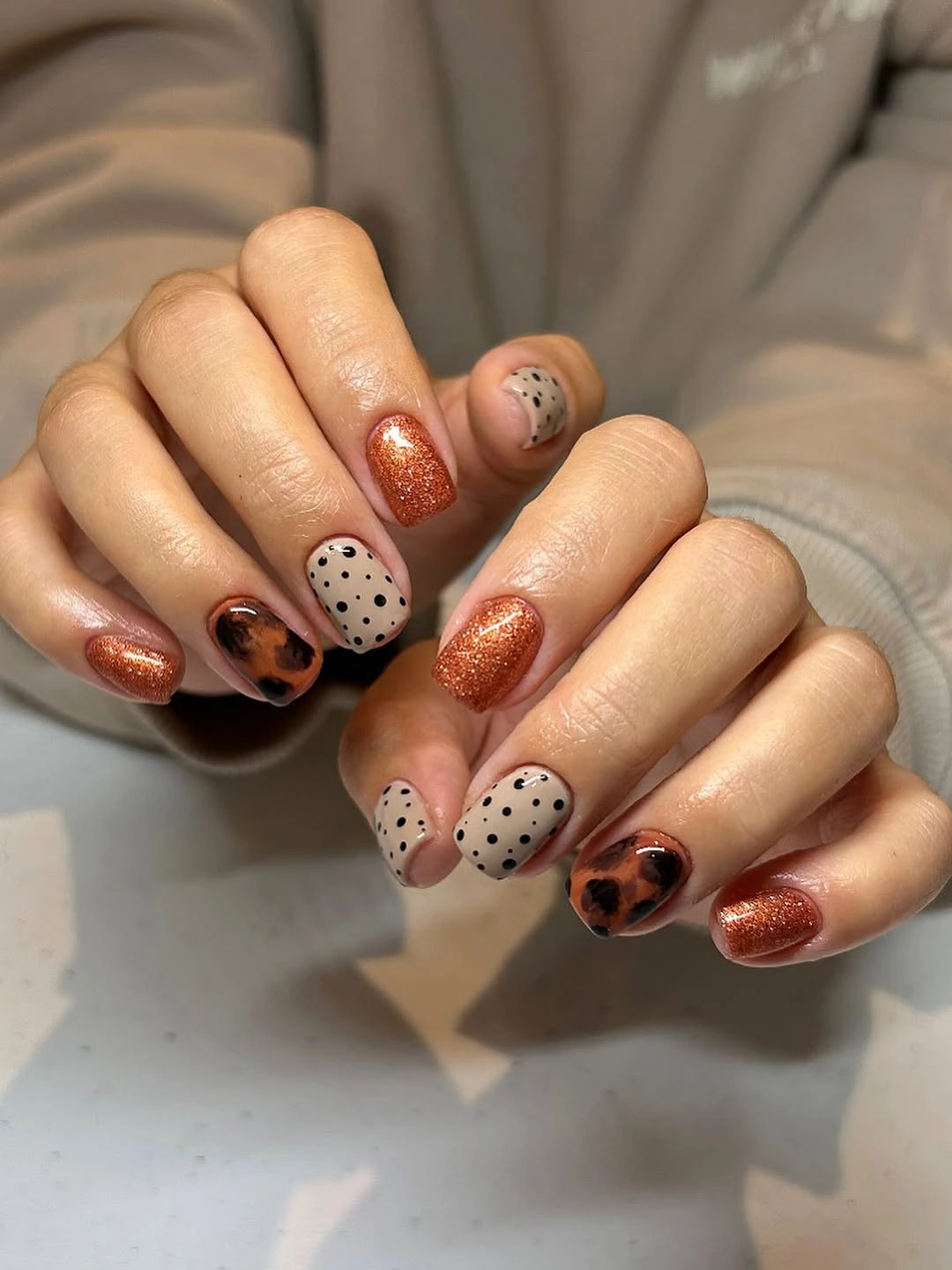
Choose two accents instead of all three if you want a calmer version, such as bronze glitter with one tortoiseshell nail. A very short round shape needs larger dots and broad patches, while a medium length can carry more variation. Keep the cream base visible so the darker details do not merge. One clear focal finish will keep the short shape from feeling crowded.
The design works because the color family stays warm even as the finishes change. It offers a playful seasonal option for someone who wants more than a solid but still prefers a short, manageable shape. The tradeoff is visual density, since glitter, dots, and pattern can compete quickly, so one should remain the clear focal detail.
Brown, Cream, and Black Pattern Families
Short rounded nails use brown, cream, and black in a mix of stripes, dots, and small patterned accents. The hand feels coordinated because the colors repeat across the different motifs, while the short shape keeps the design close and graphic. The palette is seasonal without needing orange, red, or a literal leaf drawing.
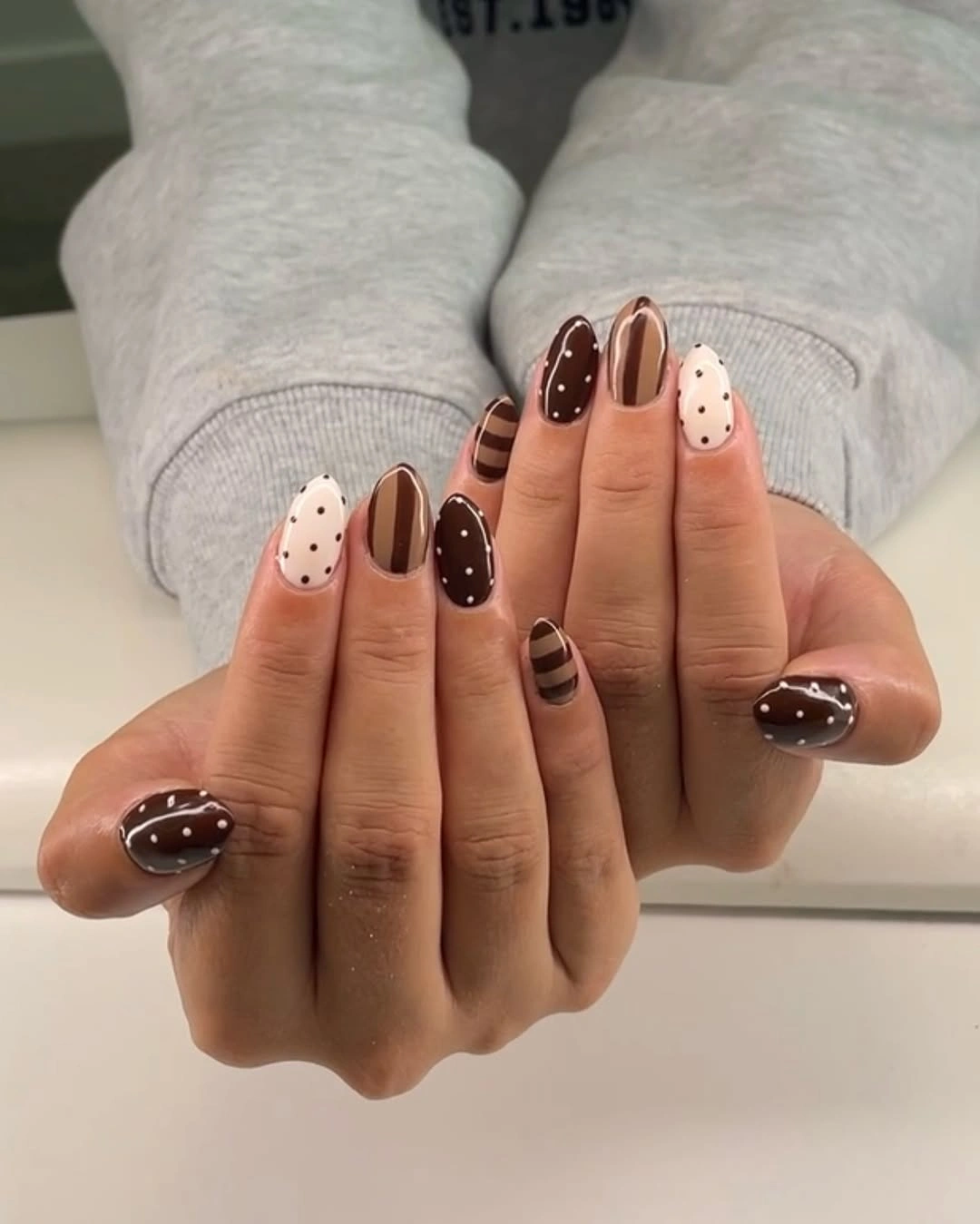
Use stripes on two nails and dots on one, leaving the rest in solid brown or cream for a cleaner result. A very short nail should carry broad lines and larger dots, while a medium rounded shape can support a little more variation. Warm beige may replace cream if you want the hand to feel softer. Repeating one solid brown finger will give the patterns a stable anchor.
The limited palette lets several pattern families coexist without looking disconnected. It gives a reader a way to build a personalized fall set by choosing one graphic idea per accent finger. The tradeoff is that equal-sized patterns can compete, so alternating a larger stripe with smaller dots will create a clearer visual hierarchy.
Black Nails with Small Colorful Florals
Short rounded nails use glossy black solids and small floral marks in white, blue, pink, and green. The dark base provides the fall depth, while the bright flowers create tiny points of color that keep the hand lively. The compact shape makes the floral detail feel like a focused accent rather than a full decorative field.
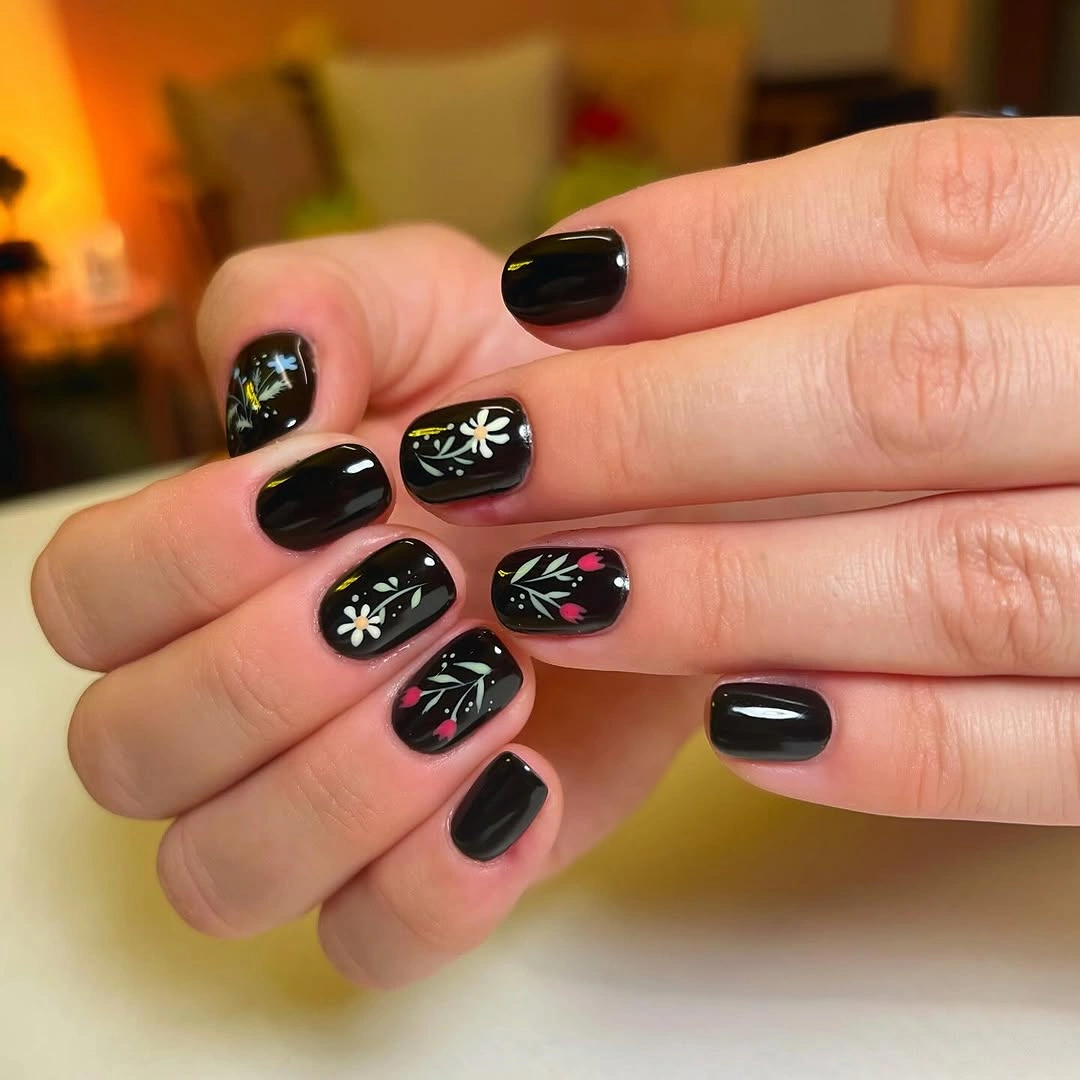
Keep flowers on two or three nails and leave the rest solid black for a sharper version. A very short nail needs one broad flower or a simple cluster, while a medium shape can carry several spaced marks. If black feels too strong, deep navy or espresso can support the same colors more softly. The brighter marks should remain accents rather than a second full palette.
The contrast works because the flowers repeat a small set of bright colors while the black keeps the overall mood grounded. It is useful for someone who wants dark fall nails with a cheerful interruption, especially against gray or cream clothing. The limitation is that tiny bright marks can disappear if they are too close together, so spacing matters.
Berry, Teal, and Floral Accent Nails
Short rounded nails combine burgundy, teal, and blush solids with floral accent nails that repeat the same colors. The jewel tones make the set feel seasonal, but the pale flowers keep it from becoming too dark. The matching finish across the different colors helps the hand read as one collection despite the varied palette.
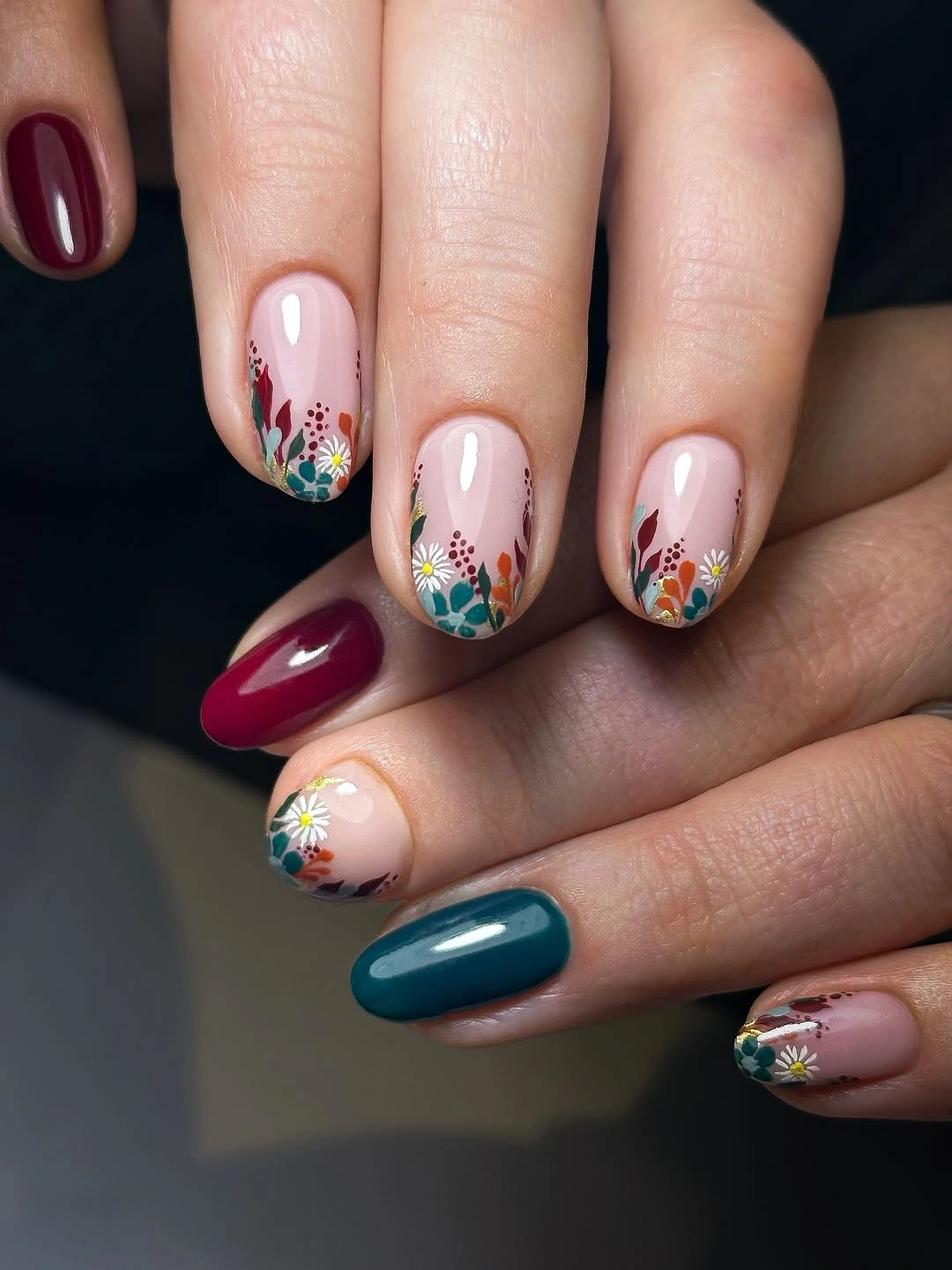
Choose burgundy and teal as the main colors, then reserve the floral detail for two blush nails. A very short round shape can use one larger flower per accent, while a medium length can support several tiny petals. Brown may replace teal if the set needs a warmer, quieter direction. The pale flowers should remain simple enough to separate from the jewel tones.
The design works because the accent flowers repeat the surrounding colors instead of introducing an unrelated shade. That makes the palette lively but still controlled, and the short length keeps it practical for daily wear. The tradeoff is that several jewel tones can compete with one another, so one color should remain the dominant anchor.
Amber, Blue, and Bronze on Long Almonds
Long almond nails pair cool blue with warm amber and bronze shimmer, using each color on selected fingers and allowing the reflective surfaces to create depth. The palette feels autumnal through the bronze and amber, but the blue keeps the collection fresh and less predictable. The almond shape gives the color blocks enough length to look intentional.
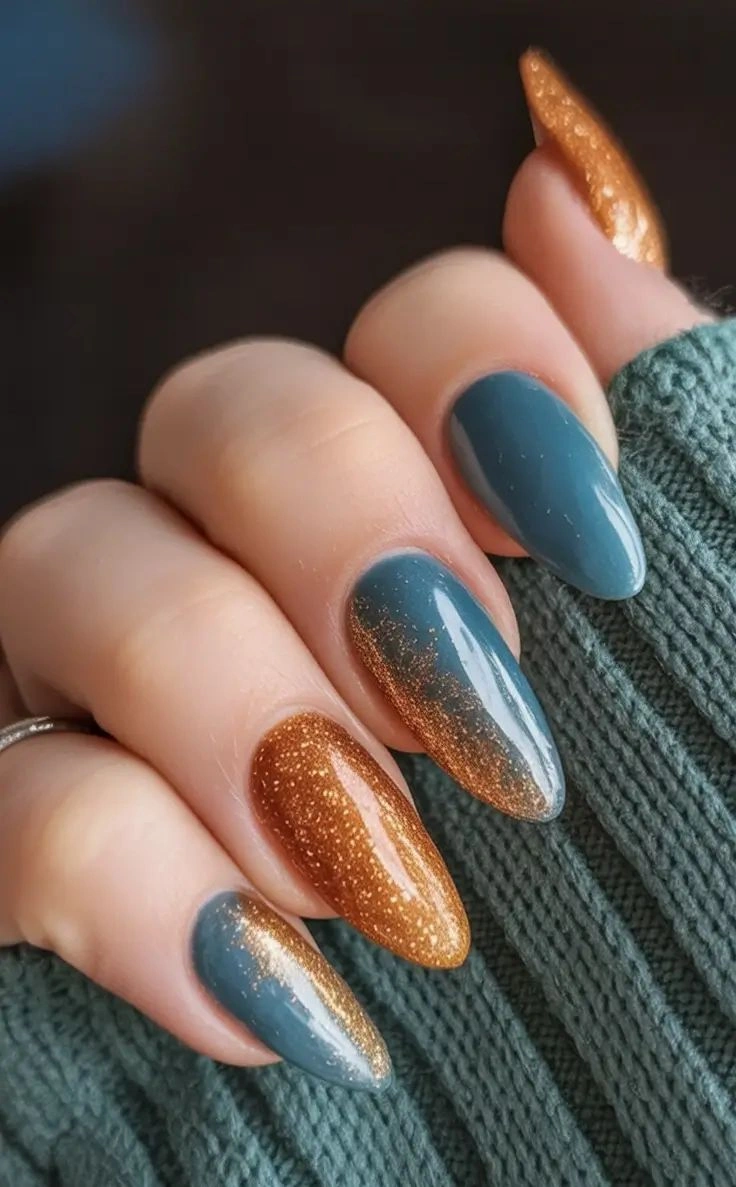
Use blue on three nails and place amber on one accent, reserving the bronze fade for the ring finger. A medium almond can keep the same color relationship with a shorter outline, while a short oval benefits from one warm metallic accent instead. Avoid adding a motif so the temperature contrast remains the main event. The color blocks should stay distinct enough to read from across the hand.
The set works because the warm and cool tones are balanced through finish and shape rather than blended into one color. It suits a reader who wants fall ideas with a little editorial edge, especially with denim or gray clothing. The limitation is that reflective color changes under different light, so distinct blocks will remain easier to read.
Green and Pink Dots in a Graphic Almond Set
Long almond nails close with forest green and pale pink, using dotted details across both colors. The dark green gives the hand a seasonal depth, while the pink brings contrast and keeps the design playful. The long shape provides room for the dots to remain separate, and the repeated mark creates a simple structure.
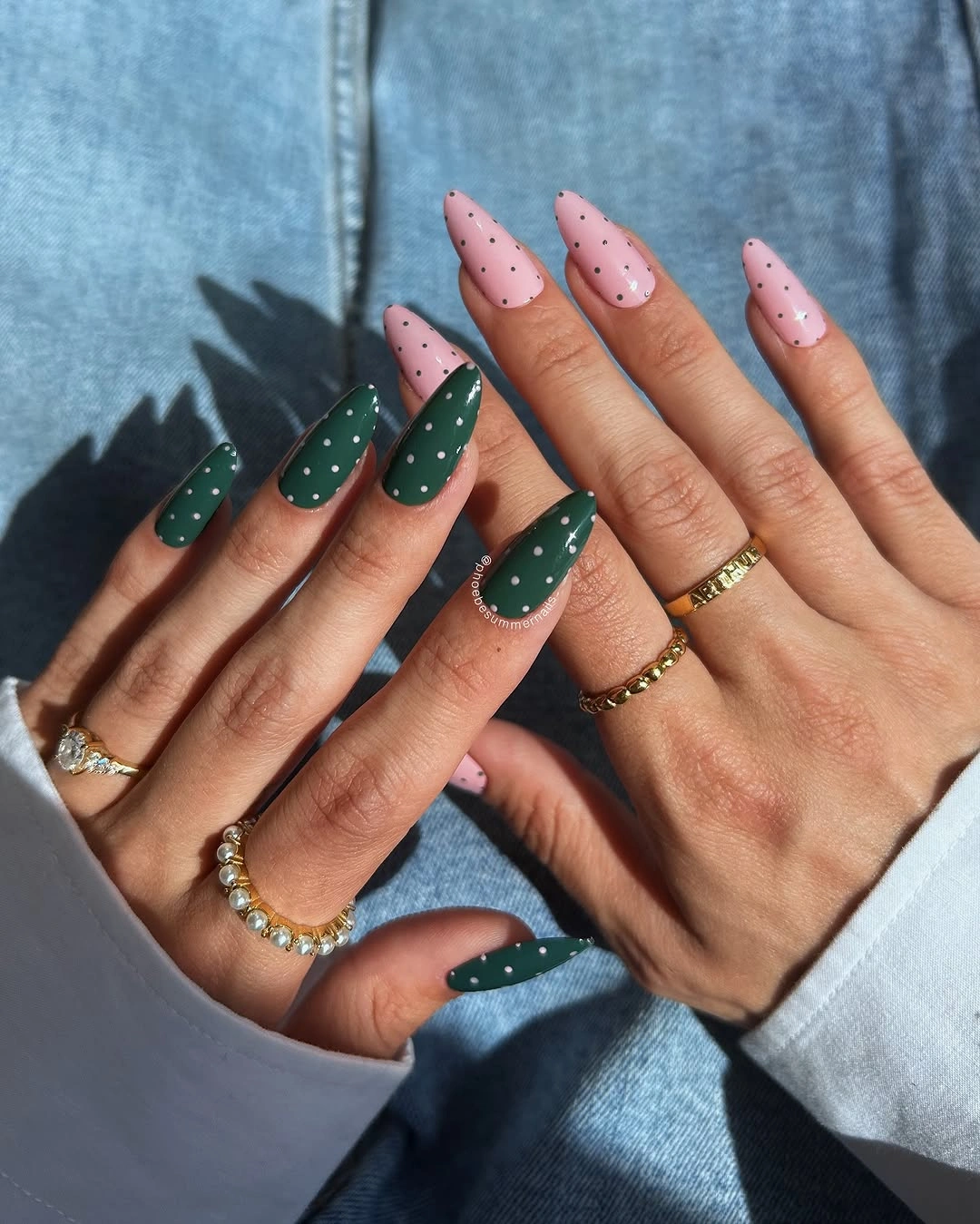
Use green on three nails and pink on two, then place dots only on the accent fingers for a cleaner arrangement. A medium almond can use larger dots with more spacing, while a shorter shape should keep the pattern near the tip. Deep teal can replace green when the palette needs a cooler shift. The sparse dots will let the long almond outline remain visible.
The dots give the set a clear visual rhythm without requiring a complicated illustration, which makes the strong color combination easier to wear. Green and pink can work with denim, cream, and black clothing when one shade is repeated in an accessory. The tradeoff is that a long shape already carries visual length, so keeping the dots sparse will preserve balance.