Dark manicures become more interesting when the color has somewhere to go. These fall dark nail shadow ideas move through burgundy, espresso, navy, plum, copper, and near-black finishes, with the shape and reflected light doing as much work as the pigment. Some sets are compact and polished, while others use long almond lengths to turn a quiet tonal shift into the main event.
The strongest choices here are not all equally dramatic. A short rounded shape can hold several deep shades when one color provides relief, and a single reflective accent can give a plain brown set more depth without adding a busy motif. Use the collection as a visual edit: notice where the color stays solid, where it fades, and where a small contrast keeps the darkness readable.
Four Deep Shades on a Short Rounded Shape
Short rounded-square nails make the first palette feel deliberate rather than overloaded. Smoky gray-lavender, burgundy, deep navy, and a glittery navy accent appear together, with small pale marks adding a little structure to the darker surfaces. Because the length stays compact, every shade remains close to the hand instead of creating four separate statements that compete for attention.
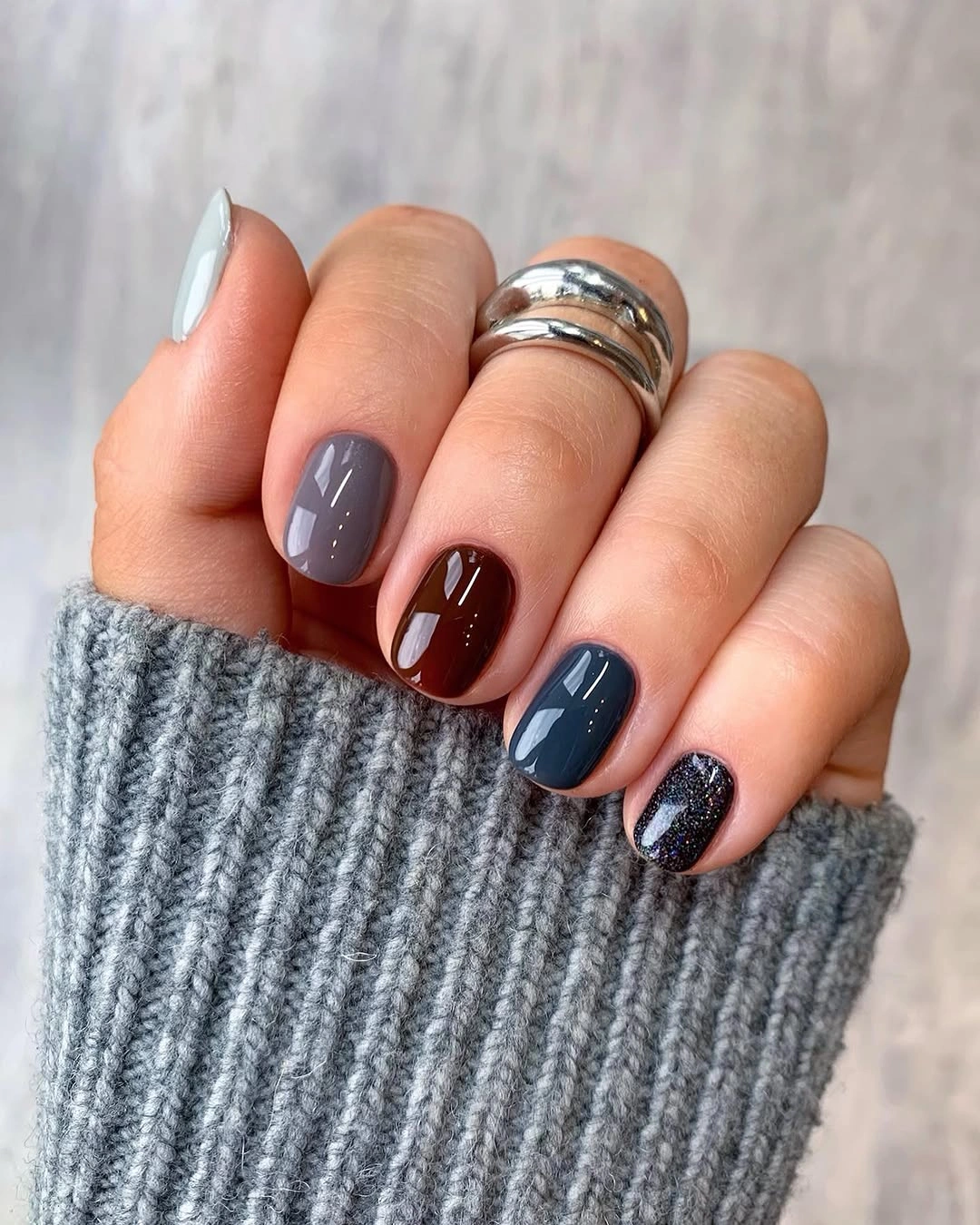
The balance comes from contrast in temperature and finish. The cool gray and navy interrupt the warmer wine shade, while the glitter accent catches light at the edge of the set and gives the eye a place to rest. That makes the design useful for someone who wants dark fall nails but does not want the entire manicure to read as one flat block of black or brown.
For a shorter or more restrained version, keep the smoky gray, burgundy, and navy, then reserve sparkle for one nail on each hand. A rounded-square edge also gives the colors a practical outline, although the small pale details may need to be enlarged when the nails are very short. The tradeoff is simple: fewer shades bring more calm, while the four-color mix gives the manicure its after-dark energy.
Chocolate Almonds With Small Pale Accents
Chocolate brown becomes the anchor on these medium almond nails, while tiny pale marks near the ends keep the set from disappearing into one warm tone. The base looks glossy and rich, and the small accents are placed lightly enough that the elongated outline remains the first thing you notice. It is a dark manicure with a measured interruption rather than a full pattern covering every nail.
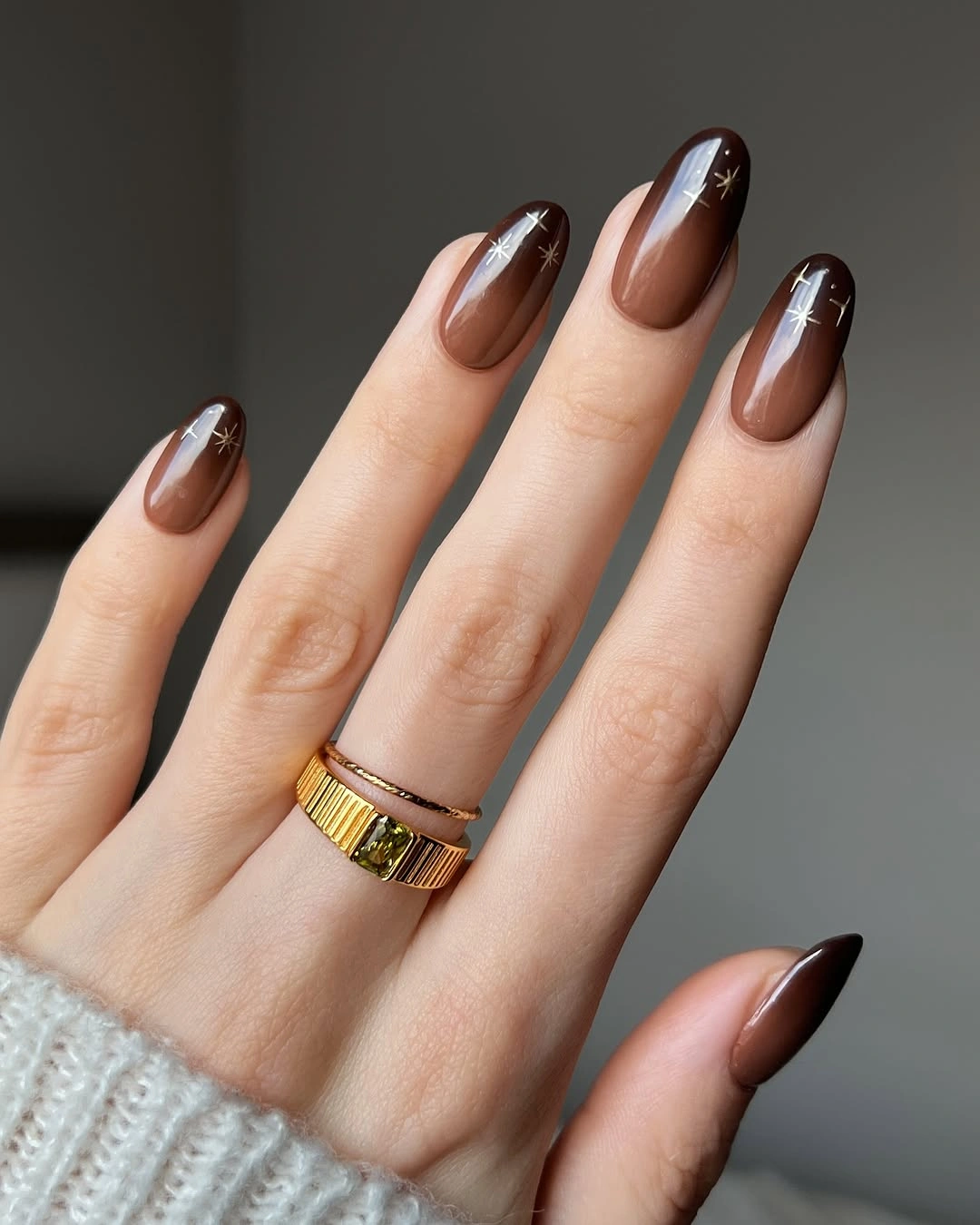
The light marks work because they repeat the brightness of the surrounding highlights without changing the brown palette. They act like punctuation, leaving most of each nail quiet and allowing the almond shape to carry the length. If you are comparing this idea with a spotted or glittered design, its advantage is visual control: there is detail, but the surface still reads as chocolate first.
Keep the accents to two nails when recreating the idea for everyday wear, and let the remaining fingers stay solid. A shorter oval can use the same chocolate color with a slightly larger pale mark, since very small lines can lose their clarity on a compact surface. The limitation is that the restrained detail depends on clean placement, so an uneven mark will be more noticeable than it would be in a busier design.
Burgundy Solids Meet Warm Spotted Details
Here the rounded nails pair glossy deep burgundy with brown and amber-black spotted accents. The solid wine color supplies a clear anchor, while the warmer patterned nails bring variation without pushing the palette outside the fall range. The design feels collected because the spots echo the brown family already present in the manicure instead of introducing an unrelated bright color.
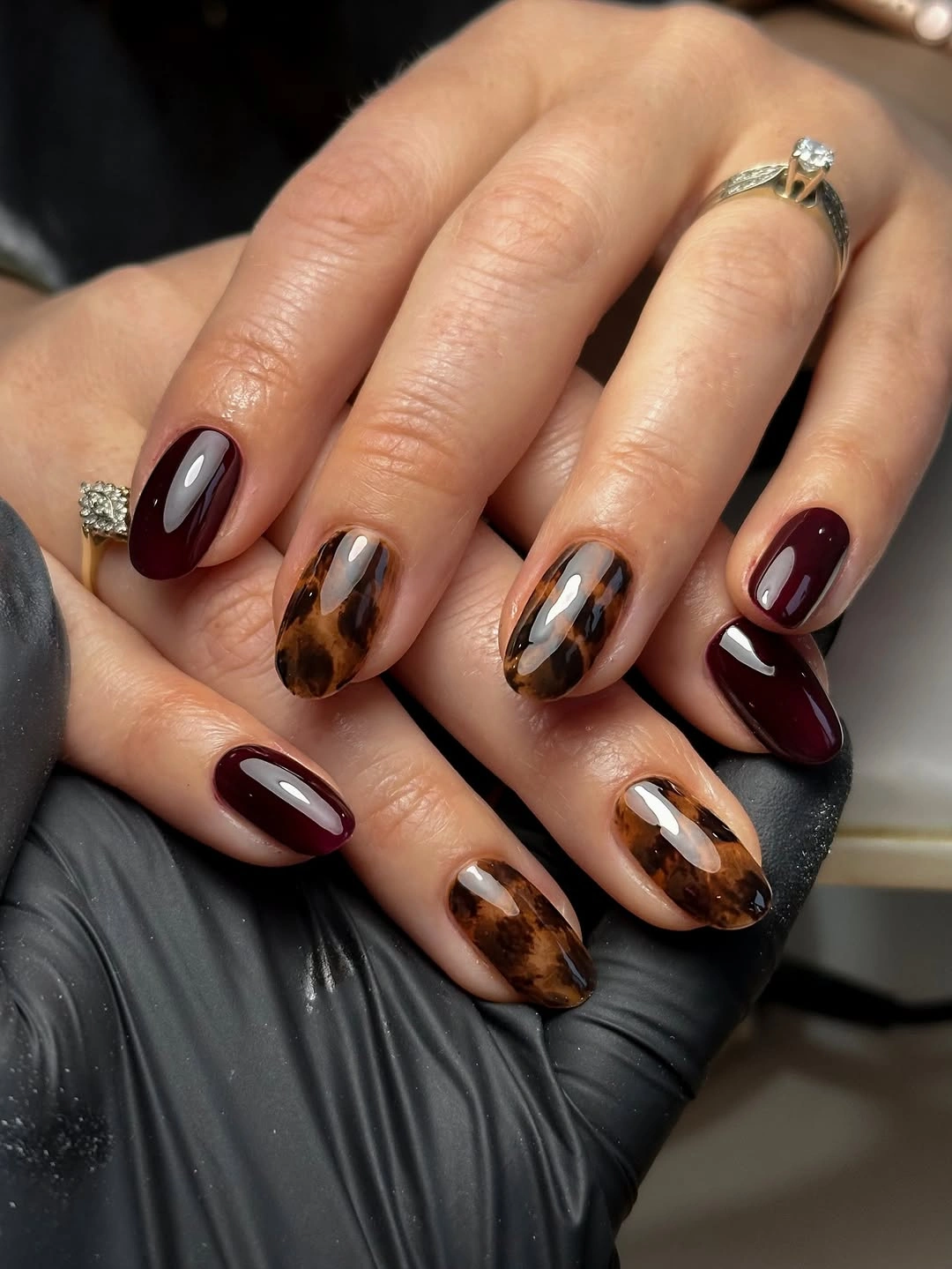
The patterned accents are most effective as a small change in rhythm. They draw attention to selected fingers, then hand the focus back to the burgundy solids, so the manicure never becomes a wall of print. This is a useful approach when you like dark nail art but still want the hand to look orderly from a distance and more detailed only when someone looks closer.
Use one warm spotted accent on each hand if a complete mix feels too decorative, and keep the other nails in the same burgundy family. A rounded-square shape makes the contrast feel grounded, though a short oval would soften the graphic edge. The honest tradeoff is upkeep around the patterned nails: small irregular details can show wear sooner than a single solid coat, so the simplified version is easier to keep visually even.
Deep Cherry Nails With Curved Light
These long almond nails use a deep cherry-wine shade and let bright curved reflections become part of the visual story. The color stays solid, but the glossy surface creates pale arcs that follow the nail rather than adding a separate painted motif. That keeps the design dark and clean while giving the pointed outline enough movement to avoid looking like a plain red manicure.
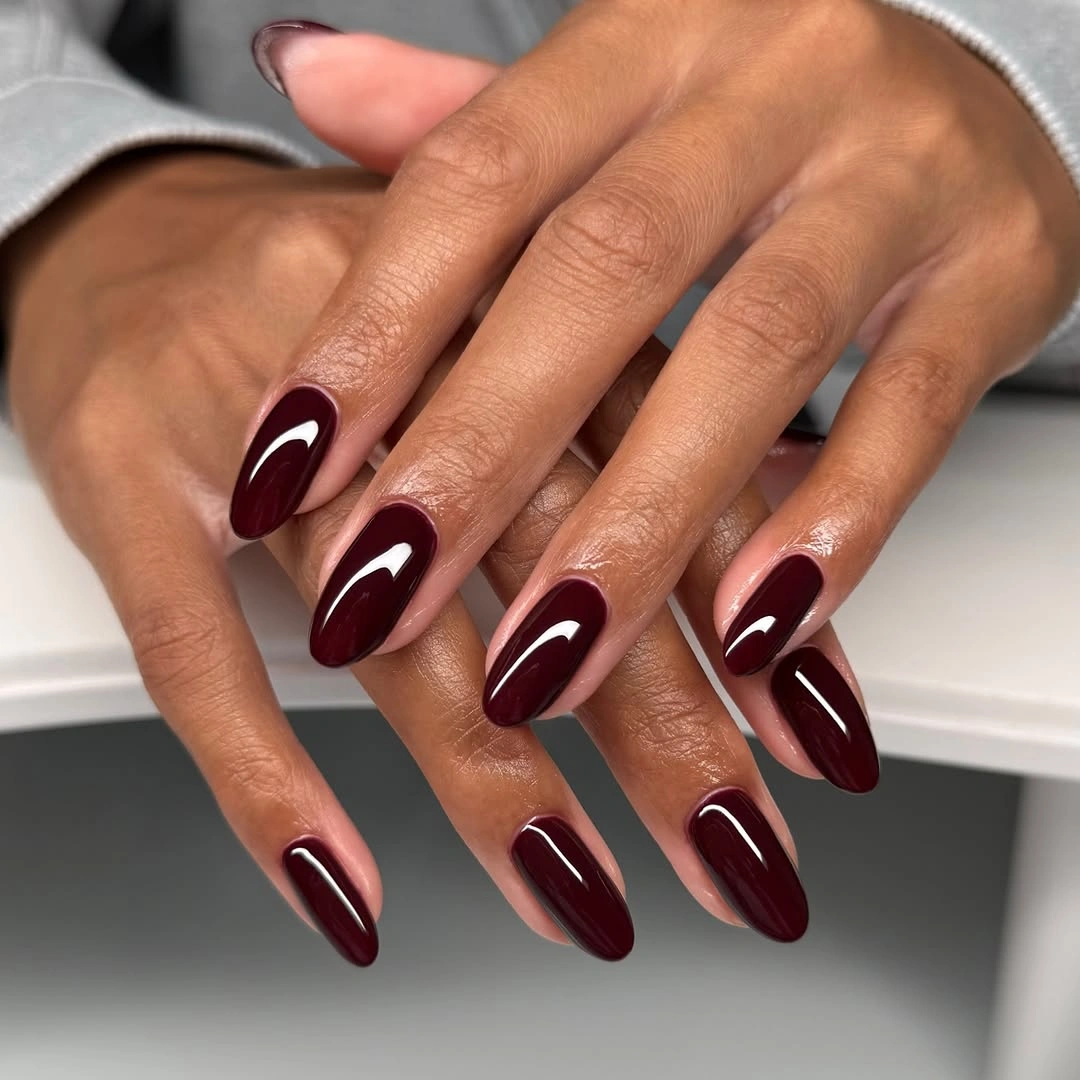
The shine matters because it reveals the red within the depth of the wine color. Against the narrow almond silhouette, a bright curve lengthens the surface and makes the center of each nail easier to read. If you want the same mood with less intensity, a softer burgundy can preserve the reflective effect while reducing the near-black impression at the edges.
On a shorter almond, keep the color even and let one broad highlight do the work instead of trying to repeat several narrow arcs. This is also a strong option for an occasion-neutral manicure because the design comes from surface light, not a literal seasonal picture or an intricate motif. Its limitation is that the contrast will change with lighting, so the set can look quieter indoors than it does under a direct reflection.
Smoky Espresso on a Pointed Almond
A long pointed almond gives this warm brown manicure a shadowed outline. The center appears lighter and more translucent-looking, while the edges and tips deepen toward smoky espresso, creating the impression of a soft fade without adding visible artwork. The color remains understated, yet the tonal change keeps the surface from reading as a single flat brown.
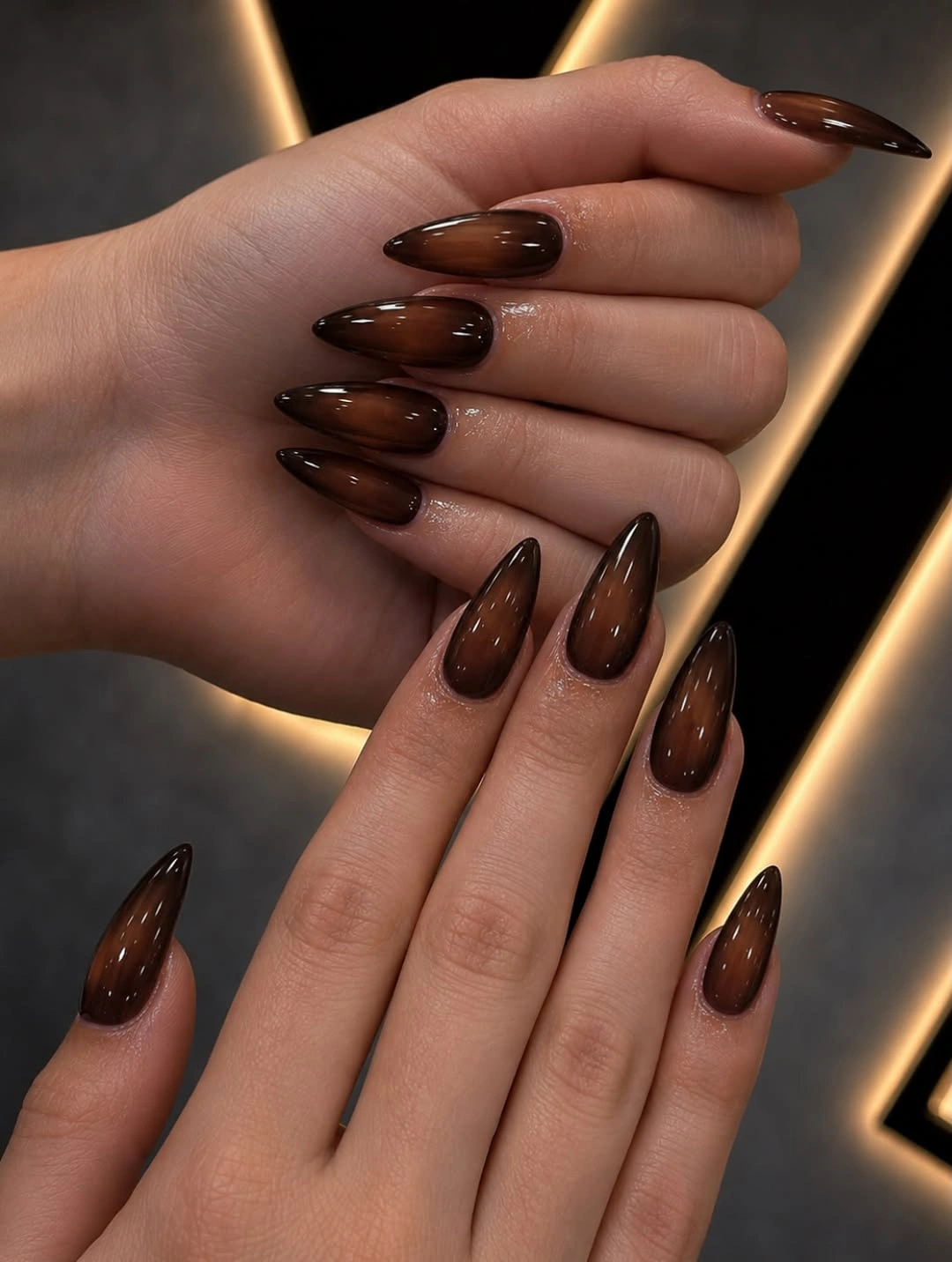
The shape and the color support each other here. A pointed outline naturally draws the eye toward the tip, and the darker perimeter reinforces that direction while the warmer center prevents the design from feeling severe. Compared with a uniform near-black manicure, this version carries more visible warmth and gives jewelry or knit textures a quieter background to sit against.
For a practical adaptation, choose a medium almond and keep the brown center wider so small changes in length do not erase the tonal balance. The design will also be easier to maintain if the fade is subtle rather than sharply divided, since grow-out will be less visually abrupt. Do not expect the same shadow effect under every light, though; its depth depends on the way the glossy surface catches and returns reflection.
Near-Black Espresso With a Clean Silhouette
These long almond nails stay close to a uniform espresso brown, deep enough to read almost black in softer light. There is no dominant artwork competing with the silhouette, so the design depends on a polished surface and a controlled outline. The result is more about density than decoration, with the warmth of brown appearing only when the light moves across the nails.
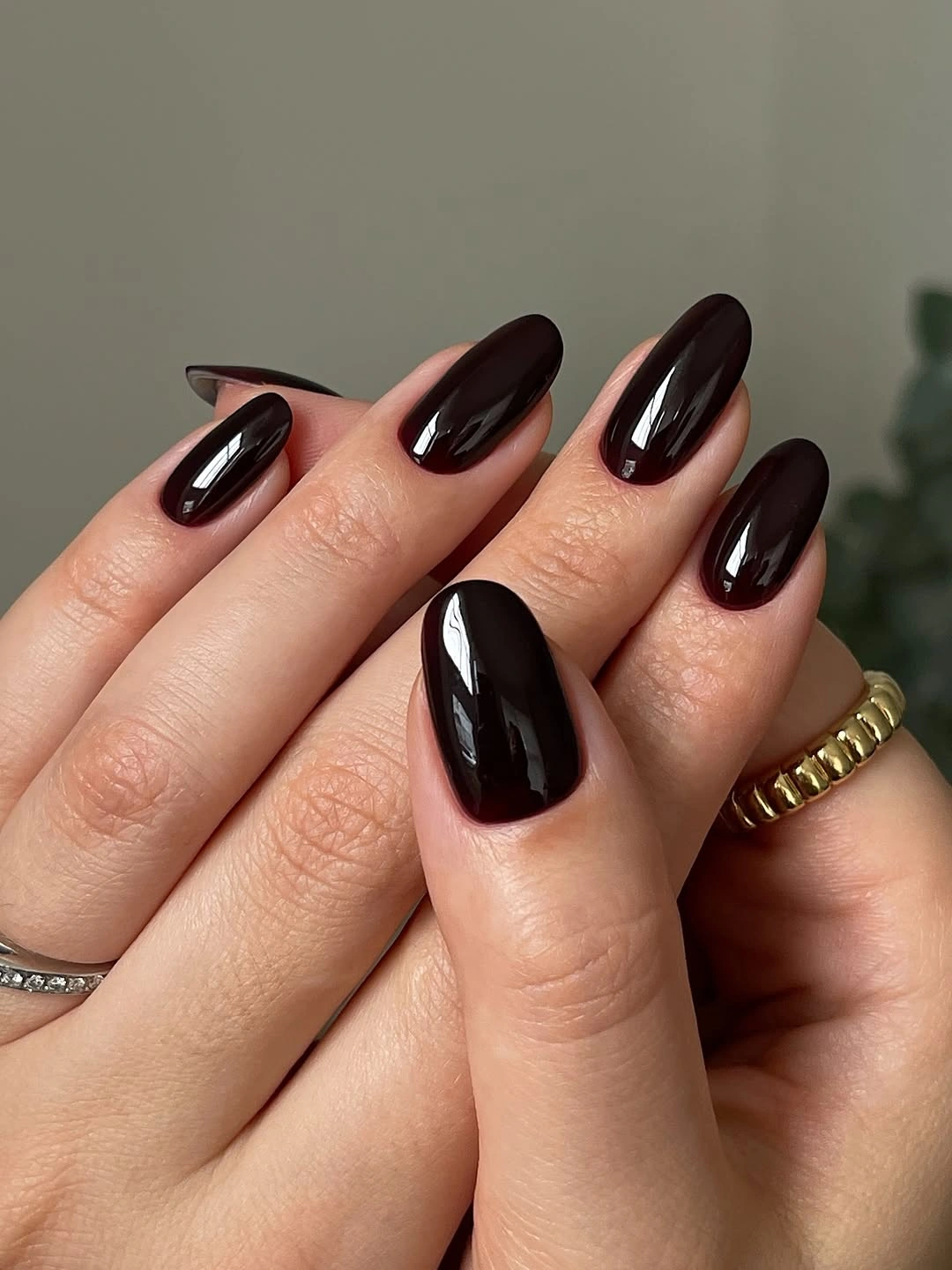
A near-black brown can feel less stark than a true black while keeping the same visual weight. The long almond shape adds a narrow, pointed line, and the plain color gives that line room to remain visible. This makes the set a useful reference for comparing dark manicures: if you like the depth but not the extra shimmer, print, or gradient, this is the quietest direction.
Choose a shorter almond or oval when the color feels too intense on a long tip, and keep the finish glossy so the brown does not turn chalky. One small contrast nail could be added, but it would change the visual logic from silhouette-led to accent-led. The limitation is that a dark uniform shade makes chips and uneven edges easy to see, so the clean shape needs regular attention to stay convincing.
Short Oval Nails in Dark Espresso
The shorter oval shape makes dark espresso feel compact and approachable. The nails are glossy and mostly free of visible decoration, allowing the rich brown color to stay central without the extra length associated with many dark manicures. This is a useful everyday option when you want a fall shade with presence but prefer the hand to keep a low, rounded profile.
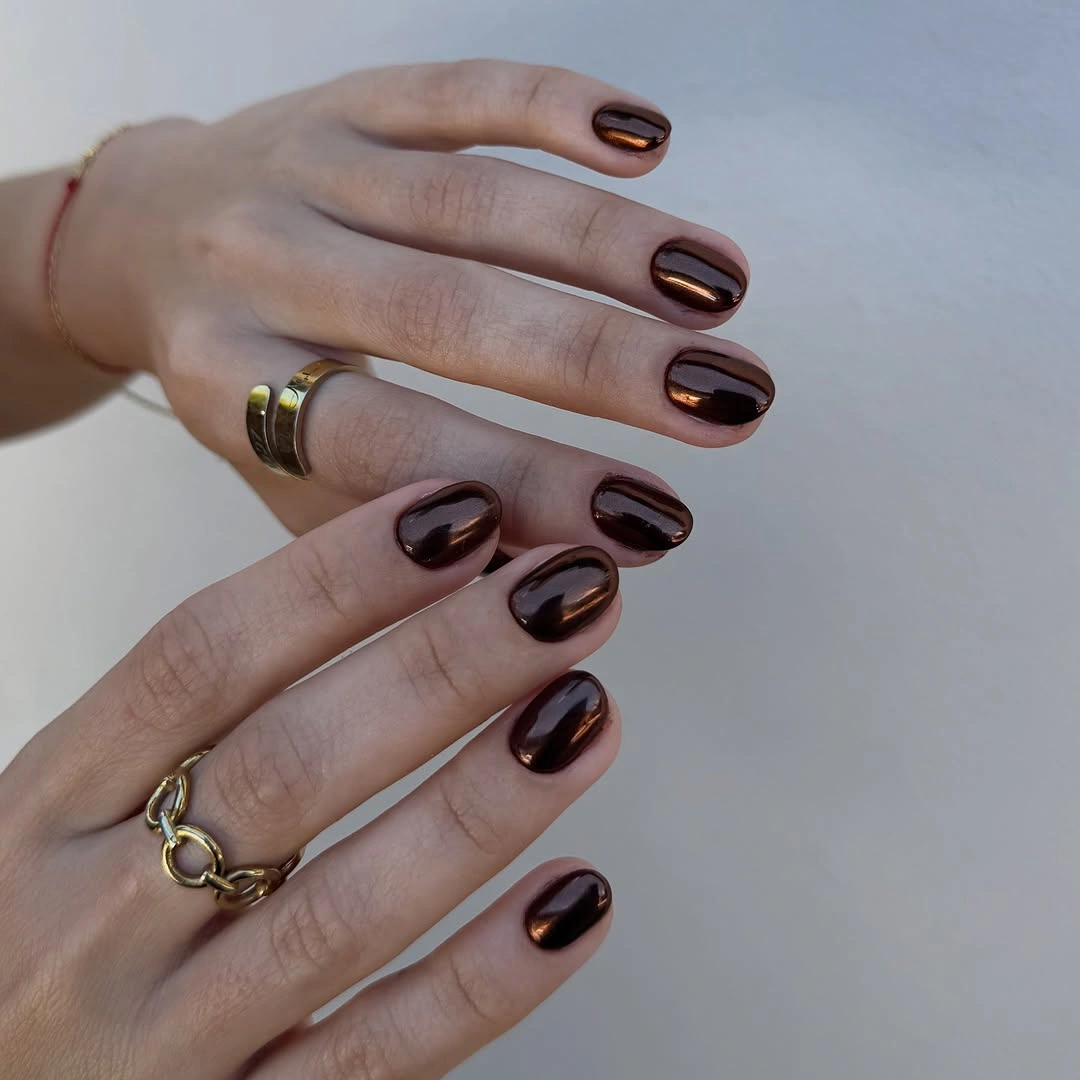
What changes from the long near-black set is not only length but also visual pressure. On a short oval, the same depth looks more contained, and the curved edge softens the transition from skin to polish. The shine supplies enough variation to keep the dark surface alive, while the absence of art makes the color easier to pair with different clothes and jewelry.
If you want a touch more movement, add a fine shimmer to one accent nail rather than switching the whole palette. A short oval also gives a practical base for readers who type, work with their hands, or simply do not want a pointed outline. The tradeoff is that there is less surface for a gradient or large motif, so the design works best when the color and edge are kept tidy.
Burgundy Melts Into a Cooler Plum
This long almond set moves from a deep burgundy into cooler purple-plum shading, creating a smoky transition rather than a hard color block. The red remains visible near the base, while the plum edge adds a cooler note that keeps the manicure from feeling like a simple wine polish. The pointed shape makes the change in temperature especially clear along the tips.
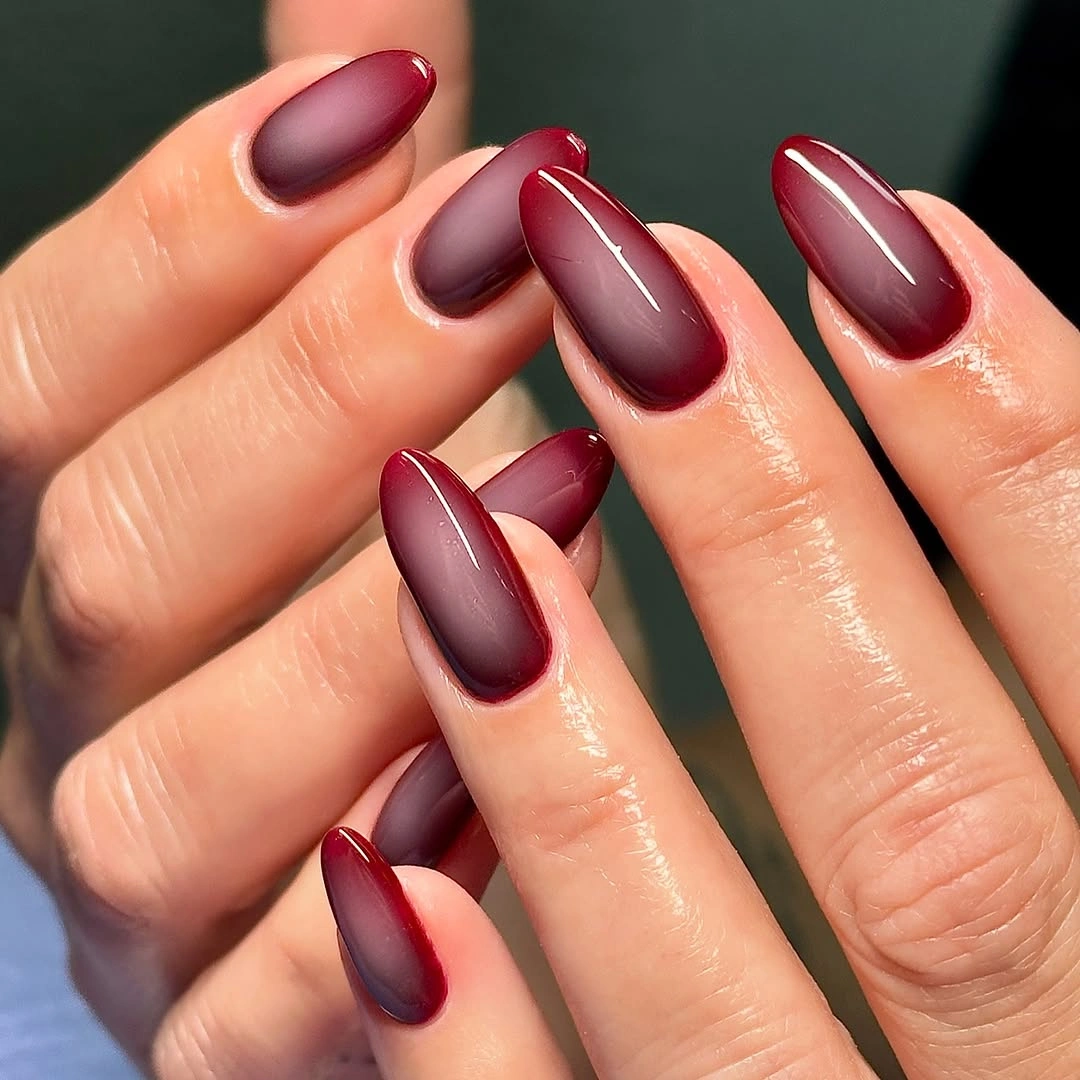
The gradient has its appeal in the relationship between two dark colors. Burgundy gives the manicure warmth and depth, while plum introduces a reflective, slightly mysterious counterpoint without needing silver or glitter. Compared with a black-red fade, this pairing looks softer and more chromatic, so the result can stay moody without losing the color underneath.
On shorter nails, widen the burgundy center and keep the plum transition broad enough to see from a normal distance. A two-color version is easier to place than several overlapping shades, and it will remain readable as the nail grows. The limitation is that the exact balance can shift with lighting: under low light the colors may merge, while direct reflection separates them more clearly.
Copper Bronze With a Metallic Glow
Medium almond nails in copper bronze bring a warmer kind of darkness to the collection. The finish is densely reflective, with fine metallic-looking grain following the length of each nail instead of a separate drawing or pattern. Because every finger uses the same family of color, the manicure reads as a controlled surface study rather than a collection of unrelated accents.
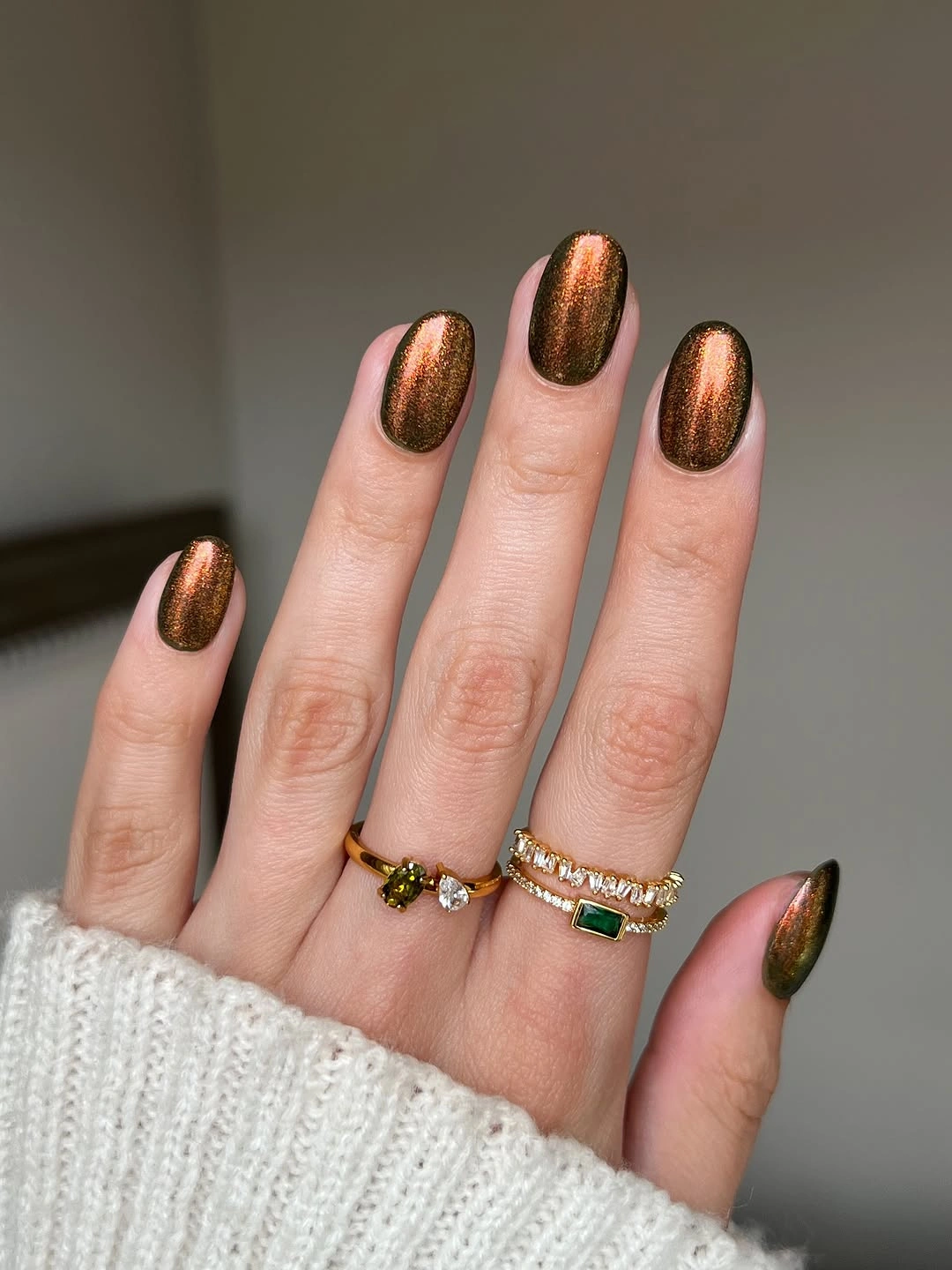
The warmth comes from the balance between brown and copper, not from brightness alone. That makes the shade suitable for fall styling while still giving the hand a clear point of light when it moves. Against a medium almond outline, the reflective surface looks intentional and polished, yet it does not require a contrasting motif to explain what makes the manicure distinctive.
Use a rounded almond or short oval if you want the same color with less visual length, and let the finish remain the main feature. Jewelry can echo the warmth, but the design already has enough reflection to stand on its own, so additional accents should be limited. The realistic limitation is that metallic grain can make surface unevenness more apparent, especially when the light hits the nails directly.
Cocoa Brown With a Controlled Spotted Accent
Glossy cocoa-brown nails form the base here, with a pale neutral nail and a few translucent brown-black spotted details interrupting the solid color. The pattern is concentrated instead of spread over every finger, which lets the brown polish remain the dominant visual decision. The medium almond outline also gives the accent enough room to read without turning the manicure into a full print.
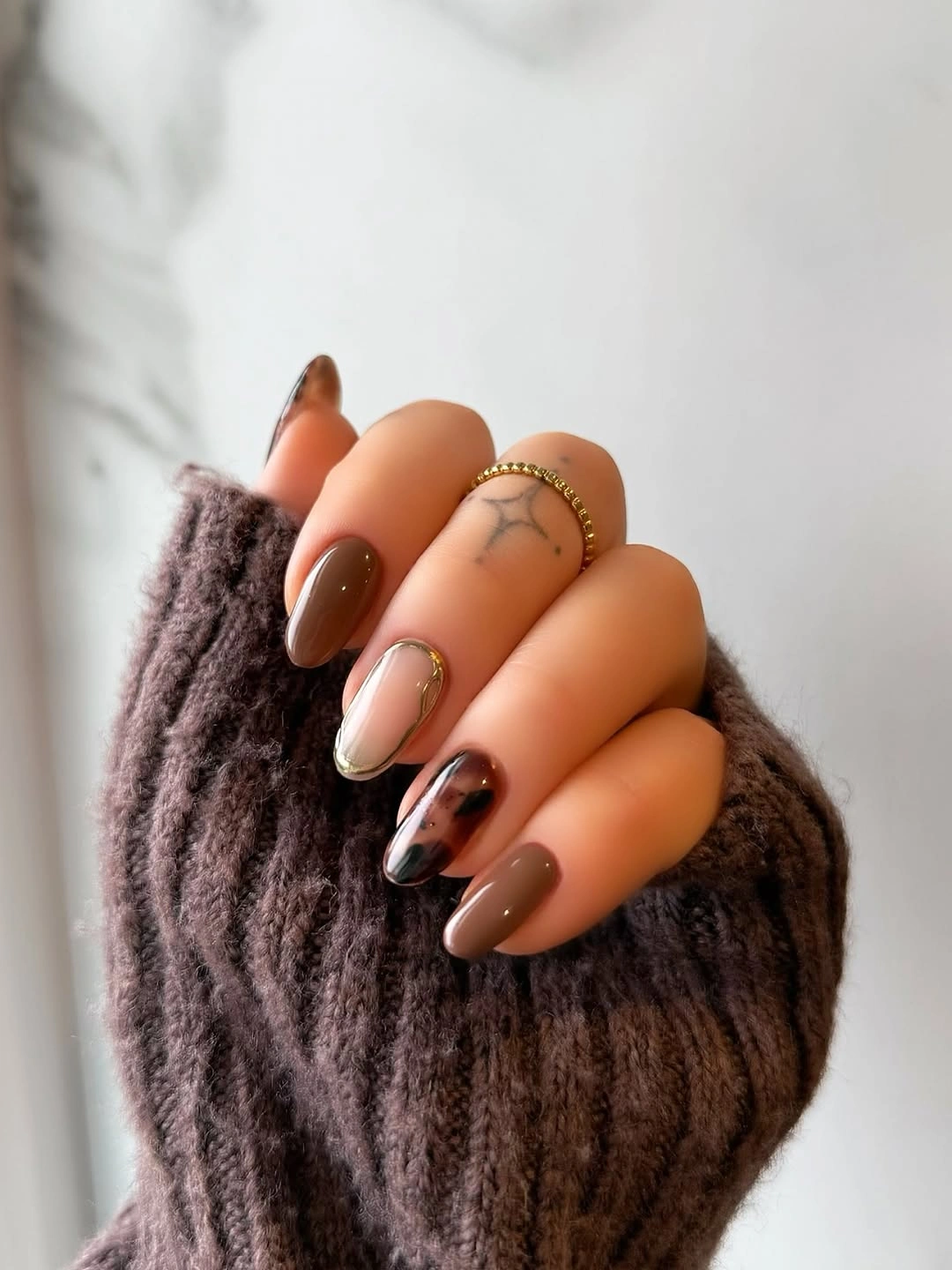
The spotted detail works because it shares the same warm depth as the cocoa base. The pale nail creates a small pause, then the darker spots reconnect it to the surrounding fingers, producing a rhythm of solid, light, and patterned surfaces. If you compare this with the burgundy and spotted set, this version feels quieter because the entire palette stays closer to brown and neutral.
For an easier adaptation, keep the pattern on one accent nail per hand and use a soft tan or cream as the light break. A short almond can carry the same idea if the spots are kept larger and fewer, since tiny marks will blur on a smaller surface. Do not rely on a precise print label to make the look work; the useful part is the controlled contrast between cocoa, pale neutral, and warm dark marks.
Purple Depth With Soft Marbled Movement
Deep plum and violet create the base of this long almond manicure, while lighter lavender patches curve across the surface like soft marbling. The lighter tone is not used as a border around every nail; it appears as movement inside the dark color, which keeps the design atmospheric and slightly irregular. The almond shape gives each shifting patch a long path to follow.
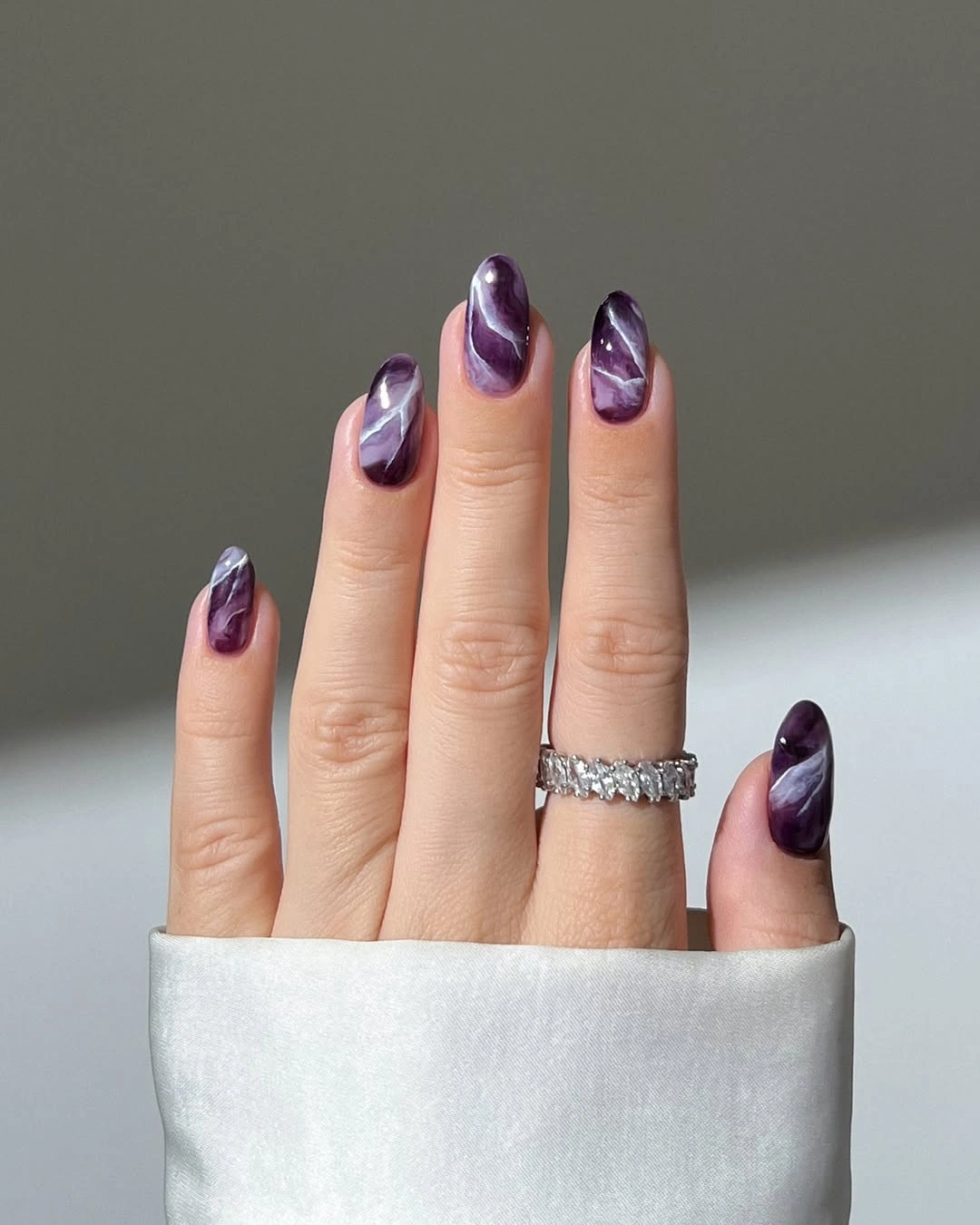
The tonal contrast is enough to make the purple feel dimensional without requiring multiple bright colors. Dark plum keeps the overall mood grounded, and lavender introduces a reflective lift where the surface bends toward the light. This is a good direction for someone who likes dark nail art but wants the detail to be blended into the color rather than placed as a literal symbol.
On shorter nails, use one or two larger lavender curves and leave more of the plum base exposed. That preserves the idea of movement while avoiding a crowded surface where the marbling can lose its shape. The limitation is visual clarity: if the two purples are too close in tone, the design may look almost solid, so the lighter accent needs enough difference to remain visible without becoming pastel.
Black Tips Framing a Red Center
These long almond nails use a near-black edge and a deep red center to create a dramatic but tightly controlled gradient. The red is narrow enough to feel like a glow inside the dark outline, while the pointed tips keep the transition directed toward the ends. There are no extra motifs, so the entire design depends on the relationship between the two darkest parts of the palette.
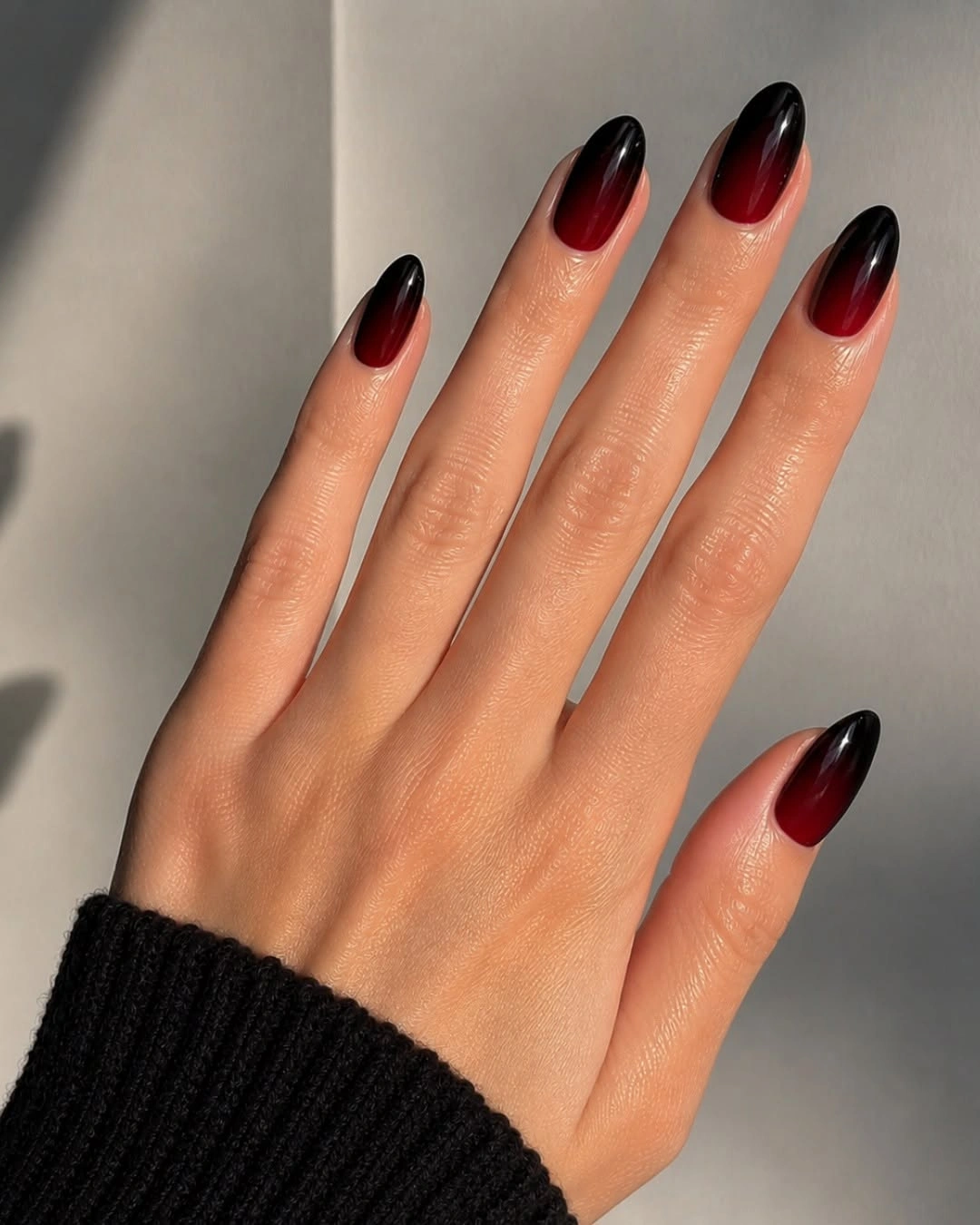
The center color prevents the manicure from becoming flat black and gives the eye a warm focal point. It also changes the mood from plain darkness to depth, since the red appears only where the light and shape allow it to surface. Compared with a full burgundy nail, this construction feels sharper; compared with a black glitter nail, it stays quieter and more graphic.
A shorter almond can use a wider red center so the color does not disappear on a smaller nail. Keep the transition soft and avoid too many competing bands, because the appeal is the clean black-to-red relationship. The honest tradeoff is that the darker edge can make uneven shaping more visible, so this design benefits from a consistent outline more than from extra decoration.
Translucent Brown With Extra Depth
Warm reddish-brown polish appears deeper at the tips and edges on these long almond nails, while the center stays lighter and glossy. The surface has a translucent-looking quality that lets the color feel layered even though the design does not show a separate motif. It is a restrained brown choice, but the tonal change gives the long outline a clear beginning, middle, and end.
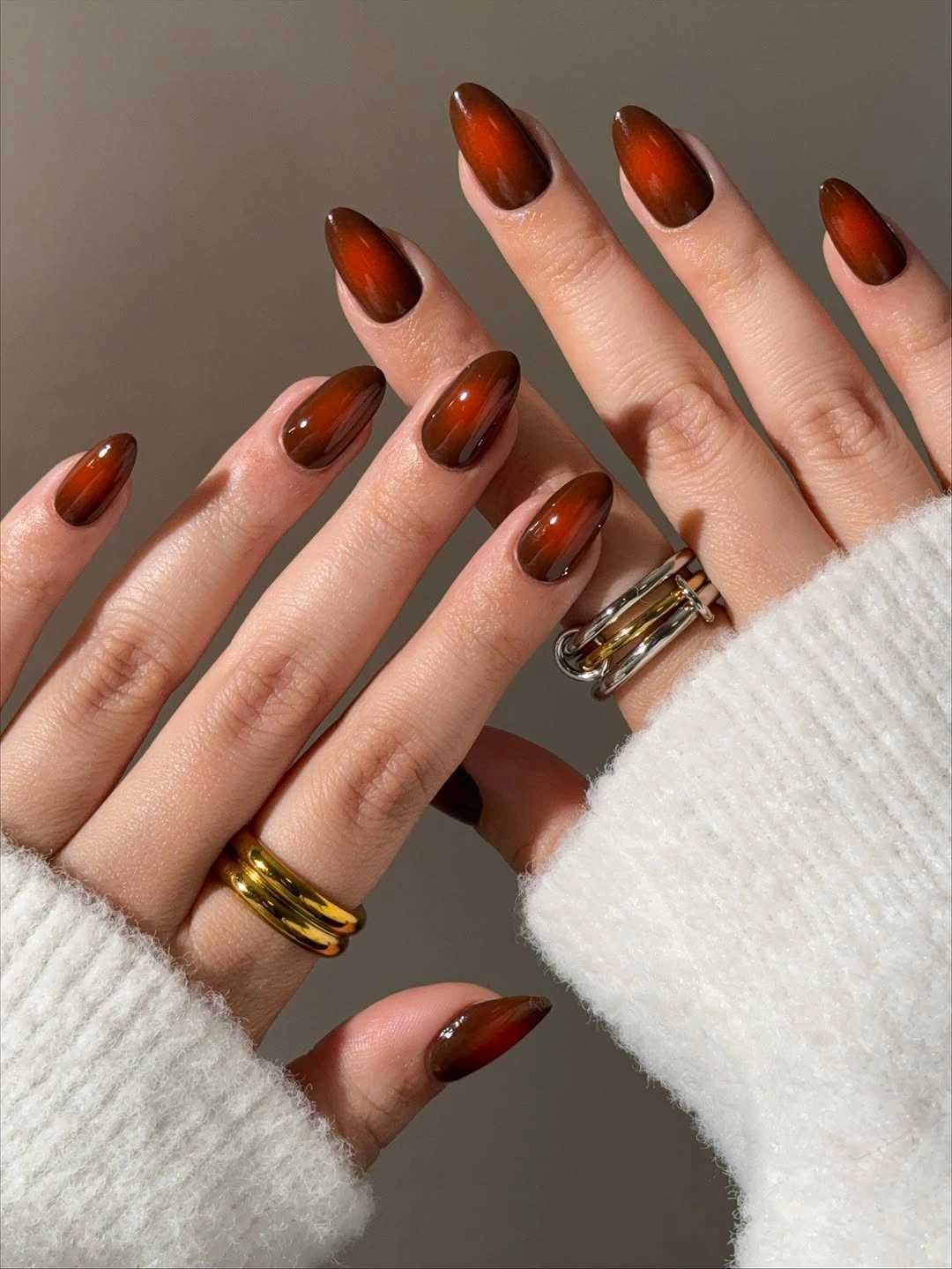
The reason this works is the balance between warmth and shadow. A completely opaque dark brown would carry more visual weight, while the lighter center keeps the hand from looking enclosed by color. The result sits between a plain polish and a gradient, making it useful for readers who want a noticeable fall manicure without bright accents or detailed line work.
For a shorter version, keep the brown closer to one even tone and let the shine provide the depth. A medium almond will still show a little edge shading, but the surface will be less dependent on a long tip to display the transition. The limitation is that a translucent impression can vary with lighting and skin tone, so choose a warm brown that remains visible rather than disappearing into the base.
Cherry Panels on a Compact Shape
Short rounded-square nails combine deep cherry and plum with bright red-magenta reflective panels. The lighter sections appear as controlled bands or central blocks, framed by darker color that keeps the manicure from becoming uniformly bright. The compact outline gives the reflective contrast a graphic quality, making each small nail feel designed rather than simply coated.
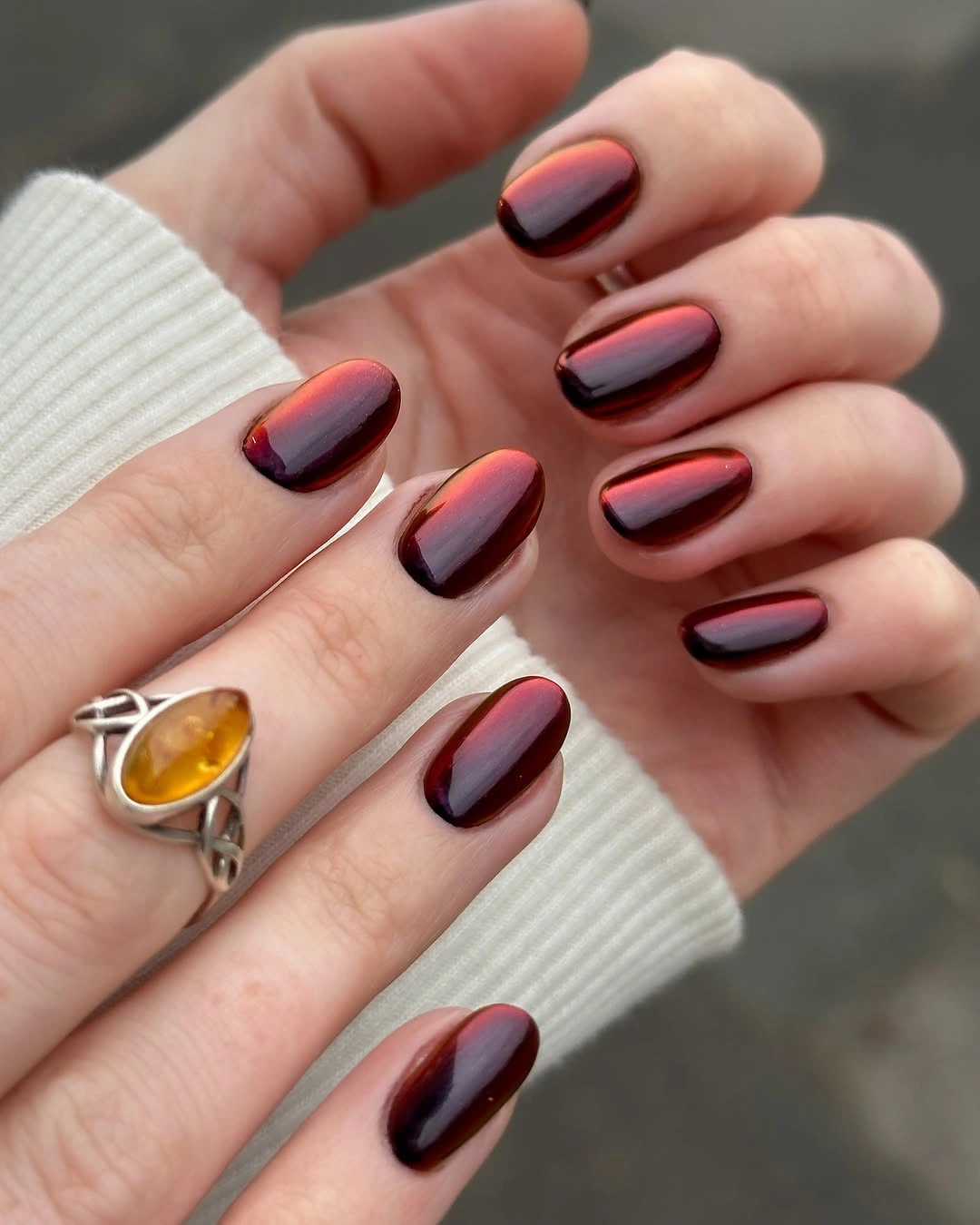
The key decision is where the reflection sits. When the bright red stays inside a dark frame, the eye reads it as a deliberate focal surface and the warm color does not overwhelm the hand. This is a useful alternative to glitter because the movement comes from changing light across a smooth panel, not from a scattered field of separate sparkles.
Keep the brightest panel on two or three nails if you want the manicure to feel calmer, and use the same deep cherry on the rest. A short rounded-square shape can handle the contrast, but the panels should be broad enough to remain recognizable after small chips or growth. The tradeoff is that the reflective effect changes with the room, so the design may look almost plain when the light is diffuse.
Long Almonds in Bright Copper
Long pointed almond nails turn warm copper into the sole design feature. The metallic surface reflects in a strong vertical path, making the color look brighter at the center and deeper toward the sides. Nothing interrupts the finish, so the manicure has a clear, almost sculptural silhouette that relies on length, consistent color, and the way light travels over the curve.
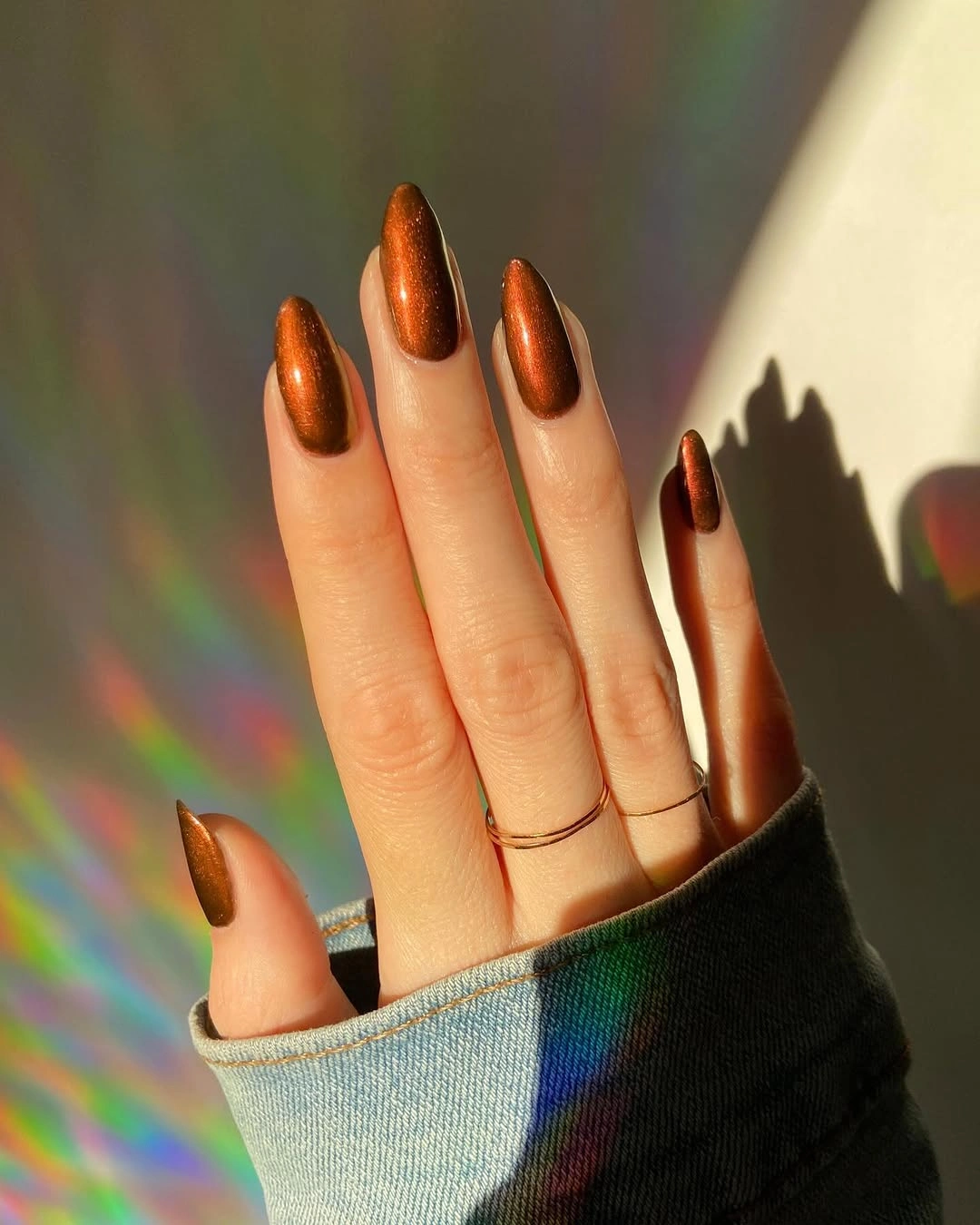
Copper feels seasonal because it sits between orange, brown, and metal, but it avoids the literal look of a painted leaf or pumpkin. The long almond shape gives the tone room to stretch and makes the reflective grain easier to notice. If you prefer dark colors, this is the warmer counterpoint that still has enough depth to sit comfortably beside burgundy and espresso designs.
Choose a medium almond or oval when a long tip is not practical, and keep the color close to one copper family so the finish remains cohesive. Rings can echo the warmth, although the surface already supplies enough shine for the hand to feel finished. The limitation is maintenance at the tip: a strong metallic finish can make small changes in length or edge shape more visible than a softer cream shade would.
Fine Sparkle Hidden in a Black Base
Black almond nails carry fine scattered sparkle that appears only when the surface catches the light. The base remains dominant, so the manicure reads as deep black at first and reveals a quieter texture on closer inspection. That distinction keeps the design moody without making the sparkle feel like a separate party accent placed on top of an otherwise plain set.
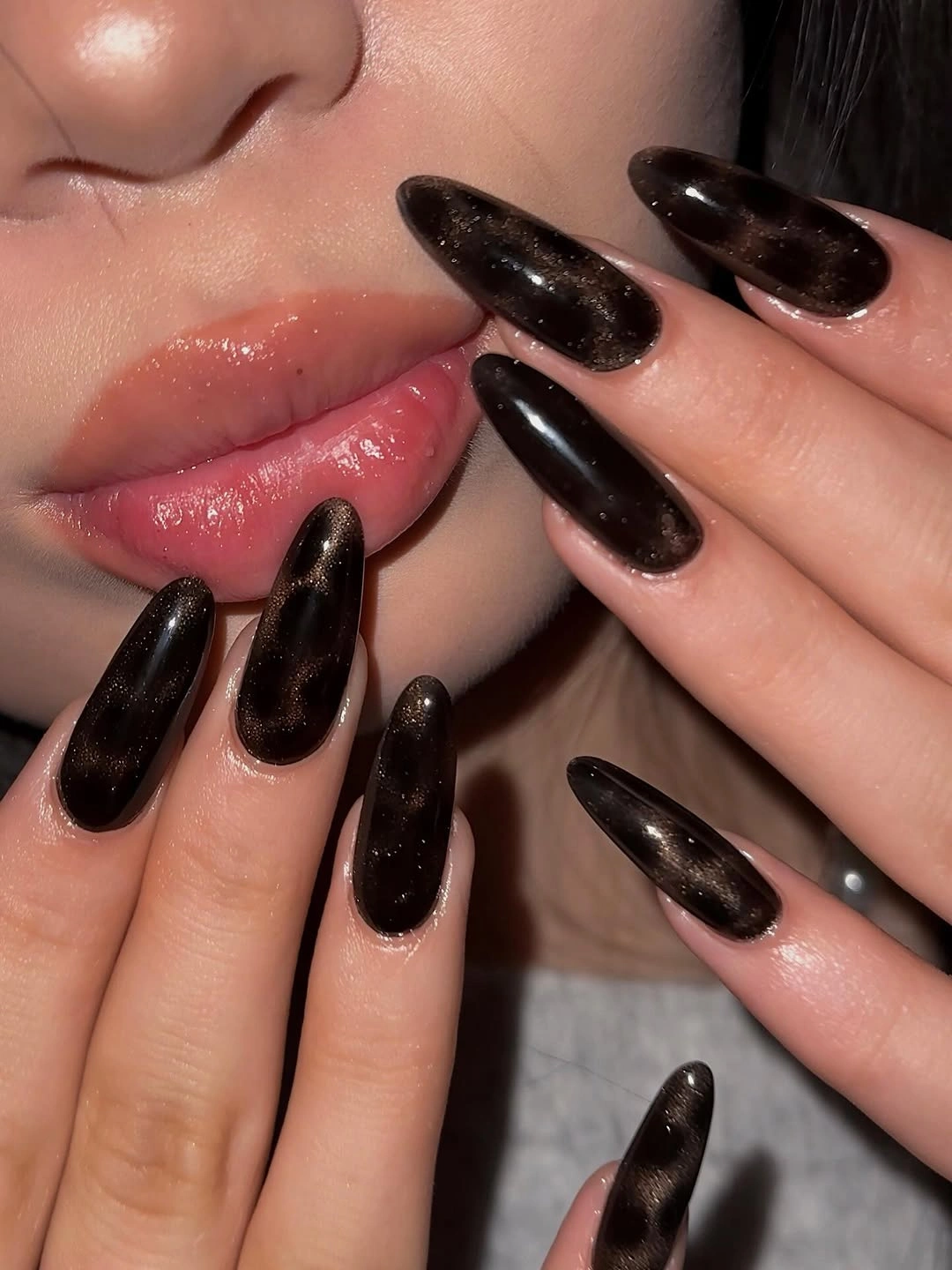
The small particles matter because they soften the edge of an all-black color story. They add a little atmospheric lift, but the shine is still restrained enough for the long almond silhouette to remain the central shape. Compared with a full metallic copper finish, this option has less reflected brightness and more visual depth, which is useful when you want black to stay in control.
On a shorter almond, a fine shimmer will still work, especially if the base is glossy enough to reveal it under ordinary light. Keep the sparkle even rather than adding chunky contrast, since the appeal is the subtle change from black to black-with-light. The limitation is that the finish may look almost solid in a dim room, so choose it for quiet texture rather than a guaranteed high-shine effect.
Bronze Shimmer With No Extra Motif
Medium almond nails use a warm bronze-brown shade with dense fine shimmer and no separate artwork. The color is close to the copper family but slightly deeper and more grounded, allowing the small reflective grain to create the interest. Because the base and sparkle stay in the same range, the set feels monochrome even while it catches light across the full hand.
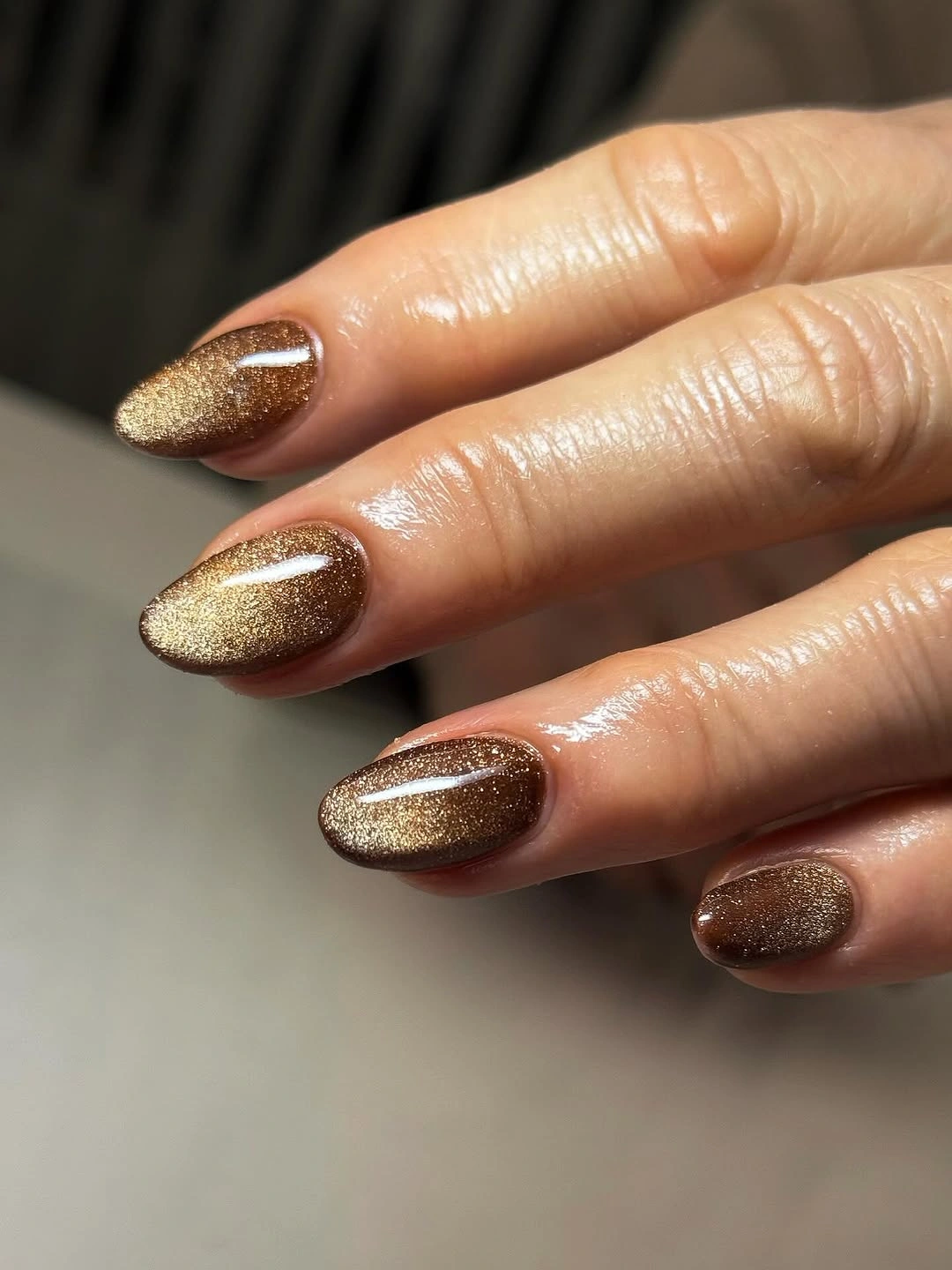
This finish works for a reader who wants warmth without bright orange or a literal autumn motif. The almond outline provides enough length for the shimmer to travel, while the brown undertone keeps the reflection from becoming pale gold. It also offers a gentler alternative to the black glitter design, since the entire surface is warm and the contrast is lower.
A short oval can carry the same bronze if the shimmer stays fine and the color is not divided into too many layers. Leave the jewelry and clothing as supporting elements, because extra sparkle can compete with the finish instead of framing it. The limitation is that dense shimmer will reveal changes in surface texture, so an even outline matters more than adding another accent color.
Reflective Mauve Panels on Dark Nails
Short rounded nails combine charcoal, plum, and magenta with pale reflective panels that curve or block across selected surfaces. The darker border gives the panels definition, while the mauve-pink reflection adds a cool flash without breaking the overall shadow palette. The design feels graphic because the contrast is placed in shapes, not scattered randomly across every nail.
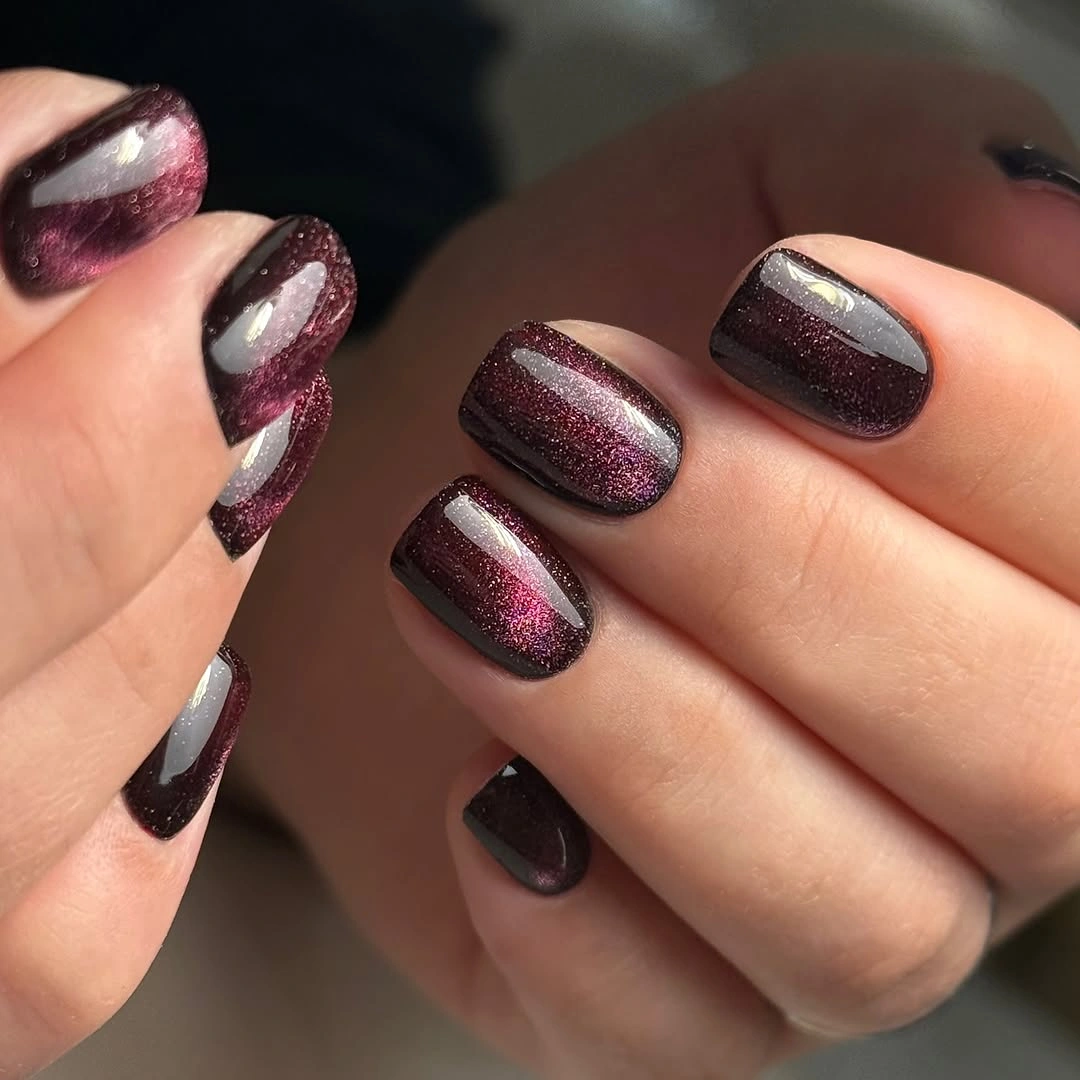
The panel approach gives a compact shape some movement without demanding a large motif. A pale curve can make a short nail appear longer, while the charcoal edge keeps the brighter color from expanding too far across the hand. Compared with a plain burgundy manicure, this version is more directional; compared with full glitter, it is cleaner and easier to keep visually organized.
Use one reflective side panel per hand for a lower-detail adaptation, and keep the rest in the darkest plum or charcoal shade. The lines should be broad enough to survive normal viewing distance, especially on short nails where tiny distinctions vanish quickly. The limitation is that a panel can look different under warm and cool light, so the color should still make sense when the reflection is less obvious.
Short Burgundy With a Quiet Finish
Short oval nails in deep burgundy offer the simplest dark option in this collection. The color is rich and glossy, but there is no dominant gradient, print, glitter, or line work competing with it. That leaves the shape and the wine depth to create the mood, making the manicure a useful baseline for anyone who wants fall color without a decorated surface.
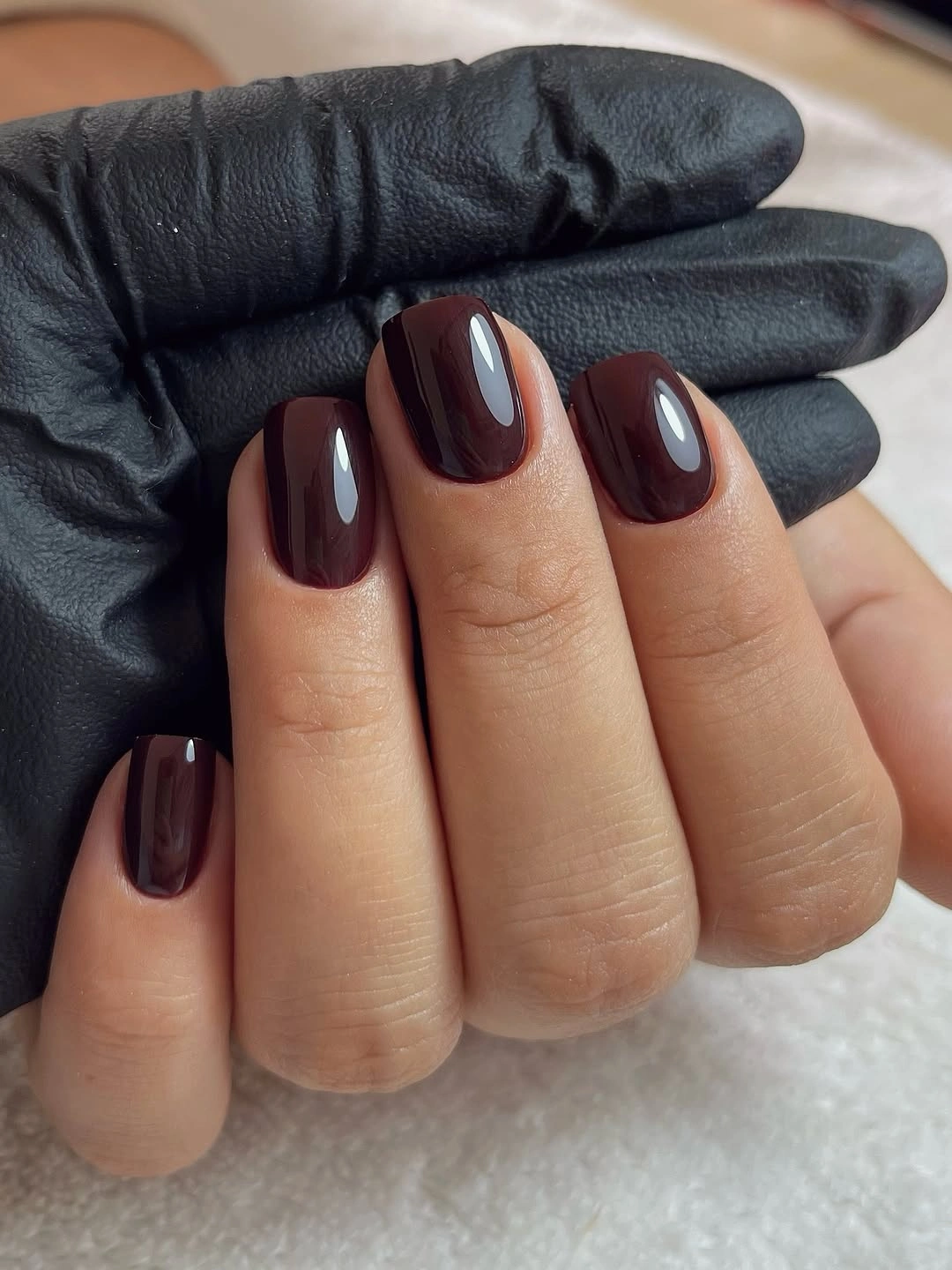
The compact outline changes how the dark color lands. Instead of stretching into a sharp tip, burgundy follows a rounded edge that feels contained and easy to read, while the gloss supplies just enough reflected light to keep the surface from looking dull. This is the option to compare against more involved designs when you are deciding whether the palette alone already says enough.
Keep the shade uniform for the cleanest result, or add one tiny pale dot if you need a small point of contrast. A short oval is practical for many routines, though the dark color will make chips and uneven edges visible sooner than a pale neutral would. Its strength is also its limitation: there is little room to disguise an untidy outline, so the shape needs to remain consistent.
Plum Black With a Reflective Edge
Medium-to-long almond nails look almost black at first, but a burgundy-plum reflection appears across the glossy surface as the hand moves. The color shift is restrained and does not rely on a separate motif, which lets the narrow outline retain a sharp, atmospheric quality. It is a near-black direction with a hidden warm note rather than a visibly multicolored manicure.
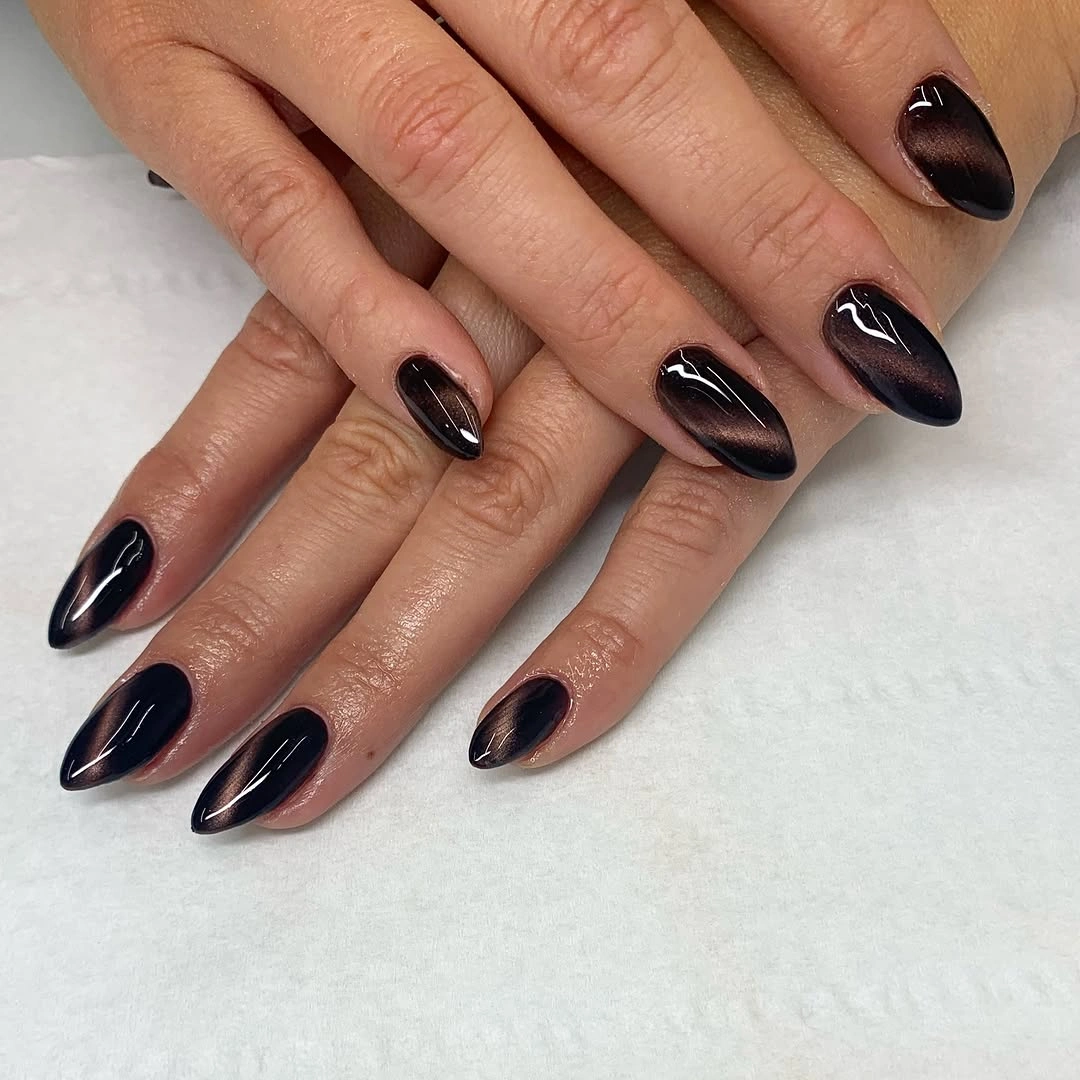
The reflected plum keeps the darkness from feeling empty. It gives the eye a second layer to find, while the long almond shape directs that subtle color toward the tips and sides. If a solid espresso feels too warm or a glittered black feels too obvious, this middle path offers depth through changing light and keeps the palette controlled.
For shorter nails, choose a dark plum that remains visible even when the reflection is soft, then let the shape stay rounded rather than sharply pointed. Avoid adding several extra accents because the quiet color shift is the reason this design works. The limitation is predictable: under flat indoor light the finish may read as ordinary near-black, so it suits readers who appreciate detail that appears gradually rather than all at once.