Fall acrylic nails in 2026 cover a much wider range than the usual burgundy solid or pumpkin accent. This collection moves through checkerboard, soft florals, smoky botanicals, tortoiseshell, plaid tips, jelly color, and metallic details, with every idea organized around a different visual decision. The useful question is not which set looks busiest, but which combination of shape, detail, and upkeep fits the way you actually wear your nails.
I approached these manicures as adaptable references rather than formulas to copy nail for nail. Some designs earn their impact through one precise motif, while others depend on a disciplined palette that keeps several patterns from competing. Pay attention to the feature that makes each set recognizable, then decide whether to preserve it at full strength or edit it for a shorter length and easier maintenance.
Checkerboard Florals on Warm Almond Nails
Brown checkerboard blocks give these medium almond nails their graphic backbone, but the blush accents keep the geometry from becoming severe. Tiny brown flowers repeat the same warm color in a softer form, so the transition from squares to petals looks deliberate. The tapered shape adds enough room for both motifs without making either one feel compressed.
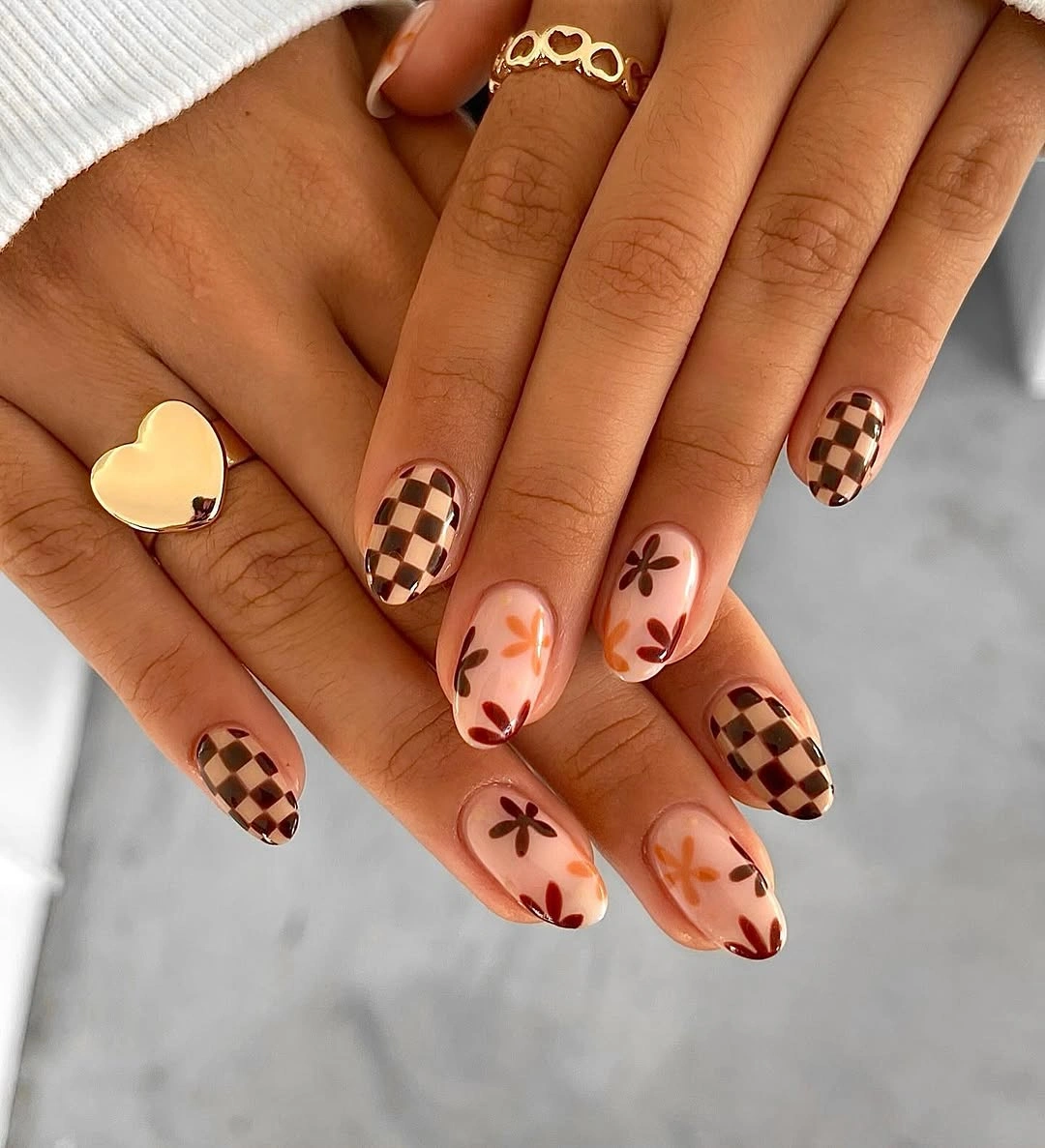
Medium length is especially useful here because each square remains readable from a normal viewing distance. On compact nails, I would reserve checkerboard for one or two fingers and leave more blush space around the flowers. That edit preserves the contrast while reducing the number of edges that need to stay perfectly crisp.
This is a detailed manicure, and its polish depends more on clean placement than on adding another accent. Let warm brown connect the patterned nails, then resist introducing a third motif or unrelated metallic finish. The result will still feel playful, but it will be much easier to explain at an appointment and maintain as the nails grow.
Taupe Waves With a Soft Marble Accent
Muted taupe and mauve make a calm base for the raised-looking waves that travel across these long almond nails. The line work introduces movement without relying on bright color, while one pale pink marble accent loosens the otherwise earthy palette. Because the curves follow the length of the nail, they emphasize the almond silhouette rather than cutting across it.
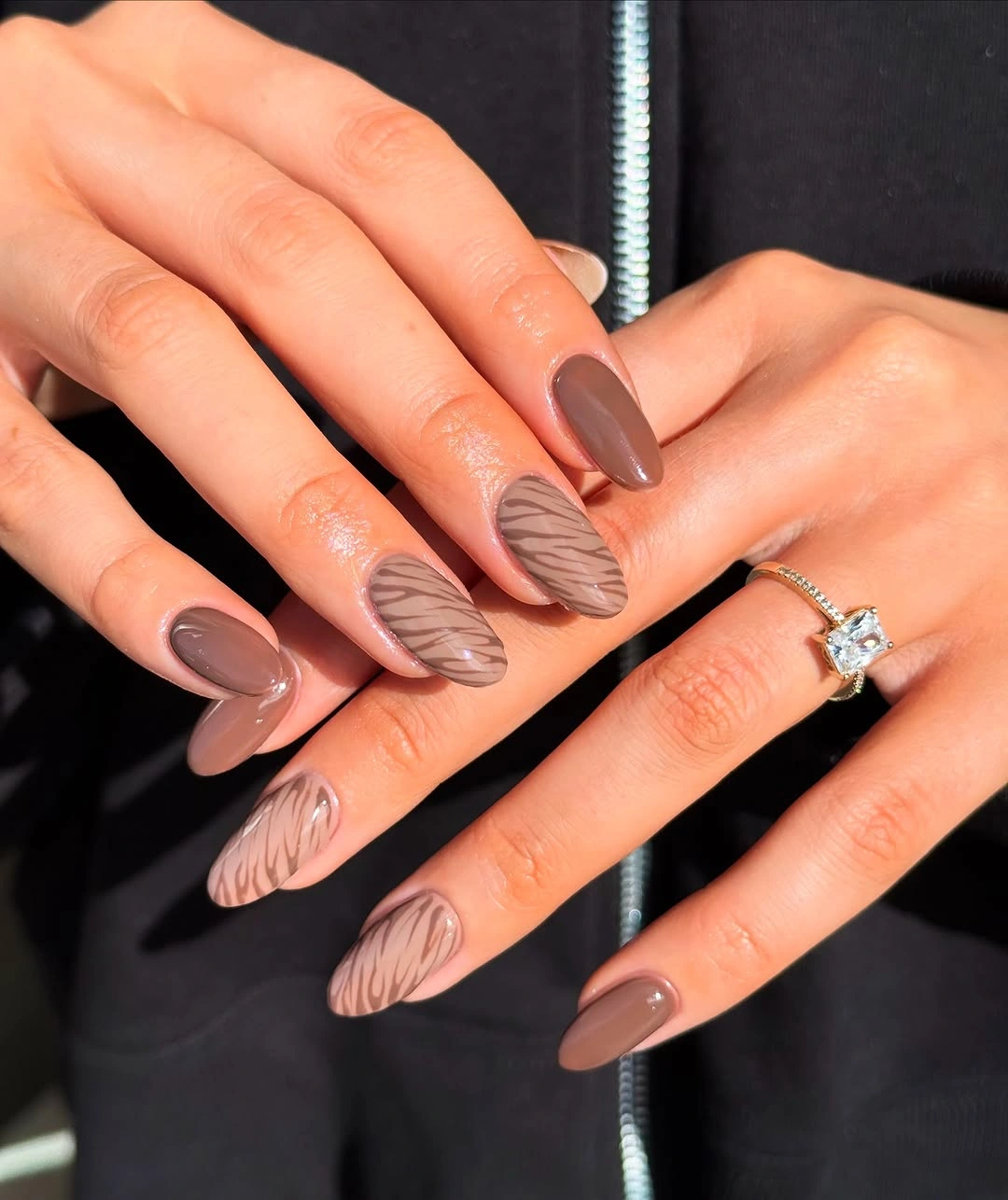
This combination suits someone who wants visible nail art that still works easily with knitwear, rings, and neutral clothing. The marble nail matters because it gives the eye a soft pause between the more directional wave designs. If the full set feels too involved, keep taupe solids on most fingers and place the curves on two accents.
A shorter version needs fewer bends in each line so the pattern does not turn into visual noise. Mauve can also replace the pale pink accent when you want the palette to feel deeper and more tonal. What makes the manicure convincing is the contrast between controlled curves and one cloudy surface, not the exact number of decorated nails.
Pink Florals, Plaid, and Silver Glitter
Pink flowers, orange plaid, and silver glitter could easily compete, yet this almond set separates them across individual nails. That spacing lets each fall reference remain legible instead of stacking every idea on one surface. Silver brings a cooler flash to the warm orange and pink, giving the playful palette a cleaner, brighter edge.
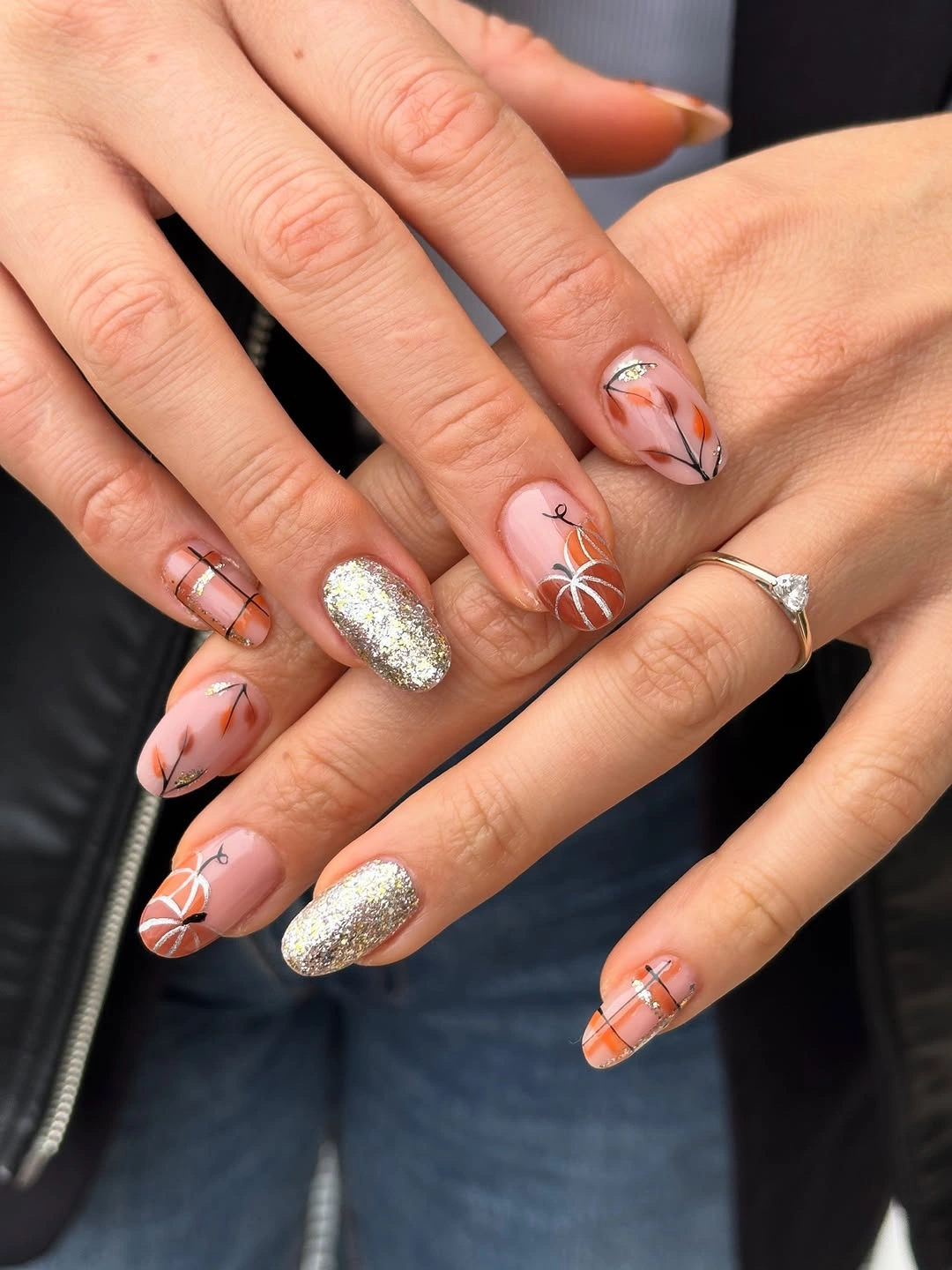
The strongest way to adapt this manicure is to choose which motif should lead. Keep the floral nails most prominent for a softer result, or repeat plaid when you want the set to read more graphic and seasonal. Glitter works best as punctuation here, since too many reflective nails would pull attention away from the painted details.
For everyday wear, reduce the design to one flower, one plaid accent, and coordinating solids drawn from those patterns. That smaller edit still captures the cute fall acrylic nails mood without demanding the same level of detailed upkeep. Related base colors are what hold the mix together, so avoid adding another unrelated shade simply for variety.
Short Caramel Nails With Painted Leaves
Rounded short nails make this caramel, cream, and taupe design feel tidy from the start. Solid caramel fingers frame the pale accents, where fine brown leaves create a botanical focal point without filling the whole nail. The colors sit close enough together that the artwork looks gentle rather than sharply contrasted.
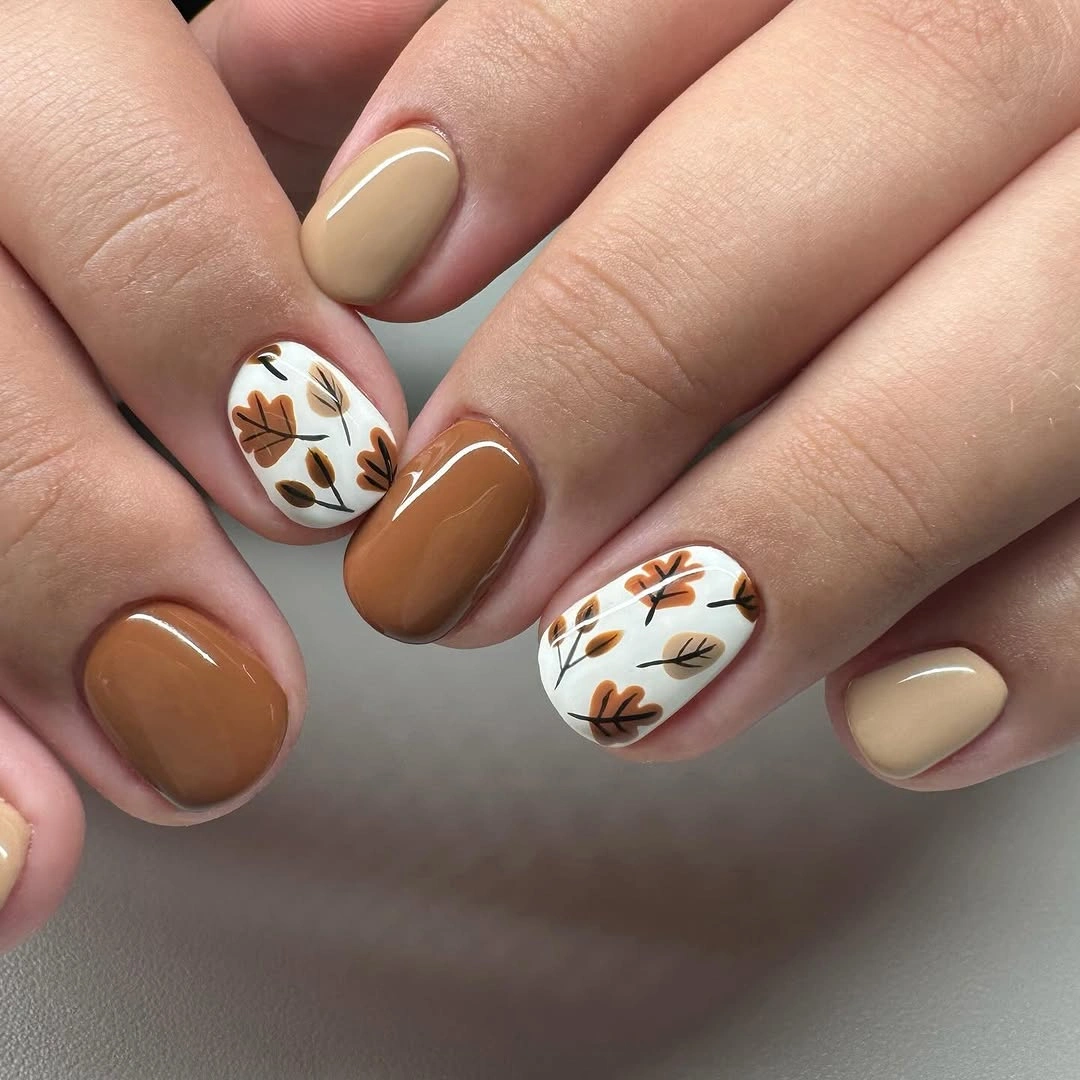
Compact nail beds can carry this design well because the leaves shrink without losing their identity. A single stem with two or three leaves will look cleaner than a dense cluster when space is limited. Keeping more solid caramel nails also gives the detailed fingers room to stand out.
Gloss adds welcome depth to these warm neutrals, especially when taupe and brown might otherwise look flat. If you prefer a quieter manicure, remove one leaf accent before changing the palette; the tonal relationship is already doing useful work. The rounded edge supports the softness, although a squoval shape could add a slightly crisper finish.
Burgundy Gloss With Tiny Floral Accents
Glossy burgundy creates a saturated frame around pale accent nails carrying small floral details. Red and brown notes reappear inside the flowers, which connects the artwork to the solid color rather than making it look borrowed from another set. The almond shape gives the darker polish a sleek outline while preserving enough width for the tiny motifs.
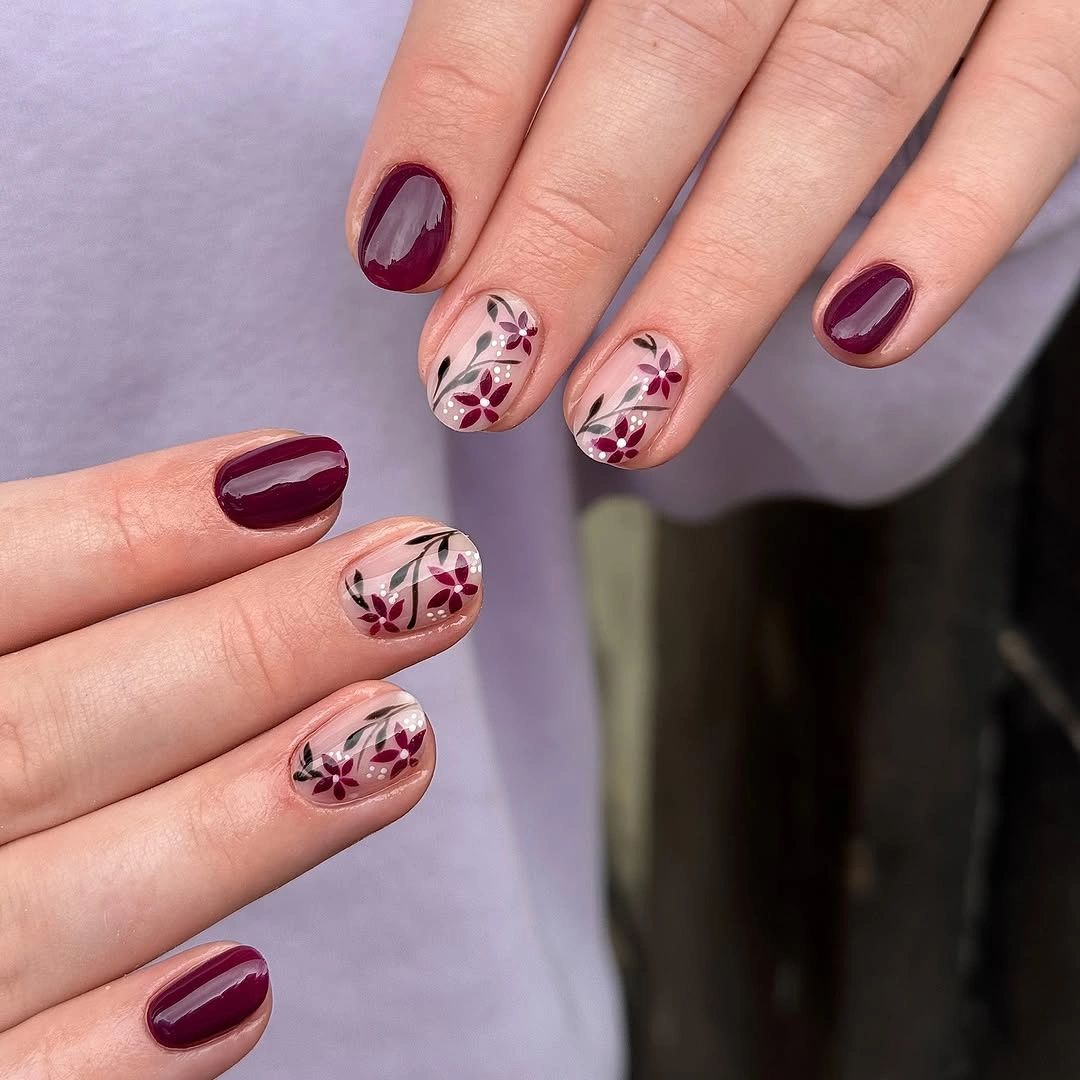
The ratio suits a romantic fall manicure without turning every finger into nail art. Most of the visual weight stays in the burgundy solids, so the flowers read as a close-up surprise. If you want even less maintenance, place the floral work away from the cuticle and keep only two decorated nails.
Refreshing a solid burgundy nail is simpler than repairing several miniature designs, which makes the ratio practical as well as attractive. A wine-red substitute would cool the palette, while brick red would make it warmer and more autumnal. Whichever direction you choose, repeat that red inside the flowers so the manicure remains cohesive.
Burnt Orange and Blush Nails With Gold Details
Burnt orange gives these short rounded nails a clear autumn anchor, while blush bases hold delicate vine work and tiny gold accents. The open pink space prevents the botanical lines from crowding the compact shape. Small flashes near the cuticle catch light without competing with the orange solids.
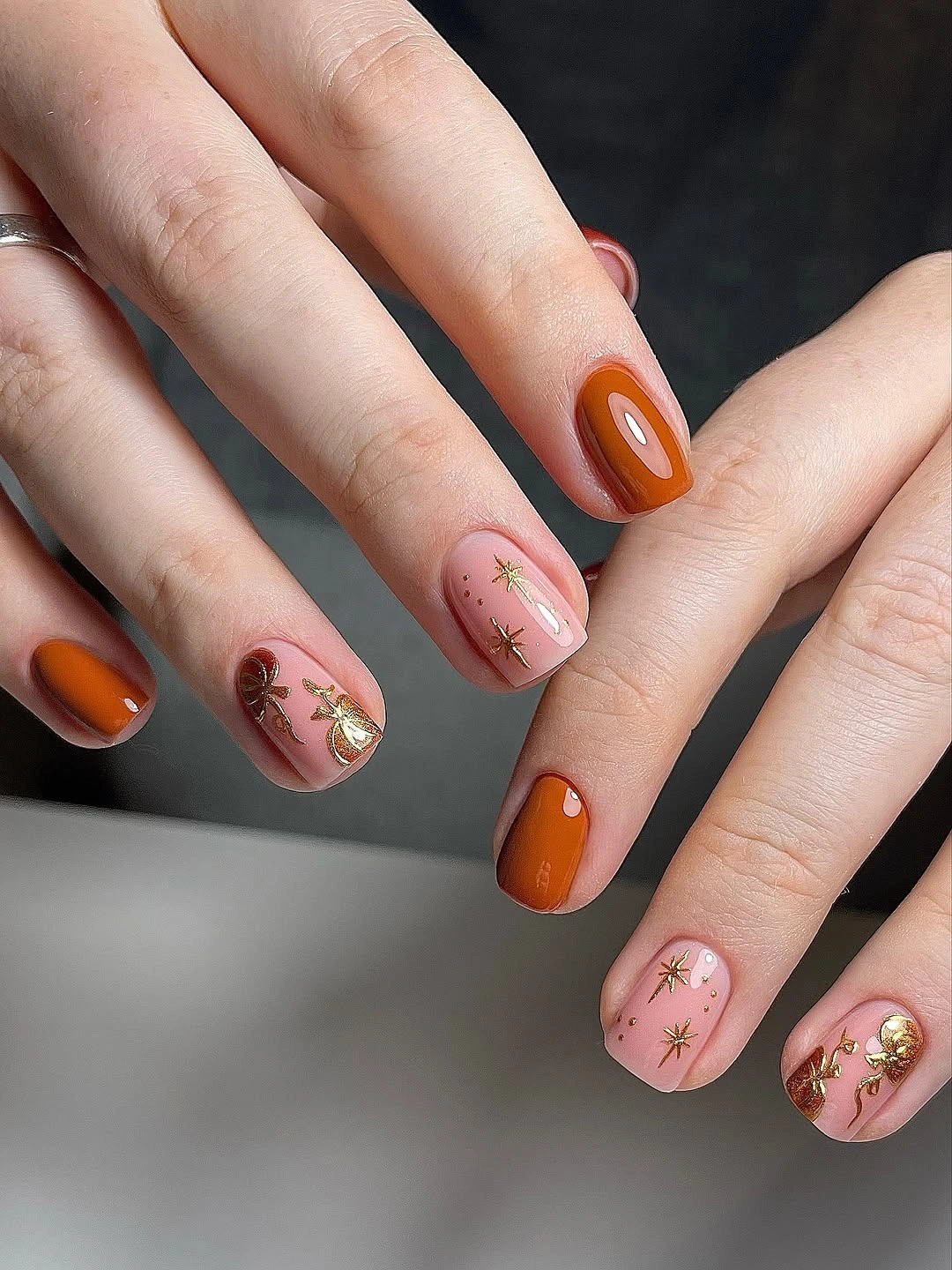
The manicure offers enough detail to feel considered but still reads cleanly in everyday settings. On very short nails, keep the metallic marks almost dot-sized and simplify each vine to one flowing branch. That restraint allows the artwork to remain visible instead of merging into one textured patch.
You can make the set quieter by switching burnt orange to cinnamon or terracotta, but the warm solid color should remain the main anchor. Gold works because it echoes that warmth; silver would create a cooler, sharper contrast. The rounded shape is forgiving for daily wear and keeps the fine details from feeling overly formal.
Orange, Black Texture, and White Grid Accents
Glossy orange establishes warmth first, then black dotted texture introduces a much sharper graphic note. One white grid nail creates a visual pause between those stronger surfaces and stops the manicure from becoming uniformly dark. Although the nails are almond-shaped, the grid adds a squared sense of structure.
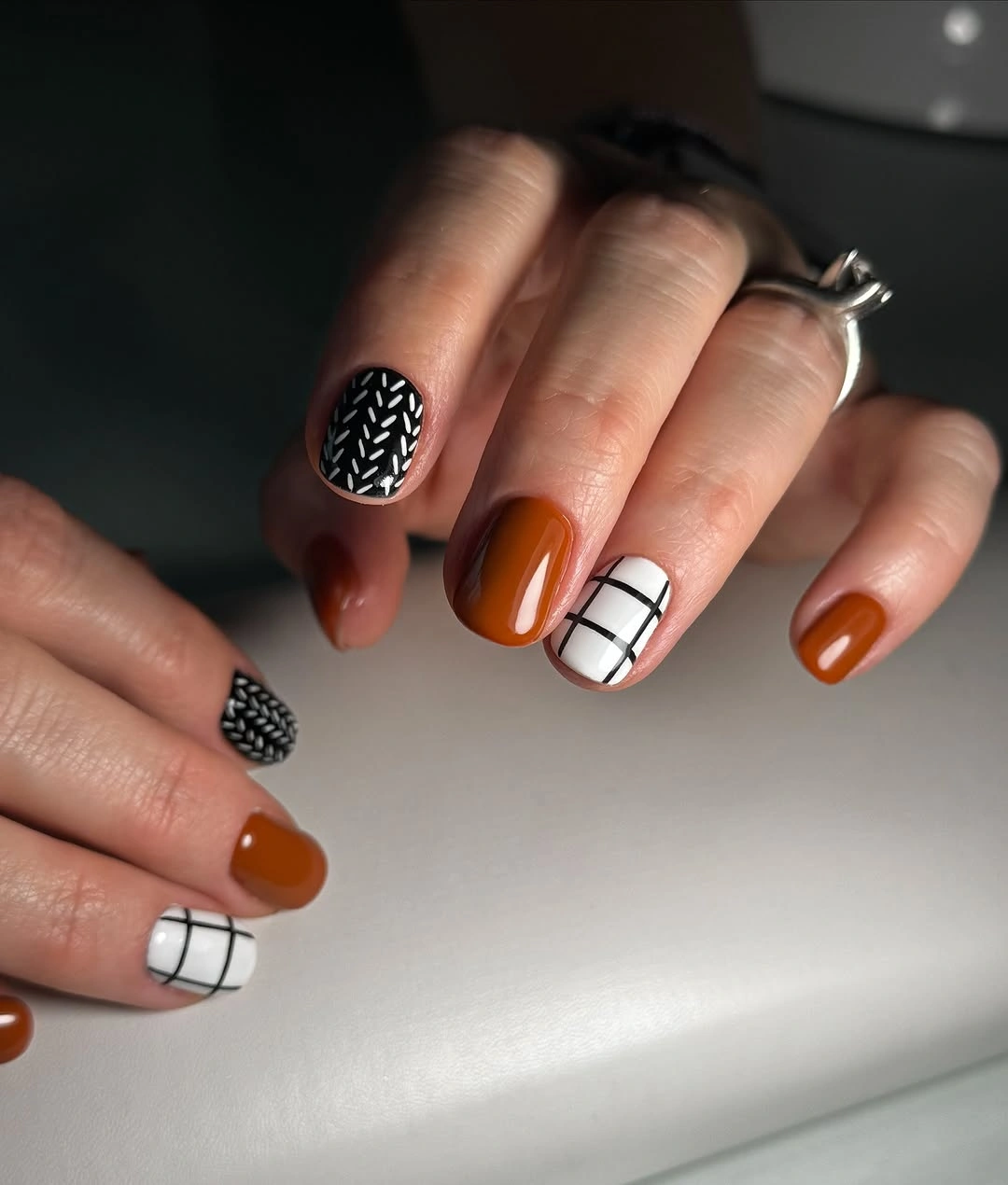
Clear roles keep the three treatments from competing equally. Orange can occupy most fingers, black texture can provide depth, and the white grid can remain a single focal accent. Repeating every pattern several times would weaken the clean break that currently makes the design interesting.
If black feels too dominant, reduce it to one nail or soften it with dark brown dots. Another option is to keep the black but replace white with cream, which would connect the grid more naturally to the orange. The essential idea is controlled contrast, not the exact pattern count.
Sheer Blush Nails With Tiny Fall Flowers
A sheer blush base keeps these short oval nails almost weightless, allowing tiny red and orange flower clusters to carry the seasonal color. Most of the detail sits near the tips, creating a loose French rhythm without drawing a hard edge. The visible base also makes the manicure feel softer as it grows out.
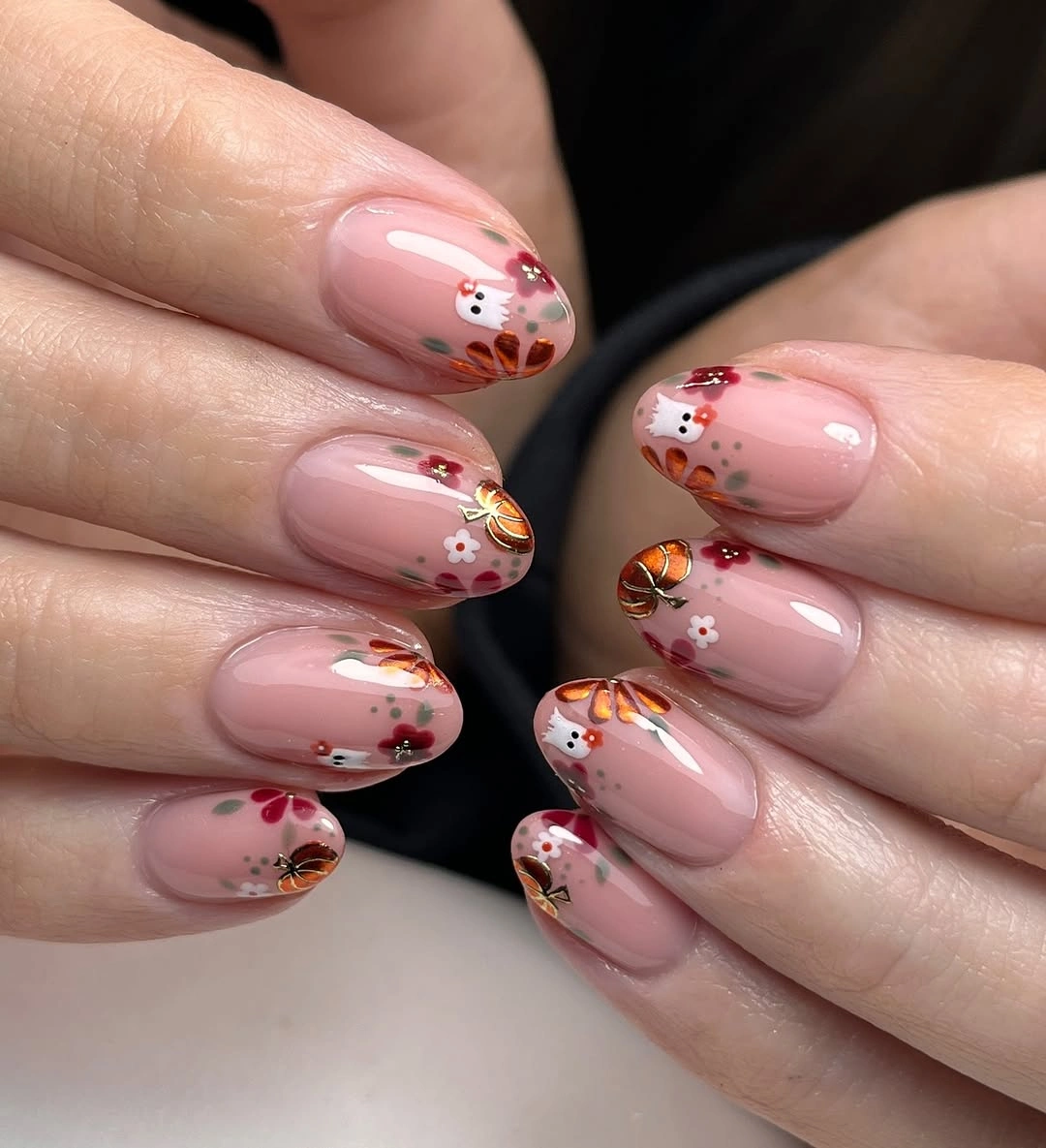
Subtle fall nail art works here because the flowers remain accents rather than a full patterned surface. Keep each cluster small and leave obvious space between the petals so the design still reads at short length. A few well-placed blossoms will look more intentional than filling every available corner.
The tradeoff is precision: miniature art has little room to hide uneven shapes or muddied color. Choosing two flower shades instead of several can make the result cleaner and easier to maintain. If you want a touch more definition, add one fine burgundy line at the tip rather than increasing the number of flowers.
Hot Pink, Brown, Burgundy, and Orange Mix
Hot pink changes the expected fall mood of this glossy almond color mix immediately. Chocolate brown and burgundy supply depth, while orange bridges the bright pink to the earthier shades. Long nails give each solid color enough surface to register as a deliberate part of the palette rather than a leftover accent.
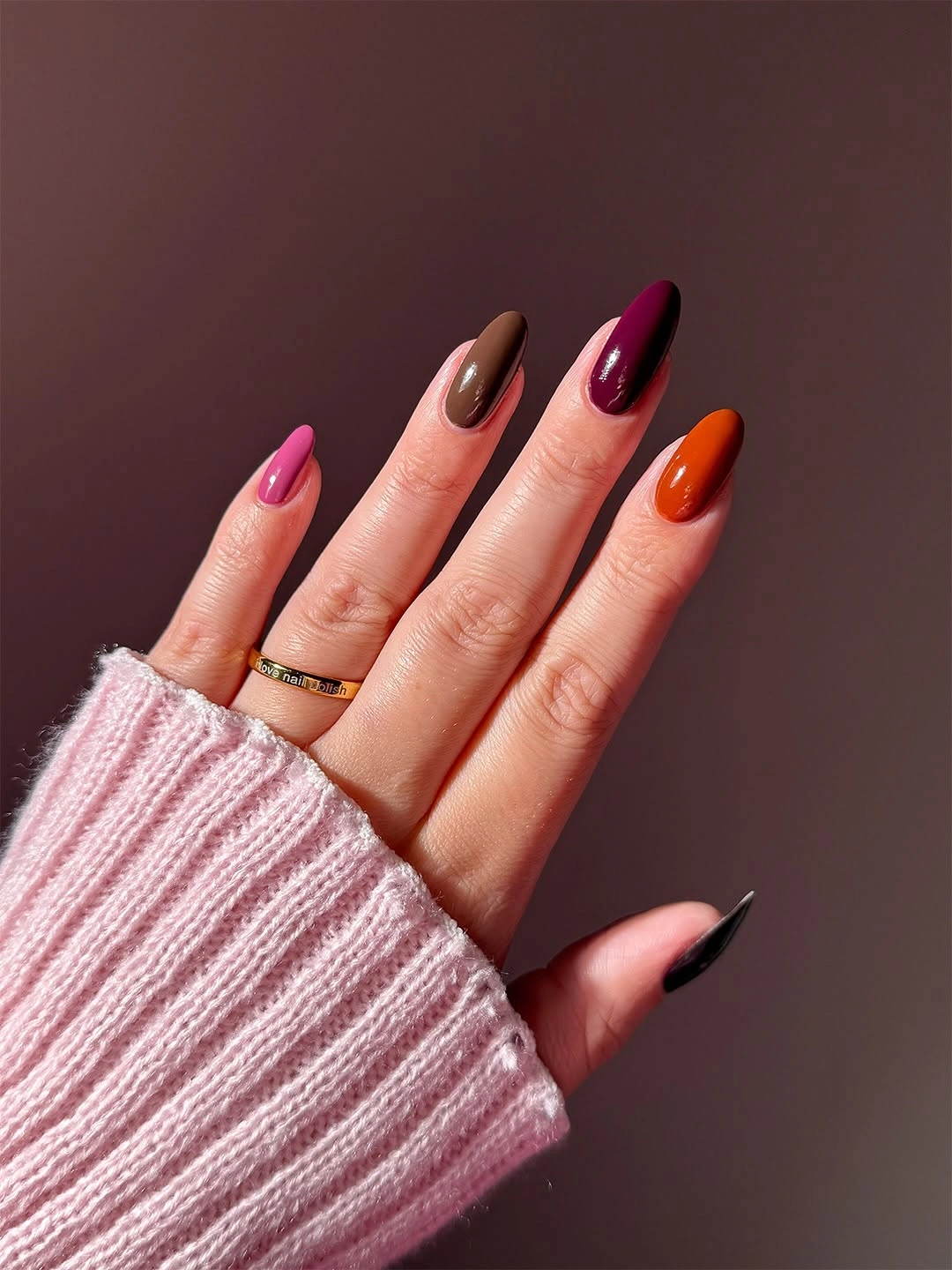
Choose this palette when you prefer energetic color over traditional muted autumn tones. The darker nails should appear often enough to ground the hand, especially if pink and orange are both highly saturated. Alternating warm and deep shades can create rhythm without adding any line art or embellishment.
For a calmer version, replace hot pink with dusty mauve and let orange remain the only vivid note. You could also shorten the nails without losing the concept because the design depends on color placement rather than fine detail. A consistent glossy finish is what makes these different shades feel like one manicure.
Plaid French Tips With Black Curved Edges
Soft pink bases leave room for black curved edges, plaid detail, and one glitter accent to read clearly on long almond nails. The dark tip traces the tapered shape and gives the manicure a sharper outline than a traditional white French. Plaid introduces the fall reference, while glitter interrupts the heavier line work with reflected light.
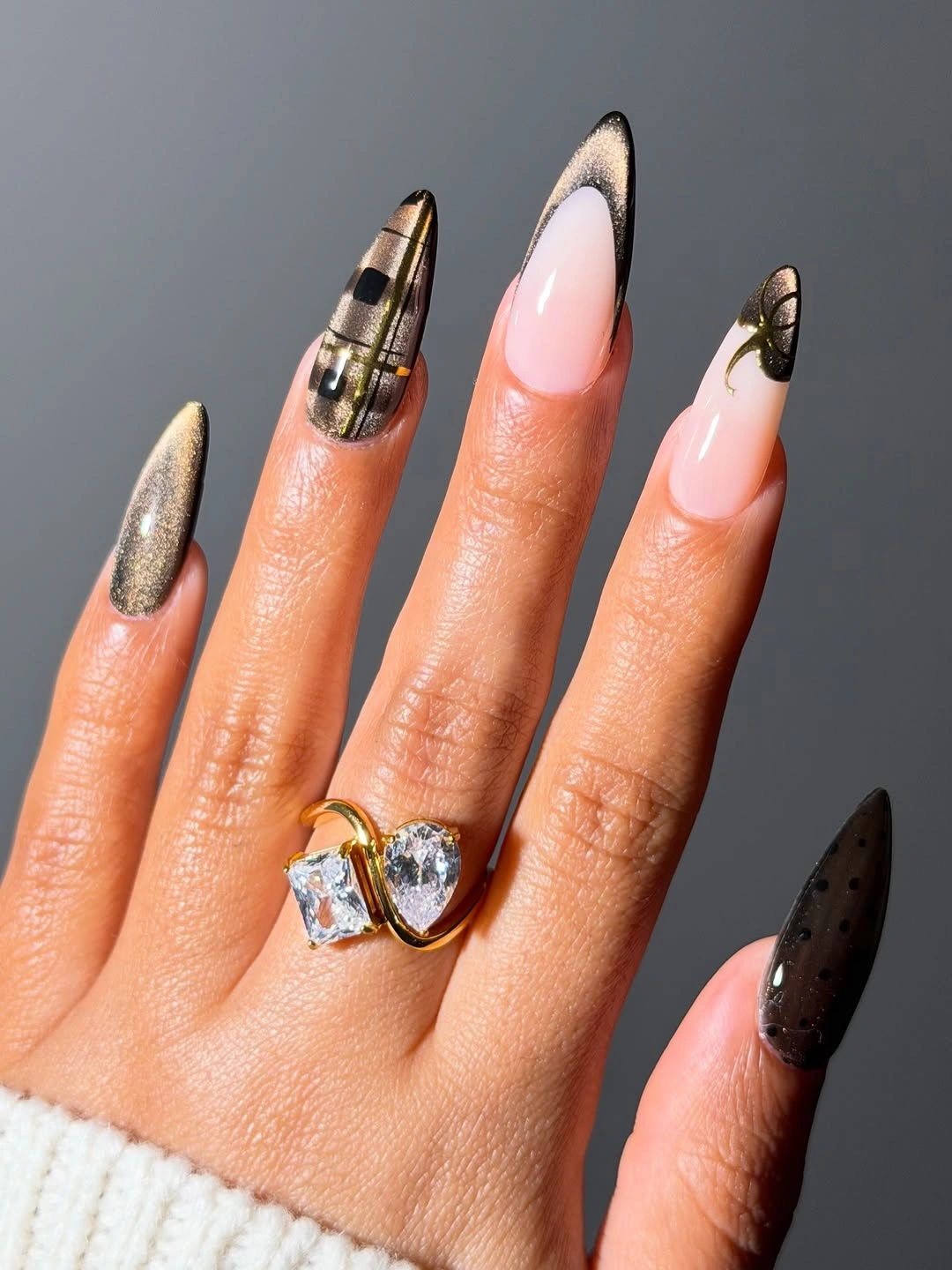
Length is doing important work here because the tip treatments need enough area to stay distinct. On medium nails, thin the black curves and concentrate plaid on a single accent rather than squeezing the pattern across several fingers. That adjustment keeps the almond silhouette elegant and reduces the chance of the tips looking visually thick.
The manicure already contains three forms of contrast, so extra charms or another bright color would be unnecessary. Decide whether plaid or the black edge should lead, then make the glitter support that choice. A softer charcoal outline can reduce the drama without changing the overall construction.
Deep Magenta Cat-Eye Stiletto Nails
Long stiletto points intensify the deep magenta finish, especially where a reflective center seems to glow against darker edges. The shifting band of light creates dimension that a flat burgundy solid would not have. Because every nail follows the same finish, the dramatic shape remains the clear statement.
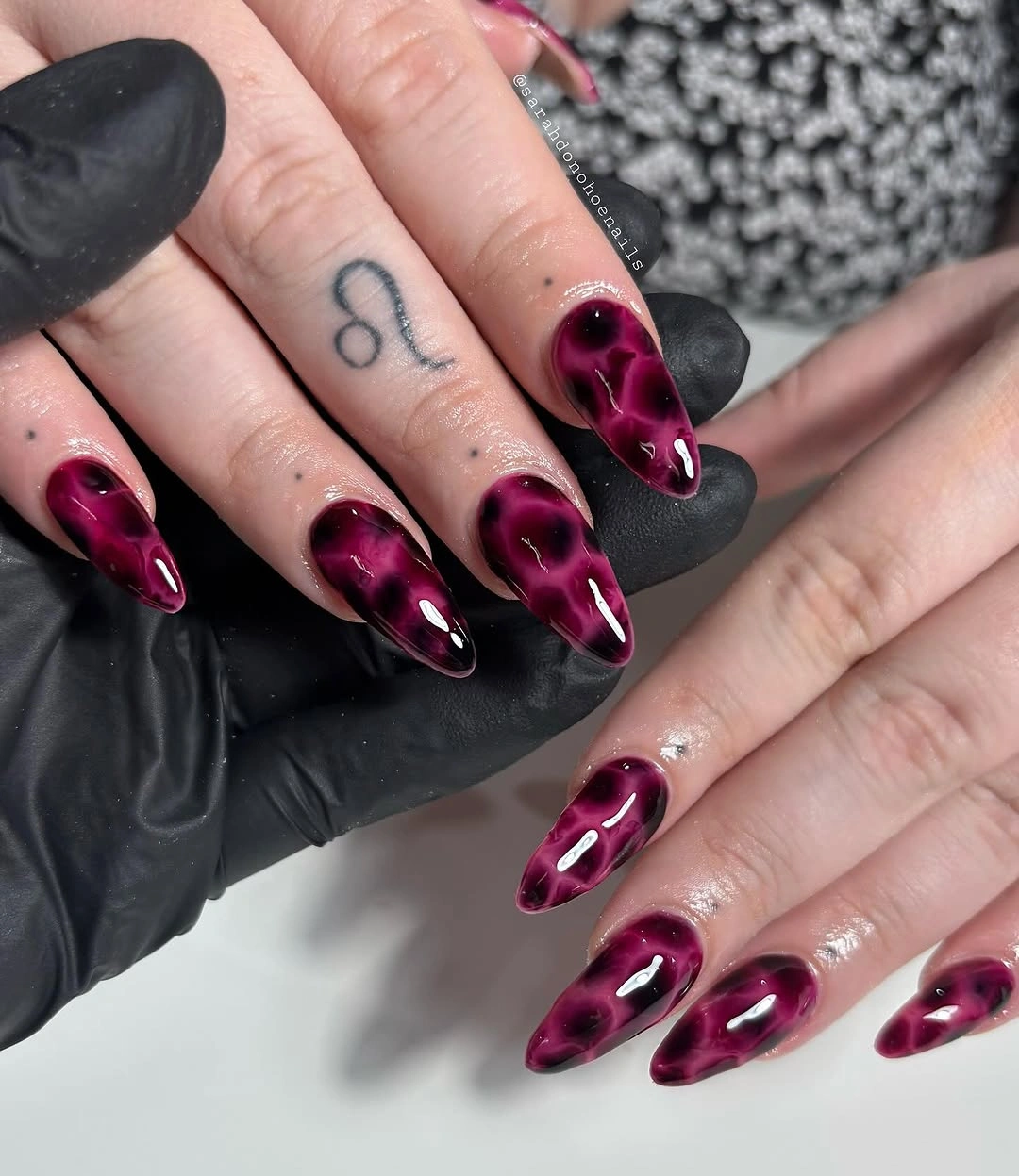
A manicure meant to function as the main accessory can carry this level of drama. Movement and lighting will change where the brightest stripe appears, so the set has visual interest even without separate artwork. Keeping jewelry simple would allow that reflective effect to remain dominant.
The pointed tips require more daily awareness than rounded or almond nails and may show wear sooner at the ends. A shorter stiletto or sharp almond can preserve much of the mood with a less demanding silhouette. Deep plum is another useful substitute when magenta feels too vivid but you still want the dimensional center.
Mustard, Green, and Orange Floral Short Nails
Mustard yellow and leafy green give these short rounded nails a cheerful autumn base, while white accents hold small orange and red botanical details. The pale surface keeps the flowers visible against the stronger solids. Repeating leaf colors across the set prevents the bright palette from drifting into a summery mood.
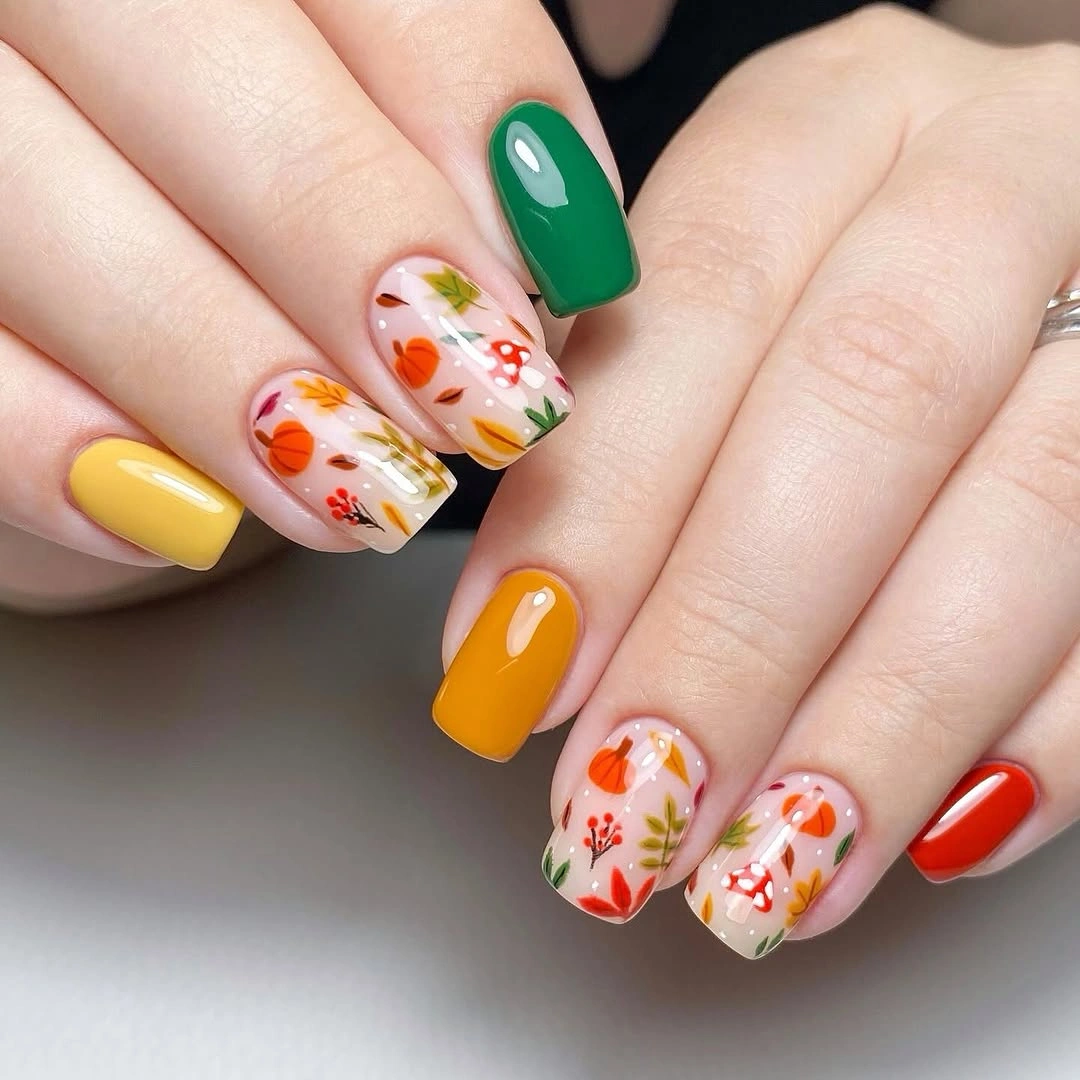
Seasonal color does not have to depend on burgundy, black, or deep brown. Short length makes the solids practical, and the white accents add just enough illustration to break the color blocking. Keep the flower shapes compact so they remain crisp beside the broader blocks of mustard and green.
A glossy finish will help small painted details stay readable and make the yellow look richer. If the palette feels too busy, repeat green on an extra nail and remove one white accent rather than muting every color. The design succeeds through a lively but controlled ratio of solids to art.
Soft Pink Nails With Dark Autumn Tips
Long almond nails pair a soft pink base with deep brown tips, creating strong fall contrast without covering the entire nail. The dark color tapers with the shape, so the edge looks sleek rather than heavy. Open space near the cuticle keeps the hand visually light and gives the design a cleaner grow-out path.
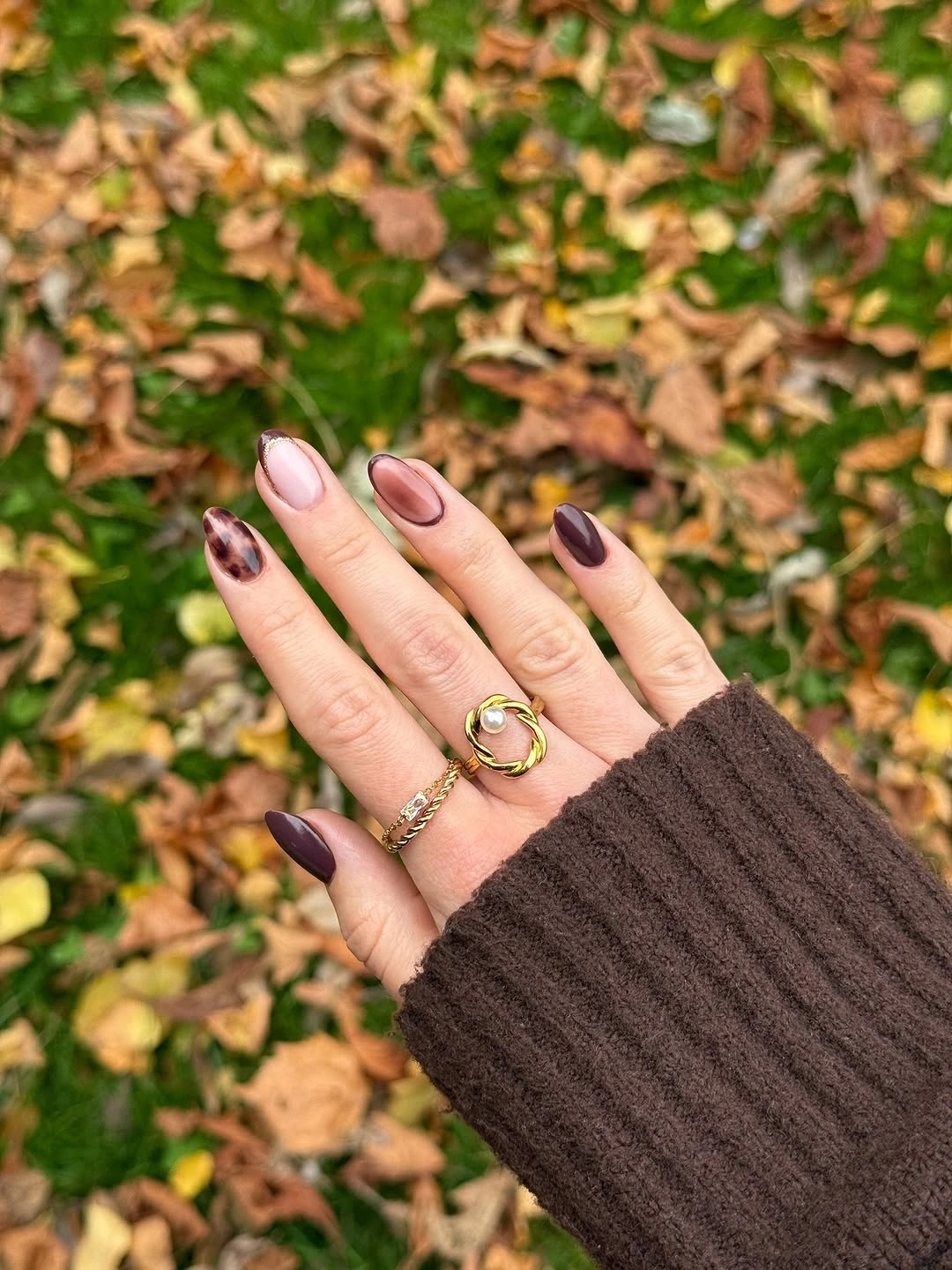
The manicure sits between minimal and decorative styles because the color boundary supplies all the detail. Cocoa tips would soften the contrast, while near-black brown makes the outline more graphic. Either choice should follow the same taper so the almond silhouette remains the organizing feature.
The amount of pink left visible determines how dramatic the result becomes. A deeper tip creates a moodier look but can shorten the apparent nail bed, whereas a narrow edge feels more delicate. For medium length, I would favor the thinner version and let the shape provide most of the impact.
Smoky Gray Nails With Black Leaf Silhouettes
Smoky translucent gray gives these almond nails a layered, shadowed base for black leaf silhouettes. Every finger follows the same dark botanical language, which creates continuity without repeating an identical branch. The muted background allows the leaves to look atmospheric rather than like hard stickers.
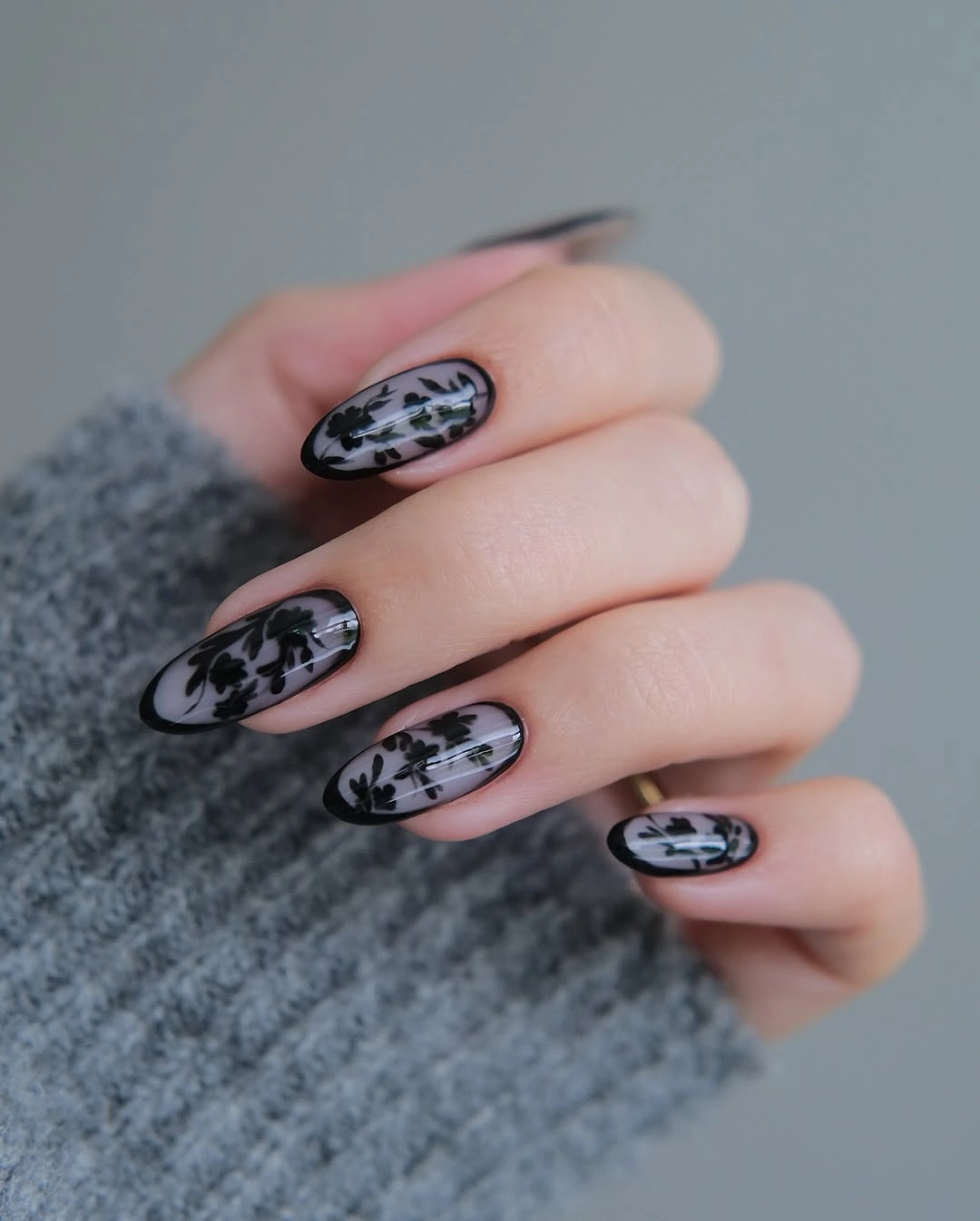
Smoky gray offers an autumn direction when orange, pumpkin, and warm brown feel too literal. The limited palette lets shape and placement do more expressive work, particularly where a leaf crosses the center or trails toward an edge. Varying the angle of each stem will keep the set fluid while preserving its coherent mood.
Gloss is important because it reveals the gray depth beneath the black forms. A matte finish could make the layers feel flatter unless the base includes enough tonal variation to remain visible. For a lighter adaptation, use charcoal leaves on a sheer taupe base and leave one or two nails nearly clear.
Pumpkin, Plaid, and Gold Glitter Accents
Gold glitter, warm plaid, pumpkin art, and brown line work make this almond manicure openly decorative. The reflective solids act as anchors between the illustrated nails and stop the collection from reading like one continuous pattern. Shared amber and brown tones keep the festive motifs within a disciplined fall palette.
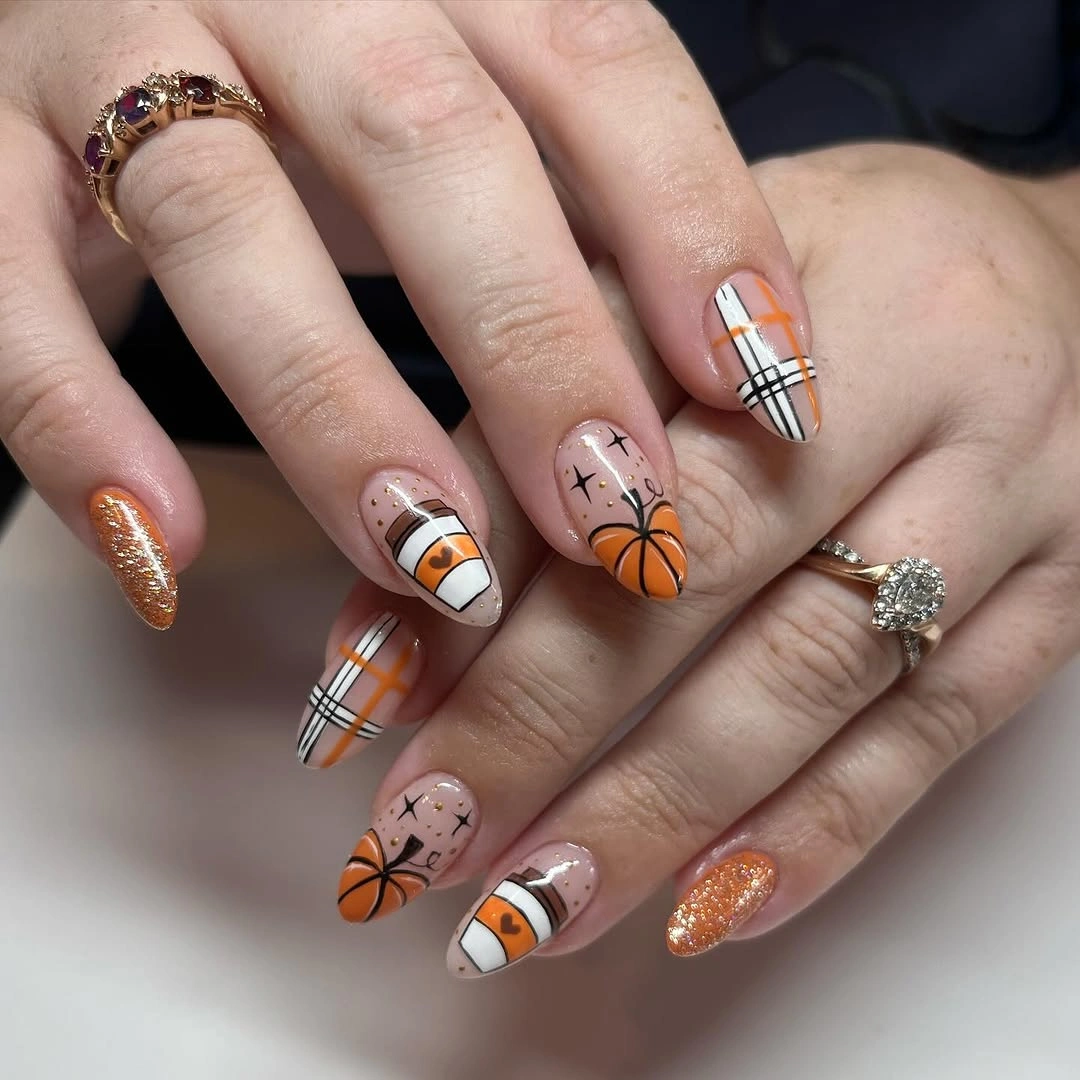
For an event-focused set, the full combination has enough variety to hold attention from every angle. Daily wear calls for a clearer hierarchy: keep one pumpkin, one plaid nail, and let gold replace another detailed accent. That edit preserves the seasonal story while making future touch-ups far less complicated.
The main tradeoff is detail density, not color. Removing one motif will usually improve the manicure more than adding another neutral shade to calm it down. If pumpkins are the feature you care about, let their curved shapes lead and reduce the plaid lines so the two forms do not compete equally.
Glossy Tortoiseshell Short Nails
Amber, brown, and black patches create surprising depth across these short rounded nails. The tortoiseshell pattern supplies movement without requiring charms, outlines, or separate accent fingers. Clearer amber spaces are especially important because they keep the darker marks from closing in on the compact shape.
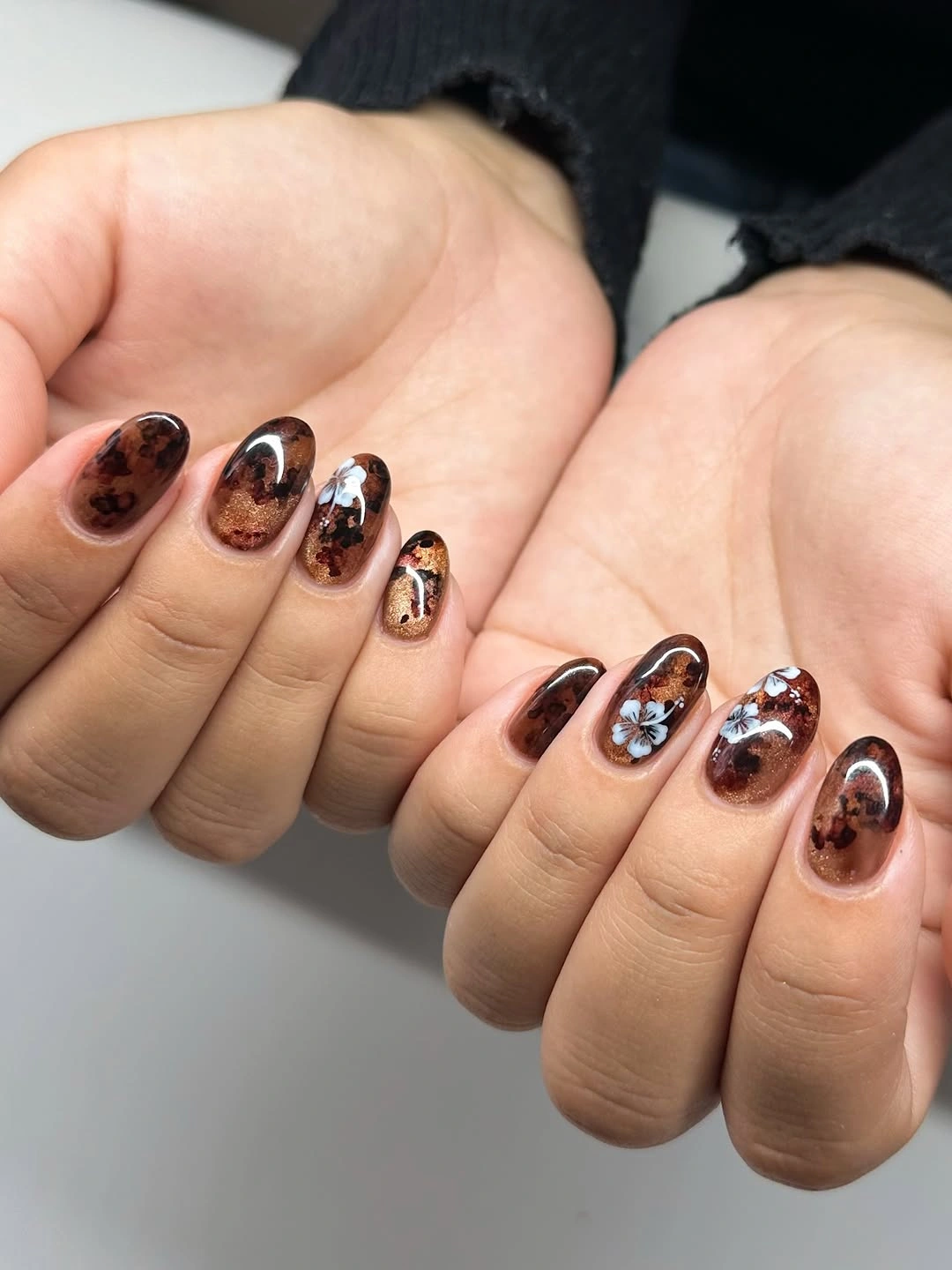
Irregular patterning makes this brown fall manicure more forgiving of minor wear than a pale solid. Each nail can vary naturally, yet the repeated palette keeps the hand coherent. Ask for a balance of translucent warmth and dark spots rather than identical placement on every finger.
A high-gloss surface gives the amber areas their layered quality and prevents the design from looking muddy. Oversized black patches would make short nails feel smaller, so leave breathing room around them. If you prefer a quieter effect, use tortoiseshell on two accents and repeat a transparent caramel solid elsewhere.
Blush Nails With Plaid and Brown Cow Spots
Blush solids soften the combination of plaid and brown spotted art on these short rounded nails. Repeating brown across both patterns creates a common thread, even though one motif is orderly and the other is irregular. The pale base keeps the manicure cozy and bright instead of turning it into a dark autumn mix.
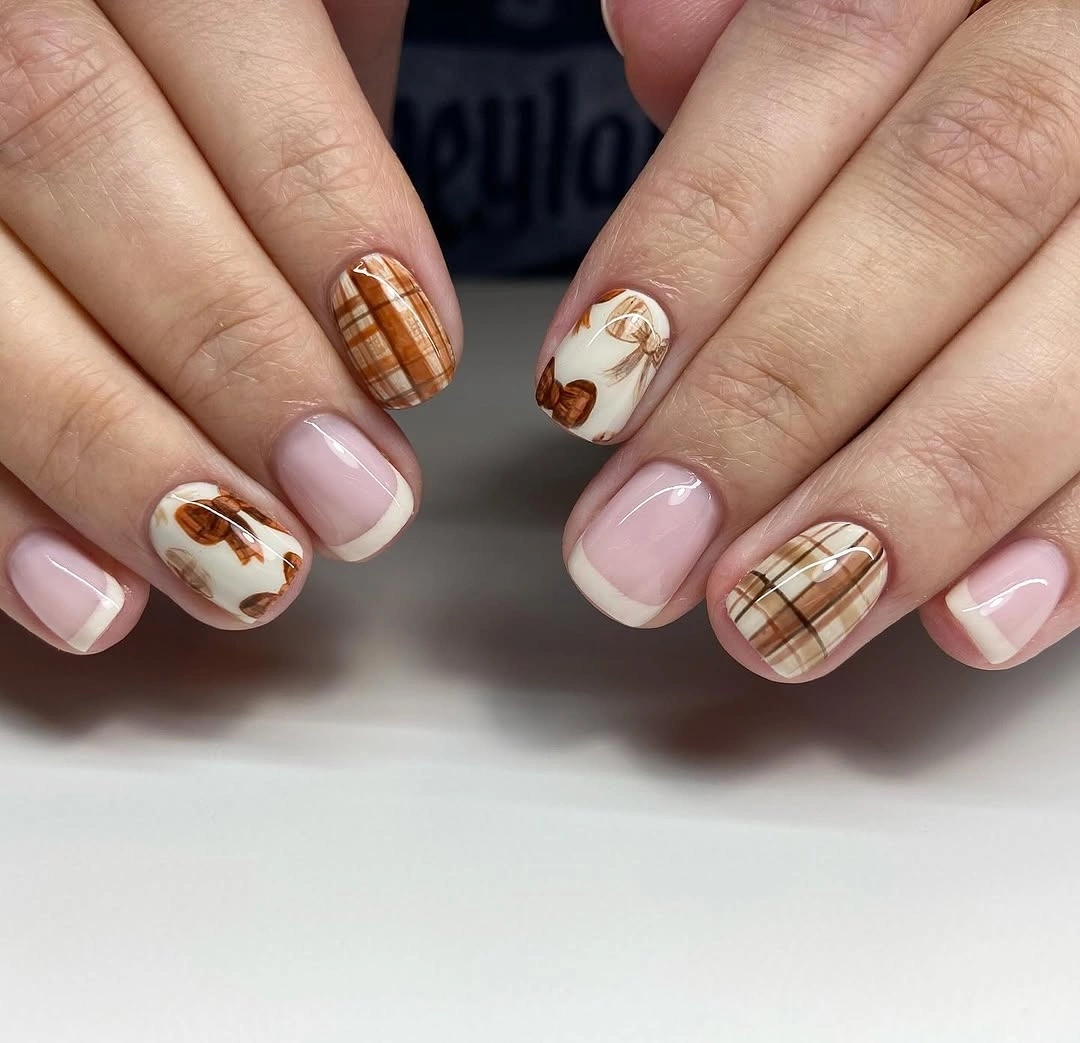
A restrained ratio works well when you want a few decorated fingers rather than art across the entire hand. Plaid can serve as the structured accent, while the spots bring a looser counterpoint. Leaving several blush nails untouched gives both patterns enough space to register clearly.
Shape changes the character of this design more than the palette does. A square edge would make the plaid feel sharper and more graphic, while the current rounded silhouette keeps every element gentle. For simpler upkeep, retain the spots and replace plaid with one chocolate solid nail.
Orange Plaid French Tips on Nude Almond Nails
Nude bases keep the cuticle area quiet while orange plaid concentrates all the pattern at the ends of these long almond nails. Fine gold striping sharpens the checks and gives the warm tips a more polished finish. The open lower half also prevents a traditional fall motif from feeling too dense.
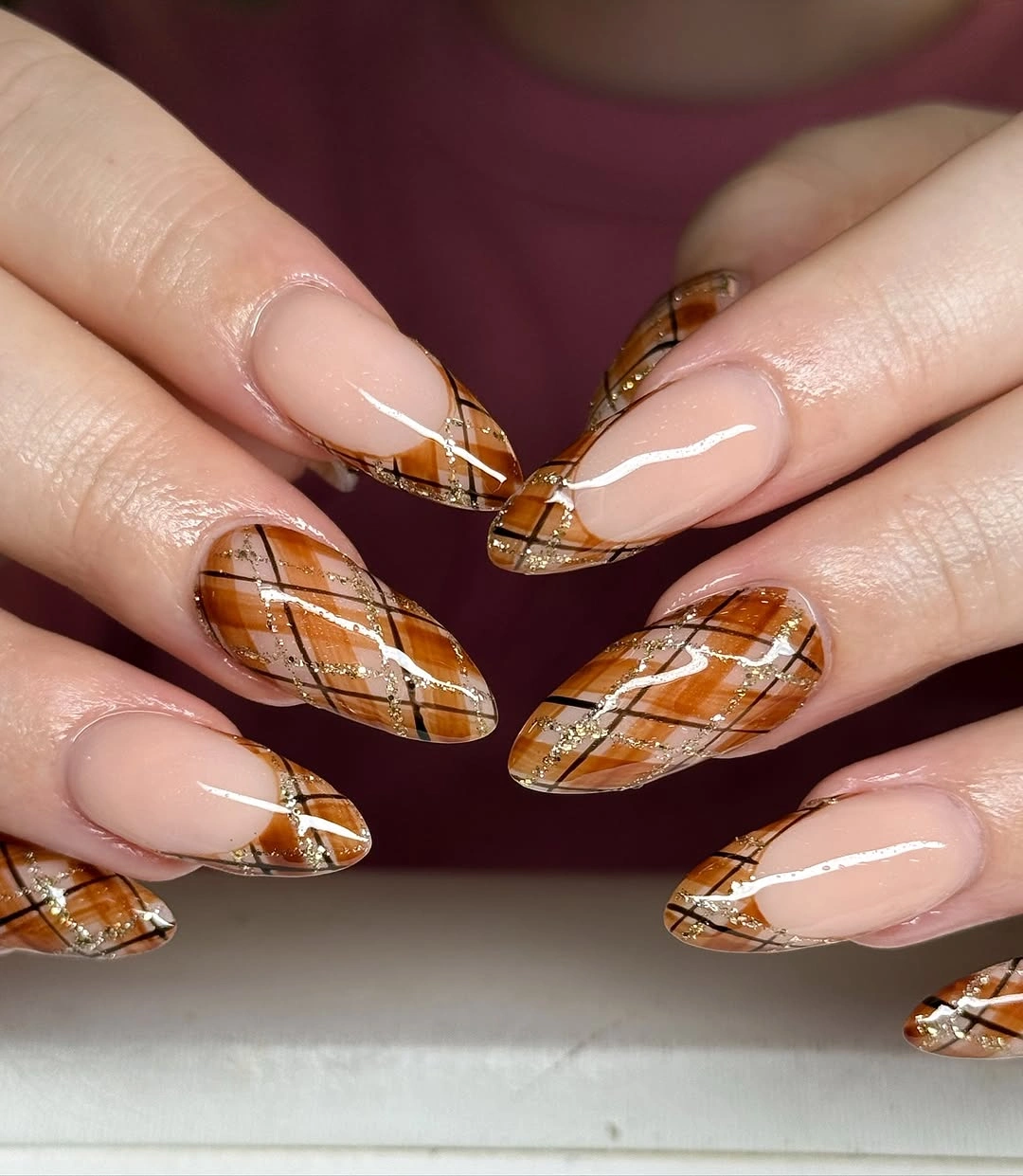
Orange plaid offers a refined alternative to a classic white French edge, but it depends on enough length to remain legible. Shorter nails need thinner lines and fewer intersecting checks, otherwise the tip can look like one block of color. Preserve the nude space even when reducing the pattern.
Gold should stay narrow and purposeful because its role is definition rather than sparkle. If orange is too bright for your wardrobe, rust or muted terracotta can provide the same seasonal effect with less contrast. The best version follows the almond curve instead of forcing a straight, heavy band across the tip.
Burgundy Jelly Nails With Tonal Spots
Translucent burgundy creates depth on these medium almond nails, while darker red spots introduce pattern without leaving the same color family. The tonal approach feels softer than a high-contrast animal print because the marks emerge through the jelly surface. Gloss reinforces that layered effect whenever light moves across the hand.
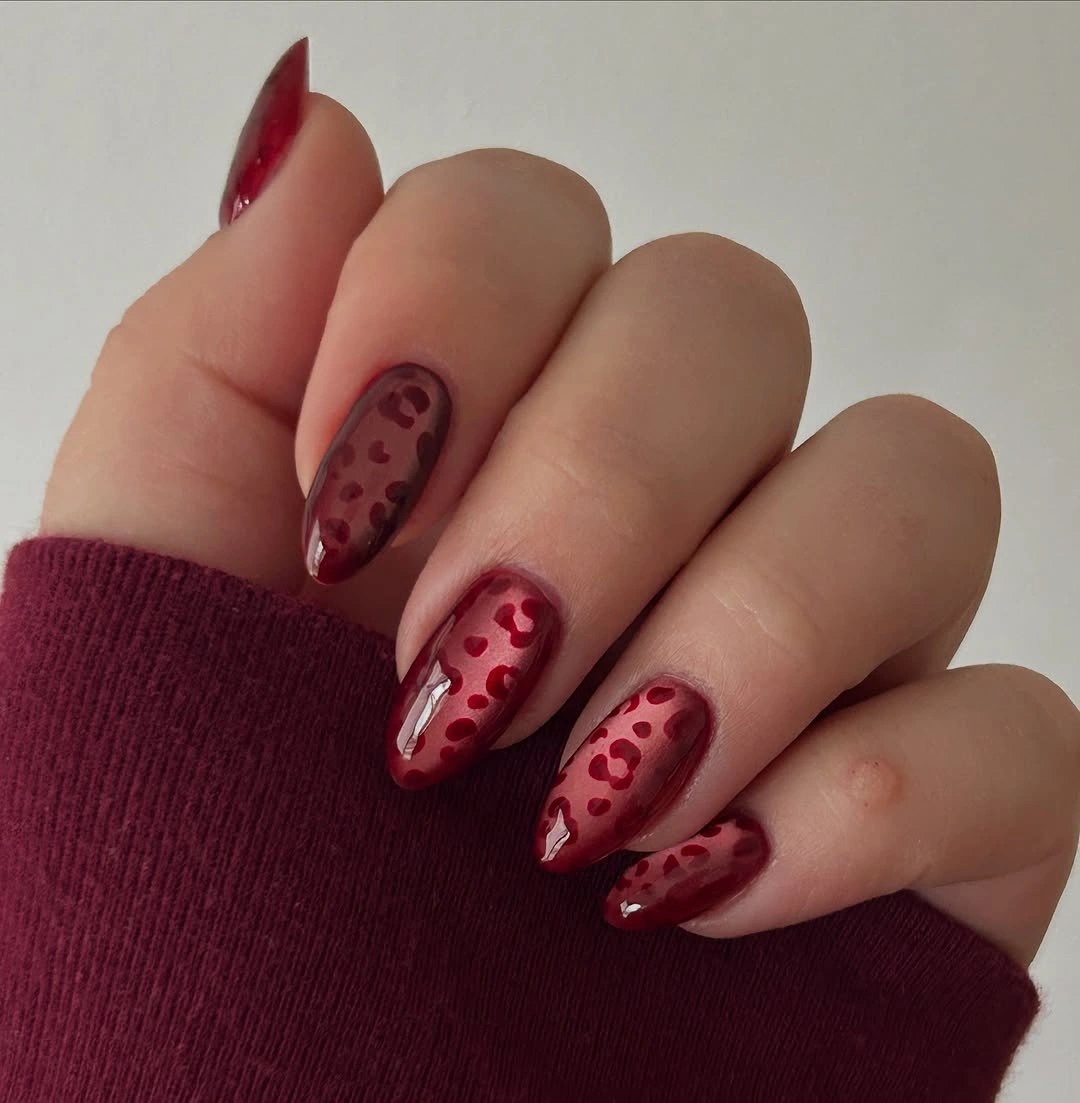
Tonal spotting adds texture without requiring several coordinated accent colors. Keep some nails lighter and more translucent so the darker pattern has room to appear. If every surface becomes equally saturated, the spotted effect will lose much of its dimension.
A shorter oval shape could carry the same idea with smaller, more widely spaced marks. For an even quieter version, place spots on two nails and leave the rest in plain burgundy jelly. Whatever ratio you choose, a clear glossy finish is essential to preserve the sense of color suspended in layers.
Mixed Plaid, Dots, and Checkerboard Fall Nails
Brown plaid, cream dots, black checkerboard, and amber accents make this long almond set intentionally busy. The disciplined neutral palette is what prevents the patterns from becoming chaotic. Assigning one motif to each nail also creates clean boundaries, allowing the eye to compare surfaces rather than untangle a combined design.
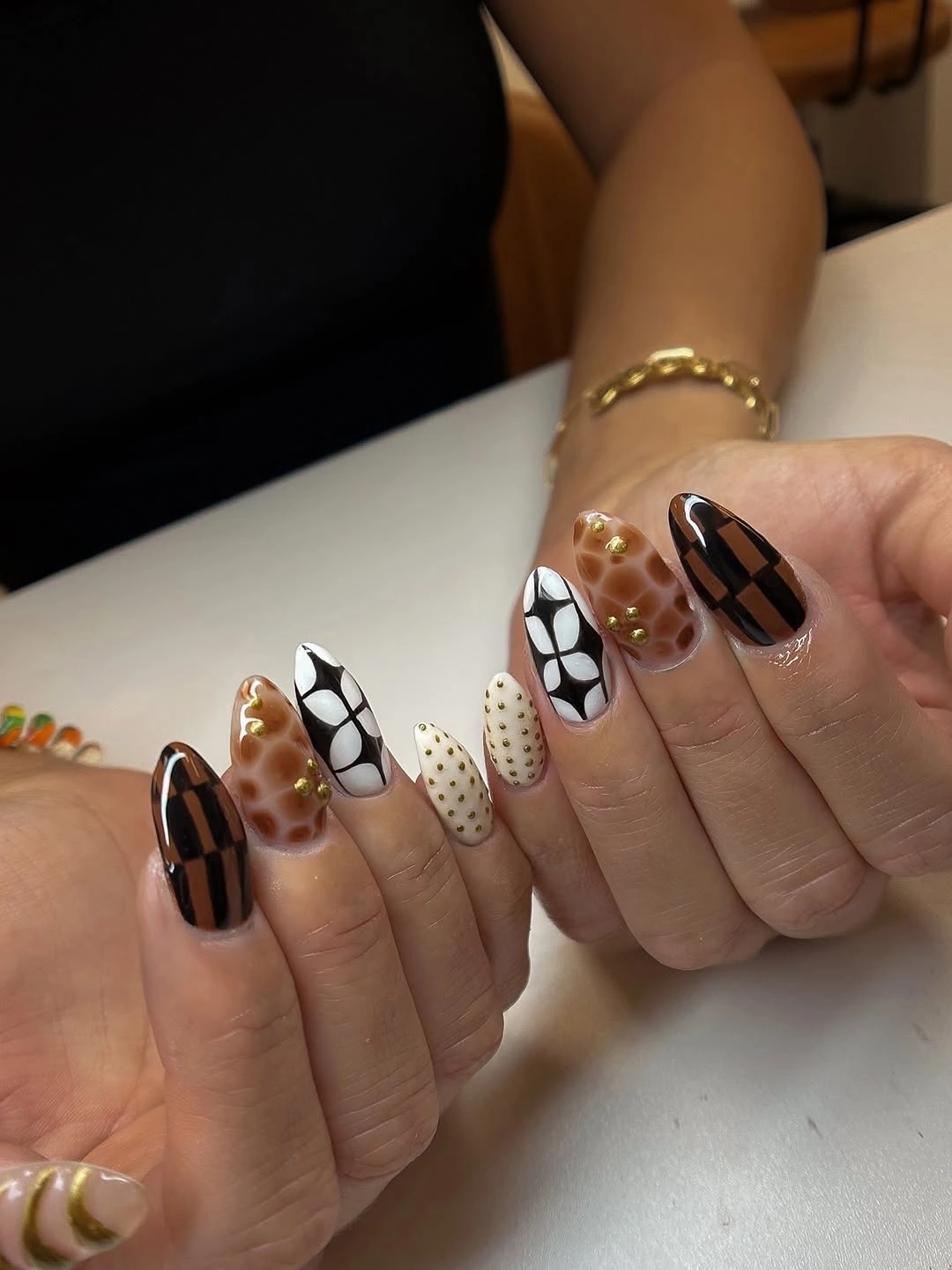
Pattern collectors can use this manicure as a menu rather than an instruction to copy everything. Start by choosing the two motifs you would miss most; those should receive the clearest placement and strongest contrast. The remaining fingers can become simple brown or cream solids without losing the original concept.
Checkerboard and plaid both rely on crisp lines, so using them repeatedly raises the maintenance demand quickly. Dotted accents are easier to refresh but can make the set feel even busier if scattered everywhere. A calmer edit would keep one checkerboard, one plaid nail, and use amber solids as visual rest.
Red, Pink, and Tortoiseshell Almond Nails
Glossy red provides the strongest color in this long almond manicure, while tortoiseshell introduces amber depth and irregular movement. A textured pink accent shifts the mood away from a classic red-and-brown combination. Clean tapered edges are important because the surfaces already carry substantial contrast.
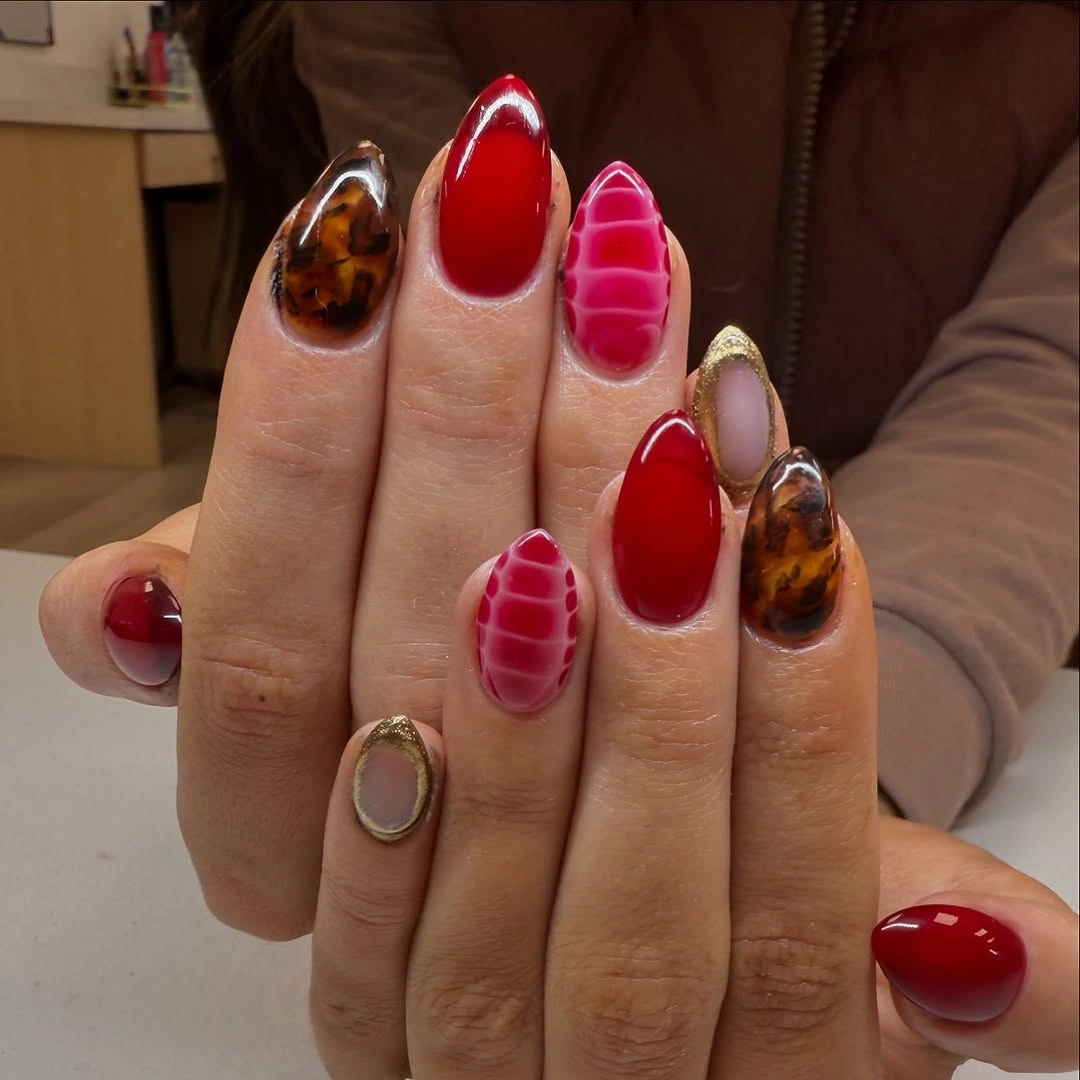
The mix works when each material-like finish remains distinct: red should look smooth, tortoiseshell should retain translucent variation, and pink should offer a softer interruption. Repeating one of those treatments too often would flatten the conversation between them. Two red solids can anchor the hand without dominating every finger.
For a less playful version, replace textured pink with a sheer rose accent and let tortoiseshell stay as the only pattern. If you prefer more energy, keep the pink but reduce the brown markings to one nail. The manicure needs editing rather than extra decoration because its three existing personalities already provide enough interest.
Mint Green Nails With Tiny Fall Accents
Mint green brings an unexpected cool note to these short oval nails, balanced by nude pink and small tortoiseshell patches. Tiny dots make the accents feel collected rather than heavily patterned. The pastel solid remains the surprise, while the warm brown details connect it back to an autumn palette.
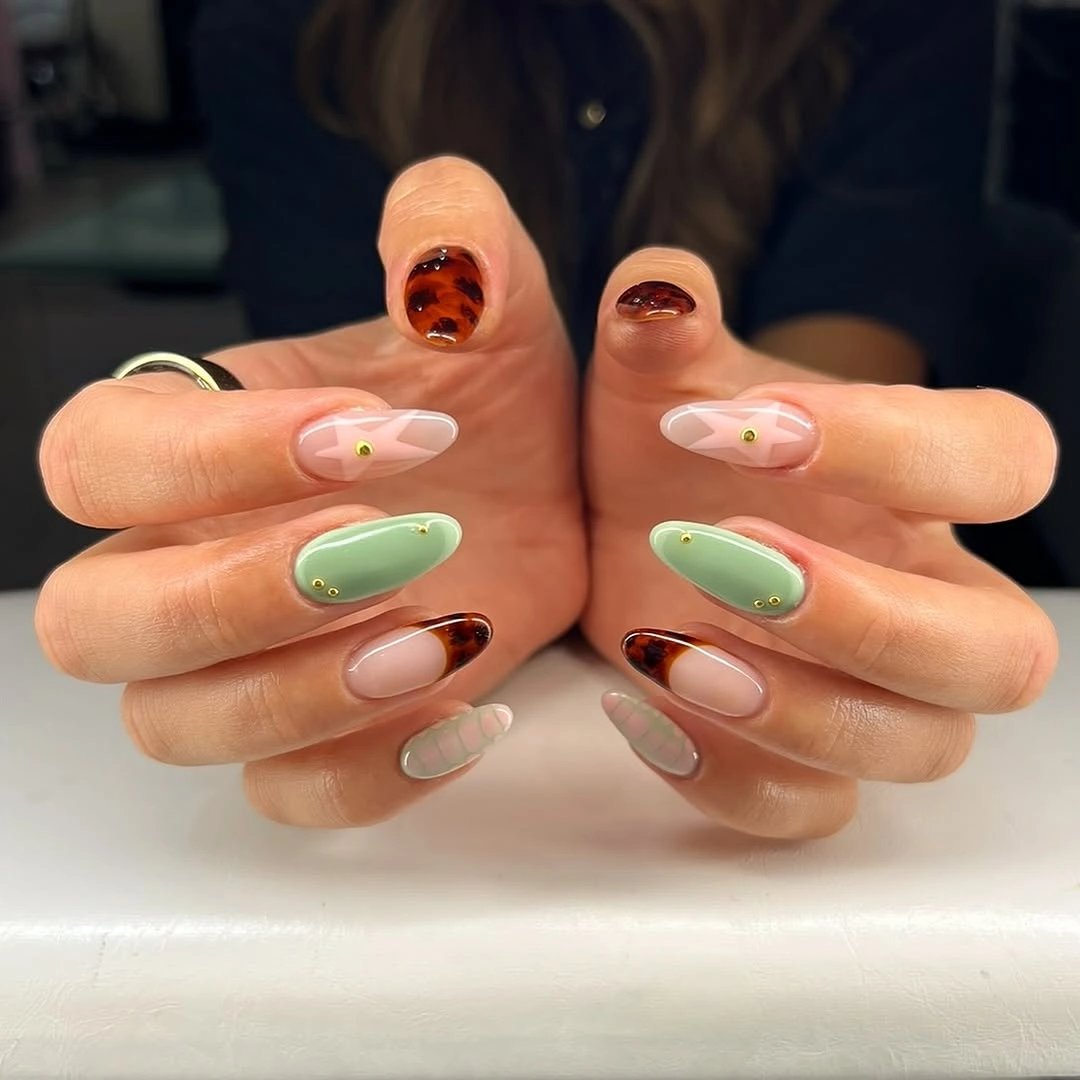
Mint creates a gentle route into green fall nails for anyone reluctant to use forest or olive shades. Keep the decorative marks small so the pastel continues to occupy the largest visual areas. Nude fingers can separate the cool green from tortoiseshell and prevent the contrast from becoming abrupt.
A warmer pistachio would reduce the temperature difference, while pale sage would make the set quieter and more conventional. Short oval edges suit the miniature scale of the details and give the manicure an easy everyday finish. Adding a large metallic accent would upset that restraint, so let size remain the central editing tool.
Dark Green Nails With Gold Leaf Movement
Deep green gives these short oval nails a rich base, and gold leaf-like strokes introduce movement across selected surfaces. Muted neutral accents prevent the metallic work from feeling heavy at compact length. The result has darkness and shine without relying on black polish or dense glitter.
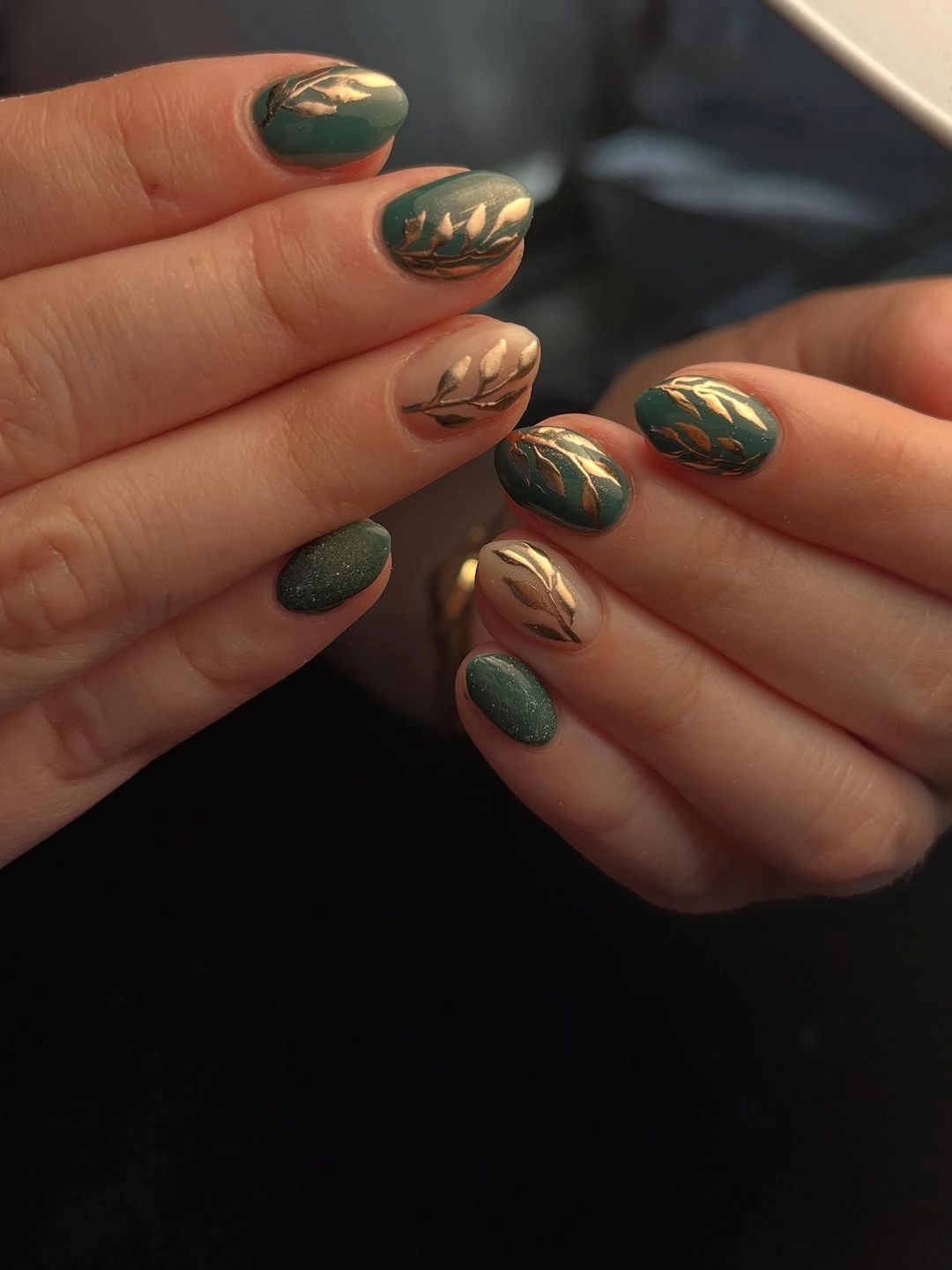
Gold looks strongest when it follows a clear directional flow rather than appearing as scattered decoration. A diagonal sweep can lengthen the nail visually, while a central cluster creates a bolder focal point. Keep the neutral accents understated so they continue to provide rest between reflective elements.
For simpler upkeep, reserve gold for two nails and repeat deep green across the rest of the hand. Olive would make the palette earthier, whereas emerald would produce a brighter, dressier effect. The short shape keeps either variation practical, but the metallic placement should remain sparse enough to preserve definition.
Nude Swirls With Burgundy Almond Nails
Glossy burgundy supplies autumn depth, while nude nails with thin white swirls keep this long almond set airy. The curved lines reinforce the tapered length instead of interrupting it with a wide horizontal feature. Alternating solid and open designs creates a measured finish after the more pattern-heavy ideas in the collection.
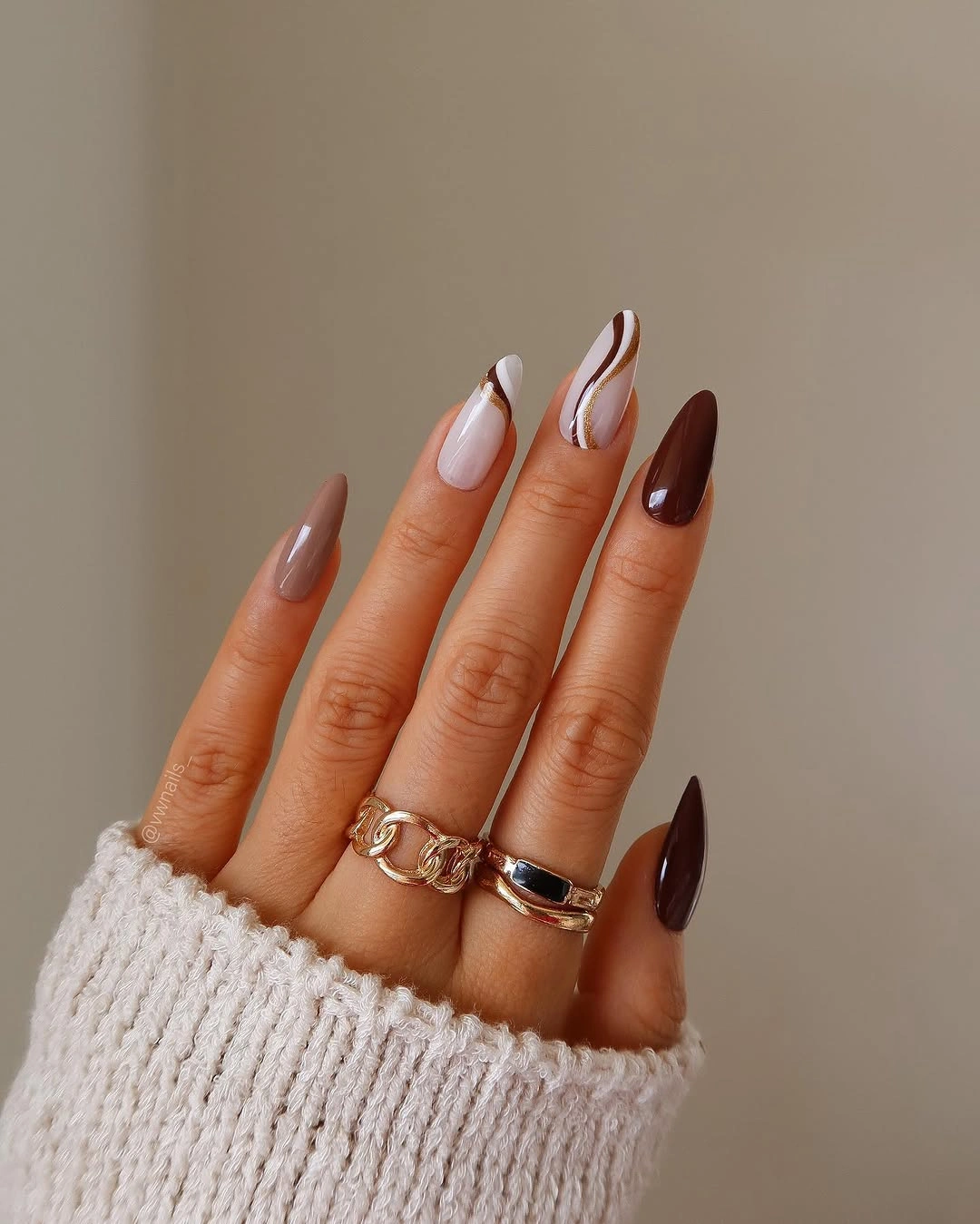
The design can shift mood simply by changing the ratio of burgundy to nude. More dark solids make it evening-focused and saturated, while additional open nails emphasize softness and negative space. Keep the white lines narrow in either version so they support the shape rather than covering it.
Only two treatments and one controlled accent color make the final reference especially adaptable. A shorter almond can preserve the same movement with fewer swirls per nail, and wine red can soften the contrast. The final choice should reflect how much visible detail you want to maintain, not a requirement to decorate every finger.