Early fall nails 2026 sit in the space between late-summer brightness and deeper seasonal color. This collection moves through taupe, brown, burgundy, orange, navy, cream, glitter, checkerboard, tortoiseshell, cherries, flowers, and metallic details, using short rounded shapes as often as longer almond tips. The mood changes gradually, so the ideas can be adapted before the weather feels fully autumnal.
The easiest transition is usually one small change: a warm accent, a darker French edge, a muted pattern, or a soft shimmer against a pale base. You do not have to choose the deepest shade immediately. Let the shape, finish, and placement decide how much season appears on the hand, then keep the remaining nails simple enough to support that shift.
Neutral Solids with a Warm Glitter Lift
Short oval nails begin with taupe, espresso, and a small amount of gold glitter. The neutral solids keep the set grounded, while the reflective accent brings warmth without changing the entire hand to a darker palette. The rounded shape makes the design feel approachable and transitional, which is useful when early fall still shares space with lighter clothing.
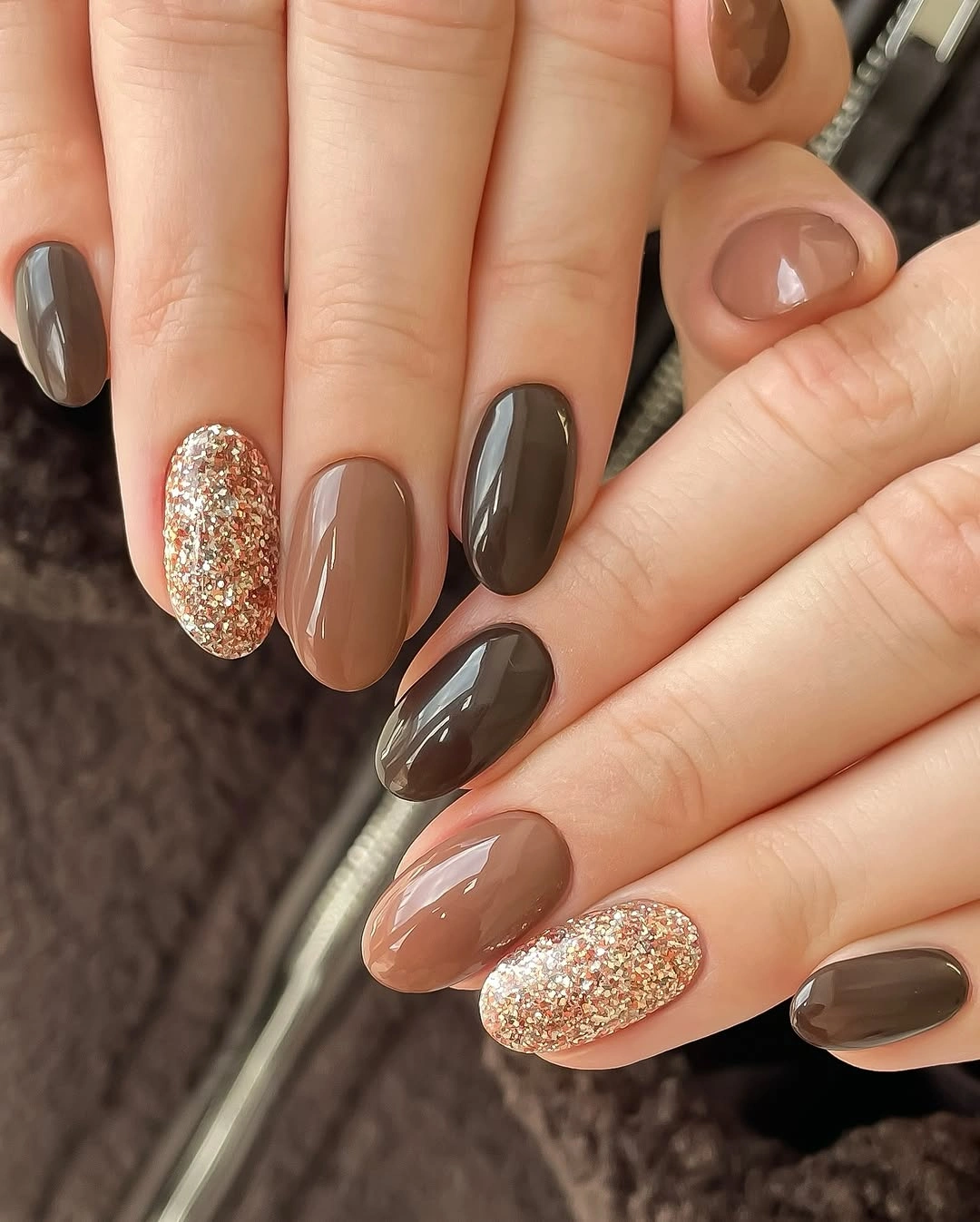
Keep the glitter on one nail for the softest version, or use it on the thumb and ring finger to spread the light. A short rounded almond can carry the same colors with a little more taper, while a very compact oval benefits from keeping espresso on only two fingers. The accent should remain warm enough to connect the taupe and brown.
This is a practical first step into the season because the color change is noticeable without being dramatic. The glitter supplies a focal point while the quiet nails continue to work with cream, denim, and late-summer neutrals. The tradeoff is that sparkle can feel formal quickly, so a restrained accent will keep the set useful for ordinary days.
Quiet Taupe and Charcoal for a Soft Shift
Short oval nails use quiet taupe and charcoal in a glossy tonal arrangement. There are no motifs or bright accents, so the seasonal feeling comes from the depth of the colors and the calm rounded outline. The set looks considered without announcing a strong theme, making it a gentle choice for the first cool weeks.
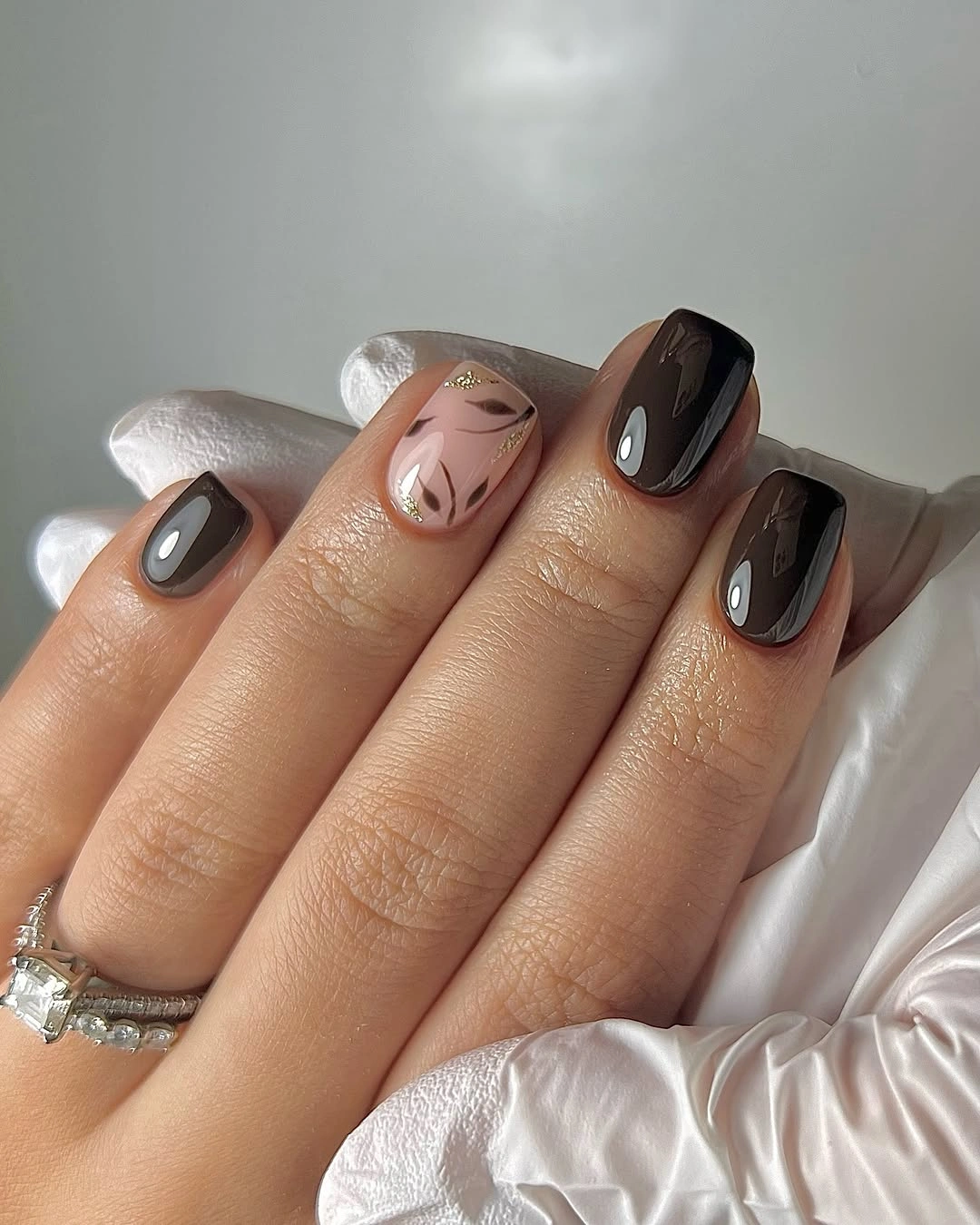
Choose a lighter taupe on the thumb and index finger, then let charcoal appear on two central nails for a gradual change in depth. If the hand needs more light, replace one dark finger with sheer beige. A short rounded shape already carries a lot of softness, so finish variation is optional rather than necessary.
The strength of this idea is its flexibility. It can sit beside summer denim, warm knitwear, or a darker jacket without requiring the rest of the outfit to change, and the rounded length keeps charcoal from feeling severe. The limitation is that close colors can look flat under weak light, so a clear glossy highlight helps separate them.
Brown Solids with One Tiny Botanical Accent
Short rounded nails use brown solids with one small botanical detail on a pale accent nail. The deep color introduces the season, but the simple flower or leaf mark keeps the manicure gentle and personal. The hand remains compact, and the glossy surface makes the contrast between the dark base and light accent easy to see. It is a small change, yet it gives the neutral set a clear point of view.
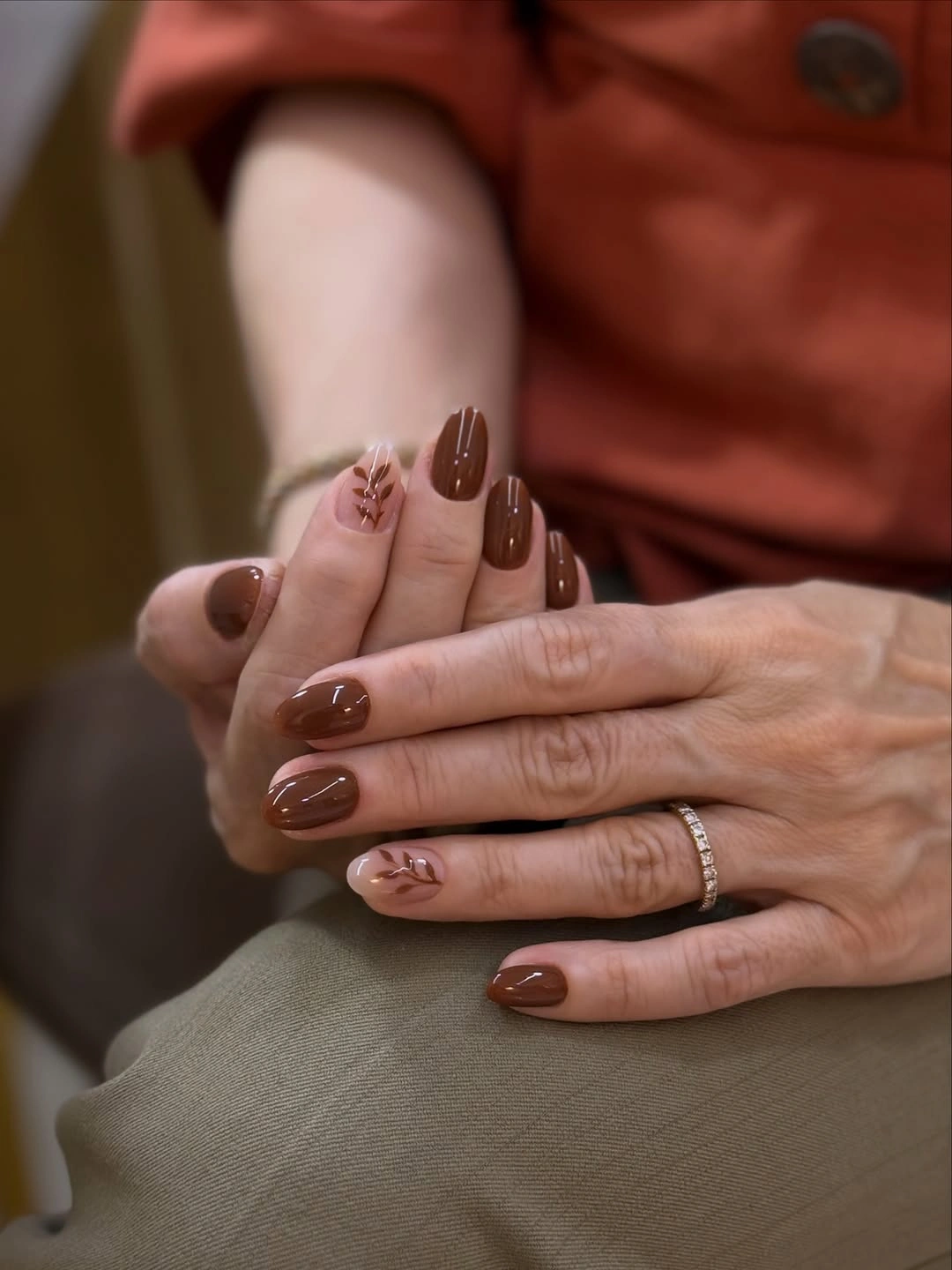
Keep the art on the ring finger for a clear focal point, or move it to the thumb so the set feels more understated. A shorter rounded nail can replace a small branch with two simple dots and a short line, while a medium length can support one larger leaf. Let the surrounding brown nails stay solid and clean.
This balance works well as an early fall update because it does not depend on heavy color or a full seasonal illustration. The botanical mark adds a hint of change, and the brown solids make the hand look warmer overall. The tradeoff is that fine details need space, so a simplified accent will read better than compressed artwork.
Deep Espresso Almonds with No Extra Art
Long almond nails use a deep espresso shade in a glossy monochrome set. The tapered shape creates the visual movement, while the color gives the hand a richer direction without requiring glitter, flowers, or lines. The result feels like a confident step into fall, but the clean surface keeps it easy to style and not overly themed.
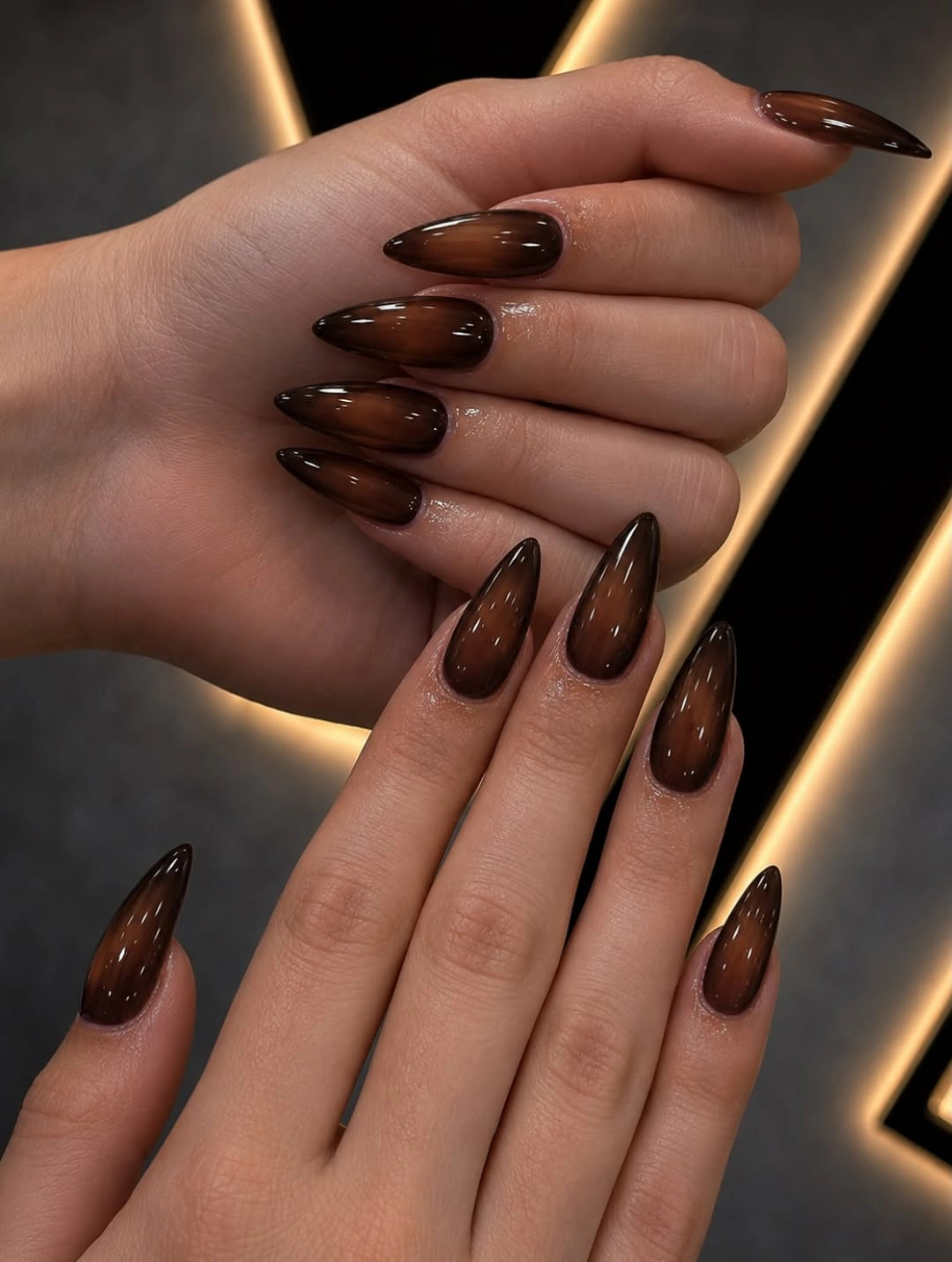
Shorten the almond to a medium length if the full taper is not practical, or use a softer cocoa on the thumb for a quiet tonal break. A single sheer blush nail can also lighten the set while leaving espresso as the main decision. Keep the finish uninterrupted so the simple shape remains visible. That balance makes the palette feel ready for the first cooler days.
Monochrome is especially effective during a seasonal transition because it makes one color feel intentional without adding extra visual information. The dark shade works with cream, denim, and brown clothing, while the almond outline keeps the hand elongated. The limitation is exposure: an uneven edge or small chip will stand out more than it would in a patterned design.
Neutral Almonds with a Light Glitter Accent
Long almond nails mix taupe, soft rose, and a small glitter accent, keeping the overall palette pale and warm. The reflective nail gives the hand a little depth, but the surrounding colors stay close enough to feel transitional rather than fully autumnal. The almond shape makes the neutral shades look elegant without needing a dark outline.
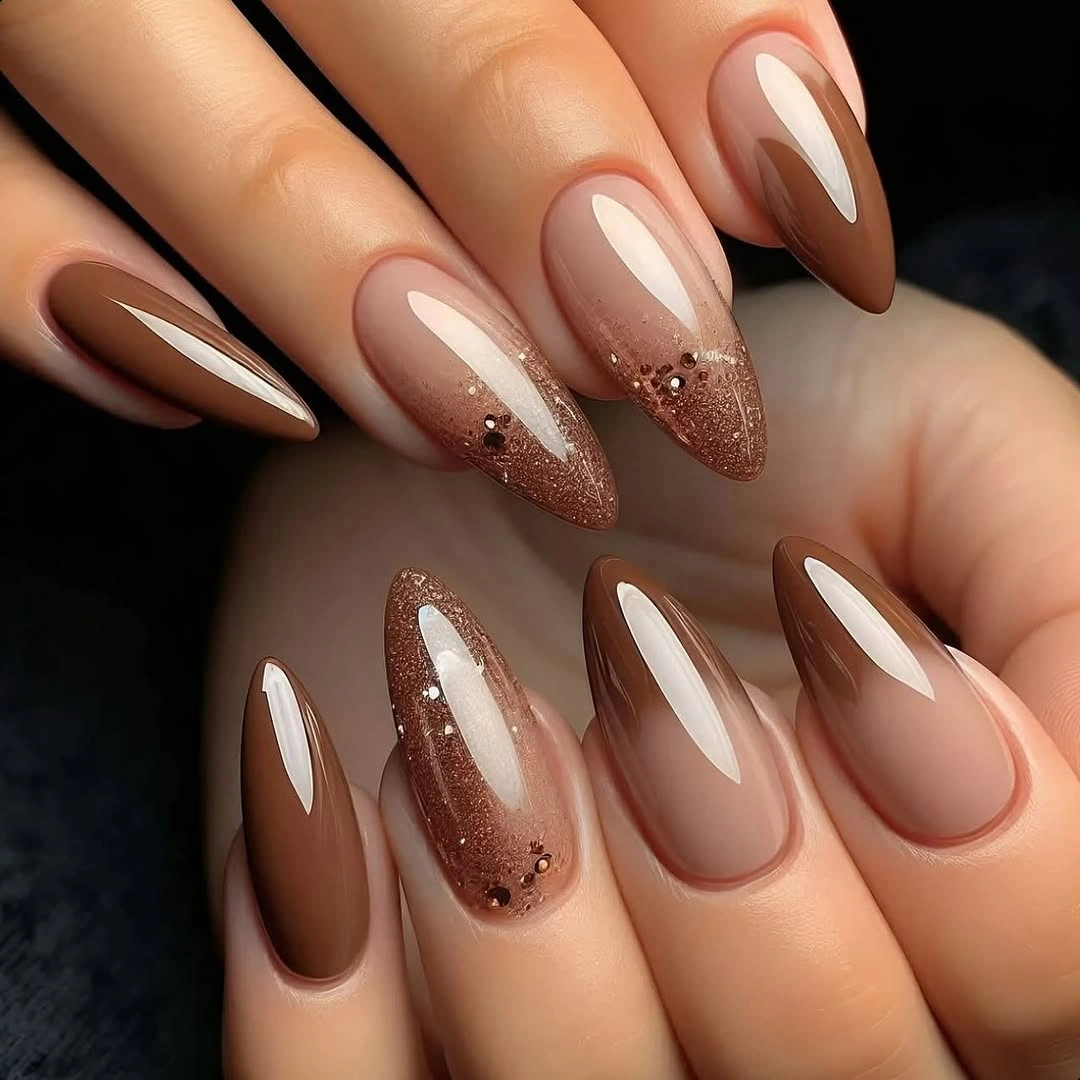
Use glitter on one nail if you want the design to remain daytime-friendly, or place it on two fingers for a stronger focal pair. A medium almond can replace full sparkle with a narrow metallic tip, and a short oval can use a softly reflective taupe instead. Keep the rose and taupe surfaces plain so the accent retains its role.
The pale palette is useful when you want to move toward fall without abandoning light clothing or understated jewelry. Glitter supplies a visible seasonal cue, while the neutral base keeps the manicure easy to combine with other colors. The tradeoff is that too much reflection can make a soft set feel formal, so restraint preserves the early-season mood.
Soft Brown Tones on a Compact Rounded Shape
Short rounded nails use several close brown tones in a glossy, low-contrast arrangement. The colors shift gently from lighter nude brown to deeper coffee shades, creating a small tonal story rather than a motif-driven design. The compact shape and subdued finish make the manicure feel like an easy first layer of fall styling.
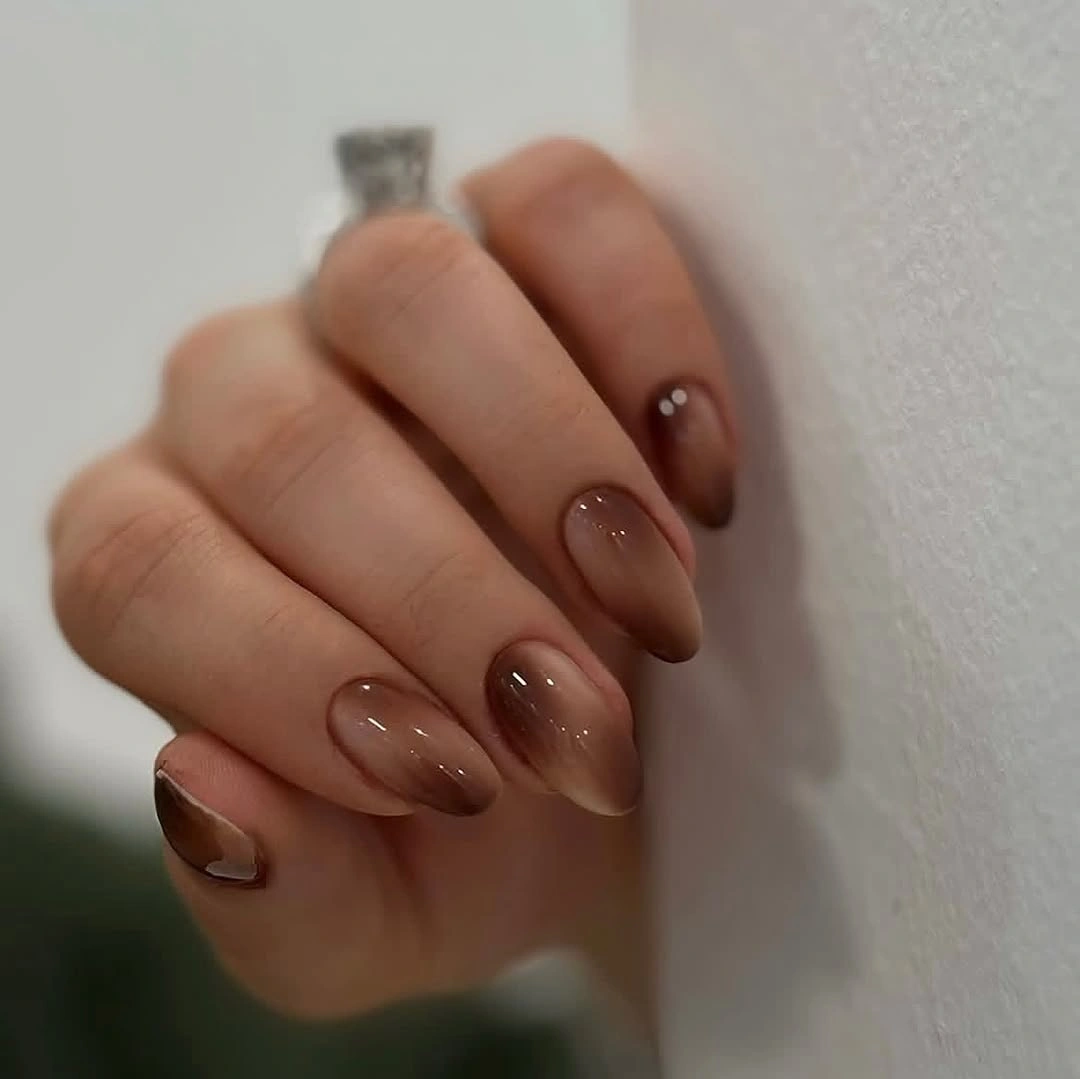
Choose two brown shades for a cleaner set, placing the lighter tone on the thumb and middle finger and the darker color on the outside fingers. A short oval can carry the same rhythm with slightly more taper, while a very short round shape should keep the color changes broad. A tiny metallic dot is optional, not necessary.
This idea works because it changes the mood through depth rather than through a strong seasonal symbol. It is easy to pair with cream, denim, and muted pink, and the short length keeps the darker tone from feeling too heavy. The limitation is low contrast, so a glossy surface or clear lighting helps the shades remain distinct.
Gradual Darkening across Long Almond Nails
Long almond nails move from taupe and brown toward deeper espresso across the hand, creating a gradual shift in depth. There is no repeated art, so the changing color order becomes the design and gives the collection a quiet ombre quality. The tapered silhouette supports that progression by making each tone feel stretched and deliberate.
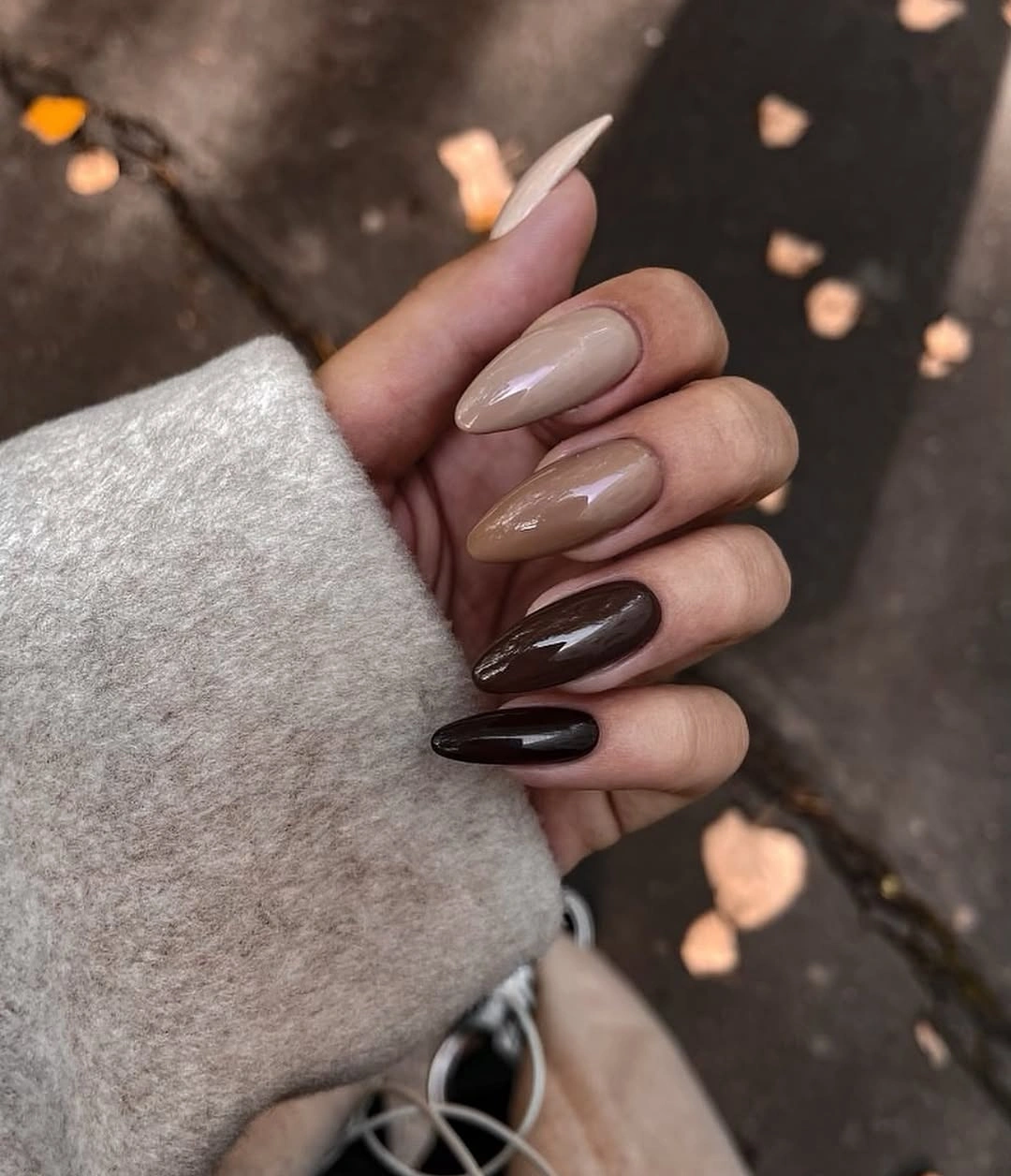
Use three shades instead of five if you want a simpler appointment brief, repeating the lightest color on the thumb and ring finger. A medium almond can show the same darkening with less visual length, while a shorter shape benefits from a clear light-to-dark order. Keep the finish consistent so the color progression remains the focus.
This approach is useful for readers who like variety but do not want motifs or sparkle. The tones connect naturally to early fall clothing, and the shape keeps the hand looking elongated without adding lines. The tradeoff is that the order matters; random placement can make the set look mismatched, so the transition should be visible from one finger to the next.
Chocolate and White Blocks on a Short Oval
Short oval nails combine chocolate brown, cream, and white through simple geometric blocks. Some fingers stay solid while others use a divided surface, so the palette feels graphic without becoming dense. The rounded edge softens the contrast and keeps the design approachable for an early fall set that still feels light.
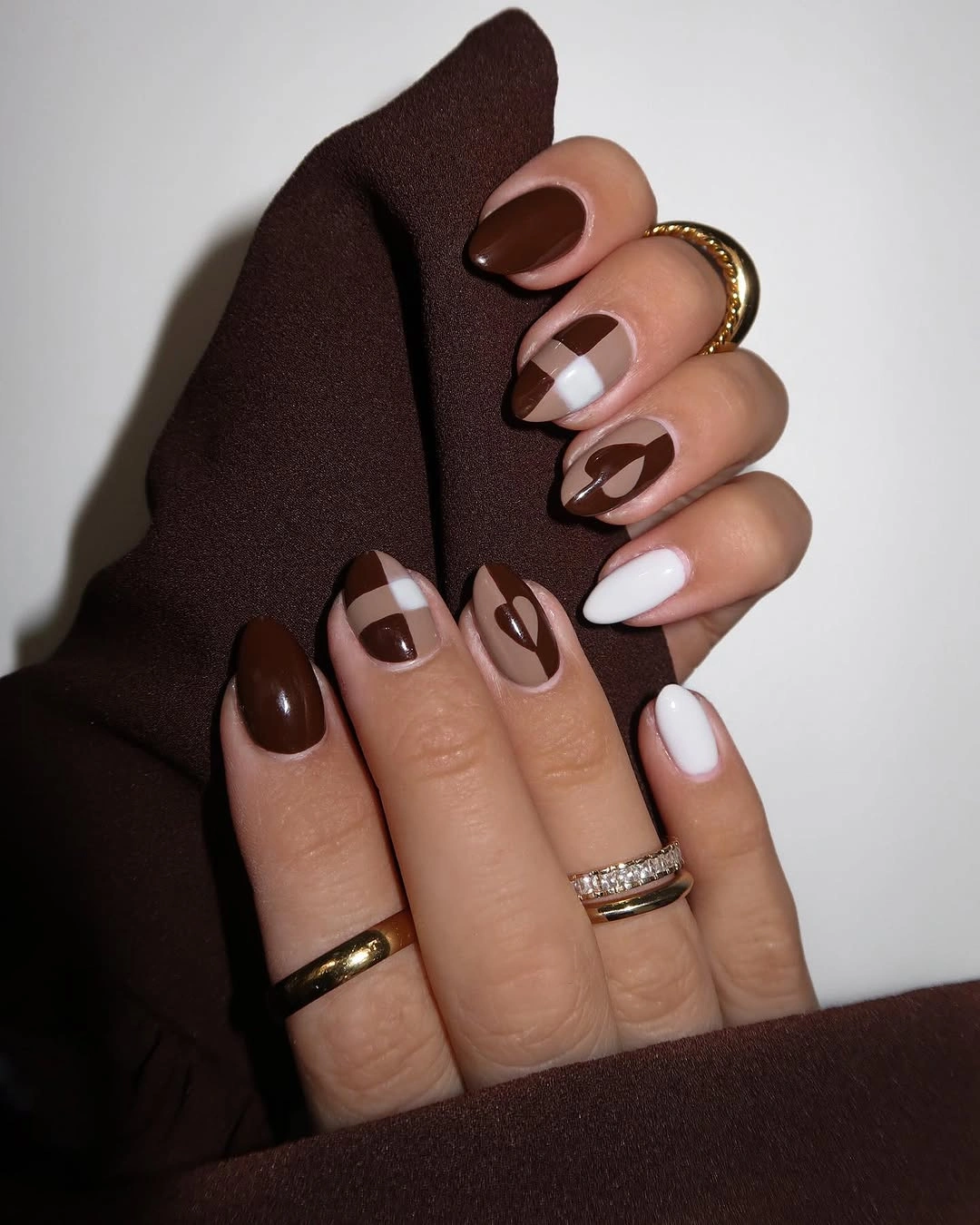
Use one block shape repeatedly if you want the manicure to feel more organized, or keep the split design on two accents and leave the rest brown. A very short oval needs broad sections that remain visible, while a medium shape can support a small curved corner. Warm cream can replace bright white when a softer result is preferred.
The limited palette makes the blocks easy to coordinate with neutral clothing and helps the shape remain visible through the pattern. It is a useful middle ground between solid brown and more decorative seasonal art. The limitation is scale: small divisions can shorten the nail visually, so open space and larger shapes will keep the set cleaner.
Orange Floral Tips on a Sheer Almond Base
Long almond nails keep a sheer base and place orange floral details at the tips. The color feels bright enough to remember late summer, but the warm orange and leaf-like placement begin to point toward fall. The open center makes the manicure airy, while the almond taper provides room for the flowers to sit without crowding.
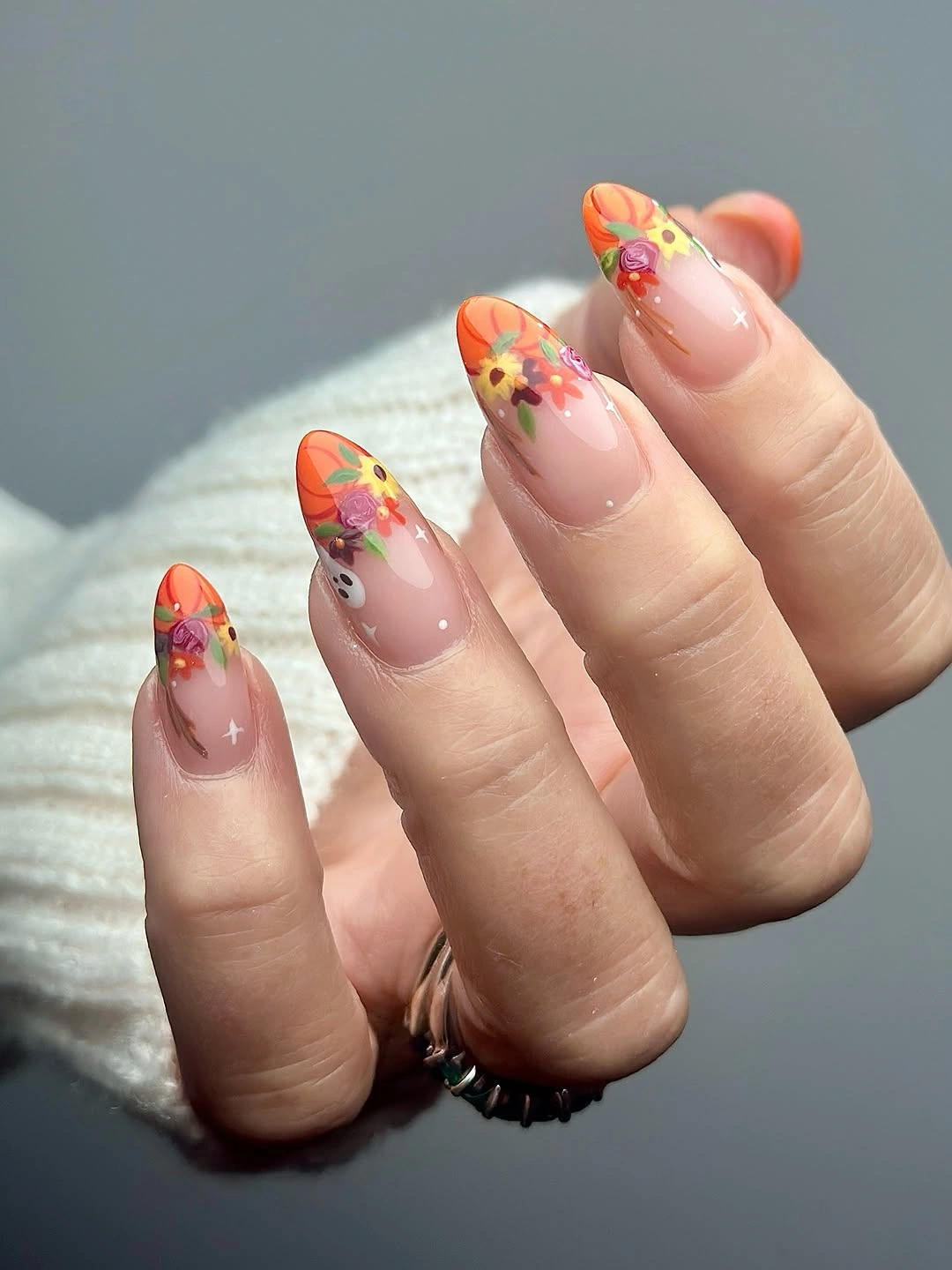
For a softer transition, use orange on every tip and reserve the full flowers for two accent nails. A medium almond can carry larger petals, while a shorter shape may need only a small orange crescent and one dot. Rust or terracotta will make the idea deeper without changing the placement or the clear center.
The design works because it lets the season arrive through color and location rather than through full coverage. The flowers remain visible, but the sheer base keeps the hand compatible with light clothing and warm-weather accessories. The tradeoff is detail density at the tips, so reducing the number of petals often makes the manicure easier to read.
Soft Checkerboard with Cream and Taupe
Long almond nails use cream and taupe as the base palette, adding checkerboard accents to selected fingers. The pattern gives the soft neutrals a more current, graphic feel, while the pale solids keep the set from becoming too busy. The long shape creates enough surface for the checks to remain legible without covering the whole hand in pattern.
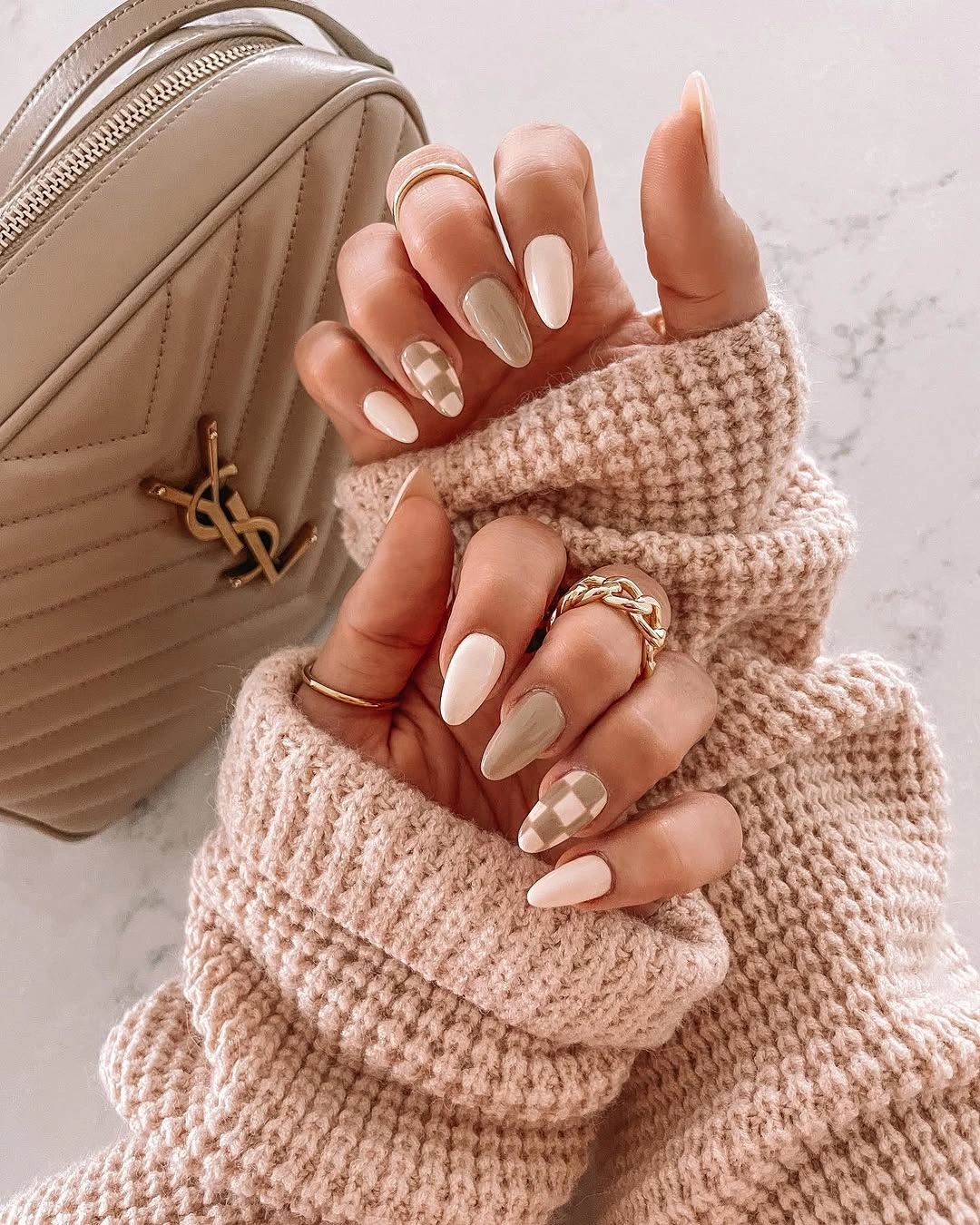
Use checkerboard on two nails and keep the rest in cream or beige for a more wearable version. A medium almond can use a larger two-tone grid, while a shorter nail benefits from two or three broad checks near the tip. Warm brown can replace taupe if the rest of the wardrobe already leans toward deeper fall color.
The design is transitional because the palette stays light even though the motif is graphic. It works with knit textures, leather accessories, and simple neutral outfits, giving the hand a clear detail without a dark base. The limitation is that tiny checks merge quickly, so visible spacing and a restrained accent count matter more than intricate precision.
Cream, Brown, and Cozy Swirl Motifs
Short rounded nails mix cream solids with brown swirls and small heart-like shapes that resemble cozy line drawings. The pale fingers keep the hand light, while the brown details bring warmth and texture to the design. The rounded shape suits the soft motif scale, making the set feel playful without looking juvenile.
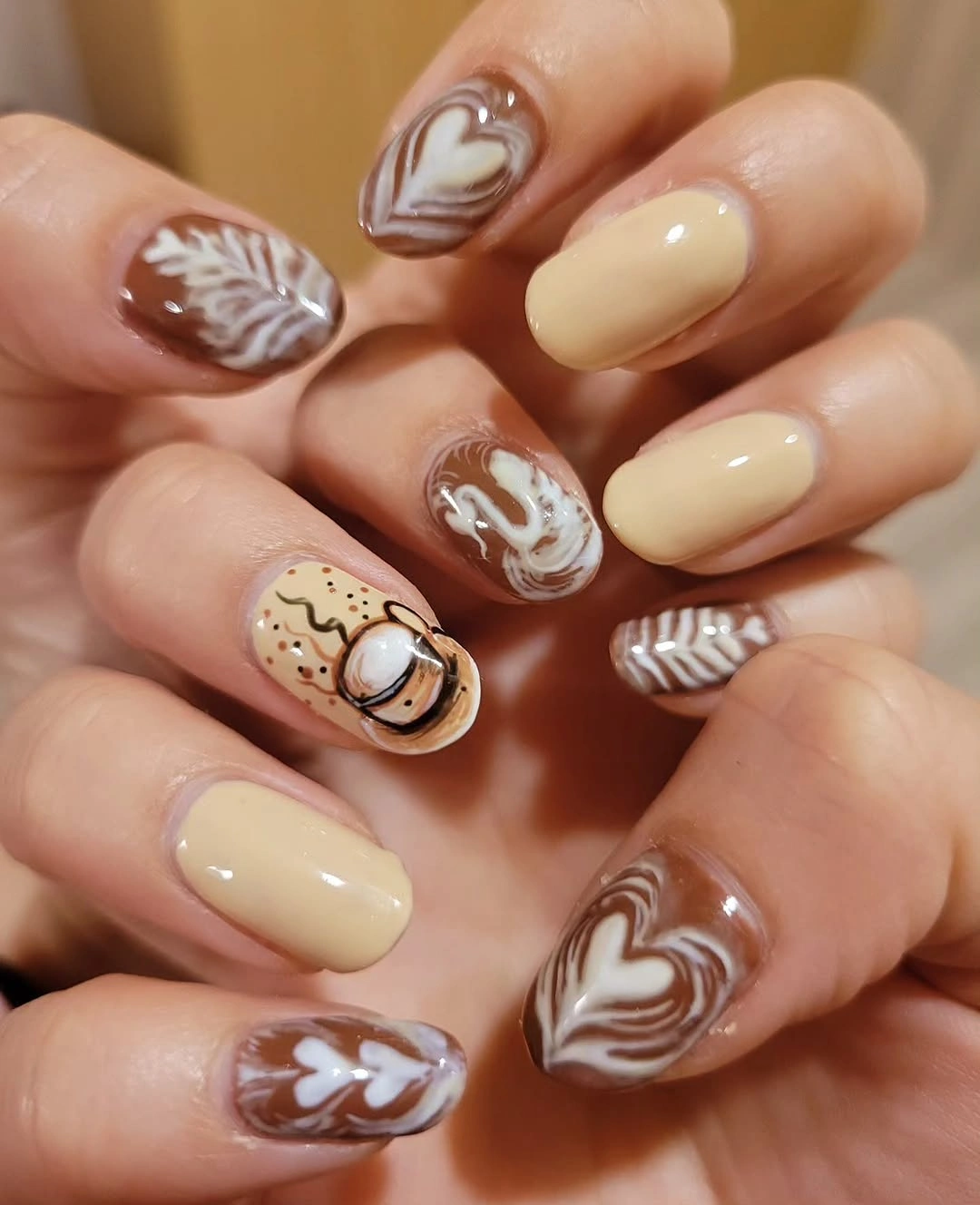
Keep the swirls on two nails and use cream or warm brown on the rest for an edited version. A very short rounded nail can use one simple curved mark, while a medium oval can carry a slightly larger loop. If the heart-like forms feel too literal, replace them with dots and one open line while keeping the same palette.
This set works as an early fall idea because the color is cozy but the base remains pale and fresh. The motifs add personality without requiring glitter or a deep shade, which makes the manicure easy to combine with light layers. The tradeoff is that several small drawings can compete, so a clear scale difference will help the hand feel organized.
Burgundy French Edges on a Blush Base
Medium almond nails use a soft blush base with glossy burgundy French edges. The deeper color appears first at the tip, allowing the manicure to feel seasonal without covering the whole nail. The almond taper and open center create a balanced transition, especially when the rest of the styling remains light and understated.
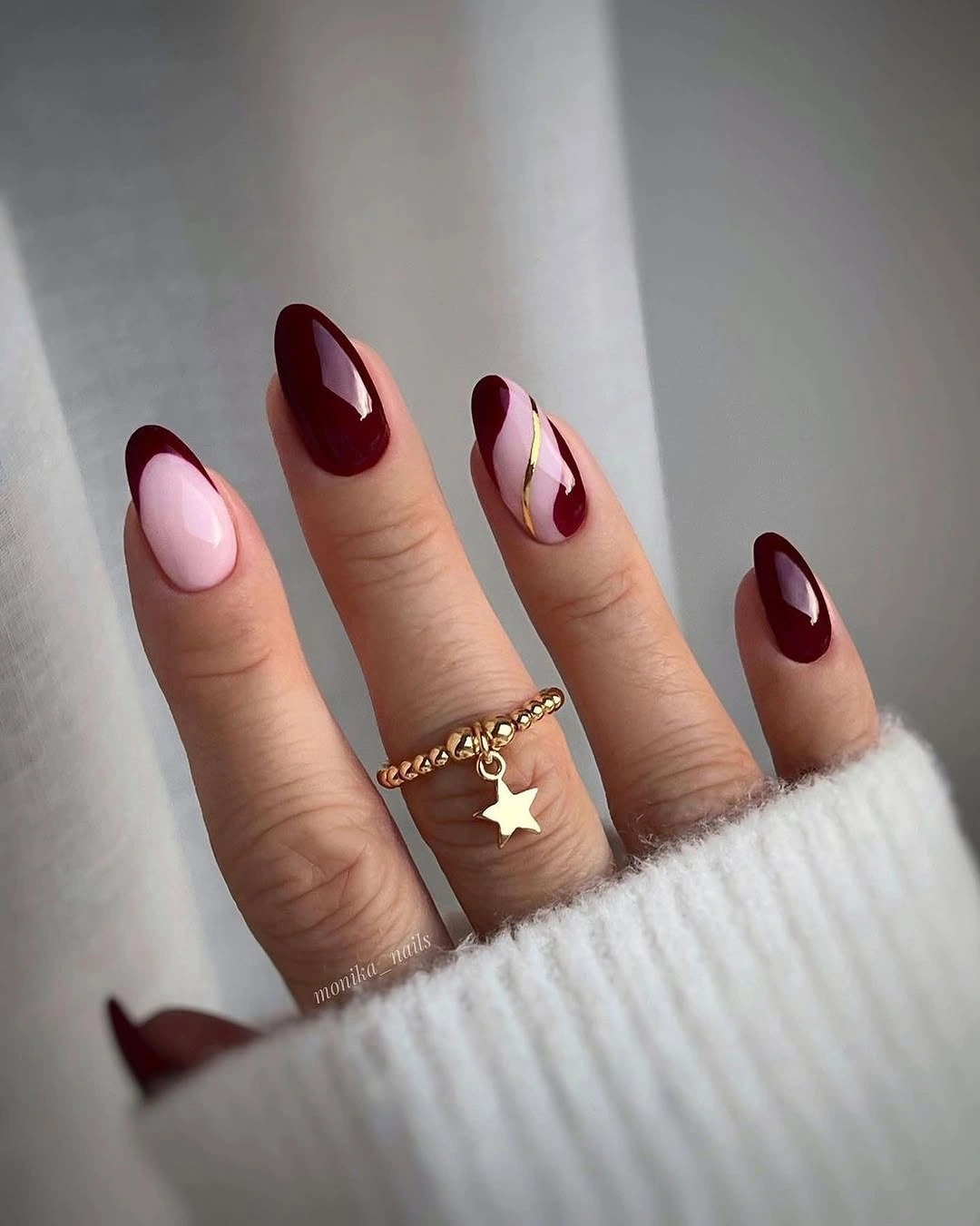
Use a thin burgundy edge on every nail for a clean version, or make the thumb and ring finger slightly deeper for a gentle focal pair. A short almond needs a narrower tip to preserve the pale center, while a longer length can support a wider burgundy shape. Chocolate can replace burgundy when a warmer brown direction is preferred.
The dark tip changes the mood immediately, yet the open base keeps the hand from feeling fully autumnal. This makes the idea useful when you want a seasonal update that still works with blush, cream, or denim. The limitation is that a thick edge can visually shorten the nail, so the burgundy should follow the taper rather than cover it.
Mixed Neutrals and Metallic Accents
Short rounded almond nails combine cream, taupe, blush, silver, and a rosy metallic, using a few reflective fingers to lift a pale set. The palette contains both cool and warm notes, but the short shape keeps them close and tidy. Finish variation creates the interest, so no additional motif is needed.
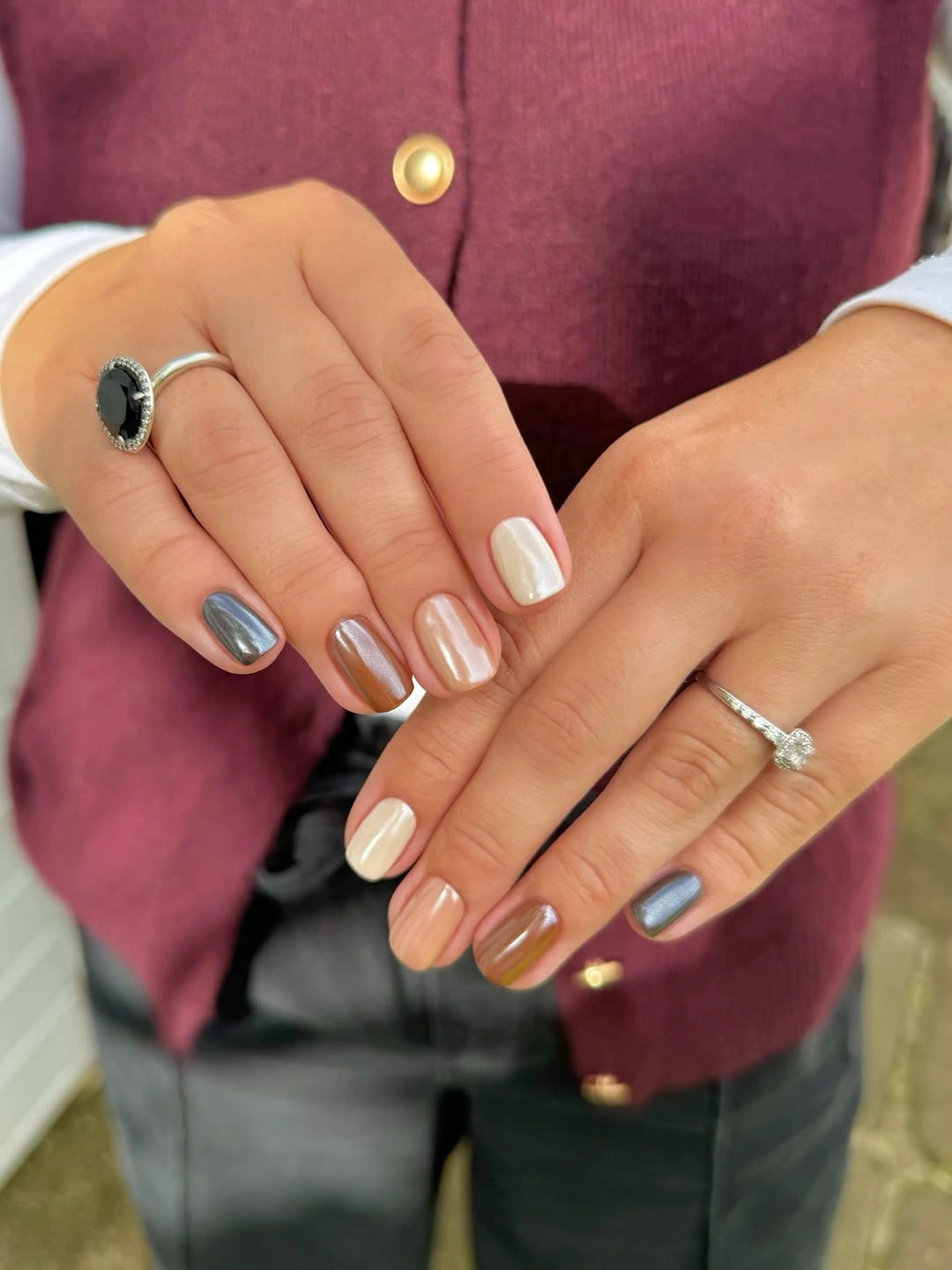
Choose one metallic family if you want the result to feel more cohesive, or keep silver and rose on separate fingers to emphasize contrast. A very short shape can use a metallic tip instead of full coverage, while a medium almond can carry one entire reflective accent. Leave the cream and taupe nails plain so the hand keeps its light rhythm.
This is useful during the early season because the colors stay bright while the metallic finish hints at cooler-weather styling. It works with both silver and gold jewelry when the surrounding clothes are neutral. The tradeoff is that several reflective fingers can compete with rings, so the manicure may look cleaner when the accessories are reduced.
Warm Burgundy and Gold Gradient
Short square nails use a warm gradient that moves from burgundy and red toward orange-gold shimmer. The straight edge makes the glow feel graphic, while the color transition supplies a stronger seasonal signal than the pale ideas earlier in the collection. The sparkle is integrated into the fade, so the design remains focused rather than covered in separate glitter marks.
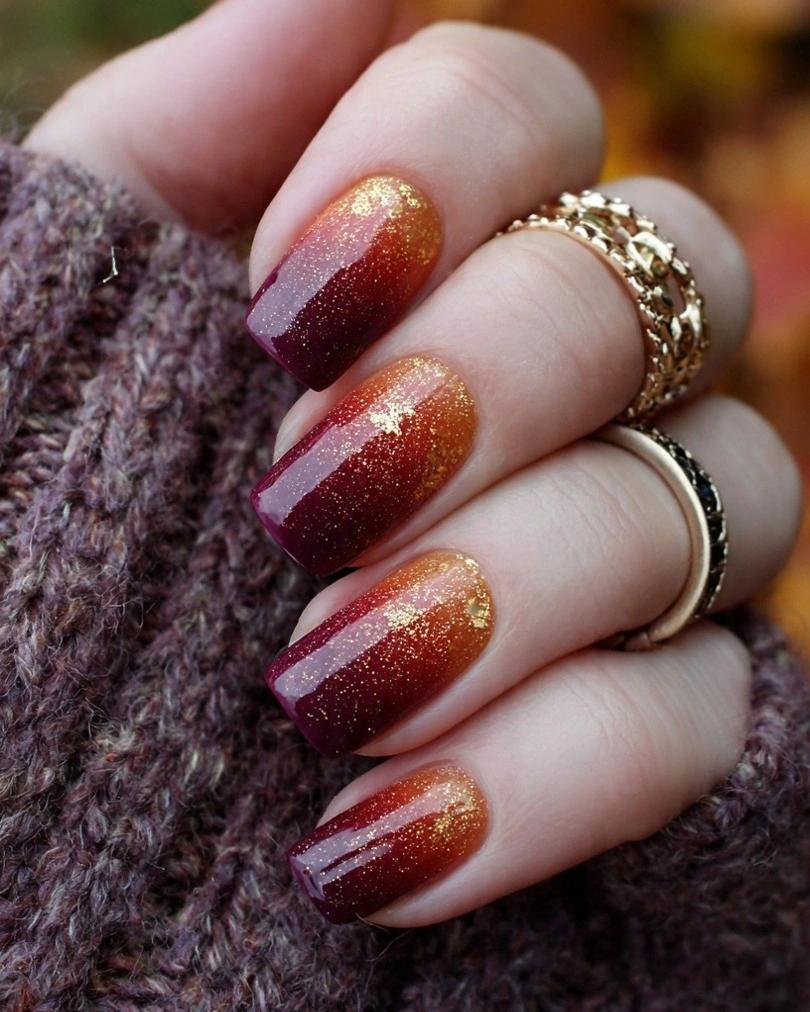
Use the gradient on one or two accent nails and keep the rest in burgundy if you want less shine. A short square can hold the darkest tone at the tip and the gold near the center, while a medium shape can reverse the direction for a brighter edge. Keep the square boundary clean so the shimmer does not blur the silhouette.
The warm colors connect naturally, which is why the gradient feels like a season change rather than a random mix. It works with rust, brown, cream, and burgundy clothing and gives a simple square shape an expressive finish. The limitation is that shimmer reveals surface texture, so the design benefits from keeping the fade smooth and the rest of the hand uncluttered.
Burgundy with a Tortoiseshell Accent
Medium square nails combine burgundy solids, cream, and one translucent tortoiseshell accent. The deep red supplies the early fall mood, while the patterned nail introduces warm variation without adding a bright color. The square edge keeps the hand orderly and makes the accent look like one deliberate detail inside a dark-neutral palette.
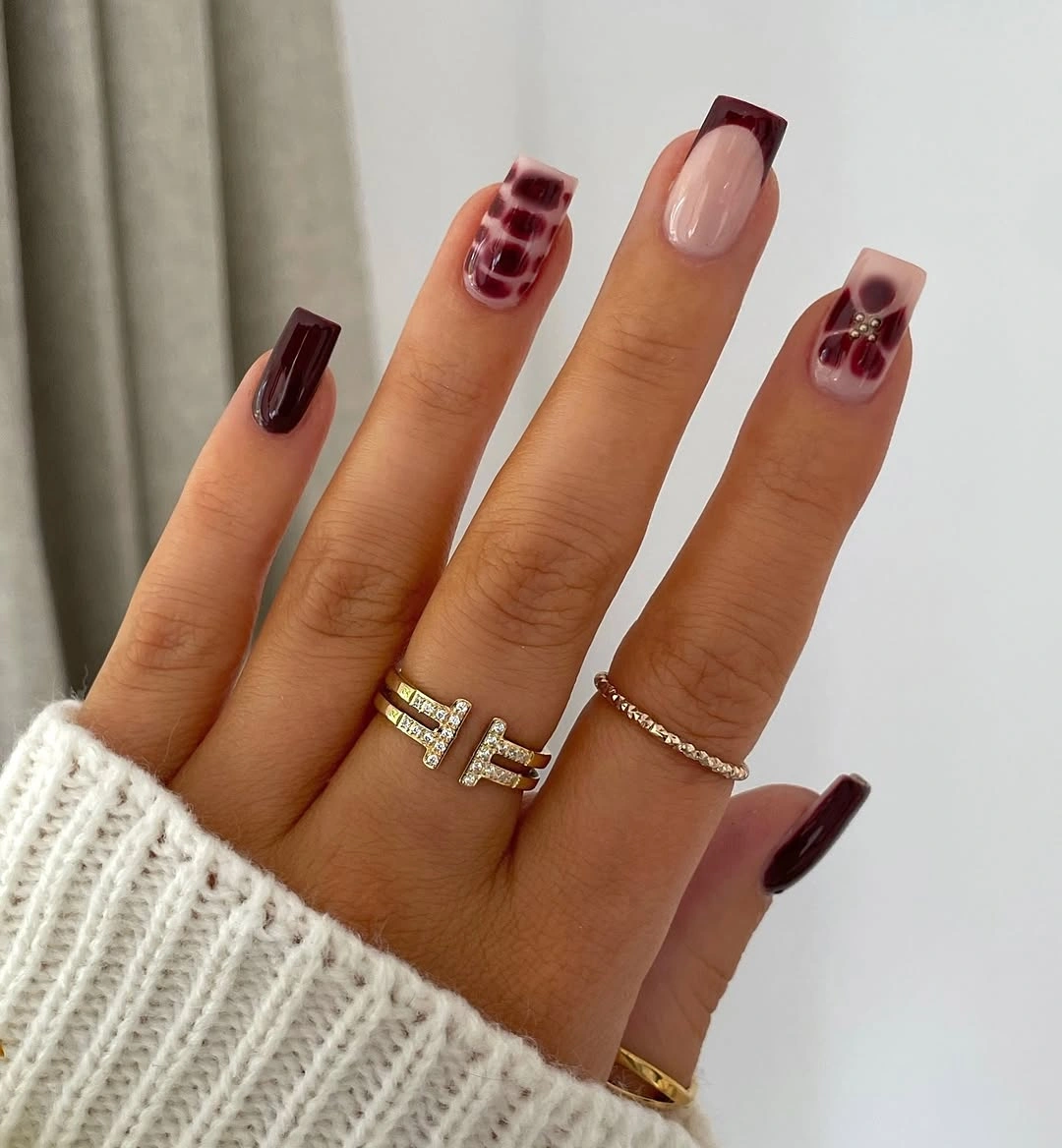
Use tortoiseshell on one nail and leave the rest burgundy if the pattern feels too strong. A short square should keep the print to two or three broad patches, while a medium length can show a more varied surface. Cream may replace one burgundy finger when the hand needs extra light without changing the core palette.
The accent works because its brown and amber variation sits naturally beside burgundy. It gives the set depth while protecting the clean shape from a full hand of motifs, which makes the idea easy to wear with both pale and dark outfits. The tradeoff is that a busy print can hide the square edge, so selected placement matters.
Blush, Brown, and Tortoiseshell on Almond Tips
Medium almond nails use blush and brown as the main tones, placing translucent tortoiseshell accents on selected fingers. The almond shape stretches the warm pattern, while the pale base stops the manicure from feeling heavy. Glossy surfaces unify the different colors and make the hand look seasonal without relying on glitter or a literal motif.
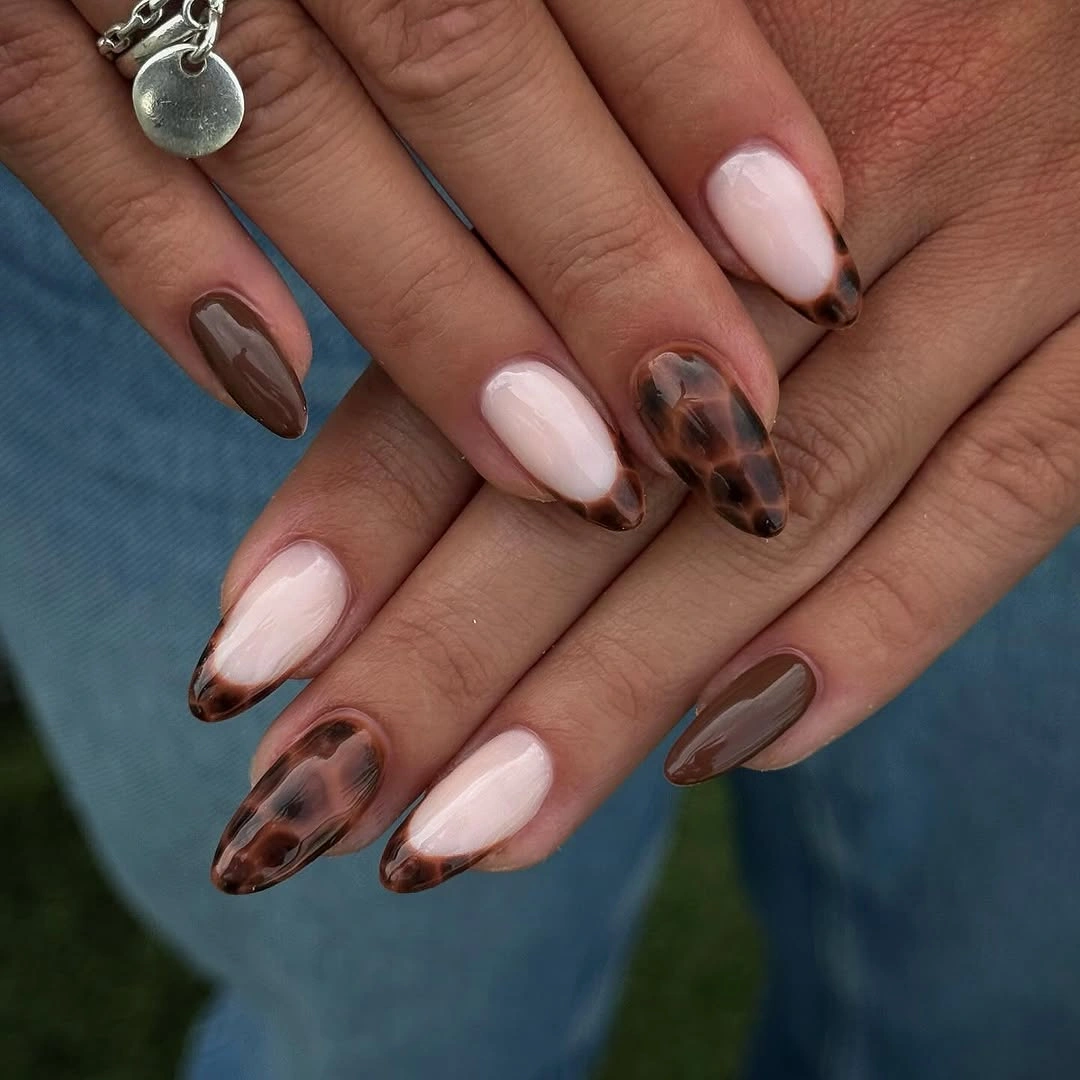
Keep the tortoiseshell on two nails and use a clean blush accent on the thumb for a lighter version. A shorter almond benefits from larger pattern patches, while a longer nail can carry a little more variation without losing the outline. If the brown feels too deep, use a softer caramel alongside the blush base.
This is a flexible early fall choice because the pattern brings warmth and the blush keeps the overall mood fresh. It can move from late-summer clothing into knitwear without a complete change in color story. The limitation is contrast: if the brown patches are too close to the solid brown nails, the pattern may disappear, so one shade should remain clearly lighter.
Navy and White Floral Details
Long almond nails use a deep navy ground with small white flower-like dots, creating a cool alternative to the warm browns and oranges in the collection. The dark base gives the hand a fall depth, while the pale marks keep the design crisp and slightly playful. The long shape provides enough room for the flowers to stay distinct.
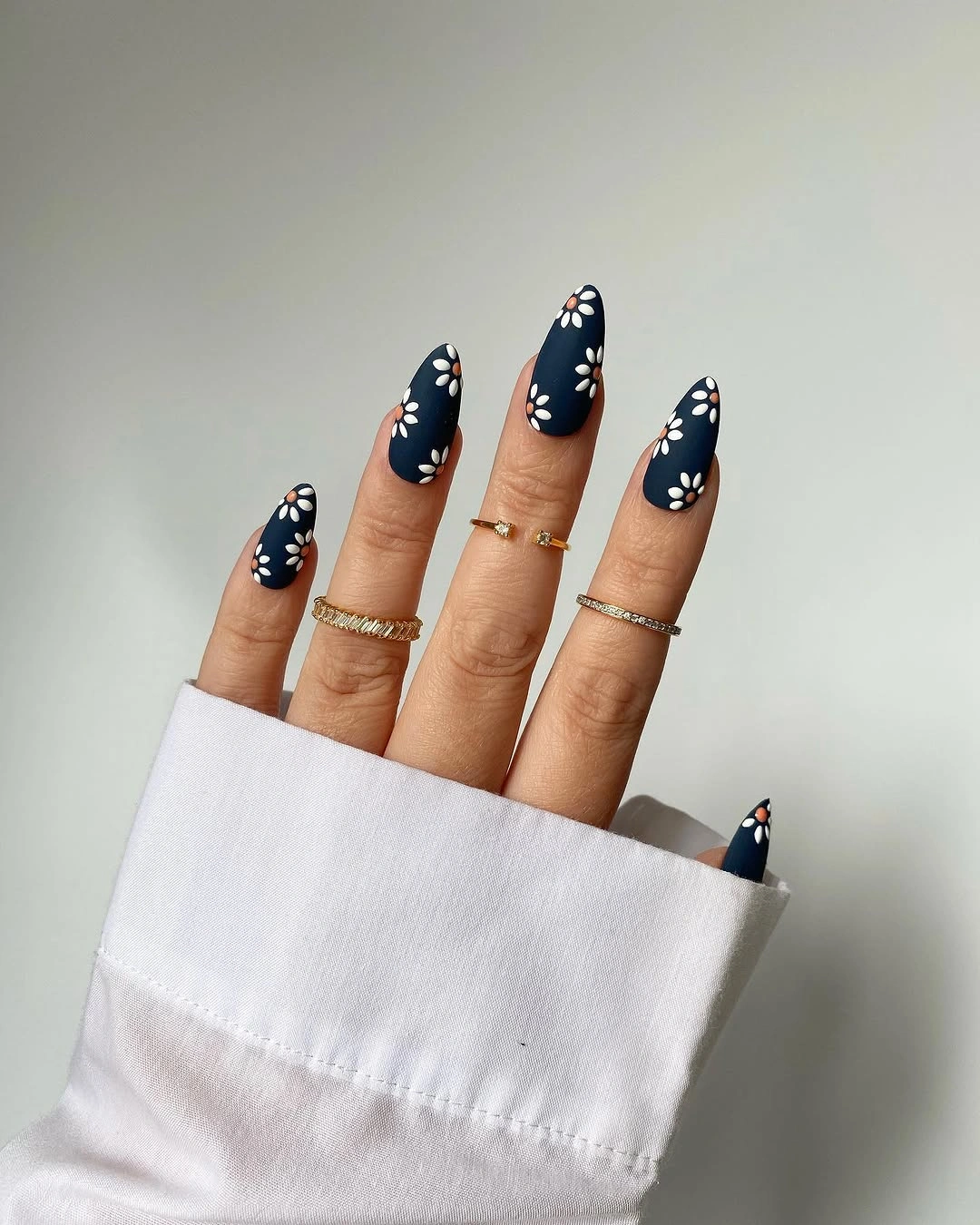
For a subtler set, place the navy and white pattern on two accent nails and use plain navy on the rest. A medium almond can use larger white dots with fewer petals, while a shorter length may need one small flower near the tip. Dusty teal can replace navy when you want the cool contrast to feel softer.
The design works because the cool palette changes the season without fighting the simple shape. White dots provide contrast that is easy to see, and the dark ground can pair with denim, cream, or black clothing. The tradeoff is that the navy surface already has visual weight, so extra colors or dense flowers would make the hand feel crowded.
Deep Burgundy with Warm Patterned Accents
Long almond nails combine deep burgundy solids with a few warm patterned accents that vary between brown and translucent tones. The strong berry color gives the hand a clear early fall direction, while the pattern prevents the set from becoming a single flat block. The almond silhouette keeps the dark palette elongated and polished.
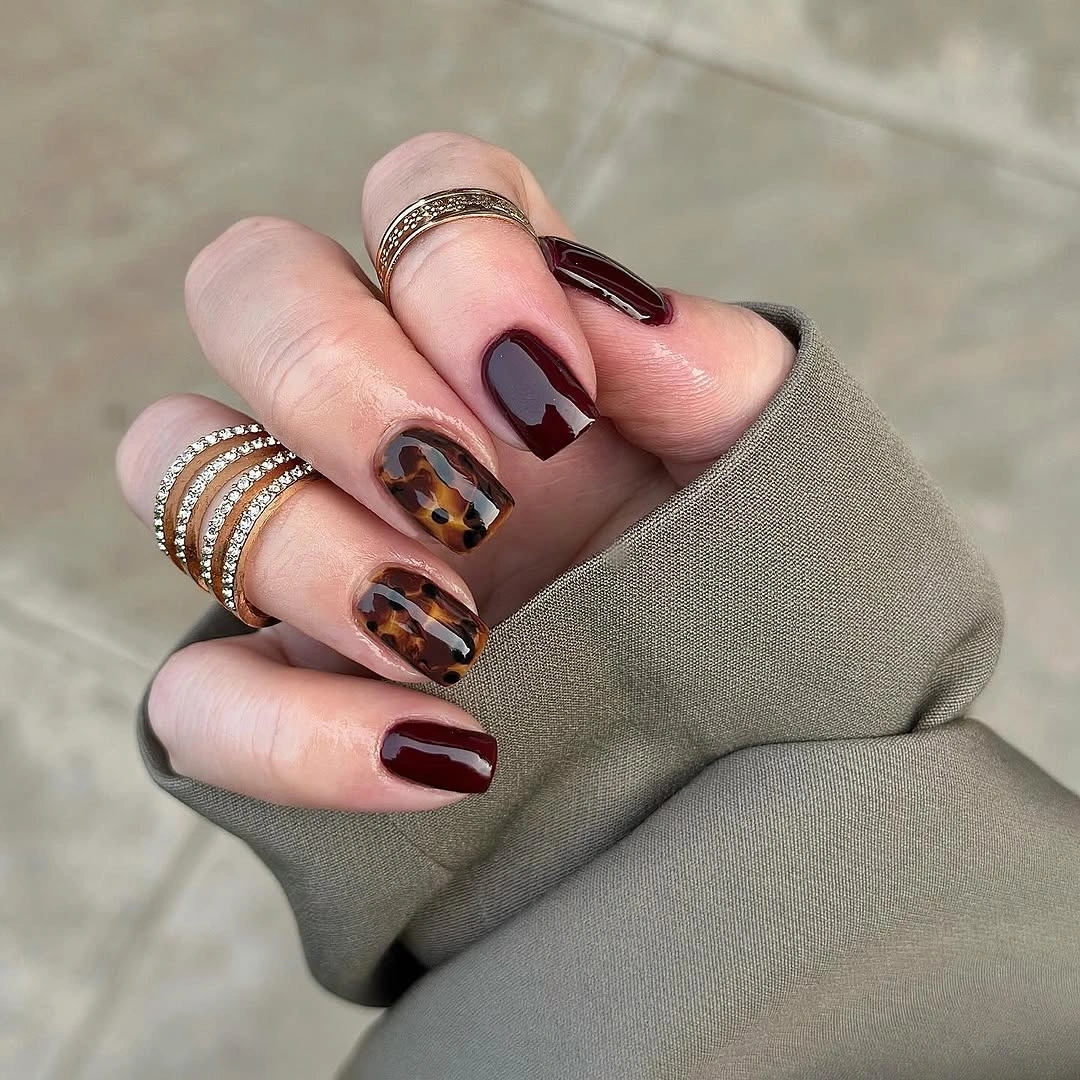
Use the patterned detail on two fingers and keep the rest burgundy for the most wearable version. A medium almond can shorten the pattern toward the tip, while a shorter shape should use larger patches rather than fine variations. If burgundy feels too intense, replace one solid nail with warm blush to create a lighter pause.
The pattern works as a bridge between the rich berry base and the warmer side of the season. It adds visual texture without forcing a separate motif, which makes the set easier to style with neutral layers. The limitation is that both burgundy and tortoiseshell-like tones are deep, so the accent needs enough light and spacing to remain visible.
Cherries, Dots, and Small Colorful Tips
Medium square nails mix burgundy, cream, pale pink, and small cherry-like drawings with dots and colored tips. The motifs bring a playful note to the early fall palette, while the square shape gives each accent a clear boundary. The set feels seasonal through its colors but remains light because the base stays open on several nails.
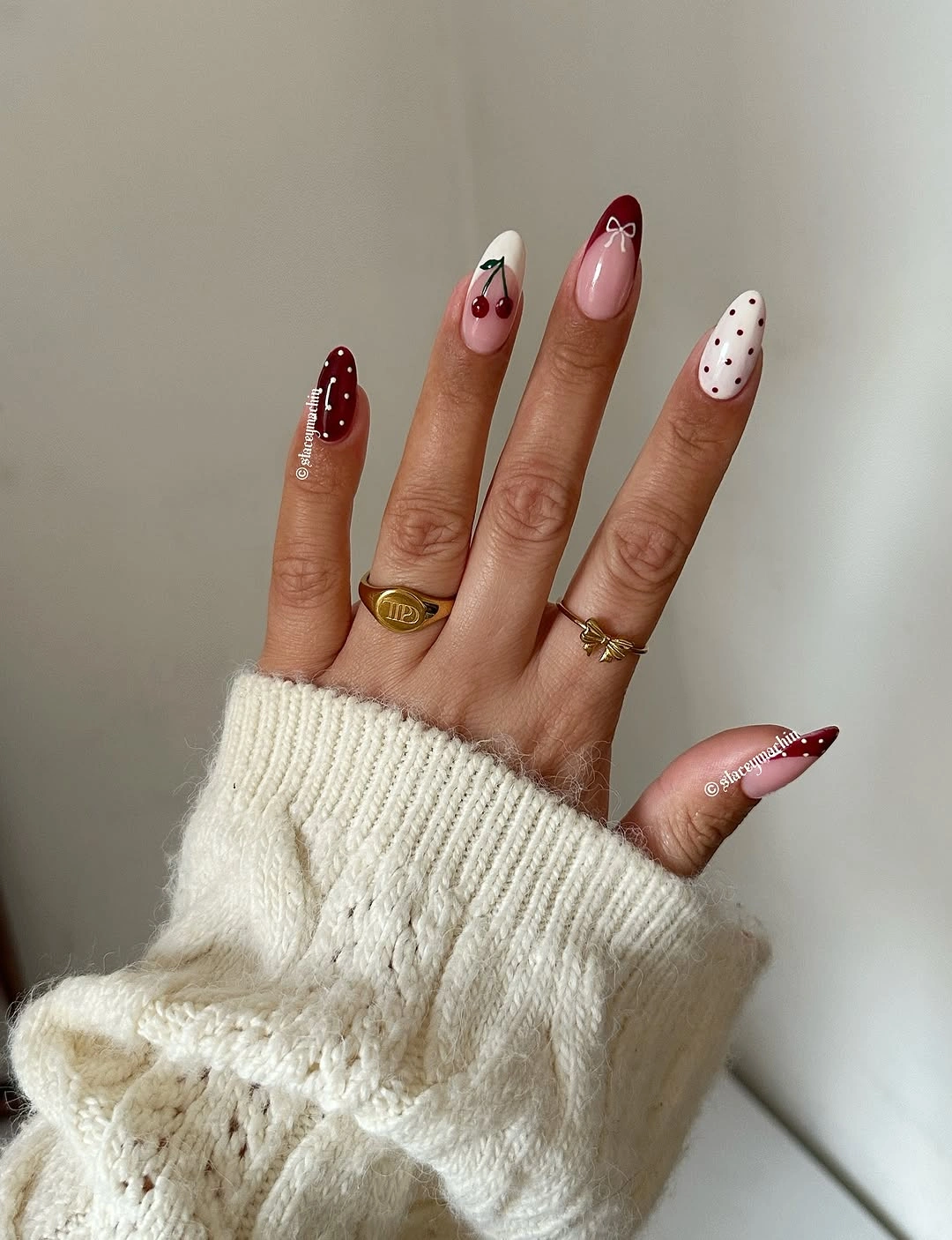
Use one cherry nail, one dotted nail, and keep the remaining fingers in plain burgundy or blush for a more edited look. A short square should use larger dots and a simple pair of red marks, while a medium length can support a small stem or leaf. Replace the cream base with warm beige if you want less contrast.
The design is useful when a reader wants early fall nails that still feel playful rather than moody. Repeating burgundy across the tips and motifs connects the different accents, while the light bases prevent the hand from becoming dark. The tradeoff is that several small ideas can compete, so each accent should have one obvious focal shape.
Burgundy Curves around a Sheer Center
Long almond nails use deep burgundy as a curved outline around a translucent center. The dark color frames the nail instead of filling it, so the hand receives a strong seasonal note while the almond shape remains open. A glossy finish makes the arcs clear and gives the design a polished, almost architectural quality.
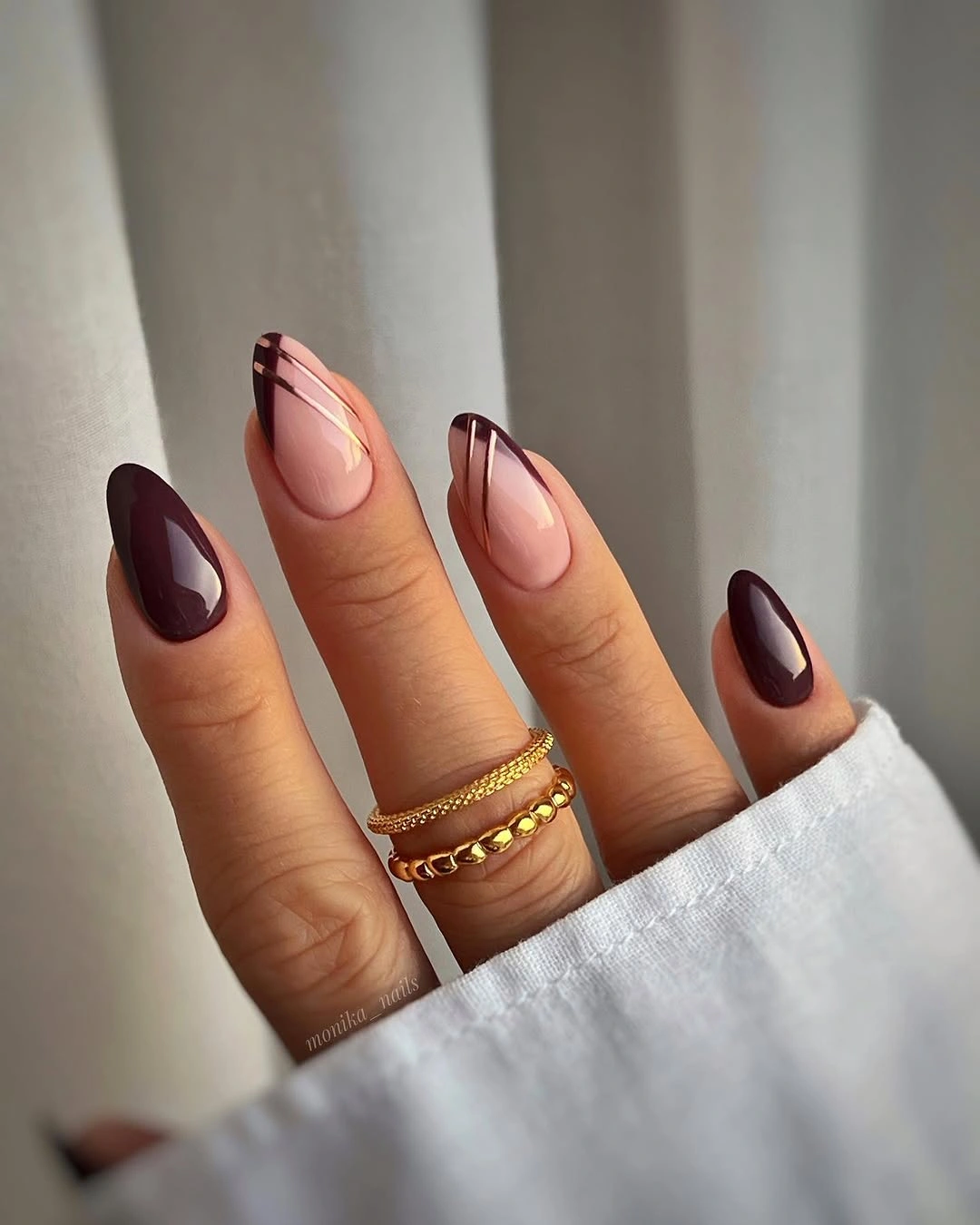
For a softer version, keep the burgundy on one side and the tip rather than outlining the whole perimeter. A medium almond can use a single large arc, while a short oval can turn the idea into a small burgundy crescent. The center should remain pale enough to separate the outline from the skin tone.
This design shows how negative space can make a dark color feel less formal and more wearable. The curved border follows the almond taper, so it lengthens the look without adding a solid block. The limitation is spacing around the edges, since a thick outline can close the center and make the manicure look shorter.
Brown and White Open Shapes on Short Nails
Short rounded square nails use brown and white in small open shapes, leaving parts of the base visible. The contrast feels graphic but not severe, because the brown is broken by pale areas and the shape stays compact. The glossy surface gives the simple design enough definition to work without glitter or a large motif.
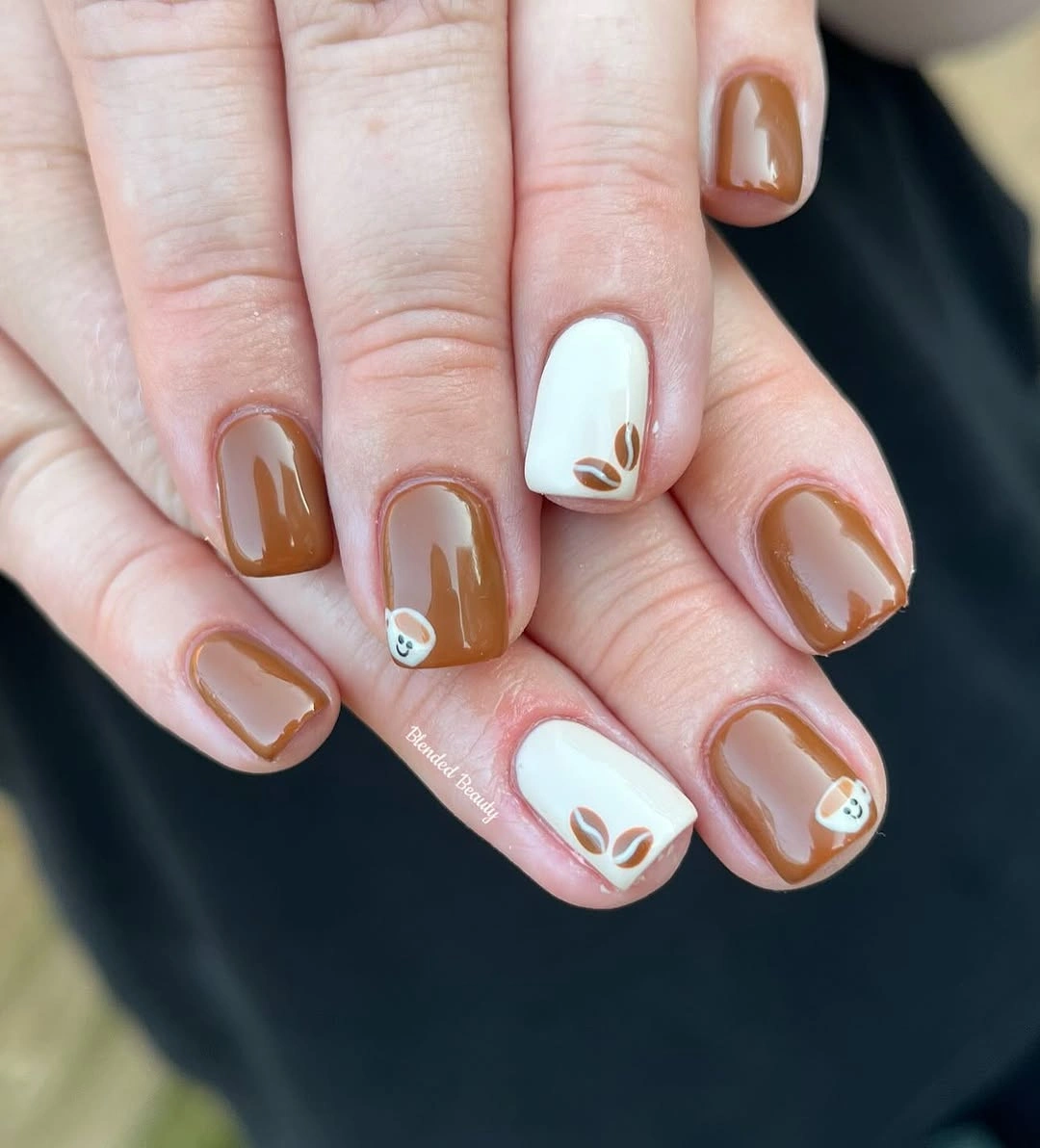
Choose one white accent shape and repeat it on two nails if you want a cleaner arrangement. A very short nail should use broad open sections near the tip, while a medium square can carry a small curved border. Warm cream may replace white when the brown palette needs a softer transition into fall. Leave the remaining nails solid so the negative space stays easy to read.
The open areas prevent the brown from feeling too dense and help the square outline remain visible. This makes the idea useful for readers who prefer graphic detail but still want a practical length. The tradeoff is that small shapes can lose their contrast quickly, so keeping the design broad and uncluttered will protect the visual effect. A clear pale gap is more valuable than another tiny mark.
Dark Metallic Almonds for a Cooler Finish
Long almond nails close with a mix of black, bronze, and silver metallic tones. The reflective finishes provide depth without flowers, lines, or patterns, while the tapered shape turns the dark colors into a sleek final statement. It feels cooler and more evening-oriented than the early ideas, but the palette still belongs to the seasonal transition.
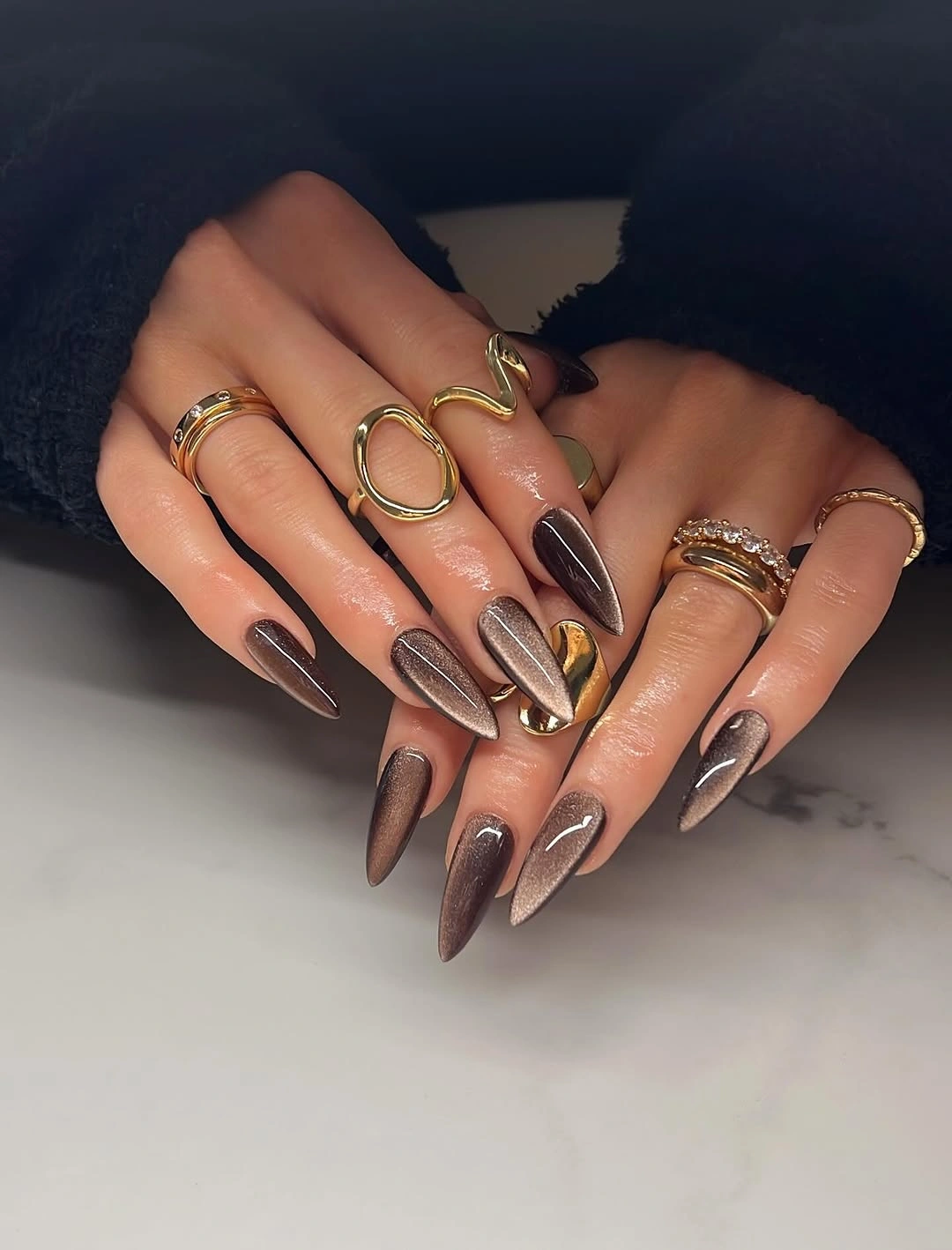
Use black on three nails and reserve metallic bronze or silver for two accents if you want less reflection. A medium almond can carry the same colors with shorter visual length, and a short oval can use metallic charcoal instead of full silver. Keep the finishes distinct enough that the hand does not become one indistinct dark surface.
The set works because the shape and finish provide all the decoration required. It is useful when clothing already contains prints or texture, since the nails make a strong point without adding motifs. The limitation is that metallic color reveals every edge and can look different in changing light, so a simple palette is more forgiving than several close shades.