Cozy winter hair color ideas for brunettes become much more interesting when you stop treating winter brunette as one fixed shade. These photographs move between copper, auburn, chestnut, chocolate, espresso, smoky taupe, and selective blonde contrast, showing how depth and temperature can completely change the mood while brown remains the foundation.
That range makes fall and winter brunette hair colors less about chasing one seasonal formula and more about deciding where you want the change to happen. Some winter brunette color ideas for 2025-2026 keep the color nearly uniform, while others use face-framing brightness, warm ribbons, or cool muted contrast, giving this winter brunette color palette room for both quiet and expressive choices.
Copper Ribbons Against a Deep Brunette Base
The dark brown base is what makes the brighter color feel so intentional here. Vivid copper-red ribbons and one pale blonde face-framing streak sit against enough depth to stay clearly separated, so the overall result reads as a playful high-contrast brunette color rather than a full shift into orange, red, or blonde.
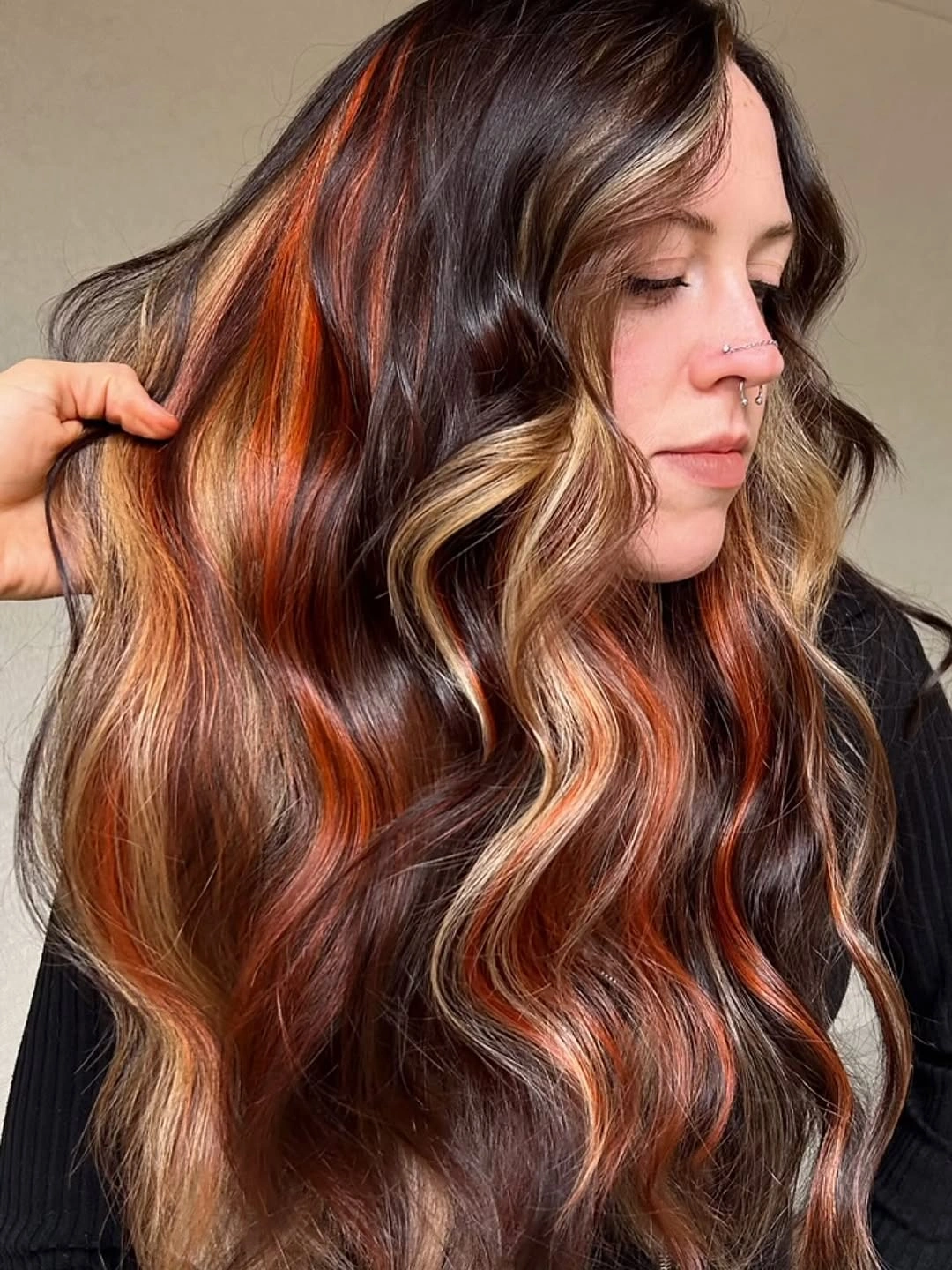
The placement also keeps the eye moving. Some warm pieces are broad and saturated while others are slimmer, and that variation lets the copper-red accents weave through the waves instead of forming a repeated stripe pattern. The pale front piece adds a second, lighter point of contrast without overpowering the brunette foundation.
This is a strong direction for anyone who likes winter depth but still wants bright brunette accents to be immediately noticeable. The dark base keeps the combination grounded while the warm and pale pieces make the color feel deliberately expressive.
Soft Chestnut Waves With Caramel Warmth
This chestnut-brown color takes a much quieter route, and that restraint is part of its appeal. Warmth is distributed through the medium-length waves rather than concentrated in a few obvious lighter pieces, so the hair keeps a cohesive brown identity while still picking up soft caramel tones through the mids and ends.
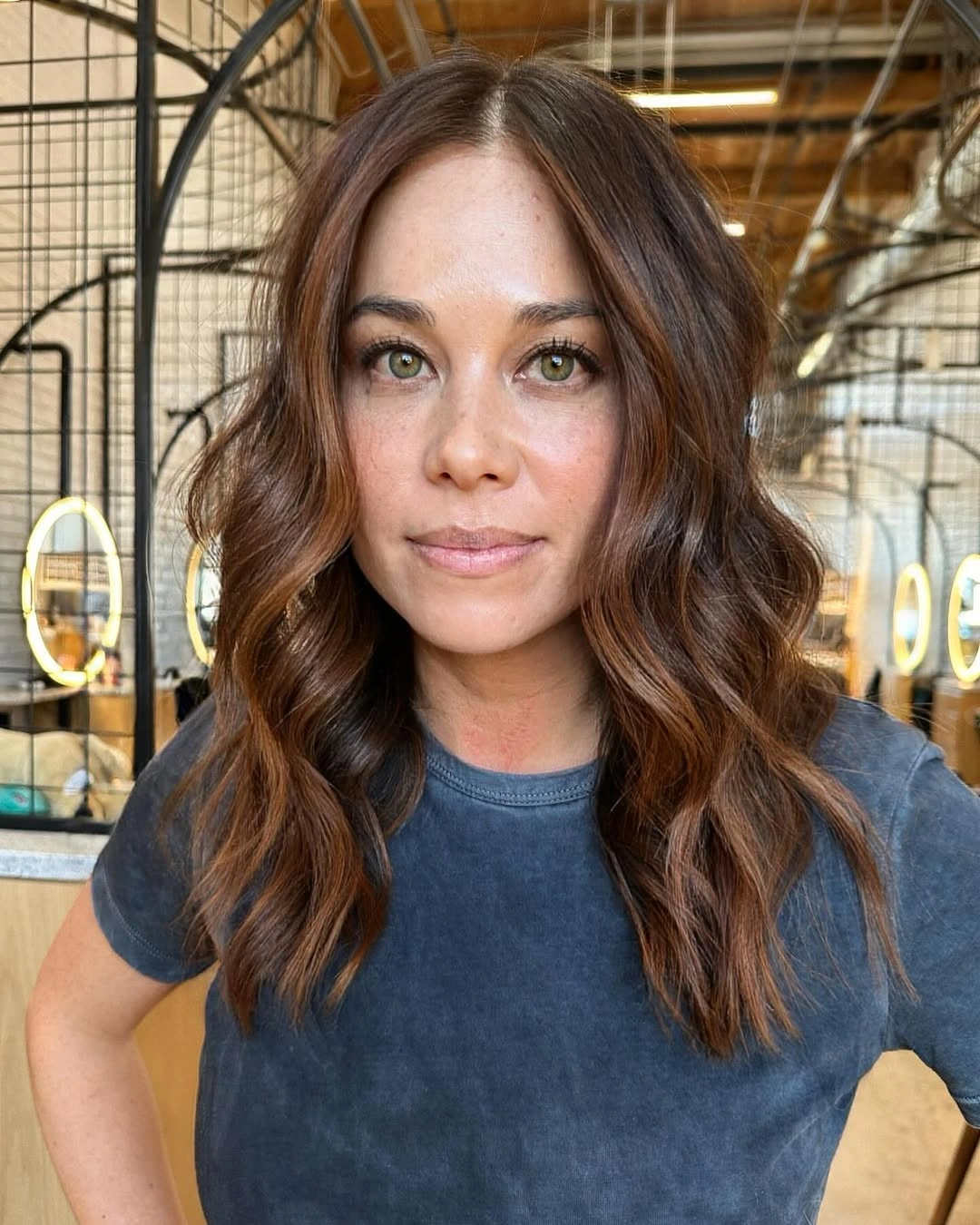
The deeper root area gives the color a useful sense of depth before the lower waves become warmer and slightly lighter. Because the transition is gentle, the movement comes from tonal shifts rather than sharp contrast, which makes the chestnut and caramel relationship feel polished without turning the finish flat or one-dimensional.
This is the kind of soft warm brunette that suits readers drawn to visible richness without obvious striping. On a medium length, the restrained contrast has enough room to show while still feeling compact and cohesive.
Auburn Brown From Roots to Curled Ends
Auburn does not need separate ribbons to make a brunette color feel noticeably warmer. Here, the tone stays close in value from the crown through the long lengths, so the red-brown warmth reads as one continuous shade rather than a collection of lighter sections. That consistency gives the hair a smooth, settled presence.
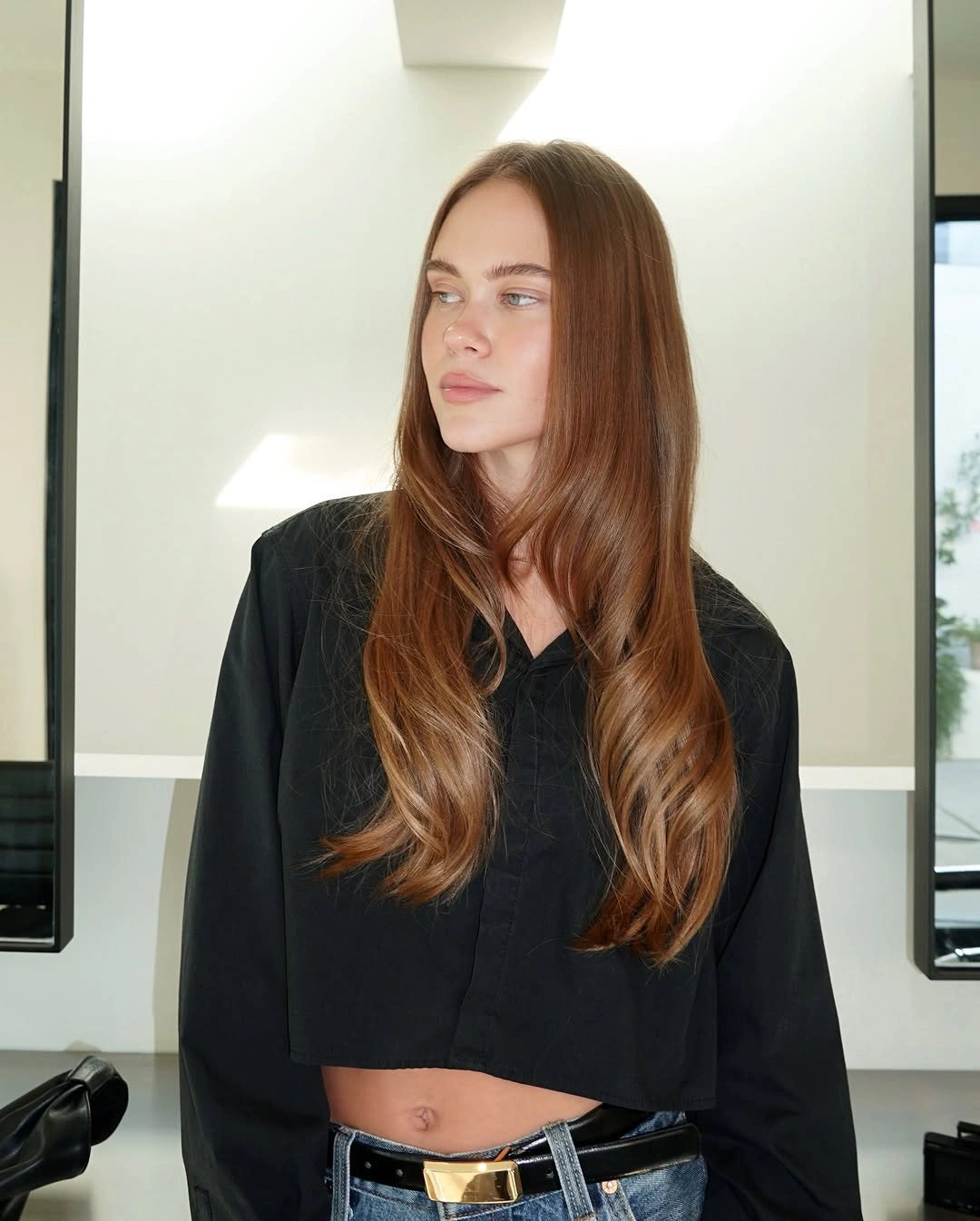
The sleek surface makes the smaller shifts between brown and copper easier to notice, especially where the ends curve and catch more light. Instead of relying on a dark root against pale lengths, the color gains dimension through subtle reflection, which keeps the allover auburn brunette hair effect refined and visually connected.
This approach works especially well for readers who like warm brunette color but do not want clearly separated lighter-piece placement. The appeal comes from the unity of the shade and the way its copper-brown character changes gently with movement.
Mahogany Layers With a Muted Red Glow
Mahogany brings red warmth into brunette hair without the brightness of a vivid copper. In this layered shape, the reddish cast appears most clearly where the curtain fringe and face-framing pieces bend toward the light, while the deeper brown underneath keeps the overall impression soft, rich, and firmly on the brunette side.
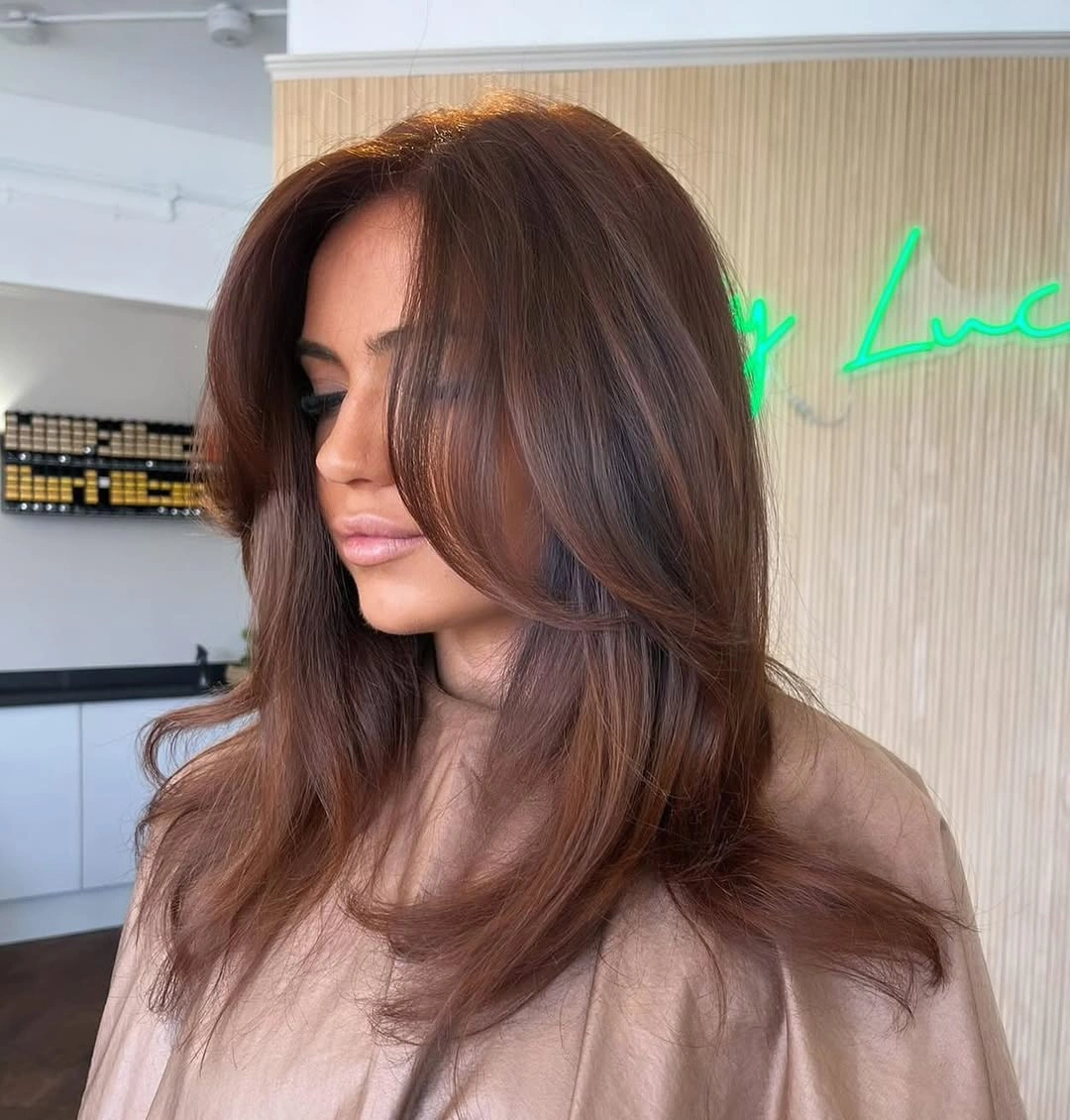
The layering matters because it turns one restrained color family into several visible planes. Each curved section catches the muted red-brown tone a little differently, so the hair looks dimensional even though there are no sharply separated pale streaks. The result is movement created by shape and sheen rather than strong value contrast.
A soft red-brown brunette like this sits comfortably between chestnut and deeper burgundy. It gives the hair a noticeable mahogany mood while avoiding the brighter orange cast of copper-heavy color.
Muted Copper Ribbons Through Dark Brunette Waves
Deep brown remains the dominant color in these long waves, and that is exactly why the muted copper-red ribbons stand out so well. Dark sections stay visible between every warmer piece, preventing the color from turning into an allover auburn effect and giving each red-brown accent a clear place within the larger brunette base.
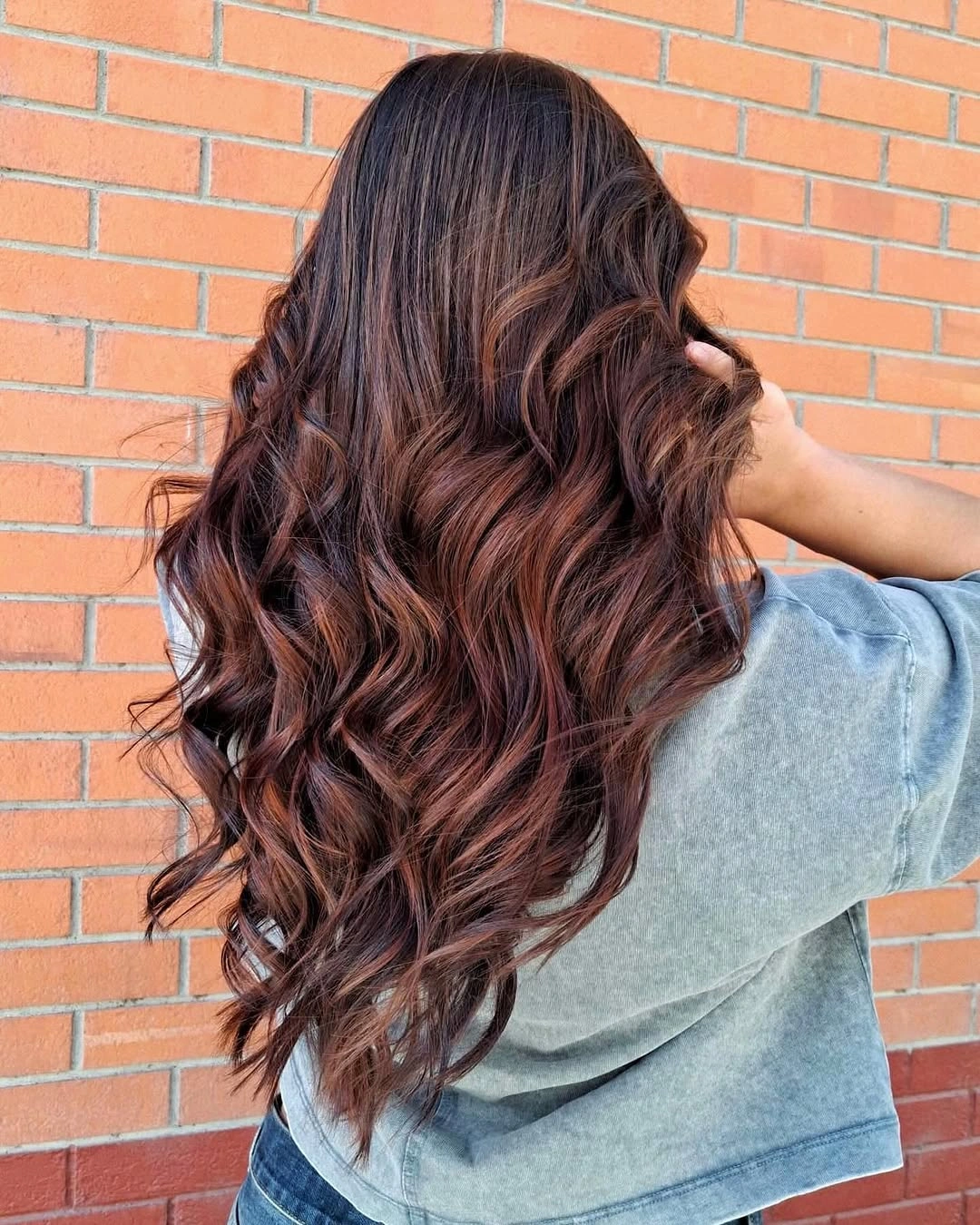
The repeated warm pieces also follow the shape of the waves, which makes the color pattern feel fluid rather than rigid. As the hair bends, the muted copper catches the eye in different places and helps separate one wave from the next, adding visible dimension without relying on very pale sections or a dramatic blonde contrast.
The lower saturation makes this a quieter alternative to brighter orange-copper ribbons. It is still clearly warm, but the deep base keeps the overall impression rich and subdued rather than fiery.
Caramel Framing Over a Deep Brown Crown
The most effective contrast here happens around the face rather than across every strand. A distinctly dark brown crown gives the broader caramel-gold sections enough depth behind them to look bright and intentional, while plenty of brunette remains visible through the interior lengths. The result feels warmer without losing its darker foundation.
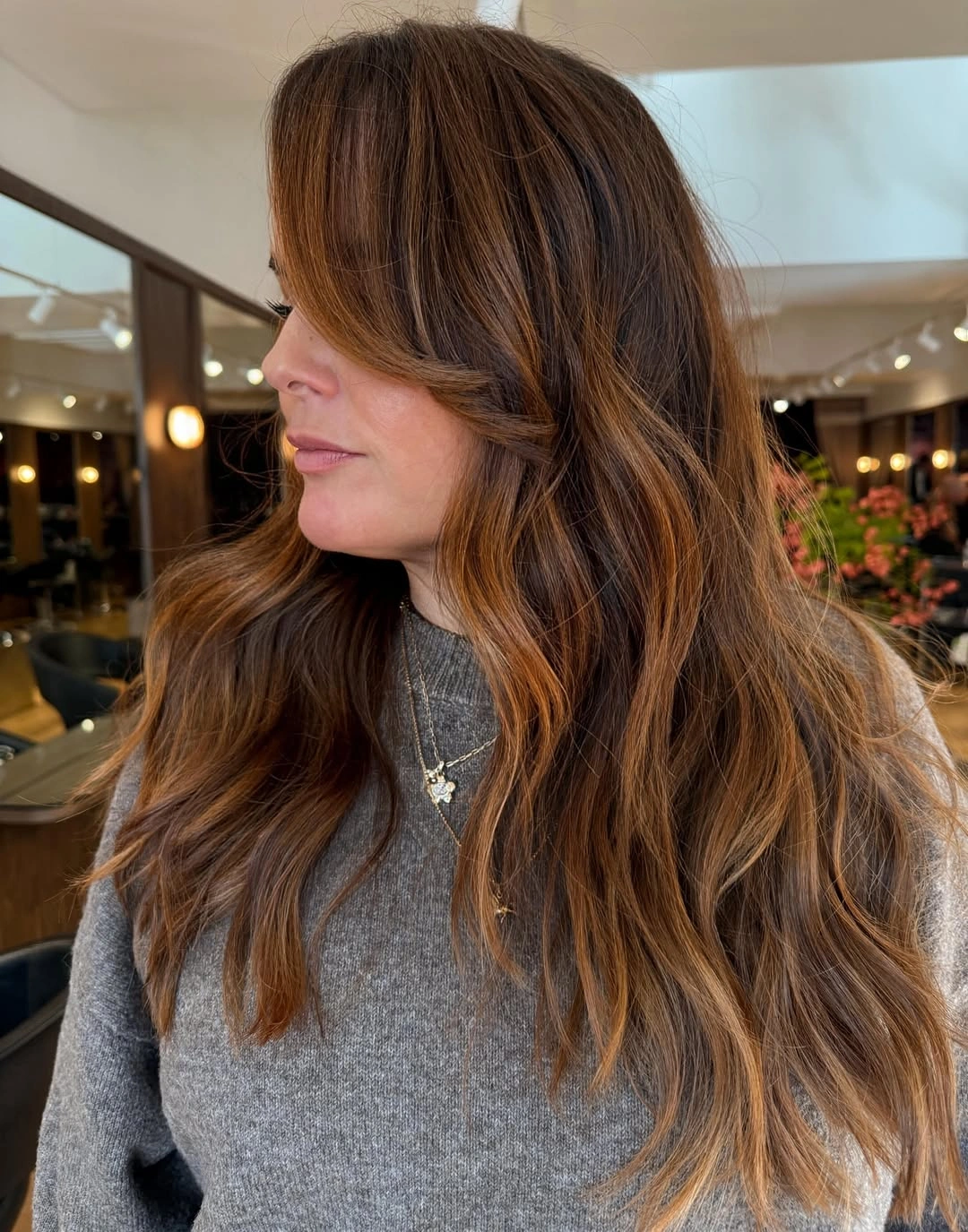
The lighter sections also connect naturally with the curtain fringe, so the brightness begins near the front and then continues into selected outer waves. That placement draws attention to movement around the face before the eye travels down the longer hair. Because the warm pieces are concentrated rather than evenly scattered, the darker sections still have a strong presence.
This kind of placement suits someone who wants obvious caramel warmth without turning the entire length noticeably lighter. The contrast is easy to see, but the brunette base remains the dominant color.
Copper Auburn Makes a Short Bob Glow
On a compact bob, a strong auburn shade has nowhere to hide, which is precisely what gives this color its impact. Copper-red warmth runs through the short waves and reaches the blunt lower edge, so the shade reads as an allover statement rather than a set of isolated highlights. The slightly deeper crown keeps the result connected to brunette.
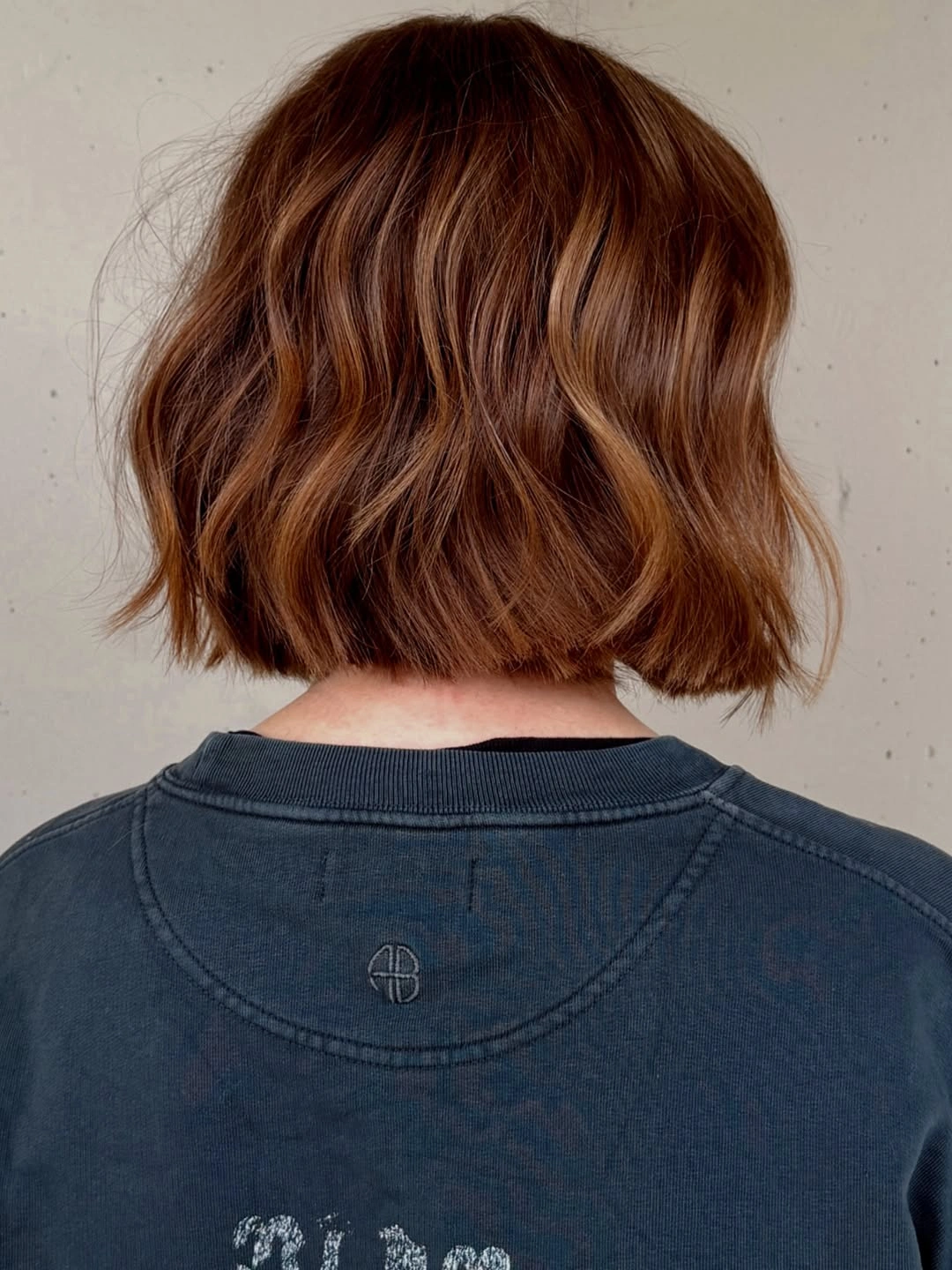
Shorter length also changes how the red-brown color is perceived because there is less distance for the tone to shift gradually. The warmer mids and ends sit close to the deeper upper section, making the contrast feel concentrated and lively. That makes this short brunette hair color especially useful for readers who want the shade itself to carry most of the visual interest.
The appeal comes from saturation rather than complicated placement. A short auburn brunette like this feels direct, warm, and unmistakably different from softer chestnut brown.
Golden Lightness Builds Through the Lower Lengths
Instead of introducing one sharply defined light section, this color becomes gradually brighter as it moves away from the crown. Medium brown is still easy to see through the top and middle, while the lower lengths pick up more golden-beige lightness. That gradual change keeps the pale areas connected to the brunette base rather than making them feel detached.
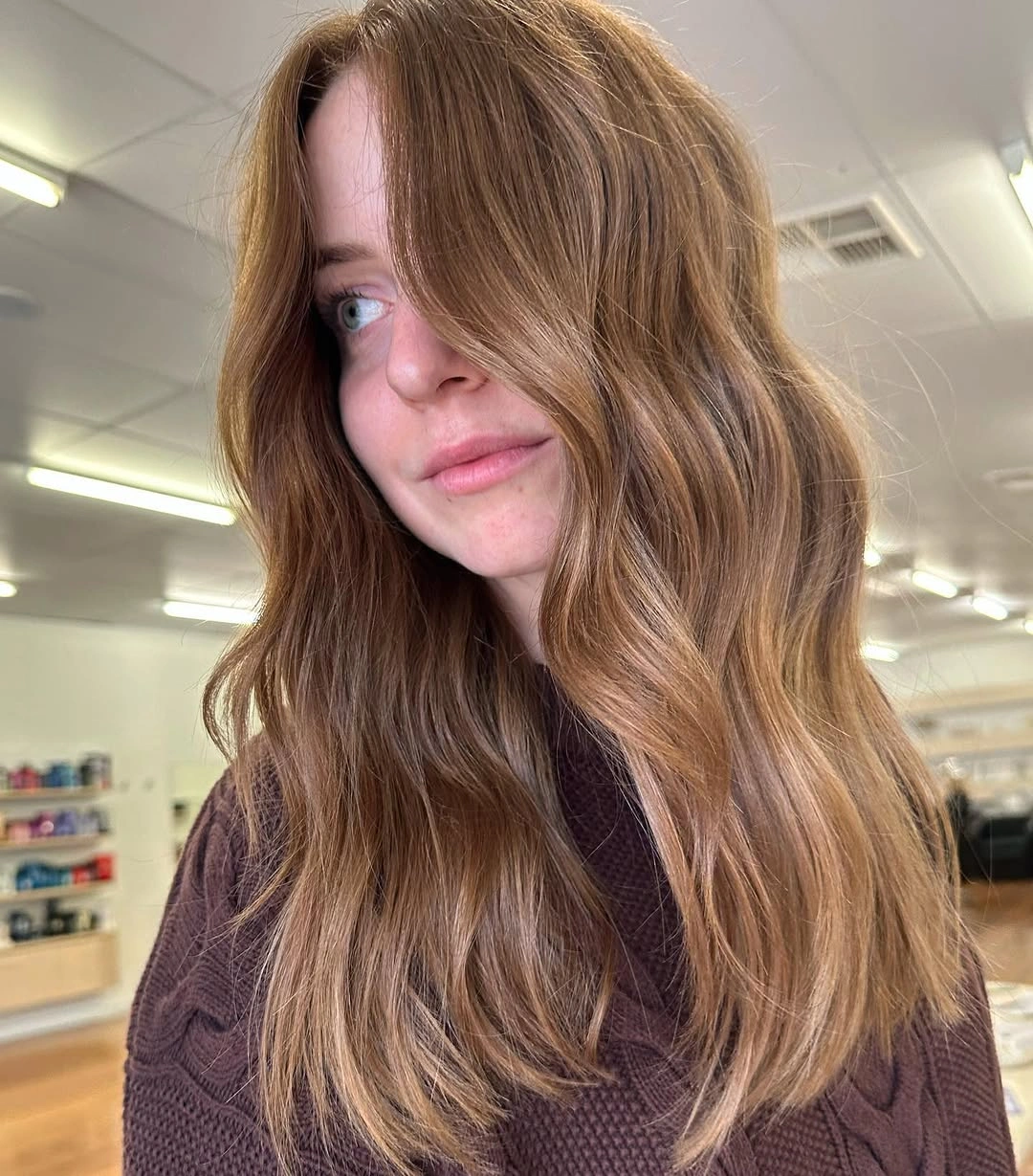
The front section is a little brighter, but it still belongs to the same soft progression that appears through the ends. Golden tones gather around the lower waves, giving them a lighter, airier appearance without creating a regular striped pattern. The effect is gentle enough that the brown remains important even where the color is visibly brighter.
This is a useful middle ground between deep brunette and obvious blonde contrast. The softness comes from how slowly the value changes, not from hiding the lighter color altogether.
Saturated Copper Ribbons Reshape Dark Brown Waves
Copper is no longer a small accent when it appears this frequently through long dark brown hair. Broad and narrow warm sections travel across the outer waves and through the lower lengths, making the red-orange tone part of the overall color impression rather than a detail you notice only at the front. Even so, dark brown remains clearly visible between them.
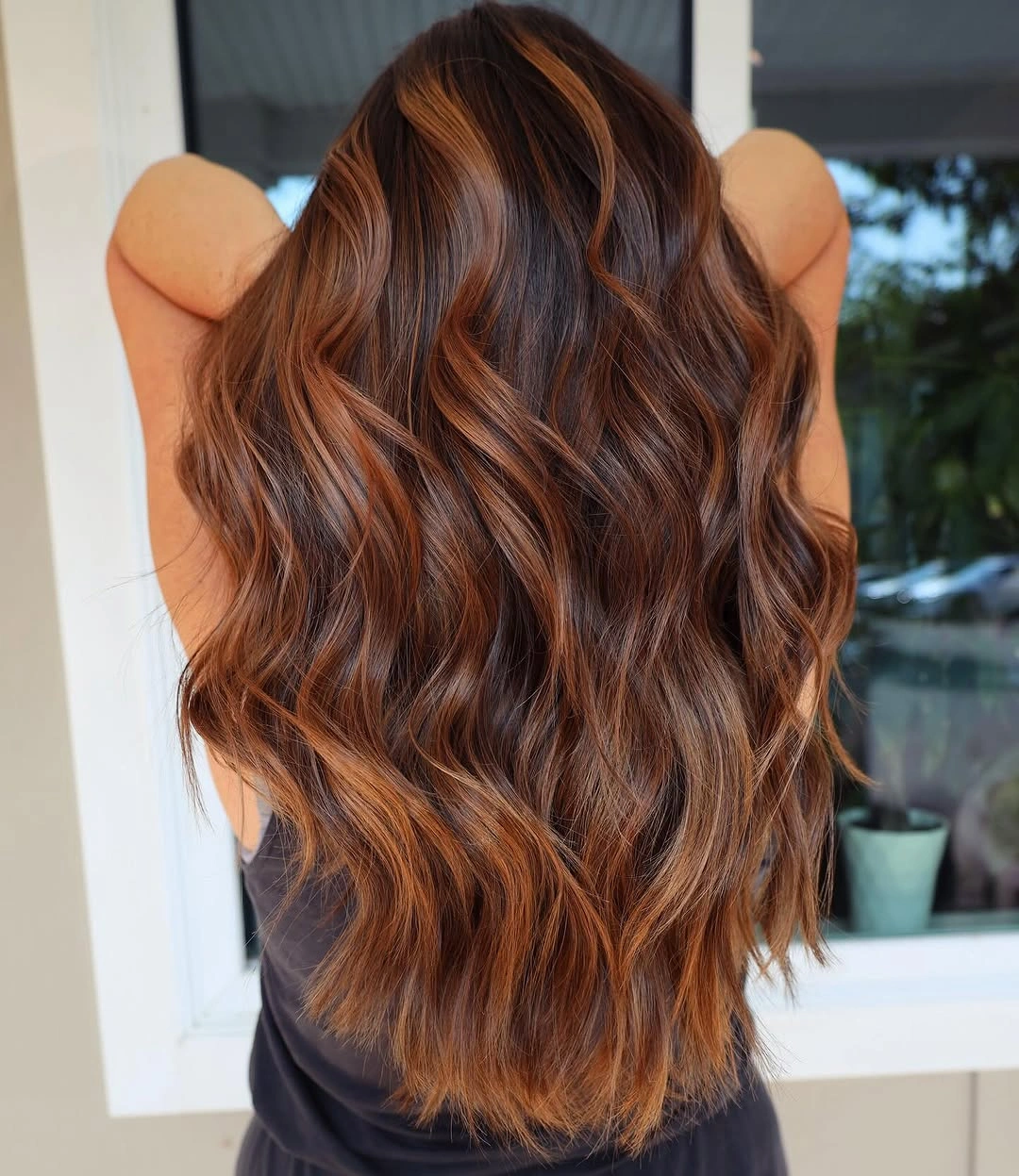
Those deeper spaces are important because they stop the copper sections from visually merging into one continuous warm shade. The contrast between dark troughs and brighter wave ridges makes individual ribbons easier to follow, especially toward the ends where the copper becomes particularly noticeable. This gives copper highlights on dark brown hair a bold, dimensional effect without removing the brunette base.
It is a stronger choice for someone who wants copper to register immediately from a distance. The dark sections provide enough depth to keep the warmth from becoming completely dominant.
Cinnamon Ribbons Add Warmth to Chocolate Waves
The lighter pieces here stay within a warm brown family, which creates a different effect from pale blonde contrast. Caramel-cinnamon ribbons move through the sides and ends while deeper chocolate remains visible underneath and between them. Because the value shift is moderate, the hair looks richer and more varied without losing its unmistakably brunette character.
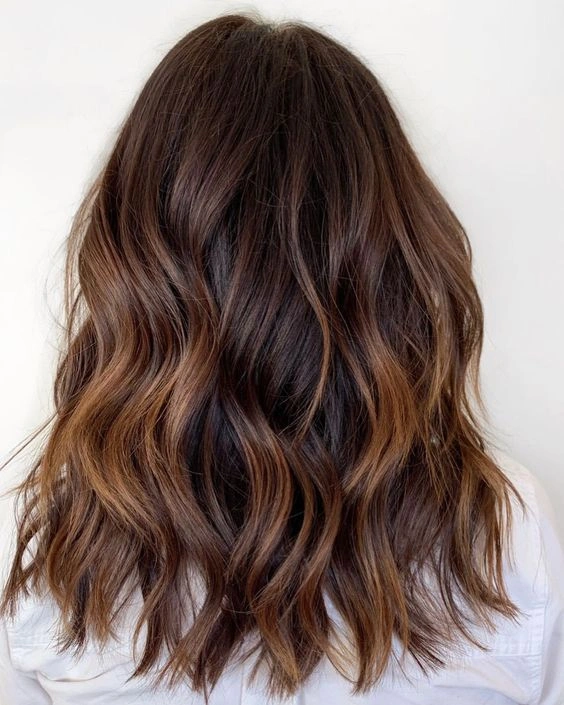
The ribbons also change width as they travel through the loose waves, preventing the color from settling into an overly regular pattern. Some warmer sections appear broader along the outer curves while smaller flashes show closer to the interior, so movement reveals new bits of cinnamon brown from different angles. On shoulder length, that variation feels concentrated rather than spread across a very long canvas.
Dark brown hair with warm highlights does not need extreme lightness to show dimension. Here, the interest comes from neighboring shades of chocolate, caramel, and cinnamon working within a relatively close range.
Deep Chocolate Brown Lets the Layers Do More
There is something especially convincing about a brunette that does not depend on obvious lighter pieces for dimension. The deep chocolate-brown shade stays remarkably consistent across the long hair, while soft waves and broad face-framing layers create enough changing surface to reveal warmer brown reflections wherever the hair curves toward the light.
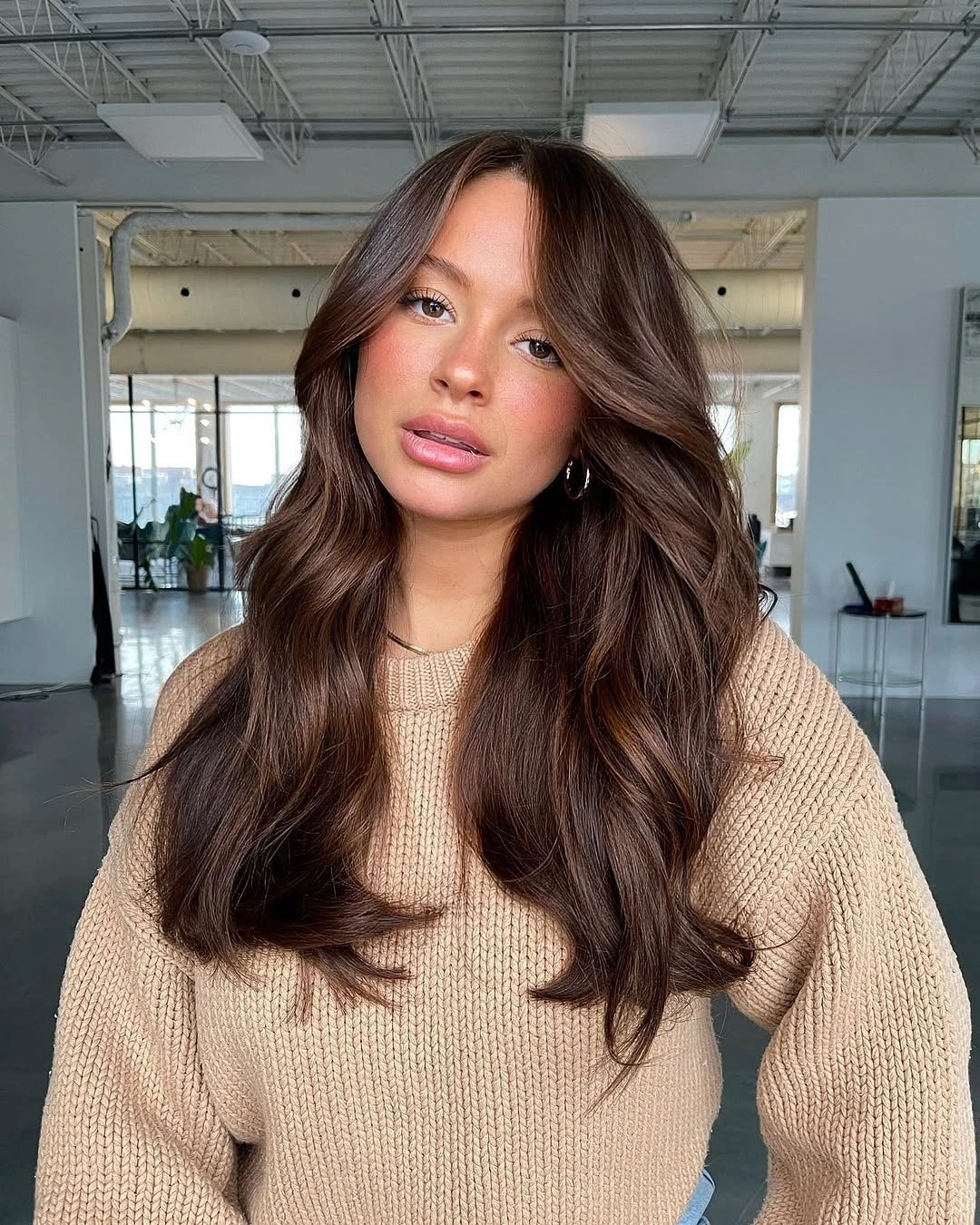
Those front layers are doing much of the visual work. Their sweeping shape breaks up the dark color around the face, and the longer lengths continue that movement without introducing a separate highlight pattern. It is a useful reminder that saturated brown can look detailed and dimensional when the cut creates different planes for the same color to move across.
For someone who prefers minimal visible lightening, this is an appealingly quiet direction. The richness comes from depth, shape, and subtle chocolate reflection rather than a strong contrast between dark and light.
Smoky Light Ribbons Cool Down Near-Black Brown
Cool contrast changes the mood of dark brunette hair immediately, especially when the base sits this close to black. Smoky ash-beige ribbons appear beside the face and then reappear through the lower waves, creating a clear light-dark split without introducing the golden or copper warmth that dominates many traditional brunette highlight combinations.
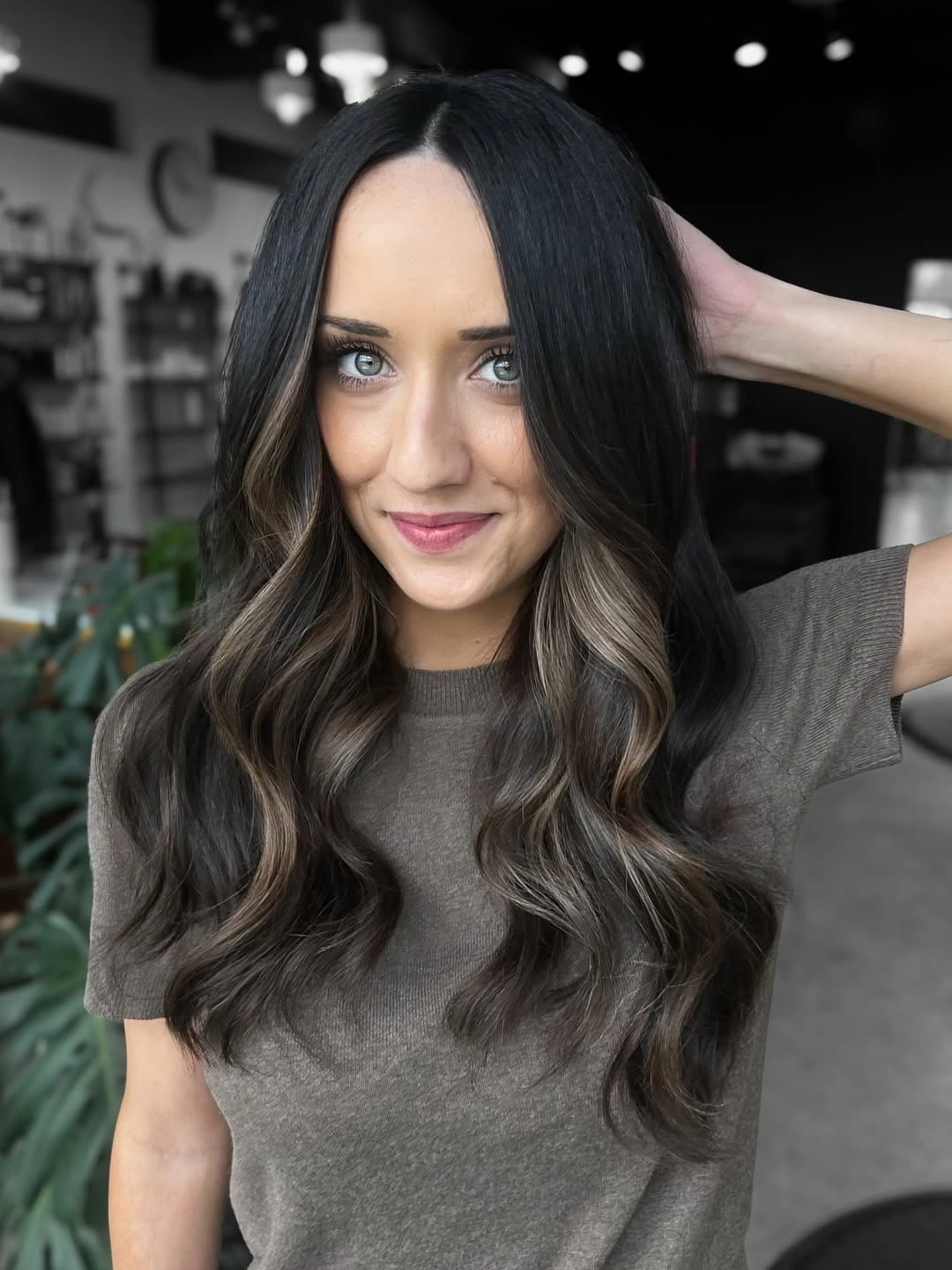
I like that the lighter pieces do not stop at the front. Their repetition through the lower lengths connects the face-framing contrast to the rest of the hair, so the color feels considered from top to bottom rather than like two pale sections placed in isolation. The dark crown still holds everything together and keeps the overall impression distinctly brunette.
This cooler palette suits readers who want contrast without caramel, cinnamon, or auburn warmth. The smoky light ribbons make the dark base feel sharper while preserving its depth.
Smoky Taupe Softens a Short Dark Bob
A short bob makes subtle tonal shifts easier to notice because there is less length for them to disappear into. Here, the crown stays dark and compact while muted smoky taupe-brown pieces become more visible around the front and lower edges. The result is cool and understated rather than bright, giving the short shape dimension without a pale blonde contrast.
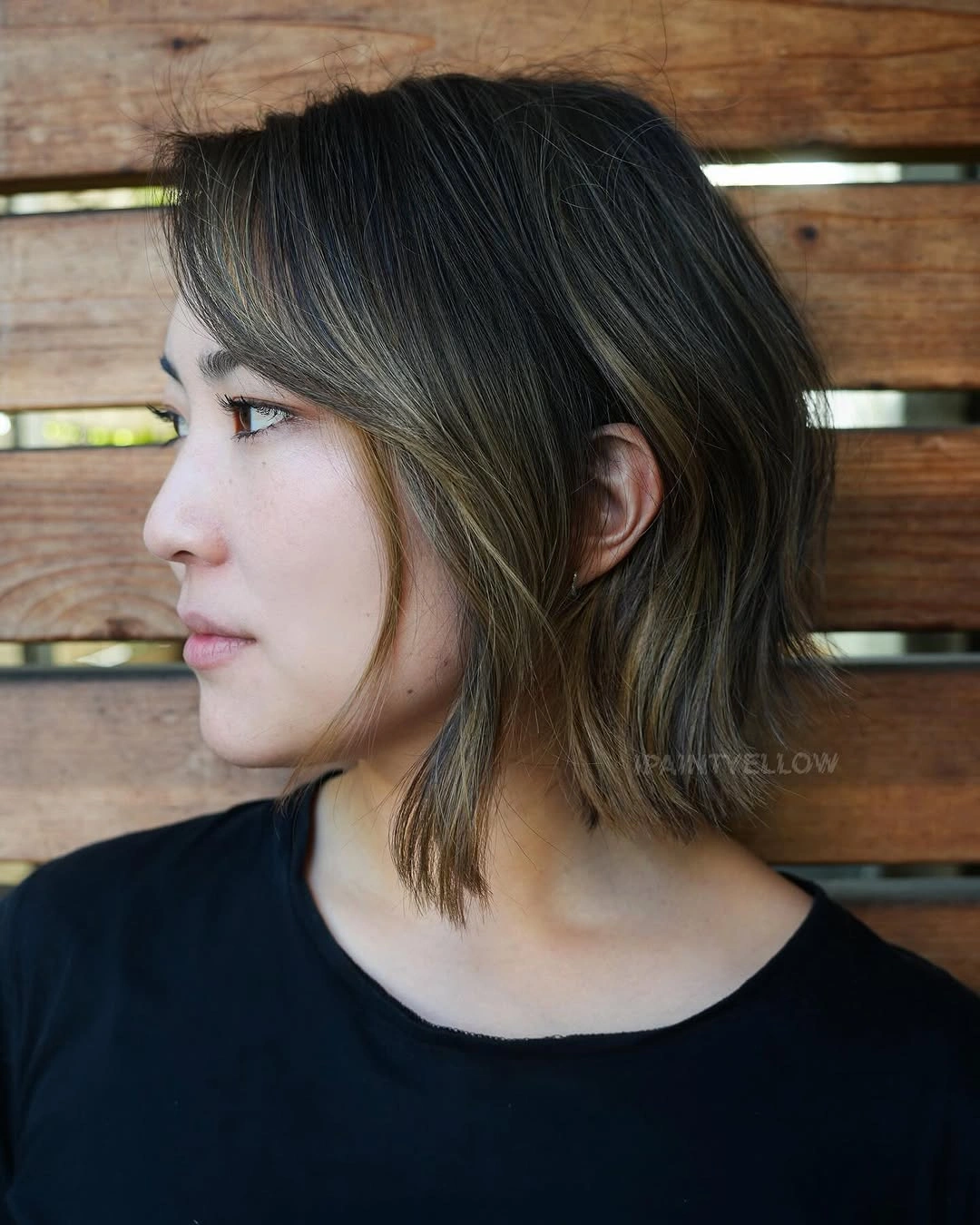
The darker upper section is important because it anchors those softer lower tones. As the bob moves toward the jaw and neckline, the color looks slightly lighter and more muted, which gives the perimeter a hazy quality while the crown retains its weight. That distribution makes the color feel intentionally restrained instead of flat.
This is a useful short-hair option for anyone who prefers neutral or cool brunette tones over copper warmth. Its interest comes from a small value shift and muted temperature rather than obvious highlight bands.
Pale Face Framing Pops Against Copper Red
The copper-red base is already bright, but the pale front panels push the contrast much further. Those light sections sit directly beside the face, where they are impossible to miss, while the surrounding red-brown waves keep the rest of the color saturated and warm. It is a dramatic pairing because both sides of the contrast have real visual strength.
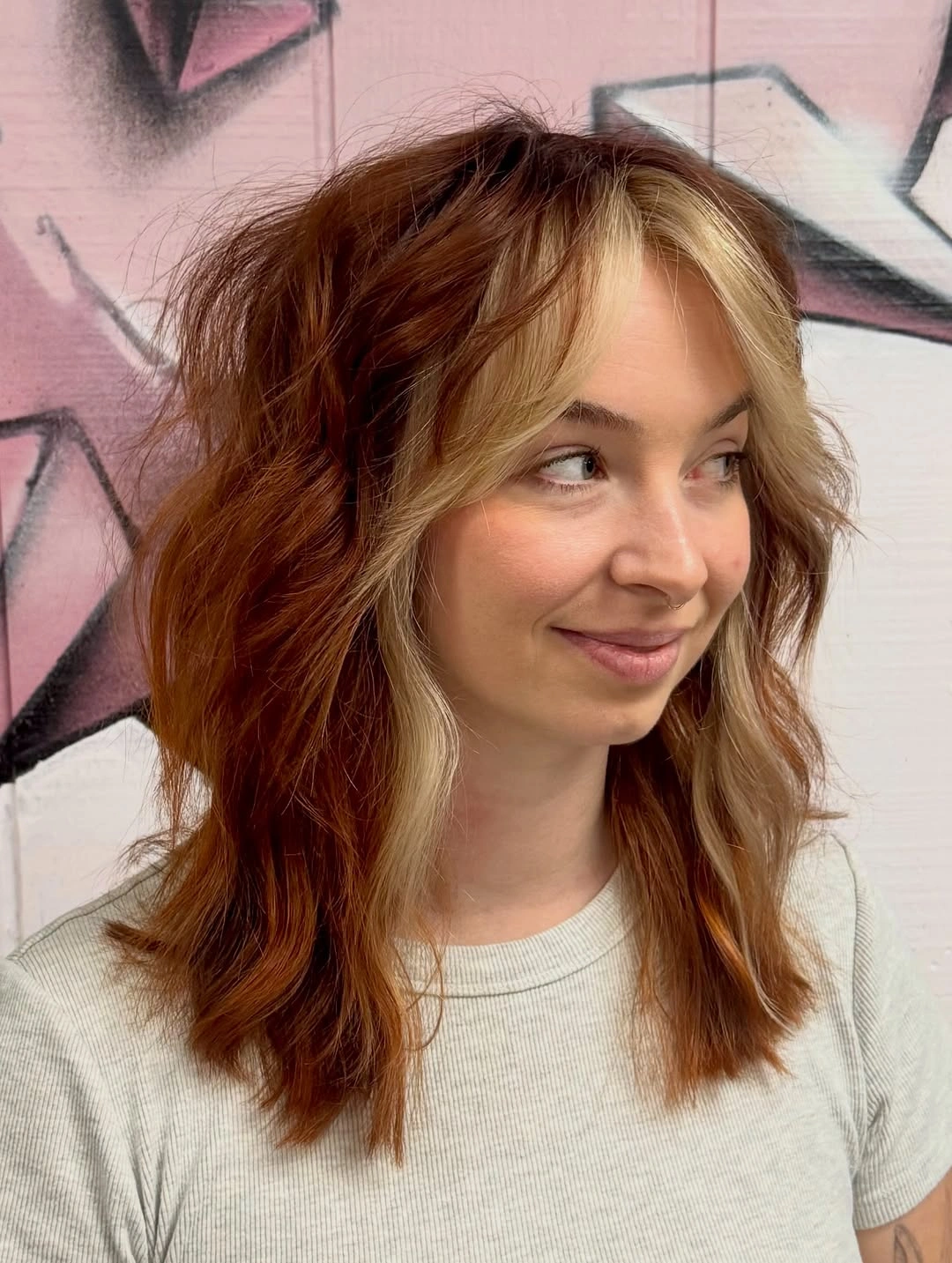
Concentrating the palest color at the hairline turns the front into a deliberate focal point rather than scattering brightness through every wave. A blonde money piece on red-brown hair creates a clear temperature and value difference, with the pale panels reading much cooler beside the vivid copper. That placement gives the color an almost graphic quality from the front.
This is one of the strongest choices for someone who wants bright face-framing color to define the whole look. The contrast is unapologetic, but the red-brown base remains substantial enough to keep the result from feeling predominantly blonde.
Espresso Depth Needs No Lighter Ribbons
When brunette color gets this deep, the absence of lighter pieces becomes part of the appeal. The near-black espresso tone runs from the crown through the long waves with very little visible variation, creating a dense, saturated impression that feels completely different from a highlighted brunette. The darkness itself is the main color decision here.
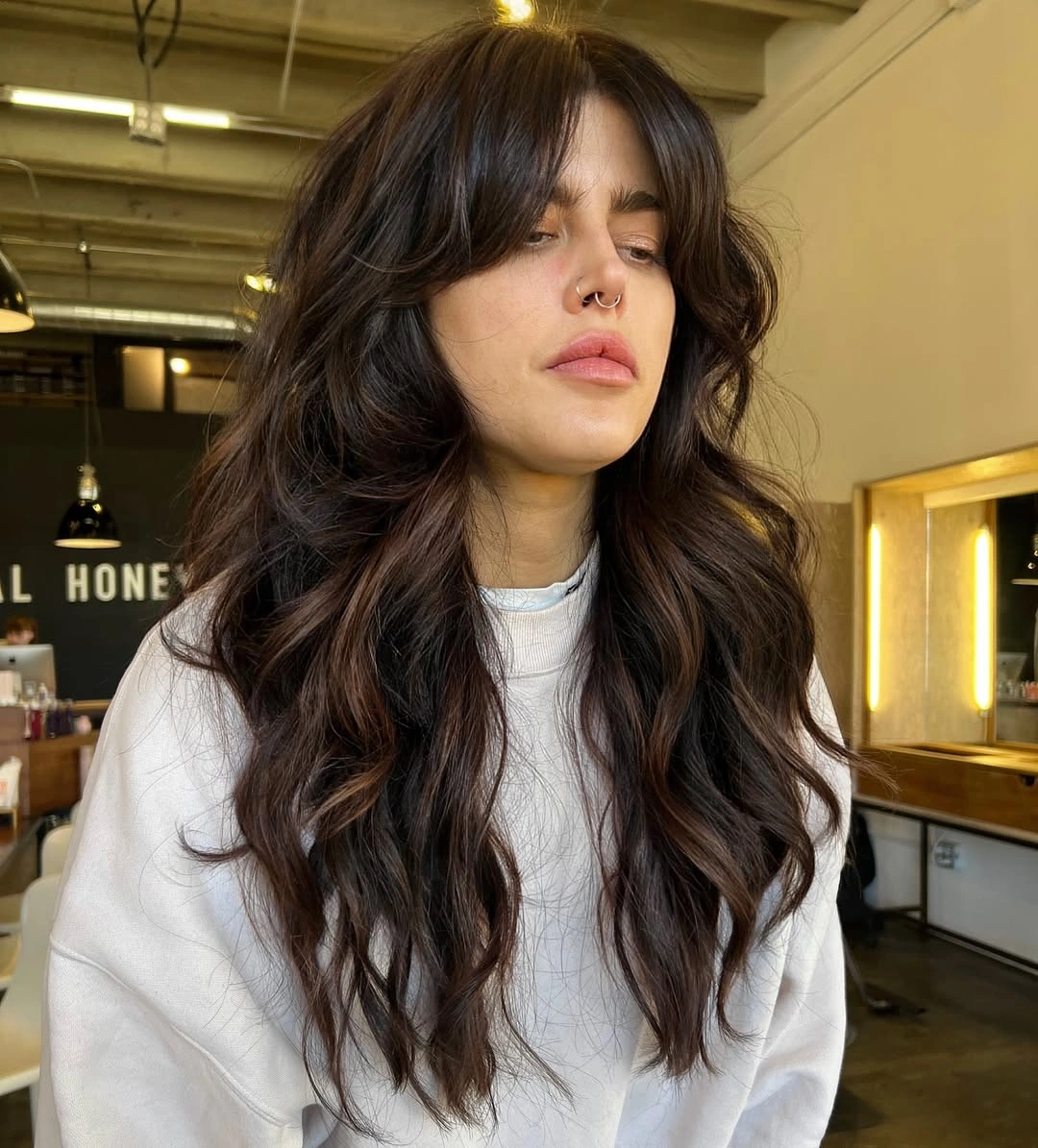
Movement comes from the cut and texture instead. The full curtain fringe opens across the forehead, face-framing layers curve into the sides, and the long waves create alternating dark surfaces as they turn. Because the color stays cohesive, those changes in shape become easier to notice, proving that depth can carry plenty of visual interest without added brightness.
This is a strong direction for readers who associate winter brunette with saturation rather than warmth or contrast. Espresso brown feels especially substantial when the shade is allowed to remain deep from top to ends.
Burgundy Plum Gives Dark Brown a Cooler Mood
The red influence here is easy to miss at first, which is part of what makes it appealing. Deep brown dominates the crown and much of the length, while muted burgundy-plum tones emerge along the curved waves. Instead of turning obviously red, the hair shifts between chocolate and wine depending on how the surface catches the light.
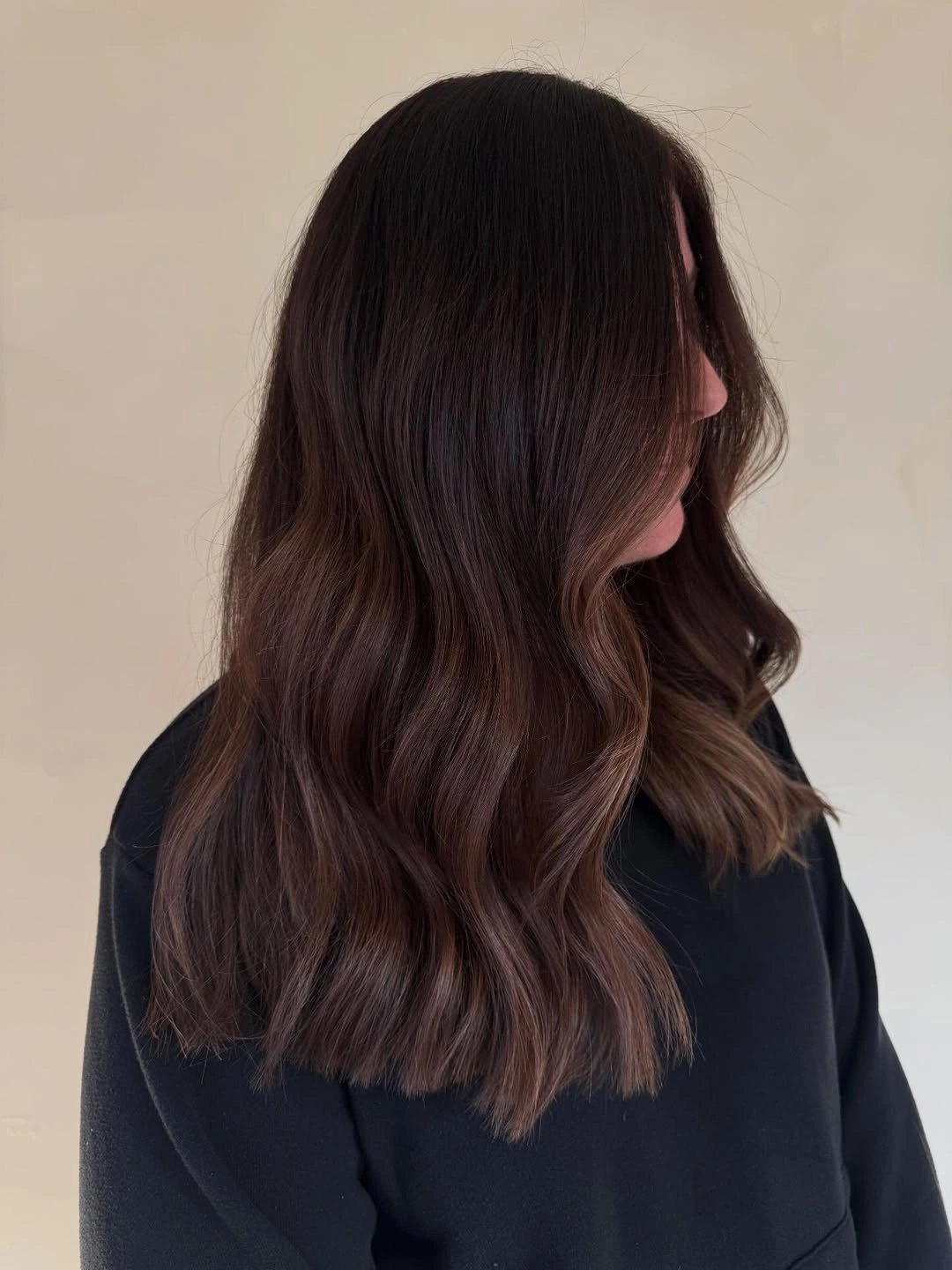
Keeping the contrast low gives the color a more unified impression than separate ribbons would. The darker root area blends into similarly deep wine-brown lengths, so the red-purple cast feels woven into the brunette rather than placed on top of it. That makes the shade feel saturated and moody without relying on brighter copper or golden pieces.
A deep burgundy brunette like this offers red influence with a cooler, quieter character. It works especially well if orange warmth feels too bright but neutral brown feels a little too restrained.
Neutral Mocha Keeps Medium Lengths Soft
Not every winter brunette needs to lean noticeably red, golden, or ashy. This medium-length shape stays close to a neutral mocha brown, allowing the soft face-framing curves to create most of the variation. The restrained color makes the layered movement easier to appreciate because no high-contrast highlight pattern competes for attention.
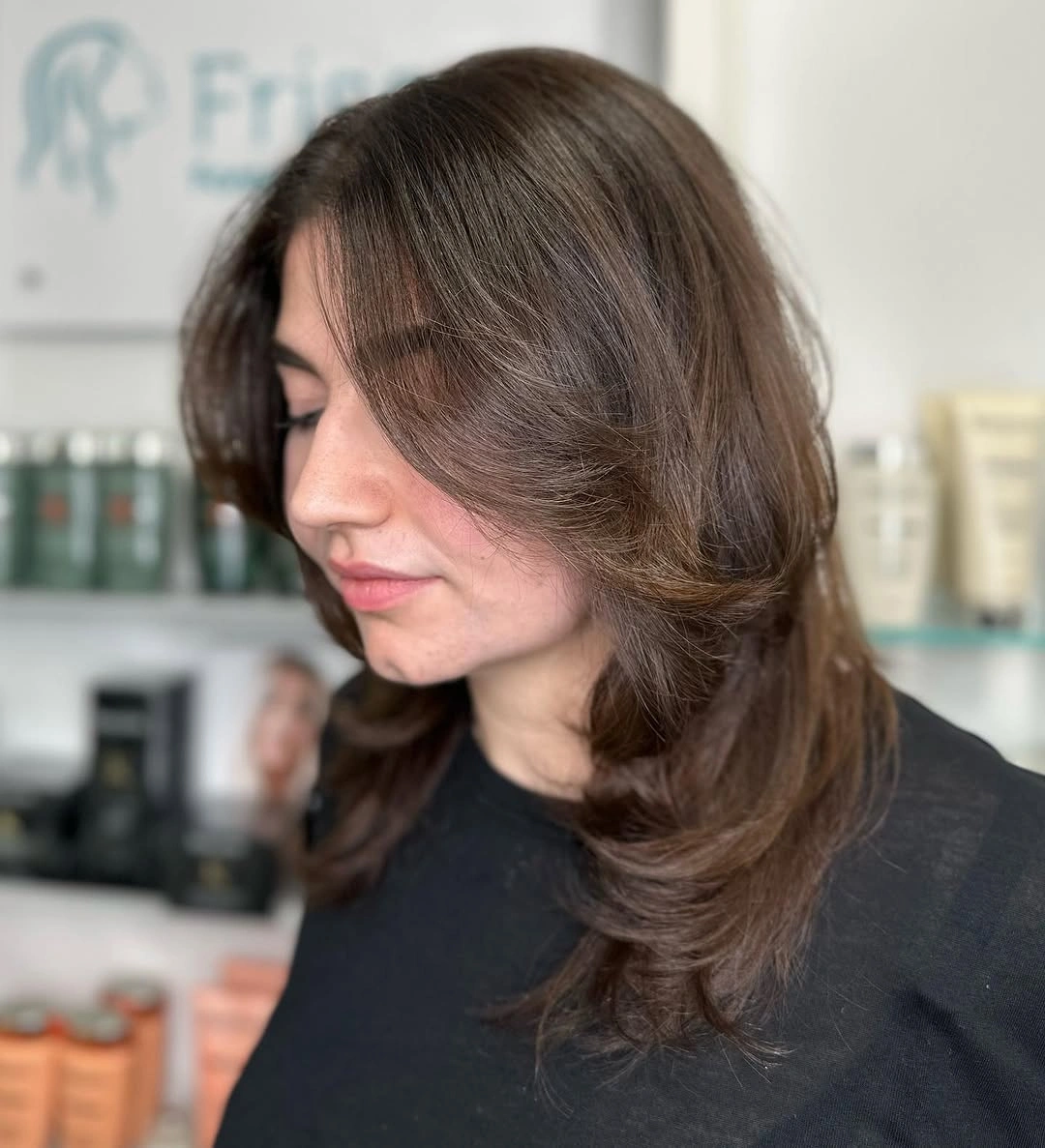
The ends turn in different directions and catch slightly different brown values, which gives the hair dimension without obvious lighter streaks. That makes this brunette color for medium-length hair feel particularly calm and cohesive. Instead of asking color to create all the movement, the shade works with the layered shape and lets small tonal changes appear naturally.
This is a useful reference for anyone drawn to low-contrast brunette color with a balanced temperature. The mocha tone stays understated while the layered perimeter keeps it from feeling visually heavy.
Cool Taupe Ribbons Drift Through Dark Waves
The upper length stays noticeably deep and uniform before cooler lightness begins to show more clearly through the lower mids and ends. That delayed shift gives the brunette base real weight, while the muted taupe ribbons introduce dimension gradually. The contrast is visible, but it remains much softer than a pale blonde section against dark brown.
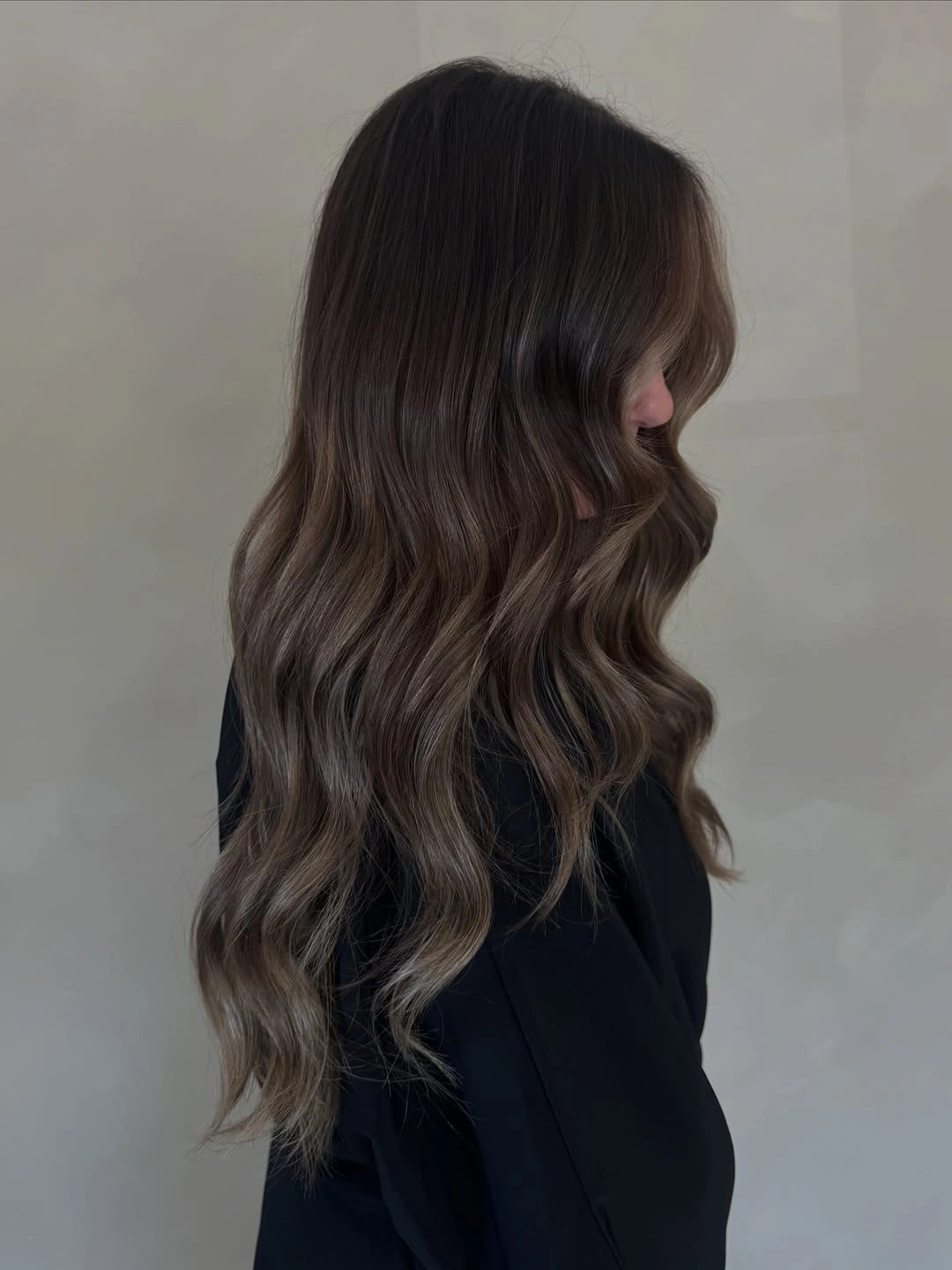
What I like here is how the cooler pieces follow the wave pattern without becoming sharply outlined stripes. Their subdued tone creates a soft brunette balayage effect, with the lighter color seeming to surface and recede as the hair bends. Because the taupe stays relatively close to the brown base, the overall result feels smoky rather than dramatically highlighted.
This is a strong option for readers who want cool brunette dimension without pushing into icy blonde territory. The lower placement keeps the crown deep while allowing the ends to feel lighter and more fluid.
Copper Red Ribbons Look Graphic on Straight Hair
Straight hair makes placement unusually easy to read because each warm section can be followed from the upper lengths toward the ends. Here, copper-red ribbons form distinct vertical lines against the dark brown base, so the color feels more graphic than blended. The smooth surface gives every warm panel a clear outline instead of breaking it into scattered flashes.
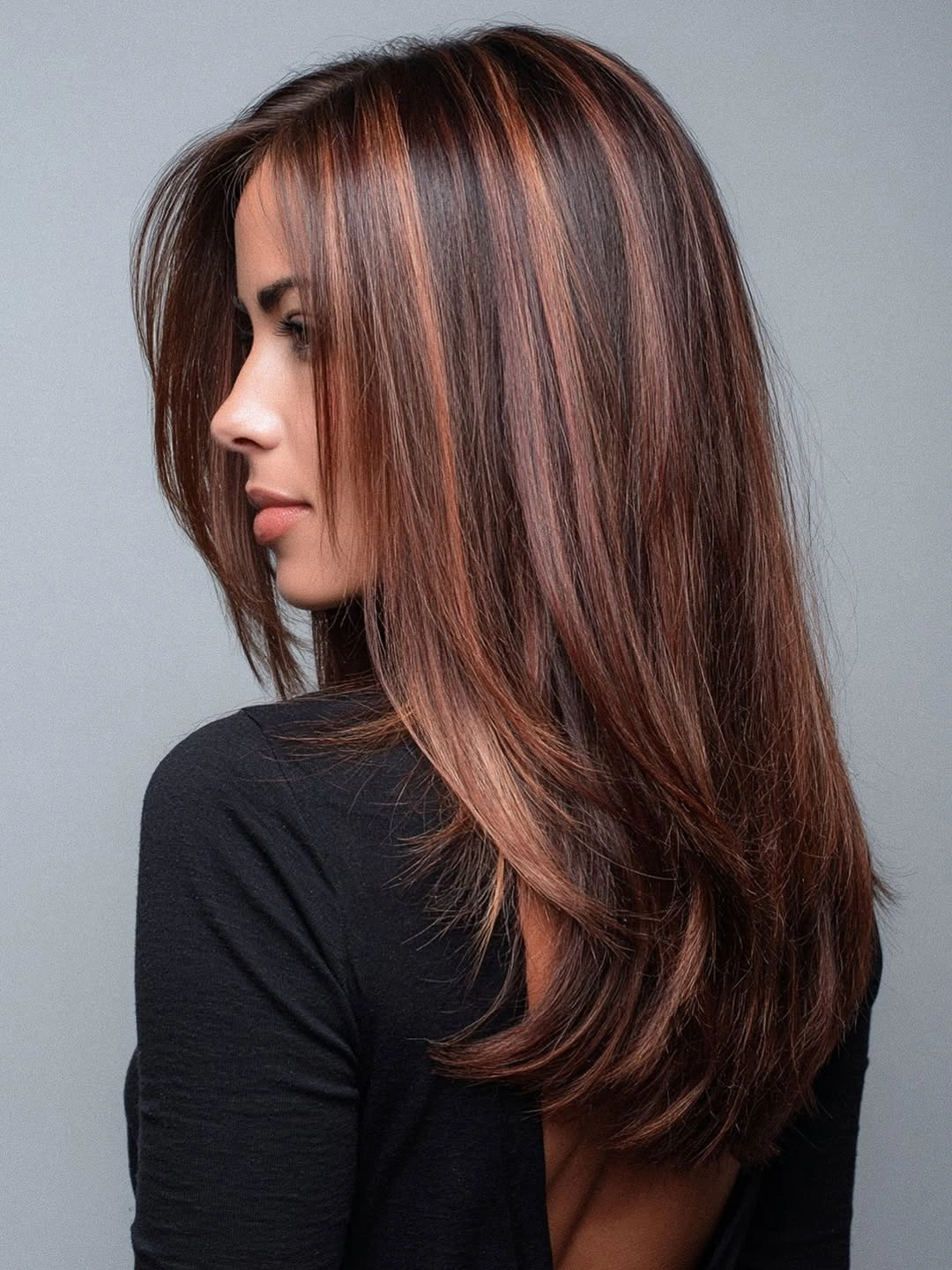
Dark brown remains visible between those copper-red sections, and that spacing is what preserves the brunette identity. Rather than merging into one allover red shade, the brighter pieces stay separated by darker vertical bands from front to back. For someone considering dark auburn hair with red highlights, this shows how clearly defined placement can change the overall effect.
The appeal is precision rather than softness. Warm color is easy to trace, making this a compelling direction for anyone who prefers visible ribbons over a hazier transition.
Wine Brown Saturation Deepens Long Mahogany Waves
This shade sits in a satisfying space between dark chocolate and richer red-brown. The long waves carry a deep mahogany-burgundy cast from the crown through the ends, but the base still reads unmistakably brunette. That depth keeps the color from becoming jewel-bright, even where the curved sections reveal stronger wine-red reflections.
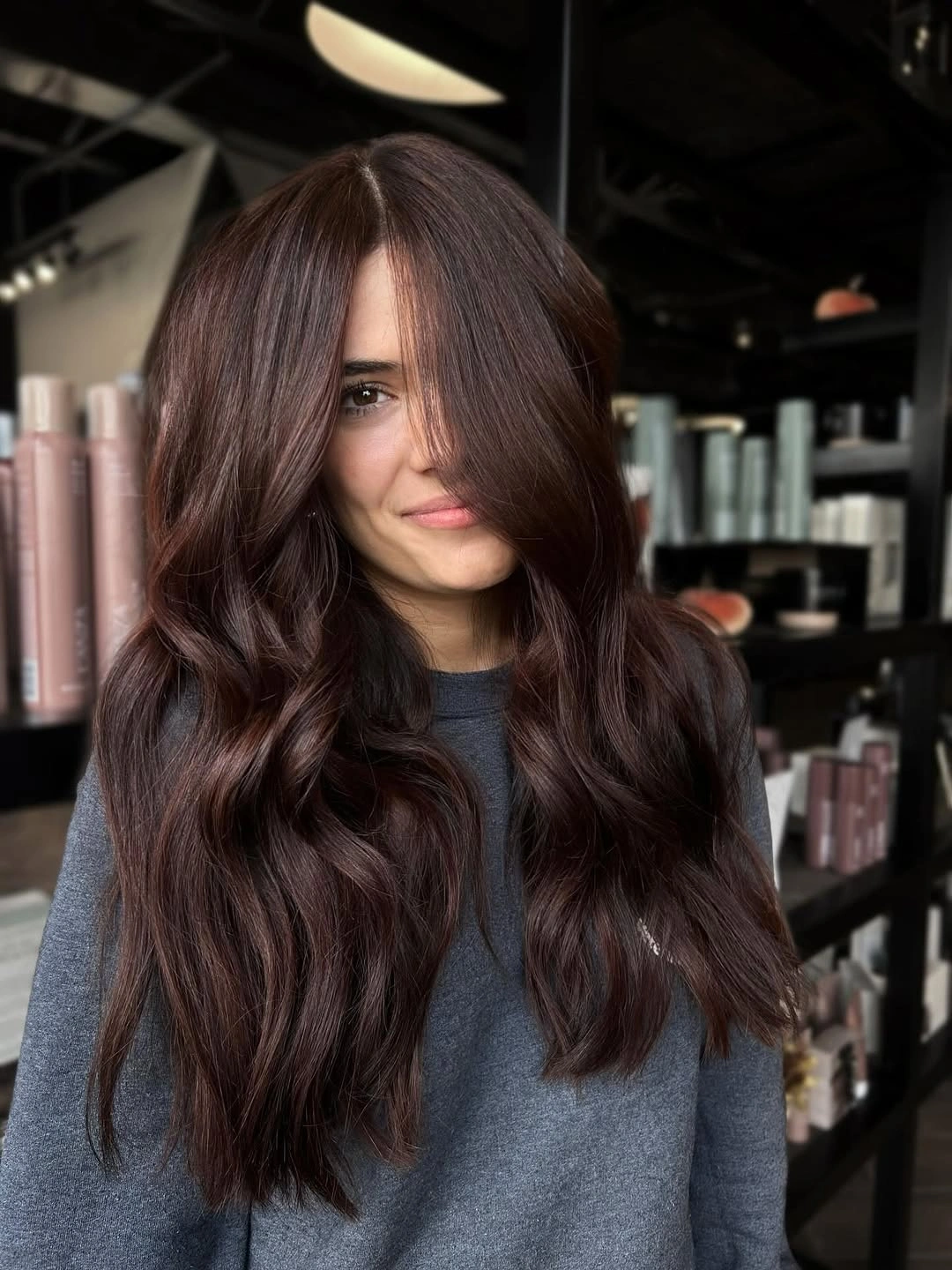
Because there are no pale pieces interrupting the darker palette, the tonal movement comes from the waves themselves. Raised curves catch more of the burgundy cast while recessed areas fall back toward brown, creating variation inside one saturated color family. The effect feels cohesive and full rather than dependent on separate highlights for dimension.
This burgundy brunette suits readers who want more visible red than chocolate brown provides but less brightness than copper. The color stays deep, polished, and consistently rich from top to ends.
Mahogany Auburn Spreads Warmth Through Long Waves
Auburn can feel rich without turning vividly red, and this long color makes that distinction especially clear. Deep brown-red remains visible at the roots and through the interior, while mahogany and softer copper-red warmth travel through the waves. The result stays unmistakably brunette even as the red influence becomes a major part of the overall tone.
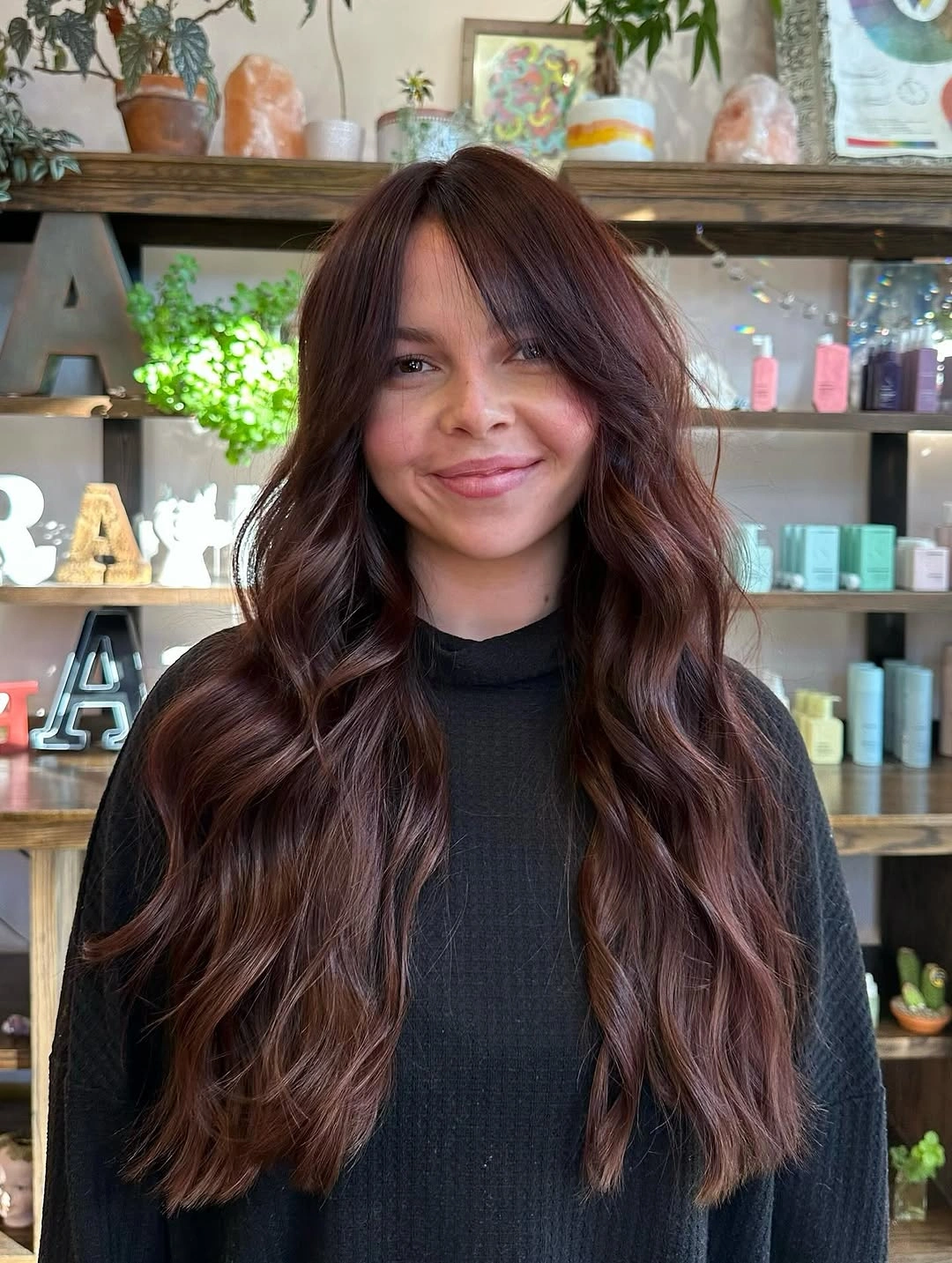
The curtain bangs help the color feel continuous rather than divided into a dark base and separate brighter pieces. Their red-brown tone frames the face in the same family that runs through the longer lengths, so the warmth feels distributed from front to ends. That even spread gives the shade a softer presence than a few isolated highlights would create.
This auburn brunette hair works well for readers who want red warmth to feel integrated instead of spotlighted. The brown depth keeps the color grounded while the mahogany cast gives it a warmer, more expressive finish.
Deep Chocolate Brown Keeps the Focus on Richness
There is a satisfying simplicity to deep dark brown hair when the shade itself is allowed to be the main feature. From the crown through the long lengths, this color stays consistently chocolate-brown with very little visible contrast, so attention goes to the density and richness of the tone rather than to highlighted sections or changing bands of color.
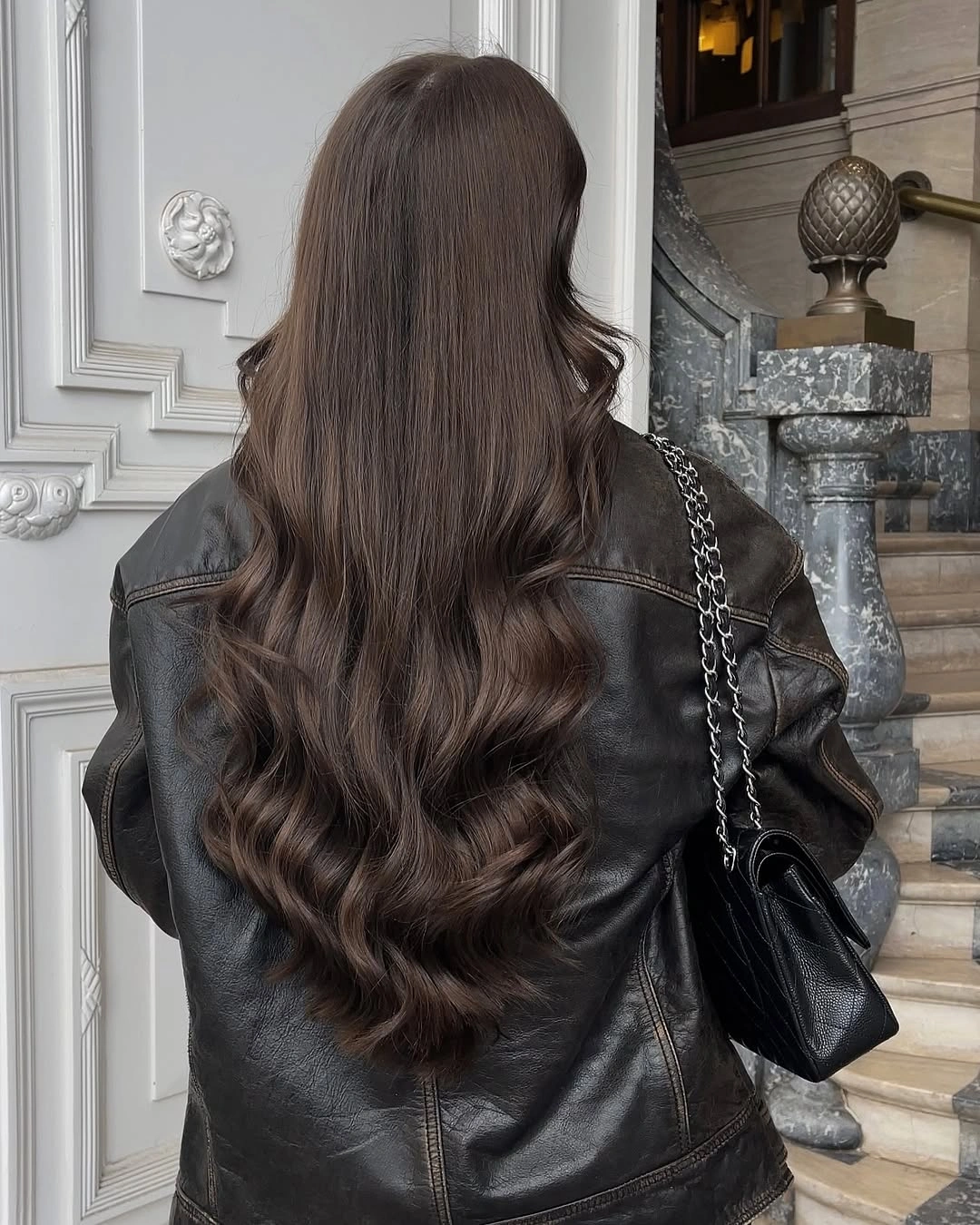
The loose waves keep that uniformity from looking flat because every curved ridge catches a slightly softer brown reflection. Darker recesses sit beside warmer chocolate glints, creating movement within a very narrow tonal range. It is a subtle effect, but on this length the repeating reflections give the brunette color depth without introducing a second obvious shade.
This is the most straightforward kind of winter brunette: deep, even, and focused on brown itself. It suits anyone who prefers richness over visible contrast and wants the waves, rather than lighter color, to create the variation.
Cool Taupe Brown Creates a Quiet Finish
Cool taupe-brown gives this long brunette a completely different kind of softness from warmer chestnut or auburn shades. The color looks muted and low in saturation, with gray-beige reflections appearing across the straight lengths while the roots and ends remain close in value. That narrow range makes the overall effect quiet rather than dramatic.
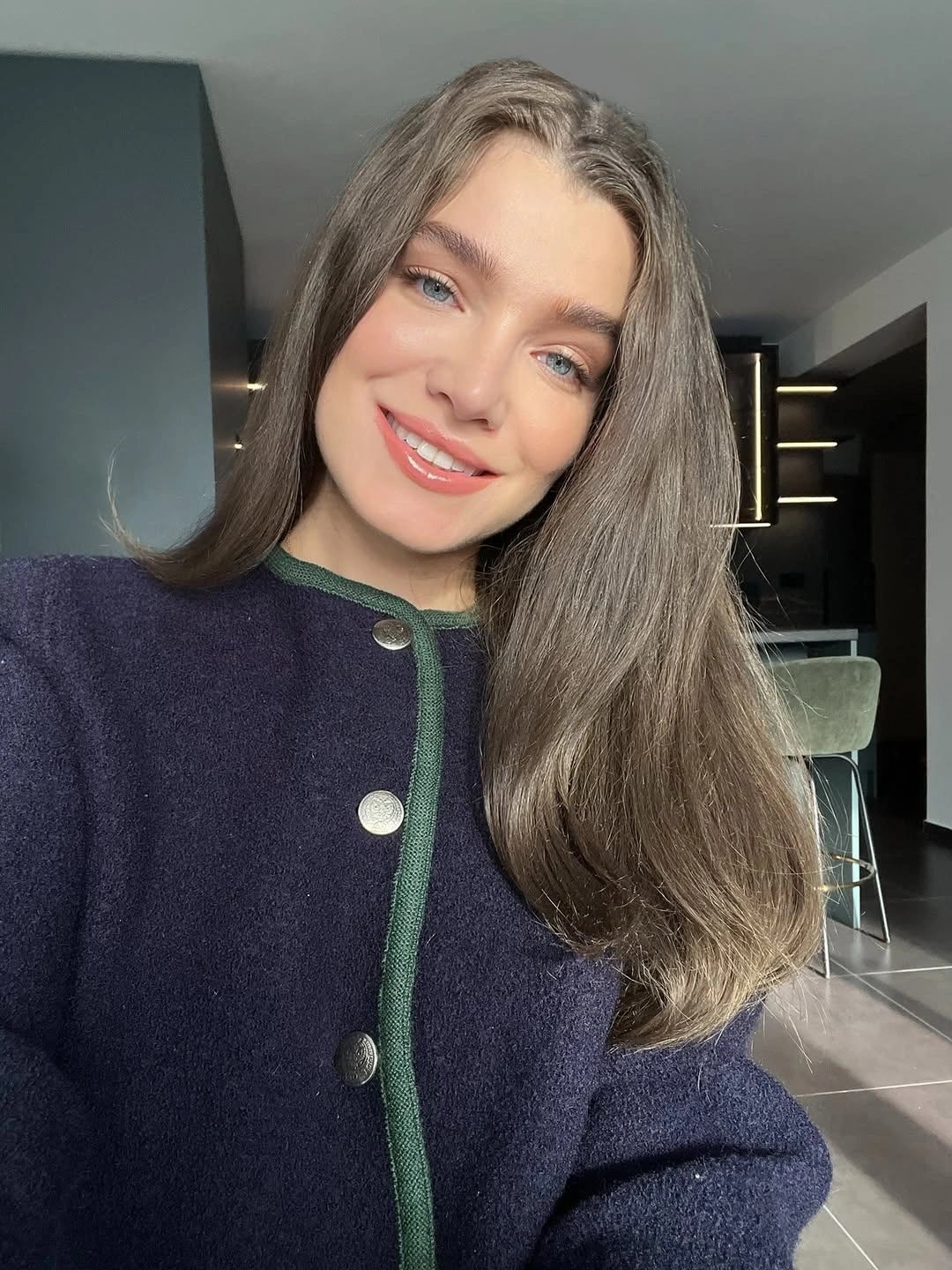
Straight hair makes the cool temperature especially easy to read because the shade travels evenly from the center part through the full length. There are no strong ribbons, bright face-framing pieces, or obvious gradients competing with the base tone. Instead, the interest comes from small changes in reflection that shift the brown toward taupe without turning it into silver.
For readers who want soft brunette hair color without much warmth, this cool taupe direction offers a restrained alternative. Its appeal lies in the muted temperature and even finish rather than in high contrast or pronounced brightness.