Autumn nails color ideas can begin with a quiet olive, a translucent brown, or a soft blush before moving into copper, burgundy, plum, and richer mixed palettes. These twenty-two looks treat fall as a change in warmth, depth, finish, and placement rather than a single list of dark shades, moving from restrained solids to detailed accents and unexpected cool notes.
Choose the level of visual comfort that fits the shape you actually wear. A glossy single color can carry a short nail, a pale base gives line work and florals room to breathe, and a longer almond or pointed outline can hold bands, marble, or fine metallic detail; the collection is easiest to adapt when one color or finish remains the anchor.
Glossy Olive Brown on a Clean Almond Shape
Medium almond nails are coated in an earthy olive-brown with a glossy surface and almost no decoration beyond a darker accent near one tip. The muted color feels autumnal without relying on orange or burgundy, while the almond outline keeps the repeated shade from looking heavy. A dark background and rings sit around the hands, but the polish and shape remain the clear focus.
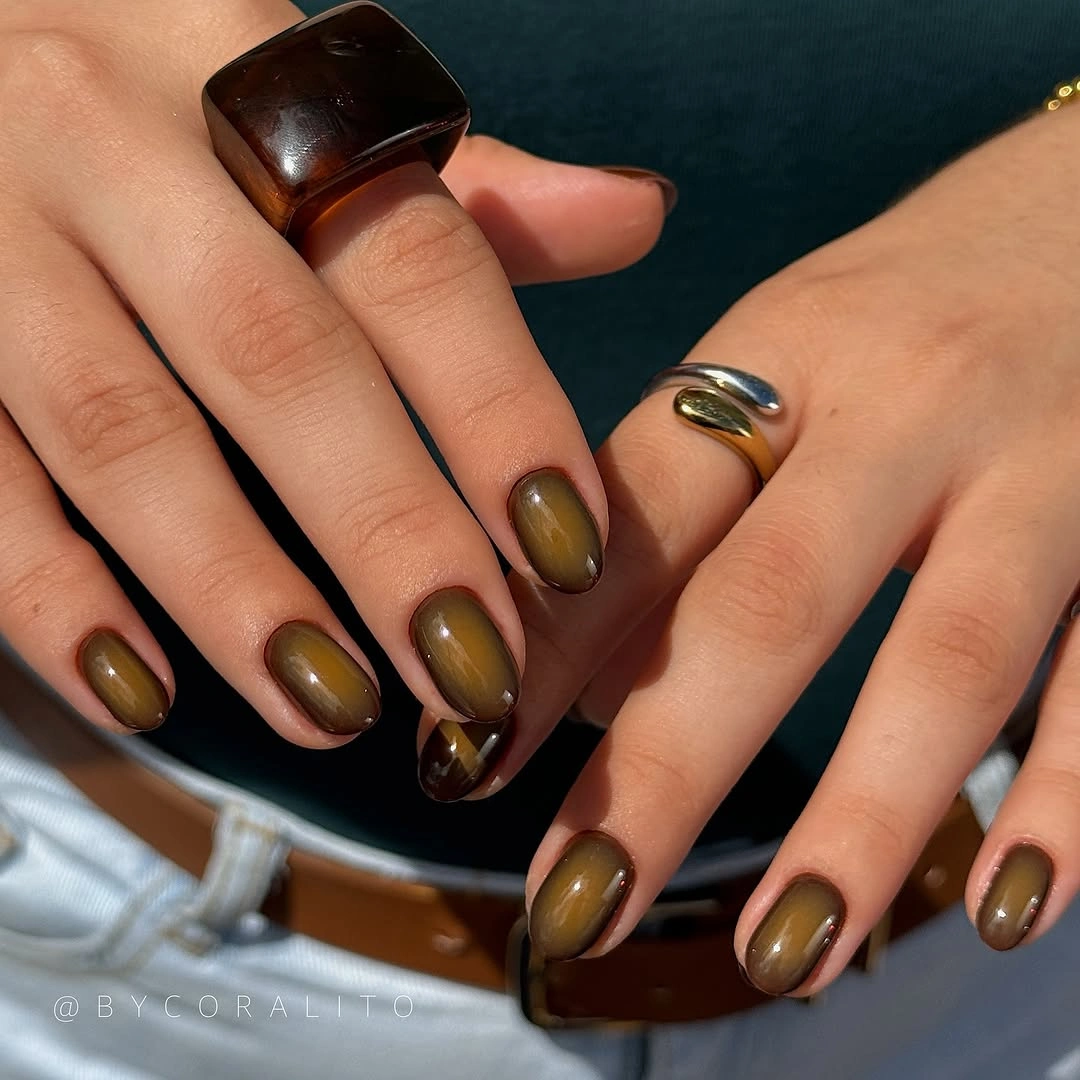
Keep the set solid if you want the quietest interpretation, or place the darker brown only on one nail to create a small change in depth. A rounded oval would soften the same color, while a longer almond will make the olive-brown look more elongated and deliberate. The important choice is a smooth surface, since the muted palette depends on light reflection to show its dimension.
This is an easy starting point for a seasonal edit because the color feels grounded but not overly literal. The olive note gives the brown a slightly cooler direction, and the gloss prevents it from becoming dusty or flat. The tradeoff is subtlety: in low light the shade may read simply brown, so the shape and clean coverage have to carry the difference.
Burnt Orange and Sage with a Nude Pause
Medium almond nails mix burnt orange, dark sage, and pale nude, with translucent brown swirls on the orange fingers and a thin green curve on one light accent. The warm and cool colors sit together without becoming equally loud, because the nude nail creates a visual pause. Cream knitwear and silver rings add context, but the palette itself holds the seasonal conversation.
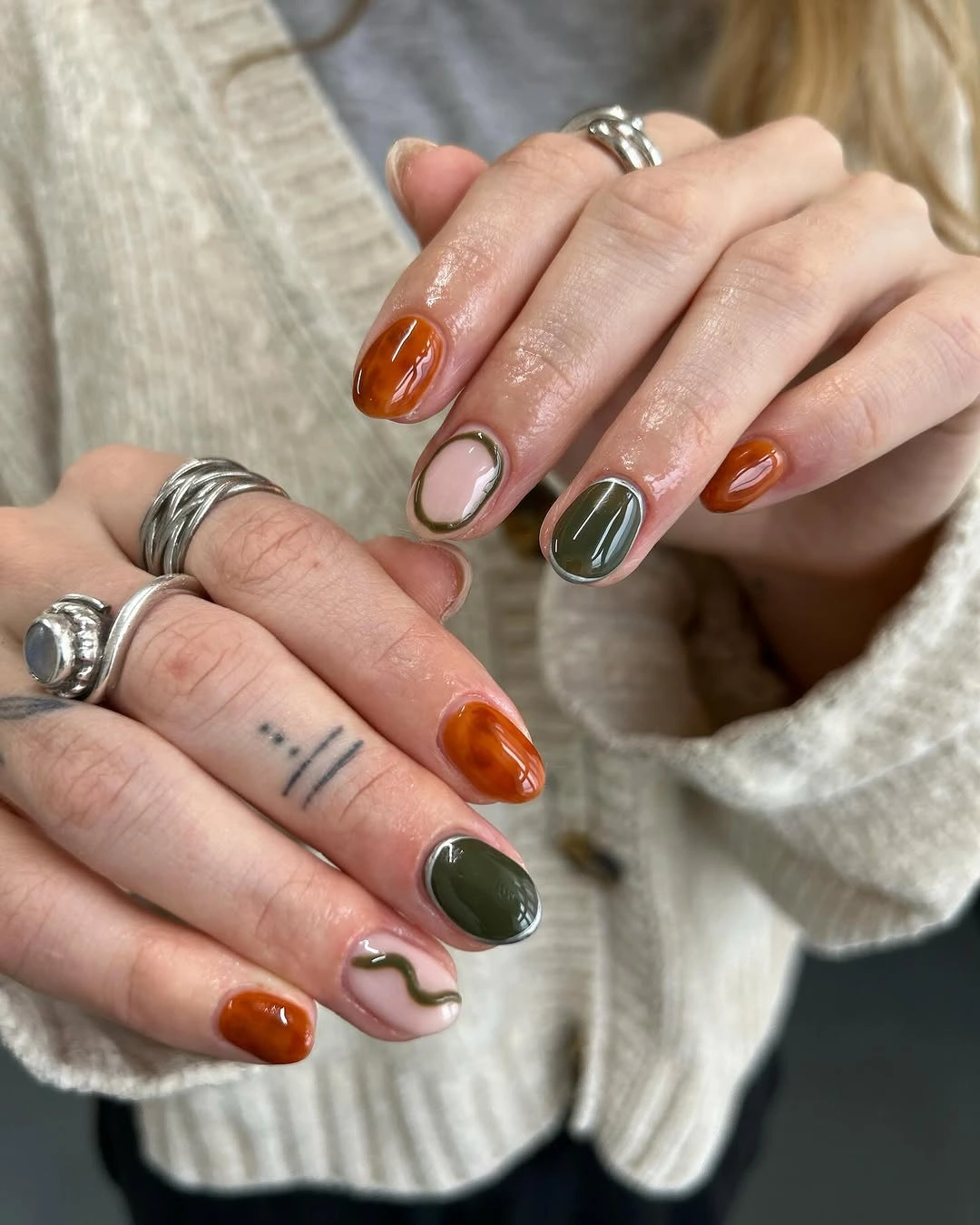
Use two shades instead of three if you want a calmer version, keeping either orange with nude or sage with nude. The almond shape gives the curved accent enough length to travel, while a shorter oval can reduce the swirl to one small line. Repeating one color on the thumb and ring finger will also make a mixed set feel more settled.
The manicure works through undertone and spacing rather than a large motif. Burnt orange supplies warmth, sage cools the composition, and nude prevents the contrast from becoming a block of competing color. Its realistic limitation is coordination: several distinct shades need a clear order, so the palette can feel scattered if each nail is assigned a new color without repetition.
Chocolate Almond Nails with One Light Accent
Long almond nails are mostly glossy dark chocolate brown, with one pale nail carrying a curved dark outline and a small light detail. The solid color has enough depth to make the simple set feel rich, while the lighter accent keeps the hand from becoming one uninterrupted block. Gray pavement and a bright ring give the dark polish a neutral frame.
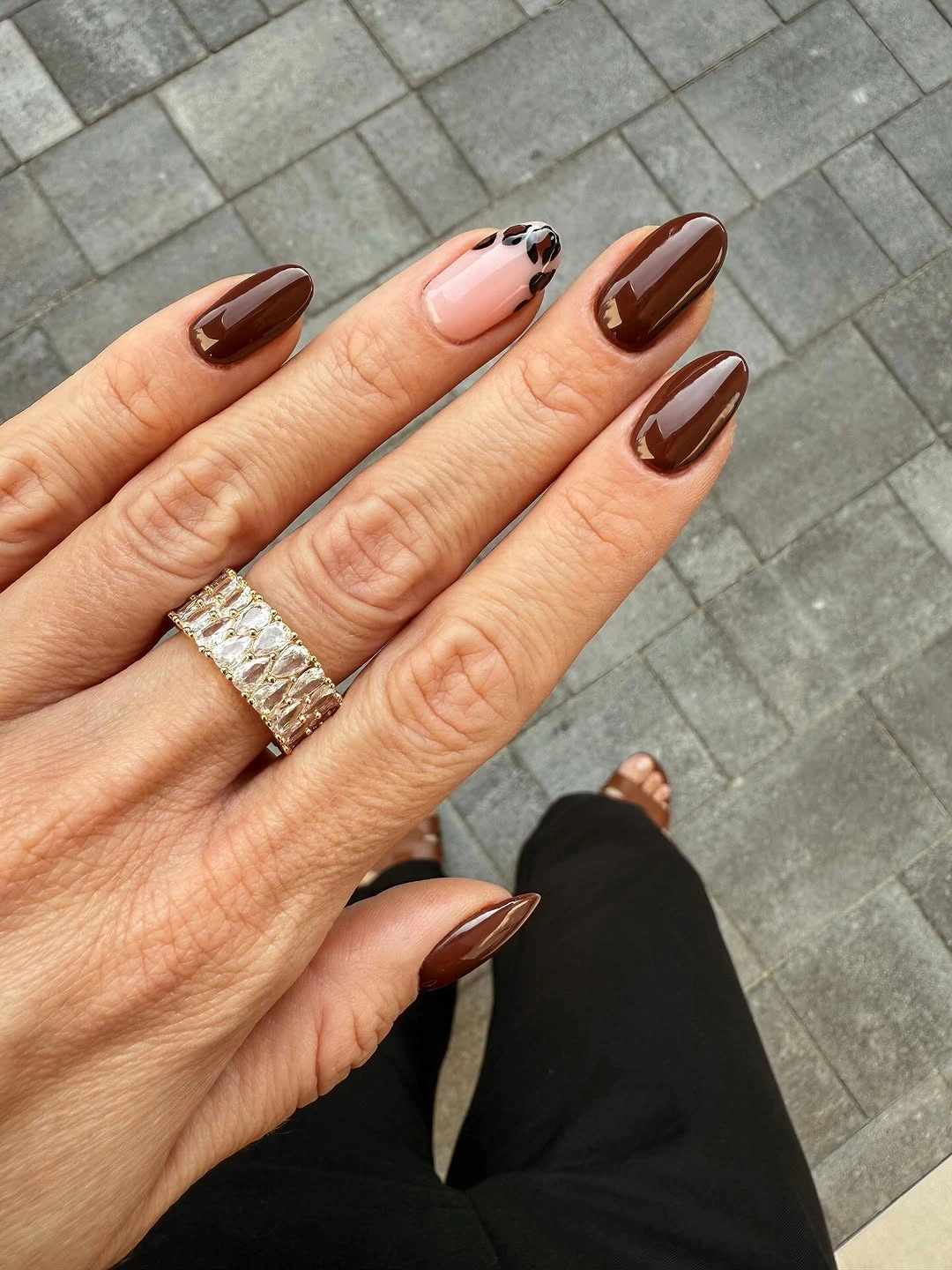
Keep the pale accent open and let the dark brown remain the main field if you want the same proportion. A medium almond can use a shorter outline, while a rounded shape will make the color feel softer and less graphic. If the design feels too quiet, add a small light mark rather than a second patterned nail, because the contrast is strongest when it stays rare.
This look is autumnal through depth and shine, not through a literal leaf or glitter motif. The warm brown catches the light, and the pale accent breaks the visual density without changing the palette’s grounded character. The tradeoff is that a dark solid color reveals uneven coverage quickly, so a simple manicure still benefits from careful edges and a smooth surface.
White and Tortoiseshell Almond Contrast
Long almond nails alternate opaque white with translucent-looking brown tortoiseshell patches and darker irregular marks. The white fingers create breathing room around the busier pattern, while the brown print keeps the palette warm and dimensional. A white sleeve and neutral background reinforce the contrast, but the design stays centered on the way plain and patterned nails share the hand.
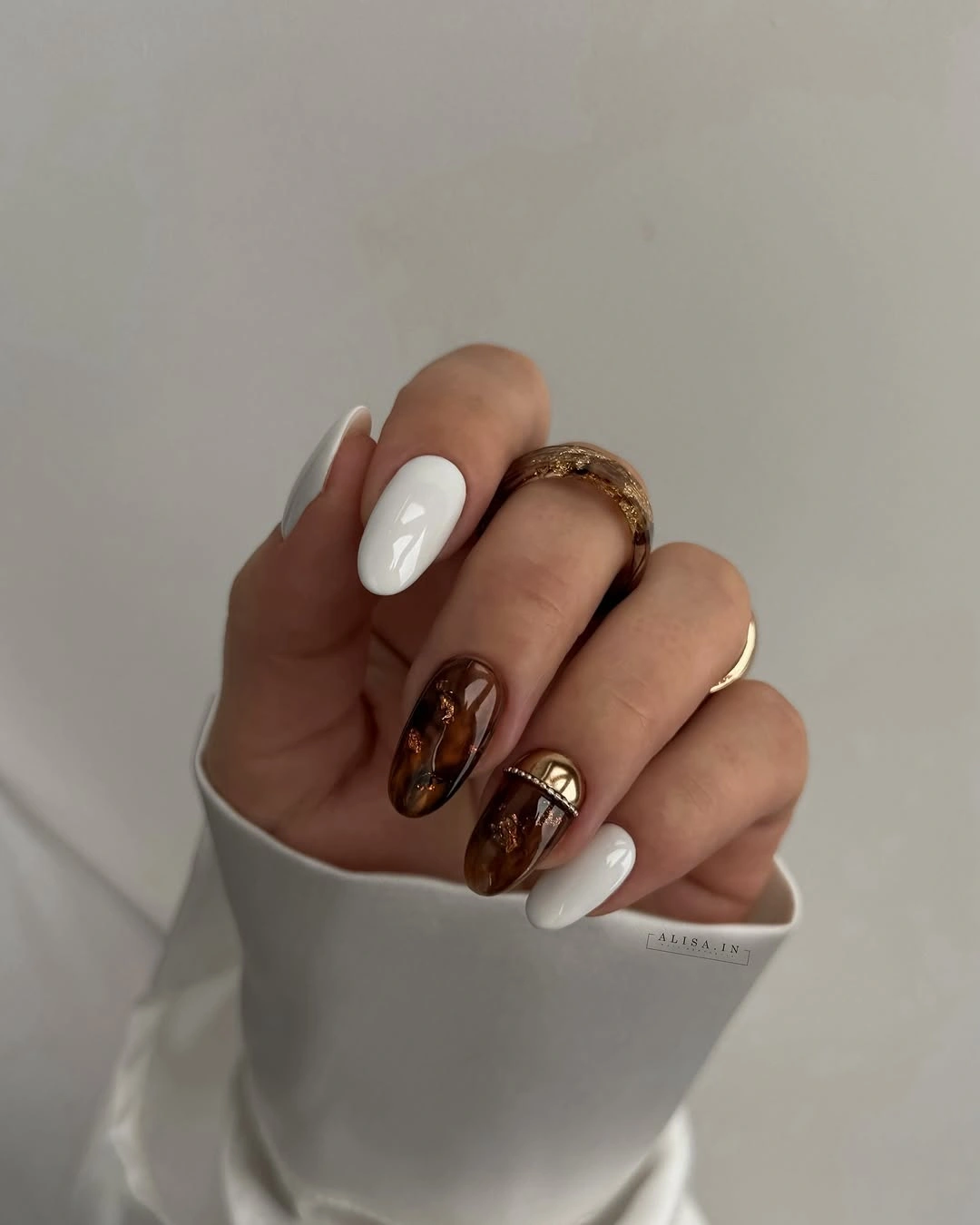
Use tortoiseshell on two nails and leave the others white or warm nude if you want less visual density. A shorter almond can hold larger irregular patches, while a square shape will make the print feel more graphic. Preserve some light space around the darker marks, because the pattern reads best when it looks layered rather than fully opaque.
The comfort of this design comes from its rhythm. White offers a clean rest between brown patches, and the almond outline gives the patterned fingers a long, soft direction instead of a crowded rectangle. The limitation is scale: a longer nail makes every dark patch more visible, so reducing one accent may improve the balance more than adding another color.
Pink Almonds with Plaid and Glitter Details
Long almond nails use pale pink as a base for orange plaid lines, small black botanical marks, silver glitter, and a white-orange floral accent. The manicure combines several autumn signals, but each is placed on a different nail so the hand does not become one dense collage. Dark clothing behind the hands makes the blush base, reflective glitter, and orange lines easy to separate.
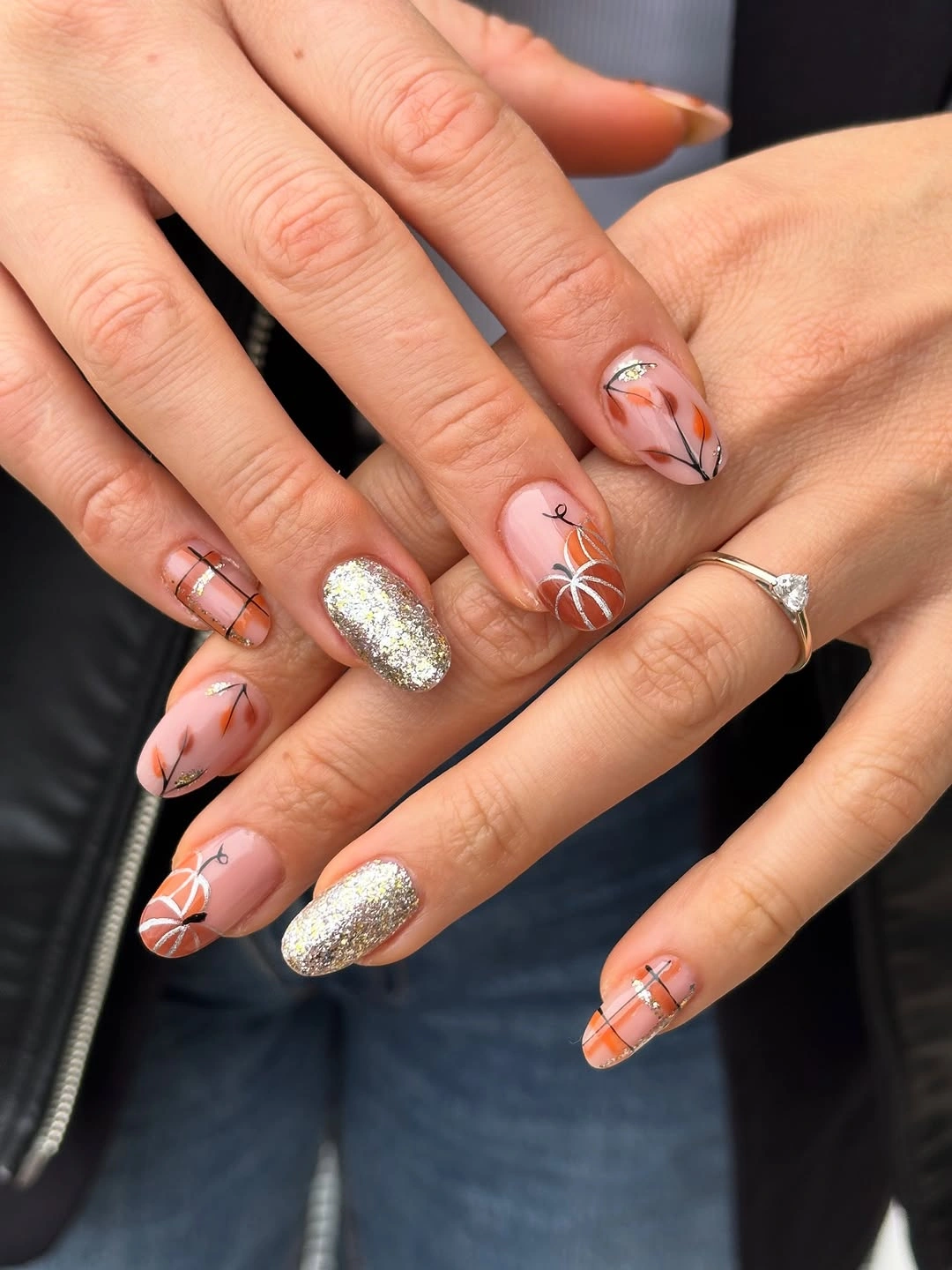
Choose plaid or glitter as the main accent and let the other detail appear on only one finger if you want a simpler result. The long almond shape gives the lines and small motifs enough room, while a short shape will need broader marks and fewer layers of decoration. Keep the pale pink visible around the art so the individual decisions do not merge.
This is the most decorative kind of autumn comfort in the set: familiar warm details are softened by a light base and a little sparkle. The design works because the eye can move from plaid to botanical marks to glitter rather than finding the same motif everywhere. Its tradeoff is maintenance and scale, since fine lines and dense accents are more noticeable when they lose clarity or grow out.
Cool Teal and Lilac on Dramatic Points
Very long pointed nails alternate dusty teal and pale lilac-pink, with small white abstract marks on several of the lighter fingers. The palette is cooler than traditional fall browns, yet its muted quality keeps the colors from feeling summery or neon. Gold rings and a gray sleeve frame the elongated shape, which is as important to the look as the unusual color pairing.
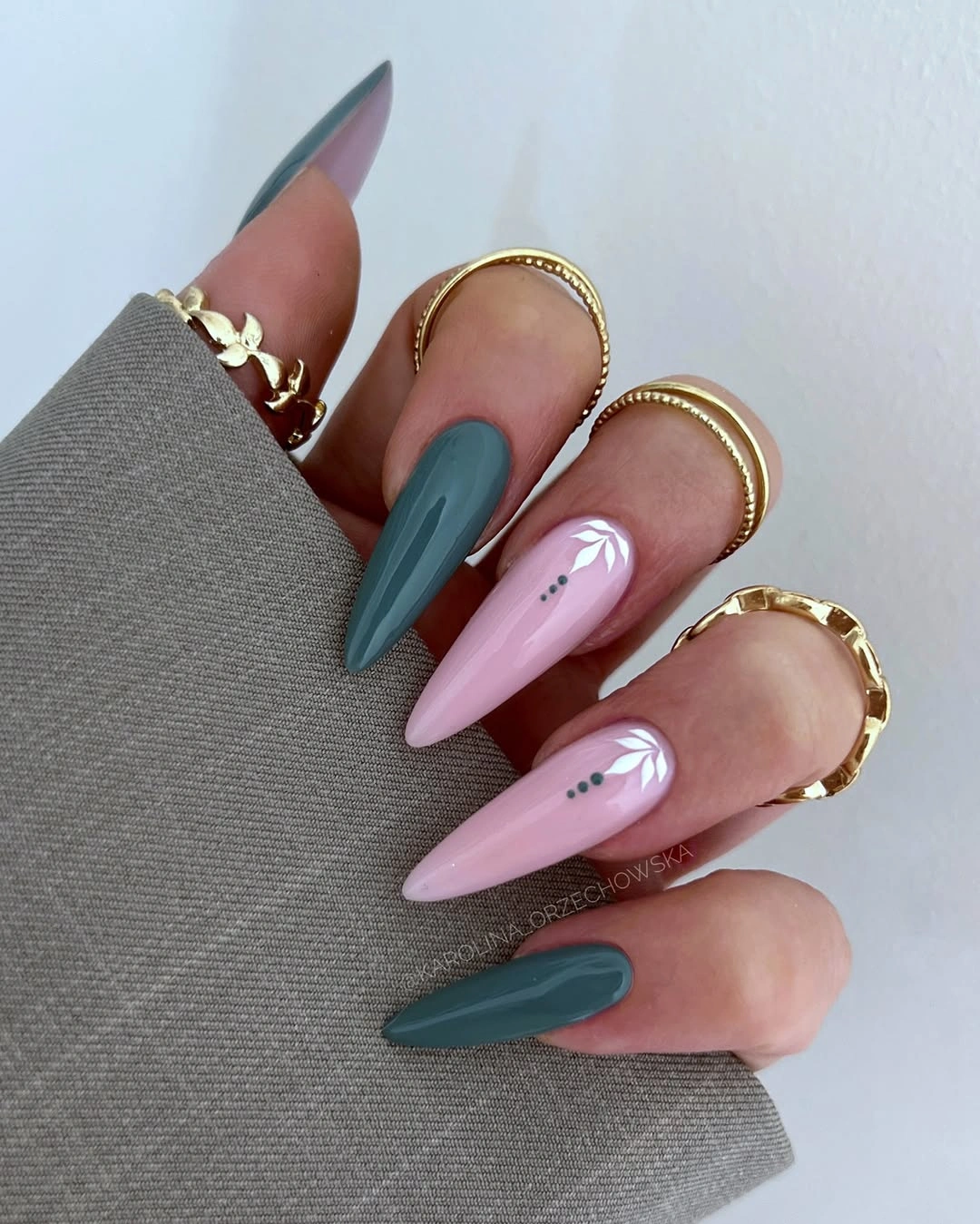
Keep the teal and lilac but shorten the tips to an almond or tapered square if you want the colors to feel easier to wear. On a shorter shape, reduce the white marks to one small curve so the surface does not become cramped. The muted undertones are doing the seasonal work, so there is no need to add orange just to make the palette read as fall.
This design proves that autumn can be expressed through softened color rather than a fixed warm formula. Teal gives the hand cool depth, lilac adds a light pause, and the pointed outline turns the contrast into a strong vertical rhythm. The practical limitation is obvious in the proportion: very long points change hand movement and make the color-block separation more visually demanding.
Metallic Orange with Small Botanical Accents
Short-to-medium oval nails glow in metallic orange, while two pale accent fingers carry dark leafy lines and tiny green details. The reflective orange supplies most of the seasonal energy, and the botanical marks add a quieter natural reference without covering the whole set. A light fluffy sleeve softens the contrast and helps the rounded shape feel approachable.
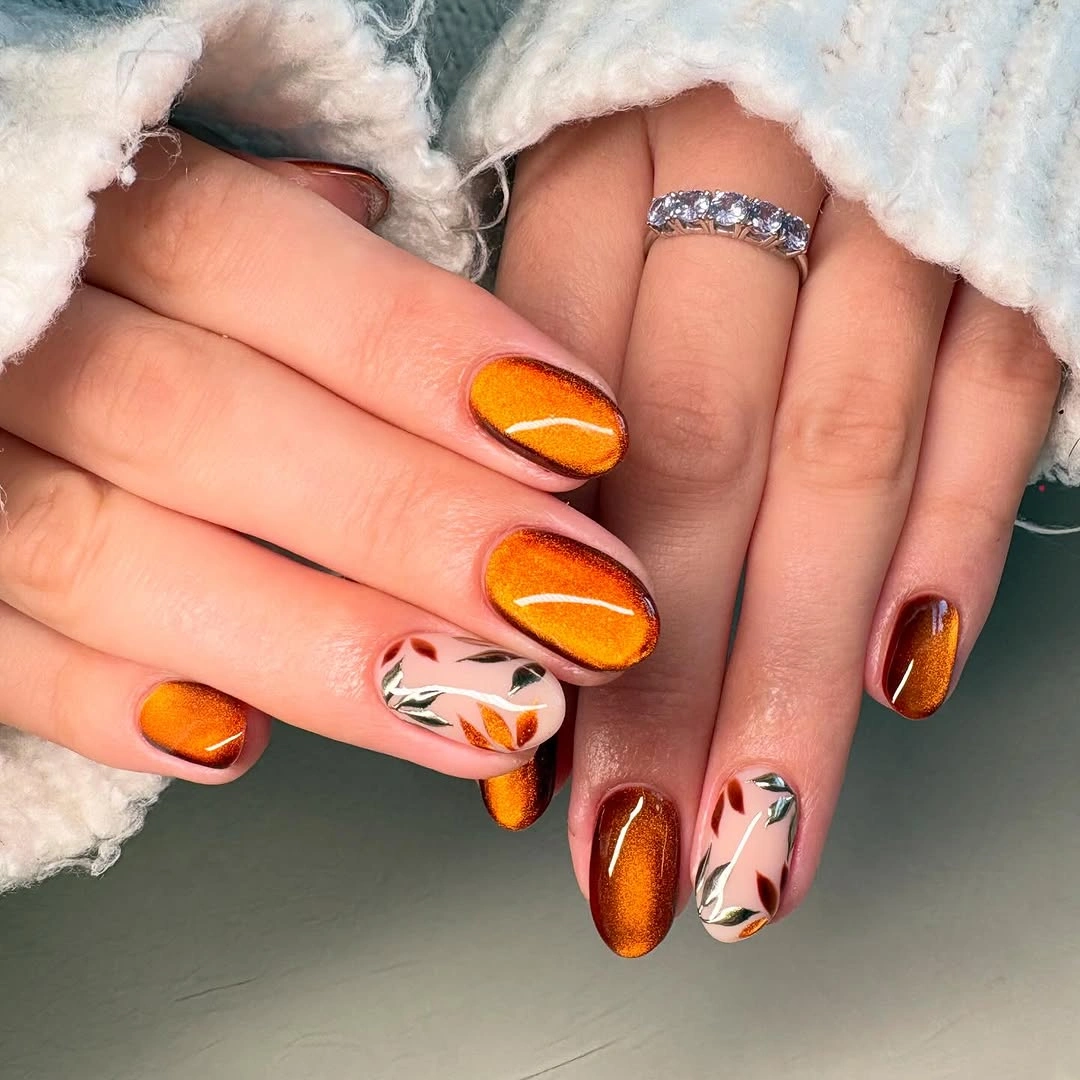
Keep the orange on every solid finger and move the botanical detail to one accent if you want the same idea with less decoration. A rounded oval is useful here because it tempers the shine, while a square outline would make the metallic color feel more graphic. Let the accent lines stay fine and open so they support the orange rather than compete with it.
The design feels warm because finish and color are working together. Coppery reflection gives the orange depth, while the small green notes create a cool interruption that keeps the shade from becoming one flat block. Fine botanical marks are the fragile part of the set, so a simpler accent may preserve the seasonal mood better than trying to repeat every small detail.
Burgundy Almonds with Slim Metallic Bands
Long almond nails are glossy deep burgundy with narrow silver or pale metallic bands crossing selected fingers. The lines create horizontal breaks across a dark base, while the long shape gives the bands enough room to read as deliberate rather than accidental. A gray sleeve, leaves, and red berries sit behind the hand, but the wine color and linear rhythm define the manicure.
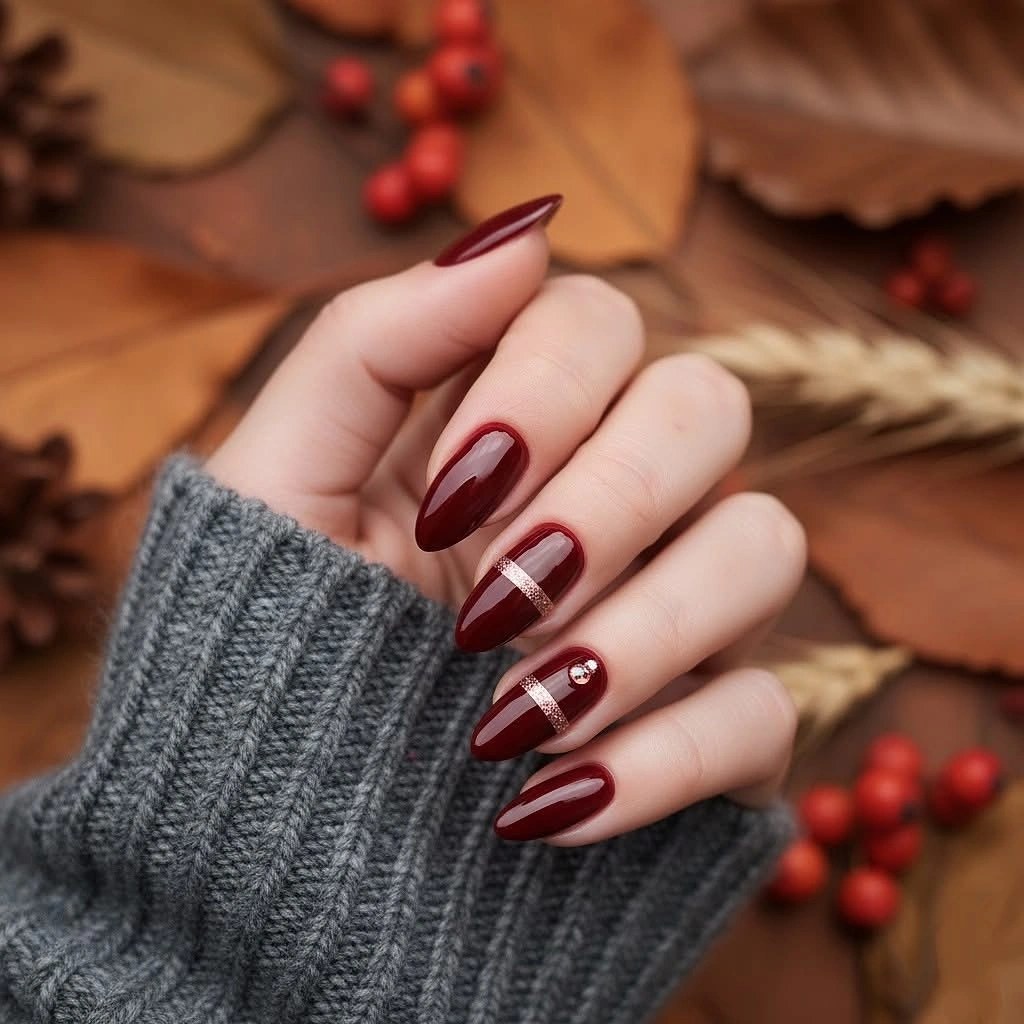
Use one band on two accent nails and leave the rest solid if you prefer a quieter set. The almond outline already supplies length, so the line does not need to extend across every finger to create direction. On a shorter shape, place the accent closer to the center and keep the stroke broad enough to remain visible without crowding the edge.
Dark burgundy feels comfortable here because it is broken by only a small amount of light. The metallic bands add structure, and the repeated wine color keeps the design cohesive even when the background is seasonal and busy. The tradeoff is precision: the simpler the line, the more clearly a crooked angle or uneven spacing will show.
Wine and Copper in a Shimmering Gradient
Medium square nails fade from deep burgundy at the tips into copper-gold near the base, with fine shimmer repeated across the transition. The warm gradient gives each nail more than one level of depth while the square edge keeps the color change orderly. Purple knitwear and layered rings add texture around the hand, but the gradient remains the quiet source of movement.
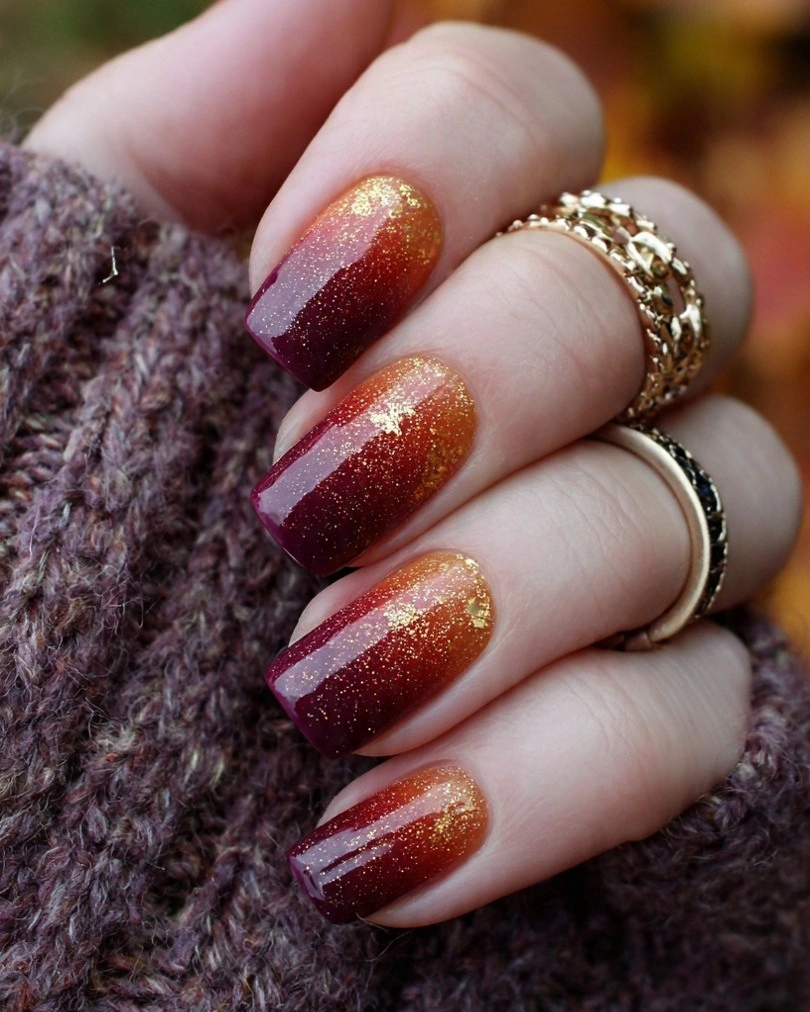
Keep the brighter copper area broad enough to remain visible if you shorten the square shape. A quieter sheen can replace the fine sparkle without changing the underlying color relationship, while a deeper wine tip will make the gradient look more dramatic. The most useful adaptation is to preserve a gradual transition instead of turning the design into two hard blocks.
This palette feels like autumn through the way it moves from shadow to warmth. Burgundy supplies depth, copper catches light, and shimmer helps the eye follow the change instead of stopping at one boundary. The limitation is surface sensitivity, since a gradient and reflective finish can reveal chips or uneven coverage sooner than a single opaque shade.
Muted Plum with Pale Botanical Strokes
Medium almond nails alternate glossy plum and pale pink, with fine black botanical strokes on the lighter fingers. The palette is muted and slightly cool, while the line work introduces a small natural rhythm without filling the nail. A white knit sleeve and dried grasses create a soft visual frame, but the design remains readable even without those seasonal cues.
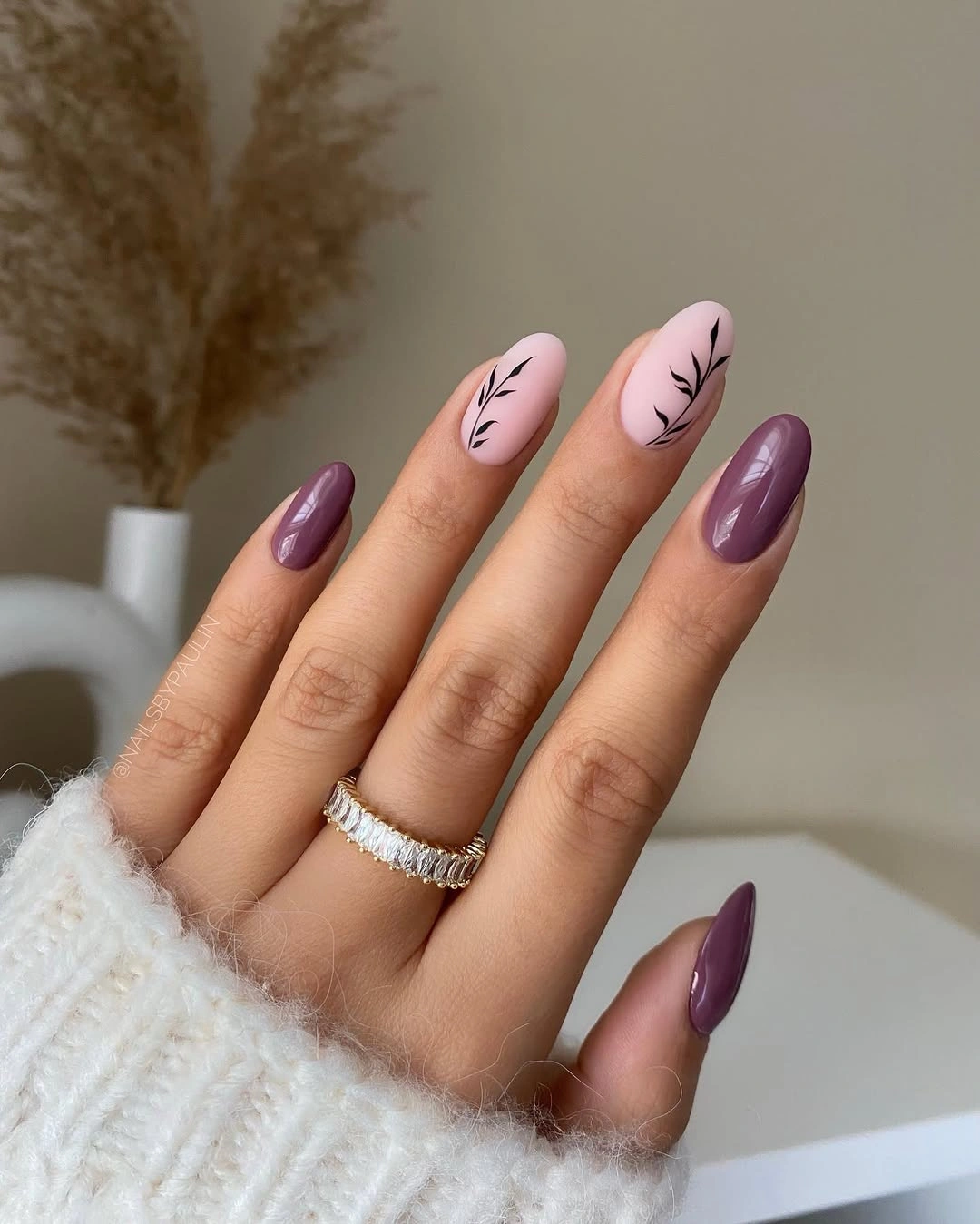
Keep the plum on most fingers and use only two pale nails for the botanical marks if you want the set to feel more edited. A shorter almond can replace a branch with one curved leaf-like line, while a longer tip can hold a little more spacing around the mark. Leave the pale base visible, because the open area is what keeps the dark plum from feeling too dense.
The comfort of this manicure comes from muted contrast. Plum gives the hand depth, pale pink softens the shift, and the black marks add direction without introducing a bright color. Fine strokes will be the first part to lose clarity, so the practical choice is to keep the motif sparse and let the shade family carry most of the seasonal impression.
Sheer Brown Gloss with Almost No Art
Medium almond nails use a translucent-looking brown-taupe finish with a glassy shine and no visible decoration beyond tiny reflections. Because the color remains lighter at the edges, the nail outline stays part of the design rather than disappearing beneath opaque pigment. A soft gray background keeps the quiet finish from being distracted by extra color or texture.
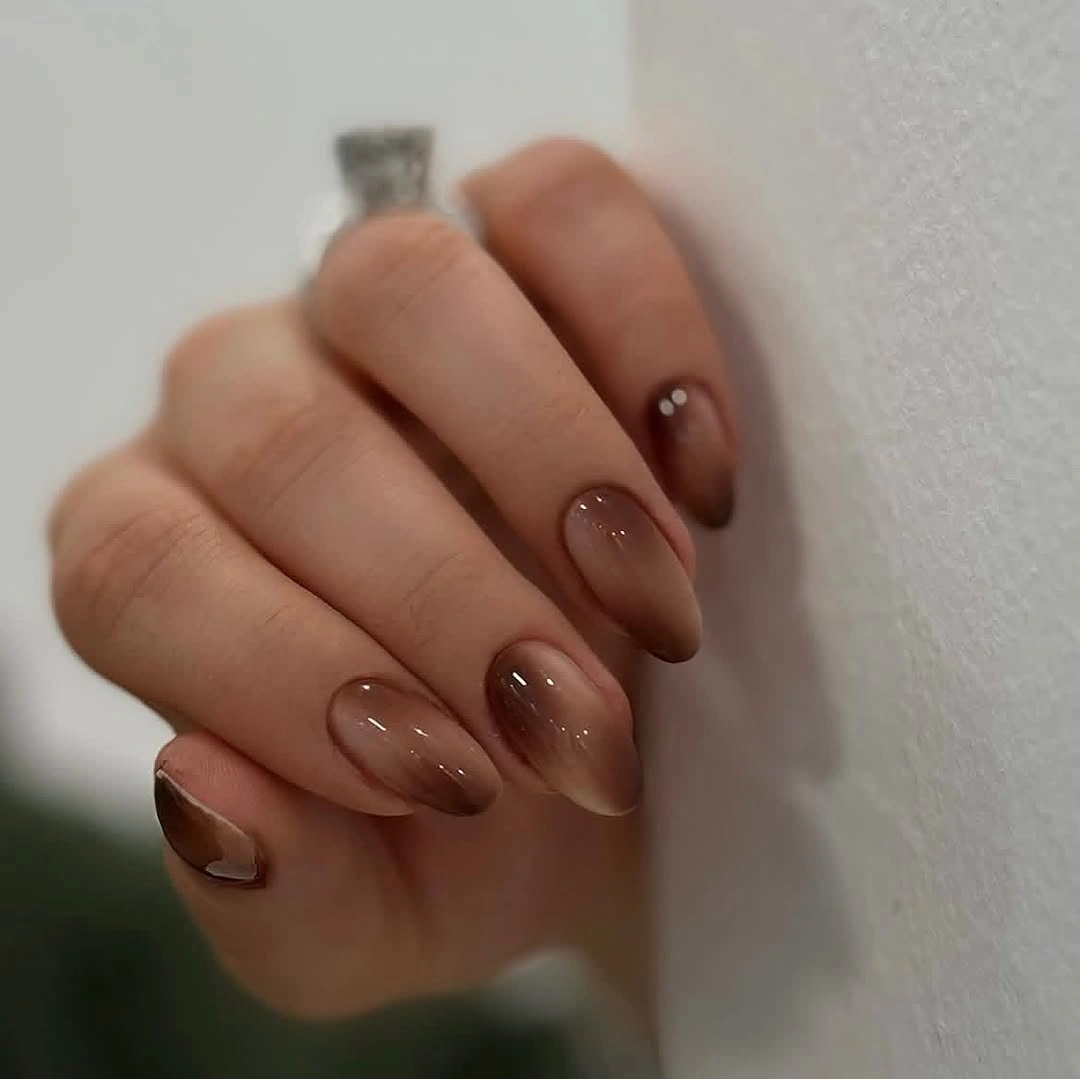
Choose a rounded shape if you want the sheer brown to feel even softer, or keep the almond point to give the minimal set a little length. The finish matters more than added art, so a smooth surface and clean side edges will do more for the result than a small sticker or accent line. If you need a stronger fall note, deepen the brown slightly rather than adding several new shades.
This is the most visually restful interpretation in the collection. Warm brown brings the season in quietly, transparency keeps the hand open, and gloss provides enough movement for a single color to feel finished. The tradeoff is that minimal coverage makes surface texture and edge unevenness easier to notice, so simplicity does not remove the need for careful preparation.
Red, Brown, and Yellow in Short Blocks
Short rounded nails alternate deep red, brown, and bright yellow as solid color blocks. The yellow appears as a small but confident focal note among the darker fingers, and the compact shape keeps the high contrast from spreading too far. A yellow sweater and patterned trousers echo the palette around the hands, but the manicure remains a simple exercise in repetition and pause.
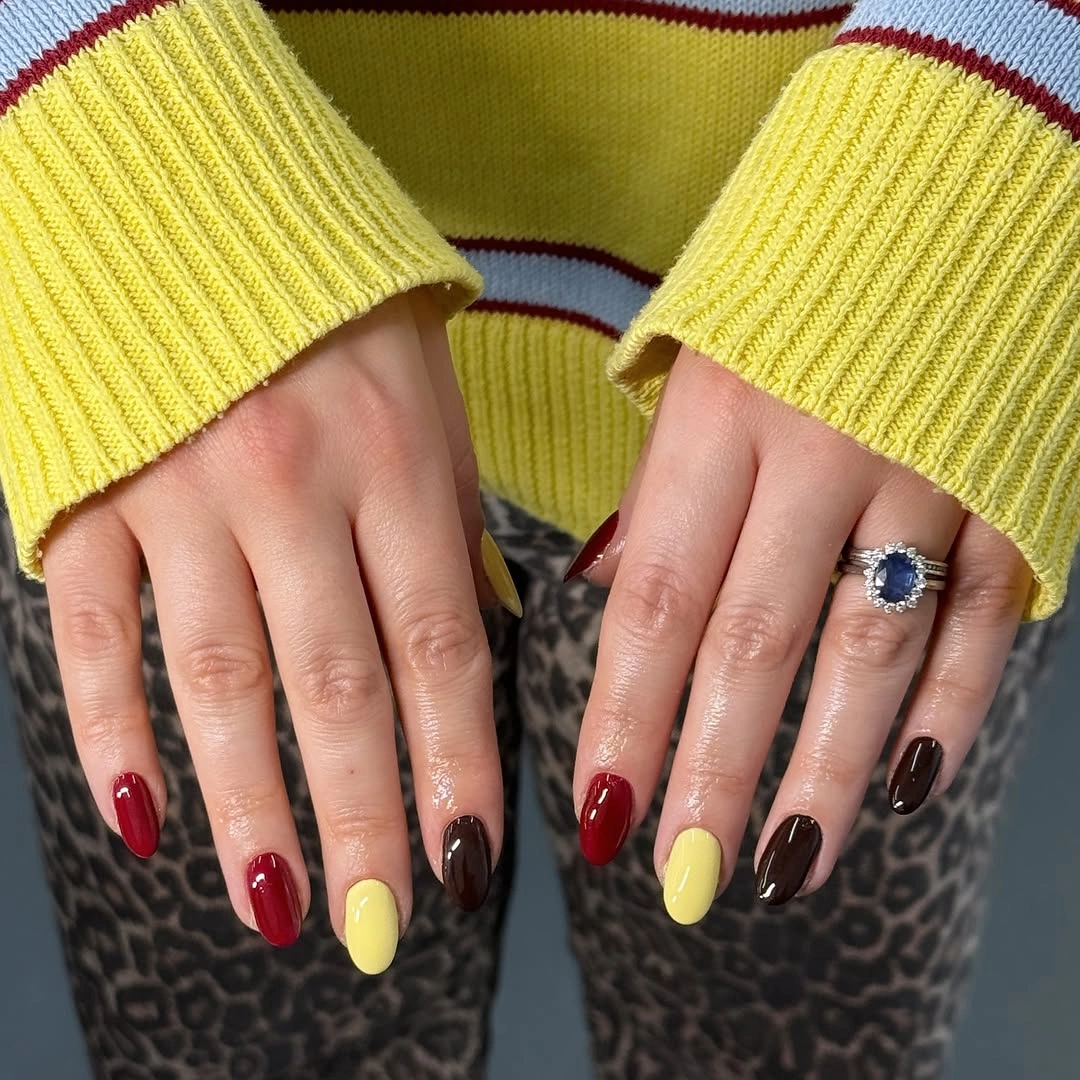
Use the yellow on one or two fingers and repeat the deeper red on the thumb and ring finger if you want a calmer formula. A short oval will soften the block contrast, while a short square will make the color order look more graphic. Keep each shade solid and clean, because adding art would compete with the simple three-color rhythm.
The set feels warm because the bright yellow is surrounded by deeper autumn colors rather than standing alone. Brown grounds the palette, red supplies richness, and the short rounded outline makes the combination approachable. The limitation is visual competition: three strong shades need deliberate placement, or the eye may jump between fingers instead of settling on a clear anchor.
Light Neutrals with Small Metallic Breaks
Short rounded nails move through pale cream, blush, soft peach, and small metallic-looking accents. The palette is much lighter than the wine and orange examples, yet its warm neutrals create a gentle transition into autumn rather than a high-saturation summer set. Rings and a burgundy garment provide surrounding contrast, while the manicure itself stays airy and softly glossy.
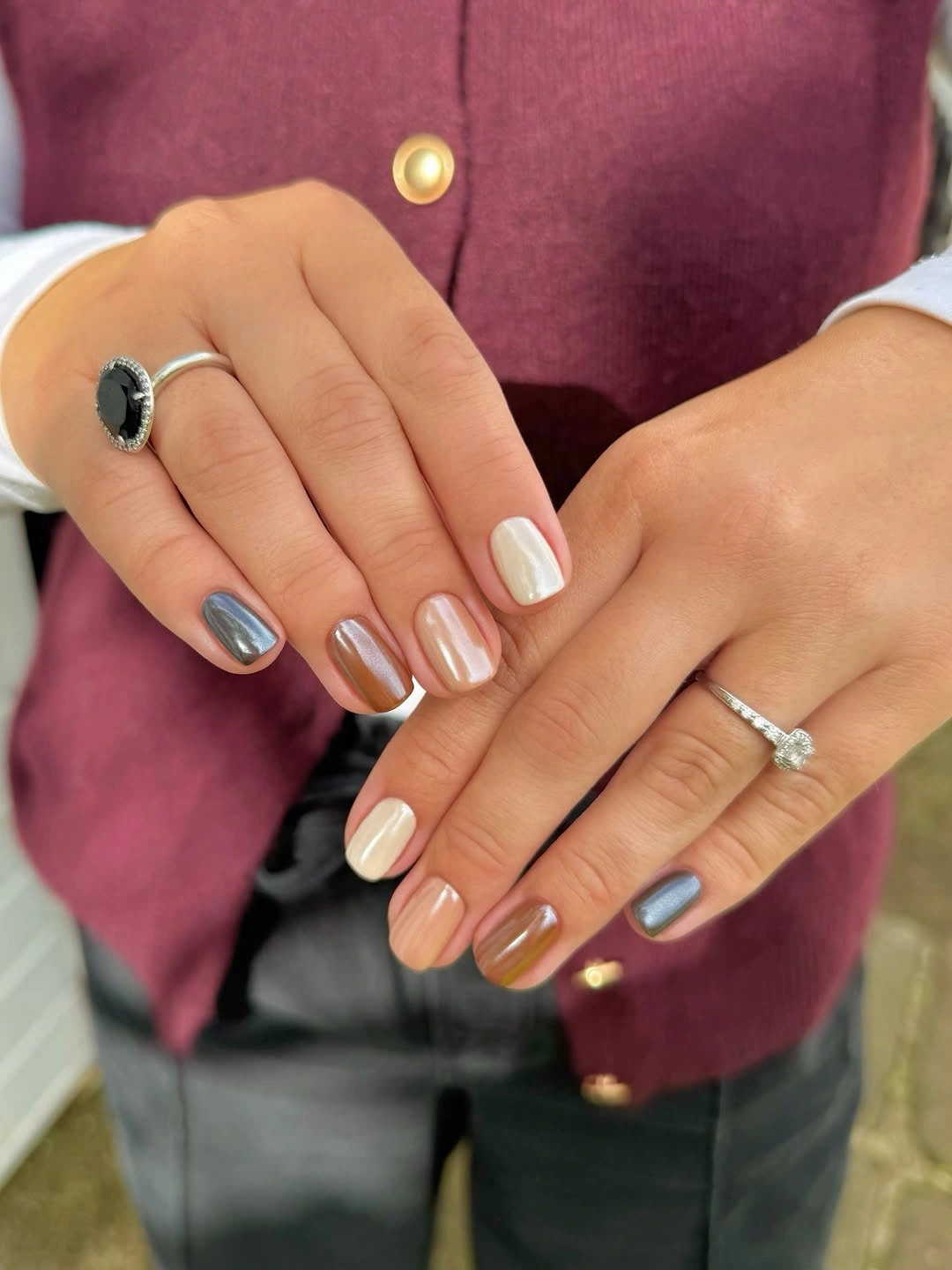
Keep two light shades and one metallic accent if you want to make the palette easier to control. The short rounded shape benefits from broad solid areas, so delicate color changes should remain large enough to read rather than becoming tiny fragments. A warmer blush can deepen the set without forcing the entire manicure into brown or red.
This look relies on warmth and finish instead of depth. Cream and blush create visual comfort, the small reflective notes prevent the set from feeling flat, and the rounded shape keeps the colors gentle. The tradeoff is seasonal subtlety: because the palette is light, it may read as transitional unless one warm accent or slightly deeper neutral is repeated for cohesion.
Solid Olive Green with a Glossy Oval Outline
Medium oval nails are painted a deep olive-green shade with an even glossy finish and no visible art. The color is saturated enough to feel intentional, but the rounded shape prevents it from looking severe or overly graphic. Gold rings and a light background supply contrast while the single shade does all the design work.
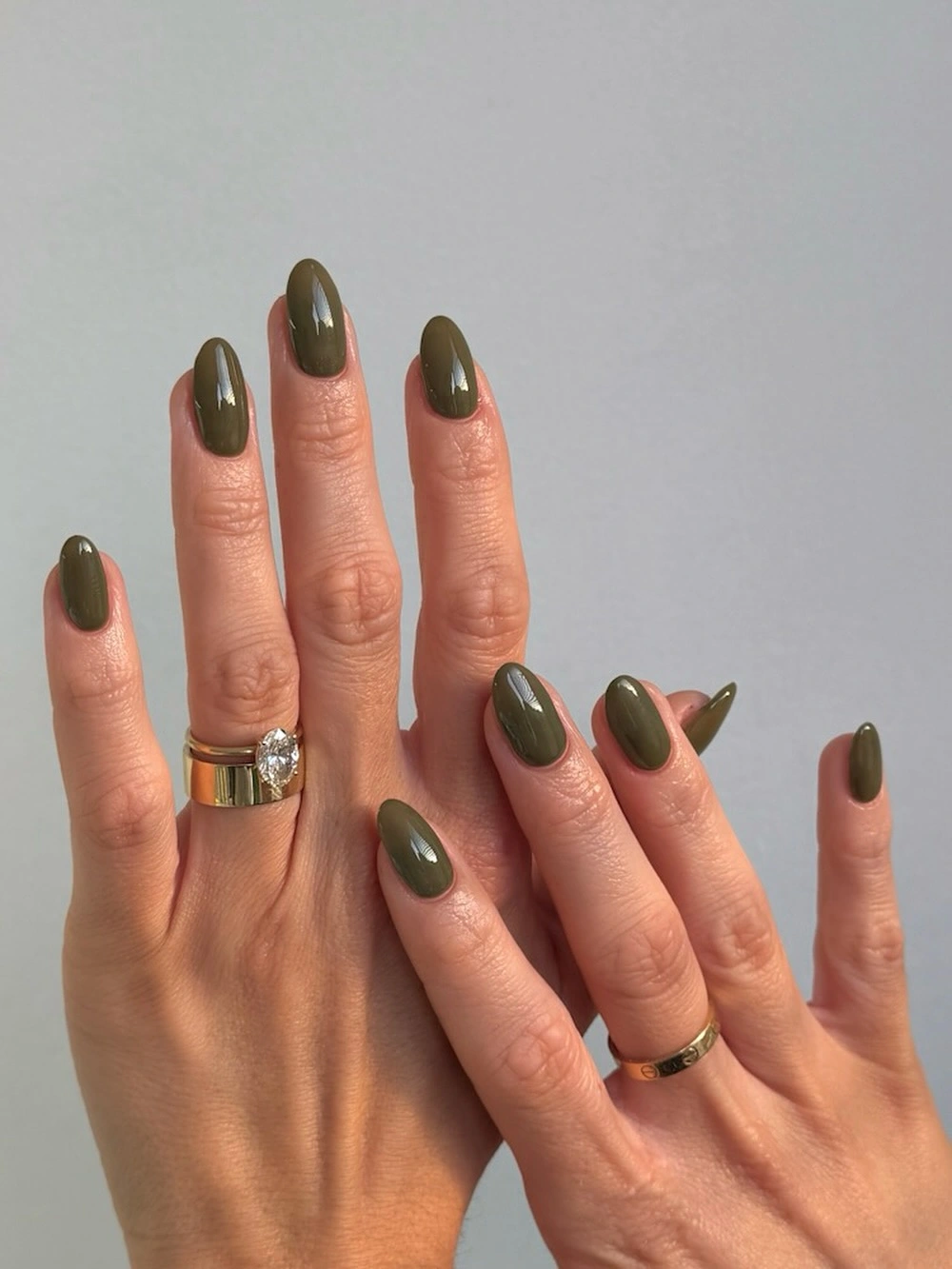
Use the same olive on a shorter rounded shape if you want the manicure to feel more understated, or move to a longer almond for a sharper silhouette. Because the set is solid, the color should remain the anchor rather than being interrupted by a competing accent. A slightly warmer olive will keep the mood grounded, while a cooler one will feel more botanical and subdued.
The appeal is its clarity. Olive brings an earthy note, gloss gives it depth, and the oval outline softens the saturated color around the hand. A plain dark green also exposes surface unevenness and chips, so the practical advantage of simplicity is paired with a clear maintenance signal around the edges.
Long Nude Points with Fine Gold Lines
Very long pointed nails use a translucent nude-pink base with fine gold-looking lines that follow the elongated surface. The neutral color keeps the design open, while the extreme point supplies most of the drama and gives the narrow accents a vertical rhythm. Pearl jewelry and dark clothing reinforce the jewelry-like mood without changing the restrained palette.
Shorten the point to a tapered almond if you want the same neutral-and-gold idea in a more compact proportion. Keep the lines narrow and let them follow the length, because a broad metallic block would make the design heavier and reduce the open space that gives it refinement. On a shorter nail, one line per accent finger may be enough.
The manicure feels seasonal through warmth and restraint rather than through a dark shade. Nude leaves room for the shape, gold adds a controlled glint, and the pointed outline turns a quiet palette into a visible statement. The tradeoff is function: very long tips affect everyday movement, and the thin lines also demand clean edges to preserve the jewelry-like effect.
Burgundy and Nude with Spotted Tip Accents
Medium almond nails alternate glossy burgundy and pale nude, with irregular dark spotted patterns concentrated near the tips of several light fingers. The wine color gives the set depth, while the pale accents keep the print from covering the entire hand. The pattern is playful, but its placement stays close to the free edge and lets the almond outline remain visible.
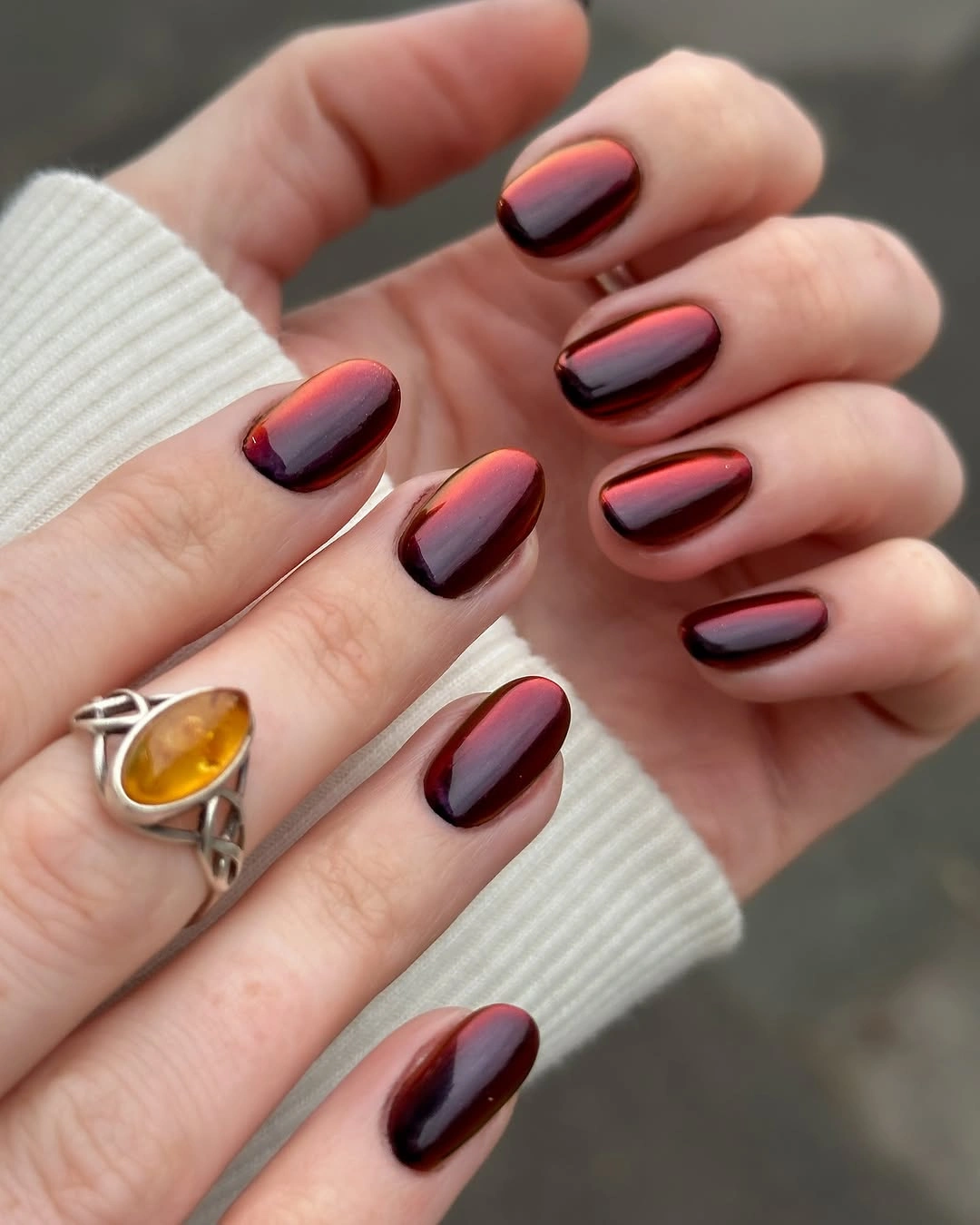
Use the spotted detail on one or two tips and keep the rest in solid burgundy if you want to reduce the visual noise. The almond shape gives the pattern a long frame, while a shorter oval can use fewer, larger spots for a clearer result. Leave the center of the pale nail open so the print reads as an accent rather than a full-field texture.
This set brings warmth through color repetition. Burgundy appears as the anchor, nude creates negative space, and the small spots add a playful change without introducing another saturated shade. The limitation is that irregular marks can look uneven when they are too close together, so the best adaptation is usually fewer spots with more breathing room.
Mustard, Taupe, and Lime with Abstract Lines
Medium square nails combine taupe nude, bright yellow, and lime green, adding black abstract strokes to several vivid and neutral fingers. The palette is more energetic than the muted examples, but the neutral nails create pauses between the stronger blocks. Square edges give the colors and thin lines a clear frame, making the high-contrast set look deliberate rather than random.
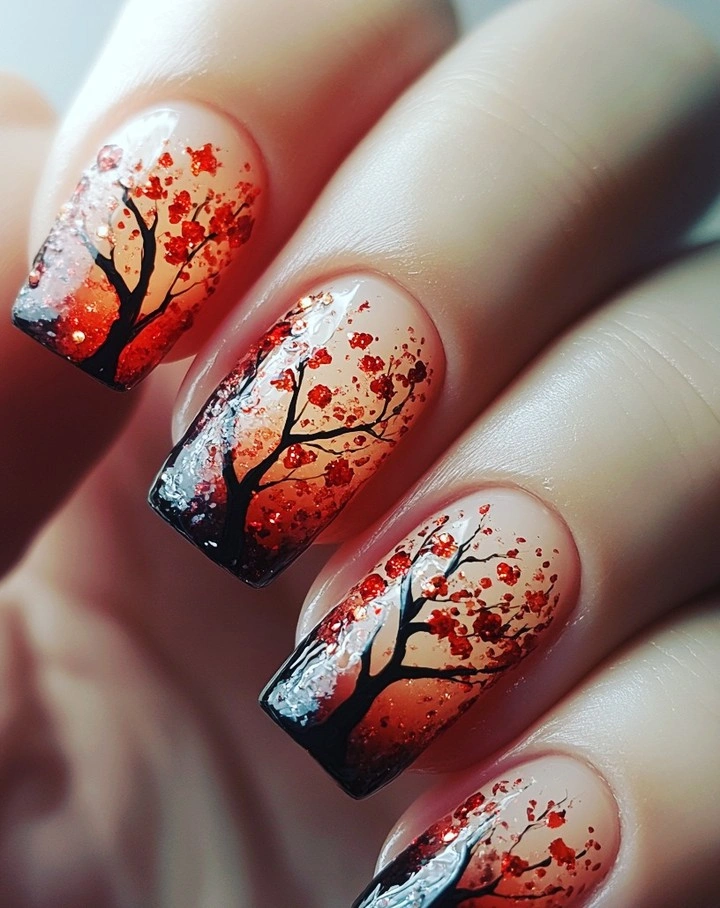
Reduce the palette to taupe and one bright shade if you want the design to feel simpler. Keep the black strokes sparse and repeat their direction on more than one finger so they act as a shared visual language. A short square shape can carry the same idea well, provided the yellow and lime areas stay broad enough to remain distinct.
The manicure works because color temperature is not the only organizing rule. Taupe supplies neutral support, yellow creates warmth, lime adds a cooler high-energy note, and black lines repeat across the changes. Its tradeoff is intensity: several bright decisions need space and order, so adding another motif would likely make the set less comfortable to read.
Short Brown Nails with Concentrated Glitter
Short square nails are mostly deep chocolate brown, with one or two fingers carrying dense multicolor glitter. The glossy dark base provides warmth and depth, while the glitter accents catch pink, gold, and blue light in a small concentrated area. White fabric and a ring create contrast, but the compact shape keeps the sparkle from taking over the hand.
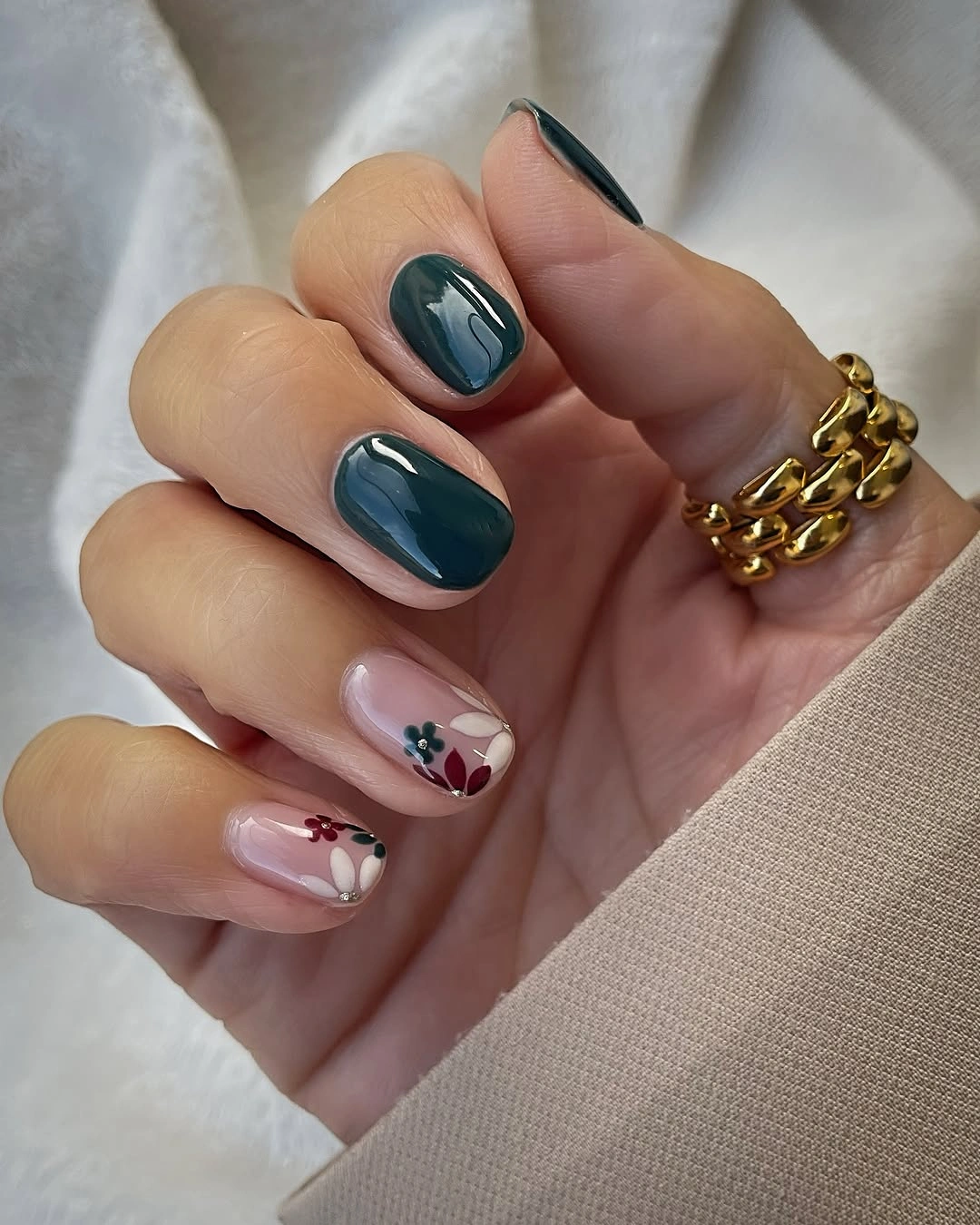
Keep the glitter on one accent nail if you want the most restrained version. Short square tips benefit from a single broad glitter field rather than many tiny scattered points, while a rounded shape will soften the graphic edge. The brown base can remain unchanged, because its job is to give the brighter accent a clear visual home.
This is an autumn color idea built around depth and one reflective interruption. Chocolate keeps the hand grounded, glitter adds occasion light, and the short outline makes the contrast feel contained rather than theatrical. The practical weak point is the surface transition, since glitter can reveal texture or edge wear sooner than a completely solid brown finish.
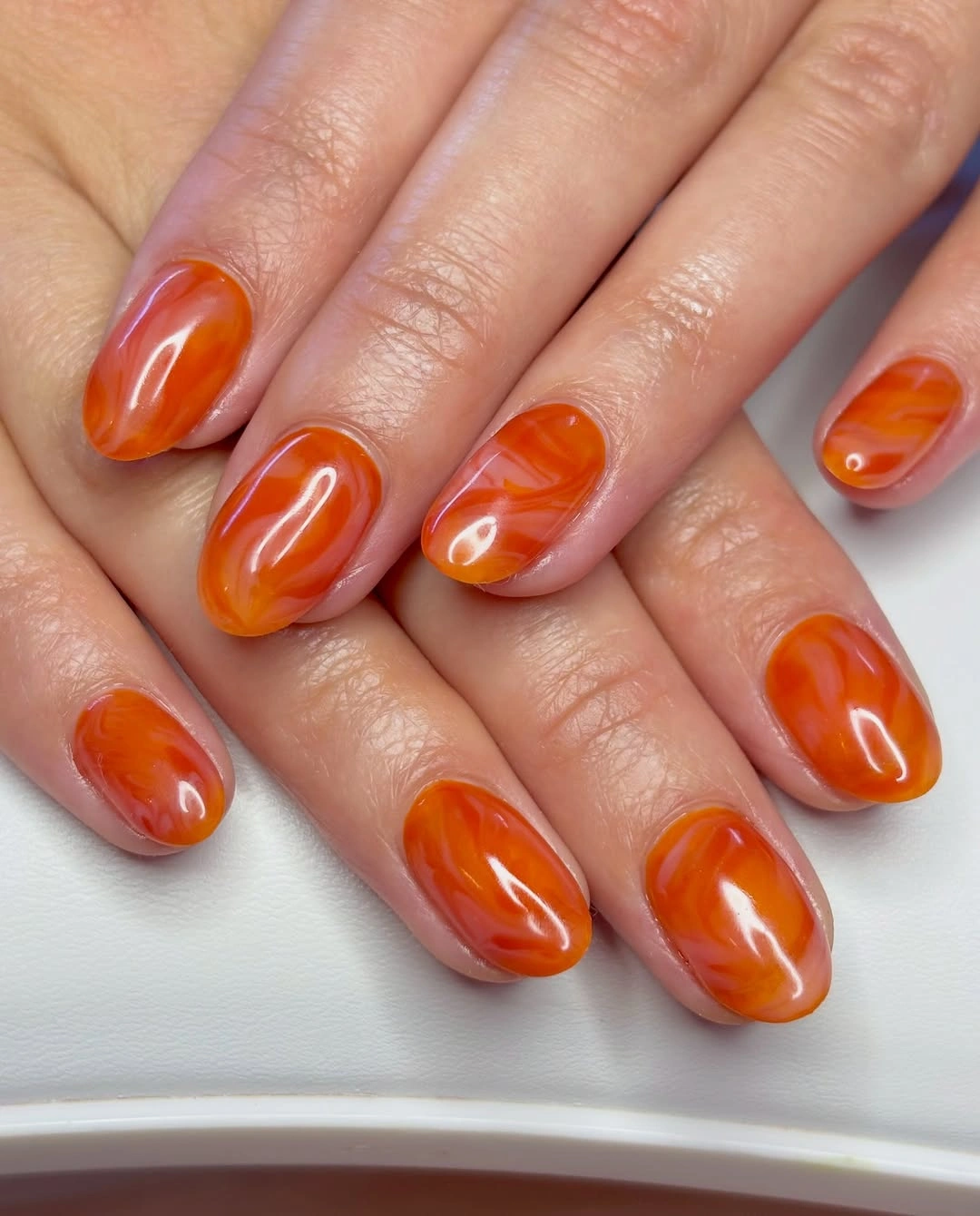
Compact Copper with a Warm Metallic Finish
Short-to-medium rounded nails are painted a bright copper-orange metallic that shifts with the angle of the fingers. The set uses no art, yet the finish creates enough movement to keep one color from feeling flat. A white knit sleeve and gold rings support the warmth, while the compact shape keeps the statement within a practical-looking outline.
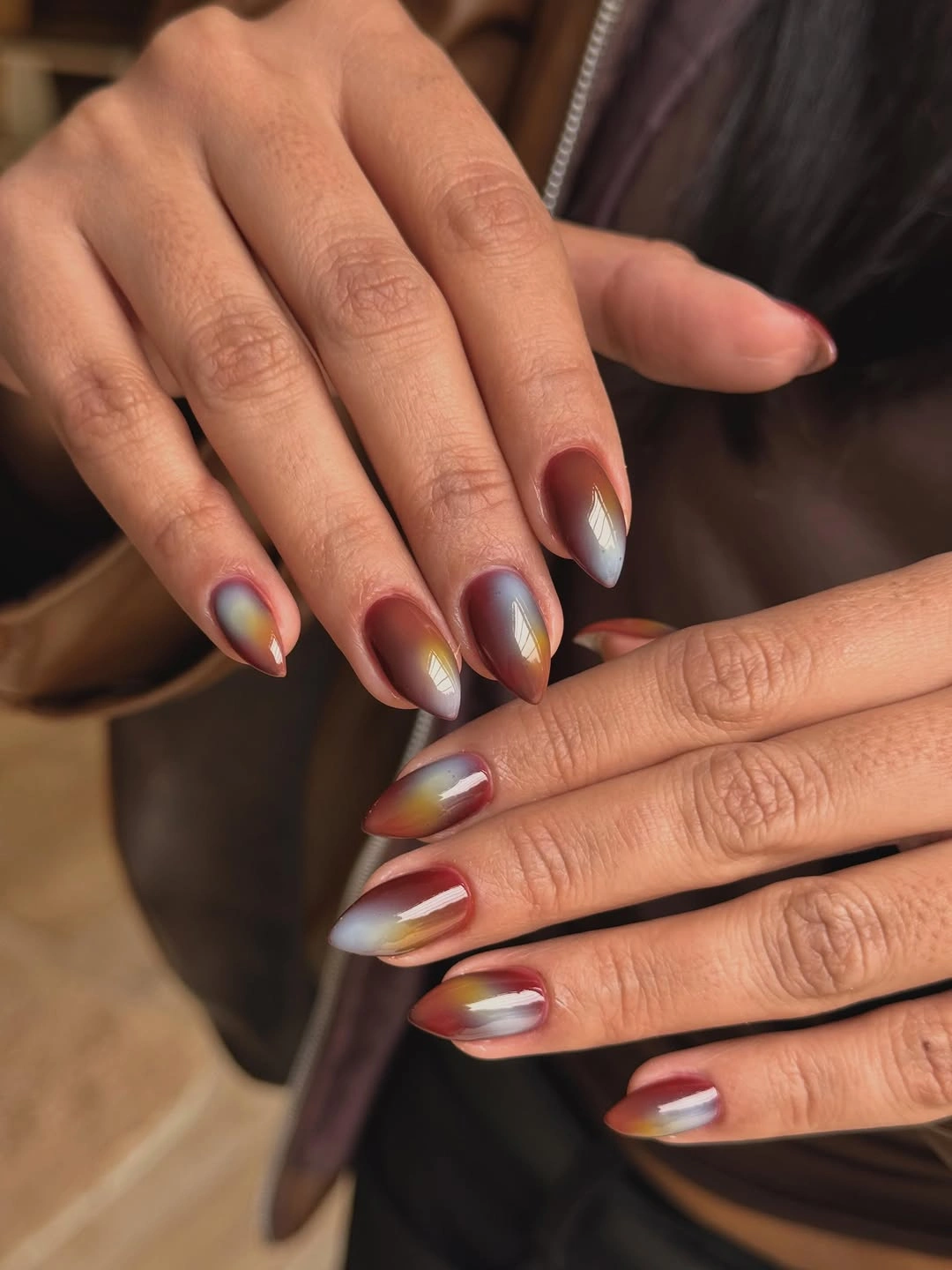
Choose a shorter rounded tip if you want the color to feel more understated, or keep a little extra length so the metallic highlight can travel across the nail. Because the finish carries the design, avoid adding a second bright shade unless the copper needs a deliberate contrast. A soft bronze version would quiet the orange without changing the reflective logic.
Copper works efficiently here: warm pigment establishes the season, shimmer adds depth, and a solid application keeps the result easy to understand. The rounded shape stops the reflection from becoming too sharp, but it also makes uneven coverage visible across the curved edge. A simple one-color set still asks for consistent surface and clean sidewalls.
Mint Green with Floral Grid Accents
Short square nails use muted mint green on most fingers, while two accents combine pink flowers, black lines, colored dots, and a grid-like background. A small amount of green shimmer appears on selected solid nails, adding another layer without changing the base color. The cool mint is balanced by warmer pink detail, and the short shape contains the pattern.
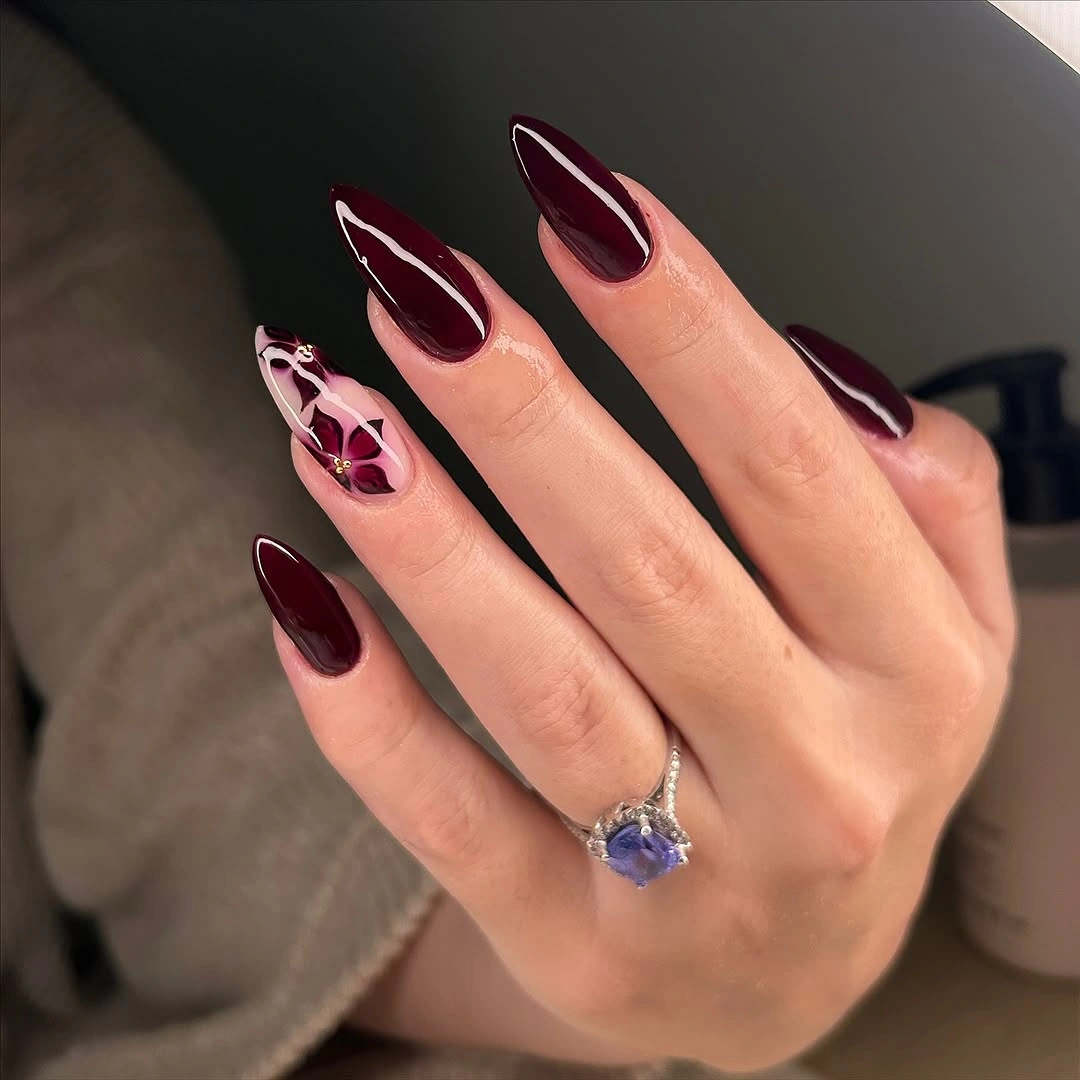
Keep the mint solid on most fingers and reserve the grid and flowers for one or two accents if you want the set to remain simple. The square outline gives the line structure a stable frame, while a shorter nail may need fewer flowers and larger dots. Let the warm accents repeat across the decorated fingers so they connect instead of reading as separate illustrations.
This design feels like a transition between soft color and more expressive art. Mint supplies the cool base, pink brings warmth, black lines create structure, and shimmer keeps the solid nails from disappearing. The tradeoff is detail density: the accents need careful spacing, and removing one small element may preserve clarity better than adding another flower.
Dusty Pink on a Short Rounded Shape
Short rounded nails are painted a medium dusty pink with a glossy, even finish and no visible art. The muted rose tone is lighter than burgundy and softer than copper, making it a quiet transition color for early or gentle autumn palettes. A cream ribbed sweater and gold rings provide a warm frame while the repeated shade keeps the manicure calm.
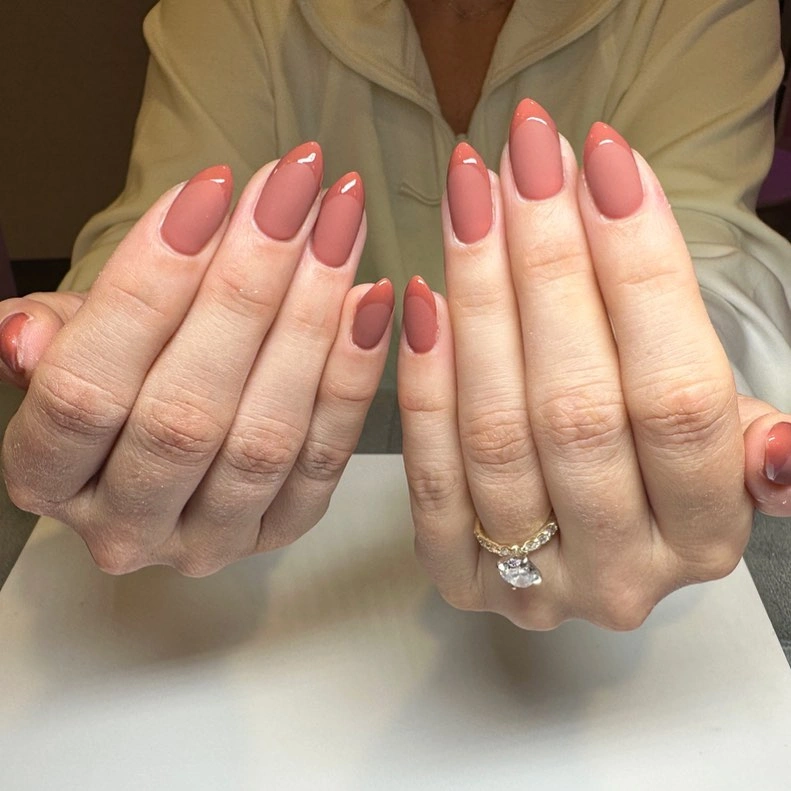
Keep the set solid if you want the shade and shape to carry the whole idea. A slightly shorter oval will make the color feel even more discreet, while a medium almond can add length without changing the muted palette. If you want a design, add one narrow line or small accent finish rather than introducing several new colors.
The manicure closes the collection on visual comfort. Dusty pink supplies warmth without saturation, gloss keeps it alive, and the rounded outline makes the single shade feel approachable rather than plain. The limitation is that an all-over pale color reveals uneven coverage clearly, so the quiet effect depends on a smooth surface and tidy edges.
Pale Almonds with Flowing Brown Marble
Long almond nails use a pale nude base with flowing brown and taupe lines that create an open, marbled pattern. The darker strokes move across selected fingers without filling the whole surface, so the light background remains part of the design. A white sleeve and simple gold ring keep the palette quiet, allowing the organic curves to supply the final movement.
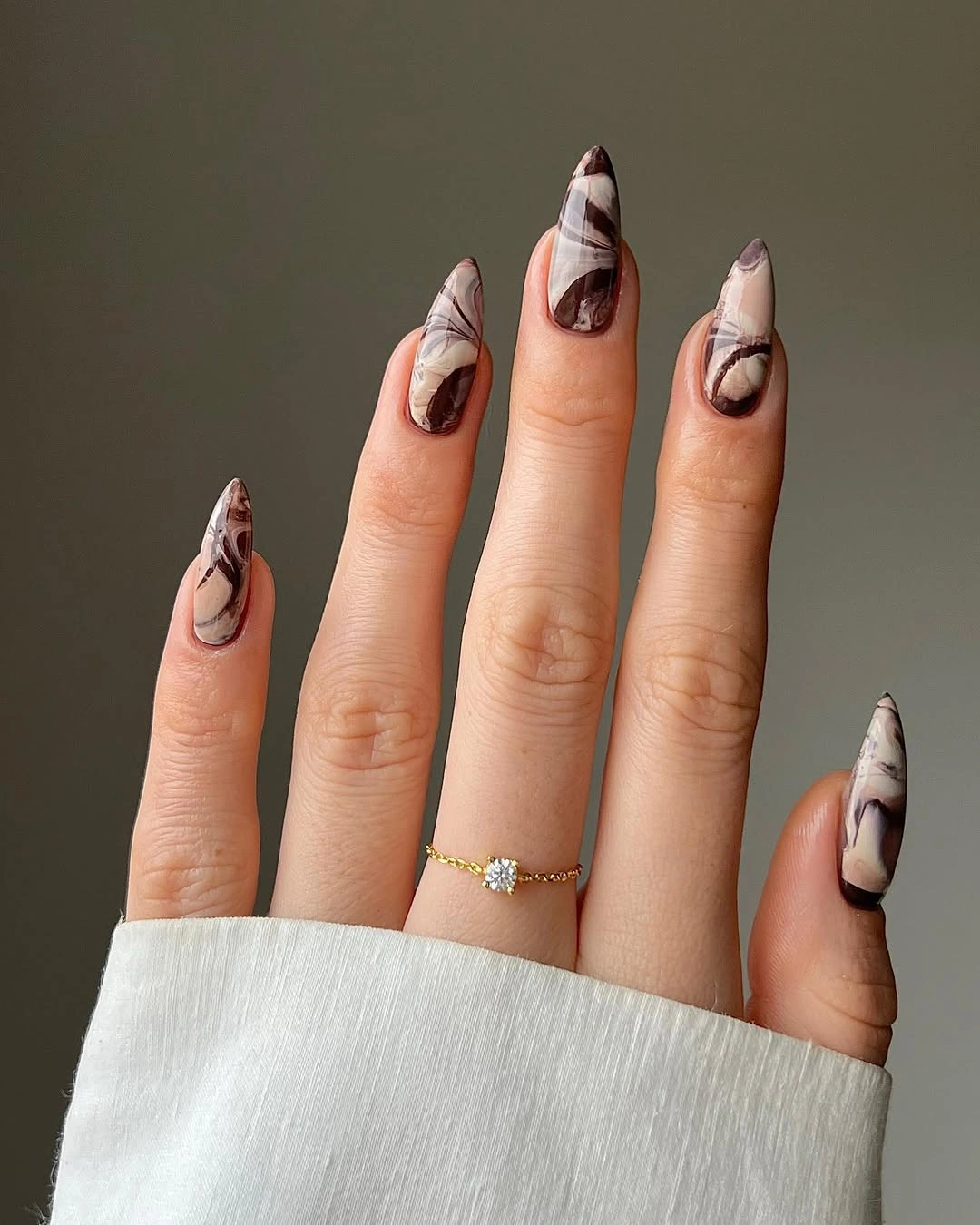
Keep the base pale and let the marble lines vary slightly from nail to nail if you want the same organic quality. A shorter almond can use two or three broader curves, while a square outline will make the pattern feel more graphic and contained. Avoid adding glitter unless the brown lines need extra contrast, because the open space is what makes this version feel calm.
The collection ends with autumn color expressed as movement rather than a literal motif. Nude gives the hand breathing room, brown brings warmth and depth, and the uneven lines keep the long almond shape from looking static. The tradeoff is asymmetry: each accent will naturally differ, so this design suits someone who values an organic relationship between nails more than exact matching.